

AlphaFold Protein Structure Database in 2024: providing structure coverage for over 214 million protein sequences
Open accessThe DOI matches its Crossref record; 29 of the 29 references it cites were found in a registry or an index; 18 of the 18 sources its claims cite were checked for support.
Abstract
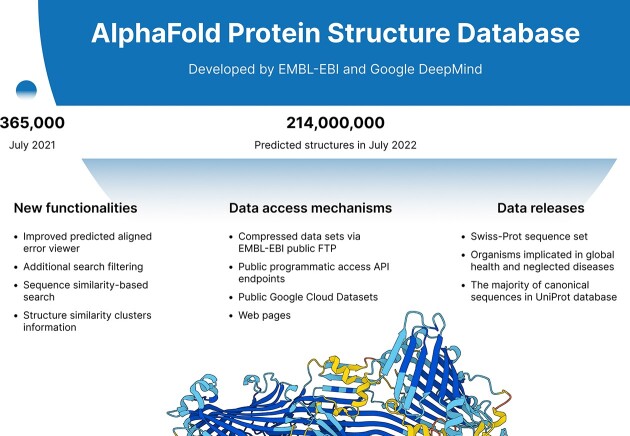
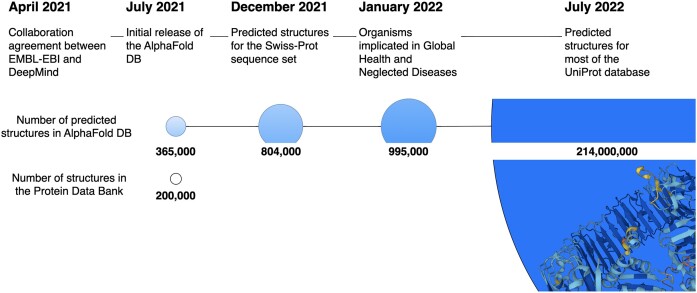
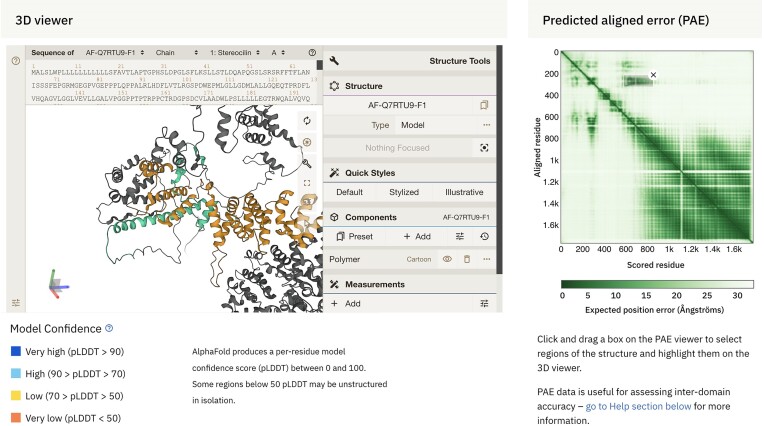
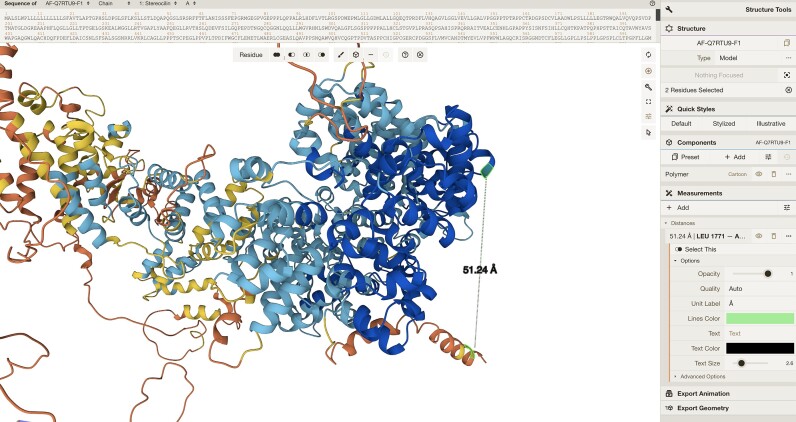
The AlphaFold Database Protein Structure Database (AlphaFold DB, https://alphafold.ebi.ac.uk) has significantly impacted structural biology by amassing over 214 million predicted protein structures, expanding from the initial 300k structures released in 2021. Enabled by the groundbreaking AlphaFold2 artificial intelligence (AI) system, the predictions archived in AlphaFold DB have been integrated into primary data resources such as PDB, UniProt, Ensembl, InterPro and MobiDB. Our manuscript details subsequent enhancements in data archiving, covering successive releases encompassing model organisms, global health proteomes, Swiss-Prot integration, and a host of curated protein datasets. We detail the data access mechanisms of AlphaFold DB, from direct file access via FTP to advanced queries using Google Cloud Public Datasets and the programmatic access endpoints of the database. We also discuss the improvements and services added since its initial release, including enhancements to the Predicted Aligned Error viewer, customisation options for the 3D viewer, and improvements in the search engine of AlphaFold DB.
Overview
CoChat Summary
TL;DR
AlphaFold DB has grown from ~300k to over 214 million predicted protein structures as of September 2023, with expanded access, search, and visualization features. This 2024 update describes data archiving, access mechanisms, integration with core resources, and new clustering/BLAST/PAE viewer capabilities.
Key findings
- AlphaFold DB expanded from approximately 300k structures in 2021 to over 214 million predicted protein structures as of September 2023; the initial July 2021 release housed over 360,000 structures for 20 model organism proteomes.
- Predictions are integrated into resources including PDB, UniProt, Ensembl, InterPro and MobiDB, and are accessible via FTP, Google Cloud Public Datasets (~23 TiB), API, and the website; PAE data is unavailable from EMBL-EBI public FTP.
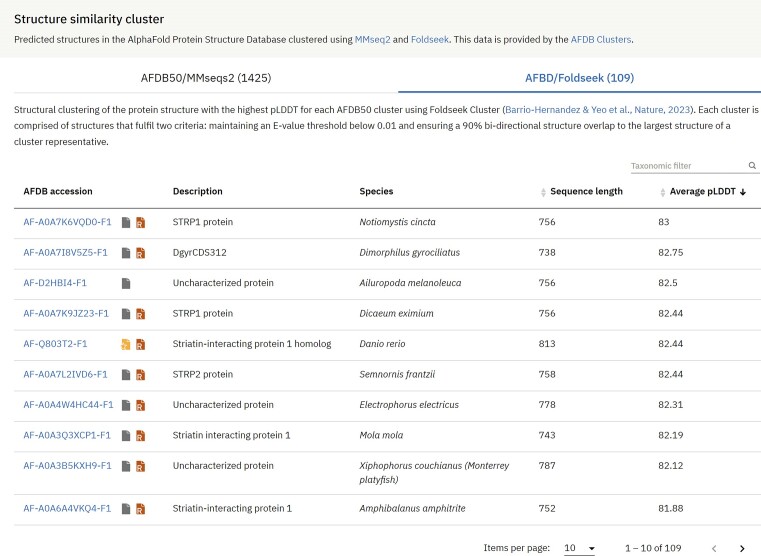
- Structure similarity clustering used MMseqs2 to cluster 214 million UniProtKB sequences into 52 million clusters, then Foldseek secondary clustering yielded 18.8 million clusters, finalizing 2.30 million robust clusters each with at least a pair of structures.
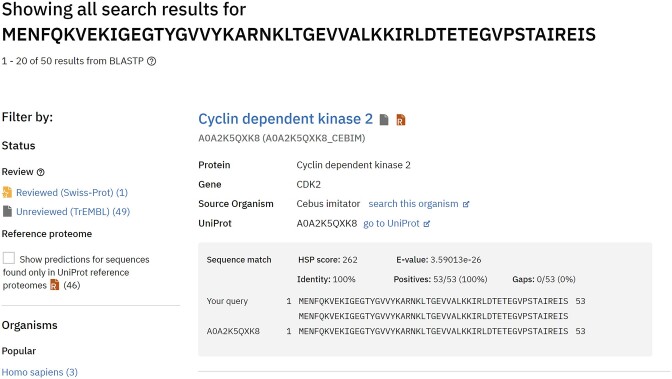
- New features include BLAST sequence similarity search, improved search filters for reviewed/unreviewed and reference proteome status, enhanced PAE viewer–Mol* interactivity, and a November 2022 update fixing a numerical bug that affected ~4% of total structure predictions.
Methods
- Descriptive database update/report with no primary experimental design; data generation is carried out by Google DeepMind, with predictions stored in PDB, mmCIF (modelCIF), and binaryCIF formats plus JSON metadata and confidence metrics pLDDT and PAE.
- Archiving uses successive releases from UniProt reference proteomes (e.g., 2021_02, 2021_04), Swiss-Prot, WHO global health proteomes, and MANE select; as of September 2023, EMBL-EBI FTP hosts TAR files for proteomes of 48 organisms.
- Access and analysis infrastructure includes FTP, Google Cloud Public Datasets, an API keyed on UniProt accessions, Apache-Solr search, BLAST on Google Cloud Platform, and Foldseek/MMseqs2 clustering.
Limitations
- Stated: sequences are not covered if they are less than 16 amino acids; >2700 aa for Swiss-Prot/proteome sequences or >1280 aa for other UniProt sequences; contain non-standard amino acids; are not in the UniProt ‘one sequence per gene’ FASTA file; or are viral proteins; these limitations are under discussion.
- Stated: some sequences may be outdated compared to UniProt due to less frequent AlphaFold DB releases; PAE data is unavailable from EMBL-EBI public FTP; full Google Cloud dataset download requires a Google account and can take roughly 2.5 days at 1 Gbps.
- Evident from the text: all archived structures are predicted models rather than experimental structures, and users must interpret pLDDT/PAE cautiously (e.g., pLDDT <50 likely disordered, 50–70 lower confidence); the database also currently lacks isoform and multimeric predicted structures, which are listed as future work.
Model-written summary. Check it against the paper before relying on it.
Integrity signals
Registry
Cites
Statistics
Figures

Verification
Claims the paper makes
11 Valid · 1 Not valid · 0 Not checked · 28 Own results and interpretations
Every source the paper cites for this claim was checked and supports it.
In the paper
“The new generation of predicted protein structure models has demonstrated remarkable accuracy, which could mitigate the continually widening gap between known protein sequences and experimentally determined protein structures (7).”
§ AlphaFold Protein Structure Database in 2024: providing structure coverage for over 214 million protein sequences > Introduction
What the sources say
- Supportedcites [7] Varadi M., Bordin N., Orengo C., Velankar S. The opportunities and challenges posed by the new generation of deep learning-based protein structure predictors. Curr. Opin. Struct. Biol. 2023; 79: 102543. 36807079 PMC7618866 source
The Introduction says prediction models made a major advance in accuracy and can match or sometimes surpass experimentally determined structures. It also describes a growing gap between known protein sequences and determined structures; the section on new challenges says predicted structures have greatly increased coverage of protein sequence space. These passages support both the accuracy claim and the proposed potential to narrow that gap (page numbers unavailable). (LLM, conf=0.93)
boosted- Asserted: passes — The authors put it forward as true.
- Checkable: passes — It can be checked against evidence.
- Load-bearing: passes — The paper’s conclusions depend on it.
- Based: passes — The paper gives a reason why it holds.
- Supported
Every source the paper cites for this claim was checked and supports it.
In the paper
“In response to frequent requests from the user community since the AlphaFold DB launch, we have made significant strides to implement a sequence-based similarity search feature. We have incorporated the Basic Local Alignment Search Tool (BLAST) (21) into our Google Cloud Platform infrastructure to achieve this.”
§ AlphaFold Protein Structure Database in 2024: providing structure coverage for over 214 million protein sequences > Implementation > Data access
What the sources say
- Supportedcites [21] Camacho C., Coulouris G., Avagyan V., Ma N., Papadopoulos J., Bealer K., Madden T.L. BLAST+: architecture and applications. BMC Bioinf. 2009; 10: 421. PMC2803857 20003500 source
The Background identifies BLAST as a sequence similarity search program that matches a query sequence against a database. In the citing sentence, the citation identifies the tool incorporated; the AlphaFold DB implementation is the citing authors’ own report, not a claim attributed to this source. (LLM, conf=0.91)
plainstates a cause- Asserted: passes — The authors put it forward as true.
- Checkable: passes — It can be checked against evidence.
- Load-bearing: unclear — It is unclear whether the paper’s conclusions depend on it.
- Based: passes — The paper gives a reason why it holds.
- Supported
Every source the paper cites for this claim was checked and supports it.
In the paper
“The impact of the predicted structures is further enhanced by their seamless integration into several core data resources, including PDBe-KB (17), UniProt (6), Ensembl (16), InterPro (15), Genecards (24) and MobiDB (25), among others.”
§ AlphaFold Protein Structure Database in 2024: providing structure coverage for over 214 million protein sequences > Conclusions and outlook
What the sources say
- Supportedcites [17] consortium P.D.B.-K.B. PDBe-KB: collaboratively defining the biological context of structural data. Nucleic Acids Res. 2022; 50: D534– D542. 34755867 PMC8728252 source
Citation (17) is attached specifically to PDBe-KB, rather than to the other resources in the sentence. The Introduction identifies PDBe-KB as a resource that integrates structural and functional annotations, supporting its identification here. (LLM, conf=0.90)
- Supportedcites [6] U.P. Consortium UniProt: the Universal Protein Knowledgebase in 2023. Nucleic Acids Res. 2023; 51: D523– D531. 36408920 PMC9825514 source
The citation is attached to UniProt in a list of resources, and the cited paper is a description of UniProt. Its Data integration and Interactive visualisations in entry pages sections state that UniProt incorporates AlphaFold-predicted structures into protein entries alongside other data; the supplied passages do not give page numbers. (LLM, conf=0.93)
- Supportedcites [16] Cunningham F., Allen J.E., Allen J., Alvarez-Jarreta J., Amode M.R., Armean I.M., Austine-Orimoloye O., Azov A.G., Barnes I., Bennett R. et al. Ensembl 2022. Nucleic Acids Res. 2022; 50: D988– D995. 34791404 PMC8728283 source
The citation identifies Ensembl as one of the resources in the list. In “Developing a new website” (page not provided), the paper says Ensembl’s Entity Viewer provides access to protein information, including 3D structures from PDBe. (LLM, conf=0.86)
plainstates a cause- Asserted: passes — The authors put it forward as true.
- Checkable: passes — It can be checked against evidence.
- Load-bearing: unclear — It is unclear whether the paper’s conclusions depend on it.
- Based: passes — The paper gives a reason why it holds.
- Supported
Every source the paper cites for this claim was checked and supports it.
In the paper
“Tackling this challenge, Steinegger et al. recently unveiled the Foldseek Cluster, a state-of-the-art structural-alignment-based clustering algorithm designed for vast datasets (22). They applied this novel method to the AlphaFold DB archive, making the derived structure similarity clusters available to the research community.”
§ AlphaFold Protein Structure Database in 2024: providing structure coverage for over 214 million protein sequences > Implementation > Data access
What the sources say
- Supportedcites [22] Barrio-Hernandez I., Yeo J., Jänes J., Mirdita M., Gilchrist C.L.M., Wein T., Varadi M., Velankar S., Beltrao P., Steinegger M. Clustering-predicted structures at the scale of the known protein universe. Nature. 2023; 622: 637– 645. 37704730 PMC10584675 source
The Abstract says the authors used Foldseek cluster to cluster the AlphaFold database. The Methods section (“Web server”) says they developed a server for users to explore the clusters, their members and related clusters, supporting the claim that the results were made available to researchers. (LLM, conf=0.93)
plainstates a cause- Asserted: passes — The authors put it forward as true.
- Checkable: passes — It can be checked against evidence.
- Load-bearing: passes — The paper’s conclusions depend on it.
- Based: passes — The paper gives a reason why it holds.
- Supported
- Probably not a substantial claim. 30
- It may state two separate claims as one. 15
- The quote only partly states this claim. 1
Claims other papers make about this one
Each is checked against this paper’s own text: does it say what the citing paper says it does?
The cited source says what the claim attributes to it.
In the citing paper
“houses over 200 million pre-run AF2 predictions”
From The power and pitfalls of AlphaFold2 for structure prediction beyond rigid globular proteins (2024) · cites this paper as [7]
Citations
Cites
Highly accurate protein structure prediction with AlphaFold
Jumper, J., Evans, R., Pritzel, A., Green, T., Figurnov, M., Ronneberger, O., Tunyasuvunakool, K., Bates, R., Žídek, A., Potapenko, A., et al. (2021) · Nature · doi:10.1038/s41586-021-03819-2 · Cited by 43,764
Self-citationBLAST+: architecture and applications
Camacho, C., Coulouris, G., Avagyan, V., Ma, N., Papadopoulos, J., Bealer, K., & Madden, T. L. (2009) · BMC Bioinformatics · doi:10.1186/1471-2105-10-421 · Cited by 22,074
UniProt: the Universal Protein Knowledgebase in 2023
The UniProt Consortium, Bateman, A., Martin, M.-J., Orchard, S., Magrane, M., Ahmad, S., Alpi, E., Bowler-Barnett, E. H., Britto, R., Bye-A-Jee, H., et al. (2023) · Nucleic Acids Research · doi:10.1093/nar/gkac1052 · Cited by 7,210
Evolutionary-scale prediction of atomic level protein structure with a language model
Lin, Z., Akin, H., Rao, R., Hie, B., Zhu, Z., Lu, W., Smetanin, N., Verkuil, R., Kabeli, O., Shmueli, Y., et al. (2022) · doi:10.1101/2022.07.20.500902 · Cited by 5,990 · cited 1×
“In the wake of the latest breakthroughs in prediction software, new databases such as the AlphaFold Protein Structure Database and the ESM Atlas ( 14 ) have emerged.”
MethodThe GeneCards suite: from gene data mining to disease genome sequence analyses
Stelzer, G., Rosen, N., Plaschkes, I., Zimmerman, S., Twik, M., Fishilevich, S., Stein, T. I., Nudel, R., Lieder, I., Mazor, Y., et al. (2016) · Current Protocols in Bioinformatics · doi:10.1002/cpbi.5 · Cited by 5,550 · cited 1×
“The impact of the predicted structures is further enhanced by their seamless integration into several core data resources, including PDBe-KB ( 17 ), UniProt ( 6 ), Ensembl ( 16 ), InterPro ( 15 ), Genecards ( 24 ) and MobiDB ( 25 ), among others.”
BackgroundAccurate prediction of protein structures and interactions using a 3-track network
Baek, M., DiMaio, F., Anishchenko, I., Dauparas, J., Ovchinnikov, S., Lee, G. R., Wang, J., Cong, Q., Kinch, L. N., Schaeffer, R. D., et al. (2021) · doi:10.1101/2021.06.14.448402 · Cited by 5,549
Paysan-Lafosse, T., Blum, M., Chuguransky, S., Grego, T., Pinto, B. L., Salazar, G. A., Bileschi, M. L., Bork, P., Bridge, A., Colwell, L., et al. (2023) · Nucleic Acids Research · doi:10.1093/nar/gkac993 · Cited by 2,399
Cunningham, F., Allen, J. E., Allen, J., Alvarez-Jarreta, J., Amode, M. R., Armean, I. M., Austine-Orimoloye, O., Azov, A. G., Barnes, I., Bennett, R., et al. (2022) · Nucleic Acids Research · doi:10.1093/nar/gkab1049 · Cited by 1,923
Mol* Viewer: modern web app for 3D visualization and analysis of large biomolecular structures
Sehnal, D., Bittrich, S., Deshpande, M., Svobodová, R., Berka, K., Bazgier, V., Velankar, S., Burley, S. K., Koča, J., & Rose, A. S. (2021) · Nucleic Acids Research · doi:10.1093/nar/gkab314 · Cited by 1,154 · cited 1×
“We improved the visualisation of non-consecutive regions and the interactivity between the PAE viewer and the 3D molecular graphics viewer, Mol* ( 23 ) (Figure 5 ).”
MethodSelf-citationMariani, V., Biasini, M., Barbato, A., & Schwede, T. (2013) · Bioinformatics · doi:10.1093/bioinformatics/btt473 · Cited by 1,138 · cited 1×
“AlphaFold yields a per-residue estimate of its confidence, known as pLDDT, ranging from 0 to 100, indicating the tool’s predicted score on the lDDT-C α metric ( 19 ).”
Method
Cited by
Items 1,301–1,400 of 2,174
Barraza, D., Paulo, T. F., Findley, L., Hang, S., & Watnick, P. I. (2026) · Nature Communications · doi:10.1038/s41467-026-70629-3 · Cited by 3
“Furthermore, AlphaFold predictions show that close structural homologs of Peri-15a are present in many organisms that associate with V. cholerae in the environment including copepods, rotifers, cyanobacteria, non-biting midges, and house fl ies 34 .”
Unraveling the Role of Topoisomerase 3β ( TOP3B ) in mRNA Translation and Human Disease
Warrick, J. E., & Kearse, M. G. (2025) · Wiley Interdisciplinary Reviews - RNA · doi:10.1002/wrna.70020 · Cited by 1
“However, AlphaFold 3 predicts five zinc finger motifs: three C4-type motifs (motifs 1, 4, and 5), a single D1C3-type motif (motif 2), and a single C3-type motif (motif 3) (Jumper et al. 2021; Varadi et al. 2024).”
Radler, C. N., Ku, K., Hodge, A., Wang, T., Moore, P., & Sathyamoorthy, M. (2025) · Current Issues in Molecular Biology · doi:10.3390/cimb47020082 · Cited by 4
“Protein structure prediction analysis conducted in AlphaFold demonstrated the possible effect of the variant amino acid residue (p.P517R), see Figure 3 [23,24].”
Glotzer, M. (2024) · bioRxiv (Cold Spring Harbor Laboratory) · doi:10.1101/2024.08.16.607330 · Cited by 1
Expression spectrum of TE-driven transcripts in human adult tissues
Miao, B., Luo, X., Ademovic, A., Yang, Y., Wu, T. P., & Zhang, B. A. (2026) · Genome biology · doi:10.1186/s13059-025-03898-8 · Cited by 4
Plasmodium Repetome: A mysterious space with a wealth of informationPreprint
Kaur, S., Kumar, V., Singh, K., Behl, A., Arpna, Mishra, P. C., & Hora, R. (2025) · bioRxiv (Cold Spring Harbor Laboratory) · doi:10.1101/2025.04.14.647515 · Cited by 2
Structural Variability of Pfam Domains Based on Alphafold2 Predictions
Poretsky, E., Andorf, C. M., & Sen, T. Z. (2025) · Proteins Structure Function and Bioinformatics · doi:10.1002/prot.70021 · Cited by 2
“To better understand the structural variability of Pfam families, we mapped the predicted Pfam domain boundaries to their predicted structures for the 16 model organisms in the AlphaFold2 database (Figure 1A) [8].”
Comprehensive annotation and analysis of human microproteins by human microprotein atlas platform
Kang, B., Fan, R., Ji, X., Zhou, Y., Cui, Q., & Cui, C. (2026) · Communications Chemistry · doi:10.1038/s42004-026-02054-y · Cited by 1
“Nevertheless, microproteins remain underrepresented in theAlphaFoldProteinStructureDatabase(AFDB) 19 .”
A Mycobacterium tuberculosis secreted virulence factor disrupts host snRNP biogenesisPreprint
Chauhan, K. N. K., Passricha, N., Kapoor, Y., Datta, D., Arora, N., Das, M., Rao, K., Singh, L., Dutt, R., Sharma, R. D., et al. (2024) · bioRxiv (Cold Spring Harbor Laboratory) · doi:10.1101/2024.02.06.579120 · Cited by 1
Haid, A. A., Saddler, H., Leflay, H., Elghazy, E., Franklin, K. L., Evans, C. A., & Pandhal, J. (2026) · bioRxiv (Cold Spring Harbor Laboratory) · doi:10.64898/2026.02.17.706413 · Cited by 1
dbCAN-HGM: CAZyme gene clusters in gut microbiomes of diverse human populations
Yan, Y., Patel, R. S. K. R., Shanmugam, N. R. S., Akresi, J. E., & Yin, Y. (2025) · Nucleic Acids Research · doi:10.1093/nar/gkaf1185 · Cited by 4
“We then performed a Foldseek [ 34 ] search of null protein 3D structures against AFDB (AlphaFold structures of all UniProt proteins) [ 35 ] and CAZyme3D [ 36 ] (AlphaFold structures of all CAZymes in the CAZyDB [ 1 ]).”
Precise biosynthesis of β-1,2-glucan from cellulosic materials by in vitro metabolic engineering
Li, Y., Lu, Y., Han, P., Guo, Q., Wang, S., Jiang, Z., & Zhang, Y. ‐. P. (2026) · Metabolic Engineering · doi:10.1016/j.ymben.2026.01.004 · Cited by 1
Gao, S., Xia, L., Jiang, C., Shao, B., Shao, Y., Li, X., Wu, P., He, J., Du, Q., Liang, L., et al. (2025) · Frontiers in Nutrition · doi:10.3389/fnut.2025.1675535 · Cited by 2
Alibrandi, S., Scimone, C., Abate, G., Scalinci, S. Z., Sidoti, A., & Donato, L. (2025) · International Journal of Molecular Sciences · doi:10.3390/ijms26199430 · Cited by 1
“Wild-type structures of AIPL1 and BBS2 were retrieved from the AlphaFold Protein Structure Database [35] and underwent the same mutagenesis and refinement protocols applied to mutant variants, including energy minimization and local steric clash resolution, ensuring methodological consistency.”
Aynekin, B., Lau, T., Kaiyrzhanov, R. B., et al. (2026) · Biochimica et Biophysica Acta (BBA) - Molecular Basis of Disease · doi:10.1016/j.bbadis.2026.168184 · Cited by 1
ABI5 Binding Proteins are substrates of key components in the ABA core signaling pathwayPreprint
Lynch, T. J., McNally, B. J. E., Losic, T., et al. (2024) · bioRxiv (Cold Spring Harbor Laboratory) · doi:10.1101/2024.10.11.617944 · Cited by 1
Regulation of vacuole fusion in stomata by dephosphorylation of the HOPS subunit VPS39
Pullen, A., Billings, G., Hodgens, C., White, G., Akpa, B. S., & Rojas‐Pierce, M. (2025) · The Plant Journal · doi:10.1111/tpj.70640 · Cited by 1
Yin, Q., Liu, Y., Kehinde, I. O., Soliman, M. E. S., & Bai, B. (2026) · Computational Biology and Chemistry · doi:10.1016/j.compbiolchem.2026.108902 · Cited by 1
Cui, H., Yuan, Y., Yin, Y., Gao, R., Liu, Z., Peng, L., Wang, J., Wang, Z., Song, T., & Liu, J. (2026) · Cell Death Discovery · doi:10.1038/s41420-026-03049-3 · Cited by 1
“3N, https://www.alphafold.ebi.ac.uk) [35].”
Ngo, K., Amini, H., VOROBYOV, I., & Clancy, C. E. (2026) · Nucleic Acids Research · doi:10.1093/nar/gkag518 · Cited by 2
“Structural resources like the Protein Data Bank (PDB) [ 10 ] and AlphaFoldDB [ 11 ] provide experimental or predicted protein models.”
Small molecule modulators of TOX protein re-invigorate T cell activityPreprint
Wu, B., Chang, H. J., Singh, P. R., Hostetler, A., Xiang, Y., Guo, S., Wang, F. Y., Zhong, J. J., Leifer, B. S., Schiavoni, R. P., et al. (2025) · bioRxiv (Cold Spring Harbor Laboratory) · doi:10.1101/2025.03.03.641115 · Cited by 4
“Based on the AlphaFold predicted full-length structure ( AF-A0A077ZAP3), no obvious drug binding hydrophobic pockets are apparent[21-23].”
Tarkina, T., Ali, A., Ali, S., Waseem, T., Azanbayeva, D., Kotlyarova, T., Jetpisbayeva, Z., & Nataliya, T. S. O. Y. (2026) · Naunyn-Schmiedeberg s Archives of Pharmacology · doi:10.1007/s00210-026-05606-0 · Cited by 1
Padilla, L., del Val, C., Neidre, D. B., Kokenge, A. S., Martinez, J. E., Teixeira, A. L., Zwir, I. J. S., & de Erausquin, G. A. (2025) · Frontiers in Neuroscience · doi:10.3389/fnins.2025.1631536 · Cited by 1
Cryo-EM structure of shutdown human non-muscle myosin 2APreprint
Casas-Mao, D. E., Carrington, G., & Peckham, M. (2025) · bioRxiv (Cold Spring Harbor Laboratory) · doi:10.1101/2025.10.15.682586 · Cited by 1
“Placing this into the mortar in the shutdown structure, showed that S19 is accessible to and can interact with the kinase domain of MLCK with minimal steric clashes (Fig.”
A SWI/SNF-specific Ig-like domain, SWIFT, is a transcription factor binding platform
(2025) · doi:10.1101/2025.08.01.667725 · Cited by 11
Mitochondrial disease: mechanisms, signalling, and therapeutic opportunities
Corrà, S., Young, L., Moore, A. L., & Viscomi, C. F. (2026) · Free Radical Biology and Medicine · doi:10.1016/j.freeradbiomed.2026.06.013 · Cited by 3
AlphaFold 3 accurately models natural variants of Helicobacter pylori catalase KatA
Gómez, A. A., & Baylink, A. (2025) · Microbiology Spectrum · doi:10.1128/spectrum.00670-25 · Cited by 6
“AlphaFold has emerged as a promising tool to address these challenges (4, 15, 16).”
Luo, Y., luzhao, P., Chen, Y., Tang, P., Yin, Q., Wang, M., Jin, Y., Wang, Z., Xie, L., Zou, X., et al. (2025) · Scientia Horticulturae · doi:10.1016/j.scienta.2025.114179 · Cited by 1
Li, A., Guo, S., Wang, X., Lu, T., Wang, Y., Zhang, L., & Fei, Q. (2025) · International Journal of Biological Macromolecules · doi:10.1016/j.ijbiomac.2025.141591 · Cited by 1
Bacterial lipids traverse the hydrophobic groove of TamB
Lin, Y., & Corry, B. (2026) · Biophysical Journal · doi:10.1016/j.bpj.2026.05.019 · Cited by 1
“22,23 The N-terminal helix was embedded into a symmetric bilayer mimicking the lipid composition of the bacterial IM as described above.”
Folding the unfoldable 2: using AlphaFold and ESMFold to explore spurious proteins
Orr, A., & Bateman, A. G. (2026) · Bioinformatics Advances · doi:10.1093/bioadv/vbag160 · Cited by 2
“We also explored the possibility of applying the AF2-GPC on AlphaFold DB (Varadi et al. 2024), a large-scale database of structure predictions.”
Salama, R., Peet, E., Morrione, T. L., Durant, S., Seager, M., Rennie, M., Scarlata, S., & Nechipurenko, I. (2025) · GENETICS · doi:10.1093/genetics/iyaf216 · Cited by 2
Diseri, A., Stravodimos, G. A., Argyriou, A. I., Spyroulias, G. A., Leonidas, D. D., & Liakos, P. (2024) · Biochemical and Biophysical Research Communications · doi:10.1016/j.bbrc.2024.150965 · Cited by 1
Predicting Protein Function in the AI and Big Data Era
Percudani, R., & Rito, C. D. (2025) · Biochemistry · doi:10.1021/acs.biochem.5c00186 · Cited by 3
“This breakthrough recognized last year by the Nobel Prize in Chemistry has added a new dimension to the genome information: 214 million 3D protein structures are currently available in the AlphaFold DB, 14 and 772 million metagenomic structures are available at the ESM Atlas.”
Pretorius, D., & Murray, J. W. (2024) · bioRxiv (Cold Spring Harbor Laboratory) · doi:10.1101/2024.09.05.611252 · Cited by 1
The protein structurome of Orthornavirae and its dark matterPreprint
Mutz, P., Camargo, A. P., Sahakyan, H., Neri, U., Butković, A., Wolf, Y. I., Krupovìč, M., Dolja, V. V., & Koonin, E. V. (2024) · bioRxiv (Cold Spring Harbor Laboratory) · doi:10.1101/2024.09.25.615016 · Cited by 1
Spastic Paraplegia Type 78 Associated With ATP13A2 Gene Variants in Compound Heterozygosity
Ramírez, R. B., Gascó, N. V., Palmero, L. R., Bueno, G. A. R., Yamanaka, E. S., & Andújar, J. D. A. (2025) · Molecular Genetics & Genomic Medicine · doi:10.1002/mgg3.70073 · Cited by 1
Matos, G. M., Hervé, C. B., Argenta, N., et al. (2025) · Fish & Shellfish Immunology · doi:10.1016/j.fsi.2025.110978 · Cited by 1
Jacoby, D., Savage, S., & Coady, Y. (2024) · Proceedings of the AAAI Symposium Series · doi:10.1609/aaaiss.v3i1.31261 · Cited by 1
Bishnoi, B., Saini, A. N., Rao, V. J., Golatkar, O., Zirmire, R. K., Viswanath, S., Dhandapany, P. S., & Das, S. (2026) · bioRxiv (Cold Spring Harbor Laboratory) · doi:10.64898/2026.02.23.707374 · Cited by 1
Leitz, A., Kav, B., Liu, X., Fatafta, H., Jankowski, V., Aggeler, B., Gao, Y., Martin, I. V., Vogt, K., Kramann, R., et al. (2025) · Protein Science · doi:10.1002/pro.70188 · Cited by 2
Laosuntisuk, K., Desai, J. S., & Doherty, C. J. (2024) · Plant Direct · doi:10.1002/pld3.70028 · Cited by 1
Tahzima, R., Charon, J., Díaz, A., Jonghe, K. D., Massart, S., Michon, T., & Vranken, W. (2025) · Frontiers in Virology · doi:10.3389/fviro.2025.1501616 · Cited by 1
Redox regulation of cell migration via Nischarin S-glutathionylation
Shivamadhu, M. C., Kukulage, D. S. K., Padmavathi, R., Oppong, D., Ramezani, F. M., Eldershaw, D., Collins, B. M., & Ahn, Y. (2025) · Free Radical Biology and Medicine · doi:10.1016/j.freeradbiomed.2025.11.013 · Cited by 2
“However, AlphaFold [54] predicts that the C-terminal regions have three folded structures, and the last two regions are annotated as pleckstrin homology (PH) or PH-like domains (Pfam and UniProt) [53] (Fig.”
Lateral Organization and Dynamics of the Realistic Plasma Membrane
Zhang, T., Zhang, J., Wang, H., Zou, T., Cheng, S., Yu, Y., Wu, J., Pan, Y., Duan, X., & Wang, H. (2025) · The Journal of Physical Chemistry B · doi:10.1021/acs.jpcb.5c00909 · Cited by 2
LoL-align: sensitive and fast probabilistic protein structure alignmentPreprint
Reifenrath, L., van Kempen, M., Kim, G., et al. (2025) · bioRxiv (Cold Spring Harbor Laboratory) · doi:10.1101/2025.11.24.690091 · Cited by 1
Self-citationAI-Driven De Novo Binder Design: From Structure Prediction to Closed-Loop Optimization
Li, X., Fan, Z., Yang, J., Jiang, R., Cao, F., Li, J., Xie, D., Meng, X., Sun, M., & Wang, L. (2026) · Computational and Structural Biotechnology Journal · doi:10.34133/csbj.0070 · Cited by 1
“The continuing growth of AlphaFold DB provides unprecedented coverage for monomer structures [ 35 ] and has motivated prediction distillation and related strategies that treat predicted structures as pseudo-labels.”
Synthesis, Radiochemistry, and Preclinical Assessment of the First GPR39 PET Imaging Agent
Bhoopal, B., Gollapelli, K. K., Damuka, N., Krizan, I. M., Miller, M. D., Fitzgerald, R. W., Amesar, N., Mumbaraddi, D., Zhu, D., Cervera‐Juanes, R. P., et al. (2026) · Journal of Medicinal Chemistry · doi:10.1021/acs.jmedchem.5c03351 · Cited by 2
Tian, X., Zheng, R., Li, X., Jiang, S., Wang, F., Shen, Y., & She, Q. (2025) · Engineering Microbiology · doi:10.1016/j.engmic.2025.100254 · Cited by 1
“AlphaFold prediction [ 41 , 42 ] showed that these conserved motifs formed a 𝛽𝛽𝛼 - metal structural fold, which is a common active site for nuclease families [ 43 ] (Fig.”
Ancia, M., Wahni, K., Chakrowf, J., Aakchioui, A. E., Claude, E., de Lhoneux, G., Liberelle, M., Janvier, S., Baranova, E., Pueyo, J. M., et al. (2025) · Protein Science · doi:10.1002/pro.70116 · Cited by 1
Unexpected modulation of Hna phage defense activity by the symbiotic regulator NolR
Sather, L. M., Fazeli, N., Kearsley, J. V. S., Jones, K. M., & Finan, T. M. (2025) · Journal of Bacteriology · doi:10.1128/jb.00182-25 · Cited by 2
“Based on an alignment of the two protein sequences, as well as an Alphafold structure prediction, the frameshift in the Rm1021 NolR occurs within the final alpha helix (α5), outside of the helix-turn-helix motif (10, 38, 40, 41).”
Guo, W., Santos, L. C., Koh, G. Y., Malamy, M. H., Hawley, A. J., Beachy, H., Whelpley, B., Wang, J., Dempsey, D. R., & Crott, J. W. (2026) · Gut Microbes · doi:10.1080/19490976.2026.2650007 · Cited by 2
Mukhtar, M., Kumar, A., Mujawar, A. S., Sareen, B., Karkute, S. G., Sreevathsa, R., Sevanthi, A. M., & Solanke, A. U. (2025) · Rice Science · doi:10.1016/j.rsci.2025.05.004 · Cited by 2
Shlyakhtina, Y., Bloechl, B., Moran, K. L., Maslakova, A., Johnson, R., Munro, A. F., Carragher, N., & Portal, M. M. (2024) · bioRxiv (Cold Spring Harbor Laboratory) · doi:10.1101/2024.11.08.622637 · Cited by 1
Agostini, F., Baruzzo, V., Real‐Fernández, F., Satta, A., Raga, R., Penzo, D., Modesti, M., Valerin, M. C., Campanaro, S., Treu, L., et al. (2026) · Bioresource Technology · doi:10.1016/j.biortech.2026.135332 · Cited by 2
Expression spectrum of TE-derived transcripts in human adult tissuesPreprint
Miao, B., Luo, X., Ademovic, A., Yang, Y., Wu, T., & Zhang, B. (2025) · bioRxiv (Cold Spring Harbor Laboratory) · doi:10.1101/2025.03.29.646092 · Cited by 1
“Structural differences in protein products were further analyzed using the AlphaFold Protein Structure Database (https://alphafold.ebi.ac.uk/) 64,65 .”
Transcription regulator TrtA modulates oxygen stress response in Treponema denticola
Kitamura, Y., Kikuchi, Y., Kokubu, E., Yamashita, K., Yonezawa, H., Saitô, A., & Ishihara, K. (2025) · Applied and Environmental Microbiology · doi:10.1128/aem.00750-25 · Cited by 2
pH‐Dependent Effect of Lecithin on Lupin‐Protein‐Based Egg Custard Mimics
Tay, U. J., Ng, J. W., Zhang, S., Lee, D., Vignuzzi, M., He, C., Lin, D., Lorenzini, P. A., Antipina, M. N., Zhou, W., et al. (2025) · Journal of Food Science · doi:10.1111/1750-3841.70479 · Cited by 1
Yang, L. Y. U., Can, H. E., Jian-ming, Z. H. A. O., & Zhang, Z. J. (2025) · Bulletin of Mineralogy Petrology and Geochemistry · doi:10.3724/j.issn.1007-2802.20240161 · Cited by 1
Exploit and elucidate chaperone assisted PET hydrolase for upcycling plastics
Ting, W.-W., Yu, J., Hsiang, C.-C., Tan, S.-I., Chang, C.-C., Huang, H.-L., Yu, C.-H., Hu, R.-E., Ma, H.-N., & Ng, I.-S. (2024) · Chemical Engineering Journal · doi:10.1016/j.cej.2024.157777 · Cited by 1
NOX1 drives inflammatory bowel disease through oxidant-dependent stabilization of IκBζ
Song, Z., Pintard, C., Pelletier, A.-L., Marie, J., Liu, D., Thiéblemont, N., Hurtado-Nédelec, M., Ping, J., Baciou, L., Benna, J. E., et al. (2026) · Free Radical Biology and Medicine · doi:10.1016/j.freeradbiomed.2026.07.037 · Cited by 1
Otala, S. A., John, C. M., Stein, D. C., & Jarvis, G. A. (2026) · Microbiology Spectrum · doi:10.1128/spectrum.02543-25 · Cited by 2
Revised porcine IgG subclass classification based on innate immune cell activation
der Weken, H. V., Helsmoortel, C., Iseghem, J. V., Dierick, M., & Devriendt, B. (2026) · Frontiers in Immunology · doi:10.3389/fimmu.2026.1838862 · Cited by 1
“The three-dimensional structure of the different porcine IgG subclasses was predicted using Colabfold/alphafold2 and matched to human IgG1 (P01857) (21 – 23).”
Protein Language Model Identifies Disordered, Conserved Motifs Driving Phase SeparationPreprint
Zhang, Y., Zheng, J., & Zhang, B. (2025) · eLife · doi:10.7554/elife.105309.1 · Cited by 1
Evolutionarily divergent DUF4465 domains have a common vitamin B 12 -binding functionPreprint
Clarke, C., Banasik, M., Juodeikis, R., et al. (2025) · bioRxiv (Cold Spring Harbor Laboratory) · doi:10.1101/2025.08.21.671476 · Cited by 1
Optimized optogenetic anti-CRISPR for endogenous gene regulation in Drosophila
Ramongolalaina, C., Pastor-Pareja, J. C., Zhang, E., & Jia, Y. (2025) · doi:10.1101/2025.05.02.651826 · Cited by 1
Enhancing structural insights for advanced drug discovery by mitigating protein crystal damage
Markiewicz, M., Gucwa, M., Bazak, J., Dec, W., Minor, W., & Murzyn, K. (2025) · Expert Opinion on Drug Discovery · doi:10.1080/17460441.2025.2605354 · Cited by 1
“With the emergence of AlphaFold [9,10], computed structural models have also become available through the PDB, significantly expanding coverage of the human proteome and enabling researchers to access over one million predicted structures alongside experimental data curated by PDB. DrugBank and…”
Structure guided functional analysis of the S. cerevisiae Mre11 complexPreprint
Petrini, J. H. J., Hohl, M., Yu, Y., et al. (2024) · Research Square · doi:10.21203/rs.3.rs-5390974/v1 · Cited by 1
Hasegawa, Y., Persson, K., & Lamont, R. J. (2026) · Journal of Oral Biosciences · doi:10.1016/j.job.2026.100782 · Cited by 1
Rational design of site-specific artificial metallonucleases for therapeutic applications
Lu, X., & Zhang, C. (2025) · Microchemical Journal · doi:10.1016/j.microc.2025.113736 · Cited by 1
“A particularly notable computational model is AlphaFold 3, which accurately predicts the static conformations of individual peptide or nucleic acid sequences and complex structures formed between biomolecules, such as protein – nucleic acid complexes [140,141].”
Domain acquisition enabled functional expansion of the TFIIS transcription factor family
Matveyeva, K., de Diego, A. S., García-López, M. Á., Gutiérrez, J., Fischer, T., & van Wely, K. H. M. (2025) · Cell & Bioscience · doi:10.1186/s13578-025-01423-9 · Cited by 2
“The TFS2M domain, alpha helix, and zinc finger of Homo sapiens PHF3 (UniprotKB: Q92576, Alphafold: Q92576 aminoacids 920 to 1064) were obtained from the Alphafold database [140] and mapped to Homo sapiens Pol2 (RCSB PDB: 5IY7) using the ChimeraX matchmaker command.”
Cobalt as a Cofactor for α-Galactosaminidase-Catalyzed Cleavage of Blood Group Antigens
Tian, Y., Worrall, L. J., Sim, L., Liu, F., Nasseri, S. A., Rahfeld, P., Mu, W., Kizhakkedathu, J. N., Strynadka, N. C. J., & Withers, S. G. (2024) · ACS Catalysis · doi:10.1021/acscatal.4c03643 · Cited by 1
Nandi, S., Banerjee, S., Manna, D., Awasthi, A., Biswas, A., Das, A., Mukherjee, B., Mitra, P., & Mandal, M. (2026) · Journal of Medicinal Chemistry · doi:10.1021/acs.jmedchem.5c03278 · Cited by 2
Mechanistic insights into DNA binding by BD1 of the TAF1 tandem bromodomain module
Yadav, Y., Chyne, P., & Sudhamalla, B. (2025) · Biochemical Journal · doi:10.1042/bcj20253064 · Cited by 1
Mitochondrial control of glycerolipid synthesis by a PEP shuttle
(2025) · doi:10.64898/2025.12.12.693842 · Cited by 11
RNMT-dependent RNA cap methylation in health and disease
Mills, J. G., Hepburn, L. A., & Cowling, V. H. (2025) · Biochemical Journal · doi:10.1042/bcj20253170 · Cited by 1
Structural mechanism of mRNA decoding by mammalian GTPase GTPBP1
Susorov, D., Miścicka, A., Golovenko, D., Loveland, A. B., Zinoviev, A., Pestova, T. V., & Korostelev, A. A. (2025) · Nature Communications · doi:10.1038/s41467-025-66833-2 · Cited by 1
“AlphaFold 103 model of the human GTPBP1 protein (AF-O00178-F1-model_v4 104 ) was used as a starting model for GTPBP1.”
InfluentialUnraveling diversity by isolating peptide sequences specific to distinct taxonomic groupsPreprint
Bochalis, E., Patsakis, M., Chantzi, N., et al. (2025) · bioRxiv (Cold Spring Harbor Laboratory) · doi:10.1101/2025.02.05.636664 · Cited by 1
“Original PDB files of the proteins containing quasi-prime peptides were obtained from the AlphaFold Protein Structure Database (Jumper et al. 2021; Varadi et al. 2024) updated as of September 2024.”
Structural organization of TAM receptor ectodomains
Starbird, C. A., Zuo, Y., Walker, K., Stayrook, S. E., & Ferguson, K. M. (2026) · Biochemical Journal · doi:10.1042/bcj20260584 · Cited by 1
Nagi, S. C., Essandoh, J., Ato-Egyir, N., Lucas, E. R., Miles, A., Desewu, K., Williams, I., Egyir-Yawson, A., Sedda, L., Weetman, D., et al. (2025) · bioRxiv (Cold Spring Harbor Laboratory) · doi:10.1101/2025.06.13.655782 · Cited by 2
“We downloaded predicted protein models from the AlphaFold database 41,42 , selecting the longest transcript present, to avoid predictions of truncated transcripts.”
Protein language models reveal evolutionary constraints on synonymous codon choicePreprint
Sakharova, H., & Lareau, L. F. (2025) · bioRxiv (Cold Spring Harbor Laboratory) · doi:10.1101/2025.08.05.668603 · Cited by 3
“When analyzing the connection between model scores and protein structure, we used pre-computed pLDDT scores obtained from the AlphaFold Protein Structure Database (Varadi et al. , 2024; Jumper et al. , 2021) on April 7, 2025.”
Computational Mapping and Targeting of BK Channel Protein–Protein Interactions in Breast Cancer
González‐Avendaño, M., Rosales‐Rojas, R., & Vergara‐Jaque, A. (2026) · Journal of Chemical Information and Modeling · doi:10.1021/acs.jcim.6c00191
Lécureuil, C., Almunia, C., Guérin, V., Armengaud, J., Moreau, T., & Fouchécourt, S. (2026) · BMC Genomics · doi:10.1186/s12864-026-12918-1
“FASTA in PRIDE amino acid measure of local confidence, called pLDDT (predicted local distance difference test [37–39]).”
Zhang, Z., Ma, L., Ding, M., Xu, P., & Tao, F. (2026) · Engineering Microbiology · doi:10.1016/j.engmic.2026.100301
Unsupervised domain classification of AlphaFold2-predicted protein structures
Barone, F., Laio, A., Punta, M., Cozzini, S., Ansuini, A., & Cazzaniga, A. (2024) · doi:10.1101/2024.08.21.608992 · Cited by 3
“The recent release of the AlphaFold database (AlphaFoldDB) [1, 2], containing predictions for nearly 214 million protein structures, marked a significant breakthrough in proteomics, with applications ranging from structure-based drug discovery to variant effect prediction [3, 4].”
BackgroundTranscription factors across the Escherichia coli pangenome: a 3D perspectivePreprint
Moreno‐Hagelsieb, G. (2024) · bioRxiv (Cold Spring Harbor Laboratory) · doi:10.1101/2024.02.08.579464
“The sequences for all Alphafold 3D structures were downloaded from the specialized database (Varadi et al. , 2021, 2023), by February 2023 (the data has been stable since October 2022 as Alphafold version 4).”
BackgroundMethodInfluentialGonçalves-Kulik, M., Baptista, L. A., Schmid, F., & Andrade-Navarro, M. A. (2025) · Computational and Structural Biotechnology Reports · doi:10.1016/j.csbr.2025.100054
Kesavan, D., Meenatchi, R., Mohanakrishna, R., Tripathi, A., Bs, Y., Narayanane, S., Gupta, S., Yadav, P., Pasupuleti, M., Mani, G., et al. (2026) · Marine Genomics · doi:10.1016/j.margen.2026.101245 · Cited by 1
Trends of Open-Source Tools and Frameworks for AI Drug Design
Mishra, S. K., Mukhia, P., Gurung, K., Rai, P., Roy, A., Chhetri, T., & Georrge, J. J. (2026) · Springer eBooks · doi:10.1007/978-3-032-20428-8_11
Pockets to products: a data-driven approach for classification of monoterpene synthases
Raghallaigh, C. Ó., Scrutton, N. S., & Hay, S. (2026) · Digital Discovery · doi:10.1039/d6dd00312e
How informative are structural alphabets for representing protein folds?Preprint
El-Hendi, F., Al-Fatlawi, A. H., Hossen, M. B., Kasper, T., Mestiashvili, A., & Schroeder, M. (2026) · bioRxiv (Cold Spring Harbor Laboratory) · doi:10.64898/2026.01.16.699908
“These 99 proteins were compared against all 496,866 protein in SwissProt [31], for which there was a high-quality (average pLDDT above 70) predicted structure in the AlphaFoldDB in May 2024 [32,33] and for which secondary structure could be derived from PyMOL.”
Shi, R., Yang, M., Liu, Y., Gao, H., & Lin, Z. (2025) · bioRxiv (Cold Spring Harbor Laboratory) · doi:10.1101/2025.10.25.684504
“The structure of ApCsm6 monomer predicted by Alphafold 2 41,42 was used as the starting models and docked into the final EM maps with UCSF Chimera 43 .”
TGIF2 is a major regulator of neural stem cell fate and neurogenic primingPreprint
Li, Y., Krontira, A. C., Vierl, F., Richter, M. L., Wang, W., Merl‐Pham, J., Theis, F. J., Hauck, S. M., & Götz, M. (2025) · bioRxiv (Cold Spring Harbor Laboratory) · doi:10.1101/2025.02.13.635953
Zhao, W., Gong, X., Tian, Y., Wang, L., Fu, C., Yao, X., & Liu, H. (2026) · Journal of Cheminformatics · doi:10.1186/s13321-026-01246-x
Habenicht, T., Hellwig, L., Kießling, C., Elling, F. J., & Schmitz, R. A. (2025) · bioRxiv (Cold Spring Harbor Laboratory) · doi:10.64898/2025.12.02.691841
Cizeron, M., Dumas, A., Reun, S. L., Granger, L., Jospin, M., Romatif, O., Vachon, C., Guern, D. L., Valfort, A.-C., & Bessereau, J. (2025) · bioRxiv (Cold Spring Harbor Laboratory) · doi:10.1101/2025.03.26.645569
Hossain, M. I., Sarkar, M. E., Das, A., Nahol, A. H., Sur, D., Kabir, L., Akter, I., Seba, P. S., Mahdeen, A. A., & Siddiquee, N. H. (2026) · ChemistrySelect · doi:10.1002/slct.73996 · Cited by 1
Assessing the functional roles of coevolving PHD finger residues
Basu, S., Subedi, U., Tonelli, M., Afshinpour, M., Tiwari, N., Fuentes, E. J., & Chakravarty, S. (2024) · Protein Science · doi:10.1002/pro.5065
Faster and More Accurate Estimation of Protein Hinges Based on Information Criteria
Koyano, B., & Shibuya, T. (2025) · J. Comput. Biol. · doi:10.1089/cmb.2024.0731
Metadata
- Authors
- Varadi, M., Bertoni, D., Magana, P., Paramval, U., Pidruchna, I., Radhakrishnan, M., Tsenkov, M., Nair, S., Mirdita, M., Yeo, J., Kovalevskiy, O., Tunyasuvunakool, K., Laydon, A., Žídek, A., Tomlinson, H., Hariharan, D., Abrahamson, J., Green, T., Jumper, J., Birney, E., Steinegger, M., Hassabis, D., & Velankar, S.
- Affiliations
- European Molecular Biology Laboratory, European Bioinformatics Institute , Hinxton, UK
- European Bioinformatics Institute (GB)
- Seoul National University (KR)
- Google DeepMind (United Kingdom) (GB)
- Corresponding author
- Hassabis, Demis
- Velankar, Sameer
- ORCID
- Venue
- Nucleic Acids Research
- Publisher
- Oxford University Press (OUP)
- Published
- 2023-11-02
- Volume
- 52
- Issue
- D1
- Pages
- D368-D375
- ISSN
- 0305-1048 (ISSN-L)
- 1362-4962
- PMC
- PMC10767828
- OpenAlex
- W4388464011
- Cited by
- 2,052
- References
- 29
- Citations by year
- 2026: 724 · 2025: 1015 · 2024: 307 · 2023: 5
- FWCI
- 181.98
- Type
- journal article
- Language
- en
- Open access
- gold
- doi.org
- Licence
- Locations
- Nucleic Acids Research (publishedVersion, cc-by)
- PubMed Central (publishedVersion, cc-by)
- PubMed (publishedVersion)
- Seoul National University Open Repository (Seoul National University) (submittedVersion)
- Funders
- Google DeepMind
- National Research Foundation of Korea (2019R1A6A1A10073437, 2020M3A9G7103933, 2021R1C1C102065, 2021M3A9I4021220, RS-2023-00250470)
- Samsung DS Research Fund
- Seoul National University
- Topics
- Life Sciences › Biochemistry, Genetics and Molecular Biology › Molecular Biology › Protein Structure and Dynamics
- Life Sciences › Biochemistry, Genetics and Molecular Biology › Structural Biology › Enzyme Structure and Function
- Life Sciences › Biochemistry, Genetics and Molecular Biology › Molecular Biology › Machine Learning in Bioinformatics
- Keywords
- predicted protein structures, AlphaFold2, protein structure prediction, protein sequence coverage, data archiving, database access, search engines
- MeSH terms
- Amino Acid Sequence, Artificial Intelligence, Proteins, Protein Structure, Secondary, Proteome, Databases, Protein, Search Engine
About these checks
Registry, retraction, Cites and statistics results are computed, not judged, with one exception: a printed reference that no index lists is read once by a model before it counts as a citation error. Claims are extracted by a model and kept only when their quote appears verbatim in the text; each cited source is then checked, with a model’s help, for whether it says what the claim relies on. Those verdicts can be wrong — read the claim’s quote and the cited source before relying on one.
The claim verdicts this report counts are experimental: their accuracy is not yet measured.
A language model drew the claims from the paper on 2026-10-10, under version 3 of the claim definition (model deepseek-v4.1-flash, prompt extract-v3).
A second model labelled each claim on 2026-10-10 (model jev-1.13-20260917, definition revision gold-guideline-v0.2).
Cited sources are checked with a language model’s help (gpt-6-sol).
Statistics and arithmetic are recomputed, not judged.
Confidence bands are shown only for fields calibrated on our annotated test set. None is calibrated yet, so no band is shown.
What counts as a claim ›How we measure confidence ›How we check this ›
Are you an author, or do you see a problem with this page? Request a review
Data sources
Bibliographic data: Semantic Scholar, OpenAlex, Crossref.
Contains information from the Semantic Scholar Academic Graph Datasets, made available under the ODC Attribution License (ODC-BY 1.0).
Semantic Scholar’s data is described in: Kinney, R., et al. (2023). The Semantic Scholar Open Data Platform. arXiv:2301.10140.
