

AlphaFold Protein Structure Database in 2024: providing structure coverage for over 214 million protein sequences
Open accessThe DOI matches its Crossref record; 29 of the 29 references it cites were found in a registry or an index; 18 of the 18 sources its claims cite were checked for support.
Abstract
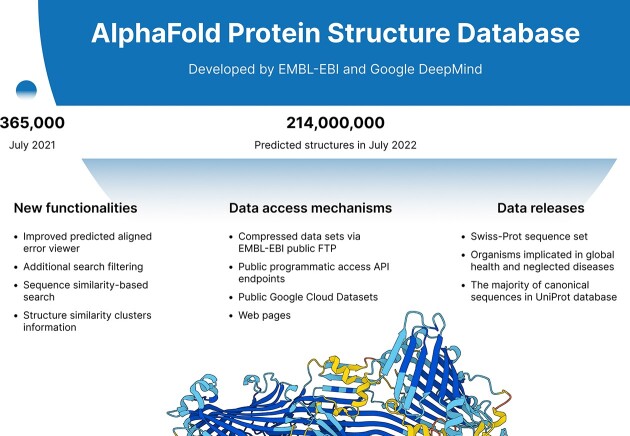
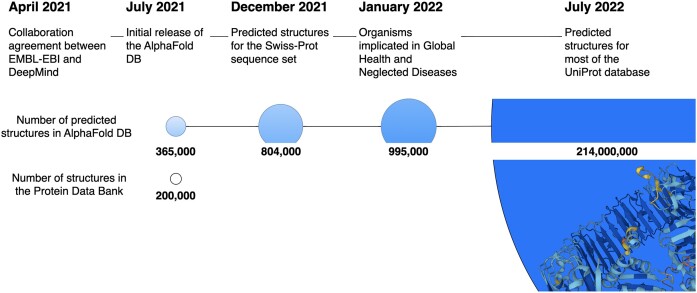
The AlphaFold Database Protein Structure Database (AlphaFold DB, https://alphafold.ebi.ac.uk) has significantly impacted structural biology by amassing over 214 million predicted protein structures, expanding from the initial 300k structures released in 2021. Enabled by the groundbreaking AlphaFold2 artificial intelligence (AI) system, the predictions archived in AlphaFold DB have been integrated into primary data resources such as PDB, UniProt, Ensembl, InterPro and MobiDB. Our manuscript details subsequent enhancements in data archiving, covering successive releases encompassing model organisms, global health proteomes, Swiss-Prot integration, and a host of curated protein datasets. We detail the data access mechanisms of AlphaFold DB, from direct file access via FTP to advanced queries using Google Cloud Public Datasets and the programmatic access endpoints of the database. We also discuss the improvements and services added since its initial release, including enhancements to the Predicted Aligned Error viewer, customisation options for the 3D viewer, and improvements in the search engine of AlphaFold DB.
Overview
CoChat Summary
TL;DR
AlphaFold DB has grown from ~300k to over 214 million predicted protein structures as of September 2023, with expanded access, search, and visualization features. This 2024 update describes data archiving, access mechanisms, integration with core resources, and new clustering/BLAST/PAE viewer capabilities.
Key findings
- AlphaFold DB expanded from approximately 300k structures in 2021 to over 214 million predicted protein structures as of September 2023; the initial July 2021 release housed over 360,000 structures for 20 model organism proteomes.
- Predictions are integrated into resources including PDB, UniProt, Ensembl, InterPro and MobiDB, and are accessible via FTP, Google Cloud Public Datasets (~23 TiB), API, and the website; PAE data is unavailable from EMBL-EBI public FTP.
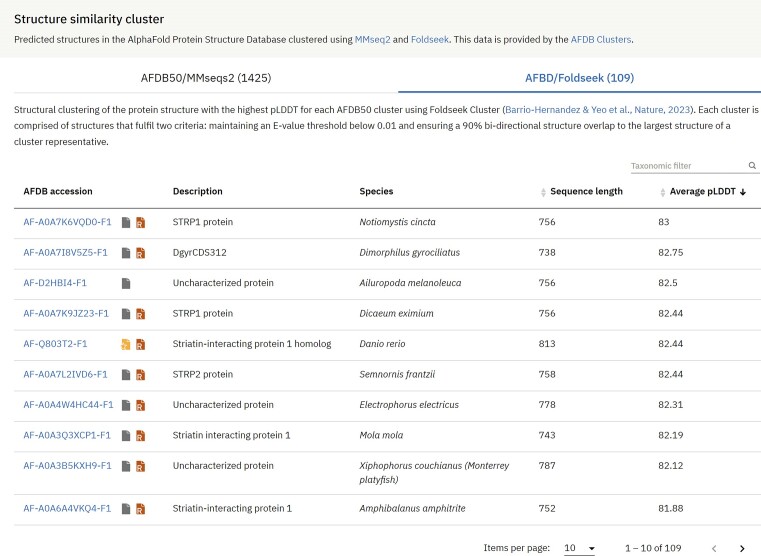
- Structure similarity clustering used MMseqs2 to cluster 214 million UniProtKB sequences into 52 million clusters, then Foldseek secondary clustering yielded 18.8 million clusters, finalizing 2.30 million robust clusters each with at least a pair of structures.
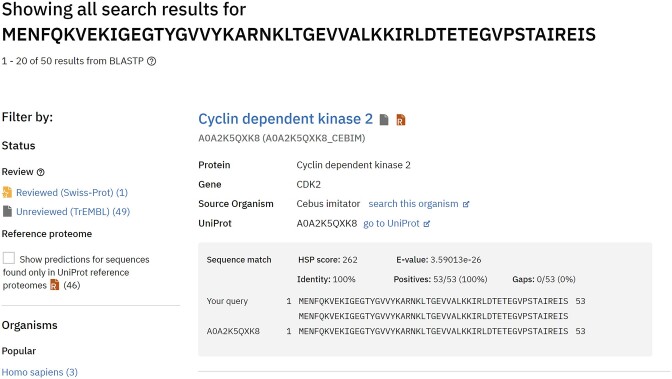
- New features include BLAST sequence similarity search, improved search filters for reviewed/unreviewed and reference proteome status, enhanced PAE viewer–Mol* interactivity, and a November 2022 update fixing a numerical bug that affected ~4% of total structure predictions.
Methods
- Descriptive database update/report with no primary experimental design; data generation is carried out by Google DeepMind, with predictions stored in PDB, mmCIF (modelCIF), and binaryCIF formats plus JSON metadata and confidence metrics pLDDT and PAE.
- Archiving uses successive releases from UniProt reference proteomes (e.g., 2021_02, 2021_04), Swiss-Prot, WHO global health proteomes, and MANE select; as of September 2023, EMBL-EBI FTP hosts TAR files for proteomes of 48 organisms.
- Access and analysis infrastructure includes FTP, Google Cloud Public Datasets, an API keyed on UniProt accessions, Apache-Solr search, BLAST on Google Cloud Platform, and Foldseek/MMseqs2 clustering.
Limitations
- Stated: sequences are not covered if they are less than 16 amino acids; >2700 aa for Swiss-Prot/proteome sequences or >1280 aa for other UniProt sequences; contain non-standard amino acids; are not in the UniProt ‘one sequence per gene’ FASTA file; or are viral proteins; these limitations are under discussion.
- Stated: some sequences may be outdated compared to UniProt due to less frequent AlphaFold DB releases; PAE data is unavailable from EMBL-EBI public FTP; full Google Cloud dataset download requires a Google account and can take roughly 2.5 days at 1 Gbps.
- Evident from the text: all archived structures are predicted models rather than experimental structures, and users must interpret pLDDT/PAE cautiously (e.g., pLDDT <50 likely disordered, 50–70 lower confidence); the database also currently lacks isoform and multimeric predicted structures, which are listed as future work.
Model-written summary. Check it against the paper before relying on it.
Integrity signals
Registry
Cites
Statistics
Figures

Verification
Claims the paper makes
11 Valid · 1 Not valid · 0 Not checked · 28 Own results and interpretations
Every source the paper cites for this claim was checked and supports it.
In the paper
“The new generation of predicted protein structure models has demonstrated remarkable accuracy, which could mitigate the continually widening gap between known protein sequences and experimentally determined protein structures (7).”
§ AlphaFold Protein Structure Database in 2024: providing structure coverage for over 214 million protein sequences > Introduction
What the sources say
- Supportedcites [7] Varadi M., Bordin N., Orengo C., Velankar S. The opportunities and challenges posed by the new generation of deep learning-based protein structure predictors. Curr. Opin. Struct. Biol. 2023; 79: 102543. 36807079 PMC7618866 source
The Introduction says prediction models made a major advance in accuracy and can match or sometimes surpass experimentally determined structures. It also describes a growing gap between known protein sequences and determined structures; the section on new challenges says predicted structures have greatly increased coverage of protein sequence space. These passages support both the accuracy claim and the proposed potential to narrow that gap (page numbers unavailable). (LLM, conf=0.93)
boosted- Asserted: passes — The authors put it forward as true.
- Checkable: passes — It can be checked against evidence.
- Load-bearing: passes — The paper’s conclusions depend on it.
- Based: passes — The paper gives a reason why it holds.
- Supported
Every source the paper cites for this claim was checked and supports it.
In the paper
“In response to frequent requests from the user community since the AlphaFold DB launch, we have made significant strides to implement a sequence-based similarity search feature. We have incorporated the Basic Local Alignment Search Tool (BLAST) (21) into our Google Cloud Platform infrastructure to achieve this.”
§ AlphaFold Protein Structure Database in 2024: providing structure coverage for over 214 million protein sequences > Implementation > Data access
What the sources say
- Supportedcites [21] Camacho C., Coulouris G., Avagyan V., Ma N., Papadopoulos J., Bealer K., Madden T.L. BLAST+: architecture and applications. BMC Bioinf. 2009; 10: 421. PMC2803857 20003500 source
The Background identifies BLAST as a sequence similarity search program that matches a query sequence against a database. In the citing sentence, the citation identifies the tool incorporated; the AlphaFold DB implementation is the citing authors’ own report, not a claim attributed to this source. (LLM, conf=0.91)
plainstates a cause- Asserted: passes — The authors put it forward as true.
- Checkable: passes — It can be checked against evidence.
- Load-bearing: unclear — It is unclear whether the paper’s conclusions depend on it.
- Based: passes — The paper gives a reason why it holds.
- Supported
Every source the paper cites for this claim was checked and supports it.
In the paper
“The impact of the predicted structures is further enhanced by their seamless integration into several core data resources, including PDBe-KB (17), UniProt (6), Ensembl (16), InterPro (15), Genecards (24) and MobiDB (25), among others.”
§ AlphaFold Protein Structure Database in 2024: providing structure coverage for over 214 million protein sequences > Conclusions and outlook
What the sources say
- Supportedcites [17] consortium P.D.B.-K.B. PDBe-KB: collaboratively defining the biological context of structural data. Nucleic Acids Res. 2022; 50: D534– D542. 34755867 PMC8728252 source
Citation (17) is attached specifically to PDBe-KB, rather than to the other resources in the sentence. The Introduction identifies PDBe-KB as a resource that integrates structural and functional annotations, supporting its identification here. (LLM, conf=0.90)
- Supportedcites [6] U.P. Consortium UniProt: the Universal Protein Knowledgebase in 2023. Nucleic Acids Res. 2023; 51: D523– D531. 36408920 PMC9825514 source
The citation is attached to UniProt in a list of resources, and the cited paper is a description of UniProt. Its Data integration and Interactive visualisations in entry pages sections state that UniProt incorporates AlphaFold-predicted structures into protein entries alongside other data; the supplied passages do not give page numbers. (LLM, conf=0.93)
- Supportedcites [16] Cunningham F., Allen J.E., Allen J., Alvarez-Jarreta J., Amode M.R., Armean I.M., Austine-Orimoloye O., Azov A.G., Barnes I., Bennett R. et al. Ensembl 2022. Nucleic Acids Res. 2022; 50: D988– D995. 34791404 PMC8728283 source
The citation identifies Ensembl as one of the resources in the list. In “Developing a new website” (page not provided), the paper says Ensembl’s Entity Viewer provides access to protein information, including 3D structures from PDBe. (LLM, conf=0.86)
plainstates a cause- Asserted: passes — The authors put it forward as true.
- Checkable: passes — It can be checked against evidence.
- Load-bearing: unclear — It is unclear whether the paper’s conclusions depend on it.
- Based: passes — The paper gives a reason why it holds.
- Supported
Every source the paper cites for this claim was checked and supports it.
In the paper
“Tackling this challenge, Steinegger et al. recently unveiled the Foldseek Cluster, a state-of-the-art structural-alignment-based clustering algorithm designed for vast datasets (22). They applied this novel method to the AlphaFold DB archive, making the derived structure similarity clusters available to the research community.”
§ AlphaFold Protein Structure Database in 2024: providing structure coverage for over 214 million protein sequences > Implementation > Data access
What the sources say
- Supportedcites [22] Barrio-Hernandez I., Yeo J., Jänes J., Mirdita M., Gilchrist C.L.M., Wein T., Varadi M., Velankar S., Beltrao P., Steinegger M. Clustering-predicted structures at the scale of the known protein universe. Nature. 2023; 622: 637– 645. 37704730 PMC10584675 source
The Abstract says the authors used Foldseek cluster to cluster the AlphaFold database. The Methods section (“Web server”) says they developed a server for users to explore the clusters, their members and related clusters, supporting the claim that the results were made available to researchers. (LLM, conf=0.93)
plainstates a cause- Asserted: passes — The authors put it forward as true.
- Checkable: passes — It can be checked against evidence.
- Load-bearing: passes — The paper’s conclusions depend on it.
- Based: passes — The paper gives a reason why it holds.
- Supported
- Probably not a substantial claim. 30
- It may state two separate claims as one. 15
- The quote only partly states this claim. 1
Claims other papers make about this one
Each is checked against this paper’s own text: does it say what the citing paper says it does?
The cited source says what the claim attributes to it.
In the citing paper
“houses over 200 million pre-run AF2 predictions”
From The power and pitfalls of AlphaFold2 for structure prediction beyond rigid globular proteins (2024) · cites this paper as [7]
Citations
Cites
Highly accurate protein structure prediction with AlphaFold
Jumper, J., Evans, R., Pritzel, A., Green, T., Figurnov, M., Ronneberger, O., Tunyasuvunakool, K., Bates, R., Žídek, A., Potapenko, A., et al. (2021) · Nature · doi:10.1038/s41586-021-03819-2 · Cited by 43,764
Self-citationBLAST+: architecture and applications
Camacho, C., Coulouris, G., Avagyan, V., Ma, N., Papadopoulos, J., Bealer, K., & Madden, T. L. (2009) · BMC Bioinformatics · doi:10.1186/1471-2105-10-421 · Cited by 22,074
UniProt: the Universal Protein Knowledgebase in 2023
The UniProt Consortium, Bateman, A., Martin, M.-J., Orchard, S., Magrane, M., Ahmad, S., Alpi, E., Bowler-Barnett, E. H., Britto, R., Bye-A-Jee, H., et al. (2023) · Nucleic Acids Research · doi:10.1093/nar/gkac1052 · Cited by 7,210
Evolutionary-scale prediction of atomic level protein structure with a language model
Lin, Z., Akin, H., Rao, R., Hie, B., Zhu, Z., Lu, W., Smetanin, N., Verkuil, R., Kabeli, O., Shmueli, Y., et al. (2022) · doi:10.1101/2022.07.20.500902 · Cited by 5,990 · cited 1×
“In the wake of the latest breakthroughs in prediction software, new databases such as the AlphaFold Protein Structure Database and the ESM Atlas ( 14 ) have emerged.”
MethodThe GeneCards suite: from gene data mining to disease genome sequence analyses
Stelzer, G., Rosen, N., Plaschkes, I., Zimmerman, S., Twik, M., Fishilevich, S., Stein, T. I., Nudel, R., Lieder, I., Mazor, Y., et al. (2016) · Current Protocols in Bioinformatics · doi:10.1002/cpbi.5 · Cited by 5,550 · cited 1×
“The impact of the predicted structures is further enhanced by their seamless integration into several core data resources, including PDBe-KB ( 17 ), UniProt ( 6 ), Ensembl ( 16 ), InterPro ( 15 ), Genecards ( 24 ) and MobiDB ( 25 ), among others.”
BackgroundAccurate prediction of protein structures and interactions using a 3-track network
Baek, M., DiMaio, F., Anishchenko, I., Dauparas, J., Ovchinnikov, S., Lee, G. R., Wang, J., Cong, Q., Kinch, L. N., Schaeffer, R. D., et al. (2021) · doi:10.1101/2021.06.14.448402 · Cited by 5,549
Paysan-Lafosse, T., Blum, M., Chuguransky, S., Grego, T., Pinto, B. L., Salazar, G. A., Bileschi, M. L., Bork, P., Bridge, A., Colwell, L., et al. (2023) · Nucleic Acids Research · doi:10.1093/nar/gkac993 · Cited by 2,399
Cunningham, F., Allen, J. E., Allen, J., Alvarez-Jarreta, J., Amode, M. R., Armean, I. M., Austine-Orimoloye, O., Azov, A. G., Barnes, I., Bennett, R., et al. (2022) · Nucleic Acids Research · doi:10.1093/nar/gkab1049 · Cited by 1,923
Mol* Viewer: modern web app for 3D visualization and analysis of large biomolecular structures
Sehnal, D., Bittrich, S., Deshpande, M., Svobodová, R., Berka, K., Bazgier, V., Velankar, S., Burley, S. K., Koča, J., & Rose, A. S. (2021) · Nucleic Acids Research · doi:10.1093/nar/gkab314 · Cited by 1,154 · cited 1×
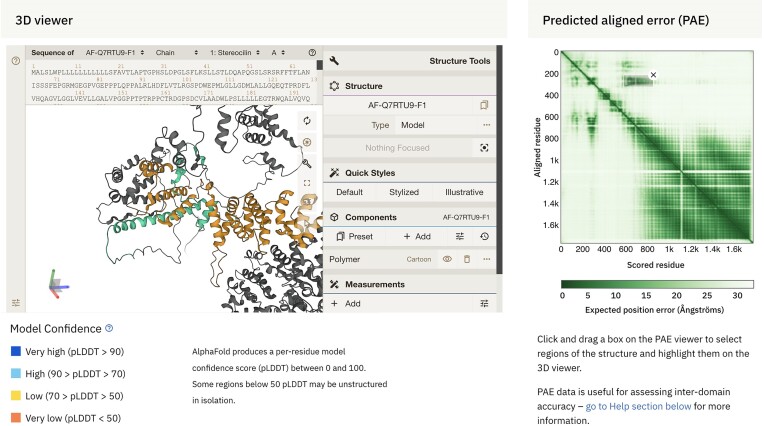
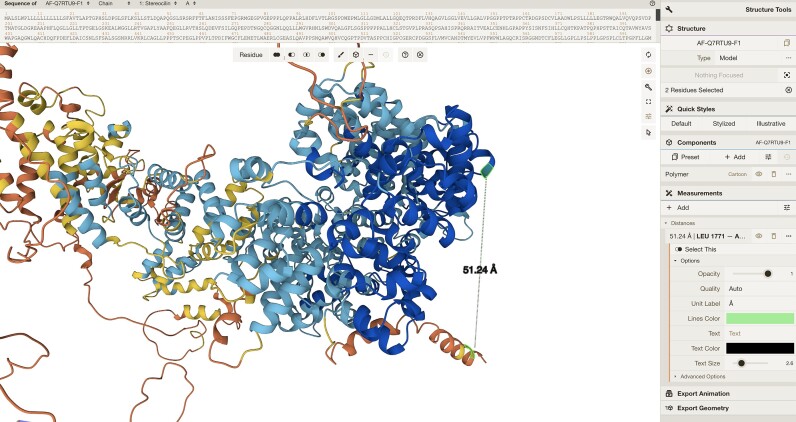
“We improved the visualisation of non-consecutive regions and the interactivity between the PAE viewer and the 3D molecular graphics viewer, Mol* ( 23 ) (Figure 5 ).”
MethodSelf-citationMariani, V., Biasini, M., Barbato, A., & Schwede, T. (2013) · Bioinformatics · doi:10.1093/bioinformatics/btt473 · Cited by 1,138 · cited 1×
“AlphaFold yields a per-residue estimate of its confidence, known as pLDDT, ranging from 0 to 100, indicating the tool’s predicted score on the lDDT-C α metric ( 19 ).”
Method
Cited by
Items 1,401–1,500 of 2,174
Capper, E., & Chen, M. (2025) · bioRxiv (Cold Spring Harbor Laboratory) · doi:10.1101/2025.09.10.674987 · Cited by 1
“Molecular structures of all subunits were first folded by AlphaFold2 31,32 , then rigidly fit into the final GMM-refined map using ChimeraX 37 .”
de Souza, D. P., May, M. B., Carrion, J., Alva, V., Bisson‐Filho, A. W., & Davis, J. H. (2026) · The EMBO Journal · doi:10.1038/s44318-026-00918-6 · Cited by 2
Maqtedar, A., Rossi, M.-A., Clerico, E. M., Williams, R. V., & Gierasch, L. M. (2026) · Journal of Biological Chemistry · doi:10.1016/j.jbc.2026.111176
From Orphan Genes to Cryptogenic Gene Candidates: Reassessing UniquenessPreprint
Maan, S. K., Butzin, X. Y., Ge, X., et al. (2025) · bioRxiv (Cold Spring Harbor Laboratory) · doi:10.1101/2025.06.28.662130
Mechanistic Insights into Proteomic Mutation-Phenotype Linkages from Tiling Mutagenesis ScreensPreprint
He, W., Huang, J., Wang, Y., Hayward, S. B., Leuzzi, G., Fu, R., Wang, S., Vaitsiankova, A., Bedford, M. T., Guérois, R., et al. (2025) · bioRxiv (Cold Spring Harbor Laboratory) · doi:10.1101/2025.04.17.649336
“In this study, 3D structures of protein complexes were obtained from the PDB database and from AlphaFold-based predictions available in the Predictome database 46 .”
InfluentialSoleymani, F., Piryaei, F., Farhadi, A., et al. (2025) · Movement Disorders · doi:10.1002/mds.30323
“15,16 Molecular visualization of the normal and mutated protein was generated using the PyMOL software (Version 3.0, Schrödinger, LLC).”
InfluentialKowalczyk, T., Owczarek, M., Ghorbanpour, M., Merecz-Sadowska, A., Wiśniewska‐Wrona, M., Bartosik, K., Buczek, A., Chałańska, A., Sikora, M., Piekarska, K., et al. (2026) · Industrial Crops and Products · doi:10.1016/j.indcrop.2026.123590
EROS protein: Decoding its pivotal role in redox homeostasis and disease pathogenesis
Liang, S., Zhou, Y., Ren, W., Xu, Y., Tang, M., Su, Y., Li, L., & Gao, M. (2025) · Advances in Redox Research · doi:10.1016/j.arres.2025.100147
The role of DHH motifs in PRUNE1 gene on ion channels: A new insight into epilepsy pathogenesis
Günay, Ç., Yılmazbilek, İ., Soydemir, D., Uzan, G. S., Özsoy, Ö., Yeşilmen, M. C., Guliyeva, U., Kalafatçılar, A. İ. P., Yiş, U., Kurul, S. H., et al. (2026) · Epilepsy Research · doi:10.1016/j.eplepsyres.2026.107798
Beyond profiles: supervised repeat annotation using protein embeddingsPreprint
Qiu, K., Ludwiczak, J., Lupas, A. N., & Dunin-Horkawicz, S. (2026) · bioRxiv (Cold Spring Harbor Laboratory) · doi:10.64898/2026.05.19.725729
Sun, L., Chen, X., Zhang, H., Xu, Z., Yang, G., & Xu, S. (2026) · Integrative Zoology · doi:10.1111/1749-4877.70087
Porterfield, J., Knowles, I., Wiggenhorn, E., Tangen, S., & Kandl, K. (2026) · G3 Genes Genomes Genetics · doi:10.1093/g3journal/jkag117
“In addition, protein sequence 4270 was used to query several protein structure databases (AlphaFold; Varadi et al. 2024, Protein Data Bank; Berman et al. 2000, and Swiss-Prot; Bateman et al. 2025) in a profile hidden Markov model sequence similarity search (PHMMER) with a substitution scoring…”
Miao, B., Zhang, Y., Shao, W., Fu, S., Bartolomei, M. S., Walker, C., Coarfa, C., Zhang, B., & Wang, T. (2025) · bioRxiv (Cold Spring Harbor Laboratory) · doi:10.1101/2025.07.28.667212
Large chemical spaces—Modeling and searching of large chemical spaces
Orsi, M., & Reymond, J. (2025) · Elsevier eBooks · doi:10.1016/b978-0-443-29808-0.00045-5
Cao, X., Liu, A., Zhang, X., et al. (2026) · Frontiers in Plant Science · doi:10.3389/fpls.2025.1710318
Comparative analysis of adhesin-like proteins from Methanobacteriales species
Tan, A., Gupta, A. B., Er, S., & Seedorf, H. (2026) · Frontiers in Microbiology · doi:10.3389/fmicb.2026.1897686
Carrillo-Ordóñez, G. A., Carrasco-Lozano, E. C., Correa, F. R. A., Bustamante, D. E., & Calderón, M. S. (2026) · Physiological and Molecular Plant Pathology · doi:10.1016/j.pmpp.2026.103217 · Cited by 1
Chacha, R., Maina, C., Murungi, E. K., Guantai, E. M., Ngugi, M. P., Ndirangu, E. G., Adipo, N., & Kigondu, E. M. (2025) · Research Square · doi:10.21203/rs.3.rs-6790723/v1
Kishida, K., Kudo, K., Kumagai, R., Deng, W., Stari, L., Ogawa-Kishida, N., Ohtsubo, Y., Nagata, Y., & Tsuda, M. (2025) · doi:10.1101/2025.01.22.634284 · Cited by 1
KSHVbook: An Information‐Sharing Database for Kaposi's Sarcoma‐Associated Herpesvirus
Jiang, Y. H., Niu, D., Yu, L., et al. (2025) · Journal of Medical Virology · doi:10.1002/jmv.70272
Beyond one drug–one target: AI-guided discovery of multi-target antiviral therapeutics
Gupta, V., Sharma, S., Abbot, V., Bhatia, R., Choudhary, N., & Kumar, D. (2026) · Frontiers in Virology · doi:10.3389/fviro.2026.1853552
A homozygous lamin B receptor variant resulting in Pelger–Huët anomaly without skeletal dysplasia
Hoffmann, K., Vayá, A., Vayá, J. M. R., Küchler, O., Schmidt, A., von Kügelgen, N., Fischer‐Zirnsak, B., & Sperling, K. (2026) · Nucleus · doi:10.1080/19491034.2026.2720062
“Interestingly, the variant p.V482G affects protein level, which is not uncommon for genetic variants [23].”
Chockalingam, A. A., Astuti, A., Weng, C.-W., & Ng, K. (2025) · International Conference on Artificial Intelligence for Medicine, Health and Care (AIxMHC) · doi:10.1109/aixmhc65380.2025.00023
Li, X.-Z., Li, Y., Liu, W., Qi, J., & Zhu, J. (2026) · bioRxiv (Cold Spring Harbor Laboratory) · doi:10.64898/2026.02.16.706022
Xu, Z., Huang, J., Wu, W., Huang, J., Cao, H., ShuZhen, C., Zhao, Y., Park, T.-J., Hui, Z., & Li, L. (2026) · Applied and Environmental Microbiology · doi:10.1128/aem.02425-25 · Cited by 1
Yang, M., Li, S., Li, R., Dong, Y., Zhou, M., Zhao, J., Liu, M., & Tan, R. (2026) · New Biotechnology · doi:10.1016/j.nbt.2026.05.006
Zakaria, S., Peresson, S., Sharkey, C. M., & Engel, K. (2026) · Frontiers in Bioengineering and Biotechnology · doi:10.3389/fbioe.2026.1819575 · Cited by 1
“…structure prediction, most prominently AlphaFold, now achieve near-experimental accuracy across large swathes of the proteome (Jumper, et al., 2021; Varadi, et al., 2024), enabling researchers to infer structure–function relationships and prioritise designs without extensive wet-lab screening.”
Evidence for dual pathways of Tc1/mariner domestication in Drosophila
Guseva, I. O., Rezvykh, A. P., Zelentsova, E. S., Kulikova, D. A., Evgen’ev, M. B., & Funikov, S. Y. (2026) · BMC Biology · doi:10.1186/s12915-026-02655-y
“For structural analysis, the three-dimensional model of CG14478 was extracted from the AlphaFold Protein Structure Database (AF-Q6NR30-F1) [117].”
Freye, C., Whittington, A. C., & Miller, B. G. (2026) · bioRxiv (Cold Spring Harbor Laboratory) · doi:10.64898/2026.01.30.702642
ProteoCast: a web server to predict, validate, and interpret missense variant effects
Abakarova, M., Freiberger, M. I., Liehrmann, A., Rera, M., & Laine, E. (2025) · doi:10.1101/2025.11.03.686214 · Cited by 1
Nivaggioli, S., Nguyen, H. H., Harker, K. K., Mohr, C. M., Wood, J., Dupen, M., Javed, Z., Karjalainen, N., Yousefpor, V., Reddy, A. P., et al. (2026) · Molecular & Cellular Proteomics · doi:10.1016/j.mcpro.2026.101666
Raw defines a TIR-fold cADPR hydrolase cooperating with dSarm in development and axon degeneration
Chen, F. C., Chen, Z., Tan, Y., Shen, X. Y., Leong, M., Yang, J. Y., Li, W. H., Hou, Y. N., Bao, G., Chen, Y. J., et al. (2026) · Cell Communication and Signaling · doi:10.1186/s12964-026-02975-0
“The discovery of the TIR-containing Raw’s enzymatic function exemplifies the power of combining comparative genomics and advanced structural prediction tools like AlphaFold [24] to annotate proteins of unknown function.”
Dissection of Nitric Oxide binding pathway in Nitrobindins reveals hidden structural details
Iagatti, A., Messias, A., Simone, G. D., Sebastiani, F., Patrizi, B., Bocedi, A., Estrin, D. A., Ascenzi, P., Foggi, P., & Coletta, M. (2025) · International Journal of Biological Macromolecules · doi:10.1016/j.ijbiomac.2025.148406
Kudalkar, G. P., Leidner, F., Kumar, N., Hass, J. L., Madzelan, P., Powell, D. R., Day, V. W., Maguerès, P. L., Ferrara, J. D., Daniels, L. M., et al. (2025) · Angewandte Chemie · doi:10.1002/ange.202510889
Kawaguchi, S., Xu, X., Soga, T., Yamaguchi, K., Kawasaki, R., Shimouchi, R., Date, S., & Kai, T. (2025) · eLife · doi:10.7554/elife.101967.3 · Cited by 10
Hassan, E., Paschos, A., Dinn, C., Shakshuki, E., & Eaman, A. (2025) · Procedia Computer Science · doi:10.1016/j.procs.2025.10.175
Naveed, M., Haseeb, M. A., Aziz, T. A., et al. (2026) · Desalination and Water Treatment · doi:10.1016/j.dwt.2026.101755
An Effective Method for Determining the Degree of Oligomerization of hnRNPA2 Low Complexity DomainPreprint
Żeliszewska, P., Adamczyk, Z., Shah, P., Kluza, A., Michna, A., & Bratek‐Skicki, A. (2025) · bioRxiv (Cold Spring Harbor Laboratory) · doi:10.1101/2025.02.24.639801
Kant, R., Mazumdar, S., Mahajan, A., et al. (2026) · ACS Infectious Diseases · doi:10.1021/acsinfecdis.6c00521
Winterbourne, S., Jayachandran, U., Zou, J., Rappsilber, J., Granneman, S., & Cook, A. G. (2024) · bioRxiv (Cold Spring Harbor Laboratory) · doi:10.1101/2024.08.19.607423
Fu, G., Li, A., Zhu, L., et al. (2026) · CyTA - Journal of Food · doi:10.1080/19476337.2026.2688593
Gil, F., Ripani, E., Joray, M. B., del Valle, M. P., Cannon, R. D., Athanassopoulos, C. M., Vera, D. M. A., & Carpinella, M. C. (2026) · Plants · doi:10.3390/plants15162523
“Missing residues were modeled using the AlphaFold2-predicted structure corresponding to UniProt entry Q5ANA3 [41–43] followed by further local optimization and preparative relaxations.”
Yan, J., Zhao, Y., Wang, Y., Zhou, X., Liu, J., Chen, Z., Jiang, M., & Dong, W. (2026) · Biotechnology Advances · doi:10.1016/j.biotechadv.2026.108955
A heterozygous USB1 variant linked to immunodeficiency
Valagussa, A., Moreno-Corona, N. C., Lagresle‐Peyrou, C., Mercurio, S., Tragin, M., Goudin, N., Parisot, M., Beltrame, M., Moshous, D., & Kracker, S. (2025) · Journal of Human Immunity · doi:10.70962/jhi.20250110
ASSESSMENT OF ALPHAFOLD PROTEIN MODELS FOR SMALL-MOLECULE LIGAND DOCKINGPreprint
Maidanik, H., Lazou, M., Bajaj, R., Sarwar, R., Vajda, S., & Joseph‐McCarthy, D. (2026) · bioRxiv (Cold Spring Harbor Laboratory) · doi:10.64898/2026.01.04.697577
Xie, C., Gan, J., Zhang, Y., Yu, W., Li, R., Yu, D., Liu, Y., Zheng, S. G., & Qi, G. (2025) · Journal of Biological Engineering · doi:10.1186/s13036-025-00551-7
“The predicted protein structures of Dre and Cre, as determined by AlphaFold [32], are also highly similar (Figure S1).”
Ling, D. B., Siddiqui, G., MacRaild, C. A., Yamaryo‐Botté, Y., Dans, M. G., Kouskousis, B. P., Weiss, G. E., Razook, Z., Mehra, S., Nguyen, W., et al. (2026) · bioRxiv (Cold Spring Harbor Laboratory) · doi:10.64898/2026.02.24.707847 · Cited by 1
Wu, C., He, M., Yuan, S., Zhang, L., Mao, L., Zhu, L., Liu, X., & Chen, L. (2026) · Environmental Pollution · doi:10.1016/j.envpol.2026.129066
Artificial Intelligence Powers Protein Functional Annotation
Wang, W., Yang, Q., Zeng, M., Zheng, R., & Li, M. (2026) · Advanced Science · doi:10.1002/advs.202524373 · Cited by 1
“Protein Data Bank (PDB) [ 109 ] and AlphaFold DB [ 110, 111 ] (AFDB) provide experimentally-determined structures and predicted structures from AlphaFold2/3, respectively.”
You, H., Li, L., Xiao, C.-Y., et al. (2026) · Molecular Pharmaceutics · doi:10.1021/acs.molpharmaceut.5c01941
Research progress in PANoptosis mechanisms and their interplay with tuberculosis
Ma, X., Liang, Y., Wu, X., & An, H. (2026) · Frontiers in Cellular and Infection Microbiology · doi:10.3389/fcimb.2026.1786786
Exploring fern pathosystems and immune receptors to bridge gaps in plant immunity
Castel, B., Baker, M., Keller, J., Martinez, Y., Bonhomme, M., Delaux, P.-M., & Jacquet, C. (2025) · doi:10.1101/2025.03.18.643875 · Cited by 4
Shen, X., Zhang, H., Zhang, P., Niu, X., Zhao, X., Zhu, L., Zhu, J., & Wang, S. (2024) · SSRN Electronic Journal · doi:10.2139/ssrn.5062170
De novo Design of Supramolecular Nucleic Acid Systems Using Foundation Models
Ramlan, E. I., & Firdaus‐Raih, M. (2024) · Elsevier eBooks · doi:10.1016/b978-0-323-95502-7.00236-0
Rajabal, V., Ghaly, T. M., Colombi, E., Russell, D. H., Sia, C., Shah, B. S., McPherson, V. J., Qi, Q., Coleman, N. V., Gillings, M. R., et al. (2026) · Environmental Pollution · doi:10.1016/j.envpol.2026.128228
Titanium Dioxide Nanoparticle-Driven Metabolic and Molecular Reprogramming in Cyanobacteria
Malwalage, S. M., Sayadujjhara, M., & Sitther, V. (2026) · Molecules · doi:10.3390/molecules31172983
“The AlphaFold Protein Structure Database, archiving predicted structures for over 214 million protein sequences, provides directly accessible structural inputs for modeling n-TiO 2 interactions with cyanobacterial photosynthetic machinery [85].”
Chang, Y.-C., Kuo, W., Chen, Y.-P., Kao, S.-W., Hsieh, D. J., Ho, T., Kuo, C., Fu, C.-Y., Huang, C., & Lin, S. (2026) · Chemico-Biological Interactions · doi:10.1016/j.cbi.2026.112267
TDP-43 multidomains and RNA modulate interactions and viscoelasticity in biomolecular condensates
Matsushita, Y., Yasuda, I., Watanabe, F., & Yamamoto, E. (2026) · Biophysical Journal · doi:10.1016/j.bpj.2026.03.058 · Cited by 5
Is DEXI a Multiple Sclerosis Susceptibility Gene?
Eriksson, A. M., Emini, N., Harbo, H. F., & Berge, T. (2025) · International Journal of Molecular Sciences · doi:10.3390/ijms26031175 · Cited by 3
Linking MSMEG_1353 to lipid metabolism and envelope integrity in Mycolicibacterium smegmatisPreprint
Xie, Z., Lioe, T. S., Sahu, A., Cui, J., Carrillo, D. R., Kadowaki, T., & Tefsen, B. (2025) · bioRxiv (Cold Spring Harbor Laboratory) · doi:10.64898/2025.12.18.695065
ECOD: Classification of domains in AFDB Swiss-Prot structure predictions
Schaeffer, R., Zhang, J., Cong, Q., & Grishin, N. (2025) · doi:10.1101/2025.08.14.670261 · Cited by 2
Chan, H., Krichel, B., Bandura, L. J., Chapman, E. A., Rogers, H. T., Fischer, M. S., Roberts, D. S., Gao, Z., Wang, M., Wu, J., et al. (2025) · bioRxiv (Cold Spring Harbor Laboratory) · doi:10.1101/2025.04.15.648965
Protein Structure Characters in the Light of Phylogenetic Systematics
Matzke, N. J., & Li, C. (2026) · Genome Biology and Evolution · doi:10.1093/gbe/evag168
TILLCANN: A TILLING platform in Cannabis sativa for mutation discovery and crop improvement
Duarte-Delgado, D., Alexiou, K. G., Pujol, M., Uauy, C., Adamski, N. M., Vidal, V., Torres, A., Zalewski, C., Gaudino, R., Monfort, A., et al. (2024) · doi:10.1101/2024.10.28.620663 · Cited by 2
Sivaramakrishnan, M., & Chandrasekar, B. (2026) · bioRxiv (Cold Spring Harbor Laboratory) · doi:10.64898/2026.07.05.736646
Hanai, Y., Hilario, P. L. L., Shiraishi, Y., et al. (2025) · bioRxiv (Cold Spring Harbor Laboratory) · doi:10.1101/2025.02.19.638564
Beyond the Leaderboard: Leveraging Predictive Modeling for Protein-Ligand Insights and Discovery
Kalifa, D., Radinsky, K., & Horvitz, E. (2025) · doi:10.1101/2025.05.12.653449
Vogt, I., Bourdeaux, F., Kurkina, T., et al. (2026) · SSRN Electronic Journal · doi:10.2139/ssrn.6248127
Agent-Guided De Novo Design of Nanobody Binders Against a Novel Cancer TargetPreprint
Zhao, Y., Yilmaz, M., Lee, E., Teh, C., Guo, L. S., Sönmez, K., Giancardo, L., Trang, G., Xu, F., Espinosa-Cotton, M. M., et al. (2026) · bioRxiv (Cold Spring Harbor Laboratory) · doi:10.64898/2026.04.13.717816
“The AlphaFold2 structure was retrieved from the AlphaFold Protein Structure Database [23] rather than generated with the same controlled parameters used for other structures, so differences in MSA construction, model version, or template usage may contribute to this divergence.”
Evolutionarily divergent DUF4465 domains have a common vitamin B 12 ‐binding function
Clarke, C. D., Banasik, M., Juodeikis, R., Warren, M. J., & Pickersgill, R. W. (2026) · FEBS Open Bio · doi:10.1002/2211-5463.70231 · Cited by 1
Li, T., Li, J., Wang, L., et al. (2026) · bioRxiv (Cold Spring Harbor Laboratory) · doi:10.64898/2026.03.02.708952
Hong, J., Rong, X., Gao, J., Li, X., Zuo, Z., Zhou, R., Sun, H., & Huang, Z. (2026) · Environmental Sciences Europe · doi:10.1186/s12302-026-01398-5
“S1) [24, 25].”
Gentile, G. L., Guzmán, B. B., Van, A. L., Jerse, A. E., Grad, Y. H., Dominguez, D., Mortimer, T. D., & Nicholas, R. A. (2025) · bioRxiv (Cold Spring Harbor Laboratory) · doi:10.1101/2025.06.27.662027
Candidate orphan genes: Reassessing uniqueness
Maan, S. K., Butzin, X. Y., Ge, X., & Butzin, N. C. (2025) · PLoS ONE · doi:10.1371/journal.pone.0338891
“AlphaFold [47,48] served as an initial filter to help identify candidate orphan genes whose protein sequences are capable of folding into stable structures.”
InfluentialTran, N. D., Subramani, K., & Su, C. T.-T. (2025) · mAbs · doi:10.1080/19420862.2025.2531227
Dai, H., Feng, J., Wan, C., et al. (2026) · Microbiological Research · doi:10.1016/j.micres.2026.128653
Martinho, J. D. O., Castanhole-Nunes, M. M. U., Henrique, T., Kawasaki‐Oyama, R. S., Serafim, V., Possebon, V. S., Pavarino, É. C., & Goloni‐Bertollo, E. M. (2025) · Current Signal Transduction Therapy · doi:10.2174/0115743624377722251010100301
Engineered living building material for low-energy construction on Mars
Liu, N., Huang, W., Lam, S. C., Yi, Q., Dou, C., Tang, Y., Qin, S., Weng, Y., Sun, F., & Qiu, J. (2026) · Chem Circularity · doi:10.1016/j.checir.2026.100120 · Cited by 1
Matsushima, N., & Batkhishig, D. (2026) · Frontiers in Bioscience-Landmark · doi:10.31083/fbl50167
Computational modeling of the DprE1 and DprE2 protein interface for antitubercular drug discovery
Nandi, A., Turkar, M. K., Asthana, S., Lather, A., & Sharma, K. (2026) · Discover Chemistry. · doi:10.1007/s44371-026-00708-3
Journal research data policies in materials science
Hörmann, L., Myneni, H., Al‐Hamd, R. K. S., Batalović, K., Bonfanti, S., Grasselli, F., Gražulis, S., Koç, B., Konstantinou, K., Lončarić, I., et al. (2026) · Digital Discovery · doi:10.1039/d6dd00111d · Cited by 1
“This policy, coordinated by the Worldwide PDB consortium [15] and supported by major publishers and funding agencies, substantially improved the availability of structural data and enabled machine learning success stories, such as in protein folding prediction [16–19].”
Ajibola, A. A., Mustapha, A. A., Coba‐Jiménez, L., Cubillán, N., Sieroń, L., & Maniukiewicz, W. (2026) · Journal of Coordination Chemistry · doi:10.1080/00958972.2026.2707348
Formation and function of a novel Atg21-retromer complex in S. cerevisiae
Strubel, N., Foerster, J., Kramer, F., & Thumm, M. (2026) · Autophagy · doi:10.1080/15548627.2026.2671342
Wang, H., & Jiang, C. (2025) · IEEE International Conference on Bioinformatics and Biomedicine (BIBM) · doi:10.1109/bibm66473.2025.11356802
“The field has also seen advances in network-based methods [3] and structure-based methods leveraging advances like AlphaFold [4].”
Yang, C. X., Norouzi, M., Abovsky, M., Jurišica, I., & McCulloch, C. A. (2026) · Cellular Signalling · doi:10.1016/j.cellsig.2026.112807
PDB-IHM: Methods for Programmatic Deposition of Integrative Structures to the Protein Data BankPreprint
Zalevsky, A. O., Webb, B., Tangmunarunkit, H., Sekharan, M. R., Shafaeibejestan, A., Sagendorf, J. M., Kesselman, C., Berman, H. M., Burley, S. K., Šali, A., et al. (2026) · SSRN Electronic Journal · doi:10.2139/ssrn.7519215
Ribosomal RNA processing impairments in a B cell immunodeficient patient with WDR75 variants
Moreno-Corona, N. C., Valagussa, A., Poggi, L., López‐Ortega, O., Masson, C., Zarhrate, M., Bertrand, A., Pïcard, C., Revy, P., Bodet, D., et al. (2026) · Journal of Human Immunity · doi:10.70962/jhi.20250061
“Structural modeling did not reveal significant alterations in the 3D conformation of WDR75 p.T46I or in its known interaction interfaces with pre-rRNA, UTP4, or UTP18 (3, 7, 10, 11, 12) (Fig.”
Bonucci, A., Wang, T., Baroudi, H., Étienne, É., Gerbaud, G., Mileo, E., Parsiegla, G., Yamato, T., Gontero, B., Launay, H., et al. (2025) · FEBS Journal · doi:10.1111/febs.70187 · Cited by 1
“Considering the exhaustive AlphaFold predictions of known protein sequences [53], it also means that diatom CP12s possess a unique tertiary and quaternary fold not found elsewhere in the living world.”
Mutation hot spots for clinical pathogenicity across the SLC6 transporter familyPreprint
Huang, J., Digles, D., & Ecker, G. F. (2025) · bioRxiv (Cold Spring Harbor Laboratory) · doi:10.1101/2025.01.24.634481
Deep generative model for protein subcellular localization prediction
Yuan, G.-H., Li, J., Yang, Z., Chen, Y.-Q., Yuan, Z., Chen, T., Ouyang, W., Dong, N., & Yang, L. (2024) · doi:10.1101/2024.10.29.620765 · Cited by 7
Sain, R., Page, Y. L., Percevault, F., Becker, E., Négroni, L., Fernández, A., Cantero, M., Muñoz‐Santos, D., Montoliu, L., Garnier, C., et al. (2026) · Molecular Oncology · doi:10.1002/1878-0261.70239
“…Protein Databank (PDB; https://www.rcsb.org) [59], protein structure predictions from the EBI’s ALPHAFOLD database (https:// alphafold.ebi.ac.uk) [60], conserved protein domains, motifs, and amino acids from I NTERPRO (https://www. ebi.ac.uk/interpro/) [61], post-translational protein…”
The Structural History of EukaryaPreprint
Li, Q., Daumiller, D., & Bryant, P. (2026) · bioRxiv (Cold Spring Harbor Laboratory) · doi:10.64898/2026.02.04.703859
“However, not all proteomes had all UniProt identifiers present in the AlphaFold DataBase (AFDB, uniprot_v4) [10].”
InfluentialTo pack or not to pack: revisiting protein side-chain packing in the post-AlphaFold era
Vangaru, S., & Bhattacharya, D. (2025) · Briefings in Bioinformatics · doi:10.1093/bib/bbaf297
Schildberg, A., Dorn, K., & Jung, C. (2026) · Scientific Reports · doi:10.1038/s41598-026-40666-5
“Interestingly, using the AlphaFold Protein Structure Database 17,18 , we found that Arabidopsis contains an Hs4 homolog with 57% and 71% polypeptide similarity to Hs4 and BvHs4, respectively.”
Jain, M., Pattnayak, A. K., Aggarwal, S., Rai, P., J, K., Chandrayan, S., Goel, M., & Gaur, V. (2024) · doi:10.1101/2024.11.29.625776
Stouthamer, J., Pereira, D., Martin-Ramirez, S., Mutte, S., Mott, G. A., & Smakowska-Luzan, E. (2026) · Computational and Structural Biotechnology Journal · doi:10.34133/csbj.0043 · Cited by 2
“Full-length CRK models were extracted from the AF database [ 13 , 94 ].”
Csenki, M., Kalmár, T., Zombori, T., Kuthi, L., Vedelek, V., Gábor, M. K., KOBOR, J., & Sztriha, L. (2025) · Research Square · doi:10.21203/rs.3.rs-8070330/v1
(2025) · doi:10.1111/1462-2920.70178 · Cited by 5
Metadata
- Authors
- Varadi, M., Bertoni, D., Magana, P., Paramval, U., Pidruchna, I., Radhakrishnan, M., Tsenkov, M., Nair, S., Mirdita, M., Yeo, J., Kovalevskiy, O., Tunyasuvunakool, K., Laydon, A., Žídek, A., Tomlinson, H., Hariharan, D., Abrahamson, J., Green, T., Jumper, J., Birney, E., Steinegger, M., Hassabis, D., & Velankar, S.
- Affiliations
- European Molecular Biology Laboratory, European Bioinformatics Institute , Hinxton, UK
- European Bioinformatics Institute (GB)
- Seoul National University (KR)
- Google DeepMind (United Kingdom) (GB)
- Corresponding author
- Hassabis, Demis
- Velankar, Sameer
- ORCID
- Venue
- Nucleic Acids Research
- Publisher
- Oxford University Press (OUP)
- Published
- 2023-11-02
- Volume
- 52
- Issue
- D1
- Pages
- D368-D375
- ISSN
- 0305-1048 (ISSN-L)
- 1362-4962
- PMC
- PMC10767828
- OpenAlex
- W4388464011
- Cited by
- 2,052
- References
- 29
- Citations by year
- 2026: 724 · 2025: 1015 · 2024: 307 · 2023: 5
- FWCI
- 181.98
- Type
- journal article
- Language
- en
- Open access
- gold
- doi.org
- Licence
- Locations
- Nucleic Acids Research (publishedVersion, cc-by)
- PubMed Central (publishedVersion, cc-by)
- PubMed (publishedVersion)
- Seoul National University Open Repository (Seoul National University) (submittedVersion)
- Funders
- Google DeepMind
- National Research Foundation of Korea (2019R1A6A1A10073437, 2020M3A9G7103933, 2021R1C1C102065, 2021M3A9I4021220, RS-2023-00250470)
- Samsung DS Research Fund
- Seoul National University
- Topics
- Life Sciences › Biochemistry, Genetics and Molecular Biology › Molecular Biology › Protein Structure and Dynamics
- Life Sciences › Biochemistry, Genetics and Molecular Biology › Structural Biology › Enzyme Structure and Function
- Life Sciences › Biochemistry, Genetics and Molecular Biology › Molecular Biology › Machine Learning in Bioinformatics
- Keywords
- predicted protein structures, AlphaFold2, protein structure prediction, protein sequence coverage, data archiving, database access, search engines
- MeSH terms
- Amino Acid Sequence, Artificial Intelligence, Proteins, Protein Structure, Secondary, Proteome, Databases, Protein, Search Engine
About these checks
Registry, retraction, Cites and statistics results are computed, not judged, with one exception: a printed reference that no index lists is read once by a model before it counts as a citation error. Claims are extracted by a model and kept only when their quote appears verbatim in the text; each cited source is then checked, with a model’s help, for whether it says what the claim relies on. Those verdicts can be wrong — read the claim’s quote and the cited source before relying on one.
The claim verdicts this report counts are experimental: their accuracy is not yet measured.
A language model drew the claims from the paper on 2026-10-10, under version 3 of the claim definition (model deepseek-v4.1-flash, prompt extract-v3).
A second model labelled each claim on 2026-10-10 (model jev-1.13-20260917, definition revision gold-guideline-v0.2).
Cited sources are checked with a language model’s help (gpt-6-sol).
Statistics and arithmetic are recomputed, not judged.
Confidence bands are shown only for fields calibrated on our annotated test set. None is calibrated yet, so no band is shown.
What counts as a claim ›How we measure confidence ›How we check this ›
Are you an author, or do you see a problem with this page? Request a review
Data sources
Bibliographic data: Semantic Scholar, OpenAlex, Crossref.
Contains information from the Semantic Scholar Academic Graph Datasets, made available under the ODC Attribution License (ODC-BY 1.0).
Semantic Scholar’s data is described in: Kinney, R., et al. (2023). The Semantic Scholar Open Data Platform. arXiv:2301.10140.
