

AlphaFold Protein Structure Database in 2024: providing structure coverage for over 214 million protein sequences
Open accessThe DOI matches its Crossref record; 29 of the 29 references it cites were found in a registry or an index; 18 of the 18 sources its claims cite were checked for support.
Abstract
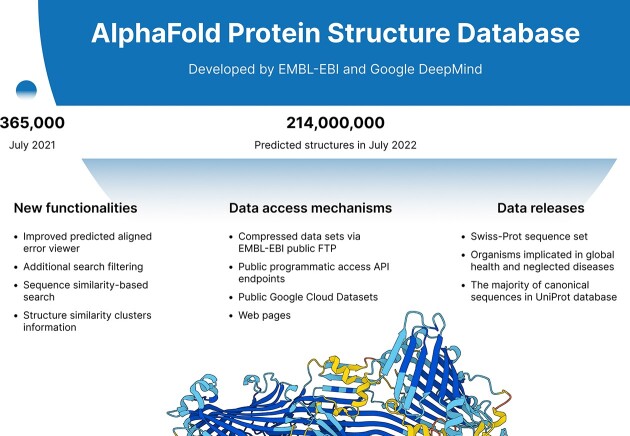
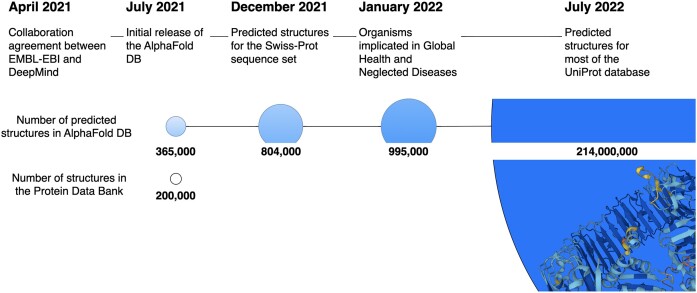
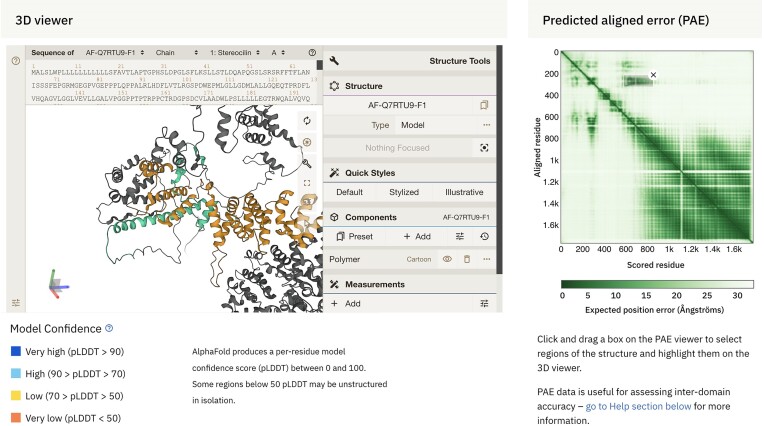
The AlphaFold Database Protein Structure Database (AlphaFold DB, https://alphafold.ebi.ac.uk) has significantly impacted structural biology by amassing over 214 million predicted protein structures, expanding from the initial 300k structures released in 2021. Enabled by the groundbreaking AlphaFold2 artificial intelligence (AI) system, the predictions archived in AlphaFold DB have been integrated into primary data resources such as PDB, UniProt, Ensembl, InterPro and MobiDB. Our manuscript details subsequent enhancements in data archiving, covering successive releases encompassing model organisms, global health proteomes, Swiss-Prot integration, and a host of curated protein datasets. We detail the data access mechanisms of AlphaFold DB, from direct file access via FTP to advanced queries using Google Cloud Public Datasets and the programmatic access endpoints of the database. We also discuss the improvements and services added since its initial release, including enhancements to the Predicted Aligned Error viewer, customisation options for the 3D viewer, and improvements in the search engine of AlphaFold DB.
Overview
CoChat Summary
TL;DR
AlphaFold DB has grown from ~300k to over 214 million predicted protein structures as of September 2023, with expanded access, search, and visualization features. This 2024 update describes data archiving, access mechanisms, integration with core resources, and new clustering/BLAST/PAE viewer capabilities.
Key findings
- AlphaFold DB expanded from approximately 300k structures in 2021 to over 214 million predicted protein structures as of September 2023; the initial July 2021 release housed over 360,000 structures for 20 model organism proteomes.
- Predictions are integrated into resources including PDB, UniProt, Ensembl, InterPro and MobiDB, and are accessible via FTP, Google Cloud Public Datasets (~23 TiB), API, and the website; PAE data is unavailable from EMBL-EBI public FTP.
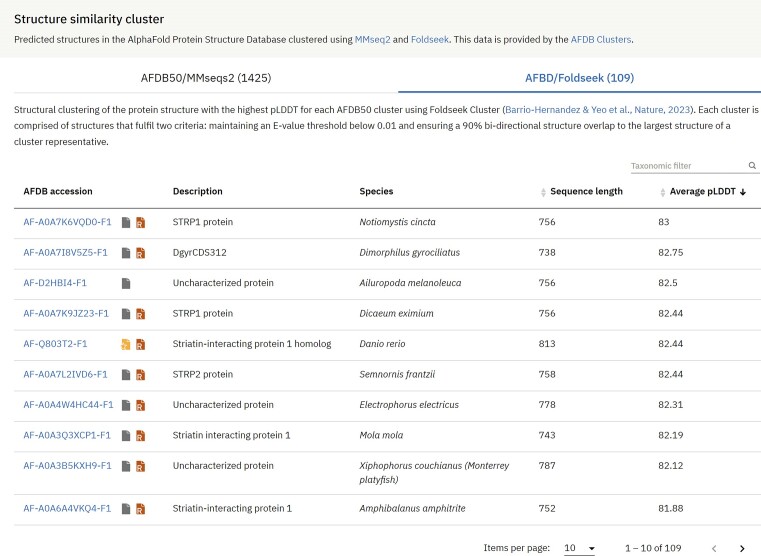
- Structure similarity clustering used MMseqs2 to cluster 214 million UniProtKB sequences into 52 million clusters, then Foldseek secondary clustering yielded 18.8 million clusters, finalizing 2.30 million robust clusters each with at least a pair of structures.
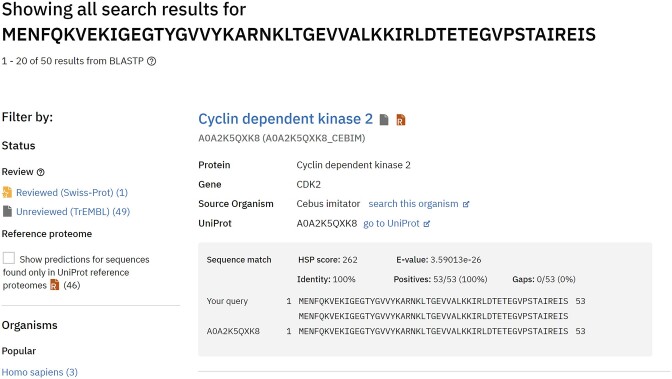
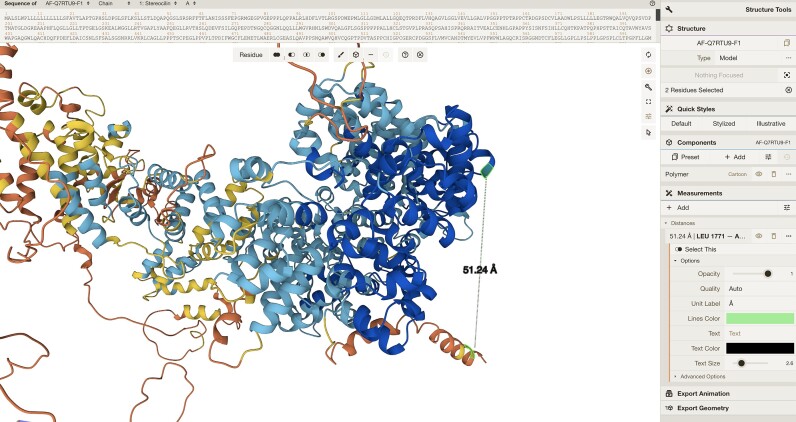
- New features include BLAST sequence similarity search, improved search filters for reviewed/unreviewed and reference proteome status, enhanced PAE viewer–Mol* interactivity, and a November 2022 update fixing a numerical bug that affected ~4% of total structure predictions.
Methods
- Descriptive database update/report with no primary experimental design; data generation is carried out by Google DeepMind, with predictions stored in PDB, mmCIF (modelCIF), and binaryCIF formats plus JSON metadata and confidence metrics pLDDT and PAE.
- Archiving uses successive releases from UniProt reference proteomes (e.g., 2021_02, 2021_04), Swiss-Prot, WHO global health proteomes, and MANE select; as of September 2023, EMBL-EBI FTP hosts TAR files for proteomes of 48 organisms.
- Access and analysis infrastructure includes FTP, Google Cloud Public Datasets, an API keyed on UniProt accessions, Apache-Solr search, BLAST on Google Cloud Platform, and Foldseek/MMseqs2 clustering.
Limitations
- Stated: sequences are not covered if they are less than 16 amino acids; >2700 aa for Swiss-Prot/proteome sequences or >1280 aa for other UniProt sequences; contain non-standard amino acids; are not in the UniProt ‘one sequence per gene’ FASTA file; or are viral proteins; these limitations are under discussion.
- Stated: some sequences may be outdated compared to UniProt due to less frequent AlphaFold DB releases; PAE data is unavailable from EMBL-EBI public FTP; full Google Cloud dataset download requires a Google account and can take roughly 2.5 days at 1 Gbps.
- Evident from the text: all archived structures are predicted models rather than experimental structures, and users must interpret pLDDT/PAE cautiously (e.g., pLDDT <50 likely disordered, 50–70 lower confidence); the database also currently lacks isoform and multimeric predicted structures, which are listed as future work.
Model-written summary. Check it against the paper before relying on it.
Integrity signals
Registry
Cites
Statistics
Figures

Verification
Claims the paper makes
11 Valid · 1 Not valid · 0 Not checked · 28 Own results and interpretations
Every source the paper cites for this claim was checked and supports it.
In the paper
“The new generation of predicted protein structure models has demonstrated remarkable accuracy, which could mitigate the continually widening gap between known protein sequences and experimentally determined protein structures (7).”
§ AlphaFold Protein Structure Database in 2024: providing structure coverage for over 214 million protein sequences > Introduction
What the sources say
- Supportedcites [7] Varadi M., Bordin N., Orengo C., Velankar S. The opportunities and challenges posed by the new generation of deep learning-based protein structure predictors. Curr. Opin. Struct. Biol. 2023; 79: 102543. 36807079 PMC7618866 source
The Introduction says prediction models made a major advance in accuracy and can match or sometimes surpass experimentally determined structures. It also describes a growing gap between known protein sequences and determined structures; the section on new challenges says predicted structures have greatly increased coverage of protein sequence space. These passages support both the accuracy claim and the proposed potential to narrow that gap (page numbers unavailable). (LLM, conf=0.93)
boosted- Asserted: passes — The authors put it forward as true.
- Checkable: passes — It can be checked against evidence.
- Load-bearing: passes — The paper’s conclusions depend on it.
- Based: passes — The paper gives a reason why it holds.
- Supported
Every source the paper cites for this claim was checked and supports it.
In the paper
“In response to frequent requests from the user community since the AlphaFold DB launch, we have made significant strides to implement a sequence-based similarity search feature. We have incorporated the Basic Local Alignment Search Tool (BLAST) (21) into our Google Cloud Platform infrastructure to achieve this.”
§ AlphaFold Protein Structure Database in 2024: providing structure coverage for over 214 million protein sequences > Implementation > Data access
What the sources say
- Supportedcites [21] Camacho C., Coulouris G., Avagyan V., Ma N., Papadopoulos J., Bealer K., Madden T.L. BLAST+: architecture and applications. BMC Bioinf. 2009; 10: 421. PMC2803857 20003500 source
The Background identifies BLAST as a sequence similarity search program that matches a query sequence against a database. In the citing sentence, the citation identifies the tool incorporated; the AlphaFold DB implementation is the citing authors’ own report, not a claim attributed to this source. (LLM, conf=0.91)
plainstates a cause- Asserted: passes — The authors put it forward as true.
- Checkable: passes — It can be checked against evidence.
- Load-bearing: unclear — It is unclear whether the paper’s conclusions depend on it.
- Based: passes — The paper gives a reason why it holds.
- Supported
Every source the paper cites for this claim was checked and supports it.
In the paper
“The impact of the predicted structures is further enhanced by their seamless integration into several core data resources, including PDBe-KB (17), UniProt (6), Ensembl (16), InterPro (15), Genecards (24) and MobiDB (25), among others.”
§ AlphaFold Protein Structure Database in 2024: providing structure coverage for over 214 million protein sequences > Conclusions and outlook
What the sources say
- Supportedcites [17] consortium P.D.B.-K.B. PDBe-KB: collaboratively defining the biological context of structural data. Nucleic Acids Res. 2022; 50: D534– D542. 34755867 PMC8728252 source
Citation (17) is attached specifically to PDBe-KB, rather than to the other resources in the sentence. The Introduction identifies PDBe-KB as a resource that integrates structural and functional annotations, supporting its identification here. (LLM, conf=0.90)
- Supportedcites [6] U.P. Consortium UniProt: the Universal Protein Knowledgebase in 2023. Nucleic Acids Res. 2023; 51: D523– D531. 36408920 PMC9825514 source
The citation is attached to UniProt in a list of resources, and the cited paper is a description of UniProt. Its Data integration and Interactive visualisations in entry pages sections state that UniProt incorporates AlphaFold-predicted structures into protein entries alongside other data; the supplied passages do not give page numbers. (LLM, conf=0.93)
- Supportedcites [16] Cunningham F., Allen J.E., Allen J., Alvarez-Jarreta J., Amode M.R., Armean I.M., Austine-Orimoloye O., Azov A.G., Barnes I., Bennett R. et al. Ensembl 2022. Nucleic Acids Res. 2022; 50: D988– D995. 34791404 PMC8728283 source
The citation identifies Ensembl as one of the resources in the list. In “Developing a new website” (page not provided), the paper says Ensembl’s Entity Viewer provides access to protein information, including 3D structures from PDBe. (LLM, conf=0.86)
plainstates a cause- Asserted: passes — The authors put it forward as true.
- Checkable: passes — It can be checked against evidence.
- Load-bearing: unclear — It is unclear whether the paper’s conclusions depend on it.
- Based: passes — The paper gives a reason why it holds.
- Supported
Every source the paper cites for this claim was checked and supports it.
In the paper
“Tackling this challenge, Steinegger et al. recently unveiled the Foldseek Cluster, a state-of-the-art structural-alignment-based clustering algorithm designed for vast datasets (22). They applied this novel method to the AlphaFold DB archive, making the derived structure similarity clusters available to the research community.”
§ AlphaFold Protein Structure Database in 2024: providing structure coverage for over 214 million protein sequences > Implementation > Data access
What the sources say
- Supportedcites [22] Barrio-Hernandez I., Yeo J., Jänes J., Mirdita M., Gilchrist C.L.M., Wein T., Varadi M., Velankar S., Beltrao P., Steinegger M. Clustering-predicted structures at the scale of the known protein universe. Nature. 2023; 622: 637– 645. 37704730 PMC10584675 source
The Abstract says the authors used Foldseek cluster to cluster the AlphaFold database. The Methods section (“Web server”) says they developed a server for users to explore the clusters, their members and related clusters, supporting the claim that the results were made available to researchers. (LLM, conf=0.93)
plainstates a cause- Asserted: passes — The authors put it forward as true.
- Checkable: passes — It can be checked against evidence.
- Load-bearing: passes — The paper’s conclusions depend on it.
- Based: passes — The paper gives a reason why it holds.
- Supported
- Probably not a substantial claim. 30
- It may state two separate claims as one. 15
- The quote only partly states this claim. 1
Claims other papers make about this one
Each is checked against this paper’s own text: does it say what the citing paper says it does?
The cited source says what the claim attributes to it.
In the citing paper
“houses over 200 million pre-run AF2 predictions”
From The power and pitfalls of AlphaFold2 for structure prediction beyond rigid globular proteins (2024) · cites this paper as [7]
Citations
Cites
Highly accurate protein structure prediction with AlphaFold
Jumper, J., Evans, R., Pritzel, A., Green, T., Figurnov, M., Ronneberger, O., Tunyasuvunakool, K., Bates, R., Žídek, A., Potapenko, A., et al. (2021) · Nature · doi:10.1038/s41586-021-03819-2 · Cited by 43,764
Self-citationBLAST+: architecture and applications
Camacho, C., Coulouris, G., Avagyan, V., Ma, N., Papadopoulos, J., Bealer, K., & Madden, T. L. (2009) · BMC Bioinformatics · doi:10.1186/1471-2105-10-421 · Cited by 22,074
UniProt: the Universal Protein Knowledgebase in 2023
The UniProt Consortium, Bateman, A., Martin, M.-J., Orchard, S., Magrane, M., Ahmad, S., Alpi, E., Bowler-Barnett, E. H., Britto, R., Bye-A-Jee, H., et al. (2023) · Nucleic Acids Research · doi:10.1093/nar/gkac1052 · Cited by 7,210
Evolutionary-scale prediction of atomic level protein structure with a language model
Lin, Z., Akin, H., Rao, R., Hie, B., Zhu, Z., Lu, W., Smetanin, N., Verkuil, R., Kabeli, O., Shmueli, Y., et al. (2022) · doi:10.1101/2022.07.20.500902 · Cited by 5,990 · cited 1×
“In the wake of the latest breakthroughs in prediction software, new databases such as the AlphaFold Protein Structure Database and the ESM Atlas ( 14 ) have emerged.”
MethodThe GeneCards suite: from gene data mining to disease genome sequence analyses
Stelzer, G., Rosen, N., Plaschkes, I., Zimmerman, S., Twik, M., Fishilevich, S., Stein, T. I., Nudel, R., Lieder, I., Mazor, Y., et al. (2016) · Current Protocols in Bioinformatics · doi:10.1002/cpbi.5 · Cited by 5,550 · cited 1×
“The impact of the predicted structures is further enhanced by their seamless integration into several core data resources, including PDBe-KB ( 17 ), UniProt ( 6 ), Ensembl ( 16 ), InterPro ( 15 ), Genecards ( 24 ) and MobiDB ( 25 ), among others.”
BackgroundAccurate prediction of protein structures and interactions using a 3-track network
Baek, M., DiMaio, F., Anishchenko, I., Dauparas, J., Ovchinnikov, S., Lee, G. R., Wang, J., Cong, Q., Kinch, L. N., Schaeffer, R. D., et al. (2021) · doi:10.1101/2021.06.14.448402 · Cited by 5,549
Paysan-Lafosse, T., Blum, M., Chuguransky, S., Grego, T., Pinto, B. L., Salazar, G. A., Bileschi, M. L., Bork, P., Bridge, A., Colwell, L., et al. (2023) · Nucleic Acids Research · doi:10.1093/nar/gkac993 · Cited by 2,399
Cunningham, F., Allen, J. E., Allen, J., Alvarez-Jarreta, J., Amode, M. R., Armean, I. M., Austine-Orimoloye, O., Azov, A. G., Barnes, I., Bennett, R., et al. (2022) · Nucleic Acids Research · doi:10.1093/nar/gkab1049 · Cited by 1,923
Mol* Viewer: modern web app for 3D visualization and analysis of large biomolecular structures
Sehnal, D., Bittrich, S., Deshpande, M., Svobodová, R., Berka, K., Bazgier, V., Velankar, S., Burley, S. K., Koča, J., & Rose, A. S. (2021) · Nucleic Acids Research · doi:10.1093/nar/gkab314 · Cited by 1,154 · cited 1×
“We improved the visualisation of non-consecutive regions and the interactivity between the PAE viewer and the 3D molecular graphics viewer, Mol* ( 23 ) (Figure 5 ).”
MethodSelf-citationMariani, V., Biasini, M., Barbato, A., & Schwede, T. (2013) · Bioinformatics · doi:10.1093/bioinformatics/btt473 · Cited by 1,138 · cited 1×
“AlphaFold yields a per-residue estimate of its confidence, known as pLDDT, ranging from 0 to 100, indicating the tool’s predicted score on the lDDT-C α metric ( 19 ).”
Method
Cited by
Items 1,901–2,000 of 2,174
Multifaceted role of DEPP1: Linking oxidative stress with autophagy, and beyond
Zhang, C. Y., Wu, J., Han, J., Feng, S., Gao, J., Cheng, F., Wang, Q., Li, C., & Wang, X. (2026) · Pharmacological Research · doi:10.1016/j.phrs.2026.108381
SOuLMuSiC: A Computational Tool for Predicting the Impact of Mutations on Protein SolubilityPreprint
Attanasio, S., Kwasigroch, J. M., Rooman, M. J., & Pucci, F. (2025) · bioRxiv (Cold Spring Harbor Laboratory) · doi:10.1101/2025.01.15.633233
LiverDCP: A Disease–Cell–Protein Framework for Multi-scale Modeling of Disease BiologyPreprint
Shi, Z., Song, Z., Steveson-Lerner, H., Dong, B., & Zhao, H. (2026) · bioRxiv (Cold Spring Harbor Laboratory) · doi:10.64898/2026.08.07.743628 · Cited by 1
Structural motif search across the protein-universe with Folddisco
Steinegger, M., Kim, H., Kim, R. S., & Mirdita, M. (2025) · doi:10.21203/rs.3.rs-7273586/v1 · Cited by 10
Self-citationZhang, G., Qiu, L., Li, K., et al. (2026) · International Journal of Biological Macromolecules · doi:10.1016/j.ijbiomac.2026.154173
Rajagopalan, S., Chiu, J., Chaurasia, P., Lu, J., Mastorakos, G. M., Majumder, S., Nolan, K., Petersen, J., Adams, E. J., Sun, P. D., et al. (2026) · eLife · doi:10.7554/elife.111018 · Cited by 1
Fouchécourt, S., Callebaut, I., & Monget, P. (2026) · Research Square · doi:10.21203/rs.3.rs-8732881/v1
Lizama-Muñoz, A., Gutiérrez‐Bautista, J. F., Bernal, M., & López‐Nevot, M. Á. (2025) · Frontiers in Immunology · doi:10.3389/fimmu.2025.1605903
“The native structure of C5 was modeled based on either the crystal structure with PDB identi fi er 3CU7 (12) or the AlphaFold-predicted structure (AF-P01031-F1) (35, 36).”
刘, 红., Yuan, X., Wang, J. Q., 毛元德, Wang, J. Q., Wang, D., Tian, F., Yang, Y., & Xiang, B. (2026) · Frontiers in Genetics · doi:10.3389/fgene.2026.1796970
“In silicon prediction for structure stability and structure change The protein structure file of the native APOA5 was obtained from AlphaFold Protein Structure Database (Varadi et al., 2024) (https:// alphafold.com/entry/AF-Q6Q788-F1).”
Yu, S., Zhou, X., Lai, Y., Tang, S., & Chen, S. (2026) · Journal of Ovarian Research · doi:10.1186/s13048-026-02163-1
“The three-dimensional structures of wild-type and mutant LIG4 and LIG4-XRCC4 complexes were modeled using AlphaFold 3 [24].”
GhVAP1, a vesicle-associated membrane protein-associated protein, regulates cotton fiber development
Zhu, S., Li, Y., Chen, W., Yao, J., Li, Y., Fang, S., Pan, J., Aminu, I. M., Ahmad, Z., Lv, Y., et al. (2025) · Industrial Crops and Products · doi:10.1016/j.indcrop.2025.121438
Su, Y., Zhong, Y., Yuan, N., Li, X., Xu, Y., Yang, H., Huang, M., Zhang, Y., & Cheng, X. (2025) · doi:10.21203/rs.3.rs-7241365/v1
Machine Learning in Mitochondrial Mutation Detection and Pathogenicity Assessment
Kesavardhini, K., Saranraj, P., Dayana, S., Indhu, S., & Gayathri, K. V. (2026) · Advances in computational intelligence and robotics book series · doi:10.4018/979-8-2600-0161-5.ch007
Inositol Phosphate Kinase Architecture: Practical Approaches and Lessons Learned
Needle, D., Bauer, K., Mattocks, R. R., & Miller, G. J. (2025) · Methods in molecular biology · doi:10.1007/978-1-0716-4799-8_13
Hu, S., Huang, Y., Lu, Y., Zhang, Y., Dai, O., Li, Y., Wang, F., & Huang, Y. (2026) · Comprehensive Reviews in Food Science and Food Safety · doi:10.1111/1541-4337.70626
Tang, T. Y.-C., Li, Y., Chapman, P., Tajkhorshid, E., & Das, A. (2026) · Molecular Pharmacology · doi:10.1016/j.molpha.2026.100114
“46,47 The N-and C-termini of the protein were capped with a standard N-terminus and a standard C-terminus, respectively.”
Mallick, N. R., Sahu, W., Ojha, D., et al. (2026) · FEBS Letters · doi:10.1002/1873-3468.70340
Voronina, P. A., Belinskaia, D. A., Samodurova, K. V., & Goncharov, N. V. (2025) · Journal of Evolutionary Biochemistry and Physiology · doi:10.1134/s0022093025060225
“Three-dimensional structure of the human NTE active site (AlphaFold database [209], entry AF-Q8IY17-3-F1-v6).”
Conserved Roles of Sp1 in Zebrafish Development and Early OrganogenesisPreprint
Sharma, A., Mishra, S., Dsilva, G. J., Pradhan, S. J., Govardhan, P. D., & Galande, S. (2026) · bioRxiv (Cold Spring Harbor Laboratory) · doi:10.64898/2026.01.12.699150
“The predicted structure of the human SP1 protein was obtained from the AlphaFold Protein Structure Database 57,58 (AF-P08047F1-Predicted), while the zebrafish SP1 protein structure was predicted using AlphaFold3 59 .”
Wu, C., Chen, M. Y., Zhao, Z. F., et al. (2026) · Virus Evolution · doi:10.1093/ve/veag040
“Intriguingly, protein homology alignment ( Varadi et al. 2024) revealed significant similarity between the N-terminal region of E1B-55 K (residues 1–80) and the bacterial protein DUG3108 ( Fig.”
Prashar, C., Tiwari, N., Thakur, R. S., et al. (2026) · bioRxiv (Cold Spring Harbor Laboratory) · doi:10.64898/2026.06.01.729236
Zirkel, J. W., Storm, A. R., Billings, G. T., & Hulse‐Kemp, A. M. (2026) · Plants People Planet · doi:10.1002/ppp3.70233
Arowolo, M. O., Okon, M. E., Austria, D., et al. (2026) · Kinases and Phosphatases · doi:10.3390/kinasesphosphatases4010003
“The structural data came from AlphaFold3 (https://www.deepmind.com/research/open-source/alphafold (accessed on 15 October 2025)), which produced pLDDT confidence ratings and residue-level contact maps, which are crucial for phosphosite accessibility prediction [13].”
Molecular Glue Degraders Redefining Targeted Therapies From Discovery to Therapeutic Applications
Wen, J., Yu, J., Wen, W., & Jiang, B. (2026) · MedComm – Oncology · doi:10.1002/mog2.70058
Freye, C., Whittington, A. C., & Miller, B. G. (2026) · Protein Science · doi:10.1002/pro.70670
Transmembrane domain interactions underlie NSG1 regulation of sortilin ectodomain shedding
Overby, M., Desdorf, L. M., Kjølbye, L. R., Rosendahl, T., Weick, J. P., Schiøtt, B., Berglund, N. A., & Müller, H. K. (2025) · Journal of Biological Chemistry · doi:10.1016/j.jbc.2025.110804
Zhu, L., Lin, Y., & Yang, S. (2026) · Interdisciplinary Sciences Computational Life Sciences · doi:10.1007/s12539-026-00849-0 · Cited by 1
Bahn, Y., Choi, J.-T., Yu, S.-R., Oh, J., Jang, Y.-B., Lee, Y., Cha, H., Won, D., Kim, D., Yu, S., et al. (2026) · Research Square · doi:10.21203/rs.3.rs-9899291/v1
(2025) · doi:10.1111/ppl.70647
“…Synechocystis (Gisriel, Wang, et al. 2022) and of the FRL-PSII used by Synechococcus sp. PCC 7335 (Gisriel, Shen, et al. 2022), along with Alphafold models of FRL-D1 from C. thermalis and D1 from the type strain of Prochlorococccus ( P. marinus MIT 9313) (Varadi et al. 2024), are shown in Figure 9.”
Alves, L. B., & Giuliatti, S. (2026) · ACS Omega · doi:10.1021/acsomega.6c06047
The adeno-associated virus Rep proteins target PP4:SMEK1 by preventing substrate recruitment
Vandewinkel, B., Torrekens, S., Claes, Z., Bollen, M., & Henckaerts, E. (2026) · PLOS Pathogens · doi:10.1371/journal.ppat.1014025
3’ to 5’ Translation of Circular RNAs?Preprint
Lin, Z., Pi, X., Lv, Z., Liu, T., Yin, H., Shi, D., Li, M., Du, J., Yang, Y., Wang, S., et al. (2025) · bioRxiv (Cold Spring Harbor Laboratory) · doi:10.64898/2025.12.08.692888 · Cited by 1
Nosrati, M. S. S., Romano, F., Dostmohammadi, A., Traverso, M., Nemati, A. H., Madia, F., Marco, P. D., Doustmohammadi, M., Iacomino, M., Tavassol, Z. H., et al. (2026) · European Journal of Medical Genetics · doi:10.1016/j.ejmg.2026.105075 · Cited by 2
Chuanyang, L., Liu, J., Qiu, X., Wu, X., Li, W., Min, L., Zhang, G., Zhang, S., & Zhu, L. (2026) · bioRxiv (Cold Spring Harbor Laboratory) · doi:10.64898/2026.02.20.706798 · Cited by 1
Association of specific HLA alleles in patients with interstitial cystitis suggesting autoimmunity
Tabansky, I., Wang, J., Moldwin, R., Kim, J. M., Singh, J. H., Tran, D. C., Najjar, S., Akinci, M., Howard, A. A., Duke-Cohan, J. E., et al. (2025) · Frontiers in Molecular Medicine · doi:10.3389/fmmed.2025.1712660
Ramasamy, P., Tichshenko, N., Díaz, A., Velghe, K., Massignani, E., Vranken, W., & Martens, L. (2026) · bioRxiv (Cold Spring Harbor Laboratory) · doi:10.64898/2026.07.03.736340
Chen, Z., Zhang, X., Yu, W., et al. (2025) · IEEE International Conference on Bioinformatics and Biomedicine (BIBM) · doi:10.1109/bibm66473.2025.11356623
“Corresponding Structures are retrieved from Al-phaFoldDB [19].”
Moen, K. E., & Moreno, S. N. J. (2025) · doi:10.1101/2025.05.15.654346
“Using AlphaFold predicted models (42, 43), we visualized the spatial orientation of TgPDIA3 catalytic motifs and found that both face inward toward each other (Fig.”
Cesaro, S., Orlando, M., Bettin, I., Longo, C., Spagnoli, G., de Laureto, P. P., Molla, G., & Bertoldi, M. (2024) · Protein Science · doi:10.1002/pro.70024 · Cited by 3
Korutla, R., Garg, T., Pol, S. S., Shivandi, V., Gnanam, S., Padari, K. S., & Amal, S. (2026) · Artificial Intelligence in the Life Sciences · doi:10.1016/j.ailsci.2026.100183 · Cited by 1
Investigating substrate specificity in arogenate versus prephenate dehydratases
Clayton, E. J., Smith-Uffen, M., Tribble, T. W., Duennwald, M. L., & Kohalmi, S. E. (2026) · BMC Biology · doi:10.1186/s12915-026-02586-8
“To determine if substrate specificity can be determined by structural differences between the different At ADTs, we used predicted structures from AlphaFold [62, 63] to compare the At ADTs, as to our knowledge no crystal structure has been determined for a plant ADT enzyme to date.”
Hernández‐Sánchez, F., Pardo-Fermín, Y. A., Schroder, S., Frutis-Osorio, F., Brun, S., & Peraza‐Reyes, L. (2026) · Biochimica et Biophysica Acta (BBA) - Molecular Cell Research · doi:10.1016/j.bbamcr.2026.120199
A streamlined ABC extruder-repressor module drives multi-bacteriocin resistance in streptococciPreprint
Damoczi, J., Pigeolet, L., Cassiers, C., Mignolet, J., & Pascal Hols, A. (2026) · bioRxiv (Cold Spring Harbor Laboratory) · doi:10.64898/2026.02.18.706565
Yekeen, A. A., Meyer, C. J., McCoy, M. K., Posner, B. A., & Westover, K. D. (2026) · Journal of Chemical Information and Modeling · doi:10.1021/acs.jcim.5c02430 · Cited by 2
E2F1 Suppresses EBV Lytic Reactivation through Cellular and Viral Transcriptional NetworksPreprint
Biswas, J., Ali, S. A.-H., Malik, S., et al. (2025) · bioRxiv (Cold Spring Harbor Laboratory) · doi:10.1101/2025.01.23.634435
A Three-Stage Framework for Navigating AI-Empowered Scientific Research
Xiong, F., Yu, X., & Wu, H. (2025) · International Conference on Intelligent Education and Intelligent Research (IEIR) · doi:10.1109/ieir67391.2025.11491483
“In the second stage, the research paradigm was transformed by the creation of the AlphaFold protein structure database, which covers over 214 million protein sequences and constitutes a new "knowledge corpus" [22].”
Emmett, A., Xu, X., Jiang, X., Hames-Fathi, S., Scannali, D., Eales, J., Miller‐Kasprzak, E., Downton, P. J., Adamson, A. D., Sun, Y., et al. (2026) · medRxiv · doi:10.64898/2026.01.15.26344229 · Cited by 1
Functional divergence of DSCAM family in vertebrates through domain-specific evolutionary pressuresPreprint
Hashizume, K., Watanabe, Y., Oota, H., & Hoshino, M. (2026) · bioRxiv (Cold Spring Harbor Laboratory) · doi:10.64898/2026.04.14.718097
“To further explore potential functional differences in the intracellular domains, we referred to the AlphaFold Protein Structure Database (Varadi et al., 2024) and used ColabFold (Mirdita et al., 2022) to predict protein structures for DSCAM and DSCAML1 (Figures 4A,B).”
Ahmed, S. T., Zhai, S., Huang, X., Sulaja, S., Adewole, A., Ioffe, A., Merg, A. D., Yan, J., & Eguiluz, R. C. A. (2025) · bioRxiv (Cold Spring Harbor Laboratory) · doi:10.1101/2025.08.25.672170
Iuffrida, L., Spezzano, R., Fabbri, E., & Franzellitti, S. (2026) · SSRN Electronic Journal · doi:10.2139/ssrn.7344654
Kalenkiewicz, A., & Elcock, A. H. (2024) · bioRxiv (Cold Spring Harbor Laboratory) · doi:10.1101/2024.12.09.627556
Molecular mimicry and functional convergence of bacterial proteins in host-microbe interactions
Chudhary, A., & Wang, X. (2026) · Cell Reports · doi:10.1016/j.celrep.2026.117983
Scala, M., Nosrati, M. S. S., Ruffus, A., Dostmohammadi, A., Nemati, A. H., Madia, F., Fiorillo, C., Ahmed, F., Umair, M., Banneau, G., et al. (2026) · Research Square · doi:10.21203/rs.3.rs-10092554/v1
The Infant Gut Virome: Knowns, Unknowns, and Avenues for Future Studies
Kuzub, N., Fernández-Pato, A., Garmaeva, S., & Zhernakova, A. (2026) · Engineering · doi:10.1016/j.eng.2026.03.018
Chung, S., Hudson, H., Stromberg, K. A., et al. (2026) · Proceedings of the National Academy of Sciences · doi:10.1073/pnas.2514645123
“8, we utilized the AlphaFold Protein Structure Database model of 129 NLRP1B (AF - Q2LKW6 - F1 - model_v4) (37, 38).”
Vojtkova, M., Baltušis, M., Martiny, H.-M., Baral, A., Pyrounakis, N., Beleon, A., Freitag, R., Pico-Tomàs, A., Kaas, R. S., Petersen, T. N., et al. (2026) · bioRxiv (Cold Spring Harbor Laboratory) · doi:10.64898/2026.06.22.733705
“Since the release of AlphaFold 10 , its structure database has grown to contain over 214 million predicted protein structures as of 2024 11 .”
Characterising Protein Search Drift using exhaustive protein search and Alphafold2Preprint
Buchan, D. W. A. (2024) · bioRxiv (Cold Spring Harbor Laboratory) · doi:10.1101/2024.11.14.623594
Wang, T., Liao, S., Qi, Y., & Zhang, Z. (2026) · Journal of Chemical Information and Modeling · doi:10.1021/acs.jcim.6c00363
Gonzalez, C., Moilanen, A., Korhonen, K., Thu, N. P. A., Hiltunen, J. K., Saaranen, M. J., & Ruddock, L. W. (2026) · bioRxiv (Cold Spring Harbor Laboratory) · doi:10.64898/2026.03.05.709764
“MauE was predicted to have a similar structure to that of DsbB and VKOR by AlphaFold2 [19,20], with a topology placing a pair of cysteines arranged in a CXC motif in the periplasm as predicted by TOPCONS [21] ( Escherichia coli DsbB [22] (PDB: 2K74), and Caldithrix abyssi MauE (Uniprot ID: H1XRV2)…”
A Folding–Docking–Affinity framework for protein–ligand binding affinity prediction
Wu, M.-H., Xie, Z., & Zhi, D. (2024) · doi:10.1101/2024.04.16.589805 · Cited by 19
Chen, L., Zhao, Q., Ren, Y., et al. (2026) · Computer Methods in Biomechanics & Biomedical Engineering · doi:10.1080/10255842.2026.2653185
Xu, Z., Zhao, H., Cai, S., Huang, Y., Huang, S., Xu, N., Wang, G., Wei, Y., & Zhang, H. (2026) · Lecture notes in computer science · doi:10.1007/978-981-92-3719-7_13
Data-driven evaluation of suitable immunogens for improved antibody selection
Waury, K., Kvartsberg, H., Zetterberg, H., Blennow, K., Teunissen, C. E., & Abeln, S. (2024) · doi:10.1101/2024.10.07.617016 · Cited by 1
Najmabadi, H., Akhtarkhavari, T., Shokouhian, E., et al. (2025) · Clinical Genetics · doi:10.1111/cge.70051
Yunlong, Z., Ruiqi, W., Meihong, P., Nan, Q., Xiaopeng, W., & Jun, S. (2026) · doi:10.21203/rs.3.rs-9393160/v1
Deep Kernel Inversion: Rapid and Accurate Molecular Interaction Prediction for Drug DesignPreprint
Myers, S. A., Miller, C., Lugo, K., Trinh, T., Lee, C., Arunachalam, N., Chen, H., Drygin, D., & Martineau, J. I. (2024) · bioRxiv (Cold Spring Harbor Laboratory) · doi:10.1101/2024.11.19.624391
Proteome structuring of crown-of-thorns starfishPreprint
Zhu, Y., & Lu, Z. (2024) · bioRxiv (Cold Spring Harbor Laboratory) · doi:10.1101/2024.08.25.609624
“As of July 2022, the AlphaFold Protein Structure Database (AFDB) boasts open access to a staggering collection of over 200 million protein structures (6), marking a 1000-fold increase compared to the 50-year accumulation of the PDB.”
BackgroundDNA binding and bridging by human CtIP in the healthy and diseased states
Balaji, S. L., de Bragança, S., Balaguer, F. D. A., Northall, S. J., Wilkinson, O. J., Aicart-Ramos, C., Seetaloo, N., Sobott, F., Moreno‐Herrero, F., & Dillingham, M. S. (2024) · Nucleic Acids Research · doi:10.1093/nar/gkae538
Shahreen, N., Chowdhury, N. B., Stone, E., et al. (2024) · bioRxiv (Cold Spring Harbor Laboratory) · doi:10.1101/2024.11.17.624049
HIV-1 subtype C LTR Sp1IIIT5A mutant enhances transcription activity and Sp1 binding affinityPreprint
Msthali, N., Kehinde, I. O., Khan, R. B., Soliman, M. E. S., Ndung’u, T., & Madlala, P. (2025) · bioRxiv (Cold Spring Harbor Laboratory) · doi:10.1101/2025.01.23.634640
Whey protein films and coatings
Munhóz, B. A., Ferreira, K. E. D. S., Júnior, L. M., et al. (2026) · Elsevier eBooks · doi:10.1016/b978-0-443-34244-8.00007-0
How Artificial Intelligence Shapes Science: Evidence from AlphaFoldPreprint
Stein, C., & Hill, R. (2026) · SSRN Electronic Journal · doi:10.2139/ssrn.6395041 · Cited by 6
Phogat, A., Krishnan, S. R., Pandey, M., & Gromiha, M. M. (2026) · Frontiers in Bioinformatics · doi:10.3389/fbinf.2026.1920228
Kopčić, E., Whelan, L., Shortall, C., et al. (2026) · Genes · doi:10.3390/genes17060715
“The AlphaFold Server online interface (Google DeepMind) was used to model the impact of the splice-altering variant on the protein using the cDNA transcripts resulting from mutant midigenes [47].”
Domain classification of archaeal proteomes reveals conserved fold repertoire
Schaeffer, R. D., Pei, J., Guo, R., Zhang, J., Medvedev, K. E., Cong, Q., & Grishin, N. V. (2026) · PLoS Computational Biology · doi:10.1371/journal.pcbi.1014188 · Cited by 4
García-Ayala, F. D., Ayala‐Madrigal, M. D. L. L., Peregrina-Sandoval, J., Moreno-Ortíz, J. M., González‐Mercado, A., & Angulo, M. G. (2025) · International Journal of Molecular Sciences · doi:10.3390/ijms26157455 · Cited by 1
“The three-dimensional structure of the p53 protein (UniProt: P04637) was evaluated using the predicted model AF-P04637-F1 (Chain A) from the AlphaFold Protein Structure Database [54].”
Identifying Cytokine Motif‐Containing, Immunomodulatory Bacterial Proteins in Human Gut Microbiome
Wang, Z., Guo, S., Li, J., Huang, Q., Ning, J., Xia, B., Lv, X., Liu, X., Gao, Z., Li, J., et al. (2026) · Advanced Science · doi:10.1002/advs.202520332 · Cited by 1
“Predicted models were aligned with the corresponding human cytokine structures retrieved from the AlphaFold Protein Structure Database [ 95, 96 ].”
Development and structure-guided characterization of a novel ACE2-binding macrocyclic peptide
Benoit, R. M., Wang, J., Beyer, D., Abbas, A., Rodrigues, M. J., Wieser, M. M., Deupi, X., Müller, C., Suga, H., & Bode, J. W. (2026) · Journal of Structural Biology: X · doi:10.1016/j.yjsbx.2026.100145
‘Superdark’ protein looks like a G-protein-coupled receptor — but shows unconventional behaviour
Casajuana-Martín, N., & Babu, M. M. (2026) · Nature · doi:10.1038/d41586-026-02472-x
Chaudhary, A. K., Fuchs, L. K., Pawlak, K., Dykes, G. F., Goodacre, R., Nürnberg, D. J., & Canniffe, D. P. (2025) · doi:10.1101/2025.05.26.656186
Structural insights into the gating mechanism of the fission yeast phosphate exporter SpXpr1
Yang, H., Wang, Y., Yue, C., Li, X., Wang, Y., Yu, Y., & Shen, H. (2026) · Cell Discovery · doi:10.1038/s41421-026-00883-8 · Cited by 2
“Brie fl y, HEK293T cells were seeded at a density of 1 × 10 ⁶ cells per 10-cm dish.”
Improved Peptide Search for Identification of SUMO and Sequence-Based Modifiers, in MaxSBM
Lennartsson, C., Kyriakidou, P., Nielsen, M. L., Olsen, J. V., Cox, J., & Hendriks, I. A. (2026) · Molecular & Cellular Proteomics · doi:10.1016/j.mcpro.2026.101589
“Structural analysis of the SUMO sites was done with the AlphaFold predicted database of protein structures (59, 60).”
PInteract: Detecting Aromatic-Involving Motifs in Proteins and Protein-Nucleic Acid Complexes
Li, D., Pucci, F., & Rooman, M. J. (2025) · Biomolecules · doi:10.3390/biom15081204
An ancient and still ongoing genetic conflict between transposable elements and their repressorsPreprint
Cagliani, R., Forni, D., Mozzi, A., Sarama, R., Pozzoli, U., Fumagalli, M., & Sironi, M. (2024) · Research Square · doi:10.21203/rs.3.rs-5675976/v1
Nagasato, Y., Sanematsu, K., Kawabata, Y., Takai, S., & Shigemura, N. (2026) · Journal of Biological Chemistry · doi:10.1016/j.jbc.2026.113295
“The structures of hTAS2R46 were obtained from the PDB and AlphaFold Database (19, 47), using the PDB ID 7XP6 (23) and the AlphaFold model AF_AFP59540F1.”
Chen, S. H., Pasini, M. L., & Hauck, C. D. (2025) · bioRxiv (Cold Spring Harbor Laboratory) · doi:10.1101/2025.08.25.672254 · Cited by 3
“…in relation to protein sequences and structures, we first construct datasets by combining residue-level binding annotations in the Universal Protein Resource Knowledgebase (UniProtKB) [23] with residue types and atomic coordinates in AlphaFold Protein Structure Database (AlphaFold DB) [24,25].”
Mitro, M., Ptáková, A., Vlachová, V., & Zímová, L. (2025) · Neurobiology of Disease · doi:10.1016/j.nbd.2025.107082
Denger, A., & Helms, V. (2025) · Molecules · doi:10.3390/molecules30153226 · Cited by 1
“…sequences with AlphaFold [28] and similar models [29,30], and the resulting availability of protein structures for hundreds of millions of proteins [48], a new generation of bioinformatics software has emerged that uses this data for data mining and prediction, often along with features derived…”
Analyse biogéométrique de l'évolution des protéines et des traits d'histoire de vie
Dagher, L. B. (2024) · theses.fr (ABES) · doi:10.70675/3a39f4f2zb57dz4fb3z8990zbd5d3fe1a6bf
Löser, T. B., Röhl, A., Baier, M., et al. (2026) · Protein Science · doi:10.1002/pro.70732
In Silico Analysis of Serum Albumin Binding by Bone-Regenerative Hyaluronan-Based Molecules
Kramp, P., Özmaldar, A., Ruiz‐Gómez, G., & Pisabarro, M. T. (2025) · Pharmaceutics · doi:10.3390/pharmaceutics17111445
Unravelling the Complexity: GPCR Signalling Networks
Lodhi, R., Chourasiya, R., & Sulakhiya, K. (2026) · Springer eBooks · doi:10.1007/978-981-95-9081-0_3
Generative design of programmable asymmetric β-barrel nanoporesPreprint
Philomin, A., Sonigra, R., Majumder, S., Lin, H.-J., Li, Y., Xue, F., Kibler, R. D., Baldus, C. K., Trapido, E., Medeiros, A., et al. (2026) · bioRxiv (Cold Spring Harbor Laboratory) · doi:10.64898/2026.06.04.729630
“Sequences with available structures in the AlphaFold Database (AFDB) 26 were retained, and structures for the remaining sequences were predicted using AlphaFold2 (AF2).”
Hou, Y., Wang, Z., Xia, H., et al. (2026) · Molecular Diversity · doi:10.1007/s11030-026-11545-y
(2025) · doi:10.1101/2025.03.13.642886 · Cited by 4
Billon, A., Vieillard, J., Priya, P., Desai, M., Fontaine, E., Freitas, S. D., Lapart, J.-A., Mangé, A., Dar, H. A., Morel, V., et al. (2026) · bioRxiv (Cold Spring Harbor Laboratory) · doi:10.64898/2026.09.08.749861
Deneubourg, G., Schiavolin, L., Lakhloufi, D., Botquin, G., Delforge, V., Davies, M. R., Smeesters, P. R., & Botteaux, A. (2024) · Microorganisms · doi:10.3390/microorganisms12112209
“( B ) AlphaFold 2 [85,86] prediction of each L01 DNase structure.”
Sahu, V. K., Sand, A., Ballav, S., et al. (2025) · bioRxiv (Cold Spring Harbor Laboratory) · doi:10.1101/2025.04.20.648820
“The core module of SieveAI can be customized to retrieve protein structures from UniProt or select the best available PDB structure from AlphaFold if necessary [4,11].”
Metadata
- Authors
- Varadi, M., Bertoni, D., Magana, P., Paramval, U., Pidruchna, I., Radhakrishnan, M., Tsenkov, M., Nair, S., Mirdita, M., Yeo, J., Kovalevskiy, O., Tunyasuvunakool, K., Laydon, A., Žídek, A., Tomlinson, H., Hariharan, D., Abrahamson, J., Green, T., Jumper, J., Birney, E., Steinegger, M., Hassabis, D., & Velankar, S.
- Affiliations
- European Molecular Biology Laboratory, European Bioinformatics Institute , Hinxton, UK
- European Bioinformatics Institute (GB)
- Seoul National University (KR)
- Google DeepMind (United Kingdom) (GB)
- Corresponding author
- Hassabis, Demis
- Velankar, Sameer
- ORCID
- Venue
- Nucleic Acids Research
- Publisher
- Oxford University Press (OUP)
- Published
- 2023-11-02
- Volume
- 52
- Issue
- D1
- Pages
- D368-D375
- ISSN
- 0305-1048 (ISSN-L)
- 1362-4962
- PMC
- PMC10767828
- OpenAlex
- W4388464011
- Cited by
- 2,052
- References
- 29
- Citations by year
- 2026: 724 · 2025: 1015 · 2024: 307 · 2023: 5
- FWCI
- 181.98
- Type
- journal article
- Language
- en
- Open access
- gold
- doi.org
- Licence
- Locations
- Nucleic Acids Research (publishedVersion, cc-by)
- PubMed Central (publishedVersion, cc-by)
- PubMed (publishedVersion)
- Seoul National University Open Repository (Seoul National University) (submittedVersion)
- Funders
- Google DeepMind
- National Research Foundation of Korea (2019R1A6A1A10073437, 2020M3A9G7103933, 2021R1C1C102065, 2021M3A9I4021220, RS-2023-00250470)
- Samsung DS Research Fund
- Seoul National University
- Topics
- Life Sciences › Biochemistry, Genetics and Molecular Biology › Molecular Biology › Protein Structure and Dynamics
- Life Sciences › Biochemistry, Genetics and Molecular Biology › Structural Biology › Enzyme Structure and Function
- Life Sciences › Biochemistry, Genetics and Molecular Biology › Molecular Biology › Machine Learning in Bioinformatics
- Keywords
- predicted protein structures, AlphaFold2, protein structure prediction, protein sequence coverage, data archiving, database access, search engines
- MeSH terms
- Amino Acid Sequence, Artificial Intelligence, Proteins, Protein Structure, Secondary, Proteome, Databases, Protein, Search Engine
About these checks
Registry, retraction, Cites and statistics results are computed, not judged, with one exception: a printed reference that no index lists is read once by a model before it counts as a citation error. Claims are extracted by a model and kept only when their quote appears verbatim in the text; each cited source is then checked, with a model’s help, for whether it says what the claim relies on. Those verdicts can be wrong — read the claim’s quote and the cited source before relying on one.
The claim verdicts this report counts are experimental: their accuracy is not yet measured.
A language model drew the claims from the paper on 2026-10-10, under version 3 of the claim definition (model deepseek-v4.1-flash, prompt extract-v3).
A second model labelled each claim on 2026-10-10 (model jev-1.13-20260917, definition revision gold-guideline-v0.2).
Cited sources are checked with a language model’s help (gpt-6-sol).
Statistics and arithmetic are recomputed, not judged.
Confidence bands are shown only for fields calibrated on our annotated test set. None is calibrated yet, so no band is shown.
What counts as a claim ›How we measure confidence ›How we check this ›
Are you an author, or do you see a problem with this page? Request a review
Data sources
Bibliographic data: Semantic Scholar, OpenAlex, Crossref.
Contains information from the Semantic Scholar Academic Graph Datasets, made available under the ODC Attribution License (ODC-BY 1.0).
Semantic Scholar’s data is described in: Kinney, R., et al. (2023). The Semantic Scholar Open Data Platform. arXiv:2301.10140.
