

AlphaFold Protein Structure Database in 2024: providing structure coverage for over 214 million protein sequences
Open accessThe DOI matches its Crossref record; 29 of the 29 references it cites were found in a registry or an index; 18 of the 18 sources its claims cite were checked for support.
Abstract
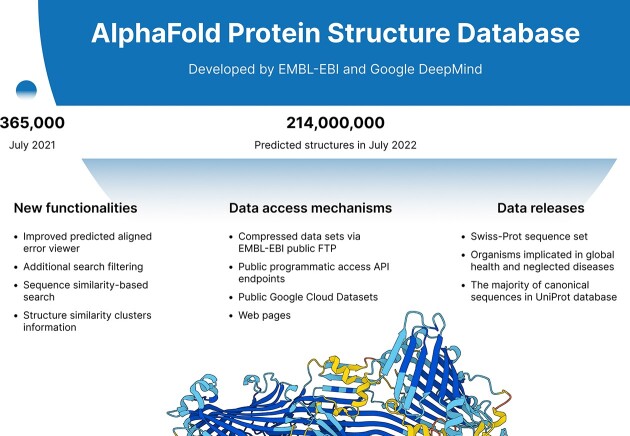
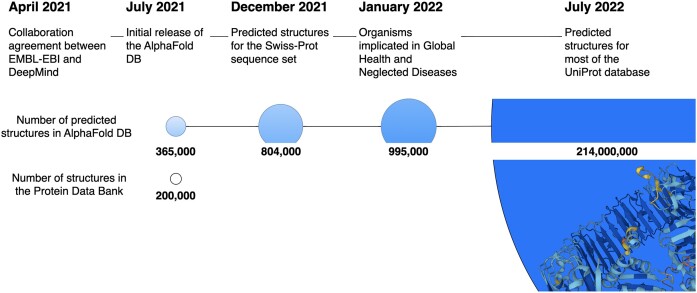
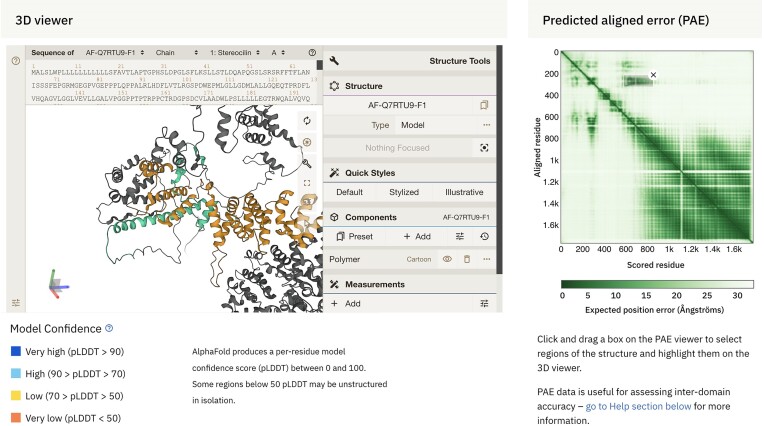
The AlphaFold Database Protein Structure Database (AlphaFold DB, https://alphafold.ebi.ac.uk) has significantly impacted structural biology by amassing over 214 million predicted protein structures, expanding from the initial 300k structures released in 2021. Enabled by the groundbreaking AlphaFold2 artificial intelligence (AI) system, the predictions archived in AlphaFold DB have been integrated into primary data resources such as PDB, UniProt, Ensembl, InterPro and MobiDB. Our manuscript details subsequent enhancements in data archiving, covering successive releases encompassing model organisms, global health proteomes, Swiss-Prot integration, and a host of curated protein datasets. We detail the data access mechanisms of AlphaFold DB, from direct file access via FTP to advanced queries using Google Cloud Public Datasets and the programmatic access endpoints of the database. We also discuss the improvements and services added since its initial release, including enhancements to the Predicted Aligned Error viewer, customisation options for the 3D viewer, and improvements in the search engine of AlphaFold DB.
Overview
CoChat Summary
TL;DR
AlphaFold DB has grown from ~300k to over 214 million predicted protein structures as of September 2023, with expanded access, search, and visualization features. This 2024 update describes data archiving, access mechanisms, integration with core resources, and new clustering/BLAST/PAE viewer capabilities.
Key findings
- AlphaFold DB expanded from approximately 300k structures in 2021 to over 214 million predicted protein structures as of September 2023; the initial July 2021 release housed over 360,000 structures for 20 model organism proteomes.
- Predictions are integrated into resources including PDB, UniProt, Ensembl, InterPro and MobiDB, and are accessible via FTP, Google Cloud Public Datasets (~23 TiB), API, and the website; PAE data is unavailable from EMBL-EBI public FTP.
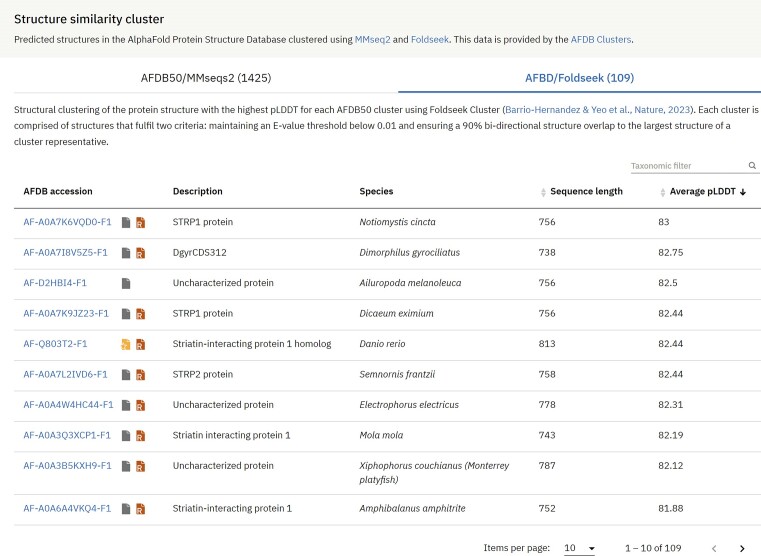
- Structure similarity clustering used MMseqs2 to cluster 214 million UniProtKB sequences into 52 million clusters, then Foldseek secondary clustering yielded 18.8 million clusters, finalizing 2.30 million robust clusters each with at least a pair of structures.
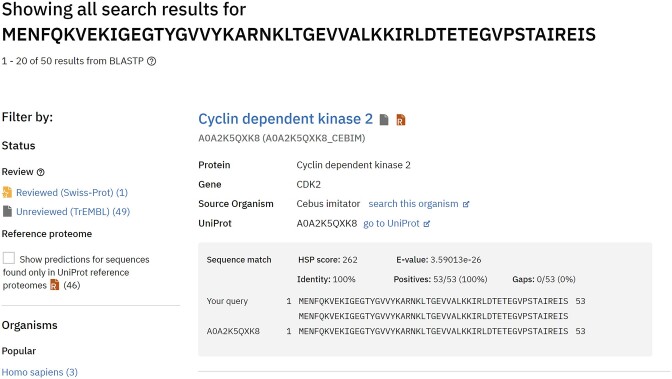
- New features include BLAST sequence similarity search, improved search filters for reviewed/unreviewed and reference proteome status, enhanced PAE viewer–Mol* interactivity, and a November 2022 update fixing a numerical bug that affected ~4% of total structure predictions.
Methods
- Descriptive database update/report with no primary experimental design; data generation is carried out by Google DeepMind, with predictions stored in PDB, mmCIF (modelCIF), and binaryCIF formats plus JSON metadata and confidence metrics pLDDT and PAE.
- Archiving uses successive releases from UniProt reference proteomes (e.g., 2021_02, 2021_04), Swiss-Prot, WHO global health proteomes, and MANE select; as of September 2023, EMBL-EBI FTP hosts TAR files for proteomes of 48 organisms.
- Access and analysis infrastructure includes FTP, Google Cloud Public Datasets, an API keyed on UniProt accessions, Apache-Solr search, BLAST on Google Cloud Platform, and Foldseek/MMseqs2 clustering.
Limitations
- Stated: sequences are not covered if they are less than 16 amino acids; >2700 aa for Swiss-Prot/proteome sequences or >1280 aa for other UniProt sequences; contain non-standard amino acids; are not in the UniProt ‘one sequence per gene’ FASTA file; or are viral proteins; these limitations are under discussion.
- Stated: some sequences may be outdated compared to UniProt due to less frequent AlphaFold DB releases; PAE data is unavailable from EMBL-EBI public FTP; full Google Cloud dataset download requires a Google account and can take roughly 2.5 days at 1 Gbps.
- Evident from the text: all archived structures are predicted models rather than experimental structures, and users must interpret pLDDT/PAE cautiously (e.g., pLDDT <50 likely disordered, 50–70 lower confidence); the database also currently lacks isoform and multimeric predicted structures, which are listed as future work.
Model-written summary. Check it against the paper before relying on it.
Integrity signals
Registry
Cites
Statistics
Figures

Verification
Claims the paper makes
11 Valid · 1 Not valid · 0 Not checked · 28 Own results and interpretations
Every source the paper cites for this claim was checked and supports it.
In the paper
“The new generation of predicted protein structure models has demonstrated remarkable accuracy, which could mitigate the continually widening gap between known protein sequences and experimentally determined protein structures (7).”
§ AlphaFold Protein Structure Database in 2024: providing structure coverage for over 214 million protein sequences > Introduction
What the sources say
- Supportedcites [7] Varadi M., Bordin N., Orengo C., Velankar S. The opportunities and challenges posed by the new generation of deep learning-based protein structure predictors. Curr. Opin. Struct. Biol. 2023; 79: 102543. 36807079 PMC7618866 source
The Introduction says prediction models made a major advance in accuracy and can match or sometimes surpass experimentally determined structures. It also describes a growing gap between known protein sequences and determined structures; the section on new challenges says predicted structures have greatly increased coverage of protein sequence space. These passages support both the accuracy claim and the proposed potential to narrow that gap (page numbers unavailable). (LLM, conf=0.93)
boosted- Asserted: passes — The authors put it forward as true.
- Checkable: passes — It can be checked against evidence.
- Load-bearing: passes — The paper’s conclusions depend on it.
- Based: passes — The paper gives a reason why it holds.
- Supported
Every source the paper cites for this claim was checked and supports it.
In the paper
“In response to frequent requests from the user community since the AlphaFold DB launch, we have made significant strides to implement a sequence-based similarity search feature. We have incorporated the Basic Local Alignment Search Tool (BLAST) (21) into our Google Cloud Platform infrastructure to achieve this.”
§ AlphaFold Protein Structure Database in 2024: providing structure coverage for over 214 million protein sequences > Implementation > Data access
What the sources say
- Supportedcites [21] Camacho C., Coulouris G., Avagyan V., Ma N., Papadopoulos J., Bealer K., Madden T.L. BLAST+: architecture and applications. BMC Bioinf. 2009; 10: 421. PMC2803857 20003500 source
The Background identifies BLAST as a sequence similarity search program that matches a query sequence against a database. In the citing sentence, the citation identifies the tool incorporated; the AlphaFold DB implementation is the citing authors’ own report, not a claim attributed to this source. (LLM, conf=0.91)
plainstates a cause- Asserted: passes — The authors put it forward as true.
- Checkable: passes — It can be checked against evidence.
- Load-bearing: unclear — It is unclear whether the paper’s conclusions depend on it.
- Based: passes — The paper gives a reason why it holds.
- Supported
Every source the paper cites for this claim was checked and supports it.
In the paper
“The impact of the predicted structures is further enhanced by their seamless integration into several core data resources, including PDBe-KB (17), UniProt (6), Ensembl (16), InterPro (15), Genecards (24) and MobiDB (25), among others.”
§ AlphaFold Protein Structure Database in 2024: providing structure coverage for over 214 million protein sequences > Conclusions and outlook
What the sources say
- Supportedcites [17] consortium P.D.B.-K.B. PDBe-KB: collaboratively defining the biological context of structural data. Nucleic Acids Res. 2022; 50: D534– D542. 34755867 PMC8728252 source
Citation (17) is attached specifically to PDBe-KB, rather than to the other resources in the sentence. The Introduction identifies PDBe-KB as a resource that integrates structural and functional annotations, supporting its identification here. (LLM, conf=0.90)
- Supportedcites [6] U.P. Consortium UniProt: the Universal Protein Knowledgebase in 2023. Nucleic Acids Res. 2023; 51: D523– D531. 36408920 PMC9825514 source
The citation is attached to UniProt in a list of resources, and the cited paper is a description of UniProt. Its Data integration and Interactive visualisations in entry pages sections state that UniProt incorporates AlphaFold-predicted structures into protein entries alongside other data; the supplied passages do not give page numbers. (LLM, conf=0.93)
- Supportedcites [16] Cunningham F., Allen J.E., Allen J., Alvarez-Jarreta J., Amode M.R., Armean I.M., Austine-Orimoloye O., Azov A.G., Barnes I., Bennett R. et al. Ensembl 2022. Nucleic Acids Res. 2022; 50: D988– D995. 34791404 PMC8728283 source
The citation identifies Ensembl as one of the resources in the list. In “Developing a new website” (page not provided), the paper says Ensembl’s Entity Viewer provides access to protein information, including 3D structures from PDBe. (LLM, conf=0.86)
plainstates a cause- Asserted: passes — The authors put it forward as true.
- Checkable: passes — It can be checked against evidence.
- Load-bearing: unclear — It is unclear whether the paper’s conclusions depend on it.
- Based: passes — The paper gives a reason why it holds.
- Supported
Every source the paper cites for this claim was checked and supports it.
In the paper
“Tackling this challenge, Steinegger et al. recently unveiled the Foldseek Cluster, a state-of-the-art structural-alignment-based clustering algorithm designed for vast datasets (22). They applied this novel method to the AlphaFold DB archive, making the derived structure similarity clusters available to the research community.”
§ AlphaFold Protein Structure Database in 2024: providing structure coverage for over 214 million protein sequences > Implementation > Data access
What the sources say
- Supportedcites [22] Barrio-Hernandez I., Yeo J., Jänes J., Mirdita M., Gilchrist C.L.M., Wein T., Varadi M., Velankar S., Beltrao P., Steinegger M. Clustering-predicted structures at the scale of the known protein universe. Nature. 2023; 622: 637– 645. 37704730 PMC10584675 source
The Abstract says the authors used Foldseek cluster to cluster the AlphaFold database. The Methods section (“Web server”) says they developed a server for users to explore the clusters, their members and related clusters, supporting the claim that the results were made available to researchers. (LLM, conf=0.93)
plainstates a cause- Asserted: passes — The authors put it forward as true.
- Checkable: passes — It can be checked against evidence.
- Load-bearing: passes — The paper’s conclusions depend on it.
- Based: passes — The paper gives a reason why it holds.
- Supported
- Probably not a substantial claim. 30
- It may state two separate claims as one. 15
- The quote only partly states this claim. 1
Claims other papers make about this one
Each is checked against this paper’s own text: does it say what the citing paper says it does?
The cited source says what the claim attributes to it.
In the citing paper
“houses over 200 million pre-run AF2 predictions”
From The power and pitfalls of AlphaFold2 for structure prediction beyond rigid globular proteins (2024) · cites this paper as [7]
Citations
Cites
Highly accurate protein structure prediction with AlphaFold
Jumper, J., Evans, R., Pritzel, A., Green, T., Figurnov, M., Ronneberger, O., Tunyasuvunakool, K., Bates, R., Žídek, A., Potapenko, A., et al. (2021) · Nature · doi:10.1038/s41586-021-03819-2 · Cited by 43,764
Self-citationBLAST+: architecture and applications
Camacho, C., Coulouris, G., Avagyan, V., Ma, N., Papadopoulos, J., Bealer, K., & Madden, T. L. (2009) · BMC Bioinformatics · doi:10.1186/1471-2105-10-421 · Cited by 22,074
UniProt: the Universal Protein Knowledgebase in 2023
The UniProt Consortium, Bateman, A., Martin, M.-J., Orchard, S., Magrane, M., Ahmad, S., Alpi, E., Bowler-Barnett, E. H., Britto, R., Bye-A-Jee, H., et al. (2023) · Nucleic Acids Research · doi:10.1093/nar/gkac1052 · Cited by 7,210
Evolutionary-scale prediction of atomic level protein structure with a language model
Lin, Z., Akin, H., Rao, R., Hie, B., Zhu, Z., Lu, W., Smetanin, N., Verkuil, R., Kabeli, O., Shmueli, Y., et al. (2022) · doi:10.1101/2022.07.20.500902 · Cited by 5,990 · cited 1×
“In the wake of the latest breakthroughs in prediction software, new databases such as the AlphaFold Protein Structure Database and the ESM Atlas ( 14 ) have emerged.”
MethodThe GeneCards suite: from gene data mining to disease genome sequence analyses
Stelzer, G., Rosen, N., Plaschkes, I., Zimmerman, S., Twik, M., Fishilevich, S., Stein, T. I., Nudel, R., Lieder, I., Mazor, Y., et al. (2016) · Current Protocols in Bioinformatics · doi:10.1002/cpbi.5 · Cited by 5,550 · cited 1×
“The impact of the predicted structures is further enhanced by their seamless integration into several core data resources, including PDBe-KB ( 17 ), UniProt ( 6 ), Ensembl ( 16 ), InterPro ( 15 ), Genecards ( 24 ) and MobiDB ( 25 ), among others.”
BackgroundAccurate prediction of protein structures and interactions using a 3-track network
Baek, M., DiMaio, F., Anishchenko, I., Dauparas, J., Ovchinnikov, S., Lee, G. R., Wang, J., Cong, Q., Kinch, L. N., Schaeffer, R. D., et al. (2021) · doi:10.1101/2021.06.14.448402 · Cited by 5,549
Paysan-Lafosse, T., Blum, M., Chuguransky, S., Grego, T., Pinto, B. L., Salazar, G. A., Bileschi, M. L., Bork, P., Bridge, A., Colwell, L., et al. (2023) · Nucleic Acids Research · doi:10.1093/nar/gkac993 · Cited by 2,399
Cunningham, F., Allen, J. E., Allen, J., Alvarez-Jarreta, J., Amode, M. R., Armean, I. M., Austine-Orimoloye, O., Azov, A. G., Barnes, I., Bennett, R., et al. (2022) · Nucleic Acids Research · doi:10.1093/nar/gkab1049 · Cited by 1,923
Mol* Viewer: modern web app for 3D visualization and analysis of large biomolecular structures
Sehnal, D., Bittrich, S., Deshpande, M., Svobodová, R., Berka, K., Bazgier, V., Velankar, S., Burley, S. K., Koča, J., & Rose, A. S. (2021) · Nucleic Acids Research · doi:10.1093/nar/gkab314 · Cited by 1,154 · cited 1×
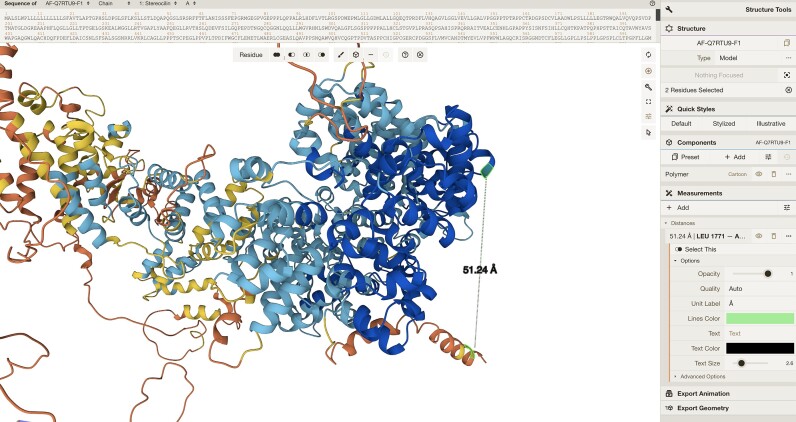
“We improved the visualisation of non-consecutive regions and the interactivity between the PAE viewer and the 3D molecular graphics viewer, Mol* ( 23 ) (Figure 5 ).”
MethodSelf-citationMariani, V., Biasini, M., Barbato, A., & Schwede, T. (2013) · Bioinformatics · doi:10.1093/bioinformatics/btt473 · Cited by 1,138 · cited 1×
“AlphaFold yields a per-residue estimate of its confidence, known as pLDDT, ranging from 0 to 100, indicating the tool’s predicted score on the lDDT-C α metric ( 19 ).”
Method
Cited by
Items 1,801–1,900 of 2,174
Basu, S., Premaratne, A., Widmann, S., Olaleye, E. A., & Lin, C. (2026) · Biomolecules · doi:10.3390/biom16060856
“Receptors without experimental human LBDs were docked using AlphaFold Protein Structure Database v6 models with docking boxes transferred from the nearest holo homolog by superposition [23].”
Strip1 Is a Novel Negative Regulator of Cardiomyocyte Hypertrophy
Heilein, E., Kilian, L. S., Sossalla, S. T., Meder, B., Völkers, M., Frese, K., Herch, S., Frey, N., & Eden, M. (2026) · Cells · doi:10.3390/cells15060540 · Cited by 1
Mazza, F., Gastaldello, F., Dalfovo, D., Lattanzi, G., & Romanel, A. (2025) · Nucleic Acids Research · doi:10.1093/nar/gkaf1184
“For ProSST, protein structures corresponding to the wild-type proteoforms were retrieved from the AlphaFoldDB [ 35 ], or otherwise predicted using Boltz 2.1 [ 36 ].”
InfluentialJo, H. S., Hwang, J., Kim, M. H., Jeong, J. H., Choi, J. M., Hong, J., Kim, Y. J., & Han, B. K. (2026) · Ecotoxicology and Environmental Safety · doi:10.1016/j.ecoenv.2026.120129
Balancing under constraint: Structural insights into norovirus evolution and antigenic innovation
Chen, Y., Wang, X.-Z., Tan, Y.-Y., & Yu, J. (2026) · PLoS Pathogens · doi:10.1371/journal.ppat.1014383
“AlphaFold has revolutionized protein structure prediction through deep learning algorithms [23,24], providing a powerful platform for large-scale structural database generation.”
Switching of the c-Myc protein degradation pathway depending on the PP2A-B55α complex levels
Ando, S., Ikeda, S., Tanaka, K., Tomabechi, Y., Yamagata, A., Shirouzu, M., Tsunedomi, R., Nagano, H., Tsuji, S., Sato, K., et al. (2026) · Proceedings of the National Academy of Sciences · doi:10.1073/pnas.2509374123
Callegari, K., Swaminathan, J., Guo, L., Singh, A., Yang, Y., Xiao, X., Dobson, T., Haltom, A. R., Bravo-Alegria, J. B., Sharma, A., et al. (2025) · bioRxiv (Cold Spring Harbor Laboratory) · doi:10.1101/2025.10.15.682654
“…in Grk6 and expression of Grk6-207 may affect Cxcr4-Sdf1 signaling, we conducted an in silico structural biology analyses using AlphaFold3, an Artificial Intelligence (AI)-powered computational approach which predicts tertiary and quaternary protein structures using primary sequences (64,65).”
ŠUSTROVÁ, E., Říhová, K., Pokorná, P., et al. (2026) · BMC Medical Genomics · doi:10.1186/s12920-026-02394-7
“The missing heme group was added using AlphaFill [24] inferred from the homologous structure PDB ID 3C6G.”
Brownd, M., Sauve, S. M., Woods, H., & Moradi, M. (2026) · bioRxiv (Cold Spring Harbor Laboratory) · doi:10.64898/2026.03.04.709733
The guardians of mitochondrial dynamics: a novel role for intermediate filament proteinsPreprint
Hemel, I. M. G. M., Steen, C., Denil, S. L. I. J., et al. (2024) · bioRxiv (Cold Spring Harbor Laboratory) · doi:10.1101/2024.07.19.604282
Cui, X., Xue, S., Jiang, P., Shi, L., Tan, T., Xu, Y., Liu, G., Meng, H., Liu, G., & Xing, Y. (2026) · Genes · doi:10.3390/genes17080848
“Group 2 included moderate-confidence AlphaFold models (GUCA2B, MYLIP, DSG2, CUL7, ABCA7) with per-residue local distance difference test (pLDDT) scores of 70–85, and regions with pLDDT ≥ 70 were used for docking [54].”
Wang, J., Yang, M., Zong, C. F., Verkhivker, G. M., Xiao, F., & Hu, G. (2025) · bioRxiv (Cold Spring Harbor Laboratory) · doi:10.1101/2025.01.06.631365
Wang, J., Zhang, F., Ou, C., et al. (2026) · Small · doi:10.1002/smll.74522
Nar1 binds the cytosolic iron–sulfur cluster assembly targeting complex via bipartite interactions
Ho, J. V., Buzuk, A., Marquez, M. D., Wang, B., & Perlstein, D. L. (2026) · Journal of Biological Chemistry · doi:10.1016/j.jbc.2026.113297 · Cited by 1
“Although structures of several CTC subunits are available, both alone and in complex (Table S1) (16–20, 23 We first examined the available AlphaFold models of Ct, Sc , and Hs Nar1 (37).”
Zhang, Y., Carr, J., Hancox, J. C., Harmer, S. C., & Dempsey, C. E. (2026) · Channels · doi:10.1080/19336950.2026.2672228
“Evolutionary Coupling data were mapped onto a single subunit of an Alphafold structure [18] of the membrane domain of hERG using data from the Evolutionary Coupling server [41] as described previously [16].”
Start right to end right: authentic open reading frame selection mattersPreprint
Bagherian, M., Harris, G., Sathishkumar, P., & Lloyd, J. P. B. (2025) · bioRxiv (Cold Spring Harbor Laboratory) · doi:10.1101/2025.06.10.658836
Adardour, M., Lahcen, N. A., Ouamnina, A., et al. (2025) · Journal of Molecular Structure · doi:10.1016/j.molstruc.2025.144610
Calcium-sensitive synaptotagmin 11-lipid interaction modulates exo-endocytosis
Wu, X., Yao, J., Huo, J., Hu, S., Wang, B., Li, Z., Pei, Y., Fan, H., Zhan, S., Huang, R., et al. (2025) · Nature Communications · doi:10.1038/s41467-025-67320-4 · Cited by 1
“All structures of C2 domains used in this study were predicted using AlphaFold 2 39,40 .”
Tyagi, K., Jain, P., Roy, A., et al. (2025) · International Journal of Biological Macromolecules · doi:10.1016/j.ijbiomac.2025.141699
RetractedA Structural Code for Assembly Specificity in GID/CTLH-Type E3 LigasesPreprint
Hassend, P. M. V. G., & Schindelin, H. (2026) · eLife · doi:10.7554/elife.110152.2
hnRNPK condensates facilitate enhancer–promoter looping and RNA polymerase II recruitment
Ye, R., Zhao, H., Chen, J., Wu, Q., Wang, D., Cai, Z., Wang, R., Li, J., Cheng, T., Zhang, M., et al. (2026) · Nature Genetics · doi:10.1038/s41588-026-02710-y
“PDB files for human hnRNPK and RPB3 were downloaded from the AlphaFold database 145 .”
Gottschling, D.-C., Eiser, S., & Döring, F. (2026) · Scientific Reports · doi:10.1038/s41598-026-47896-7
Ethanolamine-induced assembly of microcompartments is required for Fusobacterium nucleatum virulencePreprint
Franklin, D. S., Chen, Y., Chen, Y., Wittchen, M., Agnew, A., Luu, A., Whitelegge, J. P., Zhou, Z., Tauch, A., Das, A., et al. (2024) · bioRxiv (Cold Spring Harbor Laboratory) · doi:10.1101/2024.11.11.623001
The adeno-associated virus Rep proteins target PP4:SMEK1 by preventing substrate-recruitment
Vandewinkel, B., Torrekens, S., Claes, Z., Bollen, M., & Henckaerts, E. (2025) · doi:10.1101/2025.06.13.659448
Details matter: Defining substrate specificity in arogenate versus prephenate dehydratasesPreprint
Clayton, E. J., Smith-Uffen, M., Duennwald, M. L., et al. (2024) · Research Square · doi:10.21203/rs.3.rs-5357451/v1
Liu, J., Chen, W., Cristofori‐Armstrong, B., Crawford, T., Chen, K., Xie, P., Chan, R. W. B., Zhu, Y., Golder, M., Schmidt, A. P., et al. (2026) · Advanced Science · doi:10.1002/advs.77611
“In parallel, we used AlphaFold2 multimer to predict nanobody:p-loop 1 complexes and assessed each model using the interface-predicted TM-score (ipTM) and the average inter-chain predicted aligned error (PAE) [ 44, 45 ].”
Wang, T., Radler, C. N., & Sathyamoorthy, M. (2026) · Frontiers in Genetics · doi:10.3389/fgene.2026.1715155
Mutational analysis of Yih1 and IMPACT reveals amino acids required for Gcn2 inhibition
Sansom, B. J. M., Gibbs, V. J., Schiemann, A. H., & Sattlegger, E. (2025) · FEBS Letters · doi:10.1002/1873-3468.70148
García-Ayala, F. D., Ayala‐Madrigal, M. D. L. L., Peregrina-Sandoval, J., Moreno-Ortíz, J. M., González‐Mercado, A., Franco‐Topete, R. A., Valenzuela-Pérez, J. A., Macías‐Gómez, N. M., Flores-López, B. A., & Angulo, M. G. (2026) · Cancers · doi:10.3390/cancers18111678
Nayak, A. P., & Glotzer, M. (2026) · bioRxiv (Cold Spring Harbor Laboratory) · doi:10.64898/2026.09.21.753314
Expansion of the diversity of dispersin scaffolds
Males, A., Moroz, O. V., Blagova, E. V., Munch, A., Hansen, G. H., Johansen, A. H., Østergaard, L. H., Segura, D. R., Eddenden, A., Due, A. V., et al. (2025) · Acta Crystallographica Section D Structural Biology · doi:10.1107/s205979832500110x
Dong, X., Li, X., Li, S., et al. (2026) · Pharmacognosy Magazine · doi:10.1177/09731296261444852
Deciphering DEL Pocket Patterns through Contrastive Learning
Zhang, W., Wang, Y., Zhan, R., Qian, R., Hu, Q., & Huang, J. (2025) · doi:10.1101/2025.06.12.659183 · Cited by 2
Nuzhnaya, Е., Zaklyazminskaya, E. V., Zabnenkova, V., et al. (2026) · Frontiers in Medicine · doi:10.3389/fmed.2025.1680857
Su, J., Li, W., Huang, K., et al. (2026) · Food Bioscience · doi:10.1016/j.fbio.2026.109326
Lin, C., Hsu, H., Ko, J., & Liu, Y. (2025) · Proteins Structure Function and Bioinformatics · doi:10.1002/prot.70051
Predicting Enzyme pH Optima from Structure Using Equivariant Graph Neural NetworksPreprint
SinhaRoy, R., Clauss, C., Ivanikov, I., et al. (2026) · bioRxiv (Cold Spring Harbor Laboratory) · doi:10.64898/2026.01.18.700076
RankMHC: Learning to Rank Class-I Peptide-MHC Structural Models
Fasoulis, R., Παλιούρας, Γ., & Kavraki, L. E. (2024) · Journal of Chemical Information and Modeling · doi:10.1021/acs.jcim.4c01278 · Cited by 2
Olğaç, S., Olğaç, A., Varan, G., & Teksin, Z. Ş. (2026) · ACS Omega · doi:10.1021/acsomega.5c12065
Utilizing protein structure graph embeddings to predict the pathogenicity of missense variants
(2024) · doi:10.1101/2024.11.15.623748 · Cited by 2
Advances and trends in the bidirectional transformation between biological data and knowledge
Rong, L. I., Ge, J., ZHANG, X.-B., ZHANG, Y.-J., Da-Ming, C. H. E. N., & Tao, C. (2026) · Shengming kexue · doi:10.3724/cbls.2026032
The nonfibrillar multiplexin collagen CLE-1 defines cholinergic synapse identity
Cizeron, M., Dumas, A., Reun, S. L., Granger, L., Jospin, M., Romatif, O., Vachon, C., Guern, D. L., Valfort, A.-C., & Bessereau, J. (2025) · Science Advances · doi:10.1126/sciadv.adz1291
“5A) ( 22 – 24 ).”
Kawaguchi, S., Xin, X., Takashi, S., Kenta, Y., Ryuuya, K., Ryota, S., Susumu, D., & Kai, T. (2024) · eLife · doi:10.7554/elife.101967.1
Chiral methionine oxidation reagents reveal stereospecific proteome modificationsPreprint
Gonzalez-Valero, A., Page, A. C. S., Bertoch, J. M., Alsarhan, F., Kim, J., Alazali, A. A., Srinivas, R. R., Xie, X., Reeves, A. G., Skakuj, K., et al. (2026) · bioRxiv (Cold Spring Harbor Laboratory) · doi:10.64898/2026.03.24.713977 · Cited by 2
Computational Identification and Structural Analysis of Ustilago maydis Effector Proteins
Heinen, M., & Altegoer, F. (2026) · Methods in molecular biology · doi:10.1007/978-1-0716-5364-7_30
Ohno, S., Goto, Y., Manabe, N., & Yamaguchi, Y. (2026) · Glycobiology · doi:10.1093/glycob/cwag013
Mechanism of Phosphatidylserine Lipid Scrambling by Human SERINC3, an HIV-1 Restriction FactorPreprint
Banerjee, P., Yeager, M. J., & Voth, G. A. (2025) · bioRxiv (Cold Spring Harbor Laboratory) · doi:10.1101/2025.11.13.688349
“Intriguingly, the AlphaFold model 47 of hSERINC5 also contains similar TYR residues in the central cavity and cytoplasmic entrance domains ( Figure S10 ), which are not present in hSERINC2.”
Abu, A., Jegathisan, P., & Dhillon, S. K. (2024) · Elsevier eBooks · doi:10.1016/b978-0-323-95502-7.00141-x
Kim, J. S., Zhang, B., Morin, K. H., Gilliam, M., & Guo, H. (2025) · Biochemistry · doi:10.1021/acs.biochem.5c00058
Baratam, K., & Srivastava, A. (2024) · doi:10.1101/2024.04.29.591764 · Cited by 9
“The domain boundaries between folded and IDRs were determined using PAE and PLDDT deposited with the Alphafold 101,102 model (see Fig.”
MethodFurutani, K., & Kita, S. (2025) · Folia Pharmacologica Japonica · doi:10.1254/fpj.25023
Big data enabled discovery in bioinformatics and structural biology
Ansari, J., Khatoon, S., Kaif, M., Choudhir, G., Gaur, N. A., & Islam, A. (2026) · Elsevier eBooks · doi:10.1016/b978-0-443-44988-8.00006-x
Fungal virulence factors datasets for inflammatory bowel disease-specific antifungal drug discovery
Feng, S., Hou, Y.-J., Zhang, A., Wang, Z.-T., Gu, M., Si, Z.-L., Zheng, X., Li, J., & Lao, X. (2025) · Scientific Data · doi:10.1038/s41597-025-06087-1 · Cited by 1
Structural and biochemical comparison of the FLVCR and CTL membrane protein families in eukaryotes
Nel, L., Driller, J. H., Driller, R., Frain, K. M., & Pedersen, B. P. (2026) · Life Science Alliance · doi:10.26508/lsa.202503583 · Cited by 1
“Structural predictions were obtained from the AlphaFold database (64) that is linked to UniProt (65) and from trRosetta (62).”
De'Ath, C., Kumar, S., Chhibber, S., Cooper, B. F., Taylor, E. K., Jones, E., Lanyon‐Hogg, T., Bolla, J. R., Redfield, C., Ruiz, N., et al. (2026) · mBio · doi:10.1128/mbio.00700-26 · Cited by 1
Maize Calcineurin B-like protein 3 enhances salt stress tolerance at seedling stage
Li, H., Huang, Z., Hu, B., & Sun, Z. (2026) · Plant Science · doi:10.1016/j.plantsci.2026.112994 · Cited by 1
Adhur, K. A., Nirdosh, N., Chandramouli, A., et al. (2026) · PLoS Pathogens · doi:10.1371/journal.ppat.1014215
Evaluating completeness, coherence, and consistency of genome-scale function annotations
Tawfiq, R., Kulmanov, M., & Hoehndorf, R. (2026) · Briefings in Bioinformatics · doi:10.1093/bib/bbag336 · Cited by 3
“We then used these UniProt identifiers to download protein structures from the AlphaFold Protein Structure Database (accessed 30 October 2024) [ 44].”
Functional flexibility in bacterial hub proteins is driven by proteome expansion
Paradžik, M., Prekpalaj, S., & Paradžik, T. (2026) · Scientific Reports · doi:10.1038/s41598-026-52986-7
“PDB files of orthologous hub and non-hub proteins for each species in the dataset (corresponding gene names are listed in Supplementary File S2) were downloaded from the AlphaFold Protein Structure Database 70 .”
Kiboi, D. M., & Muriithi, B. (2026) · Gates Open Research · doi:10.12688/gatesopenres.16393.1
A Human Neural Tube Model Using 4D Self‐Folding Smart Scaffolds
Dell’Amico, C., Chiesa, I., Toffano, A., Esposito, A., Mancini, P., Magliaro, C., Louvi, A., Maria, C. D., & Onorati, M. (2025) · Advanced Healthcare Materials · doi:10.1002/adhm.202501405 · Cited by 1
Üçtepe, E., Ersoy, M., Esen, F. N., et al. (2026) · International Journal of Developmental Neuroscience · doi:10.1002/jdn.70174
(2025) · doi:10.1101/2025.04.06.647500
“AdcB (UniProt: Q86KB1; another protein identified in the D. discoideum screen) does not have a clear human ortholog, but Alphafold/Foldseek analysis suggested that human thioredoxin-interacting protein is a structural homolog of Dictyostelium AdcB (42–44).”
Audet, A., Chivers, J. A., & Hudak, K. A. (2025) · Plants · doi:10.3390/plants14152441
“The PAP structural model was obtained from the AlphaFold Protein Structure Database (AF-P10297-F1-v4) [67].”
Zhang, W., Sun, Y., Li, X., Liu, S., Su, H., & Xing, W. (2026) · Theriogenology · doi:10.1016/j.theriogenology.2026.118029
A Structural Code for Assembly Specificity in GID/CTLH-Type E3 LigasesPreprint
Hassend, P. M. V. G., & Schindelin, H. (2026) · eLife · doi:10.7554/elife.110152.1
BamA self-insertion drives inner-to-outer membrane remodelling in diderm Firmicutes
Beskrovnaya, P., Hashimi, A., Sexton, D. L., Nikas, G. E., & Tocheva, E. I. (2026) · Nature Communications · doi:10.1038/s41467-026-69191-9
“1b, Supplementary Table 2, Supplementary Table 3) 26 .”
InfluentialCe, C., Liu, Z., Yang, L., Song, J., Li, L., Fu, J., & Liu, J. (2026) · Frontiers in Pharmacology · doi:10.3389/fphar.2026.1817340 · Cited by 1
Naveed, M., Raza, A., Adil, A., et al. (2026) · Biodegradation · doi:10.1007/s10532-026-10298-7
“The three-dimensional structure of the ring-hydroxy-lating dioxygenase large subunit from Cycloclasticus zancles was retrieved from the AlphaFold Protein Structure Database (ID: AF-S5T719-F1-v4) (Varadi et al. 2024).”
Oliw, E. H. (2026) · Journal of Biological Chemistry · doi:10.1016/j.jbc.2026.111263
“AA, arachidonic acid; AF2, AlphaFold 2; COX, cyclooxygenase; LA, linoleic acid; PDB, Protein Data Bank; pLDDT, predicted local-distance difference test.”
InfluentialHuhn, C., Dees, J. L., Gawronski, J. D., Taslim, A. U., Wong, S. M. S., & Akerley, B. J. (2026) · Infection and Immunity · doi:10.1128/iai.00369-26
Mechanistic Insights into Dual-Active Liver and Blood-Stage Antiplasmodials
Rawat, M., Boonyalai, N., Smidt, C., Luth, M. R., Chen, D., Plater, A., Post, J., Lin, D., McMillan, J., Eadsforth, T., et al. (2025) · doi:10.1101/2025.08.06.666330
“Pf AcAS, Pf AcAS-T648M, Pf AcAS-A597V, and Hs AcAS were expressed and purified as described previously (18).”
Role of Chloroplast Lipid-Remodelling Protein 23 During Cold Acclimation in Arabidopsis thalianaPreprint
Lo, W. T., Winkler, D., Münch, M., Lehmann, M., Steiner, K., Bölter, B., Gamb, C., Tullberg, C., Grey, C., Kleine, T., et al. (2025) · bioRxiv (Cold Spring Harbor Laboratory) · doi:10.1101/2025.07.22.666119
Roy, A., Mondal, R., & Ghosh, A. S. (2026) · Molecular Plant Pathology · doi:10.1111/mpp.70235
“In silico determination of Lip3 tertiary structure using the AlphaFold database also showed S 201 , D 351 and H 383 are in close proximity to each other, thereby further supporting the predicted catalytic site of the protein (Figure 2C) (Varadi et al. 2024).”
Gohel, P., Tsarouhas, V., Kansara, L., et al. (2025) · bioRxiv (Cold Spring Harbor Laboratory) · doi:10.64898/2025.12.19.695428
Hair, M., Yanase, R., Ferguson, D. J. P., et al. (2026) · bioRxiv (Cold Spring Harbor Laboratory) · doi:10.64898/2026.09.06.749571
Prasad, D. S., Mishra, S. K., Subba, A., Rai, G. P., Alam, S. A., & Georrge, J. J. (2026) · Naunyn-Schmiedeberg s Archives of Pharmacology · doi:10.1007/s00210-026-05781-0 · Cited by 1
Corzo-López, A., Leyva-Leyva, M., González‐Ramírez, R., Sandoval, A., & Felix, R. (2026) · The Journal of Membrane Biology · doi:10.1007/s00232-026-00371-w · Cited by 1
Furrukh, A., Javed, H., Zaghw, M. R. A., et al. (2026) · Methods · doi:10.1016/j.ymeth.2026.03.003
Sanches, P. H. G., de Melo, N. C., de Oliveira, D. C., & de Carvalho, L. M. (2026) · Biology · doi:10.3390/biology15131004
“The predicted structure was retrieved from UniProt [35] by AlphaFold [36].”
Family‐level specialization in protein domain insertion architectures
Schaeffer, R. D., Guo, R., Zhang, J. D., Cong, Q., & Grishin, N. V. (2026) · Protein Science · doi:10.1002/pro.70586
Teshirogi, Y., Mihara, R., Saito, Y., Rhee, H., Terada, T., Tate, S., & Yasuda, K. (2026) · bioRxiv (Cold Spring Harbor Laboratory) · doi:10.64898/2026.04.22.720067
Protein structure-aided prediction of the phylogenetic ancestry of genes. The case of IGF systemPreprint
Fouchécourt, S., Callebaut, I., & Monget, P. (2025) · Research Square · doi:10.21203/rs.3.rs-7721753/v1
Li, X., Li, Y.-L., Liu, W., Qi, J., & Zhu, J. (2026) · International Journal of Molecular Sciences · doi:10.3390/ijms27167191
Artificial intelligence for drug target identification
Li, Y., Huang, J., Sheng, Y., Wei, C., Liu, M., Wang, X., Chen, Y., Li, X., & Zheng, M. (2025) · Annual reports in medicinal chemistry · doi:10.1016/bs.armc.2025.08.002 · Cited by 3
Li, J., Hao, T., He, Z., Zhu, M., Du, W., Huang, X., Li, Q., Liu, X., Su, Y., Teng, W., et al. (2025) · Research Square · doi:10.21203/rs.3.rs-6697832/v1
Manapkyzy, D. (2024) · theses.fr (ABES) · doi:10.70675/f4d1f783z2b22z4817z9efdze580c3bb548c
Verma, D., Tripathi, M., Rathore, S., et al. (2026) · Folia Microbiologica · doi:10.1007/s12223-026-01444-y
Ding, Y., Liu, Y., Liu, X., Ismail‐Fitry, M. R., Dong, L., Jia, X., & Liu, S. (2026) · Trends in Food Science & Technology · doi:10.1016/j.tifs.2026.105969
Kawaguchi, S., Xin, X., Takashi, S., Kenta, Y., Ryuuya, K., Ryota, S., Susumu, D., & Kai, T. (2025) · eLife · doi:10.7554/elife.101967.2 · Cited by 1
Freitag, K., Marlow, M., Joseph, J., Ta, R., Krekhno, J. M. C., Schuett, E., Yang, A. W. H., Ray, D., Hughes, T. R., Rafferty, S. P., et al. (2025) · Journal of Biological Chemistry · doi:10.1016/j.jbc.2025.108552
Akar, S., Orlenco, M., Ugurel, E., Danış, Ö., & BALIK, D. T. (2026) · Acta Parasitologica · doi:10.1007/s11686-026-01326-w
“The reliability score of the Ta LDH structure predicted by AlphaFold, used in docking studies, has an average pLDDT [ 76] score of 94.38, with a pLDDT distribution including 88.8% very high, 6.2% high, 3.7% low, and 1.2% very low.”
InfluentialAlabdulatif, A., Alqaan, S., Alhusika, R. A., Almuhawwis, T. A., & Almujaydil, R. A. (2026) · Biomimetics · doi:10.3390/biomimetics11090602 · Cited by 2
“Resource cost: AlphaFold2 needs a GPU; constrained devices must use pre-computed matrices from the AFDB [33] rather than predict at run time.”
InfluentialStructural Analyses of Oxygen Channels of Animal, Soybean and Manganese LipoxygenasesPreprint
Oliw, E. H. (2026) · SSRN Electronic Journal · doi:10.2139/ssrn.6262588
Ahmed, S. T., Zhai, S., Huang, X., et al. (2025) · SSRN Electronic Journal · doi:10.2139/ssrn.5518485
Leipart, V., Carmona, O. G. I., Orengo, C., et al. (2025) · doi:10.1101/2025.03.17.643649
“When AF was released, a database of its predic9ons was also made publicly available (AFDB [16]).”
Adaptive deletion of functional duplicate genes in DrosophilaPreprint
dos Santos, A. L. C., & Assis, R. (2025) · bioRxiv (Cold Spring Harbor Laboratory) · doi:10.64898/2025.12.19.695606
“Predicted protein structures and associated pLDDT scores were obtained from AlphaFold v3 (Jumper et al. 2021; Varadi et al. 2024, 2022), and structural similarity was quantified using the template modeling (TM) score (Zhang & Skolnick 2004) via the Pairwise Structure Alignment tool (Bittrich et al.…”
Proteolytic Processing of the Unique F 1 -ATPase Subunit α in Procyclic Trypanosoma brucei
Minal, J., Brian, P., Karolína, Š., Achim, S., & Alena, Z. (2025) · doi:10.1101/2025.10.24.684300
Effects of Bile on Pathogenic Vibrio, Aeromonas, and Clostridioides spp. Toxin Effector Domains
Taylor, J. E., Heisler, D. B., Choudhary, E., Kudryashova, E., & Kudryashov, D. S. (2025) · Biomolecules · doi:10.3390/biom15111539 · Cited by 1
Metadata
- Authors
- Varadi, M., Bertoni, D., Magana, P., Paramval, U., Pidruchna, I., Radhakrishnan, M., Tsenkov, M., Nair, S., Mirdita, M., Yeo, J., Kovalevskiy, O., Tunyasuvunakool, K., Laydon, A., Žídek, A., Tomlinson, H., Hariharan, D., Abrahamson, J., Green, T., Jumper, J., Birney, E., Steinegger, M., Hassabis, D., & Velankar, S.
- Affiliations
- European Molecular Biology Laboratory, European Bioinformatics Institute , Hinxton, UK
- European Bioinformatics Institute (GB)
- Seoul National University (KR)
- Google DeepMind (United Kingdom) (GB)
- Corresponding author
- Hassabis, Demis
- Velankar, Sameer
- ORCID
- Venue
- Nucleic Acids Research
- Publisher
- Oxford University Press (OUP)
- Published
- 2023-11-02
- Volume
- 52
- Issue
- D1
- Pages
- D368-D375
- ISSN
- 0305-1048 (ISSN-L)
- 1362-4962
- PMC
- PMC10767828
- OpenAlex
- W4388464011
- Cited by
- 2,052
- References
- 29
- Citations by year
- 2026: 724 · 2025: 1015 · 2024: 307 · 2023: 5
- FWCI
- 181.98
- Type
- journal article
- Language
- en
- Open access
- gold
- doi.org
- Licence
- Locations
- Nucleic Acids Research (publishedVersion, cc-by)
- PubMed Central (publishedVersion, cc-by)
- PubMed (publishedVersion)
- Seoul National University Open Repository (Seoul National University) (submittedVersion)
- Funders
- Google DeepMind
- National Research Foundation of Korea (2019R1A6A1A10073437, 2020M3A9G7103933, 2021R1C1C102065, 2021M3A9I4021220, RS-2023-00250470)
- Samsung DS Research Fund
- Seoul National University
- Topics
- Life Sciences › Biochemistry, Genetics and Molecular Biology › Molecular Biology › Protein Structure and Dynamics
- Life Sciences › Biochemistry, Genetics and Molecular Biology › Structural Biology › Enzyme Structure and Function
- Life Sciences › Biochemistry, Genetics and Molecular Biology › Molecular Biology › Machine Learning in Bioinformatics
- Keywords
- predicted protein structures, AlphaFold2, protein structure prediction, protein sequence coverage, data archiving, database access, search engines
- MeSH terms
- Amino Acid Sequence, Artificial Intelligence, Proteins, Protein Structure, Secondary, Proteome, Databases, Protein, Search Engine
About these checks
Registry, retraction, Cites and statistics results are computed, not judged, with one exception: a printed reference that no index lists is read once by a model before it counts as a citation error. Claims are extracted by a model and kept only when their quote appears verbatim in the text; each cited source is then checked, with a model’s help, for whether it says what the claim relies on. Those verdicts can be wrong — read the claim’s quote and the cited source before relying on one.
The claim verdicts this report counts are experimental: their accuracy is not yet measured.
A language model drew the claims from the paper on 2026-10-10, under version 3 of the claim definition (model deepseek-v4.1-flash, prompt extract-v3).
A second model labelled each claim on 2026-10-10 (model jev-1.13-20260917, definition revision gold-guideline-v0.2).
Cited sources are checked with a language model’s help (gpt-6-sol).
Statistics and arithmetic are recomputed, not judged.
Confidence bands are shown only for fields calibrated on our annotated test set. None is calibrated yet, so no band is shown.
What counts as a claim ›How we measure confidence ›How we check this ›
Are you an author, or do you see a problem with this page? Request a review
Data sources
Bibliographic data: Semantic Scholar, OpenAlex, Crossref.
Contains information from the Semantic Scholar Academic Graph Datasets, made available under the ODC Attribution License (ODC-BY 1.0).
Semantic Scholar’s data is described in: Kinney, R., et al. (2023). The Semantic Scholar Open Data Platform. arXiv:2301.10140.
