

AlphaFold Protein Structure Database in 2024: providing structure coverage for over 214 million protein sequences
Open accessThe DOI matches its Crossref record; 29 of the 29 references it cites were found in a registry or an index; 18 of the 18 sources its claims cite were checked for support.
Abstract
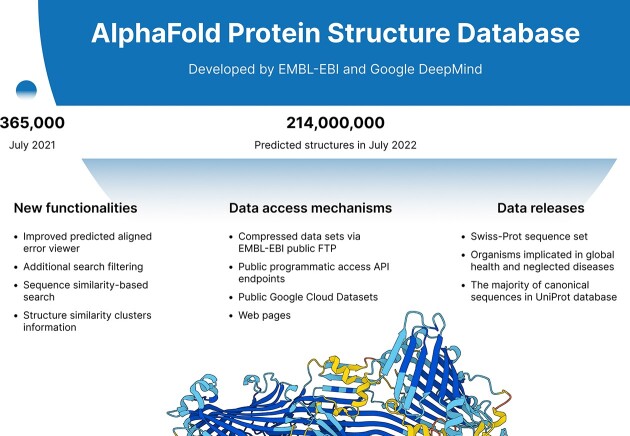
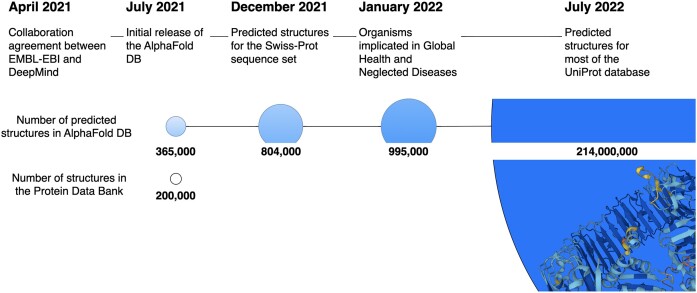
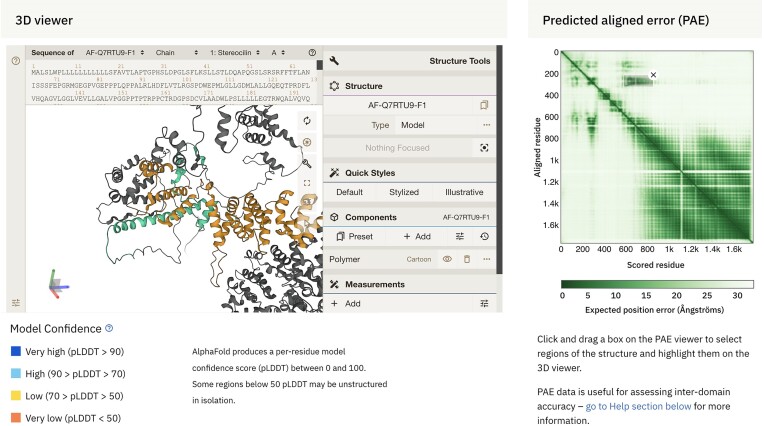
The AlphaFold Database Protein Structure Database (AlphaFold DB, https://alphafold.ebi.ac.uk) has significantly impacted structural biology by amassing over 214 million predicted protein structures, expanding from the initial 300k structures released in 2021. Enabled by the groundbreaking AlphaFold2 artificial intelligence (AI) system, the predictions archived in AlphaFold DB have been integrated into primary data resources such as PDB, UniProt, Ensembl, InterPro and MobiDB. Our manuscript details subsequent enhancements in data archiving, covering successive releases encompassing model organisms, global health proteomes, Swiss-Prot integration, and a host of curated protein datasets. We detail the data access mechanisms of AlphaFold DB, from direct file access via FTP to advanced queries using Google Cloud Public Datasets and the programmatic access endpoints of the database. We also discuss the improvements and services added since its initial release, including enhancements to the Predicted Aligned Error viewer, customisation options for the 3D viewer, and improvements in the search engine of AlphaFold DB.
Overview
CoChat Summary
TL;DR
AlphaFold DB has grown from ~300k to over 214 million predicted protein structures as of September 2023, with expanded access, search, and visualization features. This 2024 update describes data archiving, access mechanisms, integration with core resources, and new clustering/BLAST/PAE viewer capabilities.
Key findings
- AlphaFold DB expanded from approximately 300k structures in 2021 to over 214 million predicted protein structures as of September 2023; the initial July 2021 release housed over 360,000 structures for 20 model organism proteomes.
- Predictions are integrated into resources including PDB, UniProt, Ensembl, InterPro and MobiDB, and are accessible via FTP, Google Cloud Public Datasets (~23 TiB), API, and the website; PAE data is unavailable from EMBL-EBI public FTP.
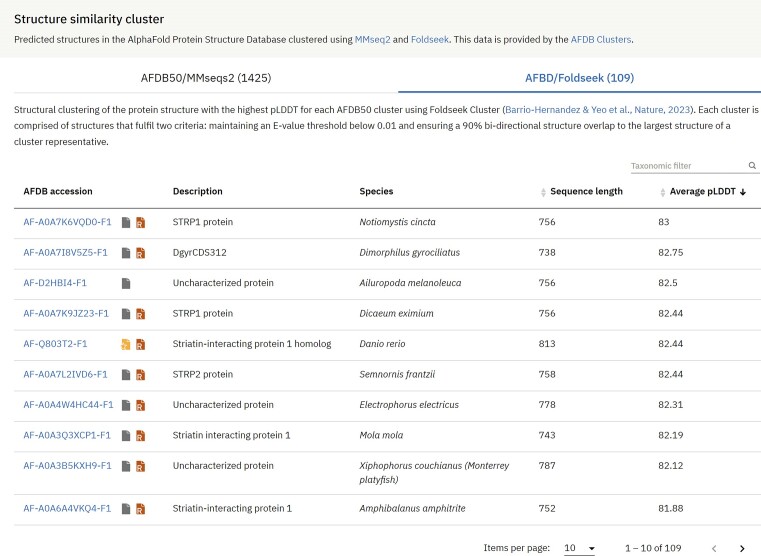
- Structure similarity clustering used MMseqs2 to cluster 214 million UniProtKB sequences into 52 million clusters, then Foldseek secondary clustering yielded 18.8 million clusters, finalizing 2.30 million robust clusters each with at least a pair of structures.
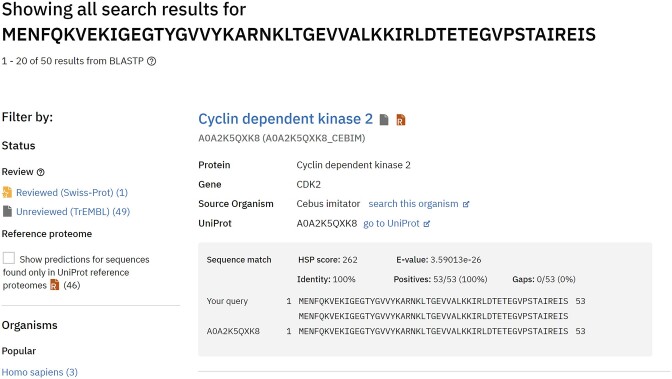
- New features include BLAST sequence similarity search, improved search filters for reviewed/unreviewed and reference proteome status, enhanced PAE viewer–Mol* interactivity, and a November 2022 update fixing a numerical bug that affected ~4% of total structure predictions.
Methods
- Descriptive database update/report with no primary experimental design; data generation is carried out by Google DeepMind, with predictions stored in PDB, mmCIF (modelCIF), and binaryCIF formats plus JSON metadata and confidence metrics pLDDT and PAE.
- Archiving uses successive releases from UniProt reference proteomes (e.g., 2021_02, 2021_04), Swiss-Prot, WHO global health proteomes, and MANE select; as of September 2023, EMBL-EBI FTP hosts TAR files for proteomes of 48 organisms.
- Access and analysis infrastructure includes FTP, Google Cloud Public Datasets, an API keyed on UniProt accessions, Apache-Solr search, BLAST on Google Cloud Platform, and Foldseek/MMseqs2 clustering.
Limitations
- Stated: sequences are not covered if they are less than 16 amino acids; >2700 aa for Swiss-Prot/proteome sequences or >1280 aa for other UniProt sequences; contain non-standard amino acids; are not in the UniProt ‘one sequence per gene’ FASTA file; or are viral proteins; these limitations are under discussion.
- Stated: some sequences may be outdated compared to UniProt due to less frequent AlphaFold DB releases; PAE data is unavailable from EMBL-EBI public FTP; full Google Cloud dataset download requires a Google account and can take roughly 2.5 days at 1 Gbps.
- Evident from the text: all archived structures are predicted models rather than experimental structures, and users must interpret pLDDT/PAE cautiously (e.g., pLDDT <50 likely disordered, 50–70 lower confidence); the database also currently lacks isoform and multimeric predicted structures, which are listed as future work.
Model-written summary. Check it against the paper before relying on it.
Integrity signals
Registry
Cites
Statistics
Figures

Verification
Claims the paper makes
11 Valid · 1 Not valid · 0 Not checked · 28 Own results and interpretations
Every source the paper cites for this claim was checked and supports it.
In the paper
“The new generation of predicted protein structure models has demonstrated remarkable accuracy, which could mitigate the continually widening gap between known protein sequences and experimentally determined protein structures (7).”
§ AlphaFold Protein Structure Database in 2024: providing structure coverage for over 214 million protein sequences > Introduction
What the sources say
- Supportedcites [7] Varadi M., Bordin N., Orengo C., Velankar S. The opportunities and challenges posed by the new generation of deep learning-based protein structure predictors. Curr. Opin. Struct. Biol. 2023; 79: 102543. 36807079 PMC7618866 source
The Introduction says prediction models made a major advance in accuracy and can match or sometimes surpass experimentally determined structures. It also describes a growing gap between known protein sequences and determined structures; the section on new challenges says predicted structures have greatly increased coverage of protein sequence space. These passages support both the accuracy claim and the proposed potential to narrow that gap (page numbers unavailable). (LLM, conf=0.93)
boosted- Asserted: passes — The authors put it forward as true.
- Checkable: passes — It can be checked against evidence.
- Load-bearing: passes — The paper’s conclusions depend on it.
- Based: passes — The paper gives a reason why it holds.
- Supported
Every source the paper cites for this claim was checked and supports it.
In the paper
“In response to frequent requests from the user community since the AlphaFold DB launch, we have made significant strides to implement a sequence-based similarity search feature. We have incorporated the Basic Local Alignment Search Tool (BLAST) (21) into our Google Cloud Platform infrastructure to achieve this.”
§ AlphaFold Protein Structure Database in 2024: providing structure coverage for over 214 million protein sequences > Implementation > Data access
What the sources say
- Supportedcites [21] Camacho C., Coulouris G., Avagyan V., Ma N., Papadopoulos J., Bealer K., Madden T.L. BLAST+: architecture and applications. BMC Bioinf. 2009; 10: 421. PMC2803857 20003500 source
The Background identifies BLAST as a sequence similarity search program that matches a query sequence against a database. In the citing sentence, the citation identifies the tool incorporated; the AlphaFold DB implementation is the citing authors’ own report, not a claim attributed to this source. (LLM, conf=0.91)
plainstates a cause- Asserted: passes — The authors put it forward as true.
- Checkable: passes — It can be checked against evidence.
- Load-bearing: unclear — It is unclear whether the paper’s conclusions depend on it.
- Based: passes — The paper gives a reason why it holds.
- Supported
Every source the paper cites for this claim was checked and supports it.
In the paper
“The impact of the predicted structures is further enhanced by their seamless integration into several core data resources, including PDBe-KB (17), UniProt (6), Ensembl (16), InterPro (15), Genecards (24) and MobiDB (25), among others.”
§ AlphaFold Protein Structure Database in 2024: providing structure coverage for over 214 million protein sequences > Conclusions and outlook
What the sources say
- Supportedcites [17] consortium P.D.B.-K.B. PDBe-KB: collaboratively defining the biological context of structural data. Nucleic Acids Res. 2022; 50: D534– D542. 34755867 PMC8728252 source
Citation (17) is attached specifically to PDBe-KB, rather than to the other resources in the sentence. The Introduction identifies PDBe-KB as a resource that integrates structural and functional annotations, supporting its identification here. (LLM, conf=0.90)
- Supportedcites [6] U.P. Consortium UniProt: the Universal Protein Knowledgebase in 2023. Nucleic Acids Res. 2023; 51: D523– D531. 36408920 PMC9825514 source
The citation is attached to UniProt in a list of resources, and the cited paper is a description of UniProt. Its Data integration and Interactive visualisations in entry pages sections state that UniProt incorporates AlphaFold-predicted structures into protein entries alongside other data; the supplied passages do not give page numbers. (LLM, conf=0.93)
- Supportedcites [16] Cunningham F., Allen J.E., Allen J., Alvarez-Jarreta J., Amode M.R., Armean I.M., Austine-Orimoloye O., Azov A.G., Barnes I., Bennett R. et al. Ensembl 2022. Nucleic Acids Res. 2022; 50: D988– D995. 34791404 PMC8728283 source
The citation identifies Ensembl as one of the resources in the list. In “Developing a new website” (page not provided), the paper says Ensembl’s Entity Viewer provides access to protein information, including 3D structures from PDBe. (LLM, conf=0.86)
plainstates a cause- Asserted: passes — The authors put it forward as true.
- Checkable: passes — It can be checked against evidence.
- Load-bearing: unclear — It is unclear whether the paper’s conclusions depend on it.
- Based: passes — The paper gives a reason why it holds.
- Supported
Every source the paper cites for this claim was checked and supports it.
In the paper
“Tackling this challenge, Steinegger et al. recently unveiled the Foldseek Cluster, a state-of-the-art structural-alignment-based clustering algorithm designed for vast datasets (22). They applied this novel method to the AlphaFold DB archive, making the derived structure similarity clusters available to the research community.”
§ AlphaFold Protein Structure Database in 2024: providing structure coverage for over 214 million protein sequences > Implementation > Data access
What the sources say
- Supportedcites [22] Barrio-Hernandez I., Yeo J., Jänes J., Mirdita M., Gilchrist C.L.M., Wein T., Varadi M., Velankar S., Beltrao P., Steinegger M. Clustering-predicted structures at the scale of the known protein universe. Nature. 2023; 622: 637– 645. 37704730 PMC10584675 source
The Abstract says the authors used Foldseek cluster to cluster the AlphaFold database. The Methods section (“Web server”) says they developed a server for users to explore the clusters, their members and related clusters, supporting the claim that the results were made available to researchers. (LLM, conf=0.93)
plainstates a cause- Asserted: passes — The authors put it forward as true.
- Checkable: passes — It can be checked against evidence.
- Load-bearing: passes — The paper’s conclusions depend on it.
- Based: passes — The paper gives a reason why it holds.
- Supported
- Probably not a substantial claim. 30
- It may state two separate claims as one. 15
- The quote only partly states this claim. 1
Claims other papers make about this one
Each is checked against this paper’s own text: does it say what the citing paper says it does?
The cited source says what the claim attributes to it.
In the citing paper
“houses over 200 million pre-run AF2 predictions”
From The power and pitfalls of AlphaFold2 for structure prediction beyond rigid globular proteins (2024) · cites this paper as [7]
Citations
Cites
Highly accurate protein structure prediction with AlphaFold
Jumper, J., Evans, R., Pritzel, A., Green, T., Figurnov, M., Ronneberger, O., Tunyasuvunakool, K., Bates, R., Žídek, A., Potapenko, A., et al. (2021) · Nature · doi:10.1038/s41586-021-03819-2 · Cited by 43,764
Self-citationBLAST+: architecture and applications
Camacho, C., Coulouris, G., Avagyan, V., Ma, N., Papadopoulos, J., Bealer, K., & Madden, T. L. (2009) · BMC Bioinformatics · doi:10.1186/1471-2105-10-421 · Cited by 22,074
UniProt: the Universal Protein Knowledgebase in 2023
The UniProt Consortium, Bateman, A., Martin, M.-J., Orchard, S., Magrane, M., Ahmad, S., Alpi, E., Bowler-Barnett, E. H., Britto, R., Bye-A-Jee, H., et al. (2023) · Nucleic Acids Research · doi:10.1093/nar/gkac1052 · Cited by 7,210
Evolutionary-scale prediction of atomic level protein structure with a language model
Lin, Z., Akin, H., Rao, R., Hie, B., Zhu, Z., Lu, W., Smetanin, N., Verkuil, R., Kabeli, O., Shmueli, Y., et al. (2022) · doi:10.1101/2022.07.20.500902 · Cited by 5,990 · cited 1×
“In the wake of the latest breakthroughs in prediction software, new databases such as the AlphaFold Protein Structure Database and the ESM Atlas ( 14 ) have emerged.”
MethodThe GeneCards suite: from gene data mining to disease genome sequence analyses
Stelzer, G., Rosen, N., Plaschkes, I., Zimmerman, S., Twik, M., Fishilevich, S., Stein, T. I., Nudel, R., Lieder, I., Mazor, Y., et al. (2016) · Current Protocols in Bioinformatics · doi:10.1002/cpbi.5 · Cited by 5,550 · cited 1×
“The impact of the predicted structures is further enhanced by their seamless integration into several core data resources, including PDBe-KB ( 17 ), UniProt ( 6 ), Ensembl ( 16 ), InterPro ( 15 ), Genecards ( 24 ) and MobiDB ( 25 ), among others.”
BackgroundAccurate prediction of protein structures and interactions using a 3-track network
Baek, M., DiMaio, F., Anishchenko, I., Dauparas, J., Ovchinnikov, S., Lee, G. R., Wang, J., Cong, Q., Kinch, L. N., Schaeffer, R. D., et al. (2021) · doi:10.1101/2021.06.14.448402 · Cited by 5,549
Paysan-Lafosse, T., Blum, M., Chuguransky, S., Grego, T., Pinto, B. L., Salazar, G. A., Bileschi, M. L., Bork, P., Bridge, A., Colwell, L., et al. (2023) · Nucleic Acids Research · doi:10.1093/nar/gkac993 · Cited by 2,399
Cunningham, F., Allen, J. E., Allen, J., Alvarez-Jarreta, J., Amode, M. R., Armean, I. M., Austine-Orimoloye, O., Azov, A. G., Barnes, I., Bennett, R., et al. (2022) · Nucleic Acids Research · doi:10.1093/nar/gkab1049 · Cited by 1,923
Mol* Viewer: modern web app for 3D visualization and analysis of large biomolecular structures
Sehnal, D., Bittrich, S., Deshpande, M., Svobodová, R., Berka, K., Bazgier, V., Velankar, S., Burley, S. K., Koča, J., & Rose, A. S. (2021) · Nucleic Acids Research · doi:10.1093/nar/gkab314 · Cited by 1,154 · cited 1×
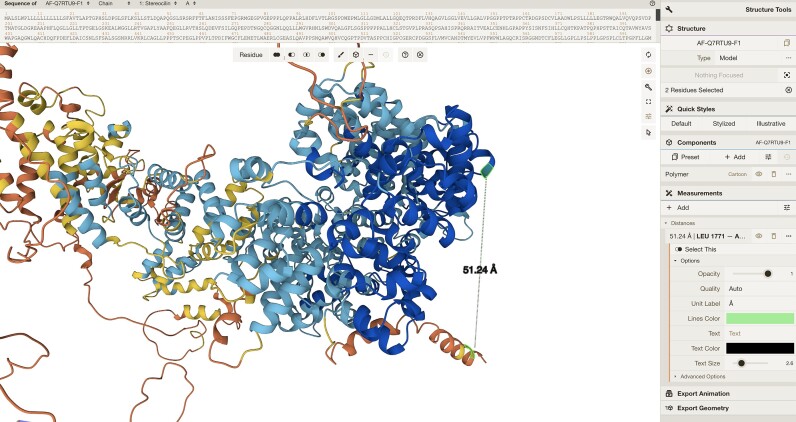
“We improved the visualisation of non-consecutive regions and the interactivity between the PAE viewer and the 3D molecular graphics viewer, Mol* ( 23 ) (Figure 5 ).”
MethodSelf-citationMariani, V., Biasini, M., Barbato, A., & Schwede, T. (2013) · Bioinformatics · doi:10.1093/bioinformatics/btt473 · Cited by 1,138 · cited 1×
“AlphaFold yields a per-residue estimate of its confidence, known as pLDDT, ranging from 0 to 100, indicating the tool’s predicted score on the lDDT-C α metric ( 19 ).”
Method
Cited by
Items 1,501–1,600 of 2,174
Signatures of micropeptides encoded by lncRNAs in cancer progression and metastasis
Zok, S., & Linial, M. (2026) · British Journal of Cancer · doi:10.1038/s41416-026-03556-1 · Cited by 1
Bioinformatics in Primary Immunodeficiencies: Towards a “Computational Immunology” Era
Vásquez, J. D. P. M., & Mentis, A. A. (2024) · Rare diseases of the immune system · doi:10.1007/978-3-031-78864-2_3 · Cited by 2
Djulbegovic, M. B., Hadzijahic, N., Gonzalez, D. J. T., Antonietti, M., Zafar, S., & Kuriyan, A. E. (2026) · Ophthalmology Science · doi:10.1016/j.xops.2026.101249
Identification of FLYWCH1 as a regulator of platinum-resistance in epithelial ovarian cancer
Fullstone, T. L., Rohm, H., Kaltofen, T., Hierlmayer, S., Reichenbach, J., Schweikert, S., Knodel, F., Loeffler, A.-K., Mayr, D. C., Jeschke, U., et al. (2025) · NAR Cancer · doi:10.1093/narcan/zcaf012
“S5 B) [ 76 , 77 ].”
Genomic epidemiology and the evolution of erm(B)-mediated macrolide resistance in Campylobacter
Gao, F., Colles, F. M., Ko, S., Luo, J., Sheppard, S. K., & Chen, M. (2025) · Microbial Genomics · doi:10.1099/mgen.0.001528 · Cited by 1
Enzyme Assemblies in Nucleotide Metabolism: Structure, Regulation, and Disease Implications
Boylan, J. P., Iles, T. D., Nguyen, A., & Pedley, A. M. (2026) · Advances in experimental medicine and biology · doi:10.1007/978-3-032-26629-3_10
FlatProt: 2D visualization eases protein structure comparison
(2025) · doi:10.1101/2025.04.22.650077 · Cited by 2
Kushwaha, H., Mishra, J., & Mohapatra, H. (2026) · Biochimica et Biophysica Acta (BBA) - Biomembranes · doi:10.1016/j.bbamem.2026.184566
Zhang, J., Liu, Y., & Li, M. (2025) · Journal of Computational Biophysics and Chemistry · doi:10.1142/s2737416526400089
Microbial virulome and resistome in deep-sea cold seeps pose minimal public health risksPreprint
Zhang, T., Han, Y., Peng, Y., Deng, Z., Shi, W., Xu, X., Wu, Y., & Dong, X. (2024) · bioRxiv (Cold Spring Harbor Laboratory) · doi:10.1101/2024.11.25.625267
Caractérisatiοn de la bactérie Francisella haliοticida issue de la mοule bleue Μytilus sp
Bouras, H. (2025) · theses.fr (ABES) · doi:10.70675/042e8eaczd360z47c7z9ca8zd6f232da79c5
Ito, T., Ota, K., Hishinuma, H., & Shimizu, H. (2025) · bioRxiv (Cold Spring Harbor Laboratory) · doi:10.1101/2025.06.10.658754
Matos, G. M., Hervé, C. B., Argenta, N., et al. (2025) · SSRN Electronic Journal · doi:10.2139/ssrn.5376378
Cordoves‐Delgado, G., García‐Jacas, C. R., Marrero‐Ponce, Y., Águila, S. A., & Uc, G. L. (2026) · Antibiotics · doi:10.3390/antibiotics15010039 · Cited by 1
“However, advances [27–31] in the prediction of the 3D structure of peptides [32] and proteins [33,34] are enabling the use of a great deal of structural data to QSAR practitioners.”
Saif, A., Baruah, P., Alghamdi, J., Acharyya, R., Han, J.-H., Lau, Y.-L., & Ahmed, M. A. (2025) · Infection, Genetics and Evolution · doi:10.1016/j.meegid.2025.105871
Partition Function Zeros and Heat Capacity Decomposition Reveal HP Protein Foldability
Huang, S.-S., & Chen, C.-N. (2025) · Polymers · doi:10.3390/polym17212956
Comparative evaluation of viability assays and functional analysis of bbi29 in Borrelia burgdorferi
Waldron, C., George, S., & Ouyang, Z. (2026) · Applied and Environmental Microbiology · doi:10.1128/aem.01574-26
“AlphaFold (69, 70) was used to predict the structure of BBI29.”
Genome dynamics of Vibrio mimicus in cholera-endemic regions of BangladeshPreprint
Bote, L., McGimpsey, S., Islam, M. T., et al. (2026) · Research Square · doi:10.21203/rs.3.rs-9904606/v1
FliW regulates biofilm formation in Geobacter sulfurreducens through interaction with CsrA
Cholula-Calixto, J., Huerta-Miranda, G. A., Jaramillo-Rodríguez, B., Bustamante, V. H., Juárez, K., & Hernández-Eligio, A. (2026) · Applied Microbiology and Biotechnology · doi:10.1007/s00253-026-13884-0
“An in silico structural analysis of the G. sulfurre-ducens CsrA protein using the AlphaFold Protein Structure Database (Varadi et al. 2024) predicts the presence of three β-strands in the N-terminal region followed by two α-helices in the C-terminal region (Supplementary Fig.”
Structure first – exploration and discovery with cryo-electron microscopy
Leung, M. R. (2026) · Journal of Cell Science · doi:10.1242/jcs.264215
Modeling the bio–nano interactions of polypropylene nanoparticles
Maloney, B., Subbotina, J., Rouse, I. L., & Lobaskin, V. (2026) · The Journal of Chemical Physics · doi:10.1063/5.0325442
Song, X., Chen, Z., Zheng, Y., Li, Z., Yu, R., & Zhang, C. (2025) · International Journal of Biological Macromolecules · doi:10.1016/j.ijbiomac.2025.149867
Cleavage of CAD by caspase-3 determines the cancer cell fate during chemotherapy
Hong, X., Ma, J., Zhao, J., Zhang, C.-S., Tan, J., Cheng, A., Niu, Z., Lin, Z., Pan, G., Chen, C., et al. (2024) · doi:10.21203/rs.3.rs-4826976/v1 · Cited by 14
Analysis of novel zinc-binding proteins in the cell wall of Corynebacterium diphtheriae
Peng, E. D., Lyman, L. R., & Schmitt, M. P. (2025) · Journal of Bacteriology · doi:10.1128/jb.00239-25 · Cited by 1
Discovery of a FANCD2-interacting protein motif (DIP-box) linking DNA Damage Response processesPreprint
Cao, Z., Briola, G. R., Ionita, C., Streetley, J., Walden, H., & Rennie, M. L. (2026) · bioRxiv (Cold Spring Harbor Laboratory) · doi:10.64898/2026.02.24.707417
“In the absence of FANCD2 the leucine anchor and surrounding positively charged residues of FAN1, CtIP, and USP1 are predicted with low plDDT scores (AlphaFold Database) and so likely to be unstructured ( 35 , 36 ).”
Favre, S., Pillet, B., Burchert, F., et al. (2025) · bioRxiv (Cold Spring Harbor Laboratory) · doi:10.1101/2025.09.18.677003
Mechanistic insights into HapC : A key enzyme in prodiginine biosynthesis in Hahella chejuensis
Chan, Y. T., Rizkita, A. D., Hsieh, H., et al. (2026) · FEBS Journal · doi:10.1111/febs.70518
“For comparison, an AlphaFold-predicted HapC structure (UniProt: Q2S9J9) [44,45] was also analyzed.”
Kim, C., Tagmount, A., Zhu, Z., Wilson, F., Li, D., Ostrov, D. A., Barbazuk, W. B., Bacher, R., & Vulpe, C. D. (2025) · doi:10.64898/2025.12.16.694451 · Cited by 1
“A Protein Data Bank (PDB) format file for the GlyT1 and glycine transporter 2 (GlyT2) structures were obtained from AlphaFold Protein Structure Databse(Jumper et al. , 2021; Varadi et al. , 2024).”
Gonçalves-Kulik, M., Baptista, L. A., Schmid, F., & Andrade-Navarro, M. A. (2024) · doi:10.1101/2024.11.16.623902
Technologie przełomowe i rozwiązania biznesowe sektoragier wideo w kontekście gospodarki cyfrowej
Rykała, P. (2026) · Prace Naukowe Uniwersytetu Ekonomicznego we Wrocławiu · doi:10.15611/pn.2026.2.04
Parallel Emergence and Adaptive Evolution of Multicountry Circulating Mycobacterium abscessus ClonesPreprint
Zhu, C., Gan, M., Zhou, Y. J., Eick, K. L., Solomon, C., Yang, T., Friedland, A. E., Gross, J. E., Miller, M. B., Olivier, K. N., et al. (2026) · bioRxiv (Cold Spring Harbor Laboratory) · doi:10.64898/2026.08.02.742357 · Cited by 2
Broutzakis, G., Pyrris, Y., Akrani, I., et al. (2026) · Proceedings of the National Academy of Sciences · doi:10.1073/pnas.2513585123
Insights into the nicotine bioremediation potential of bacteria isolated from tobacco field soil
Siddiqui, B. N., Muccee, F., Haddad, A. H. I. A., Hussain, N., & Raza, A. (2026) · Biologia · doi:10.1007/s11756-026-02235-z
Konstantinou, E. K., Panagiotopoulos, A. A., Dimitriou, M., & Castanas, E. (2026) · Current Issues in Molecular Biology · doi:10.3390/cimb48090873
“The three-dimensional structure of THRA was retrieved from the AlphaFold Protein Structure Database (https://alphafold.ebi.ac.uk/, accessed on 15 September 2025) [52] (Code: AF-P10827-F1) in PDB format.”
PRIorI: a graph-based mining of structural arrangements in protein-protein interfacesPreprint
Ribeiro, V. S., Paiva, V. D. A., Gomes, I. D. S., Santos, L. M., Silva, H. H. M., Dias, V. V. D. S., & Silveira, S. D. A. (2025) · bioRxiv (Cold Spring Harbor Laboratory) · doi:10.64898/2025.12.03.692053
“Additionally, recent advances in AlphaFold (Jumper et al. , 2021; Varadi et al. , 2024) have led to the prediction of complete proteomes with near-experimentalaccuracy, furtherexpandingtheavailablestructuraldata and creating new opportunities for functional annotation, drug discovery, and the…”
Klusmann, F. S., Kögler, A. C., Slangewal, K., Önder, O., Naumann, H., Marx, A., Bahl, A., & Müller, P. (2025) · bioRxiv (Cold Spring Harbor Laboratory) · doi:10.64898/2025.12.01.691575
Li, T., Du, S., Wu, Y., Chi, Z., Yang, W., Shi, K., Liu, Z. X., Zhang, C., Zou, X., Sun, M., et al. (2026) · Cell Communication and Signaling · doi:10.1186/s12964-026-02967-0
The evolution of function in the DNA binding domain of the CRP/FNR family
Krishnaswamy, M., & Narain Seshasayee, A. S. (2025) · doi:10.1101/2025.07.04.663149 · Cited by 3
Recurrent catalytic-site change and electrostatic remodeling across the HEPN ribonuclease foldPreprint
Zimmer, M. (2026) · SSRN Electronic Journal · doi:10.2139/ssrn.7358588
Carruthers‐Lay, D., Lam, J., Jurga, E., et al. (2025) · bioRxiv (Cold Spring Harbor Laboratory) · doi:10.1101/2025.02.28.640638
Tang, H., Liu, Z., Qi, B., Huang, Y., Yuan, D., Cheng, X., Zhao, R., Zhang, B., & Liu, J. (2026) · Journal of King Saud University - Science · doi:10.25259/jksus_1072_2025 · Cited by 1
Crow, R. S., Grubb, C., Meisel, J. W., & Smith, L. C. (2026) · The Journal of Immunology · doi:10.1093/jimmun/vkag213
BDCD: a comprehensive Brain Disease Cell-cell communication Database
Liu, X., Citu, C., Qu, G., Liu, W., Enduru, N., Liu, A., Tung, C.-H., & Zhao, Z. (2026) · Database · doi:10.1093/database/baag017
Saavedra-Langer, R., de Oliveira-Souza, G., Barcelos-Pereira, I., Lopes, P., Campos, C. R., Guimarães, N. H., Santo, T. S., Guerra-Duarte, C., Lopes-de-Souza, L., Costa, T. G. F., et al. (2024) · International Journal of Biological Macromolecules · doi:10.1016/j.ijbiomac.2024.136880
Ocular Lymphatics in Health and Disease
Anagnostou, N., Kalogeropoulos, C. D., Kanavaros, P., de‐la‐Torre, A., Androudi, S. N., Kakoulidis, P., Tierradentro-Alape, R., & Kalogeropoulos, D. (2026) · Diagnostics · doi:10.3390/diagnostics16101416
“Accurate predictions of biomolecular structures or complexes that are not yet experimentally determined, possibly due to great experimental challenges, have become available to the community [174–176].”
Quantitative and interface-aware prediction of peptide–protein interactions by VITAL
Chen, W.-H., Wang, Q.-W., Li, Z., Li, S.-Y., Lin, C., & Ji, Z. (2026) · Nature Machine Intelligence · doi:10.1038/s42256-026-01291-z
WASP: a pipeline for functional annotation prediction based on AlphaFold structural models
Missier, G. D., Shabestary, K., & Ledesma‐Amaro, R. (2026) · Nature Communications · doi:10.1038/s41467-026-75956-z
“Using the computational speed of Foldseek 30 , WASP generates a graphical representation of reciprocal hits between the organism protein query and the AlphaFold database 31 , enabling downstream robust functional enrichment and statistical testing (Fig.”
TEDlm: domain-centric protein language models with optional structural pre-trainingPreprint
Wei, T., Kandathil, S. M., Buchan, D. W. A., & Jones, D. T. (2026) · bioRxiv (Cold Spring Harbor Laboratory) · doi:10.64898/2026.07.09.737428
“The rapid expansion of structural data in the AlphaFold Protein Structure Database (AFDB) 1,3 has enabled another approach: bimodal sequence-structure pLMs. ProstT5, a structure-aware model trained on top of ProtT5, incorporates explicit structural tokens alongside sequence tokens 12,13 .”
Nickles, G., Vaiana, A., Park, S. C., et al. (2025) · SSRN Electronic Journal · doi:10.2139/ssrn.5371150
FlexRibbon: Joint Sequence and Structure Pretraining for Protein ModelingPreprint
Zhu, J., Shi, Y., Bi, R., Jin, P., Liu, C., Zhang, Z., Huang, H., Guo, Z., Hu, P., Ju, F., et al. (2025) · bioRxiv (Cold Spring Harbor Laboratory) · doi:10.1101/2025.10.08.681293 · Cited by 1
“We use entries from the AlphaFold Protein Structure Database (AFDB, CC-BY 4.0 License) [6] and the Protein Data Bank (PDB, CC0 1.0 License) [5] released on or before 2021-09-30 for pretraining (Supplementary 6).”
InfluentialRole and mechanism of YAP1 in pan-cancerPreprint
Xu, Y. (2025) · Research Square · doi:10.21203/rs.3.rs-6883851/v1
Multimodal AI Decodes Extreme Environment Functional Dark Matter Beyond HomologyPreprint
Xu, M., Wang, D., Liu, Q., Jiang, H., Liu, X., Li, Y., Wang, D., Dong, H., Yan, X., Liu, Y., et al. (2025) · bioRxiv (Cold Spring Harbor Laboratory) · doi:10.1101/2025.11.15.688615
Schildberg, A., Dorn, K., & Jung, C. (2025) · doi:10.21203/rs.3.rs-6653794/v1
Optimized optogenetic anti-CRISPR for endogenous gene regulation in Drosophila
Ramongolalaina, C., Pastor-Pareja, J. C., Zhang, E., & Jia, Y. (2026) · Nucleic Acids Research · doi:10.1093/nar/gkag244 · Cited by 1
“Transgenic flies were generated by the injection of plasmids with UAS-driven Acr or Acr–LOV2 fusion proteins and dCas9_fly for wg EnGup into y sc v nanos-integrase; attP40 or y sc v nanos-integrase;; attP2 .”
Amin, Z., & Chugh, J. (2025) · Magnetic Resonance in Chemistry · doi:10.1002/mrc.70042
“The full-length HSPB8 has 196 amino acid residues (Figure S1) with a disordered N-terminal, a folded ACD rich in beta-sheets flanked by another short-disordered C-terminal, as predicted by AlphaFold2 [22, 23].”
Xing, R., Jiang, Z., Wei, T., Chen, J., Zhang, L., Hu, S., Shen, Z., & Yuan, T. (2026) · Scientific Reports · doi:10.1038/s41598-026-56714-z · Cited by 1
“For the remaining 460 SLC transporters that currently lack experimental structures, their corresponding predicted models were downloaded from the AlphaFold Protein Structure Database 30 to enable a superfamily-wide screening.”
Mammen, C., Gottstein, J., Cea, P. A., Tantsur, K., Reiners, J., Bonus, M., Gohlke, H., & Smits, S. H. J. (2025) · Frontiers in Microbiology · doi:10.3389/fmicb.2025.1662803
A small signaling domain controls PPIP5K phosphatase activity in phosphate homeostasis
Raia, P., Lee, K., Bartsch, S. M., Rico-Resendiz, F., Portugal-Calisto, D., Vadas, O., Panse, V. G., Fiedler, D., & Hothorn, M. (2024) · doi:10.1101/2024.09.12.612650
Evidence for the Pathogenicity of a CFH Variant in a Multigenerational Family with Cuticular Drusen
Preikšaitienė, E., Gurskytė, V., Mikštienė, V., Strupaitė-Šileikienė, R., Dzindzalieta, R., Petraitytė, G., Dapkūnas, J., Vyčaitė, E., Karčiauskaitė, D., Černiauskas, L., et al. (2025) · Medicina · doi:10.3390/medicina61091649
“The structure model for the wild-type CFH protein was obtained from the AlphaFold Protein Structure Database [24].”
1H, 15N and 13C backbone resonance assignments of flap endonuclease from Plasmodium falciparum
do Aido-Machado, R., Baxter, N. J., Rowe, M. L., Pohare, M. B., Vitovski, S., Sayers, J. R., & Waltho, J. P. (2025) · Biomolecular NMR Assignments · doi:10.1007/s12104-025-10241-6
Li, W., Pan, Y. P., Wu, X., Song, Y., Wang, Y., & Xie, L. (2026) · Journal of Translational Medicine · doi:10.1186/s12967-026-08476-5
Discovery of a new GLP-1 receptor agonist using DNA encoded-libraries and similarity search
Lee, J. H., Kim, D., Jeon, H., Park, S. B., Koh, B., Lim, B., Lee, K. A., Choi, K. J., Kim, S. S., Kwon, Y., et al. (2026) · Results in Chemistry · doi:10.1016/j.rechem.2026.103415 · Cited by 1
A Novel Mechanism for Autoantigenicity: Condensate Conformational Change
Fried, H. M., & Carl, P. L. (2026) · Biomolecules · doi:10.3390/biom16060803
“Structure predictions for the individual free proteins were obtained from the Al-phaFold Protein Structure Database, https://alphafold.ebi.ac.uk/ (first accessed on 5 May 2024) [27,28].”
Scognamiglio, A., Corvino, A., Zięba, A., Kaczor, A. A., Secondo, A., Pannaccione, A., Laitinen, T., Luciano, P., Vitalone, R., Cuomo, O., et al. (2025) · Biomedicine & Pharmacotherapy · doi:10.1016/j.biopha.2025.118709
In situ architecture of the nuclear pore complex of the higher plant Arabidopsis thaliana
(2025) · doi:10.21203/rs.3.rs-6197803/v1 · Cited by 10
Sebá, B. E. O., Orozco, C. V., Meléndez, E., Mangones, M. F., Valderrama, J. E., Lobato, A., Garavito, P., Velez, J. I., & Vidal, O. M. (2025) · International Journal of Molecular Sciences · doi:10.3390/ijms262110783 · Cited by 2
“The A20-type zinc finger 4–7 are sufficient to bind polyubiquitin, the OTU domain mediates the deubiquitinase activity (Figure 3c) [36].”
Deciphering protein mutation-phenotype linkages from CRISPR-based tiling mutagenesis screens
He, W., Huang, J., Wang, Y., Hayward, S. B., Leuzzi, G., Fu, R., Wang, S., Vaitsiankova, A., Chen, Y., Bedford, M. T., et al. (2026) · Cell Systems · doi:10.1016/j.cels.2026.101651
Clement, N. J., Hamasaki‐Katagiri, N., Lin, B., Komar, A. A., DiCuccio, M. N., Bar, H., & Kimchi‐Sarfaty, C. (2025) · NAR Genomics and Bioinformatics · doi:10.1093/nargab/lqaf169 · Cited by 2
Maqtedar, A., Rossi, M.-A., Clerico, E. M., Williams, R. V., & Gierasch, L. M. (2025) · doi:10.1101/2025.10.21.683677
4H‐CRCXL Mitigates RasV12‐Induced Phenotypes in Glioblastoma Model of Drosophila
Kumar, P., Raghuvanshi, V., Kumar, P., Kumar, R., Chauhan, B. S., Katiyar, D., & Srikrishna, S. (2026) · Molecular Carcinogenesis · doi:10.1002/mc.70161
Structural and Dynamic Insights into Podocalyxin–Ezrin Interaction as a Target in Cancer Progression
Milutinovic, M., Lutimba, S., & Mansour, M. A. (2026) · Journal of Xenobiotics · doi:10.3390/jox16010025
HERITABLE TISSUE-SPECIFIC GENE EXPRESSION ASSOCIATES WITH CHRONIC WOUND MICROBIAL SPECIES
(2025) · doi:10.1101/2025.01.22.25320974 · Cited by 3
Schwegler, E., Harder, J.-M., Preuss, M. D., Guhl, C., Zhang, S., Wagner, A., Bader, N., Stallforth, P., Schindelin, H., Opatz, T., et al. (2026) · Chemical Science · doi:10.1039/d6sc05625c · Cited by 1
Al‐Subaie, A. M., & AbdulAzeez, S. (2026) · Biomedicines · doi:10.3390/biomedicines14051120
“Lower values indicate a higher risk of intrinsic abnormality [19,20].”
Wang, L. (2024) · bioRxiv (Cold Spring Harbor Laboratory) · doi:10.1101/2024.11.17.624000 · Cited by 1
Kumari, R., Sen, N., Casson, R., et al. (2026) · bioRxiv (Cold Spring Harbor Laboratory) · doi:10.64898/2026.05.26.727834
“The predicted structures of the 169 characterised plant OSC sequences (Data S1) were downloaded from the AlphaFold Protein Structure Database 33 and superimposed on HLS using Fr-TM-Align 34 .”
InfluentialLe, C., Guo, D., Yang, Z., Jin, Y., Li, X., Deng, J., Wang, W., Zhang, B., & Yang, Y. (2026) · Journal of Advanced Research · doi:10.1016/j.jare.2026.08.011
Schiffmaier, J., Rehling, S., Marnet, K., Borst, A., Trivanović, D. I., Docheva, D., Jakob, F. J., Graser, S., Herrmann, M., & Liedtke, D. (2025) · Frontiers in Cell and Developmental Biology · doi:10.3389/fcell.2025.1572571
He, Z., Xie, L., Xie, B., & Shen, L. (2025) · Communications in Computational Chemistry · doi:10.4208/cicc.2025.217.01 · Cited by 2
Analysis of NUDIX enzymes across fungi reveals previously unrecognized diversity
(2025) · doi:10.21203/rs.3.rs-6343747/v1
Regulatory landscapes and structural choreography of transcription initiation in spirochetesPreprint
Trapp, V., Wang, T., Hilal, T., Mäkinen, J., Kotikoski, J., Tavi, P. J., Levola, V., Paavilainen, S., Loll, B., Wahl, M. C., et al. (2026) · bioRxiv (Cold Spring Harbor Laboratory) · doi:10.64898/2026.02.09.704077 · Cited by 1
Break-induced replication is enhanced by a phospho-activated RPA-binding module in Pol32
Jones, D., Appanah, R., Yates, L. A., Oliver, A. W., & Rass, U. (2026) · Nature Communications · doi:10.1038/s41467-026-71309-y
Bae, J. H., & Kang, H. (2026) · Nutrients · doi:10.3390/nu18091319
“Of particular significance, naringenin formed key hydrogen bonds with Lys183, a residue known to be critical for the catalytic function of the kinase domain [41,42].”
Handoko, Lau, V., Susanto, E., et al. (2025) · Cancers · doi:10.3390/cancers17203338
“This thorough structural methodology was crucial for advancing subsequent in silico and drug affinity evaluations [42,43].”
Ogawa, S. Y., Oyamada, Y., Saito, H., & Fujishiro, T. (2025) · Journal of Inorganic Biochemistry · doi:10.1016/j.jinorgbio.2025.113010
Protein Function Prediction Based on Graph Neural Networks and Multi-Modal Data Fusion
Ma, H., Chen, X., Wang, Z., Lyu, Y., Zhao, Y., & Yu, C. (2026) · Proceedings of the 2026 2nd Symposium on Computational Biology and Systems Biology · doi:10.1145/3833526.3833529
CacyBP/SIP - RPL6 interaction: potential influence on ribosome function
Jurewicz, E., Maksymowicz, M., Saberi-Khomami, O., et al. (2025) · Amino Acids · doi:10.1007/s00726-025-03464-3
Structural analyses of oxygen channels of animal, soybean and manganese lipoxygenases
Oliw, E. H. (2026) · Archives of Biochemistry and Biophysics · doi:10.1016/j.abb.2026.110804
Bird, T. W., Valimehr, S., Wood, D. M., Tillett, Z. D., Kresik, L., Mittelstädt, G., Pol, F. D., Meijer, D. H., Dobson, R. C. J., de Wit, J., et al. (2025) · bioRxiv (Cold Spring Harbor Laboratory) · doi:10.1101/2025.09.18.675241
“Interestingly, the overall architecture was correctly predicted by AlphaFold as deposited in the Protein Structure Database 26 .”
Mycobacterium tuberculosis TtfA is a Highly Stable Membrane-Anchored DNA-Binding Protein
Jain, S., Patil, A. G., Patil, S., Mukherjee, R., Jain, V. P., & Mahalakshmi, R. (2025) · The Journal of Membrane Biology · doi:10.1007/s00232-025-00352-5
Yang, M., Li, R., Dong, Y., Zhou, M., Zhao, J., Liu, M., & Tan, R. (2026) · doi:10.64898/2026.01.28.702456
GGANet: A Geometry-Enhanced Gated Attention Network for Drug-Target Interaction Prediction
Luo, H. X., & Zhang, Y. (2025) · International Joint Conference on Neural Networks (IJCNN) · doi:10.1109/ijcnn64981.2025.11228548
“In processing protein data, we first queried the UniProt database [31] to locate the 3D structure indices of proteins in the Protein Data Bank (PDB) [32] and AlphaFold [33] databases.”
1,2,4-Triazole-based first-in-class non-nucleoside inhibitors of bacterial enzyme MraY
Berida, T., Huang, T.-Y., Weck, S. C., Lutz, M., McKee, S. R., Kagerah, N., Manning, D., Jahan, M. E., Mishra, S. K., Doerksen, R. J., et al. (2025) · doi:10.1101/2025.01.30.635793 · Cited by 2
Webb, D. T., Jones, K. L., Keil, G., et al. (2026) · ACS Medicinal Chemistry Letters · doi:10.1021/acsmedchemlett.6c00199
Glypican-3 (GPC3) Targeted Radiopharmaceuticals for Treatment of Liver Cancer
He, R., Mezo, A. R., & Chen, G. (2025) · Royal Society of Chemistry eBooks · doi:10.1039/9781837677139-00202
(2024) · doi:10.1101/2024.05.30.596364 · Cited by 2
Mechanistic insights into flavonoid-mediated regulation of human influenza virus replication
Chowdhury, D., Vanderven, H. A., Wangchuk, P., et al. (2026) · Virology · doi:10.1016/j.virol.2026.111012
Metadata
- Authors
- Varadi, M., Bertoni, D., Magana, P., Paramval, U., Pidruchna, I., Radhakrishnan, M., Tsenkov, M., Nair, S., Mirdita, M., Yeo, J., Kovalevskiy, O., Tunyasuvunakool, K., Laydon, A., Žídek, A., Tomlinson, H., Hariharan, D., Abrahamson, J., Green, T., Jumper, J., Birney, E., Steinegger, M., Hassabis, D., & Velankar, S.
- Affiliations
- European Molecular Biology Laboratory, European Bioinformatics Institute , Hinxton, UK
- European Bioinformatics Institute (GB)
- Seoul National University (KR)
- Google DeepMind (United Kingdom) (GB)
- Corresponding author
- Hassabis, Demis
- Velankar, Sameer
- ORCID
- Venue
- Nucleic Acids Research
- Publisher
- Oxford University Press (OUP)
- Published
- 2023-11-02
- Volume
- 52
- Issue
- D1
- Pages
- D368-D375
- ISSN
- 0305-1048 (ISSN-L)
- 1362-4962
- PMC
- PMC10767828
- OpenAlex
- W4388464011
- Cited by
- 2,052
- References
- 29
- Citations by year
- 2026: 724 · 2025: 1015 · 2024: 307 · 2023: 5
- FWCI
- 181.98
- Type
- journal article
- Language
- en
- Open access
- gold
- doi.org
- Licence
- Locations
- Nucleic Acids Research (publishedVersion, cc-by)
- PubMed Central (publishedVersion, cc-by)
- PubMed (publishedVersion)
- Seoul National University Open Repository (Seoul National University) (submittedVersion)
- Funders
- Google DeepMind
- National Research Foundation of Korea (2019R1A6A1A10073437, 2020M3A9G7103933, 2021R1C1C102065, 2021M3A9I4021220, RS-2023-00250470)
- Samsung DS Research Fund
- Seoul National University
- Topics
- Life Sciences › Biochemistry, Genetics and Molecular Biology › Molecular Biology › Protein Structure and Dynamics
- Life Sciences › Biochemistry, Genetics and Molecular Biology › Structural Biology › Enzyme Structure and Function
- Life Sciences › Biochemistry, Genetics and Molecular Biology › Molecular Biology › Machine Learning in Bioinformatics
- Keywords
- predicted protein structures, AlphaFold2, protein structure prediction, protein sequence coverage, data archiving, database access, search engines
- MeSH terms
- Amino Acid Sequence, Artificial Intelligence, Proteins, Protein Structure, Secondary, Proteome, Databases, Protein, Search Engine
About these checks
Registry, retraction, Cites and statistics results are computed, not judged, with one exception: a printed reference that no index lists is read once by a model before it counts as a citation error. Claims are extracted by a model and kept only when their quote appears verbatim in the text; each cited source is then checked, with a model’s help, for whether it says what the claim relies on. Those verdicts can be wrong — read the claim’s quote and the cited source before relying on one.
The claim verdicts this report counts are experimental: their accuracy is not yet measured.
A language model drew the claims from the paper on 2026-10-10, under version 3 of the claim definition (model deepseek-v4.1-flash, prompt extract-v3).
A second model labelled each claim on 2026-10-10 (model jev-1.13-20260917, definition revision gold-guideline-v0.2).
Cited sources are checked with a language model’s help (gpt-6-sol).
Statistics and arithmetic are recomputed, not judged.
Confidence bands are shown only for fields calibrated on our annotated test set. None is calibrated yet, so no band is shown.
What counts as a claim ›How we measure confidence ›How we check this ›
Are you an author, or do you see a problem with this page? Request a review
Data sources
Bibliographic data: Semantic Scholar, OpenAlex, Crossref.
Contains information from the Semantic Scholar Academic Graph Datasets, made available under the ODC Attribution License (ODC-BY 1.0).
Semantic Scholar’s data is described in: Kinney, R., et al. (2023). The Semantic Scholar Open Data Platform. arXiv:2301.10140.
