

AlphaFold Protein Structure Database in 2024: providing structure coverage for over 214 million protein sequences
Open accessThe DOI matches its Crossref record; 29 of the 29 references it cites were found in a registry or an index; 18 of the 18 sources its claims cite were checked for support.
Abstract
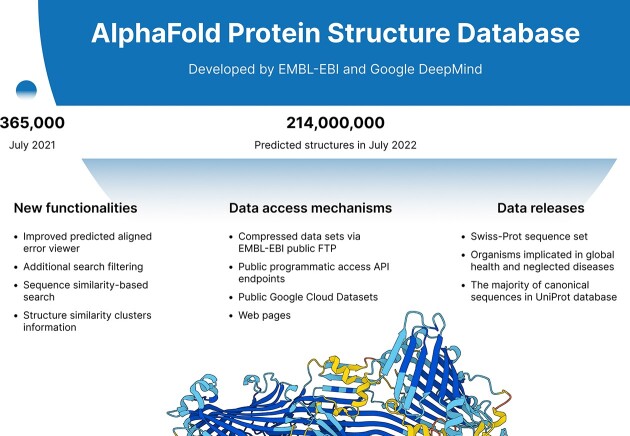
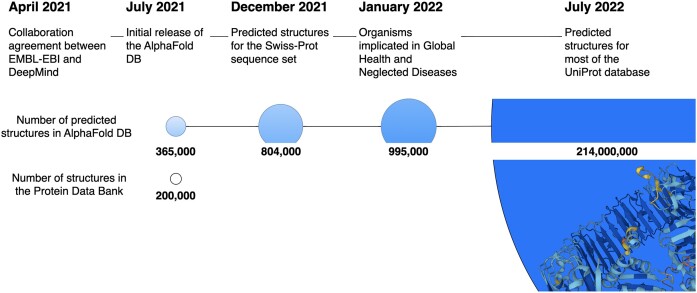
The AlphaFold Database Protein Structure Database (AlphaFold DB, https://alphafold.ebi.ac.uk) has significantly impacted structural biology by amassing over 214 million predicted protein structures, expanding from the initial 300k structures released in 2021. Enabled by the groundbreaking AlphaFold2 artificial intelligence (AI) system, the predictions archived in AlphaFold DB have been integrated into primary data resources such as PDB, UniProt, Ensembl, InterPro and MobiDB. Our manuscript details subsequent enhancements in data archiving, covering successive releases encompassing model organisms, global health proteomes, Swiss-Prot integration, and a host of curated protein datasets. We detail the data access mechanisms of AlphaFold DB, from direct file access via FTP to advanced queries using Google Cloud Public Datasets and the programmatic access endpoints of the database. We also discuss the improvements and services added since its initial release, including enhancements to the Predicted Aligned Error viewer, customisation options for the 3D viewer, and improvements in the search engine of AlphaFold DB.
Overview
CoChat Summary
TL;DR
AlphaFold DB has grown from ~300k to over 214 million predicted protein structures as of September 2023, with expanded access, search, and visualization features. This 2024 update describes data archiving, access mechanisms, integration with core resources, and new clustering/BLAST/PAE viewer capabilities.
Key findings
- AlphaFold DB expanded from approximately 300k structures in 2021 to over 214 million predicted protein structures as of September 2023; the initial July 2021 release housed over 360,000 structures for 20 model organism proteomes.
- Predictions are integrated into resources including PDB, UniProt, Ensembl, InterPro and MobiDB, and are accessible via FTP, Google Cloud Public Datasets (~23 TiB), API, and the website; PAE data is unavailable from EMBL-EBI public FTP.
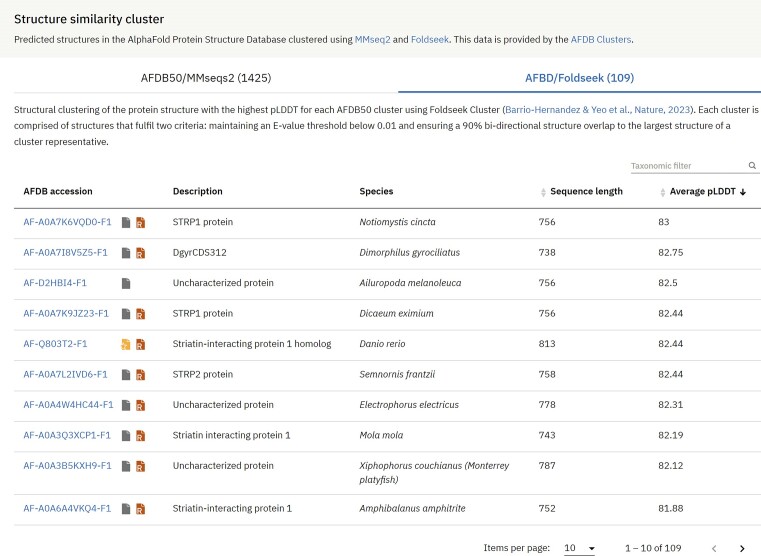
- Structure similarity clustering used MMseqs2 to cluster 214 million UniProtKB sequences into 52 million clusters, then Foldseek secondary clustering yielded 18.8 million clusters, finalizing 2.30 million robust clusters each with at least a pair of structures.
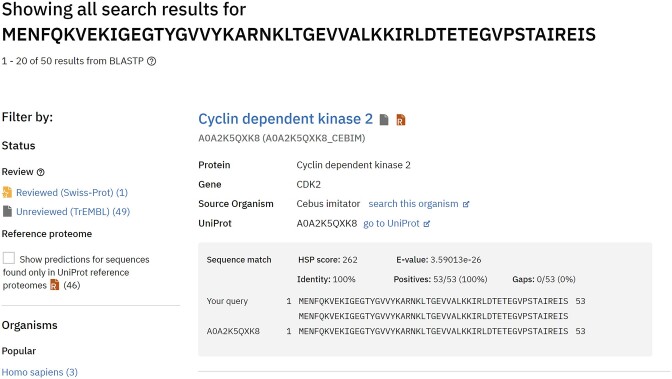
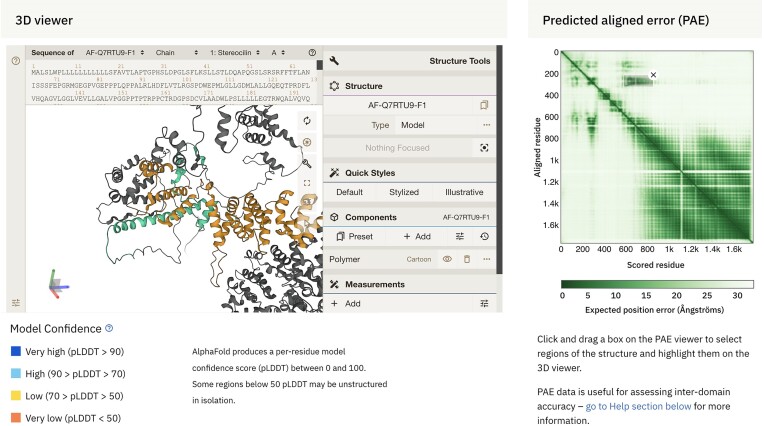
- New features include BLAST sequence similarity search, improved search filters for reviewed/unreviewed and reference proteome status, enhanced PAE viewer–Mol* interactivity, and a November 2022 update fixing a numerical bug that affected ~4% of total structure predictions.
Methods
- Descriptive database update/report with no primary experimental design; data generation is carried out by Google DeepMind, with predictions stored in PDB, mmCIF (modelCIF), and binaryCIF formats plus JSON metadata and confidence metrics pLDDT and PAE.
- Archiving uses successive releases from UniProt reference proteomes (e.g., 2021_02, 2021_04), Swiss-Prot, WHO global health proteomes, and MANE select; as of September 2023, EMBL-EBI FTP hosts TAR files for proteomes of 48 organisms.
- Access and analysis infrastructure includes FTP, Google Cloud Public Datasets, an API keyed on UniProt accessions, Apache-Solr search, BLAST on Google Cloud Platform, and Foldseek/MMseqs2 clustering.
Limitations
- Stated: sequences are not covered if they are less than 16 amino acids; >2700 aa for Swiss-Prot/proteome sequences or >1280 aa for other UniProt sequences; contain non-standard amino acids; are not in the UniProt ‘one sequence per gene’ FASTA file; or are viral proteins; these limitations are under discussion.
- Stated: some sequences may be outdated compared to UniProt due to less frequent AlphaFold DB releases; PAE data is unavailable from EMBL-EBI public FTP; full Google Cloud dataset download requires a Google account and can take roughly 2.5 days at 1 Gbps.
- Evident from the text: all archived structures are predicted models rather than experimental structures, and users must interpret pLDDT/PAE cautiously (e.g., pLDDT <50 likely disordered, 50–70 lower confidence); the database also currently lacks isoform and multimeric predicted structures, which are listed as future work.
Model-written summary. Check it against the paper before relying on it.
Integrity signals
Registry
Cites
Statistics
Figures

Verification
Claims the paper makes
11 Valid · 1 Not valid · 0 Not checked · 28 Own results and interpretations
Every source the paper cites for this claim was checked and supports it.
In the paper
“The new generation of predicted protein structure models has demonstrated remarkable accuracy, which could mitigate the continually widening gap between known protein sequences and experimentally determined protein structures (7).”
§ AlphaFold Protein Structure Database in 2024: providing structure coverage for over 214 million protein sequences > Introduction
What the sources say
- Supportedcites [7] Varadi M., Bordin N., Orengo C., Velankar S. The opportunities and challenges posed by the new generation of deep learning-based protein structure predictors. Curr. Opin. Struct. Biol. 2023; 79: 102543. 36807079 PMC7618866 source
The Introduction says prediction models made a major advance in accuracy and can match or sometimes surpass experimentally determined structures. It also describes a growing gap between known protein sequences and determined structures; the section on new challenges says predicted structures have greatly increased coverage of protein sequence space. These passages support both the accuracy claim and the proposed potential to narrow that gap (page numbers unavailable). (LLM, conf=0.93)
boosted- Asserted: passes — The authors put it forward as true.
- Checkable: passes — It can be checked against evidence.
- Load-bearing: passes — The paper’s conclusions depend on it.
- Based: passes — The paper gives a reason why it holds.
- Supported
Every source the paper cites for this claim was checked and supports it.
In the paper
“In response to frequent requests from the user community since the AlphaFold DB launch, we have made significant strides to implement a sequence-based similarity search feature. We have incorporated the Basic Local Alignment Search Tool (BLAST) (21) into our Google Cloud Platform infrastructure to achieve this.”
§ AlphaFold Protein Structure Database in 2024: providing structure coverage for over 214 million protein sequences > Implementation > Data access
What the sources say
- Supportedcites [21] Camacho C., Coulouris G., Avagyan V., Ma N., Papadopoulos J., Bealer K., Madden T.L. BLAST+: architecture and applications. BMC Bioinf. 2009; 10: 421. PMC2803857 20003500 source
The Background identifies BLAST as a sequence similarity search program that matches a query sequence against a database. In the citing sentence, the citation identifies the tool incorporated; the AlphaFold DB implementation is the citing authors’ own report, not a claim attributed to this source. (LLM, conf=0.91)
plainstates a cause- Asserted: passes — The authors put it forward as true.
- Checkable: passes — It can be checked against evidence.
- Load-bearing: unclear — It is unclear whether the paper’s conclusions depend on it.
- Based: passes — The paper gives a reason why it holds.
- Supported
Every source the paper cites for this claim was checked and supports it.
In the paper
“The impact of the predicted structures is further enhanced by their seamless integration into several core data resources, including PDBe-KB (17), UniProt (6), Ensembl (16), InterPro (15), Genecards (24) and MobiDB (25), among others.”
§ AlphaFold Protein Structure Database in 2024: providing structure coverage for over 214 million protein sequences > Conclusions and outlook
What the sources say
- Supportedcites [17] consortium P.D.B.-K.B. PDBe-KB: collaboratively defining the biological context of structural data. Nucleic Acids Res. 2022; 50: D534– D542. 34755867 PMC8728252 source
Citation (17) is attached specifically to PDBe-KB, rather than to the other resources in the sentence. The Introduction identifies PDBe-KB as a resource that integrates structural and functional annotations, supporting its identification here. (LLM, conf=0.90)
- Supportedcites [6] U.P. Consortium UniProt: the Universal Protein Knowledgebase in 2023. Nucleic Acids Res. 2023; 51: D523– D531. 36408920 PMC9825514 source
The citation is attached to UniProt in a list of resources, and the cited paper is a description of UniProt. Its Data integration and Interactive visualisations in entry pages sections state that UniProt incorporates AlphaFold-predicted structures into protein entries alongside other data; the supplied passages do not give page numbers. (LLM, conf=0.93)
- Supportedcites [16] Cunningham F., Allen J.E., Allen J., Alvarez-Jarreta J., Amode M.R., Armean I.M., Austine-Orimoloye O., Azov A.G., Barnes I., Bennett R. et al. Ensembl 2022. Nucleic Acids Res. 2022; 50: D988– D995. 34791404 PMC8728283 source
The citation identifies Ensembl as one of the resources in the list. In “Developing a new website” (page not provided), the paper says Ensembl’s Entity Viewer provides access to protein information, including 3D structures from PDBe. (LLM, conf=0.86)
plainstates a cause- Asserted: passes — The authors put it forward as true.
- Checkable: passes — It can be checked against evidence.
- Load-bearing: unclear — It is unclear whether the paper’s conclusions depend on it.
- Based: passes — The paper gives a reason why it holds.
- Supported
Every source the paper cites for this claim was checked and supports it.
In the paper
“Tackling this challenge, Steinegger et al. recently unveiled the Foldseek Cluster, a state-of-the-art structural-alignment-based clustering algorithm designed for vast datasets (22). They applied this novel method to the AlphaFold DB archive, making the derived structure similarity clusters available to the research community.”
§ AlphaFold Protein Structure Database in 2024: providing structure coverage for over 214 million protein sequences > Implementation > Data access
What the sources say
- Supportedcites [22] Barrio-Hernandez I., Yeo J., Jänes J., Mirdita M., Gilchrist C.L.M., Wein T., Varadi M., Velankar S., Beltrao P., Steinegger M. Clustering-predicted structures at the scale of the known protein universe. Nature. 2023; 622: 637– 645. 37704730 PMC10584675 source
The Abstract says the authors used Foldseek cluster to cluster the AlphaFold database. The Methods section (“Web server”) says they developed a server for users to explore the clusters, their members and related clusters, supporting the claim that the results were made available to researchers. (LLM, conf=0.93)
plainstates a cause- Asserted: passes — The authors put it forward as true.
- Checkable: passes — It can be checked against evidence.
- Load-bearing: passes — The paper’s conclusions depend on it.
- Based: passes — The paper gives a reason why it holds.
- Supported
- Probably not a substantial claim. 30
- It may state two separate claims as one. 15
- The quote only partly states this claim. 1
Claims other papers make about this one
Each is checked against this paper’s own text: does it say what the citing paper says it does?
The cited source says what the claim attributes to it.
In the citing paper
“houses over 200 million pre-run AF2 predictions”
From The power and pitfalls of AlphaFold2 for structure prediction beyond rigid globular proteins (2024) · cites this paper as [7]
Citations
Cites
Highly accurate protein structure prediction with AlphaFold
Jumper, J., Evans, R., Pritzel, A., Green, T., Figurnov, M., Ronneberger, O., Tunyasuvunakool, K., Bates, R., Žídek, A., Potapenko, A., et al. (2021) · Nature · doi:10.1038/s41586-021-03819-2 · Cited by 43,764
Self-citationBLAST+: architecture and applications
Camacho, C., Coulouris, G., Avagyan, V., Ma, N., Papadopoulos, J., Bealer, K., & Madden, T. L. (2009) · BMC Bioinformatics · doi:10.1186/1471-2105-10-421 · Cited by 22,074
UniProt: the Universal Protein Knowledgebase in 2023
The UniProt Consortium, Bateman, A., Martin, M.-J., Orchard, S., Magrane, M., Ahmad, S., Alpi, E., Bowler-Barnett, E. H., Britto, R., Bye-A-Jee, H., et al. (2023) · Nucleic Acids Research · doi:10.1093/nar/gkac1052 · Cited by 7,210
Evolutionary-scale prediction of atomic level protein structure with a language model
Lin, Z., Akin, H., Rao, R., Hie, B., Zhu, Z., Lu, W., Smetanin, N., Verkuil, R., Kabeli, O., Shmueli, Y., et al. (2022) · doi:10.1101/2022.07.20.500902 · Cited by 5,990 · cited 1×
“In the wake of the latest breakthroughs in prediction software, new databases such as the AlphaFold Protein Structure Database and the ESM Atlas ( 14 ) have emerged.”
MethodThe GeneCards suite: from gene data mining to disease genome sequence analyses
Stelzer, G., Rosen, N., Plaschkes, I., Zimmerman, S., Twik, M., Fishilevich, S., Stein, T. I., Nudel, R., Lieder, I., Mazor, Y., et al. (2016) · Current Protocols in Bioinformatics · doi:10.1002/cpbi.5 · Cited by 5,550 · cited 1×
“The impact of the predicted structures is further enhanced by their seamless integration into several core data resources, including PDBe-KB ( 17 ), UniProt ( 6 ), Ensembl ( 16 ), InterPro ( 15 ), Genecards ( 24 ) and MobiDB ( 25 ), among others.”
BackgroundAccurate prediction of protein structures and interactions using a 3-track network
Baek, M., DiMaio, F., Anishchenko, I., Dauparas, J., Ovchinnikov, S., Lee, G. R., Wang, J., Cong, Q., Kinch, L. N., Schaeffer, R. D., et al. (2021) · doi:10.1101/2021.06.14.448402 · Cited by 5,549
Paysan-Lafosse, T., Blum, M., Chuguransky, S., Grego, T., Pinto, B. L., Salazar, G. A., Bileschi, M. L., Bork, P., Bridge, A., Colwell, L., et al. (2023) · Nucleic Acids Research · doi:10.1093/nar/gkac993 · Cited by 2,399
Cunningham, F., Allen, J. E., Allen, J., Alvarez-Jarreta, J., Amode, M. R., Armean, I. M., Austine-Orimoloye, O., Azov, A. G., Barnes, I., Bennett, R., et al. (2022) · Nucleic Acids Research · doi:10.1093/nar/gkab1049 · Cited by 1,923
Mol* Viewer: modern web app for 3D visualization and analysis of large biomolecular structures
Sehnal, D., Bittrich, S., Deshpande, M., Svobodová, R., Berka, K., Bazgier, V., Velankar, S., Burley, S. K., Koča, J., & Rose, A. S. (2021) · Nucleic Acids Research · doi:10.1093/nar/gkab314 · Cited by 1,154 · cited 1×
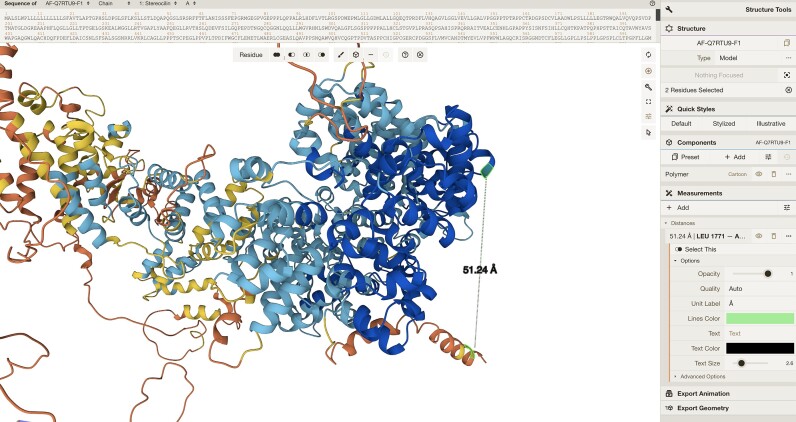
“We improved the visualisation of non-consecutive regions and the interactivity between the PAE viewer and the 3D molecular graphics viewer, Mol* ( 23 ) (Figure 5 ).”
MethodSelf-citationMariani, V., Biasini, M., Barbato, A., & Schwede, T. (2013) · Bioinformatics · doi:10.1093/bioinformatics/btt473 · Cited by 1,138 · cited 1×
“AlphaFold yields a per-residue estimate of its confidence, known as pLDDT, ranging from 0 to 100, indicating the tool’s predicted score on the lDDT-C α metric ( 19 ).”
Method
Cited by
Highly accurate protein structure prediction with AlphaFold
Jumper, J., Evans, R., Pritzel, A., Green, T., Figurnov, M., Ronneberger, O., Tunyasuvunakool, K., Bates, R., Žídek, A., Potapenko, A., et al. (2021) · Nature · doi:10.1038/s41586-021-03819-2 · Cited by 43,764
Self-citationThe PRIDE database at 20 years: 2025 update
Perez-Riverol, Y., Bandla, C., Kundu, D. J., Kamatchinathan, S., Bai, J., Hewapathirana, S., John, N. S., Prakash, A., Walzer, M., Wang, S., et al. (2025) · Nucleic Acids Research · doi:10.1093/nar/gkae1011 · Cited by 1,995
InterPro: the protein sequence classification resource in 2025
Blum, M., Andreeva, A., Florentino, L. C., Chuguransky, S. R., Grego, T., Hobbs, E., Pinto, B. L., Orr, A., Paysan-Lafosse, T., Ponamareva, I., et al. (2025) · Nucleic Acids Research · doi:10.1093/nar/gkae1082 · Cited by 1,062
“…and visualisation of AlphaFold predicted structures in InterPro Over 85% of UniProtKB entries now feature predicted protein structures generated by AlphaFold, an artificial intelligence method developed by Google DeepMind that infers protein structures from their amino acid sequences ( 39 ,40 ).”
Simulating 500 million years of evolution with a language model
(2024) · doi:10.1101/2024.07.01.600583 · Cited by 937
Simulating 500 million years of evolution with a language model
Hayes, T., Rao, R., Akin, H., Sofroniew, N. J., Oktay, D., Lin, Z., Verkuil, R., Tran, V. Q., Deaton, J., Wiggert, M., et al. (2025) · Science · doi:10.1126/science.ads0018 · Cited by 937
Burley, S. K., Bhatt, R., Bhikadiya, C., Bi, C., Biester, A., Biswas, P., Bittrich, S., Blaumann, S., Brown, R., Chao, H., et al. (2025) · Nucleic Acids Research · doi:10.1093/nar/gkae1091 · Cited by 329
“…uncharacterized 3D structures to the wealth of 3D biostructure information archived in the PDB, which includes expertly biocurated data and annotations from 50 trusted external resources, alongside > 1 million CSMs coming from AlphaFold DB ( 16 ) and the ModelArchive (modelarchive.org) ( 17 ).”
AlphaFold Protein Structure Database and 3D-Beacons: New Data and Capabilities
Fleming, J., Magana, P., Nair, S., Tsenkov, M., Bertoni, D., Pidruchna, I., Lima Afonso, M. Q., Midlik, A., Paramval, U., Žídek, A., et al. (2025) · Journal of Molecular Biology · doi:10.1016/j.jmb.2025.168967 · Cited by 276
Self-citationThe Immune Epitope Database (IEDB): 2024 update
Vita, R., Blazeska, N., Marrama, D., IEDB Curation Team Members, Shackelford, D., Zalman, L., Foos, G., Zarebski, L., Chan, K., Reardon, B., et al. (2025) · Nucleic Acids Research · doi:10.1093/nar/gkae1092 · Cited by 274
Bilingual language model for protein sequence and structure
Heinzinger, M., Weissenow, K., Sanchez, J. G., Henkel, A., Mirdita, M., Steinegger, M., & Rost, B. (2024) · NAR Genomics and Bioinformatics · doi:10.1093/nargab/lqae150 · Cited by 311
“This revolution opens up exciting possibilities to explore the dual nature of proteins - from their one-dimensional (1D) amino acid sequences to their unique three-dimensional (3D) structures.”
BackgroundSelf-citationRCSB protein Data Bank: exploring protein 3D similarities via comprehensive structural alignments
Bittrich, S., Segura, J., Duarte, J. M., Burley, S. K., & Rose, Y. (2024) · Bioinformatics · doi:10.1093/bioinformatics/btae370 · Cited by 211
“Chain A of 1rpj (D-allose binding protein) serves as reference, chain A of 2oen (distant, sugar-binding homolog) and chain A of AF-P39265-F1 [CSM of D-allose binding protein with UniProt identifier P39265, (Varadi 2024)] were aligned to this reference structure.”
BackgroundOcana, A., Pandiella, A., Privat, C., Bravo, I., Luengo-Oroz, M., Amir, E., & Gyorffy, B. (2025) · Biomarker Research · doi:10.1186/s40364-025-00758-2 · Cited by 187
“Recent initiatives such as AlphaFold have revolutionized life sciences by predicting over 200 million protein structures available in the AlphaFold DataBase [52, 53].”
The power and pitfalls of AlphaFold2 for structure prediction beyond rigid globular proteins
Agarwal, V., & McShan, A. C. (2024) · Nature Chemical Biology · doi:10.1038/s41589-024-01638-w · Cited by 155
“Several efforts have alleviated these limitations, including the Alpha-Fold Protein Structure Database 6,7 , which houses over 200 million pre-run AF2 predictions, as well as ColabFold 8 and OpenFold 9 , which allow users to run a modified AF2 protocol on open-access servers in minutes.”
BackgroundThe structure assessment web server: for proteins, complexes and more
Waterhouse, A. M., Studer, G., Robin, X., Bienert, S., Tauriello, G., & Schwede, T. F. (2024) · Nucleic Acids Research · doi:10.1093/nar/gkae270 · Cited by 172
Phyre2.2: A Community Resource for Template-based Protein Structure Prediction
Powell, H. R., Islam, S. A., David, A., & Sternberg, M. J. E. (2025) · Journal of Molecular Biology · doi:10.1016/j.jmb.2025.168960 · Cited by 175
Exploring structural diversity across the protein universe with The Encyclopedia of Domains
Lau, A. M., Bordin, N., Kandathil, S. M., Sillitoe, I., Waman, V. P., Wells, J., Orengo, C. A., & Jones, D. T. (2024) · Science · doi:10.1126/science.adq4946 · Cited by 140
From Omics to Multi-Omics: A Review of Advantages and Tradeoffs
Hayes, C. N., Nakahara, H., Ono, A., Tsuge, M., & Oka, S. (2024) · Genes · doi:10.3390/genes15121551 · Cited by 119
“Predicted structures for over 214 million proteins have been deposited in the AlphaFold Protein Structure Database [81].”
Multiple Protein Structure Alignment at Scale with FoldMason
Gilchrist, C. L. M., Mirdita, M., & Steinegger, M. (2024) · doi:10.1101/2024.08.01.606130 · Cited by 117
Self-citationBilingual Language Model for Protein Sequence and Structure
Heinzinger, M., Weissenow, K., Sanchez, J. G., Henkel, A., Mirdita, M., Steinegger, M., & Rost, B. (2023) · doi:10.1101/2023.07.23.550085 · Cited by 312
Self-citationMining the CRBN target space redefines rules for molecular glue-induced neosubstrate recognition
Petzold, G., Gainza, P., Annunziato, S., Lamberto, I., Trenh, P., McAllister, L. A., DeMarco, B., Schwander, L., Bunker, R. D., Zlotosch, M., et al. (2025) · Science · doi:10.1126/science.adt6736 · Cited by 117
Predictomes, a classifier-curated database of AlphaFold-modeled protein-protein interactions
Schmid, E. W., & Walter, J. C. (2025) · Molecular Cell · doi:10.1016/j.molcel.2025.01.034 · Cited by 120
Kuzu, O. F., Granerud, L. J. T., & Saatcioglu, F. (2025) · Signal Transduction and Targeted Therapy · doi:10.1038/s41392-025-02439-w · Cited by 144
Qiu, X., Li, H., Steeg, G. V., & Godzik, A. (2024) · Biomolecules · doi:10.3390/biom14030339 · Cited by 118
“ESM Atlas [8]”
Predicting protein-protein interactions in the human proteome
Zhang, J., Humphreys, I. R., Pei, J., Kim, J., Choi, C., Yuan, R., Durham, J., Liu, S., Choi, H.-J., Baek, M., et al. (2025) · Science · doi:10.1126/science.adt1630 · Cited by 87
BFVD—a large repository of predicted viral protein structures
Kim, R. S., Levy Karin, E., Mirdita, M., Chikhi, R., & Steinegger, M. (2025) · Nucleic Acids Research · doi:10.1093/nar/gkae1119 · Cited by 86
“Recent advancements in computational protein structure prediction ( 7–10 ) have made hundreds of millions of protein structures available through repositories like the AlphaFold Protein Structure Database (AFDB) ( 11 ,12 ) and the ESM Atlas ( 8 ).”
Self-citationRapid and sensitive protein complex alignment with Foldseek-Multimer
Kim, W., Mirdita, M., Levy Karin, E., Gilchrist, C. L. M., Schweke, H., Söding, J., Levy, E. D., & Steinegger, M. (2025) · Nature Methods · doi:10.1038/s41592-025-02593-7 · Cited by 73
Self-citationAlphaFold two years on: Validation and impact
Kovalevskiy, O., Mateos-Garcia, J., & Tunyasuvunakool, K. (2024) · Proceedings of the National Academy of Sciences · doi:10.1073/pnas.2315002121 · Cited by 75
Self-citationTesson, F., Huiting, E., Wei, L., Ren, J., Johnson, M. C., Planel, R., Cury, J., Feng, Y., Bondy-Denomy, J., & Bernheim, A. (2024) · doi:10.1101/2024.08.21.608784 · Cited by 75
“For context, the Protein Databank (PBD) and AlphaFold Database 66,67 collectively represent 34,934 phage protein structures, but the Genbank Database contains 13,487 phage genomes that we estimate may encode over 130,000 small accessory proteins with putative anti-defense functions 68 .”
MethodShiiba, I., Ito, N., Oshio, H., Ishikawa, Y., Nagao, T., Shimura, H., Oh, K.-W., Takasaki, E., Yamaguchi, F., Konagaya, R., et al. (2025) · Nature Communications · doi:10.1038/s41467-025-56666-4 · Cited by 97
Computational biology and artificial intelligence in mRNA vaccine design for cancer immunotherapy
İmani, S., Li, X., Chen, K., Maghsoudloo, M., Kaboli, P. J., Hashemi, M., Khoushab, S., & Li, X. (2025) · Frontiers in Cellular and Infection Microbiology · doi:10.3389/fcimb.2024.1501010 · Cited by 111
The Reactome Knowledgebase 2026
Ragueneau, E., Gong, C., Sinquin, P., Sevilla, C., Beavers, D., Grentner, A., Griss, J., Hogue, G., Li, N. T., Matthews, L. R., et al. (2025) · Nucleic Acids Research · doi:10.1093/nar/gkaf1223 · Cited by 162
“Most of the protein structures are imported from AlphaFold Protein Structure Database [ 18 , 19 ] due to its full-length coverage of each protein sequence.”
ModelArchive: A Deposition Database for Computational Macromolecular Structural Models
Tauriello, G., Waterhouse, A. M., Haas, J., Behringer, D., Bienert, S., Garello, T., & Schwede, T. (2025) · Journal of Molecular Biology · doi:10.1016/j.jmb.2025.168996 · Cited by 65
“More recently, the AlphaFold Protein Structure Database 10 and the ESM Metagenomic Atlas 11 have been established.”
AlphaFold Protein Structure Database 2025: a redesigned interface and updated structural coverage
Bertoni, D., Tsenkov, M. I., Magaña, P., Nair, S. S., Pidruchna, I., Afonso, M. Q. L., Midlik, A., Paramval, U., Lawal, D. K., Tanweer, A., et al. (2025) · Nucleic Acids Research · doi:10.1093/nar/gkaf1226 · Cited by 137
Self-citationRNA-Puzzles Round V: blind predictions of 23 RNA structures
Bu, F., Adam, Y., Adamiak, R. W., Antczak, M., de Aquino, B. R. H., Badepally, N. G., Batey, R., Baulin, E. F., Boiński, P., Boniecki, M. J., et al. (2024) · Nature Methods · doi:10.1038/s41592-024-02543-9 · Cited by 84
“Artificial intelligence tools, however, are powerful for abstracting and generalizing folding rules extracted from large datasets 44 .”
BitterDB: 2024 update on bitter ligands and taste receptors
Ziaikin, E., David, M., Uspenskaya, S., & Niv, M. Y. (2024) · Nucleic Acids Research · doi:10.1093/nar/gkae1044 · Cited by 76
Partners, C. M. A., Bào, Y., Zhang, Z., Zhao, W., Xiao, J., Song, S., He, S., Zhang, G., Li, Y., Zhao, G., et al. (2025) · Nucleic Acids Research · doi:10.1093/nar/gkaf1172 · Cited by 160
Hong, Y., Wang, D., Liu, Z., Chen, Y., Wang, Y., & Li, J. (2025) · Journal of Translational Medicine · doi:10.1186/s12967-025-06517-z · Cited by 72
“The crystal structures of the core proteins were obtained from the AlphaFold Protein Structure Database (AlphaFold DB, https:// alpha fold. ebi. ac. uk) [36].”
Unveiling the hidden interactome of CRBN molecular glues
Baek, K., Metivier, R. J., Roy Burman, S. S., Bushman, J. W., Yoon, H., Lumpkin, R. J., Ryan, J. K., Abeja, D. M., Lakshminarayan, M., Yue, H., et al. (2025) · Nature Communications · doi:10.1038/s41467-025-62099-w · Cited by 61
“We used MASTER 62 to mine the AF2 database 63 for proteins containing G-loops with similar backbone architecture to the G-loop in known neo-substrate CSNK1A1 (PDB: 5FQD, aa35-42), resulting in a set of 46,040 loops across 10,926 proteins with an R.M.S.D cutoff of less than 2 Å (Fig.”
An overview on polyurethane-degrading enzymes
Raczyńska, A., Góra, A., & André, I. (2024) · Biotechnology Advances · doi:10.1016/j.biotechadv.2024.108439 · Cited by 71
Wang, W., Shuai, Y., Zeng, M., Fan, W., & Li, M. (2025) · Nature Communications · doi:10.1038/s41467-024-54816-8 · Cited by 80
“Then, we collect their corresponding predicted structures from the AlphaFold database 51,52 .”
Deep contrastive learning enables genome-wide virtual screening
Jia, Y., Gao, B., Tan, J., Zheng, J., Hong, X., Zhu, W., Tan, H., Xiao, Y., Tan, L., Cai, H., et al. (2026) · Science · doi:10.1126/science.ads9530 · Cited by 66
Artificial intelligence in peptide-based drug design
Zhai, S., Liu, T., Lin, S., Li, D., Liu, H., Yao, X., & Hou, T. (2025) · Drug Discovery Today · doi:10.1016/j.drudis.2025.104300 · Cited by 74
Plant specialized metabolism: Diversity of terpene synthases and their products
Bergman, M. E., & Dudareva, N. (2024) · Current Opinion in Plant Biology · doi:10.1016/j.pbi.2024.102607 · Cited by 48
STK19 positions TFIIH for cell-free transcription-coupled DNA repair
Mevissen, T. E. T., Kümmecke, M., Schmid, E. W., Farnung, L., & Walter, J. C. (2024) · Cell · doi:10.1016/j.cell.2024.10.020 · Cited by 50
Anoikis in cell fate, physiopathology, and therapeutic interventions
Mei, J., Jiang, X., Tian, H., Rong, D., Song, J., Wang, L., Chen, Y., Wong, R. C. B., Guo, C., Wang, L., et al. (2024) · MedComm · doi:10.1002/mco2.718 · Cited by 66
“The currently documented integrin family consisted of 18 α subunits and 9 β subunits, 49 as well as the recently reported integrin subunit β -like 1 (ITGBL1), 50 and different α and β subunits have similar structural characteristics 51,52 (Table 1).”
BackgroundChen, J.-Y., Wang, J.-F., Hu, Y., Li, X.-H., Qian, Y.-R., & Song, C.-L. (2025) · Frontiers in Bioengineering and Biotechnology · doi:10.3389/fbioe.2025.1506508 · Cited by 49
Validation guidelines for drug-target prediction methods
Tanoli, Z., Schulman, A., & Aittokallio, T. A. (2024) · Expert Opinion on Drug Discovery · doi:10.1080/17460441.2024.2430955 · Cited by 60
“We expect many more AlphaFold-based docking studies published in the coming years, as new and extended versions of AlphaFold are being published and predictions become available in databases [39,40].”
Structural basis for translational control by the human 48S initiation complex
Petrychenko, V., Yi, S.-H., Liedtke, D., Peng, B., Rodnina, M. V., & Fischer, N. (2024) · Nature Structural & Molecular Biology · doi:10.1038/s41594-024-01378-4 · Cited by 49
“The NTD of eIF5 in 48S-2 and 48S-3 was taken from AlphaFold 62,63 (AF-P55010-F1).”
BackgroundMethodInfluentialProtein structure-informed bacteriophage genome annotation with Phold
Bouras, G., Grigson, S. R., Mirdita, M., Heinzinger, M., Papudeshi, B., Mallawaarachchi, V., Green, R., Kim, R. S., Mihalia, V., Psaltis, A. J., et al. (2026) · Nucleic Acids Research · doi:10.1093/nar/gkaf1448 · Cited by 71
“2893 of these proteins had structure predictions already in the AlphaFold database v4 [ 51 ], which were down-loaded.”
InfluentialSelf-citationCATH 2024: CATH-AlphaFlow Doubles the Number of Structures in CATH and Reveals Nearly 200 New Folds
Waman, V. P., Bordin, N., Alcraft, R., Vickerstaff, R., Rauer, C., Chan, Q., Sillitoe, I., Yamamori, H., & Orengo, C. (2024) · Journal of Molecular Biology · doi:10.1016/j.jmb.2024.168551 · Cited by 42
“4 AFDB provides a rich source of information for structural classification and structure-based function prediction.”
BackgroundFu, D., Song, Y., Wu, S., Peng, Y., Ming, Y., Li, Z., Zhang, X., Song, W., Su, Z., Gong, Z., et al. (2025) · Nature Plants · doi:10.1038/s41477-025-01933-x · Cited by 46
“The structures of CBF2 and SKIP proteins were analysed using the AlphaFold Protein Structure Database (https://alphafold.com/) 58 .”
AI, agentic models and lab automation for scientific discovery — the beginning of scAInce
Härtung, T. (2025) · Frontiers in Artificial Intelligence · doi:10.3389/frai.2025.1649155 · Cited by 73
AI-driven de novo enzyme design: Strategies, applications, and future prospects
Cui, X.-C., Zheng, Y., Liu, Y., Yuchi, Z., & Yuan, Y. (2025) · Biotechnology Advances · doi:10.1016/j.biotechadv.2025.108603 · Cited by 47
Lu, M., Rao, S., Yue, H., Han, J., & Wang, J. (2024) · Crystal Growth & Design · doi:10.1021/acs.cgd.3c01251 · Cited by 47
Hong, Y., Li, J., Qiu, Y., Wang, Y., Du, Z., Liu, Z., Mi, Y., Geng, H., & Xin, S. (2025) · International Journal of Surgery · doi:10.1097/js9.0000000000002632 · Cited by 44
Structural insights of AKT and its activation mechanism for drug development
Kumar, H., Kabekkodu, S. P., & Pai, K. S. R. (2025) · Molecular Diversity · doi:10.1007/s11030-025-11132-7 · Cited by 58
“Other regions with low pLDDT include 2–3, 16–19, 43–46, 48–53, 78–79, 83–84.”
Real-World Applications and Experiences of AI/ML Deployment for Drug Discovery
Pitt, W. R., Bentley, J. M., Boldron, C., Colliandre, L., Esposito, C., Frush, E. H., Kopec, J., Labouille, S., Meneyrol, J., Pardoe, D. A., et al. (2025) · Journal of Medicinal Chemistry · doi:10.1021/acs.jmedchem.4c03044 · Cited by 55
ECOD: integrating classifications of protein domains from experimental and predicted structures
Schaeffer, R. D., Medvedev, K. E., Andreeva, A. E., Chuguransky, S., Pinto, B. L., Zhang, J., Cong, Q., Bateman, A. G., & Grishin, N. V. (2024) · Nucleic Acids Research · doi:10.1093/nar/gkae1029 · Cited by 40
“Through the AlphaFold Structure Database, > 200 M predicted protein structures have been released, including many proteins and protein families that have not previously been structurally characterized ( 12 ).”
Advances in carotenoid and apocarotenoid metabolisms and functions in plants
Li, L., Rodríguez-Concepción, M., & Al‐Babili, S. (2025) · PLANT PHYSIOLOGY · doi:10.1093/plphys/kiaf304 · Cited by 47
Zhang, S., Xiang, H., Tao, Y., Li, J., Zeng, S., Xu, Q., Xiao, H., Lv, S., Song, C., Yan, C., et al. (2024) · Journal of the American Chemical Society · doi:10.1021/jacs.4c08869 · Cited by 35
CATH v4.4: major expansion of CATH by experimental and predicted structural data
Waman, V. P., Bordin, N., Lau, A., Kandathil, S., Wells, J., Miller, D., Velankar, S., Jones, D. T., Sillitoe, I., & Orengo, C. (2025) · Nucleic Acids Research · doi:10.1093/nar/gkae1087 · Cited by 35
Self-citationPajkos, M., Clerc, I., Zanon, C., Bernadó, P., & Cortés, J. (2025) · Journal of Molecular Biology · doi:10.1016/j.jmb.2025.169003 · Cited by 45
Vallat, B. K., Rose, Y., Piehl, D. W., Duarte, J. M., Bittrich, S., Bi, C., Segura, J., Zalevsky, A. O., Sekharan, M. R., Webb, B., et al. (2025) · Nucleic Acids Research · doi:10.1093/nar/gkaf1187 · Cited by 62
“…we expanded RCSB.org to provide access to ∼ 1 million computed structure models (CSMs) from AlphaFold Protein Structure Database (AlphaFoldDB) [ 7 ] and the ModelArchive [ 8 ]—including complete proteomes of model organisms and select pathogens—thereby enhancing the availability of 3D…”
Predictomes: A classifier-curated database of AlphaFold-modeled protein-protein interactions
(2024) · doi:10.1101/2024.04.09.588596 · Cited by 121
Puente-Lelievre, C., Malik, A. J., Douglas, J., Ascher, D., Baker, M., Allison, J., Poole, A., Lundin, D., Fullmer, M., Bouckert, R., et al. (2023) · bioRxiv (Cold Spring Harbor Laboratory) · doi:10.1101/2023.12.12.571181 · Cited by 32
Self-citationUnderstanding mitochondrial protein import: a revised model of the presequence translocase
Jain, N., Chacińska, A., & Rehling, P. (2025) · Trends in Biochemical Sciences · doi:10.1016/j.tibs.2025.03.001 · Cited by 36
Longitudinal big biological data in the AI era
Mardinoğlu, A., Türkez, H., Shong, M., Srinivasulu, V. P., Nielsen, J., Palsson, B. Ø., Hood, L., & Uhlén, M. (2025) · Molecular Systems Biology · doi:10.1038/s44320-025-00134-0 · Cited by 43
“Its open-access AlphaFold Protein Structure Database provides over 200 million predicted structures, covering nearly all known proteins from sequenced genomes (Varadi et al, 2023).”
Unbiased mapping of cereblon neosubstrate landscape by high-throughput proteomics
Steger, M., Nishiguchi, G., Wu, Q., Schwalb, B., Shashikadze, B., McGowan, K., Actis, M., Aggarwal, A., Shi, Z., Price, J., et al. (2025) · Nature Communications · doi:10.1038/s41467-025-62829-0 · Cited by 32
Multiple protein structure alignment at scale with FoldMason
Gilchrist, C. L. M., Mirdita, M., & Steinegger, M. (2026) · Science · doi:10.1126/science.ads6733 · Cited by 117
Self-citationApplication and prospects of large AI models in virtual power plants
Wang, D., Peng, D., & Huang, D. (2024) · Electric Power Systems Research · doi:10.1016/j.epsr.2024.111403 · Cited by 36
Diverse polysaccharide production and biofilm formation abilities of clinical Klebsiella pneumoniae
(2024) · doi:10.1038/s41522-024-00629-y · Cited by 29
Deep learning methods for protein structure prediction
Qin, Y., Chen, Z., Ye, P., Xiao, Y., Zhong, T., & Yu, X. (2024) · MedComm – Future Medicine · doi:10.1002/mef2.96 · Cited by 35
Epigenetic regulators controlling osteogenic lineage commitment and bone formation
Dashti, P., Lewallen, E. A., Gordon, J. A. R., Montecino, M. A., Davie, J., Stein, G. S., van Leeuwen, J. P. T. M., van der Eerden, B. C. J., & van Wijnen, A. J. (2024) · Bone · doi:10.1016/j.bone.2024.117043 · Cited by 36
Analysing protein complexes in plant science: insights and limitation with AlphaFold 3
Lin, P.-Y., Huang, S.-C., Chen, K.-L., Huang, Y., Liao, C.-Y., Lin, G.-J., Lee, H., & Chen, P. (2025) · Botanical studies · doi:10.1186/s40529-025-00462-2 · Cited by 41
ZAK activation at the collided ribosome
Huso, V. L., Niu, S., Catipovic, M. A., Saba, J. A., Denk, T., Park, E., Cheng, J., Berninghausen, O., Becker, T. A., Green, R., et al. (2025) · Nature · doi:10.1038/s41586-025-09772-8 · Cited by 44
“A molecular model was generated based on existing human 80S structures 29,30 and guided by AlphaFold multimer predictions for different regions of ZAK 31–33 (Fig.”
Carroll, A. R., Copp, B. R., Grkovic, T., Keyzers, R. A., & Prinsep, M. R. (2026) · Natural Product Reports · doi:10.1039/d5np00080g · Cited by 42
Kiouri, D. P., Batsis, G., & Chasapis, C. T. (2025) · Biomolecules · doi:10.3390/biom15010141 · Cited by 33
Pratt, O. S., Elliott, L. G., Haon, M., Mesdaghi, S., Price, R. M., Simpkin, A. J., & Rigden, D. J. (2025) · Computational and Structural Biotechnology Journal · doi:10.1016/j.csbj.2025.01.016 · Cited by 27
“In conclusion, as computed structures [47,53] become as broadly available as experimental structures, probing the performance boundaries of each new method is crucially important: only when all limitations and biases are comprehensively understood, can computational methods illuminate all uncharted…”
InfluentialMc Larney, B. E., Sonay, A. Y., Apfelbaum, E., Mostafa, N., Monette, S., Goerzen, D., Aguirre, N., Exner, R. M., Habjan, C., Isaac, E., et al. (2024) · Nature Biomedical Engineering · doi:10.1038/s41551-024-01248-w · Cited by 28
Nuclear speckle proteins form intrinsic and MALAT1-dependent microphases
Shinn, M. K., Tomares, D. T., Liu, V., Pant, A., Qiu, Y., Vitalis, A., Song, Y. J., Ayala, Y., Ruff, K. M., Strout, G. W., et al. (2026) · Cell · doi:10.1016/j.cell.2025.11.026 · Cited by 38
Taxonomic expansion and reorganization of Flaviviridae
Simmonds, P., Butković, A., Grove, J., Mayne, R., Mifsud, J. C. O., Beer, M., Bukh, J., Drexler, J. F., Kapoor, A., Lohmann, V., et al. (2025) · Nature Microbiology · doi:10.1038/s41564-025-02134-0 · Cited by 46
“…structure prediction through machine learning (for example, AlphaFold2) is enabling surveys of protein form and function at enormous scales 28,29 and has driven the development of new high-throughput structure comparisons tools (for example, Foldseek 30 ) that enable structure-guided…”
Computing the Human Interactome
Zhang, J., Humphreys, I. R., Pei, J., Kim, J., Choi, C., Yuan, R., Durham, J., Liu, S., Choi, H.-J., Baek, M., et al. (2024) · bioRxiv (Cold Spring Harbor Laboratory) · doi:10.1101/2024.10.01.615885 · Cited by 26
“We hypothesized that extracted DDIs from the 200M AF2 models in the AFDB ( 42 ) could significantly enlarge the training dataset for PPI predictors and improve their performance.”
MethodECOD domain classification of 48 whole proteomes from AlphaFold Structure Database using DPAM2
Schaeffer, R. D., Zhang, J., Medvedev, K. E., Kinch, L. N., Cong, Q., & Grishin, N. V. (2024) · PLOS Computational Biology · doi:10.1371/journal.pcbi.1011586 · Cited by 22
“We classified domains from 48 whole proteomes from AFDB [32] using the DPAM v2 (Domain Parser for AlphaFold Models) domain assigner and ECOD develop285 as a reference [28,30].”
MethodProtein Structure Informed Bacteriophage Genome Annotation with Phold
Bouras, G., Grigson, S. R., Mirdita, M., Heinzinger, M., Papudeshi, B., Mallawaarachchi, V., Green, R., Kim, R. S., Mihalia, V., Psaltis, A. J., et al. (2025) · doi:10.1101/2025.08.05.668817 · Cited by 71
Self-citationQuest for Orthologs in the Era of Biodiversity Genomics
Langschied, F., Bordin, N., Cosentino, S., Fuentes-Palacios, D., Glover, N., Hiller, M., Hu, Y., Huerta-Cepas, J., Coelho, L. P., Iwasaki, W., et al. (2024) · Genome Biology and Evolution · doi:10.1093/gbe/evae224 · Cited by 26
Artificial Intelligence-Driven de Novo Design of Robust Enzymes to Enhance Their Performance
Tang, M., Ge, F., Li, A., Hu, L., Wang, C., Tang, J., Song, X., Liu, X., Shi, H. S., & Tan, Z. (2025) · ACS Synthetic Biology · doi:10.1021/acssynbio.5c00452 · Cited by 31
The 2024Nucleic Acids Researchdatabase issue and the online molecular biology database collection
Rigden, D. J., & Fernández, X. M. (2023) · Nucleic Acids Research · doi:10.1093/nar/gkad1173 · Cited by 36
Databases of ligand-binding pockets and protein-ligand interactions
Carpenter, K. A., & Altman, R. B. (2024) · Computational and Structural Biotechnology Journal · doi:10.1016/j.csbj.2024.03.015 · Cited by 36
Proline-Rich Antimicrobial Peptides from Invertebrates
Stączek, S., Kunat-Budzyńska, M., Cytryńska, M., & Zdybicka‐Barabas, A. (2024) · Molecules · doi:10.3390/molecules29245864 · Cited by 28
“…from di ff erent invertebrates structures were generated using the AlphaFold Protein Structure Database based on the sequences of the peptides [16]. di ff erent invertebrates structures were generated using the AlphaFold Protein Structure Database based on the sequences of the peptides [16].…”
Large language models facilitating modern molecular biology and novel drug development
Liu, X., Lü, Z., Wang, T., & Liu, F. (2024) · Frontiers in Pharmacology · doi:10.3389/fphar.2024.1458739 · Cited by 33
Semantic design of functional de novo genes from a genomic language model
(2025) · doi:10.1038/s41586-025-09749-7 · Cited by 35
“…structural similarity was evaluated by searching AlphaFold 3-predicted structures against the AFDB-Swissprot and AFDB50 protein databases 93,94 using the Foldseek Search Server (https://search.Foldseek.com/search) 83 , with values greater than 0.5 reported as significant hits following…”
InfluentialRuff, S. E., Schwab, L., Vidal, E., Hemingway, J., Kraft, B., & Murali, R. (2024) · FEMS Microbiology Ecology · doi:10.1093/femsec/fiae132 · Cited by 33
Rout, A. K., Dehury, B., Parida, S. N., Rout, S. S., Jena, R., Kaushik, N., Kaushik, N. K., Pradhan, S. K., Sahoo, C. R., Singh, A. K., et al. (2024) · International Journal of Biological Macromolecules · doi:10.1016/j.ijbiomac.2024.132030 · Cited by 32
A bacterial platform for producing aromatic esters from glycerol
Lu, L., Wang, X., Wang, T., et al. (2024) · Nature Chemical Engineering · doi:10.1038/s44286-024-00148-9 · Cited by 24
Vignesh, U., Parvathi, R., & Ram, K. G. (2024) · Results in Engineering · doi:10.1016/j.rineng.2024.103435 · Cited by 25
Reliability of AlphaFold2 Models in Virtual Drug Screening: A Focus on Selected Class A GPCRs
Alhumaid, N. K., & Tawfik, E. A. (2024) · International Journal of Molecular Sciences · doi:10.3390/ijms251810139 · Cited by 32
“Establishing these tools has led to the evolution of the landscape of protein structure prediction [6].”
BackgroundDysregulation of mTOR signalling is a converging mechanism in lissencephaly
Zhang, C., Liang, D., Ercan‐Sencicek, A. G., Bulut, A. S., Cortés, J., Cheng, I. Q., Henegariu, O., Nishimura, S., Wang, X., Peksen, A. B., et al. (2025) · Nature · doi:10.1038/s41586-024-08341-9 · Cited by 23
The Keystone‐Pathogen Hypothesis Updated: The Role of Porphyromonas gingivalis in Periodontitis
Curtis, M. A., Garnett, J. A., & Darveau, R. P. (2025) · Journal of Periodontal Research · doi:10.1111/jre.70050 · Cited by 39
MarkerDB 2.0: a comprehensive molecular biomarker database for 2025
Jackson, H., Oler, E., Torres-Calzada, C., Kruger, R., Hira, A. S., López‐Hernández, Y., Pandit, D., Wang, J., Yang, K., Fatokun, O., et al. (2024) · Nucleic Acids Research · doi:10.1093/nar/gkae1056 · Cited by 23
Ding, N., Yuan, Z., Ma, Z., Wu, Y., & Yin, L. (2024) · Molecules · doi:10.3390/molecules29153512 · Cited by 30
An engineered cereblon optimized for high-throughput screening and molecular glue discovery
Bailey, H., Eisert, J., Kazi, R. S., Gerhartz, J., Pieńkowska, D. E., Dressel, I., Vollrath, J., Kondratov, I. S., Matviiuk, T., Tolmachova, N. A., et al. (2024) · Cell chemical biology · doi:10.1016/j.chembiol.2024.11.002 · Cited by 28
Metadata
- Authors
- Varadi, M., Bertoni, D., Magana, P., Paramval, U., Pidruchna, I., Radhakrishnan, M., Tsenkov, M., Nair, S., Mirdita, M., Yeo, J., Kovalevskiy, O., Tunyasuvunakool, K., Laydon, A., Žídek, A., Tomlinson, H., Hariharan, D., Abrahamson, J., Green, T., Jumper, J., Birney, E., Steinegger, M., Hassabis, D., & Velankar, S.
- Affiliations
- European Molecular Biology Laboratory, European Bioinformatics Institute , Hinxton, UK
- European Bioinformatics Institute (GB)
- Seoul National University (KR)
- Google DeepMind (United Kingdom) (GB)
- Corresponding author
- Hassabis, Demis
- Velankar, Sameer
- ORCID
- Venue
- Nucleic Acids Research
- Publisher
- Oxford University Press (OUP)
- Published
- 2023-11-02
- Volume
- 52
- Issue
- D1
- Pages
- D368-D375
- ISSN
- 0305-1048 (ISSN-L)
- 1362-4962
- PMC
- PMC10767828
- OpenAlex
- W4388464011
- Cited by
- 2,052
- References
- 29
- Citations by year
- 2026: 724 · 2025: 1015 · 2024: 307 · 2023: 5
- FWCI
- 181.98
- Type
- journal article
- Language
- en
- Open access
- gold
- doi.org
- Licence
- Locations
- Nucleic Acids Research (publishedVersion, cc-by)
- PubMed Central (publishedVersion, cc-by)
- PubMed (publishedVersion)
- Seoul National University Open Repository (Seoul National University) (submittedVersion)
- Funders
- Google DeepMind
- National Research Foundation of Korea (2019R1A6A1A10073437, 2020M3A9G7103933, 2021R1C1C102065, 2021M3A9I4021220, RS-2023-00250470)
- Samsung DS Research Fund
- Seoul National University
- Topics
- Life Sciences › Biochemistry, Genetics and Molecular Biology › Molecular Biology › Protein Structure and Dynamics
- Life Sciences › Biochemistry, Genetics and Molecular Biology › Structural Biology › Enzyme Structure and Function
- Life Sciences › Biochemistry, Genetics and Molecular Biology › Molecular Biology › Machine Learning in Bioinformatics
- Keywords
- predicted protein structures, AlphaFold2, protein structure prediction, protein sequence coverage, data archiving, database access, search engines
- MeSH terms
- Amino Acid Sequence, Artificial Intelligence, Proteins, Protein Structure, Secondary, Proteome, Databases, Protein, Search Engine
About these checks
Registry, retraction, Cites and statistics results are computed, not judged, with one exception: a printed reference that no index lists is read once by a model before it counts as a citation error. Claims are extracted by a model and kept only when their quote appears verbatim in the text; each cited source is then checked, with a model’s help, for whether it says what the claim relies on. Those verdicts can be wrong — read the claim’s quote and the cited source before relying on one.
The claim verdicts this report counts are experimental: their accuracy is not yet measured.
A language model drew the claims from the paper on 2026-10-10, under version 3 of the claim definition (model deepseek-v4.1-flash, prompt extract-v3).
A second model labelled each claim on 2026-10-10 (model jev-1.13-20260917, definition revision gold-guideline-v0.2).
Cited sources are checked with a language model’s help (gpt-6-sol).
Statistics and arithmetic are recomputed, not judged.
Confidence bands are shown only for fields calibrated on our annotated test set. None is calibrated yet, so no band is shown.
What counts as a claim ›How we measure confidence ›How we check this ›
Are you an author, or do you see a problem with this page? Request a review
Data sources
Bibliographic data: Semantic Scholar, OpenAlex, Crossref.
Contains information from the Semantic Scholar Academic Graph Datasets, made available under the ODC Attribution License (ODC-BY 1.0).
Semantic Scholar’s data is described in: Kinney, R., et al. (2023). The Semantic Scholar Open Data Platform. arXiv:2301.10140.
