

Interventions for Individuals With High Levels of Needle Fear: Systematic Review of Randomized Controlled Trials and Quasi-Randomized Controlled Trials
Open accessThe DOI matches its Crossref record, with a small difference in title or year; 144 of the 144 references it cites were found in a registry or an index.
Abstract
BACKGROUND: This systematic review evaluated the effectiveness of exposure-based psychological and physical interventions for the management of high levels of needle fear and/or phobia and fainting in children and adults. DESIGN/METHODS: A systematic review identified relevant randomized and quasi-randomized controlled trials of children, adults, or both with high levels of needle fear, including phobia (if not available, then populations with other specific phobias were included). Critically important outcomes were self-reported fear specific to the feared situation and stimulus (psychological interventions) or fainting (applied muscle tension). Data were pooled using standardized mean difference (SMD) or relative risk with 95% confidence intervals. RESULTS: The systematic review included 11 trials. In vivo exposure-based therapy for children 7 years and above showed benefit on specific fear (n=234; SMD: -1.71 [95% CI: -2.72, -0.7]). In vivo exposure-based therapy with adults reduced fear of needles posttreatment (n=20; SMD: -1.09 [-2.04, -0.14]) but not at 1-year follow-up (n=20; SMD: -0.28 [-1.16, 0.6]). Compared with single session, a benefit was observed for multiple sessions of exposure-based therapy posttreatment (n=93; SMD: -0.66 [-1.08, -0.24]) but not after 1 year (n=83; SMD: -0.37 [-0.87, 0.13]). Non in vivo e.g., imaginal exposure-based therapy in children reduced specific fear posttreatment (n=41; SMD: -0.88 [-1.7, -0.05]) and at 3 months (n=24; SMD: -0.89 [-1.73, -0.04]). Non in vivo exposure-based therapy for adults showed benefit on specific fear (n=68; SMD: -0.62 [-1.11, -0.14]) but not procedural fear (n=17; SMD: 0.18 [-0.87, 1.23]). Applied tension showed benefit on fainting posttreatment (n=20; SMD: -1.16 [-2.12, -0.19]) and after 1 year (n=20; SMD: -0.97 [-1.91, -0.03]) compared with exposure alone. CONCLUSIONS: Exposure-based psychological interventions and applied muscle tension show evidence of benefit in the reduction of fear in pediatric and adult populations.
Overview
The claims and statistics of this paper haven’t been checked yet.
Free: it reads the open-access text and checks the first 5 claims that cite a source we can check. Create a free account to check every claim.
Integrity signals
Registry
Cites
Statistics
Figures
Verification
Claims the paper makes
The claims and statistics of this paper haven’t been checked yet.
Free: it reads the open-access text and checks the first 5 claims that cite a source we can check. Create a free account to check every claim.
Claims other papers make about this one
Each is checked against this paper’s own text: does it say what the citing paper says it does?
The source backs part of the claim, not all of it — or backs it for a different population, condition or comparison.
In the citing paper
“In addition to in vivo exposure, applied muscle tension, and breathing techniques are commonly employed to reduce vagal activation, anxiety-related respiratory dysregulation, and thus fainting (23, 27, 45, 66, 75–77).”
From Combined Fainting and Psychogenic Non-epileptic Seizures as Significant Therapy Hurdles in Blood-Injury-Injection Phobia: A Mini-Review and Case Report (2022) · cites this paper as [76]
Experimental — accuracy not yet measured
Self-check
Percentages, sums and reported differences re-computed from the paper’s own numbers.
The self-check needs the paper’s full text.
Citations
Cites
Estimating the mean and variance from the median, range, and the size of a sample
Hozo, S. P., Djulbegovic, B., & Hozo, I. (2005) · BMC Medical Research Methodology · doi:10.1186/1471-2288-5-13 · Cited by 9,062
GRADE guidelines: a new series of articles in the Journal of Clinical Epidemiology
Guyatt, G. H., Oxman, A. D., Schünemann, H. J., Tugwell, P., & Knottnerus, A. (2011) · Journal of Clinical Epidemiology · doi:10.1016/j.jclinepi.2010.09.011 · Cited by 3,094
Rossi, P., Andriesse, G. I., Oey, P. L., Wieneke, G. H., Roelofs, J. M. M., & Akkermans, L. M. A. (1998) · Journal of the Neurological Sciences · doi:10.1016/s0022-510x(98)00276-7 · Cited by 767
Treatment of specific phobia in adults
Choy, Y., Fyer, A. J., & Lipsitz, J. D. (2007) · Clinical Psychology Review · doi:10.1016/j.cpr.2006.10.002 · Cited by 571
Psychological approaches in the treatment of specific phobias: A meta-analysis
Wolitzky-Taylor, K. B., Horowitz, J. D., Powers, M. B., & Telch, M. J. (2008) · Clinical Psychology Review · doi:10.1016/j.cpr.2008.02.007 · Cited by 530
One-session treatment for specific phobias
Öst, L.-G. (1989) · Behaviour Research and Therapy · doi:10.1016/0005-7967(89)90113-7 · Cited by 498
Survey of the prevalence of immunization non-compliance due to needle fears in children and adults
Taddio, A., Ipp, M., Thivakaran, S., Jamal, A., Parikh, C., Smart, S., Sovran, J., Stephens, D., & Katz, J. (2012) · Vaccine · doi:10.1016/j.vaccine.2012.05.011 · Cited by 498
Self-citationSilverman, W. K., Kurtines, W. M., Ginsburg, G. S., Weems, C. F., Rabian, B., & Serafini, L. T. (1999) · Journal of Consulting and Clinical Psychology · doi:10.1037//0022-006x.67.5.675 · Cited by 396
(1995) · PubMed · Cited by 375
Management of Vasovagal Syncope: Controlling or Aborting Faints by Leg Crossing and Muscle Tensing
Krediet, C. T. P., van Dijk, N., Linzer, M., van Lieshout, J. J., & Wieling, W. (2002) · Circulation · doi:10.1161/01.cir.0000030939.12646.8f · Cited by 372
Far From “Just a Poke”: Common Painful Needle Procedures and the Development of Needle Fear
McMurtry, C. M., Pillai Riddell, R., Taddio, A., Racine, N., Asmundson, G. J. G., Noel, M., Chambers, C. T., & Shah, V. (2015) · The Clinical Journal of Pain · doi:10.1097/ajp.0000000000000272 · Cited by 346
Self-citationSTINSON, F. S., DAWSON, D. A., PATRICIA CHOU, S., SMITH, S., GOLDSTEIN, R. B., JUNE RUAN, W., & GRANT, B. F. (2007) · Psychological Medicine · doi:10.1017/s0033291707000086 · Cited by 320
Ollendick, T. H., Öst, L.-G., Reuterskiöld, L., Costa, N., Cederlund, R., Sirbu, C., Davis, T. E., & Jarrett, M. A. (2009) · Journal of Consulting and Clinical Psychology · doi:10.1037/a0015158 · Cited by 310
Cognitive‐Behavioral Treatment of School Phobia
LAST, C. G., HANSEN, C., & FRANCO, N. (1998) · Journal of the American Academy of Child & Adolescent Psychiatry · doi:10.1097/00004583-199804000-00018 · Cited by 309
Disgust, fear, and the anxiety disorders: a critical review
Cisler, J. M., Olatunji, B. O., & Lohr, J. M. (2009) · Clinical Psychology Review · doi:10.1016/j.cpr.2008.09.007 · Cited by 307
Reducing the pain of childhood vaccination: an evidence-based clinical practice guideline (summary)
Taddio, A., Appleton, M., Bortolussi, R., Chambers, C., Dubey, V., Halperin, S., Hanrahan, A., Ipp, M., Lockett, D., MacDonald, N., et al. (2010) · Canadian Medical Association Journal · doi:10.1503/cmaj.092048 · Cited by 295
Self-citationOne-session treatment of specific phobias in youths: A randomized clinical trial.
Öst, L.-G., Svensson, L., Hellström, K., & Lindwall, R. (2001) · Journal of Consulting and Clinical Psychology · doi:10.1037/0022-006x.69.5.814 · Cited by 281
Specific phobia: A review of DSM–IV specific phobia and preliminary recommendations for DSM–V
LeBeau, R. T., Glenn, D., Liao, B., Wittchen, H.-U., Beesdo-Baum, K., Ollendick, T., & Craske, M. G. (2010) · Depression and Anxiety · doi:10.1002/da.20655 · Cited by 257
The cost of unsafe injections.
Miller, M., & Pisani, E. (1999) · Europe PMC (PubMed Central) · Cited by 251
Children's Memories for Painful Cancer Treatment Procedures: Implications for Distress
Chen, E., Zeltzer, L. K., Craske, M. G., & Katz, E. R. (2000) · Child Development · doi:10.1111/1467-8624.00200 · Cited by 240
(1988) · American Journal of Psychiatry · doi:10.1176/ajp.145.10.1207 · Cited by 213
The epidemiology of blood-injection-injury phobia
BIENVENU, O. J., & EATON, W. W. (1998) · Psychological Medicine · doi:10.1017/s0033291798007144 · Cited by 212
Fear of needles and vasovagal reactions among phlebotomy patients
Deacon, B., & Abramowitz, J. (2006) · Journal of Anxiety Disorders · doi:10.1016/j.janxdis.2006.01.004 · Cited by 196 · cited 1×
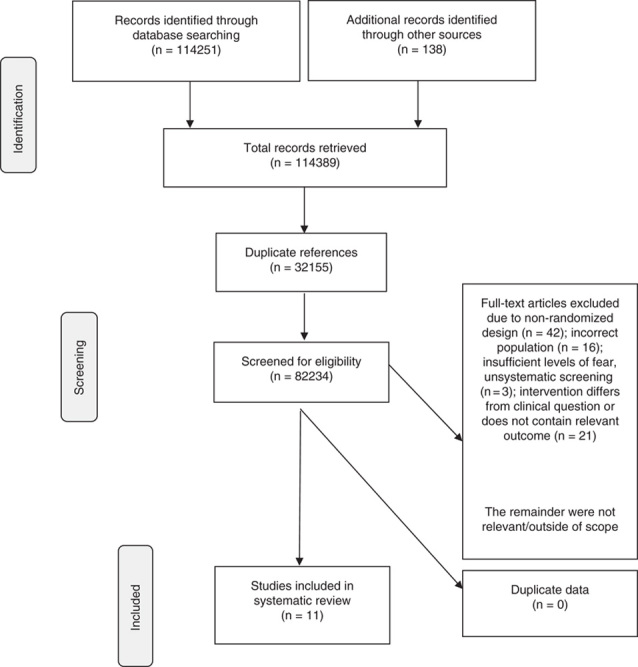
“40–42 Notable sources of exclusion were as follows (note that some citations could fall within more than 1 category but for clarity of reporting are described in the most applicable category): (1) nonrandomized design including case studies investigating exposure-based interventions (n=37)21,53–88 or case series (n=5)…”
BackgroundBlood and injection phobia: Background and cognitive, physiological, and behavioral variables.
Öst, L.-G. (1992) · Journal of Abnormal Psychology · doi:10.1037//0021-843x.101.1.68 · Cited by 195 · cited 1×
“Öst 1992,48 Sweden 20-step venipuncture BAT N=40 18-51 y Object of fear: injections (DSM- III-R simple phobia); betweengroups design; single center, outpatients of a mental hospital but unclear setting Single session in vivo exposure: 1 session r3 h; preparation, rehearsal, hierarchical exposure…”
BackgroundPage, A. (1994) · Clinical Psychology Review · doi:10.1016/0272-7358(94)90036-1 · Cited by 193
Is disgust associated with psychopathology? Emerging research in the anxiety disorders
Olatunji, B. O., Cisler, J., McKay, D., & Phillips, M. L. (2010) · Psychiatry Research · doi:10.1016/j.psychres.2009.04.007 · Cited by 192
Acquisition of blood and injection phobia and anxiety response patterns in clinical patients
Öst, L.-G. (1991) · Behaviour Research and Therapy · doi:10.1016/0005-7967(91)90067-d · Cited by 190 · cited 4×
“Öst 1991 (1)47 Unclear Unclear No No Yes Yes Yes High Should multiple-session in vivo exposure-based therapy be used (rather than single session) for children Z7 y and adults with high levels of needle fear?”
BackgroundMethodInfluentialNeedle Phobia: Etiology, Adverse Consequences, and Patient Management
Sokolowski, C. J., Giovannitti, J. A., & Boynes, S. G. (2010) · Dental Clinics of North America · doi:10.1016/j.cden.2010.06.012 · Cited by 185
Disgust sensitivity and contamination fears in spider and blood-injection-injury phobias
Sawchuk, C. N., Lohr, J. M., Tolin, D. F., Lee, T. C., & Kleinknecht, R. A. (2000) · Behaviour Research and Therapy · doi:10.1016/s0005-7967(99)00093-5 · Cited by 179
Treating phobic children: Effects of EMDR versus exposure.
Muris, P., Merckelbach, H., Holdrinet, I., & Sijsenaar, M. (1998) · Journal of Consulting and Clinical Psychology · doi:10.1037//0022-006x.66.1.193 · Cited by 173
(2009) · PubMed · Cited by 168
One versus five sessions of exposure in the treatment of injection phobia
Öst, L.-G., Hellström, K., & Kåver, A. (1992) · Behavior Therapy · doi:10.1016/s0005-7894(05)80385-5 · Cited by 165
A specific behavioral method for treatment of blood phobia
Öst, L.-G., & Sterner, U. (1987) · Behaviour Research and Therapy · doi:10.1016/0005-7967(87)90111-2 · Cited by 158
Weiss, M. R., McCullagh, P. D., Smith, A. L., & Berlant, A. R. (1998) · Research Quarterly for Exercise and Sport · doi:10.1080/02701367.1998.10607712 · Cited by 157
Mohr, D. C., Boudewyn, A. C., Likosky, W., Levine, E., & Goodkin, D. E. (2001) · Annals of Behavioral Medicine · doi:10.1207/s15324796abm2302_7 · Cited by 156
Shabani, D. B., & Fisher, W. W. (2006) · Journal of Applied Behavior Analysis · doi:10.1901/jaba.2006.30-05 · Cited by 147
Shah, V. S., Taddio, A., McMurtry, C. M., Halperin, S. A., Noel, M. E., Riddell, R. P., & Chambers, C. T. (2015) · Clinical Journal of Pain · doi:10.1097/ajp.0000000000000281 · Cited by 141
Self-citationNoel, M., McMurtry, C. M., Chambers, C. T., & McGrath, P. J. (2010) · Journal of Pediatric Psychology · doi:10.1093/jpepsy/jsp096 · Cited by 139
Self-citationApplied tension, exposure in vivo, and tension-only in the treatment of blood phobia
Öst, L.-G., Fellenius, J., & Sterner, U. (1991) · Behaviour Research and Therapy · doi:10.1016/0005-7967(91)90006-o · Cited by 138
Family self-control instruction for children's nighttime fear reduction.
Graziano, A. M., & Mooney, K. C. (1980) · Journal of Consulting and Clinical Psychology · doi:10.1037/0022-006x.48.2.206 · Cited by 137
Gearing, R. E., Schwalbe, C. S. J., Lee, R., & Hoagwood, K. E. (2013) · Depression and Anxiety · doi:10.1002/da.22118 · Cited by 136
Syncope after vaccination - United States, January 2005-July 2007
(2008) · PsycEXTRA Dataset · doi:10.1037/e458092008-002 · Cited by 128
One versus five sessions of applied tension in the treatment of blood phobia
Hellström, K., Fellenius, J., & öst, L.-G. (1996) · Behaviour Research and Therapy · doi:10.1016/0005-7967(95)00060-7 · Cited by 117
One- vs. five-session treatment of dental phobia: A randomized controlled study
Haukebø, K., Skaret, E., Öst, L., Raadal, M., Berg, E., Sundberg, H., & Kvale, G. (2007) · Journal of Behavior Therapy and Experimental Psychiatry · doi:10.1016/j.jbtep.2007.09.006 · Cited by 114
Braun, M. M., Patriarca, P. A., & Ellenberg, S. S. (1997) · Archives of Pediatrics and Adolescent Medicine · doi:10.1001/archpedi.1997.02170400041007 · Cited by 110
Taddio, A., Shah, V. S., McMurtry, C. M., MacDonald, N. E., Ipp, M., Riddell, R. P., Noel, M. E., & Chambers, C. T. (2015) · Clinical Journal of Pain · doi:10.1097/ajp.0000000000000264 · Cited by 103
Self-citationReducing reactions to blood donation with applied muscle tension: a randomized controlled trial
Ditto, B., France, C. R., Lavoie, P., Roussos, M., & Adler, P. S. J. (2003) · Transfusion · doi:10.1046/j.1537-2995.2003.00488.x · Cited by 102
Krediet, C. T. P., de Bruin, I. G. J. M., Ganzeboom, K. S., Linzer, M., van Lieshout, J. J., & Wieling, W. (2005) · Journal of Applied Physiology · doi:10.1152/japplphysiol.01250.2004 · Cited by 98
A comparison of in vivo and vicarious exposure in the treatment of childhood water phobia
Menzies, R. G., & Clarke, J. (1993) · Behaviour Research and Therapy · doi:10.1016/0005-7967(93)90037-u · Cited by 97
Ollendick, T. H., & Davis, T. E. (2013) · Cognitive Behaviour Therapy · doi:10.1080/16506073.2013.773062 · Cited by 97
Physiologic strategies to prevent fainting responses during or after whole blood donation
Wieling, W., France, C. R., van Dijk, N., Kamel, H., Thijs, R. D., & Tomasulo, P. (2011) · Transfusion · doi:10.1111/j.1537-2995.2011.03202.x · Cited by 96
Family self-control instruction for children's nighttime fear reduction.
Graziano, A. M., & Mooney, K. C. (1980) · Journal of Consulting and Clinical Psychology · doi:10.1037//0022-006x.48.2.206 · Cited by 90
Treatments for blood-injury-injection phobia: a critical review of current evidence
Ayala, E. S., Meuret, A. E., & Ritz, T. (2009) · Journal of Psychiatric Research · doi:10.1016/j.jpsychires.2009.04.008 · Cited by 87
Applied tension, applied relaxation, and the combination in the treatment of blood phobia
Öst, L.-G., Sterner, U., & Fellenius, J. (1989) · Behaviour Research and Therapy · doi:10.1016/0005-7967(89)90069-7 · Cited by 87
A comparison of behavior therapy techniques in the reduction of fearful avoidance behavior.
Lewis, S. E. (1974) · Behavior Therapy · Cited by 85
Acquisition of blood, injury, and needle fears and phobias
Kleinknecht, R. A. (1994) · Behaviour Research and Therapy · doi:10.1016/0005-7967(94)90161-9 · Cited by 84
The Effectiveness of Emotive Imagery in the Treatment of Darkness Phobia in Children
Cornwall, E., Spence, S. H., & Schotte, D. (1996) · Behaviour Change · doi:10.1017/s0813483900004824 · Cited by 82
SHAPING APPROACH RESPONSES AS INTERVENTION FOR SPECIFIC PHOBIA IN A CHILD WITH AUTISM
Ricciardi, J. N., Luiselli, J. K., & Camare, M. (2006) · Journal of Applied Behavior Analysis · doi:10.1901/jaba.2006.158-05 · Cited by 81
On-Site Training in Applied Muscle Tension to Reduce Vasovagal Reactions to Blood Donation
Ditto, B., Wilkins, J.-A., France, C. R., Lavoie, P., & Adler, P. S. J. (2003) · Journal of Behavioral Medicine · doi:10.1023/a:1021795022380 · Cited by 78
Noel, M., Chambers, C. T., Petter, M., McGrath, P. J., Klein, R. M., & Stewart, S. H. (2012) · Pain Management · doi:10.2217/pmt.12.41 · Cited by 74
Self-citationThe psychophysiology of blood-injection-injury phobia: Looking beyond the diphasic response paradigm
Ritz, T., Meuret, A. E., & Ayala, E. S. (2010) · International Journal of Psychophysiology · doi:10.1016/j.ijpsycho.2010.05.007 · Cited by 74
France, C. R., Ditto, B., Wissel, M. E., France, J. L., Dickert, T., Rader, A., Sinclair, K., McGlone, S., Trost, Z., & Matson, E. (2010) · Transfusion · doi:10.1111/j.1537-2995.2009.02574.x · Cited by 72
Davis, T. E., Kurtz, P. F., Gardner, A. W., & Carman, N. B. (2006) · Research in Developmental Disabilities · doi:10.1016/j.ridd.2006.07.003 · Cited by 71
Syncope After Vaccination—United States, January 2005–July 2007
(2008) · JAMA · doi:10.1001/jama.299.21.2502 · Cited by 70
A study of 178 consecutive vasovagal syncopal reactions from the perspective of safety
Newman, B. H., & Graves, S. (2001) · Transfusion · doi:10.1046/j.1537-2995.2001.41121475.x · Cited by 66
A clinician guide to patients afraid of dental injections and numbness.
Armfield, J. M., & Milgrom, P. (2011) · PubMed · Cited by 62
Fear reduction during in vivo exposure to blood‐injection stimuli: Distraction vs. attentional focus
Oliver, N. S., & Page, A. C. (2003) · British Journal of Clinical Psychology · doi:10.1348/014466503762841986 · Cited by 60
Dismantling applied tension: mechanisms of a treatment to reduce blood donation–related symptoms
Ditto, B., France, C. R., Albert, M., & Byrne, N. (2007) · Transfusion · doi:10.1111/j.1537-2995.2007.01449.x · Cited by 60
Motivations of blood donors and nondonors.
Oswalt, R. M., & Napoliello, M. (1974) · Journal of Applied Psychology · doi:10.1037/h0035791 · Cited by 59
Ca, U., Griffioen, D., & Schellekens, J. M. H. (1982) · Behaviour Research and Therapy · doi:10.1016/0005-7967(82)90009-2 · Cited by 59
Rapid treatment of blood and injection phobias with eye movement desensitization
Kleinknecht, R. A. (1993) · Journal of Behavior Therapy and Experimental Psychiatry · doi:10.1016/0005-7916(93)90023-p · Cited by 54
Mohr, D. C., Cox, D., & Merluzzi, N. (2005) · Multiple Sclerosis Journal · doi:10.1191/1352458505ms1146oa · Cited by 51
One‐ vs. five‐session treatment of intra‐oral injection phobia: a randomized clinical study
Vika, M., Skaret, E., Raadal, M., Öst, L., & Kvale, G. (2009) · European Journal of Oral Sciences · doi:10.1111/j.1600-0722.2009.00628.x · Cited by 49
Multicomponent treatment for blood-injury-injection phobia in a young man with mental retardation
Hagopian, L. P., Crockett, J. L., & Keeney, K. M. (2001) · Research in Developmental Disabilities · doi:10.1016/s0891-4222(01)00063-4 · Cited by 49
Oliver, N. S., & Page, A. C. (2007) · Journal of Anxiety Disorders · doi:10.1016/j.janxdis.2007.01.006 · Cited by 48
The effects of applied tension on symptoms in french-speaking blood donors: A randomized trial.
Ditto, B., & France, C. R. (2006) · Health Psychology · doi:10.1037/0278-6133.25.3.433 · Cited by 47
Genetics of blood‐injury fears and phobias: A population‐based twin study
Neale, M. C., Walters, E. E., Eaves, L. J., Kessler, R. C., Heath, A. C., & Kendler, K. S. (1994) · American Journal of Medical Genetics · doi:10.1002/ajmg.1320540411 · Cited by 47
Boerner, K. E., Birnie, K. A., Chambers, C. T., Taddio, A., McMurtry, C. M., Noel, M., Shah, V., & Pillai Riddell, R. (2015) · The Clinical Journal of Pain · doi:10.1097/ajp.0000000000000270 · Cited by 46
Self-citationSimple phobia as a comorbid anxiety disorder
Goisman, R. M., Allsworth, J., Rogers, M. P., Warshaw, M. G., Goldenberg, I., Vasile, R. G., Rodriguez-Villa, F., Mallya, G., & Keller, M. B. (1998) · Depression and Anxiety · doi:10.1002/(sici)1520-6394(1998)7:3<105::aid-da2>3.0.co;2-a · Cited by 46
Wolff, J. J., & Symons, F. J. (2013) · Journal of Applied Research in Intellectual Disabilities · doi:10.1111/jar.12002 · Cited by 44
Birnie, K. A., Chambers, C. T., Taddio, A., McMurtry, C. M., Noel, M., Pillai Riddell, R., & Shah, V. (2015) · The Clinical Journal of Pain · doi:10.1097/ajp.0000000000000265 · Cited by 44
Self-citationAfter going through chemotherapy I can’t see another needle
Cox, A. C., & Fallowfield, L. J. (2007) · European Journal of Oncology Nursing · doi:10.1016/j.ejon.2006.04.035 · Cited by 43 · cited 2×
“40–42 Notable sources of exclusion were as follows (note that some citations could fall within more than 1 category but for clarity of reporting are described in the most applicable category): (1) nonrandomized design including case studies investigating exposure-based interventions (n=37)21,53–88 or case series (n=5)…”
BackgroundMethodFlatt, N., & King, N. (2010) · Behaviour Change · doi:10.1375/bech.27.3.130 · Cited by 43
Psychological Treatment of Malignant Vasovagal Syncope Due to Bloodphobia
VAN DIJK, N., VELZEBOER, S. C. J. M., DESTRÉE‐VONK, A., LINZER, M., & WIELING, W. (2001) · Pacing and Clinical Electrophysiology · doi:10.1046/j.1460-9592.2001.00122.x · Cited by 43
Rapid In-Office and In-Vivo Desensitization of an Injection Phobia Utilizing Hypnosis
Daniels, L. K. (1976) · American Journal of Clinical Hypnosis · doi:10.1080/00029157.1976.10403798 · Cited by 41
Case report of a needle phobia.
Ellinwood, E. H., & Hamilton, J. (1991) · PubMed · Cited by 38
Exposure therapy leads to enhanced late frontal positivity in 8- to 13-year-old spider phobic girls
Leutgeb, V., Schäfer, A., Köchel, A., & Schienle, A. (2012) · Biological Psychology · doi:10.1016/j.biopsycho.2012.02.008 · Cited by 38
Computerized Dental Injection Fear Treatment: A Randomized Clinical Trial
Heaton, L. J., Leroux, B. G., Ruff, P. A., & Coldwell, S. E. (2013) · Journal of Dental Research · doi:10.1177/0022034513484330 · Cited by 37
Psychophysiologic effects of applied tension on the emotional fainting response to blood and injury
Vögele, C., Coles, J., Wardle, J., & Steptoe, A. (2003) · Behaviour Research and Therapy · doi:10.1016/s0005-7967(01)00133-4 · Cited by 37
Needle Phobia in Children: A Discussion of Aetiology and Treatment Options
Willemsen, H., Chowdhury, U., & Briscall, L. (2002) · Clinical Child Psychology and Psychiatry · doi:10.1177/1359104502007004012 · Cited by 37
Penfold, K., & Page, A. C. (1999) · Behavior Therapy · doi:10.1016/s0005-7894(99)80028-8 · Cited by 36
Applied tension and blood donation symptoms: The importance of anxiety reduction.
Holly, C. D., Balegh, S., & Ditto, B. (2011) · Health Psychology · doi:10.1037/a0022998 · Cited by 35
Applied tension may help retain donors who are ambivalent about needles
Ditto, B., France, C. R., & Holly, C. (2010) · Vox Sanguinis · doi:10.1111/j.1423-0410.2009.01273.x · Cited by 34
Abramowitz, E. G., & Lichtenberg, P. (2009) · International Journal of Clinical and Experimental Hypnosis · doi:10.1080/00207140802665450 · Cited by 33
Treating a Man With Needle Phobia Who Requires Daily Injections of Medication
Jacobsen, P. B. (1991) · Psychiatric Services · doi:10.1176/ps.42.9.877 · Cited by 33
Methodology for Knowledge Synthesis of the Management of Vaccination Pain and Needle Fear
Taddio, A., McMurtry, C. M., Shah, V. S., Yoon, E. W., Uleryk, E. M., Riddell, R. P., Lang, E., Chambers, C. T., Noel, M. E., & MacDonald, N. E. (2015) · Clinical Journal of Pain · doi:10.1097/ajp.0000000000000263 · Cited by 33
Self-citationFatal Syncope-Related Fall After Immunization
Woo, E. J., Ball, R., & Braun, M. M. (2005) · Archives of Pediatrics and Adolescent Medicine · doi:10.1001/archpedi.159.11.1083 · Cited by 31
Effects of applied muscle tension on the likelihood of blood donor return
Ditto, B., France, C. R., Albert, M., Byrne, N., & Smyth‐Laporte, J. (2009) · Transfusion · doi:10.1111/j.1537-2995.2008.02067.x · Cited by 30
Psychological Interventions for Vaccine Injections in Young Children 0 to 3 Years
Riddell, R. P., Taddio, A., McMurtry, C. M., Chambers, C. T., Shah, V. S., & Noel, M. E. (2015) · Clinical Journal of Pain · doi:10.1097/ajp.0000000000000279 · Cited by 29
Self-citationLow dose selegiline (L-Deprenyl) in social phobia
Simpson, H. B., Schneier, F. R., Marshall, R. D., Campeas, R. B., Vermes, D., Silvestre, J., Davies, S. O., & Liebowitz, M. R. (1998) · Depression and Anxiety · doi:10.1002/(sici)1520-6394(1998)7:3<126::aid-da5>3.0.co;2-9 · Cited by 29
Brief hypnosis for severe needle phobia using switch‐‐wire imagery in a 5‐year old
Cyna, A. M., Tomkins, D. P., MADDOCK, T., & Barker, D. P. (2007) · Pediatric Anesthesia · doi:10.1111/j.1460-9592.2007.02224.x · Cited by 29
The in vivo elimination of a child's water phobia by a paraprofessional at home
Pomerantz, P., Peterson, N. T., Marholin, D., & Stern, S. (1977) · Journal of Behavior Therapy and Experimental Psychiatry · doi:10.1016/0005-7916(77)90013-1 · Cited by 27
A RAPID BEHAVIORAL TREATMENT FOR NEEDLE PHOBICS
Ferguson, J. M., Taylor, C. B., & Wermuth, B. M. (1978) · The Journal of Nervous and Mental Disease · doi:10.1097/00005053-197804000-00009 · Cited by 27
Grider, B. J., Luiselli, J. K., & Turcotte-Shamski, W. (2012) · Clinical Case Studies · doi:10.1177/1534650112448921 · Cited by 27
Rapid Desensitization for Needle Phobia
Fernandes, P. (2003) · Psychosomatics · doi:10.1176/appi.psy.44.3.253 · Cited by 27
Treatment of a hypodermic needle phobia by in vivo systematic desensitization
Turnage, J. R., & Logan, D. L. (1974) · Journal of Behavior Therapy and Experimental Psychiatry · doi:10.1016/0005-7916(74)90017-2 · Cited by 26
Process Interventions for Vaccine Injections
Riddell, R. P., Taddio, A., McMurtry, C. M., Shah, V. S., Noel, M. E., & Chambers, C. T. (2015) · Clinical Journal of Pain · doi:10.1097/ajp.0000000000000280 · Cited by 25
Self-citationHirai, M., Cochran, H. M., Meyer, J. S., Butcher, J. L., Vernon, L. L., & Meadows, E. A. (2008) · Behaviour Change · doi:10.1375/bech.25.3.129 · Cited by 23
Rapid Hypno-Behavioral Treatment of a Needle Phobia in a Five-Year-Old Cardiac Patient
Dash, J. D. (1981) · Journal of Pediatric Psychology · doi:10.1093/jpepsy/6.1.37 · Cited by 23
Exposure and Participant Modelling in a Case of Injection Phobia
Trijsburg, R. W., Jelícic, M., van den Broek, W. W., Plekker, A., Verheij, R., & Passchier, J. (2010) · Psychotherapy and Psychosomatics · doi:10.1159/000289033 · Cited by 22
Systematic Desensitization in the Treatment of Needle Phobias for Children with Diabetes
Rainwater, N. G., Sweet, A. A., Elliott, L., Bowers, M., McNeill, J. H., & Stump, N. (1988) · Child & Family Behavior Therapy · doi:10.1300/j019v10n01_03 · Cited by 21
Öst, L. (1985) · Scandinavian Journal of Behaviour Therapy · doi:10.1080/16506078509456232 · Cited by 21
Theories of fear acquisition: The development of needle phobia in children
Du, S., Jaaniste, T., Champion, G. D., & Yap, C. S. L. (2008) · Cited by 21
Applied Tension and Coping with Blood Donation: A Randomized Trial
Holly, C. D., Torbit, L., & Ditto, B. (2012) · Annals of Behavioral Medicine · doi:10.1007/s12160-011-9315-8 · Cited by 18
Desensitization using meditation-hypnosis to control "needle" phobia in two dental patients.
Morse, D. R., & Bb, C. (1984) · PubMed · Cited by 18
Horne, D. J. D. L., & McCormack, H. (1984) · Behavioural and Cognitive Psychotherapy · doi:10.1017/s014134730001140x · Cited by 17
Chapman, L. K., & DeLapp, R. C. T. (2014) · Clinical Case Studies · doi:10.1177/1534650113509304 · Cited by 16
Hypnosis with a 31‐year‐old female with dental phobia requiring an emergency extraction
Gow, M. A. (2006) · Contemporary Hypnosis · doi:10.1002/ch.312 · Cited by 15
Simple techniques to treat medical phobias
Taylor, C. B., Ferguson, J. M., & Wermuth, B. M. (1977) · Postgraduate Medical Journal · doi:10.1136/pgmj.53.615.28 · Cited by 15
Injection Phobia: A Systematic Review of Psychological Treatments
Patel, M. X., Baker, D., & Nosarti, C. (2005) · Behavioural and Cognitive Psychotherapy · doi:10.1017/s1352465805002134 · Cited by 15
(1991) · PubMed · Cited by 15
Kleinhauz, M., & Eli, I. (1993) · Special Care in Dentistry · doi:10.1111/j.1754-4505.1993.tb01448.x · Cited by 14
Cognitive-behavioural Treatment of Blood-Injury-Injection Phobia: A Case Study
Thompson, A. (1999) · Behaviour Change · doi:10.1375/bech.16.3.182 · Cited by 14
Use of hypnosis in controlling lumbar puncture distress in an adult needle-phobic dementia patient
Simon, E. P., & Canonico, M. M. (2001) · International Journal of Clinical and Experimental Hypnosis · doi:10.1080/00207140108410379 · Cited by 13
Effects of participant modeling and desensitization on childhood warm water phobia
Osborn, E. L. (1986) · Journal of Behavior Therapy and Experimental Psychiatry · doi:10.1016/0005-7916(86)90048-0 · Cited by 12
Slifer, K. J., Eischen, S. E., & Busby, S. (2002) · Brain Injury · doi:10.1080/02699050210131948 · Cited by 12
Behavioural Treatment of Injection, Dental and Medical Phobias in Adolescents: A Case Study
Sanders, M. R., & Jones, L. (1990) · Behavioural and Cognitive Psychotherapy · doi:10.1017/s0141347300010417 · Cited by 11
Fear of injections: the value of hypnosis in facilitating clinical treatment
Medd, D. Y. (2001) · Contemporary Hypnosis · doi:10.1002/ch.223 · Cited by 10
The fear behind the fear: A case study of apparent simple injection phobia
Grassick, P. (1990) · Journal of Behavior Therapy and Experimental Psychiatry · doi:10.1016/0005-7916(90)90030-o · Cited by 8
Cox, D., Mohr, D. C., & Epstein, L. A. (2004) · Cognitive and Behavioral Practice · doi:10.1016/s1077-7229(04)80042-7 · Cited by 8
Constant versus rhythmic muscle tension in applied tension
Bodycoat, N., Grauaug, L., Olson, A., & Page, A. C. (2000) · Behaviour Change · doi:10.1375/bech.17.2.97 · Cited by 8
Nakamura, B. J., Schiffman, J. E., Lam, C. W.-C., Becker, K. D., & Chorpita, B. F. (2006) · Child & Family Behavior Therapy · doi:10.1300/j019v28n03_02 · Cited by 6
Koppel, S. M., & Thapar, A. (1998) · PubMed · Cited by 5
Seim, R. W., Willerick, M. S., Gaynor, S. T., & Spates, C. R. (2008) · Clinical Case Studies · doi:10.1177/1534650108316932 · Cited by 4
The use of systematic desensitization in the dental treatment of a mentally retarded adolescent.
Nl, S., Sm, B., & Jedrychowski, J. R. (1979) · PubMed · Cited by 4
A Pregnant Woman’s Fear of Her Baby
Brenes, G. A., & Milo, K. M. (2000) · Psychosomatics · doi:10.1176/appi.psy.41.6.531 · Cited by 3
Management of Blood-Drawing Fears in Adolescents with Comorbid Anxiety and Depressive Disorders
Bernstein, G. A., PETERSON, S. E., Perwien, A. R., BORCHARDT, C. M., & Kushner, M. G. (1996) · Journal of Child and Adolescent Psychopharmacology · doi:10.1089/cap.1996.6.53 · Cited by 3
Treatment of a dental patient with injection phobia.
Camner, L. G., Andersson, E., & Eurenius, M. (1983) · PubMed · Cited by 3
Care study: severe needle phobia.
Dennis, B. M. (1994) · PubMed · Cited by 3
Rapid desensitization of a needle phobia by participant modeling.
Ferguson, J. M., Wermuth, B. M., & Taylor, C. B. (1976) · PubMed · Cited by 2
Treatment of fear induced conditioned response
Mason, R. F. (1973) · Australian Dental Journal · doi:10.1111/j.1834-7819.1973.tb03491.x · Cited by 2
TRANSFORMATION OF MEANING AND ITS EFFECTS ON COGNITIVE BEHAVIOURAL TREATMENT OF AN INJECTION PHOBIA
Perczel-Forintos, D., & Hackmann, A. (1999) · Behavioural and Cognitive Psychotherapy · doi:10.1017/s1352465899000909 · Cited by 2
Use of visual placebo in desensitization of a needle-phobic child.
De, H. (1982) · PubMed · Cited by 1
Thyer (1985) · doi:10.1002/1097-4679(198507)41:4<451::aid-jclp2270410402>3.0.co;2-o
Research works printed but not linked: 13
- 26. Hood HK, Antony MM.Davis TEI, Ollendick TH, Öst L-G. Evidence-based assessment and treatment of specific phobias in adults. Intensive One-Session Treatment of Specific Phobias. New York, NY: Springer; 2012:19–42.
- 27. Ollendick TH, Davis TEI.Davis TEI, Ollendick TH, Öst L-G. Evidence-based assessment and treatment of specific phobias in children and adolescents. Intensive One-Session Treatment of Specific Phobias. New York, NY: Springer; 2012:43–56.
- 43. Borenstein M, Hedges LV, Higgins JPT, et al. Introduction to Meta-analysis. West Sussex, UK: John Wiley & Sons; 2009.
- 77. Baralt AR, Dolan JD. Systematic desensitization & cognitive restructuring in the treatment of a self-injection phobia. J Rehabil. 1985;51:35–37.
- 78. Lisowska P, Zoitopoulos L. Cognitive behavioural therapy and severe needle phobia—a case study. J Disabil Oral Health. 2009;10:135–138.
- 114. Cisler JM. Treatment of disgust in blood-injection-injury-phobia: A randomized controlled trial. Dissertation Abstracts International: Section B: The Sciences and Engineering. 2010;70(8-B):5154. [Dissertation].
- 124. Weigold C. The use of hypnosis in the management of needle phobia. Aust J Clin Exp Hypn. 2011;39:189–195.
- 126. Moore KA. “Hypnosis or not?”: brief intervention with hypodermic needle phobic. Aust J Clin Exp Hypn. 1992;20:49–53.
- 128. Gow MA. Treating dental needle phobia using hypnosis. Aust J Clin Exp Hypn. 2002;30:198–202.
- 132. Morgan S. Brief hypnosis for needle phobia. Aust J Clin Exp Hypn. 2001;29:107–115.
- 143. Davis TEI, Ollendick TH, Reuther ET, et al. Davis TEI. One-session treatment: principles and procedures with children and adolescents. Intensive One-Session Treatment of Specific Phobias. New York, NY: Springer; 2012:97–125.
- 145. Öst L-G.Davis TEI, Ollendick TH, Öst L-G. One-session treatment: principles and procedures with adults. Intensive One-Session Treatment of Specific Phobias. New York, NY: Springer; 2012:59–95.
- 160. McMurtry CM, Taddio A, Noel M, et al. Clinical practice guideline for the management of individuals with high levels of needle fear across the lifespan: exposure-based psychological and physical interventions. Clin Pract Pediatr Psychol. Under review.
Cited by
Birnie, K. A., Noel, M., Chambers, C. T., Uman, L. S., & Parker, J. A. (2018) · Cochrane Database of Systematic Reviews · doi:10.1002/14651858.cd005179.pub4 · Cited by 755
Self-citationThe fear of needles: a systematic review and meta-analysis
McLenon, J., & Rogers, M. A. M. (2019) · Journal of Advanced Nursing · doi:10.1111/jan.13818 · Cited by 623
Far From “Just a Poke”: Common Painful Needle Procedures and the Development of Needle Fear
McMurtry, C. M., Pillai Riddell, R., Taddio, A., Racine, N., Asmundson, G. J. G., Noel, M., Chambers, C. T., & Shah, V. (2015) · The Clinical Journal of Pain · doi:10.1097/ajp.0000000000000272 · Cited by 346
Self-citationOrenius, T., LicPsych, Säilä, H., Mikola, K., & Ristolainen, L. (2018) · SAGE Open Nursing · doi:10.1177/2377960818759442 · Cited by 162
“McMurtry et al. (2015) evaluated the effectiveness of exposure-based psychological and physical interventions for the management of high levels of needle fear or phobia and fainting in children and adults.”
BackgroundMcMurtry, C. M., Taddio, A., Noel, M., Antony, M. M., Chambers, C. T., Asmundson, G. J. G., Pillai Riddell, R., Shah, V., MacDonald, N. E., Rogers, J., et al. (2016) · Cognitive Behaviour Therapy · doi:10.1080/16506073.2016.1157204 · Cited by 104
Self-citation
Metadata
- Authors
- McMurtry, C. M., Noel, M., Taddio, A., Antony, M. M., Asmundson, G. J. G., Riddell, R. P., Chambers, C. T., & Shah, V.
- Affiliations
- Western University (CA)
- University of Calgary (CA)
- Great Ormond Street Hospital (GB)
- Toronto Metropolitan University (CA)
- University of Guelph (CA)
- Corresponding author
- McMurtry, C. Meghan
- Asmundson, Gordon J.G.
- ORCID
- Venue
- The Clinical Journal of Pain
- Published
- 2015-10
- Volume
- 31
- Issue
- Supplement 10
- Pages
- S109-S123
- ISSN
- 0749-8047 (ISSN-L)
- PMC
- PMC4900415
- OpenAlex
- W1468765874
- Cited by
- 94
- References
- 144
- Citations by year
- 2026: 10 · 2025: 5 · 2024: 10 · 2023: 12 · 2022: 14 · 2021: 9 · 2020: 8 · 2019: 7 · 2018: 6 · 2017: 4 · 2016: 3 · 2015: 6
- FWCI
- 0.82
- Type
- journal article
- Language
- en
- Open access
- hybrid
- doi.org
- Licence
- cc-by-nc-nd
- Locations
- Clinical Journal of Pain (publishedVersion, cc-by-nc-nd)
- PubMed Central (publishedVersion, cc-by-nc-nd)
- PubMed (publishedVersion)
- The Atrium (University of Guelph) (submittedVersion, cc-by-nc-nd)
- Scholarship@Western (Western University) (submittedVersion)
- Clinical Journal of Pain
- Funders
- MAYDAY Fund
- Pfizer
- Sanofi
- Novavax
- Canadian Institutes of Health Research (132031_1)
- Topics
- Social Sciences › Psychology › Experimental and Cognitive Psychology › Anxiety, Depression, Psychometrics, Treatment, Cognitive Processes
- Health Sciences › Dentistry › Oral Surgery › Dental Anxiety and Anesthesia Techniques
- Health Sciences › Medicine › Pediatrics, Perinatology and Child Health › Pediatric Pain Management Techniques
- Keywords
- needle fear, needle phobia, in vivo exposure therapy, syncope, procedural fear, children, adults, treatment effectiveness, follow-up outcomes, fear of medical procedures, fear of injection
- MeSH terms
- Adolescent, Adult, Fear, Humans, Needles, Phobic Disorders, Psychotherapy, Randomized Controlled Trials as Topic, Databases, Bibliographic
About these checks
Registry, retraction, Cites and statistics results are computed, not judged, with one exception: a printed reference that no index lists is read once by a model before it counts as a citation error. Claims are extracted by a model and kept only when their quote appears verbatim in the text; each cited source is then checked, with a model’s help, for whether it says what the claim relies on. Those verdicts can be wrong — read the claim’s quote and the cited source before relying on one.
Statistics and arithmetic are recomputed, not judged.
Confidence bands are shown only for fields calibrated on our annotated test set. None is calibrated yet, so no band is shown.
What counts as a claim ›How we measure confidence ›How we check this ›
Are you an author, or do you see a problem with this page? Request a review
Data sources
Bibliographic data: Semantic Scholar, OpenAlex, Crossref.
Contains information from the Semantic Scholar Academic Graph Datasets, made available under the ODC Attribution License (ODC-BY 1.0).
Semantic Scholar’s data is described in: Kinney, R., et al. (2023). The Semantic Scholar Open Data Platform. arXiv:2301.10140.
