

The DOI matches its Crossref record; 112 of the 113 references it cites were found in a registry or an index, and 1 are not checked yet.
Adverse effects of heavy cannabis use: even plants can harm the brain
Open accessAbstract
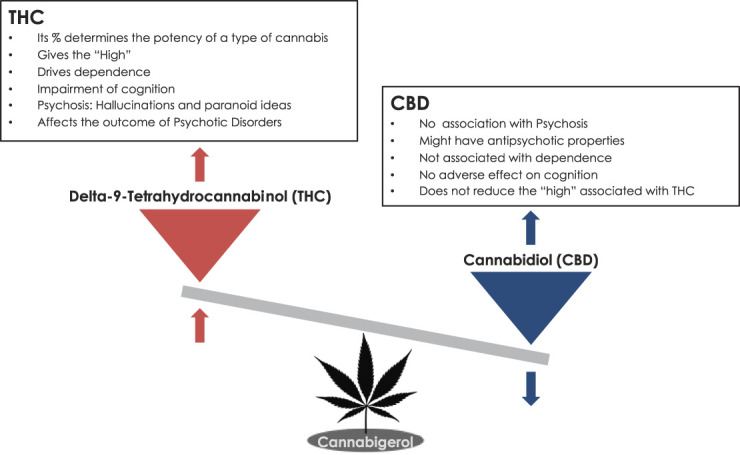
1. Introduction The spread of laws legalising cannabis for medicinal or recreational use has been accompanied by more relaxed attitudes towards cannabis. Data from the United States show that in states that have legalised cannabis, prevalence of daily, weekly, and monthly cannabis use was 11.3%, 18.3%, and 25.0% respectively, whereas in countries where it is still illegal, it was lower (7.4%, 11.6%, and 16.8% respectively).46 Evidence indicates a trend of increase among adolescents,58 a particular vulnerable category for the initiation of substance use.114 In parallel, we have seen the concentration of THC (Δ-9-tetrahydrocannabinol) in the cannabis sold both in the United States and in Europe rising and those types of cannabis with high THC,35 and a corresponding decrease of cannabidiol (CBD) content,17,35,95 becoming more widely available. Most commonly, cannabis is used for its enjoyable effects, the “high” feeling.69 In addition, in those countries where its use has been legalised, many people smoke cannabis for medical use, anxiety, depression, and pain relief,71 with those suffering from chronic pain being at higher risk of developing cannabis use disorder (CUD).57 This review aims to challenge the widespread view that cannabis being a “plant” does not carry adverse effects, and review the evidence concerning the effects of cannabis use on mental health and cognition. 2. Understanding cannabis The plant Cannabis sativa contains more than 100 different psychoactive ingredients,33,53,74 but the most widely studied are THC (Δ-9-tetrahydrocannabinol) and CBD (cannabidiol),36,74,84 synthesised from the same precursor, cannabigerol. Therefore, types of cannabis with high concentrations of THC produce low CBD and vice versa.23 THC is a partial agonist at both the cannabinoid receptors (CB) CB2 R and CB1 R, the latter highly abundant in the brain.64, 83, 97 THC is responsible for most of the enjoyable and adverse effects that commonly arise after acute and regular cannabis use.8,24,116 Conversely, CBD is a negative allosteric modulator at the CB1R,76 whose effects are distinct and, in many cases, opposite of those observed with THC. CBD does not induce euphoria but may exert anxiolytic, antiepileptic, anti-inflammatory, and analgesic properties Figure 1.9,10,22,91,99,100,108Figure 1.: This diagram graphically illustrated first, the differential and in fact opposite psychiatric and cognitive effects of THC and of CBD, and second, how both compounds derive from the same precursor. Therefore if, for instance, a Cannabis sativa plant is genetically driven to the production of high quantity of THC, it will only be capable to synthesise small quantities of CBD.103. Cannabis intoxication and dependence 3.1. Acute adverse effects Cannabis use can lead to intoxication, defined as a series of “clinically significant problematic behavioural or psychological changes (eg, impaired motor coordination, euphoria, anxiety, sensation of slowed time, impaired judgment, and social withdrawal) that develop during, or shortly after, cannabis use.”2 The experience of feeling “high” after cannabis use is variable and subjective,48 depending on the dose, the environment, and previous experience and expectations of the drug user.101 The most common acute adverse effects are panic attacks and other forms of anxiety, mostly reported by naive users.50,51 Because cannabis impairs psychomotor skills, reaction time, and motor coordination, its use leads to increased risk of motor vehicle accidents.6,98 Current cannabis users have higher rates of hospitalization for injury from all causes than former cannabis users or nonusers.41 3.2. Cannabis use disorders DSM-5 CUDs is now a single diagnostic entity including abuse and dependence3; it is prevalent (2.54% 12-month prevalence among U.S. adults), associated with comorbidity and disability, and largely untreated.56 Moreover, CUD often presents comorbidly with psychotic disorders.59 Preclinical studies support the evidence that exposure to THC leads to dependence.1,16,19 Cannabis can induce tolerance in humans60,65 and dependence.16 Because cannabis is eliminated slowly from the body, withdrawal symptoms are generally mild. Nevertheless, discontinuation of long-term frequent cannabis use can induce anger, decreased appetite, irritability, nervousness, restlessness, and sleep difficulties,13,79 suggesting that the alleviation of abstinence symptoms contributes to the maintenance of daily cannabis use.52 Recent evidence, from the Netherlands, has shown an association between changes over time in average THC content in the type of cannabis available and rates of admission to specialist cannabis treatment units.37 4. Cannabis and psychosis 4.1. Epidemiological evidence Cross-sectional and prospective studies demonstrate a causal link between cannabis use and psychotic disorder, with greater risk for cannabis users, compared to nonusers.73,85,88,89 The most recent meta-analysis reported a pooled odds
Overview
The claims and statistics of this paper haven’t been checked yet.
Run the check — free, no account needed. It reads the open-access text and checks the sources it cites.
Integrity signals
Registry
Cites
Statistics
Figures
Verification
Claims the paper makes
The claims and statistics of this paper haven’t been checked yet.
Run the check — free, no account needed. It reads the open-access text and checks the sources it cites.
Claims other papers make about this one
Each is checked against this paper’s own text: does it say what the citing paper says it does?
The cited source says what the claim attributes to it.
In the citing paper
“CU and in particular heavy use (Marconi et al., 2016) has been consistently associated with increased risk for PD, but to a lesser degree for other psychiatric conditions (Sideli, Trotta, Spinazzola, La Cascia, & Di Forti, 2020b).”
From Can epigenetics shine a light on the biological pathways underlying major mental disorders? (2022) · cites this paper as Sideli, Trotta, Spinazzola, La Cascia, & Di Forti, 2020b
Self-check
Percentages, sums and reported differences re-computed from the paper’s own numbers.
The self-check needs the paper’s full text.
Citations
Cites
Structure of a cannabinoid receptor and functional expression of the cloned cDNA
Matsuda, L. A., Lolait, S. J., Brownstein, M. J., Young, A. C., & Bonner, T. I. (1990) · Nature · doi:10.1038/346561a0 · Cited by 5,011
Adverse health effects of marijuana use.
Volkow, N. D., Baler, R. D., Compton, W. M., & Weiss, S. R. B. (2014) · New England Journal of Medicine · doi:10.1056/nejmra1402309 · Cited by 2,774
Cannabis use and risk of psychotic or affective mental health outcomes: a systematic review.
Moore, T. H., Zammit, S., Lingford-Hughes, A., Barnes, T. R., Jones, P. B., Burke, M., & Lewis, G. (2007) · The Lancet · doi:10.1016/s0140-6736(07)61162-3 · Cited by 2,224
Cannabis use in adolescence and risk for adult psychosis: longitudinal prospective study.
Arseneault, L., Cannon, M., Poulton, R., Murray, R., Caspi, A., & Moffitt, T. E. (2002) · BMJ · doi:10.1136/bmj.325.7374.1212 · Cited by 1,399
Adverse health effects of non-medical cannabis use
Hall, W., & Degenhardt, L. (2009) · The Lancet · doi:10.1016/s0140-6736(09)61037-0 · Cited by 1,134
Cannabidiol is a negative allosteric modulator of the cannabinoid CB 1 receptor
Laprairie, R. B., Bagher, A. M., Kelly, M. E. M., & Denovan‐Wright, E. M. (2015) · British Journal of Pharmacology · doi:10.1111/bph.13250 · Cited by 1,039
Cannabis use and psychosis: A longitudinal population-based study
van Os, J. (2002) · American Journal of Epidemiology · doi:10.1093/aje/kwf043 · Cited by 928
Gobbi, G., Atkin, T., Zytynski, T., Wang, S., Askari, S., Boruff, J., Ware, M., Marmorstein, N., Cipriani, A., Dendukuri, N., et al. (2019) · JAMA Psychiatry · doi:10.1001/jamapsychiatry.2018.4500 · Cited by 914 · cited 4×
“84) both in general population and clinical samples.(44) Evidence for a weaker association between cannabis use and”
BackgroundInfluentialMeta-analysis of the Association Between the Level of Cannabis Use and Risk of Psychosis
Marconi, A., Di Forti, M., Lewis, C. M., Murray, R. M., & Vassos, E. (2016) · Schizophrenia Bulletin · doi:10.1093/schbul/sbw003 · Cited by 899
Di Forti, M., Quattrone, D., Freeman, T. P., Tripoli, G., Gayer-Anderson, C., Quigley, H., Rodriguez, V., Jongsma, H. E., Ferraro, L., La Cascia, C., et al. (2019) · The Lancet Psychiatry · doi:10.1016/s2215-0366(19)30048-3 · Cited by 875
Self-citationEffects of Cannabis Use on Human Behavior, Including Cognition, Motivation, and Psychosis: A Review
Volkow, N. D., Swanson, J. M., Evins, A. E., DeLisi, L. E., Meier, M. H., Gonzalez, R., Bloomfield, M. A. P., Curran, H. V., & Baler, R. (2016) · JAMA Psychiatry · doi:10.1001/jamapsychiatry.2015.3278 · Cited by 867
Phytocannabinoids: a unified critical inventory
Hanuš, L. O., Meyer, S. M., Muñoz, E., Taglialatela-Scafati, O., & Appendino, G. (2016) · Natural Product Reports · doi:10.1039/c6np00074f · Cited by 844
Psychological investigation of the structure of paranoia in a non-clinical population
Freeman, D., Garety, P. A., Bebbington, P. E., Smith, B., Rollinson, R., Fowler, D., Kuipers, E., Ray, K., & Dunn, G. (2005) · British Journal of Psychiatry · doi:10.1192/bjp.186.5.427 · Cited by 786
Asbridge, M., Hayden, J. A., & Cartwright, J. (2012) · BMJ · doi:10.1136/bmj.e536 · Cited by 738
Bhattacharyya, S., Morrison, P. D., Fusar-Poli, P., Martin-Santos, R., Borgwardt, S., Winton-Brown, T., Nosarti, C., O' Carroll, C. M., Seal, M., Allen, P., et al. (2010) · Neuropsychopharmacology · doi:10.1038/npp.2009.184 · Cited by 680
Acute and Chronic Effects of Cannabinoids on Human Cognition—A Systematic Review
Broyd, S. J., van Hell, H. H., Beale, C., Yücel, M., & Solowij, N. (2016) · Biological Psychiatry · doi:10.1016/j.biopsych.2015.12.002 · Cited by 674
Lev-Ran, S., Roerecke, M., Le Foll, B., George, T. P., McKenzie, K., & Rehm, J. (2014) · Psychological Medicine · doi:10.1017/s0033291713001438 · Cited by 589
Di Forti, M., Marconi, A., Carra, E., Fraietta, S., Trotta, A., Bonomo, M., Bianconi, F., Gardner-Sood, P., O'Connor, J., Russo, M., et al. (2015) · The Lancet Psychiatry · doi:10.1016/s2215-0366(14)00117-5 · Cited by 588
Hasin, D. S., Kerridge, B. T., Saha, T. D., Huang, B., Pickering, R., Smith, S. M., Jung, J., Zhang, H., & Grant, B. F. (2016) · American Journal of Psychiatry · doi:10.1176/appi.ajp.2015.15070907 · Cited by 579
Dose related risk of motor vehicle crashes after cannabis use
Ramaekers, J. G., Berghaus, G., van Laar, M., & Drummer, O. H. (2003) · Drug and Alcohol Dependence · doi:10.1016/j.drugalcdep.2003.10.008 · Cited by 573
High-potency cannabis and the risk of psychosis
Di Forti, M., Morgan, C., Dazzan, P., Pariante, C., Mondelli, V., Marques, T. R., Handley, R., Luzi, S., Russo, M., Paparelli, A., et al. (2009) · British Journal of Psychiatry · doi:10.1192/bjp.bp.109.064220 · Cited by 567
Black, N., Stockings, E., Campbell, G., Tran, L. T., Zagic, D., Hall, W. D., Farrell, M., & Degenhardt, L. (2019) · The Lancet Psychiatry · doi:10.1016/s2215-0366(19)30401-8 · Cited by 564
Cannabis Use and Earlier Onset of Psychosis
Large, M. M. B., Sharma, S. K., Compton, M. T., Slade, T. N., & Nielssen, O. B. (2011) · Archives of General Psychiatry · doi:10.1001/archgenpsychiatry.2011.5 · Cited by 563
Review of the Validity and Significance of Cannabis Withdrawal Syndrome
Budney, A. J., Hughes, J. R., Moore, B. A., & Vandrey, R. G. (2004) · American Journal of Psychiatry · doi:10.1176/appi.ajp.161.11.1967 · Cited by 521
Cannabis and anxiety: a critical review of the evidence
Crippa, J. A., Zuardi, A. W., Martín‐Santos, R., Bhattacharyya, S., Atakan, Z., McGuire, P., & Fusar‐Poli, P. (2009) · Human Psychopharmacology: Clinical and Experimental · doi:10.1002/hup.1048 · Cited by 509
Pasman, J. A., Verweij, K. J. H., Gerring, Z. F., Stringer, S., Sanchez‐Roige, S., Treur, J. L., Abdellaoui, A., Nivard, M. G., Baselmans, B. M. L., Ong, J., et al. (2018) · Nature Neuroscience · doi:10.1038/s41593-018-0206-1 · Cited by 505
Hollister, L. E. (1987) · Journal of Ethnopharmacology · doi:10.1016/0378-8741(87)90030-4 · Cited by 500
Huestis, M. A., Gorelick, D. A., Heishman, S. J., Preston, K. L., Nelson, R. A., Moolchan, E. T., & Frank, R. (2001) · Archives of General Psychiatry · doi:10.1001/archpsyc.58.4.322 · Cited by 497
New trends in cannabis potency in USA and Europe during the last decade (2008–2017)
Chandra, S., Radwan, M. M., Majumdar, C. G., Church, J. C., Freeman, T. P., & ElSohly, M. A. (2019) · European Archives of Psychiatry and Clinical Neuroscience · doi:10.1007/s00406-019-00983-5 · Cited by 492
Cannabidiol inhibits THC-elicited paranoid symptoms and hippocampal-dependent memory impairment
Englund, A., Morrison, P. D., Nottage, J. F., Hague, D., Kane, F., Bonaccorso, S., Stone, J. M., Reichenberg, A., Brenneisen, R., Holt, D., et al. (2012) · Journal of Psychopharmacology · doi:10.1177/0269881112460109 · Cited by 479
Di Forti, M., Sallis, H., Allegri, F., Trotta, A., Ferraro, L., Stilo, S. A., Marconi, A., La Cascia, C., Reis Marques, T., Pariante, C., et al. (2014) · Schizophrenia Bulletin · doi:10.1093/schbul/sbt181 · Cited by 470
Non-acute (residual) neurocognitive effects of cannabis use: A meta-analytic study
Grant, I., González, R., Carey, C. L., Natarajan, L., & Wolfson, T. J. (2003) · Journal of the International Neuropsychological Society · doi:10.1017/s1355617703950016 · Cited by 417
Cannabis dependence and psychotic symptoms in young people
FERGUSSON, D. M., HORWOOD, L. J., & SWAIN-CAMPBELL, N. R. (2003) · Psychological Medicine · doi:10.1017/s0033291702006402 · Cited by 415
Scott, J. C., Slomiak, S. T., Jones, J. D., Rosen, A. F. G., Moore, T. M., & Gur, R. C. (2018) · JAMA Psychiatry · doi:10.1001/jamapsychiatry.2018.0335 · Cited by 391
Being stoned: a review of self‐reported cannabis effects
Green, B., Kavanagh, D. J., & Young, R. M. (2003) · Drug and Alcohol Review · doi:10.1080/09595230310001613976 · Cited by 390
Murray, R. M., Quigley, H., Quattrone, D., Englund, A., & Forti, M. D. (2016) · World Psychiatry · doi:10.1002/wps.20341 · Cited by 332
van de Donk, T., Niesters, M., Kowal, M. A., Olofsen, E., Dahan, A., & van Velzen, M. (2018) · Pain · doi:10.1097/j.pain.0000000000001464 · Cited by 331
Gone to Pot – A Review of the Association between Cannabis and Psychosis
Radhakrishnan, R., Wilkinson, S. T., & Dâ€TMSouza, D. C. (2014) · Frontiers in Psychiatry · doi:10.3389/fpsyt.2014.00054 · Cited by 327
Schoeler, T., Monk, A., Sami, M. B., Klamerus, E., Foglia, E., Brown, R., Camuri, G., Altamura, A. C., Murray, R., & Bhattacharyya, S. (2016) · The Lancet Psychiatry · doi:10.1016/s2215-0366(15)00363-6 · Cited by 322 · cited 3×
“Adverse effect Participants Studies Main findings Estimate Psychosis Marconi et al.18 66,816 individuals from 10 studies Random-effects meta-analysis on risk of psychosis High levels of cannabis use increase the risk of psychotic outcomes with a dose–response relationship OR 5 3.9, 95% CI [2.84-5.34] Large et al.77 81…”
BackgroundInfluentialKedzior, K. K., & Laeber, L. T. (2014) · BMC Psychiatry · doi:10.1186/1471-244x-14-136 · Cited by 309
Notcutt, W., Price, M., Miller, R., Newport, S., Phillips, C., Simmons, S., & Sansom, C. (2004) · Anaesthesia · doi:10.1111/j.1365-2044.2004.03674.x · Cited by 305
Schreiner, A. M., & Dunn, M. E. (2012) · Experimental and Clinical Psychopharmacology · doi:10.1037/a0029117 · Cited by 304
Cannabis use before age 15 and subsequent executive functioning
Fontes, M. A., Bolla, K. I., Cunha, P. J., Almeida, P. P., Jungerman, F. S., Laranjeira, R., Bressan, R. A., & Lacerda, A. L. T. (2011) · The British Journal of Psychiatry · doi:10.1192/bjp.bp.110.077479 · Cited by 300
Effects of cannabidiol on schizophrenia-like symptoms in people who use cannabis
Morgan, C. J. A., & Curran, H. V. (2008) · British Journal of Psychiatry · doi:10.1192/bjp.bp.107.046649 · Cited by 300
Cannabis use and risk of schizophrenia: a Mendelian randomization study
Vaucher, J., Keating, B. J., Lasserre, A. M., Gan, W., Lyall, D. M., Ward, J., Smıth, D. J., Pell, J. P., Sattar, N. A., Paré, G., et al. (2017) · Molecular Psychiatry · doi:10.1038/mp.2016.252 · Cited by 280
Hasin, D. S., Wall, M. M., Keyes, K. M., Cerdá, M., Schulenberg, J. E., O’Malley, P. M., Galea, S., Pacula, R. L., & Feng, T. (2015) · The Lancet Psychiatry · doi:10.1016/s2215-0366(15)00217-5 · Cited by 270
Tests of causal linkages between cannabis use and psychotic symptoms
Fergusson, D. M., Horwood, L. J., & Ridder, E. M. (2005) · Addiction · doi:10.1111/j.1360-0443.2005.01001.x · Cited by 268
Plescia, F., Brancato, A., Marino, R. A. M., Vita, C., Navarra, M., & Cannizzaro, C. (2014) · Frontiers in Psychiatry · doi:10.3389/fpsyt.2014.00138 · Cited by 266
Abstinence symptoms following oral THC administration to humans
Haney, M., Ward, A. S., Comer, S. D., Foltin, R. W., & Fischman, M. W. (1999) · Psychopharmacology · doi:10.1007/s002130050848 · Cited by 261
Neurocognitive consequences of marihuana—a comparison with pre-drug performance
Fried, P. A., Watkinson, B., & Gray, R. (2004) · Neurotoxicology and Teratology · doi:10.1016/j.ntt.2004.11.003 · Cited by 252
Cannabis with high cannabidiol content is associated with fewer psychotic experiences
Schubart, C. D., Sommer, I. E., van Gastel, W. A., Goetgebuer, R., Kahn, R. S., & Boks, M. P. (2011) · Schizophrenia Research · doi:10.1016/j.schres.2011.04.017 · Cited by 238
Kosiba, J. D., Maisto, S. A., & Ditre, J. W. (2019) · Social Science & Medicine · doi:10.1016/j.socscimed.2019.06.005 · Cited by 238
Cannabis, cannabinoids, and health
Lafaye, G., Karila, L., Blecha, L., & Benyamina, A. (2017) · Dialogues in Clinical Neuroscience · doi:10.31887/dcns.2017.19.3/glafaye · Cited by 238
Freeman, A. M., Petrilli, K., Lees, R., Hindocha, C., Mokrysz, C., Curran, H. V., Saunders, R., & Freeman, T. P. (2019) · Neuroscience & Biobehavioral Reviews · doi:10.1016/j.neubiorev.2019.09.036 · Cited by 232
Cannabis use and mania symptoms: A systematic review and meta-analysis
Gibbs, M., Winsper, C., Marwaha, S., Gilbert, E., Broome, M. R., & Singh, S. P. (2014) · Journal of Affective Disorders · doi:10.1016/j.jad.2014.09.016 · Cited by 227
The relationship between non‐acute adolescent cannabis use and cognition
HARVEY, M. A., SELLMAN, J. D., PORTER, R. J., & FRAMPTON, C. M. (2007) · Drug and Alcohol Review · doi:10.1080/09595230701247772 · Cited by 222
Cannabis use in young people: The risk for schizophrenia
Casadio, P., Fernandes, C., Murray, R. M., & Forti, M. D. (2011) · Neuroscience & Biobehavioral Reviews · doi:10.1016/j.neubiorev.2011.04.007 · Cited by 220
Gage, S. H., Jones, H. J., Burgess, S., Bowden, J., Smith, G. D., Zammit, S., & Munafo, M. R. (2016) · Psychological Medicine · doi:10.1017/s0033291716003172 · Cited by 219
Cannabis-associated psychosis: Neural substrate and clinical impact
Murray, R. M., Englund, A., Abi‐Dargham, A., Lewis, D. A., Forti, M. D., Davies, C., Sherif, M. A., McGuire, P. K., & D’Souza, D. C. (2017) · Neuropharmacology · doi:10.1016/j.neuropharm.2017.06.018 · Cited by 210
Harley, M., Kelleher, I., Clarke, M., Lynch, F., Arseneault, L., Connor, D., Fitzpatrick, C., & Cannon, M. (2010) · Psychological Medicine · doi:10.1017/s0033291709991966 · Cited by 206
Prevalence and forms of cannabis use in legal vs. illegal recreational cannabis markets
Goodman, S. E., Wadsworth, E., Leos‐Toro, C., & Hammond, D. G. (2020) · International Journal of Drug Policy · doi:10.1016/j.drugpo.2019.102658 · Cited by 202
Gülöksüz, S., Pries, L.-K., Delespaul, P., Kenis, G., Luykx, J. J., Lin, B. D., Richards, A. L., Akdede, B. B., Binbay, T., Altınyazar, V., et al. (2019) · World Psychiatry · doi:10.1002/wps.20629 · Cited by 189
Dependence on delta 9-tetrahydrocannabinol: studies on precipitated and abrupt withdrawal.
Aceto, M. D. G., Scates, S. M., Lowe, J. A., III, & Martin, B. R. (1996) · Journal of Pharmacology and Experimental Therapeutics · doi:10.1016/s0022-3565(25)20781-9 · Cited by 168
Marangoni, C., Hernández, M., & Faedda, G. L. (2016) · Journal of Affective Disorders · doi:10.1016/j.jad.2015.12.055 · Cited by 166
Schoeler, T., Petros, N., Forti, M. D., Klamerus, E., Foglia, E., Ajnakina, O., Gayer-Anderson, C. E., Colizzi, M., Quattrone, D., Behlke, I., et al. (2016) · The Lancet Psychiatry · doi:10.1016/s2215-0366(16)30188-2 · Cited by 162
Houston, J. E., Murphy, J., Adamson, G., Stringer, M., & Shevlin, M. (2007) · Schizophrenia Bulletin · doi:10.1093/schbul/sbm127 · Cited by 162
Englund, A., Freeman, T. P., Murray, R. M., & McGuire, P. K. (2017) · The Lancet Psychiatry · doi:10.1016/s2215-0366(17)30075-5 · Cited by 156
Cannabinoid Tolerance and Dependence
Lichtman, A. H., & Martin, B. R. (2005) · Springer eBooks · doi:10.1007/3-540-26573-2_24 · Cited by 145
Freeman, T. P., Morgan, C. J. A., Hindocha, C., Schäfer, G., Das, R., & Curran, H. V. (2014) · Addiction · doi:10.1111/add.12634 · Cited by 140
Cannabidiol in medical marijuana: Research vistas and potential opportunities
Rong, C., Lee, Y. L., Carmona, N. E., Cha, D. S., Ragguett, R., Rosenblat, J. D., Mansur, R. B., Ho, R., & McIntyre, R. S. (2017) · Pharmacological Research · doi:10.1016/j.phrs.2017.05.005 · Cited by 140
Schoeler, T., Petros, N., Forti, M. D., Klamerus, E., Foglia, E., Murray, R. M., & Bhattacharyya, S. (2017) · The Lancet Psychiatry · doi:10.1016/s2215-0366(17)30233-x · Cited by 138
Increasing potency and price of cannabis in Europe, 2006–16
Freeman, T. P., Groshkova, T., Cunningham, A., Sedefov, R., Griffiths, P., & Lynskey, M. T. (2018) · Addiction · doi:10.1111/add.14525 · Cited by 133
Hollister, L. E. (1986) · PubMed · Cited by 130
Human Laboratory Studies on Cannabinoids and Psychosis
Sherif, M. A., Radhakrishnan, R., D’Souza, D. C., & Ranganathan, M. (2016) · Biological Psychiatry · doi:10.1016/j.biopsych.2016.01.011 · Cited by 129
Actions of delta-9-tetrahydrocannabinol in cannabis: Relation to use, abuse, dependence
Cooper, Z. D., & Haney, M. (2009) · International Review of Psychiatry · doi:10.1080/09540260902782752 · Cited by 127
Evidence That Familial Liability for Psychosis Is Expressed as Differential Sensitivity to Cannabis
(2010) · Archives of General Psychiatry · doi:10.1001/archgenpsychiatry.2010.132 · Cited by 125
Plant cannabinoids: a neglected pharmacological treasure trove
Mechoulam, R. (2005) · British Journal of Pharmacology · doi:10.1038/sj.bjp.0706415 · Cited by 122
Freeman, T. P., van der Pol, P., Kuijpers, W., Wisselink, J., Das, R., Rigter, S., van Laar, M., Griffiths, P., Swift, W., Niesink, R. J. M., et al. (2018) · Psychological Medicine · doi:10.1017/s0033291717003877 · Cited by 119
Mammen, G., Rueda, S., Roerecke, M., Bonato, S., Lev-Ran, S., & Rehm, J. (2018) · The Journal of Clinical Psychiatry · doi:10.4088/jcp.17r11839 · Cited by 118 · cited 1×
“Furthermore, continued cannabis use and CUDs increases the severity of manic and psychotic symptoms and facilitates a rapid-cycling course of bipolar disorder.(42,80)”
BackgroundReasons for Cannabis use in Psychosis
Schofield, D., Tennant, C. C., Nash, L. M., Degenhardt, L. J., Cornish, A., Hobbs, C., & Brennan, G. (2006) · Australian & New Zealand Journal of Psychiatry · doi:10.1080/j.1440-1614.2006.01840.x · Cited by 117
Cannabis use and transition to psychosis in individuals at ultra-high risk: review and meta-analysis
Kraan, T., Velthorst, E., Koenders, L., Zwaart, K., Ising, H., van den Berg, D. V. D., de Haan, L., & van der Gaag, M. (2015) · Psychological Medicine · doi:10.1017/s0033291715002329 · Cited by 116
Kuepper, R., Morrison, P. D., van Os, J., Murray, R. M., Kenis, G., & Henquet, C. (2010) · Schizophrenia Research · doi:10.1016/j.schres.2010.05.031 · Cited by 116
Adversity, cannabis use and psychotic experiences: evidence of cumulative and synergistic effects
Morgan, C., Reininghaus, U., Reichenberg, A., Frissa, S., SELCoH study team, Hotopf, M., & Hatch, S. L. (2014) · British Journal of Psychiatry · doi:10.1192/bjp.bp.113.134452 · Cited by 113
Cannabis is more than simply Δ9-tetrahydrocannabinol
Russo, E. B., & McPartland, J. M. (2002) · Psychopharmacology · doi:10.1007/s00213-002-1348-z · Cited by 112
Affect and cannabis use in daily life: a review and recommendations for future research
Wycoff, A. M., Metrik, J., & Trull, T. J. (2018) · Drug and Alcohol Dependence · doi:10.1016/j.drugalcdep.2018.07.001 · Cited by 110
Konings, M., Stefanis, N. C., Kuepper, R., de Graaf, R., ten Have, M., van Os, J., Bakoula, C., & Henquet, C. (2011) · Psychological Medicine · doi:10.1017/s0033291711000973 · Cited by 109
Kendler, K. S., Ohlsson, H., Sundquist, J., & Sundquist, K. (2019) · American Journal of Psychiatry · doi:10.1176/appi.ajp.2019.18101217 · Cited by 108
Substance use, medication adherence and outcome one year following a first episode of psychosis
Colizzi, M., Carra, E., Fraietta, S., Lally, J., Quattrone, D., Bonaccorso, S., Mondelli, V., Ajnakina, O., Dazzan, P., Trotta, A., et al. (2015) · Schizophrenia Research · doi:10.1016/j.schres.2015.11.016 · Cited by 105
Self-citationCannabis use, cognitive performance and mood in a sample of workers
Wadsworth, E. J. K., Moss, S. C., Simpson, S. A., & Smith, A. P. (2005) · Journal of Psychopharmacology · doi:10.1177/0269881105056644 · Cited by 93
Marijuana Use and Injury Events Resulting in Hospitalization, ,
Gerberich, S. G. (2003) · Annals of Epidemiology · doi:10.1016/s1047-2797(02)00411-8 · Cited by 92
Potter, D. J., Hammond, K. M., Tuffnell, S., Walker, C. J., & Forti, M. D. (2018) · Drug Testing and Analysis · doi:10.1002/dta.2368 · Cited by 87
Cannabis use and psychosis: re-visiting the role of childhood trauma
Houston, J. E., Murphy, J., Shevlin, M. E., & Adamson, G. (2011) · Psychological Medicine · doi:10.1017/s0033291711000559 · Cited by 83
Pinto, J. V., Medeiros, L. S., da Rosa, G. S., de Oliveira, C. E. S., Crippa, J. A. S., Passos, I. C., & Kauer‐Sant’Anna, M. (2019) · Neuroscience & Biobehavioral Reviews · doi:10.1016/j.neubiorev.2019.04.004 · Cited by 83
EU-GEI WP2 Group, Gayer-Anderson, C. E., Jongsma, H. E., Forti, M. D., Quattrone, D., Velthorst, E., de Haan, L., Selten, J., Szöke, A., Llorca, P., et al. (2020) · Social Psychiatry and Psychiatric Epidemiology · doi:10.1007/s00127-020-01831-x · Cited by 83
Cannabis use and symptom severity in individuals at ultra high risk for psychosis: a meta‐analysis
Carney, R., Cotter, J., Firth, J., Bradshaw, T., & Yung, A. R. (2017) · Acta Psychiatrica Scandinavica · doi:10.1111/acps.12699 · Cited by 79
Response perseveration and adaptation in heavy marijuana-smoking adolescents
Lane, S. D., Cherek, D. R., Tcheremissine, O. V., Steinberg, J. L., & Sharon, J. (2006) · Addictive Behaviors · doi:10.1016/j.addbeh.2006.07.007 · Cited by 74
Hooper, S. R., Woolley, D. P., & Bellis, M. D. D. (2014) · Psychopharmacology · doi:10.1007/s00213-014-3463-z · Cited by 73
BOYDELL, J., VAN OS, J., CASPI, A., KENNEDY, N., GIOUROUKOU, E., FEARON, P., FARRELL, M., & MURRAY, R. M. (2006) · Psychological Medicine · doi:10.1017/s0033291706008440 · Cited by 70
Stanciole, A. E., Ortegón, M., Chisholm, D., & Lauer, J. A. (2012) · BMJ · doi:10.1136/bmj.e608 · Cited by 66
Why do patients with psychosis use cannabis and are they ready to change their use?
Kolliakou, A., Joseph, C., Ismail, K., Atakan, Z., & Murray, R. M. (2010) · International Journal of Developmental Neuroscience · doi:10.1016/j.ijdevneu.2010.11.006 · Cited by 65
Curran, H. V., Hindocha, C., Morgan, C. J. A., Shaban, N. D. C., Das, R., & Freeman, T. P. (2018) · Psychological Medicine · doi:10.1017/s003329171800226x · Cited by 64
Twomey, C. D. (2017) · Journal of Epidemiology and Community Health · doi:10.1136/jech-2016-208145 · Cited by 62
Cannabis and cannabinoid drug development: evaluating botanical versus single molecule approaches
Bonn‐Miller, M. O., ElSohly, M. A., Loflin, M., Chandra, S., & Vandrey, R. G. (2018) · International Review of Psychiatry · doi:10.1080/09540261.2018.1474730 · Cited by 61
Hjorthøj, C., Larsen, M. O., Starzer, M. S. K., & Nordentoft, M. (2021) · Psychological Medicine · doi:10.1017/s0033291719003532 · Cited by 59
Reasons for cannabis use among youths at ultra high risk for psychosis
Gill, K. E., Poe, S. L., Azimov, N., Ben‐David, S., Vadhan, N. P., Girgis, R. R., Moore, H. M., Cressman, V. L., & Corcoran, C. M. (2013) · Early Intervention in Psychiatry · doi:10.1111/eip.12112 · Cited by 51
Hasin, D. S., Shmulewitz, D., Cerdá, M., Keyes, K. M., Olfson, M., Sarvet, A. L., & Wall, M. M. (2020) · American Journal of Psychiatry · doi:10.1176/appi.ajp.2019.19030284 · Cited by 47
Baudin, G., Godin, O., Lajnef, M., Aouizerate, B., Berna, F. S., Brunel, L., Capdevielle, D., Chéreau, I., Dorey, J., Dubertret, C., et al. (2016) · Schizophrenia Research · doi:10.1016/j.schres.2016.04.042 · Cited by 42
Sideli, L., Fisher, H. L., Murray, R. M., Sallis, H., Russo, M., Stilo, S. A., Paparelli, A., Wiffen, B. D. R., O’Connor, J. A., Pintore, S., et al. (2015) · Early Intervention in Psychiatry · doi:10.1111/eip.12285 · Cited by 40
Self-citationGonçalves‐Pinho, M., Bragança, M., & Freitas, A. (2019) · International Journal of Methods in Psychiatric Research · doi:10.1002/mpr.1813 · Cited by 34
Archie, S., Boydell, K., Stasiulis, E., Volpe, T., & Gladstone, B. (2012) · Early Intervention in Psychiatry · doi:10.1111/j.1751-7893.2012.00355.x · Cited by 29
Forti, M. D., Wu-Choi, B., Quattrone, D., Richards, A. L., Freeman, T. P., Tripoli, G., Gayer-Anderson, C. E., Rodríguez, V., Jongsma, H. E., Ferraro, L., et al. (2019) · bioRxiv (Cold Spring Harbor Laboratory) · doi:10.1101/844803 · Cited by 12
Highlights of Changes From DSM-IV to DSM-5
(2013) · doi:10.1176/appi.books.9780890425596.changes · Cited by 5
Quattrone, D., Ferraro, L., Tripoli, G., Cascia, E. L., Quigley, H., EU-GEI group, Gayer-Anderson, C. E., Jones, P. B., Kirkbride, J. B., Barbera, D. L., et al. (2019) · bioRxiv (Cold Spring Harbor Laboratory) · doi:10.1101/577932 · Cited by 3
Cited by
Sorted by citations
Soliman, N., Haroutounian, S., Hohmann, A. G., Krane, E. J., Liao, J., Macleod, M. R., Segelcke, D., Sena, C., Thomas, J., Vollert, J., et al. (2021) · Pain · doi:10.1097/j.pain.0000000000002269 · Cited by 153
Can epigenetics shine a light on the biological pathways underlying major mental disorders?
Alameda, L., Trotta, G., Quigley, H., Rodriguez, V., Gadelrab, R., Dwir, D., Dempster, E., Wong, C. C. Y., & Forti, M. D. (2022) · Psychological Medicine · doi:10.1017/s0033291721005559 · Cited by 60
Self-citationTHC and CBD: Villain versus Hero? Insights into Adolescent Exposure
Pintori, N., Caria, F., Luca, M. A. D., & Miliano, C. (2023) · International Journal of Molecular Sciences · doi:10.3390/ijms24065251 · Cited by 50
Medicinal cannabis in Thailand: 1-year experience after legalization
Zinboonyahgoon, N., Srisuma, S., Limsawart, W., Rice, A. S. C., & Suthisisang, C. C. (2020) · Pain · doi:10.1097/j.pain.0000000000001936 · Cited by 48
Pain management in people with severe mental illness: an agenda for progress
Onwumere, J., Stubbs, B., Stirling, M., Shiers, D., Gaughran, F., Rice, A. S. C., C de C Williams, A., & Scott, W. (2022) · Pain · doi:10.1097/j.pain.0000000000002633 · Cited by 35
Metadata
- Authors
- Sideli, L., Trotta, G., Spinazzola, E., La Cascia, C., & Di Forti, M.
- Affiliations
- King's College London (GB)
- Department of Biomedicine, Neuroscience and Advanced Diagnostic, Palermo University, Palermo, Italy
- Social, Genetic and Developmental Psychiatry Centre, Institute of Psychiatry, Psychology and Neuroscience, King's College London, London, United Kingdom
- Venue
- Pain
- Published
- 2020-06-17
- Volume
- 162
- Issue
- 1
- Pages
- S97-S104
- ISSN
- 0304-3959 (ISSN-L)
- 1872-6623
- PMC
- PMC8216111
- OpenAlex
- W3049507884
- Cited by
- 36
- References
- 112
- Citations by year
- 2025: 3 · 2024: 2 · 2023: 21 · 2022: 7 · 2021: 2 · 2020: 1
- FWCI
- 4.65
- Type
- journal article
- Language
- en
- Open access
- hybrid
- doi.org
- Locations
- Pain (publishedVersion, cc-by)
- PubMed Central (publishedVersion, cc-by)
- PubMed (publishedVersion)
- Nova Science Publishers (Nova Science Publishers, Inc.) (submittedVersion, other-oa)
- Research Portal (King's College London) (submittedVersion, other-oa)
- Funders
- Medical Research Council (MR/T007818/1)
- Topics
- Health Sciences › Medicine › Pharmacology (medical) › Cannabis and Cannabinoid Research
- Life Sciences › Pharmacology, Toxicology and Pharmaceutics › Toxicology › Forensic Toxicology and Drug Analysis
- Social Sciences › Psychology › Clinical Psychology › Psychedelics and Drug Studies
- Keywords
- cannabis use, adverse effects, THC, cannabidiol, cannabis use disorder, mental health, cognitive impairment, cannabinoid receptors, cannabis legalization, adolescent cannabis use, chronic pain, medical cannabis, neurotoxicity, depression, anxiety, attention, cannabis harm reduction, harm reduction
- MeSH terms
- Brain, Cannabis, Marijuana Abuse, Drug-Related Side Effects and Adverse Reactions
About these checks
Registry, retraction, Cites and statistics results are computed, not judged, with one exception: a printed reference that no index lists is read once by a model before it counts as a citation error. Claims are extracted by a model and kept only when their quote appears verbatim in the text; each cited source is then checked, with a model’s help, for whether it says what the claim relies on. Those verdicts can be wrong — read the claim’s quote and the cited source before relying on one.
Statistics and arithmetic are recomputed, not judged.
Confidence bands are shown only for fields calibrated on our annotated test set. None is calibrated yet, so no band is shown.
What counts as a claim ›How we measure confidence ›How we check this ›
Are you an author, or do you see a problem with this page? Request a review
