

The DOI matches its Crossref record; 28 of the 28 references it cites were found in a registry or an index.
Food waste within food supply chains: quantification and potential for change to 2050
Open accessAbstract
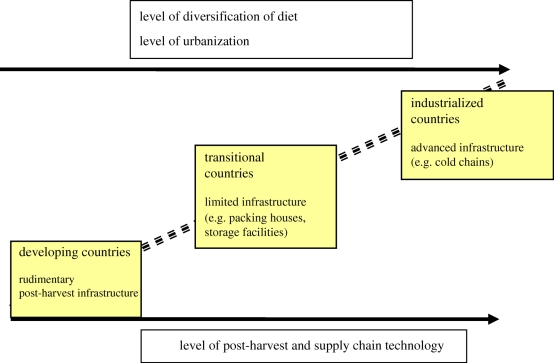
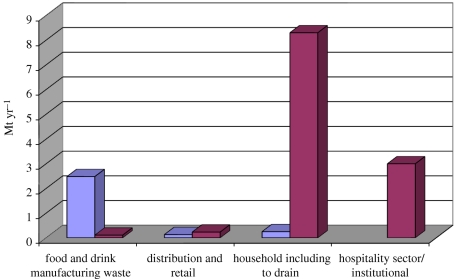
Food waste in the global food supply chain is reviewed in relation to the prospects for feeding a population of nine billion by 2050. Different definitions of food waste with respect to the complexities of food supply chains (FSCs)are discussed. An international literature review found a dearth of data on food waste and estimates varied widely; those for post-harvest losses of grain in developing countries might be overestimated. As much of the post-harvest loss data for developing countries was collected over 30 years ago, current global losses cannot be quantified. A significant gap exists in the understanding of the food waste implications of the rapid development of 'BRIC' economies. The limited data suggest that losses are much higher at the immediate post-harvest stages in developing countries and higher for perishable foods across industrialized and developing economies alike. For affluent economies, post-consumer food waste accounts for the greatest overall losses. To supplement the fragmentary picture and to gain a forward view, interviews were conducted with international FSC experts. The analyses highlighted the scale of the problem, the scope for improved system efficiencies and the challenges of affecting behavioural change to reduce post-consumer waste in affluent populations.
Overview
The claims and statistics of this paper haven’t been checked yet.
Run the check — free, no account needed. It reads the open-access text and checks the sources it cites.
Integrity signals
Registry
Cites
Statistics
Figures
Verification
Claims the paper makes
The claims and statistics of this paper haven’t been checked yet.
Run the check — free, no account needed. It reads the open-access text and checks the sources it cites.
Claims other papers make about this one
Each is checked against this paper’s own text: does it say what the citing paper says it does?
The cited source says what the claim attributes to it.
In the citing paper
“According to Parfitt et al. [24], four main criteria affect FW during this stage: household size and composition, income, culture, and demographic factors.”
From Understanding Food Loss and Waste—Why Are We Losing and Wasting Food? (2019) · cites this paper as [24]
In the citing paper
“At the final stages of the FSC such as during retail and final consumption, the term food waste is applied and generally relates closer to behavioral issues (The Government Office for Science, 2011a; Parfitt et al., 2010).”
From The food waste hierarchy as a framework for the management of food surplus and food waste (2014) · cites this paper as Parfitt et al., 2010
In the citing paper
“Food is lost or wasted throughout the FSC, from the initial stage of agriculture to the final consumption stage (Parfitt et al., 2010; Smil, 2004).”
From The food waste hierarchy as a framework for the management of food surplus and food waste (2014) · cites this paper as Parfitt et al., 2010
In the citing paper
“Waste affects the entire food system from production to post harvest (including inside the home) (102).”
From Food Consumption and its Impact on Cardiovascular Disease: Importance of Solutions Focused on the Globalized Food System (2015) · cites this paper as [102]
In the citing paper
“It is also noteworthy that the FAO estimates that one-third of all food produced for human consumption globally is wasted before it is consumed, which has both social and environmental costs that have been precisely measured in the US (100–102).”
From Food Consumption and its Impact on Cardiovascular Disease: Importance of Solutions Focused on the Globalized Food System (2015) · cites this paper as [102]
In the citing paper
“Alternatively, many food wastes can be considered as a valuable source of nutrients with the potential to be processed into products to feed the world's increasing population [14, 26].”
From Progress towards Sustainable Utilisation and Management of Food Wastes in the Global Economy (2016) · cites this paper as [14]
In the citing paper
“With the increase in disposable incomes, and the consequent change in lifestyles, the amount of waste in the household has grown relentlessly over time (Parfitt et al., 2010).”
From Domestic food practices: A study of food management behaviors and the role of food preparation planning in reducing waste (2018) · cites this paper as Parfitt et al., 2010
In the citing paper
“Urbanization requires extensions of food supply systems (Parfitt et al. 2010).”
From Drivers of food waste and their implications for sustainable policy development (2016) · cites this paper as Parfitt et al. 2010
In the citing paper
“This promotes disconnections from food (Parfitt et al. 2010), so that people have no sense of what their food is made of or how it was produced (Fischler 1999).”
From Drivers of food waste and their implications for sustainable policy development (2016) · cites this paper as Parfitt et al. 2010
In the citing paper
“There are few peer-reviewed articles on national food loss and waste for developed countries and the estimates that do exist vary widely [11].”
From Estimated fresh produce shrink and food loss in U.S. supermarkets (2015) · cites this paper as [11]
Self-check
Percentages, sums and reported differences re-computed from the paper’s own numbers.
The self-check needs the paper’s full text.
Citations
Cites
Bocquier, P. (2005) · Demographic Research · doi:10.4054/demres.2005.12.9 · Cited by 1,746
The Progressive Increase of Food Waste in America and Its Environmental Impact
Hall, K. D., Guo, J., Dore, M., & Chow, C. C. (2009) · PLoS ONE · doi:10.1371/journal.pone.0007940 · Cited by 748
INCREASING FOOD AVAILABILITY BY REDUCING POSTHARVEST LOSSES OF FRESH PRODUCE
Kader, A. A. (2005) · Acta Horticulturae · doi:10.17660/actahortic.2005.682.296 · Cited by 539
Waste: uncovering the global food scandal
(2010) · Choice Reviews Online · doi:10.5860/choice.47-3773 · Cited by 406
Saving water: from field to fork. Curbing losses and wastage in the food chain
Lundqvist, J., de Fraiture, C., & Molden, D. J. (2008) · Digital Library Of The Commons Repository (Indiana University) · Cited by 343
Rice is life: scientific perspectives for the 21st century
Toriyama, K., Heong, K. L., & Hardy, B. (2005) · Cited by 321
An analysis of a community food waste stream
Griffin, M. K., Sobal, J., & Lyson, T. A. (2008) · Agriculture and Human Values · doi:10.1007/s10460-008-9178-1 · Cited by 299
A Perspective on Postharvest Horticulture (1978-2003)
Kader, A. A. (2003) · HortScience · doi:10.21273/hortsci.38.5.1004 · Cited by 177
Stabilizing food markets in eastern and southern Africa
Jayne, T. S., Zulu, B., & Nijhoff, J. J. (2006) · Food Policy · doi:10.1016/j.foodpol.2006.03.008 · Cited by 157
Improving efficiency and reducing waste in our food system
Smil, V. (2004) · Environmental Sciences · doi:10.1076/evms.1.1.17.23766 · Cited by 146
Research works printed but not linked: 28
- Baek,, 2009, Change of MSW composition attributed by ban on direct landfill of food waste in Korea
- Blond,, 1984, The agricultural development systems project in Egypt, 42
- Chen,, 2005, Changes in food retailing in Asia: implications of supermarket procurement practices for farmers and traditional marketing systems.
- Choudhury,, 2006, Recent developments in reducing post-harvest losses in the Asia-Pacific region., 5
- Exodus, 2006, Quantitative assessment of the nature, scale and origin of post consumer food waste arising in Great Britain.
- FAO, 1981, Food loss prevention in perishable crops
- FSA, 2008, Consumer attitudes to food standards
- Garnett,, 2006, Fruit and vegetables and UK greenhouse gas emissions: exploring the relationship.
- Grolleaud,, 2002, Post-harvest losses: discovering the full story
- Guerra,, 1998, Estudio de las perdidas post-cosecha en nueve rubros horticolas, Proc. Interam. Soc. Trop. Hort., 42, 404
- Liang,, 1993, China's post-harvest grain losses and the means of their reduction and elimination, Jingji dili (Econ. Geogr.), 1, 92
- Mercado-Villavieja,, 1976, A study of household edible food wastage in four regions of the Philippines, Philippine J. Nutr. Jan–June, 45
- Morgan,, 2009, Fruit and vegetable consumption and waste in Australia
- Pekcan,, 2006, Household food wastage in Turkey.
- Phan,, 1995, Drying research and application in the Mekong Delta of Vietnam
- Reardon,, 2007, and Berdegué J. A
- Rolle,, 2006, Improving postharvest management and marketing in the Asia-Pacific region: issues and challenges trends in the fruit and vegetable sector.
- Smil,, 2004, Feeding the world: how much more rice do we need?, 21
- United Nations, 2002, COMTRADE, Commodity Trade Data Base
- United Nations, 2008, World Urbanization Prospects, The 2007 Revision Population Database
- USEPA, 2009, Municipal solid waste generation, recycling, and disposal in the United States: facts and Figures for 2008
- World Economic Forum, 2010, Redesigning business value: a roadmap for sustainable consumption, 16
- World Food Programme, 2009, Hunger and markets
- WRAP, 2008, The food we waste
- WRAP, 2009, Household food and drink waste in the UK
- WRAP, 2009, Down the drain: quantification and exploration of food and drink waste disposed of to the sewer by households in the UK
- WRAP, 2010, A review of waste arisings in the supply of food and drink to UK households
- Yong,, 1997, Grain postproduction practices and loss estimates in South China, Agric. Mechanisation Asia Africa Latin Am., 28, 37
Cited by
Sorted by citations
Items 501–600 of 1,011
Institutional work in food waste reduction: Start-ups' role in moving towards a circular economy
Närvänen, E., Mattila, M., & Mesiranta, N. (2020) · Industrial Marketing Management · doi:10.1016/j.indmarman.2020.08.009 · Cited by 99
Rajestary, R., Landi, L., & Romanazzi, G. (2020) · Comprehensive Reviews in Food Science and Food Safety · doi:10.1111/1541-4337.12672 · Cited by 87
Goonan, S., Mirosa, M., & Spence, H. K. (2013) · Journal of the Academy of Nutrition and Dietetics · doi:10.1016/j.jand.2013.09.022 · Cited by 87
Castellani, V., Sala, S., & Benini, L. (2016) · Journal of Cleaner Production · doi:10.1016/j.jclepro.2016.05.078 · Cited by 88
Exploring the Global Scientific Literature on Food Waste and Loss
Mokrane, S., Buonocore, E., Capone, R., & Franzese, P. P. (2023) · Sustainability · doi:10.3390/su15064757 · Cited by 103
Convergence of food systems: Kosher, Christian and Halal
Tieman, M., & Hassan, F. (2015) · British Food Journal · doi:10.1108/bfj-02-2015-0058 · Cited by 93
Genetic Engineering and Editing of Plants: An Analysis of New and Persisting Questions
Mackelprang, R., & Lemaux, P. G. (2020) · Annual Review of Plant Biology · doi:10.1146/annurev-arplant-081519-035916 · Cited by 86
Control of Ice Nucleation for Subzero Food Preservation
You, Y., Kang, T., & Jun, S. (2020) · Food Engineering Reviews · doi:10.1007/s12393-020-09211-6 · Cited by 85
“help to improve the efficiency of the food distribution system and increase access to consumers [1].”
BackgroundDelabre, I., Rodríguez, L. O., Smallwood, J. M., Scharlemann, J. P. W., Alcamo, J. M., Antonarakis, A. S., Rowhani, P., Hazell, R. J., Aksnes, D. L., Balvanera, P., et al. (2021) · Science Advances · doi:10.1126/sciadv.abc8259 · Cited by 93
Food Waste and Nutrition Quality in the Context of Public Health: A Scoping Review
Brennan, A., & Browne, S. (2021) · International Journal of Environmental Research and Public Health · doi:10.3390/ijerph18105379 · Cited by 102
“Food waste refers to losses that occur at the end of the food supply chain, specifically at the retail and consumption stages, and is linked to consumer and retailer behavior [6,7].”
BackgroundInfluentialPriority research questions for the UK food system
Ingram, J. S. I., Wright, H. L., Foster, L. H., Aldred, T. D., Barling, D., Benton, T. G., Berryman, P. M., Bestwick, C. S., Bows‐Larkin, A., Brocklehurst, T. F., et al. (2013) · Food Security · doi:10.1007/s12571-013-0294-4 · Cited by 87
“Making more efficient use of our resources can include ‘lean production’ (making foods that require less materials at the outset); ‘waste reduction’ (reducing the amount of waste created at all stages of manufacturing and retailing); and ‘lifetime optimisation’ (reducing the amount of food we throw away due to spoilag…”
BackgroundOthman, A. A., Dumitrescu, E., Andreescu, D., & Andreescu, S. (2018) · ACS Sustainable Chemistry & Engineering · doi:10.1021/acssuschemeng.8b01809 · Cited by 84
Why the waste? A large-scale study on the causes of food waste at school canteens
Boschini, M., Falasconi, L., Cicatiello, C., & Franco, S. (2019) · Journal of Cleaner Production · doi:10.1016/j.jclepro.2019.118994 · Cited by 107
Household food waste and eating behavior: empirical survey
Lanfranchi, M., Calabrò, G., De Pascale, A., Fazio, A., & Giannetto, C. (2016) · British Food Journal · doi:10.1108/bfj-01-2016-0001 · Cited by 84
Logistics Best Practices for Regional Food Systems: A Review
Mittal, A., Krejci, C. C., & Craven, T. J. (2018) · Sustainability · doi:10.3390/su10010168 · Cited by 84
“, refrigeration) can improve product handling and storage, which reduces post-harvest losses [93].”
BackgroundDoes dietary knowledge affect household food waste in the developing economy of China?
Min, S., Wang, X., & Yu, X. (2020) · Food Policy · doi:10.1016/j.foodpol.2020.101896 · Cited by 90
“A large share of household food waste is derived from fresh fruit, vegetables, meat, dairy products, and other high-value food (Conrad et al., 2018; Parfitt et al., 2010), which tend to be more nutritious and have shorter shelf lives than processed, shelf-stable foods (Richards and Hamilton, 2018).”
BackgroundSpiertz, H. (2012) · European Journal of Agronomy · doi:10.1016/j.eja.2012.04.004 · Cited by 85
Tatàno, F., Caramiello, C., Paolini, T., & Tripolone, L. (2017) · Waste Management · doi:10.1016/j.wasman.2017.01.020 · Cited by 92
Diet change and food loss reduction: What is their combined impact on global water use and scarcity?
Jalava, M., Guillaume, J. H. A., Kummu, M., Porkka, M., Siebert, S., & Varis, O. (2016) · Earth s Future · doi:10.1002/2015ef000327 · Cited by 84
“Both strategies were found to be effective separately, in agreement with earlier studies [Parfitt et al., 2010; Kummu et al., 2012; Jalava et al., 2014; Springer and Duchin, 2014], though improvements to the loss calculations (Section 2.4) have increased the effects of the diet change (Figure 1).”
BackgroundMethodResultInfluentialMeter, K. J. V., McLeod, M., Liu, J., Tenkouano, G. T., Hall, R. I., Cappellen, P. V., & Basu, N. B. (2021) · Water Resources Research · doi:10.1029/2020wr029316 · Cited by 96
“Food P waste is quantified as a constant fraction of food consumption (Parfitt et al., 2010), and P in wasted food is routed to landfills (considered a permanent sink within the modeling framework).”
BackgroundLu, S., Cheng, G., Li, T., Xue, L., Liu, X., Huang, J., & Liu, G. (2021) · Resources Conservation and Recycling · doi:10.1016/j.resconrec.2021.106006 · Cited by 83
Embodied phosphorus and the global connections of United States agriculture
MacDonald, G. K., Bennett, E. M., & Carpenter, S. R. (2012) · Environmental Research Letters · doi:10.1088/1748-9326/7/4/044024 · Cited by 89
Adelodun, B., Kim, S. H., & Choi, K. S. (2021) · Waste Management · doi:10.1016/j.wasman.2021.01.003 · Cited by 81
Food waste in the sharing economy
Richards, T. J., & Hamilton, S. F. (2018) · Food Policy · doi:10.1016/j.foodpol.2018.01.008 · Cited by 82
“Food waste is one of the rare problems that cuts across multiple social issues, from food security (Coleman-Jensen et al., 2014) and environmental degradation to economic efficiency (Parfitt et al., 2010; Gustavsson et al. 2011; Buzby et al., 2011; Buzby and Hyman, 2012).”
BackgroundMoggi, S., Bonomi, S., & Ricciardi, F. (2018) · Sustainability · doi:10.3390/su10103515 · Cited by 80
Impact of consumers’ understanding of date labelling on food waste behaviour
Toma, L., Costa‐Font, M., & Thompson, B. (2017) · Operational Research · doi:10.1007/s12351-017-0352-3 · Cited by 84
“The causes of food waste are complex and operate at a number of inter-related levels in the supply chain (High Level Panel of Experts (HLPE), 2014; Mena et al., 2014; Parfitt et al., 2010).”
BackgroundFood flows in the United Kingdom: The potential of surplus food redistribution to reduce waste
Facchini, E., Iacovidou, E., Gronow, J. R., & Voulvoulis, N. (2017) · Journal of the Air & Waste Management Association · doi:10.1080/10962247.2017.1405854 · Cited by 83
Agricultural development addresses food loss and waste while reducing greenhouse gas emissions
Galford, G. L., Peña, O., Sullivan, A. K., Nash, J., Gurwick, N. P., Pirolli, G., Richards, M., White, J. M., & Wollenberg, E. K. (2019) · The Science of The Total Environment · doi:10.1016/j.scitotenv.2019.134318 · Cited by 87
van Dijk, M., & Meijerink, G. W. (2014) · Global Food Security · doi:10.1016/j.gfs.2014.09.004 · Cited by 80
“On the supply side, they are (the trade-off between) ecosystem services (Power, 2010), post-harvest losses (Parfitt et al., 2010), alternative sources of food supply (van Huis, 2013) and farm structure (Wiggins, 2009).”
BackgroundReducing human nitrogen use for food production
Liu, J., Ma, K., Ciais, P., & Polasky, S. (2016) · Scientific Reports · doi:10.1038/srep30104 · Cited by 89
Does collaboration pay in agricultural supply chain? An empirical approach
Despoudi, S., Papaioannou, G., Saridakis, G., & Dani, S. (2018) · International Journal of Production Research · doi:10.1080/00207543.2018.1440654 · Cited by 79
“3.2 Dependent variables Following previous literature (e.g. Parfitt, Barthel, and Macnaughton 2010), the PHFL construct is measured in tonnes as an individual mean (li) over the past three years since the survey date (i.e. 2010–2012).”
InfluentialCreativity, aesthetics and ethics of food waste in social media campaigns
Närvänen, E., Mesiranta, N., Sutinen, U., & Mattila, M. (2018) · Journal of Cleaner Production · doi:10.1016/j.jclepro.2018.05.202 · Cited by 81
“2 1 Introduction Household food waste is often considered the most problematic type of food waste, not only because of its volume (Parfitt et al., 2010) but because it can also be considered a waste of all”
BackgroundAnalysis of the Behaviors of Polish Consumers in Relation to Food Waste
Bilska, B., Tomaszewska, M., & Kołożyn‐Krajewska, D. (2019) · Sustainability · doi:10.3390/su12010304 · Cited by 81
“One definition describes food waste as the surplus of traded food leads to its waste in the stages of retail sale, catering and households, which is understood as a reduction in the weight of food that was destined for consumption by humans [7].”
BackgroundA mixed-methods study of retail food waste in New Zealand
Goodman-Smith, F., Mirosa, M., & Skeaff, S. A. (2020) · Food Policy · doi:10.1016/j.foodpol.2020.101845 · Cited by 86
“The proportion that retail food waste contributes to total global food waste has been under researched (Parfitt et al., 2010), but is estimated to be approximately 5% of total food waste in high-income countries (Lipinski et al.”
BackgroundLyu, X., Ağar, O. T., Barrow, C. J., Dunshea, F. R., & Suleria, H. A. R. (2023) · Antioxidants · doi:10.3390/antiox12010185 · Cited by 79
“Processing, retail, and distribution are projected to generate 20% of total food waste [5], and avocado industrial processing produces a significant amount of peels and seed waste.”
BackgroundA 2015 global update on folic acid‐preventable spina bifida and anencephaly
Arth, A. C., Kancherla, V., Pachón, H., Zimmerman, S., Johnson, Q. W., & Oakley, G. P. (2016) · Birth Defects Research Part A Clinical and Molecular Teratology · doi:10.1002/bdra.23529 · Cited by 79
The implications of food waste generation on climate change: The case of Greece
Abeliotis, K., Lasaridi, K., Costarelli, V., & Chroni, C. (2015) · Sustainable Production and Consumption · doi:10.1016/j.spc.2015.06.006 · Cited by 80
“In affluent economies, such as those in industrialized countries, postconsumer food waste accounts for the greatest part of the losses and most of the avoidable food waste fraction is derived from private households (Parfitt et al., 2010; Koivupuro et al., 2012).”
BackgroundInduced mutations in tomato SlExp1 alter cell wall metabolism and delay fruit softening
Minoïa, S., Boualem, A., Marcel, F., Troadec, C., Quéméner, B., Cellini, F., Petrozza, A., Vigouroux, J., Lahaye, M., Carriero, F., et al. (2015) · Plant Science · doi:10.1016/j.plantsci.2015.07.001 · Cited by 79
Assessment of environmental impact of FOOD waste in Turkey
Cakar, B., Aydın, S., Varank, G., & Özcan, H. K. (2019) · Journal of Cleaner Production · doi:10.1016/j.jclepro.2019.118846 · Cited by 80
Food Waste in the Countries of the Gulf Cooperation Council: A Systematic Review
Bilali, H. E., & Hassen, T. B. (2020) · Foods · doi:10.3390/foods9040463 · Cited by 85
Exploring the patterns of food waste generation by tourists in a popular destination
Wang, L., Filimonau, V., & Li, Y. (2020) · Journal of Cleaner Production · doi:10.1016/j.jclepro.2020.123890 · Cited by 83
Restructuring existing value networks to diffuse sustainable innovations in food packaging
Keränen, O., Komulainen, H., Lehtimäki, T., & Ulkuniemi, P. (2020) · Industrial Marketing Management · doi:10.1016/j.indmarman.2020.10.011 · Cited by 83
A succinct review and analysis of drivers and impacts of agricultural land transformations in Asia
Prabhakar, S. V. R. K. (2020) · Land Use Policy · doi:10.1016/j.landusepol.2020.105238 · Cited by 78
Sheikha, A. F. E., & Ray, R. C. (2022) · Food Reviews International · doi:10.1080/87559129.2021.2004161 · Cited by 79
“1 shows that the level of waste in the agro-food sector could reach 39%.([8,33,34]) In this context, there is a question coming to the mind .”
BackgroundUeda, J. M., Pedrosa, M. C., Heleno, S. A., Carocho, M., Ferreira, I. C. F. R., & Barros, L. (2022) · Sustainability · doi:10.3390/su14095212 · Cited by 82
“…stage of the supply chain (consumption), the loss occurs due to the deterioration and non-consumption of the purchased food by the consumer, which is subsequently discarded in dumpsters along with all stages of the chain, the qualitative and quantitative loss is present [4,11,13,22]. other waste.”
BackgroundThe present and proposed sustainable food waste treatment technology in Indonesia: A review
Farahdiba, A. U., Warmadewanthi, I., Fransiscus, Y., Rosyidah, E., Hermana, J., & Yuniarto, A. (2023) · Environmental Technology & Innovation · doi:10.1016/j.eti.2023.103256 · Cited by 135
Industrial energy use and carbon emissions reduction: a UK perspective
Griffin, P. W., Hammond, G. P., & Norman, J. (2016) · Wiley Interdisciplinary Reviews Energy and Environment · doi:10.1002/wene.212 · Cited by 78
“Thus, better demand forecasting by retailers could impact on resource use in agriculture and food waste reduction in the FSC overall.(56) Nevertheless, Tassou et al.”
BackgroundThrowing it all away: exploring affluent consumers' attitudes toward wasting edible food
Melbye, E. L., Onozaka, Y., & Hansen, H. (2017) · Journal of Food Products Marketing · doi:10.1080/10454446.2015.1048017 · Cited by 77
“research, which shows clear evidence of a distribution of food waste across age groups, with the lowest wastage rates in the immediate post-WWII generation (Parfitt et al., 2010).”
BackgroundResultCreating loops with value recovery: empirical study of fresh food supply chains
Vlajic, J. V., Mijailović, R., & Bogdanova, M. (2018) · Production Planning & Control · doi:10.1080/09537287.2018.1449264 · Cited by 79
“Based on coding procedures suggested by Miles, Huberman, and Saldana (2014, 73), qualitative information from interviews and observations is coded (first cycle coding) to identify value recovery flows and create a diagrammatic representation of the value recovery in all three networks, as well as a narrative descripti…”
BackgroundMethodInfluentialTransforming agrifood production systems and supply chains with digital twins
Tzachor, A., Richards, C. E., & Jeen, S. (2022) · npj Science of Food · doi:10.1038/s41538-022-00162-2 · Cited by 77
Construire des politiques alimentaires urbaines
Brand, C., Bricas, N., Conaré, D., Daviron, B., Debru, J., Michel, L., & Soulard, C. (2017) · Éditions Quæ eBooks · doi:10.35690/978-2-7592-2618-4 · Cited by 79
Integrated conversion technologies for sustainable agri-food waste valorization: A critical review
Kassim, F. O., Thomas, C. L. P., & Afolabi, O. O. D. (2021) · Biomass and Bioenergy · doi:10.1016/j.biombioe.2021.106314 · Cited by 83
Solar energy in food processing—a critical appraisal
Eswara, A. R., & Ramakrishnarao, M. (2012) · Journal of Food Science and Technology · doi:10.1007/s13197-012-0739-3 · Cited by 76
Grain supply chain network design and logistics planning for reducing post-harvest loss
Nourbakhsh, S. M., Bai, Y., Maia, G. D. N., Ouyang, Y., & Rodríguez, L. F. (2016) · Biosystems Engineering · doi:10.1016/j.biosystemseng.2016.08.011 · Cited by 76
Household food waste quantification: comparison of two methods
Delley, M., & Brunner, T. A. (2018) · British Food Journal · doi:10.1108/bfj-09-2017-0486 · Cited by 87
Liao, C., Hong, J., Zhao, D., Zhang, S., & Chen, C. (2018) · Environmental Science and Pollution Research · doi:10.1007/s11356-018-1639-5 · Cited by 82
Modeling the drivers of post-harvest losses – MCDM approach
Raut, R. D., Gardas, B. B., Kharat, M. G., & Narkhede, B. E. (2018) · Computers and Electronics in Agriculture · doi:10.1016/j.compag.2018.09.035 · Cited by 78
Makhal, A., Robertson, K., Thyne, M. A., & Mirosa, M. (2020) · Journal of Consumer Behaviour · doi:10.1002/cb.1908 · Cited by 78
Resource-efficient supply chains: a research framework, literature review and research agenda
Matopoulos, A., Barros, A. C., & van der Vorst, J. G. A. J. (2015) · Supply Chain Management An International Journal · doi:10.1108/scm-03-2014-0090 · Cited by 86
Ariunbaatar, J., Esposito, G., Yeh, D. H., & Lens, P. N. L. (2016) · Frontiers in Environmental Science · doi:10.3389/fenvs.2016.00008 · Cited by 75
“Besides the environmental issues associated with FW, it is worth mentioning that 250 km 3 of water and 28% of the world's agricultural area is used for the production of the 1.3 billion tons of FW (Parfit et al., 2010).”
BackgroundInfluentialForest resources of nations in relation to human well-being
Kauppi, P. E., Sandström, V., & Lipponen, A. (2018) · PLoS ONE · doi:10.1371/journal.pone.0196248 · Cited by 79
“Storage facilities, transportation, processing, chilling chains and consumer behavior have an impact on how much food becomes wasted [18].”
BackgroundFood waste due to retail power in supply chains: Evidence from Sweden
Ghosh, R., & Eriksson, M. (2018) · Global Food Security · doi:10.1016/j.gfs.2018.10.002 · Cited by 75
Mattsson, L., Williams, H., & Berghel, J. (2018) · Resources, Conservation and Recycling · doi:10.1016/j.resconrec.2017.10.037 · Cited by 84
Motivations and Actions to Prevent Food Waste among Young Italian Consumers
Bravi, L., Murmura, F., Savelli, E., & Viganò, E. (2019) · Sustainability · doi:10.3390/su11041110 · Cited by 84
Laranjeira, T., Costa, A., Faria‐Silva, C., Ribeiro, D., de Oliveira, J. M. P. F., Simões, S., & Ascenso, A. (2022) · Molecules · doi:10.3390/molecules27051701 · Cited by 74
“Besides being a clear economical problem for the industries involved, it also adds to environmental pollution and to an unbalanced relation between the scale of waste and the malnutrition crisis on a large part of the human population [9].”
BackgroundWhat a waste! Evidence of consumer food waste prevention and its effectiveness
Casonato, C., García-Herrero, L., Caldeira, C., & Sala, S. (2023) · Sustainable Production and Consumption · doi:10.1016/j.spc.2023.08.002 · Cited by 81
Meier, T., Christen, O., Semler, E., Jahreis, G., Voget-Kleschin, L., Schrode, A., & Artmann, M. (2013) · Appetite · doi:10.1016/j.appet.2013.11.006 · Cited by 79
Tieman, M. (2015) · Journal of Islamic marketing · doi:10.1108/jima-05-2014-0034 · Cited by 74
Khalid, S., Naseer, A., Shahid, M. A. R., Shah, G. M., Ullah, M. I., Waqar, A., Abbas, T., Imran, M., & Rehman, F. (2018) · Journal of Cleaner Production · doi:10.1016/j.jclepro.2018.09.138 · Cited by 73
Estimation of the Scale of Food Waste in Hotel Food Services—A Case Study
Tomaszewska, M., Bilska, B., Tul-Krzyszczuk, A., & Kołożyn‐Krajewska, D. (2021) · Sustainability · doi:10.3390/su13010421 · Cited by 73
“[25], when estimating food waste in the hospitality industry, inedible parts of food such as bones or peels should be excluded, while the focus should be on what can be avoided [26].”
BackgroundThomson, A., Price, G. W., Arnold, P., Dixon, M., & Graham, T. J. (2021) · Journal of Cleaner Production · doi:10.1016/j.jclepro.2021.130051 · Cited by 73
Munialo, C. D., Stewart, D., Campbell, L., & Euston, S. R. (2022) · Future Foods · doi:10.1016/j.fufo.2022.100152 · Cited by 82
Plakantonaki, S., ROUSSIS, I. E., Bilalis, D. J., & Priniotakis, G. (2023) · Processes · doi:10.3390/pr11051580 · Cited by 85
Strategies to Reduce Food Loss in the Global South
Krishna Bahadur, K. C., Haque, I., Legwegoh, A. F., & Fraser, E. (2016) · Sustainability · doi:10.3390/su8070595 · Cited by 78
“Additionally, this paper moves beyond this description by building on the more recent literature that distinguishes between two different kinds of food waste [9].”
BackgroundInfluentialIlyuk, V. (2017) · Journal of Retailing and Consumer Services · doi:10.1016/j.jretconser.2017.11.003 · Cited by 78
Identifying interventions to reduce household food waste based on food categories
Ananda, J., Karunasena, G. G., & Pearson, D. H. (2022) · Food Policy · doi:10.1016/j.foodpol.2022.102324 · Cited by 75
Current investigations on global N2O emissions and reductions: Prospect and outlook
Feng, R., & Li, Z. (2023) · Environmental Pollution · doi:10.1016/j.envpol.2023.122664 · Cited by 72
A hybrid method for quantifying China's nitrogen footprint during urbanisation from 1990 to 2009
Cui, S., Ya, S., Malik, A., Manfred Lenzen, A., Gao, B., & Huang, W. (2016) · Environment International · doi:10.1016/j.envint.2016.08.012 · Cited by 72
“the difference between N inputs and outputs in each stage) from 1990 to 2009 has noticeably decreased from 95% to 72% for the food preparation step, However, the remaining categories have seen a rise in N accumulation rates, implying the challenges in changing behaviours to reduce the pre-consumer food waste in more a…”
BackgroundLogistics solutions for reducing food waste
Liljestrand, K. (2017) · International Journal of Physical Distribution & Logistics Management · doi:10.1108/ijpdlm-03-2016-0085 · Cited by 80
Realising the circular bioeconomy
Philp, J. C., & Winickoff, D. E. (2018) · OECD science, technology and industry policy papers · doi:10.1787/31bb2345-en · Cited by 80
The influence of shelf life on food waste: A model-based approach by empirical market evidence
Spada, A., Conte, A., & Del Nobile, M. A. (2018) · Journal of Cleaner Production · doi:10.1016/j.jclepro.2017.11.071 · Cited by 71
Aschemann‐Witzel, J., Giménez, A., & Ares, G. (2020) · Journal of Cleaner Production · doi:10.1016/j.jclepro.2020.121252 · Cited by 76
Quantifying environmental implications of surplus food redistribution to reduce food waste
Damiani, M., Pastorello, T., Carlesso, A., Tesser, S., & Semenzin, E. (2021) · Journal of Cleaner Production · doi:10.1016/j.jclepro.2021.125813 · Cited by 82
Oceans and society: feedbacks between ocean and human health
Nash, K. L., van Putten, I. E., Alexander, K. A., Cvitanovic, C., Bettiol, S., Dambacher, J., Farmery, A. K., Flies, E. J., Ison, S., Kelly, R., et al. (2021) · Reviews in Fish Biology and Fisheries · doi:10.1007/s11160-021-09669-5 · Cited by 80
Rodrigues, M., Miguéis, V. L., Freitas, S., & Machado, T. (2023) · Journal of Cleaner Production · doi:10.1016/j.jclepro.2023.140265 · Cited by 71
Li, D., Bai, L., Wang, R., & Sun, Y. (2024) · Foods · doi:10.3390/foods13193025 · Cited by 80
“According to the Food and Agriculture Organization of the United Nations, globally, about one-third of all food produced for human consumption is lost or wasted, approximately 1.3 billion tons [2,3].”
BackgroundInfluentialGallocchio, F., Cibin, V., Biancotto, G., Roccato, A., Muzzolon, O., Losasso, C., Belluco, S., Manodori, L., Fabrizi, A., Patuzzi, I., et al. (2016) · Food Additives & Contaminants Part A · doi:10.1080/19440049.2016.1179794 · Cited by 71
“tant resource considering the noteworthy problem of food waste in industrialised countries (Parfitt et al. 2010).”
BackgroundZorpas, A. A., Lasaridi, K., Pociovălişteanu, D. M., & Loizia, P. (2017) · Journal of Cleaner Production · doi:10.1016/j.jclepro.2017.03.155 · Cited by 74
Saqib, N. U., Sarmah, A. K., & Baroutian, S. (2019) · Waste Management · doi:10.1016/j.wasman.2019.04.005 · Cited by 70
Waste aroma profile in the framework of food waste management through household composting
Agapiou, A., Andreas, V., Marinos, S., Mikedi, K., & Antonis, Z. A. (2020) · Journal of Cleaner Production · doi:10.1016/j.jclepro.2020.120340 · Cited by 71
Determination of some useful radiation interaction parameters for waste foods
Akman, F., Geçibesler, İ. H., Sayyed, M. I., Tijani, S. A., Tüfekçi, A. R., & Demirtaş, İ. (2018) · Nuclear Engineering and Technology · doi:10.1016/j.net.2018.05.007 · Cited by 70
Gobbi, E., Falasconi, M., Zambotti, G., Sberveglieri, V., Pulvirenti, A., & Sberveglieri, G. (2014) · Sensors and Actuators B Chemical · doi:10.1016/j.snb.2014.10.051 · Cited by 70
Table Scraps: An Evaluation of Plate Waste in Restaurants
von Massow, M., & McAdams, B. (2015) · Journal of Foodservice Business Research · doi:10.1080/15378020.2015.1093451 · Cited by 70
“Returned food left uneaten on the plate by a restaurant patron is categorized as “waste” and not “loss” because it is a result of a behavior and not a systemic issue in the food system (Parfitt et al., 2010).”
BackgroundBlichfeldt (2015) · doi:10.2752/175174415x14101814953963 · Cited by 74
“Most of these studies, however, explore the more practical problems surrounding everyday food waste (see, among others, Evans 2011, 2012; Gregson et al. 2007; Parfitt et al. 2010), while, on a related theme, Bratanova et al.”
BackgroundInfluentialThe status of the global food waste mitigation policies: experience and inspiration for China
Shen, G., Li, Z., Hong, T., Ru, X., Wang, K., Gu, Y., Han, J., & Guo, Y. (2023) · Environment Development and Sustainability · doi:10.1007/s10668-023-03132-0 · Cited by 74
“It can be seen that the definition of food waste is defined by many scholars and institutions as the end of the supply chain and has a strong relationship with human behavior (Chaboud & Daviron, 2017; Parfitt et al., 2010; Zhang et al., 2019).”
Baglioni, S., Pieri, B. D., & Tallarico, T. (2016) · VOLUNTAS International Journal of Voluntary and Nonprofit Organizations · doi:10.1007/s11266-016-9746-8 · Cited by 69
“It also affects the economy, as food has a commercial value and—most importantly—it has significant social consequences, contributing to the strong contradiction with the worldwide spread of food poverty (BCFN 2012; FAO 2011; Ferrara and Missions 2012; Finn 2011; Garrone et al. 2014a, b; Parfitt et al. 2010; Schneider…”
BackgroundShearer, L., Gatersleben, B., Morse, S., Smyth, M., & Hunt, S. (2016) · Waste Management · doi:10.1016/j.wasman.2016.09.036 · Cited by 69
Bioenergy Potential from Food Waste in California
Breunig, H. M., Jin, L., Robinson, A., & Scown, C. D. (2017) · Environmental Science & Technology · doi:10.1021/acs.est.6b04591 · Cited by 73
Garcia, D. J., & You, F. (2017) · Current Opinion in Chemical Engineering · doi:10.1016/j.coche.2017.08.004 · Cited by 69
McCarthy, B., & Liu, H. (2017) · British Food Journal · doi:10.1108/bfj-03-2017-0163 · Cited by 75
Metadata
- Authors
- Parfitt, J., Barthel, M., & Macnaughton, S.
- Affiliations
- Resource Futures, Bristol, UK 1
- Wrap (United Kingdom) (GB)
- Corresponding author
- Parfitt, Julian
- Venue
- Philosophical Transactions of the Royal Society B: Biological Sciences
- Publisher
- The Royal Society
- Published
- 2010-09-27
- Volume
- 365
- Issue
- 1554
- Pages
- 3065-3081
- ISSN
- 0962-8436 (ISSN-L)
- 1471-2970
- PMC
- PMC2935112
- OpenAlex
- W2138803696
- Cited by
- 3,197
- References
- 28
- Citations by year
- 2026: 148 · 2025: 229 · 2024: 233 · 2023: 278 · 2022: 286 · 2021: 330 · 2020: 359 · 2019: 310 · 2018: 254 · 2017: 209 · 2016: 166 · 2015: 136 · 2014: 116 · 2013: 73 · 2012: 46
- FWCI
- 5.41
- Type
- journal article
- Language
- en
- Open access
- hybrid
- doi.org
- Licence
- Locations
- Philosophical Transactions of the Royal Society B Biological Sciences (publishedVersion, cc-by)
- PubMed Central (publishedVersion, cc-by)
- PubMed (publishedVersion)
- Topics
- Life Sciences › Agricultural and Biological Sciences › Food Science › Food Waste Reduction and Sustainability
- Physical Sciences › Environmental Science › Ecology › Agriculture Sustainability and Environmental Impact
- Life Sciences › Agricultural and Biological Sciences › Food Science › Agricultural and Food Production Studies
- Keywords
- food waste, food supply chain, post-harvest losses, global food security, developing countries, BRIC countries, behavior change, food loss reduction
- MeSH terms
- Agriculture, Food Supply, Humans
About these checks
Registry, retraction, Cites and statistics results are computed, not judged, with one exception: a printed reference that no index lists is read once by a model before it counts as a citation error. Claims are extracted by a model and kept only when their quote appears verbatim in the text; each cited source is then checked, with a model’s help, for whether it says what the claim relies on. Those verdicts can be wrong — read the claim’s quote and the cited source before relying on one.
Statistics and arithmetic are recomputed, not judged.
Confidence bands are shown only for fields calibrated on our annotated test set. None is calibrated yet, so no band is shown.
What counts as a claim ›How we measure confidence ›How we check this ›
Are you an author, or do you see a problem with this page? Request a review
