

Millennial social media users' intention to travel: the moderating role of social media influencer following behavior
Open accessThe DOI matches its Crossref record; 77 of the 77 references it cites were found in a registry or an index.
Abstract
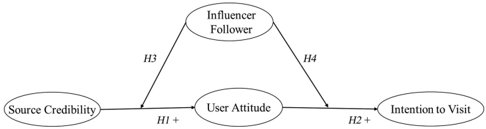
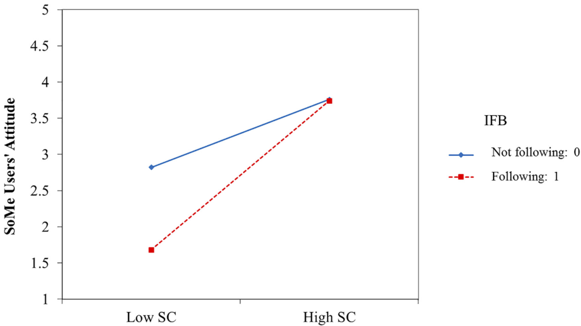
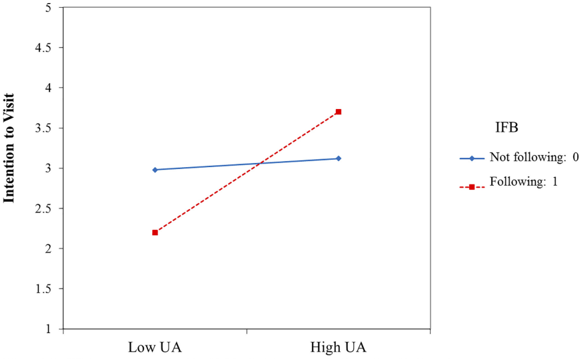
Purpose Social media (SoMe) influencer marketing is a popular practice. The current study examines the interplays between SoMe influencers' source credibility, Millennial users' attitudes and intention to travel. It further investigates the moderating role of SoMe influencer following behavior on the aforementioned relationships. Design/methodology/approach A total of 212 useable responses were collected through an online survey. Structural equation modeling and hierarchical multiple regressions were employed for hypotheses testing. Findings Results indicated that source credibility had a significantly positive influence on the SoMe users' attitudes, which in turn was positively associated with the intention to visit the endorsed destination. Moreover, both relationships were strengthened for SoMe influencer followers than for nonfollowers. Originality/value The study expanded the source credibility theory to the use of SoMe influencer marketing on travel destinations among Millennial SoMe users. In addition, the research applied the self-determination theory to fill the gap in literature by examining the moderating role of SoMe influencer following behavior.
Overview
The claims and statistics of this paper haven’t been checked yet.
Free: it reads the open-access text and checks the first 5 claims that cite a source we can check. Create a free account to check every claim.
Integrity signals
Registry
Cites
Statistics
Figures
Verification
Claims the paper makes
The claims and statistics of this paper haven’t been checked yet.
Free: it reads the open-access text and checks the first 5 claims that cite a source we can check. Create a free account to check every claim.
Claims other papers make about this one
Each is checked against this paper’s own text: does it say what the citing paper says it does?
The source backs part of the claim, not all of it — or backs it for a different population, condition or comparison.
In the citing paper
“At the destination level, emotional ties correspond with the place attachment 139 literature, suggesting that identity, belonging, and affective connection strengthen the 140 responses to destination-related content (Han and Chen, 2022).”
From Drivers of engagement with influencer posts about tourism destinations on Instagram: the role of number of followers, destination connection and content sentiment (2026) · cites this paper as Han and Chen, 2022
Experimental — accuracy not yet measuredThe source backs part of the claim, not all of it — or backs it for a different population, condition or comparison.
In the citing paper
“TSMIs' effectiveness is grounded in Source Credibility theory (Ohanian 1990;Lou and Yuan 2019), ascribing that attractiveness, trustworthiness and expertise determine the persuasive power of influencers impacting behavioural intentions, destination visit intentions and travel planning decisions (Han and Chen 2022;Agnihotri et al., 2025).”
From Influencers and the choice of a travel destination: A customer journey and information processing perspective (2025) · cites this paper as Han and Chen 2022
Experimental — accuracy not yet measured
Self-check
Percentages, sums and reported differences re-computed from the paper’s own numbers.
The self-check needs the paper’s full text.
Citations
Cites
Evaluating Structural Equation Models with Unobservable Variables and Measurement Error
Fornell, C., & Larcker, D. F. (1981) · Journal of Marketing Research · doi:10.2307/3151312 · Cited by 109,314 · cited 3×
“50 (Fornell and Larcker, 1981), suggesting good convergent validity.”
BackgroundInfluentialEvaluating structural equation models with unobservable variables and measurement error
Fornell, C., & Larcker, D. F. (1981) · Journal of Marketing Research · doi:10.1177/002224378101800104 · Cited by 109,190
Baron, R. M., & Kenny, D. A. (1986) · Journal of Personality and Social Psychology · doi:10.1037/0022-3514.51.6.1173 · Cited by 91,532
Ryan, R. M., & Deci, E. L. (2000) · American Psychologist · doi:10.1037//0003-066x.55.1.68 · Cited by 54,599
On the Evaluation of Structural Equation Models
Bagozzi, R. P., & Yi, Y. (1988) · Journal of the Academy of Marketing Science · doi:10.1007/bf02723327 · Cited by 26,163
Self-Reports in Organizational Research: Problems and Prospects
Podsakoff, P. M., & Organ, D. W. (1986) · Journal of Management · doi:10.1177/014920638601200408 · Cited by 17,102
Self‐determination theory and work motivation
Gagné, M., & Deci, E. L. (2005) · Journal of Organizational Behavior · doi:10.1002/job.322 · Cited by 7,757 · cited 1×
“…in previous studies as a framework for human behavior and motivation in which three types of needs – competence, relatedness, autonomy – are identified as the notion for psychological needs (Engstr€om and Elg, 2015; Gagn e and Deci, 2005; Gilal et al., 2009; Lin et al., 2009; Patrick et al., 2007).”
BackgroundExtending the TAM for a World-Wide-Web context
Moon, J.-W., & Kim, Y.-G. (2001) · Information & Management · doi:10.1016/s0378-7206(00)00061-6 · Cited by 3,802
The Influence of Source Credibility on Communication Effectiveness
Hovland, C. I., & Weiss, W. (1951) · Public Opinion Quarterly · doi:10.1086/266350 · Cited by 3,543
Role of social media in online travel information search
Xiang, Z., & Gretzel, U. (2010) · Tourism Management · doi:10.1016/j.tourman.2009.02.016 · Cited by 3,274
Lou, C., & Yuan, S. (2019) · Journal of Interactive Advertising · doi:10.1080/15252019.2018.1533501 · Cited by 2,795 · cited 1×
“Previous literature has shown a positive relationship between influencer credibility and followers’ behavioral intentions (Lou and Yuan, 2018; Weismueller et al., 2020).”
BackgroundThe Ties That Bind: Measuring the Strength of Consumers’ Emotional Attachments to Brands
Thomson, M., MacInnis, D. J., & Whan Park, C. (2005) · Journal of Consumer Psychology · doi:10.1207/s15327663jcp1501_10 · Cited by 2,713
De Veirman, M., Cauberghe, V., & Hudders, L. (2017) · International Journal of Advertising · doi:10.1080/02650487.2017.1348035 · Cited by 2,548
Djafarova, E., & Rushworth, C. (2017) · Computers in Human Behavior · doi:10.1016/j.chb.2016.11.009 · Cited by 1,756
La Guardia, J. G., Ryan, R. M., Couchman, C. E., & Deci, E. L. (2000) · Journal of Personality and Social Psychology · doi:10.1037/0022-3514.79.3.367 · Cited by 1,571
Who are the social media influencers? A study of public perceptions of personality
Freberg, K., Graham, K., McGaughey, K., & Freberg, L. A. (2011) · Public Relations Review · doi:10.1016/j.pubrev.2010.11.001 · Cited by 1,418
The Impact of Celebrity Spokespersons’ Perceived Image on Consumers’ Intention to Purchase
Ohanian, R. (1991) · Journal of Advertising Research · doi:10.1080/00218499.1991.12466759 · Cited by 1,266
Vermeir, I., & Verbeke, W. (2008) · Ecological Economics · doi:10.1016/j.ecolecon.2007.03.007 · Cited by 1,178
Human Brands: Investigating Antecedents to Consumers’ Strong Attachments to Celebrities
Thomson, M. (2006) · Journal of Marketing · doi:10.1509/jmkg.70.3.104 · Cited by 1,142
Social media as a destination marketing tool: its use by national tourism organisations
Hays, S., Page, S. J., & Buhalis, D. (2013) · Current Issues in Tourism · doi:10.1080/13683500.2012.662215 · Cited by 967
Evans, N. J., Phua, J., Lim, J., & Jun, H. (2017) · Journal of Interactive Advertising · doi:10.1080/15252019.2017.1366885 · Cited by 921
Chen, M.-F. (2007) · Food Quality and Preference · doi:10.1016/j.foodqual.2007.04.004 · Cited by 870
Travel Blogs and the Implications for Destination Marketing
Pan, B., MacLaurin, T., & Crotts, J. C. (2007) · Journal of Travel Research · doi:10.1177/0047287507302378 · Cited by 798
Ayeh, J. K., Au, N., & Law, R. (2013) · Journal of Travel Research · doi:10.1177/0047287512475217 · Cited by 789
Patrick, H., Knee, C. R., Canevello, A., & Lonsbary, C. (2007) · Journal of Personality and Social Psychology · doi:10.1037/0022-3514.92.3.434 · Cited by 736
Social Media as Information Source: Recency of Updates and Credibility of Information
Westerman, D., Spence, P. R., & Van Der Heide, B. (2014) · Journal of Computer-Mediated Communication · doi:10.1111/jcc4.12041 · Cited by 708
Ki, C.-W. (., Cuevas, L. M., Chong, S. M., & Lim, H. (2020) · Journal of Retailing and Consumer Services · doi:10.1016/j.jretconser.2020.102133 · Cited by 693 · cited 1×
“Most SoMe influencer marketing studies to date only focused on SoMe influencers’ impact on their followers (e.g. Ki et al., 2020; Mart ınez-L opez et al., 2020).”
BackgroundFaculty of Economics and Management, U. P. M. K. L., Lim, X. J., Mohd Radzol, A. R. B., Faculty of Economics and Management, U. P. M. K. L., Cheah, J.-H. (., Azman Hashim International Business School, U. T. M. K. L., Wong, M. W., & Faculty of Health, A. A. D. (2017) · Asian Journal of Business Research · doi:10.14707/ajbr.170035 · Cited by 679 · cited 8×
“Various research findings have demonstrated that consumers’ attitudes toward SoMe influencer marketing were positively associated with their purchase intentions of the endorsed product (Evans et al., 2017; Lim et al., 2017).”
BackgroundResultInfluentialRYAN, R. M., KUHL, J., & DECI, E. L. (1997) · Development and Psychopathology · doi:10.1017/s0954579497001405 · Cited by 622 · cited 1×
“The self-determination theory can be described as an approach to human motivation and personality that highlights inherent growth tendencies and innate psychological needs as the basis (Ryan et al., 1997; Ryan and Deci, 2000).”
BackgroundWeismueller, J., Harrigan, P., Wang, S., & Soutar, G. N. (2020) · Australasian Marketing Journal · doi:10.1016/j.ausmj.2020.03.002 · Cited by 577
An integrative model of consumers' intentions to purchase travel online
Amaro, S., & Duarte, P. (2015) · Tourism Management · doi:10.1016/j.tourman.2014.06.006 · Cited by 572
Breves, P. L., Liebers, N., Abt, M., & Kunze, A. (2019) · Journal of Advertising Research · doi:10.2501/jar-2019-030 · Cited by 509
Factors affecting YouTube influencer marketing credibility: a heuristic-systematic model
Xiao, M., Wang, R., & Chan-Olmsted, S. (2018) · Journal of Media Business Studies · doi:10.1080/16522354.2018.1501146 · Cited by 497
Xu (Rinka), X., & Pratt, S. (2018) · Journal of Travel & Tourism Marketing · doi:10.1080/10548408.2018.1468851 · Cited by 463
Gilal, F. G., Zhang, J., Paul, J., & Gilal, N. G. (2019) · European Management Journal · doi:10.1016/j.emj.2018.10.004 · Cited by 457
Sports Celebrity Influence On The Behavioral Intentions Of Generation Y
Bush, A. J., Martin, C. A., & Bush, V. D. (2004) · Journal of Advertising Research · doi:10.1017/s0021849904040206 · Cited by 453
Understanding the Millennial Generation
Smith, T. J., & Nichols, T. (2015) · Cited by 452
An Examination of the Factors Influencing Consumers' Attitudes Toward Social Media Marketing
Akar, E., & Topçu, B. (2011) · Journal of Internet Commerce · doi:10.1080/15332861.2011.558456 · Cited by 397
Chen, Y.-C., Shang, R.-A., & Li, M.-J. (2014) · Computers in Human Behavior · doi:10.1016/j.chb.2013.05.019 · Cited by 367
Behind influencer marketing: key marketing decisions and their effects on followers’ responses
Martínez-López, F. J., Anaya-Sánchez, R., Fernández Giordano, M., & Lopez-Lopez, D. (2020) · Journal of Marketing Management · doi:10.1080/0267257x.2020.1738525 · Cited by 333 · cited 1×
“Most SoMe influencer marketing studies to date only focused on SoMe influencers’ impact on their followers (e.g. Ki et al., 2020; Mart ınez-L opez et al., 2020).”
BackgroundGenerational differences in work values and attitudes among frontline and service contact employees
Gursoy, D., Chi, C. G.-Q., & Karadag, E. (2013) · International Journal of Hospitality Management · doi:10.1016/j.ijhm.2012.04.002 · Cited by 328
Ayeh, J. K. (2015) · Computers in Human Behavior · doi:10.1016/j.chb.2014.12.049 · Cited by 293 · cited 3×
“Especially, source credibility has been thoroughly studied in marketing and its relation to consumers in the online context (Ayeh, 2015; Lowry et al., 2013).”
BackgroundInfluentialWhen credibility attacks: The reverse impact of source credibility on persuasion
Tormala, Z. L., Briñol, P., & Petty, R. E. (2006) · Journal of Experimental Social Psychology · doi:10.1016/j.jesp.2005.10.005 · Cited by 278
Dang, V. T., Nguyen, N., & Pervan, S. (2020) · Journal of Retailing and Consumer Services · doi:10.1016/j.jretconser.2020.102082 · Cited by 265
Tourism Policy Responses to the coronavirus (COVID-19)
(2020) · OECD Policy Responses to Coronavirus (COVID-19) · doi:10.1787/6466aa20-en · Cited by 244 · cited 1×
“Source credibility theory is an established theory as it has received comprehensive examination (Hovland and Weiss, 1951; Ohanian, 1991; Umeogu, 2012).”
BackgroundWang, J., & Ritchie, B. W. (2012) · Tourism Management · doi:10.1016/j.tourman.2011.12.006 · Cited by 228 · cited 1×
“Several studies have argued that attitude is regarded as an antecedent of behavioral intention (e.g. Chen, 2007; Vermeir and Verbeke, 2007; Wang and Ritchie, 2012).”
BackgroundAchieving relationship marketing effectiveness in business-to-business exchanges
Palmatier, R. W., Scheer, L. K., Evans, K. R., & Arnold, T. J. (2008) · Journal of the Academy of Marketing Science · doi:10.1007/s11747-007-0078-5 · Cited by 226
Lowry, P. B., Wilson, D. W., & Haig, W. L. (2014) · International Journal of Human-Computer Interaction · doi:10.1080/10447318.2013.839899 · Cited by 219
Smart destinations and tech-savvy millennial tourists: hype versus reality
Femenia-Serra, F., Perles-Ribes, J. F., & Ivars-Baidal, J. A. (2019) · Tourism Review · doi:10.1108/tr-02-2018-0018 · Cited by 186
Chatzigeorgiou, C. (2017) · Journal of Tourism, Heritage & Services Marketing · doi:10.5281/zenodo.1209124 · Cited by 181
Lin, C.-P., Tsai, Y. H., & Chiu, C.-K. (2009) · Journal of Business and Psychology · doi:10.1007/s10869-009-9110-8 · Cited by 180
An instrument for measuring the source credibility of basic speech communication instructors
McCroskey, J. C., Holdridge, W. E., & Toomb, J. K. (1974) · The Speech Teacher · doi:10.1080/03634527409378053 · Cited by 179
Ilicic, J., & Webster, C. M. (2011) · Australasian Marketing Journal · doi:10.1016/j.ausmj.2011.07.005 · Cited by 163
Use of The Internet for Trip Planning: A Generational Analysis
Kim, H., Xiang, Z., & Fesenmaier, D. R. (2015) · Journal of Travel & Tourism Marketing · doi:10.1080/10548408.2014.896765 · Cited by 161
UNDERSTANDING THE ROLE OF SOCIAL MEDIA IN DESTINATION MARKETING
Lange-Faria, W., & Elliot, S. (2021) · doi:10.26215/tourismos.v7i1.264 · Cited by 157
Relevance judgment: What do information users consider beyond topicality?
Xu, Y. (., & Chen, Z. (2006) · Journal of the American Society for Information Science and Technology · doi:10.1002/asi.20361 · Cited by 153
Influencer marketing in travel and tourism
Gretzel, U. (2017) · Advances in Social Media for Travel, Tourism and Hospitality · doi:10.4324/9781315565736-13 · Cited by 137
A self-determination theory perspective on customer participation in service development
Engström, J., & Elg, M. (2015) · Journal of Services Marketing · doi:10.1108/jsm-01-2015-0053 · Cited by 135
Beliefs about the Use of Instagram: An Exploratory Study
Ting, H., Ming, W. W. P., de Run, E. C., & Choo, S. L. Y. (2015) · International Journal of Business and Innovation · doi:10.65194/ijbi-2015-1002 · Cited by 121 · cited 4×
“This age range dominatesmost SoMe platforms by having 91% use on YouTube, 81% use on Facebook, 68% use on Snapchat and 64% use on Instagram (Smith and Anderson, 2018).”
BackgroundInfluentialAd Disclosure vs. Ad Recognition: How Persuasion Knowledge Influences Native Advertising Evaluation
Jung, A.-R., & Heo, J. (2019) · Journal of Interactive Advertising · doi:10.1080/15252019.2018.1520661 · Cited by 111
Influencer identification in Twitter networks of destination marketing organizations
Bokunewicz, J. F., & Shulman, J. (2017) · Journal of Hospitality and Tourism Technology · doi:10.1108/jhtt-09-2016-0057 · Cited by 95
Guchait, P., Lanza-Abbott, J., Madera, J. M., & Dawson, M. (2016) · Cornell Hospitality Quarterly · doi:10.1177/1938965516633308 · Cited by 94
To Recovery & Beyond: The Future of Travel & Tourism in the Wake of Covid-19
Wttc (2020) · Cited by 94
Source Credibility: A Philosophical Analysis
Umeogu, B. (2012) · Open Journal of Philosophy · doi:10.4236/ojpp.2012.22017 · Cited by 84
Reverse Transfer Effect of Celebrity-Product Congruence on the Celebrity's Perceived Credibility
Yoo, J., & Jin, Y. J. (2015) · Journal of Promotion Management · doi:10.1080/10496491.2015.1055046 · Cited by 52
MILLENNIALS: A NEW TREND FOR THE TOURISM INDUSTRY
Sofronov, B. (2018) · Annals of Spiru Haret University Economic Series · doi:10.26458/1838 · Cited by 47
Influencer Marketing : the characteristics and components of fashion influencer marketing
Zietek, N. (2016) · Diva portal (Dalarna University Library) · Cited by 34
The Impact of Influencer Marketing on Consumers' Attitudes
Grafström, J., Jakobsson, L., & Wiede, P. (2018) · Jonkoping University Library (Jönköping University) · Cited by 26
Attitude towards Instagram micro-celebrities and their influence on consumers'purchasing decisions
Korotina, A., & Jargalsaikhan, T. (2016) · Jonkoping University Library (Jönköping University) · Cited by 24
#Sponsored: The Emergence of Influencer Marketing
Woods, S. (2016) · Cited by 18
The Impact of Different Types of Media on Tourists' Behavioral Intentions
Park, J.-H. (2015) · FIU - Digital Commons (Florida International University) · doi:10.25148/etd.fi15032194 · Cited by 12
Millennials, Peer-to-Peer Accommodation and the Hotel Industry
Pentescu, A. (2016) · RePEc: Research Papers in Economics · Cited by 9
An investigation of wine involvement among travelers in New Zealand.
Alonso, A. D. (2008) · Ereview of tourism research · Cited by 7
Claude, L., Malek, P., & Runnvall, L. (2018) · Cited by 6
The Dimensions of Source Credibility and Salesperson Persuasion
Jaso, E. (2011) · DigitalCommons - CalPoly (California State Polytechnic University) · Cited by 2
Comparing the effectiveness of different organic growth strategies for Instagram
Pereira, C. D. N. M. (2019) · Portuguese National Funding Agency for Science, Research and Technology (RCAAP Project by FCT) · Cited by 2
Research works printed but not linked: 6
- Eagly, A.H. and Chaiken, S. (1993), The Psychology of Attitudes, Harcourt Brace Jovanovich College Publishers.
- Fogg, B.J. and Tseng, H. (1999), "The elements of computer credibility", In Proceedings of the SIGCHI conference on Human Factors in Computing Systems, pp. 80-87. Social media users' intention to travel
- Glucksman, M. (2017), "The rise of Social Media influencer marketing on lifestyle branding: a case study of Lucie Fink", Elon Journal of Undergraduate Research in Communications, Vol. 8 No. 2, pp. 77-87.
- Gotardi, L., Senn, Y., Cholakova, E., Liebrich, A. and Wozniak, T. (2015), "How do millennial travellers use their mobile devices in a ity destination?-Empirical evidence from Switzerland", EReview of Tourism Research, Vol. 6, pp. 1-5.
- Hovland, C.I., Janis, I.L. and Kelley, H.H. (1953), Communication and Persuasion, Yale University Press.
- Vermeir, I. and Verbeke, W. (2007), "Sustainable food consumption, involvement, certainty and values: an application of the theory of planned behavior", Ecological Economics, Vol. 64 No. 3, pp. 542-553.
Cited by
Ham, J., Li, S., Shah, P., & Eastin, M. S. (2023) · Journal of Interactive Advertising · doi:10.1080/15252019.2023.2185557 · Cited by 106
“High authenticity is an important pre-requisite for SMIs to be perceived as credible by their followers (Han and Chen 2021).”
BackgroundSocial media influencer (SMI) as a human brand – a need fulfillment perspective
Malik, A. Z., Thapa, S., & Paswan, A. K. (2023) · Journal of Product & Brand Management · doi:10.1108/jpbm-07-2021-3546 · Cited by 81
Influencer marketing in the promotion of tourist destinations: mega, macro and micro-influencers
Méndez, J. H., & Díaz, N. B. (2023) · Current Issues in Tourism · doi:10.1080/13683500.2023.2214354 · Cited by 102
“The results thus support source credibility as an appropriate framework for analysing in fl uencer marketing (Lou & Yuan, 2019; Y ı lmazdo ğ an et al., 2021; Zha et al., 2018), particularly in the context of tourism (Femenia-Serra & Gretzel, 2020; Han & Chen, 2022).”
BackgroundResultSaini, H., Kumar, P., & Oberoi, S. (2023) · Cogent Social Sciences · doi:10.1080/23311886.2023.2240055 · Cited by 51
“Trust is a significant factor which guarantees a long relationship between the influencers and their followers (Kim & Kim, 2021) and repeats visits to a destination (Fotis et al., 2012; Han & Chen, 2021; Kiráľová & Pavlíčeka, 2015).”
BackgroundHow does sharing travel experiences on social media improve social and personal ties?
Ghaderi, Z., Béal, L., Zaman, M., Hall, C. M., & Rather, R. A. (2023) · Current Issues in Tourism · doi:10.1080/13683500.2023.2266101 · Cited by 67
“However, their experience sharing behaviour a ff ects their followers ’ decision of destination visit and consumer purchase (Han & Chen, 2022; Liu et al., 2019; Munar & Jacobsen, 2014).”
Influential
Metadata
- Authors
- Han, J., & Chen, H.
- Affiliations
- LSU New Orleans (US)
- Corresponding author
- Chen, Han
- ORCID
- Chen, Han
- Venue
- International Hospitality Review
- Publisher
- Emerald
- Published
- 2021-06-08
- Volume
- 36
- Issue
- 2
- Pages
- 340-357
- ISSN
- 2516-8142 (ISSN-L)
- OpenAlex
- W3168089186
- Cited by
- 104
- References
- 77
- Citations by year
- 2026: 12 · 2025: 30 · 2024: 26 · 2023: 20 · 2022: 15 · 2021: 1
- FWCI
- 21.48
- Type
- journal article
- Language
- en
- Open access
- diamond
- doi.org
- Licence
- cc-by
- www.emerald.com/insight/site-policies (tdm)
- Locations
- International Hospitality Review (publishedVersion, cc-by)
- DOAJ (DOAJ: Directory of Open Access Journals) (submittedVersion)
- Topics
- Social Sciences › Business, Management and Accounting › Marketing › Digital Marketing and Social Media
- Social Sciences › Business, Management and Accounting › Tourism, Leisure and Hospitality Management › Diverse Aspects of Tourism Research
- Social Sciences › Business, Management and Accounting › Marketing › Consumer Behavior and Marketing Influence
- Keywords
- influencer marketing, millennials, travel intention, source credibility, destination image, following behavior, self-determination theory
About these checks
Registry, retraction, Cites and statistics results are computed, not judged, with one exception: a printed reference that no index lists is read once by a model before it counts as a citation error. Claims are extracted by a model and kept only when their quote appears verbatim in the text; each cited source is then checked, with a model’s help, for whether it says what the claim relies on. Those verdicts can be wrong — read the claim’s quote and the cited source before relying on one.
Statistics and arithmetic are recomputed, not judged.
Confidence bands are shown only for fields calibrated on our annotated test set. None is calibrated yet, so no band is shown.
What counts as a claim ›How we measure confidence ›How we check this ›
Are you an author, or do you see a problem with this page? Request a review
Data sources
Bibliographic data: Semantic Scholar, OpenAlex, Crossref.
Contains information from the Semantic Scholar Academic Graph Datasets, made available under the ODC Attribution License (ODC-BY 1.0).
Semantic Scholar’s data is described in: Kinney, R., et al. (2023). The Semantic Scholar Open Data Platform. arXiv:2301.10140.
