

The DOI matches its Crossref record; 66 of the 66 references it cites were found in a registry or an index; 53 of the 107 sources its claims cite were checked for support.
How does hormone transition in transgender women change body composition, muscle strength and haemoglobin? Systematic review with a focus on the implications for sport participation
Open accessAbstract
Objectives: We systemically reviewed the literature to assess how long-term testosterone suppressing gender-affirming hormone therapy influenced lean body mass (LBM), muscular area, muscular strength and haemoglobin (Hgb)/haematocrit (HCT). Design: Systematic review. Data sources: Four databases (BioMed Central, PubMed, Scopus and Web of Science) were searched in April 2020 for papers from 1999 to 2020. Eligibility criteria for selecting studies: Eligible studies were those that measured at least one of the variables of interest, included transwomen and were written in English. Results: Twenty-four studies were identified and reviewed. Transwomen experienced significant decreases in all parameters measured, with different time courses noted. After 4 months of hormone therapy, transwomen have Hgb/HCT levels equivalent to those of cisgender women. After 12 months of hormone therapy, significant decreases in measures of strength, LBM and muscle area are observed. The effects of longer duration therapy (36 months) in eliciting further decrements in these measures are unclear due to paucity of data. Notwithstanding, values for strength, LBM and muscle area in transwomen remain above those of cisgender women, even after 36 months of hormone therapy. Conclusion: In transwomen, hormone therapy rapidly reduces Hgb to levels seen in cisgender women. In contrast, hormone therapy decreases strength, LBM and muscle area, yet values remain above that observed in cisgender women, even after 36 months. These findings suggest that strength may be well preserved in transwomen during the first 3 years of hormone therapy.
Overview
AI snapshot
Written from the paper’s full text.
TL;DR
This systematic review of 24 studies found that gender-affirming hormone therapy in transwomen rapidly lowers haemoglobin/haematocrit to cisgender female levels, while strength, lean body mass and muscle area decrease more slowly and remain above cisgender female values even after 36 months. The authors conclude that transwomen may retain strength advantages over cisgender women during the first 3 years of hormone therapy.
Key findings
- Twenty-four studies were reviewed; transwomen experienced significant decreases in all measured parameters, but with different time courses. After 4 months of hormone therapy, Hgb/HCT levels were equivalent to those of cisgender women; after 12 months, significant decreases in strength, LBM and muscle area were observed.
- LBM decreased by 3.0%–5.4% following hormone transition (p<0.05) in seven studies, and muscle CSA decreased by 1.5%–11.7% over 12–36 months. Strength reductions after 12 months ranged from non-significant to 7.1%, with the largest ENIGI study (n=249) reporting a 4.3% reduction (p<0.001).
- Hgb/HCT decreased by 4.6%–14.0% (p<0.01) in eight studies. Cross-sectional comparisons found transwomen after ≥48 months of GAHT had 17% lower LBM, 24% smaller CSA and 24% lower hand grip/quadriceps strength than cisgender men, yet values for strength, LBM and muscle area remained above those of cisgender women even after 36 months.
Methods
- Systematic review conducted in line with PRISMA guidelines; four databases (BioMed Central, PubMed, Scopus, Web of Science) were searched in April 2020 for papers from 1999 to 2020. Eligible studies measured at least one variable of interest, included transwomen and were written in English.
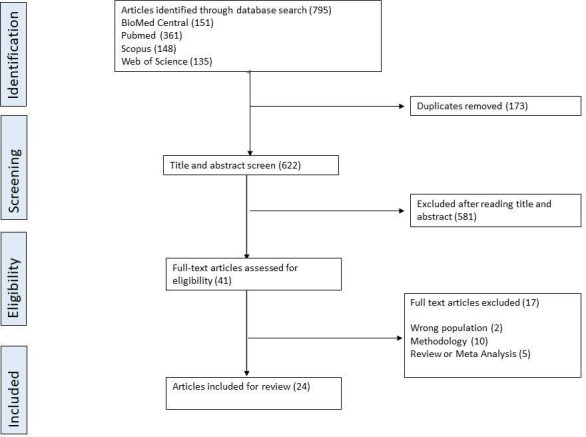
- Twenty-four studies were included, with sample sizes from 12 to 249. Designs included 13 follow-up studies, 2 follow-up plus cross-sectional studies, 6 cross-sectional studies and 3 prospective studies. Quality was assessed with the EPHPP tool; all studies were categorised as moderate quality.
- Data were extracted on lean body mass, muscle cross-sectional area, muscular strength and haemoglobin/haematocrit. Meta-analysis was not possible due to overlapping participants in the ENIGI studies and heterogeneous methodology.
Limitations
- The paper states that the effects of GAHT on athletic performance in transgender people who train and compete remain unknown; physical activity levels were not reported; studies were English-only and conducted in Western countries, contributing to geographical bias; sparse data risk existed due to small sample sizes and short study durations; participant overlap and heterogeneous methodology precluded meaningful meta-analysis; and the review only focused on binary transgender individuals, not non-binary individuals.
- The text makes evident that most included participants were non-athletic, many data were extracted from medical charts (nine studies from the same research group), posing risk of selective data reporting and publication bias, and five studies had post-GAHT testosterone values greater than 5 nmol/L, a possible confounder, with four of these in adolescent transfemales.
Model-written summary. Check it against the paper before relying on it.
Integrity signals
Registry
Cites
Statistics
Figures
Verification
Claims the paper makes
25 No full text of the sources · 16 Partly supported · 13 No basis given · 10 Own method · 7 Own result · 6 Couldn’t confirm · 6 Own interpretation · 5 Supported · 5 Supported so far · 1 Mixed support · 1 Not supported · 1 Sources not found · 1 Not checked yet · accuracy not yet measured
Some cited sources support this claim and some don’t — read each source’s verdict below.
In the paper
“Seven of these studies,15 36 39–41 44 51 including the large (n=179) ENIGI study,15 and two studies40 51 with high post-GAHT testosterone (~8 nmol/L), showed that total LBM was decreased by 3.0%–5.4% following hormone transition (p<0.05).”
§ How does hormone transition in transgender women change body composition, muscle strength and haemoglobin? Systematic review with a focus on the implications for sport participation > Results > Muscle mass and body fat changes
What the sources say
- Supportedcites [15] source
The citation identifies this paper as the large ENIGI study, rather than as evidence for all seven studies or the two studies with high post-GAHT testosterone. The Study population and study design section identifies it as part of ENIGI; the Results report 179 transwomen and a 3% decrease in total lean body mass after one year of hormone therapy (P < 0.001). (LLM, conf=0.93)
- Partly supportedcites [36] Wierckx, 2014, Cross-sex hormone therapy in trans persons is safe and effective at short-time follow-up: results from the European network for the investigation of gender incongruence, J Sex Med sourceExperimental — accuracy not yet measured
The Trans Women results report a decrease in total body lean mass after treatment, and Table 3 (page not available) shows significant decreases in both estrogen-treatment groups at 12 months (P<0.001 and P=0.02). But Table 3 lists 53 trans women and 53 trans men, not a follow-up sample of 179; this paper also cannot substantiate the results attributed to the other six studies or the two studies described as having high post-GAHT testosterone. (LLM, conf=0.86)
- Disputedcites [39] Auer, 2018, Effects of sex hormone treatment on the metabolic syndrome in transgender individuals: focus on metabolic cytokines, J Clin Endocrinol Metab sourceExperimental — accuracy not yet measured
The Markers of the MS section reports that lean mass remained unchanged in transwomen and increased in transmen after GAHT, contrary to the attributed decrease. The Patients section describes a cohort of 69, not the n=179 ENIGI study named in the citing sentence. No page numbers are available in our copy. (LLM, conf=0.90)
Checked by a reasoning model — may be wrong.
plaindirect- Asserted: passes — The authors put it forward as true.
- Checkable: passes — It can be checked against evidence.
- Load-bearing: passes — The paper’s conclusions depend on it.
- Based: passes — The paper gives a reason why it holds.
- Supported
The cited sources support only part of this claim — read each source’s verdict below.
In the paper
“In cisgender males, increases in testosterone due to puberty promote muscular strength in association with increased muscle CSA, and increased lean muscle mass.26”
§ How does hormone transition in transgender women change body composition, muscle strength and haemoglobin? Systematic review with a focus on the implications for sport participation > Introduction
What the sources say
- Partly supportedcites [26] sourceExperimental — accuracy not yet measured
The Introduction and Discussion say that male puberty brings greater muscle mass and strength, and that testosterone increases both. The Discussion also refers to increased muscular size, but our copy does not specifically establish an increase in muscle cross-sectional area (CSA). (LLM, conf=0.83)
plaindirect- Asserted: passes — The authors put it forward as true.
- Checkable: passes — It can be checked against evidence.
- Load-bearing: passes — The paper’s conclusions depend on it.
- Based: passes — The paper gives a reason why it holds.
- Partly supported
Every source the paper cites for this claim was checked and supports it.
In the paper
“Testosterone exerts erythrogenic effects that results in increases in both HCT and Hgb.23”
§ How does hormone transition in transgender women change body composition, muscle strength and haemoglobin? Systematic review with a focus on the implications for sport participation > Introduction
What the sources say
- Supportedcites [23] source
The Abstract states that testosterone has a dose-dependent stimulatory effect on erythropoiesis and describes a testosterone-induced rise in both hemoglobin and hematocrit. The Hemoglobin and hematocrit results section also reports dose-dependent changes in both measures. Page numbers are not provided in these passages. (LLM, conf=0.94)
plaindirect- Asserted: passes — The authors put it forward as true.
- Checkable: passes — It can be checked against evidence.
- Load-bearing: passes — The paper’s conclusions depend on it.
- Based: passes — The paper gives a reason why it holds.
- Supported
The cited sources that could be checked couldn’t confirm or dispute this claim.
In the paper
“Low Hgb, or low HCT, the volume of red blood cells compared with total blood volume, can lead to a diminished supply of oxygen to the tissues, and therefore have a direct effect on endurance performance.”
§ How does hormone transition in transgender women change body composition, muscle strength and haemoglobin? Systematic review with a focus on the implications for sport participation > Introduction
What the sources say
- Could not verifycites [20] sourceExperimental — accuracy not yet measured
The Methods describe hematocrit values used to prepare red-cell samples, and the Results examine hemoglobin removal from erythrocyte membranes (page numbers unavailable). Neither those passages nor searches for oxygen transport, tissue oxygen supply, anemia, or exercise address the claimed effect on endurance performance. (LLM, conf=0.77)
plaindirect- Asserted: passes — The authors put it forward as true.
- Checkable: passes — It can be checked against evidence.
- Load-bearing: passes — The paper’s conclusions depend on it.
- Based: passes — The paper gives a reason why it holds.
- Could not verify
The cited sources support only part of this claim — read each source’s verdict below.
In the paper
“One of these studies40 examined adolescent participants who only reached a final testosterone level of 8.8 nmol/L and exhibited forearm and calf CSA decreases of 4.1% and 8.9%, respectively.”
§ How does hormone transition in transgender women change body composition, muscle strength and haemoglobin? Systematic review with a focus on the implications for sport participation > Results > Muscle mass and body fat changes
What the sources say
- Partly supportedcites [40] Tack, 2018, Proandrogenic and antiandrogenic progestins in transgender youth: differential effects on body composition and bone metabolism, J Clin Endocrinol Metab sourceExperimental — accuracy not yet measured
The Body composition and grip strength section reports decreased forearm and lower-leg muscle area in adolescent trans girls. Table 2 gives their final mean testosterone as 253.35 ng/dL, approximately 8.8 nmol/L. Our copy does not report the claimed 4.1% and 8.9% decreases, so those magnitudes cannot be verified. (LLM, conf=0.86)
plain- Asserted: passes — The authors put it forward as true.
- Checkable: passes — It can be checked against evidence.
- Load-bearing: unclear — It is unclear whether the paper’s conclusions depend on it.
- Based: passes — The paper gives a reason why it holds.
- Partly supported
The cited sources support only part of this claim — read each source’s verdict below.
In the paper
“The large ENIGI study15 was the only study in which the limits of agreement would indicate a change in LBM at the 95% CI.”
§ How does hormone transition in transgender women change body composition, muscle strength and haemoglobin? Systematic review with a focus on the implications for sport participation > Results > Muscle mass and body fat changes
What the sources say
- Partly supportedcites [15] sourceExperimental — accuracy not yet measured
The Study population and study design section identifies this as an ENIGI study with 341 participants, larger than previous studies of this topic. The Results section reports changes in total lean body mass for transwomen and transmen with 95% confidence intervals excluding zero. It does not report limits of agreement or establish that this was the only study meeting the citing paper’s criterion. (LLM, conf=0.86)
hedged- Asserted: passes — The authors put it forward as true.
- Checkable: passes — It can be checked against evidence.
- Load-bearing: unclear — It is unclear whether the paper’s conclusions depend on it.
- Based: passes — The paper gives a reason why it holds.
- Partly supported
Every source the paper cites for this claim was checked and supports it.
In the paper
“HCT values are also higher in males (42%–52%) than females (37%–47%).22”
§ How does hormone transition in transgender women change body composition, muscle strength and haemoglobin? Systematic review with a focus on the implications for sport participation > Introduction
What the sources say
- Supportedcites [22] Cohen, 2017, Relationship between hematocrit levels and intraocular pressure in men and women: a population-based cross-sectional study, Medicine source
The Results section (‘Mean IOP by hematocrit level’) gives normal hematocrit ranges of 42%–52% for men and 37%–47% for women, exactly matching the cited values. (LLM, conf=0.95)
plaincorrelational- Asserted: passes — The authors put it forward as true.
- Checkable: passes — It can be checked against evidence.
- Load-bearing: passes — The paper’s conclusions depend on it.
- Based: passes — The paper gives a reason why it holds.
- Supported
The cited sources support only part of this claim — read each source’s verdict below.
In the paper
“Five longitudinal studies16 17 37 40 41 investigated the muscular strength of transwomen.”
§ How does hormone transition in transgender women change body composition, muscle strength and haemoglobin? Systematic review with a focus on the implications for sport participation > Results > Muscle mass and body fat changes
What the sources say
- Not checked — no full text of the sourcecites [16] Wiik, 2020, Muscle strength, size, and composition following 12 months of Gender-affirming treatment in transgender individuals, J Clin Endocrinol Metab source
- Supportedcites [17] Scharff, 2019, Change in grip strength in trans people and its association with lean body mass and bone density, Endocr Connect source
The Abstract (Design and methods) identifies this as a prospective study that measured grip strength in 249 transwomen at baseline and after one year. It therefore supports citing this paper as one of the longitudinal studies of muscular strength in transwomen; the citation does not by itself establish the total of five. (LLM, conf=0.92)
- Partly supportedcites [37] Auer, 2016, 12-Months metabolic changes among gender dysphoric individuals under cross-sex hormone treatment: a targeted metabolomics study, Sci Rep sourceExperimental — accuracy not yet measured
The Patient population section describes transwomen assessed at baseline and after 12 months, supporting the longitudinal-study aspect. The Methods describe body-composition and laboratory measurements, but not a muscular-strength assessment; muscle mass discussed elsewhere is not the same as strength. No page numbers are available in our copy. (LLM, conf=0.84)
plain- Asserted: passes — The authors put it forward as true.
- Checkable: passes — It can be checked against evidence.
- Load-bearing: passes — The paper’s conclusions depend on it.
- Based: passes — The paper gives a reason why it holds.
The cited sources support only part of this claim — read each source’s verdict below.
In the paper
“A decrease in CSA of 1.5%–11.7% was reported over periods ranging from 12 to 36 months.”
§ How does hormone transition in transgender women change body composition, muscle strength and haemoglobin? Systematic review with a focus on the implications for sport participation > Results > Muscle mass and body fat changes
What the sources say
- Not checked — no full text of the sourcecites [16] Wiik, 2020, Muscle strength, size, and composition following 12 months of Gender-affirming treatment in transgender individuals, J Clin Endocrinol Metab source
- Partly supportedcites [40] Tack, 2018, Proandrogenic and antiandrogenic progestins in transgender youth: differential effects on body composition and bone metabolism, J Clin Endocrinol Metab sourceExperimental — accuracy not yet measured
The Body composition and grip strength section (page not available) reports decreased forearm and lower-leg muscle area in trans girls treated with cyproterone acetate, but does not give the claimed 1.5%–11.7% range. The Results give a mean interval of 10.57 months between examinations for trans girls, not a 12–36-month observation period. Participants and treatments says measurements were taken before addition of cross-sex hormones, so the reported decrease was not observed during GAHT as the claim suggests. (LLM, conf=0.90)
- Not checked — no full text of the sourcecites [41] Van Caenegem, 2015, Preservation of volumetric bone density and geometry in trans women during cross-sex hormonal therapy: a prospective observational study, Osteoporos Int source
plaindirect- Asserted: passes — The authors put it forward as true.
- Checkable: passes — It can be checked against evidence.
- Load-bearing: passes — The paper’s conclusions depend on it.
- Based: passes — The paper gives a reason why it holds.
The cited sources support only part of this claim — read each source’s verdict below.
In the paper
“Since GAHT significantly lowers testosterone levels in transgender women,24 it is possible that they may experience reductions in HCT and Hgb, which would be anticipated to negatively affect endurance performance.”
§ How does hormone transition in transgender women change body composition, muscle strength and haemoglobin? Systematic review with a focus on the implications for sport participation > Introduction
What the sources say
- Partly supportedcites [24] Weinand, 2015, Hormone therapy in transgender adults is safe with provider supervision; a review of hormone therapy sequelae for transgender individuals, J Clin Transl Endocrinol sourceExperimental — accuracy not yet measured
The ‘Other considerations > Androgen deprivation in MTF individuals’ section describes androgen deprivation in transgender women, which supports the general direction of the claim. It does not report measured testosterone levels or establish that the reduction is statistically significant; no page number is available in our copy. (LLM, conf=0.75)
plaindirect- Asserted: passes — The authors put it forward as true.
- Checkable: passes — It can be checked against evidence.
- Load-bearing: passes — The paper’s conclusions depend on it.
- Based: passes — The paper gives a reason why it holds.
- Partly supported
The cited sources support only part of this claim — read each source’s verdict below.
In the paper
“there is a sparse data risk66 because of small sample sizes and short study durations”
§ How does hormone transition in transgender women change body composition, muscle strength and haemoglobin? Systematic review with a focus on the implications for sport participation > Discussion
What the sources say
- Partly supportedcites [66] sourceExperimental — accuracy not yet measured
The Abstract (page unavailable) explains that sparse data bias can arise when there are too few cases in combinations of exposure and outcome categories, supporting the concern about small samples. The paper does not address research with transgender individuals or identify short study durations as a cause of sparse data bias. (LLM, conf=0.86)
plaindirect- Asserted: passes — The authors put it forward as true.
- Checkable: passes — It can be checked against evidence.
- Load-bearing: passes — The paper’s conclusions depend on it.
- Based: passes — The paper gives a reason why it holds.
- Partly supported
The cited sources support only part of this claim — read each source’s verdict below.
In the paper
“The large ENIGI study17 was the only study in which the limits of agreement would indicate a change in strength at the 95% CI.”
§ How does hormone transition in transgender women change body composition, muscle strength and haemoglobin? Systematic review with a focus on the implications for sport participation > Results > Muscle mass and body fat changes
What the sources say
- Partly supportedcites [17] Scharff, 2019, Change in grip strength in trans people and its association with lean body mass and bone density, Endocr Connect sourceExperimental — accuracy not yet measured
The Study design section identifies this as an ENIGI study, and the Results > Grip strength section reports changes in both groups with 95% confidence intervals excluding zero. The paper does not report limits of agreement or compare its findings with other studies to establish that it was the only one meeting the claimed criterion; its reported 95% CIs are not limits of agreement. (LLM, conf=0.82)
plain- Asserted: passes — The authors put it forward as true.
- Checkable: passes — It can be checked against evidence.
- Load-bearing: unclear — It is unclear whether the paper’s conclusions depend on it.
- Based: passes — The paper gives a reason why it holds.
- Partly supported
The cited sources that could be checked couldn’t confirm or dispute this claim.
In the paper
“hormone-naive transwomen and cisgender men have similar testosterone levels.16 17 19 42”
§ How does hormone transition in transgender women change body composition, muscle strength and haemoglobin? Systematic review with a focus on the implications for sport participation > Discussion
What the sources say
- Not checked — no full text of the sourcecites [16] Wiik, 2020, Muscle strength, size, and composition following 12 months of Gender-affirming treatment in transgender individuals, J Clin Endocrinol Metab source
- Could not verifycites [17] Scharff, 2019, Change in grip strength in trans people and its association with lean body mass and bone density, Endocr Connect sourceExperimental — accuracy not yet measured
The Results (Characteristics, Table 1) describe transwomen before hormone therapy, but the available passage does not give their baseline testosterone values or compare them with cisgender men. Searches for baseline testosterone and a cisgender-men comparison found no passage in our copy establishing that their levels were similar. (LLM, conf=0.72)
- Could not verifycites [19] Defreyne, 2018, Prospective evaluation of hematocrit in gender-affirming hormone treatment: results from European network for the investigation of gender incongruence, Andrology sourceExperimental — accuracy not yet measured
The Results (page unavailable) report testosterone levels in trans women after three months of treatment, but do not give a pretreatment level or compare hormone-naive trans women with cisgender men. Searches for baseline testosterone and male reference ranges did not locate that comparison in our copy. (LLM, conf=0.72)
plain- Asserted: passes — The authors put it forward as true.
- Checkable: passes — It can be checked against evidence.
- Load-bearing: passes — The paper’s conclusions depend on it.
- Based: passes — The paper gives a reason why it holds.
The cited sources that could be checked couldn’t confirm or dispute this claim.
In the paper
“6.0%–11.4% lower muscle CSA”
§ How does hormone transition in transgender women change body composition, muscle strength and haemoglobin? Systematic review with a focus on the implications for sport participation > Discussion
What the sources say
- Could not verifycites [17] Scharff, 2019, Change in grip strength in trans people and its association with lean body mass and bone density, Endocr Connect sourceExperimental — accuracy not yet measured
The Methods (DXA; page unavailable) describe measuring arm and leg lean body mass, while the Results (Grip strength; page unavailable) report changes after hormone treatment. Searches for 6.0%–11.4%, muscle cross-sectional area, and a baseline comparison with cisgender men found no passage supporting the claimed difference. (LLM, conf=0.75)
- Not checked — no full text of the sourcecites [41] Van Caenegem, 2015, Preservation of volumetric bone density and geometry in trans women during cross-sex hormonal therapy: a prospective observational study, Osteoporos Int source
- Could not verifycites [60] Bohannon, 2019, Handgrip strength: a comparison of values obtained from the NHANES and NIH Toolbox studies, Am J Occup Ther sourceExperimental — accuracy not yet measured
The Results compare handgrip strength values from NHANES and NIH Toolbox, and the Discussion addresses grip-strength reference values (page numbers unavailable). Searches for hormone-naive transwomen, cisgender men, muscle cross-sectional area, and the 6.0%–11.4% range found no passage addressing the claimed comparison. (LLM, conf=0.78)
plain- Asserted: passes — The authors put it forward as true.
- Checkable: passes — It can be checked against evidence.
- Load-bearing: passes — The paper’s conclusions depend on it.
- Based: passes — The paper gives a reason why it holds.
- Could not verify
The cited sources support only part of this claim — read each source’s verdict below.
In the paper
“Eight of these studies,16 19 36–38 43 48 49 including the large (n=239) ENIGI study,19 found that hormone therapy led to a significant (4.6%–14.0%) decrease in Hgb/HCT (p<0.01)”
§ How does hormone transition in transgender women change body composition, muscle strength and haemoglobin? Systematic review with a focus on the implications for sport participation > Results > Muscle mass and body fat changes
What the sources say
- Not checked — no full text of the sourcecites [16] Wiik, 2020, Muscle strength, size, and composition following 12 months of Gender-affirming treatment in transgender individuals, J Clin Endocrinol Metab source
- Supportedcites [19] Defreyne, 2018, Prospective evaluation of hematocrit in gender-affirming hormone treatment: results from European network for the investigation of gender incongruence, Andrology source
The Results report 239 trans women in the ENIGI analysis and a significant hematocrit decrease from 45.1% to 41.0% after three months (p<0.001). That is about a 9.1% relative decrease, within the cited 4.6%–14.0% range. This source supports the ENIGI study’s contribution to the multi-study statement, not the findings of the other cited studies. (LLM, conf=0.90)
- Partly supportedcites [36] Wierckx, 2014, Cross-sex hormone therapy in trans persons is safe and effective at short-time follow-up: results from the European network for the investigation of gender incongruence, J Sex Med sourceExperimental — accuracy not yet measured
The hematocrit results table (indexed under Conclusion; page unavailable) shows significant decreases in both trans-women treatment groups, with p=0.003 and p<0.001. But the Abstract reports 53 trans women and 53 trans men, not an ENIGI study of 239 participants. This paper also does not establish the citing sentence’s count of eight of nine studies or its overall 4.6%–14.0% range. (LLM, conf=0.88)
- Partly supportedcites [37] Auer, 2016, 12-Months metabolic changes among gender dysphoric individuals under cross-sex hormone treatment: a targeted metabolomics study, Sci Rep sourceExperimental — accuracy not yet measured
The Results (General characteristics; page unavailable) report that hematocrit decreased after 12 months of hormone treatment in transwomen (p = 0.002), supporting a significant decrease for this study. Our copy does not give the claimed 4.6%–14.0% range or establish the finding across eight studies. The Methods (Patient population; page unavailable) describe 20 participants per group, not an n=239 cohort. (LLM, conf=0.88)
- Not checked — no full text of the sourcecites [38] Tack, 2017, Consecutive cyproterone acetate and estradiol treatment in Late-Pubertal transgender female adolescents, J Sex Med source
plaindirect- Asserted: passes — The authors put it forward as true.
- Checkable: passes — It can be checked against evidence.
- Load-bearing: passes — The paper’s conclusions depend on it.
- Based: passes — The paper gives a reason why it holds.
The sources with a verdict support this claim; the rest weren’t checked yet, have no full text we could read, or their verdicts aren’t rated yet.
In the paper
“After 3–4 months on GAHT, the HCT19 or Hgb16 levels of transwomen matched those of cisgender women”
§ How does hormone transition in transgender women change body composition, muscle strength and haemoglobin? Systematic review with a focus on the implications for sport participation > Discussion
What the sources say
- Supportedcites [19] Defreyne, 2018, Prospective evaluation of hematocrit in gender-affirming hormone treatment: results from European network for the investigation of gender incongruence, Andrology source
The Results report that trans women’s mean hematocrit fell to 41.0% after three months of treatment. The figure caption gives the cisgender-women reference range as 35.8–43.7%, and the Discussion explicitly says hematocrit can be within the affirmed gender’s reference range from three months. This source supports the hematocrit part of the sentence; the hemoglobin alternative is attached to a different citation. (LLM, conf=0.92)
- Not checked — no full text of the sourcecites [16] Wiik, 2020, Muscle strength, size, and composition following 12 months of Gender-affirming treatment in transgender individuals, J Clin Endocrinol Metab source
plain- Asserted: passes — The authors put it forward as true.
- Checkable: passes — It can be checked against evidence.
- Load-bearing: passes — The paper’s conclusions depend on it.
- Based: passes — The paper gives a reason why it holds.
- Supported
The cited sources support only part of this claim — read each source’s verdict below.
In the paper
“while in six16 19 36 37 43 48 of the eight other studies mean testosterone after GAHT was less than 2.0 nmol/L.”
§ How does hormone transition in transgender women change body composition, muscle strength and haemoglobin? Systematic review with a focus on the implications for sport participation > Results > Muscle mass and body fat changes
What the sources say
- Not checked — no full text of the sourcecites [16] Wiik, 2020, Muscle strength, size, and composition following 12 months of Gender-affirming treatment in transgender individuals, J Clin Endocrinol Metab source
- Supportedcites [19] Defreyne, 2018, Prospective evaluation of hematocrit in gender-affirming hormone treatment: results from European network for the investigation of gender incongruence, Andrology source
The Results (page not provided) report that mean testosterone in trans women after three months of gender-affirming hormone treatment was 20.3 ng/dL, approximately 0.70 nmol/L. This supports citing this study as one with a mean below 2.0 nmol/L; the paper alone does not establish the citing author's count across eight studies. (LLM, conf=0.91)
- Partly supportedcites [36] Wierckx, 2014, Cross-sex hormone therapy in trans persons is safe and effective at short-time follow-up: results from the European network for the investigation of gender incongruence, J Sex Med sourceExperimental — accuracy not yet measured
Table 2 reports 12-month testosterone values of 10.7 and 14.0 ng/dL for trans women receiving oral and transdermal estrogens, respectively—both well below 2.0 nmol/L. The Statistical Analysis section indicates that values presented with quartile ranges are medians, not means. This paper supports a low post-treatment testosterone value for this study, but does not establish the claimed mean or the count across eight studies. (LLM, conf=0.84)
plain- Asserted: passes — The authors put it forward as true.
- Checkable: passes — It can be checked against evidence.
- Load-bearing: unclear — It is unclear whether the paper’s conclusions depend on it.
- Based: passes — The paper gives a reason why it holds.
The cited sources support only part of this claim — read each source’s verdict below.
In the paper
“The large ENIGI study19 was the only study in which the limits of agreement would indicate a change in Hgb/HCT at the 95% CI.”
§ How does hormone transition in transgender women change body composition, muscle strength and haemoglobin? Systematic review with a focus on the implications for sport participation > Results > Muscle mass and body fat changes
What the sources say
- Partly supportedcites [19] Defreyne, 2018, Prospective evaluation of hematocrit in gender-affirming hormone treatment: results from European network for the investigation of gender incongruence, Andrology sourceExperimental — accuracy not yet measured
The Results (page unavailable) report a change in hematocrit in trans men with a 95% confidence interval. The paper does not report limits of agreement or establish that ENIGI was the only study meeting such a criterion; it also does not provide a corresponding hemoglobin result. (LLM, conf=0.85)
hedged- Asserted: passes — The authors put it forward as true.
- Checkable: passes — It can be checked against evidence.
- Load-bearing: unclear — It is unclear whether the paper’s conclusions depend on it.
- Based: passes — The paper gives a reason why it holds.
- Partly supported
The cited sources that could be checked couldn’t confirm or dispute this claim.
In the paper
“~10%–14% lower handgrip strength.17 41 60”
§ How does hormone transition in transgender women change body composition, muscle strength and haemoglobin? Systematic review with a focus on the implications for sport participation > Discussion
What the sources say
- Could not verifycites [17] Scharff, 2019, Change in grip strength in trans people and its association with lean body mass and bone density, Endocr Connect sourceExperimental — accuracy not yet measured
The Results > Grip strength section (page unavailable) reports a 1.8 kg decrease in transwomen after one year of hormone therapy, not a baseline comparison with cisgender men. Searches for hormone-naive baseline strength, male reference values, and the 10%–14% figure found no passage establishing the claimed difference. (LLM, conf=0.75)
- Not checked — no full text of the sourcecites [41] Van Caenegem, 2015, Preservation of volumetric bone density and geometry in trans women during cross-sex hormonal therapy: a prospective observational study, Osteoporos Int source
- Could not verifycites [60] Bohannon, 2019, Handgrip strength: a comparison of values obtained from the NHANES and NIH Toolbox studies, Am J Occup Ther sourceExperimental — accuracy not yet measured
The Abstract and Results compare grip strength by male and female groups in the NHANES and NIH Toolbox studies, but do not address hormone-naive transwomen versus cisgender men. Searches for transwomen, hormone therapy, and a 10%–14% difference found no passage supporting that comparison in our copy. (LLM, conf=0.76)
plain- Asserted: passes — The authors put it forward as true.
- Checkable: passes — It can be checked against evidence.
- Load-bearing: passes — The paper’s conclusions depend on it.
- Based: passes — The paper gives a reason why it holds.
- Could not verify
The cited sources that could be checked couldn’t confirm or dispute this claim.
In the paper
“the small decrease in strength in transwomen after 12–36 months of GAHT suggests that transwomen likely retain a strength advantage over cisgender women.”
§ How does hormone transition in transgender women change body composition, muscle strength and haemoglobin? Systematic review with a focus on the implications for sport participation > Discussion
What the sources say
- Could not verifycites [59] sourceExperimental — accuracy not yet measured
The Results section compares lean body mass in men and women in NHANES, while the prediction and validation section addresses equations for estimating body composition. Neither addresses strength in transwomen after GAHT or a comparison with cisgender women; searches for the 12–36-month claim and gender-affirming hormone therapy found no relevant passage. (LLM, conf=0.76)
- Could not verifycites [60] Bohannon, 2019, Handgrip strength: a comparison of values obtained from the NHANES and NIH Toolbox studies, Am J Occup Ther sourceExperimental — accuracy not yet measured
The Results (page not available) compare handgrip strength by male and female categories in NHANES and NIH Toolbox; they do not report strength in transwomen or changes after gender-affirming hormone therapy. Searches for transwomen, GAHT, and hormone therapy found no passage addressing the claimed 12–36-month period or comparison with cisgender women. (LLM, conf=0.76)
- Not checked — no full text of the sourcecites [61] source
hedged- Asserted: passes — The authors put it forward as true.
- Checkable: passes — It can be checked against evidence.
- Load-bearing: passes — The paper’s conclusions depend on it.
- Based: passes — The paper gives a reason why it holds.
- Could not verify
The cited sources support only part of this claim — read each source’s verdict below.
In the paper
“it is possible that transfemale athletes experience impaired endurance performance in part due to reduced oxygen transport from the lungs to the working muscles.62”
§ How does hormone transition in transgender women change body composition, muscle strength and haemoglobin? Systematic review with a focus on the implications for sport participation > Discussion
What the sources say
- Partly supportedcites [62] sourceExperimental — accuracy not yet measured
The Introduction says that reduced hemoglobin can decrease exercise performance, and the Abstract identifies red blood cells as transporting oxygen from the lungs to working tissues. The paper does not address transfemale athletes or establish that they have reduced oxygen transport, so the population-specific application is unsupported. (LLM, conf=0.86)
hedgedconditional- Asserted: passes — The authors put it forward as true.
- Checkable: passes — It can be checked against evidence.
- Load-bearing: passes — The paper’s conclusions depend on it.
- Based: passes — The paper gives a reason why it holds.
- Partly supported
Every source the paper cites for this claim was checked and supports it.
In the paper
“However, transwomen ran significantly faster during the 1.5 mile fitness test than ciswomen.”
§ How does hormone transition in transgender women change body composition, muscle strength and haemoglobin? Systematic review with a focus on the implications for sport participation > Discussion
What the sources say
- Supportedcites [67] Roberts, 2020, Effect of gender affirming hormones on athletic performance in transwomen and transmen: implications for sporting organisations and legislators, Br J Sports Med source
The Original research section states that transwomen's 1.5-mile run times were faster than those of ciswomen before oestrogen treatment and remained faster at all measured time points afterward. Table 4 reports negative transwomen–ciswomen run-time differences with 95% confidence intervals below zero at every time point, supporting the claim of a statistically significant difference. (LLM, conf=0.94)
plain- Asserted: passes — The authors put it forward as true.
- Checkable: passes — It can be checked against evidence.
- Load-bearing: unclear — It is unclear whether the paper’s conclusions depend on it.
- Based: passes — The paper gives a reason why it holds.
- Supported
Every source the paper cites for this claim was checked and supports it.
In the paper
“The study reported that after 2 years on GAHT there were no significant differences between ciswomen and transwomen in the number of push-ups or sit-ups performed in 1 min.”
§ How does hormone transition in transgender women change body composition, muscle strength and haemoglobin? Systematic review with a focus on the implications for sport participation > Discussion
What the sources say
- Supportedcites [67] Roberts, 2020, Effect of gender affirming hormones on athletic performance in transwomen and transmen: implications for sporting organisations and legislators, Br J Sports Med source
The Athletic performance section says the push-up difference between transwomen and ciswomen disappeared after 2 years on oestrogen; the Original research passage says the sit-up difference had also disappeared. The transwomen results table (labelled CONCLUSION in our copy) reports 2–2.5-year differences of 2.1 push-ups and −0.9 sit-ups, with both 95% confidence intervals spanning zero. (LLM, conf=0.94)
plain- Asserted: passes — The authors put it forward as true.
- Checkable: passes — It can be checked against evidence.
- Load-bearing: passes — The paper’s conclusions depend on it.
- Based: passes — The paper gives a reason why it holds.
- Supported
The cited sources support only part of this claim — read each source’s verdict below.
In the paper
“a very recent study reported changes in fitness levels of 29 transmen and 46 transwomen in the United States Air Force, from before and after 30 months of GAHT.67”
§ How does hormone transition in transgender women change body composition, muscle strength and haemoglobin? Systematic review with a focus on the implications for sport participation > Discussion
What the sources say
- Partly supportedcites [67] Roberts, 2020, Effect of gender affirming hormones on athletic performance in transwomen and transmen: implications for sporting organisations and legislators, Br J Sports Med sourceExperimental — accuracy not yet measured
The Research participant characteristics section confirms that the study included 29 transmen and 46 transwomen serving in the United States Air Force. The Outcome measures section says it compared fitness scores from before hormone treatment with scores obtained during the first 30 months after treatment began, not specifically after 30 months of treatment. The reported average follow-up was about 394 days. (LLM, conf=0.86)
plaindirect- Asserted: passes — The authors put it forward as true.
- Checkable: passes — It can be checked against evidence.
- Load-bearing: passes — The paper’s conclusions depend on it.
- Based: passes — The paper gives a reason why it holds.
- Partly supported
A result the paper reports from its own data — it cites no other source for it, so there is none to check. The quote shows it is in the paper.
In the paper
“After 12 months of hormone therapy, significant decreases in measures of strength, LBM and muscle area are observed.”
- Also stated in: § Conclusion · plain
“In contrast, hormone therapy decreases strength, LBM and muscle area, yet values remain above that observed in cisgender women, even after 36 months.”
§ How does hormone transition in transgender women change body composition, muscle strength and haemoglobin? Systematic review with a focus on the implications for sport participation > Abstract > Results
plaindirect- Asserted: passes — The authors put it forward as true.
- Checkable: passes — It can be checked against evidence.
- Load-bearing: passes — The paper’s conclusions depend on it.
- Based: passes — The paper gives a reason why it holds.
- Also stated in: § Conclusion · plain
The paper states this without a source or data behind it here, so there is nothing to check it against. The quote shows it is in the paper.
In the paper
“Notwithstanding, values for strength, LBM and muscle area in transwomen remain above those of cisgender women, even after 36 months of hormone therapy.”
- Also stated in: § Conclusion · plain
“In contrast, hormone therapy decreases strength, LBM and muscle area, yet values remain above that observed in cisgender women, even after 36 months.”
§ How does hormone transition in transgender women change body composition, muscle strength and haemoglobin? Systematic review with a focus on the implications for sport participation > Abstract > Results
plain- Asserted: passes — The authors put it forward as true.
- Checkable: passes — It can be checked against evidence.
- Load-bearing: passes — The paper’s conclusions depend on it.
- Based: passes — The paper gives a reason why it holds.
- Also stated in: § Conclusion · plain
A result the paper reports from its own data — it cites no other source for it, so there is none to check. The quote shows it is in the paper.
In the paper
“The effects of longer duration therapy (36 months) in eliciting further decrements in these measures are unclear due to paucity of data.”
§ How does hormone transition in transgender women change body composition, muscle strength and haemoglobin? Systematic review with a focus on the implications for sport participation > Abstract > Results
plain- Asserted: passes — The authors put it forward as true.
- Checkable: passes — It can be checked against evidence.
- Load-bearing: passes — The paper’s conclusions depend on it.
- Based: passes — The paper gives a reason why it holds.
A result the paper reports from its own data — it cites no other source for it, so there is none to check. The quote shows it is in the paper.
In the paper
“Transwomen experienced significant decreases in all parameters measured, with different time courses noted.”
§ How does hormone transition in transgender women change body composition, muscle strength and haemoglobin? Systematic review with a focus on the implications for sport participation > Abstract > Results
plaincorrelational- Asserted: passes — The authors put it forward as true.
- Checkable: passes — It can be checked against evidence.
- Load-bearing: passes — The paper’s conclusions depend on it.
- Based: passes — The paper gives a reason why it holds.
The paper states this without a source or data behind it here, so there is nothing to check it against. The quote shows it is in the paper.
In the paper
“After 4 months of hormone therapy, transwomen have Hgb/HCT levels equivalent to those of cisgender women.”
- Also stated in: § Conclusion · plain
“In transwomen, hormone therapy rapidly reduces Hgb to levels seen in cisgender women.”
§ How does hormone transition in transgender women change body composition, muscle strength and haemoglobin? Systematic review with a focus on the implications for sport participation > Abstract > Results
plain- Asserted: passes — The authors put it forward as true.
- Checkable: passes — It can be checked against evidence.
- Load-bearing: passes — The paper’s conclusions depend on it.
- Based: passes — The paper gives a reason why it holds.
- Also stated in: § Conclusion · plain
In the paper
“The first study42 reported a 9.5% decrease in quadriceps CSA compared with baseline after 12 months and an 11.7% decrease in quadriceps CSA compared with baseline after 36 months.”
§ How does hormone transition in transgender women change body composition, muscle strength and haemoglobin? Systematic review with a focus on the implications for sport participation > Results > Muscle mass and body fat changes
What the sources say
- Not checked — no full text of the sourcecites [42] source
plaindirect- Asserted: passes — The authors put it forward as true.
- Checkable: passes — It can be checked against evidence.
- Load-bearing: unclear — It is unclear whether the paper’s conclusions depend on it.
- Based: passes — The paper gives a reason why it holds.
In the paper
“The third cross-sectional study compared transwomen who had undergone at least 48 months of GAHT with cisgender men54 and reported 17% lower LBM in transwomen than in cisgender men.”
§ How does hormone transition in transgender women change body composition, muscle strength and haemoglobin? Systematic review with a focus on the implications for sport participation > Results > Muscle mass and body fat changes
What the sources say
- Not checked — no full text of the sourcecites [54] source
plaincorrelational- Asserted: passes — The authors put it forward as true.
- Checkable: passes — It can be checked against evidence.
- Load-bearing: unclear — It is unclear whether the paper’s conclusions depend on it.
- Based: passes — The paper gives a reason why it holds.
In the paper
“There was only one study42 in which the limits of agreement indicated a change at the 95% CI.”
§ How does hormone transition in transgender women change body composition, muscle strength and haemoglobin? Systematic review with a focus on the implications for sport participation > Results > Muscle mass and body fat changes
What the sources say
- Not checked — no full text of the sourcecites [42] source
plain- Asserted: passes — The authors put it forward as true.
- Checkable: passes — It can be checked against evidence.
- Load-bearing: unclear — It is unclear whether the paper’s conclusions depend on it.
- Based: passes — The paper gives a reason why it holds.
The paper states this without a source or data behind it here, so there is nothing to check it against. The quote shows it is in the paper.
In the paper
“Based on the variability in drug regimens used, there is substantial heterogeneity in the hormone levels achieved.”
§ How does hormone transition in transgender women change body composition, muscle strength and haemoglobin? Systematic review with a focus on the implications for sport participation > Results > Medical treatments
plaindirect- Asserted: passes — The authors put it forward as true.
- Checkable: passes — It can be checked against evidence.
- Load-bearing: passes — The paper’s conclusions depend on it.
- Based: passes — The paper gives a reason why it holds.
In the paper
“The transwomen in the second study had all undergone at least 48 months of GAHT54 and had 24% smaller CSA than cisgender men.”
§ How does hormone transition in transgender women change body composition, muscle strength and haemoglobin? Systematic review with a focus on the implications for sport participation > Results > Muscle mass and body fat changes
What the sources say
- Not checked — no full text of the sourcecites [54] source
plaincorrelational- Asserted: passes — The authors put it forward as true.
- Checkable: passes — It can be checked against evidence.
- Load-bearing: passes — The paper’s conclusions depend on it.
- Based: passes — The paper gives a reason why it holds.
In the paper
“The second study41 reported a 1.5% decrease in tibia CSA compared with baseline after 12 months and a 3.8% decrease compared with baseline after 24 months.”
§ How does hormone transition in transgender women change body composition, muscle strength and haemoglobin? Systematic review with a focus on the implications for sport participation > Results > Muscle mass and body fat changes
What the sources say
- Not checked — no full text of the sourcecites [41] Van Caenegem, 2015, Preservation of volumetric bone density and geometry in trans women during cross-sex hormonal therapy: a prospective observational study, Osteoporos Int source
plaindirect- Asserted: passes — The authors put it forward as true.
- Checkable: passes — It can be checked against evidence.
- Load-bearing: unclear — It is unclear whether the paper’s conclusions depend on it.
- Based: passes — The paper gives a reason why it holds.
The paper states this without a source or data behind it here, so there is nothing to check it against. The quote shows it is in the paper.
In the paper
“All studies reported an increase in total body fat mass in transwomen after hormone transition.”
§ How does hormone transition in transgender women change body composition, muscle strength and haemoglobin? Systematic review with a focus on the implications for sport participation > Results > Muscle mass and body fat changes
plaindirect- Asserted: passes — The authors put it forward as true.
- Checkable: passes — It can be checked against evidence.
- Load-bearing: unclear — It is unclear whether the paper’s conclusions depend on it.
- Based: passes — The paper gives a reason why it holds.
A result the paper reports from its own data — it cites no other source for it, so there is none to check. The quote shows it is in the paper.
In the paper
“Based on the mean EPHPP scores, all studies were categorised as moderate in quality.”
§ How does hormone transition in transgender women change body composition, muscle strength and haemoglobin? Systematic review with a focus on the implications for sport participation > Results > Search results
plain- Asserted: passes — The authors put it forward as true.
- Checkable: passes — It can be checked against evidence.
- Load-bearing: unclear — It is unclear whether the paper’s conclusions depend on it.
- Based: passes — The paper gives a reason why it holds.
In the paper
“The one study that failed to demonstrate significant changes in LBM46 was not an outlier in any obvious way.”
§ How does hormone transition in transgender women change body composition, muscle strength and haemoglobin? Systematic review with a focus on the implications for sport participation > Results > Muscle mass and body fat changes
What the sources say
- Not checked — no full text of the sourcecites [46] Gava, 2016, Cyproterone acetate vs leuprolide acetate in combination with transdermal oestradiol in transwomen: a comparison of safety and effectiveness, Clin Endocrinol source
plain- Asserted: passes — The authors put it forward as true.
- Checkable: passes — It can be checked against evidence.
- Load-bearing: unclear — It is unclear whether the paper’s conclusions depend on it.
- Based: unclear — It is unclear why the paper says it holds.
The paper states this without a source or data behind it here, so there is nothing to check it against. The quote shows it is in the paper.
In the paper
“studies using dual energy X-ray absorptiometry report decreased LBM (0.8%–5.4%) in association with GAHT.”
§ How does hormone transition in transgender women change body composition, muscle strength and haemoglobin? Systematic review with a focus on the implications for sport participation > Discussion
plaincorrelational- Asserted: passes — The authors put it forward as true.
- Checkable: passes — It can be checked against evidence.
- Load-bearing: passes — The paper’s conclusions depend on it.
- Based: passes — The paper gives a reason why it holds.
The paper states this without a source or data behind it here, so there is nothing to check it against. The quote shows it is in the paper.
In the paper
“However, the time course of these reductions was not consistent across the parameters assessed.”
§ How does hormone transition in transgender women change body composition, muscle strength and haemoglobin? Systematic review with a focus on the implications for sport participation > Discussion
plain- Asserted: passes — The authors put it forward as true.
- Checkable: passes — It can be checked against evidence.
- Load-bearing: passes — The paper’s conclusions depend on it.
- Based: passes — The paper gives a reason why it holds.
The paper states this without a source or data behind it here, so there is nothing to check it against. The quote shows it is in the paper.
In the paper
“Twelve months of GAHT also decreased muscle CSA (1.5%–9.7%).”
§ How does hormone transition in transgender women change body composition, muscle strength and haemoglobin? Systematic review with a focus on the implications for sport participation > Discussion
plaindirect- Asserted: passes — The authors put it forward as true.
- Checkable: passes — It can be checked against evidence.
- Load-bearing: passes — The paper’s conclusions depend on it.
- Based: passes — The paper gives a reason why it holds.
A claim is checked only against the cited paper’s full text, never its abstract, and none is available for its sources.
In the paper
“while two studies found no difference between transwomen after 6 and 12 months of GAHT and cisgender women.18 53”
§ How does hormone transition in transgender women change body composition, muscle strength and haemoglobin? Systematic review with a focus on the implications for sport participation > Results > Muscle mass and body fat changes
What the sources say
plain- Asserted: passes — The authors put it forward as true.
- Checkable: passes — It can be checked against evidence.
- Load-bearing: unclear — It is unclear whether the paper’s conclusions depend on it.
- Based: passes — The paper gives a reason why it holds.
The paper states this without a source or data behind it here, so there is nothing to check it against. The quote shows it is in the paper.
In the paper
“Strength loss with 12 months of GAHT also ranged from non-significant to 7%.”
§ How does hormone transition in transgender women change body composition, muscle strength and haemoglobin? Systematic review with a focus on the implications for sport participation > Discussion
plaindirect- Asserted: passes — The authors put it forward as true.
- Checkable: passes — It can be checked against evidence.
- Load-bearing: passes — The paper’s conclusions depend on it.
- Based: passes — The paper gives a reason why it holds.
In the paper
“one study found no significant difference after 6 months.47”
§ How does hormone transition in transgender women change body composition, muscle strength and haemoglobin? Systematic review with a focus on the implications for sport participation > Results > Muscle mass and body fat changes
What the sources say
- Not checked — no full text of the sourcecites [47] source
plain- Asserted: passes — The authors put it forward as true.
- Checkable: passes — It can be checked against evidence.
- Load-bearing: unclear — It is unclear whether the paper’s conclusions depend on it.
- Based: passes — The paper gives a reason why it holds.
A claim is checked only against the cited paper’s full text, never its abstract, and none is available for its sources.
In the paper
“Two studies found that transwomen on GAHT for 6 or 48 months had lower (10%) HCT than cisgender men53 54 (p<0.005)”
§ How does hormone transition in transgender women change body composition, muscle strength and haemoglobin? Systematic review with a focus on the implications for sport participation > Results > Muscle mass and body fat changes
What the sources say
plain- Asserted: passes — The authors put it forward as true.
- Checkable: passes — It can be checked against evidence.
- Load-bearing: unclear — It is unclear whether the paper’s conclusions depend on it.
- Based: passes — The paper gives a reason why it holds.
In the paper
“The other study54 found 24% lower hand grip and quadriceps strength in transwomen than in cisgender men after 48 months or more on GAHT (p<0.001).”
§ How does hormone transition in transgender women change body composition, muscle strength and haemoglobin? Systematic review with a focus on the implications for sport participation > Results > Muscle mass and body fat changes
What the sources say
- Not checked — no full text of the sourcecites [54] source
plain- Asserted: passes — The authors put it forward as true.
- Checkable: passes — It can be checked against evidence.
- Load-bearing: passes — The paper’s conclusions depend on it.
- Based: passes — The paper gives a reason why it holds.
The paper states this without a source or data behind it here, so there is nothing to check it against. The quote shows it is in the paper.
In the paper
“However, a further 12 or 24 months of GAHT did not always elicit further decreases in muscle CSA.”
§ How does hormone transition in transgender women change body composition, muscle strength and haemoglobin? Systematic review with a focus on the implications for sport participation > Discussion
plain- Asserted: passes — The authors put it forward as true.
- Checkable: passes — It can be checked against evidence.
- Load-bearing: unclear — It is unclear whether the paper’s conclusions depend on it.
- Based: passes — The paper gives a reason why it holds.
The paper states this without a source or data behind it here, so there is nothing to check it against. The quote shows it is in the paper.
In the paper
“with levels remaining stable within the ‘normal’ female range for studies lasting up to 36 months.”
§ How does hormone transition in transgender women change body composition, muscle strength and haemoglobin? Systematic review with a focus on the implications for sport participation > Discussion
plain- Asserted: passes — The authors put it forward as true.
- Checkable: passes — It can be checked against evidence.
- Load-bearing: passes — The paper’s conclusions depend on it.
- Based: passes — The paper gives a reason why it holds.
The paper states this without a source or data behind it here, so there is nothing to check it against. The quote shows it is in the paper.
In the paper
“Haemoglobin levels decrease to those seen in cisgender women after 4 months of hormone therapy.”
§ How does hormone transition in transgender women change body composition, muscle strength and haemoglobin? Systematic review with a focus on the implications for sport participation > Discussion
plaindirect- Asserted: passes — The authors put it forward as true.
- Checkable: passes — It can be checked against evidence.
- Load-bearing: passes — The paper’s conclusions depend on it.
- Based: unclear — It is unclear why the paper says it holds.
The paper states this without a source or data behind it here, so there is nothing to check it against. The quote shows it is in the paper.
In the paper
“and decreases in Hbg after 3–4 months, of GAHT in transwomen.”
§ How does hormone transition in transgender women change body composition, muscle strength and haemoglobin? Systematic review with a focus on the implications for sport participation > Discussion
plaindirect- Asserted: passes — The authors put it forward as true.
- Checkable: passes — It can be checked against evidence.
- Load-bearing: passes — The paper’s conclusions depend on it.
- Based: passes — The paper gives a reason why it holds.
A conclusion the paper draws from its own results — it cites no other source for it, so there is none to check. The quote shows it is in the paper.
In the paper
“These findings suggest that strength may be well preserved in transwomen during the first 3 years of hormone therapy.”
§ How does hormone transition in transgender women change body composition, muscle strength and haemoglobin? Systematic review with a focus on the implications for sport participation > Abstract > Conclusion
hedgedconditional- Asserted: passes — The authors put it forward as true.
- Checkable: passes — It can be checked against evidence.
- Load-bearing: passes — The paper’s conclusions depend on it.
- Based: passes — The paper gives a reason why it holds.
A claim is checked only against the cited paper’s full text, never its abstract, and none is available for its sources.
In the paper
“Hence, it is possible that strength advantages gained when training in a high-testosterone environment may not be fully reversed by testosterone suppression.”
§ How does hormone transition in transgender women change body composition, muscle strength and haemoglobin? Systematic review with a focus on the implications for sport participation > Introduction
What the sources say
hedgedconditional- Asserted: passes — The authors put it forward as true.
- Checkable: passes — It can be checked against evidence.
- Load-bearing: passes — The paper’s conclusions depend on it.
- Based: passes — The paper gives a reason why it holds.
In the paper
“However, detraining does not diminish the myonuclei number,27”
§ How does hormone transition in transgender women change body composition, muscle strength and haemoglobin? Systematic review with a focus on the implications for sport participation > Introduction
What the sources say
- Not checked — no full text of the sourcecites [27] source
plain- Asserted: passes — The authors put it forward as true.
- Checkable: passes — It can be checked against evidence.
- Load-bearing: passes — The paper’s conclusions depend on it.
- Based: passes — The paper gives a reason why it holds.
A claim is checked only against the cited paper’s full text, never its abstract, and none is available for its sources.
In the paper
“hormone-naive transwomen demonstrate 6.4%–8.0% lower LBM,41 51”
§ How does hormone transition in transgender women change body composition, muscle strength and haemoglobin? Systematic review with a focus on the implications for sport participation > Discussion
What the sources say
boostedcorrelational- Asserted: passes — The authors put it forward as true.
- Checkable: passes — It can be checked against evidence.
- Load-bearing: passes — The paper’s conclusions depend on it.
- Based: passes — The paper gives a reason why it holds.
A conclusion the paper draws from its own results — it cites no other source for it, so there is none to check. The quote shows it is in the paper.
In the paper
“Taken together, hormone-naive transwomen may not, on average, have the same athletic attributes as cisgender men.”
§ How does hormone transition in transgender women change body composition, muscle strength and haemoglobin? Systematic review with a focus on the implications for sport participation > Discussion
hedged- Asserted: passes — The authors put it forward as true.
- Checkable: passes — It can be checked against evidence.
- Load-bearing: passes — The paper’s conclusions depend on it.
- Based: passes — The paper gives a reason why it holds.
- Rests on an assumption: Lean body mass, muscle cross-sectional area, muscular strength, and Hgb/HCT are strongly associated with athletic performance.
In the paper
“After adjusting performance for age, the eight runners were not more competitive in the female category (after GAHT) than they had been in the male category (before GAHT).”
§ How does hormone transition in transgender women change body composition, muscle strength and haemoglobin? Systematic review with a focus on the implications for sport participation > Discussion
What the sources say
- Not checked — no full text of the sourcecites [63] Harper, 2015, Race times for transgender athletes, Journal of Sporting Cultures and Identities source
plain- Asserted: passes — The authors put it forward as true.
- Checkable: passes — It can be checked against evidence.
- Load-bearing: passes — The paper’s conclusions depend on it.
- Based: passes — The paper gives a reason why it holds.
What the paper did — it cites no source for this, so there is none to check. The quote shows it is in the paper.
In the paper
“and the research being conducted in Western countries, contributing to geographical bias.”
§ How does hormone transition in transgender women change body composition, muscle strength and haemoglobin? Systematic review with a focus on the implications for sport participation > Discussion
plaindirect- Asserted: passes — The authors put it forward as true.
- Checkable: passes — It can be checked against evidence.
- Load-bearing: unclear — It is unclear whether the paper’s conclusions depend on it.
- Based: passes — The paper gives a reason why it holds.
What the paper did — it cites no source for this, so there is none to check. The quote shows it is in the paper.
In the paper
“a major limitation in this area of research is the absence of studies in transgender athletes.”
§ How does hormone transition in transgender women change body composition, muscle strength and haemoglobin? Systematic review with a focus on the implications for sport participation > Discussion
plain- Asserted: passes — The authors put it forward as true.
- Checkable: passes — It can be checked against evidence.
- Load-bearing: passes — The paper’s conclusions depend on it.
- Based: passes — The paper gives a reason why it holds.
A conclusion the paper draws from its own results — it cites no other source for it, so there is none to check. The quote shows it is in the paper.
In the paper
“It is possible that transwomen competing in sports may retain strength advantages over cisgender women, even after 3 years of hormone therapy.”
§ How does hormone transition in transgender women change body composition, muscle strength and haemoglobin? Systematic review with a focus on the implications for sport participation > Discussion
hedgedconditional- Asserted: passes — The authors put it forward as true.
- Checkable: passes — It can be checked against evidence.
- Load-bearing: passes — The paper’s conclusions depend on it.
- Based: passes — The paper gives a reason why it holds.
- Rests on an assumption: Lean body mass, muscle cross-sectional area, muscular strength, and Hgb/HCT are strongly associated with athletic performance.
- Rests on an assumption: Changes in body composition, muscle strength, and Hgb/HCT in non-athletic transwomen are informative about athletic performance in transwomen athletes.
What the paper did — it cites no source for this, so there is none to check. The quote shows it is in the paper.
In the paper
“and the data in the reviewed studies are reliable.”
§ How does hormone transition in transgender women change body composition, muscle strength and haemoglobin? Systematic review with a focus on the implications for sport participation > Discussion
plain- Asserted: passes — The authors put it forward as true.
- Checkable: unclear — It is unclear whether it could be checked against evidence.
- Load-bearing: passes — The paper’s conclusions depend on it.
- Based: passes — The paper gives a reason why it holds.
What the paper did — it cites no source for this, so there is none to check. The quote shows it is in the paper.
In the paper
“overall, the results across different study groups and methods (ie, longitudinal vs follow-up studies) are largely consistent”
§ How does hormone transition in transgender women change body composition, muscle strength and haemoglobin? Systematic review with a focus on the implications for sport participation > Discussion
plain- Asserted: passes — The authors put it forward as true.
- Checkable: passes — It can be checked against evidence.
- Load-bearing: passes — The paper’s conclusions depend on it.
- Based: passes — The paper gives a reason why it holds.
A conclusion the paper draws from its own results — it cites no other source for it, so there is none to check. The quote shows it is in the paper.
In the paper
“In contrast, despite significant decreases in muscle cross-sectional area, lean body mass and strength after 12–36 months of hormone therapy, values remain higher than that in cisgender women.”
§ How does hormone transition in transgender women change body composition, muscle strength and haemoglobin? Systematic review with a focus on the implications for sport participation > Discussion
plaindirect- Asserted: passes — The authors put it forward as true.
- Checkable: passes — It can be checked against evidence.
- Load-bearing: passes — The paper’s conclusions depend on it.
- Based: passes — The paper gives a reason why it holds.
What the paper did — it cites no source for this, so there is none to check. The quote shows it is in the paper.
In the paper
“suggesting that the risk of selective reporting and publication bias are low”
§ How does hormone transition in transgender women change body composition, muscle strength and haemoglobin? Systematic review with a focus on the implications for sport participation > Discussion
hedged- Asserted: passes — The authors put it forward as true.
- Checkable: passes — It can be checked against evidence.
- Load-bearing: passes — The paper’s conclusions depend on it.
- Based: passes — The paper gives a reason why it holds.
- It may state two separate claims as one. 27
- Probably not a substantial claim. 10
- The quote only partly states this claim. 1
At least one cited source doesn’t support this claim or points to a different paper, and none confirmed it — see the verdicts below.
In the paper
“Aside from these three studies, data were extracted from medical charts (nine of which were from the same research group,15 17 19 36–41) posing a risk of selective data reporting and publication bias.”
§ How does hormone transition in transgender women change body composition, muscle strength and haemoglobin? Systematic review with a focus on the implications for sport participation > Results > Study characteristics
What the sources say
- Disputedcites [15] sourceExperimental — accuracy not yet measured
The Study population and study design section (page unavailable) identifies this as a prospective observational study and describes scheduled clinic visits for data collection. That contradicts treating this paper as one of the studies whose data were extracted from medical charts. The paper does not establish the claim about nine studies from one research group or the resulting bias risk. (LLM, conf=0.85)
Checked by a reasoning model — may be wrong.
- Disputedcites [17] Scharff, 2019, Change in grip strength in trans people and its association with lean body mass and bone density, Endocr Connect sourceExperimental — accuracy not yet measured
The Materials and methods section (Study design and study population; page not provided) identifies this paper as part of a multicenter prospective cohort, with measurements taken at baseline and follow-up. That contradicts its apparent inclusion among studies whose data were extracted from medical charts. The paper does not establish the citing sentence’s count of nine studies or its publication-bias assessment. (LLM, conf=0.86)
Checked by a reasoning model — may be wrong.
- Disputedcites [19] Defreyne, 2018, Prospective evaluation of hematocrit in gender-affirming hormone treatment: results from European network for the investigation of gender incongruence, Andrology sourceExperimental — accuracy not yet measured
The Methods (page unavailable) identify this paper as a multicenter prospective cohort study with scheduled follow-up visits and blood sampling, not a study based on data extracted from medical charts. The Discussion (page unavailable) likewise calls it a prospective study. This paper therefore does not support classifying it among the chart-based studies; it does not assess the claimed count of nine or publication-bias risk across those studies. (LLM, conf=0.86)
Checked by a reasoning model — may be wrong.
plain- Asserted: passes — The authors put it forward as true.
- Checkable: passes — It can be checked against evidence.
- Load-bearing: unclear — It is unclear whether the paper’s conclusions depend on it.
- Based: passes — The paper gives a reason why it holds.
It may state two separate claims as one.
- Disputed
The sources with a verdict support this claim; the rest weren’t checked yet, have no full text we could read, or their verdicts aren’t rated yet.
In the paper
“However, studies in non-athletic transwomen undergoing GAHT also report changes in lean body mass (LBM),15 muscle cross-sectional area (CSA),16 muscular strength17 and haemoglobin (Hgb)18 and/or haematocrit (HCT).19”
§ How does hormone transition in transgender women change body composition, muscle strength and haemoglobin? Systematic review with a focus on the implications for sport participation > Introduction
What the sources say
- Supportedcites [15] source
Citation 15 is attached specifically to the lean-body-mass finding, not to the separate claims about muscle cross-sectional area, strength, or blood measures. The Results report that total lean body mass decreased by 3% in transwomen during the first year of cross-sex hormone treatment. The paper does not specify participants’ athletic status. (LLM, conf=0.92)
- Not checked — no full text of the sourcecites [16] Wiik, 2020, Muscle strength, size, and composition following 12 months of Gender-affirming treatment in transgender individuals, J Clin Endocrinol Metab source
- Supportedcites [17] Scharff, 2019, Change in grip strength in trans people and its association with lean body mass and bone density, Endocr Connect source
Citation 17 is attached to the muscular-strength part of the sentence, not the claims about body composition or blood measures. The Results > Grip strength section reports that transwomen’s grip strength decreased by 1.8 kg during the first year of hormone treatment. (LLM, conf=0.92)
plaindirect- Asserted: passes — The authors put it forward as true.
- Checkable: passes — It can be checked against evidence.
- Load-bearing: passes — The paper’s conclusions depend on it.
- Based: passes — The paper gives a reason why it holds.
It may state two separate claims as one.
- Supported
The cited sources support only part of this claim — read each source’s verdict below.
In the paper
“Three large studies from the ENIGI group published in 2018 and 201915 17 19 contained much novel data, but also included many participants from previous studies making it impossible to accurately state the number of unique participants.”
§ How does hormone transition in transgender women change body composition, muscle strength and haemoglobin? Systematic review with a focus on the implications for sport participation > Results > Study characteristics
What the sources say
- Partly supportedcites [15] sourceExperimental — accuracy not yet measured
The Study population and study design section (page unavailable) identifies this as an ENIGI study and reports 341 participants, a larger body-composition study population than any before it. It does not say that participants overlapped with previous studies or that the number of unique participants across the cited studies cannot be determined. (LLM, conf=0.85)
- Partly supportedcites [17] Scharff, 2019, Change in grip strength in trans people and its association with lean body mass and bone density, Endocr Connect sourceExperimental — accuracy not yet measured
The Study design and study population section (page not available) identifies this as an ENIGI cohort study and reports 527 participants in its analyses. It does not establish how many participants appeared in earlier studies or say that the number of unique participants across the cited studies cannot be determined. (LLM, conf=0.82)
- Partly supportedcites [19] Defreyne, 2018, Prospective evaluation of hematocrit in gender-affirming hormone treatment: results from European network for the investigation of gender incongruence, Andrology sourceExperimental — accuracy not yet measured
The Methods and Results (page numbers unavailable) identify this as a large ENIGI study and report its analyzed participant counts. The Discussion describes a novel comparison. Our copy does not establish that participants overlapped with previous studies or that the number of unique participants across the three studies cannot be determined. (LLM, conf=0.84)
plain- Asserted: passes — The authors put it forward as true.
- Checkable: passes — It can be checked against evidence.
- Load-bearing: unclear — It is unclear whether the paper’s conclusions depend on it.
- Based: passes — The paper gives a reason why it holds.
It may state two separate claims as one.
- Partly supported
Every source the paper cites for this claim was checked and supports it.
In the paper
“This systematic review was conducted in line with Preferred Reporting Items for Systematic Reviews and Meta-Analyses (PRISMA) guidelines.32”
§ How does hormone transition in transgender women change body composition, muscle strength and haemoglobin? Systematic review with a focus on the implications for sport participation > Materials and methods > Search strategy and selection criteria
What the sources say
- Supportedcites [32] source
The Scope of PRISMA section identifies this paper as the PRISMA Statement’s explanatory guidance for reporting systematic reviews. The citation supports the identification of the guidelines, though the source cannot independently verify whether the citing review followed them. (LLM, conf=0.91)
plain- Asserted: passes — The authors put it forward as true.
- Checkable: passes — It can be checked against evidence.
- Load-bearing: fails — The paper’s conclusions may not depend on it.
- Based: passes — The paper gives a reason why it holds.
Probably not a substantial claim. The paper’s conclusions may not depend on it.
- Supported
The cited sources support only part of this claim — read each source’s verdict below.
In the paper
“Two ENIGI studies37 40 found no significant strength differences, although one of these studies40 was carried out on adolescents who failed to reach typical female testosterone levels (8.8 nmol/L after GAHT).”
§ How does hormone transition in transgender women change body composition, muscle strength and haemoglobin? Systematic review with a focus on the implications for sport participation > Results > Muscle mass and body fat changes
What the sources say
- Could not verifycites [37] Auer, 2016, 12-Months metabolic changes among gender dysphoric individuals under cross-sex hormone treatment: a targeted metabolomics study, Sci Rep sourceExperimental — accuracy not yet measured
The Patient population section identifies this as an ENIGI study, but the Methods and Results passages describe metabolite, body-composition, and hormone measurements, not strength outcomes. Searches for strength differences, adolescents, and 8.8 nmol/L found no passage supporting the cited claim; pages are not specified in our copy. (LLM, conf=0.76)
- Partly supportedcites [40] Tack, 2018, Proandrogenic and antiandrogenic progestins in transgender youth: differential effects on body composition and bone metabolism, J Clin Endocrinol Metab sourceExperimental — accuracy not yet measured
The Body composition and grip strength section reports no significant change in grip strength among trans girls during the study, but it does not report no strength differences between groups. Table 2 reports mean total testosterone of 253.35 ng/dL after cyproterone acetate treatment in trans girls, approximately 8.8 nmol/L. The paper describes this as progestin treatment, not GAHT. (LLM, conf=0.85)
plain- Asserted: passes — The authors put it forward as true.
- Checkable: passes — It can be checked against evidence.
- Load-bearing: unclear — It is unclear whether the paper’s conclusions depend on it.
- Based: passes — The paper gives a reason why it holds.
It may state two separate claims as one.
- Could not verify
The sources with a verdict support this claim; the rest weren’t checked yet, have no full text we could read, or their verdicts aren’t rated yet.
In the paper
“The largest of the three (n=249) ENIGI studies17 and one other study41 found significant (p<0.001) reductions (4.3% and 7.1%, respectively) after 12 months on GAHT.”
§ How does hormone transition in transgender women change body composition, muscle strength and haemoglobin? Systematic review with a focus on the implications for sport participation > Results > Muscle mass and body fat changes
What the sources say
- Supportedcites [17] Scharff, 2019, Change in grip strength in trans people and its association with lean body mass and bone density, Endocr Connect source
The Methods report 249 transwomen in the grip-strength analysis. Table 1 in Results gives a decline from 41.8 to 40.0 kg after treatment, approximately 4.3%, and Results > Grip strength reports a −1.8 kg change with a 95% CI of −2.6 to −1.0, consistent with p<0.001. The separate 7.1% finding is attributed to citation 41, not this paper. (LLM, conf=0.88)
- Not checked — no full text of the sourcecites [41] Van Caenegem, 2015, Preservation of volumetric bone density and geometry in trans women during cross-sex hormonal therapy: a prospective observational study, Osteoporos Int source
plaindirect- Asserted: passes — The authors put it forward as true.
- Checkable: passes — It can be checked against evidence.
- Load-bearing: passes — The paper’s conclusions depend on it.
- Based: passes — The paper gives a reason why it holds.
It may state two separate claims as one.
- Supported
The sources with a verdict support this claim; the rest weren’t checked yet, have no full text we could read, or their verdicts aren’t rated yet.
In the paper
“Although the transwomen in most of the studies achieved testosterone levels within the reference range for cisgender women, there were five studies38 40 47 49 51 in which the transfemales had post-GAHT testosterone values greater than 5 nmol/L.”
§ How does hormone transition in transgender women change body composition, muscle strength and haemoglobin? Systematic review with a focus on the implications for sport participation > Results > Medical treatments
What the sources say
- Not checked — no full text of the sourcecites [38] Tack, 2017, Consecutive cyproterone acetate and estradiol treatment in Late-Pubertal transgender female adolescents, J Sex Med source
- Supportedcites [40] Tack, 2018, Proandrogenic and antiandrogenic progestins in transgender youth: differential effects on body composition and bone metabolism, J Clin Endocrinol Metab source
Table 2 (Discussion; page unavailable) reports mean total testosterone of 253.35 ng/dL in trans girls after cyproterone acetate treatment, equivalent to approximately 8.8 nmol/L. This supports citing the study as one in which the post-treatment value exceeded 5 nmol/L; the other four studies are not attributed to this source. (LLM, conf=0.91)
- Not checked — no full text of the sourcecites [47] source
plain- Asserted: passes — The authors put it forward as true.
- Checkable: passes — It can be checked against evidence.
- Load-bearing: passes — The paper’s conclusions depend on it.
- Based: passes — The paper gives a reason why it holds.
It may state two separate claims as one.
The cited sources that could be checked couldn’t confirm or dispute this claim.
In the paper
“Typical values for Hgb differ between males and females, with ‘normal’ values ranging between 131–179 g/L for men and 117–155 g/L for women.21”
§ How does hormone transition in transgender women change body composition, muscle strength and haemoglobin? Systematic review with a focus on the implications for sport participation > Introduction
What the sources say
- Could not verifycites [21] sourceExperimental — accuracy not yet measured
The Review introduction gives 14 g/dL as an example of normal haemoglobin concentration in men, but does not provide a male reference range or a female value. Searches for the stated endpoints and sex-specific normal ranges found no passage establishing 131–179 g/L for men or 117–155 g/L for women. (LLM, conf=0.77)
plaincorrelational- Asserted: passes — The authors put it forward as true.
- Checkable: passes — It can be checked against evidence.
- Load-bearing: passes — The paper’s conclusions depend on it.
- Based: passes — The paper gives a reason why it holds.
It may state two separate claims as one.
- Could not verify
The sources with a verdict support this claim; the rest weren’t checked yet, have no full text we could read, or their verdicts aren’t rated yet.
In the paper
“Nine studies16 19 36–38 43 47–49 reported the levels of Hgb or HCT in transwomen before and after GAHT, from a minimum of three to a maximum of 36 months post hormone therapy.”
§ How does hormone transition in transgender women change body composition, muscle strength and haemoglobin? Systematic review with a focus on the implications for sport participation > Results > Muscle mass and body fat changes
What the sources say
- Not checked — no full text of the sourcecites [16] Wiik, 2020, Muscle strength, size, and composition following 12 months of Gender-affirming treatment in transgender individuals, J Clin Endocrinol Metab source
- Supportedcites [19] Defreyne, 2018, Prospective evaluation of hematocrit in gender-affirming hormone treatment: results from European network for the investigation of gender incongruence, Andrology source
The Results report hematocrit levels in trans women before treatment and at three months. The Methods describe follow-up visits through 36 months, so this paper qualifies as one of the studies identified in the citing sentence; it is not being cited to establish the total of nine on its own. Page numbers were not available in our copy. (LLM, conf=0.91)
- Supportedcites [36] Wierckx, 2014, Cross-sex hormone therapy in trans persons is safe and effective at short-time follow-up: results from the European network for the investigation of gender incongruence, J Sex Med source
Table 2 (indexed under Conclusion; page unavailable) reports hematocrit levels in trans women at baseline and after 12 months of hormone therapy. This establishes that the cited paper is one of the studies described; the nine-study count and 3–36-month range describe the cited studies collectively, not this paper alone. (LLM, conf=0.91)
- Supportedcites [37] Auer, 2016, 12-Months metabolic changes among gender dysphoric individuals under cross-sex hormone treatment: a targeted metabolomics study, Sci Rep source
The Results (General characteristics) report hematocrit levels in transwomen after 12 months of hormone treatment. The Methods (Patient population) specify that participants were assessed at baseline and after 12 months, making this paper one of the studies described by the citing sentence. (LLM, conf=0.92)
- Not checked — no full text of the sourcecites [38] Tack, 2017, Consecutive cyproterone acetate and estradiol treatment in Late-Pubertal transgender female adolescents, J Sex Med source
plain- Asserted: passes — The authors put it forward as true.
- Checkable: passes — It can be checked against evidence.
- Load-bearing: unclear — It is unclear whether the paper’s conclusions depend on it.
- Based: passes — The paper gives a reason why it holds.
It may state two separate claims as one.
The cited sources support only part of this claim — read each source’s verdict below.
In the paper
“cisgender women demonstrating 31% lower LBM,59 36%60 lower hand-grip strength and 35%61 lower knee extension strength than cisgender men”
§ How does hormone transition in transgender women change body composition, muscle strength and haemoglobin? Systematic review with a focus on the implications for sport participation > Discussion
What the sources say
- Partly supportedcites [59] sourceExperimental — accuracy not yet measured
The Results report that men had, on average, 18 kg more lean body mass than women, supporting the direction of the comparison. Our copy does not give the cited 31% figure or establish that participants were cisgender. The hand-grip and knee-extension figures have separate citations and are not attributed to this paper. (LLM, conf=0.82)
- Partly supportedcites [60] Bohannon, 2019, Handgrip strength: a comparison of values obtained from the NHANES and NIH Toolbox studies, Am J Occup Ther sourceExperimental — accuracy not yet measured
The Results (page unavailable) report significantly higher handgrip strength in males than females. The cited paper does not report a 36% difference or identify participants as cisgender; the adjacent lean-body-mass and knee-extension figures have separate citations and are not judged here. (LLM, conf=0.84)
- Not checked — no full text of the sourcecites [61] source
plain- Asserted: passes — The authors put it forward as true.
- Checkable: passes — It can be checked against evidence.
- Load-bearing: passes — The paper’s conclusions depend on it.
- Based: passes — The paper gives a reason why it holds.
It may state two separate claims as one.
- Partly supported
A result the paper reports from its own data — it cites no other source for it, so there is none to check. The quote shows it is in the paper.
In the paper
“Twenty-four studies were identified and reviewed.”
- Also stated in: § Search results · plain
“From an initial yield of 795 articles, 24 studies15–19 36–54 were included in this review.”
§ How does hormone transition in transgender women change body composition, muscle strength and haemoglobin? Systematic review with a focus on the implications for sport participation > Abstract > Results
plain- Asserted: passes — The authors put it forward as true.
- Checkable: passes — It can be checked against evidence.
- Load-bearing: fails — The paper’s conclusions may not depend on it.
- Based: passes — The paper gives a reason why it holds.
Probably not a substantial claim. The paper’s conclusions may not depend on it.
- Also stated in: § Search results · plain
A result the paper reports from its own data — it cites no other source for it, so there is none to check. The quote shows it is in the paper.
In the paper
“Transwomen experienced significant decreases in all parameters measured, with different time courses noted.”
§ How does hormone transition in transgender women change body composition, muscle strength and haemoglobin? Systematic review with a focus on the implications for sport participation > Abstract > Results
plaindirect- Asserted: passes — The authors put it forward as true.
- Checkable: passes — It can be checked against evidence.
- Load-bearing: passes — The paper’s conclusions depend on it.
- Based: passes — The paper gives a reason why it holds.
It may state two separate claims as one.
A claim is checked only against the cited paper’s full text, never its abstract, and none is available for its sources.
In the paper
“These studies reported 6.4% and 8.0% lower LBM than in cisgender men and reductions of 4% in LBM in the transwomen with 12 months of GAHT.”
§ How does hormone transition in transgender women change body composition, muscle strength and haemoglobin? Systematic review with a focus on the implications for sport participation > Results > Muscle mass and body fat changes
What the sources say
- Not checked — no full text of the sourcecites [41] Van Caenegem, 2015, Preservation of volumetric bone density and geometry in trans women during cross-sex hormonal therapy: a prospective observational study, Osteoporos Int source
- Not checked — no full text of the sourcecites [51] source
- Not checked — no full text of the sourcecites [54] source
plaindirect- Asserted: passes — The authors put it forward as true.
- Checkable: passes — It can be checked against evidence.
- Load-bearing: passes — The paper’s conclusions depend on it.
- Based: passes — The paper gives a reason why it holds.
It may state two separate claims as one.
In the paper
“One study reported 9% smaller CSA in hormone-naive transwomen41 than in cisgender men, with the transwomen undergoing a further 4% decrease in CSA with 24 months of GAHT.”
§ How does hormone transition in transgender women change body composition, muscle strength and haemoglobin? Systematic review with a focus on the implications for sport participation > Results > Muscle mass and body fat changes
What the sources say
- Not checked — no full text of the sourcecites [41] Van Caenegem, 2015, Preservation of volumetric bone density and geometry in trans women during cross-sex hormonal therapy: a prospective observational study, Osteoporos Int source
plaindirect- Asserted: passes — The authors put it forward as true.
- Checkable: passes — It can be checked against evidence.
- Load-bearing: unclear — It is unclear whether the paper’s conclusions depend on it.
- Based: passes — The paper gives a reason why it holds.
It may state two separate claims as one.
A result the paper reports from its own data — it cites no other source for it, so there is none to check. The quote shows it is in the paper.
In the paper
“The sample sizes of the studies varied from 12 to 249.”
§ How does hormone transition in transgender women change body composition, muscle strength and haemoglobin? Systematic review with a focus on the implications for sport participation > Results > Study characteristics
plain- Asserted: passes — The authors put it forward as true.
- Checkable: passes — It can be checked against evidence.
- Load-bearing: fails — The paper’s conclusions may not depend on it.
- Based: passes — The paper gives a reason why it holds.
Probably not a substantial claim. The paper’s conclusions may not depend on it.
In the paper
“The same study reported that compared with baseline, forearm CSA was decreased by 8.6% after 12 months, yet at 24 months was 4.4% lower than baseline, indicating that forearm CSA was 4.2% larger at 24 months than at 12 months.”
§ How does hormone transition in transgender women change body composition, muscle strength and haemoglobin? Systematic review with a focus on the implications for sport participation > Results > Muscle mass and body fat changes
What the sources say
- Not checked — no full text of the sourcecites [41] Van Caenegem, 2015, Preservation of volumetric bone density and geometry in trans women during cross-sex hormonal therapy: a prospective observational study, Osteoporos Int source
hedgeddirect- Asserted: passes — The authors put it forward as true.
- Checkable: passes — It can be checked against evidence.
- Load-bearing: unclear — It is unclear whether the paper’s conclusions depend on it.
- Based: passes — The paper gives a reason why it holds.
It may state two separate claims as one.
In the paper
“The participants also failed to reach typical female testosterone levels (after 6 months mean testosterone=6.9 nmol/L)”
§ How does hormone transition in transgender women change body composition, muscle strength and haemoglobin? Systematic review with a focus on the implications for sport participation > Results > Muscle mass and body fat changes
What the sources say
- Not checked — no full text of the sourcecites [47] source
plain- Asserted: passes — The authors put it forward as true.
- Checkable: passes — It can be checked against evidence.
- Load-bearing: unclear — It is unclear whether the paper’s conclusions depend on it.
- Based: passes — The paper gives a reason why it holds.
It may state two separate claims as one.
The paper states this without a source or data behind it here, so there is nothing to check it against. The quote shows it is in the paper.
In the paper
“Overall, the findings demonstrate a reduction in these parameters over time.”
§ How does hormone transition in transgender women change body composition, muscle strength and haemoglobin? Systematic review with a focus on the implications for sport participation > Discussion
boosteddirect- Asserted: passes — The authors put it forward as true.
- Checkable: passes — It can be checked against evidence.
- Load-bearing: passes — The paper’s conclusions depend on it.
- Based: passes — The paper gives a reason why it holds.
It may state two separate claims as one.
In the paper
“The fifth longitudinal study to assess strength measured upper leg strength using knee flexion and extension and found no significant difference after 12 months.16”
§ How does hormone transition in transgender women change body composition, muscle strength and haemoglobin? Systematic review with a focus on the implications for sport participation > Results > Muscle mass and body fat changes
What the sources say
- Not checked — no full text of the sourcecites [16] Wiik, 2020, Muscle strength, size, and composition following 12 months of Gender-affirming treatment in transgender individuals, J Clin Endocrinol Metab source
plain- Asserted: passes — The authors put it forward as true.
- Checkable: passes — It can be checked against evidence.
- Load-bearing: unclear — It is unclear whether the paper’s conclusions depend on it.
- Based: passes — The paper gives a reason why it holds.
It may state two separate claims as one.
A claim is checked only against the cited paper’s full text, never its abstract, and none is available for its sources.
In the paper
“Three cross-sectional studies45 50 52 found significant differences45 50 (p<0.05) or large effect sizes52 (Cohen’s d=1.0) in HCT between transwomen after 6 months of GAHT and hormone-naive transwomen, and HCT decreases of 7.4%–10.9%.”
§ How does hormone transition in transgender women change body composition, muscle strength and haemoglobin? Systematic review with a focus on the implications for sport participation > Results > Muscle mass and body fat changes
What the sources say
- Not checked — no full text of the sourcecites [45] 2012, Altered arterial stiffness in male-to-female transsexuals undergoing hormonal treatment, J Obstet Gynaecol Res source
- Not checked — no full text of the sourcecites [50] Jain, 2019, Medroxyprogesterone acetate in Gender-Affirming therapy for Transwomen: results from a retrospective study, J Clin Endocrinol Metab source
- Not checked — no full text of the sourcecites [52] source
plaincorrelational- Asserted: passes — The authors put it forward as true.
- Checkable: passes — It can be checked against evidence.
- Load-bearing: unclear — It is unclear whether the paper’s conclusions depend on it.
- Based: passes — The paper gives a reason why it holds.
It may state two separate claims as one.
In the paper
“The mean age of participants in the latter study was 18 years and the range was 14–25 years.”
§ How does hormone transition in transgender women change body composition, muscle strength and haemoglobin? Systematic review with a focus on the implications for sport participation > Results > Muscle mass and body fat changes
What the sources say
- Not checked — no full text of the sourcecites [47] source
plain- Asserted: passes — The authors put it forward as true.
- Checkable: passes — It can be checked against evidence.
- Load-bearing: fails — The paper’s conclusions may not depend on it.
- Based: passes — The paper gives a reason why it holds.
Probably not a substantial claim. The paper’s conclusions may not depend on it. It may state two separate claims as one. The quote only partly states this claim.
In the paper
“One study found 14% lower hand grip strength in hormone-naive transwomen than in cisgender men (p<0.001)41 and a further 7% reduction in hand grip strength of the transwomen after 12 months of GAHT.”
§ How does hormone transition in transgender women change body composition, muscle strength and haemoglobin? Systematic review with a focus on the implications for sport participation > Results > Muscle mass and body fat changes
What the sources say
- Not checked — no full text of the sourcecites [41] Van Caenegem, 2015, Preservation of volumetric bone density and geometry in trans women during cross-sex hormonal therapy: a prospective observational study, Osteoporos Int source
plaindirect- Asserted: passes — The authors put it forward as true.
- Checkable: passes — It can be checked against evidence.
- Load-bearing: passes — The paper’s conclusions depend on it.
- Based: passes — The paper gives a reason why it holds.
It may state two separate claims as one.
None of the sources cited for this claim have been checked yet.
In the paper
“Overall, this review reports decreases in muscle strength, LBM and muscle CSA in response to 12–36 months”
§ How does hormone transition in transgender women change body composition, muscle strength and haemoglobin? Systematic review with a focus on the implications for sport participation > Discussion
plaindirect- Asserted: passes — The authors put it forward as true.
- Checkable: passes — It can be checked against evidence.
- Load-bearing: passes — The paper’s conclusions depend on it.
- Based: passes — The paper gives a reason why it holds.
It may state two separate claims as one.
None of the sources cited for this claim could be matched to a paper in Crossref, so there is nothing to check it against.
In the paper
“Presently, World Athletics requires that transgender athletes5 and athletes with differences of sexual development6 have testosterone levels ≤5 nmol/L in order to be eligible for the female category.”
§ How does hormone transition in transgender women change body composition, muscle strength and haemoglobin? Systematic review with a focus on the implications for sport participation > Introduction
What the sources say
- Not matchedcites [5] World Athletics . Eligibility regulations transgender regulation, 2019. Available: https://www.worldathletics.org/about-iaaf/documents/book-of-rules
Couldn’t be matched to a paper in Crossref, so it can’t be checked.
- Not matchedcites [6] World Athletics . Eligibility regulations for the female classification, 2019. Available: https://www.worldathletics.org/about-iaaf/documents/book-of-rules
Couldn’t be matched to a paper in Crossref, so it can’t be checked.
plain- Asserted: passes — The authors put it forward as true.
- Checkable: passes — It can be checked against evidence.
- Load-bearing: fails — The paper’s conclusions may not depend on it.
- Based: passes — The paper gives a reason why it holds.
Probably not a substantial claim. The paper’s conclusions may not depend on it.
- Not matched
In the paper
“Each study was initially categorised based on its design (eg, cohort, case–control) and examined for quality in line with the Effective Public Health Practise Project (EPHPP) tool.33”
§ How does hormone transition in transgender women change body composition, muscle strength and haemoglobin? Systematic review with a focus on the implications for sport participation > Materials and methods > Study selection, quality assessment, and data extraction
What the sources say
- Not checked — no full text of the sourcecites [33] source
plain- Asserted: passes — The authors put it forward as true.
- Checkable: passes — It can be checked against evidence.
- Load-bearing: passes — The paper’s conclusions depend on it.
- Based: passes — The paper gives a reason why it holds.
Probably not a substantial claim.
In the paper
“Myonuclei number is increased with training and with use of anabolic steroids.28”
§ How does hormone transition in transgender women change body composition, muscle strength and haemoglobin? Systematic review with a focus on the implications for sport participation > Introduction
What the sources say
- Not checked — no full text of the sourcecites [28] source
plaindirect- Asserted: passes — The authors put it forward as true.
- Checkable: passes — It can be checked against evidence.
- Load-bearing: passes — The paper’s conclusions depend on it.
- Based: passes — The paper gives a reason why it holds.
It may state two separate claims as one.
What the paper did — it cites no source for this, so there is none to check. The quote shows it is in the paper.
In the paper
“The high post-GAHT testosterone is a possible confounder, and potential physiological differences between adolescent and adult participants may also confound results.”
§ How does hormone transition in transgender women change body composition, muscle strength and haemoglobin? Systematic review with a focus on the implications for sport participation > Results > Medical treatments
hedgedconditional- Asserted: passes — The authors put it forward as true.
- Checkable: passes — It can be checked against evidence.
- Load-bearing: passes — The paper’s conclusions depend on it.
- Based: passes — The paper gives a reason why it holds.
It may state two separate claims as one.
A claim is checked only against the cited paper’s full text, never its abstract, and none is available for its sources.
In the paper
“This is a generic tool used to evaluate a variety of intervention study designs and is suitable for use in systematic reviews,34 having content and construct validity.35”
§ How does hormone transition in transgender women change body composition, muscle strength and haemoglobin? Systematic review with a focus on the implications for sport participation > Materials and methods > Study selection, quality assessment, and data extraction
What the sources say
- Not checked — no full text of the sourcecites [34] Storebø, 2018, Methylphenidate for attention deficit hyperactivity disorder (ADHD) in children and adolescents - assessment of adverse events in non-randomised studies, Cochrane Database Syst Rev source
- Not checked — no full text of the sourcecites [35] source
plain- Asserted: passes — The authors put it forward as true.
- Checkable: passes — It can be checked against evidence.
- Load-bearing: fails — The paper’s conclusions may not depend on it.
- Based: passes — The paper gives a reason why it holds.
Probably not a substantial claim. The paper’s conclusions may not depend on it. It may state two separate claims as one.
A conclusion the paper draws from its own results — it cites no other source for it, so there is none to check. The quote shows it is in the paper.
In the paper
“the effects of GAHT on these parameters, or indeed athletic performance in transgender people who engage in training and competition, remain unknown.”
§ How does hormone transition in transgender women change body composition, muscle strength and haemoglobin? Systematic review with a focus on the implications for sport participation > Discussion
plain- Asserted: passes — The authors put it forward as true.
- Checkable: passes — It can be checked against evidence.
- Load-bearing: passes — The paper’s conclusions depend on it.
- Based: passes — The paper gives a reason why it holds.
It may state two separate claims as one.
- Rests on an assumption: Changes in body composition, muscle strength, and Hgb/HCT in non-athletic transwomen are informative about athletic performance in transwomen athletes.
What the paper did — it cites no source for this, so there is none to check. The quote shows it is in the paper.
In the paper
“The levels of physical activity of the transwomen compared with cisgender women in the studies were not reported.”
§ How does hormone transition in transgender women change body composition, muscle strength and haemoglobin? Systematic review with a focus on the implications for sport participation > Discussion
plain- Asserted: passes — The authors put it forward as true.
- Checkable: passes — It can be checked against evidence.
- Load-bearing: fails — The paper’s conclusions may not depend on it.
- Based: passes — The paper gives a reason why it holds.
Probably not a substantial claim. The paper’s conclusions may not depend on it.
What the paper did — it cites no source for this, so there is none to check. The quote shows it is in the paper.
In the paper
“Other limitations include the studies being written in English only”
§ How does hormone transition in transgender women change body composition, muscle strength and haemoglobin? Systematic review with a focus on the implications for sport participation > Discussion
plain- Asserted: passes — The authors put it forward as true.
- Checkable: passes — It can be checked against evidence.
- Load-bearing: fails — The paper’s conclusions may not depend on it.
- Based: passes — The paper gives a reason why it holds.
Probably not a substantial claim. The paper’s conclusions may not depend on it.
A conclusion the paper draws from its own results — it cites no other source for it, so there is none to check. The quote shows it is in the paper.
In the paper
“These observations in trained transgender individuals are consistent with the findings of the current review in untrained transgender individuals, whereby 30 months of GAHT may be sufficient to attenuate some, but not all, influencing factors associated with muscular endurance and performance.”
§ How does hormone transition in transgender women change body composition, muscle strength and haemoglobin? Systematic review with a focus on the implications for sport participation > Discussion
hedgedconditional- Asserted: passes — The authors put it forward as true.
- Checkable: passes — It can be checked against evidence.
- Load-bearing: unclear — It is unclear whether the paper’s conclusions depend on it.
- Based: passes — The paper gives a reason why it holds.
It may state two separate claims as one.
- Rests on an assumption: Changes in body composition, muscle strength, and Hgb/HCT in non-athletic transwomen are informative about athletic performance in transwomen athletes.
What the paper did — it cites no source for this, so there is none to check. The quote shows it is in the paper.
In the paper
“This review only focused on binary transgender individuals”
§ How does hormone transition in transgender women change body composition, muscle strength and haemoglobin? Systematic review with a focus on the implications for sport participation > Discussion
plain- Asserted: passes — The authors put it forward as true.
- Checkable: passes — It can be checked against evidence.
- Load-bearing: fails — The paper’s conclusions may not depend on it.
- Based: passes — The paper gives a reason why it holds.
Probably not a substantial claim. The paper’s conclusions may not depend on it. It may state two separate claims as one.
What the paper did — it cites no source for this, so there is none to check. The quote shows it is in the paper.
In the paper
“the overlap of participants in the ENIGI studies and the heterogenous methodology in the other studies precluded the possibility of meaningful meta-analysis.”
§ How does hormone transition in transgender women change body composition, muscle strength and haemoglobin? Systematic review with a focus on the implications for sport participation > Discussion
plaindirect- Asserted: passes — The authors put it forward as true.
- Checkable: passes — It can be checked against evidence.
- Load-bearing: passes — The paper’s conclusions depend on it.
- Based: passes — The paper gives a reason why it holds.
It may state two separate claims as one.
The paper relies on this without support.
The performance-related differences between transwomen who have received gender-affirming hormone treatment and cisgender women are less clear.
“In contrast, the performance-related differences between transwomen who have received gender affirming hormone treatment (GAHT) and cisgender women are less clear.”
The paper relies on this without support.
No prospective studies have investigated changes in athletic performance in transgender athletes after hormonal transition.
“To date, there have been no prospective studies investigating the changes in athletic performance in transgender athletes after hormonal transition.”
The paper relies on this without support.
The effects of testosterone suppression on physiology, and the time course in which these changes occur, are less clear.
“While it is known that testosterone levels are markedly reduced in transgender women taking testosterone suppressing GAHT,29 the effects of this hormonal change on physiology, and the time course in which these changes occur, are less clear.”
The paper relies on this without support.
Lean body mass, muscle cross-sectional area, muscular strength, and Hgb/HCT are strongly associated with athletic performance.
“four characteristics strongly associated with athletic performance: LBM, muscle CSA, muscular strength, and Hgb/ HCT levels.”
The paper relies on this without support.
Changes in body composition, muscle strength, and Hgb/HCT in non-athletic transwomen are informative about athletic performance in transwomen athletes.
“We summarise changes induced by GAHT in non-athletic transwomen in four characteristics strongly associated with athletic performance: LBM, muscle CSA, muscular strength, and Hgb/ HCT levels.”
The paper relies on this without support.
There is much debate on whether and when transwomen should be permitted to compete in the female category in sport.
“There is much debate on whether (and when) transwomen should be permitted to compete in the female category in sport.”
Self-check
Percentages, sums and reported differences re-computed from the paper’s own numbers.
Each contradiction between two passages listed here was confirmed by an independent check.
Rated minor: it would not touch a result — a value no result rests on, a p-value that stays on the same side of the significance level, or a conflict that is clerical, resolved elsewhere in the paper, or outside its own findings.
In the paper
§ How does hormone transition in transgender women change body composition, muscle strength and haemoglobin? Systematic review with a focus on the implications for sport participation > Results > Study characteristics
“The sample sizes of the studies varied from 12 to 249.”
§ How does hormone transition in transgender women change body composition, muscle strength and haemoglobin? Systematic review with a focus on the implications for sport participation > Results > Study characteristics
“| Jain et al (2019)50 | Cross-sectional | USA | Mod | 277 | – | – | 102 |”
Rated minor: it would not touch a result — a value no result rests on, a p-value that stays on the same side of the significance level, or a conflict that is clerical, resolved elsewhere in the paper, or outside its own findings.
In the paper
§ How does hormone transition in transgender women change body composition, muscle strength and haemoglobin? Systematic review with a focus on the implications for sport participation > Results > Study characteristics
“| Lapauw et al (2008)54 | Cross-sectional | Belgium | Mod | 23 | 20 | – | – |”
§ How does hormone transition in transgender women change body composition, muscle strength and haemoglobin? Systematic review with a focus on the implications for sport participation > Results > Muscle mass and body fat changes
“| Lapauw et al (2008)54 | 23 | 46 | | 51.2±8.4 | 61.8±7.9 | −17.2 | <0.001 | 1.1 |”
Citations
Cites
Liberati, A., Altman, D. G., Tetzlaff, J., Mulrow, C., Gøtzsche, P. C., Ioannidis, J. P. A., Clarke, M., Devereaux, P. J., Kleijnen, J., & Moher, D. (2009) · PLoS Medicine · doi:10.1371/journal.pmed.1000100 · Cited by 28,164
Coleman, E., Bockting, W. O., Botzer, M., Cohen‐Kettenis, P. T., Cuypere, G. D., Feldman, J., Fraser, L., Green, J., Knudson, G., Meyer, W. J., et al. (2012) · International Journal of Transgenderism · doi:10.1080/15532739.2011.700873 · Cited by 3,273
Hembree, W. C., Cohen-Kettenis, P. T., Gooren, L., Hannema, S. E., Meyer, W. J., Murad, M. H., Rosenthal, S. M., Safer, J. D., Tangpricha, V., & T’Sjoen, G. G. (2017) · The Journal of Clinical Endocrinology & Metabolism · doi:10.1210/jc.2017-01658 · Cited by 2,328
Thomas, B. H., Ciliska, D., Dobbins, M., & Micucci, S. (2004) · Worldviews on Evidence-Based Nursing · doi:10.1111/j.1524-475x.2004.04006.x · Cited by 2,118
Armijo‐Olivo, S., Stiles, C. R., Hagen, N. A., Biondo, P. D., & Cummings, G. G. (2012) · Journal of Evaluation in Clinical Practice · doi:10.1111/j.1365-2753.2010.01516.x · Cited by 1,539
Sparse data bias: a problem hiding in plain sight
Greenland, S., Mansournia, M. A., & Altman, D. G. (2016) · BMJ · doi:10.1136/bmj.i1981 · Cited by 898
Red blood cells in sports: Effects of exercise and training on oxygen supply by red blood cells
Mairbäurl, H. (2013) · Frontiers in Physiology · doi:10.3389/fphys.2013.00332 · Cited by 482
Hembree, W. C., Cohen‐Kettenis, P. T., Gooren, L. J., Hannema, S. E., Meyer, W. J., Murad, M. H., Rosenthal, S. M., Safer, J. D., Tangpricha, V., & T'Sjoen, G. G. (2017) · Endocrine Practice · doi:10.4158/1934-2403-23.12.1437 · Cited by 416
Effects of graded doses of testosterone on erythropoiesis in healthy young and older men
Coviello, A. D., Kaplan, B., Lakshman, K. M., Chen, T., Singh, A. B., & Bhasin, S. (2008) · The Journal of Clinical Endocrinology & Metabolism · doi:10.1210/jc.2007-1692 · Cited by 404
Myonuclei acquired by overload exercise precede hypertrophy and are not lost on detraining
Bruusgaard, J. C., Johansen, I. B., Egner, I. M., Rana, Z. A., & Gundersen, K. (2010) · Proceedings of the National Academy of Sciences · doi:10.1073/pnas.0913935107 · Cited by 327
Research works printed but not linked: 1
- Hutcheon D . Hyperandrogenism in athletics: a review of Chand V. IAAF. law in sport, 2015. Available: https://www.lawinsport.com/topics/item/hyperandrogenism-in-athletics-a-review-of-chand-v iaaf
Cited by
Sorted by citations
HUNTER, S. K., S. ANGADI, S., BHARGAVA, A., HARPER, J., HIRSCHBERG, A. L., D. LEVINE, B., L. MOREAU, K., J. NOKOFF, N., STACHENFELD, N. S., & BERMON, S. (2023) · Medicine & Science in Sports & Exercise · doi:10.1249/mss.0000000000003300 · Cited by 241
Self-citationSex differences in human performance
Hunter, S. K., & Senefeld, J. W. (2024) · The Journal of Physiology · doi:10.1113/jp284198 · Cited by 172
Sex and gender in respiratory physiology
LoMauro, A., & Aliverti, A. (2021) · European Respiratory Review · doi:10.1183/16000617.0038-2021 · Cited by 102
The Impact of Gender-Affirming Hormone Therapy on Physical Performance
Cheung, A. S., Zwickl, S., Miller, K., Nolan, B. J., Wong, A. F. Q., Jones, P. R., & Eynon, N. (2023) · The Journal of Clinical Endocrinology & Metabolism · doi:10.1210/clinem/dgad414 · Cited by 97
Alvares, L. A. M., dos Santos, M. R., de Souza, F. R., Santos, L. M., Mendonca, B. B., Costa, E. M. F., Alves, M. J. D. N. N., & Domenice, S. (2022) · British Journal of Sports Medicine · doi:10.1136/bjsports-2021-105400 · Cited by 79
Metadata
- Authors
- Harper, J., O'Donnell, E., Sorouri Khorashad, B., McDermott, H., & Witcomb, G. L.
- Affiliations
- Loughborough University (GB)
- Corresponding author
- Witcomb, Gemma L
- Venue
- British Journal of Sports Medicine
- Publisher
- BMJ
- Published
- 2021-03-01
- Volume
- 55
- Issue
- 15
- Pages
- 865-872
- ISSN
- 0306-3674 (ISSN-L)
- 1473-0480
- PMC
- PMC8311086
- OpenAlex
- W3134761747
- Cited by
- 206
- References
- 65
- Citations by year
- 2026: 49 · 2025: 44 · 2024: 33 · 2023: 43 · 2022: 22 · 2021: 15
- FWCI
- 3.93
- Type
- journal article
- Language
- en
- Open access
- hybrid
- doi.org
- Licence
- Locations
- British Journal of Sports Medicine (publishedVersion, cc-by-nc)
- PubMed Central (publishedVersion, cc-by-nc)
- PubMed (publishedVersion)
- Loughborough University Research Repository (Loughborough University) (submittedVersion, cc-by-nc)
- Topics
- Health Sciences › Medicine › Endocrinology, Diabetes and Metabolism › Hormonal and reproductive studies
- Social Sciences › Psychology › Social Psychology › LGBTQ Health, Identity, and Policy
- Social Sciences › Gender Studies › Sports, Gender, and Society
- Keywords
- transgender women, gender-affirming hormone therapy, testosterone suppression, body composition, lean body mass, muscle strength, muscle area, hemoglobin, hematocrit, sports participation
- MeSH terms
- Adipose Tissue, Androgen Antagonists, Body Composition, Estradiol, Female, Hematocrit, Hemoglobin A, Humans, Male, Sports, Testosterone, Time Factors, Transsexualism, Cyproterone Acetate, Muscle, Skeletal, Muscle Strength, Athletic Performance, Transgender Persons
About these checks
Registry, retraction, Cites and statistics results are computed, not judged, with one exception: a printed reference that no index lists is read once by a model before it counts as a citation error. Claims are extracted by a model and kept only when their quote appears verbatim in the text; each cited source is then checked, with a model’s help, for whether it says what the claim relies on. Those verdicts can be wrong — read the claim’s quote and the cited source before relying on one.
A language model drew the claims from the paper on 2026-10-09, under version 3 of the claim definition (model deepseek-v4.1-flash, prompt extract-v3).
A second model labelled each claim on 2026-10-09 (model jev-1.13-20260917, definition revision gold-guideline-v0.2).
Cited sources are checked with a language model’s help (gpt-6-sol).
Statistics and arithmetic are recomputed, not judged.
Confidence bands are shown only for fields calibrated on our annotated test set. None is calibrated yet, so no band is shown.
What counts as a claim ›How we measure confidence ›How we check this ›
Are you an author, or do you see a problem with this page? Request a review
