

The Cochrane Collaboration's tool for assessing risk of bias in randomised trials
Open accessThe DOI matches its Crossref record; 25 of the 26 references it cites were found in a registry or an index; none of the 1 sources its claims cite is checked for support yet.
Abstract
Flaws in the design, conduct, analysis, and reporting of randomised trials can cause the effect of an intervention to be underestimated or overestimated. The Cochrane Collaboration’s tool for assessing risk of bias aims to make the process clearer and more accurate
Overview
CoChat Summary
TL;DR
The paper presents the Cochrane Collaboration’s risk of bias tool for randomised trials, covering six bias domains with item-level support for judgment and low/unclear/high risk judgments. It describes the tool’s development, evaluation, and recommended use in systematic reviews and meta-analyses.
Key findings
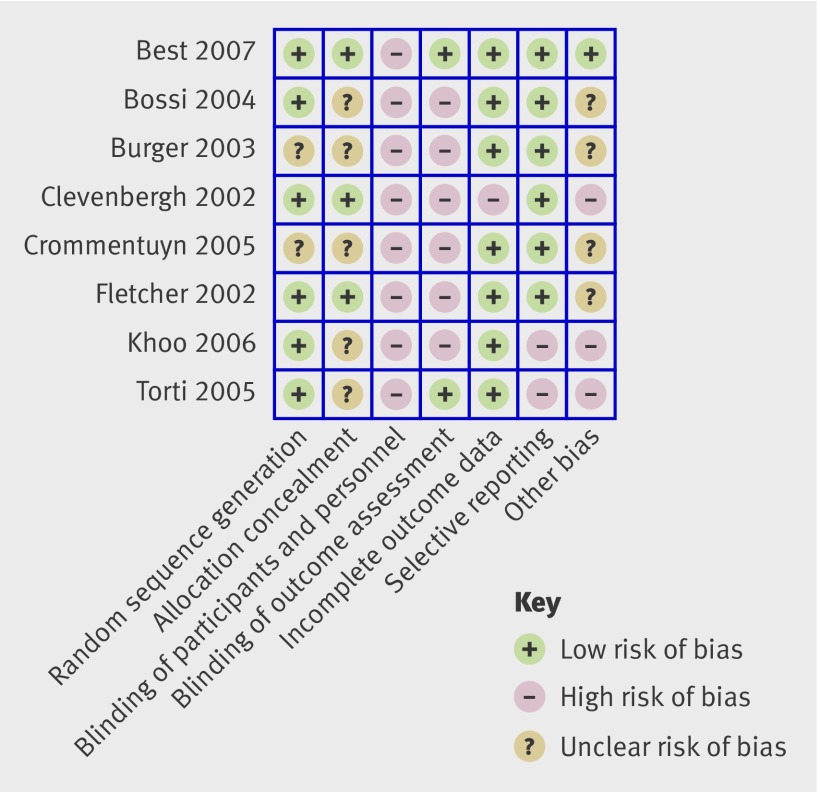
- The tool assesses six domains: selection bias, performance bias, detection bias, attrition bias, reporting bias, and other bias; each item has a support-for-judgment description and a judgment of low, unclear, or high risk of material bias.
- In evaluation, of 187 surveyed authors, 88% took longer than 10 minutes to complete the tool, 44% longer than 20 minutes, and 7% longer than an hour, but 83% considered the time taken acceptable.
- A cited study found a mean of 8.8 minutes per person for a single predetermined outcome using the tool compared with 1.5 minutes for a previous rating scale for quality of reporting; larger effect sizes were observed on average in studies rated at high risk of bias compared with low risk.
- Incomplete outcome data and selective reporting were the most difficult items to assess, with reported kappa measures of agreement of 0.32 (fair) and 0.13 (slight), respectively.
Methods
- The tool was developed at a May 2005 meeting by informal consensus, based on seven principles; detailed criteria and guidance were developed by pairs of authors and refined through feedback, email iterations, presentations, workshops, and pilot work, then published in February 2008.
- Evaluation began in early 2009 as a three-stage project: focus groups with review authors who had used the tool, three online surveys of review authors who had used the tool, review authors who had not used it, and editorial teams, plus a March 2010 meeting to consider revisions.
- The paper is a methods/guidance article describing the tool, its principles, presentation, summary assessment, and use in synthesis; survey findings are reported descriptively.
Limitations
- The paper states that the reliability of the tool has not been extensively studied and that, by explicitly incorporating judgments, agreements between assessors may not be as high as for some other tools.
- It states continuing uncertainty and great variation in practice over how to assess potential for bias in specific domains, how to summarise bias assessments across domains, and how to incorporate bias assessments into meta-analyses.
- Evident from the text: the evaluation reports selected survey percentages without a response rate or full survey methodology, and the reliability evidence cited is preliminary and limited.
Model-written summary. Check it against the paper before relying on it.
Integrity signals
Registry
Cites
Statistics
Figures
Verification
Claims the paper makes
0 Valid · 3 Not valid · 1 Not checked · 20 Own results and interpretations
In the paper
“This was published in February 2008 and adopted as the recommended method throughout the Cochrane Collaboration.”
What the sources say
- Not matchedcites [9] 9. Higgins JPT, Green S, eds. Cochrane handbook for systematic reviews of interventions . Wiley, 2008.
Couldn’t be matched to a paper, so it can’t be checked.
- Not matched
A result the paper reports from its own data — it cites no other source for it, so there is none to check. The quote shows it is in the paper.
In the paper
“The Cochrane Collaboration has developed a new tool for assessing risk of bias in randomised trials”
A result the paper reports from its own data — it cites no other source for it, so there is none to check. The quote shows it is in the paper.
In the paper
“The 2010 evaluation of the initial version found wide acceptance of the need for the risk of bias tool, with a consensus that it represents an improvement over methods previously recommended by the Collaboration or widely used in systematic reviews.”
A result the paper reports from its own data — it cites no other source for it, so there is none to check. The quote shows it is in the paper.
In the paper
“Participants in the focus groups noted that the tool took longer to complete than previous methods.”
A result the paper reports from its own data — it cites no other source for it, so there is none to check. The quote shows it is in the paper.
In the paper
“We believe our risk of bias tool is one of the most comprehensive approaches to assessing the potential for bias in randomised trials included in systematic reviews or meta-analyses.”
19 more claims
Create a free account to see all 24 claims and every source verdict.
Claims other papers make about this one
Each is checked against this paper’s own text: does it say what the citing paper says it does?
The source backs part of the claim, not all of it — or backs it for a different population, condition or comparison.
In the citing paper
“The methodological quality of the RCTs was assessed using the Cochrane collaboration’s Risk Interventions Risk of Bias Tool (Higgins et al., 2011) reporting each of its five domains (adequate randomization and allocation, blinding, loss to follow-up, selective reporting, and other sources of potential bias) into a low risk of bias, high risk of bias, or unclear risk of bias.”
From Augmentation strategies for treatment resistant major depression: A systematic review and network meta-analysis (2022) · cites this paper as Higgins et al., 2011
Experimental — accuracy not yet measuredThe source backs part of the claim, not all of it — or backs it for a different population, condition or comparison.
In the citing paper
“Checklists and protocols for gauging the quality of evidence in a systematic fashion 8,9 also do not single out these problematic reports.”
From Fraudulent studies are undermining the reliability of systematic reviews: on the prevalence of problematic images in preclinical depression studies (2025) · cites this paper as [9]
Experimental — accuracy not yet measuredThe source backs part of the claim, not all of it — or backs it for a different population, condition or comparison.
In the citing paper
“When assessing the risk of bias, seven general principles are relevant, based on theoretical considerations, empirical work, and the experience with assessing risk of bias in RCTs and other studies [55–57].”
From COSMOS-E: Guidance on conducting systematic reviews and meta-analyses of observational studies of etiology (2019) · cites this paper as [55]
Experimental — accuracy not yet measuredThe source backs part of the claim, not all of it — or backs it for a different population, condition or comparison.
In the citing paper
“Four reviewers (J.d.P.-C., B.d.P.-C., R.M.A.-R., and J.R.-M.) independently assessed the risk of bias of the included studies according to version 2 of the Cochrane riskof-bias tool for randomized trials (RoB 2) (26).”
From Optimal Dose and Type of Physical Activity to Improve Glycemic Control in People Diagnosed With Type 2 Diabetes: A Systematic Review and Meta-analysis (2024) · cites this paper as [26]
Experimental — accuracy not yet measuredThe source backs part of the claim, not all of it — or backs it for a different population, condition or comparison.
In the citing paper
“RCTs were appraised using the Cochrane RoB 2 tool and observational studies using methodological index for non-randomized studies (MINORS).13,14”
From Perioperative Analgesia and Postoperative Nausea and Vomiting Management in Otoplasty: A Systematic Review (2026) · cites this paper as [13]
Experimental — accuracy not yet measured
113 more claims about this paper
Create a free account to see every claim other papers make about this one.
Citations
Cites
Cochrane Handbook for Systematic Reviews of Interventions: Cochrane Book Series
(2008) · doi:10.1002/9780470712184 · Cited by 25,048
Self-citationGRADE: an emerging consensus on rating quality of evidence and strength of recommendations
Guyatt, G. H., Oxman, A. D., Vist, G. E., Kunz, R., Falck-Ytter, Y., Alonso-Coello, P., & Schünemann, H. J. (2008) · BMJ · doi:10.1136/bmj.39489.470347.ad · Cited by 23,305
Self-citationAssessing Risk of Bias in Included Studies
Higgins, J. P., & Altman, D. G. (2008) · Cochrane Handbook for Systematic Reviews of Interventions · doi:10.1002/9780470712184.ch8 · Cited by 3,396
Self-citationAssessing the quality of controlled clinical trials
Jüni, P., Altman, D. G., & Egger, M. (2001) · BMJ · doi:10.1136/bmj.323.7303.42 · Cited by 3,309
Self-citationWood, L., Egger, M., Gluud, L. L., Schulz, K. F., Jüni, P., Altman, D. G., Gluud, C., Martin, R. M., Wood, A. J. G., & Sterne, J. A. C. (2008) · BMJ · doi:10.1136/bmj.39465.451748.ad · Cited by 2,538
Self-citationSystematic Reviews in Health Care : Meta-Analysis in Context
Egger, M., Smith, G. D., & Altman, D. G. (2000) · Cited by 2,413
Self-citationThe Hazards of Scoring the Quality of Clinical Trials for Meta-analysis
Jüni, P. (1999) · JAMA · doi:10.1001/jama.282.11.1054 · Cited by 1,981
Self-citationMoher, D., Jadad, A. R., Nichol, G., Penman, M., Tugwell, P., & Walsh, S. (1995) · Controlled Clinical Trials · doi:10.1016/0197-2456(94)00031-w · Cited by 1,308
Self-citationControlling the risk of spurious findings from meta-regression
Higgins, J. P. T., & Thompson, S. G. (2004) · Statistics in Medicine · doi:10.1002/sim.1752 · Cited by 1,267
Self-citationDiscrepancies between Meta-Analyses and Subsequent Large Randomized, Controlled Trials
LeLorier, J., Grégoire, G., Benhaddad, A., Lapierre, J., & Derderian, F. (1997) · New England Journal of Medicine · doi:10.1056/nejm199708213370806 · Cited by 1,171
Research works printed but not linked: 3
- [9]9. Higgins JPT, Green S, eds. Cochrane handbook for systematic reviews of interventions . Wiley, 2008.
- [16]16. No commercial reuse: See rights and reprints http://www.bmj.com/permissions Subscribe: http://www.bmj.com/subscribe BMJ 2008;336:924-6.
- [17]17. Schünemann HJ, Oxman AD, Higgins JPT, Vist GE, Glasziou P, Guyatt GH, et al. Presenting results and "Summary of findings" tables. In: Higgins JPT, Green S, eds. Cochrane handbook for systematic reviews of interventions . Wiley, 2008:335-8.
Cited by
Items 1,901–2,000 of 2,382
Heydarpour, F., Hemati, N., Hadi, A., Moradi, S., Mohammadi, E., & Farzaei, M. H. (2020) · Journal of Ethnopharmacology · doi:10.1016/j.jep.2020.112741 · Cited by 47
Cai, X., Gao, X., Yang, W., Han, X., & Ji, L. (2018) · Diabetes Therapy · doi:10.1007/s13300-018-0493-2 · Cited by 47
Surgery versus conservative management of endometriomas in subfertile women. A systematic review
Brink Laursen, J., Schroll, J. B., Macklon, K. T., & Rudnicki, M. (2017) · Acta Obstetricia et Gynecologica Scandinavica · doi:10.1111/aogs.13154 · Cited by 47
Ashtary-Larky, D., Bagheri, R., Tinsley, G. M., Asbaghi, O., Paoli, A., & Moro, T. (2021) · Physiology & Behavior · doi:10.1016/j.physbeh.2021.113453 · Cited by 47
Wang, J., Chen, Y., Xu, W., Lu, N., Cao, J., & Yu, S. (2019) · PLOS ONE · doi:10.1371/journal.pone.0215362 · Cited by 45
Sun, S., Nardi, W., Loucks, E. B., & Operario, D. (2021) · Mindfulness · doi:10.1007/s12671-021-01710-9 · Cited by 46
Zenbaba, D., Sahiledengle, B., Nugusu, F., Beressa, G., Desta, F., Atlaw, D., & Chattu, V. K. (2022) · Tropical Medicine and Health · doi:10.1186/s41182-022-00423-6 · Cited by 46
Ruiz-Schutz, V. C., Gomes, L. M., Mariano, R. C., de Almeida, D. V. P., Pimenta, J. M., Dal Molin, G. Z., Kater, F. R., Yamamura, R., Correa Neto, N. F., Maluf, F. C., et al. (2019) · Critical Reviews in Oncology/Hematology · doi:10.1016/j.critrevonc.2019.06.012 · Cited by 46
Hadjivasilis, A., Kouis, P., Kousios, A., & Panayiotou, A. (2022) · Journal of Clinical Medicine · doi:10.3390/jcm11030768 · Cited by 46
Tsipa, A., O’Connor, D. B., Branley-Bell, D., Day, F., Hall, L. H., Sykes-Muskett, B., Wilding, S., Taylor, N., & Conner, M. (2021) · Health Psychology Review · doi:10.1080/17437199.2020.1760726 · Cited by 46
“Risk of bias in each study was coded using the tool noted earlier (Higgins et al., 2011) into high (data available for 69 tests), unclear (data available for 52 tests) or low (data available for 31 tests) bias.”
InfluentialMontoro-Cárdenas, D., Cortés-Pérez, I., Ibancos-Losada, M., Zagalaz-Anula, N., Obrero-Gaitán, E., & Osuna-Pérez, M. (2022) · International Journal of Environmental Research and Public Health · doi:10.3390/ijerph191912343 · Cited by 46
Peiris, D. L. I. H. K., Duan, Y., Vandelanotte, C., Liang, W., Yang, M., & Baker, J. S. (2022) · International Journal of Environmental Research and Public Health · doi:10.3390/ijerph19159479 · Cited by 46
Werlen, L., Gjukaj, D., Mohler-Kuo, M., & Puhan, M. A. (2020) · Epidemiology and Psychiatric Sciences · doi:10.1017/s2045796019000544 · Cited by 45
Qan'ir, Y., & Song, L. (2019) · Psycho-Oncology · doi:10.1002/pon.5158 · Cited by 45
Efficacy of exercise interventions in patients with acute leukemia: a meta-analysis
Zhou, Y., Zhu, J., Gu, Z., & Yin, X. (2016) · PLoS ONE · doi:10.1371/journal.pone.0159966 · Cited by 45
Psychosocial interventions for cancer survivors: a meta-analysis of effects on positive affect
Salsman, J. M., Pustejovsky, J. E., Schueller, S. M., Hernandez, R., Berendsen, M., McLouth, L. E. S., & Moskowitz, J. T. (2019) · Journal of Cancer Survivorship · doi:10.1007/s11764-019-00811-8 · Cited by 45
Simpson, R., Simpson, S., Ramparsad, N., Lawrence, M., Booth, J., & Mercer, S. W. (2020) · Multiple Sclerosis and Related Disorders · doi:10.1016/j.msard.2019.101493 · Cited by 45
Wilkinson, J., Heal, C., Antoniou, G. A., Flemyng, E., Alfirevic, Z., Avenell, A., Barbour, G., Brown, N. J. L., Carlisle, J., Clarke, M., et al. (2024) · BMJ Open · doi:10.1136/bmjopen-2024-084164 · Cited by 45
Efficacy of digital health interventions in youth with chronic medical conditions: A meta-analysis
Domhardt, M., Schröder, A., Geirhos, A., Steubl, L., & Baumeister, H. (2021) · Internet Interventions · doi:10.1016/j.invent.2021.100373 · Cited by 45
“) with the Cochrane risk of bias assessment tool (Higgins et al., 2011) on all seven criteria: (1) random sequence generation, (2) allocation concealment, (3) blinding of participants and personnel, (4) blinding of outcome assessment, (5) incomplete outcome data, (6) selective reporting and (7) other bias.”
Chronotherapy for the rapid treatment of depression: a meta-analysis
Humpston, C., Benedetti, F., Serfaty, M., Markham, S., Hodsoll, J., Young, A. H., & Veale, D. (2020) · Journal of Affective Disorders · doi:10.1016/j.jad.2019.09.078 · Cited by 45
“We assessed the quality and risk of bias of the four RCTs according to the criteria outlined in the assessment tool developed by the Cochrane Collaboration (Higgins et al., 2011).”
Tao, X., Chen, L., Ge, S., & Cai, L. (2017) · PLOS ONE · doi:10.1371/journal.pone.0177426 · Cited by 45
Wu, P., Li, L., & Sun, W. (2018) · Bioscience Reports · doi:10.1042/bsr20181515 · Cited by 45
Rafati, A., Pasebani, Y., Jameie, M., Yang, Y., Jameie, M., Ilkhani, S., Amanollahi, M., Sakhaei, D., Rahimlou, M., & Kheradmand, A. (2023) · JAMA Otolaryngology–Head & Neck Surgery · doi:10.1001/jamaoto.2023.0160 · Cited by 45
Web-based interventions for the management of stress in the workplace: Focus, form, and efficacy
Ryan, C., Bergin, M., Chalder, T., & Wells, J. S. G. (2017) · Journal of Occupational Health · doi:10.1539/joh.16-0227-ra · Cited by 42
Fu, Z., Zhou, S., Burger, H., Bockting, C. L. H., & Williams, A. D. (2020) · Journal of Affective Disorders · doi:10.1016/j.jad.2019.11.058 · Cited by 44
Cerrillo-Urbina, A. J., García-Hermoso, A., Pardo-Guijarro, M. J., Sánchez-López, M., Santos-Gómez, J. L., & Martínez-Vizcaíno, V. (2018) · Journal of Child and Adolescent Psychopharmacology · doi:10.1089/cap.2017.0151 · Cited by 44
Bidhendi Yarandi, R., Behboudi-Gandevani, S., Amiri, M., & Ramezani Tehrani, F. (2019) · Diabetology & Metabolic Syndrome · doi:10.1186/s13098-019-0453-7 · Cited by 29
Thompson, A., Winsper, C., Marwaha, S., Haynes, J., Alvarez-Jimenez, M., Hetrick, S., Realpe, A., Vail, L., Dawson, S., & Sullivan, S. A. (2018) · BJPsych Open · doi:10.1192/bjo.2018.17 · Cited by 44
Jaafar, M. H., Mahadeva, S., Morgan, K., & Tan, M. P. (2015) · The Journal of nutrition, health and aging · doi:10.1007/s12603-014-0527-z · Cited by 44
“The quality of the studies was assessed using the Cochrane Collaboration’s tool for assessing risk of biases (14).”
The efficacy of mindfulness-based interventions in acute pain: a systematic review and meta-analysis
Shires, A., Sharpe, L., Davies, J. N., & Newton-John, T. R. O. (2020) · Pain · doi:10.1097/j.pain.0000000000001877 · Cited by 43
“The risk of bias in randomized control studies was assessed using theCochraneCollaboration’s tool for assessing risk of bias.(21) The primary author (A.”
Sargeant, J. M., & O'Connor, A. M. (2014) · Zoonoses and Public Health · doi:10.1111/zph.12124 · Cited by 42
Ma, Y., & Lu, X. (2019) · Medicine · doi:10.1097/md.0000000000014052 · Cited by 43
Liao, C.-D., Huang, S.-W., Chen, H.-C., Huang, M.-H., Liou, T.-H., & Lin, C.-L. (2024) · Nutrients · doi:10.3390/nu16070941 · Cited by 45
Moncion, K., Young, K., Tunis, M., Rempel, S., Stirling, R., & Zhao, L. (2019) · Canada Communicable Disease Report · doi:10.14745/ccdr.v45i01a02 · Cited by 43
Saltaji, H., Armijo-Olivo, S., Cummings, G. G., Amin, M., & Flores-Mir, C. (2017) · PLoS ONE · doi:10.1371/journal.pone.0190089 · Cited by 43
Bonardi, O., Wang, Y., Li, K., Jiang, X., Krishnan, A., He, C., Sun, Y., Wu, Y., Boruff, J. T., Markham, S., et al. (2022) · The Canadian Journal of Psychiatry · doi:10.1177/07067437211070648 · Cited by 43
Launholt, T. L., Kristiansen, C. B., & Hjorth, P. (2020) · European Journal of Nutrition · doi:10.1007/s00394-020-02214-3 · Cited by 43
Harris, L., Melville, C., Murray, H., & Hankey, C. (2018) · Research in Developmental Disabilities · doi:10.1016/j.ridd.2017.10.021 · Cited by 43
Wood, L., Byrne, R., Enache, G., & Morrison, A. P. (2018) · Psychiatry Research · doi:10.1016/j.psychres.2017.12.030 · Cited by 41
Sobieraj, D. M., Coleman, C. I., Pasupuleti, V., Deshpande, A., Kaw, R., & Hernandez, A. V. (2015) · Thrombosis Research · doi:10.1016/j.thromres.2015.02.032 · Cited by 42
Al-Sawafi, A., Lovell, K., Renwick, L., & Husain, N. (2020) · BMC Psychiatry · doi:10.1186/s12888-020-02816-5 · Cited by 42
Network meta‐analysis of the relative efficacy of bariatric surgeries for diabetes remission
Kodama, S., Fujihara, K., Horikawa, C., Harada, M., Ishiguro, H., Kaneko, M., Furukawa, K., Matsubayashi, Y., Matsunaga, S., Shimano, H., et al. (2018) · Obesity Reviews · doi:10.1111/obr.12751 · Cited by 42
Wang, D., Schneider-Thoma, J., Siafis, S., Qin, M., Wu, H., Zhu, Y., Davis, J. M., Priller, J., & Leucht, S. (2024) · European Neuropsychopharmacology · doi:10.1016/j.euroneuro.2024.03.003 · Cited by 44
The Role of Diet in the Treatment of Irritable Bowel Syndrome
Singh, R., Salem, A., Nanavati, J., & Mullin, G. E. (2018) · Gastroenterology Clinics of North America · doi:10.1016/j.gtc.2017.10.003 · Cited by 42
Edge, D., Watkins, E. R., Limond, J., & Mugadza, J. (2023) · Behaviour Research and Therapy · doi:10.1016/j.brat.2023.104292 · Cited by 42
Correia, J. C., Meraj, H., Teoh, S. H., Waqas, A., Ahmad, M., Lapão, L. V., Pataky, Z., & Golay, A. (2021) · Bulletin of the World Health Organization · doi:10.2471/blt.19.250068 · Cited by 42
Shang, X., E, F.-F., Guo, K.-L., Li, Y.-F., Zhao, H.-L., Wang, Y., Chen, N., Nian, T., Yang, C.-Q., Yang, K.-H., et al. (2022) · Nutrients · doi:10.3390/nu14122482 · Cited by 41
Network meta-analysis of metabolic surgery procedures for the treatment of obesity and diabetes
Currie, A. C., Askari, A., Fangueiro, A., & Mahawar, K. (2021) · Obesity Surgery · doi:10.1007/s11695-021-05643-z · Cited by 41
Roy, A., Hoge, E. A., Abrante, P., Druker, S., Liu, T., & Brewer, J. A. (2021) · Journal of Medical Internet Research · doi:10.2196/26987 · Cited by 41
Roche, A. I., Kroska, E. B., & Denburg, N. L. (2019) · Journal of Contextual Behavioral Science · doi:10.1016/j.jcbs.2019.06.002 · Cited by 41
Staton, C. A., Vissoci, J. R. N., El-Gabri, D., Adewumi, K., Concepcion, T., Elliott, S. A., Evans, D. R., Galson, S. W., Pate, C. T., Reynolds, L. M., et al. (2022) · PLOS Medicine · doi:10.1371/journal.pmed.1003961 · Cited by 41
Rogdaki, M., McCutcheon, R. A., D'Ambrosio, E., Mancini, V., Watson, C. J., Fanshawe, J. B., Carr, R., Telesia, L., Martini, M. G., Philip, A., et al. (2024) · The Lancet Child & Adolescent Health · doi:10.1016/s2352-4642(24)00098-1 · Cited by 41
Minozzi, S., Gonzalez-Lorenzo, M., Cinquini, M., Berardinelli, D., Cagnazzo, C., Ciardullo, S., De Nardi, P., Gammone, M., Iovino, P., Lando, A., et al. (2022) · Journal of Clinical Epidemiology · doi:10.1016/j.jclinepi.2022.09.003 · Cited by 41
Winkley, K., Upsher, R., Stahl, D., Pollard, D., Brennan, A., Heller, S. R., & Ismail, K. (2020) · BMJ Open Diabetes Research & Care · doi:10.1136/bmjdrc-2019-001150 · Cited by 41
Alves, M. D. D. J., Silva, D. D. S., Pereira, E. V. M., Pereira, D. D., de Sousa Fernandes, M. S., Santos, D. F. C., Oliveira, D. P. M., Vieira-Souza, L. M., Aidar, F. J., & de Souza, R. F. (2022) · Frontiers in Physiology · doi:10.3389/fphys.2022.838069 · Cited by 41
Raghoebar, I. I., Rozema, F. R., de Lange, J., & Dubois, L. (2022) · British Journal of Oral and Maxillofacial Surgery · doi:10.1016/j.bjoms.2021.07.006 · Cited by 41
Zhang, H., Zhang, Q., Luo, D., Cai, X., Li, R., Zhang, Y., Lu, Y., Liu, J., Gu, J., & Li, M. (2022) · Journal of Clinical Nursing · doi:10.1111/jocn.16082 · Cited by 41
Saltaji, H., Armijo-Olivo, S., Cummings, G. G., Amin, M., da Costa, B. R., & Flores-Mir, C. (2018) · Journal of Dental Research · doi:10.1177/0022034517725049 · Cited by 40
Yang, C., Xia, H., Wan, M., Lu, Y., Xu, D., Yang, X., Yang, L., & Sun, G. (2021) · Nutrition & Metabolism · doi:10.1186/s12986-021-00619-3 · Cited by 40
Peeters Weem, S. M. O., van Haelst, S. T. W., den Ruijter, H. M., Moll, F. L., & de Borst, G. J. (2016) · European Journal of Vascular and Endovascular Surgery · doi:10.1016/j.ejvs.2016.04.023 · Cited by 40
Ketamine in the Treatment of Obsessive-Compulsive Disorder: A Systematic Review
Bandeira, I. D., Lins-Silva, D. H., Cavenaghi, V. B., Dorea-Bandeira, I., Faria-Guimarães, D., Barouh, J. L., Jesus-Nunes, A. P., Beanes, G., Souza, L. S., Leal, G. C., et al. (2022) · Harvard Review of Psychiatry · doi:10.1097/hrp.0000000000000330 · Cited by 39
Insulin in the Management of Acute Ischemic Stroke: A Systematic Review and Meta-Analysis
Cerecedo-Lopez, C. D., Cantu-Aldana, A., Patel, N. J., Aziz-Sultan, M. A., Frerichs, K. U., & Du, R. (2020) · World Neurosurgery · doi:10.1016/j.wneu.2020.01.056 · Cited by 40
Systematic review of dyadic and family‐oriented interventions for late‐life depression
Stahl, S. T., Rodakowski, J., Saghafi, E. M., Park, M., Reynolds, C. F., & Dew, M. A. (2016) · International Journal of Geriatric Psychiatry · doi:10.1002/gps.4434 · Cited by 40
Romeijn, M. M., Holthuijsen, D. D. B., Kolen, A. M., Janssen, L., Schep, G., van Dielen, F. M. H., & Leclercq, W. K. G. (2021) · Nutrition Journal · doi:10.1186/s12937-021-00688-3 · Cited by 40
Amiri, M., Kabir, A., Nahidi, F., Shekofteh, M., & Ramezani Tehrani, F. (2018) · The European Journal of Contraception & Reproductive Health Care · doi:10.1080/13625187.2018.1435779 · Cited by 40
Li, Z., Li, Y., Guo, L., Li, M., & Yang, K. (2021) · International Journal of Clinical Practice · doi:10.1111/ijcp.13982 · Cited by 38
Simpson, P. A., Mars, T., & Esteves, J. E. (2017) · International Journal of Osteopathic Medicine · doi:10.1016/j.ijosm.2017.03.001 · Cited by 38
A Randomized Trial of Mindfulness-Based Cognitive Therapy with Psoriasis Patients
Maddock, A., Hevey, D., D’Alton, P., & Kirby, B. (2019) · Mindfulness · doi:10.1007/s12671-019-01242-3 · Cited by 39
Lee, M., Wang, M., Liu, J., & Holbrook, A. (2018) · Journal of Thrombosis and Thrombolysis · doi:10.1007/s11239-018-1609-2 · Cited by 40
Yoshiji, S., Minamino, H., Tanaka, D., Yamane, S., Harada, N., & Inagaki, N. (2022) · Diabetes, Obesity and Metabolism · doi:10.1111/dom.14666 · Cited by 40
Buchanan-Hughes, A., Bobrowska, A., Visintin, C., Attilakos, G., & Marshall, J. (2020) · Systematic Reviews · doi:10.1186/s13643-020-01355-0 · Cited by 40
Missler, M., Donker, T., Beijers, R., Ciharova, M., Moyse, C., de Vries, R., Denissen, J., & van Straten, A. (2021) · BMC Pregnancy and Childbirth · doi:10.1186/s12884-021-03752-2 · Cited by 40
Efficacy and safety of probiotics in irritable bowel syndrome: A systematic review and meta-analysis
Jia, L.-Q., Sun, J.-R., Kong, C.-F., Qu, X.-K., Deng, C., & Lou, Y.-N. (2020) · Saudi Journal of Gastroenterology · doi:10.4103/sjg.sjg_384_19 · Cited by 40
Heshmati, J., Sepidarkish, M., Morvaridzadeh, M., Farsi, F., Tripathi, N., Razavi, M., & Rezaeinejad, M. (2021) · Journal of Food Biochemistry · doi:10.1111/jfbc.13543 · Cited by 40
Noormohammadi, M., Ghorbani, Z., Löber, U., Mahdavi-Roshan, M., Bartolomaeus, T. U. P., Kazemi, A., Shoaibinobarian, N., & Forslund, S. K. (2023) · Pharmacological Research · doi:10.1016/j.phrs.2022.106614 · Cited by 40
Goh, K. K., Chen, C.-H., & Lu, M.-L. (2019) · International Journal of Psychiatry in Clinical Practice · doi:10.1080/13651501.2018.1449864 · Cited by 40
Wang, C., Zhou, Y., Kong, Z., Wang, X., Lv, W., Geng, Z., & Wang, Y. (2019) · Diabetes, Obesity and Metabolism · doi:10.1111/dom.13620 · Cited by 39
Implementing post diagnostic dementia care in primary care: a mixed-methods systematic review
Frost, R., Rait, G., Aw, S., Brunskill, G., Wilcock, J., Robinson, L., Knapp, M., Hogan, N., Harrison Dening, K., Allan, L., et al. (2021) · Aging & Mental Health · doi:10.1080/13607863.2020.1818182 · Cited by 39
“Two authors (RF and GB) assessed study quality using the Cochrane Risk of Bias Tool (Higgins et al., 2011) for RCTs; ROBINS-I for non-randomised interventional studies (Sterne et al., 2016); Critical Appraisal Skills Programme checklist for qualitative and mixed-methods studies (Critical Appraisal…”
Hung, K.-C., Lin, Y.-T., Chen, K.-H., Wang, L.-K., Chen, J.-Y., Chang, Y.-J., Wu, S.-C., Chiang, M.-H., & Sun, C.-K. (2020) · Nutrients · doi:10.3390/nu12103109 · Cited by 39
Magán, I., Jurado-Barba, R., Casado, L., Barnum, H., Jeon, A., Hernandez, A. V., & Bueno, H. (2022) · Journal of Psychosomatic Research · doi:10.1016/j.jpsychores.2021.110710 · Cited by 39
Hajek, A., Volkmar, A., & König, H.-H. (2025) · Social Psychiatry and Psychiatric Epidemiology · doi:10.1007/s00127-023-02602-0 · Cited by 39
Tampi, M. P., Pilcher, L., Urquhart, O., Kennedy, E., O’Brien, K. K., Lockhart, P. B., Abt, E., Aminoshariae, A., Durkin, M. J., Fouad, A. F., et al. (2019) · The Journal of the American Dental Association · doi:10.1016/j.adaj.2019.09.011 · Cited by 39
Tian, X., Tang, R.-Y., Xu, L.-L., Xie, W., Chen, H., Pi, Y.-P., & Chen, W.-Q. (2020) · Supportive Care in Cancer · doi:10.1007/s00520-020-05481-2 · Cited by 39
Messina, C., Giunta, E. F., Signori, A., Rebuzzi, S. E., Banna, G. L., Maniam, A., Buti, S., Cattrini, C., Fornarini, G., Bauckneht, M., et al. (2024) · European Urology Oncology · doi:10.1016/j.euo.2023.07.013 · Cited by 39
Probiotic therapy in couples with infertility: A systematic review
Corbett, G., Crosby, D., & McAuliffe, F. (2021) · European Journal of Obstetrics & Gynecology and Reproductive Biology · doi:10.1016/j.ejogrb.2020.10.054 · Cited by 39
Almulhim, A. N., Hartley, H., Norman, P., Caton, S. J., Doğru, O. C., & Goyder, E. (2023) · BMC Public Health · doi:10.1186/s12889-022-14874-3 · Cited by 39
Fang, Z., Liu, M., Tao, J., Li, C., Zou, F., & Zhang, W. (2022) · Journal of Endocrinological Investigation · doi:10.1007/s40618-021-01674-6 · Cited by 38
Clinical Trial Registration in Oral Health Journals
Smaïl-Faugeron, V., Fron-Chabouis, H., & Durieux, P. (2015) · Journal of Dental Research · doi:10.1177/0022034514552492 · Cited by 37
Evans, K., Morrell, C. J., & Spiby, H. (2018) · Journal of Advanced Nursing · doi:10.1111/jan.13456 · Cited by 33
Récalt, A. M., & Cohen, D. (2019) · Psychotherapy and Psychosomatics · doi:10.1159/000496734 · Cited by 38
Terpstra, J. A., van der Vaart, R., van Beugen, S., van Eersel, R. A., Gkika, I., Erdős, D., Schmidt, J., Radstake, C., Kloppenburg, M., van Middendorp, H., et al. (2022) · Internet Interventions · doi:10.1016/j.invent.2022.100587 · Cited by 38
Preusse, M., Neuner, F., & Ertl, V. (2020) · Frontiers in Psychiatry · doi:10.3389/fpsyt.2020.00768 · Cited by 38
Akbar, D., Rhee, T. G., Ceban, F., Ho, R., Teopiz, K. M., Cao, B., Subramaniapillai, M., Kwan, A. T. H., Rosenblat, J. D., & McIntyre, R. S. (2023) · CNS Drugs · doi:10.1007/s40263-023-01032-5 · Cited by 38
Cognitive behavioral therapy in adolescents with type 1 diabetes: an integrative review
Rechenberg, K., & Koerner, R. (2021) · Journal of Pediatric Nursing · doi:10.1016/j.pedn.2021.06.019 · Cited by 38
Crabtree, T., Ogendo, J.-J., Vinogradova, Y., Gordon, J., & Idris, I. (2022) · Expert Review of Endocrinology & Metabolism · doi:10.1080/17446651.2022.2079495 · Cited by 38
de Boer, J. N., Vingerhoets, C., Hirdes, M., McAlonan, G. M., Amelsvoort, T. V., & Zinkstok, J. R. (2019) · Psychiatry Research · doi:10.1016/j.psychres.2019.06.020 · Cited by 38
Use of Short Messaging Service for Hypertension Management: A Systematic Review
Vargas, G., Cajita, M. I., Whitehouse, E., & Han, H.-R. (2017) · Journal of Cardiovascular Nursing · doi:10.1097/jcn.0000000000000336 · Cited by 37
Akirov, A., Fazelzad, R., Ezzat, S., Thabane, L., & Sawka, A. M. (2019) · Frontiers in Endocrinology · doi:10.3389/fendo.2019.00477 · Cited by 37
Amini, M. R., Aminianfar, A., Naghshi, S., Larijani, B., & Esmaillzadeh, A. (2022) · Critical Reviews in Food Science and Nutrition · doi:10.1080/10408398.2020.1867957 · Cited by 37
Ronde, E. M., Esposito, M., Lin, Y., van Etten-Jamaludin, F. S., Bulstrode, N. W., & Breugem, C. C. (2021) · Journal of Plastic, Reconstructive & Aesthetic Surgery · doi:10.1016/j.bjps.2021.08.004 · Cited by 38
Metadata
- Authors
- Higgins, J. P. T., Altman, D. G., Gotzsche, P. C., Juni, P., Moher, D., Oxman, A. D., Savovic, J., Schulz, K. F., Weeks, L., Sterne, J. A. C., Cochrane Bias Methods Group, & Cochrane Statistical Methods Group
- Affiliations
- MRC Biostatistics Unit (GB)
- University of Oxford (GB)
- University of Ottawa (CA)
- Nasjonalt Kunnskapssenter for Helsetjenesten (NO)
- Family Health International 360 (US)
- Ottawa Hospital Research Institute (CA)
- University of Bristol (GB)
- Corresponding author
- Higgins, J. P. T.
- Venue
- BMJ
- Publisher
- BMJ
- Published
- 2011-10-18
- Volume
- 343
- Issue
- oct18 2
- Pages
- d5928-d5928
- ISSN
- 0007-1447 (ISSN-L)
- 0959-8138
- 1468-5833
- PMC
- PMC3196245
- OpenAlex
- W2098923148
- Cited by
- 33,817
- References
- 26
- Citations by year
- 2026: 1970 · 2025: 3214 · 2024: 3745 · 2023: 3530 · 2022: 4008 · 2021: 4125 · 2020: 3755 · 2019: 2714 · 2018: 2012 · 2017: 1569 · 2016: 1203 · 2015: 881 · 2014: 591 · 2013: 342 · 2012: 97
- FWCI
- 352.06
- Type
- journal article
- Language
- en
- Open access
- hybrid
- doi.org
- Licence
- cc-by-nc
- Locations
- BMJ (publishedVersion, cc-by-nc)
- Europe PMC (PubMed Central) (publishedVersion, cc-by-nc)
- PubMed Central (publishedVersion, cc-by-nc)
- PubMed (publishedVersion)
- Research at the University of Copenhagen (University of Copenhagen) (publishedVersion)
- Bristol Research (University of Bristol) (publishedVersion)
- Bern Open Repository and Information System (University of Bern) (submittedVersion, cc-by-nc)
- Open Access CRIS of the University of Bern
- Funders
- Cancer Research UK (C-5592)
- Canadian Institutes of Health Research
- Topics
- Social Sciences › Decision Sciences › Statistics, Probability and Uncertainty › Meta-analysis and systematic reviews
- Physical Sciences › Mathematics › Statistics and Probability › Statistical Methods in Clinical Trials
- Physical Sciences › Mathematics › Statistics and Probability › Statistical Methods in Epidemiology
- Keywords
- risk of bias, Cochrane risk of bias tool, randomised trials, trial design flaws, trial conduct, trial analysis, trial reporting, bias assessment
- MeSH terms
- Humans, Research Design, Bias, Randomized Controlled Trials as Topic, Risk Assessment
About these checks
Registry, retraction, Cites and statistics results are computed, not judged, with one exception: a printed reference that no index lists is read once by a model before it counts as a citation error. Claims are extracted by a model and kept only when their quote appears verbatim in the text; each cited source is then checked, with a model’s help, for whether it says what the claim relies on. Those verdicts can be wrong — read the claim’s quote and the cited source before relying on one.
A language model drew the claims from the paper on 2026-09-24 (prompt extract-v1).
Statistics and arithmetic are recomputed, not judged.
Confidence bands are shown only for fields calibrated on our annotated test set. None is calibrated yet, so no band is shown.
What counts as a claim ›How we measure confidence ›How we check this ›
Are you an author, or do you see a problem with this page? Request a review
Data sources
Bibliographic data: Semantic Scholar, OpenAlex, Crossref.
Contains information from the Semantic Scholar Academic Graph Datasets, made available under the ODC Attribution License (ODC-BY 1.0).
Semantic Scholar’s data is described in: Kinney, R., et al. (2023). The Semantic Scholar Open Data Platform. arXiv:2301.10140.
