

Examining the impacts of the COVID-19 pandemic on family mental health in Canada: findings from a national cross-sectional study
Open accessThe DOI matches its Crossref record; 49 of the 49 references it cites were found in a registry or an index.
Abstract
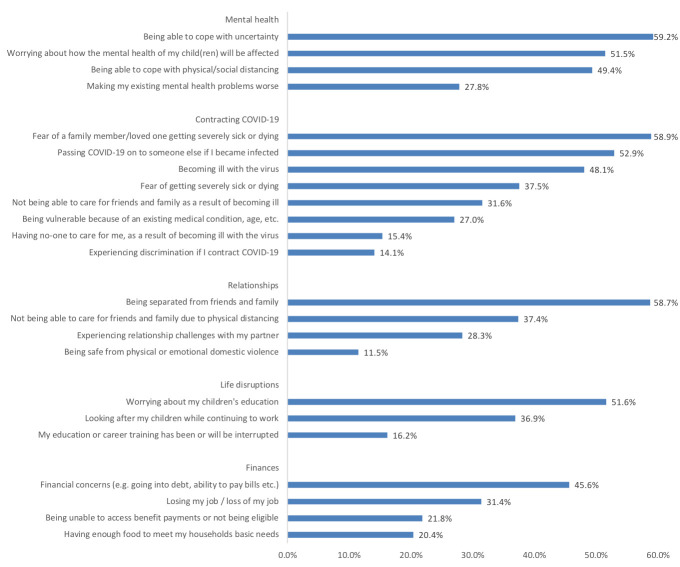
Objectives: In the first wave of the COVID-19 pandemic, social isolation, school/child care closures and employment instability have created unprecedented conditions for families raising children at home. This study describes the mental health impacts of the COVID-19 pandemic on families with children in Canada. Design, setting and participants: This descriptive study used a nationally representative, cross-sectional survey of adults living in Canada (n=3000) to examine the mental health impacts of the COVID-19 pandemic. Outcomes among parents with children <18 years old living at home (n=618) were compared with the rest of the sample. Data were collected via an online survey between 14 May to 29 May 2020. Outcome measures: Participants reported on changes to their mental health since the onset of the pandemic and sources of stress, emotional responses, substance use patterns and suicidality/self-harm. Additionally, parents identified changes in their interactions with their children, impacts on their children’s mental health and sources of support accessed. Results: 44.3% of parents with children <18 years living at home reported worse mental health as a result of the COVID-19 pandemic compared with 35.6% of respondents without children <18 living at home, χ 2 (1, n=3000)=16.2, p<0.001. More parents compared with the rest of the sample reported increased alcohol consumption (27.7% vs 16.1%, χ 2 (1, n=3000)=43.8, p<0.001), suicidal thoughts/feelings (8.3% vs 5.2%, χ 2 (1, n=3000)=8.0, p=0.005) and stress about being safe from physical/emotional domestic violence (11.5% vs 7.9%, χ 2 (1, n=3000)=8.1, p=0.005). 24.8% (95% CI 21.4 to 28.4) of parents reported their children’s mental health had worsened since the pandemic. Parents also reported more frequent negative as well as positive interactions with their children due to the pandemic (eg, more conflicts, 22.2% (95% CI 19.0 to 25.7); increased feelings of closeness, 49.7% (95% CI 45.7 to 53.7)). Conclusions: This study identifies that families with children <18 at home have experienced deteriorated mental health due to the pandemic. Population-level responses are required to adequately respond to families’ diverse needs and mitigate the potential for widening health and social inequities for parents and children.
Overview
The claims and statistics of this paper haven’t been checked yet.
Free: it reads the open-access text and checks the first 5 claims that cite a source we can check. Create a free account to check every claim.
Integrity signals
Registry
Cites
Statistics
Figures
Verification
Claims the paper makes
The claims and statistics of this paper haven’t been checked yet.
Free: it reads the open-access text and checks the first 5 claims that cite a source we can check. Create a free account to check every claim.
Claims other papers make about this one
Each is checked against this paper’s own text: does it say what the citing paper says it does?
The cited source doesn’t support the claim as written.
In the citing paper
“People without family are at a particularly high risk of health problems and deteriorated mental health due to COVID-19 [8,9].”
From Depression, anxiety, and stress in Korean general population during the COVID-19 pandemic. (2022) · cites this paper as [9]
Checked by a reasoning model — may be wrong.
Experimental — accuracy not yet measuredThe cited source says what the claim attributes to it.
In the citing paper
“Apart from the effects on the individual child or adolescent, the pandemic situation affected parents and whole family constructs [9], with a rise in parental stress, interparental and parent–child conflicts [10], child maltreatment [11, 12] and intimate partner violence [13].”
Self-check
Percentages, sums and reported differences re-computed from the paper’s own numbers.
The self-check needs the paper’s full text.
Citations
Cites
An interactive web-based dashboard to track COVID-19 in real time
Dong, E., Du, H., & Gardner, L. (2020) · The Lancet Infectious Diseases · doi:10.1016/s1473-3099(20)30120-1 · Cited by 10,048
Holmes, E. A., O'Connor, R. C., Perry, V. H., Tracey, I., Wessely, S., Arseneault, L., Ballard, C., Christensen, H., Cohen Silver, R., Everall, I., et al. (2020) · The Lancet Psychiatry · doi:10.1016/s2215-0366(20)30168-1 · Cited by 5,715
Impact of COVID-19 pandemic on mental health in the general population: a systematic review
Xiong, J., Lipsitz, O., Nasri, F., Lui, L. M. W., Gill, H., Phan, L., Chen-Li, D., Iacobucci, M., Ho, R., Majeed, A., et al. (2020) · Journal of Affective Disorders · doi:10.1016/j.jad.2020.08.001 · Cited by 5,204 · cited 1×
“Schools/child care, communities and government systems play an essential role in protecting and supporting parents and children, particularly for families without reliable access to the Internet or virtual technologies.”
BackgroundThe Lifelong Effects of Early Childhood Adversity and Toxic Stress
Shonkoff, J. P., Garner, A. S., THE COMMITTEE ON PSYCHOSOCIAL ASPECTS OF CHILD AND FAMILY HEALTH, C. O. E. C., Siegel, B. S., Dobbins, M. I., Earls, M. F., Garner, A. S., McGuinn, L., Pascoe, J., & Wood, D. L. (2012) · Pediatrics · doi:10.1542/peds.2011-2663 · Cited by 5,164
Mental health and the COVID-19 pandemic
Pfefferbaum, B., & North, C. S. (2020) · New England Journal of Medicine · doi:10.1056/nejmp2008017 · Cited by 4,378
Sick individuals and sick populations
Rose, G. (2001) · International Journal of Epidemiology · doi:10.1093/ije/30.3.427 · Cited by 3,736
The life course as developmental theory
Elder, G. H. (1998) · Child Development · doi:10.1111/j.1467-8624.1998.tb06128.x · Cited by 3,513
Sick individuals and sick populations
ROSE, G. (1985) · International Journal of Epidemiology · doi:10.1093/ije/14.1.32 · Cited by 2,701
Galea, S., Merchant, R. M., & Lurie, N. (2020) · JAMA Internal Medicine · doi:10.1001/jamainternmed.2020.1562 · Cited by 2,089
Manuscripts Accepted for Publication
(2005) · Child Development · doi:10.1111/j.1467-8624.2005.00876.x · Cited by 2,047
Research works printed but not linked: 2
- Vogel L . COVID-19: A timeline of Canada’s first-wave response, 2020; Canadian Medical Association Journal (CMAJ) News. Available: https://cmajnews.com/2020/06/12/coronavirus-1095847/
- Kousoulis A , McDaid S , Crepaz-Keay D , et al . Smaller boats in the COVID-19 storm: how different groups are coping with the coronavirus pandemic. London, UK: Mental Health Foundation; 2020: In press.
Cited by
Items 201–300 of 494
Ahti, J., Toivonen, L., Ollila, H., Ivaska, L., Salo-Tuominen, K., Vuorinen, T., Lempainen, J., & Peltola, V. T. (2024) · The Journal of Infectious Diseases · doi:10.1093/infdis/jiae278 · Cited by 7
“…after the emergence of Delta and Omicron variants as compared with pre-Delta variants of SARS-CoV-2 [10–13 Understanding the dynamics of SARS-CoV-2 transmission in households is essential to further develop preventive measures and minimize the negative effects of restrictions on children [25–27].”
BackgroundParent and caregiver preferences for eHealth programs
Tongol, N. A. C., McHardy, R. J. W., Simpson, K. M., Penner, K. E., Rioux, C., Cameron, E. E., Giuliano, R. J., Tomfohr‐Madsen, L. M., Stewart-Tufescu, A., Afifi, T. O., et al. (2025) · BMC Public Health · doi:10.1186/s12889-025-22612-8 · Cited by 6
“The closure of daycares, concerns about their children becoming sick, and the need to work from home while simultaneously caring for their children caused parents increased stress and mental health difficulties [7, 8].”
Pan, L., & Hu, X. (2025) · Sustainability · doi:10.3390/su17188305 · Cited by 7
School Food Programming across Canada during the COVID 19 Pandemic: Program Reach and Modalities
Gupta, S. D., Engler‐Stringer, R., Ruetz, A. T., & McKenna, M. L. (2022) · Journal of Hunger & Environmental Nutrition · doi:10.1080/19320248.2022.2105185 · Cited by 9
“Gadermann et al found that COVID-19 and related lockdown measures worsened the mental health (stress and anxiety levels, suicidal thoughts) of families with children.(14) A Statistics Canada study conducted in May 2020 found higher levels of food insecurity among households with children (19%) compared to households w…”
BackgroundUnderstanding and addressing adverse childhood experiences in the face of the COVID-19 pandemic
Racine, N. M., MacMillan, H. L., & Madigan, S. L. (2022) · European Child & Adolescent Psychiatry · doi:10.1007/s00787-022-02087-3 · Cited by 5
“Cross-sectional data has shown that parents report increased alcohol consumption compared to non-parents during the pandemic as well as increased stress related to threats of violence in the home [2].”
BackgroundSantavicca, T., Vanier-Clément, A., & Rousseau, C. (2022) · International Journal of Child and Adolescent Resilience · doi:10.54488/ijcar.2022.309 · Cited by 5
Şenkal, E., Kurt, Ö. M., Yalçın, S. S., Koller, D., & Boran, P. (2023) · Child Care Health and Development · doi:10.1111/cch.13099 · Cited by 5
Lee, S., Dick, B. D., Jordan, A. L., & McMurtry, C. M. (2023) · Clinical Journal of Pain · doi:10.1097/ajp.0000000000001100 · Cited by 6
Prime, H., Muise, A., Markwell, A., Thabane, L., & Wade, M. (2023) · Journal of Child and Family Studies · doi:10.1007/s10826-023-02639-4 · Cited by 9
“Compared to non-parents, parents experienced higher levels of pandemic-related stress (Gadermann et al., 2021; Park et al., 2020; Pierce et al., 2020; Wamser-Nanney et al., 2021), which posed additional threats to couples ’ interactions, relationship quality, and stability (Pietromonaco & Overall,…”
BackgroundMoss, P. (2023) · UCL Press eBooks · doi:10.14324/111.9781800084032 · Cited by 5
Neuropsychological impact of COVID-19 on children and adolescents.
Koterba, C., Vargas, G., Ng, R., & Hoskinson, K. R. (2024) · Journal of Pediatric Neuropsychology · doi:10.1007/s40817-023-00151-7 · Cited by 5
“Further complicating matters, the pandemic has been disruptive, frightening, and unpredictable, which almost certainly has adversely impacted youth (Ding et al., 2022; Gadermann et al., 2021; Marzilli et al., 2021).”
Salway, T. J., Ablona, A., Chang, H.-J., Watt, S., Worthington, C., Grace, D., Wong, J., Ogilvie, G. S., Grennan, T., & Gilbert, M. (2021) · Preventive Medicine · doi:10.1016/j.ypmed.2021.106789 · Cited by 5
Riley, B., Valaitis, R. F., Abramowicz, A., d’Avernas, E., & Jolin, M. A. (2022) · Mental Health & Prevention · doi:10.1016/j.mhp.2022.200235 · Cited by 5
Belastungen, positive Veränderungen und Ressourcen von Familien in der COVID-19-Pandemie
Engelke, L., Calvano, C., Klingbeil, K., Rolle, M., Winter, S., & Renneberg, U. B. (2022) · Kindheit und Entwicklung · doi:10.1026/0942-5403/a000375 · Cited by 9
Abuabara, L., Werner, K., & Paucar‐Caceres, A. (2022) · Health Systems · doi:10.1080/20476965.2022.2080006 · Cited by 5
“Suddenly, with the pandemic, even the most established routine had to be re-arranged demanding parents to carefully balance the wide array of their responsibilities (Gadermann et al., 2021; Vescovi et al., 2021).”
BackgroundInfluentialNahkur, O., & Kutsar, D. (2022) · Frontiers in Sociology · doi:10.3389/fsoc.2022.974543 · Cited by 11
“This may cause the deterioration of mental health revealed in many studies on pandemic outcomes (Fegert et al., 2020; Chaabane et al., 2021; Gadermann et al., 2021; O’Sullivan et al., 2021).”
BackgroundPlay as a Stress-Coping Method Among Children in Light of the COVID-19 Pandemic: A Review
Raudenská, J., Gumančík, J., Raudenský, M., Pasqualucci, A., Tamayo, M. A. N., Varrassi, G., & Javůrková, A. (2023) · Cureus · doi:10.7759/cureus.43550 · Cited by 7
Ngohayon, J. M., & CULİMAY, E. A. (2023) · Research in Educational Administration & Leadership · doi:10.30828/real.1227718 · Cited by 6
Varin, M., MacEachern, K. H., Hussain, N., & Baker, M. M. (2021) · Promotion de la santé et prévention des maladies chroniques au Canada · doi:10.24095/hpcdp.41.11.02f · Cited by 6
“L’objectif de cet article est (1) de quantifier approximativement les change‐ ments autodéclarés relatifs à la consom‐ mation d’alcool et de cannabis pendant la deuxième vague de la pandémie de COVID‐19 et (2) de ventiler les données sur l’augmentation de la consommation d’alcool et de cannabis en fonction de caractér…”
BackgroundWake, A. D. (2021) · Research Square · doi:10.21203/rs.3.rs-1030439/v1 · Cited by 5
COVID-19, Job Satisfaction, and Feelings of Occupational Alienation Among American Journalists
Alaimo, K. I., Davis, M. P., & Hopp, T. (2023) · Journalism & Mass Communication Quarterly · doi:10.1177/10776990231207013 · Cited by 4
Leach, L., Doan, T. T., Giallo, R., Love, J., Hokke, S., Oakman, J., Findley, H., Nicholson, J. M., & Cooklin, A. (2025) · BMC Public Health · doi:10.1186/s12889-025-23503-8 · Cited by 6
Hudson, D., Howarth, N., Idalsoaga, F. J., Song, Y. N., Islam, A. H., Theiventhiran, S., Díaz, L. A., & Arab, J. P. (2024) · Current Hepatology Reports · doi:10.1007/s11901-024-00630-1 · Cited by 4
Prime, H., Muise, A., Jambon, M. M., Koven, M. R., Markwell, A., & Wade, M. (2024) · Cognitive Therapy and Research · doi:10.1007/s10608-024-10485-x · Cited by 9
“This pattern amongst parents was likely due, in part, to the unique experiences of being a parent, as evidenced by more psychological stress and mental health challenges in parents compared to non-parents during the pandemic (Gadermann et al., 2021 ).”
Brown, B., Browne, D. T., & Region, T. C. A. Y. P. T. O. W. (2024) · Journal of Community Psychology · doi:10.1002/jcop.23125 · Cited by 5
Parental Patterns of Alcohol Consumption During the COVID-19 Pandemic: Scoping Review
Ou, C. H. K., Corby, K., Booth, K., & Ou, H.-H. (2024) · Interactive Journal of Medical Research · doi:10.2196/48339 · Cited by 7
“… 18 years at home, having children at home was a significant predictor for an increase in alcohol consumption during the COVID-19 pandemic in the United States [32-36, 38-40 38-40 ], Canada [ 26, On the contrary, some studies indicated patterns of decreased parental drinking during the pandemic.”
BackgroundEngelke, L., Calvano, C., Pohl, S., Winter, S., & Renneberg, B. (2025) · Journal of Medical Internet Research · doi:10.2196/52043 · Cited by 6
“Parents felt stressed [1-4] and were especially burdened during the COVID-19 pandemic [1,5,6].”
Gutmanis, I., Coleman, B. L., Maunder, R., Fischer, K., Zhu, V., & McGeer, A. (2024) · International Journal of Environmental Research and Public Health · doi:10.3390/ijerph21111448 · Cited by 4
Brauchle, J., Unger, V., & Hochweber, J. (2025) · Frontiers in Education · doi:10.3389/feduc.2025.1518609 · Cited by 10
Seo, J., Kim, N., Suk, K., Lee, B. H., Bae, Y., Park, M., Ahn, H. J., Park, S.-Y., Kim, H.-S., Moon, S.-H., et al. (2025) · Scientific Reports · doi:10.1038/s41598-025-95289-z · Cited by 4
“While emerging evidence highlights the detrimental consequences of COVID-19 on mental health outcomes 18,19 , relatively little is known about how it influences psychological distress in individuals with pre-existing back pain.”
Riesgo y dinámica familiar en familias con menores de 5 años de una zona vulnerable de Comas
Zamudio, L. S. M. (2021) · Revista Cuidado y Salud Pública · doi:10.53684/csp.v1i1.13 · Cited by 4
The Effect of COVID-19 on the Mental Health of Military Connected Children and Adolescents
Lawson, M. L., Bowsher, B., & Hansen, S. L. (2022) · Pediatric Annals · doi:10.3928/19382359-20220321-02 · Cited by 7
Yamamoto, T., Tanaka, S., Yoshizaki, A., Yoshimura, Y., Fauzi, A. A., Adlan, A. S. A., Adlan, A., Jayanath, S., Hamzah, N., Fujino, H., et al. (2022) · Child and Adolescent Psychiatry and Mental Health · doi:10.1186/s13034-022-00513-7 · Cited by 4
“Caregivers’ mental health conditions are related to increased negative interaction with children during the COVID-19 pandemic [25].”
BackgroundAnderson, L. N., Yoshida‐Montezuma, Y., Jambon, M. M., Smith, B. T., Carsley, S., & González, A. (2022) · BMJ Open · doi:10.1136/bmjopen-2022-063653 · Cited by 5
Faucher, J., Khanafer, N. L., Chauliac, N., Essadek, A., Galia, P., Mamimoué, É., Leroux, M.-L., Pollet, M.-P., Imler-Weber, F., Gillet, Y., et al. (2023) · International Journal of Environmental Research and Public Health · doi:10.3390/ijerph20054667 · Cited by 4
“Others went further, suggesting that a more intense family life could lead to an alleviation of stress and mental health problems experienced by children before the crisis [23,25].”
BackgroundDisrupting, adapting and discovering family leisure during COVID-19
Shannon, C. (2023) · Leisure/ Loisir · doi:10.1080/14927713.2023.2211583 · Cited by 4
“Still others experienced job loss and the time at home with family was accompanied by financial stress (Carroll et al., 2020; Gadermann et al., 2021).”
BackgroundShokrkon, A., & Nicoladis, E. (2023) · Frontiers in Psychology · doi:10.3389/fpsyg.2023.1190375 · Cited by 4
“Several studies have documented that the public’s mental health has deteriorated since the outbreak of COVID-19 in early 2020 (Hossain et al., 2020; Jiao et al., 2020; Gadermann et al., 2021; Kumar and Nayar, 2021).”
BackgroundMacEachern, K. H., Venugopal, J., Varin, M., Weeks, M., Hussain, N., & Baker, M. M. (2021) · Promotion de la santé et prévention des maladies chroniques au Canada · doi:10.24095/hpcdp.41.11.03f · Cited by 5
Slovak parents’ mental health and socioeconomic changes during the COVID-19 pandemic
Vargová, L., Mikulášková, G., Fedáková, D., Lačný, M., Babjáková, J., Šlosáriková, M., Babinčák, P., Ropovik, I., & Adamkovic, M. (2022) · Frontiers in Psychiatry · doi:10.3389/fpsyt.2022.934293 · Cited by 3
Children’s Physical Activity during COVID-19 in Ontario, Canada: Parents’ Perspectives
Szpunar, M., Saravanamuttoo, K., Vanderloo, L. M., Bruijns, B. A., Truelove, S., Burke, S. M., Gilliland, J., Irwin, J. D., & Tucker, P. (2022) · International Journal of Environmental Research and Public Health · doi:10.3390/ijerph192215061 · Cited by 4
Shilton, T., Mancini, A. D., Perlstein, S., DiDomenico, G. E., Visoki, E., Greenberg, D. M., Brown, L. A., Gur, R. E., Waller, R. E., & Barzilay, R. (2021) · medRxiv · doi:10.1101/2021.10.08.21264752 · Cited by 5
“This findings might be indicative of the different interpersonal challenges facing individuals during the pandemic, with people spending many weeks under lockdown with close others, for better or worse (Gadermann et al., 2021).”
BackgroundHow COVID-19 Affected Parenting in a Multi-City Sample With Low Incomes
Martin, A., O’Connell, L., Mendelsohn, A. L., Miller, E. B., Morris‐Perez, P. A., Shaw, D. S., Guevara, V., Griffin, M., Scott, M. A., Canfield, C. F., et al. (2025) · Journal of Family Issues · doi:10.1177/0192513x251400297 · Cited by 3
“…have re-ported increases in both the quantity (Brown et al., 2020; Morrissey & Engel, 2024; Schmeer et al., 2023) and quality (Cherry et al., 2024; Condon et al., 2024; Eales et al., 2021; Gadermann et al., 2021; Heerman et al., 2022; Kerr et al., 2024) of time spent with children or as a family.”
InfluentialLetcher, P., Greenwood, C. J., Macdonald, J. A., McIntosh, J. E., Spry, E., Hutchinson, D. M., O’Connor, M., Biden, E. J., Painter, F. L., Olsson, C. M., et al. (2023) · Journal of Affective Disorders · doi:10.1016/j.jad.2023.05.039 · Cited by 3
“Key among these are parents of dependent children, who have experienced unique family stressors and challenges to mental health (Gadermann et al., 2021; Prime et al., 2020; Westrupp et al., 2021).”
Self-citationLi, D., Li, Y., Zheng, Z., Zhou, X., Castro, D. A., Vermund, S. H., & Brault, M. A. (2024) · Medical Research Archives · doi:10.18103/mra.v12i4.5178 · Cited by 4
Arbeau, K., Atallah, S., & Pierre, J. S. (2025) · Journal of Child & Adolescent Trauma · doi:10.1007/s40653-024-00676-9 · Cited by 3
“…health (Korczak et al., 2017; Salmon, 2001), and getting adequate exercise as a family was correlated with better child and parent coping during the early stages of the pandemic lock-down (Gadermann et al., 2021; Giannotti et al., 2022; Koga et al., 2023; Thomson et al., 2021; Tso et al., 2020).”
Fortier, J., Salmon, S., Taillieu, T., Stewart-Tufescu, A., MacMillan, H. L., Tonmyr, L., González, A., Kimber, M., Roos, L. E., Sareen, J., et al. (2025) · FACETS · doi:10.1139/facets-2023-0161 · Cited by 3
Fendel, A., Fuschlberger, T., Friedmann, A., Nehring, I., Krüger, M., Mall, V., & Kraus, V. (2025) · Child and Adolescent Psychiatry and Mental Health · doi:10.1186/s13034-025-00890-9 · Cited by 3
“Family conflict is a major factor in the negative effects of the pandemic and constitutes one of the risk factors for impaired socioemotional development in children [41, 43, 48].”
Saini, P., Chopra, J., Hanlon, C. A., & Boland, J. (2022) · Cogent Psychology · doi:10.1080/23311908.2022.2066824 · Cited by 4
A person-centred approach to COVID-19 pandemic-related stressors
Blais, A.-R., Hudon, È.-M. B., & Lymburner, M. (2022) · Health Promotion and Chronic Disease Prevention in Canada · doi:10.24095/hpcdp.42.8.03 · Cited by 4
Makhashvili, N., Pilauri, K., Mulick, A. R., Javakhishvili, J. D., Sturua, L., Fuhr, D. C., & Roberts, B. (2022) · Clinical Practice and Epidemiology in Mental Health · doi:10.2174/17450179-v18-e2208100 · Cited by 4
Wamser‐Nanney, R. A., Rodriguez, C. M., Mizock, L. M., & Nabors, L. (2023) · Springer eBooks · doi:10.1007/978-3-031-27580-7_4 · Cited by 3
Hails, K. A., Wellen, B. C. M., Simoni, M., Gaultney, W. M., Petts, R. A., Hostutler, C. A. A., & Riley, A. R. (2023) · Journal of Pediatric Psychology · doi:10.1093/jpepsy/jsad034 · Cited by 3
Mental Health Among Young People
Morshidi, M. I., & Toh, M.-H. C. (2023) · Springer eBooks · doi:10.1007/978-3-031-25110-8_110 · Cited by 4
Lamptey, D., McIsaac, J. D., MacQuarrie, M., Cummings, R., Rossiter, M. D., Janus, M., & Turner, J. C. (2024) · Journal of Child and Family Studies · doi:10.1007/s10826-023-02779-7 · Cited by 4
“Our fi ndings corroborate previous literature that describes negative impacts of the pandemic on families with children with disabilities or developmental delays (Jesus et al., 2021; Shorey et al., 2021) and families with typically developing children (Gadermann et al., 2021; Lateef et al., 2021).”
Ytreland, K., Ingul, J. M., Lydersen, S., Yap, M. B. H., Sim, W. H., Sund, A. M., & Bania, E. V. (2024) · International Journal of Methods in Psychiatric Research · doi:10.1002/mpr.2017 · Cited by 4
“For example, parents in a large Canadian cross ‐ sectional survey reported more conflicts, but also more positive interactions with their children due to the pandemic (Gadermann et al., 2021).”
BackgroundPisolkar, V., Dena, I., Green, K. L., Palmer-Clarke, Y., Hinz, T., & Muhajarine, N. (2024) · International Journal of Qualitative Studies on Health and Well-Being · doi:10.1080/17482631.2024.2361494 · Cited by 5
“The pandemic had additional effects, notably on parents of school-aged children, who experienced higher stress (Adams et al., 2021; Gadermann et al., 2021).”
BackgroundMcCarthy, J., Osório, A. M., Taillieu, T., Stewart-Tufescu, A., & Afifi, T. O. (2024) · Frontiers in Child and Adolescent Psychiatry · doi:10.3389/frcha.2024.1434496 · Cited by 2
Kim, R., Olpin, E., Novilla, L. K. B., & Crandall, A. (2022) · International Journal of Environmental Research and Public Health · doi:10.3390/ijerph19106174 · Cited by 4
Problems or prospects? Being a parent in the early phase of the COVID-19 pandemic in Germany
Ecker, A., Jarvers, I., Schleicher, D., Kandsperger, S., Schelhorn, I., Meyer, M. L., Borchert, T., Lüdtke, M. N., & Shiban, Y. (2022) · Frontiers in Psychology · doi:10.3389/fpsyg.2022.901249 · Cited by 4
“3% among Canadian parents with children under 18 in their own household (Gadermann et al., 2021).”
Cameron, C., Hauari, H., Hollingworth, K., O’Brien, M., & Whitaker, L. (2022) · Children & Society · doi:10.1111/chso.12652 · Cited by 4
“Parental mental health worsened (Feinberg et al., 2022; Gadermann et al., 2021; Whitaker et al., 2021).”
Impact of COVID-19 on Families with Children: Examining Sociodemographic Differences
Gissandaner, T. D., Lim, C. S., Sarver, D. E., Brown, D. C., McCulloh, R. J., Malloch, L., & Annett, R. D. (2022) · Journal of Developmental & Behavioral Pediatrics · doi:10.1097/dbp.0000000000001147 · Cited by 3
“and family psychological health.(16) Indeed, higher COVID19–linked job loss(17) and increased food insecurity(18,19) have been observed for Black and Hispanic individuals,(20) as well as individuals without a college degree.”
BackgroundRelative Importance of Well-Being Determinants in Atlantic Canadian Families During the Pandemic
Hill, T. G., McIsaac, J. D., Janus, M., Lamptey, D., Rossiter, M. D., & Turner, J. C. (2023) · INQUIRY The Journal of Health Care Organization Provision and Financing · doi:10.1177/00469580231184326 · Cited by 4
How Much Stress Is Too Much? Odl Implications On Working Mothers
Norizan, N. S., Arham, A. F., & Arham, A. F. (2023) · doi:10.15405/epfe.23081.65 · Cited by 3
Children’s Special Health Care Needs and Caregivers’ Well-Being During the COVID-19 Pandemic
Pasli, M., & Tumin, D. (2023) · The Journal of the American Board of Family Medicine · doi:10.3122/jabfm.2022.220406r2 · Cited by 3
González, A., Jack, S. M., Sim, A. L., Ratcliffe, J., Dumbaugh, M., Bennett, T. A., & MacMillan, H. L. (2024) · PLoS ONE · doi:10.1371/journal.pone.0298156 · Cited by 3
Navigating COVID-related trauma during lockdown enforcement period
Noutchie, S. C. O. (2024) · International Journal of Research in Business and Social Science (2147-4478) · doi:10.20525/ijrbs.v13i3.3291 · Cited by 3
“In response to heightened stress and anxiety, many individuals embraced mindfulness practices and made self-care a priority, recognizing them as crucial tools for nurturing emotional resilience (Gadermann et al., 2021).”
BackgroundMental Health Among Young People
Morshidi, M. I., & Toh, M.-H. C. (2023) · Springer eBooks · doi:10.1007/978-3-030-96778-9_110-1 · Cited by 4
Zou, D., & Chen, C. (2023) · Frontiers in Public Health · doi:10.3389/fpubh.2023.1138349 · Cited by 3
Bai, S., Tornello, S. L., Mogle, J. A., & Feinberg, M. E. (2023) · Family Process · doi:10.1111/famp.12870 · Cited by 6
“…significant negative and positive impacts on family life, including increases in negative mood, stress, and caregiver burden among parents, as well as increases in family relationship quality and family time (Ayuso et al., 2020; Chu et al., 2021; Gadermann et al., 2021; Gassman-Pines et al., 2020).”
BackgroundBezzina, C. G. (2024) · Emerald Group Publishing Limited eBooks · doi:10.1108/978-1-83797-504-420241005 · Cited by 2
Correia, R. H., Greyson, D. L., Kirkwood, D. H., Darling, E., Pahwa, M., Bayrampour, H., Jones, A., Kuyvenhoven, C., Liauw, J., & Vanstone, M. G. (2024) · Archives of Women s Mental Health · doi:10.1007/s00737-024-01534-1 · Cited by 3
Tanaka, M. N., Pollock, N. J., Shields, M. E., Richter, S., Blair, D.-L., Cormier, F., White, A., González, A., MacMillan, H. L., & Tonmyr, L. (2025) · Child Abuse & Neglect · doi:10.1016/j.chiabu.2025.107517 · Cited by 2
Tong, M., Paine, A. L., Evans, J., Weaterton, S., & Waters, C. S. (2025) · European Journal of Developmental Psychology · doi:10.1080/17405629.2025.2533160 · Cited by 4
“These findings are consistent with large scale cross-sectional research conducted during the pandemic (Gadermann et al., 2021; Patrick et al., 2020; Wu et al., 2020) and longitudinal studies exploring predictors of parental mental health outcomes following the pandemic (Russell et al., 2021).”
Yang, Y., Zimmermann, L., Pramanik, S., Wahl, B., & Mukherjee, B. (2025) · PLOS Global Public Health · doi:10.1371/journal.pgph.0004704 · Cited by 2
Rupert, A., Gracia, L., Bartlett, D., Worling, J. R., Curran, K., Bujold, M., Dsilva, K., Portner, A., Lass, S., & Leszcz, T. (2025) · Language Speech and Hearing Services in Schools · doi:10.1044/2025_lshss-24-00144 · Cited by 3
Muhajarine, N., Neudorf, C. O., Mehdiyeva, K., Braun, F., Rizvi, S. J. R., Zhou, Z., Bandara, T., Baudelaire, K., Sadique, S., Adeyinka, D. A., et al. (2025) · JMIR Research Protocols · doi:10.2196/75199 · Cited by 3
Liu, H., Yi, S., Li, Y.-W., Sun, J., Xiao, W., Bai, Y., & Chen, Y. (2025) · BMC Public Health · doi:10.1186/s12889-025-25050-8 · Cited by 6
“…between the caregivers and the child during the viewing screen time instability during the pandemic heightened the caregivers’ stress, potentially resulting in negative parenting attitude that diminished the quality of parent-child interaction and increased children’s screen exposure [74].”
Nasir, M. A., Qureshi, M. A., & Anwer, F. (2023) · Annals of PIMS-Shaheed Zulfiqar Ali Bhutto Medical University · doi:10.48036/apims.v19i3.899 · Cited by 2
Hernandez, R. G., Qu, X., Volk, H. E., Showell, N. N., Hoyo, C., Ellison-Barnes, A., & Johnson, S. B. (2024) · Academic Pediatrics · doi:10.1016/j.acap.2024.05.002 · Cited by 2
Jia, X., Zhong, H., Wang, Q., & Wu, Q. (2025) · Behavioral Sciences · doi:10.3390/bs15010073 · Cited by 2
“As they spent more time together, many parents reported more conflicts with their children during the pandemic (Gadermann et al., 2021).”
Chiara, C. D., Ferrarese, M., Boracchini, R., Cantarutti, A., Tibaldo, A. L., Stefanni, C., Donà, D., Pieri, M. D., Raffagnato, A., Tascini, B., et al. (2025) · PLoS ONE · doi:10.1371/journal.pone.0321366 · Cited by 2
“[20] This stress potentially leads to the deterioration of children’s mental health as well as exacerbates emotional and behavioral symptoms in adolescents with underlying neuropsychiatric disorders.”
Lin, Q., Soejima, T., Zhang, S., & Kitao, M. (2025) · Social Sciences · doi:10.3390/socsci14050312 · Cited by 2
“Although the COVID-19 pandemic has largely passed, social and economic disturbances have emerged, collectively straining public health systems and adversely affecting personal well-being (Gadermann et al. 2021; Prime et al. 2020; Wang et al. 2021).”
Saaka, S. A., Antabe, R., & Luginaah, I. (2025) · PLOS Global Public Health · doi:10.1371/journal.pgph.0004728 · Cited by 3
Adaptación familiar en el contexto del COVID-19
Sánchez, J. F. C., Castillo, P. M., Hurtado, N. A., & Blanco, J. I. P. (2022) · Horizontes Revista de Investigación en Ciencias de la Educación · doi:10.33996/revistahorizontes.v6i22.315 · Cited by 2
Unzueta, R. J. S., Raico, R. B., & Jaime, D. M. (2022) · Ágora Revista Científica · doi:10.21679/202 · Cited by 6
Bonakdar, A. (2022) · International Journal on Homelessness · doi:10.5206/ijoh.2022.2.15090 · Cited by 3
The Impact Of COVID-19 Lockdown on Parents Handling Children with Disability in Chennai, India
Palaniappan, P., Patel, R. G., Baalann, K. P., Ramachandran, U., Surya, B., & Nagarathinam, S. (2023) · National Journal of Community Medicine · doi:10.55489/njcm.140420232800 · Cited by 2
Changes and predictors of maternal depressive and anxiety symptoms during the COVID-19 pandemic
Racine, N. M., Plamondon, A., McArthur, B. A., Hetherington, E., McDonald, S., Edwards, S. A., Tough, S., & Madigan, S. L. (2023) · Archives of Women s Mental Health · doi:10.1007/s00737-023-01339-8 · Cited by 3
“The COVID-19 pandemic provoked various family-related stressors (Gadermann et al. 2021), resulting in increased mental distress in mothers: the proportion of women living in a large urban center in Canada reporting clinically elevated symptoms of depression and anxiety nearly doubled from pre-pandemic rates of 19 to 3…”
BackgroundPierce, S. K., Lima, H. L. D. C., Jain, B., Reynolds, K., Tomfohr‐Madsen, L. M., & Roos, L. E. (2023) · Journal of Child and Family Studies · doi:10.1007/s10826-023-02628-7 · Cited by 3
Varin, M., Venugopal, J., Li, L., MacEachern, K. H., Weeks, M., Baker, M. M., & Lowe, A. (2023) · Health Promotion and Chronic Disease Prevention in Canada · doi:10.24095/hpcdp.43.8.03 · Cited by 2
Yates, J., Burke, S. M., Orchard, T. R., & Mantler, T. (2024) · The Family Journal · doi:10.1177/10664807241232480 · Cited by 2
Boteli, C., Bargiota, S. I., Papakonstantinou, A., & Agorastos, A. (2024) · Psychiatriki · doi:10.22365/jpsych.2024.002 · Cited by 2
Gardiner-Smith, L., & Jackson, S. (2024) · Pastoral Care in Education · doi:10.1080/02643944.2024.2337700 · Cited by 4
“The impact of these stresses on parent-child interactions was noted by parents during the first wave of the pandemic (Gadermann et al., 2021) and highlight how employment and financial insecurity intensified conflict.”
Examining the effects of the COVID-19 pandemic on technology-enabled social interactions
Nawaz, S., Linden, T., Mitchell, M., & Bhowmik, J. (2023) · Australian Conference on Computer-Human Interaction (OzCHI) · doi:10.1145/3638380.3638444 · Cited by 5
“A study conducted in Canada investigated the impact of COVID-19 on the mental health and wellbeing of families and children [15].”
BackgroundResultGroff, L. V. M., Elgendi, M. M., Stewart, S. H., & Deacon, S. H. (2024) · Children · doi:10.3390/children11091072 · Cited by 5
“Future studies should also explore whether families with multiple school-aged children experienced mandatory homeschooling differently.”
BackgroundInfluentialYouth ministry: Offering hope in a COVID-19 South Africa through community
Aziz, G. (2021) · HTS Teologiese Studies / Theological Studies · doi:10.4102/hts.v77i3.6677 · Cited by 3
Zak, S., Gallitto, E., & Romano, E. (2022) · Developmental Child Welfare · doi:10.1177/25161032221100232 · Cited by 2
“Parents have reported a decline in their mental health due to increased feelings of anxiety, stress, and boredom (Gadermann et al., 2021).”
BackgroundFrank, O., Murphy, M. S. Q., Talarico, R., Denize, K. M., Boisvert, C., Dingwall‐Harvey, A. L. J., White, R. R., Corsi, D. J., Sampsel, K., Wen, S. W., et al. (2023) · Journal of Substance Use · doi:10.1080/14659891.2023.2183148 · Cited by 2
“In addition to having a new infant, working from home, assisting with online schooling, and/or supervising other children constitute tremendous disruptions to daily routines that can negatively affect the mental health and well-being of parents (Gadermann et al., 2021; MacMillan et al., 2021).”
BackgroundThe COVID-19 Pandemic: Global Impacts on Families
Charton, L., Labrecque, L., & Lévy, J. J. (2023) · Enfances Familles Générations · doi:10.7202/1096375ar · Cited by 2
The Impact of the COVID-19 Pandemic on the Quality of Life of Children With Cancer
Skeens, M. A., Ralph, J. E., Olsavsky, A. L., Buff, K. A., Shah, N., Akard, T. F., & Gerhardt, C. A. (2023) · Journal of Pediatric Hematology/Oncology Nursing · doi:10.1177/27527530231194592 · Cited by 5
“These fi ndings are consistent with other pandemic studies (Gadermann et al., 2021; Gassman-Pines et al., 2020; Kazak et al., 2021; Patrick et al., 2020).”
Result
Metadata
- Authors
- Gadermann, A. C., Thomson, K. C., Richardson, C. G., Gagné, M., McAuliffe, C., Hirani, S., & Jenkins, E.
- Affiliations
- University of British Columbia (CA)
- Corresponding author
- Gadermann, Anne C
- ORCID
- Venue
- BMJ Open
- Publisher
- BMJ
- Published
- 2021-01
- Volume
- 11
- Issue
- 1
- Pages
- e042871
- ISSN
- 2044-6055 (ISSN-L)
- PMC
- PMC7804831
- OpenAlex
- W3119253972
- Cited by
- 479
- References
- 48
- Citations by year
- 2026: 26 · 2025: 55 · 2024: 75 · 2023: 112 · 2022: 120 · 2021: 91
- FWCI
- 67.83
- Type
- journal article
- Language
- en
- Open access
- gold
- doi.org
- Licence
- Locations
- BMJ Open (publishedVersion, cc-by-nc)
- PubMed Central (publishedVersion, cc-by-nc)
- PubMed (publishedVersion)
- cIRcle (University of British Columbia) (submittedVersion, cc-by-nc)
- DOAJ (DOAJ: Directory of Open Access Journals) (submittedVersion, cc-by-sa)
- Open Collections
- Funders
- Michael Smith Health Research BC
- National Institute for Health and Care Research (NIHR201342)
- Canadian Mental Health Association
- Canadian Institutes of Health Research
- Topics
- Social Sciences › Psychology › Clinical Psychology › COVID-19 and Mental Health
- Health Sciences › Medicine › Public Health, Environmental and Occupational Health › Maternal Mental Health During Pregnancy and Postpartum
- Social Sciences › Psychology › Clinical Psychology › Child and Adolescent Psychosocial and Emotional Development
- Keywords
- COVID-19 pandemic, family mental health, parents of children, child mental health, social isolation, school closures, employment instability, alcohol consumption, suicidal ideation, self-harm, domestic violence, parent-child conflict, parent-child closeness, substance use, sources of support, Canada, lockdown
- MeSH terms
- COVID-19, SARS-CoV-2, Adolescent, Adult, Mental Disorders, Canada, Cross-Sectional Studies, Family Health, Female, Health Surveys, Humans, Longitudinal Studies, Male, Middle Aged, Quarantine, Social Isolation, Stress, Psychological, Young Adult
About these checks
Registry, retraction, Cites and statistics results are computed, not judged, with one exception: a printed reference that no index lists is read once by a model before it counts as a citation error. Claims are extracted by a model and kept only when their quote appears verbatim in the text; each cited source is then checked, with a model’s help, for whether it says what the claim relies on. Those verdicts can be wrong — read the claim’s quote and the cited source before relying on one.
Statistics and arithmetic are recomputed, not judged.
Confidence bands are shown only for fields calibrated on our annotated test set. None is calibrated yet, so no band is shown.
What counts as a claim ›How we measure confidence ›How we check this ›
Are you an author, or do you see a problem with this page? Request a review
Data sources
Bibliographic data: Semantic Scholar, OpenAlex, Crossref.
Contains information from the Semantic Scholar Academic Graph Datasets, made available under the ODC Attribution License (ODC-BY 1.0).
Semantic Scholar’s data is described in: Kinney, R., et al. (2023). The Semantic Scholar Open Data Platform. arXiv:2301.10140.
