

Examining the impacts of the COVID-19 pandemic on family mental health in Canada: findings from a national cross-sectional study
Open accessThe DOI matches its Crossref record; 49 of the 49 references it cites were found in a registry or an index.
Abstract
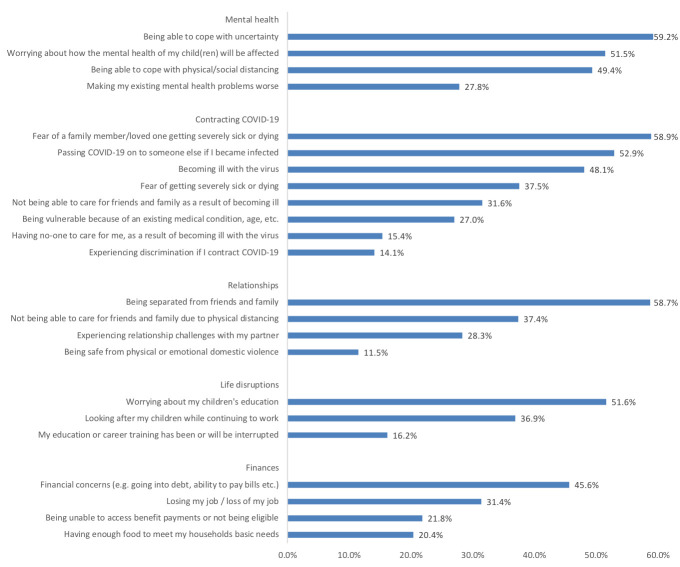
Objectives: In the first wave of the COVID-19 pandemic, social isolation, school/child care closures and employment instability have created unprecedented conditions for families raising children at home. This study describes the mental health impacts of the COVID-19 pandemic on families with children in Canada. Design, setting and participants: This descriptive study used a nationally representative, cross-sectional survey of adults living in Canada (n=3000) to examine the mental health impacts of the COVID-19 pandemic. Outcomes among parents with children <18 years old living at home (n=618) were compared with the rest of the sample. Data were collected via an online survey between 14 May to 29 May 2020. Outcome measures: Participants reported on changes to their mental health since the onset of the pandemic and sources of stress, emotional responses, substance use patterns and suicidality/self-harm. Additionally, parents identified changes in their interactions with their children, impacts on their children’s mental health and sources of support accessed. Results: 44.3% of parents with children <18 years living at home reported worse mental health as a result of the COVID-19 pandemic compared with 35.6% of respondents without children <18 living at home, χ 2 (1, n=3000)=16.2, p<0.001. More parents compared with the rest of the sample reported increased alcohol consumption (27.7% vs 16.1%, χ 2 (1, n=3000)=43.8, p<0.001), suicidal thoughts/feelings (8.3% vs 5.2%, χ 2 (1, n=3000)=8.0, p=0.005) and stress about being safe from physical/emotional domestic violence (11.5% vs 7.9%, χ 2 (1, n=3000)=8.1, p=0.005). 24.8% (95% CI 21.4 to 28.4) of parents reported their children’s mental health had worsened since the pandemic. Parents also reported more frequent negative as well as positive interactions with their children due to the pandemic (eg, more conflicts, 22.2% (95% CI 19.0 to 25.7); increased feelings of closeness, 49.7% (95% CI 45.7 to 53.7)). Conclusions: This study identifies that families with children <18 at home have experienced deteriorated mental health due to the pandemic. Population-level responses are required to adequately respond to families’ diverse needs and mitigate the potential for widening health and social inequities for parents and children.
Overview
The claims and statistics of this paper haven’t been checked yet.
Free: it reads the open-access text and checks the first 5 claims that cite a source we can check. Create a free account to check every claim.
Integrity signals
Registry
Cites
Statistics
Figures
Verification
Claims the paper makes
The claims and statistics of this paper haven’t been checked yet.
Free: it reads the open-access text and checks the first 5 claims that cite a source we can check. Create a free account to check every claim.
Claims other papers make about this one
Each is checked against this paper’s own text: does it say what the citing paper says it does?
The cited source doesn’t support the claim as written.
In the citing paper
“People without family are at a particularly high risk of health problems and deteriorated mental health due to COVID-19 [8,9].”
From Depression, anxiety, and stress in Korean general population during the COVID-19 pandemic. (2022) · cites this paper as [9]
Checked by a reasoning model — may be wrong.
Experimental — accuracy not yet measuredThe cited source says what the claim attributes to it.
In the citing paper
“Apart from the effects on the individual child or adolescent, the pandemic situation affected parents and whole family constructs [9], with a rise in parental stress, interparental and parent–child conflicts [10], child maltreatment [11, 12] and intimate partner violence [13].”
Self-check
Percentages, sums and reported differences re-computed from the paper’s own numbers.
The self-check needs the paper’s full text.
Citations
Cites
An interactive web-based dashboard to track COVID-19 in real time
Dong, E., Du, H., & Gardner, L. (2020) · The Lancet Infectious Diseases · doi:10.1016/s1473-3099(20)30120-1 · Cited by 10,048
Holmes, E. A., O'Connor, R. C., Perry, V. H., Tracey, I., Wessely, S., Arseneault, L., Ballard, C., Christensen, H., Cohen Silver, R., Everall, I., et al. (2020) · The Lancet Psychiatry · doi:10.1016/s2215-0366(20)30168-1 · Cited by 5,715
Impact of COVID-19 pandemic on mental health in the general population: a systematic review
Xiong, J., Lipsitz, O., Nasri, F., Lui, L. M. W., Gill, H., Phan, L., Chen-Li, D., Iacobucci, M., Ho, R., Majeed, A., et al. (2020) · Journal of Affective Disorders · doi:10.1016/j.jad.2020.08.001 · Cited by 5,204 · cited 1×
“Schools/child care, communities and government systems play an essential role in protecting and supporting parents and children, particularly for families without reliable access to the Internet or virtual technologies.”
BackgroundThe Lifelong Effects of Early Childhood Adversity and Toxic Stress
Shonkoff, J. P., Garner, A. S., THE COMMITTEE ON PSYCHOSOCIAL ASPECTS OF CHILD AND FAMILY HEALTH, C. O. E. C., Siegel, B. S., Dobbins, M. I., Earls, M. F., Garner, A. S., McGuinn, L., Pascoe, J., & Wood, D. L. (2012) · Pediatrics · doi:10.1542/peds.2011-2663 · Cited by 5,164
Mental health and the COVID-19 pandemic
Pfefferbaum, B., & North, C. S. (2020) · New England Journal of Medicine · doi:10.1056/nejmp2008017 · Cited by 4,378
Sick individuals and sick populations
Rose, G. (2001) · International Journal of Epidemiology · doi:10.1093/ije/30.3.427 · Cited by 3,736
The life course as developmental theory
Elder, G. H. (1998) · Child Development · doi:10.1111/j.1467-8624.1998.tb06128.x · Cited by 3,513
Sick individuals and sick populations
ROSE, G. (1985) · International Journal of Epidemiology · doi:10.1093/ije/14.1.32 · Cited by 2,701
Galea, S., Merchant, R. M., & Lurie, N. (2020) · JAMA Internal Medicine · doi:10.1001/jamainternmed.2020.1562 · Cited by 2,089
Manuscripts Accepted for Publication
(2005) · Child Development · doi:10.1111/j.1467-8624.2005.00876.x · Cited by 2,047
Research works printed but not linked: 2
- Vogel L . COVID-19: A timeline of Canada’s first-wave response, 2020; Canadian Medical Association Journal (CMAJ) News. Available: https://cmajnews.com/2020/06/12/coronavirus-1095847/
- Kousoulis A , McDaid S , Crepaz-Keay D , et al . Smaller boats in the COVID-19 storm: how different groups are coping with the coronavirus pandemic. London, UK: Mental Health Foundation; 2020: In press.
Cited by
Review: Mental health impacts of the COVID‐19 pandemic on children and youth – a systematic review
Samji, H., Wu, J., Ladak, A., Vossen, C., Stewart, E., Dove, N., Long, D., & Snell, G. (2022) · Child and Adolescent Mental Health · doi:10.1111/camh.12501 · Cited by 953
“2020), while participants in two studies described no or positive changes among most participants (Cusinato et al., 2020; Gadermann et al., 2021; Patra et al., 2020).”
BackgroundInfluentialEffects of COVID-19-Related School Closures on Student Achievement-A Systematic Review
Hammerstein, S., König, C., Dreisörner, T., & Frey, A. (2021) · Frontiers in Psychology · doi:10.3389/fpsyg.2021.746289 · Cited by 588
Parents Are Stressed! Patterns of Parent Stress Across COVID-19
Adams, E. L., Smith, D., Caccavale, L. J., & Bean, M. K. (2021) · Frontiers in Psychiatry · doi:10.3389/fpsyt.2021.626456 · Cited by 356
Acuff, S. F., Strickland, J. C., Tucker, J. A., & Murphy, J. G. (2022) · Psychology of Addictive Behaviors · doi:10.1037/adb0000796 · Cited by 214
Agostino, H., Burstein, B., Moubayed, D., Taddeo, D., Grady, R., Vyver, E., Dimitropoulos, G., Dominic, A., & Coelho, J. S. (2021) · JAMA Network Open · doi:10.1001/jamanetworkopen.2021.37395 · Cited by 200
Schmidt, R. A., Genois, R., Jin, J., Vigo, D., Rehm, J., & Rush, B. (2021) · Drug and Alcohol Dependence · doi:10.1016/j.drugalcdep.2021.109065 · Cited by 169
COVID-19 and Education Disruption in Ontario: Emerging Evidence on Impacts
Gallagher‐Mackay, K., Srivastava, P., Underwood, K., Dhuey, E., McCready, L. T., Born, K. B., Maltsev, A., Perkhun, A., Steiner, R., Barrett, K. A., et al. (2021) · doi:10.47326/ocsat.2021.02.34.1.0 · Cited by 172
Raina, P. S., Wolfson, C. M., Griffith, L. E., Kirkland, S., McMillan, J. M., Basta, N. E., Joshi, D., Oz, U. E., Sohel, N., Maimon, G., et al. (2021) · Nature Aging · doi:10.1038/s43587-021-00128-1 · Cited by 136
The impact of COVID-19 on the learning and achievement of vulnerable Canadian children and youth
Whitley, J., Beauchamp, M. H., & Brown, C. (2021) · FACETS · doi:10.1139/facets-2021-0096 · Cited by 144
Shokrkon, A., & Nicoladis, E. (2021) · PLoS ONE · doi:10.1371/journal.pone.0251097 · Cited by 87
“This is also in line with previous studies during COVID-19 pandemic indicating that domestic conflicts during the pandemic (such as have resulted in deteriorated mental health [71].”
ResultNewlove‐Delgado, T., Russell, A. E., Mathews, F., Cross, L., Bryant, E., Gudka, R., Ukoumunne, O. C., & Ford, T. J. (2023) · Journal of Child Psychology and Psychiatry · doi:10.1111/jcpp.13716 · Cited by 100
“For the individual child, these will interact with existing circumstances, vulnerabilities and protective factors, and have been described as vicious and virtuous cycles created by Covid-19 (Calvano et al., 2021; Creswell et al., 2021; Gadermann et al., 2021).”
Mental health and wellbeing of children and adolescents during the covid-19 pandemic
Rider, E. A., Ansari, E., Varrin, P., & Sparrow, J. (2021) · BMJ · doi:10.1136/bmj.n1730 · Cited by 134
Thorn, W., & Vincent-Lancrin, S. (2021) · OECD eBooks · doi:10.1787/1c78681e-en · Cited by 83
Parenteau, A. M., Boyer, C. J., Campos, L., Carranza, A. F., Deer, L. K., Hartman, D. T., Bidwell, J. T., & Hostinar, C. E. (2022) · Development and Psychopathology · doi:10.1017/s0954579422000499 · Cited by 113
“Peopleexperiencing homelessness or unstable housing were particularly vulnerable during COVID-19, suffering higher rates of infection and illness than the general population, and exhibiting high rates of comorbidity with psychiatric illness and substance use (Fuchs et al., 2021).”
BackgroundPenna, A. L., de Aquino, C. M., Pinheiro, M. S. N., do Nascimento, R. L. F., Farías-Antúnez, S., Araújo, D. A. B. S., Mita, C., Machado, M. M. T., & Castro, M. C. (2023) · BMC Public Health · doi:10.1186/s12889-023-15003-4 · Cited by 110
“While the strong association between parental and children’s mental health was pointed out in various studies [20, 31, 49, 72, 99, 151, 169, 183, 184] some sought to identify mediating mechanistic effects, such as parental emotion regulation capacity during lockdown [159, 160] or parental perceived manageability of th…”
BackgroundPet ownership and psychological well-being during the COVID-19 pandemic
Amiot, C. E., Gagné, C., & Bastian, B. B. (2022) · Scientific Reports · doi:10.1038/s41598-022-10019-z · Cited by 100
Whaley, G. L., & Pfefferbaum, B. J. (2023) · Current Psychiatry Reports · doi:10.1007/s11920-023-01412-0 · Cited by 84
Davis, E. P., & Glynn, L. M. (2024) · Journal of Child Psychology and Psychiatry · doi:10.1111/jcpp.13958 · Cited by 80
Chernozhukov, V., Kasahara, H., & Schrimpf, P. (2021) · Proceedings of the National Academy of Sciences · doi:10.1073/pnas.2103420118 · Cited by 68
Geweniger, A., Barth, M., Haddad, A. D. M., Högl, H., Insan, S., Mund, A., & Langer, T. (2022) · Frontiers in Pediatrics · doi:10.3389/fped.2022.759066 · Cited by 65
“In Canada, 25% of parents reported worsened child mental health outcomes (12).”
BackgroundKourgiantakis, T., Markoulakis, R., Lee, E., Hussain, A., Lau, C., Ashcroft, R., Goldstein, A. L., Kodeeswaran, S., Williams, C. C., & Levitt, A. (2023) · International Journal of Mental Health Systems · doi:10.1186/s13033-023-00572-z · Cited by 57
“On March 17, 2020, the provincial government declared a state of emergency [33] and both federal and provincial governments began implementing lockdown measures that involved travel restrictions, border closures, closures of schools and businesses, and suspension of nonessential health and public services [34].”
BackgroundThe Impact of the COVID-19 Pandemic on Families: Young People’s Experiences in Estonia
Kutsar, D., & Kurvet-Käosaar, L. (2021) · Frontiers in Sociology · doi:10.3389/fsoc.2021.732984 · Cited by 63
The Acceptance Rate Toward COVID-19 Vaccine in Africa: A Systematic Review and Meta-analysis
Wake, A. D. (2021) · Global Pediatric Health · doi:10.1177/2333794x211048738 · Cited by 55
Investigating the impacts of COVID-19 among LGBTQ2S youth experiencing homelessness
Abramovich, A., Pang, N., Moss, A., Logie, C. H., Chaiton, M., Kidd, S. A., & Hamilton, H. A. (2021) · PLoS ONE · doi:10.1371/journal.pone.0257693 · Cited by 50
Rodríguez‐Rivas, M. E., Varela, J. J., González, C., & Chuecas, M. J. (2022) · Heliyon · doi:10.1016/j.heliyon.2022.e09243 · Cited by 58
Duguay, G., Garon‐Bissonnette, J., Lemieux, R., Dubois‐Comtois, K., Mayrand, K., & Berthelot, N. (2022) · Child and Adolescent Psychiatry and Mental Health · doi:10.1186/s13034-022-00458-x · Cited by 58
“Indeed, a Canadian national cross-sectional study reported worse mental health in parents of children under the age of 18 and more frequent negative interactions with their children due to the pandemic [70].”
BackgroundThe impact of the COVID-19 pandemic on infant and toddler development
Imboden, A., Sobczak, B., & Griffin, V. J. (2021) · Journal of the American Association of Nurse Practitioners · doi:10.1097/jxx.0000000000000653 · Cited by 53
“Mental health disorders and substance use disorders have risen substantially during this time (Gadermann et al., 2021).”
BackgroundSylvestre, M., Dinkou, G. D. T., Naja, M., Riglea, T., Pelekanakis, A., Bélanger, M. F., Maximova, K., Mowat, D. L., Paradis, G., & O’Loughlin, J. L. (2022) · The Lancet Regional Health - Americas · doi:10.1016/j.lana.2021.100168 · Cited by 50
Changes in psychosocial functioning among urban, school-age children during the COVID-19 pandemic
Spencer, A. E., Oblath, R., Dayal, R. R., Loubeau, J. K., Lejeune, J., Sikov, J., Savage, M., Posse, C., Jain, S., Zolli, N., et al. (2021) · Child and Adolescent Psychiatry and Mental Health · doi:10.1186/s13034-021-00419-w · Cited by 53
“There is a growing body of literature documenting the negative impacts of the pandemic on caregiver mental health, including a study among 3000 Canadian adults [53] showing worse mental health among parents with minor children at home compared to other adults, and a study showing increased depression, anxiety, and str…”
BackgroundCampione‐Barr, N., Skinner, A. T., Moeller, K. N., Cui, L., Kealy, C., & Cookston, J. T. (2024) · Journal of Research on Adolescence · doi:10.1111/jora.12969 · Cited by 62
The COVID-19 pandemic in Italy: Depressive symptoms immediately before and after the first lockdown
Medda, E., Toccaceli, V., Gigantesco, A., Picardi, A., Fagnani, C., & Stazi, M. A. (2021) · Journal of Affective Disorders · doi:10.1016/j.jad.2021.10.129 · Cited by 52
Social Policies and Theories on Quality of Life under COVID-19: In Search of the Missing Links
Shek, D. T. L., Leung, J. T. Y., & Tan, L. (2023) · Applied Research in Quality of Life · doi:10.1007/s11482-023-10147-2 · Cited by 49
“7% of parents (Gadermann et al., 2021), resulting in increased interactions with children.”
BackgroundMekanna, A. N., Panchal, S. K., & Li, L. (2022) · Nutrition Reviews · doi:10.1093/nutrit/nuac088 · Cited by 45
“Other potential causes for such increases include job loss, reduced working hours, or having a child-care role.(41,42) Data on macronutrient and micronutrient intake post-lockdown appeared lacking.”
BackgroundCapaldi, C. A., Liu, L., & Dopko, R. L. (2021) · Health Promotion and Chronic Disease Prevention in Canada · doi:10.24095/hpcdp.41.11.05 · Cited by 50
Depression, anxiety, and stress in Korean general population during the COVID-19 pandemic.
Lee, H., Choi, D., & Lee, J. J. (2022) · Epidemiology and Health · doi:10.4178/epih.e2022018 · Cited by 39
“People without family are at a particularly high risk of health problems and deteriorated mental health due to COVID-19 [8,9].”
BackgroundAli, A. M., Alkhamees, A. A., Elhay, E. S. A., Taha, S. M., & Hendawy, A. O. (2022) · Frontiers in Public Health · doi:10.3389/fpubh.2021.799812 · Cited by 46
Rouleau, R. D., Beauregard, C., & Beaudry, V. (2023) · BMC Psychology · doi:10.1186/s40359-023-01141-2 · Cited by 51
“Adolescents also experienced a dramatic increase in mental health issues and substance use [57, 58] during that period.”
BackgroundImpact of COVID-19 on School Populations and Associated Factors: A Systematic Review
Sakti, A. M. T., Ajis, S. Z. M., Azlan, A. A., Kim, H. J., Wong, E., & Mohamad, E. M. W. (2022) · International Journal of Environmental Research and Public Health · doi:10.3390/ijerph19074024 · Cited by 49
“The impact of COVID-19 on parents’ mental health was also discussed, in which one study suggested that parents with school-age children demonstrated poorer mental health conditions compared to parents without school-age children at home [16].”
BackgroundEarly Adolescents' Experiences During the COVID-19 Pandemic and Changes in Their Well-Being
Gadermann, A., Thomson, K., Gill, R., Schonert-Reichl, K. A., Gagné, M. H., Guhn, M., Warren, M. T., & Oberle, E. (2022) · Frontiers in Public Health · doi:10.3389/fpubh.2022.823303 · Cited by 53
Self-citationValidating the Five-Item World Health Organization Well-Being Index
Nylén‐Eriksen, M., Bjørnnes, A. K., Hafstad, H., Lie, I., Grov, E. K., & Lara‐Cabrera, M. L. (2022) · International Journal of Environmental Research and Public Health · doi:10.3390/ijerph191811489 · Cited by 46
Ghidei, W., Montesanti, S. R., Tomkow, K., Silverstone, P. H., Wells, L., & Campbell, S. (2022) · Trauma Violence & Abuse · doi:10.1177/15248380211069059 · Cited by 38
“The current COVID-19 global pandemic has had a profound impact on the psychological and mental well-being of individuals and families due to financial and employment instability, changes in family routine, and social isolation due to physical distancing measures, school/childcare closures, and changes to health and so…”
BackgroundKourgiantakis, T., Markoulakis, R., Hussain, A., Lee, E., Ashcroft, R., Williams, C. C., Lau, C., Goldstein, A. L., Kodeeswaran, S., & LEVITT, A. J. (2022) · Canadian Journal of Public Health · doi:10.17269/s41997-022-00670-4 · Cited by 38
Increased prevalence and severity of psychiatric illness in hospitalized youth during COVID-19
Leith, T. B., Brieger, K., Malas, N., McCaffery, H., Monroe, K. K., Kullgren, K. A., & Rappaport, L. G. (2022) · Clinical Child Psychology and Psychiatry · doi:10.1177/13591045221076889 · Cited by 33
“…few effective coping strategies (Thapar et al., 2012), and the pandemic has amplified psychosocial stressors including housing and food insecurity (Elsahoryi et al., 2020), parental substance abuse and mental illness (Gadermann et al., 2021), and domestic violence (Moreira & Pinto da Costa, 2020).”
BackgroundFood Habits and Lifestyle of Romanians in the Context of the COVID-19 Pandemic
Năstăsescu, V., Mititelu, M., Stanciu, T. I., Drăgănescu, D., Grigore, N. D., Udeanu, D. I., Stanciu, G., Neacșu, S. M., Dinu‐Pîrvu, C. E., Oprea, E., et al. (2022) · Nutrients · doi:10.3390/nu14030504 · Cited by 35
“The lack of outdoor activities could make them more agitated and frustrated, stressing their parents even more [7,8].”
BackgroundFamily Resilience and Adolescent Mental Health during COVID-19: A Moderated Mediation Model
Zhuo, R., Yu, Y., & Shi, X. (2022) · International Journal of Environmental Research and Public Health · doi:10.3390/ijerph19084801 · Cited by 41
“On the other hand, family conflicts, which are usually high when members are staying in a closed space for a long time, are less in families with better resilience [10,47].”
BackgroundHolzer, J., Korlat, S., Pelikan, E. R., Schober, B., Spiel, C., & Lüftenegger, M. (2023) · The Journal of Early Adolescence · doi:10.1177/02724316231162306 · Cited by 49
“However, it must not be ignored that in times of COVID-19, many families experienced increased con fl ict and stress at home (e.g., Gadermann et al., 2021).”
BackgroundAshwin, A., Cherukuri, S. D., & Rammohan, A. (2022) · Journal of Global Health · doi:10.7189/jogh.12.03009 · Cited by 37
Thomson, K., Jenkins, E., Gill, R., Hastings, K. G., Richardson, C. G., Gagné, M. H., McAuliffe, C., & Gadermann, A. (2023) · PLoS ONE · doi:10.1371/journal.pone.0292670 · Cited by 41
Self-citationVarin, M., MacEachern, K. H., Hussain, N., & Baker, M. M. (2021) · Health Promotion and Chronic Disease Prevention in Canada · doi:10.24095/hpcdp.41.11.02 · Cited by 37
“We estimated the weighted prevalence (with 95% confidence interval [CI]) of selfreported (1) increased change, (2) decreased change or (3) no change in alcohol and cannabis consumption among individuals aged 18 years and older.”
BackgroundGenova, F., Tambelli, R., & Marzilli, E. (2023) · International Journal of Environmental Research and Public Health · doi:10.3390/ijerph20032018 · Cited by 38
“Containment measures have also led to increased concerns about family finances [17,18], reduced social support and higher feelings of isolation [19,20], a dramatic increase in domestic violence [21], and difficulties in accessing professional services [22].”
BackgroundMoss, S. J., Mizen, S. J., Stelfox, M., Brundin‐Mather, R., FitzGerald, E. A., Tutelman, P. R., Racine, N. M., Birnie, K. A., Fiest, K. M., Stelfox, H. T., et al. (2023) · BMC Medicine · doi:10.1186/s12916-023-02828-4 · Cited by 33
“, low socioeconomic status (SES)) of children and youth, expected to be most at risk of poor well-being outcomes as a consequence of the COVID19 pandemic [25].”
BackgroundSpencer-Laitt, D., Eustis, E. H., Barlow, D. H., & Farchione, T. J. (2022) · International Journal of Environmental Research and Public Health · doi:10.3390/ijerph19116596 · Cited by 37
Heslon, K., Hanson, J., & Ogourtsova, T. (2024) · Frontiers in Rehabilitation Sciences · doi:10.3389/fresc.2024.1347412 · Cited by 30
Calvano, C., Engelke, L., Holl, A. K., Renneberg, B., & Winter, S. (2023) · European Child & Adolescent Psychiatry · doi:10.1007/s00787-023-02147-2 · Cited by 33
“Extending this evidence, a large representative study conducted in Canada in May 2020 [3] showed that caregivers (n = 618) compared to adults without children in the household (n = 2382) reported poorer mental health, e.”
BackgroundRussell, B. S., Tambling, R. R., Horton, A. L., Hutchison, M., & Tomkunas, A. J. (2021) · Couple and Family Psychology Research and Practice · doi:10.1037/cfp0000175 · Cited by 31
COVID-19 and Resilience in Schools: Implications for Practice and Policy
Luthar, S. S., Pao, L. S., & Kumar, N. L. (2021) · Child Policy Nexus · doi:10.1002/sop2.16 · Cited by 32
Investigating the Impact of Isolation During COVID-19 on Family Functioning – An Australian Snapshot
Sheen, J. A., Aridas, A., Tchernegovski, P., Dudley, A. L., McGillivray, J., & Reupert, A. (2021) · Frontiers in Psychology · doi:10.3389/fpsyg.2021.722161 · Cited by 32
Bhatt, M., Plint, A. C., Tang, K., Malley, R., Pham‐Huy, A., McGahern, C., Dawson, J., Pelchat, M., Dawson, L., Varshney, T., et al. (2022) · CMAJ Open · doi:10.9778/cmajo.20220026 · Cited by 31
Effect of daily school and care disruptions during the COVID-19 pandemic on child behavior problems.
Gassman‐Pines, A., Ananat, E., Fitz-Henley, J., & Leer, J. (2022) · Developmental Psychology · doi:10.1037/dev0001373 · Cited by 35
da Cunha, D. B. A., de Barros, A. B. S. R., Borges, J. B. F., Marques, L. M., Wanderlei, M. M., Campelo, V. H. S., & da Cruz, D. S. L. (2021) · Revista Eletrônica Acervo Saúde · doi:10.25248/reas.e8484.2021 · Cited by 42
Deacon, S. H., Rodriguez, L. M., Elgendi, M. M., King, F. E., Nogueira‐Arjona, R., Sherry, S., & Stewart, S. H. (2021) · Couple and Family Psychology Research and Practice · doi:10.1037/cfp0000171 · Cited by 28
Lengua, L. J., Thompson, S. F., Kim, S. G., Rosen, M. L., Rodman, A. M., Kasparek, S. W., Mayes, M., Zalewski, M., Meltzoff, A. N., & McLaughlin, K. A. (2022) · Journal of Child Psychology and Psychiatry · doi:10.1111/jcpp.13610 · Cited by 29
“Youth were spending increased amounts of time with their families as a result of social distancing, and parents reported more frequent interactions with their children (Gadermann et al., 2021).”
BackgroundCurrie, G., Finlay, B., Seth, A., Roth, C. G., Elsabbagh, M., Hudon, A., Hunt, M. R., Jodoin, S., Lach, L., Lencucha, R., et al. (2022) · International Journal of Qualitative Studies on Health and Well-Being · doi:10.1080/17482631.2022.2136090 · Cited by 35
“…with studies which have described an increase in mental health challenges experienced by families of children with NDDs (Bentenuto et al., 2021; Breaux et al., 2021; Cluver et al., 2020; Gadermann et al., 2021; Lee et al., 2021; Patrick et al., 2020; Shorey et al., 2021; Yusuf et al., 2022).”
BackgroundResultInfluentialByrne, S., Sledge, H., Hurley, S., Hoolahan, S., Franklin, R., Jordan, N., Boland, F., Murray, D. M., & Hourihane, J. O. (2023) · Archives of Disease in Childhood · doi:10.1136/archdischild-2022-325271 · Cited by 27
COVID-19 lockdown and lifestyles: A narrative review
Doraiswamy, S., Cheema, S., Mulla, A. M. A., & Mamtani, R. (2021) · F1000Research · doi:10.12688/f1000research.52535.1 · Cited by 30
Steiber, N., Siegert, C., & Vogtenhuber, S. (2022) · Journal of Family Research · doi:10.20377/jfr-721 · Cited by 35
Mikkelsen, H. T., Skarstein, S. O., Helseth, S., Småstuen, M. C., Haraldstad, K., & Rohde, G. E. (2022) · BMC Public Health · doi:10.1186/s12889-022-13737-1 · Cited by 27
“Further, the pandemic has major economic implications for several families [5, 10, 13].”
BackgroundInfluentialRakesh, D., Flournoy, J. C., & McLaughlin, K. A. (2025) · JCPP Advances · doi:10.1002/jcv2.70001 · Cited by 28
“The COVID - 19 pandemic introduced innumerable stressors into the lives of adolescents and families (Adams et al., 2021; Gadermann et al., 2021; Johnson et al., 2021; Lawson et al., 2020).”
Kandula, U. R., & Wake, A. D. (2022) · Psychology Research and Behavior Management · doi:10.2147/prbm.s341299 · Cited by 30
“Fulfilling the basic needs of the family members will improve the family’s well-being during pandemics.(31)”
BackgroundInfluentialLehmann, J., Lechner, V., & Scheithauer, H. (2022) · International Journal of Developmental Science · doi:10.3233/dev-220322 · Cited by 29
Sheldrick, M. P. R., Swindell, N. J., Richards, A. B., Fairclough, S. J., & Stratton, G. (2022) · International Journal of Behavioral Nutrition and Physical Activity · doi:10.1186/s12966-022-01346-5 · Cited by 28
“During lockdown, any conflicts between families’ members would have been exacerbated by reduced personal and social space [70], particularly in crowded households [71].”
BackgroundSabu, J. M., Zahid, I., Jacob, N., Alele, F. O., & Malau‐Aduli, B. S. (2022) · Vaccines · doi:10.3390/vaccines10111880 · Cited by 24
“Lockdowns and isolation also come at an economic and mental cost to the children’s caregivers and the family as a whole [9].”
BackgroundDu, W. D., Jia, Y. J., Hu, F. H., Ge, M., Cheng, Y. J., Qu, X., & Chen, H. L. (2023) · Journal of Psychiatric Research · doi:10.1016/j.jpsychires.2023.07.040 · Cited by 26
Geprägs, A., Bürgin, D., Fegert, J. M., Brähler, E., & Clemens, V. (2022) · International Journal of Environmental Research and Public Health · doi:10.3390/ijerph19148734 · Cited by 32
“Therefore, although most studies use online sample methods to gain large samples, only some reach representativeness [17,19,20].”
BackgroundLalin, S. A. A., Ahmed, M. N. Q., & Haq, S. M. A. (2024) · Regional Science Policy & Practice · doi:10.1016/j.rspp.2024.100046 · Cited by 29
Jung, S. J., Jeon, Y. J., Yang, J. S., Park, M., Kim, K., Chibnik, L. B., Kim, H. C., & Koenen, K. C. (2021) · Journal of Psychosomatic Research · doi:10.1016/j.jpsychores.2021.110552 · Cited by 22
“However, within this period, acute events would be distributed throughout, such as unexpected separations from close people and potential conflicts with individuals with which one is quarantined, which could yield exposure to interpersonal or social stressors [32].”
BackgroundHope and Self-Compassion to Alleviate Parenting Stress in the Context of the COVID-19 Pandemic
Garcia, A. S., Born, S. L., Carotta, C. L., Lavender‐Stott, E. S., & Liu, H. (2021) · The Family Journal · doi:10.1177/10664807211040836 · Cited by 28
“…the parenting experience during the pandemic found a host of negative mental health outcomes and undesirable parenting behaviors related to parenting stress (Gadermann et al., 2021; Goldberg et al., 2021; Horiuchi et al., 2020; Mikolajczak & Roskam, 2020; Miller et al., 2020; Weaver & Swank, 2021).”
BackgroundHo, Y.-C. L., Chew, M. S.-L., Mahirah, D., & Thumboo, J. (2022) · Frontiers in Psychology · doi:10.3389/fpsyg.2022.770927 · Cited by 22
Gong, W. J., Sit, S. M.-M., Wong, B. Y.-M., Wu, S. Y. D., Lai, A. Y. K., Ho, S. Y., Wang, M. P., & Lam, T. H. (2022) · Frontiers in Psychiatry · doi:10.3389/fpsyt.2022.780714 · Cited by 26
Financial stress during COVID-19: implications for parenting behaviour and child well-being
McGill, M. G., Purkey, E., Davison, C., Watson, A., & Bayoumi, I. (2022) · BMJ Paediatrics Open · doi:10.1136/bmjpo-2022-001569 · Cited by 28
Brinkhof, L. P., Chambon, M., Ridderinkhof, K. R., van Harreveld, F., Murre, J. M. J., Krugers, H. J., & de Wit, S. (2023) · Clinical Psychological Science · doi:10.1177/21677026231190294 · Cited by 29
“…had to reorganize many more aspects of their daily life (e.g., transitioning to working from home; homeschooling) and had to cope with increased responsibilities and worries about the well-being and health of their children and/or their own parents (Czeisler et al., 2021; Gadermann et al., 2021).”
Laufer, A., & Bitton, M. S. (2021) · Journal of Family Issues · doi:10.1177/0192513x211054460 · Cited by 25
“The stress of the parents’ worries may limit their ability to address the child’s needs and may lower the parent’s emotional availability to the child (Christner et al., 2021; Gadermann et al., 2021).”
BackgroundGonzález, A., Afifi, T. O., & Tonmyr, L. (2021) · Health Promotion and Chronic Disease Prevention in Canada · doi:10.24095/hpcdp.41.11.07 · Cited by 21
Spagnolo, J., Beauséjour, M., Fleury, M., Clément, J.-F., Gamache, C., Sauvé, C., Couture, L., Fleet, R. P., Knight, S., Gilbert, C., et al. (2022) · BMC Family Practice · doi:10.1186/s12875-022-01634-w · Cited by 24
“First, studies highlight the pandemic’s negative consequences on parents’ mental health [46], as well as female respondents with children under the age of 13 years, the latter reporting higher levels of anxiety and substance use than male respondents [47].”
BackgroundDesRoches, D. I., Deacon, S. H., Rodriguez, L. M., Sherry, S., Nogueira‐Arjona, R., Elgendi, M. M., Meier, S. M., Abbass, A. A., King, F. E., & Stewart, S. H. (2021) · Social Sciences · doi:10.3390/socsci10070240 · Cited by 25
“Further, residing with children during the COVID-19 pandemic has proven to be a risk factor for increased self-reported alcohol use (Gadermann et al. 2021; Rodriguez et al. 2020; Schmits and Glowacz 2021).”
BackgroundPrime, H., Wade, M., & Browne, D. T. (2022) · Adversity and Resilience Science · doi:10.1007/s42844-022-00077-7 · Cited by 27
Winfield, A., Sugar, C., & Fenesi, B. (2023) · PLoS ONE · doi:10.1371/journal.pone.0283227 · Cited by 26
Lake, J., Volpe, T., John, L. S., Thakur, A., Steel, L., Baskin, A., Durbin, A., Chacra, M. A., & Lunsky, Y. (2022) · Journal of Intellectual Disability Research · doi:10.1111/jir.12965 · Cited by 16
“…and restrictions, caregiver fatigue has evolved into exhaustion and distress for many (Bailey et al. 2021; Flynn et al. 2021; Flynn et al. 2021; Gadermann et al. 2021; Gillespie-Smith et al. 2021; Lee et al. 2020; Majnemer et al. 2021; Patel et al. 2021; Redquest et al. 2021; Willner et al.…”
BackgroundWendel, F., Bender, S., Breitinger, E., Coenen, M., Hummel, J., Immich, G., Kirschneck, M., Klünder, V., Kunzler, A. M., Lieb, K., et al. (2024) · European Child & Adolescent Psychiatry · doi:10.1007/s00787-023-02280-y · Cited by 19
Bilginer, Ç., Yaman, H., Karadeniz, S., Bulut, S. H., Yaman, S. Ö., & Aydoğdu, S. (2021) · Psychiatria Danubina · doi:10.24869/psyd.2021.158 · Cited by 21
Penner, F., Elzaki, Y., Contreras, H. T., Santos, R. P., & Sarver, D. E. (2022) · Research on Child and Adolescent Psychopathology · doi:10.1007/s10802-022-00920-6 · Cited by 20
“Parents have reported increased mental health concerns relative to non-parent adults (Gadermann et al., 2021; Pierce et al., 2020), particularly depression and anxiety (Cameron et al.”
BackgroundHan, W., & Hart, J. (2021) · Children and Youth Services Review · doi:10.1016/j.childyouth.2021.106343 · Cited by 23
Riany, Y. E., & Morawska, A. (2021) · Child Psychiatry & Human Development · doi:10.1007/s10578-021-01251-1 · Cited by 22
Sheen, J. A., Clancy, E. M., Considine, J., Dwyer, A. J., Tchernegovski, P., Aridas, A., Lee, B. E. C., Reupert, A., & Boyd, L. (2022) · International Journal of Environmental Research and Public Health · doi:10.3390/ijerph19084897 · Cited by 24
Shen, N., Kassam, I., Chen, S., Ma, C., Wang, W., Boparai, N., Jankowicz, D., & Strudwick, G. (2022) · Digital Health · doi:10.1177/20552076221102253 · Cited by 26
“50 – 53 By taking a prospective approach to this growing group, these fi ndings provide insights for digital mental health initiatives and strategies to proactively anticipate future needs.”
BackgroundZuniga‐Montanez, C., Davies, C. E., Ligoxygakis, L., Kašćelan, D., & Gonzalez‐Gomez, N. (2024) · Journal of Child Psychology and Psychiatry · doi:10.1111/jcpp.14102 · Cited by 27
COVID-19 and Caregiver Risk Factors for Child Maltreatment: The Pandemic in Review
Garner, J. B., Self‐Brown, S., Emery, V., Wootten, K., & Tiwari, A. (2023) · Trauma Violence & Abuse · doi:10.1177/15248380231158609 · Cited by 19
“Of note, Gadermann et al. (2021) suggest that negative or poor mental health related to the pandemic may contribute to increased consumption of alcohol among parents.”
BackgroundResultInfluentialPsychological Resources and Biomarkers of Health in the Context of Chronic Parenting Stress
Crosswell, A., Sagui-Henson, S. J., Prather, A., Coccia, M. A., Irwin, M. R., & Epel, E. (2021) · International Journal of Behavioral Medicine · doi:10.1007/s12529-021-10007-z · Cited by 16
“Parenting stress has increased recently due to the COVID-19 pandemic and schooling at home [39]; our findings may have even more public health significance 0 0.”
BackgroundInfluentialKokkinaki, T., & Hatzidaki, E. (2022) · Frontiers in Pediatrics · doi:10.3389/fped.2022.846627 · Cited by 21
Liu, T., Xia, Y., & Ma, Z. (2022) · Frontiers in Psychiatry · doi:10.3389/fpsyt.2022.816298 · Cited by 25
Metadata
- Authors
- Gadermann, A. C., Thomson, K. C., Richardson, C. G., Gagné, M., McAuliffe, C., Hirani, S., & Jenkins, E.
- Affiliations
- University of British Columbia (CA)
- Corresponding author
- Gadermann, Anne C
- ORCID
- Venue
- BMJ Open
- Publisher
- BMJ
- Published
- 2021-01
- Volume
- 11
- Issue
- 1
- Pages
- e042871
- ISSN
- 2044-6055 (ISSN-L)
- PMC
- PMC7804831
- OpenAlex
- W3119253972
- Cited by
- 479
- References
- 48
- Citations by year
- 2026: 26 · 2025: 55 · 2024: 75 · 2023: 112 · 2022: 120 · 2021: 91
- FWCI
- 67.83
- Type
- journal article
- Language
- en
- Open access
- gold
- doi.org
- Licence
- Locations
- BMJ Open (publishedVersion, cc-by-nc)
- PubMed Central (publishedVersion, cc-by-nc)
- PubMed (publishedVersion)
- cIRcle (University of British Columbia) (submittedVersion, cc-by-nc)
- DOAJ (DOAJ: Directory of Open Access Journals) (submittedVersion, cc-by-sa)
- Open Collections
- Funders
- Michael Smith Health Research BC
- National Institute for Health and Care Research (NIHR201342)
- Canadian Mental Health Association
- Canadian Institutes of Health Research
- Topics
- Social Sciences › Psychology › Clinical Psychology › COVID-19 and Mental Health
- Health Sciences › Medicine › Public Health, Environmental and Occupational Health › Maternal Mental Health During Pregnancy and Postpartum
- Social Sciences › Psychology › Clinical Psychology › Child and Adolescent Psychosocial and Emotional Development
- Keywords
- COVID-19 pandemic, family mental health, parents of children, child mental health, social isolation, school closures, employment instability, alcohol consumption, suicidal ideation, self-harm, domestic violence, parent-child conflict, parent-child closeness, substance use, sources of support, Canada, lockdown
- MeSH terms
- COVID-19, SARS-CoV-2, Adolescent, Adult, Mental Disorders, Canada, Cross-Sectional Studies, Family Health, Female, Health Surveys, Humans, Longitudinal Studies, Male, Middle Aged, Quarantine, Social Isolation, Stress, Psychological, Young Adult
About these checks
Registry, retraction, Cites and statistics results are computed, not judged, with one exception: a printed reference that no index lists is read once by a model before it counts as a citation error. Claims are extracted by a model and kept only when their quote appears verbatim in the text; each cited source is then checked, with a model’s help, for whether it says what the claim relies on. Those verdicts can be wrong — read the claim’s quote and the cited source before relying on one.
Statistics and arithmetic are recomputed, not judged.
Confidence bands are shown only for fields calibrated on our annotated test set. None is calibrated yet, so no band is shown.
What counts as a claim ›How we measure confidence ›How we check this ›
Are you an author, or do you see a problem with this page? Request a review
Data sources
Bibliographic data: Semantic Scholar, OpenAlex, Crossref.
Contains information from the Semantic Scholar Academic Graph Datasets, made available under the ODC Attribution License (ODC-BY 1.0).
Semantic Scholar’s data is described in: Kinney, R., et al. (2023). The Semantic Scholar Open Data Platform. arXiv:2301.10140.
