

Examining the impacts of the COVID-19 pandemic on family mental health in Canada: findings from a national cross-sectional study
Open accessThe DOI matches its Crossref record; 49 of the 49 references it cites were found in a registry or an index.
Abstract
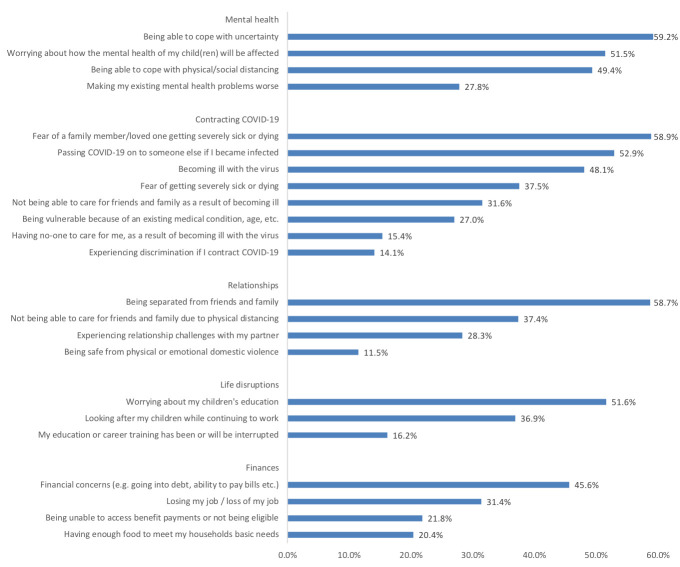
Objectives: In the first wave of the COVID-19 pandemic, social isolation, school/child care closures and employment instability have created unprecedented conditions for families raising children at home. This study describes the mental health impacts of the COVID-19 pandemic on families with children in Canada. Design, setting and participants: This descriptive study used a nationally representative, cross-sectional survey of adults living in Canada (n=3000) to examine the mental health impacts of the COVID-19 pandemic. Outcomes among parents with children <18 years old living at home (n=618) were compared with the rest of the sample. Data were collected via an online survey between 14 May to 29 May 2020. Outcome measures: Participants reported on changes to their mental health since the onset of the pandemic and sources of stress, emotional responses, substance use patterns and suicidality/self-harm. Additionally, parents identified changes in their interactions with their children, impacts on their children’s mental health and sources of support accessed. Results: 44.3% of parents with children <18 years living at home reported worse mental health as a result of the COVID-19 pandemic compared with 35.6% of respondents without children <18 living at home, χ 2 (1, n=3000)=16.2, p<0.001. More parents compared with the rest of the sample reported increased alcohol consumption (27.7% vs 16.1%, χ 2 (1, n=3000)=43.8, p<0.001), suicidal thoughts/feelings (8.3% vs 5.2%, χ 2 (1, n=3000)=8.0, p=0.005) and stress about being safe from physical/emotional domestic violence (11.5% vs 7.9%, χ 2 (1, n=3000)=8.1, p=0.005). 24.8% (95% CI 21.4 to 28.4) of parents reported their children’s mental health had worsened since the pandemic. Parents also reported more frequent negative as well as positive interactions with their children due to the pandemic (eg, more conflicts, 22.2% (95% CI 19.0 to 25.7); increased feelings of closeness, 49.7% (95% CI 45.7 to 53.7)). Conclusions: This study identifies that families with children <18 at home have experienced deteriorated mental health due to the pandemic. Population-level responses are required to adequately respond to families’ diverse needs and mitigate the potential for widening health and social inequities for parents and children.
Overview
The claims and statistics of this paper haven’t been checked yet.
Free: it reads the open-access text and checks the first 5 claims that cite a source we can check. Create a free account to check every claim.
Integrity signals
Registry
Cites
Statistics
Figures
Verification
Claims the paper makes
The claims and statistics of this paper haven’t been checked yet.
Free: it reads the open-access text and checks the first 5 claims that cite a source we can check. Create a free account to check every claim.
Claims other papers make about this one
Each is checked against this paper’s own text: does it say what the citing paper says it does?
The cited source doesn’t support the claim as written.
In the citing paper
“People without family are at a particularly high risk of health problems and deteriorated mental health due to COVID-19 [8,9].”
From Depression, anxiety, and stress in Korean general population during the COVID-19 pandemic. (2022) · cites this paper as [9]
Checked by a reasoning model — may be wrong.
Experimental — accuracy not yet measuredThe cited source says what the claim attributes to it.
In the citing paper
“Apart from the effects on the individual child or adolescent, the pandemic situation affected parents and whole family constructs [9], with a rise in parental stress, interparental and parent–child conflicts [10], child maltreatment [11, 12] and intimate partner violence [13].”
Self-check
Percentages, sums and reported differences re-computed from the paper’s own numbers.
The self-check needs the paper’s full text.
Citations
Cites
An interactive web-based dashboard to track COVID-19 in real time
Dong, E., Du, H., & Gardner, L. (2020) · The Lancet Infectious Diseases · doi:10.1016/s1473-3099(20)30120-1 · Cited by 10,048
Holmes, E. A., O'Connor, R. C., Perry, V. H., Tracey, I., Wessely, S., Arseneault, L., Ballard, C., Christensen, H., Cohen Silver, R., Everall, I., et al. (2020) · The Lancet Psychiatry · doi:10.1016/s2215-0366(20)30168-1 · Cited by 5,715
Impact of COVID-19 pandemic on mental health in the general population: a systematic review
Xiong, J., Lipsitz, O., Nasri, F., Lui, L. M. W., Gill, H., Phan, L., Chen-Li, D., Iacobucci, M., Ho, R., Majeed, A., et al. (2020) · Journal of Affective Disorders · doi:10.1016/j.jad.2020.08.001 · Cited by 5,204 · cited 1×
“Schools/child care, communities and government systems play an essential role in protecting and supporting parents and children, particularly for families without reliable access to the Internet or virtual technologies.”
BackgroundThe Lifelong Effects of Early Childhood Adversity and Toxic Stress
Shonkoff, J. P., Garner, A. S., THE COMMITTEE ON PSYCHOSOCIAL ASPECTS OF CHILD AND FAMILY HEALTH, C. O. E. C., Siegel, B. S., Dobbins, M. I., Earls, M. F., Garner, A. S., McGuinn, L., Pascoe, J., & Wood, D. L. (2012) · Pediatrics · doi:10.1542/peds.2011-2663 · Cited by 5,164
Mental health and the COVID-19 pandemic
Pfefferbaum, B., & North, C. S. (2020) · New England Journal of Medicine · doi:10.1056/nejmp2008017 · Cited by 4,378
Sick individuals and sick populations
Rose, G. (2001) · International Journal of Epidemiology · doi:10.1093/ije/30.3.427 · Cited by 3,736
The life course as developmental theory
Elder, G. H. (1998) · Child Development · doi:10.1111/j.1467-8624.1998.tb06128.x · Cited by 3,513
Sick individuals and sick populations
ROSE, G. (1985) · International Journal of Epidemiology · doi:10.1093/ije/14.1.32 · Cited by 2,701
Galea, S., Merchant, R. M., & Lurie, N. (2020) · JAMA Internal Medicine · doi:10.1001/jamainternmed.2020.1562 · Cited by 2,089
Manuscripts Accepted for Publication
(2005) · Child Development · doi:10.1111/j.1467-8624.2005.00876.x · Cited by 2,047
Research works printed but not linked: 2
- Vogel L . COVID-19: A timeline of Canada’s first-wave response, 2020; Canadian Medical Association Journal (CMAJ) News. Available: https://cmajnews.com/2020/06/12/coronavirus-1095847/
- Kousoulis A , McDaid S , Crepaz-Keay D , et al . Smaller boats in the COVID-19 storm: how different groups are coping with the coronavirus pandemic. London, UK: Mental Health Foundation; 2020: In press.
Cited by
Items 401–494 of 494
Hou, S., Forbes, C., Cho, S., Tran, A., Forster, V. J., Wakefield, C. E., Heathcote, L. C., Wiener, L. S., Michel, G., Patterson, P., et al. (2023) · Journal of Psychosocial Oncology Research and Practice · doi:10.1097/or9.0000000000000107
Fogarty, A., Brown, S., McMahon, G., FitzPatrick, K. M., Gartland, D., Seymour, M., & Giallo, R. (2023) · Journal of Affective Disorders · doi:10.1016/j.jad.2023.11.006 · Cited by 2
Asri, N. S. M., Juhari, R. B., & Zafri, A. V. (2023) · International Journal of Academic Research in Business and Social Sciences · doi:10.6007/ijarbss/v13-i16/18713 · Cited by 1
“Gadermann et al (2021) also discovered that the pandemic also influenced adverse interactions between parents with their children, where more increased arguments happened.”
BackgroundBaker, M., Berens, K. A., Giesbrecht, C. J., Bruer, K. C., Evans, A. D., Price, H. L., & Williams, S. (2023) · Child Maltreatment · doi:10.1177/10775595231221798
“…studies reported increases in parental stress associated with an increased need for child care and loss of income/jobs, which increased the propensity for maltreatment or strained parent-child relationships and subsequently, increases in child stress (Gadermann et al., 2021; Peltz et al., 2023).”
BackgroundAdibi, A., & Jamshidbeigi, T. (2023) · Mental Wellness · doi:10.4081/mw.2023.7
COVID-19 Epidemiological Situation as a Psychosocial Determinant of Trauma and Stress
(2024) · Frontiers research topics · doi:10.3389/978-2-8325-4340-5
Levitt, E. E., Markoulakis, R., Weingust, S., Dobbin, K., & LEVITT, A. J. (2023) · Canadian Journal of Community Mental Health · doi:10.7870/cjcmh-2023-028
Eastabrook, J. M., Mills, L., & Singh, A. (2024) · Residential Treatment for Children & Youth · doi:10.1080/0886571x.2024.2319751
“Gadermann et al. (2021) found that parents with children under the age of 18 reported significantly worse mental health than those parents with older children, as well as increased fear of domestic violence and abuse, increased alcohol consumption, and suicidal thoughts.”
Ngwakwe, P. C., Anugwo, M. N., Elom, N. A., Ogbu, J. E., Ojide, R. N., Alegu, D. N., Ogah, C. I., & Nwimo, I. O. (2024) · Archives of Business Research · doi:10.14738/abr.123.16666
The impact of the COVID-19 pandemic on the mood and family relationships of runners
Puigdesens, A. V., Naudí, S. A. I., Hernández, S. P., Torras, S., & Martí, X. P. (2024) · Frontiers in Psychology · doi:10.3389/fpsyg.2024.1295605 · Cited by 1
Descartes, C. H. (2024) · Springer eBooks · doi:10.1007/978-3-031-55293-9_10
Strungaru, S., & Coghlan, J. (2024) · Contemporary perspectives on family research · doi:10.1108/s1530-353520240000025007
Lessons Learned from COVID-19 Mitigation Strategies for Youth
Kainth, M. K., & Rubin, L. G. (2024) · Springer eBooks · doi:10.1007/978-3-031-58141-0_3
(2024) · Frontiers research topics · doi:10.3389/978-2-8325-5112-7
Impact of COVID-19 lockdown on children with neurodevelopmental disorders
Azurara, L., Dias, M. E., de Figueiredo, M. B., & Marta, R. (2024) · Portuguese Journal of Pediatrics · doi:10.24875/pjp.m24000451 · Cited by 1
Ettman, C. K., Badillo‐Goicoechea, E., & Stuart, E. A. (2024) · Journal of Epidemiology & Community Health · doi:10.1136/jech-2023-221672
Geprägs, A., Bürgin, D., Fegert, J. M., Brähler, E., & Clemens, V. (2024) · BMC Public Health · doi:10.1186/s12889-024-19203-4
“…factors, multiple studies found important protective factors for quality of life and well-being, for example living with a partner [14, 15], older age [6, 8, 12], good financial status [11, 14, 15, 18, 19], doing outdoor activities [8, 11, 12, 14], exercising, resilience and coping skills [15].”
BackgroundThe Influence of Disagreements over COVID-19 Preventive Measures on Stress and Sleep Quality
Badahdah, A. M., Viskupič, F., & Wiltse, D. L. (2024) · Psychological Reports · doi:10.1177/00332941241266185
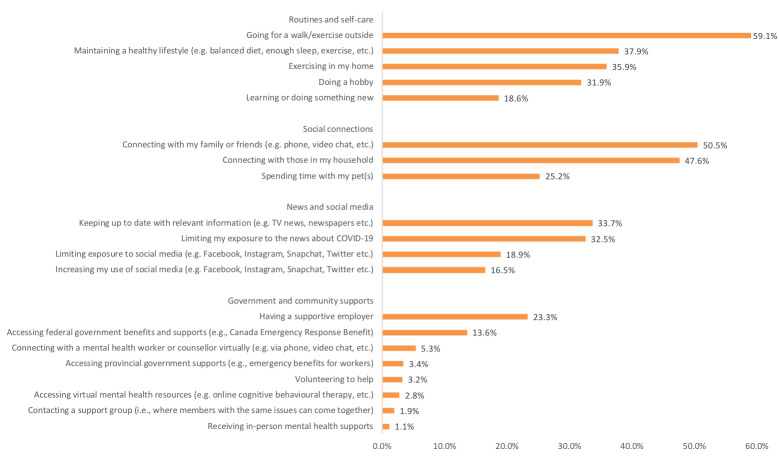
“Participants in one study (Gadermann et al., 2021) listed family and friends (50.5”
InfluentialFamily Resilience in Preventing Covid-19 Pandemic
Hamim, N. A., Addiarto, W., & Rahmat, N. N. (2024) · JI-KES (Jurnal Ilmu Kesehatan) · doi:10.33006/jikes.v8i1.784
“According to (Ausrianti, 2020) this condition increasing knowledge about Covid-19 and how to overcome psychological problems in the midst of the Covid-19 pandemic (Santarpia et al., 2020; Gadermann et al., 2021).”
BackgroundParenting During the COVID-19 Pandemic
Kurumiya, Y., Woolfolk, L., & Griffith, A. K. (2024) · Advances in experimental medicine and biology · doi:10.1007/978-3-031-61943-4_7 · Cited by 3
Priorities and possibilities for teacher professional learning in a (post)COVID-19 era
Osmond-Johnson, P., Keil, T., Tayebianvar, H., & Ekhteraeetoussi, N. (2024) · Professional Development in Education · doi:10.1080/19415257.2024.2374334
“Research out of British Columbia (Gadermann et al .”
InfluentialAdjustment trade-offs and negative emotion reciprocation in adolescent-mother dyads during COVID-19
Wong, N., & Hawk, S. T. (2024) · Motivation and Emotion · doi:10.1007/s11031-024-10086-x
“In particular, several studies found a greater frequency of positive parent–child interactions during COVID-19 (e.g., Gadermann et al., 2021; Kalil et al., 2020; Laufer & Bitton, 2023).”
"CRIANÇA SORRIDENTE” NAS REDES SOCIAIS: IMPACTOS E DESAFIOS DE AÇÕES DE EXTENSÃO DURANTE A PANDEMIA
Barbosa, S. D. S., Reis, R. M., Faquini, L. T., de Carvalho, R. V., de Oliveira, V., & Salas, M. M. S. (2024) · Capim Dourado Diálogos em Extensão · doi:10.20873/criansor
Yates, J., Shillington, K. J., Mantler, T., & Irwin, J. D. (2024) · Current Psychology · doi:10.1007/s12144-024-06729-4
“Further, in general, parents are known to experience higher levels of stress compared to their non-parent counterparts (Gadermann et al., 2021 ).”
Introduction: Care, Childhood, Youth and Family in the Context of Coronavirus
Disney, T., & Grimshaw, L. (2024) · Emerald Group Publishing Limited eBooks · doi:10.1108/978-1-83797-310-120241001
Keller, K., Taubner, S., & Georg, A. K. (2024) · Frontiers in Child and Adolescent Psychiatry · doi:10.3389/frcha.2024.1441969
Exploring children's services workers’ perceptions of COVID-19: Trauma, connection and creativity
Boynton, H. M., Samson, P., Vis, J., & Asante, B. O. (2024) · Mental Health & Prevention · doi:10.1016/j.mhp.2024.200382
Rosal, G. (2024) · Carleton University's Institutional Repository (MacOdrum Library, Carleton University) · doi:10.22215/etd/2024-16339
Yip, A., Mo, K. Y., Yip, Y., Tsui, Z., Fong, F.-F., & Chu, P.-M. (2024) · Healthcare · doi:10.3390/healthcare12242512
“The COVID-19 pandemic created major disruptions for families through the closure of childcare facilities and schools, reduced social contact, and interruptions to routines, constituting an exceptionally challenging event for family well-being [23,24].”
Sentinel Analysis and Visualization of Post-covid Impact on Child Behaviour Using Machine Learning
Shoran, P., Saxena, E., Yadav, M., Khare, A., Harizan, S., & Humayun, M. (2024) · Innovations in Sustainable Technologies and Computing · doi:10.1007/978-981-97-7831-7_23 · Cited by 1
Wang, L., Gan, H., Zhang, Y., Xiong, C., Wang, G., Mei, C., Chen, L., Xu, Y., He, L., Lv, L., et al. (2025) · BMJ Open · doi:10.1136/bmjopen-2023-083653
Guo, L., Bortel, T. V. V., Lombardo, C., Martin, S. A., Crepaz‐Keay, D., McDaid, S., Chantler, O., Thorpe, L. N., Solomon, S., Morton, A. V., et al. (2025) · Journal of Public Mental Health · doi:10.1108/jpmh-06-2024-0082
Fantin, R., Porras, C., Raventós, H., Calderón, A., Aparicio, A., Alba, N., Loría, V., Hildesheim, A., Herrero, R., Barboza‐Solís, C., et al. (2025) · Public Health · doi:10.1016/j.puhe.2025.01.017
Is COVID-19 pandemic associated with sadness? A prepandemic and postpandemic comparison
Dumith, S. C., Saes-Silva, E., Meller, F. D. O., Schäfer, A. A., Quadra, M. R., & Demenech, L. M. (2024) · Jornal Brasileiro de Psiquiatria · doi:10.1590/0047-2085-2022-0105
Bilodeau-Houle, A., Duplessis-Marcotte, F., Raymond, C., Primiani, R., & Marin, M. (2025) · Journal of Neural Transmission · doi:10.1007/s00702-025-02898-z · Cited by 1
Predoiu, R., Predoiu, A., Piotrowski, A., & Panisoara, G. (2025) · Frontiers research topics · doi:10.3389/978-2-8325-6192-8
Grilli, S., Giulio, P., Eleuteri, S., & Petruccelli, I. (2025) · Children · doi:10.3390/children12040433 · Cited by 1
Differential Impact of the COVID-19 Pandemic on Education in Nigeria: Implications for Policy ReviewPreprint
Omotoso, K. O., Adewole, O. G., & Gbadegesin, T. F. (2025) · doi:10.12688/verixiv.211.1
Differential Impact of the COVID-19 Pandemic on Education in Nigeria: Implications for Policy ReviewPreprint
Omotoso, K. O., Adewole, O. G., & Gbadegesin, T. F. (2025) · doi:10.12688/verixiv.211.2
Xiao, B., & Shapka, J. D. (2025) · Current Psychology · doi:10.1007/s12144-025-07977-8
“Research has shown that the lack of regular, in-person social interactions—an essential component of a student’s emotional and psychological devel-opment—exacerbated feelings of isolation and loneliness (Gadermann et al., 2021).”
In Their Own Words: Qualitative Study of Parenting During the COVID-19 Pandemic
Tucker, Q., Sege, R. D., Stephens, A., Suthar, T., Purdue, E. L., Browne, C. H., & Burstein, D. (2025) · Journal of Developmental & Behavioral Pediatrics · doi:10.1097/dbp.0000000000001363
COVID-19 in Rural Ontario Communities: Exploring Women’s Mental Health During a Pandemic
Norton, A., Rosella, L. C., Adams, M. D., & Deacon, L. (2025) · International Journal of Environmental Research and Public Health · doi:10.3390/ijerph22060937
“Men and women reported heightened concerns regarding physical and emotional abuse; in one case, men reported being more concerned about this than women surveyed [38].”
Blevins, E. J., Chen, Y., Sánchez, E., Rondón, M. B., Sánchez, S. E., Gelaye, B., & Basu, A. (2025) · Child Psychiatry & Human Development · doi:10.1007/s10578-025-01872-w
An Inquiry into the Gendered Division of Labor Among Female Filipino Teachers' Households
Custodio, Z. U., Morales, M., Raguindin, P. Z. J., & Miranda, P. A. (2025) · PRISMA Gender and Education E-Journal · doi:10.56278/3xdgd627
Tuszyńska-Bogucka, W., & Szałachowski, R. R. (2025) · Journal of Modern Science · doi:10.13166/jms/207496
Kangmennaang, J., Siiba, A., & Antabe, R. (2025) · Journal of Child and Family Studies · doi:10.1007/s10826-025-03134-8
“…the pandemic also impacted people positively, bringing up the opportunity for some families to share more time together, to increase their feelings of connection and closeness (Gadermann et al., 2021), and to have positive relations through, for example, eating meals together (Jansen et al., 2021).”
InfluentialGibson, M. F., Livingstone, B., Doucet, A., & Cooper, J. (2025) · Journal of Homosexuality · doi:10.1080/00918369.2025.2543840
“For parents, the worlds of “work” and “care” became much more visibly intermingled (Gadermann et al., 2021; Kerr et al., 2022).”
Association of COVID-19 stimulus receipt and spending with family health
Reese, E. M., Lines, N., Thacker, E. L., & Barnes, M. (2025) · PLoS ONE · doi:10.1371/journal.pone.0328389
Couture, J.-C., & Rutkowski, D. (2022) · doi:10.64628/aam.ddhpa6kud
On World Children’s Day, let’s recognize that children’s rights include mental health
Plamondon, A., Racine, N. M., & Vaillancourt, T. (2022) · doi:10.64628/aam.y99pm7jav
Pordel, H. (2025) · Journal of Social Psychology · doi:10.61882/jsp.1192660
Feifei, X. (2025) · CUB Ph.D. Dissertations (Corvinus University of Budapest) · doi:10.14267/phd.2025031
The second-order effects that the COVID-19 pandemic has had on pediatric populations
Yonker, L. M., Dredge, D. C., Munro, A. P. S., Chiara, C. D., Cotugno, N., & Buonsenso, D. (2025) · Expert Review of Anti-infective Therapy · doi:10.1080/14787210.2025.2575044
“While hypotheses regarding their etiology range from direct neuronal and vascular injury to neuroinflammation and brainstem hypometabolism [91], psychosocial factors, such as social isolation and disruption to routine, may also contribute significantly [92].”
Valandro, G. S., Rodrigues, G. D. R., & Marin, A. H. (2025) · Paidéia (Ribeirão Preto) · doi:10.1590/1982-4327e3518
“…(94%), it is worth noting that longitudinal studies suggest that maternal depression and anxiety increased during the pandemic, especially in situations where they were trying to manage stressors such as income loss and increased domestic demands (Corapci et al., 2024; Gadermann et al., 2021).”
Magier, M. J., Law, M. P., Martini, T. S., Pennisi, S., & Patte, K. A. (2025) · Advances in Mental Health · doi:10.1080/18387357.2025.2598326
Online gambling during the COVID-19 pandemic: do living conditions matter?
Côté, M., Kairouz, S., Savard, A.-C., & Brodeur, M. (2025) · BMC Public Health · doi:10.1186/s12889-025-25135-4
“This finding is consistent with prior studies highlighting the greater deterioration in the mental health of parents of minor children [95–97], as well as the increase in alcohol use [96], compared to adults without children.”
Adeyinka, D. A., Novik, N., Novotná, G., Bartram, M. H., Gabrys, R. L., & Muhajarine, N. (2023) · Figshare · doi:10.6084/m9.figshare.23908786
Adeyinka, D. A., Novik, N., Novotná, G., Bartram, M. H., Gabrys, R. L., & Muhajarine, N. (2023) · Figshare · doi:10.6084/m9.figshare.23908789
Moss, S. J., Mizen, S. J., Stelfox, M., Mather, R. B., FitzGerald, E. A., Tutelman, P. R., Racine, N., Birnie, K. A., Fiest, K. M., Stelfox, H. T., et al. (2023) · Figshare · doi:10.6084/m9.figshare.22622167
Spagnolo, J., Beauséjour, M., Fleury, M., Clément, J.-F., Gamache, C., Sauvé, C., Couture, L., Fleet, R., Knight, S., Gilbert, C., et al. (2022) · Figshare · doi:10.6084/m9.figshare.19211680
Mikkelsen, H. T., Skarstein, S. O., Helseth, S., Småstuen, M. C., Haraldstad, K., & Rohde, G. E. (2022) · Figshare · doi:10.6084/m9.figshare.20282161
Geprägs, A., Bürgin, D., Fegert, J. M., Brähler, E., & Clemens, V. (2024) · Figshare · doi:10.6084/m9.figshare.26339865
Yamamoto, T., Tanaka, S., Yoshizaki, A., Yoshimura, Y., Fauzi, A. A., Adlan, A. S. A., Adlan, A., Jayanath, S., Hamzah, N., Fujino, H., et al. (2022) · Figshare · doi:10.6084/m9.figshare.21298999
Exposure to Violence in Children and Youth During COVID-19 and Mental Health Outcomes
(2026) · Frontiers Media SA eBooks · doi:10.3389/978-2-8325-6955-9
Emerging Structure in the Family Institution Amid the Covid-19 Pandemic
Cariño, J. A. C., Cendaña, D. R. O., Bumacas, D. J. B., & Collado, L. M. G. (2026) · Cognizance Journal of Multidisciplinary Studies · doi:10.47760/cognizance.2026.v06i01.005
The Pedagogy of death after the pandemic: what do families think?
Díaz, A., Morata-Sampaio, L., Falcón, S., & Herrero, P. R. (2026) · Pedagogy Culture and Society · doi:10.1080/14681366.2026.2621238
“Adverse effects include mental health issues, increased substance use, and increased conflict and violence within families (Gadermann et al. 2021).”
Demi, S. M., & Hettmann, S. (2026) · Advances in mental health and addiction · doi:10.1007/978-3-032-10166-2_1
Mensah, M., Adjetey, E., Aryee, L. M. D., Arnold, C. D., Prado, E. L., Hastings, P. D., Guyer, A. E., Oaks, B. M., Nti, H., Bentil, H., et al. (2026) · BMC Public Health · doi:10.1186/s12889-026-26873-9
“The high cost and poor connectivity of internet services [39, 40] was a major problem in the study area; thus, it was not surprising that few people engaged in e-learning.”
Promoting early relational health and resilience in pediatric primary care: a qualitative study
Roby, E., O’Connell, L. K., Griffin, M. G., Guevara, V., Aviles, A. I., Larkins, B. C., Guyon‐Harris, K. L., Hunter, L. J., McLoughlin, M., Ndee, C., et al. (2026) · Pediatric Research · doi:10.1038/s41390-026-04842-7 · Cited by 1
Hurtubise, K., Gaboury, I., Phoenix, M. P., Baillargeon, J., Couture, M. M., Morin, M., Battista, M., Schuster, T., Poder, T. G., Berbari, J., et al. (2026) · Disability and Rehabilitation · doi:10.1080/09638288.2026.2651725
Haque, M. I., Shimul, M. M. H., Ahmed, K., Halder, S., Sultana, S., Abedin, E. S., Shahinuzzaman, M., Sharmin, S., & Chowdhury, A. B. M. A. (2026) · Mental Illness · doi:10.1155/mij/3687331
Shad, A., Khan, M., Hussain, Z., Shah, S., & Ullah, E. I. (2026) · Journal of Human Rights and Social Work · doi:10.1007/s41134-026-00455-6
“Being in proximity to family for a long time can increase frustration, stress, and tension in a relationship (Gadermann et al., 2021).”
Gunn, V., O'Campo, P. J., Perri, M., Buhariwala, P., Lewchuk, W. A., Bodin, T., Baron, S., & Muntaner, C. (2026) · Occupational Health · doi:10.3390/occuphealth1020018
Maternal Distress Due to the COVID-19 Pandemic and Changes in Young Children's Behavior
Martin, A., Gross, R. S., Miller, E. B., Morris‐Perez, P. A., Shaw, D. S., & Mendelsohn, A. L. (2026) · Journal of Developmental & Behavioral Pediatrics · doi:10.1097/dbp.0000000000001488
Donno, F., Prandini, M., Abbracciavento, G., Agus, M., Balia, C., Carta, A., Albizzati, A., Boeri, S., Bravaccio, C., Cavassa, V., et al. (2026) · Pediatric Research · doi:10.1038/s41390-026-04978-6
Cho, R., Yesmin, T., Zhang, K., Azzopardi, C., Smith, T. D., & Smith, J. (2026) · Child Abuse & Neglect · doi:10.1016/j.chiabu.2026.108137
Guízar-Sánchez, D., Fresán, A., & Sampieri-Cabrera, R. (2026) · Frontiers in Public Health · doi:10.3389/fpubh.2026.1909208
“The pandemic intensified this trajectory by disrupting peer connections, family stability, sleep, physical activity, access to care and institutional trust (7).”
Follow-Up and Follow-Through after Discharge and Early Intervention Services
Hintz, S. R., Lakshmanan, A., Litt, J. S., & Mcmanus, B. (2026) · Cambridge University Press eBooks · doi:10.1017/9781009418034.054
THE IMPACT OF COVID-19 ON MUSLIM MOTHERS IN BALI: A CROSS-SECTIONAL STUDY
Ningrum, A. S., & Khan, B. (2025) · Journal of Integrated Sciences · doi:10.67295/jis.v2i3.229
THE IMPACT OF COVID-19 ON MUSLIM MOTHERS IN BALI: A CROSS-SECTIONAL STUDY
Ningrum, A. S., & Khan, B. (2025) · Journal of Integrated Sciences · doi:10.67295/jis.v3i3.234
“Parental financial problems reported due to the pandemic statistically impacted family anxiety (Gadermann et al., 2021).”
InfluentialTHE IMPACT OF COVID-19 ON MUSLIM MOTHERS IN BALI: A CROSS-SECTIONAL STUDY
Ningrum, A. S., & Khan, B. (2025) · Journal of Integrated Sciences · doi:10.67295/jis.v3i3.239
da Costa, B. G. G., Bruner, B., & Law, B. (2026) · Sport Sciences for Health · doi:10.1007/s11332-026-01890-8
“Previous studies have shown that indicators of mental health have worsened during the pandemic period [15–17].”
Maisonneuve, A. R., Carreiro, E., Erbach, M., Watanabe, L. K., Cuffari, D., Samson, A., & Robaey, P. (2026) · Research Square · doi:10.21203/rs.3.rs-10293752/v1
Kant, A., & Singh, A. (2026) · International Journal For Multidisciplinary Research · doi:10.36948/ijfmr.2026.v08i04.85676
“…their children aged below 18 was noticeably higher than non-parent populations, as reported by a Canadian survey which suggests that parents with children under the age of 18 experienced substantially worse mental health than compared to adult individuals without progenies (Gadermann et al., 2021).”
Baek, J., Ajmera, F., Chu, P., Tong, E., Bean, S., Hannon, B. L., Isenberg‐Grzeda, E., Li, M., Rodin, G., Selby, D., et al. (2026) · Qualitative Health Research · doi:10.1177/10497323261462030
Mottonen, A.-L., DeRoche, C., Reed, T., Kharazmi, O. A., Gulia, N., Sanderson, E., & Jones, K. (2026) · COVID · doi:10.3390/covid6090157
“Anxiety, depressive symptoms, sleep disturbances, and emotional exhaustion were commonly reported coping strategies or adaptations during pandemic disruptions in employment, parenting, and health [7,33–37], although some studies indicated that anxiety levels did not change [38–40].”
InfluentialBeutel, T., Hettich-Damm, N., Petersen, J., Schepers, M., Koestner, C., Wild, P. S., Baumkötter, R., Hartmann, A., Letzel, S., Dietz, P., et al. (2026) · Frontiers in Public Health · doi:10.3389/fpubh.2026.1803297
“Research conducted during the pandemic identified parenting and unpaid care-giving responsibilities as relevant correlates of psychological distress (20, 21, 23).”
Kineret, M., & Shlomo, S. B. (2026) · Youth & Society · doi:10.1177/0044118x261487690
Köhler, J., Stadlmeier, A., & Walker, B. B. (2026) · Canadian Geographies / Géographies canadiennes · doi:10.1111/cag.70090
Zabarsky, H., Lessard, L., & Crogie, M. (2026) · IEEE International Requirements Engineering Conference Workshops (REW) · doi:10.1109/rew72749.2026.00087
“These challenges are not only experienced by CY themselves, but also by their P&C, whose mental health is also negatively impacted [5].”
Habes, M., Alhumaid, K. F., Hadeed, A. Y. B. A., Attar, R. W., & Ayoubi, K. (2026) · Frontiers in Public Health · doi:10.3389/fpubh.2026.1919452
“…Conceptual Framework) the correlation between Instagram Reels Usage and Mental Health Outcomes is significantly tested in the case of Positive Mental Health Outcomes and Negative Mental Health Outcomes, preventing collapsing these two effects into a single, directionally ambiguous measure (15, 54).”
Zhang, L. P. L., & Martin, A. F. (2026) · International Journal of Adolescence and Youth · doi:10.1080/02673843.2026.2735099
Metadata
- Authors
- Gadermann, A. C., Thomson, K. C., Richardson, C. G., Gagné, M., McAuliffe, C., Hirani, S., & Jenkins, E.
- Affiliations
- University of British Columbia (CA)
- Corresponding author
- Gadermann, Anne C
- ORCID
- Venue
- BMJ Open
- Publisher
- BMJ
- Published
- 2021-01
- Volume
- 11
- Issue
- 1
- Pages
- e042871
- ISSN
- 2044-6055 (ISSN-L)
- PMC
- PMC7804831
- OpenAlex
- W3119253972
- Cited by
- 479
- References
- 48
- Citations by year
- 2026: 26 · 2025: 55 · 2024: 75 · 2023: 112 · 2022: 120 · 2021: 91
- FWCI
- 67.83
- Type
- journal article
- Language
- en
- Open access
- gold
- doi.org
- Licence
- Locations
- BMJ Open (publishedVersion, cc-by-nc)
- PubMed Central (publishedVersion, cc-by-nc)
- PubMed (publishedVersion)
- cIRcle (University of British Columbia) (submittedVersion, cc-by-nc)
- DOAJ (DOAJ: Directory of Open Access Journals) (submittedVersion, cc-by-sa)
- Open Collections
- Funders
- Michael Smith Health Research BC
- National Institute for Health and Care Research (NIHR201342)
- Canadian Mental Health Association
- Canadian Institutes of Health Research
- Topics
- Social Sciences › Psychology › Clinical Psychology › COVID-19 and Mental Health
- Health Sciences › Medicine › Public Health, Environmental and Occupational Health › Maternal Mental Health During Pregnancy and Postpartum
- Social Sciences › Psychology › Clinical Psychology › Child and Adolescent Psychosocial and Emotional Development
- Keywords
- COVID-19 pandemic, family mental health, parents of children, child mental health, social isolation, school closures, employment instability, alcohol consumption, suicidal ideation, self-harm, domestic violence, parent-child conflict, parent-child closeness, substance use, sources of support, Canada, lockdown
- MeSH terms
- COVID-19, SARS-CoV-2, Adolescent, Adult, Mental Disorders, Canada, Cross-Sectional Studies, Family Health, Female, Health Surveys, Humans, Longitudinal Studies, Male, Middle Aged, Quarantine, Social Isolation, Stress, Psychological, Young Adult
About these checks
Registry, retraction, Cites and statistics results are computed, not judged, with one exception: a printed reference that no index lists is read once by a model before it counts as a citation error. Claims are extracted by a model and kept only when their quote appears verbatim in the text; each cited source is then checked, with a model’s help, for whether it says what the claim relies on. Those verdicts can be wrong — read the claim’s quote and the cited source before relying on one.
Statistics and arithmetic are recomputed, not judged.
Confidence bands are shown only for fields calibrated on our annotated test set. None is calibrated yet, so no band is shown.
What counts as a claim ›How we measure confidence ›How we check this ›
Are you an author, or do you see a problem with this page? Request a review
Data sources
Bibliographic data: Semantic Scholar, OpenAlex, Crossref.
Contains information from the Semantic Scholar Academic Graph Datasets, made available under the ODC Attribution License (ODC-BY 1.0).
Semantic Scholar’s data is described in: Kinney, R., et al. (2023). The Semantic Scholar Open Data Platform. arXiv:2301.10140.
