

Blended intervention based on acceptance and commitment therapy for informal caregivers of people with dementia (ACT-IC): Protocol of a mixed-methods feasibility study
Open accessThe DOI matches its Crossref record; 44 of the 46 references it cites were found in a registry or an index; 7 of the 34 sources its claims cite were checked for support.
Abstract
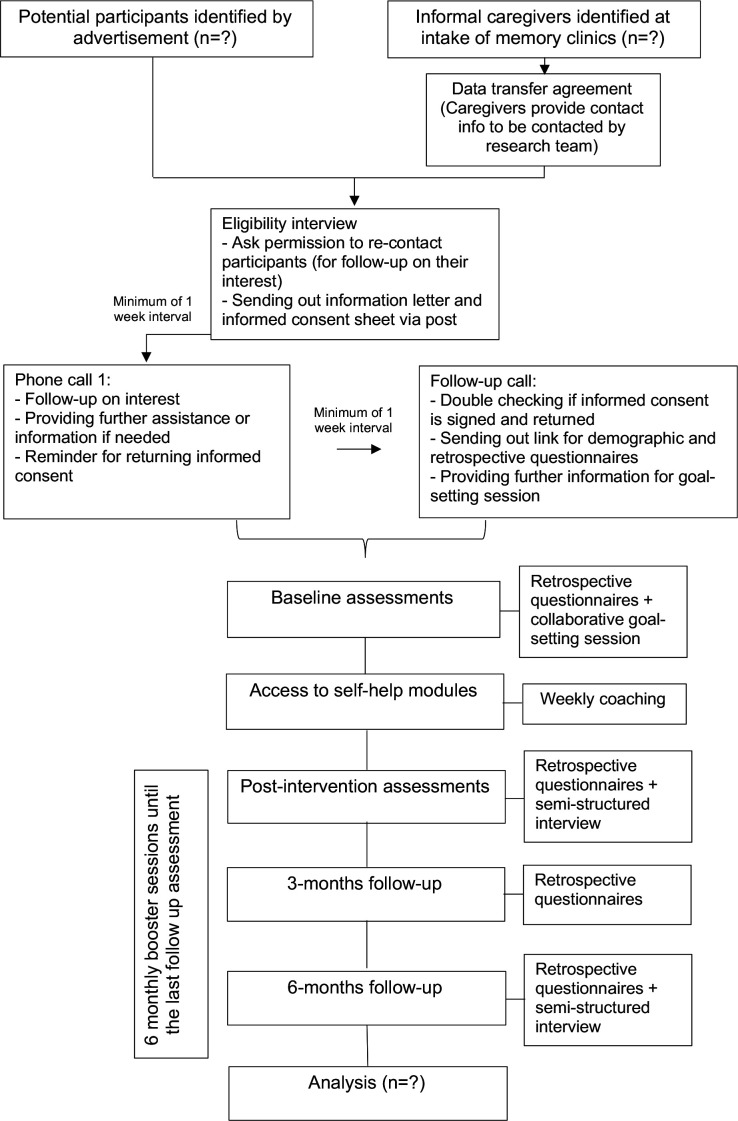
Introduction Numerous caregiver support programmes have shown promise in promoting the mental health of informal caregivers of people with dementia (PwD). However, there is still a lack of evidence-based interventions tailored to the specific needs of this population. This mixed-methods study aims to evaluate the feasibility, acceptability and preliminary efficacy of a blended intervention based on acceptance and commitment therapy (ACT) for informal caregivers of PwD, leading to a better understanding of intervention refinements for future controlled trials. Methods and analysis This study includes an uncontrolled pre-post intervention pilot study. A total of 30 informal caregivers of PwD will be recruited through memory clinics and social media platforms in the Netherlands. The ACT for informal caregiver (ACT-IC) intervention will be delivered over a 9-week period and consists of a collaborative goal-setting session, nine online ACT modules, nine telephone-based motivational coaching sessions and 6 monthly booster sessions following the main intervention period. Feasibility and acceptability will be assessed using attrition rate, adherence to and engagement with the intervention, proportion of missing data and semistructured interviews. Preliminary efficacy will be assessed with retrospective measures of depression, anxiety, stress, sense of competence, burden and self-efficacy at baseline, postintervention, at 3-month and 6-month follow-ups. Ethics and dissemination The Medical Ethical Committee from the Maastricht academic hospital and Maastricht University approved the study. The findings of this study will be shared with healthcare professionals, researchers and public audience through various channels, including scientific publications, conference presentations, online forums and community outreach programmes. Trial registration number NCT05064969. © 2023 BMJ Publishing Group. All rights reserved.
Overview
CoChat Summary
## TL;DR
This is a 2023 BMJ Open protocol for a mixed-methods feasibility study of ACT-IC, a blended online acceptance and commitment therapy intervention for informal caregivers of people with dementia. It will test feasibility/acceptability and gather preliminary efficacy data in an uncontrolled pre–post pilot with 30 caregivers in the Netherlands.
## Key findings
- The study is designed as an uncontrolled pre–post intervention pilot with 30 informal caregivers recruited in the Netherlands.
- The intervention has four main components: collaborative goal setting, nine online ACT modules, 9 weekly motivational coaching sessions, and 6 monthly booster sessions.
- Feasibility/acceptability will be assessed using attrition rate, adherence, engagement, proportion of missing data, and semistructured interviews; the paper also specifies a Program Participation Questionnaire with 26 questions for participants and a 6-item questionnaire for coaches.
- Preliminary efficacy will be measured at baseline, postintervention, 3 months, and 6 months on depression, anxiety, stress, sense of competence, burden, self-efficacy, plus ACT-related and goal-attainment outcomes; GAS uses an ordinal scale from −3 to 2.
## Methods
- Design: Mixed-methods, uncontrolled pre–post intervention pilot; primary outcome is feasibility/acceptability and secondary outcome is preliminary efficacy.
- Sample/data: 30 adult informal caregivers of people with dementia in the Netherlands, recruited through memory clinics and social media; inclusion required caregiving at least once weekly for at least 3 months and internet/tablet/computer access.
- Analysis: Quantitative analyses will use descriptive and inferential statistics, with repeated-measures multivariate analysis of covariance models for retrospective questionnaires; qualitative data from interviews/PPQ reflections will be analyzed using deductive content analysis.
## Limitations
- The paper states that this is an uncontrolled pre–post study with one group, so it is limited in examining effectiveness.
- The authors note that participation is voluntary, so the sample may not be fully representative of the target population; they specifically mention possible differences such as higher education and familiarity with technology.
- Evident from the protocol: as a feasibility study, results will be preliminary and based on a small sample (n=30), so any efficacy conclusions will be limited.
Model-written summary. Check it against the paper before relying on it.
Integrity signals
Registry
Cites
Statistics
Figures
Verification
Claims the paper makes
7 Valid · 0 Not valid · 25 Not checked · 12 Own results and interpretations
In the paper
“This measure is a good predictor for institutionalisation”
§ Blended intervention based on acceptance and commitment therapy for informal caregivers of people with dementia (ACT-IC): protocol of a mixed-methods feasibility study > Methods and analysis > Burden
What the sources say
- Not checked — no full text of the sourcecites [32] Kraijo H, Brouwer W, de Leeuw R, et al. The perseverance time of informal carers of dementia patients: validation of a new measure to initiate transition of care at home to nursing home care. J Alzheimers Dis 2014; 40: 631– 42. 10.3233/JAD-132420 24496076 source
plainstates an association- Asserted: passes — The authors put it forward as true.
- Checkable: passes — It can be checked against evidence.
- Load-bearing: unclear — It is unclear whether the paper’s conclusions depend on it.
- Based: passes — The paper gives a reason why it holds.
In the paper
“High-quality ACT trials with longer-term follow-up assessments (ie, over 3 months) for informal caregivers of adult (rather than paediatric) patients are still lacking.8 10”
§ Blended intervention based on acceptance and commitment therapy for informal caregivers of people with dementia (ACT-IC): protocol of a mixed-methods feasibility study > Introduction
What the sources say
- Not matchedcites 8 10
This doesn’t read as a citation we can look up.
plain- Asserted: passes — The authors put it forward as true.
- Checkable: passes — It can be checked against evidence.
- Load-bearing: passes — The paper’s conclusions depend on it.
- Based: passes — The paper gives a reason why it holds.
- Not matched
In the paper
“This validated scale consists of 16 items”
§ Blended intervention based on acceptance and commitment therapy for informal caregivers of people with dementia (ACT-IC): protocol of a mixed-methods feasibility study > Methods and analysis > Process measures
What the sources say
- Not checked — no full text of the sourcecites [36] Trompetter HR, Ten Klooster PM, Schreurs KMG, et al. Measuring values and committed action with the engaged living scale (ELS): psychometric evaluation in a nonclinical sample and a chronic pain sample. Psychol Assess 2013; 25: 1235– 46. 10.1037/a0033813 23914955 source
plain- Asserted: passes — The authors put it forward as true.
- Checkable: passes — It can be checked against evidence.
- Load-bearing: unclear — It is unclear whether the paper’s conclusions depend on it.
- Based: passes — The paper gives a reason why it holds.
In the paper
“ACT interventions in various modalities (eg, face to face or online) tend to be generally feasible and acceptable for informal caregivers.8”
§ Blended intervention based on acceptance and commitment therapy for informal caregivers of people with dementia (ACT-IC): protocol of a mixed-methods feasibility study > Introduction
What the sources say
- Not checked — no full text of the sourcecites [8] Han A, Yuen HK, Jenkins J. Acceptance and commitment therapy for family caregivers: a systematic review and meta-analysis. J Health Psychol 2021; 26: 82– 102. 10.1177/1359105320941217 32659142 source
hedged- Asserted: passes — The authors put it forward as true.
- Checkable: passes — It can be checked against evidence.
- Load-bearing: passes — The paper’s conclusions depend on it.
- Based: passes — The paper gives a reason why it holds.
In the paper
“Particularly for informal caregivers of PwD that generally experience higher rates of depression,1 11”
§ Blended intervention based on acceptance and commitment therapy for informal caregivers of people with dementia (ACT-IC): protocol of a mixed-methods feasibility study > Introduction
What the sources say
- Not matchedcites 1 11
This doesn’t read as a citation we can look up.
plainstates an association- Asserted: passes — The authors put it forward as true.
- Checkable: passes — It can be checked against evidence.
- Load-bearing: passes — The paper’s conclusions depend on it.
- Based: passes — The paper gives a reason why it holds.
- Not matched
6 more claims
Create a free account to see all 44 claims and to verify the 3 references still open.
- Probably not a substantial claim. 25
- It may state two separate claims as one. 19
Self-check
Percentages, sums and reported differences re-computed from the paper’s own numbers.
Each contradiction between two passages listed here was confirmed by an independent check.
Rated major: it would touch a result — a value a result rests on, reported and recomputed p-values on opposite sides of the significance level, two passages that conflict with no sign which is right, or a cited work retracted before this paper was published.
In the paper
§ Blended intervention based on acceptance and commitment therapy for informal caregivers of people with dementia (ACT-IC): protocol of a mixed-methods feasibility study > Methods and analysis > Planned data analysis
“The level of goal attainment will range from −3 (much lower than expected) to +2 (much better than expected), with a score of 0 indicating goals attained and −1 indicating the current level at preintervention.”
§ Blended intervention based on acceptance and commitment therapy for informal caregivers of people with dementia (ACT-IC): protocol of a mixed-methods feasibility study > Methods and analysis > Intervention
“The ‘−2’ score attributes to the ‘current’ level at preintervention and addresses ‘no change’ from the goal-setting day.”
Rated major: it would touch a result — a value a result rests on, reported and recomputed p-values on opposite sides of the significance level, two passages that conflict with no sign which is right, or a cited work retracted before this paper was published.
In the paper
§ Blended intervention based on acceptance and commitment therapy for informal caregivers of people with dementia (ACT-IC): protocol of a mixed-methods feasibility study > Methods and analysis > Goal attainment
“This factor will be measured during 9-weekly coaching and 6-monthly booster sessions in a prespecified ordinal scale with the number of attainment levels ranging from −3 (much less than expected) to 2 (much better than expected), with 0 indicating that the goal is attained and −1 as the current level at preintervention.”
§ Blended intervention based on acceptance and commitment therapy for informal caregivers of people with dementia (ACT-IC): protocol of a mixed-methods feasibility study > Methods and analysis > Intervention
“The SMART goal attainment will be mapped in a prespecified ordinal scale, and the number of attainment levels will be the same for all goals ranging from −3 to 2. In the above-mentioned example, the potential SMART goal will be set at level ‘0’ as the ‘expected’ level that can be achieved (eg, 15 min of daily walks three times a week).”
Citations
Cites
The qualitative content analysis process
Elo, S., & Kyngäs, H. (2008) · Journal of Advanced Nursing · doi:10.1111/j.1365-2648.2007.04569.x · Cited by 22,617
SPIRIT 2013 Statement: Defining Standard Protocol Items for Clinical Trials
Chan, A.-W., Tetzlaff, J. M., Altman, D. G., Laupacis, A., Gøtzsche, P. C., Krleža-Jerić, K., Hróbjartsson, A., Mann, H., Dickersin, K., Berlin, J. A., et al. (2013) · Annals of Internal Medicine · doi:10.7326/0003-4819-158-3-201302050-00583 · Cited by 7,363
Acceptance and commitment therapy: model, processes and outcomes
Hayes, S. C., Luoma, J. B., Bond, F. W., Masuda, A., & Lillis, J. (2006) · Behaviour Research and Therapy · doi:10.1016/j.brat.2005.06.006 · Cited by 6,587
Henry, J. D., & Crawford, J. R. (2005) · British Journal of Clinical Psychology · doi:10.1348/014466505x29657 · Cited by 5,801
Bond, F. W., Hayes, S. C., Baer, R. A., Carpenter, K. M., Guenole, N., Orcutt, H. K., Waltz, T., & Zettle, R. D. (2011) · Behavior Therapy · doi:10.1016/j.beth.2011.03.007 · Cited by 3,950
Development and evaluation of a scale to measure perceived self‐efficacy in people with arthritis
Lorig, K., Chastain, R. L., Ung, E., Shoor, S., & Holman, H. R. (1989) · Arthritis & Rheumatism · doi:10.1002/anr.1780320107 · Cited by 1,590 · cited 1×
“37 38 This number enables the calculation of the key factors relevant to determine feasibility (eg, attrition rates) and provides a reasonable indication of the preliminary efficacy and likely sample size required for a larger controlled trial.”
What is a pilot or feasibility study? A review of current practice and editorial policy
Arain, M., Campbell, M. J., Cooper, C. L., & Lancaster, G. A. (2010) · BMC Medical Research Methodology · doi:10.1186/1471-2288-10-67 · Cited by 1,483
On the use of a pilot sample for sample size determination
Browne, R. H. (1995) · Statistics in Medicine · doi:10.1002/sim.4780141709 · Cited by 1,007 · cited 1×
“37 38 This number enables the calculation of the key factors relevant to determine feasibility (eg, attrition rates) and provides a reasonable indication of the preliminary efficacy and likely sample size required for a larger controlled trial.”
Writing SMART rehabilitation goals and achieving goal attainment scaling: a practical guide
Bovend'Eerdt, T. J., Botell, R. E., & Wade, D. T. (2009) · Clinical Rehabilitation · doi:10.1177/0269215508101741 · Cited by 754
Family Caregiving for Older Adults
Schulz, R., Beach, S. R., Czaja, S. J., Martire, L. M., & Monin, J. K. (2020) · Annual Review of Psychology · doi:10.1146/annurev-psych-010419-050754 · Cited by 754
A Primer on Effectiveness and Efficacy Trials
Singal, A. G., Higgins, P. D. R., & Waljee, A. K. (2014) · Clinical and Translational Gastroenterology · doi:10.1038/ctg.2013.13 · Cited by 698
The Distinctive Features of a Feasibility Study: Objectives and Guiding Questions
Orsmond, G. I., & Cohn, E. S. (2015) · OTJR: Occupational Therapy Journal of Research · doi:10.1177/1539449215578649 · Cited by 561 · cited 1×
“28 29 Furthermore, the acceptability of each module will be evaluated online and on module completion.”
BackgroundThe valued living questionnaire: defining and measuring valued action within a behavioral framework
Wilson, K. G., Sandoz, E. K., Kitchens, J., & Roberts, M. (2010) · The Psychological Record · doi:10.1007/bf03395706 · Cited by 518
Affirmation of personal values buffers neuroendocrine and psychological stress responses
Creswell, J. D., Welch, W. T., Taylor, S. E., Sherman, D. K., Gruenewald, T. L., & Mann, T. (2005) · Psychological Science · doi:10.1111/j.1467-9280.2005.01624.x · Cited by 482
Newman, M. G., Szkodny, L. E., Llera, S. J., & Przeworski, A. (2011) · Clinical Psychology Review · doi:10.1016/j.cpr.2010.09.008 · Cited by 480 · cited 2×
“25 In a semistructured interview, participants will rate and reflect on 26 questions focusing on the intervention components (ie, SMART goal setting, online modules and motivational coaching).”
Losada, A., Márquez-González, M., Romero-Moreno, R., Mausbach, B. T., López, J., Fernández-Fernández, V., & Nogales-González, C. (2015) · Journal of Consulting and Clinical Psychology · doi:10.1037/ccp0000028 · Cited by 255
Measurement and correlates of family caregiver self-efficacy for managing dementia
Fortinsky, R. H., Kercher, K., & Burant, C. J. (2002) · Aging & Mental Health · doi:10.1080/13607860220126763 · Cited by 214
Acceptance and Commitment Therapy in the treatment of anxiety: A systematic review
Swain, J., Hancock, K., Hainsworth, C., & Bowman, J. (2013) · Clinical Psychology Review · doi:10.1016/j.cpr.2013.07.002 · Cited by 207
Vernooij‐Dassen, M. J., Felling, A. J., Brummelkamp, E., Dauzenberg, M. G., van den Bos, G. A., & Grol, R. (1999) · Journal of the American Geriatrics Society · doi:10.1111/j.1532-5415.1999.tb04588.x · Cited by 197
Trompetter, H. R., ten Klooster, P. M., Schreurs, K. M. G., Fledderus, M., Westerhof, G. J., & Bohlmeijer, E. T. (2013) · Psychological Assessment · doi:10.1037/a0033813 · Cited by 184 · cited 1×
“36 Sample size Sample sizes of n=30 participants are recommended in previous research to be an appropriate number for sufficient information on feasibility outcomes.”
BackgroundIncorporating feasibility protocols in intervention research
Gadke, D. L., Kratochwill, T. R., & Gettinger, M. (2021) · Journal of School Psychology · doi:10.1016/j.jsp.2020.11.004 · Cited by 132
Vermunt, N. P. C. A., Harmsen, M., Westert, G. P., Olde Rikkert, M. G. M., & Faber, M. J. (2017) · BMC Geriatrics · doi:10.1186/s12877-017-0534-0 · Cited by 119
Johannsen, M., Nissen, E. R., Lundorff, M., & O'Toole, M. S. (2022) · Clinical Psychology Review · doi:10.1016/j.cpr.2022.102156 · Cited by 116
Hayes, S. C. (2008) · Clinical Psychology: Science and Practice · doi:10.1111/j.1468-2850.2008.00139.x · Cited by 104
Taylor, H., Strauss, C., & Cavanagh, K. (2021) · Clinical Psychology Review · doi:10.1016/j.cpr.2021.102078 · Cited by 102 · cited 1×
“23 24 This study provides a ‘minimal contact’ self-help intervention in which the motivational coach is involved in offering (technical) support during the intervention without the intention of providing therapy.”
French, K., Golijani-Moghaddam, N., & Schröder, T. (2017) · Journal of Contextual Behavioral Science · doi:10.1016/j.jcbs.2017.08.002 · Cited by 100 · cited 1×
“23 24 This study provides a ‘minimal contact’ self-help intervention in which the motivational coach is involved in offering (technical) support during the intervention without the intention of providing therapy.”
eHealth interventions for family carers of people with long term illness: A promising approach?
Sin, J., Henderson, C., Spain, D., Cornelius, V., Chen, T., & Gillard, S. (2018) · Clinical Psychology Review · doi:10.1016/j.cpr.2018.01.008 · Cited by 96
Acceptance and commitment therapy for family caregivers: A systematic review and meta-analysis.
Han, A., Yuen, H. K., & Jenkins, J. (2021) · Journal of Health Psychology · doi:10.1177/1359105320941217 · Cited by 82
Boots, L. M., de Vugt, M. E., Withagen, H. E., Kempen, G. I., & Verhey, F. R. (2016) · JMIR Research Protocols · doi:10.2196/resprot.5142 · Cited by 79 · cited 3×
“27”
BackgroundMethodSelf-citation(2014) · Cited by 73
Social factors and depression in carers of people with dementia
Waite, A., Bebbington, P., Skelton‐Robinson, M., & Orrell, M. (2004) · International Journal of Geriatric Psychiatry · doi:10.1002/gps.1136 · Cited by 68
Boots, L. M., de Vugt, M. E., Smeets, C. M., Kempen, G. I., & Verhey, F. R. (2017) · Journal of Medical Internet Research · doi:10.2196/jmir.7666 · Cited by 61
Self-citationBarrett, K., O’Connor, M., & McHugh, L. (2019) · The Psychological Record · doi:10.1007/s40732-019-00352-7 · Cited by 55 · cited 1×
“46 Therefore, informal caregivers will have an opportunity to customise the intervention towards their personal values and can plan to meet them.”
BackgroundBruinsma, J., Peetoom, K., Bakker, C., Boots, L., Millenaar, J., Verhey, F., & de Vugt, M. (2021) · Internet Interventions · doi:10.1016/j.invent.2021.100390 · Cited by 48
Self-citationCoe, N. B., Konetzka, R. T., Berkowitz, M., Blecker, E., & Houtven, C. H. V. (2021) · Annual Review of Public Health · doi:10.1146/annurev-publhealth-090419-102354 · Cited by 43
Kraijo, H., Brouwer, W., de Leeuw, R., Schrijvers, G., & van Exel, J. (2014) · Journal of Alzheimer s Disease · doi:10.3233/jad-132420 · Cited by 42
Psychometric properties of the Valued Living Questionnaire Adapted to Dementia Caregiving
Romero-Moreno, R., Gallego-Alberto, L., Márquez-González, M., & Losada, A. (2017) · Aging & Mental Health · doi:10.1080/13607863.2016.1191055 · Cited by 42
Han, A., Yuen, H. K., Lee, H. Y., & Zhou, X. (2020) · Journal of Contextual Behavioral Science · doi:10.1016/j.jcbs.2020.10.004 · Cited by 39
Fauth, E. B., Novak, J. R., & Levin, M. E. (2022) · Aging & Mental Health · doi:10.1080/13607863.2021.1942432 · Cited by 38
De flexibiliteits index test (FIT-60): Een Beknopte Beschrijving
Batink, T., Jansen, G., & de Mey, H. (2012) · GZ - Psychologie · doi:10.1007/s41480-012-0043-x · Cited by 28
Bartels, S. L., van Knippenberg, R. J. M., Köhler, S., Ponds, R. W., Myin-Germeys, I., Verhey, F. R. J., & de Vugt, M. E. (2020) · Aging & Mental Health · doi:10.1080/13607863.2019.1647130 · Cited by 25
Self-citationGoal setting with caregivers of adults in the community: a mixed methods systematic review
Tang Yan, H. S., Clemson, L. M., Jarvis, F., & Laver, K. (2014) · Disability and Rehabilitation · doi:10.3109/09638288.2014.884173 · Cited by 21
Campbell, S. E., Azuara-Blanco, A., Campbell, M. K., Francis, J. J., Greene, A. C., Ramsay, C. R., & Burr, J. M. (2012) · BMC Health Services Research · doi:10.1186/1472-6963-12-447 · Cited by 13 · cited 1×
“42 Mean item scores of 5 (slightly agree) or above will be regarded as positive, while mean item scores below 4 (slightly disagree or lower) will be considered as a need for further improvement.”
BackgroundVara-García, C., Romero-Moreno, R., Barrera-Caballero, S., Pedroso-Chaparro, M. D. S., Cabrera, I., Márquez-González, M., Olazarán, J., & Losada, A. (2021) · Aging & Mental Health · doi:10.1080/13607863.2020.1821169 · Cited by 10 · cited 1×
“18 Moving towards values has been highlighted to be positively associated with emotional well-being 19 and negatively associated with distress 47 and can lead informal caregivers to better psychological, social and physical outcomes.”
Background
Research works printed but not linked: 1
- Hayes SC, Strosahl KD, Wilson KG. Acceptance and commitment therapy: the process and practice of mindful change (Second). The Guilford Press, 2016.
Cited by
Atefi, G. L., van Knippenberg, R. J. M., Bartels, S. L., Losada-Baltar, A., Márquez-González, M., Verhey, F. R. J., & de Vugt, M. E. (2024) · JMIR Aging · doi:10.2196/53489 · Cited by 15
“…Maastricht for the purpose of quality and control at the beginning of the study (ie, site initiation visit); during the course of the study (ie, interim monitoring visits); and at the end of the study, when participants had completed the study and all data had been collected (close-out visit) [33].”
BackgroundMethodInfluentialSelf-citationAtefi, G., van Knippenberg, R. J. M., Bartels, S. L., Losada‐Baltar, A., Márquez‐González, M., Verhey, F. R. J., & de Vugt, M. E. (2025) · Cognitive Behaviour Therapy · doi:10.1080/16506073.2025.2477600 · Cited by 13
Self-citationDamnée, S., Vidal, J., Mercier, J., Pino, M., Dacunha, S., Bayle, C., Cantegreil, I., Rigaud, A., & Lenoir, H. (2026) · Clinical Gerontologist · doi:10.1080/07317115.2026.2653581 · Cited by 2
“To influence coping at a categorical level, future iterations should pair information with coached skills practice (Atefi et al., 2023; Gitlin, 2024; Pihet et al., 2024), embed structured family-staff partnership encounters (e.g., scheduled care plan reviews using shared agendas) (Backhaus et al.,…”
Metadata
- Authors
- Atefi, G. L., van Knippenberg, R. J. M., Bartels, S. L., Verhey, F. R. J., & de Vugt, M. E.
- Affiliations
- Maastricht University (NL)
- Department of Psychiatry & Neuropsychology, Alzheimer Centre Limburg, Maastricht University, Maastricht, The Netherlands
- Corresponding author
- Atefi, Golnaz L
- Venue
- BMJ Open
- Publisher
- BMJ
- Published
- 2023-09
- Volume
- 13
- Issue
- 9
- Pages
- e070499
- ISSN
- 2044-6055 (ISSN-L)
- PMC
- PMC10503340
- OpenAlex
- W4386750098
- Semantic Scholar
- 6e08c0d5fa6a0ded73db3721cad507efcae33733
- Cited by
- 3
- References
- 46
- Citations by year
- 2026: 1 · 2025: 1 · 2024: 1
- FWCI
- 0.87
- Type
- journal article
- Language
- en
- Open access
- gold
- doi.org
- Licence
- Locations
- BMJ Open (publishedVersion, cc-by-nc)
- PubMed Central (publishedVersion, cc-by-nc)
- PubMed (publishedVersion)
- Research Publications (Maastricht University) (submittedVersion, cc-by-nc)
- DOAJ (DOAJ: Directory of Open Access Journals) (submittedVersion, cc-by-sa)
- HighWire Press Open Archive (submittedVersion)
- Funders
- H2020 Marie Skłodowska-Curie Actions (This research is carried out as part of the Marie)
- Topics
- Social Sciences › Psychology › Clinical Psychology › Mindfulness and Compassion Interventions
- Health Sciences › Medicine › Psychiatry and Mental health › Dementia and Cognitive Impairment Research
- Health Sciences › Nursing › Research and Theory › Nursing care and research
- Keywords
- acceptance and commitment therapy, informal caregivers, dementia, caregiver burden, caregiver mental health, blended intervention, online modules, telephone coaching, feasibility, acceptability, depression, anxiety, stress, self-efficacy, sense of competence
- MeSH terms
- Dementia, Feasibility Studies, Humans, Pilot Projects, Retrospective Studies, Caregivers, Acceptance and Commitment Therapy
About these checks
Registry, retraction, Cites and statistics results are computed, not judged, with one exception: a printed reference that no index lists is read once by a model before it counts as a citation error. Claims are extracted by a model and kept only when their quote appears verbatim in the text; each cited source is then checked, with a model’s help, for whether it says what the claim relies on. Those verdicts can be wrong — read the claim’s quote and the cited source before relying on one.
The claim verdicts this report counts are experimental: their accuracy is not yet measured.
A language model drew the claims from the paper on 2026-10-11, under version 3 of the claim definition (model deepseek-v4.1-flash, prompt extract-v3).
A second model labelled each claim on 2026-10-11 (model jev-1.13-20260917, definition revision gold-guideline-v0.2).
Statistics and arithmetic are recomputed, not judged.
Confidence bands are shown only for fields calibrated on our annotated test set. None is calibrated yet, so no band is shown.
What counts as a claim ›How we measure confidence ›How we check this ›
Are you an author, or do you see a problem with this page? Request a review
Data sources
Bibliographic data: Semantic Scholar, OpenAlex, Crossref.
Contains information from the Semantic Scholar Academic Graph Datasets, made available under the ODC Attribution License (ODC-BY 1.0).
Semantic Scholar’s data is described in: Kinney, R., et al. (2023). The Semantic Scholar Open Data Platform. arXiv:2301.10140.
