

Efficacy in bowel movement and change of gut microbiota on adult functional constipation patients treated with probiotics-containing products: a systematic review and meta-analysis
Open accessThe DOI matches its Crossref record; 53 of the 61 references it cites were found in a registry or an index; 29 of the 61 sources its claims cite were checked for support.
Abstract
Objectives: This study aimed to pool the efficacy in bowel movement and explore the change of gut microbiota on adult functional constipated patients after probiotics-containing products treatment. Design: Systematic review and meta-analysis. Data sources: PubMed, Cochrane Library for published studies and ClinicalTrials.gov for ‘grey’ researches were independently investigated for randomised controlled trials up to November 2022. Eligibility criteria, data extraction and synthesis: The intervention was probiotics-containing product, either probiotics or synbiotics, while the control was placebo. The risk of bias was conducted. The efficacy in bowel movement was indicated by stool frequency, stool consistency and Patient Assessment of Constipation Symptom (PAC-SYM), while the change of gut microbiota was reviewed through α diversity, β diversity, change/difference in relative abundance and so on. The subgroup analysis, sensitivity analysis and random-effect meta-regression were conducted to explore the heterogeneity. The Grading of Recommendations Assessment Development and Evaluation was conducted to grade the quality of evidence. Results: 17 studies, comprising 1256 participants, were included with perfect agreements between two researchers (kappa statistic=0.797). Compared with placebo, probiotics-containing products significantly increased the stool frequency (weighted mean difference, WMD 0.93, 95% CI 0.47 to 1.40, p=0.000, I ² =84.5%, ‘low’), improved the stool consistency (WMD 0.38, 95% CI 0.05 to 0.70, p=0.023, I²=81.6%, ‘very low’) and reduced the PAC-SYM (WMD −0.28, 95% CI: −0.45 to −0.11, p=0.001, I²=55.7%, ‘very low’). In subgroup analysis, synbiotics was superior to probiotics to increase stool frequency. Probiotics-containing products might not affect α or β diversity, but would increase the relative abundance of specific strain. Conclusions: Probiotics-containing products, significantly increased stool frequency, improved stool consistency, and alleviated functional constipation symptoms. They increased the relative abundance of specific strain. More high-quality head-to-head randomised controlled trials are needed.
Overview
CoChat Summary
TL;DR
In adults with functional constipation, probiotics-containing products (probiotics or synbiotics) significantly increased stool frequency, improved stool consistency, and reduced PAC-SYM scores compared with placebo. Gut microbiota α/β diversity was generally unchanged, but relative abundance of specific supplemented strains often increased.
Key findings
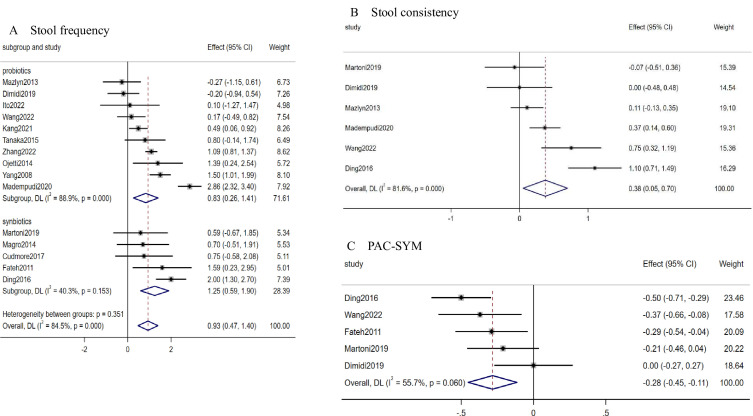
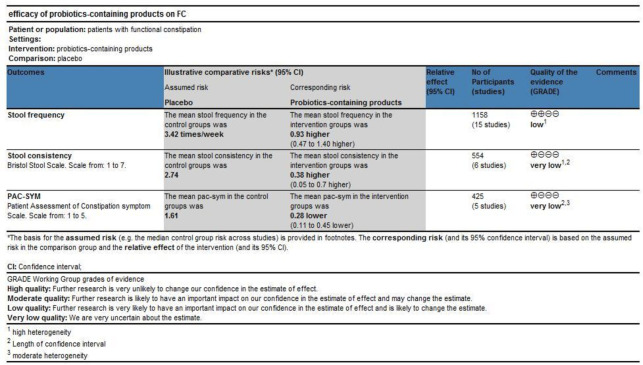
- Across 17 RCTs and 1256 participants, probiotics-containing products increased stool frequency versus placebo (WMD 0.93, 95% CI 0.47 to 1.40, p=0.000, I²=84.5%, GRADE “low”).
- They improved stool consistency (WMD 0.38, 95% CI 0.05 to 0.70, p=0.023, I²=81.6%, GRADE “very low”) and reduced PAC-SYM (WMD −0.28, 95% CI −0.45 to −0.11, p=0.001, I²=55.7%, GRADE “very low”).
- Synbiotics were superior to probiotics for stool frequency (synbiotics WMD 1.25, 95% CI 0.59 to 1.90, p=0.000; probiotics WMD 0.83, 95% CI 0.26 to 1.41, p=0.005); multistrain formula also showed significant efficacy (WMD 1.38, 95% CI 0.94 to 1.82, p=0.000).
- Qualitative review of 8 studies suggested probiotics-containing products might not affect α or β diversity, but often increased relative abundance of specific strains; one study found decreased OTUs and Chao1 in the experimental group.
Methods
- Systematic review and meta-analysis of parallel or cross-over RCTs in adults with functional constipation; intervention was probiotics or synbiotics, control was placebo; outcomes included stool frequency, stool consistency, PAC-SYM, and gut microbiota change.
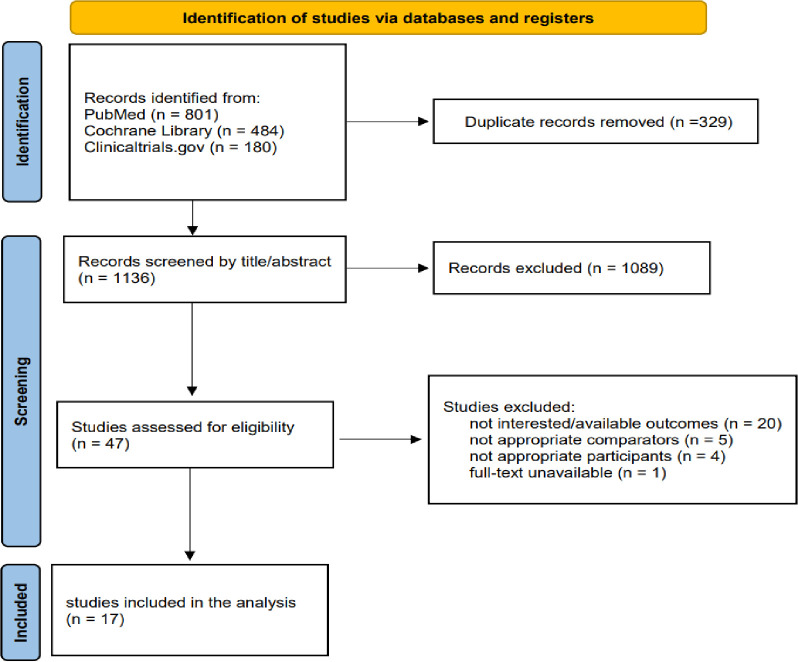
- Searched PubMed, Cochrane Library, and ClinicalTrials.gov up to November 2022; 17 studies with 1256 participants were included, with agreement between reviewers (kappa=0.797); PROSPERO registration CRD42022381368.
- Pooled continuous outcomes using WMD or SMD with random/fixed-effect models, assessed heterogeneity by I², and performed subgroup analysis, sensitivity analysis, random-effect meta-regression, and GRADE; microbiota changes were qualitatively summarized through α diversity, β diversity, and relative abundance.
Limitations
- Stated: modest sample sizes and high heterogeneity may misestimate efficacy; lack of clear protocols increases possible publication bias; obesity and diet may affect gut microbiota but relevant data were often unavailable; no unified methodology for measuring microbiota effects; negative data are underreported.
- Evident from text: stool frequency and consistency pooled results had high heterogeneity (I²=84.5% and 81.6%, respectively), and GRADE quality was “low” for stool frequency and “very low” for stool consistency and PAC-SYM.
- Evident from text: quantitative syntheses relied on limited study numbers for stool consistency (6 studies) and PAC-SYM (5 studies), and microbiota conclusions came from qualitative review of 8 studies with varied sequencing and analysis methods.
Model-written summary. Check it against the paper before relying on it.
Integrity signals
Registry
Cites
Statistics
Figures
Verification
Claims the paper makes
17 Valid · 4 Not valid · 16 Not checked · 44 Own results and interpretations
At least one cited source doesn’t support this claim or points to a different paper, and none confirmed it — see the verdicts below.
In the paper
“by subgroup analysis, our pooled results, with similarity to previous researches,12 13 indicated that Bacillus-containing formula might had the best but non-significant efficacy, while multistrains formula had satisfactory and significant efficacy.”
- Also stated in: § Conclusion · plain
“the multistrains formula displays satisfactory and credible efficacy”
§ Efficacy in bowel movement and change of gut microbiota on adult functional constipation patients treated with probiotics-containing products: a systematic review and meta-analysis > Discussion
What the sources say
- Disputedcites [12] Miller LE, Zimmermann AK, Ouwehand AC. Contemporary meta-analysis of short-term Probiotic consumption on gastrointestinal transit. World J Gastroenterol 2016; 22: 5122– 31. 10.3748/wjg.v22.i21.5122 27275105 PMC4886388 sourceExperimental — accuracy not yet measured
Table 5 (subgroup analysis of intestinal transit time; page not supplied) reports a positive estimated effect for multiple-strain probiotics, but it was not statistically significant (SMD 0.23, 95% CI −0.01 to 0.47; P = 0.06). The paper therefore contradicts the claim of significant efficacy for multistrain formulas. (LLM, conf=0.90)
Checked by a reasoning model — may be wrong.
- Not checked — no full text of the sourcecites [13] Zhang C, Jiang J, Tian F, et al. Meta-analysis of randomized controlled trials of the effects of Probiotics on functional constipation in adults. Clin Nutr 2020; 39: 2960– 9. 10.1016/j.clnu.2020.01.005 32005532 source
plainstates a cause- Asserted: passes — The authors put it forward as true.
- Checkable: passes — It can be checked against evidence.
- Load-bearing: passes — The paper’s conclusions depend on it.
- Based: passes — The paper gives a reason why it holds.
- Also stated in: § Conclusion · plain
Some cited sources support this claim and some don’t — read each source’s verdict below.
In the paper
“17 studies, comprising 1256 participants, were included with perfect agreements between two researchers (kappa statistic=0.797).”
- Also stated in: § Study characteristics · plain
“Finally, a total of 17 studies, consisting of 1256 participants, were included with perfect agreements between two researchers (kappa statistic=0.797).16–32”
§ Efficacy in bowel movement and change of gut microbiota on adult functional constipation patients treated with probiotics-containing products: a systematic review and meta-analysis > Abstract > Results
What the sources say
- Not checked — no full text of the sourcecites [16] Cudmore S, Doolan A, Lacey S, et al. A randomised, double-blind, placebo-controlled clinical study: the effects of a Synbiotic, Lepicol, in adults with chronic, functional constipation. Int J Food Sci Nutr 2017; 68: 366– 77. 10.1080/09637486.2016.1244661 27776217 source
- Disputedcites [17] Dimidi E, Zdanaviciene A, Christodoulides S, et al. Randomised clinical trial: Bifidobacterium Lactis Ncc2818 Probiotic vs placebo, and impact on gut transit time, symptoms, and gut Microbiology in chronic constipation. Aliment Pharmacol Ther 2019; 49: 251– 64. 10.1111/apt.15073 30585341 sourceExperimental — accuracy not yet measured
The Introduction (page unavailable) reports a systematic review of 14 RCTs in adults with chronic constipation, not 17. It describes the cited paper’s own work as a randomized probiotic trial, not the systematic review claimed here; the cited passages do not report 1,256 participants. (LLM, conf=0.88)
Checked by a reasoning model — may be wrong.
- Disputedcites [18] Ding C, Ge X, Zhang X, et al. Efficacy of Synbiotics in patients with slow transit constipation: a prospective randomized trial. Nutrients 2016; 8: 605. 10.3390/nu8100605 27690093 PMC5083993 sourceExperimental — accuracy not yet measured
The Results (section 3.1; page unavailable) describe a single randomized trial: 100 patients were assigned to two groups, and 93 were included in the final analysis. The cited paper does not report a systematic review of 17 trials or 1,256 participants; the citing sentence’s study count and sample size are contrary to its reported design and results. (LLM, conf=0.88)
Checked by a reasoning model — may be wrong.
- Partly supportedcites [19] Fateh R, Iravani S, Frootan M, et al. Synbiotic preparation in men suffering from functional constipation: a randomised controlled trial. Swiss Med Wkly 2011; 141: w13239. 10.4414/smw.2011.13239 21805410 sourceExperimental — accuracy not yet measured
Our copy of Fateh et al. 2011 is a single-centre, 4-week double-blind randomised placebo-controlled trial in adult men with Rome III functional constipation (Patients and methods, p. 2), reporting 107 screened, 66 allocated and 60 analysed (Results, p. 3) — so it does qualify as one of the adult functional-constipation RCTs a pooled review would include, but it supplies none of the figures attributed here. Searches for '17 studies', '1256 participants' and a kappa/inter-reviewer agreement statistic returned no passage: the paper runs no systematic review of its own and states no inclusion totals. The only systematic review it mentions is Chmielewska & Szajewska 2010 (ref. 20), cited in the Introduction (p. 1) and Discussion (p. 5) solely for its conclusion that evidence is insufficient, with no number of studies or patients given. The aggregate counts therefore rest on nothing in this source. (LLM, conf=0.72)
- Disputedcites [20] Ito D, Yamamoto Y, Maekita T, et al. Do Synbiotics really enhance beneficial synbiotics effect on defecation symptoms in healthy adults?: randomized, double-blind, placebo-controlled trial. Medicine 2022; 101: e28858. 10.1097/MD.0000000000028858 35212286 PMC8878738 sourceExperimental — accuracy not yet measured
The Abstract (Study) describes a single randomized trial enrolling 69 healthy adults with a tendency toward constipation, not a systematic review of 17 trials and 1,256 patients. The Materials and methods (Participants) also state that people diagnosed with constipation or meeting Rome IV criteria were excluded. (LLM, conf=0.94)
Checked by a reasoning model — may be wrong.
- Not checked — no full text of the sourcecites [21] Kang S, Park MY, Brooks I, et al. Spore-forming Bacillus coagulans SNZ 1969 improved intestinal motility and constipation perception mediated by microbial alterations in healthy adults with mild intermittent constipation: a randomized controlled trial. Food Res Int 2021; 146: 110428. 10.1016/j.foodres.2021.110428 34119240 source
- Not checked — no full text of the sourcecites [22] Kim MC, Lee S, Park JK, et al. Effects of ID-Hws1000 on the perception of bowel activity and microbiome in subjects with functional constipation: a randomized, double-blind placebo-controlled study. J Med Food 2021; 24: 883– 93. 10.1089/jmf.2020.4746 34406877 source
- Disputedcites [23] Kondo J, Xiao J-Z, Shirahata A, et al. Modulatory effects of bifidobacterium longum Bb536 on defecation in elderly patients receiving enteral feeding. World J Gastroenterol 2013; 19: 2162– 70. 10.3748/wjg.v19.i14.2162 23599642 PMC3627880 sourceExperimental — accuracy not yet measured
Our copy of Kondo et al. 2013 is a primary intervention study, not a systematic review: the Abstract (Methods) and the 'Clinical trials' section state that only two double-blind, placebo-controlled trials were performed, randomizing 83 patients (Trial 1) and 123 patients (Trial 2) — 206 elderly enteral-fed inpatients in total, not 17 studies with 1256 participants. The DISCUSSION likewise lists 'evaluation using two successive studies' as a strength, and no passage mentions a systematic search, pooled RCTs, functional constipation in general adults, or an inter-rater kappa statistic. The population is also different (long-term tube-fed Japanese inpatients aged 65-102 with low/normal/high defecation frequency), so the claim as attributed is contradicted by the source's own design and numbers. (LLM, conf=0.78)
Checked by a reasoning model — may be wrong.
- Not checked — no full text of the sourcecites [24] Madempudi RS, Neelamraju J, Ahire JJ, et al. Bacillus Coagulans unique Is2 in constipation: A double-blind, placebo-controlled study. Probiotics Antimicrob Proteins 2020; 12: 335– 42. 10.1007/s12602-019-09542-9 30911991 source
- Could not verifycites [25] Magro DO, de Oliveira LMR, Bernasconi I, et al. Effect of yogurt containing polydextrose, lactobacillus acidophilus NCFM and bifidobacterium lactis Hn019: a randomized, double-blind, controlled study in chronic constipation. Nutr J 2014; 13: 75. 10.1186/1475-2891-13-75 25056655 PMC4113128 sourceExperimental — accuracy not yet measured
The Results report 47 participants in this yogurt trial, while the References list a separate systematic review. Our copy does not state that a review included 17 trials or 1,256 adults; searches for those figures and the reported agreement statistic found no supporting passage. (LLM, conf=0.77)
plainn = 1,256- Asserted: passes — The authors put it forward as true.
- Checkable: passes — It can be checked against evidence.
- Load-bearing: passes — The paper’s conclusions depend on it.
- Based: passes — The paper gives a reason why it holds.
- Also stated in: § Study characteristics · plain
At least one cited source doesn’t support this claim or points to a different paper, and none confirmed it — see the verdicts below.
In the paper
“by subgroup analysis, our pooled results, with similarity to previous researches,12 13 indicated that Bacillus-containing formula might had the best but non-significant efficacy, while multistrains formula had satisfactory and significant efficacy.”
- Also stated in: § Conclusion · hedged
“Bacillus-containing formula exhibits promising but non-significant efficacy, and requires further validation”
§ Efficacy in bowel movement and change of gut microbiota on adult functional constipation patients treated with probiotics-containing products: a systematic review and meta-analysis > Discussion
What the sources say
- Disputedcites [12] Miller LE, Zimmermann AK, Ouwehand AC. Contemporary meta-analysis of short-term Probiotic consumption on gastrointestinal transit. World J Gastroenterol 2016; 22: 5122– 31. 10.3748/wjg.v22.i21.5122 27275105 PMC4886388 sourceExperimental — accuracy not yet measured
The strain subgroup analysis (Table 7) identifies B. lactis HN019 and B. lactis DN-173 010 as the most efficacious strains, with statistically significant effects. The Discussion also says single-strain probiotics were more efficacious than multiple-strain probiotics. The paper does not report a Bacillus-containing formula as best but nonsignificant; B. lactis is Bifidobacterium, not Bacillus. (LLM, conf=0.84)
Checked by a reasoning model — may be wrong.
- Not checked — no full text of the sourcecites [13] Zhang C, Jiang J, Tian F, et al. Meta-analysis of randomized controlled trials of the effects of Probiotics on functional constipation in adults. Clin Nutr 2020; 39: 2960– 9. 10.1016/j.clnu.2020.01.005 32005532 source
hedgedstates a possible cause- Asserted: passes — The authors put it forward as true.
- Checkable: passes — It can be checked against evidence.
- Load-bearing: passes — The paper’s conclusions depend on it.
- Based: passes — The paper gives a reason why it holds.
- Also stated in: § Conclusion · hedged
At least one cited source doesn’t support this claim or points to a different paper, and none confirmed it — see the verdicts below.
In the paper
“while Miller et al found, by subgroup analysis, that treatment containing Lactobacillus and Bifidobacterium had significant higher improvement than treatment containing Lactobacillus or Bifidobacterium only.35”
§ Efficacy in bowel movement and change of gut microbiota on adult functional constipation patients treated with probiotics-containing products: a systematic review and meta-analysis > Discussion
What the sources say
- Disputedcites [35] Miller LE, Ouwehand AC, Ibarra A. Effects of Probiotic-containing products on stool frequency and intestinal transit in Constipated adults: systematic review and meta-analysis of randomized controlled trials. Ann Gastroenterol 2017; 30: 629– 39. 10.20524/aog.2017.0192 29118557 PMC5670282 sourceExperimental — accuracy not yet measured
In the Results sections on stool frequency and intestinal transit (page unavailable), the combined-product subgroup has numerically larger improvements than either single-genus subgroup. But the paper explicitly says probiotic species did not statistically influence either outcome; it does not find a significant advantage for the combination over the single-genus products. (LLM, conf=0.88)
Checked by a reasoning model — may be wrong.
plainstates a cause- Asserted: passes — The authors put it forward as true.
- Checkable: passes — It can be checked against evidence.
- Load-bearing: unclear — It is unclear whether the paper’s conclusions depend on it.
- Based: passes — The paper gives a reason why it holds.
- Disputed
Every source the paper cites for this claim was checked and supports it.
In the paper
“Gut microbiota, which comprises a complex community of micro-organisms inhabiting the gastrointestinal tract, including bacteria, viruses, fungi and other micro-organisms, plays a crucial role in gut motility.6”
§ Efficacy in bowel movement and change of gut microbiota on adult functional constipation patients treated with probiotics-containing products: a systematic review and meta-analysis > Introduction
What the sources say
- Supportedcites [6] Dimidi E, Christodoulides S, Scott SM, et al. Mechanisms of action of Probiotics and the gastrointestinal Microbiota on gut motility and constipation. Adv Nutr 2017; 8: 484– 94. 10.3945/an.116.014407 28507013 PMC5421123 source
The Luminal factors section states that gastrointestinal microbiota play a vital role in gut motility and describes changes in transit and contractility when microbiota are absent or introduced. This directly supports the attributed claim. (LLM, conf=0.95)
plainstates a cause- Asserted: passes — The authors put it forward as true.
- Checkable: passes — It can be checked against evidence.
- Load-bearing: passes — The paper’s conclusions depend on it.
- Based: passes — The paper gives a reason why it holds.
- Supported
33 more claims · 7 with their cited sources checked
Create a free account to see all 81 claims and to verify the 4 references still open.
- Probably not a substantial claim. 26
- It may state two separate claims as one. 25
Self-check
Percentages, sums and reported differences re-computed from the paper’s own numbers.
Each contradiction between two passages listed here was confirmed by an independent check.
Rated minor: it would not touch a result — a value no result rests on, a p-value that stays on the same side of the significance level, or a conflict that is clerical, resolved elsewhere in the paper, or outside its own findings.
In the paper
§ Efficacy in bowel movement and change of gut microbiota on adult functional constipation patients treated with probiotics-containing products: a systematic review and meta-analysis > Results > Efficacy
“the duration of treatment (from 1 to 8 weeks)”
§ Efficacy in bowel movement and change of gut microbiota on adult functional constipation patients treated with probiotics-containing products: a systematic review and meta-analysis > Results > Study characteristics
“| Ding, 2016China18 | R.D.P.Ro. III | 48/4562.5%/64.4% | 47.2 (10.7)/48.3 (11.3)22.6 (1.1)/22.8 (1.1) | En., B. and L.0.1 | pectin | 12 |”
Citations
Cites
Hill (2014) · doi:10.1038/nrgastro.2014.66 · Cited by 9,592
Cumpston, M., Li, T., Page, M. J., Chandler, J., Welch, V. A., Higgins, J. P., & Thomas, J. (2019) · Cochrane Database of Systematic Reviews · doi:10.1002/14651858.ed000142 · Cited by 7,218 · cited 1×
“14 As mentioned above, multistrains probiotics demonstrated superior efficacy compared with single-strain ones; therefore, it was worth investigating whether synbiotics conferred even greater efficacy than probiotics alone.”
BackgroundIndigenous bacteria from the gut microbiota regulate host serotonin biosynthesis
Yano, J. M., Yu, K., Donaldson, G. P., Shastri, G. G., Ann, P., Ma, L., Nagler, C. R., Ismagilov, R. F., Mazmanian, S. K., & Hsiao, E. Y. (2015) · Cell · doi:10.1016/j.cell.2015.02.047 · Cited by 3,614 · cited 1×
“Fei Ding http://orcid.org/0000-0002-9396-8023 Mengyang Hu http://orcid.org/0000-0001-6338-8151 Yifei Ding http://orcid.org/0000-0001-9920-2320 Yingying Meng http://orcid.org/0000-0002-8594-4734 Yanchao Zhao http://orcid.org/0000-0002-2710-0824”
Effects of probiotics, prebiotics, and synbiotics on human health
Markowiak, P., & Śliżewska, K. (2017) · Nutrients · doi:10.3390/nu9091021 · Cited by 2,401 · cited 1×
“Fei Ding http://orcid.org/0000-0002-9396-8023 Mengyang Hu http://orcid.org/0000-0001-6338-8151 Yifei Ding http://orcid.org/0000-0001-9920-2320 Yingying Meng http://orcid.org/0000-0002-8594-4734 Yanchao Zhao http://orcid.org/0000-0002-2710-0824”
Swanson, K. S., Gibson, G. R., Hutkins, R., Reimer, R. A., Reid, G., Verbeke, K., Scott, K. P., Holscher, H. D., Azad, M. B., Delzenne, N. M., et al. (2020) · Nature Reviews Gastroenterology & Hepatology · doi:10.1038/s41575-020-0344-2 · Cited by 2,196 · cited 1×
“16–21 24–32 Among these studies, two studies measured stool frequency by the criteria called ‘CSBM’ 17 26 and one by ‘SBM’, 30 while the remaining didn’t describe specific measurement methodology of stool defecation.”
MethodBrożek, J. L., Akl, E. A., Alonso‐Coello, P., Lang, D., Jaeschke, R., Williams, J. W., Phillips, B., Lelgemann, M., Lethaby, A., Bousquet, J., et al. (2009) · Allergy · doi:10.1111/j.1398-9995.2009.01973.x · Cited by 894
Mechanisms, evaluation, and management of chronic constipation
Bharucha, A. E., & Lacy, B. E. (2020) · Gastroenterology · doi:10.1053/j.gastro.2019.12.034 · Cited by 655
Kristensen, N. B., Bryrup, T., Allin, K. H., Nielsen, T., Hansen, T. H., & Pedersen, O. (2016) · Genome Medicine · doi:10.1186/s13073-016-0300-5 · Cited by 561 · cited 1×
“Fei Ding http://orcid.org/0000-0002-9396-8023 Mengyang Hu http://orcid.org/0000-0001-6338-8151 Yifei Ding http://orcid.org/0000-0001-9920-2320 Yingying Meng http://orcid.org/0000-0002-8594-4734 Yanchao Zhao http://orcid.org/0000-0002-2710-0824”
Dimidi, E., Christodoulides, S., Scott, S. M., & Whelan, K. (2017) · Advances in Nutrition · doi:10.3945/an.116.014407 · Cited by 468
Barberio, B., Judge, C., Savarino, E. V., & Ford, A. C. (2021) · The Lancet Gastroenterology & Hepatology · doi:10.1016/s2468-1253(21)00111-4 · Cited by 422
An approach to the diagnosis and management of Rome IV functional disorders of chronic constipation
Aziz, I., Whitehead, W. E., Palsson, O. S., Törnblom, H., & Simrén, M. (2020) · Expert Review of Gastroenterology & Hepatology · doi:10.1080/17474124.2020.1708718 · Cited by 413 · cited 1×
“Fei Ding http://orcid.org/0000-0002-9396-8023 Mengyang Hu http://orcid.org/0000-0001-6338-8151 Yifei Ding http://orcid.org/0000-0001-9920-2320 Yingying Meng http://orcid.org/0000-0002-8594-4734 Yanchao Zhao http://orcid.org/0000-0002-2710-0824”
KHALIF, I., QUIGLEY, E., KONOVITCH, E., & MAXIMOVA, I. (2005) · Digestive and Liver Disease · doi:10.1016/j.dld.2005.06.008 · Cited by 382 · cited 1×
“Fei Ding http://orcid.org/0000-0002-9396-8023 Mengyang Hu http://orcid.org/0000-0001-6338-8151 Yifei Ding http://orcid.org/0000-0001-9920-2320 Yingying Meng http://orcid.org/0000-0002-8594-4734 Yanchao Zhao http://orcid.org/0000-0002-2710-0824”
Structural changes in the gut microbiome of constipated patients
Zhu, L., Liu, W., Alkhouri, R., Baker, R. D., Bard, J. E., Quigley, E. M., & Baker, S. S. (2014) · Physiological Genomics · doi:10.1152/physiolgenomics.00082.2014 · Cited by 381
Llewellyn, S. R., Britton, G. J., Contijoch, E. J., Vennaro, O. H., Mortha, A., Colombel, J.-F., Grinspan, A., Clemente, J. C., Merad, M., & Faith, J. J. (2018) · Gastroenterology · doi:10.1053/j.gastro.2017.11.030 · Cited by 364 · cited 1×
“Fei Ding http://orcid.org/0000-0002-9396-8023 Mengyang Hu http://orcid.org/0000-0001-6338-8151 Yifei Ding http://orcid.org/0000-0001-9920-2320 Yingying Meng http://orcid.org/0000-0002-8594-4734 Yanchao Zhao http://orcid.org/0000-0002-2710-0824”
Dimidi, E., Christodoulides, S., Fragkos, K. C., Scott, S. M., & Whelan, K. (2014) · The American Journal of Clinical Nutrition · doi:10.3945/ajcn.114.089151 · Cited by 316 · cited 1×
“Fei Ding http://orcid.org/0000-0002-9396-8023 Mengyang Hu http://orcid.org/0000-0001-6338-8151 Yifei Ding http://orcid.org/0000-0001-9920-2320 Yingying Meng http://orcid.org/0000-0002-8594-4734 Yanchao Zhao http://orcid.org/0000-0002-2710-0824”
Bharucha, A. E., & Wald, A. (2019) · Mayo Clinic Proceedings · doi:10.1016/j.mayocp.2019.01.031 · Cited by 238
Systematic review of randomised controlled trials: probiotics for functional constipation.
Chmielewska, A., & Szajewska, H. (2010) · PubMed · doi:10.3748/wjg.v16.i1.69 · Cited by 211 · cited 1×
“Fei Ding http://orcid.org/0000-0002-9396-8023 Mengyang Hu http://orcid.org/0000-0001-6338-8151 Yifei Ding http://orcid.org/0000-0001-9920-2320 Yingying Meng http://orcid.org/0000-0002-8594-4734 Yanchao Zhao http://orcid.org/0000-0002-2710-0824”
Role of gut microbiota in functional constipation
Zhang, S., Wang, R., Li, D., Zhao, L., & Zhu, L. (2021) · Gastroenterology Report · doi:10.1093/gastro/goab035 · Cited by 175 · cited 1×
“Fei Ding http://orcid.org/0000-0002-9396-8023 Mengyang Hu http://orcid.org/0000-0001-6338-8151 Yifei Ding http://orcid.org/0000-0001-9920-2320 Yingying Meng http://orcid.org/0000-0002-8594-4734 Yanchao Zhao http://orcid.org/0000-0002-2710-0824”
The gut Microbiome in adult and pediatric functional gastrointestinal disorders
Shin, A., Preidis, G. A., Shulman, R., & Kashyap, P. C. (2019) · Clinical Gastroenterology and Hepatology · doi:10.1016/j.cgh.2018.08.054 · Cited by 163
Effect of a fermented milk containing Bifidobacterium lactis DN-173010 on Chinese constipated women
Yang, Y.-X., He, M., Hu, G., Wei, J., Pages, P., Yang, X.-H., & Bourdu-Naturel, S. (2008) · World Journal of Gastroenterology · doi:10.3748/wjg.14.6237 · Cited by 151
Zhang, C., Jiang, J., Tian, F., Zhao, J., Zhang, H., Zhai, Q., & Chen, W. (2020) · Clinical Nutrition · doi:10.1016/j.clnu.2020.01.005 · Cited by 131 · cited 2×
“13 But the paper included some researches which recruited participants diagnosed with constipation-dominated irritable bowel syndrome (IBS-C), increasing the clinical inconsistency and then weakening the reliability of the conclusions.”
BackgroundOjetti, V., Ianiro, G., Tortora, A., D‘Angelo, G., Di Rienzo, T. A., Bibbò, S., Migneco, A., & Gasbarrini, A. (2014) · Journal of Gastrointestinal and Liver Diseases · doi:10.15403/jgld.2014.1121.234.elr · Cited by 125
Miller, L. E. (2013) · World Journal of Gastroenterology · doi:10.3748/wjg.v19.i29.4718 · Cited by 114
Systematic review of randomised controlled trials:Probiotics for functional constipation
Анна, Chmielewska, Hania, & Szajewska (2010) · Acta Scientiarum Naturalium Universitatis Sunyatseni · Cited by 111
Magro, D. O., de Oliveira, L. M. R., Bernasconi, I., de Souza Ruela, M., Credidio, L., Barcelos, I. K., Leal, R. F., Ayrizono, M. D. L. S., Fagundes, J. J., Teixeira, L. D. B., et al. (2014) · Nutrition Journal · doi:10.1186/1475-2891-13-75 · Cited by 105
Chandrasekharan, B., Saeedi, B. J., Alam, A., Houser, M., Srinivasan, S., Tansey, M., Jones, R., Nusrat, A., & Neish, A. S. (2019) · Gastroenterology · doi:10.1053/j.gastro.2019.03.045 · Cited by 94 · cited 1×
“Fei Ding http://orcid.org/0000-0002-9396-8023 Mengyang Hu http://orcid.org/0000-0001-6338-8151 Yifei Ding http://orcid.org/0000-0001-9920-2320 Yingying Meng http://orcid.org/0000-0002-8594-4734 Yanchao Zhao http://orcid.org/0000-0002-2710-0824”
Dimidi, E., Mark Scott, S., & Whelan, K. (2020) · Proceedings of the Nutrition Society · doi:10.1017/s0029665119000934 · Cited by 88
Mazlyn, M. M., Nagarajah, L. H., Fatimah, A., Norimah, A. K., & Goh, K. (2013) · Journal of Gastroenterology and Hepatology · doi:10.1111/jgh.12168 · Cited by 86
Sharma, A., Rao, S. S. C., Kearns, K., Orleck, K. D., & Waldman, S. A. (2021) · Alimentary Pharmacology & Therapeutics · doi:10.1111/apt.16369 · Cited by 84
Wang, L., Wang, L., Tian, P., Wang, B., Cui, S., Zhao, J., Zhang, H., Qian, L., Wang, Q., Chen, W., et al. (2022) · Food & Function · doi:10.1039/d1fo03896f · Cited by 81 · cited 3×
“Bacillus-containing formula exhibits promising but non-significant efficacy, and requires further validation; the multistrains formula displays satisfactory and credible efficacy, while synbiotics demonstrates superior efficacy compared with probiotics.”
BackgroundResultInfluentialDimidi, E., Zdanaviciene, A., Christodoulides, S., Taheri, S., Louis, P., Duncan, P. I., Emami, N., Crabbé, R., De Castro, C. A., McLean, P., et al. (2019) · Alimentary Pharmacology & Therapeutics · doi:10.1111/apt.15073 · Cited by 80 · cited 3×
“In addition, probiotics-containing products would increase the relative abundance of specific strain.”
BackgroundInfluentialMiller, L. E. (2017) · Annals of Gastroenterology · doi:10.20524/aog.2017.0192 · Cited by 79 · cited 1×
“Fei Ding http://orcid.org/0000-0002-9396-8023 Mengyang Hu http://orcid.org/0000-0001-6338-8151 Yifei Ding http://orcid.org/0000-0001-9920-2320 Yingying Meng http://orcid.org/0000-0002-8594-4734 Yanchao Zhao http://orcid.org/0000-0002-2710-0824”
Effects of Prebiotics and Synbiotics on Functional Constipation
Yu, T., Zheng, Y., Tan, J., Xiong, W.-J., Wang, Y., & Lin, L. (2016) · The American Journal of the Medical Sciences · doi:10.1016/j.amjms.2016.09.014 · Cited by 69 · cited 1×
“Fei Ding http://orcid.org/0000-0002-9396-8023 Mengyang Hu http://orcid.org/0000-0001-6338-8151 Yifei Ding http://orcid.org/0000-0001-9920-2320 Yingying Meng http://orcid.org/0000-0002-8594-4734 Yanchao Zhao http://orcid.org/0000-0002-2710-0824”
Martoni, C. J., Evans, M., Chow, C. T., Chan, L. S., & Leyer, G. (2019) · Journal of Digestive Diseases · doi:10.1111/1751-2980.12797 · Cited by 67 · cited 2×
“17–19 26 30 Overall, probiotics-containing products significantly reduced the PAC-SYM by 0.28 compared with placebo (WMD −0.28, 95% CI −0.45 to −0.11, p=0.001) with moderate heterogeneity (I²=55.7%), as shown in figure 2C.”
BackgroundInfluentialZhang, X., Li, N., Chen, Q., & Qin, H. (2021) · Frontiers in Microbiology · doi:10.3389/fmicb.2021.700718 · Cited by 62 · cited 1×
“Fei Ding http://orcid.org/0000-0002-9396-8023 Mengyang Hu http://orcid.org/0000-0001-6338-8151 Yifei Ding http://orcid.org/0000-0001-9920-2320 Yingying Meng http://orcid.org/0000-0002-8594-4734 Yanchao Zhao http://orcid.org/0000-0002-2710-0824”
Probiotics, Prebiotics, and Synbiotics in the Irritable Bowel Syndrome Treatment: A Review
Chlebicz-Wójcik, A., & Śliżewska, K. (2021) · Biomolecules · doi:10.3390/biom11081154 · Cited by 62
Bacillus coagulans Unique IS2 in Constipation: A Double-Blind, Placebo-Controlled Study
Madempudi, R. S., Neelamraju, J., Ahire, J. J., Gupta, S. K., & Shukla, V. K. (2020) · Probiotics and Antimicrobial Proteins · doi:10.1007/s12602-019-09542-9 · Cited by 60 · cited 3×
“Overall, the probiotics-containing products significantly increased the stool frequency by 0.93 time per week compare with placebo (WMD 0.93, 95% CI 0.47 to 1.40, p=0.000) with high heterogeneity (I²=84.5%), as shown in figure 2A.”
BackgroundInfluentialAraújo, M. M., & Botelho, P. B. (2022) · Frontiers in Nutrition · doi:10.3389/fnut.2022.935830 · Cited by 58 · cited 1×
“Fei Ding http://orcid.org/0000-0002-9396-8023 Mengyang Hu http://orcid.org/0000-0001-6338-8151 Yifei Ding http://orcid.org/0000-0001-9920-2320 Yingying Meng http://orcid.org/0000-0002-8594-4734 Yanchao Zhao http://orcid.org/0000-0002-2710-0824”
Contemporary meta-analysis of short-term Probiotic consumption on gastrointestinal transit
Miller, L. E., Zimmermann, A. K., & Ouwehand, A. C. (2016) · World Journal of Gastroenterology · doi:10.3748/wjg.v22.i21.5122 · Cited by 57 · cited 2×
“12 Another meta-analysis showed that probiotics significantly increased stool frequency and softened stool consistency, and the subgroup analysis indicated that multistrains products were more effective than single-strain products.”
BackgroundEfficacy of Synbiotics in Patients with Slow Transit Constipation: A Prospective Randomized Trial
Ding, C., Ge, X., Zhang, X., Tian, H., Wang, H., Gu, L., Gong, J., Zhu, W., & Li, N. (2016) · Nutrients · doi:10.3390/nu8100605 · Cited by 55
Kondo, J. (2013) · World Journal of Gastroenterology · doi:10.3748/wjg.v19.i14.2162 · Cited by 54 · cited 2×
“In summary, probiotics-containing products are effective to increase stool frequency, improve stool consistency and alleviate constipated symptoms scaled by PAC-SYM.”
BackgroundMeksawan, K., Chaotrakul, C., Leeaphorn, N., Gonlchanvit, S., Eiam-Ong, S., & Kanjanabuch, T. (2016) · Peritoneal Dialysis International: Journal of the International Society for Peritoneal Dialysis · doi:10.3747/pdi.2014.00015 · Cited by 54
Kang, S., Park, M. Y., Brooks, I., Lee, J., Kim, S. H., Kim, J. Y., Oh, B., Kim, J. W., & Kwon, O. (2021) · Food Research International · doi:10.1016/j.foodres.2021.110428 · Cited by 53 · cited 2×
“Bacillus-containing formula exhibits promising but non-significant efficacy, and requires further validation; the multistrains formula displays satisfactory and credible efficacy, while synbiotics demonstrates superior efficacy compared with probiotics.”
ResultSynbiotic preparation in men suffering from functional constipation: a randomised controlled trial
Fateh, R., Iravani, S., Frootan, M., Saadat, S., & Rasouli, M. (2011) · Swiss Medical Weekly · doi:10.4414/smw.2011.13239 · Cited by 46
Burden of Constipation: Looking Beyond Bowel Movements
Harris, L. A., & Chang, C. H. (2022) · The American Journal of Gastroenterology · doi:10.14309/ajg.0000000000001708 · Cited by 39
Cudmore, S., Doolan, A., Lacey, S., & Shanahan, F. (2017) · International Journal of Food Sciences and Nutrition · doi:10.1080/09637486.2016.1244661 · Cited by 26 · cited 1×
“17–19 26 30 Overall, probiotics-containing products significantly reduced the PAC-SYM by 0.28 compared with placebo (WMD −0.28, 95% CI −0.45 to −0.11, p=0.001) with moderate heterogeneity (I²=55.7%), as shown in figure 2C.”
BackgroundInfluentialZhang, C., Zhang, Y., Ma, K., Wang, G., Tang, M., Wang, R., Xia, Z., Xu, Z., Sun, M., Bao, X., et al. (2022) · Annals of Translational Medicine · doi:10.21037/atm-22-458 · Cited by 25 · cited 5×
“Fei Ding http://orcid.org/0000-0002-9396-8023 Mengyang Hu http://orcid.org/0000-0001-6338-8151 Yifei Ding http://orcid.org/0000-0001-9920-2320 Yingying Meng http://orcid.org/0000-0002-8594-4734 Yanchao Zhao http://orcid.org/0000-0002-2710-0824”
BackgroundInfluentialTANAKA, Y., TAKAMI, K., NISHIJIMA, T., AOKI, R., MAWATARI, T., & IKEDA, T. (2015) · Bioscience of Microbiota, Food and Health · doi:10.12938/bmfh.2015-001 · Cited by 19 · cited 2×
“In summary, probiotics-containing products are effective to increase stool frequency, improve stool consistency and alleviate constipated symptoms scaled by PAC-SYM.”
BackgroundFunctional constipation in patients with hemorrhoids: a systematic review and meta-analysis
Kalkdijk, J., Broens, P., ten Broek, R., van der Heijden, J., Trzpis, M., Pierie, J. P., & Klarenbeek, B. (2022) · European Journal of Gastroenterology & Hepatology · doi:10.1097/meg.0000000000002361 · Cited by 19 · cited 1×
“Fei Ding http://orcid.org/0000-0002-9396-8023 Mengyang Hu http://orcid.org/0000-0001-6338-8151 Yifei Ding http://orcid.org/0000-0001-9920-2320 Yingying Meng http://orcid.org/0000-0002-8594-4734 Yanchao Zhao http://orcid.org/0000-0002-2710-0824”
Kim, M. C., Lee, S., Park, J. K., Park, J., Lee, D., Park, J., Kim, B.-Y., Cho, M. S., Kim, T.-Y., Park, H. Y., et al. (2021) · Journal of Medicinal Food · doi:10.1089/jmf.2020.4746 · Cited by 18 · cited 1×
“Overall, the probiotics-containing products significantly increased the stool frequency by 0.93 time per week compare with placebo (WMD 0.93, 95% CI 0.47 to 1.40, p=0.000) with high heterogeneity (I²=84.5%), as shown in figure 2A.”
BackgroundInfluentialIto, D., Yamamoto, Y., Maekita, T., Yamagishi, N., Kawashima, S., Yoshikawa, T., Tanioka, K., Yoshida, T., Iguchi, M., Kunitatsu, K., et al. (2022) · Medicine · doi:10.1097/md.0000000000028858 · Cited by 12
Crosby, E. C., & Husk, K. E. (2021) · Obstetrics and Gynecology Clinics of North America · doi:10.1016/j.ogc.2021.05.016 · Cited by 9 · cited 1×
“Fei Ding http://orcid.org/0000-0002-9396-8023 Mengyang Hu http://orcid.org/0000-0001-6338-8151 Yifei Ding http://orcid.org/0000-0001-9920-2320 Yingying Meng http://orcid.org/0000-0002-8594-4734 Yanchao Zhao http://orcid.org/0000-0002-2710-0824”
Dimidi, E., Mark Scott, S., & Whelan, K. (2020) · Proceedings of the Nutrition Society · doi:10.1017/s0029665119001058 · Cited by 6 · cited 1×
“Fei Ding http://orcid.org/0000-0002-9396-8023 Mengyang Hu http://orcid.org/0000-0001-6338-8151 Yifei Ding http://orcid.org/0000-0001-9920-2320 Yingying Meng http://orcid.org/0000-0002-8594-4734 Yanchao Zhao http://orcid.org/0000-0002-2710-0824”
Cited by
Functional yogurt: a comprehensive review of its nutritional composition and health benefits
Pannerchelvan, S., Rios‐Solis, L., Wasoh, H., Sobri, Z. M., Wong, F. W. F., Mohamed, M. S., Mohamad, R., & Halim, M. (2024) · Food & Function · doi:10.1039/d4fo03671a · Cited by 91
“However, osmotic laxatives like lactulose may lose efficacy with prolonged use, and stimulative laxatives can lead to melanosis coli (Ding et al., 2024).”
InfluentialJohnson, B. V. B., Milstead, M., Kreider, R., & Jones, R. (2025) · Obesity Pillars · doi:10.1016/j.obpill.2025.100209 · Cited by 27
“Probiotics, defined as live microorganisms, have been shown to positively influence the gut microbiome, metabolic function, and overall health [97].”
Overview of the Efficacy of Using Probiotics for Neurosurgical and Potential Neurosurgical Patients
Fijan, S., & Šmigoc, T. (2024) · Microorganisms · doi:10.3390/microorganisms12071361 · Cited by 12
“Several systematic reviews have shown that probiotic supplementation can significantly improve gastrointestinal function and relieve functional constipation thus improving disease burden [51–53].”
BackgroundTang, X., Huang, Y., Jiang, T., Wu, J., Wang, K., & Wu, W. (2025) · BMC Gastroenterology · doi:10.1186/s12876-025-04387-9 · Cited by 19
Zhou, X.-J., Chen, J.-L., Hu, C.-F., Li, Z.-K., Zheng, H.-B., Ding, T.-N., Chen, Y., Zhu, Y., Li, J.-N., Fu, Q., et al. (2026) · Frontiers in Medicine · doi:10.3389/fmed.2026.1834916 · Cited by 7
Metadata
- Authors
- Ding, F., Hu, M., Ding, Y., Meng, Y., & Zhao, Y.
- Affiliations
- Yancheng Third People's Hospital (CN)
- Huazhong University of Science and Technology (CN)
- Department of Gastroenterology, The Affiliated Hospital of Xuzhou Medical University, Xuzhou, Jiangsu, China
- Corresponding author
- Meng, Yingying
- Zhao, Yanchao
- Venue
- BMJ Open
- Publisher
- BMJ
- Published
- 2024-01
- Volume
- 14
- Issue
- 1
- Pages
- e074557
- ISSN
- 2044-6055 (ISSN-L)
- PMC
- PMC10806726
- OpenAlex
- W4390988255
- Cited by
- 22
- References
- 61
- Citations by year
- 2026: 8 · 2025: 11 · 2024: 3
- FWCI
- 2.25
- Type
- journal article
- Language
- en
- Open access
- gold
- doi.org
- Licence
- Locations
- BMJ Open (publishedVersion, cc-by-nc)
- PubMed Central (publishedVersion, cc-by-nc)
- PubMed (publishedVersion)
- DOAJ (DOAJ: Directory of Open Access Journals) (submittedVersion, cc-by-sa)
- HighWire Press Open Archive (submittedVersion)
- Topics
- Health Sciences › Medicine › Gastroenterology › Gastrointestinal motility and disorders
- Life Sciences › Agricultural and Biological Sciences › Food Science › Probiotics and Fermented Foods
- Life Sciences › Biochemistry, Genetics and Molecular Biology › Molecular Biology › Gut microbiota and health
- Keywords
- functional constipation, probiotics, synbiotics, gut microbiota, defecation, stool frequency, stool consistency, alpha diversity, beta diversity, adults
- MeSH terms
- Gastrointestinal Microbiome, Adult, Constipation, Defecation, Humans, Probiotics, Synbiotics
About these checks
Registry, retraction, Cites and statistics results are computed, not judged, with one exception: a printed reference that no index lists is read once by a model before it counts as a citation error. Claims are extracted by a model and kept only when their quote appears verbatim in the text; each cited source is then checked, with a model’s help, for whether it says what the claim relies on. Those verdicts can be wrong — read the claim’s quote and the cited source before relying on one.
The claim verdicts this report counts are experimental: their accuracy is not yet measured.
A language model drew the claims from the paper on 2026-10-10, under version 3 of the claim definition (model deepseek-v4.1-flash, prompt extract-v3).
A second model labelled each claim on 2026-10-10 (model jev-1.13-20260917, definition revision gold-guideline-v0.2).
Cited sources are checked with a language model’s help (gpt-6-sol and qwen3.8-omni-flash).
Statistics and arithmetic are recomputed, not judged.
Confidence bands are shown only for fields calibrated on our annotated test set. None is calibrated yet, so no band is shown.
What counts as a claim ›How we measure confidence ›How we check this ›
Are you an author, or do you see a problem with this page? Request a review
Data sources
Bibliographic data: Semantic Scholar, OpenAlex, Crossref.
Contains information from the Semantic Scholar Academic Graph Datasets, made available under the ODC Attribution License (ODC-BY 1.0).
Semantic Scholar’s data is described in: Kinney, R., et al. (2023). The Semantic Scholar Open Data Platform. arXiv:2301.10140.
