

The DOI matches its Crossref record; 153 of the 153 references it cites were found in a registry or an index.
Regulatory T Cells in Cancer
Open accessAbstract
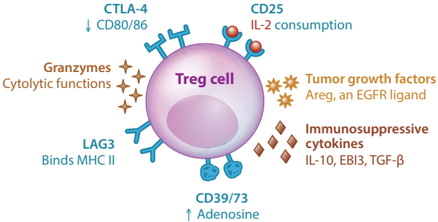
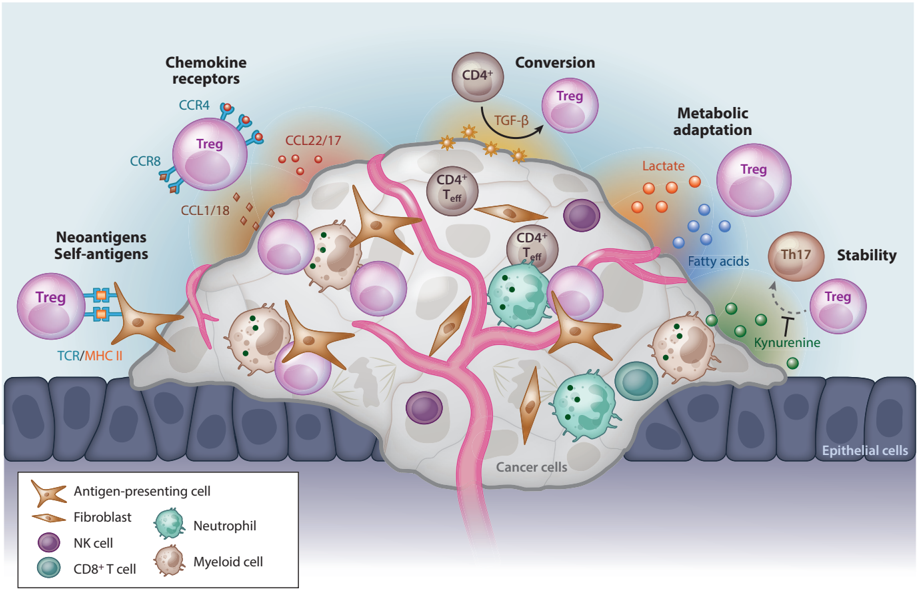
The immune system has evolved complex effector mechanisms to protect the host against a diversity of pathogenic organisms and regulatory adaptations that can curtail pathological sequelae of inflammatory events, prevent autoimmunity, and assist in tissue repair. Cancers, by virtue of their local manifestations of tissue dysfunction and destruction, inflammation, and genomic instability, can evoke these protective mechanisms, which support the progression of tumors and prevent their immune eradication. Central to these processes is a subset of CD4+T cells, known as regulatory T (Treg) cells, that express the X chromosome–linked transcription factor FOXP3. In addition to their critical role in controlling autoimmunity and suppressing inflammatory responses in diverse biological settings, Treg cells are ubiquitously present in the tumor microenvironment where they promote tumor development and progression by dampening antitumor immune responses. Furthermore, Treg cells can directly support the survival of transformed cells through the elaboration of growth factors and interacting with accessory cells in tumors such as fibroblasts and endothelial cells. Current insights into the biology of tumor-associated Treg cells have opened up opportunities for their selective targeting in cancer, with the goal of alleviating their suppression of antitumor immune responses while maintaining overall immune homeostasis.
Overview
The claims and statistics of this paper haven’t been checked yet.
Run the check — free, no account needed. It reads the open-access text and checks the sources it cites.
Integrity signals
Registry
Cites
Statistics
Figures
Verification
Claims the paper makes
The claims and statistics of this paper haven’t been checked yet.
Run the check — free, no account needed. It reads the open-access text and checks the sources it cites.
Claims other papers make about this one
Each is checked against this paper’s own text: does it say what the citing paper says it does?
The cited source says what the claim attributes to it.
In the citing paper
“Regulatory T (Treg) cells maintain immune homeostasis and prevent autoimmunity.”
From Contrasting cytotoxic and regulatory T cell responses underlying distinct clinical outcomes to anti-PD-1 plus lenvatinib therapy in cancer (2025) · cites this paper as [41]
Self-check
Percentages, sums and reported differences re-computed from the paper’s own numbers.
The self-check needs the paper’s full text.
Citations
Cites
Hallmarks of Cancer: The Next Generation
Hanahan, D., & Weinberg, R. A. (2011) · Cell · doi:10.1016/j.cell.2011.02.013 · Cited by 66,590
Control of Regulatory T Cell Development by the Transcription Factor Foxp3
Hori, S., Nomura, T., & Sakaguchi, S. (2003) · Science · doi:10.1126/science.1079490 · Cited by 8,187
Foxp3 programs the development and function of CD4+CD25+ regulatory T cells
Fontenot, J. D., Gavin, M. A., & Rudensky, A. Y. (2003) · Nature Immunology · doi:10.1038/ni904 · Cited by 7,745
Self-citationSakaguchi, S., Sakaguchi, N., Asano, M., Itoh, M., & Toda, M. (1995) · The Journal of Immunology · doi:10.4049/jimmunol.155.3.1151 · Cited by 5,608
Curiel, T. J., Coukos, G., Zou, L., Alvarez, X., Cheng, P., Mottram, P., Evdemon-Hogan, M., Conejo-Garcia, J. R., Zhang, L., Burow, M., et al. (2004) · Nature Medicine · doi:10.1038/nm1093 · Cited by 5,151
Tumor-associated B7-H1 promotes T-cell apoptosis: A potential mechanism of immune evasion
Dong, H., Strome, S. E., Salomao, D. R., Tamura, H., Hirano, F., Flies, D. B., Roche, P. C., Lu, J., Zhu, G., Tamada, K., et al. (2002) · Nature Medicine · doi:10.1038/nm730 · Cited by 5,025
Ipilimumab plus Dacarbazine for Previously Untreated Metastatic Melanoma
Robert, C., Thomas, L., Bondarenko, I., O'Day, S., Weber, J., Garbe, C., Lebbe, C., Baurain, J.-F., Testori, A., Grob, J.-J., et al. (2011) · New England Journal of Medicine · doi:10.1056/nejmoa1104621 · Cited by 4,496
Vignali, D. A. A., Collison, L. W., & Workman, C. J. (2008) · Nature Reviews Immunology · doi:10.1038/nri2343 · Cited by 3,463
Sakaguchi, S. (2003) · Annual Review of Immunology · doi:10.1146/annurev.immunol.21.120601.141122 · Cited by 3,315
Iwai, Y., Ishida, M., Tanaka, Y., Okazaki, T., Honjo, T., & Minato, N. (2002) · Proceedings of the National Academy of Sciences · doi:10.1073/pnas.192461099 · Cited by 3,261
The Immunobiology of Cancer Immunosurveillance and Immunoediting
Dunn, G. P., Old, L. J., & Schreiber, R. D. (2004) · Immunity · doi:10.1016/j.immuni.2004.07.017 · Cited by 3,192
CTLA-4 Control over Foxp3 + Regulatory T Cell Function
Wing, K., Onishi, Y., Prieto-Martin, P., Yamaguchi, T., Miyara, M., Fehervari, Z., Nomura, T., & Sakaguchi, S. (2008) · Science · doi:10.1126/science.1160062 · Cited by 2,956
Regulatory T cells: mechanisms of differentiation and function
Josefowicz, S. Z., Lu, L.-F., & Rudensky, A. Y. (2012) · Annual Review of Immunology · doi:10.1146/annurev.immunol.25.022106.141623 · Cited by 2,866
Self-citationAn essential role for Scurfin in CD4+CD25+ T regulatory cells
Khattri, R., Cox, T., Yasayko, S.-A., & Ramsdell, F. (2003) · Nature Immunology · doi:10.1038/ni909 · Cited by 2,860
Nishimura, H., Nose, M., Hiai, H., Minato, N., & Honjo, T. (1999) · Immunity · doi:10.1016/s1074-7613(00)80089-8 · Cited by 2,749
Brunkow, M. E., Jeffery, E. W., Hjerrild, K. A., Paeper, B. W., Clark, L. B., Yasayko, S.-A., Wilkinson, J. E., Galas, D. J., Ziegler, S. F., & Ramsdell, F. (2001) · Nature Genetics · doi:10.1038/83784 · Cited by 2,628
Deaglio, S., Dwyer, K. M., Gao, W., Friedman, D. J., Usheva, A., Erat, A., Chen, J., Enjyoji, K., Linden, J. M., Oukka, M., et al. (2007) · The Journal of Experimental Medicine · doi:10.1084/jem.20062512 · Cited by 2,613
Chemokines in the cancer microenvironment and their relevance in cancer immunotherapy
Nagarsheth, N., Wicha, M. S., & Zou, W. (2017) · Nature reviews. Immunology · doi:10.1038/nri.2017.49 · Cited by 2,251
Regulatory T cells, tumour immunity and immunotherapy
Zou, W. (2006) · Nature reviews. Immunology · doi:10.1038/nri1806 · Cited by 2,135
Lag-3, Tim-3, and TIGIT: co-inhibitory receptors with specialized functions in immune regulation
Anderson, A. C., Joller, N., & Kuchroo, V. K. (2016) · Immunity · doi:10.1016/j.immuni.2016.05.001 · Cited by 2,096
Single-Cell Map of Diverse Immune Phenotypes in the Breast Tumor Microenvironment
Azizi, E., Carr, A. J., Plitas, G., Cornish, A. E., Konopacki, C., Prabhakaran, S., Nainys, J., Wu, K., Kiseliovas, V., Setty, M., et al. (2018) · Cell · doi:10.1016/j.cell.2018.05.060 · Cited by 1,976
Self-citationInhibitory effect of tumor cell-derived lactic acid on human T cells
Fischer, K., Hoffmann, P., Voelkl, S., Meidenbauer, N., Ammer, J., Edinger, M., Gottfried, E., Schwarz, S., Rothe, G., Hoves, S., et al. (2007) · Blood · doi:10.1182/blood-2006-07-035972 · Cited by 1,946
Wildin, R. S., Ramsdell, F., Peake, J., Faravelli, F., Casanova, J., Buist, N. R. M., Levy‐Lahad, E., Mazzella, M., Goulet, O., Perroni, L., et al. (2001) · Nature Genetics · doi:10.1038/83707 · Cited by 1,916
Trans-endocytosis of CD80 and CD86: a molecular basis for the cell-extrinsic function of CTLA-4
Qureshi, O. S., Zheng, Y., Nakamura, K., Attridge, K., Manzotti, C., Schmidt, E. M., Baker, J., Jeffery, L. E., Kaur, S., Briggs, Z., et al. (2011) · Science · doi:10.1126/science.1202947 · Cited by 1,860
Regulatory T cells prevent catastrophic autoimmunity throughout the lifespan of mice
Kim, J. M., Rasmussen, J. P., & Rudensky, A. Y. (2006) · Nature Immunology · doi:10.1038/ni1428 · Cited by 1,827
Self-citationA function for interleukin 2 in Foxp3-expressing regulatory T cells
Fontenot, J. D., Rasmussen, J. P., Gavin, M. A., & Rudensky, A. Y. (2005) · Nature Immunology · doi:10.1038/ni1263 · Cited by 1,819
Self-citationT cell costimulatory receptor CD28 is a primary target for PD-1–mediated inhibition
Hui, E., Cheung, J., Zhu, J., Su, X., Taylor, M. J., Wallweber, H. A., Sasmal, D. K., Huang, J., Kim, J. M., Mellman, I., et al. (2017) · Science · doi:10.1126/science.aaf1292 · Cited by 1,689
The multifaceted roles of fatty acid synthesis in cancer
Röhrig, F., & Schulze, A. (2016) · Nature Reviews Cancer · doi:10.1038/nrc.2016.89 · Cited by 1,651
Regulatory T Cell-Derived Interleukin-10 Limits Inflammation at Environmental Interfaces
Rubtsov, Y. P., Rasmussen, J. P., Chi, E. Y., Fontenot, J., Castelli, L., Ye, X., Treuting, P., Siewe, L., Roers, A., Henderson, W. R., et al. (2008) · Immunity · doi:10.1016/j.immuni.2008.02.017 · Cited by 1,586
Self-citationShimizu, J., Yamazaki, S., & Sakaguchi, S. (1999) · The Journal of Immunology · doi:10.4049/jimmunol.163.10.5211 · Cited by 1,491
TNF biology, pathogenic mechanisms and emerging therapeutic strategies
Kalliolias, G. D., & Ivashkiv, L. B. (2015) · Nature Reviews Rheumatology · doi:10.1038/nrrheum.2015.169 · Cited by 1,453
Fueling Immunity: Insights into Metabolism and Lymphocyte Function
Pearce, E. L., Poffenberger, M. C., Chang, C.-H., & Jones, R. G. (2013) · Science · doi:10.1126/science.1242454 · Cited by 1,363
Foxp3 Reprograms T Cell Metabolism to Function in Low-Glucose, High-Lactate Environments
Angelin, A., Gil‐de‐Gómez, L., Dahiya, S., Jiao, J., Guo, L., Levine, M. H., Wang, Z., Quinn, W. J., Kopinski, P. K., Wang, L., et al. (2017) · Cell Metabolism · doi:10.1016/j.cmet.2016.12.018 · Cited by 1,304
Pandiyan, P., Zheng, L., Ishihara, S., Reed, J., & Lenardo, M. J. (2007) · Nature Immunology · doi:10.1038/ni1536 · Cited by 1,277
Metabolic Instruction of Immunity
Buck, M. D., Sowell, R., Kaech, S. M., & Pearce, E. L. (2017) · Cell · doi:10.1016/j.cell.2017.04.004 · Cited by 1,270
Induction of FoxP3 and acquisition of T regulatory activity by stimulated human CD4+CD25– T cells
Walker, M., Kasprowicz, D. J., Gersuk, V. H., Bénard, A., Landeghen, M. V., Buckner, J. H., & Ziegler, S. F. (2003) · Journal of Clinical Investigation · doi:10.1172/jci19441 · Cited by 1,242
Setoguchi, R., Hori, S., Takahashi, T., & Sakaguchi, S. (2005) · The Journal of Experimental Medicine · doi:10.1084/jem.20041982 · Cited by 1,234
Role of conserved non-coding DNA elements in the Foxp3 gene in regulatory T-cell fate
Zheng, Y., Josefowicz, S. Z., Chaudhry, A., Peng, X. P., Forbush, K. A., & Rudensky, A. Y. (2010) · Nature · doi:10.1038/nature08750 · Cited by 1,170
Self-citationGranzyme B and Perforin Are Important for Regulatory T Cell-Mediated Suppression of Tumor Clearance
Cao, X., Cai, S. F., Fehniger, T. A., Song, J., Collins, L. I., Piwnica-Worms, D. R., & Ley, T. J. (2007) · Immunity · doi:10.1016/j.immuni.2007.08.014 · Cited by 1,117
IDO in the Tumor Microenvironment: Inflammation, Counter-Regulation, and Tolerance
Munn, D. H., & Mellor, A. L. (2016) · Trends in Immunology · doi:10.1016/j.it.2016.01.002 · Cited by 1,081
Fallarino, F., Grohmann, U., You, S., McGrath, B. C., Cavener, D. R., Vacca, C., Orabona, C., Bianchi, R., Belladonna, M. L., Volpi, C., et al. (2006) · The Journal of Immunology · doi:10.4049/jimmunol.176.11.6752 · Cited by 1,078
Systemic effects of local radiotherapy
Formenti, S. C., & Demaria, S. (2009) · The Lancet Oncology · doi:10.1016/s1470-2045(09)70082-8 · Cited by 1,063
Human T Regulatory Cells Can Use the Perforin Pathway to Cause Autologous Target Cell Death
Grossman, W. J., Verbsky, J. W., Barchet, W., Colonna, M., Atkinson, J. P., & Ley, T. J. (2004) · Immunity · doi:10.1016/j.immuni.2004.09.002 · Cited by 1,021
Mechanisms of suppression by suppressor T cells
von Boehmer, H. (2005) · Nature Immunology · doi:10.1038/ni1180 · Cited by 1,015
A Distinct Function of Regulatory T Cells in Tissue Protection
Arpaia, N., Green, J. A., Moltedo, B., Arvey, A., Hemmers, S., Yuan, S., Treuting, P. M., & Rudensky, A. Y. (2015) · Cell · doi:10.1016/j.cell.2015.08.021 · Cited by 991
Self-citationPeggs, K. S., Quezada, S. A., Chambers, C. A., Korman, A. J., & Allison, J. P. (2009) · Journal of Experimental Medicine · doi:10.1084/jem.20082492 · Cited by 967
Chatila, T. A., Blaeser, F., Ho, N. Y., Lederman, H. M., Voulgaropoulos, C., Helms, C., & Bowcock, A. M. (2000) · Journal of Clinical Investigation · doi:10.1172/jci11679 · Cited by 937
An essential role for the IL-2 receptor in Treg cell function
Chinen, T., Kannan, A., Levine, A. G., Fan, X., Klein, U., Zheng, Y., Gasteiger, G., Feng, Y., Fontenot, J. D., & Rudensky, A. Y. (2016) · Nature Immunology · doi:10.1038/ni.3540 · Cited by 934
Self-citationRadiotherapy induces responses of lung cancer to CTLA-4 blockade
Formenti, S. C., Rudqvist, N.-P., Golden, E., Cooper, B., Wennerberg, E., Lhuillier, C., Vanpouille-Box, C., Friedman, K., Ferrari de Andrade, L., Wucherpfennig, K. W., et al. (2018) · Nature Medicine · doi:10.1038/s41591-018-0232-2 · Cited by 928
De novo fatty acid synthesis controls the fate between regulatory T and T helper 17 cells
Berod, L., Friedrich, C., Nandan, A., Freitag, J., Hagemann, S., Harmrolfs, K., Sandouk, A., Hesse, C., Castro, C. N., Bähre, H., et al. (2014) · Nature Medicine · doi:10.1038/nm.3704 · Cited by 927
Lutsiak, M. E. C., Semnani, R. T., De Pascalis, R., Kashmiri, S. V. S., Schlom, J., & Sabzevari, H. (2005) · Blood · doi:10.1182/blood-2004-06-2410 · Cited by 903
Fu, J., Xu, D., Liu, Z., Shi, M., Zhao, P., Fu, B., Zhang, Z., Yang, H., Zhang, H., Zhou, C., et al. (2007) · Gastroenterology · doi:10.1053/j.gastro.2007.03.102 · Cited by 897
Ghiringhelli, F., Larmonier, N., Schmitt, E., Parcellier, A., Cathelin, D., Garrido, C., Chauffert, B., Solary, É., Bonnotte, B., & Martin, F. (2004) · European Journal of Immunology · doi:10.1002/eji.200324181 · Cited by 878
Two FOXP3+CD4+ T cell subpopulations distinctly control the prognosis of colorectal cancers
Saito, T., Nishikawa, H., Wada, H., Nagano, Y., Sugiyama, D., Atarashi, K., Maeda, Y., Hamaguchi, M., Ohkura, N., Sato, E., et al. (2016) · Nature Medicine · doi:10.1038/nm.4086 · Cited by 871
Rudensky, A. Y. (2011) · Immunological Reviews · doi:10.1111/j.1600-065x.2011.01018.x · Cited by 839
Self-citationNAFLD causes selective CD4+ T lymphocyte loss and promotes hepatocarcinogenesis
Ma, C., Kesarwala, A. H., Eggert, T., Medina-Echeverz, J., Kleiner, D. E., Jin, P., Stroncek, D. F., Terabe, M., Kapoor, V., ElGindi, M., et al. (2016) · Nature · doi:10.1038/nature16969 · Cited by 766 · cited 1×
“In addition to lactate, fatty acids generated in the TME by transformed cells or tumor-associated stromal cells (Hoy et al. 2017, Rohrig & Schulze 2016) can inhibit effector T cells, while promoting the progression of carcinomas (Kleinfeld & Okada 2005, Lochner et al. 2015, Ma et al. 2016).”
BackgroundImmunity, inflammation and cancer: a leading role for adenosine
Antonioli, L., Blandizzi, C., Pacher, P., & Haskó, G. (2013) · Nature Reviews Cancer · doi:10.1038/nrc3613 · Cited by 765
Maj, T., Wang, W., Crespo, J., Zhang, H., Wang, W., Wei, S., Zhao, L., Vatan, L., Shao, I., Szeliga, W., et al. (2017) · Nature Immunology · doi:10.1038/ni.3868 · Cited by 733
The secret ally: immunostimulation by anticancer drugs
Galluzzi, L., Senovilla, L., Zitvogel, L., & Kroemer, G. (2012) · Nature Reviews Drug Discovery · doi:10.1038/nrd3626 · Cited by 708
Regulatory T Cells Exhibit Distinct Features in Human Breast Cancer
Plitas, G., Konopacki, C., Wu, K., Bos, P. D., Morrow, M., Putintseva, E. V., Chudakov, D. M., & Rudensky, A. Y. (2016) · Immunity · doi:10.1016/j.immuni.2016.10.032 · Cited by 695
Self-citationDe Simone, M., Arrigoni, A., Rossetti, G., Gruarin, P., Ranzani, V., Politano, C., Bonnal, R. J. P., Provasi, E., Sarnicola, M. L., Panzeri, I., et al. (2016) · Immunity · doi:10.1016/j.immuni.2016.10.021 · Cited by 687
Tan, W., Zhang, W., Strasner, A., Grivennikov, S. I., Cheng, J. Q., Hoffman, R. M., & Karin, M. (2011) · Nature · doi:10.1038/nature09707 · Cited by 658
Olsen, E. A., Duvic, M. A., Frankel, A. E., Kim, Y. H., Martin, A., Vonderheid, E. C., Jegasothy, B. V., Wood, G. S., Gordon, M., HEALD, P. W., et al. (2001) · Journal of Clinical Oncology · doi:10.1200/jco.2001.19.2.376 · Cited by 610
RANK ligand mediates progestin-induced mammary epithelial proliferation and carcinogenesis
González‐Suárez, E., Jacob, A. P., Jones, J. C., Miller, R. E., Roudier-Meyer, M. P., Erwert, R. D., Pinkas, J., Branstetter, D., & Dougall, W. C. (2010) · Nature · doi:10.1038/nature09495 · Cited by 606
Human CD4+CD25+ cells: a naturally occurring population of regulatory T cells
Ng, W., Duggan, P. J., Ponchel, F., Matarese, G., Lombardi, G., Edwards, A. D., Isaacs, J. D., & Lechler, R. I. (2001) · Blood · doi:10.1182/blood.v98.9.2736 · Cited by 606
Romano, E., Kusio-Kobialka, M., Foukas, P. G., Baumgaertner, P., Meyer, C., Ballabeni, P., Michielin, O., Weide, B., Romero, P., & Speiser, D. E. (2015) · Proceedings of the National Academy of Sciences · doi:10.1073/pnas.1417320112 · Cited by 601
Thymus and Reproduction: Sex-Linked Dysgenesia of the Gonad after Neonatal Thymectomy in Mice
Nishizuka, Y., & Sakakura, T. (1969) · Science · doi:10.1126/science.166.3906.753 · Cited by 592
Fc Effector Function Contributes to the Activity of Human Anti-CTLA-4 Antibodies
Arce Vargas, F., Furness, A. J. S., Litchfield, K., Joshi, K., Rosenthal, R., Ghorani, E., Solomon, I., Lesko, M. H., Ruef, N., Roddie, C., et al. (2018) · Cancer Cell · doi:10.1016/j.ccell.2018.02.010 · Cited by 592
Control of Regulatory T Cell Lineage Commitment and Maintenance
Josefowicz, S. Z., & Rudensky, A. Y. (2009) · Immunity · doi:10.1016/j.immuni.2009.04.009 · Cited by 584
Self-citationAdaptive plasticity of IL-10+ and IL-35+ Treg cells cooperatively promotes tumor T cell exhaustion
Sawant, D. V., Yano, H., Chikina, M. D., Zhang, Q., Liao, M., Liu, C., Callahan, D. J., Sun, Z., Sun, T., Tabib, T., et al. (2019) · Nature Immunology · doi:10.1038/s41590-019-0346-9 · Cited by 569
Liang, B., Workman, C., Lee, J., Chew, C., Dale, B. M., Colonna, L., Flores, M., Li, N., Schweighoffer, E., Greenberg, S., et al. (2008) · The Journal of Immunology · doi:10.4049/jimmunol.180.9.5916 · Cited by 566
Martens, A., Wistuba-Hamprecht, K., Foppen, M. G., Yuan, J., Postow, M. A., Wong, P., Romano, E., Khammari, A., Dreno, B., Capone, M., et al. (2016) · Clinical Cancer Research · doi:10.1158/1078-0432.ccr-15-2412 · Cited by 541 · cited 1×
“Higher pretreatment levels of circulating Treg cells were associated with improved survival in melanoma patients treated with ipilimumab (Martens et al. 2016).”
BackgroundContinuous requirement for the TCR in regulatory T cell function
Levine, A. G., Arvey, A. J., Jin, W., & Rudensky, A. Y. (2014) · Nature Immunology · doi:10.1038/ni.3004 · Cited by 536
Self-citationKlysz, D., Tai, X., Robert, P. A., Craveiro, M., Cretenet, G., Oburoglu, L., Mongellaz, C., Floess, S., Fritz, V., Matias, M. I., et al. (2015) · Science Signaling · doi:10.1126/scisignal.aab2610 · Cited by 522
OX40 Is a Potent Immune-Stimulating Target in Late-Stage Cancer Patients
Curti, B. D., Kovacsovics-Bankowski, M., Morris, N. P., Walker, E., Chisholm, L., Floyd, K., Walker, J. M., Gonzalez, I. L., Meeuwsen, T., Fox, B. A., et al. (2013) · Cancer Research · doi:10.1158/0008-5472.can-12-4174 · Cited by 503
IDO Activates Regulatory T Cells and Blocks Their Conversion into Th17-Like T Cells
Baban, B., Chandler, P., Sharma, M. D., Pihkala, J. P. S., Koni, P. A., Munn, D. H., & Mellor, A. L. (2009) · The Journal of Immunology · doi:10.4049/jimmunol.0900986 · Cited by 494
The receptor PD-1 controls follicular regulatory T cells in the lymph nodes and blood
Sage, P. T., Francisco, L. M., Carman, C. V., & Sharpe, A. H. (2012) · Nature Immunology · doi:10.1038/ni.2496 · Cited by 484
Ko, K., Yamazaki, S., Nakamura, K., Nishioka, T., Hirota, K., Yamaguchi, T., Shimizu, J., Nomura, T., Chiba, T., & Sakaguchi, S. (2005) · The Journal of Experimental Medicine · doi:10.1084/jem.20050940 · Cited by 465
Petersen, R. P., Campa, M. J., Sperlazza, J. R., Conlon, D. H., Joshi, M.-B., Harpole, D. H., & Patz, E. F. (2006) · Cancer · doi:10.1002/cncr.22282 · Cited by 446
Fatty acid metabolism in the regulation of T cell function
Lochner, M., Berod, L., & Sparwasser, T. D. (2015) · Trends in Immunology · doi:10.1016/j.it.2014.12.005 · Cited by 427
Control of the Inheritance of Regulatory T Cell Identity by a cis Element in the Foxp3 Locus
Feng, Y., Arvey, A., Chinen, T., van der Veeken, J., Gasteiger, G., & Rudensky, A. Y. (2014) · Cell · doi:10.1016/j.cell.2014.07.031 · Cited by 422
Self-citationOX40 triggering blocks suppression by regulatory T cells and facilitates tumor rejection
Piconese, S., Valzasina, B., & Colombo, M. P. (2008) · The Journal of Experimental Medicine · doi:10.1084/jem.20071341 · Cited by 415
Vargas, F. A., Furness, A. J. S., Solomon, I., Joshi, K., Mekkaoui, L., Lesko, M. H., Miranda, E., Dahan, R., Georgiou, A., Śledzińska, A., et al. (2017) · Immunity · doi:10.1016/j.immuni.2017.03.013 · Cited by 415
Regulatory T-cell inhibition versus depletion: the right choice in cancer immunotherapy
Colombo, M. P., & Piconese, S. (2007) · Nature reviews. Cancer · doi:10.1038/nrc2250 · Cited by 414
Curti, A., Pandolfi, S., Valzasina, B., Aluigi, M., Isidori, A., Ferri, E., Salvestrini, V., Bonanno, G., Rutella, S., Durelli, I., et al. (2006) · Blood · doi:10.1182/blood-2006-07-036863 · Cited by 409
Sharma, M. D., Hou, D., Liu, Y., Koni, P. A., Metz, R. A., Chandler, P., Mellor, A. L., He, Y., & Munn, D. H. (2009) · Blood · doi:10.1182/blood-2008-12-195354 · Cited by 406
Indoleamine 2,3-Dioxygenase Expression in Human Cancers: Clinical and Immunologic Perspectives
Godin-Ethier, J., Hanafi, L., Piccirillo, C. A., & Lapointe, R. (2011) · Clinical Cancer Research · doi:10.1158/1078-0432.ccr-11-1331 · Cited by 398
Depleting tumor-specific Tregs at a single site eradicates disseminated tumors
Marabelle, A., Kohrt, H. E. K., Sagiv-Barfi, I., Ajami, B., Axtell, R. C., Zhou, G., Rajapaksa, R., Green, M. R., Torchia, J. A., Brody, J., et al. (2013) · Journal of Clinical Investigation · doi:10.1172/jci64859 · Cited by 393
Klotz, L., Burgdorf, S., Dani, I., Saijo, K., Floßdorf, J., Hucke, S., Alferink, J., Novak, N., Beyer, M., Mayer, G., et al. (2009) · The Journal of Experimental Medicine · doi:10.1084/jem.20082771 · Cited by 363
Pacella, I., Procaccini, C., Focaccetti, C., Miacci, S., Timperi, E., Faicchia, D., Severa, M., Rizzo, F., Coccia, E. M., Bonacina, F., et al. (2018) · Proceedings of the National Academy of Sciences · doi:10.1073/pnas.1720113115 · Cited by 352
Rech, A. J., Mick, R., Martin, S., Recio, A., Aqui, N. A., Powell, D. J., Colligon, T. A., Trosko, J. A., Leinbach, L. I., Pletcher, C. H., et al. (2012) · Science Translational Medicine · doi:10.1126/scitranslmed.3003330 · Cited by 344
Röllinghoff, M., Starzinski‐Powitz, A., Pfizenmaier, K., & Wagner, H. (1977) · The Journal of Experimental Medicine · doi:10.1084/jem.145.2.455 · Cited by 335
McHugh, R. S., & Shevach, E. M. (2002) · The Journal of Immunology · doi:10.4049/jimmunol.168.12.5979 · Cited by 319
Tarhini, A. A., Edington, H. D. J., Butterfield, L. H., Lin, Y., Shuai, Y., Tawbi, H. A., Sander, C., Yin, Y., Holtzman, M. P., Johnson, J. T., et al. (2014) · PLoS ONE · doi:10.1371/journal.pone.0087705 · Cited by 316
Rationale for anti-OX40 cancer immunotherapy
Aspeslagh, S., Postel-Vinay, S. C., Rusakiewicz, S., Soria, J., Zitvogel, L., & Marabelle, A. (2015) · European Journal of Cancer · doi:10.1016/j.ejca.2015.08.021 · Cited by 316
Transient regulatory T cell ablation deters oncogene-driven breast cancer and enhances radiotherapy
Bos, P. D., Plitas, G., Rudra, D., Lee, S. Y., & Rudensky, A. Y. (2013) · The Journal of Experimental Medicine · doi:10.1084/jem.20130762 · Cited by 305
Self-citationMahmud, S. A., Manlove, L. S., Schmitz, H. M., Xing, Y., Wang, Y., Owen, D. L., Schenkel, J. M., Boomer, J. S., Green, J. M., Yagita∥, H., et al. (2014) · Nature Immunology · doi:10.1038/ni.2849 · Cited by 282
Cohen, A. D., Schaer, D., Liu, C., Li, Y., Hirschhorn-Cymerman, D., Kim, S. C., Diab, A. K., Rizzuto, G. A., Duan, F., Perales, M., et al. (2010) · PLoS ONE · doi:10.1371/journal.pone.0010436 · Cited by 266
Li, H., Hong, S., Qian, J., Zheng, Y., Yang, J., & Yi, Q. (2010) · Blood · doi:10.1182/blood-2009-11-255026 · Cited by 248
IL-2–dependent tuning of NK cell sensitivity for target cells is controlled by regulatory T cells
Gasteiger, G., Hemmers, S., Firth, M. A., Floc’h, A. L., Huse, M., Sun, J. C.-Y., & Rudensky, A. Y. (2013) · The Journal of Experimental Medicine · doi:10.1084/jem.20122462 · Cited by 246
Self-citationMahnke, K., Schönfeld, K., Fondel, S., Ring, S., Karakhanova, S., Wiedemeyer, K., Bedke, T., Johnson, T., Storn, V., Schallenberg, S., et al. (2007) · International Journal of Cancer · doi:10.1002/ijc.22617 · Cited by 245
Jacobs, J. F. M., Punt, C. J. A., Lesterhuis, W. J., Sutmuller, R. P. M., Brouwer, H., Scharenborg, N. M., Klasen, I. S., Hilbrands, L. B., Figdor, C. G., de Vries, I. J. M., et al. (2010) · Clinical Cancer Research · doi:10.1158/1078-0432.ccr-10-1757 · Cited by 243
Kurose, K., Ohue, Y., Wada, H., Iida, S., Ishida, T., Kojima, T., Doi, T., Suzuki, S., Isobe, M., Funakoshi, T., et al. (2015) · Clinical Cancer Research · doi:10.1158/1078-0432.ccr-15-0357 · Cited by 239
Araujo, L., Khim, P., Mkhikian, H., Mortales, C., & Demetriou, M. (2017) · eLife · doi:10.7554/elife.21330 · Cited by 234
Muroyama, Y., Nirschl, T. R., Kochel, C. M., Bujanda, Z. A. L., Theodros, D., Mao, W., Carrera-Haro, M. A., Ghasemzadeh, A., Marciscano, A. E. E., Velarde, E., et al. (2017) · Cancer Immunology Research · doi:10.1158/2326-6066.cir-17-0040 · Cited by 230
Bour‐Jordan, H., & Bluestone, J. A. (2009) · Immunological Reviews · doi:10.1111/j.1600-065x.2009.00775.x · Cited by 229
Foxp3 drives oxidative phosphorylation and protection from lipotoxicity
Howie, D., Cobbold, S. P., Adams, E., ten Bokum, A., Necula, A. S., Zhang, W., Huang, H., Roberts, D. J., Thomas, B. C., Hester, S., et al. (2017) · JCI Insight · doi:10.1172/jci.insight.89160 · Cited by 225
Willingham, S. B., Ho, P. Y., Hotson, A. N., Hill, C. M., Piccione, E. C., Hsieh, J. Y., Liu, L., Buggy, J. J., McCaffery, I., & Miller, R. A. (2018) · Cancer Immunology Research · doi:10.1158/2326-6066.cir-18-0056 · Cited by 225
Regulatory T cells trigger effector T cell DNA damage and senescence caused by metabolic competition
Liu, X., Mo, W., Ye, J., Li, L., Zhang, Y., Hsueh, E. C., Hoft, D. F., & Peng, G. (2018) · Nature Communications · doi:10.1038/s41467-017-02689-5 · Cited by 224
Rini, B. I., Stenzl, A., Zdrojowy, R., Коган, М. И., Shkolnik, M. I., Oudard, S. M., Weikert, S., Sergio Bracarda, A., Crabb, S. J., Bedke, J., et al. (2016) · The Lancet Oncology · doi:10.1016/s1470-2045(16)30408-9 · Cited by 221
Zhou, G., & Levitsky, H. I. (2007) · The Journal of Immunology · doi:10.4049/jimmunol.178.4.2155 · Cited by 220
Deletion of CTLA-4 on regulatory T cells during adulthood leads to resistance to autoimmunity
Paterson, A. M., Lovitch, S. B., Sage, P. T., Juneja, V. R., Lee, Y., Trombley, J. D., Arancibia-Cárcamo, C. V., Sobel, R. A., Rudensky, A. Y., Kuchroo, V. K., et al. (2015) · The Journal of Experimental Medicine · doi:10.1084/jem.20141030 · Cited by 220
Self-citationChensue, S. W., Lukacs, N. W., Yang, T., Shang, X., Frait, K. A., Kunkel, S. L., Kung, T. T., Wiekowski, M., Hedrick, J. A., Cook, D. N., et al. (2001) · The Journal of Experimental Medicine · doi:10.1084/jem.193.5.573 · Cited by 214
Ahmadzadeh, M., Pasetto, A., Jia, L., Deniger, D. C., Stevanović, S., Robbins, P. F., & Rosenberg, S. A. (2019) · Science Immunology · doi:10.1126/sciimmunol.aao4310 · Cited by 207
Ha, D., Tanaka, A., Kibayashi, T., Tanemura, A., Sugiyama, D., Wing, J. B., Lim, E. L., Teng, K. W. W., Adeegbe, D., Newell, E. W., et al. (2019) · Proceedings of the National Academy of Sciences · doi:10.1073/pnas.1812186116 · Cited by 205
Shen, Z., Zhou, S., Wang, Y., Li, R., Zhong, C., Liang, C., & Sun, Y. (2010) · Journal of Cancer Research and Clinical Oncology · doi:10.1007/s00432-010-0816-9 · Cited by 201
Péré, H., Montier, Y., Bayry, J., Quintin‐Colonna, F., Merillon, N., Dransart, E., Badoual, C., Gey, A., Ravel, P., Marcheteau, E., et al. (2011) · Blood · doi:10.1182/blood-2011-01-329656 · Cited by 185
Circulating tumor antigen-specific regulatory T cells in patients with metastatic melanoma
Vence, L. M., Palucka, K., Fay, J. W., Ito, T., Liu, Y., Banchereau, J., & Ueno, H. (2007) · Proceedings of the National Academy of Sciences · doi:10.1073/pnas.0710557105 · Cited by 184
Torrey, H., Butterworth, J., Mera, T., Okubo, Y., Wang, L., Baum, D., DEFUSCO, A. A., Plager, S., Warden, S., Huang, D., et al. (2017) · Science Signaling · doi:10.1126/scisignal.aaf8608 · Cited by 184
The PTEN pathway in T regs is a critical driver of the suppressive tumor microenvironment
Sharma, M. D., Shinde, R. S., McGaha, T. L., Huang, L., Holmgaard, R., Wolchok, J. D., Mautino, M. R., Celis, E., Sharpe, A. H., Francisco, L., et al. (2015) · Science Advances · doi:10.1126/sciadv.1500845 · Cited by 178
Kim, I.-K., Kim, B.-S., Koh, C.-H., Seok, J.-W., Park, J.-S., Shin, K.-S., Bae, E.-A., Lee, G.-E., Jeon, H., Cho, J., et al. (2015) · Nature Medicine · doi:10.1038/nm.3922 · Cited by 167
Shrimali, R. K., Ahmad, S., Verma, V., Zeng, P., Ananth, S., Gaur, P., Gittelman, R. M., Yusko, E. C., Sanders, C. M., Robins, H. S., et al. (2017) · Cancer Immunology Research · doi:10.1158/2326-6066.cir-17-0292 · Cited by 161
Exogenous TNFR2 activation protects from acute GvHD via host T reg cell expansion
Chopra, M., Biehl, M., Steinfatt, T., Brandl, A., Kums, J., Amich, J., Vaeth, M., Kuen, J., Holtappels, R., Podlech, J., et al. (2016) · The Journal of Experimental Medicine · doi:10.1084/jem.20151563 · Cited by 161
Wu, S.-P., Liao, R.-Q., Tu, H., Wang, W., Dong, Z., Huang, S., Guo, W., Gou, L.-Y., Sun, H., Zhang, Q., et al. (2017) · Journal of Thoracic Oncology · doi:10.1016/j.jtho.2017.11.132 · Cited by 154
Magnuson, A. M., Kiner, E., Ergün, A., Park, J. S., Asinovski, N., Ortiz-Lopez, A., Kilcoyne, A., Paoluzzi-Tomada, E., Weissleder, R., Mathis, D. J., et al. (2018) · Proceedings of the National Academy of Sciences · doi:10.1073/pnas.1810580115 · Cited by 151
Hypoxia-induced CCL28 promotes recruitment of regulatory T cells and tumor growth in liver cancer
Ren, L., Yu, Y., Wang, L., Zhu, Z., Lu, R., & Yao, Z. (2016) · Oncotarget · doi:10.18632/oncotarget.12409 · Cited by 149
Modulation of GITR for cancer immunotherapy
Schaer, D., Murphy, J. T., & Wolchok, J. D. (2012) · Current Opinion in Immunology · doi:10.1016/j.coi.2011.12.011 · Cited by 142
Villarreal, D. O., L'Huillier, A., Armington, S., Mottershead, C., Filippova, E. V., Coder, B., Petit, R. G., & Princiotta, M. F. (2018) · Cancer Research · doi:10.1158/0008-5472.can-18-1119 · Cited by 142
Pathogenesis of the Post-Neonatal Thymectomy Wasting Syndrome
McIntire, K. R., SELL, S., & MILLER, J. F. A. P. (1964) · Nature · doi:10.1038/204151a0 · Cited by 131
Adipocyte–Tumor Cell Metabolic Crosstalk in Breast Cancer
Hoy, A. J., Balaban, S., & Saunders, D. N. (2017) · Trends in Molecular Medicine · doi:10.1016/j.molmed.2017.02.009 · Cited by 130
Faget, J., Biota, C., Bachelot, T., Gobert, M., Treilleux, I., Goutagny, N., Durand, I., Léon-Goddard, S., Blay, J. Y., Caux, C., et al. (2011) · Cancer Research · doi:10.1158/0008-5472.can-11-0573 · Cited by 129
Mahne, A. E., Mauze, S., Joyce-Shaikh, B., Xia, J., Bowman, E. P., Beebe, A. M., Cua, D. J., & JAIN, R. K. (2016) · Cancer Research · doi:10.1158/0008-5472.can-16-0797 · Cited by 127
Bayry, J., Tchilian, E. Z., Davies, M. N., Forbes, E. K., Draper, S. J., Kaveri, S. V., Hill, A. V. S., Kazatchkine, M. D., Beverley, P. C. L., Flower, D. R., et al. (2008) · Proceedings of the National Academy of Sciences · doi:10.1073/pnas.0803453105 · Cited by 126
Roles of the RANKL–RANK axis in antitumour immunity — implications for therapy
Ahern, E. S., Smyth, M. J., Dougall, W. C., & Teng, M. W. L. (2018) · Nature Reviews Clinical Oncology · doi:10.1038/s41571-018-0095-y · Cited by 115
Sevko, A., Sade-Feldman, M., Kanterman, J., Michels, T., Falk, C. S., Umansky, L., Ramacher, M., Kato, M., Schadendorf, D., Baniyash, M., et al. (2012) · Journal of Investigative Dermatology · doi:10.1038/jid.2012.444 · Cited by 111
Onda, M., Kobayashi, K., & Pastan, I. H. (2019) · Proceedings of the National Academy of Sciences · doi:10.1073/pnas.1820388116 · Cited by 111
The effects of CCR5 inhibition on regulatory T-cell recruitment to colorectal cancer
Ward, S., Li, K. K., Hepburn, E. A., Weston, C. J., Curbishley, S. M., Reynolds, G. M., Hejmadi, R. K., Bicknell, R., Eksteen, B., Ismail, T., et al. (2014) · British Journal of Cancer · doi:10.1038/bjc.2014.572 · Cited by 100
Komatsu, N., & Hori, S. (2007) · Proceedings of the National Academy of Sciences · doi:10.1073/pnas.0702004104 · Cited by 95
Dimeloe, S., Frick, C., Fischer, M., Gubser, P. M., Razik, L., Bantug, G. R., Ravon, M., Langenkamp, A., & Hess, C. (2014) · European Journal of Immunology · doi:10.1002/eji.201444879 · Cited by 89
Ahern, E. S., Harjunpää, H., Barkauskas, D. S., Allen, S. M., Takeda, K., Yagita∥, H., Wyld, D., Dougall, W. C., Teng, M. W. L., & Smyth, M. J. (2017) · Clinical Cancer Research · doi:10.1158/1078-0432.ccr-17-0606 · Cited by 87
Kleinfeld, A. M., & Okada, C. (2005) · Journal of Lipid Research · doi:10.1194/jlr.m500151-jlr200 · Cited by 79
Cheung, L. S., Fu, J. L., Kumar, P., Kumar, A., Urbanowski, M. E., Ihms, E. A., Parveen, S., Bullen, C. K., Patrick, G. J., Harrison, R., et al. (2019) · Proceedings of the National Academy of Sciences · doi:10.1073/pnas.1815087116 · Cited by 72
Radiotherapy Effects on Anti-Tumor Immunity: Implications for Cancer Treatment
Demaria, S., & Formenti, S. C. (2013) · Frontiers in Oncology · doi:10.3389/fonc.2013.00128 · Cited by 69
Scurr, M. J., Pembroke, T., Bloom, A. C., Roberts, D. J., Thomson, A., Smart, K., Bridgeman, H. M., Adams, R., Brewster, A. E., Jones, R., et al. (2017) · JAMA Oncology · doi:10.1001/jamaoncol.2017.2579 · Cited by 68
Davies, M. N., Bayry, J., Tchilian, E. Z., Vani, J., Shaila, M. S., Forbes, E. K., Draper, S. J., Beverley, P. C. L., Tough, D. F., & Flower, D. R. (2009) · PLoS ONE · doi:10.1371/journal.pone.0008084 · Cited by 59
Siu, L. L., Steeghs, N., Meniawy, T. M., Joerger, M., Spratlin, J. L., Rottey, S., Nagrial, A. M., Cooper, A. J., Meier, R., Guan, X., et al. (2017) · Journal of Clinical Oncology · doi:10.1200/jco.2017.35.15_suppl.104 · Cited by 55
Aida, K., Miyakawa, R., Suzuki, K. A. O., Narumi, K., Udagawa, T., Yamamoto, Y., Chikaraishi, T., Yoshida, T., & Aoki, K. (2013) · Cancer Science · doi:10.1111/cas.12332 · Cited by 53
Leyland, R., Watkins, A., Mulgrew, K. A., Holoweckyj, N., Bamber, L., Tigue, N. J., Offer, E., Andrews, J. L., Li, Y., Mullins, S., et al. (2017) · Clinical Cancer Research · doi:10.1158/1078-0432.ccr-16-2000 · Cited by 52
RANK-mediated signaling network and cancer metastasis
Chu, G. C., & Chung, L. W. K. (2014) · Cancer and Metastasis Reviews · doi:10.1007/s10555-013-9488-7 · Cited by 50
A nonimmune function of T cells in promoting lung tumor progression
Green, J. A., Arpaia, N., Schizas, M., Dobrin, A., & Rudensky, A. Y. (2017) · The Journal of Experimental Medicine · doi:10.1084/jem.20170356 · Cited by 45
Self-citationAnti–CTLA-4 Immunotherapy Does Not Deplete FOXP3+ Regulatory T Cells (Tregs) in Human Cancers—Letter
Ferrara, R., Susini, S., & Marabelle, A. (2018) · Clinical Cancer Research · doi:10.1158/1078-0432.ccr-18-3740 · Cited by 29
Huss, D. J., Pellerin, A., Collette, B., Kannan, A., Peng, L., Datta, A., Wipke, B. T., & Fontenot, J. D. (2016) · Immunology · doi:10.1111/imm.12609 · Cited by 23
Chai, J. (2011) · Immunotherapy · doi:10.2217/imt.11.22 · Cited by 3
Research works printed but not linked: 4
- Bennett CL, 2001, Genet, 27, 20
- Bonertz A, 2009, J. Clin. Investig., 119, 3311
- Chen W, 2003, Med, 198, 1875
- Ehrlich P., 1906, The Collected Papers of Paul Ehrlich, Vol. 2, Immunology and Cancer Research
Cited by
Sorted by citations
Anderson, N. M., & Simon, M. C. (2020) · Current Biology · doi:10.1016/j.cub.2020.06.081 · Cited by 2,718
Advances in the development of personalized neoantigen-based therapeutic cancer vaccines
Blass, E., & Ott, P. A. (2021) · Nature Reviews Clinical Oncology · doi:10.1038/s41571-020-00460-2 · Cited by 1,042
CD8+ T cells in the cancer-immunity cycle
Giles, J. R., Globig, A.-M., Kaech, S. M., & Wherry, E. J. (2023) · Immunity · doi:10.1016/j.immuni.2023.09.005 · Cited by 507
Lymph node colonization induces tumor-immune tolerance to promote distant metastasis
Reticker-Flynn, N. E., Zhang, W., Belk, J. A., Basto, P. A., Escalante, N. K., Pilarowski, G. O. W., Bejnood, A., Martins, M. M., Kenkel, J. A., Linde, I. L., et al. (2022) · Cell · doi:10.1016/j.cell.2022.04.019 · Cited by 399
Becker, W. R., Nevins, S. A., Chen, D. C., Chiu, R., Horning, A. M., Guha, T. K., Laquindanum, R., Mills, M. A., Chaı̈b, H., Ladabaum, U., et al. (2022) · Nature Genetics · doi:10.1038/s41588-022-01088-x · Cited by 333
Metadata
- Authors
- Plitas, G., & Rudensky, A. Y.
- Affiliations
- Memorial Sloan Kettering Cancer Center (US)
- Venue
- Annual Review of Cancer Biology
- Publisher
- Annual Reviews
- Published
- 2020-03-09
- Volume
- 4
- Issue
- 1
- Pages
- 459-477
- ISSN
- 2472-3428 (ISSN-L)
- OpenAlex
- W3011819632
- Cited by
- 148
- References
- 153
- Citations by year
- 2026: 19 · 2025: 21 · 2024: 29 · 2023: 21 · 2022: 27 · 2021: 23 · 2020: 7
- FWCI
- 1.91
- Type
- journal article
- Language
- en
- Open access
- hybrid
- doi.org
- Locations
- Annual Review of Cancer Biology (publishedVersion, cc-by)
- Funders
- Memorial Sloan-Kettering Cancer Center (CA008748, P30 CA008748, Support Grant P30 CA008748)
- National Institutes of Health (CA008748, AI034206)
- Ludwig Center at Harvard (P30 CA008748, AI034206)
- National Cancer Institute (P30CA008748)
- National Institute of Allergy and Infectious Diseases (R37AI034206)
- Topics
- Life Sciences › Immunology and Microbiology › Immunology › T-cell and B-cell Immunology
- Health Sciences › Medicine › Oncology › Cancer Immunotherapy and Biomarkers
- Life Sciences › Immunology and Microbiology › Immunology › Immunotherapy and Immune Responses
- Keywords
- regulatory T cells, Foxp3, tumor microenvironment, tumor immunosuppression, CD4+ T cells, tumor progression, tumor-associated Treg cells, tumor-infiltrating lymphocytes, cancer-associated fibroblasts, tumor angiogenesis, immune homeostasis
About these checks
Registry, retraction, Cites and statistics results are computed, not judged, with one exception: a printed reference that no index lists is read once by a model before it counts as a citation error. Claims are extracted by a model and kept only when their quote appears verbatim in the text; each cited source is then checked, with a model’s help, for whether it says what the claim relies on. Those verdicts can be wrong — read the claim’s quote and the cited source before relying on one.
Statistics and arithmetic are recomputed, not judged.
Confidence bands are shown only for fields calibrated on our annotated test set. None is calibrated yet, so no band is shown.
What counts as a claim ›How we measure confidence ›How we check this ›
Are you an author, or do you see a problem with this page? Request a review
