

Reactive Oxygen Species-Induced Lipid Peroxidation in Apoptosis, Autophagy, and Ferroptosis
Open accessThe DOI matches its Crossref record; 147 of the 147 references it cites were found in a registry or an index.
Abstract
Reactive oxygen species- (ROS-) induced lipid peroxidation plays a critical role in cell death including apoptosis, autophagy, and ferroptosis. This fundamental and conserved mechanism is based on an excess of ROS which attacks biomembranes, propagates lipid peroxidation chain reactions, and subsequently induces different types of cell death. A highly evolved sophisticated antioxidant system exists that acts to protect the cells from oxidative damage. In this review, we discussed how ROS propagate lipid peroxidation chain reactions and how the products of lipid peroxidation initiate apoptosis and autophagy in current models. We also discussed the mechanism of lipid peroxidation during ferroptosis, and we summarized lipid peroxidation in pathological conditions of critical illness. We aim to bring a more global and integrative sight to know how different ROS-induced lipid peroxidation occurs among apoptosis, autophagy, and ferroptosis.
Overview
The claims and statistics of this paper haven’t been checked yet.
Free: it reads the open-access text and checks the first 5 claims that cite a source we can check. Create a free account to check every claim.
Integrity signals
Registry
Cites
Statistics
Figures
Verification
Claims the paper makes
The claims and statistics of this paper haven’t been checked yet.
Free: it reads the open-access text and checks the first 5 claims that cite a source we can check. Create a free account to check every claim.
Claims other papers make about this one
Each is checked against this paper’s own text: does it say what the citing paper says it does?
The source backs part of the claim, not all of it — or backs it for a different population, condition or comparison.
In the citing paper
“This oxidative damage has been shown to correlate with the upregulation of pro-apoptotic proteins like BAD, the activation of caspase-3, and the downregulation of anti-apoptotic proteins like Bcl-2 and Bcl-XL (Figure 2) [43].”
From Role of Regulated Cell Death Pathways in Snakebite Envenomation: Mechanisms, Crosstalk, and Therapeutic Opportunities (2026) · cites this paper as [43]
Experimental — accuracy not yet measuredThe source backs part of the claim, not all of it — or backs it for a different population, condition or comparison.
In the citing paper
“Thus, activating ferroptosis can effectively increase the sensitivity of tumor cells to ROS [118], indicating that SDT may be an ideal combination therapy for ferroptosis.”
From Nanosensitizer-assisted sonodynamic therapy for breast cancer (2025) · cites this paper as [118]
Experimental — accuracy not yet measured
Self-check
Percentages, sums and reported differences re-computed from the paper’s own numbers.
The self-check needs the paper’s full text.
Citations
Cites
Ferroptosis: An Iron-Dependent Form of Nonapoptotic Cell Death
Dixon, S. J., Lemberg, K. M., Lamprecht, M. R., Skouta, R., Zaitsev, E. M., Gleason, C. E., Patel, D. N., Bauer, A. J., Cantley, A. M., Yang, W. S., et al. (2012) · Cell · doi:10.1016/j.cell.2012.03.042 · Cited by 18,691 · cited 4×
“, erastin, sulfasalazine, and RSL3) and also prevented by lipophilic antioxidants (CoQ10, Vitamin E, ferrostatins, and liproxstatins) [4, 8, 39, 104].”
BackgroundInfluentialApoptosis: A Review of Programmed Cell Death
Elmore, S. (2007) · Toxicologic Pathology · doi:10.1080/01926230701320337 · Cited by 13,853 · cited 1×
“Apoptosis is programmed series of events dependent on energy, as well as morphological features such as cell shrinkage, chromatin condensation, and presence of apoptotic bodies without inflammatory reactions [51, 52].”
BackgroundRegulation of Ferroptotic Cancer Cell Death by GPX4
Yang, W. S., SriRamaratnam, R., Welsch, M. E., Shimada, K., Skouta, R., Viswanathan, V. S., Cheah, J. H., Clemons, P. A., Shamji, A. F., Clish, C. B., et al. (2014) · Cell · doi:10.1016/j.cell.2013.12.010 · Cited by 7,713 · cited 6×
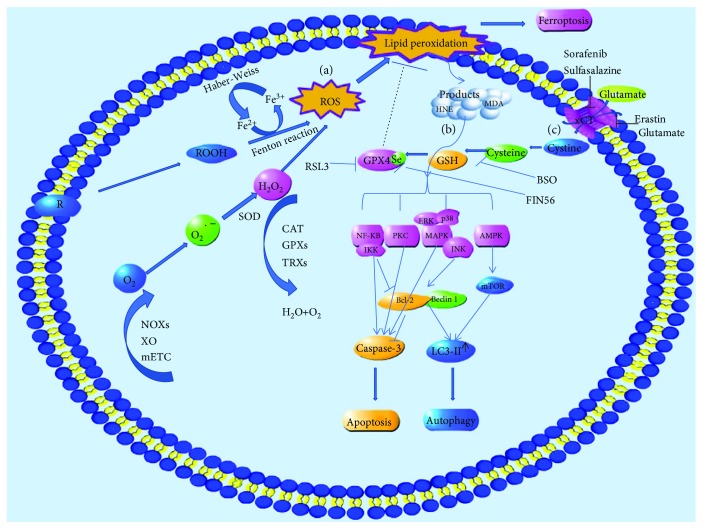
“GPX4 is a specific and robust central regulator of ferroptotic cell death when it is directly inhibited or indirectly inactivated by depletion of glutathione [112] (Figure 1).”
BackgroundInfluentialFerroptosis: A Regulated Cell Death Nexus Linking Metabolism, Redox Biology, and Disease
Stockwell, B. R., Friedmann Angeli, J. P., Bayir, H., Bush, A. I., Conrad, M., Dixon, S. J., Fulda, S., Gascón, S., Hatzios, S. K., Kagan, V. E., et al. (2017) · Cell · doi:10.1016/j.cell.2017.09.021 · Cited by 7,695 · cited 3×
“Ferroptosis occurs as a result of increased ROS levels due to elevated intracellular iron concentration and a depletion of antioxidant GSH that cause lipid peroxidation and consequently to cell death [101].”
BackgroundAutophagy: Renovation of Cells and Tissues
Mizushima, N., & Komatsu, M. (2011) · Cell · doi:10.1016/j.cell.2011.10.026 · Cited by 6,418 · cited 3×
“ROS: Reactive oxygen species PUFAs: Polyunsaturated fatty acids NOXs: NADPH oxidases XO: Xanthine oxidase mETC: Mitochondrial electron-transport chain SOD: Superoxide dismutase CAT: Catalase HNE: Hydroxynonenal PL: Phospholipid LOX: Lipoxygenase Alox: Arachidonate lipoxygenase PLA2: Phospholipase A2 GPx: Glutathione p…”
BackgroundAyala, A., Muñoz, M. F., & Argüelles, S. (2014) · Oxidative Medicine and Cellular Longevity · doi:10.1155/2014/360438 · Cited by 6,349 · cited 5×
“The main aldehyde product of lipid peroxidation is the 3-carbon dialdehyde species malondialdehyde (MDA) and 4-hydroxy-2-nonenal (HNE) [46].”
BackgroundInfluentialDeath Receptors: Signaling and Modulation
Ashkenazi, A., & Dixit, V. M. (1998) · Science · doi:10.1126/science.281.5381.1305 · Cited by 5,866 · cited 1×
“The extrinsic pathway is initiated by the tumor necrosis factor (TNF) receptor family interacting with a ligand and then binds with procaspase-8 following ligand-receptor interaction to activation of caspase-3 which leads to execution of apoptosis [54, 55].”
BackgroundMethods in Mammalian Autophagy Research
Mizushima, N., Yoshimori, T., & Levine, B. (2010) · Cell · doi:10.1016/j.cell.2010.01.028 · Cited by 4,497 · cited 1×
“Chaperone-mediated autophagy involves the direct translocation of cytosolic proteins across the lysosomal membrane while microautophagy involves inward invagination of lysosomal membrane delivering a small portion of cytoplasm into the lysosomal lumen [82].”
BackgroundInactivation of the ferroptosis regulator Gpx4 triggers acute renal failure in mice
Friedmann Angeli, J. P., Schneider, M., Proneth, B., Tyurina, Y. Y., Tyurin, V. A., Hammond, V. J., Herbach, N., Aichler, M., Walch, A., Eggenhofer, E., et al. (2014) · Nature Cell Biology · doi:10.1038/ncb3064 · Cited by 3,732
The complexity of NF-κB signaling in inflammation and cancer
Hoesel, B., & Schmid, J. A. (2013) · Molecular Cancer · doi:10.1186/1476-4598-12-86 · Cited by 3,165 · cited 1×
“The NF-κB protein family is widely involve in inflammation, stress response, survival, and cell death [65].”
Background
Research works printed but not linked: 2
- 1995, Cell Death & Differentiation, 2, 87
- 2014, Anticancer Research, 34, 6417
Cited by
Items 701–800 of 1,002
Wang, S., Kang, X., Alenius, H. T., Wong, S. H., Karisola, P., & El-Nezami, H. S. (2022) · Food and Chemical Toxicology · doi:10.1016/j.fct.2022.113368 · Cited by 19
Yeşil, S., Özdemir, Ç., Arslan, M., Gündoğdu, A. Ç., Kavutçu, M., & Atan, A. (2022) · Experimental and Therapeutic Medicine · doi:10.3892/etm.2022.11700 · Cited by 20
“are apoptosis and programmed cell death (42,43).”
Particulate matter induces ferroptosis by accumulating iron and dysregulating the antioxidant system
Park, M., Cho, Y., Choi, Y., Min, J., Park, Y., Yoon, S.-J., Kim, D., Son, M., Chung, S. W., Lee, H., et al. (2023) · BMB Reports · doi:10.5483/bmbrep.2022-0139 · Cited by 19
“that PM EI is the main culprit in the regulation of cell death (7).”
BackgroundInfluentialThe Emerging Importance of Cirsimaritin in Type 2 Diabetes Treatment
Alqudah, A. M., Athamneh, R. Y., Qnais, E. Y., Gammoh, O., Oqal, M. K., Abudalo, R. A., Alshaikh, H. A., AL‐Hashimi, N. N., & Alqudah, M. (2023) · International Journal of Molecular Sciences · doi:10.3390/ijms24065749 · Cited by 19
“Additionally, ROS induces the release of MDA, a highly reactive compound that interacts with proteins and nucleic acids, and that causes damage to various tissues and cells [53].”
BackgroundSaha, M., Das, S., Manna, K., & Saha, K. D. (2023) · Bioscience Reports · doi:10.1042/bsr20230128 · Cited by 19
“Since, increased lipid accumulation increases ROS production resulting in lipid peroxidation [75], the present study also explored BODIPY staining of lipid ROS and analysis of the protein markers of lipogenic pathway through Western blot and confocal microscopy.”
Yang, Y., Wan, L., Ren, L., Yang, H., Zhang, Y., Zhang, S., Hao, Y., Yu, D., Tong, R., Du, G., et al. (2023) · Acta Pharmacologica Sinica · doi:10.1038/s41401-023-01157-9 · Cited by 19
“The above results demonstrated that ROS induced lipid peroxidation and played a critical role in ferroptosis [29].”
Mycobacterium tuberculosis infection induces a novel type of cell death: Ferroptosis
Wang, J., Cao, H., Xie, Y., Xu, Z., Li, Y., & Luo, H. (2024) · Biomedicine & Pharmacotherapy · doi:10.1016/j.biopha.2024.117030 · Cited by 20
Enzymatic nanomotors with chemotaxis for product-based cancer therapy
Tan, H., Hu, Z., Miao, J., Chen, B., Li, H., Gao, J., Ye, Y., Xu, W., Jiang, J., Qin, H., et al. (2024) · Journal of Controlled Release · doi:10.1016/j.jconrel.2024.11.042 · Cited by 22
Tortajada-Pérez, J., Carranza, A. D. V., Río, C. T.-D., Collado-Pérez, M., Millán, J. M., García‐García, G., & Vázquez‐Manrique, R. P. (2025) · Antioxidants · doi:10.3390/antiox14010078 · Cited by 23
Kamel, N. F., Bashir, D. W., Elleithy, E. M. M., Tohamy, A. F., Rashad, M. M., Ali, G. E., & El-Saba, A. (2025) · Naunyn-Schmiedeberg s Archives of Pharmacology · doi:10.1007/s00210-025-03867-9 · Cited by 21
“Our findings confirm orally administered betaine’s antioxidant properties and anti-inflammatory effects by increasing GSH content, reducing MDA levels, upregulating AChE, and downregulating COX-2 and IL-1 gene expression in brain tissue.”
InfluentialAjiboye, B. O., Oyinloye, B. E., Essien, P. E., Onikanni, S. A., Ojo, O. A., & Kappo, A. P. (2020) · Journal of Pharmaceutical Investigation · doi:10.1007/s40005-020-00506-8 · Cited by 19
Rössner, P., Červená, T., Vojtíšek-Lom, M., Neča, J., Cigánek, M., Vrbova, K., Ambrož, A., Nováková, Z. V., Elzeinová, F., Šíma, M., et al. (2021) · Chemosphere · doi:10.1016/j.chemosphere.2021.130833 · Cited by 19
“Products of lipid peroxidation are of particular concern, as they are highly reactive, may attack other macromolecules, and propagate oxidative damage (Su et al., 2019).”
BackgroundAengwanich, W., & Wandee, J. (2022) · Journal of Thermal Biology · doi:10.1016/j.jtherbio.2022.103211 · Cited by 18
The role of ALOX15B in heat stress-induced apoptosis of porcine sertoli cells
Xue, H., Huo, Y., Hu, Y., Zhang, J., Deng, C., Zhang, J., & Wang, X. (2022) · Theriogenology · doi:10.1016/j.theriogenology.2022.03.018 · Cited by 22
Self-citationMarco, G. D., Afsa, S., Galati, M., Billè, B., Parrino, V., Mansour, H. B., & Cappello, T. (2022) · Environmental Toxicology and Pharmacology · doi:10.1016/j.etap.2022.103888 · Cited by 25
Hosseini, A., Stojkov, D., Fettrelet, T., Bilyy, R. O., Yousefi, S., & Simon, H. (2023) · International Journal of Molecular Sciences · doi:10.3390/ijms24032646 · Cited by 19
“On the other hand, lipid peroxidation-derived aldehydes, such as 4-hydroxynonenal (4-HNE), are shown to be more stable in formalin-fixed tissues that are exposed to high ROS activity [50].”
BackgroundLiu, Y., Li, T., Niu, C., Yuan, Z., Sun, S., & Liu, D. (2025) · Molecular Medicine · doi:10.1186/s10020-024-00993-7 · Cited by 18
Che, K., Chen, Z., Weng, L., Zhou, B., Gao, W., Liu, R., Yang, J., Luo, H., & Hu, W. (2025) · Molecules · doi:10.3390/molecules30071438 · Cited by 17
“High levels of ROS a tt ack the cell membrane and induce cell death [24].”
Algal and Fungal Antioxidants Alleviate Oxidative Stress‐Induced Reproductive Defects
Arslan, N. P., Albayrak, S., Savaş, A., Hacımüftüoğlu, A., Orak, T., Ozdemir, A., Karadagoglu, O., Yildirim, S., Yılmaz, H. Ç., & Taşkın, M. (2025) · Food Science & Nutrition · doi:10.1002/fsn3.70301 · Cited by 20
GPX4 regulates lipid peroxidation and ferroptosis of stored red blood cells
Stephenson, D., Keele, G. R., Hay, A. M., Dzieciątkowska, M., Reisz, J. A., Haiman, Z. B., Moore, A. L., Nemkov, T. G., Deng, X., Stone, M., et al. (2025) · Blood Red Cells & Iron · doi:10.1016/j.brci.2025.100020 · Cited by 28
Pharmacological intervention in oxidative stress as a therapeutic target in neurological disorders
Sharma, S., Advani, D., Das, A., Malhotra, N., Khosla, A., Arora, V., Jha, A., Yadav, M., Ambasta, R. K., & Kumar, P. (2022) · Journal of Pharmacy and Pharmacology · doi:10.1093/jpp/rgab064 · Cited by 19
Luangpraditkun, K., Tissot, M., Joompang, A., Charoensit, P., Grandmottet, F., Viyoch, J., & Viennet, C. (2021) · Oxidative Medicine and Cellular Longevity · doi:10.1155/2021/5067957 · Cited by 18
“Furthermore, UVB evokes reactive oxygen species (ROS) reacting with polyunsaturated fatty acids which are essential components for the lipid membrane and inducing lipid peroxidation [13, 14].”
BackgroundLi, J., Tang, X., Tu, X., Jin, Z., Dong, H., Yang, Q., Yao, T. S., & Pan, Z. (2022) · Cell Stress and Chaperones · doi:10.1007/s12192-022-01284-y · Cited by 17
“Recent studies have shown that the ER stress response induced by ferroptosis may mediate other types of cell death, such as apoptosis (Chen et al. 2019; Lee et al. 2018; Su et al. 2019).”
BackgroundEvaluation of rosmarinic acid against myocardial infarction in maternally separated rats
Verma, H., Bhattacharjee, A., Shivavedi, N., & Nayak, P. K. (2022) · Naunyn-Schmiedeberg s Archives of Pharmacology · doi:10.1007/s00210-022-02273-9 · Cited by 20
“Reactive oxygen species and free radicals are the main factors for oxidative stress via GSH and SOD depletion (Su et al. 2019; Kwiecien et al. 2014).”
BackgroundLiu, M., Zhang, Y., Dong, L., & Guo, Z. (2022) · Molecular Immunology · doi:10.1016/j.molimm.2022.11.012 · Cited by 17
Xu, Y., Pan, F., Liu, L., Xu, X., Zhang, L., Wang, J., Tao, Y., Li, X., Li, X., & Wang, Y. (2023) · Journal of Zhejiang University SCIENCE B · doi:10.1631/jzus.b2200410 · Cited by 18
“…and biochemically differ‐ ent from pyroptosis, necroptosis, autophagy, and apop‐ tosis (Dixon et al., 2012; Conrad and Pratt, 2019; Lei et al., 2019; Su et al., 2019; Lin et al., 2020; Liu et al., 2020; Macías-Rodríguez et al., 2020; Minagawa et al., 2020; Su et al., 2020; Tang et al., 2020;…”
BackgroundInfluentialYu, J. M., Zhao, L., Wang, S., Zhang, X., Quan, J., Lin, Z., & Piao, J. (2023) · Carcinogenesis · doi:10.1093/carcin/bgad012 · Cited by 19
Sun, Y., Zhang, Y., Ma, N., & Cai, S. (2023) · Journal of Ethnopharmacology · doi:10.1016/j.jep.2023.116387 · Cited by 20
Yang, R., Ma, L., Wan, J., Li, Z., Yang, Z., Zhao, Z., & Ming, L. (2023) · Frontiers in Cell and Developmental Biology · doi:10.3389/fcell.2023.1160381 · Cited by 20
“Inhibition of GPX4 leads to increased levels of ROS, while overexpression of GPX4 downregulates ROS, thereby inhibiting the onset of ferroptosis (Ribas et al., 2014; Yang et al., 2014; Su et al., 2019).”
BackgroundPeng, Z., & Peng, N.-N. (2023) · Human & Experimental Toxicology · doi:10.1177/09603271231172915 · Cited by 18
“11,12 13 In addition, activation of the Akt/GSK-3 β signaling pathway has been shown to inhibit autophagy and regulate ferroptosis.”
BackgroundSelf-citationİlhan, A. O., Can, B., Kar, F., Gündoğdu, A. Ç., Söğüt, İ., & Kanbak, G. (2023) · Biological Trace Element Research · doi:10.1007/s12011-023-03699-9 · Cited by 18
“ROS are formed due to free radical production at various stages of alcohol metabolism [24].”
BackgroundXu, X., Wang, S., Zhang, L., Lu, A.-X., Yin, L., Liu, J., & Yan, C. (2023) · Environmental Pollution · doi:10.1016/j.envpol.2023.122278 · Cited by 18
Crosstalk of ferroptosis and oxidative stress in infectious diseases
Hu, Y., He, B., Cao, Q., Li, Y., Tang, Y., Cao, T., Peng, B., Zhou, X., & Liu, S. (2023) · Frontiers in Molecular Biosciences · doi:10.3389/fmolb.2023.1315935 · Cited by 17
cGMP modulates hemin-mediated platelet death
Rohlfing, A., Kremser, M., Schaale, D., Dicenta, V., Laspa, Z., Fu, X., Zizmare, L., Sigle, M., Harm, T., Münzer, P., et al. (2023) · Thrombosis Research · doi:10.1016/j.thromres.2023.12.008 · Cited by 15
Yang, S. K., Chen, M., Meng, J., Hao, C., Xu, L., Wang, J., & Chen, J. (2024) · Environmental Research · doi:10.1016/j.envres.2024.118221 · Cited by 16
Silver nanoparticles from Ocimum basilicum L. tea: A green route with potent anticancer efficacy
Qamar, S. U. R., Virijević, K. D., Arsenijević, D., Avdović, E., Živanović, M., Filipović, N., Ćirić, A., & Petrović, I. (2024) · Colloids and Interface Science Communications · doi:10.1016/j.colcom.2024.100771 · Cited by 22
Research progress on ferroptosis in the pathogenesis and treatment of neurodegenerative diseases
Wang, L., Fang, X., Ling, B., Wang, F., Xia, Y., Zhang, W., Zhong, T., & Wang, X. (2024) · Frontiers in Cellular Neuroscience · doi:10.3389/fncel.2024.1359453 · Cited by 22
“In vivo , cell membrane breakdown from oxidative damage causes an overabundance of reactive oxygen species (ROS) that causes lipids to peroxide, which leads to multiple kinds of cellular death (Su et al., 2019).”
BackgroundKashyap, R. (2024) · Future Integrative Medicine · doi:10.14218/fim.2023.00071 · Cited by 26
Soloviev, A. I., & Sydorenko, V. (2024) · Cardiovascular Toxicology · doi:10.1007/s12012-024-09878-x · Cited by 20
de Freitas, C. S., Oliveira‐da‐Silva, J. A., Lage, D. P., Costa, R. R., Mendonça, D. V. C., Martins, V. T., Reis, T. A. R., Antinarelli, L. M. R., Machado, A. S., Tavares, G. S. V., et al. (2020) · Parasitology Research · doi:10.1007/s00436-020-06971-2 · Cited by 17
“Number sign indicates a statistically significant difference in relation to the miltefosine, DIGI, and DIGI/Mic groups (P < 0.05) parasite death (Su et al. 2019).”
ResultInfluentialPena, E., Siqués, P., Brito, J., Arribas, S. M., Böger, R. H., Hannemann, J., Lèon‐Velarde, F., González, M. C., López, M. R., & de Pablo, Á. L. L. (2020) · International Journal of Molecular Sciences · doi:10.3390/ijms21228576 · Cited by 19
“When these complexes (Nox) are activated, oxidative stress is produced through the exacerbated production of reactive oxygen species (ROS), which could result in damage to the cellular structure, such as lipid peroxidation [31].”
BackgroundShort‐term hypobaric treatment enhances chilling tolerance in peaches
Zhang, X., Li, X., Wang, C., Sun, S., & Lyu, Y. (2021) · Journal of Food Processing and Preservation · doi:10.1111/jfpp.15362 · Cited by 17
Contribution of SOS genes to H2O2-induced apoptosis-like death in Escherichia coli
Kim, H., & Lee, D. G. (2021) · Current Genetics · doi:10.1007/s00294-021-01204-0 · Cited by 17
“It was previously reported that excess production of H2O2 and OH∙ negatively impacts biomembranes, resulting in lipid peroxidation of membrane polyunsaturated fatty acids (Su et al. 2019).”
BackgroundThe lipid paradox in neuroprogressive disorders: Causes and consequences
Morris, G., Berk, M., Walder, K., O’Neil, A., Maes, M., & Puri, B. K. (2021) · Neuroscience & Biobehavioral Reviews · doi:10.1016/j.neubiorev.2021.06.017 · Cited by 17
Popovici, V., Musuc, A. M., Matei, E., Karampelas, O., Ozon, E. A., Cozaru, G. C., Schröder, V., Bucur, L. A., Aricov, L., Anastasescu, M., et al. (2022) · International Journal of Molecular Sciences · doi:10.3390/ijms232314836 · Cited by 20
Lipotoxicity and Oocyte Quality in Mammals: Pathogenesis, Consequences, and Reversibility
Meulders, B., Marei, W. F. A., Loier, L., & Leroy, J. (2024) · Annual Review of Animal Biosciences · doi:10.1146/annurev-animal-111523-102249 · Cited by 19
Role of oxeiptosis in disease mechanisms and therapeutic opportunities
Bhuvaneshwari, K., Harithpriya, K., Ganesan, K., Xu, B., & Ramkumar, K. M. (2025) · APOPTOSIS · doi:10.1007/s10495-025-02087-z · Cited by 20
“High levels of cellular ROS led to lipid peroxidation that eventually damages phospholipids, and induces caspase-dependent cell death [37 , 38 ].”
Zhang, Q., Wang, T., Ren, J., Guo, Y., Yin, Z.-F., Zhang, C., Fan, H. X., Ren, Y., Da, J., & Hu, N. (2025) · Materials Today Bio · doi:10.1016/j.mtbio.2025.101873 · Cited by 31
“In addition, ROS-induced lipid peroxidation plays a crucial role in cell death, including apoptosis, autophagy and ferroptosis [26].”
Chauhan, P. K., Upadhyay, S. K., Chauhan, A., Bhutiani, R., Sikarwar, R., & Tiwari, M. K. (2025) · Physiology and Molecular Biology of Plants · doi:10.1007/s12298-025-01649-4 · Cited by 19
“ROS further target cellular membranes, inducing lipid peroxidation in polyunsaturated fatty acids, damaging phos - pholipids, and compromising membrane integrity, which disrupts vital cellular functions (Su et al. 2019).”
Evaluation of the geroprotective effects of withaferin A in Drosophila melanogaster
Koval, L. A., Zemskaya, N. V., Aliper, A. M., Zhavoronkov, A. A., & Moskalev, A. (2021) · Aging · doi:10.18632/aging.202572 · Cited by 19
Dąbkowska, M., Ulańczyk, Z., Łuczkowska, K., Rogińska, D., Sobuś, A., Wasilewska, M., Olszewska, M., Jakubowska, K., & Machaliński, B. (2021) · Journal of Nanobiotechnology · doi:10.1186/s12951-021-00984-4 · Cited by 18
“Reactive oxygen species (ROS) formation causes damage to biological components through oxidation of lipids, proteins, and DNA damage, finally leading to apoptosis [63].”
BackgroundOrientin Attenuates Cisplatin-Induced Renal Toxicity by Reducing Oxidative Stress and Inflammation
Ijaz, M. U. (2021) · Pakistan Veterinary Journal · doi:10.29261/pakvetj/2021.076 · Cited by 16
“Lipid peroxidation and ROS production have potential to trigger apoptosis in cells (Su et al., 2019).”
BackgroundNăsui, B. A., Talaba, P., Nasui, G. A., Sîrbu, D. M., Borda, I. M., Pop, A. L., Ciortea, V. M., Irsay, L., Purcar-Popescu, A. I., Cinteză, D., et al. (2022) · Nutrients · doi:10.3390/nu14194159 · Cited by 19
“Further decomposition of peroxidized lipids yields various end-products, including malondialdehyde (MDA) [16].”
BackgroundBogari, H. A., Rashied, R. M. H., Abdelfattah, M. A. O., Malatani, R. T., Khinkar, R. M., Hareeri, R. H., Wink, M., & Sobeh, M. (2022) · Metabolites · doi:10.3390/metabo12111031 · Cited by 17
“Lipid peroxidation by ROS damages the cell membrane and lipoproteins, and results in the production of malondialdehyde and conjugated dienes that have been shown to be mutagenic and cytotoxic [13].”
BackgroundDysfunction of liver-gut axis in marine medaka exposed to hypoxia and perfluorobutanesulfonate
Li, J., Sun, B., Lam, P. K. S., & Chen, L. (2023) · Marine Pollution Bulletin · doi:10.1016/j.marpolbul.2023.114677 · Cited by 18
Steroidal saponin SSPH I induces ferroptosis in HepG2 cells via regulating iron metabolism
Huang, D. A., Dong, X., Li, J., Chen, Y., Zhou, Y., Chen, Q., & Sun, Y. (2023) · Medical Oncology · doi:10.1007/s12032-023-02000-1 · Cited by 16
“Iron-dependent ROS generation is characteristic of ferroptosis [12, 18].”
BackgroundAfsa, S., Marco, G. D., Cristaldi, A., Giannetto, A., Galati, M., Billè, B., Conti, G. O., Mansour, H. B., Ferrante, M., & Cappello, T. (2023) · Environmental Toxicology and Pharmacology · doi:10.1016/j.etap.2023.104167 · Cited by 18
Hefer, M., Huskić, I. M., Petrovic, A., Raguž-Lučić, N., Kizivat, T., Gjoni, D., Horvatić, E., Udiljak, Ž., Smolić, R., Včev, A., et al. (2023) · Crystals · doi:10.3390/cryst13071070 · Cited by 20
Bir, A., Ghosh, A., Chauhan, A., Saha, S., Saini, A. K., Bisaglia, M., & Chakrabarti, S. (2024) · Antioxidants · doi:10.3390/antiox13030316 · Cited by 20
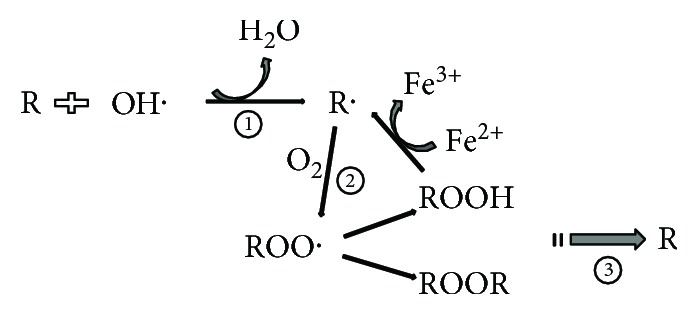
“For example, Fe 2+ can catalyze the decomposition of H 2 O 2 via Fenton’s reactions or catalyze the formation of alkoxyl and peroxyl radicals during lipid peroxidation chain reaction [21,22].”
Singh, S. S., Jena, B., Roy, S., Nayak, S., Behera, S. K., Chakrabortty, S., Tripathy, S. K., Khan, M. A., Kumar, R., Jeon, B., et al. (2024) · Chemical Engineering Journal · doi:10.1016/j.cej.2024.151788 · Cited by 20
Microalgae: A promising strategy for aflatoxin control in poultry feeds
Abdelnour, S. A., Mahasneh, Z. M. H., Barakat, R. A., Alkahtani, A. M., & Madkour, M. (2024) · Toxicon · doi:10.1016/j.toxicon.2024.107770 · Cited by 16
Li, Q., Zheng, Y., Zhao, J., Wei, X., Shi, Z., Fan, H., Ge, C., Xu, M., & Tan, J. (2024) · International Immunopharmacology · doi:10.1016/j.intimp.2024.113385 · Cited by 20
Aziz, A., Nathan, K. G., Kamarul, T., Mobasheri, A., & Sharifi, A. M. (2024) · Therapeutic Advances in Musculoskeletal Disease · doi:10.1177/1759720x241299535 · Cited by 17
Durgadevi, P., Girigoswami, K., & Girigoswami, A. (2025) · Physics · doi:10.3390/physics7030028 · Cited by 16
Chen, Y., Wang, P.-Y., Huang, B.-M., Chen, Y.-J., Lee, W.-C., & Chen, Y.-J. (2020) · Molecules · doi:10.3390/molecules25173958 · Cited by 16
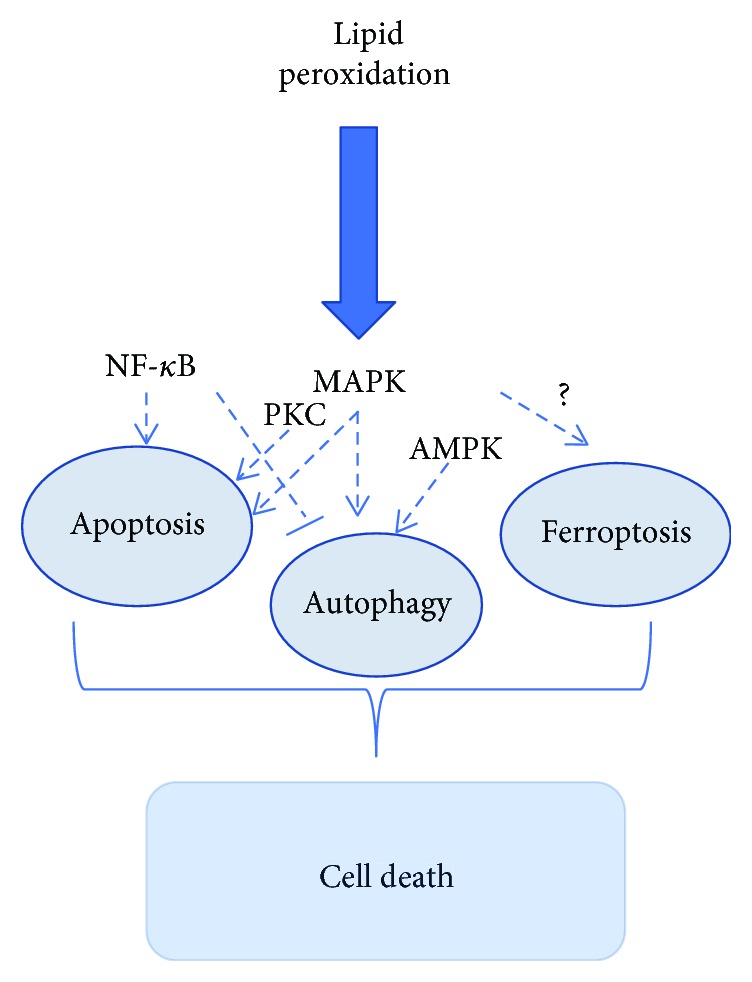
“ROS-induced lipid peroxidation propagates cytotoxicity and is associated with apoptosis, autophagy, and ferroptosis [21].”
BackgroundWu, Q., Shang, Y., Shen, T., Liu, F., & Zhang, W. (2021) · NeuroToxicology · doi:10.1016/j.neuro.2021.06.007 · Cited by 18
Qiu, X., Liu, L., Xu, W., Chen, C., Li, M., Shi, Y., Wu, X., Chen, K., & Wang, C. (2022) · Antioxidants · doi:10.3390/antiox11050945 · Cited by 16
“Furthermore, ROS-induced lipid peroxidation plays a critical role in cell death [43], and many previous studies also proved that ROS accumulation induced by CPC or NPs exposure could activate apoptosis pathways in mammalian cell lines [10–12].”
BackgroundNurhayati, A. P. D., Rihandoko, A., Fadlan, A., Ghaissani, S. S., Jadid, N., & Setiawan, E. (2022) · Saudi Pharmaceutical Journal · doi:10.1016/j.jsps.2022.06.012 · Cited by 21
“…oxygen species leads to lipid peroxidation and membrane damage, DNA damage, oxidative stress, and triggers apoptotic pathways of cell death (Quinzii et al., 2010; Su et al., 2019) whilst trisindoline in oxidureductase in metabolic pathways results in hydrolysis of the third C of trisin-doline.”
Impact of chitosan administration on titanium dioxide nanoparticles induced testicular dysfunction
Halawa, A. A., Elshopakey, G. E., Elmetwally, M. A., El‐Adl, M., Lashen, S., Shalaby, N., Eldomany, E., Farghali, A. A., Sayed-Ahmed, M. Z., Alam, N., et al. (2022) · Scientific Reports · doi:10.1038/s41598-022-22044-z · Cited by 18
Sueiro, R. A., Leiro, J. M., Rodríguez-González, J. A., Ares‐Pena, F., & López-Martín, M. E. (2023) · The Science of The Total Environment · doi:10.1016/j.scitotenv.2023.161475 · Cited by 16
PGC1α is a key regulator of erastin-induced mitochondrial dysfunction during ferroptotic cell death
Seok, B. G., Park, E., Park, Y., Kwon, H. N., & Chung, S. W. (2025) · BMB Reports · doi:10.5483/bmbrep.2024-0139 · Cited by 19
“ROS can induce lipid peroxidation and affect ferroptotic cell death (19).”
Liao, T., Xu, X., Wang, G., & Yan, J. (2025) · BMC Biology · doi:10.1186/s12915-025-02240-9 · Cited by 21
“Plasma membrane phospholipid peroxidation and lipid ROS accumulation mediated by different pathways are the key factors that induce ferroptosis in cells [28] and are also the basis for mediating the complex pathogenesis of PE.”
Cutler, H. B., Jall-Rogg, S., Thillainadesan, S., Cooke, K. C., Masson, S. W. C., Sligar, J., Crowston, J. G., Carroll, L., Stöckli, J., James, D. E., et al. (2025) · Science Advances · doi:10.1126/sciadv.adt7369 · Cited by 23
“Elevated lipid oxidation increases the production of reactive oxygen species ( 39 ), and the most up-regulated plasma protein upon cold exposure was superoxide dismutase 3 (SOD3; Fig.”
Yao, M., Liao, J., Liu, Z., Zhao, W., Song, S., Huang, X., & Wang, Y. (2025) · Frontiers in Immunology · doi:10.3389/fimmu.2025.1567980 · Cited by 20
Shu, L., Luo, P., Ren, C., Lai, Z., Zhang, X., Wu, C., Pan, X., & Huang, Z. (2025) · ACS Nano · doi:10.1021/acsnano.5c09493 · Cited by 19
de Freitas, C. S., Lage, D. P., Oliveira‐da‐Silva, J. A., Costa, R. R., Mendonça, D. V. C., Martins, V. T., Reis, T. A. R., Antinarelli, L. M. R., Machado, A. S., Tavares, G. S. V., et al. (2021) · Parasite · doi:10.1051/parasite/2021036 · Cited by 15
“In fact, the presence of high levels of ROS can cause increased levels of lipid peroxidation and reduction in membrane fluidity, leading to the loss of cell viability [55, 58].”
BackgroundEffectiveness of high cardiorespiratory fitness in cardiometabolic protection in prediabetic rats
Thonusin, C., Pantiya, P., Sumneang, N., Chunchai, T., Nawara, W., Arunsak, B., Siri‐Angkul, N., Sriwichaiin, S., Chattipakorn, S. C., & Chattipakorn, N. (2022) · Molecular Medicine · doi:10.1186/s10020-022-00458-9 · Cited by 17
Wu, P., Chen, L., Cheng, J. R., Pan, Y., Zhu, X., Chu, W., & Zhang, J. (2022) · Journal of Fish Biology · doi:10.1111/jfb.15081 · Cited by 16
Self-citationAbdulla, J. M., & Al-Okaily, B. N. (2022) · The Iraqi Journal of Veterinary Medicine · doi:10.30539/ijvm.v46i1.1313 · Cited by 23
Kouamé, K. J. E., Bora, A. F. M., Li, X., Sun, Y., Tian, S., Hussain, M., Liu, L., & Coulibaly, I. (2022) · Journal of Food Science · doi:10.1111/1750-3841.16375 · Cited by 16
Lipid peroxidation and its repair in malaria parasites
Wagner, M. P., & Chitnis, C. E. (2023) · Trends in Parasitology · doi:10.1016/j.pt.2022.12.006 · Cited by 18
Adiga, D., Bhat, S., Shukla, V., Shah, H. V., Kuthethur, R., Chakrabarty, S., & Kabekkodu, S. P. (2023) · Free Radical Biology and Medicine · doi:10.1016/j.freeradbiomed.2023.03.010 · Cited by 14
Wang, W., & Zhang, N. (2023) · Journal of Pharmacy and Pharmacology · doi:10.1093/jpp/rgad025 · Cited by 15
Chemical profile of craft brewer’s spent yeast and its antioxidant and antiproliferative activities
Horn, P. A., Zeni, A. L. B., Cavichioli, N., Winter, E., Batista, K. Z. S., Vitali, L., & de Almeida, E. A. (2023) · European Food Research and Technology · doi:10.1007/s00217-023-04268-z · Cited by 16
“This effect may be related to the presence of antioxidant compounds in BSY, possibly protecting lysosomal membranes from oxidation by free radicals [81].”
BackgroundAmozova, V. I., Балакина, А. А., Mishchenko, D. V., & Санина, Н. А. (2023) · Russian Chemical Bulletin · doi:10.1007/s11172-023-3872-9 · Cited by 15
Crosstalk between regulated cell death and immunity in redox dyshomeostasis for pancreatic cancer
Zhou, Z., Zhang, Y., Li, J., Weng, S., Li, J., Chen, S., Lv, J., Xu, N., Zhang, Y., Yang, S., et al. (2023) · Cellular Signalling · doi:10.1016/j.cellsig.2023.110774 · Cited by 16
Kouamé, K. J. E., Bora, A. F. M., Liu, Y., Yu, X., Sun, Y., Hussain, M., Md, M., Coulibaly, I., Li, X., & Liu, L. (2023) · Powder Technology · doi:10.1016/j.powtec.2023.118739 · Cited by 16
Protective benefits of salvianic acid A against retinal iron overload by inhibition of ferroptosis
Zhao, Y., Li, Q., Jian, W., Han, X., Zhang, Y., Zeng, Y., Liu, R., Wang, Q., & Song, Q. (2023) · Biomedicine & Pharmacotherapy · doi:10.1016/j.biopha.2023.115140 · Cited by 17
Wu, R., Kong, L., Wu, X. Q., Gao, J., Niu, T., Li, J., Li, Z., & Dai, L. (2023) · Functional Plant Biology · doi:10.1071/fp23015 · Cited by 15
Liu, T., He, Y., & Liao, Y. (2023) · Clinical and Experimental Pharmacology and Physiology · doi:10.1111/1440-1681.13809 · Cited by 17
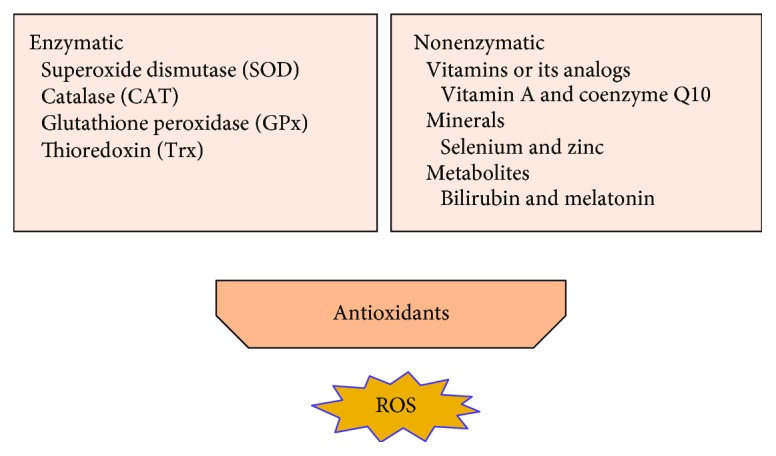
“ROS can cause lipid peroxidation, in which ROS leads to the damages of polyunsaturated fatty acids in cellular or organelle membranes.(58) Therefore, ROS, enzymatic antioxidants (e.”
BackgroundIron, Ferroptosis, and Head and Neck Cancer
Teng, Y., Gao, L., Mäkitie, A. A., Florek, E., Czarnywojtek, A., Saba, N. F., & Ferlito, A. (2023) · International Journal of Molecular Sciences · doi:10.3390/ijms242015127 · Cited by 18
Ergül, M., Kılıç-Kurt, Z., Aka, Y., Kütük, Ö., & Sahin-Inan, Z. D. (2023) · Toxicology in Vitro · doi:10.1016/j.tiv.2023.105757 · Cited by 15
Endogenous chemicals guard health through inhibiting ferroptotic cell death
Song, Y., Lei, H.-X., Dou, Y., Zhu, H., Hao, M., Cui, R., Meng, X., Sheng, X. D., & Zhang, L. (2023) · BioFactors · doi:10.1002/biof.2015 · Cited by 18
“10 This constitutes the primary mechanism through which iron facilitates ferroptosis and is the most pertinent process concerning the initiation of ferroptosis.”
BackgroundLv, Y., Liu, Z., Deng, L., Xia, S., Mu, Q., Xiao, B., Liu, Z., & Liu, Z. (2024) · Scientific Reports · doi:10.1038/s41598-023-50476-8 · Cited by 15
Li, N., Jiang, X., Zhang, Q., Huang, Y., Wei, J., Zhang, H., & Luo, H. (2024) · Journal of Ovarian Research · doi:10.1186/s13048-024-01366-8 · Cited by 21
“One key enzyme is glutathione peroxidase (GPX), which utilizes reduced glutathione (GSH) to convert lipid peroxides into their corresponding alcohols to neutralize their damaging effects [13].”
BackgroundLee, J., & Hyun, D. (2024) · BioScience Trends · doi:10.5582/bst.2024.01020 · Cited by 17
Wang, T., Gao, M. C., Song, H., Wang, C., & He, M. (2024) · Algal Research · doi:10.1016/j.algal.2024.103562 · Cited by 17
Malladi, N., Lahamge, D., Somwanshi, B. S., Tiwari, V., Deshmukh, K., Balani, J. K., Chakraborty, S., Alam, J., & Banerjee, S. K. (2024) · Cellular Signalling · doi:10.1016/j.cellsig.2024.111299 · Cited by 18
Agostini, F., Sgalletta, B., & Bisaglia, M. (2024) · Cells · doi:10.3390/cells13161376 · Cited by 18
“…has been associated not only with the increase of membrane rigidity and the reduction of membrane-bound protein activity but also with alterations of important biological processes, such as signal transduction, gene expression, substrate–receptor interaction and ferroptosis induction [20,78].”
BackgroundVitamin A in Fish Well-Being: Integrating Immune Strength, Antioxidant Capacity and Growth
Shastak, Y., & Pelletier, W. (2024) · Fishes · doi:10.3390/fishes9080330 · Cited by 20
Metadata
- Authors
- Su, L.-J., Zhang, J.-H., Gomez, H., Murugan, R., Hong, X., Xu, D., Jiang, F., & Peng, Z.-Y.
- Affiliations
- Zhongnan Hospital of Wuhan University (CN)
- Department of Critical Care Medicine, Zhongnan Hospital of Wuhan University, Wuhan, 430071 Hubei Province, China
- Center of Critical Care Nephrology, Department of Critical Care Medicine, University of Pittsburgh Medical Center, Pittsburgh, 15223 PA, USA
- University of Pittsburgh Medical Center (US)
- Venue
- Oxidative Medicine and Cellular Longevity
- Publisher
- Wiley
- Published
- 2019-10-13
- Volume
- 2019
- Pages
- 1-13
- ISSN
- 1942-0994 (ISSN-L)
- 1942-0900
- PMC
- PMC6815535
- OpenAlex
- W2979799294
- Cited by
- 2,166
- References
- 147
- Citations by year
- 2026: 236 · 2025: 385 · 2024: 507 · 2023: 424 · 2022: 365 · 2021: 187 · 2020: 58
- FWCI
- 14.76
- Type
- journal article
- Language
- en
- Open access
- hybrid
- doi.org
- Locations
- Oxidative Medicine and Cellular Longevity (publishedVersion, cc-by)
- Europe PMC (PubMed Central) (publishedVersion, cc-by)
- PubMed Central (publishedVersion, cc-by)
- PubMed (publishedVersion)
- DOAJ (DOAJ: Directory of Open Access Journals) (submittedVersion)
- Funders
- Health Commission of Hubei Province (WJ2017Z008, 2017AHB044, 81560131, 81772046)
- Hubei Province Technology and Innovation Project (WJ2017Z008, 2017AHB044, 81560131, 81772046)
- National Natural Science Foundation of China (WJ2017Z008, 2017AHB044, 81560131, 81772046)
- Topics
- Health Sciences › Medicine › Biochemistry (medical) › Antioxidant Activity and Oxidative Stress
- Life Sciences › Biochemistry, Genetics and Molecular Biology › Molecular Biology › Cell death mechanisms and regulation
- Life Sciences › Biochemistry, Genetics and Molecular Biology › Cancer Research › Ferroptosis and cancer prognosis
- Keywords
- reactive oxygen species, lipid peroxidation, apoptosis, autophagy, ferroptosis, antioxidant defense, oxidative damage, cell death, critical illness
- MeSH terms
- Ferroptosis, Animals, Antioxidants, Autophagy, Humans, Lipid Peroxidation, Signal Transduction, Apoptosis, Reactive Oxygen Species, Oxidative Stress, Sepsis, Acute Kidney Injury
About these checks
Registry, retraction, Cites and statistics results are computed, not judged, with one exception: a printed reference that no index lists is read once by a model before it counts as a citation error. Claims are extracted by a model and kept only when their quote appears verbatim in the text; each cited source is then checked, with a model’s help, for whether it says what the claim relies on. Those verdicts can be wrong — read the claim’s quote and the cited source before relying on one.
Statistics and arithmetic are recomputed, not judged.
Confidence bands are shown only for fields calibrated on our annotated test set. None is calibrated yet, so no band is shown.
What counts as a claim ›How we measure confidence ›How we check this ›
Are you an author, or do you see a problem with this page? Request a review
Data sources
Bibliographic data: Semantic Scholar, OpenAlex, Crossref.
Contains information from the Semantic Scholar Academic Graph Datasets, made available under the ODC Attribution License (ODC-BY 1.0).
Semantic Scholar’s data is described in: Kinney, R., et al. (2023). The Semantic Scholar Open Data Platform. arXiv:2301.10140.
