

Reactive Oxygen Species-Induced Lipid Peroxidation in Apoptosis, Autophagy, and Ferroptosis
Open accessThe DOI matches its Crossref record; 147 of the 147 references it cites were found in a registry or an index.
Abstract
Reactive oxygen species- (ROS-) induced lipid peroxidation plays a critical role in cell death including apoptosis, autophagy, and ferroptosis. This fundamental and conserved mechanism is based on an excess of ROS which attacks biomembranes, propagates lipid peroxidation chain reactions, and subsequently induces different types of cell death. A highly evolved sophisticated antioxidant system exists that acts to protect the cells from oxidative damage. In this review, we discussed how ROS propagate lipid peroxidation chain reactions and how the products of lipid peroxidation initiate apoptosis and autophagy in current models. We also discussed the mechanism of lipid peroxidation during ferroptosis, and we summarized lipid peroxidation in pathological conditions of critical illness. We aim to bring a more global and integrative sight to know how different ROS-induced lipid peroxidation occurs among apoptosis, autophagy, and ferroptosis.
Overview
The claims and statistics of this paper haven’t been checked yet.
Free: it reads the open-access text and checks the first 5 claims that cite a source we can check. Create a free account to check every claim.
Integrity signals
Registry
Cites
Statistics
Figures
Verification
Claims the paper makes
The claims and statistics of this paper haven’t been checked yet.
Free: it reads the open-access text and checks the first 5 claims that cite a source we can check. Create a free account to check every claim.
Claims other papers make about this one
Each is checked against this paper’s own text: does it say what the citing paper says it does?
The source backs part of the claim, not all of it — or backs it for a different population, condition or comparison.
In the citing paper
“This oxidative damage has been shown to correlate with the upregulation of pro-apoptotic proteins like BAD, the activation of caspase-3, and the downregulation of anti-apoptotic proteins like Bcl-2 and Bcl-XL (Figure 2) [43].”
From Role of Regulated Cell Death Pathways in Snakebite Envenomation: Mechanisms, Crosstalk, and Therapeutic Opportunities (2026) · cites this paper as [43]
Experimental — accuracy not yet measuredThe source backs part of the claim, not all of it — or backs it for a different population, condition or comparison.
In the citing paper
“Thus, activating ferroptosis can effectively increase the sensitivity of tumor cells to ROS [118], indicating that SDT may be an ideal combination therapy for ferroptosis.”
From Nanosensitizer-assisted sonodynamic therapy for breast cancer (2025) · cites this paper as [118]
Experimental — accuracy not yet measured
Self-check
Percentages, sums and reported differences re-computed from the paper’s own numbers.
The self-check needs the paper’s full text.
Citations
Cites
Ferroptosis: An Iron-Dependent Form of Nonapoptotic Cell Death
Dixon, S. J., Lemberg, K. M., Lamprecht, M. R., Skouta, R., Zaitsev, E. M., Gleason, C. E., Patel, D. N., Bauer, A. J., Cantley, A. M., Yang, W. S., et al. (2012) · Cell · doi:10.1016/j.cell.2012.03.042 · Cited by 18,691 · cited 4×
“, erastin, sulfasalazine, and RSL3) and also prevented by lipophilic antioxidants (CoQ10, Vitamin E, ferrostatins, and liproxstatins) [4, 8, 39, 104].”
BackgroundInfluentialApoptosis: A Review of Programmed Cell Death
Elmore, S. (2007) · Toxicologic Pathology · doi:10.1080/01926230701320337 · Cited by 13,853 · cited 1×
“Apoptosis is programmed series of events dependent on energy, as well as morphological features such as cell shrinkage, chromatin condensation, and presence of apoptotic bodies without inflammatory reactions [51, 52].”
BackgroundRegulation of Ferroptotic Cancer Cell Death by GPX4
Yang, W. S., SriRamaratnam, R., Welsch, M. E., Shimada, K., Skouta, R., Viswanathan, V. S., Cheah, J. H., Clemons, P. A., Shamji, A. F., Clish, C. B., et al. (2014) · Cell · doi:10.1016/j.cell.2013.12.010 · Cited by 7,713 · cited 6×
“GPX4 is a specific and robust central regulator of ferroptotic cell death when it is directly inhibited or indirectly inactivated by depletion of glutathione [112] (Figure 1).”
BackgroundInfluentialFerroptosis: A Regulated Cell Death Nexus Linking Metabolism, Redox Biology, and Disease
Stockwell, B. R., Friedmann Angeli, J. P., Bayir, H., Bush, A. I., Conrad, M., Dixon, S. J., Fulda, S., Gascón, S., Hatzios, S. K., Kagan, V. E., et al. (2017) · Cell · doi:10.1016/j.cell.2017.09.021 · Cited by 7,695 · cited 3×
“Ferroptosis occurs as a result of increased ROS levels due to elevated intracellular iron concentration and a depletion of antioxidant GSH that cause lipid peroxidation and consequently to cell death [101].”
BackgroundAutophagy: Renovation of Cells and Tissues
Mizushima, N., & Komatsu, M. (2011) · Cell · doi:10.1016/j.cell.2011.10.026 · Cited by 6,418 · cited 3×
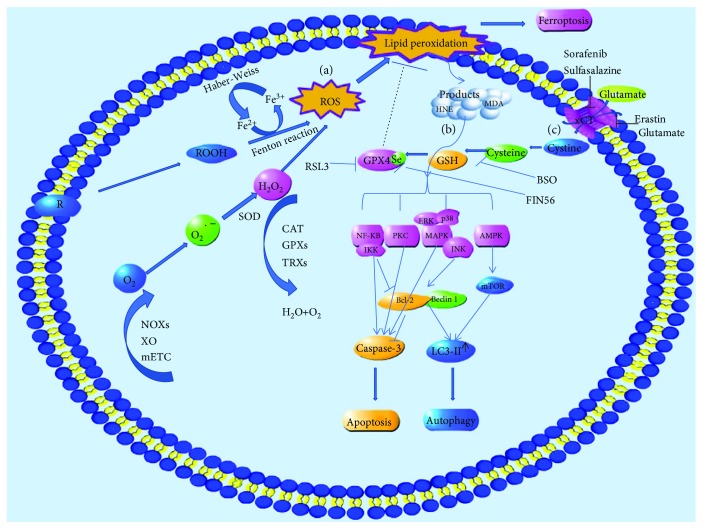
“ROS: Reactive oxygen species PUFAs: Polyunsaturated fatty acids NOXs: NADPH oxidases XO: Xanthine oxidase mETC: Mitochondrial electron-transport chain SOD: Superoxide dismutase CAT: Catalase HNE: Hydroxynonenal PL: Phospholipid LOX: Lipoxygenase Alox: Arachidonate lipoxygenase PLA2: Phospholipase A2 GPx: Glutathione p…”
BackgroundAyala, A., Muñoz, M. F., & Argüelles, S. (2014) · Oxidative Medicine and Cellular Longevity · doi:10.1155/2014/360438 · Cited by 6,349 · cited 5×
“The main aldehyde product of lipid peroxidation is the 3-carbon dialdehyde species malondialdehyde (MDA) and 4-hydroxy-2-nonenal (HNE) [46].”
BackgroundInfluentialDeath Receptors: Signaling and Modulation
Ashkenazi, A., & Dixit, V. M. (1998) · Science · doi:10.1126/science.281.5381.1305 · Cited by 5,866 · cited 1×
“The extrinsic pathway is initiated by the tumor necrosis factor (TNF) receptor family interacting with a ligand and then binds with procaspase-8 following ligand-receptor interaction to activation of caspase-3 which leads to execution of apoptosis [54, 55].”
BackgroundMethods in Mammalian Autophagy Research
Mizushima, N., Yoshimori, T., & Levine, B. (2010) · Cell · doi:10.1016/j.cell.2010.01.028 · Cited by 4,497 · cited 1×
“Chaperone-mediated autophagy involves the direct translocation of cytosolic proteins across the lysosomal membrane while microautophagy involves inward invagination of lysosomal membrane delivering a small portion of cytoplasm into the lysosomal lumen [82].”
BackgroundInactivation of the ferroptosis regulator Gpx4 triggers acute renal failure in mice
Friedmann Angeli, J. P., Schneider, M., Proneth, B., Tyurina, Y. Y., Tyurin, V. A., Hammond, V. J., Herbach, N., Aichler, M., Walch, A., Eggenhofer, E., et al. (2014) · Nature Cell Biology · doi:10.1038/ncb3064 · Cited by 3,732
The complexity of NF-κB signaling in inflammation and cancer
Hoesel, B., & Schmid, J. A. (2013) · Molecular Cancer · doi:10.1186/1476-4598-12-86 · Cited by 3,165 · cited 1×
“The NF-κB protein family is widely involve in inflammation, stress response, survival, and cell death [65].”
Background
Research works printed but not linked: 2
- 1995, Cell Death & Differentiation, 2, 87
- 2014, Anticancer Research, 34, 6417
Cited by
Reactive Oxygen Species, Toxicity, Oxidative Stress, and Antioxidants: Chronic Diseases and Aging
Jomova, K., Raptova, R., Alomar, S. Y., Alwasel, S. H., Nepovimova, E., Kuca, K., & Valko, M. (2023) · Archives of Toxicology · doi:10.1007/s00204-023-03562-9 · Cited by 2,638
Chaudhary, P., Janmeda, P., Docea, A. O., Yeskaliyeva, B., Abdull Razis, A. F., Modu, B., Calina, D., & Sharifi-Rad, J. (2023) · Frontiers in Chemistry · doi:10.3389/fchem.2023.1158198 · Cited by 1,002
Immunosenescence: molecular mechanisms and diseases
Liu, Z., Liang, Q., Ren, Y., Guo, C., Ge, X., Wang, L., Cheng, Q., Luo, P., Zhang, Y., & Han, X. (2023) · Signal Transduction and Targeted Therapy · doi:10.1038/s41392-023-01451-2 · Cited by 960
Mitochondria ROS and mitophagy in acute kidney injury
Su, L., Zhang, J., Gomez, H., Kellum, J. A., & Peng, Z. (2023) · Autophagy · doi:10.1080/15548627.2022.2084862 · Cited by 790
“Thus, on the one hand, erastin targets the SLC7A11 receptor on membrane to influence the activity of GPX4 to induce ferroptosis.”
BackgroundInfluentialSelf-citationDash, U. C., Bhol, N. K., Swain, S. K., Samal, R. R., Nayak, P. K., Raina, V., Panda, S. K., Kerry, R. G., Duttaroy, A. K., & Jena, A. B. (2025) · Acta Pharmaceutica Sinica B · doi:10.1016/j.apsb.2024.10.004 · Cited by 700
“The previous studies point out a clear connection be-tween oxidative stress and damage to various biomolecules, including protein oxidation, DNA/RNA oxidation, and increased levels of byproducts of lipid peroxidation 61,64 .”
GPX4 in cell death, autophagy, and disease
Xie, Y., Kang, R., Klionsky, D. J., & Tang, D. (2023) · Autophagy · doi:10.1080/15548627.2023.2218764 · Cited by 623
“Consequently, the dysfunction of GPX4 in preventing lipid peroxidation can trigger various types of RCD and tissue damage (discussed below).”
BackgroundInfluentialFunctions of ROS in Macrophages and Antimicrobial Immunity
Herb, M., & Schramm, M. (2021) · Antioxidants · doi:10.3390/antiox10020313 · Cited by 633
Sepsis-induced immunosuppression: mechanisms, diagnosis and current treatment options
Liu, D., Huang, S.-Y., Sun, J.-H., Zhang, H.-C., Cai, Q.-L., Gao, C., Li, L., Cao, J., Xu, F., Zhou, Y., et al. (2022) · Military Medical Research · doi:10.1186/s40779-022-00422-y · Cited by 607
“For example, the proapoptotic protein Bim exacerbates apoptosis, while the antiapoptotic protein Bcl-2 inhibits apoptosis [31, 33].”
BackgroundFerroptosis and Cancer: Mitochondria Meet the “Iron Maiden” Cell Death
Battaglia, A. M., Chirillo, R., Aversa, I., Sacco, A., Costanzo, F., & Biamonte, F. (2020) · Cells · doi:10.3390/cells9061505 · Cited by 561
GPX4: The hub of lipid oxidation, ferroptosis, disease and treatment
Liu, Y., Wan, Y., Jiang, Y., Zhang, L., & Cheng, W. (2023) · Biochimica et Biophysica Acta (BBA) - Reviews on Cancer · doi:10.1016/j.bbcan.2023.188890 · Cited by 528
Tagitinin C induces ferroptosis through PERK-Nrf2-HO-1 signaling pathway in colorectal cancer cells
Wei, R., Zhao, Y., Wang, J., Yang, X., Li, S., Wang, Y., Yang, X., Fei, J., Hao, X., Zhao, Y., et al. (2021) · International Journal of Biological Sciences · doi:10.7150/ijbs.59404 · Cited by 434
“An excess of ROS, which propagates lipid peroxidation chain, also attacks biomembranes and subsequently leads to different types of cell death [74].”
BackgroundOxidative Stress: Signaling Pathways, Biological Functions, and Disease
Liu, S., Liu, J., Wang, Y., Deng, F., & Deng, Z. (2025) · MedComm · doi:10.1002/mco2.70268 · Cited by 359
Yin, X., Chen, K., Cheng, H., Chen, X., Feng, S., Song, Y., & Liang, L. (2022) · Antioxidants · doi:10.3390/antiox11010153 · Cited by 369
“These further induce protein and DNA damage, lipid peroxidation and finally lead to cell apoptosis [17].”
BackgroundThe Role of Oxidative Stress in Parkinson’s Disease
Chang, K.-H., & Chen, C.-M. (2020) · Antioxidants · doi:10.3390/antiox9070597 · Cited by 341
A Forward Vision for Chemodynamic Therapy: Issues and Opportunities
Zhao, P., Li, H., & Bu, W. (2023) · Angewandte Chemie International Edition · doi:10.1002/anie.202210415 · Cited by 308
Emerging mechanisms of lipid peroxidation in regulated cell death and its physiological implications
Zheng, Y., Sun, J., Luo, Z., Li, Y., & Huang, Y. (2024) · Cell Death & Disease · doi:10.1038/s41419-024-07244-x · Cited by 320
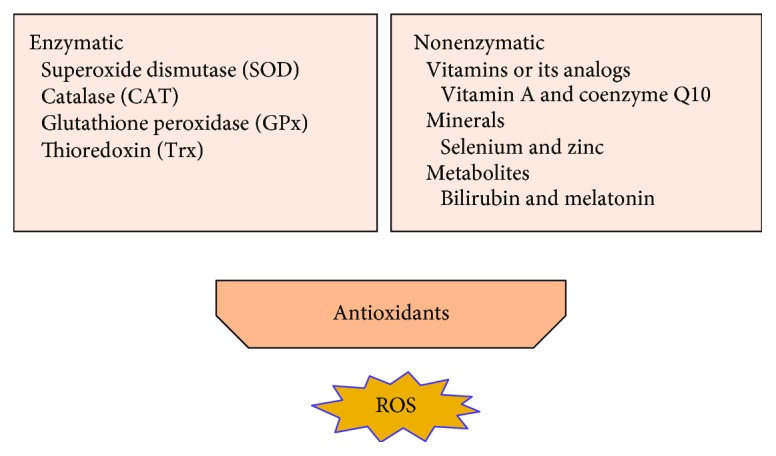
“Signi fi cant advances have been made in understanding the enzymatic and nonenzymatic antioxidant systems within cells [42].”
Ferroptosis Enhanced Diabetic Renal Tubular Injury via HIF-1α/HO-1 Pathway in db/db Mice
Feng, X., Wang, S., Sun, Z., Dong, H., Yu, H., Huang, M., & Gao, X. (2021) · Frontiers in Endocrinology · doi:10.3389/fendo.2021.626390 · Cited by 321
“Irondependent lipid peroxidation is the oxidative process which is regulated by enzymatic antioxidants, such as superoxide dismutase (SOD), catalase (CAT), and glutathione peroxidases (GSH-Px) (6).”
BackgroundInfluentialRecent advances in molecular mechanisms of skin wound healing and its treatments
Mamun, A. A., Shao, C., Geng, P., Wang, S., & Xiao, J. (2024) · Frontiers in Immunology · doi:10.3389/fimmu.2024.1395479 · Cited by 284
“ACSL4 and LPCAT3 are critical enzymes in this pathway (136, 142, 143).”
BackgroundFeng, L., Zhao, K., Sun, L., Yin, X., Zhang, J., Liu, C., & Li, B. (2021) · Journal of Translational Medicine · doi:10.1186/s12967-021-03042-7 · Cited by 277
“In recent years, several studies have indicated that ROS-mediated therapeutic resistance is closely related to the regulation of NRF2 expression [54], and ROS-induced lipid peroxidation plays an essential role in ferroptosis [31, 55].”
BackgroundSelf-citationHe, J., Liu, D., Zhao, L., Zhou, D., Rong, J., Zhang, L., & Xia, Z. (2022) · Experimental and Therapeutic Medicine · doi:10.3892/etm.2022.11357 · Cited by 265
Zhao, T., Wu, W., Sui, L., Huang, Q., Nan, Y., Liu, J., & Ai, K. (2022) · Bioactive Materials · doi:10.1016/j.bioactmat.2021.06.006 · Cited by 267
Bacterial Response to Oxidative Stress and RNA Oxidation
Seixas, A. F., Quendera, A. P., Sousa, J. P., Silva, A. F. Q., Arraiano, C. M., & Andrade, J. M. (2022) · Frontiers in Genetics · doi:10.3389/fgene.2021.821535 · Cited by 263
“, 1977) and can affect ion channels, inactivate membrane transport proteins, disrupt homeostasis, and affect signaling pathways (Welsch 1987; Blair 2008; Su et al., 2019).”
BackgroundMucha, P., Skoczyńska, A., Małecka, M., Hikisz, P., & Budzisz, E. (2021) · Molecules · doi:10.3390/molecules26164886 · Cited by 264
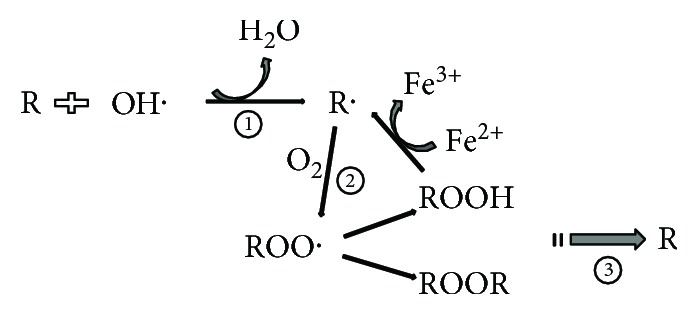
“The last step is the termination of peroxidation, which can occur in a disproportionation reaction of two lipid alkyl/peroxyl radicals or two different radicals [38,39].”
BackgroundYang, R., Gao, W., Wang, Z., Jian, H., Peng, L., Yu, X., Xue, P., Peng, W., Li, K., & Zeng, P. (2024) · Phytomedicine · doi:10.1016/j.phymed.2023.155135 · Cited by 252
An Overview: The Diversified Role of Mitochondria in Cancer Metabolism
Liu, Y., Sun, Y., Guo, Y., Shi, X., Chen, X., Feng, W., Wu, L.-L., Zhang, J., Yu, S., Wang, Y., et al. (2023) · International Journal of Biological Sciences · doi:10.7150/ijbs.81609 · Cited by 247
“LPO damage DNA, proteins and enzyme activity, it activates signaling pathways initiating cell death [41].”
BackgroundSelf-citationAutophagy mediates an amplification loop during ferroptosis
Lee, S., Hwang, N., Seok, B. G., Lee, S., Lee, S.-J., & Chung, S. W. (2023) · Cell Death & Disease · doi:10.1038/s41419-023-05978-8 · Cited by 230
“However, excessive ROS-induced autophagy can cause autophagic cell death and amplify ferroptosis by promoting higher ROS levels under certain circumstances [91, 100].”
BackgroundInfluentialWang, Y., Cheng, H., Wang, T., Zhang, K., Zhang, Y., & Kang, X. (2023) · Cell Proliferation · doi:10.1111/cpr.13448 · Cited by 225
“two pathways, enzymatic reaction and nonenzyme dependent reaction.(82) The former is executed by peroxidases and the latter mainly relies on the iron-dependent Fenton and Haber-Weiss reactions and”
BackgroundWan, Y., Yang, L., Jiang, S., Qian, D., & Duan, J. (2022) · Inflammatory Bowel Diseases · doi:10.1093/ibd/izab277 · Cited by 226
Mitochondrial Structure and Function in Human Heart Failure
Hinton, A., Claypool, S. M., Neikirk, K., Senoo, N., Wanjalla, C. N., Kirabo, A., & Williams, C. R. (2024) · Circulation Research · doi:10.1161/circresaha.124.323800 · Cited by 220
“240,241 This positive feedback loop triggers apoptosis, leading to cardiomyocyte death.”
BackgroundJuszczyk, G., Mikulska, J., Kasperek, K., Pietrzak, D., Mrozek, W., & Herbet, M. (2021) · Antioxidants · doi:10.3390/antiox10091439 · Cited by 217
“The presence of this protein impacts the neurons’ resistance potential against ferroptosis; however, its excess promotes neurodegeneration [48,49].”
BackgroundThe critical role and molecular mechanisms of ferroptosis in antioxidant systems: a narrative review
Liu, M., Kong, X.-Y., Yao, Y., Wang, X.-A., Yang, W., Wu, H., Li, S., Ding, J.-W., & Yang, J. (2022) · Annals of Translational Medicine · doi:10.21037/atm-21-6942 · Cited by 211
“CoQ10 is a lipophilic compound needed by the mitochondrial electron transport chain and lysosomal membranes to produce energy, and can be used as a lipophilic free radical trapping agent.”
BackgroundInfluentialThe mechanism of ferroptosis and its related diseases
Feng, S., Tang, D., Wang, Y., Li, X., Bao, H., Tang, C., Dong, X., Li, X., Yang, Q., Yan, Y., et al. (2023) · Molecular Biomedicine · doi:10.1186/s43556-023-00142-2 · Cited by 212
Chen, X., Tsvetkov, A. S., Shen, H.-M., Isidoro, C., Ktistakis, N. T., Linkermann, A., Koopman, W. J. H., Simon, H.-U., Galluzzi, L., Luo, S., et al. (2024) · Autophagy · doi:10.1080/15548627.2024.2319901 · Cited by 206
Self-citationLipid peroxidation in osteoarthritis: focusing on 4-hydroxynonenal, malondialdehyde, and ferroptosis
Zhang, X., Hou, L., Guo, Z., Wang, G., Xu, J., Zheng, Z., Sun, K., & Guo, F. (2023) · Cell Death Discovery · doi:10.1038/s41420-023-01613-9 · Cited by 209
“Lipid peroxidation is a process of the oxidative degradation of lipids caused by free radicals, characterized by formatting lipid peroxides, and participates in different types of cell death [83].”
BackgroundYang, W., Wang, Y., Zhang, C., Huang, Y., Yu, J., Shi, L., Zhang, P., Yin, Y., Li, R., & Tao, K. (2022) · Frontiers in Pharmacology · doi:10.3389/fphar.2022.865689 · Cited by 201
Interplay Between Lipid Metabolism and Autophagy
Xie, Y., Li, J., Kang, R., & Tang, D. (2020) · Frontiers in Cell and Developmental Biology · doi:10.3389/fcell.2020.00431 · Cited by 203
Antioxidant properties of anthocyanins and their mechanism of action in atherosclerosis
Garcia, C., & Blesso, C. N. (2021) · Free Radical Biology and Medicine · doi:10.1016/j.freeradbiomed.2021.05.040 · Cited by 201
Chemotherapy impairs ovarian function through excessive ROS-induced ferroptosis
Zhang, S., Liu, Q., Chang, M., Pan, Y., Yahaya, B. H., Liu, Y., & Lin, J. (2023) · Cell Death & Disease · doi:10.1038/s41419-023-05859-0 · Cited by 196
“Consequently, the abovementioned results suggested that NAC could improve Cis-induced ovarian damage by enhancing antioxidant capacity and inhibiting ferroptosis.”
Ferroptosis as a potential target for cancer therapy
Chen, Z., Wang, W., Abdul Razak, S. R., Han, T., Ahmad, N. H., & Li, X. (2023) · Cell Death & Disease · doi:10.1038/s41419-023-05930-w · Cited by 193
“For example, ROS is essential for autophagy, apoptosis, and ferroptosis; in addition, the core regulator of ferroptosis, GSH, is also involved in the regulation of cuproptosis [34, 35].”
BackgroundYang, J., Griffin, A., Qiang, Z., & Ren, J. (2022) · Signal Transduction and Targeted Therapy · doi:10.1038/s41392-022-01243-0 · Cited by 196
“ROS are highly destructive chemicals that predominantly lead to lipid peroxidation in the membrane.(132,133) Excessive accumulation of ROS damages phospholipids directly by affecting the fluidity and permeability of lipid bilayers, and ultimately compromises membrane integrity.”
BackgroundRauf, A., Khalil, A. A., Awadallah, S., Khan, S. A., Abu‐Izneid, T., Kamran, M., Hemeg, H. A., Mubarak, M. S., Khalid, A., & Wilairatana, P. (2024) · Food Science & Nutrition · doi:10.1002/fsn3.3784 · Cited by 193
Yang, Y. M., Cho, Y. E., & Hwang, S. (2022) · International Journal of Molecular Sciences · doi:10.3390/ijms23020774 · Cited by 197
“, lipoxygenase) and the Fenton reaction that requires iron [76,77].”
BackgroundThe Pathomechanism, Antioxidant Biomarkers, and Treatment of Oxidative Stress-Related Eye Diseases
Hsueh, Y.-J., Chen, Y.-N., Tsao, Y.-T., Cheng, C.-M., Wu, W.-C., & Chen, H.-C. (2022) · International Journal of Molecular Sciences · doi:10.3390/ijms23031255 · Cited by 195
Li, Y., Zhao, T., Li, J., Xia, M., Li, Y., Wang, X., Liu, C., Zheng, T., Chen, R., Kan, D., et al. (2022) · Journal of Immunology Research · doi:10.1155/2022/2233906 · Cited by 184
“LPO reactions in bio fi lms mainly occur through enzymatic and nonenzymatic pathways, whereby the nonenzymatic pathway is divided into two mechanisms: LPO mediated by either non-free radicals or free radicals [21].”
Molecular Mechanisms of Ferroptosis and Relevance to Cardiovascular Disease
Xie, L.-H., Fefelova, N., Pamarthi, S. H., & Gwathmey, J. K. (2022) · Cells · doi:10.3390/cells11172726 · Cited by 184
“Importantly, highly reactive alkoxyl radicals L-O• can be generated from L-OOH also via the Fenton reaction, which is reduced iron (Fe2+)-dependent.”
BackgroundInfluentialAdvances in understanding cisplatin-induced toxicity: Molecular mechanisms and protective strategies
Elmorsy, E. A., Saber, S., Hamad, R. S., Abdel-Reheim, M. A., El-kott, A. F., AlShehri, M. A., Morsy, K., Salama, S. A., & Youssef, M. E. (2024) · European Journal of Pharmaceutical Sciences · doi:10.1016/j.ejps.2024.106939 · Cited by 175
Pharmacological Effects of Salvianolic Acid B Against Oxidative Damage
Xiao, Z., Liu, W., Mu, Y.-P., Zhang, H., Wang, X.-N., Zhao, C.-Q., Chen, J.-M., & Liu, P. (2020) · Frontiers in Pharmacology · doi:10.3389/fphar.2020.572373 · Cited by 179
“Lipid peroxidation can damage phospholipids directly, and can also induce apoptosis as a cell death signal (Su et al., 2019).”
BackgroundCerium oxide nanoparticles: Synthesis methods and applications in wound healing
Nosrati, H., Heydari, M., & Khodaei, M. (2023) · Materials Today Bio · doi:10.1016/j.mtbio.2023.100823 · Cited by 177
“While some ROS play important roles in cellular signaling and defense against pathogens, excessive ROS production can cause oxidative stress and damage cellular components such as DNA, proteins, and lipids [136 – 138].”
BackgroundRen, J.-X., Li, C., Yan, X.-L., Qu, Y., Yang, Y., & Guo, Z.-N. (2021) · Oxidative Medicine and Cellular Longevity · doi:10.1155/2021/6643382 · Cited by 172
“GSH depletion is a key feature of ferroptosis [37, 51, 52].”
BackgroundThe molecular mechanisms of ferroptosis and its role in cardiovascular disease
Zhang, Y., Xin, L., Xiang, M., Shang, C., Wang, Y., Wang, Y., Cui, X., & Lu, Y. (2022) · Biomedicine & Pharmacotherapy · doi:10.1016/j.biopha.2021.112423 · Cited by 171
Li, K., Zhong, W., Li, P., Ren, J., Jiang, K., & Wu, W. (2023) · International Journal of Biological Macromolecules · doi:10.1016/j.ijbiomac.2023.125992 · Cited by 166
Zha, X., Liu, X., Wei, M., Huang, H., Cao, J., Liu, S., Bian, X., Zhang, Y., Xiao, F., Xie, Y., et al. (2025) · Cell Metabolism · doi:10.1016/j.cmet.2024.10.006 · Cited by 159
The Role of Autophagy in Osteoarthritis
Duan, R., Xie, H., & Liu, Z.-Z. (2020) · Frontiers in Cell and Developmental Biology · doi:10.3389/fcell.2020.608388 · Cited by 160
“Known ROS include superoxide, hydrogen peroxide, peroxyl radicals, the reactive nitrogen species (including nitric oxide and peroxynitrite derived from the nitric oxide) (Su et al., 2019).”
BackgroundIron, ferroptosis, and ischemic stroke
Guo, J., Tuo, Q., & Lei, P. (2023) · Journal of Neurochemistry · doi:10.1111/jnc.15807 · Cited by 160
Wang, Y., Wu, S., Li, Q., Sun, H., & Wang, H. (2023) · Advanced Science · doi:10.1002/advs.202300325 · Cited by 211
Balusamy, S. R., Rahimi, S., Sukweenadhi, J., Sunderraj, S., Rajeshkumar, S., Thangavelu, L. P., Mijakovic̀, I., & Perumalsamy, H. (2022) · Carbohydrate Polymers · doi:10.1016/j.carbpol.2022.119189 · Cited by 157
Wang, X., Wang, Y., Huang, D., Shi, S., Pei, C., Wu, Y., Shen, Z., Wang, F., & Wang, Z. (2022) · International Immunopharmacology · doi:10.1016/j.intimp.2022.109186 · Cited by 163
Shui, S., Zhao, Z., Wang, H., Conrad, M., & Liu, G. (2021) · Redox Biology · doi:10.1016/j.redox.2021.102056 · Cited by 178
“An increase of the labile iron pool (LIP) level, localized primarily in the cytosol [31], is one of the characteristic features of ferroptosis.”
BackgroundXu, Y., Li, K., Zhao, Y., Zhou, L., Liu, Y., & Zhao, J. (2022) · Cellular and Molecular Neurobiology · doi:10.1007/s10571-022-01196-6 · Cited by 158
“As a result, increased extracellular glutamate will inhibit the system Xc− and trigger ferroptosis (Speer et al. 2013; Su et al. 2019).”
BackgroundWu, Q., Liu, C., Liu, D., Wang, Y., Qi, H., Liu, X., Zhang, Y., Chen, H., Zeng, Y., & Li, J. (2023) · The Science of The Total Environment · doi:10.1016/j.scitotenv.2023.169260 · Cited by 169
Brito, J., Hlushko, H., Abbott, A., Aliakseyeu, A., Hlushko, R., & Sukhishvili, S. A. (2021) · ACS Applied Materials & Interfaces · doi:10.1021/acsami.1c08061 · Cited by 154
Tian, M., Chen, G., Xu, J., Lin, Y., Zeng, Y., Chen, X., Li, X., & Chen, S. (2021) · Chemical Engineering Journal · doi:10.1016/j.cej.2021.132197 · Cited by 142
Implication of ferroptosis in aging
Mazhar, M., Din, A. U., Ali, H., Yang, G., Ren, W., Wang, L., Fan, X., & Yang, S. (2021) · Cell Death Discovery · doi:10.1038/s41420-021-00553-6 · Cited by 141
Ferroptosis Signaling and Regulators in Atherosclerosis
Wang, Y., Zhao, Y., Ye, T., Yang, L. M., Shen, Y., & Li, H. (2021) · Frontiers in Cell and Developmental Biology · doi:10.3389/fcell.2021.809457 · Cited by 154
“Lipid peroxides can be produced by three pathways: iron-catalyzed lipid autoxidation, esterification and oxidation of polyunsaturated fatty acids (PUFAs), and the production of lipid ROS associated with the Fenton reaction, all of which require iron (Ying and Padanilam, 2016; Lei et al., 2019; Su et al., 2019; Li et a…”
BackgroundRole of reactive oxygen species and mitochondrial damage in rheumatoid arthritis and targeted drugs
Jing, W., Liu, C., Su, C.-H., Liu, L., Chen, P., Li, X., Xinghua, Z., Yuan, B., Wang, H., & Xiaozheng, D. (2023) · Frontiers in Immunology · doi:10.3389/fimmu.2023.1107670 · Cited by 160
Mangal, V., Lal, M. K., Tiwari, R. K., Altaf, M. A., Sood, S., Kumar, D., Bharadwaj, V., Singh, B., Singh, R. K., & Aftab, T. (2022) · Journal of Plant Growth Regulation · doi:10.1007/s00344-022-10591-8 · Cited by 138
“The detrimental effects of ROS at higher concentrations in cells might lead to lipid peroxidation in cellular membranes (Su et al. 2019), DNA damage (Qiu et al.”
BackgroundRole of oxidative stress in the relationship between periodontitis and systemic diseases
Shang, J., Liu, H., Zheng, Y., & Zhang, Z. (2023) · Frontiers in Physiology · doi:10.3389/fphys.2023.1210449 · Cited by 155
“Biomembranes are prone to undergo lipid peroxidation, and it is possibly via two pathways: non-enzymatic and enzymatic (Su et al., 2019; Ruan et al., 2021).”
BackgroundGeorge, J., Lu, Y., Tsuchishima, M., & Tsutsumi, M. (2024) · Redox Biology · doi:10.1016/j.redox.2024.103258 · Cited by 157
“It occurs when radicals “ steal ” electrons from the lipids of the cell membrane and induce a series of peroxide reactions of free fatty acids [38].”
BackgroundRedox dysregulation as a driver for DNA damage and its relationship to neurodegenerative diseases
Shadfar, S., Parakh, S., Jamali, M. S., & Atkin, J. D. (2023) · Translational Neurodegeneration · doi:10.1186/s40035-023-00350-4 · Cited by 158
“The oxidation of lipids is an important source of DNA damage [153, 154] and the reader is referred to several excellent reviews for more details [9, 155, 156].”
BackgroundKathiswar Raj, R., Ezhilarasan, D., & Rajeshkumar, S. (2020) · Journal of Biomedical Materials Research Part A · doi:10.1002/jbm.a.36953 · Cited by 129
Chan, D. W., Yung, M. M. H., Chan, Y.-S., Yang, X., Yang, H., Xu, D., Zhan, J., Chan, K. K. L., Ng, T., & Ngan, H. (2020) · Pharmacological Research · doi:10.1016/j.phrs.2020.105157 · Cited by 131
Self-citationNovel insights into ferroptosis: Implications for age-related diseases
Zhou, R., Chen, Y., Wei, X., Yu, B., Xiong, Z., Lu, C., & Hu, W. M. (2020) · Theranostics · doi:10.7150/thno.50663 · Cited by 139
“PUFAs are oxidized by intracellular ROS and produce lipid peroxides that lead to ferroptosis [66].”
BackgroundZhou, B., Zhang, J., Chen, Y., Liu, Y., Tang, X., Xia, P., Yu, P., & Yu, S. (2022) · Aging · doi:10.18632/aging.204033 · Cited by 134
“Irondependent ferroptosis is a brand new cell death model regulated by lipid oxidation and depends on iron [23, 24].”
BackgroundSelf-citationInhibition of NF-κB signaling unveils novel strategies to overcome drug resistance in cancers
Li, Y., Zhao, B., Peng, J., Tang, H., Wang, S., Peng, S., Ye, F., Wang, J., Ouyang, K., Li, J., et al. (2024) · Drug Resistance Updates · doi:10.1016/j.drup.2023.101042 · Cited by 150
Mechanisms and regulations of ferroptosis
Zhang, X.-D., Liu, Z., Wang, M.-S., Guo, Y.-X., Wang, X., Luo, K., Huang, S., & Li, R. (2023) · Frontiers in Immunology · doi:10.3389/fimmu.2023.1269451 · Cited by 173
Recent progress on targeting ferroptosis for cancer therapy
Xu, G., Wang, H., Li, X., Huang, R., & Luo, L. (2021) · Biochemical Pharmacology · doi:10.1016/j.bcp.2021.114584 · Cited by 127
Mitra, S., Paul, S., Roy, S., Sutradhar, H., Emran, T. B., Nainu, F., Khandaker, M. U., Almalki, M., Wilairatana, P., & Mubarak, M. S. (2022) · Molecules · doi:10.3390/molecules27020555 · Cited by 161
“The mechanism through which heme produces ROS, activates innate immune cells, and triggers cell death is not well known [197].”
BackgroundInfluentialGao, G., Xie, Z., Li, E.-W., Yuan, Y., Fu, Y., Wang, P., Zhang, X., Qiao, Y., Xu, J., Hölscher, C., et al. (2021) · Journal of Natural Medicines · doi:10.1007/s11418-021-01491-4 · Cited by 129
“GPX4 is considered to be the primary enzyme that prevents ferroptosis [27].”
BackgroundFeng, J., Wang, J., Wang, Y., Huang, X., Shao, T., Deng, X., Cao, Y., Zhou, M., & Zhao, C. (2022) · Frontiers in Cell and Developmental Biology · doi:10.3389/fcell.2022.898657 · Cited by 139
“Although an essential sign of ferroptosis is that ROS is involved in peroxidation, the others are unclear (Su et al., 2019).”
BackgroundLiu, Z., Nan, P., Gong, Y., Tian, L., Yin, Z., & Wu, Z. (2023) · Biomedicine & Pharmacotherapy · doi:10.1016/j.biopha.2023.114897 · Cited by 136
Carbon Dot Based Carbon Nanoparticles as Potent Antimicrobial, Antiviral, and Anticancer Agents
Hussen, N. H., Hasan, A. H., FaqiKhedr, Y. M., Bogoyavlenskiy, A. P., Bhat, A. R., & Jamalis, J. (2024) · ACS Omega · doi:10.1021/acsomega.3c05537 · Cited by 137
“66, 67 These dependencies present opportunities to modify and improve the bactericidal effects of C-dots activated by visible or ambient light.”
Cigarette Smoke-Induced Respiratory Response: Insights into Cellular Processes and Biomarkers
Cha, S.-R., Jang, J., Park, S., Ryu, S. M., Cho, S.-J., & Yang, S. (2023) · Antioxidants · doi:10.3390/antiox12061210 · Cited by 163
The Role of Iron, Its Metabolism and Ferroptosis in Traumatic Brain Injury
Tang, S., Gao, P., Chen, H., Zhou, X., Ou, Y., & He, Y. (2020) · Frontiers in Cellular Neuroscience · doi:10.3389/fncel.2020.590789 · Cited by 123
Geller, A. E., Shrestha, R., Woeste, M. R., Guo, H., Hu, X., Ding, C., Andreeva, K., Chariker, J. H., Zhou, M., Tieri, D. A., et al. (2022) · Nature Communications · doi:10.1038/s41467-022-28407-4 · Cited by 130
Lian, C.-Y., Chu, B., Xia, W.-H., Wang, Z., Fan, R., & Wang, L. (2022) · Journal of Advanced Research · doi:10.1016/j.jare.2022.04.016 · Cited by 121
Akbar, A., Khan, S., Chatterjee, T., & Ghosh, M. (2023) · Journal of Photochemistry and Photobiology B Biology · doi:10.1016/j.jphotobiol.2023.112796 · Cited by 130
Recent advances in photo‐responsive carbon dots for tumor therapy
Zhang, H., Liu, Y., & Qu, S. (2024) · Responsive Materials · doi:10.1002/rpm.20240012 · Cited by 121
Yi, J., Wu, S., Tan, S., Qin, Y., Wang, X., Jiang, J., Liu, H., & Wu, B. (2021) · Cell Death Discovery · doi:10.1038/s41420-021-00768-7 · Cited by 133
“Cells deficient in the essential autophagy gene Atg7 have increased basal levels of ROS [15], and subsequently, this induces cell death, including ferroptosis [39].”
BackgroundAlharbi, K., Alosaimi, A. A., & Alghamdi, B. A. (2022) · ACS Omega · doi:10.1021/acsomega.2c01427 · Cited by 145
An evaluation on potential anti-oxidant and anti-inflammatory effects of Crocin
Bastani, S., Vahedian, V., Rashidi, M., Mir, A., Mirzaei, S., Alipourfard, I., Pouremamali, F., Nejabati, H. R., Kadkhoda, J., Maroufi, N. F., et al. (2022) · Biomedicine & Pharmacotherapy · doi:10.1016/j.biopha.2022.113297 · Cited by 133
Recent Overview of Potent Antioxidant Activity of Coordination Compounds
El‐Lateef, H. M. A., El‐Dabea, T., Khalaf, M. M., & Abu‐Dief, A. M. (2023) · Antioxidants · doi:10.3390/antiox12020213 · Cited by 137
“The following step is to inhibit peroxidation that can occur in a de-oxygenation reaction involving two lipid alkyl/peroxyl radicals or two separate radicals [101,102].”
BackgroundNanodrugs alleviate acute kidney injury: Manipulate RONS at kidney
Chen, Q., Nan, Y., Yang, Y., Xiao, Z., Liu, M., Huang, J., Xiang, Y., Long, X., Zhao, T., Wang, X., et al. (2022) · Bioactive Materials · doi:10.1016/j.bioactmat.2022.09.021 · Cited by 143
Yang, P., Li, J., Zhang, T., Ren, Y., Zhang, Q., Liu, R., Li, H., Hua, J., Wang, W., Wang, J., et al. (2023) · Cell Death and Differentiation · doi:10.1038/s41418-023-01230-0 · Cited by 133
“If the continual accumulation of ROS is not eliminated in a timely manner, the phospholipid-related poly-unsaturated fatty acid side chains, nucleic acids, and other macromolecules will undergo a peroxidation reaction, leading to ferroptosis [16, 17].”
BackgroundMelatonin: the placental antioxidant and anti-inflammatory
Joseph, T. T., Schuch, V., Hossack, D. J., Chakraborty, R., & Johnson, E. L. (2024) · Frontiers in Immunology · doi:10.3389/fimmu.2024.1339304 · Cited by 143
“However, considerable amounts of ROS at the molecular level can cause cellular and tissue damage, damaging nucleic acids, proteins, organelles, and membranes and inducing cell death or apoptosis (40, 41).”
A Potential Mechanism of Temozolomide Resistance in Glioma–Ferroptosis
Hu, Z., Mi, Y., Qian, H., Guo, N., Yan, A., Zhang, Y., & Gao, X. (2020) · Frontiers in Oncology · doi:10.3389/fonc.2020.00897 · Cited by 128
“Furthermore, ROS-induced lipid peroxidation is not only a critical role in ferroptosis, but also affects the apoptosis, autophagy, and TMZ resistance in glioma cells (53, 55, 56).”
BackgroundFerroptosis in Rheumatoid Arthritis: A Potential Therapeutic Strategy
Zhao, T., Yang, Q., Xi, Y., Xie, Z., Shen, J., Li, Z., Li, Z., & Qin, D. (2022) · Frontiers in Immunology · doi:10.3389/fimmu.2022.779585 · Cited by 130
“In this process, Fe can be reduced to Fe, generating hydroxyl (-OH) or alkoxy (RO-) free radicals, and causing cell ballooning/blistering followed by plasma membrane rupture (45).”
BackgroundTargeting the tumor microenvironment: Potential strategy for cancer therapeutics
Babar, Q., Saeed, A., Tabish, T. A., Sarwar, M., & Thorat, N. D. (2023) · Biochimica et Biophysica Acta (BBA) - Molecular Basis of Disease · doi:10.1016/j.bbadis.2023.166746 · Cited by 125
The Cross‐Link between Ferroptosis and Kidney Diseases
Wang, J., Liu, Y., Wang, Y., & Sun, L. (2021) · Oxidative Medicine and Cellular Longevity · doi:10.1155/2021/6654887 · Cited by 115
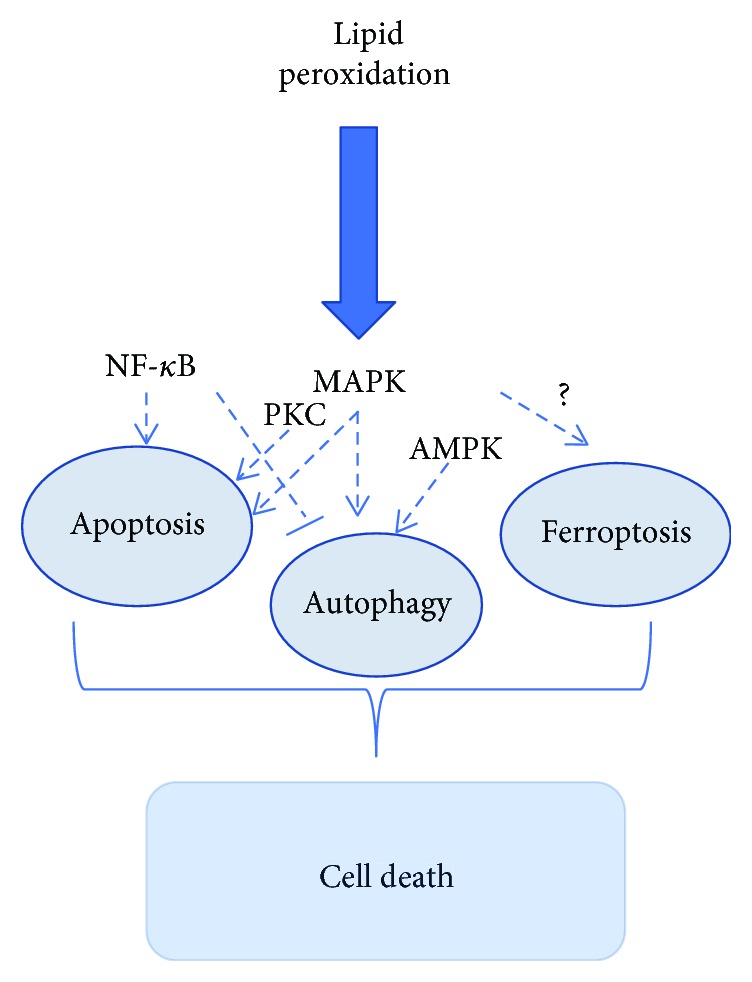
“Moreover, lipid peroxidation could regulate apoptosis and autophagy through NF-κB, PKC, MAPK, and other signaling molecules [25].”
BackgroundRegulation of CD8+ T cells by lipid metabolism in cancer progression
Tang, Y., Chen, Z., Zuo, Q., & Kang, Y. (2024) · Cellular and Molecular Immunology · doi:10.1038/s41423-024-01224-z · Cited by 135
“Increased lipid uptake in tumor-in fi ltrating CD8 + T cells promotes lipid peroxidation, inducing ROS-mediated apoptosis and ferroptosis [113].”
BackgroundHuang, R., Cai, G.-Q., Li, J., Li, X., Liu, H., Shang, X., Zhou, J., Nie, X., & Gui, R. (2021) · Journal of Nanobiotechnology · doi:10.1186/s12951-021-00978-2 · Cited by 111
“Apoptosis is a mechanism of cell death, and ROS is a key molecule in cell apoptosis and autophagy [50].”
Background
Metadata
- Authors
- Su, L.-J., Zhang, J.-H., Gomez, H., Murugan, R., Hong, X., Xu, D., Jiang, F., & Peng, Z.-Y.
- Affiliations
- Zhongnan Hospital of Wuhan University (CN)
- Department of Critical Care Medicine, Zhongnan Hospital of Wuhan University, Wuhan, 430071 Hubei Province, China
- Center of Critical Care Nephrology, Department of Critical Care Medicine, University of Pittsburgh Medical Center, Pittsburgh, 15223 PA, USA
- University of Pittsburgh Medical Center (US)
- Venue
- Oxidative Medicine and Cellular Longevity
- Publisher
- Wiley
- Published
- 2019-10-13
- Volume
- 2019
- Pages
- 1-13
- ISSN
- 1942-0994 (ISSN-L)
- 1942-0900
- PMC
- PMC6815535
- OpenAlex
- W2979799294
- Cited by
- 2,166
- References
- 147
- Citations by year
- 2026: 236 · 2025: 385 · 2024: 507 · 2023: 424 · 2022: 365 · 2021: 187 · 2020: 58
- FWCI
- 14.76
- Type
- journal article
- Language
- en
- Open access
- hybrid
- doi.org
- Locations
- Oxidative Medicine and Cellular Longevity (publishedVersion, cc-by)
- Europe PMC (PubMed Central) (publishedVersion, cc-by)
- PubMed Central (publishedVersion, cc-by)
- PubMed (publishedVersion)
- DOAJ (DOAJ: Directory of Open Access Journals) (submittedVersion)
- Funders
- Health Commission of Hubei Province (WJ2017Z008, 2017AHB044, 81560131, 81772046)
- Hubei Province Technology and Innovation Project (WJ2017Z008, 2017AHB044, 81560131, 81772046)
- National Natural Science Foundation of China (WJ2017Z008, 2017AHB044, 81560131, 81772046)
- Topics
- Health Sciences › Medicine › Biochemistry (medical) › Antioxidant Activity and Oxidative Stress
- Life Sciences › Biochemistry, Genetics and Molecular Biology › Molecular Biology › Cell death mechanisms and regulation
- Life Sciences › Biochemistry, Genetics and Molecular Biology › Cancer Research › Ferroptosis and cancer prognosis
- Keywords
- reactive oxygen species, lipid peroxidation, apoptosis, autophagy, ferroptosis, antioxidant defense, oxidative damage, cell death, critical illness
- MeSH terms
- Ferroptosis, Animals, Antioxidants, Autophagy, Humans, Lipid Peroxidation, Signal Transduction, Apoptosis, Reactive Oxygen Species, Oxidative Stress, Sepsis, Acute Kidney Injury
About these checks
Registry, retraction, Cites and statistics results are computed, not judged, with one exception: a printed reference that no index lists is read once by a model before it counts as a citation error. Claims are extracted by a model and kept only when their quote appears verbatim in the text; each cited source is then checked, with a model’s help, for whether it says what the claim relies on. Those verdicts can be wrong — read the claim’s quote and the cited source before relying on one.
Statistics and arithmetic are recomputed, not judged.
Confidence bands are shown only for fields calibrated on our annotated test set. None is calibrated yet, so no band is shown.
What counts as a claim ›How we measure confidence ›How we check this ›
Are you an author, or do you see a problem with this page? Request a review
Data sources
Bibliographic data: Semantic Scholar, OpenAlex, Crossref.
Contains information from the Semantic Scholar Academic Graph Datasets, made available under the ODC Attribution License (ODC-BY 1.0).
Semantic Scholar’s data is described in: Kinney, R., et al. (2023). The Semantic Scholar Open Data Platform. arXiv:2301.10140.
