

A Step-by-Step Process of Thematic Analysis to Develop a Conceptual Model in Qualitative Research
Open accessThe DOI matches its Crossref record; 77 of the 78 references it cites were found in a registry or an index, and 1 are not checked yet; 2 of the 57 sources its claims cite were checked for support.
Abstract
Thematic analysis is a highly popular technique among qualitative researchers for analyzing qualitative data, which usually comprises thick descriptive data. However, the application and use of thematic analysis has also involved complications due to confusion regarding the final outcome’s presentation as a conceptual model. This paper develops a systematic thematic analysis process for creating a conceptual model from qualitative research findings. It explores the adaptability of the proposed process across various research methodologies, including constructivist methodologies, positivist methodologies, grounded theory, and interpretive phenomenology, and justifies their application. The paper distinguishes between inductive and deductive coding approaches and emphasizes the merits of each. It suggests that the derived systematic thematic analysis model is valuable across multiple disciplines, particularly in grounded theory, ethnographic approaches, and narrative approaches, while also being adaptable to more descriptive, positivist-based methodologies. By providing a methodological roadmap, this study enhances the rigor and replicability of thematic analysis and offers a comprehensive strategy for theoretical conceptualization in qualitative research. The contribution of this paper is a systematic six-step thematic analysis process that leads to the development of a conceptual model; each step is described in detail and examples are given.
Verified 2026-11-22 · 1 reference not checked yet
Overview
CoChat Summary
TL;DR
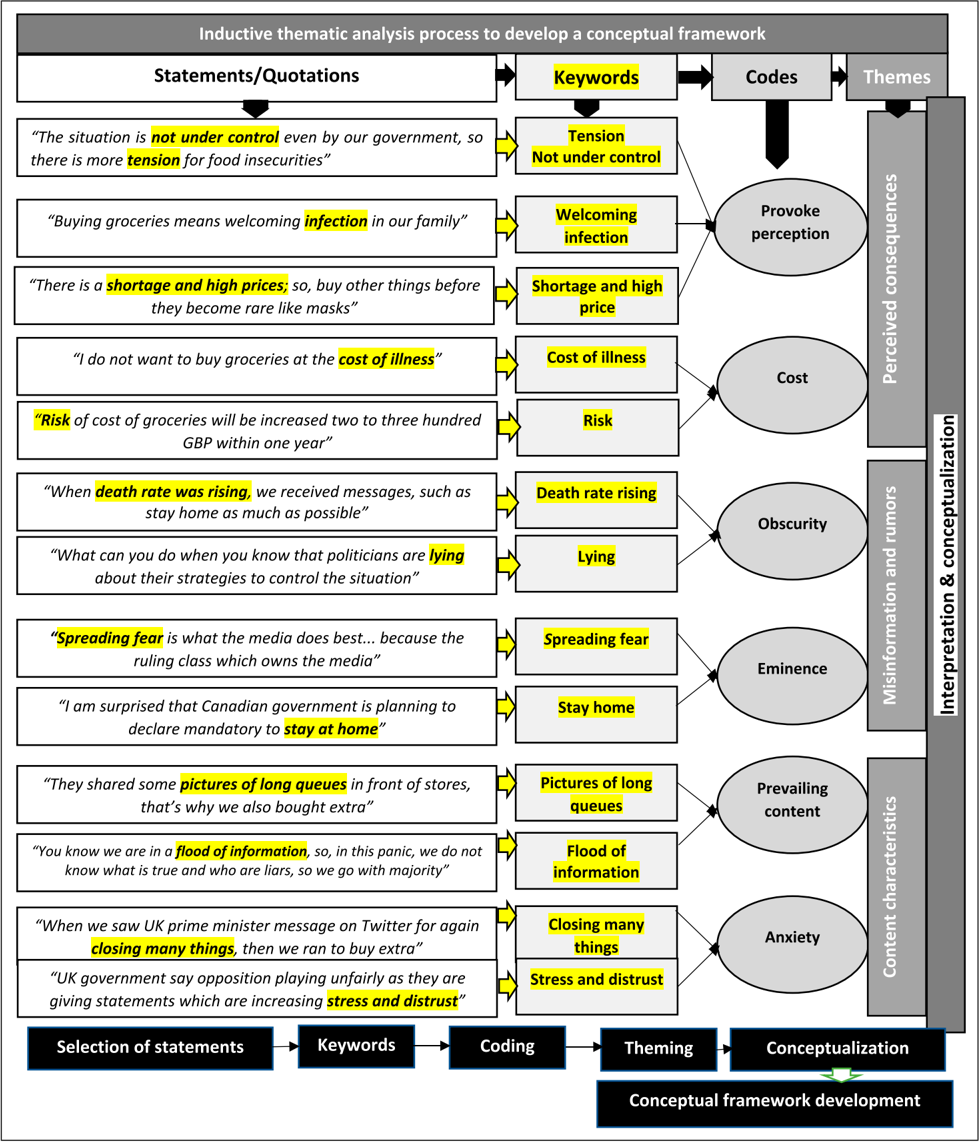
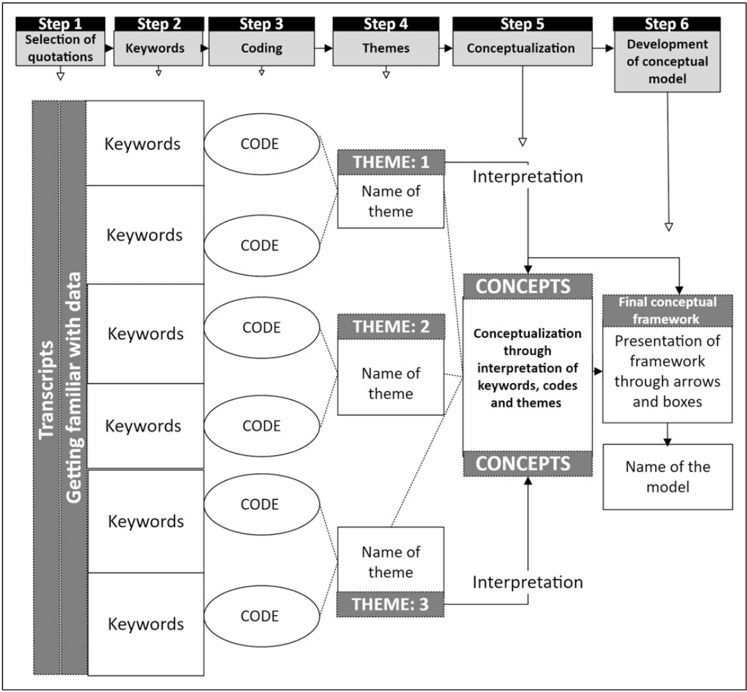
This methodological paper presents a six-step systematic thematic analysis process for developing a conceptual model from qualitative data, illustrated with Naeem and Ozuem’s (2022a) panic-buying study. It introduces 6Rs for keyword selection, 6Rs for coding, and 4Rs for theming to enhance rigor and trustworthiness.
Key findings
- The paper proposes six steps: transcription/familiarization and quotation selection; keyword selection; coding; theme development; conceptualization through interpretation of keywords, codes, and themes; and development of a conceptual model.
- It introduces 6Rs for keyword selection (realness, richness, repetition, rationale, repartee, regal), 6Rs for coding (robust, reflective, resplendent, relevant, radical, righteous), and 4Rs for theming (reciprocal, recognizable, responsive, resourceful).
- In the exemplar study, three main themes emerged: “Perceived consequences” from codes “Provoke perception” and “Cost”; “Misinformation and rumors” from codes “Obscurity” and “Eminence”; and “Content Characteristics” from codes “Prevailing content” and “Anxiety.”
- The exemplar’s final model, “Panic buying as social practice,” was based on Protection Motivation Theory (PMT) and the Theory of Rumor Transmission (TORT).
Methods
- Design: a methodological/conceptual paper that presents a comprehensive systematic model for thematic analysis culminating in a conceptual model, using Naeem and Ozuem (2022a) as an exemplar.
- Exemplar data: qualitative data gathered from Twitter, YouTube, and interviews; the exemplar used a six-stage thematic analysis and a social constructionist perspective with PMT and TORT as theoretical foundations.
- Main analysis: the paper describes each of the six steps in detail, provides practical examples from the exemplar, and compares the proposed process with Braun and Clarke’s (2006) six steps of thematic analysis.
Limitations
- The paper states that the potential of the process to address other research contexts or quantitative methods may require further exploration, and that the efficiency of the method compared with other model-building approaches has not been empirically tested.
- Evident from the text: the proposed six-step process and the 6Rs/4Rs are illustrated through a single exemplar study and are not independently validated or empirically compared with alternative thematic analysis approaches.
Model-written summary. Check it against the paper before relying on it.
Integrity signals
Registry
Cites
Statistics
Figures

Verification
Claims the paper makes
0 Valid · 4 Not valid · 56 Not checked · 89 Own results and interpretations
The cited sources that could be checked couldn’t confirm or dispute this claim.
In the paper
“For narrative approaches, conceptual model development focuses on personal experiences, emotions, and life histories (Eldh et al., 2020).”
§ A Step-by-Step Process of Thematic Analysis to Develop a Conceptual Model in Qualitative Research > Step 6: Development of Conceptual Model.
What the sources say
- Could not verifycites Eldh et al., 2020 matched to “Quotations in Qualitative Studies: Reflections on Constituents, Custom, and Purpose” (2020) sourceExperimental — accuracy not yet measured
The Discussion and Conclusions (page numbers unavailable) address how quotations can illustrate qualitative analysis and findings. A search for narrative approaches, conceptual model development, emotions, and life histories found no passage addressing the attributed claim. (LLM, conf=0.72)
plainstates an association- Asserted: passes — The authors put it forward as true.
- Checkable: passes — It can be checked against evidence.
- Load-bearing: unclear — It is unclear whether the paper’s conclusions depend on it.
- Based: passes — The paper gives a reason why it holds.
- Could not verify
In the paper
“The analytical process balances between descriptive analysis, which outlines patterns or trends, and interpretive analysis, which offers subjective perspectives (Miles & Huberman, 1994, p. 56).”
§ A Step-by-Step Process of Thematic Analysis to Develop a Conceptual Model in Qualitative Research > Step 2: Selection of Keywords.
What the sources say
- Not matchedcites Miles & Huberman, 1994, p. 56
An author–year citation the paper’s reference list doesn’t settle. We don’t search these by name.
plain- Asserted: passes — The authors put it forward as true.
- Checkable: passes — It can be checked against evidence.
- Load-bearing: passes — The paper’s conclusions depend on it.
- Based: passes — The paper gives a reason why it holds.
- Not matched
In the paper
“However, the thematic analysis approach could also fit a post-positivist paradigm (Howell, 2012, p. 30).”
§ A Step-by-Step Process of Thematic Analysis to Develop a Conceptual Model in Qualitative Research > Step 2: Selection of Keywords.
What the sources say
- Not matchedcites Howell, 2012, p. 30
An author–year citation the paper’s reference list doesn’t settle. We don’t search these by name.
hedgedstates an association- Asserted: passes — The authors put it forward as true.
- Checkable: passes — It can be checked against evidence.
- Load-bearing: unclear — It is unclear whether the paper’s conclusions depend on it.
- Based: passes — The paper gives a reason why it holds.
- Not matched
In the paper
“Hence, quotation selection is not simply a mechanical task but is influenced by the researcher's philosophical and theoretical approach (Jackson & Mazzei, 2012).”
§ A Step-by-Step Process of Thematic Analysis to Develop a Conceptual Model in Qualitative Research > Step 1: Transcription, Familiarization With the Data, and Selection of Quotations.
What the sources say
- Not matchedcites Jackson & Mazzei, 2012
An author–year citation the paper’s reference list doesn’t settle. We don’t search these by name.
plainstates a cause- Asserted: passes — The authors put it forward as true.
- Checkable: passes — It can be checked against evidence.
- Load-bearing: passes — The paper’s conclusions depend on it.
- Based: passes — The paper gives a reason why it holds.
- Not matched
A conclusion the paper draws from its own results — it cites no other source for it, so there is none to check. The quote shows it is in the paper.
In the paper
“Thus, keywords serve as a critical bridge between data and themes in different methodologies.”
§ A Step-by-Step Process of Thematic Analysis to Develop a Conceptual Model in Qualitative Research > Step 4: Theme Development.
boostedstates an association- Asserted: passes — The authors put it forward as true.
- Checkable: passes — It can be checked against evidence.
- Load-bearing: unclear — It is unclear whether the paper’s conclusions depend on it.
- Based: passes — The paper gives a reason why it holds.
10 more claims
Create a free account to see all 149 claims and every source verdict.
- It may state two separate claims as one. 54
- Probably not a substantial claim. 128
Claims other papers make about this one
Each is checked against this paper’s own text: does it say what the citing paper says it does?
The source backs part of the claim, not all of it — or backs it for a different population, condition or comparison.
In the citing paper
“With the identified keywords, initial coding was further informed by and cross-referenced to the literature on AI ethics and governance, particularly addressing public concerns in government AI, alongside the author team's collective expertise in AI-driven digital transformation in public administration.”
From Accountability in Government Use of AI : Citizen Concerns and Preferences (2025) · cites this paper as Naeem et al. 2023
Experimental — accuracy not yet measuredThe source backs part of the claim, not all of it — or backs it for a different population, condition or comparison.
In the citing paper
“Thematic analysis is a highly popular technique among qualitative researchers for analyzing qualitative data, which usually comprises thick descriptive data (Naeem et al., 2023).”
From The Psycho-Emotive Effects of AI-Generated Fake News on Social Media Users (2026) · cites this paper as Naeem et al., 2023
Experimental — accuracy not yet measuredThe cited source says what the claim attributes to it.
In the citing paper
“The selection of keywords was guided by the 6Rs framework-Realness, Richness, Repetition, Rationale, Repartee, and Regal-to ensure they accurately represented the essence of the data (Naeem et al. 2023).”
From Accountability in Government Use of AI : Citizen Concerns and Preferences (2025) · cites this paper as Naeem et al. 2023
The cited source says what the claim attributes to it.
In the citing paper
“The data were analyzed through Naeem et al.'s (2023) six-step thematic analysis process to develop a conceptual framework (Naeem & Ozuem, 2022).”
From “It’s Not Just About Competition – It’s Ceremony”: Introducing the Embedded Indigeneity Framework for Understanding Identity, Mission, and Practice in TCU and NASNTI Athletics (2026) · cites this paper as Naeem et al. (2023)
The cited source says what the claim attributes to it.
In the citing paper
“The selected methodology was implemented due to the end results that 1) presented a novel conceptual framework and 2) serves as a contextually specific extension of existing theory/theories (Naeem et al., 2023).”
From “It’s Not Just About Competition – It’s Ceremony”: Introducing the Embedded Indigeneity Framework for Understanding Identity, Mission, and Practice in TCU and NASNTI Athletics (2026) · cites this paper as Naeem et al., 2023
Self-check
Percentages, sums and reported differences re-computed from the paper’s own numbers.
Each contradiction between two passages listed here was confirmed by an independent check.
Rated minor: it would not touch a result — a value no result rests on, a p-value that stays on the same side of the significance level, or a conflict that is clerical, resolved elsewhere in the paper, or outside its own findings.
In the paper
§ A Step-by-Step Process of Thematic Analysis to Develop a Conceptual Model in Qualitative Research > Step 6: Development of Conceptual Model.
“Positivism, which favours inductive methods, builds its model on top of previously established theories and conducts its experiments in an unbiased manner.”
§ A Step-by-Step Process of Thematic Analysis to Develop a Conceptual Model in Qualitative Research > Step 6: Development of Conceptual Model.
“An inductive approach is primarily data-driven, whereby themes are derived from the data itself without the influence of pre-existing theories (Braun & Clarke, 2006).”
Citations
Cites
Using thematic analysis in psychology
Braun, V., & Clarke, V. (2006) · Qualitative Research in Psychology · doi:10.1191/1478088706qp063oa · Cited by 194,414
Qualitative Data Analysis: An Expanded Sourcebook
(1994) · Journal of Environmental Psychology · doi:10.1016/s0272-4944(05)80231-2 · Cited by 48,420 · cited 2×
“In the coding process, consideration of keywords helps in multiple ways: The analytical process balances between descriptive analysis, which outlines patterns or trends, and interpretive analysis, which offers subjective perspectives (Miles & Huberman, 1994, p. 56).”
Lincoln, Y. S., Guba, E. G., & Pilotta, J. J. (1985) · International Journal of Intercultural Relations · doi:10.1016/0147-1767(85)90062-8 · Cited by 45,787 · cited 1×
“…degrees of subjectivity and objectivity has underscored the fl exibility intrinsic to research methodologies and highlighted that these tools of analysis are intimately intertwined with, and, indeed, emerge from the distinctive nature of speci fi c disciplines and perspectives (Lincoln & Guba, 1985).”
BackgroundThe Discovery of Grounded Theory: Strategies for Qualitative Research
Glaser, B. G., & Strauss, A. L. (2017) · Aldine (Routledge reprint) · doi:10.4324/9780203793206 · Cited by 25,789
The qualitative content analysis process
Elo, S., & Kyngäs, H. (2008) · Journal of Advanced Nursing · doi:10.1111/j.1365-2648.2007.04569.x · Cited by 22,617 · cited 1×
“Deductive coding, linked with descriptive analysis, is a top-down approach where pre-existing theories, models, or codes guide the data analysis (Elo & Kyng¨as, 2008).”
Method(2009) · Cited by 21,330
Reflecting on reflexive thematic analysis
Braun, V., & Clarke, V. (2019) · Qualitative Research in Sport, Exercise and Health · doi:10.1080/2159676x.2019.1628806 · Cited by 19,677
(1998) · Medical Entomology and Zoology · Cited by 18,397
(2014) · Cited by 15,747
S., N. L. (2017) · doi:10.1177/1609406917733847 · Cited by 14,051 · cited 3×
“· Robust: Coding should convey the true essence of data in a theoretical manner (Nowell et al., 2017).”
Background
Research works printed but not linked: 9
- 1. Arar, K. (2017). The what's and why's of the how to of qualitative research. Qualitative Report, 22(11), 2956-2958.
- 16. Creswell, J. W. (2012). Educational research. Pearson.
- 19. Denzin, N. K., & Salvo, J. (2020). New directions in theorizing qualitative research: Theory as resistance. Myers Education Press.
- 62. Oliver, P. (2021). Using qualitative methods to answer your research question (First). Open University Press.
- 63. Patton, M. Q. (2015). Qualitative research & evaluation methods: Integrating theory and practice (fourth). Sage Publications, Inc. Qualitative research (pp. 273-290). Sage.
- 67. Saldana, J. (2021). The coding manual for qualitative researchers (Fourth). Sage.
- 68. Saldana, J. M. (2016). The coding manual for qualitative researchers (4rd ed.). Sage Publications.
- 74. Seale, C. (2013). Qualitative research practice. In C. Seale, G. Gobo, J. Gubrium, & D. Silverman (Eds.), Concise paperback. Sage.
- 80. Tracy, S. J. (2019). Qualitative research methods: Collecting evi- dence, crafting analysis, communicating impact (2nd ed.). Wiley Blackwell.
Cited by
Naeem, M., Ozuem, W., Howell, K., & Ranfagni, S. (2024) · International Journal of Qualitative Methods · doi:10.1177/16094069241229777 · Cited by 294
“This means that the researcher has discovered all signi fi cant themes, codes and patterns within the data set, and that all of these are fully interpreted so as to add new knowledge (Naeem, et al., 2023).”
InfluentialSelf-citationVlachopoulos, D., & Makri, A. (2024) · Studies in Educational Evaluation · doi:10.1016/j.stueduc.2024.101425 · Cited by 144
Rony, M. K. K., Numan, S. M., Akter, K., Tushar, H., Debnath, M., Johra, F. T., Akter, F., Mondal, S., Das, M., Uddin, M. J., et al. (2024) · Heliyon · doi:10.1016/j.heliyon.2024.e36702 · Cited by 93
“Employing Van Manen ’ s hermeneutic phenomenology within thematic analysis allowed for a nuanced exploration of the interplay between individual experiences and broader contextual factors, ensuring a holistic understanding of nurses ’ viewpoints [39 – 41].”
MethodNaeem, M., Smith, T., & Thomas, L. (2025) · International Journal of Qualitative Methods · doi:10.1177/16094069251333886 · Cited by 195
“(Naeem et al., 2023).”
InfluentialSelf-citationWang, F., Li, N., Cheung, A. C. K., & Wong, G. K. W. (2025) · International Journal of Educational Technology in Higher Education · doi:10.1186/s41239-025-00547-9 · Cited by 69
“The analysis adheres to the guidelines proposed by Naeem et al. (2023) for conducting a thematic analysis to develop a conceptual model, including six steps: (1) transcribing, familiarizing with data, and selecting quotations, (2) selecting keywords, (3) coding, (4) constructing themes, (5)…”
Thematic analysis in the area of education: a practical guide
Kushnir, I. (2025) · Cogent Education · doi:10.1080/2331186x.2025.2471645 · Cited by 156
Popoola, O. A., Adama, H. E., Okeke, C. D., & Akinoso, A. E. (2024) · World Journal of Advanced Research and Reviews · doi:10.30574/wjarr.2024.22.1.1202 · Cited by 70
“A comprehensive conceptual model serves as a roadmap for navigating the requirements elicitation process, offering guidance on the selection and application of appropriate techniques, tools, and methodologies (Naeem et al ., 2023).”
MethodRiandhi, A. N., Arviansyah, M. R., & Sondari, M. C. (2025) · Cogent Business & Management · doi:10.1080/23311975.2025.2544984 · Cited by 56
“Weaknesses: Subjectivity in deriving themes, lack of standardization, and issues of reliability take away from its rigor (naeem et al., 2023).”
Qualitative Research Analysis: A Thematic Approach
Sandhiya, V., & Bhuvaneswari, M. (2024) · Advances in library and information science (ALIS) book series · doi:10.4018/979-8-3693-1135-6.ch014 · Cited by 67
Yew, S. Q., Trivedi, D. P., Adanan, N. I. H., & Chew, B. (2025) · Journal of Medical Internet Research · doi:10.2196/63482 · Cited by 81
“By organizing the facilitators and barriers into themes and categories, patterns, trends, and relationships among the factors influencing DHT implementation can be identified, providing a structured framework for understanding the complexities of implementing DHTs in LMICs’hospital settings [34].”
Integrating ports into green shipping corridors: Drivers, challenges, and pathways to implementation
Ismail, A. M., Ballini, F., Ölçer, A. I., & Alamoush, A. S. (2024) · Marine Pollution Bulletin · doi:10.1016/j.marpolbul.2024.117201 · Cited by 66
Zhang, Y., & Dong, C. (2024) · Systems · doi:10.3390/systems12110462 · Cited by 72
Zheng, J., Zhang, Z., Kamal, M. M., Liang, X., & Alzeiby, E. A. (2025) · Journal of Business Research · doi:10.1016/j.jbusres.2025.115406 · Cited by 81
Xiao, Y., Zhang, T., & He, J. (2024) · Heliyon · doi:10.1016/j.heliyon.2024.e37238 · Cited by 64
“Quantitative methods, such as surveys and log data analysis, can provide insights into the prevalence and patterns of learner emotions, while qualitative methods, such as interviews and focus groups, can offer rich, in-depth accounts of learners ’ emotional experiences [88].”
MethodRetractedLeveraging public awareness and behavioural change for entrepreneurial waste management
Etim, E. (2024) · Heliyon · doi:10.1016/j.heliyon.2024.e40063 · Cited by 60
“The transcripts, along with checklists, were analysed using NVivo 14, uncovering key themes, compelling quotations, and recurring keywords that provided deeper insight into the entrepreneurs ’ experiences and views [51] (Table 1).”
Qualitative data analysis: reflections, procedures, and some points for consideration
Dahal, N. (2025) · Frontiers in Research Metrics and Analytics · doi:10.3389/frma.2025.1669578 · Cited by 142
Elsharkawy, N. B., Alruwaili, A. N., Ramadan, O. M. E., Alruwaili, M. M., Alhaiti, A. H., & Abdelaziz, E. M. (2025) · BMC Nursing · doi:10.1186/s12912-025-03039-3 · Cited by 55
“Thematic analysis was performed iteratively, identifying patterns and themes that provide actionable insights for addressing the cultural, organizational, and interpersonal barriers influencing nurses’ reporting behaviors [70].”
From Words to Themes: AI-Powered Qualitative Data Coding and Analysis
Bryda, G., & Sadowski, D. (2024) · Lecture notes in networks and systems · doi:10.1007/978-3-031-65735-1_19 · Cited by 84
Dayoub, B., Yang, P., Omran, S., Zhang, Q., & Dayoub, A. (2024) · Electronics · doi:10.3390/electronics13122306 · Cited by 46
Oswal, N., Al-Kilani, M. H., Faisal, R., & Fteiha, M. (2025) · Education Sciences · doi:10.3390/educsci15050518 · Cited by 32
Cybersecurity threats and mitigation measures in agriculture 4.0 and 5.0
Maraveas, C., Rajarajan, M., Arvanitis, K. G., & Vatsanidou, A. (2024) · Smart Agricultural Technology · doi:10.1016/j.atech.2024.100616 · Cited by 48
Critical care nurses’ experiences on environmental sustainability: A qualitative content analysis
Bartoli, D., Petrosino, F., Midolo, L., Pucciarelli, G., & Trotta, F. (2024) · Intensive and Critical Care Nursing · doi:10.1016/j.iccn.2024.103847 · Cited by 36
Muslimin, A. I., Mukminatien, N., & Maria, I. F. (2024) · Online Learning · doi:10.24059/olj.v28i2.4246 · Cited by 61
Johnson, G. U., Towell‐Barnard, A., McLean, C., Robert, G., & Ewens, B. A. (2024) · International Journal of Nursing Studies · doi:10.1016/j.ijnurstu.2024.104888 · Cited by 32
Song, Y., Kim, J., Xing, W., Liu, Z., Li, C., & Oh, H. (2025) · Journal of Research on Technology in Education · doi:10.1080/15391523.2025.2455057 · Cited by 64
Mahame, C., Kikwasi, G. J., & Baruti, M. M. (2024) · Sustainability · doi:10.3390/su16219526 · Cited by 30
Sarasso, P., Billeci, M., Ronga, I., Raffone, F., Martiadis, V., & Petta, G. D. (2024) · Psychopathology · doi:10.1159/000539714 · Cited by 32
“We performed a three-step (reading, coding, theming [86]) thematic analysis [87, 88], based in a descriptive phenomenological approach to identify patterns and themes in our dataset.”
Polat, A. (2025) · International Journal of Qualitative Methods · doi:10.1177/16094069251372835 · Cited by 91
“Rather than leaving readers to make inferences on their own, researchers are expected to articulate the meaning of each quotation, explain why it was selected, and demonstrate how it contributes to the analysis (Naeem et al., 2023).”
Han, N., Liu, P., Zhong, F., & Zhao, D. (2025) · Socio-Economic Planning Sciences · doi:10.1016/j.seps.2025.102184 · Cited by 32
Immersive metaverse technologies for education and training in tourism and hospitality
Aldawsari, R., Buhalis, D., & Roushan, G. (2025) · International Journal of Contemporary Hospitality Management · doi:10.1108/ijchm-01-2025-0126 · Cited by 35
Abid, S. K., Sulaiman, N., Al-Wathinani, A. M., & Goniewicz, K. (2024) · Journal of Global Health · doi:10.7189/jogh.14.04290 · Cited by 50
“Data analysis was conducted using thematic analysis, a qualitative method for identifying, analysing, and reporting patterns also called themes within data [64].”
Shek, D. T. L. (2024) · Applied Research in Quality of Life · doi:10.1007/s11482-024-10350-9 · Cited by 24
“Similarly, Naeem et al. (2023) reasoned that “deductive thematic analysis, also referred to as ‘theoretical thematic analysis,’ involves the application of an existing theoretical or conceptual framework to structure and interpret the data” (p. 8).”
Ahangama, N. (2026) · International Journal of Educational Technology in Higher Education · doi:10.1186/s41239-026-00582-0 · Cited by 21
Diab, J. L. (2025) · International Journal of Qualitative Methods · doi:10.1177/16094069251351429 · Cited by 35
“Collaborative thematic analysis ensures that displaced individuals actively participate in identifying and interpreting key themes emerging from the data, rather than having analytical frameworks imposed by researchers (Naeem et al., 2023; Wilson et al., 2010).”
Semahegn, A., Adinew, Y. M., Tiruneh, G. T., Argaw, M. D., Shiferaw, B. B., Tesfaye, M., Fesseha, N., Tiku, S. H., Gebrehiwet, A., Girma, A., et al. (2025) · PLOS Global Public Health · doi:10.1371/journal.pgph.0004813 · Cited by 33
“The coded data underwent a blend of content [32] and thematic analysis [33,34] to identify recurring themes and patterns regarding gender dynamics affecting access to RMNCAH-N services.”
Political economy of energy policy in Indonesia towards net zero emissions by 2060
Massagony, A., Pandit, R., & White, B. (2025) · Energy Sustainable Development/Energy for sustainable development · doi:10.1016/j.esd.2025.101757 · Cited by 70
Băltescu, C. A., & Untaru, E. (2024) · Sustainability · doi:10.3390/su17010066 · Cited by 44
Healthcare practitioners and robotic-assisted rehabilitation: understanding needs and barriers
Nicora, G., Parimbelli, E., Mauro, M. C., Falchini, F., Germanotta, M., Fasano, A., Sgandurra, G., Beani, E., Gruppioni, E., Bugané, F., et al. (2025) · Journal of NeuroEngineering and Rehabilitation · doi:10.1186/s12984-025-01593-0 · Cited by 29
“The statistics were performed by developing Python scripts, that are available on GitHub (https://github.com/bmi-labmedinfo/Fit4MedRob_Surveys/).”
Novel marine-climate interventions hampered by low consensus and governance preparedness
Ogier, E. M., Pecl, G. T., Hughes, T. P., Lawless, S., Layton, C., Nash, K. L., & Morrison, T. H. (2025) · Nature Climate Change · doi:10.1038/s41558-025-02291-4 · Cited by 27
“Open-ended text responses were analysed using thematic content analysis 102–104 to code data and thereby convert the qualitative data into quantitative data.”
Pupong, K., Hunsrisakhun, J., Pithpornchaiyakul, S., & Naorungroj, S. (2025) · JMIR Pediatrics and Parenting · doi:10.2196/62738 · Cited by 28
Alshamsi, O., Shaalan, K. F., & Butt, U. (2024) · Information · doi:10.3390/info15100631 · Cited by 32
“Although study bias is generally detrimental, researcher bias may sometimes be advantageous when well-controlled [16].”
Qiao, S., Fang, X., Wang, J., Zhang, R., Li, X., & Kang, Y. (2025) · Applied Psychology Health and Well-Being · doi:10.1111/aphw.70038 · Cited by 61
“Inductive approaches to coding do not use a predefined coding scheme but instead involve organically generating codes in relation to a research question (Azungah, 2018; Naeem et al., 2023).”
Sustainable Tourism Through Digitalization and Smart Solutions
Myrovali, G., TZANIS, G. L., & Morfoulaki, M. (2025) · Sustainability · doi:10.3390/su17125383 · Cited by 25
Accountability in Government Use of AI : Citizen Concerns and Preferences
Feng, N., & Chandra, Y. (2025) · Public Administration · doi:10.1111/padm.70030 · Cited by 18
Prosen, M., & Ličen, S. (2025) · BMC Medical Education · doi:10.1186/s12909-025-07420-3 · Cited by 59
“In this study, we followed the six step thematic analysis process to develop a conceptual model as detailed by Naeem et al. [14].”
Eco-nursing competencies for nurses: A scoping review
Sibindi, T., Chipps, J. A., & Crowley, T. (2024) · International Journal of Nursing Studies Advances · doi:10.1016/j.ijnsa.2024.100221 · Cited by 21
“For this scoping review, thematic analysis was chosen to identify and categorize nurses ’ eco-nursing roles and competencies (Naeem et al., 2023).”
MethodEnvironmental Scanning: A Look to the Future
Harris, B., & Brooker, J. (2025) · New Directions for Evaluation · doi:10.1002/ev.20633 · Cited by 17
“Although those looking to use the environmental scan methodology in a pure research context, as opposed to standard evaluation or business purposes, may find it helpful (Naeem et al. 2023).”
Carlos Martinez, N., Morini, S., & Jafari-Salim, B. (2025) · Nurse Education in Practice · doi:10.1016/j.nepr.2025.104500 · Cited by 18
Jounou, I. P., Caballero, R. T., & Cruz-Piqueras, M. (2024) · BMC Medical Ethics · doi:10.1186/s12910-024-01069-1 · Cited by 27
“Following Neem et al. [23] conceptual model in qualitative research, we describe the process of thematic analysis leading to four professional profiles and the underlying core ideas.”
MethodMotitswe, J. M. (2025) · African Journal of Disability · doi:10.4102/ajod.v14i0.1543 · Cited by 40
Schoenborn, N. L., Chae, K., Massare, J., Ashida, S., Abadir, P. M., Arbaje, A. I., Unberath, M., Phan, P., & Cudjoe, T. (2025) · JAMA Network Open · doi:10.1001/jamanetworkopen.2025.3316 · Cited by 25
Higher Education AI Policies—A Document Analysis of University Guidelines
Humble, N. (2025) · European Journal of Education · doi:10.1111/ejed.70214 · Cited by 16
Alruwaili, A. N. (2025) · Journal of Nursing Management · doi:10.1155/jonm/4577350 · Cited by 49
“Job Satisfaction Scale (JSS) [98]: Tis 15-item scale assesses overall job satisfaction using a 7-point Likert scale (1 � strongly disagree to 7 � strongly agree).”
Kontor, M. F., Brown, A., & Collado, J. R. N. (2025) · Urban Science · doi:10.3390/urbansci9060226 · Cited by 28
Terefe, B., Melese, T., Tsegaye, A., Afework, A., Yibeltal, T., Anagaw, A., Temesgen, F., Belay, T., Assefa, G., & Mencho, B. B. (2025) · Discover Sustainability · doi:10.1007/s43621-025-01037-8 · Cited by 16
“A preliminary survey indicated that many recent works reference earlier research, highlighting the importance of including foundational studies [64, 65].”
Glenton, C., Paulsen, E., Agarwal, S., Gopinathan, U., Johansen, M., Kyaddondo, D., Munabi-Babigumira, S. K., Nabukenya, J., Nakityo, I., Namaganda, R., et al. (2024) · Cochrane Database of Systematic Reviews · doi:10.1002/14651858.cd015705.pub2 · Cited by 24
Unpacking the digital competence challenge in vocational education: A case from Indonesia
Rahmawati, S., Prestridge, S., Abdullah, A. G., & Widiaty, I. (2025) · Social Sciences & Humanities Open · doi:10.1016/j.ssaho.2025.101803 · Cited by 92
Buckley, R., Cooper, M., & Zhong, L. (2024) · People and Nature · doi:10.1002/pan3.10723 · Cited by 20
Curriculum Agility principles for transformative innovation in engineering education
Hallenga-Brink, S. C., Hei, M. S. A. D., Sjoer, E., Carlsson, C. J., Georgsson, F., Keller, E., McCartan, C., Enelund, M., Lyng, R., & Admiraal, W. (2024) · European Journal of Engineering Education · doi:10.1080/03043797.2024.2398165 · Cited by 34
Xu, X., Arshad, M. A., He, Y., Liu, H., Chen, Q., & Yang, J. (2025) · Buildings · doi:10.3390/buildings15142552 · Cited by 29
Exploring pre-service teachers’ generative AI readiness and behavioral intentions: A pilot study
Bui, P., Korhonen, T., Kontkanen, S., Karme, S., Piispa-Hakala, S., & Veermans, M. (2025) · LUMAT International Journal on Math Science and Technology Education · doi:10.31129/lumat.13.1.2755 · Cited by 32
The Challenges of Implementing a Health Referral System in South Africa: A Qualitative Study
Matolengwe, A., Murray, D., & Okafor, U. B. (2024) · Risk Management and Healthcare Policy · doi:10.2147/rmhp.s450998 · Cited by 23
A Cognitive Task Analysis for Developing a Clinical Decision Support System for Emergency Triage
Agius, S., Magri, C. J., & Cassar, V. (2025) · Journal of Emergency Nursing · doi:10.1016/j.jen.2025.05.013 · Cited by 21
Wiseman, J. M., Quatman, C. E., & Quatman‐Yates, C. C. (2024) · Journal of the American Geriatrics Society · doi:10.1111/jgs.19330 · Cited by 17
“Thematic analysis is a qualitative research method that evaluates patterns of shared meaning, or themes, within a given data [19].”
Peng, R., Cao, Z., Hu, S., Liu, X., Guo, Y., Li, X., Zhang, C., & Feng, H. (2024) · Journal of Clinical Nursing · doi:10.1111/jocn.17419 · Cited by 16
Apiola, M., Vartiainen, H., & Tedre, M. (2024) · ACM Conference on Innovation and Technology in Computer Science Education (ITiCSE) · doi:10.1145/3649217.3653596 · Cited by 23
“For example, students’ freely-chosen Analysis was performed with ATLAS.ti software by allowing patterns and themes to emerge from the data [20].”
MethodBello, A. O. (2025) · Smart and Sustainable Built Environment · doi:10.1108/sasbe-07-2024-0257 · Cited by 21
The contribution of urban farming to urban food security: the case of “Buruan SAE”
Giyarsih, S. R., Armansyah, A., Zaelany, A. A., Latifa, A., Setiawan, B., Saputra, D., Haqi, M., Fathurohman, A., & Lamijo (2024) · International Journal of Urban Sustainable Development · doi:10.1080/19463138.2024.2384876 · Cited by 28
“Thematic analysis is more systematic, beginning with transcription and data introduction, then identifying keywords, selecting codes, establishing themes, con-ceptualising by interpreting keywords, codes, and themes, and lastly developing a conceptual model (Naeem et al. 2023).”
Jowsey, T., Stapleton, P., Campbell, S. M., Davidson, A. R., McGillivray, C. J., Maugeri, I., Lee, M. F., & Keogh, J. (2025) · PLoS ONE · doi:10.1371/journal.pone.0330217 · Cited by 26
“Instead, the focus of small q qualitative research is increasingly on demonstrating consistency, transparency, and trustworthiness in the analytical process [10,13,22–25].”
Navigating Leadership Dynamics: Insights and Strategies Across Domains
Awashreh, R. A. (2024) · Advances in educational marketing, administration, and leadership book series · doi:10.4018/979-8-3693-3534-5.ch010 · Cited by 14
An Exploratory Study of Fact-Checking Practices in Conflict and Authoritarian Contexts
Badji, S. D., Orgeret, K. S., & Mutsvairo, B. (2024) · Media and Communication · doi:10.17645/mac.8698 · Cited by 20
Miller, A. E., Holleran, C. L., Bland, M. D., Fitzsimmons‐Craft, E. E., Newman, C. A., Maddox, T. M., & Lang, C. E. (2025) · Frontiers in Digital Health · doi:10.3389/fdgth.2025.1534419 · Cited by 17
Derbaix, M., Masciantonio, A., Balbo, L., Lao, A., Camus, S., Tafraouti, S. I., & Bourguignon, D. (2025) · Psychology and Marketing · doi:10.1002/mar.22194 · Cited by 39
Berkhout, M., Smit, K., Sent, D., Kusters, R. R., Versendaal, J., & van Houwelingen, T. (2025) · Journal of Medical Internet Research · doi:10.2196/76025 · Cited by 27
“This collaborative approach allowed for a robust validation process, ensuring that the coding framework was aligned with the domain expertise of the participants [22].”
Mentorship of Junior Surgical Faculty Across Academic Programs in Surgery
Yu, J., Ruhi-Williams, P., de Virgilio, C., Bazargan‐Hejazi, S., Ovsepyan, H. E., Wexner, S. D., Kirby, K. A., Tajik, F., Lo, A., Fattah, A., et al. (2024) · JAMA Surgery · doi:10.1001/jamasurg.2024.3390 · Cited by 18
Reflexive and iterative thematic analysis (RITA): A design-framework for qualitative research
Udayanga, S. (2025) · Qualitative Research · doi:10.1177/14687941251377282 · Cited by 38
“The use of TA with both inductive and deductive reasoning is well documented, with each approach serving distinct purposes (Alvesson and Skoldberg, 2000; Naeem et al., 2023).”
Cybersecurity Conceptual Framework Applied to Edge Computing and Internet of Things Environments
Reyes-Acosta, R. E., Mendoza-González, R., Díaz, E. O., Martín, M. V., Rosas, F. J. L., Romo, J. C. M., & Mendoza-González, A. (2025) · Electronics · doi:10.3390/electronics14112109 · Cited by 28
Beyond Keywords: Effective Strategies for Building Consistent Reference Lists in Scientific Research
Abusaada, H., & Elshater, A. M. (2024) · Publications · doi:10.3390/publications12030025 · Cited by 20
Awashreh, R. A. (2025) · Arab Gulf Journal of Scientific Research · doi:10.1108/agjsr-02-2025-0030 · Cited by 17
Thematic Analysis in an Artificial Intelligence-Driven Context: A Stage-by-Stage Process
Ozuem, W., Willis, M., Ranfagni, S., & Omeish, F. Y. (2025) · International Journal of Qualitative Methods · doi:10.1177/16094069251362982 · Cited by 34
“We respond to calls for a more inclusive understanding of the practices surrounding thematic analysis that considers a broader range of issues and diverse research settings (Morgan, 2023; Naeem et al., 2023).”
InfluentialSelf-citationQiao, S., Fang, X., Wang, J., Zhang, R., Li, X., & Kang, Y. (2024) · medRxiv · doi:10.1101/2024.09.16.24313707 · Cited by 13
“Inductive coding is data-driven and focuses on extracting patterns, themes, and categories from detailed data without preconceptions [14].”
Coaching to develop leadership of healthcare managers: a mixed-methods systematic review
Hu, S., Valimaki, M. A., Liu, S., Li, X., Batool, S., Huang, W., Liu, X., Guo, W., Chen, W., Chen, J., et al. (2024) · BMC Medical Education · doi:10.1186/s12909-024-06081-y · Cited by 42
“[46] of the data analysis [48], another reviewer (XL) independently checked the data analysis process and results and provided feedback.”
MethodInfluentialWhen extreme events become the norm: how do artisan entrepreneurs adapt identity?
Mousa, M., Arslan, A., & Lange, T. (2025) · International journal of organizational analysis · doi:10.1108/ijoa-07-2024-4647 · Cited by 15
Gaitas, S., Sarabando, T., Alves, C., Martins, M. A., Leite, G. C., & Laranjeira, R. (2024) · European Journal of Special Needs Education · doi:10.1080/08856257.2024.2380593 · Cited by 19
“The interview data were analysed using thematic analysis (Naeem et al. 2023), which involved coding transcripts to identify teachers’ reflections on instructional arrangements and criteria for forming pairs/small groups.”
Yadav, A., Nair, V. K., Viswanathan, P. K., Manoj, P., & Raghu Raman, R. (2024) · Discover Sustainability · doi:10.1007/s43621-024-00779-1 · Cited by 14
“A comprehensive systematic model for thematic analysis [65] that culminates in conceptual model development was used.”
Chin, C. P., Alias, A., & Alkharabsheh, O. H. M. (2025) · Discover Sustainability · doi:10.1007/s43621-025-01923-1 · Cited by 23
“In this systematic review, a six-stage thematic analysis process was followed [67].”
Bridging Academia and Enterprise: A Framework for Collaborative Success
Tucker, R. C., Robinson, S. J., Liyanage, C., Fernandez, P. L., Cortez, L. A. S., Montebon, D. R. T., Tantanee, S., Khiewnavawongsa, S., Chaimoon, N., Weerasinghe, K. D. N., et al. (2024) · Journal of the Knowledge Economy · doi:10.1007/s13132-024-02360-7 · Cited by 18
Li, B. (2024) · Public Health Nursing · doi:10.1111/phn.13470 · Cited by 16
“Thematic analysis was employed to analyze the data (Naeem et al. 2023).”
Enhancing faculty members’ technology-enhanced teaching practices through leadership
Zhang, Y., & Chen, D. (2025) · Frontiers in Education · doi:10.3389/feduc.2025.1586296 · Cited by 31
Public perceptions of nature-based coastal solutions in the UK
Seenath, A., Mahadeo, S. M. R., & Catterson, J. (2024) · Journal of Environmental Management · doi:10.1016/j.jenvman.2024.123413 · Cited by 18
Understanding the Impact of Assistive Technology on Users’ Lives in England: A Capability Approach
Joskow, R., Patel, D., Landre, A., et al. (2025) · Bioengineering · doi:10.3390/bioengineering12070750 · Cited by 11
“The analysis followed a “constructivist paradigm”, which emphasizes understanding a phenomenon from the perspective of those experiencing it [12].”
Alwani, H., & Bhukya, R. (2025) · International Journal of Consumer Studies · doi:10.1111/ijcs.70095 · Cited by 22
Norta, A., Udokwu, C. J., Voicu-Dorobanţu, R., Ogunyemi, A. A., Sturua, N., & Craß, S. (2025) · Future Internet · doi:10.3390/fi17070309 · Cited by 23
“This approach has been adopted in several information system-related research works [8–10] and is considered appropriate for multi-layered socio-technical challenges involving technology ethics and digital governance.”
An exploration of high-performance environments in esports: A preliminary model
Poulus, D., Jackman, P. C., Fransen, J., Polman, R. C. J., & Bennett, K. J. M. (2025) · Journal of Sports Sciences · doi:10.1080/02640414.2025.2533538 · Cited by 15
“By developing a preliminary conceptual model of high-performance environments in esports, we sought to make a significant conceptual and practical contribution to the field of esport research and talent development environments (Naeem et al., 2023).”
Paat, Y., Dorado, A. V., Myers, N. W., Martinez, A., & Scully, S. (2025) · Healthcare · doi:10.3390/healthcare13030220 · Cited by 21
Sadiq, F. U., Yeh, Y.-L., Liao, H., Pranata, M. A. E., Patnaik, S., & Shih, Y.-H. (2025) · Global Health Action · doi:10.1080/16549716.2025.2485742 · Cited by 19
“Of the selected studies, 10 [11,14–16,18–20 ,22, 24,”
Naeem, M. (2025) · International Marketing Review · doi:10.1108/imr-06-2023-0110 · Cited by 23
Self-citationFang, M., Nguyen, V. T., Minh, T. L., Louie, J., Pham, L. N., & Hewson, C. (2025) · Tourism Management · doi:10.1016/j.tourman.2025.105317 · Cited by 18
Cruz, C., Querido, A., & Pedrosa, V. V. (2025) · Healthcare · doi:10.3390/healthcare13101179 · Cited by 11
“Data were analyzed using a thematic approach, following a deductive framework [37–39].”
Making tacit knowledge explicit: the case for online peer feedback in the studio critique
Fleischmann, K. (2024) · International Journal of Technology and Design Education · doi:10.1007/s10798-024-09911-8 · Cited by 30
“Thematic analysis is a valuable technique for identifying and interpreting patterns or themes within a dataset (Naeem et al., 2023) and for exploring the different perspectives of the participants highlighting similarities, differences and potential unexpected insights (Braun & Clarke, 2006; King,…”
Metadata
- Authors
- Naeem, M., Ozuem, W., Howell, K., & Ranfagni, S.
- Affiliations
- University of Gloucestershire (GB)
- University of Cumbria (GB)
- Northumbria University (GB)
- University of Florence (IT)
- Corresponding author
- Naeem, Muhammad
- Venue
- International Journal of Qualitative Methods
- Publisher
- SAGE Publications
- Published
- 2023-10
- Volume
- 22
- ISSN
- 1609-4069 (ISSN-L)
- OpenAlex
- W4388503650
- Cited by
- 2,243
- References
- 71
- Citations by year
- 2026: 1000 · 2025: 981 · 2024: 258 · 2023: 4
- FWCI
- 1654.78
- Type
- journal article
- Language
- en
- Open access
- gold
- doi.org
- Licence
- Locations
- International Journal of Qualitative Methods (publishedVersion, cc-by-nc)
- Insight (University of Cumbria) (acceptedVersion)
- DOAJ (DOAJ: Directory of Open Access Journals) (submittedVersion, cc-by-sa)
- Florence Research (University of Florence) (submittedVersion)
- Topics
- Social Sciences › Education › Qualitative Research Methods and Applications
- Social Sciences › Sociology and Political Science › Qualitative Research Methods and Ethics
- Social Sciences › General Social Sciences › Computational and Text Analysis Methods
- Keywords
- thematic analysis, conceptual modeling, qualitative data analysis, inductive coding, deductive coding, grounded theory, interpretive phenomenology, constructivist research, positivist research, theoretical conceptualization, replicability
About these checks
Registry, retraction, Cites and statistics results are computed, not judged, with one exception: a printed reference that no index lists is read once by a model before it counts as a citation error. Claims are extracted by a model and kept only when their quote appears verbatim in the text; each cited source is then checked, with a model’s help, for whether it says what the claim relies on. Those verdicts can be wrong — read the claim’s quote and the cited source before relying on one.
The claim verdicts this report counts are experimental: their accuracy is not yet measured.
A language model drew the claims from the paper on 2026-10-10, under version 3 of the claim definition (model deepseek-v4.1-flash, prompt extract-v3).
A second model labelled each claim on 2026-10-10 (model jev-1.13-20260917, definition revision gold-guideline-v0.2).
Cited sources are checked with a language model’s help (gpt-6-sol).
Statistics and arithmetic are recomputed, not judged.
Confidence bands are shown only for fields calibrated on our annotated test set. None is calibrated yet, so no band is shown.
What counts as a claim ›How we measure confidence ›How we check this ›
Are you an author, or do you see a problem with this page? Request a review
Data sources
Bibliographic data: Semantic Scholar, OpenAlex, Crossref.
Contains information from the Semantic Scholar Academic Graph Datasets, made available under the ODC Attribution License (ODC-BY 1.0).
Semantic Scholar’s data is described in: Kinney, R., et al. (2023). The Semantic Scholar Open Data Platform. arXiv:2301.10140.
