

A Step-by-Step Process of Thematic Analysis to Develop a Conceptual Model in Qualitative Research
Open accessThe DOI matches its Crossref record; 77 of the 78 references it cites were found in a registry or an index, and 1 are not checked yet; 2 of the 57 sources its claims cite were checked for support.
Abstract
Thematic analysis is a highly popular technique among qualitative researchers for analyzing qualitative data, which usually comprises thick descriptive data. However, the application and use of thematic analysis has also involved complications due to confusion regarding the final outcome’s presentation as a conceptual model. This paper develops a systematic thematic analysis process for creating a conceptual model from qualitative research findings. It explores the adaptability of the proposed process across various research methodologies, including constructivist methodologies, positivist methodologies, grounded theory, and interpretive phenomenology, and justifies their application. The paper distinguishes between inductive and deductive coding approaches and emphasizes the merits of each. It suggests that the derived systematic thematic analysis model is valuable across multiple disciplines, particularly in grounded theory, ethnographic approaches, and narrative approaches, while also being adaptable to more descriptive, positivist-based methodologies. By providing a methodological roadmap, this study enhances the rigor and replicability of thematic analysis and offers a comprehensive strategy for theoretical conceptualization in qualitative research. The contribution of this paper is a systematic six-step thematic analysis process that leads to the development of a conceptual model; each step is described in detail and examples are given.
Verified 2026-11-22 · 1 reference not checked yet
Overview
CoChat Summary
TL;DR
This methodological paper presents a six-step systematic thematic analysis process for developing a conceptual model from qualitative data, illustrated with Naeem and Ozuem’s (2022a) panic-buying study. It introduces 6Rs for keyword selection, 6Rs for coding, and 4Rs for theming to enhance rigor and trustworthiness.
Key findings
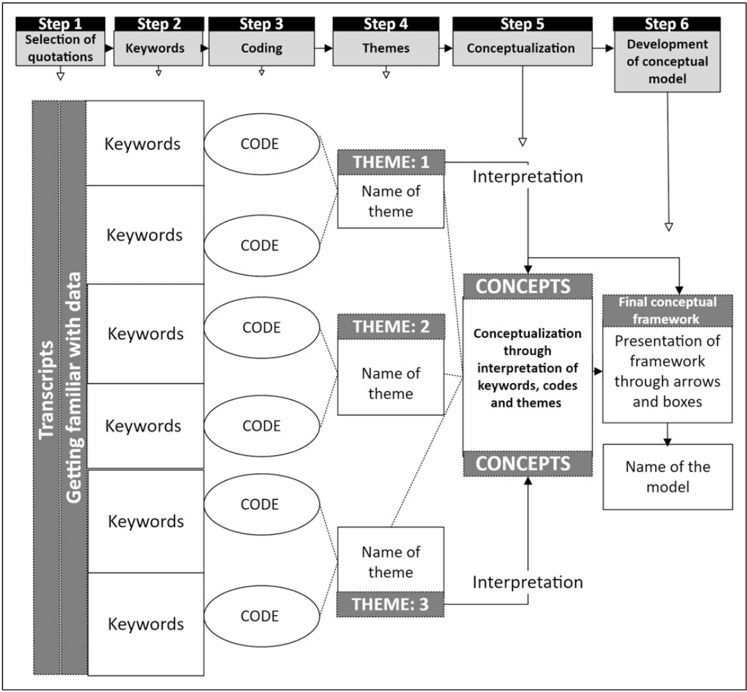
- The paper proposes six steps: transcription/familiarization and quotation selection; keyword selection; coding; theme development; conceptualization through interpretation of keywords, codes, and themes; and development of a conceptual model.
- It introduces 6Rs for keyword selection (realness, richness, repetition, rationale, repartee, regal), 6Rs for coding (robust, reflective, resplendent, relevant, radical, righteous), and 4Rs for theming (reciprocal, recognizable, responsive, resourceful).
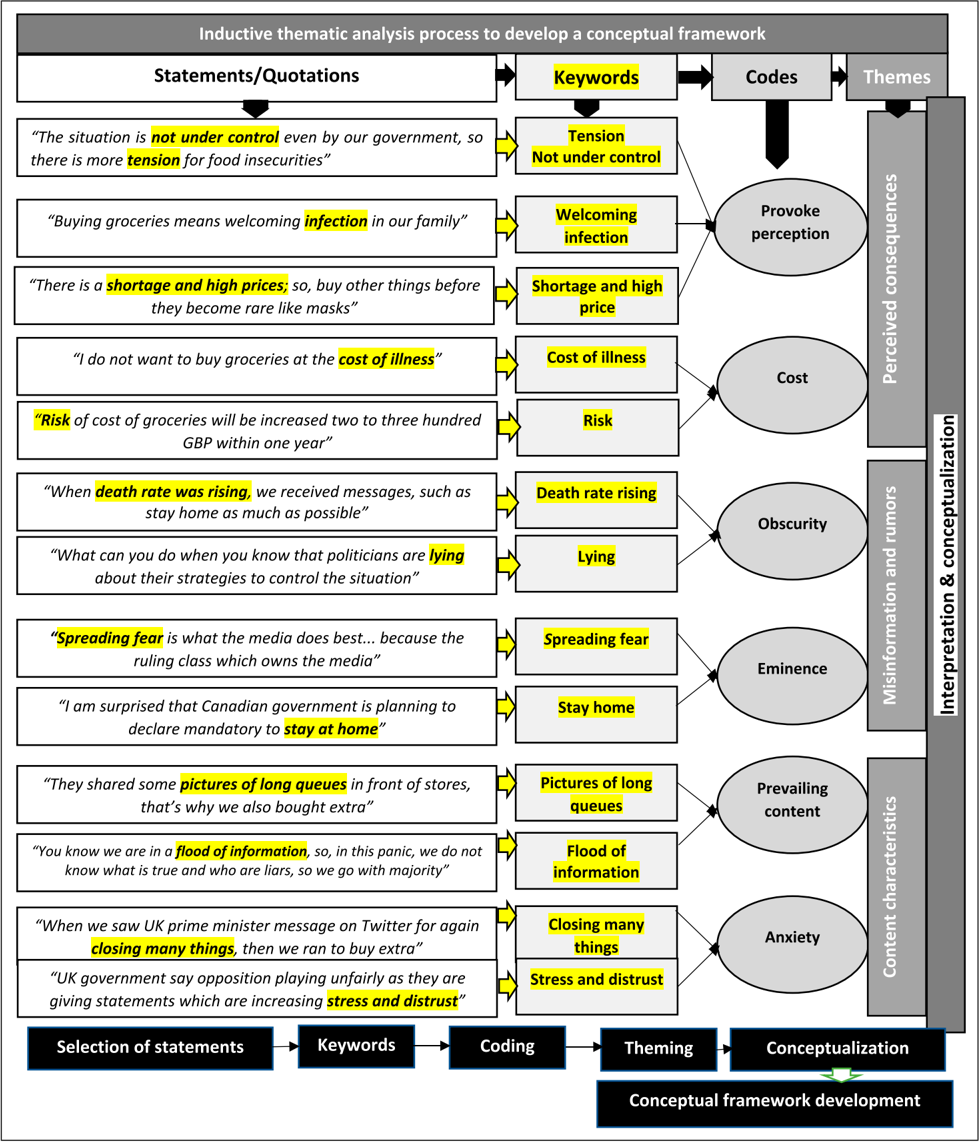
- In the exemplar study, three main themes emerged: “Perceived consequences” from codes “Provoke perception” and “Cost”; “Misinformation and rumors” from codes “Obscurity” and “Eminence”; and “Content Characteristics” from codes “Prevailing content” and “Anxiety.”
- The exemplar’s final model, “Panic buying as social practice,” was based on Protection Motivation Theory (PMT) and the Theory of Rumor Transmission (TORT).
Methods
- Design: a methodological/conceptual paper that presents a comprehensive systematic model for thematic analysis culminating in a conceptual model, using Naeem and Ozuem (2022a) as an exemplar.
- Exemplar data: qualitative data gathered from Twitter, YouTube, and interviews; the exemplar used a six-stage thematic analysis and a social constructionist perspective with PMT and TORT as theoretical foundations.
- Main analysis: the paper describes each of the six steps in detail, provides practical examples from the exemplar, and compares the proposed process with Braun and Clarke’s (2006) six steps of thematic analysis.
Limitations
- The paper states that the potential of the process to address other research contexts or quantitative methods may require further exploration, and that the efficiency of the method compared with other model-building approaches has not been empirically tested.
- Evident from the text: the proposed six-step process and the 6Rs/4Rs are illustrated through a single exemplar study and are not independently validated or empirically compared with alternative thematic analysis approaches.
Model-written summary. Check it against the paper before relying on it.
Integrity signals
Registry
Cites
Statistics
Figures

Verification
Claims the paper makes
0 Valid · 4 Not valid · 56 Not checked · 89 Own results and interpretations
The cited sources that could be checked couldn’t confirm or dispute this claim.
In the paper
“For narrative approaches, conceptual model development focuses on personal experiences, emotions, and life histories (Eldh et al., 2020).”
§ A Step-by-Step Process of Thematic Analysis to Develop a Conceptual Model in Qualitative Research > Step 6: Development of Conceptual Model.
What the sources say
- Could not verifycites Eldh et al., 2020 matched to “Quotations in Qualitative Studies: Reflections on Constituents, Custom, and Purpose” (2020) sourceExperimental — accuracy not yet measured
The Discussion and Conclusions (page numbers unavailable) address how quotations can illustrate qualitative analysis and findings. A search for narrative approaches, conceptual model development, emotions, and life histories found no passage addressing the attributed claim. (LLM, conf=0.72)
plainstates an association- Asserted: passes — The authors put it forward as true.
- Checkable: passes — It can be checked against evidence.
- Load-bearing: unclear — It is unclear whether the paper’s conclusions depend on it.
- Based: passes — The paper gives a reason why it holds.
- Could not verify
In the paper
“The analytical process balances between descriptive analysis, which outlines patterns or trends, and interpretive analysis, which offers subjective perspectives (Miles & Huberman, 1994, p. 56).”
§ A Step-by-Step Process of Thematic Analysis to Develop a Conceptual Model in Qualitative Research > Step 2: Selection of Keywords.
What the sources say
- Not matchedcites Miles & Huberman, 1994, p. 56
An author–year citation the paper’s reference list doesn’t settle. We don’t search these by name.
plain- Asserted: passes — The authors put it forward as true.
- Checkable: passes — It can be checked against evidence.
- Load-bearing: passes — The paper’s conclusions depend on it.
- Based: passes — The paper gives a reason why it holds.
- Not matched
In the paper
“However, the thematic analysis approach could also fit a post-positivist paradigm (Howell, 2012, p. 30).”
§ A Step-by-Step Process of Thematic Analysis to Develop a Conceptual Model in Qualitative Research > Step 2: Selection of Keywords.
What the sources say
- Not matchedcites Howell, 2012, p. 30
An author–year citation the paper’s reference list doesn’t settle. We don’t search these by name.
hedgedstates an association- Asserted: passes — The authors put it forward as true.
- Checkable: passes — It can be checked against evidence.
- Load-bearing: unclear — It is unclear whether the paper’s conclusions depend on it.
- Based: passes — The paper gives a reason why it holds.
- Not matched
In the paper
“Hence, quotation selection is not simply a mechanical task but is influenced by the researcher's philosophical and theoretical approach (Jackson & Mazzei, 2012).”
§ A Step-by-Step Process of Thematic Analysis to Develop a Conceptual Model in Qualitative Research > Step 1: Transcription, Familiarization With the Data, and Selection of Quotations.
What the sources say
- Not matchedcites Jackson & Mazzei, 2012
An author–year citation the paper’s reference list doesn’t settle. We don’t search these by name.
plainstates a cause- Asserted: passes — The authors put it forward as true.
- Checkable: passes — It can be checked against evidence.
- Load-bearing: passes — The paper’s conclusions depend on it.
- Based: passes — The paper gives a reason why it holds.
- Not matched
A conclusion the paper draws from its own results — it cites no other source for it, so there is none to check. The quote shows it is in the paper.
In the paper
“Thus, keywords serve as a critical bridge between data and themes in different methodologies.”
§ A Step-by-Step Process of Thematic Analysis to Develop a Conceptual Model in Qualitative Research > Step 4: Theme Development.
boostedstates an association- Asserted: passes — The authors put it forward as true.
- Checkable: passes — It can be checked against evidence.
- Load-bearing: unclear — It is unclear whether the paper’s conclusions depend on it.
- Based: passes — The paper gives a reason why it holds.
10 more claims
Create a free account to see all 149 claims and every source verdict.
- It may state two separate claims as one. 54
- Probably not a substantial claim. 128
Claims other papers make about this one
Each is checked against this paper’s own text: does it say what the citing paper says it does?
The source backs part of the claim, not all of it — or backs it for a different population, condition or comparison.
In the citing paper
“With the identified keywords, initial coding was further informed by and cross-referenced to the literature on AI ethics and governance, particularly addressing public concerns in government AI, alongside the author team's collective expertise in AI-driven digital transformation in public administration.”
From Accountability in Government Use of AI : Citizen Concerns and Preferences (2025) · cites this paper as Naeem et al. 2023
Experimental — accuracy not yet measuredThe source backs part of the claim, not all of it — or backs it for a different population, condition or comparison.
In the citing paper
“Thematic analysis is a highly popular technique among qualitative researchers for analyzing qualitative data, which usually comprises thick descriptive data (Naeem et al., 2023).”
From The Psycho-Emotive Effects of AI-Generated Fake News on Social Media Users (2026) · cites this paper as Naeem et al., 2023
Experimental — accuracy not yet measuredThe cited source says what the claim attributes to it.
In the citing paper
“The selection of keywords was guided by the 6Rs framework-Realness, Richness, Repetition, Rationale, Repartee, and Regal-to ensure they accurately represented the essence of the data (Naeem et al. 2023).”
From Accountability in Government Use of AI : Citizen Concerns and Preferences (2025) · cites this paper as Naeem et al. 2023
The cited source says what the claim attributes to it.
In the citing paper
“The data were analyzed through Naeem et al.'s (2023) six-step thematic analysis process to develop a conceptual framework (Naeem & Ozuem, 2022).”
From “It’s Not Just About Competition – It’s Ceremony”: Introducing the Embedded Indigeneity Framework for Understanding Identity, Mission, and Practice in TCU and NASNTI Athletics (2026) · cites this paper as Naeem et al. (2023)
The cited source says what the claim attributes to it.
In the citing paper
“The selected methodology was implemented due to the end results that 1) presented a novel conceptual framework and 2) serves as a contextually specific extension of existing theory/theories (Naeem et al., 2023).”
From “It’s Not Just About Competition – It’s Ceremony”: Introducing the Embedded Indigeneity Framework for Understanding Identity, Mission, and Practice in TCU and NASNTI Athletics (2026) · cites this paper as Naeem et al., 2023
Self-check
Percentages, sums and reported differences re-computed from the paper’s own numbers.
Each contradiction between two passages listed here was confirmed by an independent check.
Rated minor: it would not touch a result — a value no result rests on, a p-value that stays on the same side of the significance level, or a conflict that is clerical, resolved elsewhere in the paper, or outside its own findings.
In the paper
§ A Step-by-Step Process of Thematic Analysis to Develop a Conceptual Model in Qualitative Research > Step 6: Development of Conceptual Model.
“Positivism, which favours inductive methods, builds its model on top of previously established theories and conducts its experiments in an unbiased manner.”
§ A Step-by-Step Process of Thematic Analysis to Develop a Conceptual Model in Qualitative Research > Step 6: Development of Conceptual Model.
“An inductive approach is primarily data-driven, whereby themes are derived from the data itself without the influence of pre-existing theories (Braun & Clarke, 2006).”
Citations
Cites
Using thematic analysis in psychology
Braun, V., & Clarke, V. (2006) · Qualitative Research in Psychology · doi:10.1191/1478088706qp063oa · Cited by 194,414
Qualitative Data Analysis: An Expanded Sourcebook
(1994) · Journal of Environmental Psychology · doi:10.1016/s0272-4944(05)80231-2 · Cited by 48,420 · cited 2×
“In the coding process, consideration of keywords helps in multiple ways: The analytical process balances between descriptive analysis, which outlines patterns or trends, and interpretive analysis, which offers subjective perspectives (Miles & Huberman, 1994, p. 56).”
Lincoln, Y. S., Guba, E. G., & Pilotta, J. J. (1985) · International Journal of Intercultural Relations · doi:10.1016/0147-1767(85)90062-8 · Cited by 45,787 · cited 1×
“…degrees of subjectivity and objectivity has underscored the fl exibility intrinsic to research methodologies and highlighted that these tools of analysis are intimately intertwined with, and, indeed, emerge from the distinctive nature of speci fi c disciplines and perspectives (Lincoln & Guba, 1985).”
BackgroundThe Discovery of Grounded Theory: Strategies for Qualitative Research
Glaser, B. G., & Strauss, A. L. (2017) · Aldine (Routledge reprint) · doi:10.4324/9780203793206 · Cited by 25,789
The qualitative content analysis process
Elo, S., & Kyngäs, H. (2008) · Journal of Advanced Nursing · doi:10.1111/j.1365-2648.2007.04569.x · Cited by 22,617 · cited 1×
“Deductive coding, linked with descriptive analysis, is a top-down approach where pre-existing theories, models, or codes guide the data analysis (Elo & Kyng¨as, 2008).”
Method(2009) · Cited by 21,330
Reflecting on reflexive thematic analysis
Braun, V., & Clarke, V. (2019) · Qualitative Research in Sport, Exercise and Health · doi:10.1080/2159676x.2019.1628806 · Cited by 19,677
(1998) · Medical Entomology and Zoology · Cited by 18,397
(2014) · Cited by 15,747
S., N. L. (2017) · doi:10.1177/1609406917733847 · Cited by 14,051 · cited 3×
“· Robust: Coding should convey the true essence of data in a theoretical manner (Nowell et al., 2017).”
Background
Research works printed but not linked: 9
- 1. Arar, K. (2017). The what's and why's of the how to of qualitative research. Qualitative Report, 22(11), 2956-2958.
- 16. Creswell, J. W. (2012). Educational research. Pearson.
- 19. Denzin, N. K., & Salvo, J. (2020). New directions in theorizing qualitative research: Theory as resistance. Myers Education Press.
- 62. Oliver, P. (2021). Using qualitative methods to answer your research question (First). Open University Press.
- 63. Patton, M. Q. (2015). Qualitative research & evaluation methods: Integrating theory and practice (fourth). Sage Publications, Inc. Qualitative research (pp. 273-290). Sage.
- 67. Saldana, J. (2021). The coding manual for qualitative researchers (Fourth). Sage.
- 68. Saldana, J. M. (2016). The coding manual for qualitative researchers (4rd ed.). Sage Publications.
- 74. Seale, C. (2013). Qualitative research practice. In C. Seale, G. Gobo, J. Gubrium, & D. Silverman (Eds.), Concise paperback. Sage.
- 80. Tracy, S. J. (2019). Qualitative research methods: Collecting evi- dence, crafting analysis, communicating impact (2nd ed.). Wiley Blackwell.
Cited by
Items 701–800 of 2,204
Shahreza, M., Imaniah, I., & Purwanto, E. (2024) · International Journal of Religion · doi:10.61707/d13k6j07 · Cited by 2
“The data analysis technique used is thematic analysis, which aims to identify patterns and key themes in the collected data (Naeem et al., 2023).”
MethodFrom rigidity to flexibility: reforming urban planning studio pedagogies in developing nations
Soltani, A., & Qadikolaei, M. R. (2026) · Frontiers of Urban and Rural Planning · doi:10.1007/s44243-026-00083-8 · Cited by 2
“To enhance the rigor and replicability of the findings, the analysis process incorporated principles of systematic thematic analysis following Step 5 of Naeem et al. (2023), where ‘Conceptualization’ involves the transition from descriptive codes to an integrated thematic map.”
Vsens: Incorporating XR into the Process of Collecting Virtual IMU Data
Liang, F., Min, T., Xia, C., & Sugiura, Y. (2026) · Proceedings of the ACM on Interactive Mobile Wearable and Ubiquitous Technologies · doi:10.1145/3790110 · Cited by 1
“Transcripts were analyzed using inductive thematic analysis by two researchers [46]: first open-coded by two researchers independently, followed by iterative clustering into higher-order themes.”
Exploring the role of community newsletters in news deserts
McAdam, A. (2025) · Communication Research and Practice · doi:10.1080/22041451.2025.2511492 · Cited by 1
Zacharová, Z. J., & Liliková, L. (2026) · European Early Childhood Education Research Journal · doi:10.1080/1350293x.2026.2628096 · Cited by 1
“Thematic analysis (Braun and Clarke 2006; Naeem et al. 2023) was applied to observational notes, video recordings, and parental interviews.”
Prisoners' Perceptions and Their Agency on Sustainability Transformation in Finland
Manninen, S. M., & Makkonen, T. (2025) · Sustainable Development · doi:10.1002/sd.70372 · Cited by 1
Hasan, S. S., Salam, A., Moniruzzaman, M., Bari, M. A., Aich, N., Jahan, F., Rahman, M. M., Islam, Z., Kabir, M. H., Shaikh, M. A. A., et al. (2024) · JMIR Research Protocols · doi:10.2196/60289 · Cited by 6
The online discourse of Arab-Bedouin girls in Israel
Abu‐Gweder, A. (2026) · Women s Studies International Forum · doi:10.1016/j.wsif.2025.103275 · Cited by 1
England, A. C., Bird, J., Elliott, S., & Rogers, M. (2026) · Journal of Outdoor and Environmental Education · doi:10.1007/s42322-026-00262-7 · Cited by 1
Nanda, P. K. (2026) · International Journal of Human-Computer Interaction · doi:10.1080/10447318.2026.2697344 · Cited by 1
Brandsma, T., van de Wetering, R., & Stoffers, J. (2025) · Health Policy and Technology · doi:10.1016/j.hlpt.2025.101105 · Cited by 7
Mathew, A. (2024) · World Journal of Advanced Research and Reviews · doi:10.30574/wjarr.2024.22.1.1305 · Cited by 3
Yudiana, F. E., Famularsih, S., Rosyidha, A., Muflikah, B., & Raharja, A. U. S. (2024) · IJORER International Journal of Recent Educational Research · doi:10.46245/ijorer.v5i6.709 · Cited by 4
“This dissemination phase involves user analysis, determining strategies and themes, selecting timing, and choosing media (Naeem et al., 2023; Cartwright et al., 2021; Boon-Itt et al., 2020; Mezmir et al., 2020; Skovlund et al., 2020).”
Middleton, R., Metusela, C., & Davidson, P. M. (2025) · Heart Lung and Circulation · doi:10.1016/j.hlc.2025.07.011 · Cited by 1
Barbish, L., Crane, M. M., Lange-Maia, B. S., Washington, T., Basapur, S., & Shah, R. C. (2025) · Journal of Clinical and Translational Science · doi:10.1017/cts.2025.10205 · Cited by 2
“This top-down approach ensures that data analysis is guided by established frameworks, allowing for a systematic categorization of findings [17].”
Doomah, Z., & Jahmeerbacus, S. (2025) · Physics and Chemistry of the Earth Parts A/B/C · doi:10.1016/j.pce.2025.104075 · Cited by 2
Collaborative E-Learning Model Development for Increase Quality Learning in Vocational School
Kurnaedi, D., & Widyarto, S. (2024) · bit-Tech · doi:10.32877/bt.v7i2.1846 · Cited by 9
Issahaku, P. A. (2025) · SAGE Open · doi:10.1177/21582440251335382 · Cited by 2
“These included: first, familiarize with the data; second, generate initial codes; third, search for potential themes; fourth, review potential themes; fifth, define and name themes; and sixth, report the findings (Braun & Clarke, 2006; Naeem et al., 2023).”
Dilemmas of social justice in the practice of internationalization at an Irish university
Scheidt, L., & Minescu, A. (2026) · Journal of International Students · doi:10.32674/sk6emj62 · Cited by 1
“In addition, the development of codes, subthemes, and higher-order concepts was organized using Naeem’s structured thematic analysis (Naeem et al., 2023), which provided a systematic framework for moving from keywords and descriptive codes to interpretive concepts and an overarching conceptual…”
20-minute neighbourhoods, criticisms, conspiracy theories, and health: a critical discourse analysis
Legge, M. F., Inyang, E., & Stokes, J. (2025) · BMC Public Health · doi:10.1186/s12889-025-25416-y · Cited by 1
“We utilized Naeem et al.’s (2023) step-by-step TA process to enhance rigour and transparency [40].”
Bennett, A. E. (2025) · Child Care Health and Development · doi:10.1111/cch.70044 · Cited by 1
“The data analysis was situated within a qualitative paradigm that was interpretivist in ontology and constructivist in axi-ology (Braun and Clarke 2019; Naeem et al. 2023; Wiltshire and Ronkainen 2021).”
Parental Decision‐Making in Management of Childhood Hearing Loss: A Systematic Review
Ensing, A. E., Pandya, M., Speaker, R. B., & Lieu, J. E. C. (2025) · The Laryngoscope · doi:10.1002/lary.70237 · Cited by 1
“Inductive content analysis is a systematic method of qualitative data analysis that allows for the bottom-up creation of conceptual structures from subjects' experiences and perspectives [25, 26].”
Navigating student engagement and belonging post-pandemic: A case study from a post-1992 university
Mansi, G. (2026) · Innovations in Education and Teaching International · doi:10.1080/14703297.2026.2629477 · Cited by 3
Redman, I., Major, E., Alshamah, J., et al. (2026) · Emerging Adulthood · doi:10.1177/21676968261456379 · Cited by 1
Simasiku, F. S., & Rabaza, M. (2026) · Eurasia Journal of Mathematics Science and Technology Education · doi:10.29333/ejmste/17796 · Cited by 2
“These codes were then synthesized into broader themes which were used to discuss and analyze the data (Naeem et al., 2023).”
Affective–political endurance and sumud : entrepreneurship under domination in Palestine
Althalathini, D. (2026) · Journal of Small Business and Enterprise Development · doi:10.1108/jsbed-08-2025-0575 · Cited by 1
Munson, T. (2025) · Kansas English : · doi:10.62704/ke25p · Cited by 1
Nsengiyumva, R., Bazirete, O., Uhawenimana, T. C., et al. (2025) · Reproductive Health · doi:10.1186/s12978-025-02243-3 · Cited by 1
“The data analysis followed a six-step inductive thematic analysis process based on Naeem et al. [20], using MAX-QDA version 2022 software for systematic coding and theme development.”
Misas, J. D. P., Tam, K., & Jones, K. (2025) · TransNav the International Journal on Marine Navigation and Safety of Sea Transportation · doi:10.12716/1001.19.02.35 · Cited by 4
“This allowed us to identify and organise patterns in content and meaning [84, 85].”
Chitereka, C., Nyathi, N., Takaza, S. C., & Kanyere, D. (2025) · Child Protection and Practice · doi:10.1016/j.chipro.2025.100220 · Cited by 4
Constrained moral agency, distress, and residue in Neonatal Intensive Care nurses
Ramadan, O. M. E., Hafiz, A., Abunar, A., Pingue-Raguini, M., Elsharkawy, N. B., Alruwaili, M. F., Alshammari, M. S. S., Elamin, H. M., & Samy, R. (2026) · Nursing Ethics · doi:10.1177/09697330261465881 · Cited by 1
Williams, S. C. (2025) · Youth · doi:10.3390/youth5030090 · Cited by 1
“The quantitative data was analysed using Naeem et al.’s (2023) approach to thematic analysis, which involved a step-by-step process of the following: Familiarization with the data and selection of quotations, selection of keywords, coding, theme development, and conceptualization.”
Smith, A., Wyles, K. J., Schofield, P., & Hughes, S. (2025) · Journal of Pain · doi:10.1016/j.jpain.2025.105440 · Cited by 1
Swampy, K., Eurich, D. T., Meneen, K., Samanani, S., Singh, P., Wozniak, L., Padwal, R. S., & Lau, D. (2026) · BMJ Open · doi:10.1136/bmjopen-2025-107266 · Cited by 2
Emotional Impact of Changes in Activity Participation in Individuals with Parkinson’s Disease
Feldhacker, M. L., Hebert, K. R., & Lee, A. (2025) · Occupational Therapy in Mental Health · doi:10.1080/0164212x.2025.2453535 · Cited by 1
Fisher, B., Dennison, E. M., McDonald, H., Rimmer, T., & Fallowfield, J. L. (2024) · Physiotherapy · doi:10.1016/j.physio.2024.101461 · Cited by 2
“Thematic analysis offers a flexible approach that can be adapted to various theoretical frameworks [22], which is beneficial for a quality improvement study where unexpected themes may emerge during implementation.”
Laili, D. N., & Prasetyawan, Y. Y. (2025) · Jurnal Ilmu Perpustakaan · doi:10.14710/jip.v14i1.49-62 · Cited by 1
Unveiling the Impact of Public Data Access on Urban Polycentric Structure: Evidence from China
Liu, P., Wang, L., Zhong, F., Han, N., & Zhao, D. (2025) · Land · doi:10.3390/land14081664 · Cited by 1
“One group predominantly employs qualitative analyses to explore the theoretical origins [10,11], performance evaluation [12], and practical pathways of PDA [13].”
Frimpong, K. A., Abbey, A. N. A., Ampofo, E. A., Abubakari, F. V., Manso, E., Odoi-Yorke, F., & Darko, R. O. (2026) · Discover Agriculture · doi:10.1007/s44279-026-00633-0 · Cited by 3
“It involves the identification and reporting of patterns in a data set, which are then interpreted for their inherent meaning [43].”
Exploring Sociological Themes in Open Educational Resources: A Critical Pedagogy Perspective
Bernard, D. M., & Bendraou, R. (2025) · Open Education Studies · doi:10.1515/edu-2025-0102 · Cited by 2
Nor, N. M., Zakaria, Z., Yano, J., & Pisal, S. M. M. (2026) · Journal of Material Cycles and Waste Management · doi:10.1007/s10163-025-02458-3 · Cited by 1
Yee-King, M. J., & Fiorucci, A. (2025) · IEEE Global Engineering Education Conference (EDUCON) · doi:10.1109/educon62633.2025.11016587 · Cited by 1
“There are other published protocols for thematic analysis such as [24] but the Braun and Clarke protocol is perhaps the most established.”
Buprenorphine for Children and Adolescents with Sickle Cell Disease: A Scoping Review
deBettencourt, J., Nagy, M. R., Rotman, C., Greco, C. D., Berde, C. B., & Archer, N. M. (2026) · Children · doi:10.3390/children13030388 · Cited by 1
“Reviewers also collected exemplary quotes from these studies, and qualitative themes were identified in a post hoc thematic assessment, with reviewers independently coding these quotes and determining themes through a consensus decision [19,20].”
La concientización de la salud mental de los adolescentes en el spot de UNICEF
Gálvez-García, M. F., & Gallardo-Echenique, E. E. (2026) · Doxa Comunicación Revista interdisciplinar de estudios de comunicación y ciencias sociales · doi:10.31921/doxacom.n42a3050 · Cited by 1
Juma, A. A. (2025) · International Journal of Training Research · doi:10.1080/14480220.2025.2566044 · Cited by 1
Stakeholders’ perspectives of dental imaging in the current diagnostic radiography curriculum
Govindasami, K., & Singh, S. (2025) · Health SA Gesondheid · doi:10.4102/hsag.v30i0.3149 · Cited by 1
“Common codes were then grouped into categories, and common categories were formulated into themes (Johnson & Onwuegbuzie 2016; Naeem et al. 2023).”
Onaindia-Romero, O., Gago, M., & Lezeta, B. H. (2026) · Cogent Business & Management · doi:10.1080/23311975.2026.2654923 · Cited by 2
Roma teachers’ resilience: A sociological study of life course experiences and professional impact
Ceglédi, T., Kozma, K., & Dabney-Fekete, I. D. (2025) · International Journal of Educational Research · doi:10.1016/j.ijer.2025.102907 · Cited by 2
Situmorang, H. E., Rustina, Y., & Novieastari, E. (2025) · Belitung Nursing Journal · doi:10.33546/bnj.3953 · Cited by 5
“All interview recordings were transcribed verbatim in Indonesian and analyzed using inductive thematic analysis (Naeem et al., 2023).”
Practice Patterns in Pediatric Cardiothoracic Presurgical Conferences: A Multicenter Survey Study
Reed, B., Puranik, P., Rodenbarger, A. L., et al. (2025) · Pediatric Cardiology · doi:10.1007/s00246-025-04008-y · Cited by 1
Pignatiello, G. A., Tuschman, P., Griggs, S. A., Schiltz, N. K., Demaree, H. A., Klinck, A., Hoffer, A., & Hickman, R. L. (2026) · JMIR Formative Research · doi:10.2196/73769 · Cited by 1
“We selected thematic analysis because it allowed us to group common patterns from participant feedback while remaining flexible to unanticipated insights related to REFRAME’s implementation [53].”
Reis, D. J., Armstrong, A. E., Miller, C. N., Postolache, T. T., Forster, J. E., Brenner, L. A., & Bahraini, N. H. (2026) · Journal of Head Trauma Rehabilitation · doi:10.1097/htr.0000000000001170 · Cited by 1
Beruin, L. C. (2025) · Discover Education · doi:10.1007/s44217-025-00902-y · Cited by 6
“As prescribed by Naeem et al. [33], a conceptual model was constructed to provide a structured interpretation of key findings.”
Galazzi, A., Stolt, M., Papastavrou, E., Stefanopoulos, N., Dimitriadou, M., Wiisak, J., Keogh, B., Chiappinotto, S., McCabe, C., Suhonen, R., et al. (2025) · Journal of Nursing Management · doi:10.1155/jonm/6655643 · Cited by 1
“Tird, we used two diferent methods of data analysis, based on thematic and content analysis [22, 23]—according to the different aims underlying the research process.”
Żammit, J., & Caruana, L. F. (2026) · Teaching and Teacher Education · doi:10.1016/j.tate.2026.105481 · Cited by 2
Hjortborg, S. K., Bicknell, K., & Downey, G. (2026) · International Journal of Qualitative Methods · doi:10.1177/16094069261436014 · Cited by 1
Cacanindin, M. A. C., & Quinto, E. J. M. (2025) · International Conference on Artificial Intelligence and Teacher Education (ICAITE) · doi:10.1109/icaite68636.2025.11442503 · Cited by 1
Cho, F. N., Ndim, M. C. F., Tongwa, D. Z., et al. (2025) · PLoS ONE · doi:10.1371/journal.pone.0337099 · Cited by 1
“Thematic analysis was employed to analyse the data, following Braun and Clarke’s framework [40].”
Dorvlo, S. Y., Baffoe, G., Jew, E. K. K., Mkandawire, E., & Dougill, A. J. (2025) · Discover Applied Sciences · doi:10.1007/s42452-025-07542-9 · Cited by 4
“The transcribed files were uploaded into Atlas.ti, and a thematic analysis [43] was conducted to identify the main themes discussed in the interviews.”
An exploratory survey of the application of accentuated eccentric loading in resistance training
Yang, J., Comfort, P., Kendall, K. L., & Haff, G. G. (2026) · International Journal of Sports Science & Coaching · doi:10.1177/17479541261434081 · Cited by 1
“’ ), following the six-step framework proposed by Naeem et al.. 55 This question was selected as it was the only open-ended question with suf fi cient responses for qualitative analysis.”
Mongolian women’s communication chains for future movement
Cuban, S. (2026) · Mobilities · doi:10.1080/17450101.2026.2695979 · Cited by 1
“Additionally, age was further used to select the cases to highlight variability amongst the participants (Naeem et al. 2023).”
Smith, E. A., Cairns, W., Evans, R., & Woodward, L. (2025) · Discover Health Systems · doi:10.1007/s44250-025-00267-x · Cited by 1
“Initial coding was applied to responses by the primary investigator (ES), before being grouped into themes as a product of an iterative recoding process outlined by Naeem et al. [19].”
A tool for reporting the optimal timing of pre-construction services in New Zealand
Botha, P. S., van der Walt, J. D., Scheepbouwer, E., & Barutha, P. J. (2024) · Proceedings of the Institution of Civil Engineers - Management Procurement and Law · doi:10.1680/jmapl.23.00012 · Cited by 1
Saadan, S., Wavre, S. P., & Kuknor, S. C. (2025) · Development in Learning Organizations An International Journal · doi:10.1108/dlo-10-2024-0289 · Cited by 1
Downey, C., Walsh, A., Doyle, F., Conlon, P. J., O’Seaghdha, C. M., McCormick, P. A., Dillon, A., Riddell, P., & Mellon, L. (2026) · Health Psychology and Behavioral Medicine · doi:10.1080/21642850.2026.2641868 · Cited by 1
“(6) Each theme was finalised and depicted using illustrative quotes from the data (Naeem et al., 2023).”
Cultural learning with 3D objects: First Nations perspectives in commercial archaeology
Elias, S., Williams, R., Ingram, J., Matthews, J., Saddler, M., Young, S., Simpson, R., Mckenzie, A., Crowe, B., Crowe, M., et al. (2026) · Australian Archaeology · doi:10.1080/03122417.2025.2581356 · Cited by 1
“To familiarise oneself with transcripts one must identify particular patterns and viewpoints in participant responses by distinguishing usable quotes (Naeem et al. 2023:2).”
InfluentialNum, K. S. F., Aizuddin, A. N., Hashim, S. M., & Said, M. S. M. (2025) · PLoS ONE · doi:10.1371/journal.pone.0335192 · Cited by 1
“While our findings showed detailed subthemes might appear granular, this approach was essential for capturing the complexity of collaborative practices over parsimony [29,30,49,52,53,132].”
Hambleton, A. L., Kandar, V., Miskovic‐Wheatley, J., Vatter, S., Grange, D. L., Touyz, S. W., & Maguire, S. (2025) · Australian Journal of Rural Health · doi:10.1111/ajr.70043 · Cited by 1
“The inductive analysis followed the six-phase approach [45]: transcript creation and data familiarisation; identification of keywords; code selection; theme development; conceptualisation through the meaning making of keywords, codes and themes; and, finally, the development of a conceptual model.”
The examination of ehram fabric as intangible cultural heritage and a touristic product
Çavuş, A., & Kırmacı, E. (2025) · Social Sciences & Humanities Open · doi:10.1016/j.ssaho.2025.102185 · Cited by 3
Shalev, L., Khazen, M., Rose, A. J., Lubin, G., & Eitan, R. (2025) · Frontiers in Psychiatry · doi:10.3389/fpsyt.2025.1629475 · Cited by 1
“Exploratory analysis follows a multi-step process to systematically extract themes from qualitative data (49).”
Lin, C.-P., Huang, C., Peng, J.-K., & Chang, H.-T. (2026) · Nursing Inquiry · doi:10.1111/nin.70109 · Cited by 1
“Data analysis using Naeem et al. (2023) six‐step approach, including (1) familiarizing data and selecting quotations; (2) selecting keywords; (3) coding; (4) developing themes; (5) conceptualizing through interpretation of keywords, codes, and themes, and (6) developing of conceptual model (Naeem…”
Ufua, D. E., Al‐Faryan, M. A. S., & Ehibor, O. J. (2025) · Systemic Practice and Action Research · doi:10.1007/s11213-025-09720-7 · Cited by 1
“Studies note that the conceptual research approach has the intrinsic capacity to enhance the rigor and the rep-licability of their analysis, and projects a comprehensive strategy for theoretical conceptualization in qualitative research (see Naeem et al. 2023; Salawu et al. 2023).”
Pnevmatikos, D., & Christodoulou, P. (2026) · British Journal of Educational Psychology · doi:10.1111/bjep.70078 · Cited by 3
Offering safe passage: grading systems and gendered enrollment patterns in undergraduate mathematics
Harrison, M. H. (2025) · Social Forces · doi:10.1093/sf/soaf103 · Cited by 1
A Novel Web App for Dietary Weight Management: Development, Implementation, and Usability Study
Oliveira, A., Wolff, J., Alfouzan, N. W., Yu, J. Z., Yahya, A., Lammy, K., & Nakamura, M. (2024) · JMIR Formative Research · doi:10.2196/58363 · Cited by 1
Fuchs, K., Konar, R., & Shi, D. (2025) · Journal of Teaching in Travel & Tourism · doi:10.1080/15313220.2025.2531953 · Cited by 2
“An inductive coding approach was applied, allowing themes to emerge directly from the data without imposing preexisting theoretical frameworks (Naeem et al., 2023).”
Michelin-starred meal in the stratosphere: scale development of luxury dining on the edge of space
Raza, M., Khalid, R., Raza, H., Ghaderi, Z., Promsivapallop, P., & Ariza‐Montes, A. (2026) · Journal of Tourism Futures · doi:10.1108/jtf-01-2025-0008 · Cited by 2
Xavier, J. (2025) · International Journal of Health Governance · doi:10.1108/ijhg-06-2025-0084 · Cited by 1
The Relevance of Mental Health Programmes in the Namibian Police Services
Haufiku, J., Mtetwa, E., & Javangwe, G. (2024) · Journal of Public Administration and Development Alternatives · doi:10.55190/jpada.2024.315 · Cited by 1
The Lived Experiences of Chemotherapy‐Induced Dysphagia Among Women With Breast Cancer
Alrida, N. A., Ababneh, A., Tailakh, S. N., Eid, H. M., Dabbour, R. S., & Al-Zu'bi, B. M. (2025) · Nursing Forum · doi:10.1155/nuf/5524577 · Cited by 1
“Tis analysis followed Braun and Clarke’s six-step framework: (1) familiarization with the data, (2) generating initial codes, (3) searching for themes, (4) reviewing themes, (5) defning and naming themes, and (6) writing the report [20].”
Determinants of removable partial denture success in patients’ perspectives
Techapiroontong, S., Chuenjitwongsa, S., & Limpuangthip, N. (2025) · Journal of Dentistry · doi:10.1016/j.jdent.2025.106145 · Cited by 1
Tovin, M. M., Sebelski, C. A., Jensen, G. M., Segal, R. L., & Mostrom, E. (2026) · Physical Therapy · doi:10.1093/ptj/pzag077 · Cited by 1
A “Battle for hearts and minds”? EU digital diplomacy toward the Global South
Sottilotta, C. E. (2024) · Global Policy · doi:10.1111/1758-5899.13423 · Cited by 1
Ferreira, M. N., Seringa, J., & Santana, R. M. (2025) · BMC Health Services Research · doi:10.1186/s12913-025-12445-x · Cited by 6
“The content analysis was conducted by adapting the guidelines of thematic analysis [26, 27].”
Koopmans, E., Amyot, T., Turner, B. J., Paterson, T. S. E., Rathod, S., Phiri, P., & Sanders, C. D. (2025) · Comprehensive Child and Adolescent Nursing · doi:10.1080/24694193.2025.2588479 · Cited by 1
“The principles of thematic analysis were applied to the short open-text responses, including keyword identification, coding, searching for themes and patterns, discussion and reporting (Elliott, 2018; Naeem et al., 2023).”
Nguyen, T. H. H., Tran, T. N., Nguyen, G. H., Nguyen, T. T., Nguyen, N. T. T., Pham, H., Bui, L. K., Nguyen, A. C., & Anderson, D. J. (2025) · Future Science OA · doi:10.1080/20565623.2025.2541522 · Cited by 2
“a qualitative study was employed following Braun and clarke’s six-phase approach [26], which includes famil-iarization with data, generating initial codes, searching for themes, reviewing themes, defining and naming themes, and writing up. interview transcripts were analyzed manually, and common…”
Experiences of loneliness among older deaf adults who use sign language
Jansson, A. H., Kursi, M., Pitkälä, K. H., Strandberg, T. E., Rautiainen, L. J., & Ylimaa, T. (2025) · The Journal of Deaf Studies and Deaf Education · doi:10.1093/jdsade/enaf070 · Cited by 1
“We carried out the thematic analysis (Naeem et al., 2023) following the principles outlined by Braun et al. (2019), as presented in the Handbook of Research Methods in Health Social Sciences.”
Kumar, S., Fong, B. L., & Liang, Z. (2026) · Journal of Healthcare Leadership · doi:10.2147/jhl.s557143 · Cited by 4
“43 Once data extraction was completed, keywords were identified from the data.”
Ndiaye, M., Saadé, R. G., & Liu, H. (2025) · Global Transitions · doi:10.1016/j.glt.2025.09.002 · Cited by 10
Delima, W., Lahmuddin, L., & Metia, C. (2025) · Bulletin of Counseling and Psychotherapy · doi:10.51214/002025071715000 · Cited by 2
“Data collection was carried out through triangulation methods that included in-depth semi-structured interviews, participant observation, and study documentation (Naeem et al., 2023).”
Castillo, J. F. V., Santiago, L. B., & Bolaños, N. M. (2026) · Discover Education · doi:10.1007/s44217-026-01801-6 · Cited by 1
“In this phase, data from the previous stages were analyzed using a structured thematic qualitative approach based on open and axial coding [35].”
Designing EFL Virtual Learning: The Challenges and The Best Practices
Muliyah, P., Aminatun, D., & Hakim, L. N. (2024) · IJEE (Indonesian Journal of English Education) · doi:10.15408/ijee.v11i1.32007 · Cited by 1
Exploring the Challenges Confronting Private School Teachers in Lesotho
Sepiriti, S. (2025) · European Journal of Educational Management · doi:10.12973/eujem.8.4.261 · Cited by 1
Bibi, R. (2025) · SAGE Open · doi:10.1177/21582440251357413 · Cited by 2
“Additionally, interpretive analysis of interviews extends to visual and non-verbal cues (body language, pauses, facial expressions), inter-viewers are able to record and interpret both what is said and how it is said (Naeem et al., 2023).”
Gill, D., Jagannathan, K., Fujisaki‐Manome, A., et al. (2024) · Weather Climate and Society · doi:10.1175/wcas-d-24-0012.1 · Cited by 1
Johnson, C., Moore, K. R., & Johnson, D. (2025) · The Extractive Industries and Society · doi:10.1016/j.exis.2025.101685 · Cited by 2
Leveraging gastronomy tourism in selected districts of Masvingo Province, Zimbabwe
Chibaya, T., & Zhou, Z. (2026) · SN Social Sciences · doi:10.1007/s43545-026-01326-7 · Cited by 1
“The patterns were derived from the meaning of keywords and phrases used by par - ticipants (Naeem et al. 2023 ), thus revealing the underlying themes and concepts.”
Mataraarachchi, R., Sasindri, K., & Gamage, S. S. N. H. (2026) · Journal of Fashion Marketing and Management · doi:10.1108/jfmm-01-2025-0021 · Cited by 3
Populism and international law: the Morrison years in Australia
Ford, J. (2025) · Australian Journal Of International Affairs · doi:10.1080/10357718.2025.2491692 · Cited by 1
Metadata
- Authors
- Naeem, M., Ozuem, W., Howell, K., & Ranfagni, S.
- Affiliations
- University of Gloucestershire (GB)
- University of Cumbria (GB)
- Northumbria University (GB)
- University of Florence (IT)
- Corresponding author
- Naeem, Muhammad
- Venue
- International Journal of Qualitative Methods
- Publisher
- SAGE Publications
- Published
- 2023-10
- Volume
- 22
- ISSN
- 1609-4069 (ISSN-L)
- OpenAlex
- W4388503650
- Cited by
- 2,243
- References
- 71
- Citations by year
- 2026: 1000 · 2025: 981 · 2024: 258 · 2023: 4
- FWCI
- 1654.78
- Type
- journal article
- Language
- en
- Open access
- gold
- doi.org
- Licence
- Locations
- International Journal of Qualitative Methods (publishedVersion, cc-by-nc)
- Insight (University of Cumbria) (acceptedVersion)
- DOAJ (DOAJ: Directory of Open Access Journals) (submittedVersion, cc-by-sa)
- Florence Research (University of Florence) (submittedVersion)
- Topics
- Social Sciences › Education › Qualitative Research Methods and Applications
- Social Sciences › Sociology and Political Science › Qualitative Research Methods and Ethics
- Social Sciences › General Social Sciences › Computational and Text Analysis Methods
- Keywords
- thematic analysis, conceptual modeling, qualitative data analysis, inductive coding, deductive coding, grounded theory, interpretive phenomenology, constructivist research, positivist research, theoretical conceptualization, replicability
About these checks
Registry, retraction, Cites and statistics results are computed, not judged, with one exception: a printed reference that no index lists is read once by a model before it counts as a citation error. Claims are extracted by a model and kept only when their quote appears verbatim in the text; each cited source is then checked, with a model’s help, for whether it says what the claim relies on. Those verdicts can be wrong — read the claim’s quote and the cited source before relying on one.
The claim verdicts this report counts are experimental: their accuracy is not yet measured.
A language model drew the claims from the paper on 2026-10-10, under version 3 of the claim definition (model deepseek-v4.1-flash, prompt extract-v3).
A second model labelled each claim on 2026-10-10 (model jev-1.13-20260917, definition revision gold-guideline-v0.2).
Cited sources are checked with a language model’s help (gpt-6-sol).
Statistics and arithmetic are recomputed, not judged.
Confidence bands are shown only for fields calibrated on our annotated test set. None is calibrated yet, so no band is shown.
What counts as a claim ›How we measure confidence ›How we check this ›
Are you an author, or do you see a problem with this page? Request a review
Data sources
Bibliographic data: Semantic Scholar, OpenAlex, Crossref.
Contains information from the Semantic Scholar Academic Graph Datasets, made available under the ODC Attribution License (ODC-BY 1.0).
Semantic Scholar’s data is described in: Kinney, R., et al. (2023). The Semantic Scholar Open Data Platform. arXiv:2301.10140.
