

A Step-by-Step Process of Thematic Analysis to Develop a Conceptual Model in Qualitative Research
Open accessThe DOI matches its Crossref record; 77 of the 78 references it cites were found in a registry or an index, and 1 are not checked yet; 2 of the 57 sources its claims cite were checked for support.
Abstract
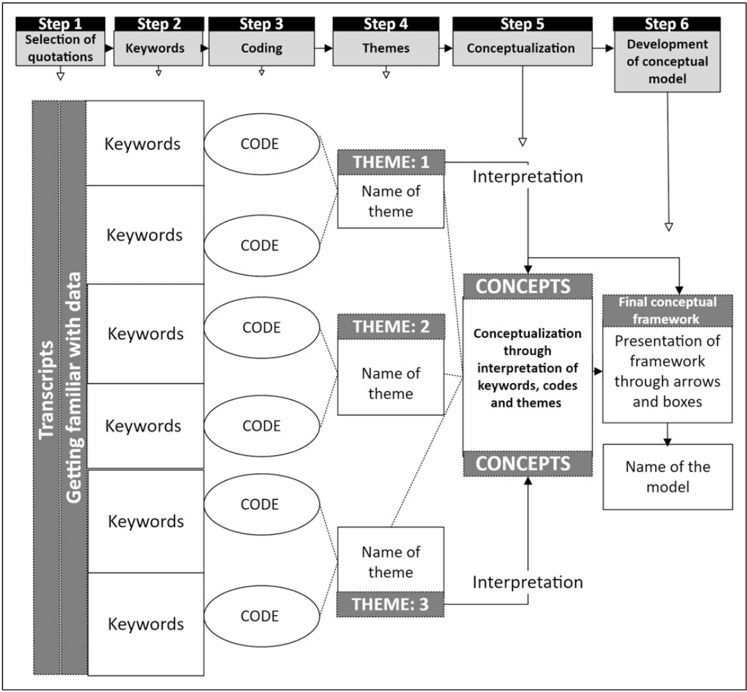
Thematic analysis is a highly popular technique among qualitative researchers for analyzing qualitative data, which usually comprises thick descriptive data. However, the application and use of thematic analysis has also involved complications due to confusion regarding the final outcome’s presentation as a conceptual model. This paper develops a systematic thematic analysis process for creating a conceptual model from qualitative research findings. It explores the adaptability of the proposed process across various research methodologies, including constructivist methodologies, positivist methodologies, grounded theory, and interpretive phenomenology, and justifies their application. The paper distinguishes between inductive and deductive coding approaches and emphasizes the merits of each. It suggests that the derived systematic thematic analysis model is valuable across multiple disciplines, particularly in grounded theory, ethnographic approaches, and narrative approaches, while also being adaptable to more descriptive, positivist-based methodologies. By providing a methodological roadmap, this study enhances the rigor and replicability of thematic analysis and offers a comprehensive strategy for theoretical conceptualization in qualitative research. The contribution of this paper is a systematic six-step thematic analysis process that leads to the development of a conceptual model; each step is described in detail and examples are given.
Verified 2026-11-22 · 1 reference not checked yet
Overview
CoChat Summary
TL;DR
This methodological paper presents a six-step systematic thematic analysis process for developing a conceptual model from qualitative data, illustrated with Naeem and Ozuem’s (2022a) panic-buying study. It introduces 6Rs for keyword selection, 6Rs for coding, and 4Rs for theming to enhance rigor and trustworthiness.
Key findings
- The paper proposes six steps: transcription/familiarization and quotation selection; keyword selection; coding; theme development; conceptualization through interpretation of keywords, codes, and themes; and development of a conceptual model.
- It introduces 6Rs for keyword selection (realness, richness, repetition, rationale, repartee, regal), 6Rs for coding (robust, reflective, resplendent, relevant, radical, righteous), and 4Rs for theming (reciprocal, recognizable, responsive, resourceful).
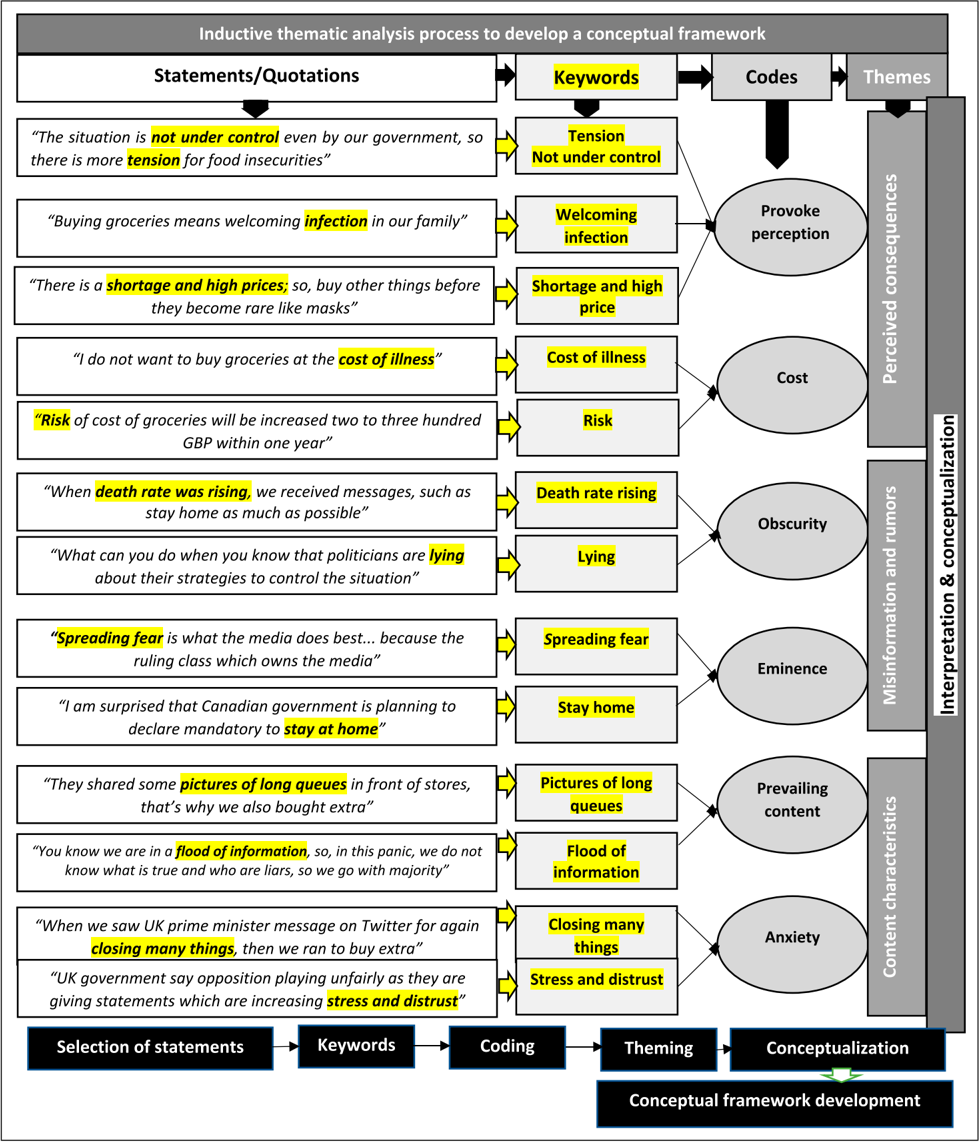
- In the exemplar study, three main themes emerged: “Perceived consequences” from codes “Provoke perception” and “Cost”; “Misinformation and rumors” from codes “Obscurity” and “Eminence”; and “Content Characteristics” from codes “Prevailing content” and “Anxiety.”
- The exemplar’s final model, “Panic buying as social practice,” was based on Protection Motivation Theory (PMT) and the Theory of Rumor Transmission (TORT).
Methods
- Design: a methodological/conceptual paper that presents a comprehensive systematic model for thematic analysis culminating in a conceptual model, using Naeem and Ozuem (2022a) as an exemplar.
- Exemplar data: qualitative data gathered from Twitter, YouTube, and interviews; the exemplar used a six-stage thematic analysis and a social constructionist perspective with PMT and TORT as theoretical foundations.
- Main analysis: the paper describes each of the six steps in detail, provides practical examples from the exemplar, and compares the proposed process with Braun and Clarke’s (2006) six steps of thematic analysis.
Limitations
- The paper states that the potential of the process to address other research contexts or quantitative methods may require further exploration, and that the efficiency of the method compared with other model-building approaches has not been empirically tested.
- Evident from the text: the proposed six-step process and the 6Rs/4Rs are illustrated through a single exemplar study and are not independently validated or empirically compared with alternative thematic analysis approaches.
Model-written summary. Check it against the paper before relying on it.
Integrity signals
Registry
Cites
Statistics
Figures

Verification
Claims the paper makes
0 Valid · 4 Not valid · 56 Not checked · 89 Own results and interpretations
The cited sources that could be checked couldn’t confirm or dispute this claim.
In the paper
“For narrative approaches, conceptual model development focuses on personal experiences, emotions, and life histories (Eldh et al., 2020).”
§ A Step-by-Step Process of Thematic Analysis to Develop a Conceptual Model in Qualitative Research > Step 6: Development of Conceptual Model.
What the sources say
- Could not verifycites Eldh et al., 2020 matched to “Quotations in Qualitative Studies: Reflections on Constituents, Custom, and Purpose” (2020) sourceExperimental — accuracy not yet measured
The Discussion and Conclusions (page numbers unavailable) address how quotations can illustrate qualitative analysis and findings. A search for narrative approaches, conceptual model development, emotions, and life histories found no passage addressing the attributed claim. (LLM, conf=0.72)
plainstates an association- Asserted: passes — The authors put it forward as true.
- Checkable: passes — It can be checked against evidence.
- Load-bearing: unclear — It is unclear whether the paper’s conclusions depend on it.
- Based: passes — The paper gives a reason why it holds.
- Could not verify
In the paper
“The analytical process balances between descriptive analysis, which outlines patterns or trends, and interpretive analysis, which offers subjective perspectives (Miles & Huberman, 1994, p. 56).”
§ A Step-by-Step Process of Thematic Analysis to Develop a Conceptual Model in Qualitative Research > Step 2: Selection of Keywords.
What the sources say
- Not matchedcites Miles & Huberman, 1994, p. 56
An author–year citation the paper’s reference list doesn’t settle. We don’t search these by name.
plain- Asserted: passes — The authors put it forward as true.
- Checkable: passes — It can be checked against evidence.
- Load-bearing: passes — The paper’s conclusions depend on it.
- Based: passes — The paper gives a reason why it holds.
- Not matched
In the paper
“However, the thematic analysis approach could also fit a post-positivist paradigm (Howell, 2012, p. 30).”
§ A Step-by-Step Process of Thematic Analysis to Develop a Conceptual Model in Qualitative Research > Step 2: Selection of Keywords.
What the sources say
- Not matchedcites Howell, 2012, p. 30
An author–year citation the paper’s reference list doesn’t settle. We don’t search these by name.
hedgedstates an association- Asserted: passes — The authors put it forward as true.
- Checkable: passes — It can be checked against evidence.
- Load-bearing: unclear — It is unclear whether the paper’s conclusions depend on it.
- Based: passes — The paper gives a reason why it holds.
- Not matched
In the paper
“Hence, quotation selection is not simply a mechanical task but is influenced by the researcher's philosophical and theoretical approach (Jackson & Mazzei, 2012).”
§ A Step-by-Step Process of Thematic Analysis to Develop a Conceptual Model in Qualitative Research > Step 1: Transcription, Familiarization With the Data, and Selection of Quotations.
What the sources say
- Not matchedcites Jackson & Mazzei, 2012
An author–year citation the paper’s reference list doesn’t settle. We don’t search these by name.
plainstates a cause- Asserted: passes — The authors put it forward as true.
- Checkable: passes — It can be checked against evidence.
- Load-bearing: passes — The paper’s conclusions depend on it.
- Based: passes — The paper gives a reason why it holds.
- Not matched
A conclusion the paper draws from its own results — it cites no other source for it, so there is none to check. The quote shows it is in the paper.
In the paper
“Thus, keywords serve as a critical bridge between data and themes in different methodologies.”
§ A Step-by-Step Process of Thematic Analysis to Develop a Conceptual Model in Qualitative Research > Step 4: Theme Development.
boostedstates an association- Asserted: passes — The authors put it forward as true.
- Checkable: passes — It can be checked against evidence.
- Load-bearing: unclear — It is unclear whether the paper’s conclusions depend on it.
- Based: passes — The paper gives a reason why it holds.
10 more claims
Create a free account to see all 149 claims and every source verdict.
- It may state two separate claims as one. 54
- Probably not a substantial claim. 128
Claims other papers make about this one
Each is checked against this paper’s own text: does it say what the citing paper says it does?
The source backs part of the claim, not all of it — or backs it for a different population, condition or comparison.
In the citing paper
“With the identified keywords, initial coding was further informed by and cross-referenced to the literature on AI ethics and governance, particularly addressing public concerns in government AI, alongside the author team's collective expertise in AI-driven digital transformation in public administration.”
From Accountability in Government Use of AI : Citizen Concerns and Preferences (2025) · cites this paper as Naeem et al. 2023
Experimental — accuracy not yet measuredThe source backs part of the claim, not all of it — or backs it for a different population, condition or comparison.
In the citing paper
“Thematic analysis is a highly popular technique among qualitative researchers for analyzing qualitative data, which usually comprises thick descriptive data (Naeem et al., 2023).”
From The Psycho-Emotive Effects of AI-Generated Fake News on Social Media Users (2026) · cites this paper as Naeem et al., 2023
Experimental — accuracy not yet measuredThe cited source says what the claim attributes to it.
In the citing paper
“The selection of keywords was guided by the 6Rs framework-Realness, Richness, Repetition, Rationale, Repartee, and Regal-to ensure they accurately represented the essence of the data (Naeem et al. 2023).”
From Accountability in Government Use of AI : Citizen Concerns and Preferences (2025) · cites this paper as Naeem et al. 2023
The cited source says what the claim attributes to it.
In the citing paper
“The data were analyzed through Naeem et al.'s (2023) six-step thematic analysis process to develop a conceptual framework (Naeem & Ozuem, 2022).”
From “It’s Not Just About Competition – It’s Ceremony”: Introducing the Embedded Indigeneity Framework for Understanding Identity, Mission, and Practice in TCU and NASNTI Athletics (2026) · cites this paper as Naeem et al. (2023)
The cited source says what the claim attributes to it.
In the citing paper
“The selected methodology was implemented due to the end results that 1) presented a novel conceptual framework and 2) serves as a contextually specific extension of existing theory/theories (Naeem et al., 2023).”
From “It’s Not Just About Competition – It’s Ceremony”: Introducing the Embedded Indigeneity Framework for Understanding Identity, Mission, and Practice in TCU and NASNTI Athletics (2026) · cites this paper as Naeem et al., 2023
Self-check
Percentages, sums and reported differences re-computed from the paper’s own numbers.
Each contradiction between two passages listed here was confirmed by an independent check.
Rated minor: it would not touch a result — a value no result rests on, a p-value that stays on the same side of the significance level, or a conflict that is clerical, resolved elsewhere in the paper, or outside its own findings.
In the paper
§ A Step-by-Step Process of Thematic Analysis to Develop a Conceptual Model in Qualitative Research > Step 6: Development of Conceptual Model.
“Positivism, which favours inductive methods, builds its model on top of previously established theories and conducts its experiments in an unbiased manner.”
§ A Step-by-Step Process of Thematic Analysis to Develop a Conceptual Model in Qualitative Research > Step 6: Development of Conceptual Model.
“An inductive approach is primarily data-driven, whereby themes are derived from the data itself without the influence of pre-existing theories (Braun & Clarke, 2006).”
Citations
Cites
Using thematic analysis in psychology
Braun, V., & Clarke, V. (2006) · Qualitative Research in Psychology · doi:10.1191/1478088706qp063oa · Cited by 194,414
Qualitative Data Analysis: An Expanded Sourcebook
(1994) · Journal of Environmental Psychology · doi:10.1016/s0272-4944(05)80231-2 · Cited by 48,420 · cited 2×
“In the coding process, consideration of keywords helps in multiple ways: The analytical process balances between descriptive analysis, which outlines patterns or trends, and interpretive analysis, which offers subjective perspectives (Miles & Huberman, 1994, p. 56).”
Lincoln, Y. S., Guba, E. G., & Pilotta, J. J. (1985) · International Journal of Intercultural Relations · doi:10.1016/0147-1767(85)90062-8 · Cited by 45,787 · cited 1×
“…degrees of subjectivity and objectivity has underscored the fl exibility intrinsic to research methodologies and highlighted that these tools of analysis are intimately intertwined with, and, indeed, emerge from the distinctive nature of speci fi c disciplines and perspectives (Lincoln & Guba, 1985).”
BackgroundThe Discovery of Grounded Theory: Strategies for Qualitative Research
Glaser, B. G., & Strauss, A. L. (2017) · Aldine (Routledge reprint) · doi:10.4324/9780203793206 · Cited by 25,789
The qualitative content analysis process
Elo, S., & Kyngäs, H. (2008) · Journal of Advanced Nursing · doi:10.1111/j.1365-2648.2007.04569.x · Cited by 22,617 · cited 1×
“Deductive coding, linked with descriptive analysis, is a top-down approach where pre-existing theories, models, or codes guide the data analysis (Elo & Kyng¨as, 2008).”
Method(2009) · Cited by 21,330
Reflecting on reflexive thematic analysis
Braun, V., & Clarke, V. (2019) · Qualitative Research in Sport, Exercise and Health · doi:10.1080/2159676x.2019.1628806 · Cited by 19,677
(1998) · Medical Entomology and Zoology · Cited by 18,397
(2014) · Cited by 15,747
S., N. L. (2017) · doi:10.1177/1609406917733847 · Cited by 14,051 · cited 3×
“· Robust: Coding should convey the true essence of data in a theoretical manner (Nowell et al., 2017).”
Background
Research works printed but not linked: 9
- 1. Arar, K. (2017). The what's and why's of the how to of qualitative research. Qualitative Report, 22(11), 2956-2958.
- 16. Creswell, J. W. (2012). Educational research. Pearson.
- 19. Denzin, N. K., & Salvo, J. (2020). New directions in theorizing qualitative research: Theory as resistance. Myers Education Press.
- 62. Oliver, P. (2021). Using qualitative methods to answer your research question (First). Open University Press.
- 63. Patton, M. Q. (2015). Qualitative research & evaluation methods: Integrating theory and practice (fourth). Sage Publications, Inc. Qualitative research (pp. 273-290). Sage.
- 67. Saldana, J. (2021). The coding manual for qualitative researchers (Fourth). Sage.
- 68. Saldana, J. M. (2016). The coding manual for qualitative researchers (4rd ed.). Sage Publications.
- 74. Seale, C. (2013). Qualitative research practice. In C. Seale, G. Gobo, J. Gubrium, & D. Silverman (Eds.), Concise paperback. Sage.
- 80. Tracy, S. J. (2019). Qualitative research methods: Collecting evi- dence, crafting analysis, communicating impact (2nd ed.). Wiley Blackwell.
Cited by
Items 401–500 of 2,204
Sirait, A. S., Syahnan, M., & Panjaitan, B. S. (2024) · Nurani Jurnal Kajian Syari ah dan Masyarakat · doi:10.19109/nurani.v24i2.24276 · Cited by 17
Soil-Based Dryland Restoration Practices in Southern Africa: A Systematic Review
Chapungu, L., & Zhanda, K. (2025) · Disaster Resilience and Green Growth · doi:10.1007/978-981-95-0389-6_10 · Cited by 4
Santiago, C. M., Santos, J. P. E., & Mangawang, J. (2025) · Action Learning Research and Practice · doi:10.1080/14767333.2025.2554606 · Cited by 3
Tiwari, I., McKinnon, R. A., Jafry, A., Grewal, E., Gilliland, J., Ferguson, K. N., Card, K. G., Gislason, M., Cosma, A. P., & Martin, G. (2025) · PLOS mental health. · doi:10.1371/journal.pmen.0000424 · Cited by 8
“We analyzed the open-ended responses using an inductive thematic analysis approach [41], guided by a post-positivist paradigm [42].”
Gimenez, J., Greening, E., McDowell, H. K., Lawrence, M., Miccoli, S., Page, S., Robb, K., Gutierrez, E. R., Salim, S., & Spinillo, M. (2025) · Journal of English for Academic Purposes · doi:10.1016/j.jeap.2025.101534 · Cited by 9
Examining the Pedagogical Value of Collaborative Multimodal Storytelling Projects
Stroia, A. R., & Xerri, D. (2024) · Advances in educational technologies and instructional design book series · doi:10.4018/979-8-3693-2687-9.ch005 · Cited by 4
Onyeama, U. F., Fidelak, L., Tang, W., Nkengasong, S., Gbaja-Biamila, T. A., Blessing, L. A., Musa, A. Z., Akinsolu, F. T., Musari-Martins, T. E., Okwuzu, J. O., et al. (2025) · Sexual Health · doi:10.1071/sh24233 · Cited by 4
Lindgren, J. K., Klungseth, N. J., & Andersen, B. S. (2026) · Business Strategy and the Environment · doi:10.1002/bse.70714 · Cited by 12
How automotive firms enable value creation within mature innovation ecosystems: The case of Polestar
Hoveskog, M., Holmén, M., Ernest, A., & Bergquist, M. (2026) · Technology in Society · doi:10.1016/j.techsoc.2026.103218 · Cited by 7
Maresch, A., Kossakowski, R., & Allison, R. (2025) · Journal of Bisexuality · doi:10.1080/15299716.2025.2514442 · Cited by 3
“Thematic analysis was employed to analyze the data (Braun & Clarke, 2022; Naeem et al., 2023).”
Masa, R., Operario, D., Villegas, N., Pineda, O., Baruah, D., Zulu, G., & Garcia, B. (2025) · AIDS Education and Prevention · doi:10.1521/aeap.2025.37.1.23 · Cited by 3
Thematic analysis of qualitative data: a relational, recursive and reductive (3R) approach
Gupta, R. K. S. A. (2025) · Qualitative Research Journal · doi:10.1108/qrj-07-2024-0164 · Cited by 13
Drabarek, D., Hoang, D. T., Yapa, H. M., Dang, T. T. H., Vu, H. D., Nguyen, T. A., Do, T. T., Nguyen, B. H., Vu, D. H., Fox, G. J., et al. (2025) · PLOS Global Public Health · doi:10.1371/journal.pgph.0004454 · Cited by 6
“This iterative process of interpretation and conceptualization produced a conceptual framework inductively [40] to explain the observed reduction of app use among patients, which we present within an overall explanatory narrative [41].”
de Lima, E. S., Potter, K., Preece, C., Rehill, N., Davis, G. D., Bulmer, S., Allen, K., March, A., Hobbs, T., & Fonagy, P. (2026) · Research Involvement and Engagement · doi:10.1186/s40900-025-00833-w · Cited by 4
“These approaches included clustering and thematic analysis [84].”
Learning about social suffering through illness narrative: possibilities and challenges
Paik, Y.-G., & Sung, J. (2025) · BMC Medical Education · doi:10.1186/s12909-025-07569-x · Cited by 3
“We employed a rigorous, multi-stage process of thematic analysis: [27] 1.”
Workplace health and safety under climate stress in Sri Lankan apparel SMEs
Senadeera, D. J. C. H., Sayem, A. S. M., Filho, W. L., Farhat, G., & Moda, H. M. (2026) · BMC Public Health · doi:10.1186/s12889-026-26344-1 · Cited by 5
“Coding was performed based on key phrases and recurrent terminology to identify dominant themes and sub-themes [47, 48] This enabled the development of a thematic framework reflecting climate change-induced hazards.”
Anwar, Y., Bachri, S., Utaya, S., Sumarmi, S., & Mislan, M. (2025) · Environmental Challenges · doi:10.1016/j.envc.2025.101253 · Cited by 3
Zwane, H. C., & Mzanywa, M. (2025) · EUREKA Social and Humanities · doi:10.21303/2504-5571.2025.003805 · Cited by 8
Party digitalization and members’ empowerment: A comparison of four Italian parties
Soare, S. C., Țap, P., Gherghina, S., et al. (2025) · Mediterranean Politics · doi:10.1080/13629395.2025.2459559 · Cited by 3
“The coding was done independently by the authors based on a meticulous review of the data, keywords identification, and openness to the patterns of meanings and ideas emerging from the interviews (Braun & Clarke, 2021, Naeem et al., 2023).”
Isano, S., Ndatinya, G. I., Uwimana, A., Ndangurura, D., Renzaho, J. N., & Bitalabeho, A. (2024) · BMC Medical Education · doi:10.1186/s12909-024-06418-7 · Cited by 9
Review: Attracting and retaining a farm workforce for the pork industry
Nettle, R. A., Vikas, A., Lin, P., & Santhanam‐Martin, M. (2025) · animal · doi:10.1016/j.animal.2025.101670 · Cited by 5
Ruokonen, J., Ulvila, L., Lähdesmäki, E., Tuomisalo, T., Breyer, C., Laaksonen, P., & Kauranen, P. (2025) · International Journal of Hydrogen Energy · doi:10.1016/j.ijhydene.2025.153171 · Cited by 2
Morton, E. E., Hole, R., O'Brien, H. L., LI, L. C., Barnes, S. J., & Michalak, E. E. (2025) · PLOS Digital Health · doi:10.1371/journal.pdig.0001017 · Cited by 3
“…on engagement with mHealth interventions for people living with BD, as it allows for the development of themes that represent the unique contexts and experiences of participants, including topics that may not have been apparent when data is viewed through the lens of an existing framework [57,72].”
SMMEs’ business mindset on tax compliance in North West: Perceptions and challenges
Myburg, J., & Schutte, D. (2025) · The Southern African Journal of Entrepreneurship and Small Business Management · doi:10.4102/sajesbm.v17i1.1085 · Cited by 4
den Akker, K. K. V., Christie, H. L., Boots, L. M. M., de Vugt, M. E., & Duits, A. (2025) · Aging & Mental Health · doi:10.1080/13607863.2025.2579159 · Cited by 4
“…stages: (1) reading the papers thoroughly to gain an in-depth understanding of the content; (2) inductive coding of relevant passages in the papers; (3) clustering similar codes to form broader themes; and (4) interpreting the themes in the context of the research question (Naeem et al., 2023).”
Framework construct on zakat studies for institutional development: a systematic literature review
Mustaffa, N. M., Jusoh, W. N. H. W., Lateh, N., et al. (2025) · Journal of Islamic marketing · doi:10.1108/jima-06-2024-0232 · Cited by 3
Animal Abuse Investigations: Challenges and Recommendations to Improve Animal and Human Welfare
Niemiec, R. M., & Kogan, L. R. (2024) · Animals · doi:10.3390/ani14243602 · Cited by 4
“Thematic analysis requires that researchers approach data without predetermined themes, instead through the course of analysis, to determine themes based on participants’ stated experience with a specific phenomenon [36].”
Gonçalves, C., Tomás, C. A., & Almeida, A. (2025) · Education Sciences · doi:10.3390/educsci15040476 · Cited by 12
Şengül, Z. K., Salık, H., & Berk, S. (2026) · Journal of Pediatric Nursing · doi:10.1016/j.pedn.2026.03.010 · Cited by 3
Creating moral space: How military chaplains in the Netherlands support veterans with moral injury
Mudde, L., Schuhmann, C. M., & Jacobs, G. (2025) · Frontiers in Sociology · doi:10.3389/fsoc.2025.1636853 · Cited by 6
How “shared” leadership comes into being: managers’ sensemaking in networked child welfare policy
van der Woerd, O., & van der Scheer, W. K. (2025) · International Journal of Public Sector Management · doi:10.1108/ijpsm-04-2025-0145 · Cited by 5
Burns, A. B., Kampman, H., Magee, L. A., Blackburn, J. L., Alton, M., & Pescosolido, B. A. (2024) · BMC Health Services Research · doi:10.1186/s12913-024-11962-5 · Cited by 3
“After transcription, interviews were qualitatively coded in accordance with criteria for high-quality qualitative research and established thematic analysis methodology [18, 19].”
Livingstone, S. (2025) · Housing Studies · doi:10.1080/02673037.2025.2490017 · Cited by 3
Caruso, R., Bonetti, L., Belloni, S., Arrigoni, C., Magon, A., Conte, G., Tommasi, V., Cilluffo, S., Lusignani, M., Terzoni, S., et al. (2025) · Nursing Reports · doi:10.3390/nursrep15050146 · Cited by 3
“Following the thematic analysis [54], the first theme highlighted the abilities required to accurately assess patients’ nutritional status and calculate their specific dietary needs.”
Onyango, E. O., Olukotun, M., Olanrewaju, F. O., Kapfunde, D., Chinedu-Asogwa, N., & Salami, B. O. (2024) · Women · doi:10.3390/women4040033 · Cited by 3
“The process was guided by thematic analysis based on the guiding framework and the emergent themes [35,37,38].”
Patient Experience of Awake Laryngoscopy Procedures
Hsu, A. R., Johns, H. L., Arguelles, I., et al. (2025) · Annals of Otology Rhinology & Laryngology · doi:10.1177/00034894251315339 · Cited by 2
DeMatthews, D. E., Casas, E., & Reyes, P. (2025) · Leadership and Policy in Schools · doi:10.1080/15700763.2025.2554639 · Cited by 3
Davies, J., Broad, R., Benstead, A., & Corallo, M. (2025) · Criminology & Criminal Justice · doi:10.1177/17488958251364489 · Cited by 5
Mohammed, A., & Apiung, J. (2024) · Educational Review · doi:10.1080/00131911.2024.2362172 · Cited by 3
“In the next stage, the categories were organised into meaningful groups to identify patterns and relationships, culminating in the development of the themes reported in the study (Naeem et al., 2023).”
Baghdadi, F., Hands, C., Belherkate, K., Boubiett, S. H., Crispin, V., Mhamdi, S. E., John, A. M., Khanom, A., Seyid, E. H. B., Soussi, A., et al. (2024) · Children and Youth Services Review · doi:10.1016/j.childyouth.2024.108096 · Cited by 2
Authenticity of terroir : innovation in Rioja winemaking
Marinakis, Y., Walsh, S. T., & White, R. S. (2025) · British Food Journal · doi:10.1108/bfj-05-2025-0693 · Cited by 2
Prakash, A., Tummers, M., Segur-Ferrer, J., Vivanco‐Hidalgo, R. M., Bidino, R. D., Tsiasiotis, E., Sacchini, D., Cicchetti, A., & Oortwijn, W. (2026) · Value in Health · doi:10.1016/j.jval.2026.03.009 · Cited by 3
From industry 4.0 to industry 5.0 in construction safety management: a comparative systematic review
Zou, J., Mohandes, S. R., Cheung, C. M., Rahbarimanesh, A., Majumdar, A., & Arashpour, M. (2026) · Safety Science · doi:10.1016/j.ssci.2026.107304 · Cited by 3
Mirek, J. (2025) · Worldwide Hospitality and Tourism Themes · doi:10.1108/whatt-01-2025-0030 · Cited by 2
Effective healthcare coverage in Canada: The caring and responding in Edmonton project
Zakkar, M. A., Deck, S., Jang, S. L., Kolahdooz, F., Wagg, A., Corriveau, A., & Sharma, S. (2025) · Healthcare · doi:10.1016/j.hjdsi.2025.100771 · Cited by 4
National public health institutes in Africa: a systematic review
Sangong, S., Bain, L. E., & Ndickmuh, A. W. T. (2026) · BMC Public Health · doi:10.1186/s12889-026-26801-x · Cited by 2
“…thematic analysis for this systematic review involved. adapting the flexible principles of thematic analysis incorporating the Braun & Clarke’s Six Phases of conducting a thematic analysis [18] into a transparent, systematic, and highly documented process to ensure trustworthiness and reduce bias.”
Unlocking Collaborative Dynamics: Exploring Veterinarian-Leadership Relationships in Animal Shelters
Mauck, C. R., Vincent, M. R., & Robertson, J. V. (2025) · Journal of Shelter Medicine and Community Animal Health · doi:10.56771/jsmcah.v4.108 · Cited by 2
Martins, J. O., Ny, H., Lah, O., & Abarkan, A. (2026) · Frontiers in Sustainable Cities · doi:10.3389/frsc.2025.1706672 · Cited by 2
“3 Selective thematic synthesis: refining codes into core analytical themes (Naeem et al., 2023; Ahmed et al., 2025) that informed Steps A–”
The meaningful elements of the Camino: Toward understanding pilgrims' transformative experience
Johnmeyer, C., Xu, S., Stanis, S. A. W., & Morgan, M. (2025) · Annals of Tourism Research Empirical Insights · doi:10.1016/j.annale.2025.100201 · Cited by 3
Basil, P. T., Ndibalema, P., & Lawrent, G. (2025) · Education 3-13 · doi:10.1080/03004279.2025.2602150 · Cited by 2
Design Heuristics for GenAI Educational Platforms
Owen, V., Parkman, S., Lindley, J., & Rubegni, E. (2025) · ACM International Conference on Interaction Design and Children (IDC) · doi:10.1145/3713043.3731499 · Cited by 2
Fenech, M., & Mead, N. (2024) · Journal of Medical Radiation Sciences · doi:10.1002/jmrs.848 · Cited by 2
Gordon, M. A., Sinopoulou, V., Mardare, R., Abdulshafea, M., Grafton‐Clarke, C., & Vasiliou, J. (2024) · BMJ Open Gastroenterology · doi:10.1136/bmjgast-2024-001483 · Cited by 2
Lundy, J., Jogulu, U. D., Taylor, H. C., & Williamson, S. (2025) · International Journal of Public Sector Management · doi:10.1108/ijpsm-12-2024-0408 · Cited by 5
Papadopoulou, E. A., Tsiantos, V., Hatzikraniotis, E., Karampatzakis, D., & Maragakis, M. (2025) · European Journal of STEM Education · doi:10.20897/ejsteme/17290 · Cited by 3
“Qualitative data were analysed using a thematic approach, which led to the extraction of key themes and categories regarding student participation and engagement, as well as the conditions of the educational environment (Naeem et al., 2023).”
Makerspaces as Catalysts for Entrepreneurial Education: Insights from a Systematic Literature Review
Bobic, O., Sava, S., & PIELE, A.-N. (2025) · Education Sciences · doi:10.3390/educsci15101295 · Cited by 6
Telussa, R. P., Kaihatu, J., & Arjanto, P. (2024) · Pedagogik Journal of Islamic Elementary School · doi:10.24256/pijies.v7i1.4764 · Cited by 5
“Existing studies offer valuable insights but often lack rigorous methodologies and consideration of contextual factors (Naeem et al., 2023).”
BackgroundFabbri, A., Fitzpatrick, I., Braznell, S., Legg, T., Cliffe, E., Vance, F., Topley, D., Baber, F., & Gilmore, A. (2025) · Health Promotion International · doi:10.1093/heapro/daaf059 · Cited by 3
“Our analysis of the open-ended response data was a hybrid method of thematic analysis, adapted from two studies centred on the identification of themes in qualitative data (Rob-inson 2022, Naeem et al. 2023), based on the requirements of this pilot study.”
RETRACTED: The Chemistry Clinic: Authentic Assessment in a Student Led Environment
Willison, D. (2024) · Journal of Chemical Education · doi:10.1021/acs.jchemed.3c01319 · Cited by 2
RetractedDaboin, B. E. G., Campelo, L. R., de Brito, B. B., Pires, M. C. D. C., Morais, T. C., Miguel, G. P. S., Coqueiro, J. M., Salaroli, L. B., Lopes, A. B., & Haraguchi, F. K. (2025) · MethodsX · doi:10.1016/j.mex.2025.103367 · Cited by 3
“The content will be carefully read by two researchers to identify key elements, ideas, values, and messages [ 29 ], then they will use Taguette software [ 30 ], a free and open-source qualitative data analysis tool, to systematically code and categorize the qualitative data.”
Wang, Z., Hunter, A., Geoghegan, C., Qureshi, M. A., Davis, M., Kicks, H., & Sezgin, D. (2026) · Dementia · doi:10.1177/14713012261420036 · Cited by 3
Lins, C. L. A. C., & Rabechini, R. (2025) · International Journal of Managing Projects in Business · doi:10.1108/ijmpb-11-2024-0283 · Cited by 2
Adoli, L. K., Campéon, A., Châtelet, V., Couchoud, C., Lobbedez, T., Bayer, F., Vabret, E., Daugas, É., Vigneau, C. M., Jaïs, J., et al. (2024) · Scientific Reports · doi:10.1038/s41598-024-80775-7 · Cited by 2
ARAÚJO, V. N. S., Mariz, R. D. F., de Araújo, Z. H. F. M., Rocha, G. E. S. T., Fernandes, M. M. D. S., Confessor, M. V. A., Júnior, F. J. B. D. L., & Fernandes, F. H. A. (2025) · Cuadernos de Educación y Desarrollo · doi:10.55905/cuadv17n2-089 · Cited by 25
The Theory of AI-Powered Legal Transformation (AILT): A New Paradigm in Judicial Systems
-, R. E. (2025) · Journal of Next-Generation Research 5 0 · doi:10.70792/jngr5.0.v1i2.76 · Cited by 2
Effectively designing costing systems for hospitals in the United States
Pierre, D. (2025) · CORALS’ Journal of Applied Research · doi:10.58593/cjar.v3i1.35 · Cited by 2
Through Human Eyes: Owner Insights into the Social Relationships of Pet Rats
Walburn, C., Blackwell, E. J., Mendl, M., Paul, E. S., & Neville, V. (2025) · Animals · doi:10.3390/ani15172579 · Cited by 1
Kelly, M., & Peterie, M. (2026) · Disability & Society · doi:10.1080/09687599.2026.2629892 · Cited by 3
“All fieldnotes from shadowing sessions were then reviewed to generate initial codes – that is, labels that captured significant features of the data relating to the research questions (Ahmed et al. 2025; Naeem et al., 2023).”
de Macedo, M. B., Fava, M. C., da Silva, L. B. L., & Alencar, M. H. (2025) · Environmental Science & Policy · doi:10.1016/j.envsci.2025.104208 · Cited by 5
Gonzalez, A. I. A., & Ablah, E. A. (2026) · Journal of Substance Use and Addiction Treatment · doi:10.1016/j.josat.2026.209907 · Cited by 2
Tomai, M., & Papachristos, G. (2026) · Research Policy · doi:10.1016/j.respol.2026.105532 · Cited by 3
Exploring beliefs, motivations and emotions: Insights from learning Maltese as a second language
Caruana, L. F., & Żammit, J. (2024) · Language Teaching Research · doi:10.1177/13621688241289724 · Cited by 6
Kwiringira, J. N., Amuge, G. E., Okimait, D., Perry, E. W., Luggya, D. N., Isabirye, A., Otim, J., Ganafa, S., Rujumba, J., Zakumumpa, H., et al. (2025) · Discover Global Society · doi:10.1007/s44282-025-00301-6 · Cited by 2
“Secondary literature was analyzed by thematic-discourse analysis [31–34].”
Khalaf, Z. F., Leal, S. C., & Salman, A. (2026) · Reproductive Health · doi:10.1186/s12978-026-02267-3 · Cited by 2
Spearman, K. J., Durfee, A., Bagwell‐Gray, M. E., & Messing, J. T. (2025) · Feminist Criminology · doi:10.1177/15570851251388463 · Cited by 4
“We conducted a thematic analysis (Naeem et al., 2023) of qualitative data from a larger exploratory mixed methods study on children ’ s health in the context of post-separation abuse.”
Memahami Keyakinan Diri Ibu Berusia Remaja: Studi Kualitatif Mengenai Maternal Self-efficacy
Suherik, O. A., & Hildayani, R. (2024) · Psyche 165 Journal · doi:10.35134/jpsy165.v17i3.375 · Cited by 8
“Wawancara mendalam bertujuan untuk mendapatkan gambaran yang detail mengenai pemahaman tentang suatu fenomena melalui pandangan dan pendapat partisipan [34].”
BackgroundMentoring interpreters of new and emerging languages for Australian courts and tribunals
Lai, M., & González, E. (2025) · Multilingua · doi:10.1515/multi-2024-0062 · Cited by 4
Big Data's Future Potential as an Innovation in Competitive Advantage and Decision-Making Techniques
Kusumah, A., Sumarni, T., Harto, B., & Salim, A. (2024) · JURISMA Jurnal Riset Bisnis & Manajemen · doi:10.34010/jurisma.v14i1.12494 · Cited by 6
LI, J., Azlan, A. A., Hassim, N., WANG, Y., & Guo, R. (2026) · Journal of Medical Internet Research · doi:10.2196/77788 · Cited by 3
“In addition, we use thematic analysis as the main method to identify patterns or themes in qualitative data [47].”
Oluwafemi, T. B., Kang, W., & Ho, S. S. H. (2025) · International Journal of Gender and Entrepreneurship · doi:10.1108/ijge-10-2024-0354 · Cited by 3
Oviedo, A., Tapia, L. A., Quintana, S. G. C., Rituay, A. M. C., Trigoso, J. A. C., & Angeles, R. (2026) · Journal of Rural Studies · doi:10.1016/j.jrurstud.2026.104298 · Cited by 2
The Impact of Population Size on Climate Performance Measurement Practices
Feor, L., Clarke, A. C., & Wilson, J. (2025) · Corporate Social Responsibility and Environmental Management · doi:10.1002/csr.70074 · Cited by 4
Wang, S. (2025) · New Media & Society · doi:10.1177/14614448251314448 · Cited by 8
“A thematic analysis entails selecting quotations and keywords, developing themes, and conceptualizing through interpretation of keywords and themes (Naeem et al., 2023).”
Makhoul, Z., Muhumuza, M. F., Kyarisiima, B., et al. (2026) · Nutrients · doi:10.3390/nu18020200 · Cited by 2
“Qualitative analysis methods were adapted from the process described by Coates et al. [55], with coding and identification of themes informed by Naeem et al. [56].”
Molek, J., Vela, R. C., Olcese, G., & Siri, A. (2025) · Heritage · doi:10.3390/heritage8110475 · Cited by 2
Lind, R., Nilsson, K. H., Strauss-Raats, P., Quinlan, M. G., Brulin, E., Lee, M. K., & Håkansta, C. (2025) · The Economic and Labour Relations Review · doi:10.1017/elr.2025.10046 · Cited by 2
Alexander, H., Sinclair, A. J., Dover, L., et al. (2025) · Journal of Primary Care & Community Health · doi:10.1177/21501319251334036 · Cited by 2
“The data was subjected to structured thematic analysis, 20 which involved extracting keywords from quotes, assigning initial codes across these keywords, grouping codes into themes, and defining the concepts that emerged.”
Secondary Vocational Schools as Pathways to Higher Education in China
Wan, Y., Siddiqui, N., Wei, X., et al. (2025) · Social Inclusion · doi:10.17645/si.9786 · Cited by 2
Hummel, C., Velasco-Guachalla, V. X., Aquino, L. S. H., & Silvey, R. (2025) · International Journal of Transgender Health · doi:10.1080/26895269.2025.2549128 · Cited by 2
“The university researchers conducted inductive thematic analysis by reviewing 147 pages of inter-view transcripts and coding them for themes, recovering five themes across the interviews (Naeem et al., 2023; Vaismoradi et al., 2016).”
Wilkinson, M. R., Barton-Maxwell, V., Dole, D. M., et al. (2026) · Nurse Educator · doi:10.1097/nne.0000000000002133 · Cited by 2
Ethnography and Case Study Methods
Almusaed, A., Almssad, A., & Yitmen, İ. (2025) · Springer eBooks · doi:10.1007/978-3-031-97393-2_10 · Cited by 6
Roy, M., & DeRoche, M. (2025) · Telematics and Informatics Reports · doi:10.1016/j.teler.2025.100214 · Cited by 5
Burch, S. L., DiBella, J., Farrelly, M. A., Lang, D. J., McCormick, K., Ness, B., Orr, C., & Wiek, A. (2026) · Environmental Science & Policy · doi:10.1016/j.envsci.2026.104364 · Cited by 6
Walker, S., McEwan, K., Grant, A. R., & McGrath, P. J. (2025) · Human Systems Therapy Culture and Attachments · doi:10.1177/26344041251339817 · Cited by 2
“Team members (SW, KM) collaborated to identify patterns among factors, developing a conceptual framework to organize the data (Naeem et al., 2023).”
A Conceptual Model and Supporting Approach for EU Taxonomy Alignment with Green BPMPreprint
Klessascheck, F., Bogatinovska, I., Andree, K., et al. (2025) · SSRN Electronic Journal · doi:10.2139/ssrn.5775427 · Cited by 2
Barriers to health access among Filipinos in Spain: results from interviews with immigrants
Parcon, M. G., Curvo, S. D., & González, C. M. M. (2025) · Frontiers in Human Dynamics · doi:10.3389/fhumd.2025.1517833 · Cited by 2
Schultz, E. C., Huang, B., Shenouda, M., Estai, M., Ranjitkar, S., Louie, J. P., & Pungchanchaikul, P. (2026) · JMIR Human Factors · doi:10.2196/82668 · Cited by 4
“A consensus coding process was used to summarize and synthesize the qualitative data from the interview questions and determine the results [33,34].”
Wang, F., & Zhu, H. (2024) · Journal of Documentation · doi:10.1108/jd-02-2024-0032 · Cited by 2
Brown, J. A., Ly, S. H., Thompson, J. A., et al. (2024) · Contraception · doi:10.1016/j.contraception.2024.110702 · Cited by 2
Chueng, T. A., Culbertson, K., James, K., Estes, D., Ciraldo, K. J., Suarez, E., Tookes, H., Bartholomew, T. S., & Nowotny, K. M. (2025) · Health & Justice · doi:10.1186/s40352-025-00382-0 · Cited by 3
“The authors conducted thematic coding using a reflexive process (Braun & Clarke, 2023; Naeem et al., 2023) informed by general inductive principles (Thomas, 2006).”
Metadata
- Authors
- Naeem, M., Ozuem, W., Howell, K., & Ranfagni, S.
- Affiliations
- University of Gloucestershire (GB)
- University of Cumbria (GB)
- Northumbria University (GB)
- University of Florence (IT)
- Corresponding author
- Naeem, Muhammad
- Venue
- International Journal of Qualitative Methods
- Publisher
- SAGE Publications
- Published
- 2023-10
- Volume
- 22
- ISSN
- 1609-4069 (ISSN-L)
- OpenAlex
- W4388503650
- Cited by
- 2,243
- References
- 71
- Citations by year
- 2026: 1000 · 2025: 981 · 2024: 258 · 2023: 4
- FWCI
- 1654.78
- Type
- journal article
- Language
- en
- Open access
- gold
- doi.org
- Licence
- Locations
- International Journal of Qualitative Methods (publishedVersion, cc-by-nc)
- Insight (University of Cumbria) (acceptedVersion)
- DOAJ (DOAJ: Directory of Open Access Journals) (submittedVersion, cc-by-sa)
- Florence Research (University of Florence) (submittedVersion)
- Topics
- Social Sciences › Education › Qualitative Research Methods and Applications
- Social Sciences › Sociology and Political Science › Qualitative Research Methods and Ethics
- Social Sciences › General Social Sciences › Computational and Text Analysis Methods
- Keywords
- thematic analysis, conceptual modeling, qualitative data analysis, inductive coding, deductive coding, grounded theory, interpretive phenomenology, constructivist research, positivist research, theoretical conceptualization, replicability
About these checks
Registry, retraction, Cites and statistics results are computed, not judged, with one exception: a printed reference that no index lists is read once by a model before it counts as a citation error. Claims are extracted by a model and kept only when their quote appears verbatim in the text; each cited source is then checked, with a model’s help, for whether it says what the claim relies on. Those verdicts can be wrong — read the claim’s quote and the cited source before relying on one.
The claim verdicts this report counts are experimental: their accuracy is not yet measured.
A language model drew the claims from the paper on 2026-10-10, under version 3 of the claim definition (model deepseek-v4.1-flash, prompt extract-v3).
A second model labelled each claim on 2026-10-10 (model jev-1.13-20260917, definition revision gold-guideline-v0.2).
Cited sources are checked with a language model’s help (gpt-6-sol).
Statistics and arithmetic are recomputed, not judged.
Confidence bands are shown only for fields calibrated on our annotated test set. None is calibrated yet, so no band is shown.
What counts as a claim ›How we measure confidence ›How we check this ›
Are you an author, or do you see a problem with this page? Request a review
Data sources
Bibliographic data: Semantic Scholar, OpenAlex, Crossref.
Contains information from the Semantic Scholar Academic Graph Datasets, made available under the ODC Attribution License (ODC-BY 1.0).
Semantic Scholar’s data is described in: Kinney, R., et al. (2023). The Semantic Scholar Open Data Platform. arXiv:2301.10140.
