

A Step-by-Step Process of Thematic Analysis to Develop a Conceptual Model in Qualitative Research
Open accessThe DOI matches its Crossref record; 77 of the 78 references it cites were found in a registry or an index, and 1 are not checked yet; 2 of the 57 sources its claims cite were checked for support.
Abstract
Thematic analysis is a highly popular technique among qualitative researchers for analyzing qualitative data, which usually comprises thick descriptive data. However, the application and use of thematic analysis has also involved complications due to confusion regarding the final outcome’s presentation as a conceptual model. This paper develops a systematic thematic analysis process for creating a conceptual model from qualitative research findings. It explores the adaptability of the proposed process across various research methodologies, including constructivist methodologies, positivist methodologies, grounded theory, and interpretive phenomenology, and justifies their application. The paper distinguishes between inductive and deductive coding approaches and emphasizes the merits of each. It suggests that the derived systematic thematic analysis model is valuable across multiple disciplines, particularly in grounded theory, ethnographic approaches, and narrative approaches, while also being adaptable to more descriptive, positivist-based methodologies. By providing a methodological roadmap, this study enhances the rigor and replicability of thematic analysis and offers a comprehensive strategy for theoretical conceptualization in qualitative research. The contribution of this paper is a systematic six-step thematic analysis process that leads to the development of a conceptual model; each step is described in detail and examples are given.
Verified 2026-11-22 · 1 reference not checked yet
Overview
CoChat Summary
TL;DR
This methodological paper presents a six-step systematic thematic analysis process for developing a conceptual model from qualitative data, illustrated with Naeem and Ozuem’s (2022a) panic-buying study. It introduces 6Rs for keyword selection, 6Rs for coding, and 4Rs for theming to enhance rigor and trustworthiness.
Key findings
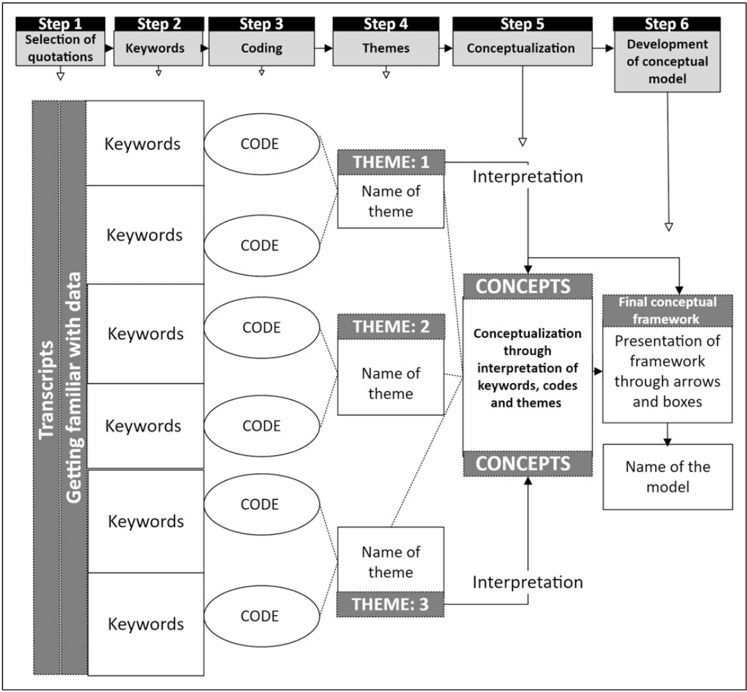
- The paper proposes six steps: transcription/familiarization and quotation selection; keyword selection; coding; theme development; conceptualization through interpretation of keywords, codes, and themes; and development of a conceptual model.
- It introduces 6Rs for keyword selection (realness, richness, repetition, rationale, repartee, regal), 6Rs for coding (robust, reflective, resplendent, relevant, radical, righteous), and 4Rs for theming (reciprocal, recognizable, responsive, resourceful).
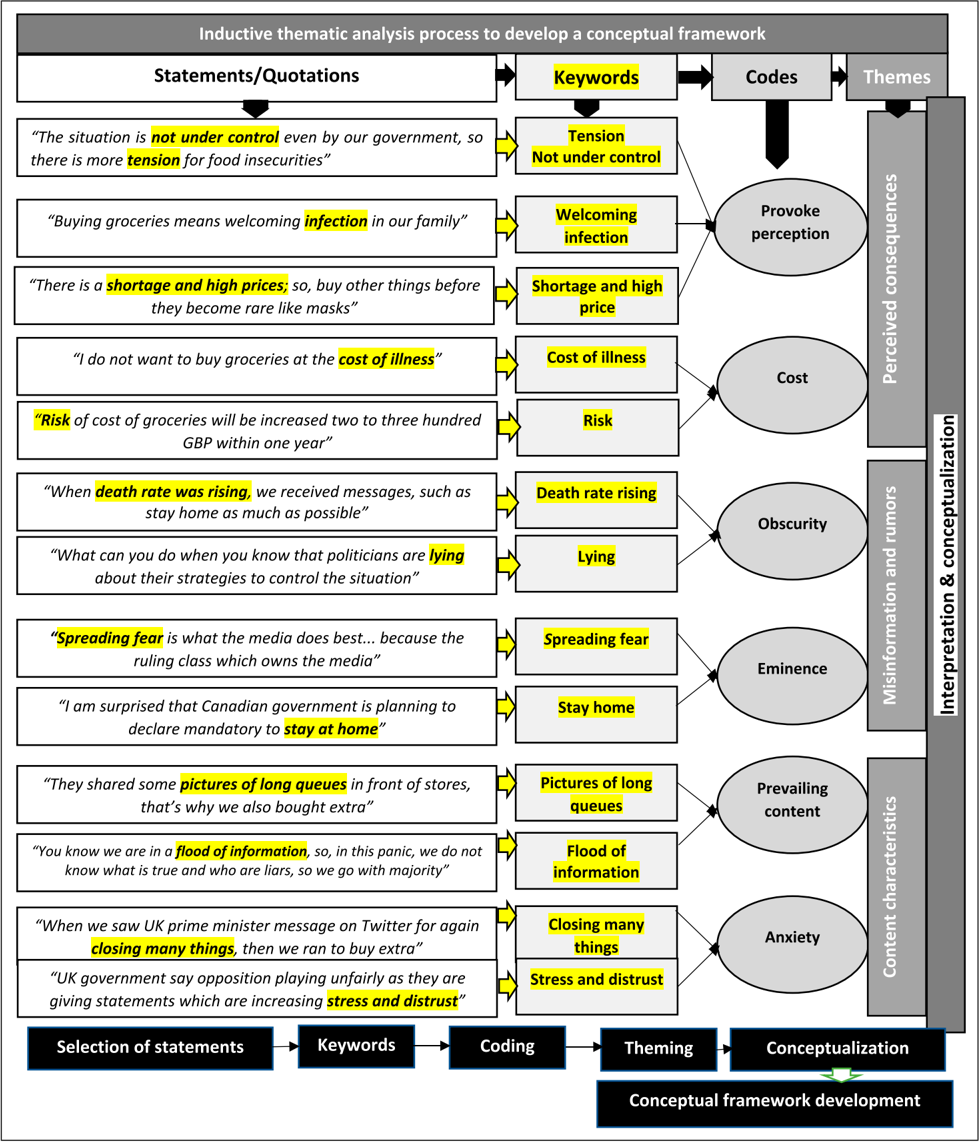
- In the exemplar study, three main themes emerged: “Perceived consequences” from codes “Provoke perception” and “Cost”; “Misinformation and rumors” from codes “Obscurity” and “Eminence”; and “Content Characteristics” from codes “Prevailing content” and “Anxiety.”
- The exemplar’s final model, “Panic buying as social practice,” was based on Protection Motivation Theory (PMT) and the Theory of Rumor Transmission (TORT).
Methods
- Design: a methodological/conceptual paper that presents a comprehensive systematic model for thematic analysis culminating in a conceptual model, using Naeem and Ozuem (2022a) as an exemplar.
- Exemplar data: qualitative data gathered from Twitter, YouTube, and interviews; the exemplar used a six-stage thematic analysis and a social constructionist perspective with PMT and TORT as theoretical foundations.
- Main analysis: the paper describes each of the six steps in detail, provides practical examples from the exemplar, and compares the proposed process with Braun and Clarke’s (2006) six steps of thematic analysis.
Limitations
- The paper states that the potential of the process to address other research contexts or quantitative methods may require further exploration, and that the efficiency of the method compared with other model-building approaches has not been empirically tested.
- Evident from the text: the proposed six-step process and the 6Rs/4Rs are illustrated through a single exemplar study and are not independently validated or empirically compared with alternative thematic analysis approaches.
Model-written summary. Check it against the paper before relying on it.
Integrity signals
Registry
Cites
Statistics
Figures

Verification
Claims the paper makes
0 Valid · 4 Not valid · 56 Not checked · 89 Own results and interpretations
The cited sources that could be checked couldn’t confirm or dispute this claim.
In the paper
“For narrative approaches, conceptual model development focuses on personal experiences, emotions, and life histories (Eldh et al., 2020).”
§ A Step-by-Step Process of Thematic Analysis to Develop a Conceptual Model in Qualitative Research > Step 6: Development of Conceptual Model.
What the sources say
- Could not verifycites Eldh et al., 2020 matched to “Quotations in Qualitative Studies: Reflections on Constituents, Custom, and Purpose” (2020) sourceExperimental — accuracy not yet measured
The Discussion and Conclusions (page numbers unavailable) address how quotations can illustrate qualitative analysis and findings. A search for narrative approaches, conceptual model development, emotions, and life histories found no passage addressing the attributed claim. (LLM, conf=0.72)
plainstates an association- Asserted: passes — The authors put it forward as true.
- Checkable: passes — It can be checked against evidence.
- Load-bearing: unclear — It is unclear whether the paper’s conclusions depend on it.
- Based: passes — The paper gives a reason why it holds.
- Could not verify
In the paper
“The analytical process balances between descriptive analysis, which outlines patterns or trends, and interpretive analysis, which offers subjective perspectives (Miles & Huberman, 1994, p. 56).”
§ A Step-by-Step Process of Thematic Analysis to Develop a Conceptual Model in Qualitative Research > Step 2: Selection of Keywords.
What the sources say
- Not matchedcites Miles & Huberman, 1994, p. 56
An author–year citation the paper’s reference list doesn’t settle. We don’t search these by name.
plain- Asserted: passes — The authors put it forward as true.
- Checkable: passes — It can be checked against evidence.
- Load-bearing: passes — The paper’s conclusions depend on it.
- Based: passes — The paper gives a reason why it holds.
- Not matched
In the paper
“However, the thematic analysis approach could also fit a post-positivist paradigm (Howell, 2012, p. 30).”
§ A Step-by-Step Process of Thematic Analysis to Develop a Conceptual Model in Qualitative Research > Step 2: Selection of Keywords.
What the sources say
- Not matchedcites Howell, 2012, p. 30
An author–year citation the paper’s reference list doesn’t settle. We don’t search these by name.
hedgedstates an association- Asserted: passes — The authors put it forward as true.
- Checkable: passes — It can be checked against evidence.
- Load-bearing: unclear — It is unclear whether the paper’s conclusions depend on it.
- Based: passes — The paper gives a reason why it holds.
- Not matched
In the paper
“Hence, quotation selection is not simply a mechanical task but is influenced by the researcher's philosophical and theoretical approach (Jackson & Mazzei, 2012).”
§ A Step-by-Step Process of Thematic Analysis to Develop a Conceptual Model in Qualitative Research > Step 1: Transcription, Familiarization With the Data, and Selection of Quotations.
What the sources say
- Not matchedcites Jackson & Mazzei, 2012
An author–year citation the paper’s reference list doesn’t settle. We don’t search these by name.
plainstates a cause- Asserted: passes — The authors put it forward as true.
- Checkable: passes — It can be checked against evidence.
- Load-bearing: passes — The paper’s conclusions depend on it.
- Based: passes — The paper gives a reason why it holds.
- Not matched
A conclusion the paper draws from its own results — it cites no other source for it, so there is none to check. The quote shows it is in the paper.
In the paper
“Thus, keywords serve as a critical bridge between data and themes in different methodologies.”
§ A Step-by-Step Process of Thematic Analysis to Develop a Conceptual Model in Qualitative Research > Step 4: Theme Development.
boostedstates an association- Asserted: passes — The authors put it forward as true.
- Checkable: passes — It can be checked against evidence.
- Load-bearing: unclear — It is unclear whether the paper’s conclusions depend on it.
- Based: passes — The paper gives a reason why it holds.
10 more claims
Create a free account to see all 149 claims and every source verdict.
- It may state two separate claims as one. 54
- Probably not a substantial claim. 128
Claims other papers make about this one
Each is checked against this paper’s own text: does it say what the citing paper says it does?
The source backs part of the claim, not all of it — or backs it for a different population, condition or comparison.
In the citing paper
“With the identified keywords, initial coding was further informed by and cross-referenced to the literature on AI ethics and governance, particularly addressing public concerns in government AI, alongside the author team's collective expertise in AI-driven digital transformation in public administration.”
From Accountability in Government Use of AI : Citizen Concerns and Preferences (2025) · cites this paper as Naeem et al. 2023
Experimental — accuracy not yet measuredThe source backs part of the claim, not all of it — or backs it for a different population, condition or comparison.
In the citing paper
“Thematic analysis is a highly popular technique among qualitative researchers for analyzing qualitative data, which usually comprises thick descriptive data (Naeem et al., 2023).”
From The Psycho-Emotive Effects of AI-Generated Fake News on Social Media Users (2026) · cites this paper as Naeem et al., 2023
Experimental — accuracy not yet measuredThe cited source says what the claim attributes to it.
In the citing paper
“The selection of keywords was guided by the 6Rs framework-Realness, Richness, Repetition, Rationale, Repartee, and Regal-to ensure they accurately represented the essence of the data (Naeem et al. 2023).”
From Accountability in Government Use of AI : Citizen Concerns and Preferences (2025) · cites this paper as Naeem et al. 2023
The cited source says what the claim attributes to it.
In the citing paper
“The data were analyzed through Naeem et al.'s (2023) six-step thematic analysis process to develop a conceptual framework (Naeem & Ozuem, 2022).”
From “It’s Not Just About Competition – It’s Ceremony”: Introducing the Embedded Indigeneity Framework for Understanding Identity, Mission, and Practice in TCU and NASNTI Athletics (2026) · cites this paper as Naeem et al. (2023)
The cited source says what the claim attributes to it.
In the citing paper
“The selected methodology was implemented due to the end results that 1) presented a novel conceptual framework and 2) serves as a contextually specific extension of existing theory/theories (Naeem et al., 2023).”
From “It’s Not Just About Competition – It’s Ceremony”: Introducing the Embedded Indigeneity Framework for Understanding Identity, Mission, and Practice in TCU and NASNTI Athletics (2026) · cites this paper as Naeem et al., 2023
Self-check
Percentages, sums and reported differences re-computed from the paper’s own numbers.
Each contradiction between two passages listed here was confirmed by an independent check.
Rated minor: it would not touch a result — a value no result rests on, a p-value that stays on the same side of the significance level, or a conflict that is clerical, resolved elsewhere in the paper, or outside its own findings.
In the paper
§ A Step-by-Step Process of Thematic Analysis to Develop a Conceptual Model in Qualitative Research > Step 6: Development of Conceptual Model.
“Positivism, which favours inductive methods, builds its model on top of previously established theories and conducts its experiments in an unbiased manner.”
§ A Step-by-Step Process of Thematic Analysis to Develop a Conceptual Model in Qualitative Research > Step 6: Development of Conceptual Model.
“An inductive approach is primarily data-driven, whereby themes are derived from the data itself without the influence of pre-existing theories (Braun & Clarke, 2006).”
Citations
Cites
Using thematic analysis in psychology
Braun, V., & Clarke, V. (2006) · Qualitative Research in Psychology · doi:10.1191/1478088706qp063oa · Cited by 194,414
Qualitative Data Analysis: An Expanded Sourcebook
(1994) · Journal of Environmental Psychology · doi:10.1016/s0272-4944(05)80231-2 · Cited by 48,420 · cited 2×
“In the coding process, consideration of keywords helps in multiple ways: The analytical process balances between descriptive analysis, which outlines patterns or trends, and interpretive analysis, which offers subjective perspectives (Miles & Huberman, 1994, p. 56).”
Lincoln, Y. S., Guba, E. G., & Pilotta, J. J. (1985) · International Journal of Intercultural Relations · doi:10.1016/0147-1767(85)90062-8 · Cited by 45,787 · cited 1×
“…degrees of subjectivity and objectivity has underscored the fl exibility intrinsic to research methodologies and highlighted that these tools of analysis are intimately intertwined with, and, indeed, emerge from the distinctive nature of speci fi c disciplines and perspectives (Lincoln & Guba, 1985).”
BackgroundThe Discovery of Grounded Theory: Strategies for Qualitative Research
Glaser, B. G., & Strauss, A. L. (2017) · Aldine (Routledge reprint) · doi:10.4324/9780203793206 · Cited by 25,789
The qualitative content analysis process
Elo, S., & Kyngäs, H. (2008) · Journal of Advanced Nursing · doi:10.1111/j.1365-2648.2007.04569.x · Cited by 22,617 · cited 1×
“Deductive coding, linked with descriptive analysis, is a top-down approach where pre-existing theories, models, or codes guide the data analysis (Elo & Kyng¨as, 2008).”
Method(2009) · Cited by 21,330
Reflecting on reflexive thematic analysis
Braun, V., & Clarke, V. (2019) · Qualitative Research in Sport, Exercise and Health · doi:10.1080/2159676x.2019.1628806 · Cited by 19,677
(1998) · Medical Entomology and Zoology · Cited by 18,397
(2014) · Cited by 15,747
S., N. L. (2017) · doi:10.1177/1609406917733847 · Cited by 14,051 · cited 3×
“· Robust: Coding should convey the true essence of data in a theoretical manner (Nowell et al., 2017).”
Background
Research works printed but not linked: 9
- 1. Arar, K. (2017). The what's and why's of the how to of qualitative research. Qualitative Report, 22(11), 2956-2958.
- 16. Creswell, J. W. (2012). Educational research. Pearson.
- 19. Denzin, N. K., & Salvo, J. (2020). New directions in theorizing qualitative research: Theory as resistance. Myers Education Press.
- 62. Oliver, P. (2021). Using qualitative methods to answer your research question (First). Open University Press.
- 63. Patton, M. Q. (2015). Qualitative research & evaluation methods: Integrating theory and practice (fourth). Sage Publications, Inc. Qualitative research (pp. 273-290). Sage.
- 67. Saldana, J. (2021). The coding manual for qualitative researchers (Fourth). Sage.
- 68. Saldana, J. M. (2016). The coding manual for qualitative researchers (4rd ed.). Sage Publications.
- 74. Seale, C. (2013). Qualitative research practice. In C. Seale, G. Gobo, J. Gubrium, & D. Silverman (Eds.), Concise paperback. Sage.
- 80. Tracy, S. J. (2019). Qualitative research methods: Collecting evi- dence, crafting analysis, communicating impact (2nd ed.). Wiley Blackwell.
Cited by
Items 601–700 of 2,204
Professionalization of resort hotel managers: a realistic prospect?
Karsavuran, Z., & Özdemir, B. (2025) · Journal of Hospitality and Tourism Management · doi:10.1016/j.jhtm.2025.101312 · Cited by 2
Kasujja, I., Asiimwe, J. K., Melgar-Quiñonez, H. R., Lund, C., & Salisbury, T. T. (2026) · Cambridge Prisms Global Mental Health · doi:10.1017/gmh.2026.10232 · Cited by 2
“This categorisation drew on established social causation and social drift principles and was applied using explicit decision rules to ensure consistency and conceptual clarity in theory-driven coding (Naeem et al., 2023).”
Abu‐Gweder, A. (2026) · Journal of Interdisciplinary Studies in Education · doi:10.32674/2wa8cr51 · Cited by 1
Black Relational Methodology: Sustaining Nuanced Joy in Educational Knowledge Co-Creation
Stewart, N. D., Green, M. L., Crowder, O. K., & Turner, E. (2024) · International Journal of Qualitative Methods · doi:10.1177/16094069241282847 · Cited by 3
Black, H. M., & Neill, J. T. (2024) · Journal of Outdoor and Environmental Education · doi:10.1007/s42322-024-00184-2 · Cited by 2
Nada, I. P., & Bonacina, S. (2026) · Scientific Reports · doi:10.1038/s41598-026-53570-9 · Cited by 1
Exploring the Scheduled Tribe Parental Perspectives on Fortifying Family Bonds
Tete, R. R., & Sathiyaseelan, A. (2025) · International Journal of Systemic Therapy · doi:10.1080/2692398x.2025.2526276 · Cited by 2
“The findings highlighted key themes and patterns from the systematic analysis, which were compiled into an extensive report (Naeem et al., 2023).”
Designing a Fully Online Work‐Integrated Learning Module for Craniofacial Orthodontics
Ghabrial, E., van Wyk, M., & Postma, T. C. (2025) · European Journal Of Dental Education · doi:10.1111/eje.70000 · Cited by 1
“…(Figure 1), a thematic analysis was performed, similar to the novel six-step process for conceptual model development in qualitative research (Figure 2) [38], to determine the universal needs of educators/lecturers and students in typical orthodontic qualifications or certified examinations.”
Thomas, K. K., Crawford, A. D., Siegler, A., Smith, M. K. S., Roane, A., Putter, K. C., & Shlafer, R. J. (2025) · Breastfeeding Medicine · doi:10.1177/15568253251364885 · Cited by 1
“13,14 This analysis draws on data collected as part of a 5-year mixed-methods longitudinal study examining perinatal support services in seven geographically diverse state prisons (Alabama [AL], Arkansas [AR], Connecticut [CT], Georgia [GA], Michigan [MI], Minnesota [MN], and Virginia [VA]).”
Contemporary and Future Manufacturing – Unveiling the Skills Palette for Thriving in Industry 5.0
Pinzone, M., Braun, G., & Stahre, J. (2024) · IFIP advances in information and communication technology · doi:10.1007/978-3-031-65894-5_31 · Cited by 6
Wazze, S. E., Mondal, S., & Sandal, S. (2026) · JMIR Research Protocols · doi:10.2196/90059 · Cited by 1
“An inductive and deductive approach emerges by using the existing DERRM framework to fit our data into an a priori concept [73,74] while also allowing for any new themes and codes to emerge through a close reading of the data [72,75, 76].”
Wolf, H. M., Candotti, F., Spelsberg, R., et al. (2026) · Frontiers in Immunology · doi:10.3389/fimmu.2026.1763482 · Cited by 1
Peer Tutoring to Improve the Speaking Proficiency of Multiage EFL Students
Ariesinta, D., & Widyantoro, A. (2024) · IJEE (Indonesian Journal of English Education) · doi:10.15408/ijee.v11i1.35087 · Cited by 5
Voorneveld, M. S. E., Bakker, N., Vlieland, T. P. M. V., Hutting, N., Knoop, J., & van Weely, S. F. E. (2026) · Disability and Rehabilitation · doi:10.1080/09638288.2025.2610469 · Cited by 1
“…was conducted using the following steps: 1) The researchers (NB, MV) familiarized themselves with the data and created a codebook based on existing literature, specifically findings from the focus group study conducted during the intervention development phase [24] (deductive analysis) [43,45].”
Kanganga, R., & Mtotywa, M. M. (2026) · Cogent Business & Management · doi:10.1080/23311975.2026.2620163 · Cited by 1
Chua, J., Slater, H., Rowbotham, S. J., Klem, N.-R., Lord, S. M., O’Sullivan, P., Tory, B., Smith, A. J., Stinson, J., Hansen, P., et al. (2025) · Disability and Rehabilitation · doi:10.1080/09638288.2025.2585762 · Cited by 3
“Table 1. summary of how the six-step method for data analysis, guided by naeem and colleagues [46], was applied in the current study. step(s) Description 1 two authors (JC, sR) read through all transcripts to gain an understanding of the data.”
LaMarca, A., Larsen, G., Lyons, K. D., & Keysor, J. J. (2025) · Healthcare · doi:10.3390/healthcare13192485 · Cited by 1
“The coders then looked for patterns and created themes [54,55].”
Quique, Y. M., Martínez, A. M. M., Almeida, G., Chávez, L., & Mejía, Ó. M. A. (2025) · Aphasiology · doi:10.1080/02687038.2025.2519332 · Cited by 1
“Following Naeem et al. (2023), the initial codes combined the steps of selection of quotations, keywords, and code assignment capturing core messages using the first interview.”
Halat, K., Childe, S. J., Golding, N., & Summerscales, J. (2026) · Environmental Management · doi:10.1007/s00267-026-02521-1 · Cited by 2
“Qualitative data from open-ended survey responses and semi-structured interviews were analysed using thematic coding (Naeem et al., 2023).”
McCullough, E., Zulaika, G., Osire, E. A., Akinyi, C., Otieno, F., Phillips‐Howard, P. A., Mehta, S. D., & Mason, L. (2026) · Frontiers in Reproductive Health · doi:10.3389/frph.2026.1817624 · Cited by 1
“The analysis was conducted using a thematic framework approach chosen due to the absence of preconceived theories and because it offers a flexible approach suitable for the complexity and diversity of the data (44 – 46).”
Abidin, Z. Z. (2025) · Education for Chemical Engineers · doi:10.1016/j.ece.2025.100495 · Cited by 1
Theoretical Frameworks for Analyzing Social Dynamics
Pappachan, P., Purshewar, P., & Rahaman, M. (2025) · IGI Global eBooks · doi:10.4018/979-8-3693-8628-6.ch007 · Cited by 1
Chakraborty, S., & Thakur, N. (2024) · Preprints.org · doi:10.20944/preprints202407.2168.v1 · Cited by 1
Educational psychology of teachers and students in crisis-driven innovation environments
Nevoenna, O., Manchuk, V., Лунченко, Н., Зеленін, В., & Товстуха, О. (2025) · EDUWEB · doi:10.46502/issn.1856-7576/2025.19.04.3 · Cited by 1
“This method was chosen for its ability to capture rich, narrative-driven data, allowing participants to articulate their emotional experiences in their own words, while also giving the interviewer the flexibility to probe for depth and clarification where necessary (Adams, 2015; Naeem et al., 2023).”
Mears, K., & Ashwin, C. (2025) · International Journal of Transgender Health · doi:10.1080/26895269.2025.2553741 · Cited by 1
Thaariq, Z. Z. A. (2026) · Review of Education · doi:10.1002/rev3.70163 · Cited by 4
Exploring the Epistemological Significance of Qualitative Research in Behavior Analysis
Arnold-Saritepe, A. M., Leif, E., Carnett, A., Taylor, S. A., Sharp, R. A., & Fox, R. A. (2026) · Behavior Analysis in Practice · doi:10.1007/s40617-025-01127-z · Cited by 3
“Themes are created through an abstract interpretation of the more detailed codes, that look beyond the recurring elements to embody patterns that link the data to the research questions (Naeem et al., 2023).”
Cheng, H. (2026) · Educational Gerontology · doi:10.1080/03601277.2026.2622409 · Cited by 1
Johnson, P. M., Brandes, G. M., Door, V., & Cohen, R. G. (2025) · European Journal of Integrative Medicine · doi:10.1016/j.eujim.2025.102494 · Cited by 1
Quality of life and resilience in individuals with disabilities: a thematic analysis of literature
Liu, X., Zeng, S., & Potměšíl, M. (2025) · Cogent Psychology · doi:10.1080/23311908.2025.2564503 · Cited by 5
“…research, especially in literature. however, it has limitations that must be considered before it can be transferred to authorial practice (naeem et al., 2023). the unevenness of the sample in the included studies: male participants predominated significantly over female participants; for…”
Hanan, D., Astuti, T. S., & Eddyono, L. W. (2025) · Jurnal Konstitusi · doi:10.31078/jk2223 · Cited by 1
Nguyen, H. M., & Dinh, V. H. (2026) · Industrial Management & Data Systems · doi:10.1108/imds-10-2025-1482 · Cited by 1
Nabirye, A. K., Munabi, I. G., Mubuuke, A. G., et al. (2025) · Palliative Care and Social Practice · doi:10.1177/26323524251383085 · Cited by 1
Cinderella on the path at midnight: students on regional university campuses and equity
Carlon, C., Aberdeen, L., Eversole, R., Schmidt, M., Congues, J., & Wrigley, K. (2025) · Higher Education Research & Development · doi:10.1080/07294360.2025.2493249 · Cited by 2
“Thematic analysis (Braun & Clarke, 2022; Naeem et al., 2023) was applied in the workshop to develop a conceptual framework for analysing the interview transcripts.”
Chen, C.-P. (2026) · Qualitative Market Research An International Journal · doi:10.1108/qmr-08-2025-0188 · Cited by 1
Chat, copy, change: prospects and risks of ChatGPT in the teaching and learning process
Juntarciego, M. J. C., Gaboy, R. G., Santos, M. R. H. M. D., & Collantes, L. (2025) · Acta Scientiarum Education · doi:10.4025/actascieduc.v47i1.71533 · Cited by 1
“Thematic Analysis identifies the major themes from the data gathered (Naeem et al., 2023).”
Askew, A., & Aloka, P. J. (2026) · Psichologija · doi:10.15388/psichol.2026.75.2 · Cited by 1
Narsh, H., & Gallegos, D. (2026) · Health Promotion Journal of Australia · doi:10.1002/hpja.70152 · Cited by 1
Hester, E. B. (2024) · American Behavioral Scientist · doi:10.1177/00027642241240358 · Cited by 2
“This technique is well-suited for exploring specific research questions grounded in theory (Miles & Huberman, 1994; Naeem et al., 2023).”
O Cuidado em saúde diante do diagnóstico de sífilis na gestação: percepções de mulheres jovens
Wernet, M., Nakao, P. A., Petruccelli, G., et al. (2025) · Ciência Cuidado e Saúde · doi:10.4025/ciencuidsaude.v24i1.73134 · Cited by 1
Kang, J., Na, C., Diederich, M., Swanson, H., & Yan, L. (2026) · Instructional Science · doi:10.1007/s11251-026-09803-5 · Cited by 4
“Specifically, we developed a coding scheme to guide our systematic coding process, employing a thematic analysis approach (Naeem et al., 2023 ).”
An integrative review of barriers to actionable intersectionality in cancer research
Yap, C.-Y., & Chua, H.-K. (2025) · Discover Public Health · doi:10.1186/s12982-025-01176-3 · Cited by 3
“Guided by predefined review objectives, the analysis followed systematic steps of familiarization, a priori coding, categorization, and theme development [59, 60, 134].”
What Makes a Clinical Expert? A Scoping Review in Medical EducationPreprint
Owens, E., Buchholz, O., Thapliyal, V., & Blasimme, A. (2026) · Research Square · doi:10.21203/rs.3.rs-9469558/v1 · Cited by 1
Peripheries in Podcasting: A Rapper Against the Journalistic Flow
Sarmento, C., & Fraga, P. (2025) · Emerging Media · doi:10.1177/27523543251324591 · Cited by 1
“The principles of this method are not signi fi cantly different from other qualitative analysis techniques, such as discourse analysis (Naeem et al., 2023), but among its main bene fi ts are the method ’ s fl exibility and accessibility.”
Derbyshire, L. E. (2025) · Cogent Business & Management · doi:10.1080/23311975.2025.2603019 · Cited by 3
Vitro, C., Carmichael, C., Doctor, A. C., & Hughes, S. (2025) · Global Crime · doi:10.1080/17440572.2025.2467702 · Cited by 1
“Thematic content analysis is a qualitative research method used to identify and analyse patterns of meaning in a dataset (Naeem et al., 2023, Braun & Clarke, 2006).”
Barry, J., Erb, T. L., & Stelkia, K. (2024) · Qualitative Research Journal · doi:10.1108/qrj-03-2024-0071 · Cited by 3
Disaster capitalism and the political ecology of wildfire recovery in North Evia, Greece
CHATZIKONSTANTINOU, I., & Apostolopoulou, E. (2026) · Geoforum · doi:10.1016/j.geoforum.2026.104537 · Cited by 3
Older Adults’ Social Participation During the COVID-19 Pandemic
Raymond, É., Demers, S., Rivest, F., Milot, É., & Beauchamp, J. (2025) · Activities Adaptation & Aging · doi:10.1080/01924788.2025.2524962 · Cited by 2
“To ensure rigor in the qualitative analytical procedures (Naeem et al., 2023), the coding and categorization operations were conducted with attention to completeness (the coding tree codes and categories permitted the classification of all relevant data), homogeneity (the coding tree was created…”
The experiences of women with endometriosis in the workplace: A qualitative metasynthesis
Hodgins, A. K., & Skamagki, G. (2025) · Journal of Endometriosis and Pelvic Pain Disorders · doi:10.1016/j.physio.2025.101624 · Cited by 2
Cheng, H. (2026) · Acta Psychologica · doi:10.1016/j.actpsy.2026.106388 · Cited by 1
Rakgwata, P. A., & Mphephu, P. (2025) · International Journal of Business Ecosystem and Strategy (2687-2293) · doi:10.36096/ijbes.v7i2.728 · Cited by 2
Graf, A., Henningsen, M., & Zinner, M. (2026) · Exploratory Research in Clinical and Social Pharmacy · doi:10.1016/j.rcsop.2026.100706 · Cited by 2
“18”
Soler, I. G., Florenciano, M. G., & Gómez, M. R. (2026) · Journal of Spanish Language Teaching · doi:10.1080/23247797.2026.2651451 · Cited by 1
Implementing a Trauma-Informed Intervention in a County Jail: Feasibility Study of STAIR
Renn, T., Herod, L., Tripodi, S. J., & Bedard, L. E. (2025) · Research on Social Work Practice · doi:10.1177/10497315251367332 · Cited by 1
“Following best practices for general thematic analysis as outlined by Naeem et al. (2023), qualitative data were analyzed to identify patterns and themes that captured participants ’ experiences with the STAIR intervention.”
Exploring Cybersecurity Challenges, Strategies, and Implications in Healthcare: A Qualitative Study
Mbacop, T. L., Cruz, E. D. L., Nadella, G. S., Le, H., Cruz, A. M. D. L., & Oni, O. (2025) · IEEE Integrated STEM Education Conference (ISEC) · doi:10.1109/isec64801.2025.11147260 · Cited by 1
“This approach allowed themes to emerge naturally from the data while guided by the study’s theoretical frameworks and research questions [39].”
Institutional and structural barriers to sustainable leadership careers in higher education
Lakhno, M., Rageth, L., He, D., & Perich, R. (2026) · Journal of Higher Education Policy and Management · doi:10.1080/1360080x.2025.2606660 · Cited by 7
“We analysed the interview data using a systematic, multi-stage approach in MAXQDA, guided by thematic analysis principles (Naeem et al., 2023) and the procedures outlined by Rädiker and Kuckartz (2020).”
Barriers and facilitators to HIV index contact testing in facility and community settings
Chauke, N. P., Chinyandura, C., Buthelezi, F., Jiyani, A., & Rees, K. (2025) · Southern African Journal of HIV Medicine · doi:10.4102/sajhivmed.v26i1.1733 · Cited by 2
“Data were thematically analysed using the framework established by Braun and Clarke 26 and Braun, Clarke and Rance, 27 following a deductive approach, 28 with the Consolidated Framework for Implementation Research domains serving as predetermined themes.”
Selepe, M. A. (2025) · E-Journal of Humanities Arts and Social Sciences · doi:10.38159/ehass.202561215 · Cited by 1
“37 A qualitative research design was employed to elicit rich, in-depth data in social settings that examined teachers’ perceptions of the topic.”
Chin, C. K., Lee, S. Y., Tudy, R. A., Hasan, R. M., & Soo, K. K. (2025) · European Journal of Sustainable Development Research · doi:10.29333/ejosdr/16573 · Cited by 5
XSec Companions: Exploring the Design of Cybersecurity Companions
Rodriguez, S. D., Winterberg, S. E., Bumiller, F., Dietz, F., Alt, F., & Hassib, M. E. (2025) · European Symposium on Usable Security (EuroUSEC) · doi:10.1109/eurousec69254.2025.00028 · Cited by 1
“Following Naaem et al. [37] and Fife and Gossner [38], we conducted a hybrid thematic analysis (deductive and inductive), grounded in the xSec paradigm [11].”
Vulakh, G., Roth, J. F., & Freedman, S. (2025) · Israel Journal of Health Policy Research · doi:10.1186/s13584-025-00717-0 · Cited by 1
“Thematic analysis further allowed researchers to inductively find patterns across interviews, while remaining attentive to the depth and texture of individual narratives [28].”
Unseen struggles: The psychosocial toll of raising a child with functional neurological disorder
Ahmad, W., Dastagir, M., Azhar, I. A., Ahmad, S., & Batool, S. (2025) · Journal of Shalamar Medical & Dental College - JSHMDC · doi:10.53685/jshmdc.v6i2.337 · Cited by 2
Ferrari, F. (2025) · International Journal of Gender and Entrepreneurship · doi:10.1108/ijge-01-2025-0010 · Cited by 3
The Effect of COVID-19 on a Short-Term Teacher-Education Program: The Israeli Case
Fisher, Y., Schatz‐Oppenheimer, O., & Elyashiv, R. A. (2024) · Education Sciences · doi:10.3390/educsci14090958 · Cited by 1
How did the Beatles impact cultural movement on different generations?
Coman, C., Meseșan-Schmitz, L., Dobrescu, A. I., & Bătrânu-Pințea, V. (2025) · Frontiers in Communication · doi:10.3389/fcomm.2024.1525016 · Cited by 1
“In the qualitative data analysis during the second stage of the research, we used thematic analyses (Naeem et al., 2023), open coding procedures (Flick, 2014; Strauss and Corbin, 1990) to code representative quotations, which were then transformed into categories such personal development and…”
Mukherjee, S., & Ray, S. (2024) · Sexualities · doi:10.1177/13634607241305111 · Cited by 1
“It further ensures thoroughness and limits potential bias (Naeem et al., 2023).”
Lipinsky, A., Pereira, B. C. J., & Sotirovič, V. P. (2025) · Social Inclusion · doi:10.17645/si.9825 · Cited by 3
“Because of its many advantages (Braun & Clarke, 2006, pp. 96–97; Naeem et al., 2023), thematic analysis was chosen as the main technique for “thematising meaning” (Braun & Clarke, 2006, p. 78) to “unravel the surface of reality” (Braun & Clarke, 2006, p. 81) of intersectional discrimination.”
Recognition of Effective Co-Teaching Practices by Interdisciplinary Pre-Service Candidates
Wakeman, S. Y., Johnson, H. N., Ouedraogo, K., & Sinclair, K. A. (2024) · Trends in Higher Education · doi:10.3390/higheredu3040056 · Cited by 5
Who do children trust? AI vs. human recommendations and the role of anthropomorphic design
Lin, R., Chen, Y., & Guan, M. (2026) · Technological Forecasting and Social Change · doi:10.1016/j.techfore.2026.124707 · Cited by 2
Valverde, F. A. N., & Özen, N. Ö. (2025) · European Planning Studies · doi:10.1080/09654313.2025.2496415 · Cited by 1
Besana, H. C., Panerio, M.-C., & Marayag, P. (2025) · Psychology and Education A Multidisciplinary Journal · doi:10.70838/pemj.411004 · Cited by 1
Bustamante, D., Pineda, A. A. L., Cano, J. A., & Weyers, S. (2025) · Sustainability · doi:10.3390/su17219757 · Cited by 9
The DECADE learning model: Integrating learning theories in mathematics education
Putra, F. G., Sutiarso, S., Nurhanurawati, N., Hariri, H., Caswita, C., & Maulina, D. (2026) · Indonesian Journal of Science and Mathematics Education · doi:10.24042/ijsme.v9i1.30746 · Cited by 3
Kanade, T. M., Batule, R. B., Savale, T. K., Joseph, J. S., & Crasto, C. (2025) · Journal of Lifestyle and SDGs Review · doi:10.47172/2965-730x.sdgsreview.v5.n02.pe03652 · Cited by 2
Massima, D. N., & Kyei–Nuamah, D. (2026) · Education 3-13 · doi:10.1080/03004279.2026.2625699 · Cited by 3
Suleiman, Y. (2024) · Journal of Education in Black Sea Region · doi:10.31578/jebs.v9i2.318 · Cited by 8
“Naeem et al. (2023) opined that thematic analysis allows researchers to systematically identify and organize patterns, themes, and concepts within qualitative data.”
BackgroundExploring the synergies between digitalization and decarbonization: From data disclosure perspective
Han, N., Liu, P., Zhao, D., et al. (2025) · Energy · doi:10.1016/j.energy.2025.139368 · Cited by 1
Rennie, J. (2026) · The International Sports Law Journal · doi:10.1007/s40318-026-00348-w · Cited by 1
Broden, E. G., Michelson, K. N., Feder, S. L., Marr, J. W., Al-Roub, N., Gouda, S. R., Jones, A. M., Schopen, A., Tapper, A. K., Pasek, T. A., et al. (2026) · Intensive and Critical Care Nursing · doi:10.1016/j.iccn.2026.104498 · Cited by 2
Gani, S. M. A., Thangiah, N., & Aiga, H. (2025) · Health Policy and Planning · doi:10.1093/heapol/czaf034 · Cited by 3
“Then, the codes following a similar pattern or meaning were gathered into a theme (Braun and Clarke 2006, Naeem et al .”
Deng, H., Chen, F. T., & Piazzoni, F. (2026) · Journal of Urban Design · doi:10.1080/13574809.2026.2629320 · Cited by 1
Jupowicz-Ginalska, A., & Gober, G. (2024) · Polish Political Science Review · doi:10.2478/ppsr-2024-0008 · Cited by 1
An Analysis of Pregnancy-Related Anxiety Using a Biopsychosocial Approach
Wulandatika, D., Fatimah, S., Hariyono, D. S., Afifah, R. A. N., & Azkiya, N. (2026) · Journal of Public Health Sciences · doi:10.56741/iistr.jphs.001081 · Cited by 1
“Qualitative data analysis followed the thematic analysis framework developed by Braun and Clarke [25].”
Adugna, Y. M., Ayelign, A., & Zerfu, T. A. (2025) · Nutrition Research and Practice · doi:10.4162/nrp.2025.19.5.815 · Cited by 1
“This point was observed after the 6th focus group discussion (FGD) and the 10th in-depth interview (IDI), at which stage subsequent data collection confirmed recurring patterns without yielding additional themes [28,29].”
Keenavinna, H., & Wickramarachchi, R. (2025) · International Research Conference on Smart Computing and Systems Engineering (SCSE) · doi:10.1109/scse65633.2025.11030960 · Cited by 1
“Finally, a thematic map was created to visually represent the relationships between the identified themes and concepts, organizing the findings into a comprehensible framework that clarified the factors influencing Industry 5.0 readiness [26].”
InfluentialProuska, R., Kozhakhmet, S., Sabytkhanova, M. Z., & Wheeler, F. (2026) · Personnel Review · doi:10.1108/pr-02-2025-0143 · Cited by 3
Alotaibi, A. M., AlJahlan, A. A., Alharbi, G., et al. (2025) · SSRN Electronic Journal · doi:10.2139/ssrn.5340767 · Cited by 1
Assessing morbidity management and disability prevention for lymphatic filariasis in India
Bashar, M. A., Singh, A., & Prajitha, K. C. (2026) · Public Health Action · doi:10.5588/pha.26.0047 · Cited by 1
Wruk, A., & Ding, X. (2025) · Biannual Conference of the Italian SIGCHI Chapter (CHItaly) · doi:10.1145/3750069.3750108 · Cited by 1
Evaluating Pedestrian Behaviors and Safety Risks at Unsignalized Mid-Block Crossings in Colombo
Yokarasa, T., & Sivakumar, T. (2025) · Moratuwa Engineering Research Conference (MERCon) · doi:10.1109/mercon67903.2025.11217106 · Cited by 1
Iliyasu, Z., Ilesanmi, R. T., Umar, A. A., Kwaku, A. A., Tsiga-Ahmed, F. I., Abdullahi, H. M., Amole, T., Iliyasu, B. Z., Salihu, H. M., & Aliyu, M. H. (2026) · AIDS and Behavior · doi:10.1007/s10461-026-05217-z · Cited by 1
Tefera, G. M., Winter, V. R., Varol, S., Terhaar, A., Ngondwe, P., Anderson, S., & Trout, K. E. (2026) · Social Science & Medicine · doi:10.1016/j.socscimed.2026.119361 · Cited by 2
Rà soát chính sách thực hiện kinh tế tuần hoàn trong các nhóm ngành kinh tế trọng tâm
Công, T., Diệu, H. N., Mạnh, H. P., et al. (2025) · Tạp chí Kinh tế và Phát triển · doi:10.33301/jed.vi.2175 · Cited by 1
Mie: An interactive and personalized intervention to prevent the Sunday blues
Commissaris, D., Peng, Z., & Hu, J. (2025) · International Conference on Human-Engaged Computing (ICHEC) · doi:10.1145/3786995.3787050 · Cited by 1
“All audio recordings were transcribed and analysed using a simplified version of the thematic analysis [21].”
Neely, S. H., Nunes, R. M., Garcia, A., Donate, C., Benabentos, R., McCartney, M. L., & Siltberg-Liberles, J. (2025) · Journal of Microbiology and Biology Education · doi:10.1128/jmbe.00048-25 · Cited by 2
Lam, Y. K. A., Fleming, L., Nelson, J., Pithavadian, R., Mpofu, E., Hossain, Z. S., Liamputtong, P., Aibangbee, M., & Dune, T. M. (2026) · Sexuality Research and Social Policy · doi:10.1007/s13178-025-01271-9 · Cited by 1
Phahlamohlaka, N. M., Engel-Hills, P. C., & Friedrich-Nel, H. (2025) · Health SA Gesondheid · doi:10.4102/hsag.v30i0.3047 · Cited by 1
Sebastian, A. J. (2025) · Conservation Biology · doi:10.1111/cobi.14441 · Cited by 1
“To analyze data, I used a systematic thematic analysis approach (Naeem et al., 2023).”
Metadata
- Authors
- Naeem, M., Ozuem, W., Howell, K., & Ranfagni, S.
- Affiliations
- University of Gloucestershire (GB)
- University of Cumbria (GB)
- Northumbria University (GB)
- University of Florence (IT)
- Corresponding author
- Naeem, Muhammad
- Venue
- International Journal of Qualitative Methods
- Publisher
- SAGE Publications
- Published
- 2023-10
- Volume
- 22
- ISSN
- 1609-4069 (ISSN-L)
- OpenAlex
- W4388503650
- Cited by
- 2,243
- References
- 71
- Citations by year
- 2026: 1000 · 2025: 981 · 2024: 258 · 2023: 4
- FWCI
- 1654.78
- Type
- journal article
- Language
- en
- Open access
- gold
- doi.org
- Licence
- Locations
- International Journal of Qualitative Methods (publishedVersion, cc-by-nc)
- Insight (University of Cumbria) (acceptedVersion)
- DOAJ (DOAJ: Directory of Open Access Journals) (submittedVersion, cc-by-sa)
- Florence Research (University of Florence) (submittedVersion)
- Topics
- Social Sciences › Education › Qualitative Research Methods and Applications
- Social Sciences › Sociology and Political Science › Qualitative Research Methods and Ethics
- Social Sciences › General Social Sciences › Computational and Text Analysis Methods
- Keywords
- thematic analysis, conceptual modeling, qualitative data analysis, inductive coding, deductive coding, grounded theory, interpretive phenomenology, constructivist research, positivist research, theoretical conceptualization, replicability
About these checks
Registry, retraction, Cites and statistics results are computed, not judged, with one exception: a printed reference that no index lists is read once by a model before it counts as a citation error. Claims are extracted by a model and kept only when their quote appears verbatim in the text; each cited source is then checked, with a model’s help, for whether it says what the claim relies on. Those verdicts can be wrong — read the claim’s quote and the cited source before relying on one.
The claim verdicts this report counts are experimental: their accuracy is not yet measured.
A language model drew the claims from the paper on 2026-10-10, under version 3 of the claim definition (model deepseek-v4.1-flash, prompt extract-v3).
A second model labelled each claim on 2026-10-10 (model jev-1.13-20260917, definition revision gold-guideline-v0.2).
Cited sources are checked with a language model’s help (gpt-6-sol).
Statistics and arithmetic are recomputed, not judged.
Confidence bands are shown only for fields calibrated on our annotated test set. None is calibrated yet, so no band is shown.
What counts as a claim ›How we measure confidence ›How we check this ›
Are you an author, or do you see a problem with this page? Request a review
Data sources
Bibliographic data: Semantic Scholar, OpenAlex, Crossref.
Contains information from the Semantic Scholar Academic Graph Datasets, made available under the ODC Attribution License (ODC-BY 1.0).
Semantic Scholar’s data is described in: Kinney, R., et al. (2023). The Semantic Scholar Open Data Platform. arXiv:2301.10140.
