

A Step-by-Step Process of Thematic Analysis to Develop a Conceptual Model in Qualitative Research
Open accessThe DOI matches its Crossref record; 77 of the 78 references it cites were found in a registry or an index, and 1 are not checked yet; 2 of the 57 sources its claims cite were checked for support.
Abstract
Thematic analysis is a highly popular technique among qualitative researchers for analyzing qualitative data, which usually comprises thick descriptive data. However, the application and use of thematic analysis has also involved complications due to confusion regarding the final outcome’s presentation as a conceptual model. This paper develops a systematic thematic analysis process for creating a conceptual model from qualitative research findings. It explores the adaptability of the proposed process across various research methodologies, including constructivist methodologies, positivist methodologies, grounded theory, and interpretive phenomenology, and justifies their application. The paper distinguishes between inductive and deductive coding approaches and emphasizes the merits of each. It suggests that the derived systematic thematic analysis model is valuable across multiple disciplines, particularly in grounded theory, ethnographic approaches, and narrative approaches, while also being adaptable to more descriptive, positivist-based methodologies. By providing a methodological roadmap, this study enhances the rigor and replicability of thematic analysis and offers a comprehensive strategy for theoretical conceptualization in qualitative research. The contribution of this paper is a systematic six-step thematic analysis process that leads to the development of a conceptual model; each step is described in detail and examples are given.
Verified 2026-11-22 · 1 reference not checked yet
Overview
CoChat Summary
TL;DR
This methodological paper presents a six-step systematic thematic analysis process for developing a conceptual model from qualitative data, illustrated with Naeem and Ozuem’s (2022a) panic-buying study. It introduces 6Rs for keyword selection, 6Rs for coding, and 4Rs for theming to enhance rigor and trustworthiness.
Key findings
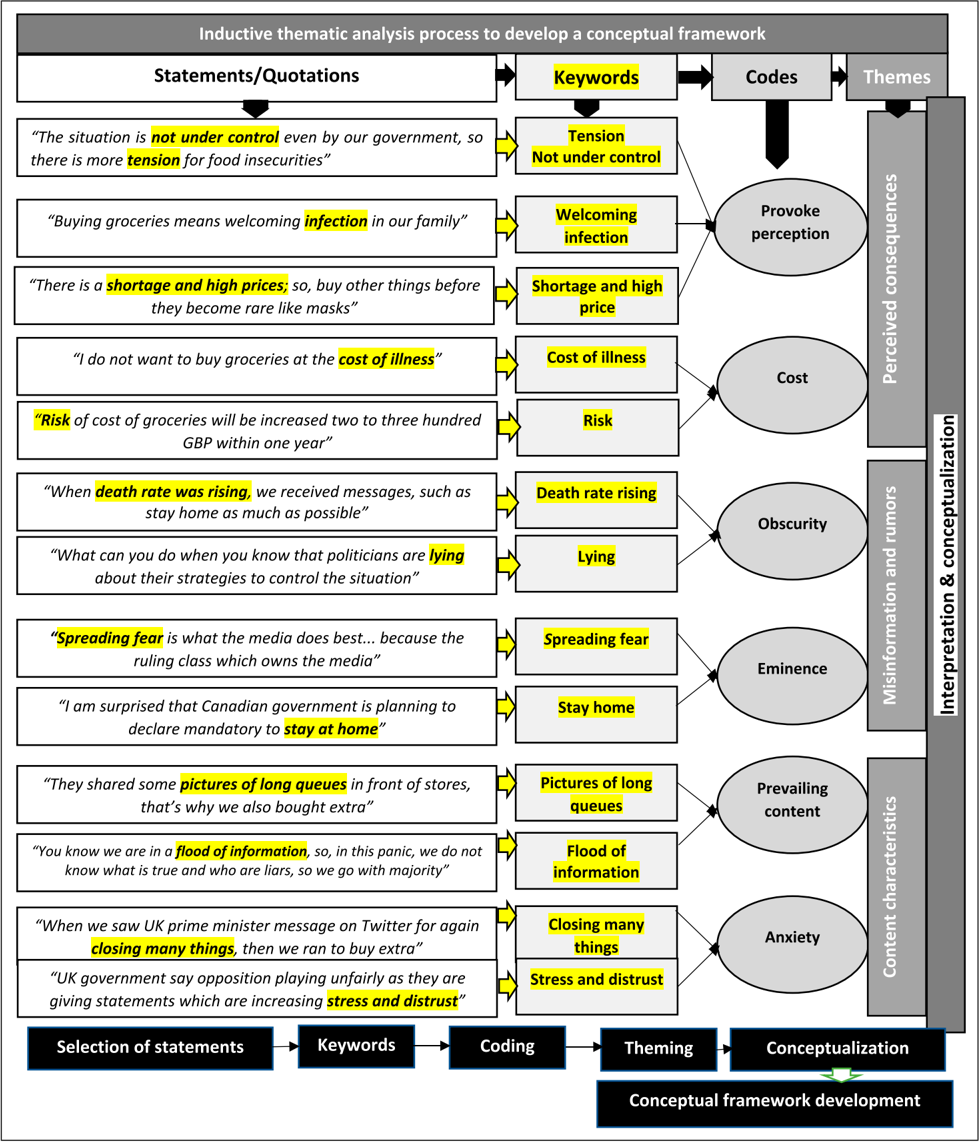
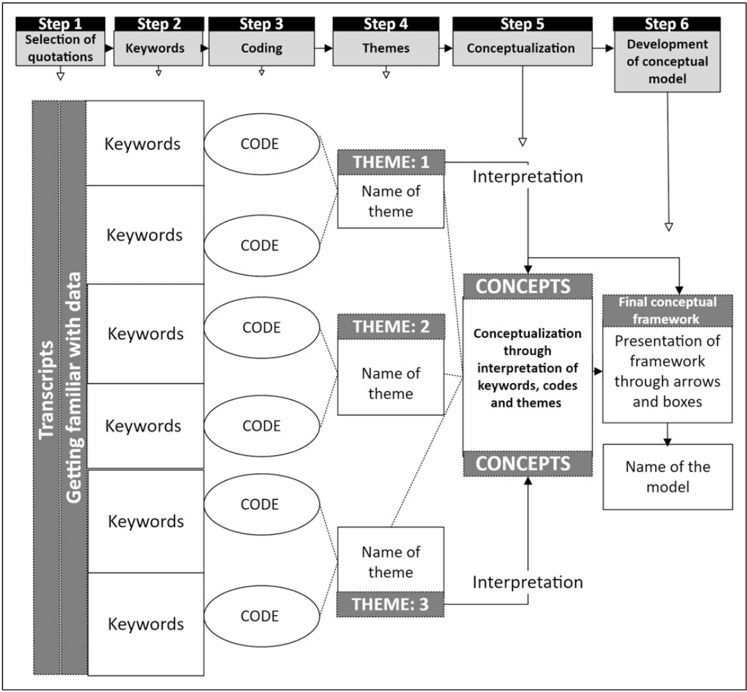
- The paper proposes six steps: transcription/familiarization and quotation selection; keyword selection; coding; theme development; conceptualization through interpretation of keywords, codes, and themes; and development of a conceptual model.
- It introduces 6Rs for keyword selection (realness, richness, repetition, rationale, repartee, regal), 6Rs for coding (robust, reflective, resplendent, relevant, radical, righteous), and 4Rs for theming (reciprocal, recognizable, responsive, resourceful).
- In the exemplar study, three main themes emerged: “Perceived consequences” from codes “Provoke perception” and “Cost”; “Misinformation and rumors” from codes “Obscurity” and “Eminence”; and “Content Characteristics” from codes “Prevailing content” and “Anxiety.”
- The exemplar’s final model, “Panic buying as social practice,” was based on Protection Motivation Theory (PMT) and the Theory of Rumor Transmission (TORT).
Methods
- Design: a methodological/conceptual paper that presents a comprehensive systematic model for thematic analysis culminating in a conceptual model, using Naeem and Ozuem (2022a) as an exemplar.
- Exemplar data: qualitative data gathered from Twitter, YouTube, and interviews; the exemplar used a six-stage thematic analysis and a social constructionist perspective with PMT and TORT as theoretical foundations.
- Main analysis: the paper describes each of the six steps in detail, provides practical examples from the exemplar, and compares the proposed process with Braun and Clarke’s (2006) six steps of thematic analysis.
Limitations
- The paper states that the potential of the process to address other research contexts or quantitative methods may require further exploration, and that the efficiency of the method compared with other model-building approaches has not been empirically tested.
- Evident from the text: the proposed six-step process and the 6Rs/4Rs are illustrated through a single exemplar study and are not independently validated or empirically compared with alternative thematic analysis approaches.
Model-written summary. Check it against the paper before relying on it.
Integrity signals
Registry
Cites
Statistics
Figures

Verification
Claims the paper makes
0 Valid · 4 Not valid · 56 Not checked · 89 Own results and interpretations
The cited sources that could be checked couldn’t confirm or dispute this claim.
In the paper
“For narrative approaches, conceptual model development focuses on personal experiences, emotions, and life histories (Eldh et al., 2020).”
§ A Step-by-Step Process of Thematic Analysis to Develop a Conceptual Model in Qualitative Research > Step 6: Development of Conceptual Model.
What the sources say
- Could not verifycites Eldh et al., 2020 matched to “Quotations in Qualitative Studies: Reflections on Constituents, Custom, and Purpose” (2020) sourceExperimental — accuracy not yet measured
The Discussion and Conclusions (page numbers unavailable) address how quotations can illustrate qualitative analysis and findings. A search for narrative approaches, conceptual model development, emotions, and life histories found no passage addressing the attributed claim. (LLM, conf=0.72)
plainstates an association- Asserted: passes — The authors put it forward as true.
- Checkable: passes — It can be checked against evidence.
- Load-bearing: unclear — It is unclear whether the paper’s conclusions depend on it.
- Based: passes — The paper gives a reason why it holds.
- Could not verify
In the paper
“The analytical process balances between descriptive analysis, which outlines patterns or trends, and interpretive analysis, which offers subjective perspectives (Miles & Huberman, 1994, p. 56).”
§ A Step-by-Step Process of Thematic Analysis to Develop a Conceptual Model in Qualitative Research > Step 2: Selection of Keywords.
What the sources say
- Not matchedcites Miles & Huberman, 1994, p. 56
An author–year citation the paper’s reference list doesn’t settle. We don’t search these by name.
plain- Asserted: passes — The authors put it forward as true.
- Checkable: passes — It can be checked against evidence.
- Load-bearing: passes — The paper’s conclusions depend on it.
- Based: passes — The paper gives a reason why it holds.
- Not matched
In the paper
“However, the thematic analysis approach could also fit a post-positivist paradigm (Howell, 2012, p. 30).”
§ A Step-by-Step Process of Thematic Analysis to Develop a Conceptual Model in Qualitative Research > Step 2: Selection of Keywords.
What the sources say
- Not matchedcites Howell, 2012, p. 30
An author–year citation the paper’s reference list doesn’t settle. We don’t search these by name.
hedgedstates an association- Asserted: passes — The authors put it forward as true.
- Checkable: passes — It can be checked against evidence.
- Load-bearing: unclear — It is unclear whether the paper’s conclusions depend on it.
- Based: passes — The paper gives a reason why it holds.
- Not matched
In the paper
“Hence, quotation selection is not simply a mechanical task but is influenced by the researcher's philosophical and theoretical approach (Jackson & Mazzei, 2012).”
§ A Step-by-Step Process of Thematic Analysis to Develop a Conceptual Model in Qualitative Research > Step 1: Transcription, Familiarization With the Data, and Selection of Quotations.
What the sources say
- Not matchedcites Jackson & Mazzei, 2012
An author–year citation the paper’s reference list doesn’t settle. We don’t search these by name.
plainstates a cause- Asserted: passes — The authors put it forward as true.
- Checkable: passes — It can be checked against evidence.
- Load-bearing: passes — The paper’s conclusions depend on it.
- Based: passes — The paper gives a reason why it holds.
- Not matched
A conclusion the paper draws from its own results — it cites no other source for it, so there is none to check. The quote shows it is in the paper.
In the paper
“Thus, keywords serve as a critical bridge between data and themes in different methodologies.”
§ A Step-by-Step Process of Thematic Analysis to Develop a Conceptual Model in Qualitative Research > Step 4: Theme Development.
boostedstates an association- Asserted: passes — The authors put it forward as true.
- Checkable: passes — It can be checked against evidence.
- Load-bearing: unclear — It is unclear whether the paper’s conclusions depend on it.
- Based: passes — The paper gives a reason why it holds.
10 more claims
Create a free account to see all 149 claims and every source verdict.
- It may state two separate claims as one. 54
- Probably not a substantial claim. 128
Claims other papers make about this one
Each is checked against this paper’s own text: does it say what the citing paper says it does?
The source backs part of the claim, not all of it — or backs it for a different population, condition or comparison.
In the citing paper
“With the identified keywords, initial coding was further informed by and cross-referenced to the literature on AI ethics and governance, particularly addressing public concerns in government AI, alongside the author team's collective expertise in AI-driven digital transformation in public administration.”
From Accountability in Government Use of AI : Citizen Concerns and Preferences (2025) · cites this paper as Naeem et al. 2023
Experimental — accuracy not yet measuredThe source backs part of the claim, not all of it — or backs it for a different population, condition or comparison.
In the citing paper
“Thematic analysis is a highly popular technique among qualitative researchers for analyzing qualitative data, which usually comprises thick descriptive data (Naeem et al., 2023).”
From The Psycho-Emotive Effects of AI-Generated Fake News on Social Media Users (2026) · cites this paper as Naeem et al., 2023
Experimental — accuracy not yet measuredThe cited source says what the claim attributes to it.
In the citing paper
“The selection of keywords was guided by the 6Rs framework-Realness, Richness, Repetition, Rationale, Repartee, and Regal-to ensure they accurately represented the essence of the data (Naeem et al. 2023).”
From Accountability in Government Use of AI : Citizen Concerns and Preferences (2025) · cites this paper as Naeem et al. 2023
The cited source says what the claim attributes to it.
In the citing paper
“The data were analyzed through Naeem et al.'s (2023) six-step thematic analysis process to develop a conceptual framework (Naeem & Ozuem, 2022).”
From “It’s Not Just About Competition – It’s Ceremony”: Introducing the Embedded Indigeneity Framework for Understanding Identity, Mission, and Practice in TCU and NASNTI Athletics (2026) · cites this paper as Naeem et al. (2023)
The cited source says what the claim attributes to it.
In the citing paper
“The selected methodology was implemented due to the end results that 1) presented a novel conceptual framework and 2) serves as a contextually specific extension of existing theory/theories (Naeem et al., 2023).”
From “It’s Not Just About Competition – It’s Ceremony”: Introducing the Embedded Indigeneity Framework for Understanding Identity, Mission, and Practice in TCU and NASNTI Athletics (2026) · cites this paper as Naeem et al., 2023
Self-check
Percentages, sums and reported differences re-computed from the paper’s own numbers.
Each contradiction between two passages listed here was confirmed by an independent check.
Rated minor: it would not touch a result — a value no result rests on, a p-value that stays on the same side of the significance level, or a conflict that is clerical, resolved elsewhere in the paper, or outside its own findings.
In the paper
§ A Step-by-Step Process of Thematic Analysis to Develop a Conceptual Model in Qualitative Research > Step 6: Development of Conceptual Model.
“Positivism, which favours inductive methods, builds its model on top of previously established theories and conducts its experiments in an unbiased manner.”
§ A Step-by-Step Process of Thematic Analysis to Develop a Conceptual Model in Qualitative Research > Step 6: Development of Conceptual Model.
“An inductive approach is primarily data-driven, whereby themes are derived from the data itself without the influence of pre-existing theories (Braun & Clarke, 2006).”
Citations
Cites
Using thematic analysis in psychology
Braun, V., & Clarke, V. (2006) · Qualitative Research in Psychology · doi:10.1191/1478088706qp063oa · Cited by 194,414
Qualitative Data Analysis: An Expanded Sourcebook
(1994) · Journal of Environmental Psychology · doi:10.1016/s0272-4944(05)80231-2 · Cited by 48,420 · cited 2×
“In the coding process, consideration of keywords helps in multiple ways: The analytical process balances between descriptive analysis, which outlines patterns or trends, and interpretive analysis, which offers subjective perspectives (Miles & Huberman, 1994, p. 56).”
Lincoln, Y. S., Guba, E. G., & Pilotta, J. J. (1985) · International Journal of Intercultural Relations · doi:10.1016/0147-1767(85)90062-8 · Cited by 45,787 · cited 1×
“…degrees of subjectivity and objectivity has underscored the fl exibility intrinsic to research methodologies and highlighted that these tools of analysis are intimately intertwined with, and, indeed, emerge from the distinctive nature of speci fi c disciplines and perspectives (Lincoln & Guba, 1985).”
BackgroundThe Discovery of Grounded Theory: Strategies for Qualitative Research
Glaser, B. G., & Strauss, A. L. (2017) · Aldine (Routledge reprint) · doi:10.4324/9780203793206 · Cited by 25,789
The qualitative content analysis process
Elo, S., & Kyngäs, H. (2008) · Journal of Advanced Nursing · doi:10.1111/j.1365-2648.2007.04569.x · Cited by 22,617 · cited 1×
“Deductive coding, linked with descriptive analysis, is a top-down approach where pre-existing theories, models, or codes guide the data analysis (Elo & Kyng¨as, 2008).”
Method(2009) · Cited by 21,330
Reflecting on reflexive thematic analysis
Braun, V., & Clarke, V. (2019) · Qualitative Research in Sport, Exercise and Health · doi:10.1080/2159676x.2019.1628806 · Cited by 19,677
(1998) · Medical Entomology and Zoology · Cited by 18,397
(2014) · Cited by 15,747
S., N. L. (2017) · doi:10.1177/1609406917733847 · Cited by 14,051 · cited 3×
“· Robust: Coding should convey the true essence of data in a theoretical manner (Nowell et al., 2017).”
Background
Research works printed but not linked: 9
- 1. Arar, K. (2017). The what's and why's of the how to of qualitative research. Qualitative Report, 22(11), 2956-2958.
- 16. Creswell, J. W. (2012). Educational research. Pearson.
- 19. Denzin, N. K., & Salvo, J. (2020). New directions in theorizing qualitative research: Theory as resistance. Myers Education Press.
- 62. Oliver, P. (2021). Using qualitative methods to answer your research question (First). Open University Press.
- 63. Patton, M. Q. (2015). Qualitative research & evaluation methods: Integrating theory and practice (fourth). Sage Publications, Inc. Qualitative research (pp. 273-290). Sage.
- 67. Saldana, J. (2021). The coding manual for qualitative researchers (Fourth). Sage.
- 68. Saldana, J. M. (2016). The coding manual for qualitative researchers (4rd ed.). Sage Publications.
- 74. Seale, C. (2013). Qualitative research practice. In C. Seale, G. Gobo, J. Gubrium, & D. Silverman (Eds.), Concise paperback. Sage.
- 80. Tracy, S. J. (2019). Qualitative research methods: Collecting evi- dence, crafting analysis, communicating impact (2nd ed.). Wiley Blackwell.
Cited by
Items 101–200 of 2,204
Alfian, S. D., Azzahra, A., Khoiry, Q. A., Griselda, M., Puspitasari, I. M., & Abdulah, R. (2024) · SAGE Open Medicine · doi:10.1177/20503121241290968 · Cited by 10
“27 SDA conducted further independent verification, and it was observed that any disagreements between the two experts were resolved through discussions.”
BackgroundProuska, R., McKearney, A., Psychogios, A., & Szamosi, L. T. (2024) · Human Resource Management Journal · doi:10.1111/1748-8583.12556 · Cited by 8
Mohammed, A. S., & Amoah, C. (2025) · Facilities · doi:10.1108/f-09-2024-0134 · Cited by 15
Towards equitable, smart, and sustainable urban mobility: Governance archetypes and their relations
Bürger, K. (2025) · Transportation Research Part D Transport and Environment · doi:10.1016/j.trd.2025.104797 · Cited by 19
Mokmin, N. A. M., Rassy, R. P., & Yie, D. L. (2025) · Scientific Reports · doi:10.1038/s41598-025-92533-4 · Cited by 24
“The five steps of conducting a thematic analysis are (i) familiarization with the data examination of themes, (iv) revision of themes, and analyze the collected data of themes 34 .”
Ghana's water safety journey: A review of efforts toward a risked-based water quality management
Duku, G. A., Appiah–Effah, E., Gyamfi, C., & Nyarko, K. B. (2024) · Journal of Water and Health · doi:10.2166/wh.2024.371 · Cited by 10
Bridging the psychological and policy gaps: Enhancing farmer access to agricultural credit in India
Hiranya, J., & Joshi, H. G. (2025) · Acta Psychologica · doi:10.1016/j.actpsy.2025.104890 · Cited by 10
Zhang, Y., Chen, D., & Xu, J. (2025) · British Educational Research Journal · doi:10.1002/berj.4204 · Cited by 16
Mbunge, E., Millham, R. C., Sibiya, M. N., & Takavarasha, S. (2024) · Behaviour and Information Technology · doi:10.1080/0144929x.2024.2361839 · Cited by 12
Vyas, Y., & Vishwakarma, P. (2026) · International Journal of Consumer Studies · doi:10.1111/ijcs.70170 · Cited by 26
Naeem, M., Ozuem, W., Ranfagni, S., & Howell, K. E. (2025) · Computers in Human Behavior · doi:10.1016/j.chb.2025.108642 · Cited by 38
Self-citationBeyond Diagnosis: Setting Research Priorities with the Neurodivergent Community
Ostaszewska, A., Harper, G., Davis, R., & Joseph, H. S. S. L. (2025) · Neurodiversity · doi:10.1177/27546330251374236 · Cited by 14
“In this phase, we adopted a deductive framework informed by Naeem et al. (2023), whereby the prede fi ned objective – ‘ priorities for research on neurodivergence ’ – was used to structure and shape the research questions derived from Advisory Group contributions.”
Reasons for unsafe abortion in Iran after pronatalist policy changes: a qualitative study
Haseli, A., Rahnejat, N., & Rasoal, D. (2024) · Reproductive Health · doi:10.1186/s12978-024-01929-4 · Cited by 10
Psychological Impact of Raising a Child With Autism: A Real Life Case Study of Expatriate Family
Maqbool, S., Zafeer, H. M. I., & Maqbool, S. (2025) · Child & Family Social Work · doi:10.1111/cfs.70011 · Cited by 11
Wanjohi, M., Kimani-Murage, E. W., Holdsworth, M., Pradeilles, R., Wilunda, C., Asiki, G., & Klipstein‐Grobusch, K. (2025) · Public Health Nutrition · doi:10.1017/s1368980025000400 · Cited by 11
“Inductive (data-driven) thematic analysis (29,30) was undertaken in the development of the codebook and subsequent coding and analysis.”
Sivaiah, P., & Vinodan, A. (2025) · Journal of Global Responsibility · doi:10.1108/jgr-04-2025-0124 · Cited by 20
Koh, K. T., Komar, J., Newman, T. J., & Tan, E. S. R. (2024) · International Journal of Sports Science & Coaching · doi:10.1177/17479541241266975 · Cited by 12
“All interview and focus groups data were organised using NVivo software and analysed using an inductive thematic analysis 41 as it enabled the researchers to identify key themes developed across the data set related to the research questions, with a strong emphasis on interpretation of the data.”
Virtual exchange in times of crisis: Exploring framework of competencies for educators
Едуардівна, Л. Ю. (2024) · Research in Comparative and International Education · doi:10.1177/17454999241292421 · Cited by 11
“In this study, we explored inductive thematic analysis, outlining its six key stages suggested by Naeem et al. (2023): generating textual transcripts, generating key-words, selecting codes, developing themes, interpreting keywords, codes, and themes, and fi nally constructing a contextualized model.”
Carlini, J., Riedel, A. S., Lehman, K., & Ranse, K. (2025) · Journal of Service Theory and Practice · doi:10.1108/jstp-05-2024-0151 · Cited by 13
Developing maker activities to enhance adolescents’ self-directed learning: A systematic review
Pearson, H. A., & Dubé, A. K. (2025) · International Journal of Child-Computer Interaction · doi:10.1016/j.ijcci.2025.100739 · Cited by 18
Digital innovation and knowledge management involvement: a study of Ghana’s economy
Bawa, S., Benin, I. W., & Xie, Y. (2025) · Kybernetes · doi:10.1108/k-12-2024-3394 · Cited by 15
Anagi, S., Chamberlain, D. J., Taypin-Shaw, D., Jennings, C., Pusapati, R., & Lin, F. F. (2025) · Intensive and Critical Care Nursing · doi:10.1016/j.iccn.2025.104075 · Cited by 10
Multimodal Learning Strategies in Secondary EFL Education: Insights from Teachers
Rohi, M. P., & Nurhayati, L. (2024) · Voices of English Language Education Society · doi:10.29408/veles.v8i2.26546 · Cited by 9
“These codes were then grouped into overarching themes and sub-themes that capture participants' perspectives (Naeem et al., 2023) on the impact of multimodal learning on English language acquisition.”
BackgroundCoyne, E., Corones‐Watkins, K., Dhar, A., MITCHELL, L. J., Mongta, H., Wardrop, R., & Hughes, L. (2025) · Nurse Education Today · doi:10.1016/j.nedt.2025.106601 · Cited by 12
Kuswara, Z., Pasaribu, M., Fitriana, F., & Santoso, R. A. (2024) · Jurnal Ilmu Keuangan dan Perbankan (JIKA) · doi:10.34010/jika.v13i2.12730 · Cited by 35
“Data analysis in this study was conducted inductively, where data obtained from the literature review and documentation were analyzed to identify patterns, relationships, and emerging themes(Azungah, 2018; Mohajan, 2018; Naeem et al., 2023; Raskind et al., 2019).”
MethodGladh, M., Siljehag, E., Allodi, M. W., & Sandall, S. R. (2025) · Cogent Education · doi:10.1080/2331186x.2025.2460969 · Cited by 14
“Nevertheless, for the TA, we used a stepwise consensus validation procedure (Naeem et al., 2023) where three of us authors agreed on experiential, inferential, and dispositional themes, to which we strengthened the credibility by referring to the actual Swedish study context and previous national…”
A systematic literature review on ecological discourse analysis (2014–2023)
Song, X., Bakar, K. A., Abas, A., & Halim, W. F. S. W. A. (2025) · Journal of World Languages · doi:10.1515/jwl-2024-0034 · Cited by 26
Equity and social justice perspectives on disability inclusion in healthcare services in Nigeria
Azubuike, P. C., Akinreni, T., Adai, G. S., Ogbonna, C. K., Abba, M. E., Udofia, M. D., Odo, O. J., Nwadiche, M., & Imo, U. F. (2025) · Communications Medicine · doi:10.1038/s43856-025-01070-8 · Cited by 17
“Athematicapproachguidedour analysis 13,14 , utilizing social justice theory and the World Bank Disability Inclusion Framework to analyze the institutional, legal, and moral dimensions of healthcare inclusion.”
Bridging the Digital Divide: The Role of Online Education in Promoting Equity
Greaves, D. E. (2024) · International Journal of Contemporary Education · doi:10.11114/ijce.v7i2.6768 · Cited by 11
Electrifying paratransit in sub-Saharan Africa: Perspectives from practitioners
Bankole, S. O., Donaldson, D. L., Dissanayake, D. A., & Ferranti, E. J. S. (2025) · Transportation Research Part D Transport and Environment · doi:10.1016/j.trd.2025.105113 · Cited by 10
Chinsya, B. A. D., & Sain, Z. H. (2024) · An-Nisa Jurnal Kajian Perempuan dan Keislaman · doi:10.35719/annisa.v17i2.309 · Cited by 30
“They focused on identifying patterns and trends through the interaction of concepts in the data, looking for relationships that deepen understanding of the dynamics under study (Tenny et al., 2022; Naeem et al., 2023).”
Guracho, Y. D., Thomas, S. J., Almutairi, N., & Win, K. T. (2025) · Behaviour and Information Technology · doi:10.1080/0144929x.2025.2481639 · Cited by 12
“Qualitative analyses of FGD with psychiatrists, psychiatry nurses, and clinical psychologists were conducted by means of a thematic analysis approach (Braun & Clarke) (Byrne 2022; Naeem et al. 2023).”
Lohani, M., Velásquez‐Franco, S., Janney, B., & Zummo, L. (2025) · Interdisciplinary Journal of Environmental and Science Education · doi:10.29333/ijese/16618 · Cited by 9
“A thematic analysis using a semi-grounded approach was used to analyze participants ’ conversations and identify several prominent themes (Naeem et al., 2023).”
Duyilemi, F. E., & Mabunda, N. F. (2025) · International Journal of Environmental Research and Public Health · doi:10.3390/ijerph22040626 · Cited by 14
“The analysis focused on identifying commonalities and differences in how RNs perceive the contributions of APNs, the challenges in collaboration, and the facilitators of effective teamwork in psychiatric settings [46].”
Fisseha, S. E., López, M. L., ten Brummelaar, M., & Hibiso, H. W. (2024) · Child Abuse & Neglect · doi:10.1016/j.chiabu.2024.106978 · Cited by 17
Huang, D., Luo, Y., & Lu, J. (2024) · The British Journal of Social Work · doi:10.1093/bjsw/bcae125 · Cited by 9
Acevedo-De-los-Ríos, A., Dyson, A. H., Claeys, D., & Cárdenas‐Mamani, Ú. (2025) · Environmental Impact Assessment Review · doi:10.1016/j.eiar.2025.108040 · Cited by 11
MASSA, J. S., Sapp, C., Janisch, K., Adeyemo, M. A., McClure, A. C., Heredia, N. I., Hoelscher, D. M., Moin, T., Malik, S., Slusser, W. M., et al. (2025) · Nutrients · doi:10.3390/nu17020314 · Cited by 10
Lapiso, T. T., & Roubík, H. (2025) · Sustainable Development · doi:10.1002/sd.70080 · Cited by 9
Pathways to Green Purchase Intention in FMCG Industry: A Combined Approach of PLS-SEM and fsQCA
Hoang, D. V., Anh, N. T. M., Xuan, N. T., Han, P. N., Ngan, D. P., Linh, N. T. T., Khoi, L. N., Tung, V. T., & Duong, T. T.-T. (2025) · SAGE Open · doi:10.1177/21582440251378964 · Cited by 31
“Open coding was executed through NVivo 15 software, with dual-researcher independent coding achieving inter-coder reliability of 0.89 (Naeem et al., 2023).”
Influentialde Beeck, E. O., Ledegen, H., Slechten, G., van Olmen, J., Loof, H. D., Bastiaens, H., & Masquillier, C. (2025) · International Journal for Equity in Health · doi:10.1186/s12939-025-02613-0 · Cited by 15
“Analysis followed Braun and Clarke’s six-phase process: familiarisation with the data, initial coding, generating preliminary themes, reviewing and developing themes, refining and naming themes, and final writing [40].”
Moruzzi, C., Tallyn, E., Liddell, F., Dixon, B., Collomosse, J. P., & Elsden, C. (2025) · Creativity and Cognition · doi:10.1145/3698061.3726918 · Cited by 15
“Following the workshop, these transcripts were analyzed using a reflexive thematic analysis approach [8, 46], starting more inductively, and moving to a more deductive approach later, when applying the authenticities reflective lens (subsection 3.5).”
InfluentialCurran, L., & Joltreau, T. (2026) · Journal of International Business Policy · doi:10.1057/s42214-025-00238-2 · Cited by 12
Dzogbewu, T. C., de Beer, D. J., & Nooni, I. K. (2025) · Technologies · doi:10.3390/technologies13100428 · Cited by 12
Khosa, D., & Abdulkareem, K. (2023) · Global Change Peace & Security · doi:10.1080/14781158.2024.2407827 · Cited by 20
Alda‐Vidal, C., & Olazabal, M. (2025) · Global Environmental Change · doi:10.1016/j.gloenvcha.2025.103081 · Cited by 12
Ogara, D. A. E., Akrofi, M. M., & Muthoni, V. (2025) · Ocean & Coastal Management · doi:10.1016/j.ocecoaman.2025.107581 · Cited by 7
Rifai, R., Kamaluddin, K., & Hidayat, R. (2024) · Pertanika journal of social science & humanities · doi:10.47836/pjssh.32.3.15 · Cited by 7
“This thematic analysis approach is a qualitative method of inquiry that enables researchers to explore and understand the essence of the information contained in the texts (Naeem et al., 2023).”
MethodDeveloping a framework for medical student feedback literacy using a triangulated thematic analysis
Noor, M. N. M., Cockburn, J., Foong, C. C., Thiam, C. N., Aziz, Y. F. A., Sildva, T., Lin, G. S. S., & Vadivelu, J. (2025) · Annals of Medicine · doi:10.1080/07853890.2025.2520395 · Cited by 10
“Once the conceptualisation of medical student feedback literacy was finalised, a framework was developed based on Naeem et al.’s recommendations [39].”
Arora, M., Chopra, M., Shrivastav, R., Venkateshmurthy, N. S., Oli, N., Rao, N. L., Gupta, M., Cassambai, S., HIGHTON, P. J., Vaidya, A., et al. (2025) · BMJ Global Health · doi:10.1136/bmjgh-2025-018968 · Cited by 12
Naeem, M. B. (2025) · Journal of Retailing and Consumer Services · doi:10.1016/j.jretconser.2025.104695 · Cited by 11
Self-citationUnderstanding the Wine Consumption Behaviour of Young Chinese Consumers
Du, Y., & Morrish, S. (2025) · Beverages · doi:10.3390/beverages11040109 · Cited by 7
Popa-Velea, O., Stoian-Bǎlǎşoiu, I. R., Mihai, A., Mihailescu, A., & Diaconescu, L. V. (2025) · Frontiers in Psychology · doi:10.3389/fpsyg.2025.1465807 · Cited by 12
Donnan, J. R., Howells, R., Farooq, S., Maillet, M. A., & Harris-Lane, L. M. (2024) · International Journal of Drug Policy · doi:10.1016/j.drugpo.2024.104644 · Cited by 9
Uhomoibhi, C., & Kearns, A. (2024) · BMC Medical Education · doi:10.1186/s12909-024-06199-z · Cited by 10
The validity and reliability of case study research: a systematic review and framework
Corrêa, V. S., Ferreira, W. S. D. S., Cardoso, M., & de Magalhães, M. A. (2025) · Qualitative Market Research An International Journal · doi:10.1108/qmr-01-2025-0002 · Cited by 28
‘A Difference in Typical Values’: Autistic Perspectives on Autistic Social Communication
Sutherland, H., Fletcher‐Watson, S., Long, J. J., & Crompton, C. J. (2025) · Scandinavian Journal of Disability Research · doi:10.16993/sjdr.1184 · Cited by 16
Murphy, J. (2024) · Leadership · doi:10.1177/17427150241286747 · Cited by 8
“Primary data was inductively coded to aid the process of identifying patterns of behaviour and activity (Naeem et al., 2023).”
"Where Is the Time?": Time Poverty and Women's Urban Mobility Narratives in Kochi, India
P., F. Z. M., Rajendran, L. P., & Mohammed Firoz, C. (2025) · Urban Planning · doi:10.17645/up.9272 · Cited by 7
“An inductive approach was employed (Naeem et al., 2023) to explore the interplay between time and daily mobility, and the findings provide insights into the intricate dynamics of women’s time management and commuting experiences.”
Government support for indigenous knowledge for sustainability in Southern Africa
Ncube, I., Chigwada, J. P., Ngulube, P., & Maluleka, J. R. (2025) · South African journal of information management · doi:10.4102/sajim.v27i1.1901 · Cited by 14
Garvey, D. C., Carter, K., Anderson, K. M., et al. (2024) · International Journal of Environmental Research and Public Health · doi:10.3390/ijerph21091208 · Cited by 7
“Guided by Braun and Clarke’s (2019) reflexive thematic analysis methods [30,31] KC and DG used an inductive analysis approach alongside a strengths-based lens [22,32]”
MethodLeveraging digital health systems maturity assessments to guide strategic priorities
Vumbugwa, P., Puttkammer, N. H., Majaha, M., Likaka, A. T. M., Stampfly, S., Biondich, P., Shivers, J., Mburu, K., Soge, O. O., Longenecker, C. T., et al. (2024) · Journal of Public Health in Africa · doi:10.4102/jphia.v15i1.769 · Cited by 12
“17,18 Themes for contribution to digital health maturity assessments matched best practices drawn from supporting documents.”
Jaber, J., & Issa, H. (2025) · Technological Forecasting and Social Change · doi:10.1016/j.techfore.2025.124209 · Cited by 9
McCarren, L., & Kuoppamäki, S. (2025) · JMIR Human Factors · doi:10.2196/67533 · Cited by 13
“A thematic analysis was used to detect codes and themes from the interview data through identifying, analyzing, and interpreting patterns [58].”
The Impact of Artificial Intelligence on Intercultural Communication
Yang, S., Zhao, H., & Luo, W. (2024) · IntechOpen eBooks · doi:10.5772/intechopen.1006172 · Cited by 13
Adom, R. K., & Simatele, M. D. (2025) · ENVIRONMENTAL SYSTEMS RESEARCH · doi:10.1186/s40068-025-00400-y · Cited by 7
“The thematic analysis encompasses identifying, analysing and reporting themes within qualitative data; on the other hand, constant comparative analysis systematically compares data within and across cases to identify similarities, differences, and patterns (Naeem et al. 2023).”
The dilemma of surrogate decision-making in the intensive care unit: A focused ethnographic study
Wu, L.-F. (2025) · Nursing Ethics · doi:10.1177/09697330251374393 · Cited by 10
“30,31 Given the rich contextual information embedded in the interview transcripts and detailed fi eld observations, a manual approach was adopted to capture subtle nuances and contextual dynamics.”
Chung, E., Fung, D., & Wan, A. (2025) · Journal of English for Academic Purposes · doi:10.1016/j.jeap.2025.101482 · Cited by 17
Hossain, M. L., Shapna, K. J., Li, J., Lai, D. Y. F., Khandker, S., Salam, M. A., & Beierkuhnlein, C. (2025) · Sustainable Futures · doi:10.1016/j.sftr.2025.101281 · Cited by 13
Wolfe, M., & Cao, H. (2024) · Textiles · doi:10.3390/textiles4030025 · Cited by 8
“These patterns can be found by the nature of keywords used by participants to interpret the inherent meanings of the data set [41].”
BackgroundMethodAbrori, F. M., Lavicza, Z., & Anđić, B. (2024) · Educational Media International · doi:10.1080/09523987.2024.2441143 · Cited by 12
“We refer to the definition of categories and their use based on Naeem et al. (2023), Attride Stirling (2001), and Morse (2008), where categories are defined as parts of similar data simultaneously that indicate significant themes or concepts.”
Miltell, M., Okwori, E., Jennehag, U., Kardeby, V., & Arnell, M. (2025) · Water Practice & Technology · doi:10.2166/wpt.2025.081 · Cited by 9
Pithavadian, R., Dune, T. M., Chalmers, J., & Ramanathan, V. (2024) · Health Psychology and Behavioral Medicine · doi:10.1080/21642850.2024.2396134 · Cited by 9
“A constructivist philosophy underpins the thematic analysis (Naeem et al., 2023).”
BackgroundExploring students’ climate literacy and teachers’ perception of Climate Change Education (CCE)
Kundariati, M., Ibrohim, I., Rohman, F., & Nida, S. (2025) · International Journal of Science Education · doi:10.1080/09500693.2025.2557605 · Cited by 12
Armstrong, E. J., Rogers, L., Lyon, M., & Selway, J. L. (2024) · Cureus · doi:10.7759/cureus.74178 · Cited by 9
“Student answers to open-ended questions were evaluated using a collaborative thematic analysis approach similar to that described by Naeem et al. [24].”
Quiñonez, R. B., Vamos, C. A., Obure, R., Uyan, D. Ç., Tittemore, A., Susin, C., Broome, A. M., Duqum, I., Musskopf, M. L., Phillips, K., et al. (2024) · Journal of Dental Education · doi:10.1002/jdd.13780 · Cited by 8
Scientific Misconduct in the Era of Artificial Intelligence: Insights From the Global South
Sozon, M., & Parnther, C. (2025) · Higher Education Quarterly · doi:10.1111/hequ.70097 · Cited by 8
Elias, S., Alshammari, B. S., Alfraidi, K. N., & Karam, K. M. (2025) · Humanities and Social Sciences Communications · doi:10.1057/s41599-025-04999-2 · Cited by 18
“For content evaluation, this study uses thematic analysis to construct conceptual models for the two plays to identify recurrent themes and interplay between them in textual content (Naeem et al., 2023).”
Trivett, H., Darby, A. C., & Oyebode, O. O. (2025) · BMC Infectious Diseases · doi:10.1186/s12879-025-10820-x · Cited by 7
“All data were ano-nymised, and inductive thematic analysis was conducted [23].”
Santosa, A., Juniarti, N., Pahria, T., & Susanti, R. D. (2025) · Multidisciplinary Respiratory Medicine · doi:10.5826/mrm.2025.1016 · Cited by 13
“Thematic synthesis was conducted to systematically analyze the factors contributing to TB treatment non-compliance and its associated impacts [113].”
Seeking medical wisdom: Development of a physician‐defined practical model of wise competence
Millhollin, J., Lee, W. W., Weststrate, N. M., Osterberg, L. G., & Woodruff, J. N. (2025) · Medical Education · doi:10.1111/medu.15709 · Cited by 9
“40,41 This reconstitution process was informed by comparative analysis with two established models of wisdom and a model of complex adaptive systems.”
Li, F. (2025) · PLoS ONE · doi:10.1371/journal.pone.0335217 · Cited by 9
“Chaves-Yuste and de-la Peña [57] and Perks et al. [58] noted that podcasts act as accelerators for group conversations and group learning and also identified similar results.”
Kenya’s Education Reform: Embracing a New Learning Framework
Thukia, W. J. (2025) · International Journal of Educational Reform · doi:10.1177/10567879251331218 · Cited by 6
Socio-technical dynamics of energy consumption in low-income housing in Amman, Jordan
Maaith, N., Sharmin, T., & Satish, B. K. (2025) · Habitat International · doi:10.1016/j.habitatint.2025.103485 · Cited by 10
“The analysis followed a six-phase iterative process: famil-iarisation, systematic coding, generating initial themes, reviewing and refining themes, defining and naming themes, and producing the report (Braun and Clarke, 2006; Braun and Clarke, 2021; Gale et al., 2013; Naeem et al., 2023).”
Annandale, G., Kola, S., & Duke, É. (2025) · Human Vaccines & Immunotherapeutics · doi:10.1080/21645515.2025.2511350 · Cited by 9
Figueiredo, M., Eloy, S., & Marques, S. (2025) · Cities · doi:10.1016/j.cities.2025.106260 · Cited by 12
Denk, E. (2024) · Frontiers in Sustainable Food Systems · doi:10.3389/fsufs.2024.1460663 · Cited by 10
Love vs. Risk: Women with Sickle Cell Disease Face Reproductive Decision-Making Dilemmas
Roberts, L. R., Fider, C. O., Şahin, S., Frederick, J., Nation, I., & Montgomery, S. (2025) · International Journal of Environmental Research and Public Health · doi:10.3390/ijerph22030342 · Cited by 9
“Thematic analysis was chosen because it provides a structured yet flexible approach for identifying patterns across diverse participant experiences [19].”
Short Food Supply Chain Status and Pathway in Africa: A Systematic Literature Review
Moyo, E. H., & Pisa, N. (2025) · Sustainability · doi:10.3390/su17178047 · Cited by 8
Ssekamatte, T., Mugambe, R. K., Isunju, J. B., Wanyenze, R. K., Nalugya, A., Adyedo, C., Wafula, S. T., Buregyeya, E., Nuwematsiko, R., Bateman, J., et al. (2024) · BMC Health Services Research · doi:10.1186/s12913-024-11512-z · Cited by 12
“During the subsequent analysis, we followed the thematic analysis approach suggested by Naeem, Ozuem [52].”
MethodSobie, C., Maier, K., Haworth-Brockman, M. J., Villacis-Alvarez, E., Keynan, Y., & Rueda, Z. V. (2025) · BMC Health Services Research · doi:10.1186/s12913-025-12514-1 · Cited by 8
“Thematic analysis is a method of qualitative data analysis whereby researchers identify and interpret concepts and themes within the data and then report on the patterns identified [52], often through a conceptual and reflexive model [53].”
Advances in breath-hold diving research: a state-of-the-art review
Paganini, M., Moon, R. E., Camporesi, E. M., et al. (2025) · European Journal of Applied Physiology · doi:10.1007/s00421-025-06093-6 · Cited by 6
Swenson, K. S., Johnson, A., Schulz, G., & Breen, K. (2025) · MCN The American Journal of Maternal/Child Nursing · doi:10.1097/nmc.0000000000001091 · Cited by 4
Valcke, J., Csík, L. B., Säflund, Z., Nagy, A. D., & Eltayb, A. (2025) · BMC Medical Education · doi:10.1186/s12909-025-07722-6 · Cited by 9
“The analysis was conducted by following six steps [19, 20]: Step (1) The interviews (data items) were transcribed word for word by the researcher (AE), then read and re-read multiple times so that the investigators could famil-iarise themselves with the data set.”
Nwafor, P. C., Gurung, S., van Krimpen, P., Schnaubert, L., Jolley, K. E., Kanza, S., Willoughby, C., & Hirst, J. D. (2025) · Journal of Chemical Education · doi:10.1021/acs.jchemed.4c01393 · Cited by 9
Ohenewa, E., Yendork, J. S., Amponsah, B., & Owusu‐Ansah, F. E. (2025) · Health Expectations · doi:10.1111/hex.70148 · Cited by 10
Qualitative Data Collection and Management
Almusaed, A., Almssad, A., & Yitmen, İ. (2025) · Springer eBooks · doi:10.1007/978-3-031-97393-2_13 · Cited by 66
Egba, V. N., Ukeje, I. O., Ayanwale, M. A., Robinson, D. F., Ejem, E. N., Nwaigwe, H. C., Akonye, J. E., & Osuebi, K. T. (2026) · SN Social Sciences · doi:10.1007/s43545-026-01372-1 · Cited by 7
“Codes were then iteratively compared and clustered using constant comparison into broader categories and, ultimately, seven cross-cutting themes—an approach that mirrors systematic step-wise procedures for generating conceptual models from qualitative data (Naeem et al. 2023).”
InfluentialMoghaddam, M. M. (2024) · European Journal of Psychology of Education · doi:10.1007/s10212-024-00896-5 · Cited by 14
“…the researcher and the research assistant systematically reviewed the interview transcripts to identify and label specific segments of text with descriptive codes that captured the essence of the participants’ experiences and perceptions related to communication challenges (Naeem et al., 2023).”
Buhmann, A., Zerfaß, A., Laborde, A., Moreno, Á., Romenti, S., Tench, R., & Siegel, C. (2026) · Corporate Communications An International Journal · doi:10.1108/ccij-09-2025-0296 · Cited by 11
Metadata
- Authors
- Naeem, M., Ozuem, W., Howell, K., & Ranfagni, S.
- Affiliations
- University of Gloucestershire (GB)
- University of Cumbria (GB)
- Northumbria University (GB)
- University of Florence (IT)
- Corresponding author
- Naeem, Muhammad
- Venue
- International Journal of Qualitative Methods
- Publisher
- SAGE Publications
- Published
- 2023-10
- Volume
- 22
- ISSN
- 1609-4069 (ISSN-L)
- OpenAlex
- W4388503650
- Cited by
- 2,243
- References
- 71
- Citations by year
- 2026: 1000 · 2025: 981 · 2024: 258 · 2023: 4
- FWCI
- 1654.78
- Type
- journal article
- Language
- en
- Open access
- gold
- doi.org
- Licence
- Locations
- International Journal of Qualitative Methods (publishedVersion, cc-by-nc)
- Insight (University of Cumbria) (acceptedVersion)
- DOAJ (DOAJ: Directory of Open Access Journals) (submittedVersion, cc-by-sa)
- Florence Research (University of Florence) (submittedVersion)
- Topics
- Social Sciences › Education › Qualitative Research Methods and Applications
- Social Sciences › Sociology and Political Science › Qualitative Research Methods and Ethics
- Social Sciences › General Social Sciences › Computational and Text Analysis Methods
- Keywords
- thematic analysis, conceptual modeling, qualitative data analysis, inductive coding, deductive coding, grounded theory, interpretive phenomenology, constructivist research, positivist research, theoretical conceptualization, replicability
About these checks
Registry, retraction, Cites and statistics results are computed, not judged, with one exception: a printed reference that no index lists is read once by a model before it counts as a citation error. Claims are extracted by a model and kept only when their quote appears verbatim in the text; each cited source is then checked, with a model’s help, for whether it says what the claim relies on. Those verdicts can be wrong — read the claim’s quote and the cited source before relying on one.
The claim verdicts this report counts are experimental: their accuracy is not yet measured.
A language model drew the claims from the paper on 2026-10-10, under version 3 of the claim definition (model deepseek-v4.1-flash, prompt extract-v3).
A second model labelled each claim on 2026-10-10 (model jev-1.13-20260917, definition revision gold-guideline-v0.2).
Cited sources are checked with a language model’s help (gpt-6-sol).
Statistics and arithmetic are recomputed, not judged.
Confidence bands are shown only for fields calibrated on our annotated test set. None is calibrated yet, so no band is shown.
What counts as a claim ›How we measure confidence ›How we check this ›
Are you an author, or do you see a problem with this page? Request a review
Data sources
Bibliographic data: Semantic Scholar, OpenAlex, Crossref.
Contains information from the Semantic Scholar Academic Graph Datasets, made available under the ODC Attribution License (ODC-BY 1.0).
Semantic Scholar’s data is described in: Kinney, R., et al. (2023). The Semantic Scholar Open Data Platform. arXiv:2301.10140.
