

A Step-by-Step Process of Thematic Analysis to Develop a Conceptual Model in Qualitative Research
Open accessThe DOI matches its Crossref record; 77 of the 78 references it cites were found in a registry or an index, and 1 are not checked yet; 2 of the 57 sources its claims cite were checked for support.
Abstract
Thematic analysis is a highly popular technique among qualitative researchers for analyzing qualitative data, which usually comprises thick descriptive data. However, the application and use of thematic analysis has also involved complications due to confusion regarding the final outcome’s presentation as a conceptual model. This paper develops a systematic thematic analysis process for creating a conceptual model from qualitative research findings. It explores the adaptability of the proposed process across various research methodologies, including constructivist methodologies, positivist methodologies, grounded theory, and interpretive phenomenology, and justifies their application. The paper distinguishes between inductive and deductive coding approaches and emphasizes the merits of each. It suggests that the derived systematic thematic analysis model is valuable across multiple disciplines, particularly in grounded theory, ethnographic approaches, and narrative approaches, while also being adaptable to more descriptive, positivist-based methodologies. By providing a methodological roadmap, this study enhances the rigor and replicability of thematic analysis and offers a comprehensive strategy for theoretical conceptualization in qualitative research. The contribution of this paper is a systematic six-step thematic analysis process that leads to the development of a conceptual model; each step is described in detail and examples are given.
Verified 2026-11-22 · 1 reference not checked yet
Overview
CoChat Summary
TL;DR
This methodological paper presents a six-step systematic thematic analysis process for developing a conceptual model from qualitative data, illustrated with Naeem and Ozuem’s (2022a) panic-buying study. It introduces 6Rs for keyword selection, 6Rs for coding, and 4Rs for theming to enhance rigor and trustworthiness.
Key findings
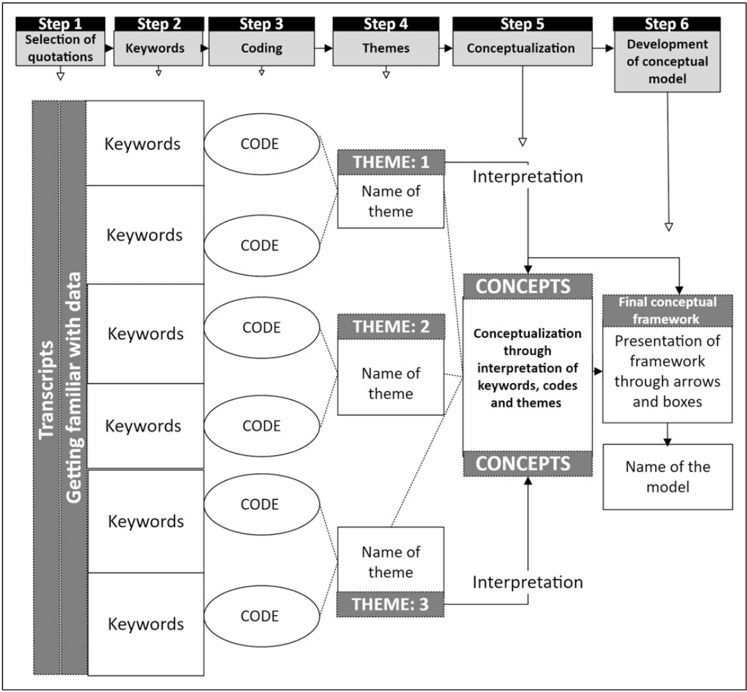
- The paper proposes six steps: transcription/familiarization and quotation selection; keyword selection; coding; theme development; conceptualization through interpretation of keywords, codes, and themes; and development of a conceptual model.
- It introduces 6Rs for keyword selection (realness, richness, repetition, rationale, repartee, regal), 6Rs for coding (robust, reflective, resplendent, relevant, radical, righteous), and 4Rs for theming (reciprocal, recognizable, responsive, resourceful).
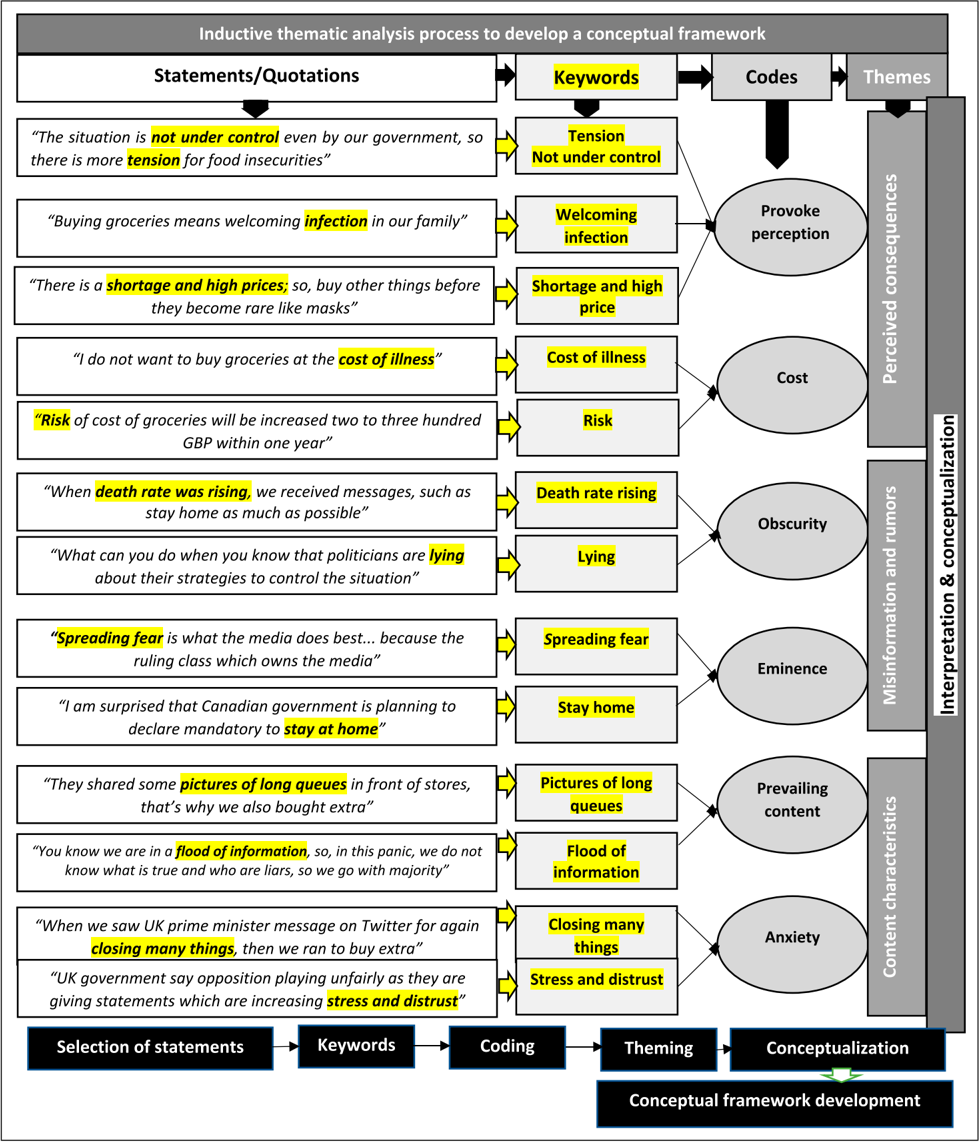
- In the exemplar study, three main themes emerged: “Perceived consequences” from codes “Provoke perception” and “Cost”; “Misinformation and rumors” from codes “Obscurity” and “Eminence”; and “Content Characteristics” from codes “Prevailing content” and “Anxiety.”
- The exemplar’s final model, “Panic buying as social practice,” was based on Protection Motivation Theory (PMT) and the Theory of Rumor Transmission (TORT).
Methods
- Design: a methodological/conceptual paper that presents a comprehensive systematic model for thematic analysis culminating in a conceptual model, using Naeem and Ozuem (2022a) as an exemplar.
- Exemplar data: qualitative data gathered from Twitter, YouTube, and interviews; the exemplar used a six-stage thematic analysis and a social constructionist perspective with PMT and TORT as theoretical foundations.
- Main analysis: the paper describes each of the six steps in detail, provides practical examples from the exemplar, and compares the proposed process with Braun and Clarke’s (2006) six steps of thematic analysis.
Limitations
- The paper states that the potential of the process to address other research contexts or quantitative methods may require further exploration, and that the efficiency of the method compared with other model-building approaches has not been empirically tested.
- Evident from the text: the proposed six-step process and the 6Rs/4Rs are illustrated through a single exemplar study and are not independently validated or empirically compared with alternative thematic analysis approaches.
Model-written summary. Check it against the paper before relying on it.
Integrity signals
Registry
Cites
Statistics
Figures

Verification
Claims the paper makes
0 Valid · 4 Not valid · 56 Not checked · 89 Own results and interpretations
The cited sources that could be checked couldn’t confirm or dispute this claim.
In the paper
“For narrative approaches, conceptual model development focuses on personal experiences, emotions, and life histories (Eldh et al., 2020).”
§ A Step-by-Step Process of Thematic Analysis to Develop a Conceptual Model in Qualitative Research > Step 6: Development of Conceptual Model.
What the sources say
- Could not verifycites Eldh et al., 2020 matched to “Quotations in Qualitative Studies: Reflections on Constituents, Custom, and Purpose” (2020) sourceExperimental — accuracy not yet measured
The Discussion and Conclusions (page numbers unavailable) address how quotations can illustrate qualitative analysis and findings. A search for narrative approaches, conceptual model development, emotions, and life histories found no passage addressing the attributed claim. (LLM, conf=0.72)
plainstates an association- Asserted: passes — The authors put it forward as true.
- Checkable: passes — It can be checked against evidence.
- Load-bearing: unclear — It is unclear whether the paper’s conclusions depend on it.
- Based: passes — The paper gives a reason why it holds.
- Could not verify
In the paper
“The analytical process balances between descriptive analysis, which outlines patterns or trends, and interpretive analysis, which offers subjective perspectives (Miles & Huberman, 1994, p. 56).”
§ A Step-by-Step Process of Thematic Analysis to Develop a Conceptual Model in Qualitative Research > Step 2: Selection of Keywords.
What the sources say
- Not matchedcites Miles & Huberman, 1994, p. 56
An author–year citation the paper’s reference list doesn’t settle. We don’t search these by name.
plain- Asserted: passes — The authors put it forward as true.
- Checkable: passes — It can be checked against evidence.
- Load-bearing: passes — The paper’s conclusions depend on it.
- Based: passes — The paper gives a reason why it holds.
- Not matched
In the paper
“However, the thematic analysis approach could also fit a post-positivist paradigm (Howell, 2012, p. 30).”
§ A Step-by-Step Process of Thematic Analysis to Develop a Conceptual Model in Qualitative Research > Step 2: Selection of Keywords.
What the sources say
- Not matchedcites Howell, 2012, p. 30
An author–year citation the paper’s reference list doesn’t settle. We don’t search these by name.
hedgedstates an association- Asserted: passes — The authors put it forward as true.
- Checkable: passes — It can be checked against evidence.
- Load-bearing: unclear — It is unclear whether the paper’s conclusions depend on it.
- Based: passes — The paper gives a reason why it holds.
- Not matched
In the paper
“Hence, quotation selection is not simply a mechanical task but is influenced by the researcher's philosophical and theoretical approach (Jackson & Mazzei, 2012).”
§ A Step-by-Step Process of Thematic Analysis to Develop a Conceptual Model in Qualitative Research > Step 1: Transcription, Familiarization With the Data, and Selection of Quotations.
What the sources say
- Not matchedcites Jackson & Mazzei, 2012
An author–year citation the paper’s reference list doesn’t settle. We don’t search these by name.
plainstates a cause- Asserted: passes — The authors put it forward as true.
- Checkable: passes — It can be checked against evidence.
- Load-bearing: passes — The paper’s conclusions depend on it.
- Based: passes — The paper gives a reason why it holds.
- Not matched
A conclusion the paper draws from its own results — it cites no other source for it, so there is none to check. The quote shows it is in the paper.
In the paper
“Thus, keywords serve as a critical bridge between data and themes in different methodologies.”
§ A Step-by-Step Process of Thematic Analysis to Develop a Conceptual Model in Qualitative Research > Step 4: Theme Development.
boostedstates an association- Asserted: passes — The authors put it forward as true.
- Checkable: passes — It can be checked against evidence.
- Load-bearing: unclear — It is unclear whether the paper’s conclusions depend on it.
- Based: passes — The paper gives a reason why it holds.
10 more claims
Create a free account to see all 149 claims and every source verdict.
- It may state two separate claims as one. 54
- Probably not a substantial claim. 128
Claims other papers make about this one
Each is checked against this paper’s own text: does it say what the citing paper says it does?
The source backs part of the claim, not all of it — or backs it for a different population, condition or comparison.
In the citing paper
“With the identified keywords, initial coding was further informed by and cross-referenced to the literature on AI ethics and governance, particularly addressing public concerns in government AI, alongside the author team's collective expertise in AI-driven digital transformation in public administration.”
From Accountability in Government Use of AI : Citizen Concerns and Preferences (2025) · cites this paper as Naeem et al. 2023
Experimental — accuracy not yet measuredThe source backs part of the claim, not all of it — or backs it for a different population, condition or comparison.
In the citing paper
“Thematic analysis is a highly popular technique among qualitative researchers for analyzing qualitative data, which usually comprises thick descriptive data (Naeem et al., 2023).”
From The Psycho-Emotive Effects of AI-Generated Fake News on Social Media Users (2026) · cites this paper as Naeem et al., 2023
Experimental — accuracy not yet measuredThe cited source says what the claim attributes to it.
In the citing paper
“The selection of keywords was guided by the 6Rs framework-Realness, Richness, Repetition, Rationale, Repartee, and Regal-to ensure they accurately represented the essence of the data (Naeem et al. 2023).”
From Accountability in Government Use of AI : Citizen Concerns and Preferences (2025) · cites this paper as Naeem et al. 2023
The cited source says what the claim attributes to it.
In the citing paper
“The data were analyzed through Naeem et al.'s (2023) six-step thematic analysis process to develop a conceptual framework (Naeem & Ozuem, 2022).”
From “It’s Not Just About Competition – It’s Ceremony”: Introducing the Embedded Indigeneity Framework for Understanding Identity, Mission, and Practice in TCU and NASNTI Athletics (2026) · cites this paper as Naeem et al. (2023)
The cited source says what the claim attributes to it.
In the citing paper
“The selected methodology was implemented due to the end results that 1) presented a novel conceptual framework and 2) serves as a contextually specific extension of existing theory/theories (Naeem et al., 2023).”
From “It’s Not Just About Competition – It’s Ceremony”: Introducing the Embedded Indigeneity Framework for Understanding Identity, Mission, and Practice in TCU and NASNTI Athletics (2026) · cites this paper as Naeem et al., 2023
Self-check
Percentages, sums and reported differences re-computed from the paper’s own numbers.
Each contradiction between two passages listed here was confirmed by an independent check.
Rated minor: it would not touch a result — a value no result rests on, a p-value that stays on the same side of the significance level, or a conflict that is clerical, resolved elsewhere in the paper, or outside its own findings.
In the paper
§ A Step-by-Step Process of Thematic Analysis to Develop a Conceptual Model in Qualitative Research > Step 6: Development of Conceptual Model.
“Positivism, which favours inductive methods, builds its model on top of previously established theories and conducts its experiments in an unbiased manner.”
§ A Step-by-Step Process of Thematic Analysis to Develop a Conceptual Model in Qualitative Research > Step 6: Development of Conceptual Model.
“An inductive approach is primarily data-driven, whereby themes are derived from the data itself without the influence of pre-existing theories (Braun & Clarke, 2006).”
Citations
Cites
Using thematic analysis in psychology
Braun, V., & Clarke, V. (2006) · Qualitative Research in Psychology · doi:10.1191/1478088706qp063oa · Cited by 194,414
Qualitative Data Analysis: An Expanded Sourcebook
(1994) · Journal of Environmental Psychology · doi:10.1016/s0272-4944(05)80231-2 · Cited by 48,420 · cited 2×
“In the coding process, consideration of keywords helps in multiple ways: The analytical process balances between descriptive analysis, which outlines patterns or trends, and interpretive analysis, which offers subjective perspectives (Miles & Huberman, 1994, p. 56).”
Lincoln, Y. S., Guba, E. G., & Pilotta, J. J. (1985) · International Journal of Intercultural Relations · doi:10.1016/0147-1767(85)90062-8 · Cited by 45,787 · cited 1×
“…degrees of subjectivity and objectivity has underscored the fl exibility intrinsic to research methodologies and highlighted that these tools of analysis are intimately intertwined with, and, indeed, emerge from the distinctive nature of speci fi c disciplines and perspectives (Lincoln & Guba, 1985).”
BackgroundThe Discovery of Grounded Theory: Strategies for Qualitative Research
Glaser, B. G., & Strauss, A. L. (2017) · Aldine (Routledge reprint) · doi:10.4324/9780203793206 · Cited by 25,789
The qualitative content analysis process
Elo, S., & Kyngäs, H. (2008) · Journal of Advanced Nursing · doi:10.1111/j.1365-2648.2007.04569.x · Cited by 22,617 · cited 1×
“Deductive coding, linked with descriptive analysis, is a top-down approach where pre-existing theories, models, or codes guide the data analysis (Elo & Kyng¨as, 2008).”
Method(2009) · Cited by 21,330
Reflecting on reflexive thematic analysis
Braun, V., & Clarke, V. (2019) · Qualitative Research in Sport, Exercise and Health · doi:10.1080/2159676x.2019.1628806 · Cited by 19,677
(1998) · Medical Entomology and Zoology · Cited by 18,397
(2014) · Cited by 15,747
S., N. L. (2017) · doi:10.1177/1609406917733847 · Cited by 14,051 · cited 3×
“· Robust: Coding should convey the true essence of data in a theoretical manner (Nowell et al., 2017).”
Background
Research works printed but not linked: 9
- 1. Arar, K. (2017). The what's and why's of the how to of qualitative research. Qualitative Report, 22(11), 2956-2958.
- 16. Creswell, J. W. (2012). Educational research. Pearson.
- 19. Denzin, N. K., & Salvo, J. (2020). New directions in theorizing qualitative research: Theory as resistance. Myers Education Press.
- 62. Oliver, P. (2021). Using qualitative methods to answer your research question (First). Open University Press.
- 63. Patton, M. Q. (2015). Qualitative research & evaluation methods: Integrating theory and practice (fourth). Sage Publications, Inc. Qualitative research (pp. 273-290). Sage.
- 67. Saldana, J. (2021). The coding manual for qualitative researchers (Fourth). Sage.
- 68. Saldana, J. M. (2016). The coding manual for qualitative researchers (4rd ed.). Sage Publications.
- 74. Seale, C. (2013). Qualitative research practice. In C. Seale, G. Gobo, J. Gubrium, & D. Silverman (Eds.), Concise paperback. Sage.
- 80. Tracy, S. J. (2019). Qualitative research methods: Collecting evi- dence, crafting analysis, communicating impact (2nd ed.). Wiley Blackwell.
Cited by
Items 501–600 of 2,204
Brooks, C. M., Dell, C. A., Chalmers, D., & Carey, B. (2024) · Animals · doi:10.3390/ani14243620 · Cited by 2
van Zuydam, S. C., & Kempen, E. L. (2025) · Agriculture & Food Security · doi:10.1186/s40066-025-00543-2 · Cited by 3
“A six-step systematic thematic data analysis [55] was applied to verbatim transcribed interviews on all data obtained from belief questions and data generated on PI that included: (1) transcription, familiarization with the data and selection of meaningful quotations; (2) selection of keywords from…”
Leath, S., Bryant, L. S., Johnson, K., Pitts, J. B., Omole, T., & Butler‐Barnes, S. T. (2025) · Behavioral Sciences · doi:10.3390/bs15070887 · Cited by 2
“To establish intercoder reliability (Naeem et al., 2023), we worked through the first third of the data ( n = 10 excerpts for each research question) and alternated who led the discussions for their applied codes.”
Biomimetics in sustainable manufacturing: Towards a new model for enhancing resilience
McNish, C., & van Erp, T. (2025) · Next research. · doi:10.1016/j.nexres.2025.100551 · Cited by 2
Umayrah, A., Iswara, P. D., Salsabila, S., et al. (2024) · Jurnal Kependidikan Jurnal Hasil Penelitian dan Kajian Kepustakaan di Bidang Pendidikan Pengajaran dan Pembelajaran · doi:10.33394/jk.v10i2.11474 · Cited by 2
“Each step builds on the previous step, resulting in a thorough understanding of the data (Naeem et al., 2023).”
BackgroundYáñez-Cancino, A. P., Meneses, J. G., ten Brummelaar, M., Quiroga, M. G., & López, M. L. (2025) · Children and Youth Services Review · doi:10.1016/j.childyouth.2025.108691 · Cited by 3
Forging Diversity: Transforming Project Teams Through the Cultural Competencies of Project Managers
Le, H., Amarakoon, U., McKay, J., Veres, J. C., & Fujimoto, Y. (2025) · Project Management Journal · doi:10.1177/87569728251340875 · Cited by 6
Salgarayeva, G. I., Bazarbayeva, A., & Smyrnova‐Trybulska, E. (2026) · Industry and Higher Education · doi:10.1177/09504222261423343 · Cited by 2
Ramadan, O. M. E., Aldousari, E., Elsharkawy, N. B., Alshammari, M. S. S., Abdelaziz, E. M., & Mohamed, N. A. (2025) · Journal of Pediatric Nursing · doi:10.1016/j.pedn.2025.12.012 · Cited by 3
Contributions for the Development of Personae: Method for Creating Persona Templates (MCPT)
Couto, F. A. P., & Malta, M. C. (2024) · Lecture notes in computer science · doi:10.1007/978-3-031-76803-3_1 · Cited by 2
The carousel effect: leveraging sideways swiping for enhanced ad effectiveness in social media
Rohrbach, S., Bruns, D., & Langner, T. (2026) · International Journal of Advertising · doi:10.1080/02650487.2026.2624918 · Cited by 3
Burke, E. G., Williams-Perez, S. M., & Boedeker, P. (2025) · Global Surgical Education - Journal of the Association for Surgical Education · doi:10.1007/s44186-025-00384-4 · Cited by 2
“If this study were conducted using traditional thematic analysis, transcripts of the focus groups would need to be produced, researchers independently code participant comments, jointly identify themes, re-code based on those themes if needed, and reconcile differences [7].”
Nakarmi, C. S., Bhattarai, S., Rhodes, E., Dhimal, M., Baral, P. P., Poudel, B., Rai, B. K., Bishwokarma, A., Mali, S., Adhikari, A., et al. (2025) · Research Square · doi:10.21203/rs.3.rs-6755631/v1 · Cited by 2
Minges, K. E., Chen, P., Loh, K., Sutton, L., & Bernheim, S. M. (2025) · BMJ Open · doi:10.1136/bmjopen-2023-083384 · Cited by 2
Leadership Qualities and the Socio-Emotional Well-being of Learners: A Case Study
Bukhari, S. U. P., Ali, K. K., Ashiq, R., Rub, H. A. A., & Kalhoro, I. A. (2024) · Qlantic journal of social sciences. · doi:10.55737/qjss.349369417 · Cited by 2
Idakwo, V. O. (2025) · BMC Digital Health · doi:10.1186/s44247-025-00187-z · Cited by 4
“The transcribed text was subjected to inductive thematic analysis, a qualitative research method in which themes are derived directly from the data without imposing pre-existing theoretical frameworks [16].”
Wills, V., & Chakraborty, R. (2026) · Healthcare · doi:10.3390/healthcare14020209 · Cited by 6
“This approach enabled a descriptive and subjective interpretation of the lived experiences of participants, thereby capturing the complexity and depth of these experiences [36,37].”
Co-Designing Trustworthy Peer Agents with Middle-School Students
Shamamyan, N., Su, M., & Nagashima, T. (2025) · ACM International Conference on Interaction Design and Children (IDC) · doi:10.1145/3713043.3728847 · Cited by 5
“Key patterns emerge from the evaluation sessions, which we identified by following the steps of thematic analysis: selection of statements, keywords, coding, theming and conceptualization [7, 27].”
Hasani, Z., & Munzhedzi, H. (2024) · Journal of Public Administration · doi:10.53973/jopa.2024.59.2.a7 · Cited by 2
Matemane, T. M., & Chauke, T. A. (2025) · Social Sciences · doi:10.3390/socsci14020065 · Cited by 2
Mezei, F., Tsiasiotis, E., Basile, M., Sciomenta, I., Calosci, E. M., Antonini, D., Lukacs, A., Bidino, R. D., Cicchetti, A., & Sacchini, D. (2025) · Journal of Market Access & Health Policy · doi:10.3390/jmahp13030046 · Cited by 5
“The extracted data were synthesized using a thematic analysis approach to identify recurring themes across regulatory challenges, reimbursement models, HTA methodologies, and the impact of real-world data (RWD) on market access [24].”
Sood, S., Roberts, S. K., Scott, D. S., Keating, S. E., Tan, S., George, J., Kiss, N. K., Daly, R. M., Dunstan, D. W., Tucker, R. M., et al. (2025) · Journal of Telemedicine and Telecare · doi:10.1177/1357633x251366098 · Cited by 2
Vumbugwa, P., Puttkammer, N. H., Majaha, M., et al. (2024) · medRxiv · doi:10.1101/2024.02.27.24303453 · Cited by 2
“Qualitative thematic analysis was conducted to identify themes relevant to each specific pillar, while content analysis was used to summarize information provided and evidence of best practices to support narratives (18,19).”
MethodShohel, M. M. C., & Sall, W. (2024) · Advances in higher education and professional development book series · doi:10.4018/979-8-3693-1499-9.ch008 · Cited by 2
An integrative review of the genesis of inclusiveness in higher education
Pillai, D., Tapas, P., & Kulkarni, K. G. (2025) · Asian Education and Development Studies · doi:10.1108/aeds-07-2024-0159 · Cited by 3
Knyahnytskyi, O., Eadie, J., Asadpour, K., Stephenson, C., Yang, M., Reshetukha, T., Moi, C., Barrett, T., Hicks, M., Gutiérrez, G., et al. (2025) · Digital Health · doi:10.1177/20552076251384835 · Cited by 5
“27 The use of thematic analysis allows for the emergence of themes or “ patterned responses ” from within a data set, which in turn can help guide our understanding of complex phenomena such as patient perceptions and experiences.”
Piazzesi, C., Blais, M., & Klein, N. (2026) · International Review of Sociology · doi:10.1080/03906701.2026.2629274 · Cited by 3
A systematic review of key principles relating to decolonising interventions in midwifery education
Thomas, S., Allan, G., Heaslip, V., & Furber, C. (2025) · Women and Birth · doi:10.1016/j.wombi.2025.101869 · Cited by 2
McLean, N., Purton, I., Tan, W., & Zhng, J. (2026) · Journal of International Students · doi:10.32674/gen6be73 · Cited by 5
“Claude was instructed to conduct a comprehensive scan of all 1,791 posts to identify keywords following the 6 Rs framework (Realness, Richness, Repetition, Rationale, Repartee, and Regal) outlined by Naeem et al. (2023).”
Skepticism and Excitement When Co-Designing Just-in-Time Mental Health Apps with Minoritized YouthPreprint
Figueroa, C. A., Guan, K., Gupta, D., et al. (2024) · SSRN Electronic Journal · doi:10.2139/ssrn.5039034 · Cited by 2
Warne, S. J., Brown, L. R., Barker, K., Carstairs, S. A., Cunningham, K. B., Duggal, S., Evans, I., Martin, A., Murray, A. H., Özakinci, G., et al. (2026) · BMC Family Practice · doi:10.1186/s12875-026-03180-1 · Cited by 2
“This meant that the analysis took a two-pronged approach, with both a data-driven initial stage of analysis, accompanied by a latter theory-driven derived coding [56].”
More than survival. The meanings of cash transfers for the poor
Bertoluzza, G., Volturo, S., & Meo, A. (2024) · International Journal of Sociology and Social Policy · doi:10.1108/ijssp-03-2024-0114 · Cited by 3
Ding, G. (2025) · International Journal of Housing Policy · doi:10.1080/19491247.2025.2580689 · Cited by 2
Wilson, R. E., & Bradbury, L. U. (2026) · Science Education · doi:10.1002/sce.70050 · Cited by 3
Diamonds are a TikTokers’ best friend: Unwrapping the motivations behind UK gifting on TikTok Live
Archer, L.-A., Broadbridge, V., & Dyussembayeva, S. (2025) · Computers in Human Behavior · doi:10.1016/j.chb.2025.108664 · Cited by 4
Interpretive Caption: Real-Time Vocal Emotion Cues for DHH Users
Ubur, S. D., Adewale, S., Chandrashekar, N. D., Akli, E. K., & Gračanin, D. (2025) · International ACM SIGACCESS Conference on Computers and Accessibility (ASSETS) · doi:10.1145/3663547.3759697 · Cited by 2
“We used Braun and Clarke’s six-phase thematic analysis [27].”
Building the Thematic Structure in Qualitative Research: The Theme Construction Tool
Coker, D. C. (2026) · American Journal of Qualitative Research · doi:10.66815/ajqr/18485 · Cited by 4
Poojari, P. G., Mey, A., Khan, S. A., Shenoy, S., Pai, K. K., Shetty, S., Bhat, S. M., Bhandary, P. V., Acharya, L. D., Bose, S., et al. (2025) · Journal of Health Psychology · doi:10.1177/13591053251315263 · Cited by 4
Geomorphological Mapping and Social Sciences: A Qualitative Review
Franceschi, L., Bosino, A., Licata, M. L., & Amicis, M. D. (2025) · Geosciences · doi:10.3390/geosciences15070271 · Cited by 3
Artificial Intelligence in Education Challenges and Solutions Through the Eyes of Students
Esfijani, A., Nili, M., & Kazemi, M. S. (2025) · International and National Conference on E-Learning and E-Teaching (ICeLeT) · doi:10.1109/icelet66022.2025.11025304 · Cited by 3
“In order to analysis the research data identify the main themes in the data set, the thematic analyses technique [18] was employed.”
Handover management for UAV communication in 5G networks: A systematic literature review
Yusof, A. L., Rashid, A., & Ali, D. M. (2025) · Engineering Science and Technology an International Journal · doi:10.1016/j.jestch.2025.102198 · Cited by 6
Anwar, S. J., Sunjaya, D. K., Hilfi, L., Rinawan, F. R., Ardisasmita, M. N., & Herawati, D. M. D. (2026) · BMC Health Services Research · doi:10.1186/s12913-026-14193-y · Cited by 4
“After initial coding, the software assists in identifying “themes,” which are over-arching patterns or concepts emerging from the coded data [19].”
Experiences of tuberculosis survivors in North India through qualitative phenomenology
Kumar, A., Saini, S., Das, P., et al. (2026) · Discover Public Health · doi:10.1186/s12982-025-01329-4 · Cited by 2
“Coding was performed manually using the six-step Systematic Thematic Analysis framework proposed by Naeem et al. (2023), which builds upon Braun and Clarke’s (2006) reflexive approach [10].”
Fukumura, Y. (2025) · Anthropological Forum · doi:10.1080/00664677.2025.2481850 · Cited by 3
“The interview was recorded, transcribed, and analysed using thematic coding (Naeem et al. 2023).”
Naeem, M., & Thomas, L. (2025) · International Journal of Qualitative Methods · doi:10.1177/16094069251371478 · Cited by 25
“Additionally, Naeem et al. (2024) suggest that the use of a speci fi c theory also in fl uences the contribution of research (Naeem et al., 2023), and the theoretical contribution should align with the selected theory in a real context (Naeem et al., 2023, p. 2023).”
InfluentialSelf-citationChinkonda, B. E., Piragauta, A., Mazingi, D., Chokotho, L. C., Nzanga, M., Manyozo, S., Puvanachandra, P., & Peden, M. M. (2024) · International Journal of Environmental Research and Public Health · doi:10.3390/ijerph21111479 · Cited by 3
“A step-by-step process of thematic analysis to develop a conceptual model in qualitative research was used as approach for the thematic analysis [23].”
Laughlin, E., & Chun, S. (2025) · Leisure/Loisir · doi:10.1080/14927713.2025.2489348 · Cited by 3
“Fifth, thematic analysis was conducted to identify both relevant codes and broader themes during the first round of interview data analysis (Naeem et al., 2023).”
Multifaceted Giftedness: A Cultural Exploration of Giftedness Among Iranian Primary School Teachers
Ezhiyeh, A. M., & Abedi, A. (2025) · Gifted Education International · doi:10.1177/02614294251364087 · Cited by 4
“This study adopted a systematic approach to thematic analysis based on the framework proposed by Naeem et al. (2023).”
Bhandari, S. (2024) · International Journal of Health Governance · doi:10.1108/ijhg-08-2024-0101 · Cited by 2
Anđić, B., Helm, C., Weinhandl, R., Maričić, M., Radlmair, A., Bleckenwegner, V., & Ebner, M. (2026) · Research in Science Education · doi:10.1007/s11165-026-10359-0 · Cited by 4
Azlan, M. H., Yatim, N. S. M., Osman, S. H., Ganiyu, S. A., & Alhooshani, K. R. (2026) · International Journal of Hydrogen Energy · doi:10.1016/j.ijhydene.2026.154985 · Cited by 2
Sinha, T. P., Bhoi, S. K., Sharma, D., Chauhan, S., Magan, R., Sahu, A. K., Bhargava, S., Nayar, P. D., Venkatnarayan, K., Lodha, R., et al. (2024) · Health Research Policy and Systems · doi:10.1186/s12961-024-01183-x · Cited by 2
“Thematic analysis with inductive coding will be performed to understand the context and identify barriers and facilitators of emergency services for TSC at pre-facility and in-facility levels [30].”
MethodFrom adoption to impact: how digital hiring shapes organizational resilience in women-led SMEs
Tran, Q. N., Juneja, D., Han, J. W., & Dang, C.-M. (2026) · Journal of Management Development · doi:10.1108/jmd-08-2025-0470 · Cited by 3
Mo, L., Zhu, H., Dong, J., Shi, Y., Zhang, Y., & Wan, B. (2026) · World Leisure Journal · doi:10.1080/16078055.2025.2606804 · Cited by 2
Kong’ani, L. N. S., Dayaram, T., Ally, K. B., Jacobs, R., McClure, A., Mazivila, C., Mohale, M., Jack, C. D., Karan, R., Dickinson, C., et al. (2026) · Urbanisation · doi:10.1177/24557471261425770 · Cited by 4
“The framework helped structure and interpret data, using initial coding from its elements to inform themes emerging from the included articles (Naeem et al., 2023; Woiceshyn & Daellenbach, 2018).”
Donahue, W. (2025) · Dibon Journal of Education · doi:10.64169/dje.121 · Cited by 4
“…interview transcripts were evaluated using a classic inductive thematic analysis, where themes emerge from the data, while integrating latent thematic analysis to identify unstated patterns and meanings, utilising Taguette, Microsoft Word, and Microsoft Excel (Alkharusi, 2022; Naeem et al., 2023).”
Power and interest levels in safely managed sanitation services in Zambia: A stakeholder mapping
Chiwala, B., Makasa, M., & Zulu, J. M. (2025) · PLoS ONE · doi:10.1371/journal.pone.0335130 · Cited by 4
“A reflective thematic analysis inspired by Braun and Clark [53] was applied to analyze all transcribed data using inductive and deductive coding approaches [54–57].”
Mercado, M., López, G., Ignacio, M., Ayers, S. L., Carver, A. T., Hamm, K., Wolfersteig, W., & Oesterle, S. (2024) · Health Education & Behavior · doi:10.1177/10901981241255619 · Cited by 2
“Theoretical thematic analysis is a deductive approach that applies a preexisting framework to guide the coding (Braun & Clarke, 2006; Maguire & Delahunt, 2017; Naeem et al., 2023).”
MethodWu, S., Salam, M., Hajirasouli, A., Lohi, I., Wain, A., Wilkinson, S. J., Morrison, G. M., & Banihashemi, S. (2025) · Buildings · doi:10.3390/buildings15142558 · Cited by 2
Ingram, C., Buggy, C., MacNamara, I., & Perrotta, C. (2024) · PLoS ONE · doi:10.1371/journal.pone.0299761 · Cited by 7
“For conciseness, the use of longer quotations was reserved for findings not often referred to in the literature [38].”
MethodJusto, R. C. (2024) · Journal of innovative technology convergence. · doi:10.69478/2024v6n2a02 · Cited by 2
Burdening patients: qualitative analysis of healthism in community-based hypertension care in China
Li, B. (2025) · Health Sociology Review · doi:10.1080/14461242.2025.2509961 · Cited by 4
“Thematic analysis (Naeem et al., 2023) was used to identify key themes related to healthism and its role in hypertension care.”
Lawrence, E. C., Metje, A., Matemba, C., & Powelson, J. (2025) · BMJ Open · doi:10.1136/bmjopen-2025-104490 · Cited by 3
Shankar, R., Bundele, A., Low, J., & Mukhopadhyay, A. (2025) · BMJ Open · doi:10.1136/bmjopen-2025-099022 · Cited by 4
“The Grading of Recommendations Assessment, Development and Evaluation - Confidence in the Evidence from Reviews of Qualitative Research (GRADE-CERQual) approach will be used to assess the confidence in the review findings.”
Zheng, L., Huang, Z., Gao, L., & Fan, Y. (2025) · Journal of Computer Assisted Learning · doi:10.1111/jcal.70113 · Cited by 2
Zhang, S., Hutchins, N. M., Barrett, J. R., Botelho, A. F., & Israel, M. (2025) · ACM Technical Symposium on Computer Science Education (SIGCSE) · doi:10.1145/3641554.3701855 · Cited by 2
“Following the step-by-step guidance from [26] and [24], one researcher first transcribed all the CS au-tobiography videos to scripts, matched teachers’ pre-and post-CS autobiographies, and organized their responses to each open-ended questions in pre and post surveys.”
Jaya, S., Zaharudin, R., Bhartiya, S. P., & Alomari, M. (2026) · ECNU Review of Education · doi:10.1177/20965311261446194 · Cited by 6
“Thematic saturation was considered achieved when no substantively new codes or conceptual insights emerged from successive interviews and artefact analyses (Creswell & Guetterman, 2021; Göçen, 2021; Maher, 2025; Naeem et al., 2023; Nicmanis, 2024; Thorne, 2025).”
Balancing classification in disaster management: a systematic literature review
Ha, K. (2025) · Geo-spatial Information Science · doi:10.1080/10095020.2025.2597005 · Cited by 2
Enter stage right: best practices in narrative staging of authenticity in literary tourism
Bargenda, A. (2024) · Current Issues in Tourism · doi:10.1080/13683500.2024.2427775 · Cited by 3
“Whilst the first draft of the interview guide included codes drawn from existing theory, the flexibility of the pragmatist approach allowed for the inclusion of new codes in the iteration of the interviews (Braun & Clarke, 2006; Naeem et al., 2023).”
Sabbah, L., Morris, J. E., Velasco, M. G., & Saadi, A. (2025) · Journal of Immigrant and Minority Health · doi:10.1007/s10903-025-01764-0 · Cited by 2
“Following a hybrid inductive-deductive thematic analysis approach [16], two researchers (LS, MV) independently identified preliminary codes and themes from the first two baseline interviews.”
From Uncertainty to Confidence: Peer-Led Research and the Formation of Medical Academic Identity
Cuschieri, A., & Cuschieri, S. (2025) · International Medical Education · doi:10.3390/ime4020022 · Cited by 5
Choudhury, N. A., & Saravanan, P. (2026) · Frontiers in Cognition · doi:10.3389/fcogn.2025.1719312 · Cited by 9
Fully remote work: Understanding employee experiences of work characteristics and work quality
Lauro, S. D., Tursunbayeva, A., Antonelli, G., & Moschera, L. (2026) · German Journal of Human Resource Management Zeitschrift für Personalforschung · doi:10.1177/23970022261454270 · Cited by 4
Urban Road Pricing: A Review of Reviews Integrating Force Field, Thematic and Pestle AnalysesPreprint
Barrera-Jiménez, H., Stevenson, M., & Lavieri, P. S. (2025) · SSRN Electronic Journal · doi:10.2139/ssrn.5370438 · Cited by 2
Barker, J. R. (2025) · International Journal of Changes in Education · doi:10.47852/bonviewijce52023480 · Cited by 2
The advantages of peer teaching and self-reflection for learning histology
Li, Y., & Hortsch, M. (2026) · Annals of Anatomy - Anatomischer Anzeiger · doi:10.1016/j.aanat.2026.152837 · Cited by 3
Hawes, O., Cook, E. J., Williams, J., & Chater, A. (2026) · Frontiers in Sports and Active Living · doi:10.3389/fspor.2026.1819295 · Cited by 2
“The study took place between November and December 2025, incorporating a mixed-methods Delphi design, and using participatory thematic refinement and analysis to develop, refine and provide expert-informed insight to the development of a preliminary conceptual framework (38).”
Using Virtual Reality in Mental Health Nursing to Improve Behavioral Health Equity
Howard, S., & Taylor, M. M. (2024) · CIN Computers Informatics Nursing · doi:10.1097/cin.0000000000001195 · Cited by 9
Understanding Physical Therapist Student Defined Success: A Qualitative Study
Graves, K., & Gietzen, L. (2025) · Pacific Journal of Health · doi:10.56031/2576-215x.1097 · Cited by 2
Daukere, B. E., & Ifabiyi, I. P. (2025) · Environmental Challenges · doi:10.1016/j.envc.2025.101263 · Cited by 6
de Sanchez, G. A., & Li, L. (2025) · Education Sciences · doi:10.3390/educsci15091193 · Cited by 3
“Focus group discussions were audio-recorded, transcribed, and thematically analyzed (Naeem et al., 2023) by two researchers.”
Improving parenting skill through the strong families program in Thailand
Buawangpong, N., El‐Khani, A., Aramrattana, A., Chutima, C., Arunrangsi, W., Tantihachai, C., Angkurawaranon, C., McCoy, A., Rinpon, K., Nantsupawat, N., et al. (2025) · Archives of Public Health · doi:10.1186/s13690-025-01743-9 · Cited by 2
“For qualitative analysis, the interviews were recorded and transcribed verbatim and analyzed using thematic analysis [29].”
Regulating from below: Direct action, precarious labour, and worker-led regulation in Spain
Andreu, M. L. (2026) · Sociology · doi:10.1177/00380385261453298 · Cited by 3
Al-Sofi, B. B. M. A., Hazaea, A. N., & Alfaifi, A. A. M. (2025) · Open Cultural Studies · doi:10.1515/culture-2024-0035 · Cited by 2
Understanding and responding to complex online harms: misinformation, fake news, and young adults
Zhang, V. N., Vlachokyriakos, V., Johnson, I. G., & Durrant, A. C. (2026) · Frontiers in Computer Science · doi:10.3389/fcomp.2026.1655186 · Cited by 4
Rouhani, S., Dehghanpir, A., Mahdiraji, H. A., & Vrontis, D. (2025) · Strategic Change · doi:10.1002/jsc.70032 · Cited by 4
Barrette, M., Naylor, P., Grouzet, F. M. E., & Harper, N. J. (2025) · Health Promotion International · doi:10.1093/heapro/daaf010 · Cited by 4
“At the same time, we utilized an inductive approach for the development of new themes based on the content of the data that went beyond the a priori set of themes (Braun and Clarke 2006, Naeem et al. 2023).”
Shomotova, A., & ElSayary, A. (2026) · Higher Education Quarterly · doi:10.1111/hequ.70136 · Cited by 5
Johnson, G. U., Towell‐Barnard, A., McLean, C., Robert, G., & Ewens, B. A. (2025) · Nursing Open · doi:10.1002/nop2.70291 · Cited by 2
“All interviews and focus group discussions were transcribed verbatim and coded using NVivo transcription software (Lumivero 2023; Naeem et al. 2023).”
Greveling, M., Rodolfi, S., Bardai, N. E., Denton, C. P., Ong, V. H., Jeffries-Owen, N., Schriemer, R., Tweehuysen, L., & Spierings, J. (2025) · Lara D. Veeken · doi:10.1093/rheumatology/keaf476 · Cited by 2
“Written transcripts were analysed using Nvivo (V15) within the framework of thematic content analysis [15].”
The influence of gender and cultural norms on indigenous Women's entrepreneurial practices
Akahome, J. E., & Igwe, P. A. (2026) · International Journal of Gender and Entrepreneurship · doi:10.1108/ijge-10-2024-0370 · Cited by 2
Aldon, D. K. M. L., Tan, C. S. L., & Islam, S. (2026) · Frontiers in Sustainability · doi:10.3389/frsus.2026.1724156 · Cited by 2
Azwidowi, R., Smit, I., & Thobejane, M. C. (2024) · International Conference on Electrical, Computer, Communications and Mechatronics Engineering (ICECCME) · doi:10.1109/iceccme62383.2024.10796868 · Cited by 3
“Thematic analysis, a research method used to detect and interpret patterns or themes within a data set [55], was employed to identify patterns and themes, systematically coding responses to categorize risks related to cloud adoption.”
Carhoun, J., Nogueira‐Arjona, R., de Visser, R. O., & Romero‐Sanchiz, P. (2025) · Research Involvement and Engagement · doi:10.1186/s40900-025-00758-4 · Cited by 5
“The RTA was informed by a constructivist epistemology to ensure the themes were regarded as interpretive concepts that were shaped through the researcher’s engagement with the data [42].”
Curley, L. J., Widanaralalage, B. K., Willmott, D., & Ermenkova, J. (2026) · Behavioral Sciences & the Law · doi:10.1002/bsl.70044 · Cited by 5
Sofyan, A. S., Rusanti, E., Yunus, A. R., & Sofyan, S. (2026) · Management & Sustainability An Arab Review · doi:10.1108/msar-05-2025-0168 · Cited by 4
Wearable-Based Mental Health Monitoring Platforms: Design Principles for Onboarding Users
Kittelmann, L., Reindl-Spanner, P., Prommegger, B., Gensichen, J. S., & Krcmar, H. (2025) · Lecture notes in computer science · doi:10.1007/978-3-031-93505-3_13 · Cited by 3
AI-driven energy futures: Emerging sociotechnical imaginaries in the tech industry
Guasselli, F. (2025) · Energy Research & Social Science · doi:10.1016/j.erss.2025.104407 · Cited by 2
Metadata
- Authors
- Naeem, M., Ozuem, W., Howell, K., & Ranfagni, S.
- Affiliations
- University of Gloucestershire (GB)
- University of Cumbria (GB)
- Northumbria University (GB)
- University of Florence (IT)
- Corresponding author
- Naeem, Muhammad
- Venue
- International Journal of Qualitative Methods
- Publisher
- SAGE Publications
- Published
- 2023-10
- Volume
- 22
- ISSN
- 1609-4069 (ISSN-L)
- OpenAlex
- W4388503650
- Cited by
- 2,243
- References
- 71
- Citations by year
- 2026: 1000 · 2025: 981 · 2024: 258 · 2023: 4
- FWCI
- 1654.78
- Type
- journal article
- Language
- en
- Open access
- gold
- doi.org
- Licence
- Locations
- International Journal of Qualitative Methods (publishedVersion, cc-by-nc)
- Insight (University of Cumbria) (acceptedVersion)
- DOAJ (DOAJ: Directory of Open Access Journals) (submittedVersion, cc-by-sa)
- Florence Research (University of Florence) (submittedVersion)
- Topics
- Social Sciences › Education › Qualitative Research Methods and Applications
- Social Sciences › Sociology and Political Science › Qualitative Research Methods and Ethics
- Social Sciences › General Social Sciences › Computational and Text Analysis Methods
- Keywords
- thematic analysis, conceptual modeling, qualitative data analysis, inductive coding, deductive coding, grounded theory, interpretive phenomenology, constructivist research, positivist research, theoretical conceptualization, replicability
About these checks
Registry, retraction, Cites and statistics results are computed, not judged, with one exception: a printed reference that no index lists is read once by a model before it counts as a citation error. Claims are extracted by a model and kept only when their quote appears verbatim in the text; each cited source is then checked, with a model’s help, for whether it says what the claim relies on. Those verdicts can be wrong — read the claim’s quote and the cited source before relying on one.
The claim verdicts this report counts are experimental: their accuracy is not yet measured.
A language model drew the claims from the paper on 2026-10-10, under version 3 of the claim definition (model deepseek-v4.1-flash, prompt extract-v3).
A second model labelled each claim on 2026-10-10 (model jev-1.13-20260917, definition revision gold-guideline-v0.2).
Cited sources are checked with a language model’s help (gpt-6-sol).
Statistics and arithmetic are recomputed, not judged.
Confidence bands are shown only for fields calibrated on our annotated test set. None is calibrated yet, so no band is shown.
What counts as a claim ›How we measure confidence ›How we check this ›
Are you an author, or do you see a problem with this page? Request a review
Data sources
Bibliographic data: Semantic Scholar, OpenAlex, Crossref.
Contains information from the Semantic Scholar Academic Graph Datasets, made available under the ODC Attribution License (ODC-BY 1.0).
Semantic Scholar’s data is described in: Kinney, R., et al. (2023). The Semantic Scholar Open Data Platform. arXiv:2301.10140.
