

A Step-by-Step Process of Thematic Analysis to Develop a Conceptual Model in Qualitative Research
Open accessThe DOI matches its Crossref record; 77 of the 78 references it cites were found in a registry or an index, and 1 are not checked yet; 2 of the 57 sources its claims cite were checked for support.
Abstract
Thematic analysis is a highly popular technique among qualitative researchers for analyzing qualitative data, which usually comprises thick descriptive data. However, the application and use of thematic analysis has also involved complications due to confusion regarding the final outcome’s presentation as a conceptual model. This paper develops a systematic thematic analysis process for creating a conceptual model from qualitative research findings. It explores the adaptability of the proposed process across various research methodologies, including constructivist methodologies, positivist methodologies, grounded theory, and interpretive phenomenology, and justifies their application. The paper distinguishes between inductive and deductive coding approaches and emphasizes the merits of each. It suggests that the derived systematic thematic analysis model is valuable across multiple disciplines, particularly in grounded theory, ethnographic approaches, and narrative approaches, while also being adaptable to more descriptive, positivist-based methodologies. By providing a methodological roadmap, this study enhances the rigor and replicability of thematic analysis and offers a comprehensive strategy for theoretical conceptualization in qualitative research. The contribution of this paper is a systematic six-step thematic analysis process that leads to the development of a conceptual model; each step is described in detail and examples are given.
Verified 2026-11-22 · 1 reference not checked yet
Overview
CoChat Summary
TL;DR
This methodological paper presents a six-step systematic thematic analysis process for developing a conceptual model from qualitative data, illustrated with Naeem and Ozuem’s (2022a) panic-buying study. It introduces 6Rs for keyword selection, 6Rs for coding, and 4Rs for theming to enhance rigor and trustworthiness.
Key findings
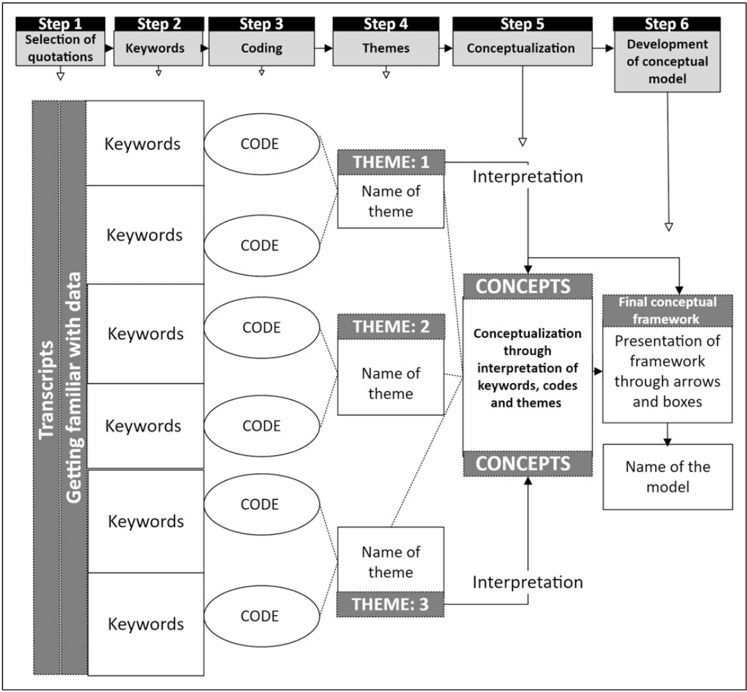
- The paper proposes six steps: transcription/familiarization and quotation selection; keyword selection; coding; theme development; conceptualization through interpretation of keywords, codes, and themes; and development of a conceptual model.
- It introduces 6Rs for keyword selection (realness, richness, repetition, rationale, repartee, regal), 6Rs for coding (robust, reflective, resplendent, relevant, radical, righteous), and 4Rs for theming (reciprocal, recognizable, responsive, resourceful).
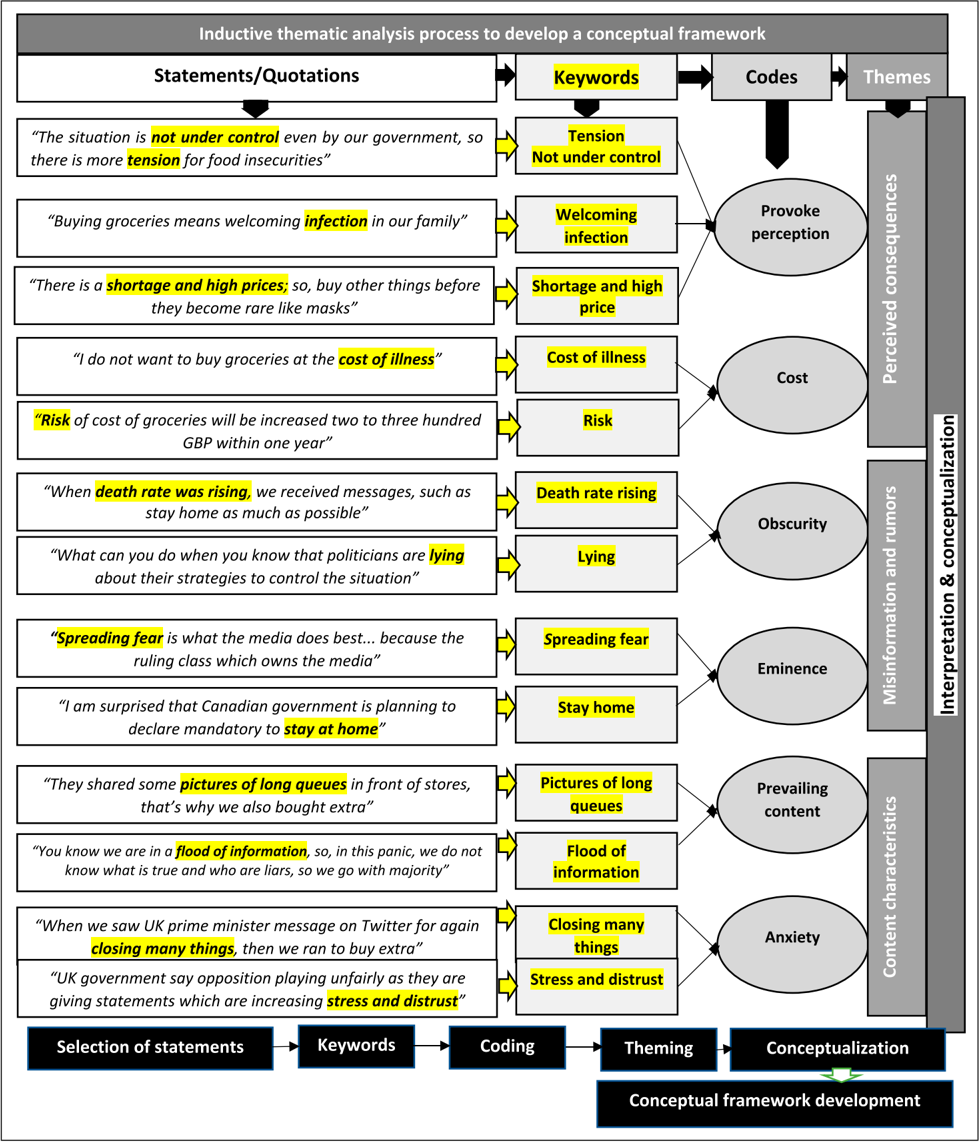
- In the exemplar study, three main themes emerged: “Perceived consequences” from codes “Provoke perception” and “Cost”; “Misinformation and rumors” from codes “Obscurity” and “Eminence”; and “Content Characteristics” from codes “Prevailing content” and “Anxiety.”
- The exemplar’s final model, “Panic buying as social practice,” was based on Protection Motivation Theory (PMT) and the Theory of Rumor Transmission (TORT).
Methods
- Design: a methodological/conceptual paper that presents a comprehensive systematic model for thematic analysis culminating in a conceptual model, using Naeem and Ozuem (2022a) as an exemplar.
- Exemplar data: qualitative data gathered from Twitter, YouTube, and interviews; the exemplar used a six-stage thematic analysis and a social constructionist perspective with PMT and TORT as theoretical foundations.
- Main analysis: the paper describes each of the six steps in detail, provides practical examples from the exemplar, and compares the proposed process with Braun and Clarke’s (2006) six steps of thematic analysis.
Limitations
- The paper states that the potential of the process to address other research contexts or quantitative methods may require further exploration, and that the efficiency of the method compared with other model-building approaches has not been empirically tested.
- Evident from the text: the proposed six-step process and the 6Rs/4Rs are illustrated through a single exemplar study and are not independently validated or empirically compared with alternative thematic analysis approaches.
Model-written summary. Check it against the paper before relying on it.
Integrity signals
Registry
Cites
Statistics
Figures

Verification
Claims the paper makes
0 Valid · 4 Not valid · 56 Not checked · 89 Own results and interpretations
The cited sources that could be checked couldn’t confirm or dispute this claim.
In the paper
“For narrative approaches, conceptual model development focuses on personal experiences, emotions, and life histories (Eldh et al., 2020).”
§ A Step-by-Step Process of Thematic Analysis to Develop a Conceptual Model in Qualitative Research > Step 6: Development of Conceptual Model.
What the sources say
- Could not verifycites Eldh et al., 2020 matched to “Quotations in Qualitative Studies: Reflections on Constituents, Custom, and Purpose” (2020) sourceExperimental — accuracy not yet measured
The Discussion and Conclusions (page numbers unavailable) address how quotations can illustrate qualitative analysis and findings. A search for narrative approaches, conceptual model development, emotions, and life histories found no passage addressing the attributed claim. (LLM, conf=0.72)
plainstates an association- Asserted: passes — The authors put it forward as true.
- Checkable: passes — It can be checked against evidence.
- Load-bearing: unclear — It is unclear whether the paper’s conclusions depend on it.
- Based: passes — The paper gives a reason why it holds.
- Could not verify
In the paper
“The analytical process balances between descriptive analysis, which outlines patterns or trends, and interpretive analysis, which offers subjective perspectives (Miles & Huberman, 1994, p. 56).”
§ A Step-by-Step Process of Thematic Analysis to Develop a Conceptual Model in Qualitative Research > Step 2: Selection of Keywords.
What the sources say
- Not matchedcites Miles & Huberman, 1994, p. 56
An author–year citation the paper’s reference list doesn’t settle. We don’t search these by name.
plain- Asserted: passes — The authors put it forward as true.
- Checkable: passes — It can be checked against evidence.
- Load-bearing: passes — The paper’s conclusions depend on it.
- Based: passes — The paper gives a reason why it holds.
- Not matched
In the paper
“However, the thematic analysis approach could also fit a post-positivist paradigm (Howell, 2012, p. 30).”
§ A Step-by-Step Process of Thematic Analysis to Develop a Conceptual Model in Qualitative Research > Step 2: Selection of Keywords.
What the sources say
- Not matchedcites Howell, 2012, p. 30
An author–year citation the paper’s reference list doesn’t settle. We don’t search these by name.
hedgedstates an association- Asserted: passes — The authors put it forward as true.
- Checkable: passes — It can be checked against evidence.
- Load-bearing: unclear — It is unclear whether the paper’s conclusions depend on it.
- Based: passes — The paper gives a reason why it holds.
- Not matched
In the paper
“Hence, quotation selection is not simply a mechanical task but is influenced by the researcher's philosophical and theoretical approach (Jackson & Mazzei, 2012).”
§ A Step-by-Step Process of Thematic Analysis to Develop a Conceptual Model in Qualitative Research > Step 1: Transcription, Familiarization With the Data, and Selection of Quotations.
What the sources say
- Not matchedcites Jackson & Mazzei, 2012
An author–year citation the paper’s reference list doesn’t settle. We don’t search these by name.
plainstates a cause- Asserted: passes — The authors put it forward as true.
- Checkable: passes — It can be checked against evidence.
- Load-bearing: passes — The paper’s conclusions depend on it.
- Based: passes — The paper gives a reason why it holds.
- Not matched
A conclusion the paper draws from its own results — it cites no other source for it, so there is none to check. The quote shows it is in the paper.
In the paper
“Thus, keywords serve as a critical bridge between data and themes in different methodologies.”
§ A Step-by-Step Process of Thematic Analysis to Develop a Conceptual Model in Qualitative Research > Step 4: Theme Development.
boostedstates an association- Asserted: passes — The authors put it forward as true.
- Checkable: passes — It can be checked against evidence.
- Load-bearing: unclear — It is unclear whether the paper’s conclusions depend on it.
- Based: passes — The paper gives a reason why it holds.
10 more claims
Create a free account to see all 149 claims and every source verdict.
- It may state two separate claims as one. 54
- Probably not a substantial claim. 128
Claims other papers make about this one
Each is checked against this paper’s own text: does it say what the citing paper says it does?
The source backs part of the claim, not all of it — or backs it for a different population, condition or comparison.
In the citing paper
“With the identified keywords, initial coding was further informed by and cross-referenced to the literature on AI ethics and governance, particularly addressing public concerns in government AI, alongside the author team's collective expertise in AI-driven digital transformation in public administration.”
From Accountability in Government Use of AI : Citizen Concerns and Preferences (2025) · cites this paper as Naeem et al. 2023
Experimental — accuracy not yet measuredThe source backs part of the claim, not all of it — or backs it for a different population, condition or comparison.
In the citing paper
“Thematic analysis is a highly popular technique among qualitative researchers for analyzing qualitative data, which usually comprises thick descriptive data (Naeem et al., 2023).”
From The Psycho-Emotive Effects of AI-Generated Fake News on Social Media Users (2026) · cites this paper as Naeem et al., 2023
Experimental — accuracy not yet measuredThe cited source says what the claim attributes to it.
In the citing paper
“The selection of keywords was guided by the 6Rs framework-Realness, Richness, Repetition, Rationale, Repartee, and Regal-to ensure they accurately represented the essence of the data (Naeem et al. 2023).”
From Accountability in Government Use of AI : Citizen Concerns and Preferences (2025) · cites this paper as Naeem et al. 2023
The cited source says what the claim attributes to it.
In the citing paper
“The data were analyzed through Naeem et al.'s (2023) six-step thematic analysis process to develop a conceptual framework (Naeem & Ozuem, 2022).”
From “It’s Not Just About Competition – It’s Ceremony”: Introducing the Embedded Indigeneity Framework for Understanding Identity, Mission, and Practice in TCU and NASNTI Athletics (2026) · cites this paper as Naeem et al. (2023)
The cited source says what the claim attributes to it.
In the citing paper
“The selected methodology was implemented due to the end results that 1) presented a novel conceptual framework and 2) serves as a contextually specific extension of existing theory/theories (Naeem et al., 2023).”
From “It’s Not Just About Competition – It’s Ceremony”: Introducing the Embedded Indigeneity Framework for Understanding Identity, Mission, and Practice in TCU and NASNTI Athletics (2026) · cites this paper as Naeem et al., 2023
Self-check
Percentages, sums and reported differences re-computed from the paper’s own numbers.
Each contradiction between two passages listed here was confirmed by an independent check.
Rated minor: it would not touch a result — a value no result rests on, a p-value that stays on the same side of the significance level, or a conflict that is clerical, resolved elsewhere in the paper, or outside its own findings.
In the paper
§ A Step-by-Step Process of Thematic Analysis to Develop a Conceptual Model in Qualitative Research > Step 6: Development of Conceptual Model.
“Positivism, which favours inductive methods, builds its model on top of previously established theories and conducts its experiments in an unbiased manner.”
§ A Step-by-Step Process of Thematic Analysis to Develop a Conceptual Model in Qualitative Research > Step 6: Development of Conceptual Model.
“An inductive approach is primarily data-driven, whereby themes are derived from the data itself without the influence of pre-existing theories (Braun & Clarke, 2006).”
Citations
Cites
Using thematic analysis in psychology
Braun, V., & Clarke, V. (2006) · Qualitative Research in Psychology · doi:10.1191/1478088706qp063oa · Cited by 194,414
Qualitative Data Analysis: An Expanded Sourcebook
(1994) · Journal of Environmental Psychology · doi:10.1016/s0272-4944(05)80231-2 · Cited by 48,420 · cited 2×
“In the coding process, consideration of keywords helps in multiple ways: The analytical process balances between descriptive analysis, which outlines patterns or trends, and interpretive analysis, which offers subjective perspectives (Miles & Huberman, 1994, p. 56).”
Lincoln, Y. S., Guba, E. G., & Pilotta, J. J. (1985) · International Journal of Intercultural Relations · doi:10.1016/0147-1767(85)90062-8 · Cited by 45,787 · cited 1×
“…degrees of subjectivity and objectivity has underscored the fl exibility intrinsic to research methodologies and highlighted that these tools of analysis are intimately intertwined with, and, indeed, emerge from the distinctive nature of speci fi c disciplines and perspectives (Lincoln & Guba, 1985).”
BackgroundThe Discovery of Grounded Theory: Strategies for Qualitative Research
Glaser, B. G., & Strauss, A. L. (2017) · Aldine (Routledge reprint) · doi:10.4324/9780203793206 · Cited by 25,789
The qualitative content analysis process
Elo, S., & Kyngäs, H. (2008) · Journal of Advanced Nursing · doi:10.1111/j.1365-2648.2007.04569.x · Cited by 22,617 · cited 1×
“Deductive coding, linked with descriptive analysis, is a top-down approach where pre-existing theories, models, or codes guide the data analysis (Elo & Kyng¨as, 2008).”
Method(2009) · Cited by 21,330
Reflecting on reflexive thematic analysis
Braun, V., & Clarke, V. (2019) · Qualitative Research in Sport, Exercise and Health · doi:10.1080/2159676x.2019.1628806 · Cited by 19,677
(1998) · Medical Entomology and Zoology · Cited by 18,397
(2014) · Cited by 15,747
S., N. L. (2017) · doi:10.1177/1609406917733847 · Cited by 14,051 · cited 3×
“· Robust: Coding should convey the true essence of data in a theoretical manner (Nowell et al., 2017).”
Background
Research works printed but not linked: 9
- 1. Arar, K. (2017). The what's and why's of the how to of qualitative research. Qualitative Report, 22(11), 2956-2958.
- 16. Creswell, J. W. (2012). Educational research. Pearson.
- 19. Denzin, N. K., & Salvo, J. (2020). New directions in theorizing qualitative research: Theory as resistance. Myers Education Press.
- 62. Oliver, P. (2021). Using qualitative methods to answer your research question (First). Open University Press.
- 63. Patton, M. Q. (2015). Qualitative research & evaluation methods: Integrating theory and practice (fourth). Sage Publications, Inc. Qualitative research (pp. 273-290). Sage.
- 67. Saldana, J. (2021). The coding manual for qualitative researchers (Fourth). Sage.
- 68. Saldana, J. M. (2016). The coding manual for qualitative researchers (4rd ed.). Sage Publications.
- 74. Seale, C. (2013). Qualitative research practice. In C. Seale, G. Gobo, J. Gubrium, & D. Silverman (Eds.), Concise paperback. Sage.
- 80. Tracy, S. J. (2019). Qualitative research methods: Collecting evi- dence, crafting analysis, communicating impact (2nd ed.). Wiley Blackwell.
Cited by
Items 201–300 of 2,204
Digitalization of Government Management Processes in the Context of Sustainable Development
Sira, M., & Kuzior, A. (2025) · Management Systems in Production Engineering · doi:10.2478/mspe-2025-0029 · Cited by 27
Hughes, C., Torrance, J., Dymond, S., & Dighton, G. (2025) · Addiction Research & Theory · doi:10.1080/16066359.2025.2567270 · Cited by 11
“Based on the themes identified through thematic analysis, we constructed a conceptual model that provides a framework for gambling livestream viewership (Naeem et al. 2023).”
Tran, T. S., Nguyen, T., Ashton, E. C., & Aka, S. M. (2025) · Climate · doi:10.3390/cli13080163 · Cited by 11
Shen, C., & Cheng, J. (2025) · Tourism Geographies · doi:10.1080/14616688.2025.2564275 · Cited by 13
“…discussions until agreement was reached, after which the codebook was revised and improved. the analysis followed a structured workflow proposed by Naeem et al. (2023), comprising eight stages: transcription, data familiarization, quotation selection, keyword identification, coding, theme…”
Benfatah, M., Elazizi, I., Belhaj, H., & Lamiri, A. (2025) · Journal of Nursing Regulation · doi:10.1016/j.jnr.2025.08.004 · Cited by 9
From participants to partners: advancing consumer involvement in transformative research
Carlini, J., Milne, E., Kendall, E. A., Tobiano, G., & Muir, R. (2025) · Journal of Marketing Management · doi:10.1080/0267257x.2025.2522929 · Cited by 11
“Data were analysed using the six-stage process outlined by Naeem et al. (2023).”
López, C. M., Moreland, A. D., Amaya, S., Bisca, E., Mujica, C. A., Wilson, T., Baker, N. L., Richey, L. E., Eckard, A. R., Resick, P. A., et al. (2025) · JMIR Formative Research · doi:10.2196/64258 · Cited by 7
“Following transcription, content from the qualitative recordings were analyzed using a systematic thematic analysis within a grounded theory approach [45,46].”
Gamification and Emotional Intelligence: Development of a Digital Application for Children
Nunes, M., Oliveira, Â., & Fidalgo, F. (2025) · Education Sciences · doi:10.3390/educsci15040453 · Cited by 6
Can large language models be used to code text for thematic analysis? An explorative study
Han, Z., Tavasi, A., Lee, J.-Y., Luzuriaga, J., Suresh, K., Oppenheim, M., Battaglia, F., & Terlecky, S. R. (2025) · Discover Artificial Intelligence · doi:10.1007/s44163-025-00441-3 · Cited by 19
“In practice, the process is typically divided into six stages: familiarization with the data, text coding, development of a coding framework, theme identification, theme refinement, and reporting [1–5].”
Meyer, F. D., Chambaere, K., de Velde, S. M. V., Assche, K. V., Beernaert, K., & Sterckx, S. (2025) · BMC Medical Ethics · doi:10.1186/s12910-025-01186-5 · Cited by 7
“The team adopted the thematic analysis approach described by Braun and Clarke [38], which is well-suited for studies affiliated with Grounded Theory [39].”
Valasaki, M., Taylor, L. C., Woof, V. G., Howell, S. J., Tischkowitz, M. D., Antoniou, A. C., Archer, S., French, D., & Usher‐Smith, J. A. (2026) · British Journal of Cancer · doi:10.1038/s41416-025-03329-2 · Cited by 10
“We adopted a deductive thematic analysis approach [29, 30] as a ‘ top-down ’ way of identifying codes, categories and themes within the dataset based on existing literature and theory.”
Brüggemann, R., Schlumberger, F., Chinshailo, F., Willis, M. D., Kadyrov, A. S., Kalmambetova, G. I., Chen, M., Unterkircher, S. C. W., Moidunova, N., Sydykova, A., et al. (2025) · International Journal for Equity in Health · doi:10.1186/s12939-025-02566-4 · Cited by 12
Patel, J. N., Upadhyay, S. K., Rajbhandari, A., Bhandari, R., & Poudyal, A. (2024) · PLOS Global Public Health · doi:10.1371/journal.pgph.0002028 · Cited by 11
“The themes were conceptualized and used RQDA to develop a conceptual model [38].”
Liu, C., & Chen, M. (2024) · Innovation in Language Learning and Teaching · doi:10.1080/17501229.2024.2379843 · Cited by 6
“The authors conducted thematic coding collaboratively and recursively, following Naeem et al. (2023).”
Evaluating alternative crops as a solution to water stress in the U.S. Southwest
Silber-Coats, N., Elias, E. H., Fernald, K., & Gagliardi, M. (2025) · Agricultural Water Management · doi:10.1016/j.agwat.2025.109439 · Cited by 8
Linton, L., Culpan, J., & Lane, J. V. (2025) · Translational Sports Medicine · doi:10.1155/tsm2/3007544 · Cited by 48
“Summarized outcomes of studies provided codes which created subthemes, and themes emerged, allowing the runners and other stakeholders a voice and aligning with a constructivist paradigm and therefore deeper exploration of the data [44].”
Shennan‐Farpón, Y., Vion-Loisel, A., van Soesbergen, A., López‐Gunn, E., Asenjo, C. G., van Delden, H., Douglas, C. M. S., & Mulligan, M. P. (2025) · Environmental Science & Policy · doi:10.1016/j.envsci.2025.104172 · Cited by 9
Untitled work
(2024) · doi:10.56297/vaca6841/lrdx3699/djjl1101 · Cited by 6
Li, Q., Lu, Y., Hao, Y., Zhao, Y., Qi, X.-X., & Qiao, J. (2024) · European Journal of Oncology Nursing · doi:10.1016/j.ejon.2024.102733 · Cited by 5
Rushwan, S., Forna, F., Abubeker, F. A., et al. (2024) · International Journal of Maternal and Child Health and AIDS · doi:10.25259/ijma_34_2024 · Cited by 5
Renewable energy and regional Australia: The limits to “best practices” for engagement
Cotton, R., Colvin, R. M., Loginova, J., & Witt, B. (2025) · Energy Research & Social Science · doi:10.1016/j.erss.2025.104426 · Cited by 5
Radics, G. B. (2025) · International Feminist Journal of Politics · doi:10.1080/14616742.2025.2512011 · Cited by 7
“These keywords and codes then emerged as the themes that are explored in this article (Naeem et al. 2023).”
Aslam, A., Jamshed, S. Q., Zin, C. S., Rahman, N. S. A., Ahmed, S. I., Szabó, Z. L., & Gajdács, M. (2024) · Antibiotics · doi:10.3390/antibiotics13111070 · Cited by 11
Beyond the façade: a critical examination of corporate social responsibility strategic uses
Awashreh, R. A. (2026) · Social Responsibility Journal · doi:10.1108/srj-09-2025-0951 · Cited by 6
Eizaguirre, M., Gómez‐Olmedo, A. M., & Kallmuenzer, A. (2025) · International Journal of Entrepreneurial Behaviour & Research · doi:10.1108/ijebr-11-2024-1223 · Cited by 6
Whose imagination? Conflicting narratives and sociotechnical futures of visual generative AI
Laba, N. (2025) · AI & Society · doi:10.1007/s00146-025-02675-2 · Cited by 16
Wu, L., & Chen, H. (2025) · Neuroethics · doi:10.1007/s12152-025-09602-8 · Cited by 8
“We employed thematic analysis to systematically identify and categorize key themes in the interview data [44, 45].”
Investment across borders: How diaspora firms weigh financial returns and emotional-social drivers
Park, S., & Tuxhorn, K. (2025) · Asian and Pacific Migration Journal · doi:10.1177/01171968251393548
“Our analysis involved three stages, as outlined by Braun and Clarke (2006) and Naeem et al. (2023).”
Yang, W., & Du, S. (2025) · Journal of International Students · doi:10.32674/yhe74762 · Cited by 12
Barr, K. R., Hawker, P. J., Winata, T., Wang, S., Smead, M., Ignatius, H., Kohlhoff, J. R., Schmied, V. A., Jalaludin, B. B., Lawson, K. D., et al. (2024) · BMC Health Services Research · doi:10.1186/s12913-024-11397-y · Cited by 5
“1 A systematic thematic analysis process: A novel six‑step process for conceptual model development in qualitative research [42] Participants described how services provide interim case work to support families during the linkage process to long-term community services: “The program is able to meet…”
MethodRamadan, O. M. E., Aldousari, E., Elsharkawy, N. B., Alotaibi, A., Alruwaili, M. M., & Hafiz, A. H. (2025) · Journal of Clinical Nursing · doi:10.1111/jocn.70170 · Cited by 9
Rosha, A., Aldrena, A. M., & Lāce, N. (2025) · Journal of Open Innovation Technology Market and Complexity · doi:10.1016/j.joitmc.2025.100510 · Cited by 11
Rechel, B., Durvy, B., Augusto, G. F., et al. (2024) · Health Policy · doi:10.1016/j.healthpol.2024.105199 · Cited by 5
Hanham, J. (2024) · Mentoring & Tutoring Partnership in Learning · doi:10.1080/13611267.2024.2396470 · Cited by 10
“A hybrid approach incorporating both a data-driven inductive method, as well as deductive, theory-driven procedure, was employed (Naeem et al., 2023, Fereday & Muir-Cochrane, 2006).”
Llancce, A. O., Lim, Y., Esteban, T. A. O., van Leeuwen, J., & Ninan, J. (2025) · Climate Risk Management · doi:10.1016/j.crm.2025.100691 · Cited by 11
The impact of forced electricity rationing on shopping and media consumption
Lappeman, J., Dlamini, S., Zulu, N., Wahl, K., & Cheteni, P. (2025) · International Journal of Emerging Markets · doi:10.1108/ijoem-04-2024-0739 · Cited by 6
Strachan, J. F., & Casey, M. M. (2025) · Journal of science and medicine in sport · doi:10.1016/j.jsams.2025.07.006 · Cited by 7
Mullick, J., Tang, Y., & Lin, T. (2025) · Early Childhood Education Journal · doi:10.1007/s10643-025-01908-9 · Cited by 8
Fauzi, A. L., Kusumah, Y. S., Nurlaelah, E., & Juandi, D. (2024) · Jurnal Kependidikan Jurnal Hasil Penelitian dan Kajian Kepustakaan di Bidang Pendidikan Pengajaran dan Pembelajaran · doi:10.33394/jk.v10i2.11140 · Cited by 32
Co-designed resources to improve sleep health in young shiftworkers: a qualitative study
Shriane, A. E., Vincent, G. E., Ferguson, S. A., Gupta, C. C., Kolbe-Alexander, T. L., Sprajcer, M., Hilditch, C. J., Stanton, R., Thomas, M. J. W., Paterson, J. L., et al. (2025) · Sleep Medicine · doi:10.1016/j.sleep.2025.106511 · Cited by 5
“In analysing workshop transcripts, a manual approach [51] was chosen as it allowed for inductively collected data to be analysed through a hybrid inductive-deductive lens [52], also enabling a deep familiarisation with the data, described as a crucial first stage in RTA [44].”
InfluentialSozon, M., Roengtam, S., & Yin, Y. L. (2026) · Journal of Applied Research in Higher Education · doi:10.1108/jarhe-11-2025-0983 · Cited by 15
Aschale, A., Gishu, T., Mengist, S., et al. (2025) · BMC Nursing · doi:10.1186/s12912-025-03849-5 · Cited by 5
Meddar, J. M., Viswanadham, R. V. N., Levine, D. L., Martinez, T. R., Willis, K., Choi, N., Douglas, J., & Lawrence, K. S. (2025) · PLOS Digital Health · doi:10.1371/journal.pdig.0000952 · Cited by 6
“For our qualitative synthesis, we performed a systematic thematic analysis [68], comprised of the following steps: (1) descriptive texts that best characterized our research objective were identified and color-coded, (2) keywords and terms that frequently recurred in the text were selected as they…”
Singh, J., Santosh, P., & Ramaswami, U. (2025) · Current Issues in Molecular Biology · doi:10.3390/cimb47100855 · Cited by 7
“Colour was used in the statements to select keywords that identified essential concepts from the studies, guided by the 6Rs selection of keywords of thematic analysis in complex datasets [43].”
InfluentialBuilding an Ethical Framework for European Pharmacists in e-Pharmacies
Toma, A., & Crişan, O. (2025) · Journal of Medical Internet Research · doi:10.2196/64750 · Cited by 5
“…meaning-based patterns; and (5) reviewing, interpreting, summarizing, and correlating them across countries to specify the concepts emerging from our findings, which led, in the end, to (6) building an ethical framework as a conceptual model for European pharmacists in e-pharmacies [43,78,79].”
Afridi, A., Malik, A. N., Raheel, N., Aiman, U., Shahid, F., Iftikhar, A., & Rehman, M. (2025) · PLoS ONE · doi:10.1371/journal.pone.0330634 · Cited by 5
“[22] Specifically, Braun and Clarke’s six-step thematic analysis [23] was used to ensure a structured and rigorous process of data organization, coding, and interpretation.”
Sindhu, K., & Gupta, N. (2024) · Early Years Journal of International Research and Development · doi:10.1080/09575146.2024.2417229 · Cited by 14
“For analysis of the qualitative data, thematic analysis is highly popular (Naeem et al. 2023).”
Maximos, M., Pelletier, R., Elsayed, S., Maxwell, C. J., Houle, S. K. D., McConnell, B. M., & Gamble, J. (2024) · British Journal of Clinical Pharmacology · doi:10.1111/bcp.16366 · Cited by 6
“Definitions of low-risk penicillin allergy were inductively thematically analysed 24 using NVivo 14 to create diagrams.”
de Souza, S. P. (2025) · Information Communication & Society · doi:10.1080/1369118x.2025.2471889 · Cited by 8
“Based on this material, I undertook a thematic analysis through an inductive approach (Naeem et al., 2023) organized around firstly, the strategies employed by digital rights activists to participate and influence policy, secondly the community building practices required to sustain an ecosystem of…”
Beyond slowness: Exploring destination stimuli and tourists' emotional connections in slow tourism
Xu, Q., & Chia, K. W. (2025) · Acta Psychologica · doi:10.1016/j.actpsy.2025.105402 · Cited by 15
Accounting Internships: A Qualitative Investigation on Issues and Challenges
Min-En, L., Teck-Heang, L., Tenk, M. T. T., Boon-Liat, C., & Wai-Mun, H. (2024) · International Journal of Academic Research in Business and Social Sciences · doi:10.6007/ijarbss/v14-i6/21537 · Cited by 12
“This requires clarifying what each subject implies about the data and its vital relationship to the study topic (Naeem et al., 2023).”
BackgroundEstrada, C., Felix, E. R., Vedar, E. N. R., & Perez, E. J. (2024) · Education Sciences · doi:10.3390/educsci15010035 · Cited by 6
Díaz, C., Tajuddin, N., Deshayes, E., Chelleri, L., Vera, C., Aili, F., & Kapetas, L. (2025) · Frontiers in Sustainable Cities · doi:10.3389/frsc.2025.1649194 · Cited by 8
Parga, M. A. R., Rialp, A., & Rincón, V. A. G. (2025) · Strategic Change · doi:10.1002/jsc.2633 · Cited by 5
Yoo, K. I., Junek, O., Bisson, A., & Dinh, Z. (2025) · Journal of Teaching in Travel & Tourism · doi:10.1080/15313220.2025.2495093 · Cited by 6
“We followed the six-step coding process recommended by Naeem et al. (2023), which enhanced the robustness of our thematic analysis by incorporating features that set it apart from traditional inductive analysis approaches.”
Wong, T., & Shek, D. T. L. (2025) · International Journal of Environmental Research and Public Health · doi:10.3390/ijerph22091359 · Cited by 9
Peerzadah, S. A., & Majeed, S. (2025) · International journal of organizational analysis · doi:10.1108/ijoa-01-2025-5124 · Cited by 7
Tan, L., Shek, D. T. L., & Li, X. (2025) · Applied Research in Quality of Life · doi:10.1007/s11482-025-10441-1 · Cited by 9
“Naeem et al. (2023) expounded on the concept of “deductive thematic analysis” also known as “theoretical thematic analysis”, emphasizing the application of established theoretical or conceptual frameworks to interpret and construct data.”
Collateral Damage from Offensive Cyber Operations—A Systematic Literature Review
Larsson, E. (2025) · Journal of Cybersecurity and Privacy · doi:10.3390/jcp5020035 · Cited by 7
Storr, V. H., Craig, A. W., & Storr, N. M. (2025) · International Journal of Disaster Risk Reduction · doi:10.1016/j.ijdrr.2025.105661 · Cited by 5
Rashidin, M. S., & Javed, S. (2025) · International Journal of Human-Computer Interaction · doi:10.1080/10447318.2025.2581254 · Cited by 6
“To enhance conceptual clarity and thematic coherence, a cluster analysis was conducted, revealing significant linkages and interdependencies among the identified themes (Naeem et al., 2023).”
Leong, Y. H., Tay, V. Y. J., Yang, X., Tan, C. J., Au-Yong, P.-S., Sim, J. X. L., Ng, R. R. G., Ong, M. E. H., Tan, B. P. Y., Abdullah, H. R., et al. (2025) · BMJ Open · doi:10.1136/bmjopen-2024-094986 · Cited by 6
Welfare first: transforming harm reduction at UK festivals
Janes, J. (2025) · Harm Reduction Journal · doi:10.1186/s12954-025-01184-1 · Cited by 12
“Codes were subsequently organised into themes through systematic pattern recognition and refined by cross-referencing with the raw data [47].”
de Herve, M. D. G. (2024) · Progress in Disaster Science · doi:10.1016/j.pdisas.2024.100365 · Cited by 5
Purgato, M., Bartucz, M. B., Turrini, G., Compri, B., Prina, E., Patania, F., Kucukozkan, E., Zubachova, A., Mňahončak, M., Čavojská, K., et al. (2024) · Cambridge Prisms Global Mental Health · doi:10.1017/gmh.2024.113 · Cited by 9
“For the thematic analysis, we used a hybrid deductive/inductive thematic analysis approach (Naeem et al., 2023).”
Arcand, B. (2025) · Policy and Society · doi:10.1093/polsoc/puaf014 · Cited by 8
Nagandla, K., Daniel, A., & Daniel, S. (2025) · Cureus · doi:10.7759/cureus.76845 · Cited by 11
Arshad, M. O., Haleem, A., & Nadeem, M. (2025) · Journal of Building Engineering · doi:10.1016/j.jobe.2025.112574 · Cited by 12
Mizrahi, D., Martiniuk, A. L. C., Hibbert, L., Govender, D., Sibbald, T., Mitchell, R., Millard, N., Ha, L., Ragusa, D., Brown, K., et al. (2025) · JSAMS Plus · doi:10.1016/j.jsampl.2025.100095 · Cited by 8
Ochogboju, A. O., & Díez-Palomar, J. (2025) · Information · doi:10.3390/info16080698 · Cited by 22
Soltani, S., Gestri, L. G., Souper, F. A. P., & Maxwell, D. W. (2025) · Smart and Sustainable Built Environment · doi:10.1108/sasbe-11-2024-0458 · Cited by 8
Bereczki, I., & Füller, J. (2024) · International Journal of Innovation and Technology Management · doi:10.1142/s0219877024500433 · Cited by 7
D’Alessandro, P. R., Homanick, C. E., Cooper, B. D., Ferguson, K., Rutan, H., & Pressey, J. G. (2025) · Cancers · doi:10.3390/cancers17030442 · Cited by 4
“This process followed the inductive thematic analysis outline described by Naeem et al. 2023 [23,24].”
HaitherAli, H., Shooshtarian, S., & Anjali, G. (2025) · Scientific Reports · doi:10.1038/s41598-025-32996-7 · Cited by 6
“The qualitative data were coded using an inductive approach, which allows themes to evolve organically from real data and is appropriate for exploratory research 65 .”
Gendered Labor Continuum: Immigrant Mothers Confronting Uncertainty and Pandemic Constraints
Villalobos, D. U., & Gül, P. (2024) · Genealogy · doi:10.3390/genealogy8030117 · Cited by 7
Damabi, N. M., Avery, J., Begum, M., Meherali, S. M., & Lassi, Z. S. (2025) · International Journal for Equity in Health · doi:10.1186/s12939-025-02614-z · Cited by 7
“Reflexive, inductive thematic analysis, guided by social constructivist epistemology, was employed to identify, analyse, and interpret patterns within the interview data [22].”
The digital de-influencing wave: redefining trust in online communities
KHALIL, T., Mahmood, C. K., Singh, H., Aftab, F., Khan, H., Manzoor, I., & Abdulhayee, K. A. (2025) · Frontiers in Communication · doi:10.3389/fcomm.2025.1600657 · Cited by 17
Jo, J., Zhang, H., Cai, J., & Goyal, N. (2025) · ACM Conference on Fairness, Accountability, and Transparency (FAccT) · doi:10.1145/3715275.3732077 · Cited by 17
Exploring roles in digital co-creation: the case of Twittertheater
Holst, C., Belinskaya, Y., & Kolokytha, O. (2025) · Cultural Trends · doi:10.1080/09548963.2025.2494632 · Cited by 5
Graves, T., & Kuleshov, Y. (2024) · Natural Hazards · doi:10.1007/s11069-024-06796-7 · Cited by 6
Bio-Crafting Architecture: Experiences of Growing Mycelium in Minimal Surface Molds
Horvath, A.-S., Voinea, A. E., & Ariesan, R. A. (2025) · Sustainability · doi:10.3390/su17156835 · Cited by 4
“Both the data collected from workshop participants and that collected from audience members were analyzed qualitatively in two separate pro-13 cesses, using a thematic analysis approach [51].”
de Oliveira, D. D. F. M., Henriques, M. A., Nogueira, P., & da Costa, A. C. J. S. (2025) · Health & Social Care in the Community · doi:10.1155/hsc/6765353 · Cited by 4
“Te data were analysed following the steps of deductive thematic analysis [47, 48].”
Tourist decision-making under adverse weather conditions: a synthesis and future agenda
de Souza-Neto, V. R., Moyle, B., Jiang, Y., & Lohmann, G. (2025) · Tourism Recreation Research · doi:10.1080/02508281.2025.2545801 · Cited by 8
“We offer a thematic framework based on a rigorous three-stage research process that integrates inductive thematic analysis with conceptual synthesis (Naeem et al., 2023; Spiggle, 1994) to explore and contextualise the data.”
Phebeni, N. M. (2025) · International Journal of Educational Management and Development Studies · doi:10.53378/ijemds.353189 · Cited by 11
Hussain, R., Loh, Z. C., Ababneh, B. F., et al. (2025) · Journal of Pharmaceutical Policy and Practice · doi:10.1080/20523211.2025.2455065 · Cited by 4
Adolphe, T. (2026) · Smart Construction and Sustainable Cities · doi:10.1007/s44268-025-00083-5 · Cited by 6
Laffier, J., Rehman, A., & Westley, M. (2025) · Cyberpsychology Behavior and Social Networking · doi:10.1089/cyber.2024.0546 · Cited by 11
“For our conceptual methodology, we used the Naeem et al. 27 novel six-step process for conceptual model development in qualitative research (Figure 1).”
InfluentialFathalla, A. M., Chiang, C., Audehm, R., Gorelik, A., Chang, S., Yates, C. J., Snow, S., Barmanray, R., Price, S., Collins, L., et al. (2025) · JMIR Research Protocols · doi:10.2196/57511 · Cited by 6
“To achieve this, the relational content analysis will be undertaken [45,46].”
Between Innovation and Tradition: The Impact of AI on Literature Education
Daghamin, H., & Daghmin, N. (2025) · Dibon Journal of Education · doi:10.64169/dje.11 · Cited by 4
Gupta, D., Bhattacharyya, S. S., & Krishnamoorthy, B. (2026) · Journal of Science and Technology Policy Management · doi:10.1108/jstpm-11-2024-0433 · Cited by 10
Knyahnytskyi, O., Eadie, J., Asadpour, K., et al. (2025) · medRxiv · doi:10.1101/2025.03.04.25323387 · Cited by 4
Tree ambulance as responsible tourism practice in star-rated hotels: a stakeholder approach
Chaudhary, H. K., Singh, M., & Ghosh, P. (2025) · Journal of Hospitality and Tourism Insights · doi:10.1108/jhti-02-2025-0250 · Cited by 6
Unpacking the environment-gender-time poverty nexus in Bangladesh: insights from a systematic review
Sarker, M. R., Puskur, R., & Sarkar, M. A. R. (2025) · Climate and Development · doi:10.1080/17565529.2025.2568853 · Cited by 4
“In this study, we followed the methodologies outlined by Braun and Clarke (2006) and Naeem et al. (2023), employing a systematic thematic analysis approach.”
Qualitative research and data analysis across methodological traditions: A narrative review
Abdalla, B. A., Abbas, Y. N., Fattah, F. H., Ghafour, A. K., Hamasaeed, A. G., Ezzat, S. L., Hasan, S. J., Sadullah, A. D., Hamasalih, H. M., Mohammed, K. K., et al. (2026) · Journal of Medicine Surgery and Public Health · doi:10.1016/j.glmedi.2026.100240 · Cited by 20
Bakri, S. J., Amoaku, W. M. K., Altman, D. E., Quéré, S., Quilantan, J., Carpenter-Conlin, J., Sarda, S. P., Jones, D. L., & Nielsen, J. S. (2024) · Clinical ophthalmology · doi:10.2147/opth.s455984 · Cited by 5
Spiritual well-being of pupils and students: A systematic review of current empirical research
Klokočka, J. (2025) · International Journal of Educational Research · doi:10.1016/j.ijer.2025.102689 · Cited by 11
Data Analysis in Qualitative Research
Almusaed, A., Almssad, A., & Yitmen, İ. (2025) · Springer eBooks · doi:10.1007/978-3-031-97393-2_14 · Cited by 9
Lunina, S., & Jurgilė, V. (2025) · Frontiers in Education · doi:10.3389/feduc.2024.1473612 · Cited by 4
Othman, M. K., Sabri, N. S. A. M., Rahman, N. S. F. A., & Osnin, N. A. (2025) · Case Studies on Transport Policy · doi:10.1016/j.cstp.2025.101567 · Cited by 11
Bennett, J. L., Paireddy, A., Cox, C., et al. (2025) · Neurology and Therapy · doi:10.1007/s40120-025-00770-6 · Cited by 4
“A conceptual model also includes hierarchization of concepts based on concept frequency and/ or insights into which concepts have greatest impact to highlight those that are most proximal to the patient experience [25, 26].”
Metadata
- Authors
- Naeem, M., Ozuem, W., Howell, K., & Ranfagni, S.
- Affiliations
- University of Gloucestershire (GB)
- University of Cumbria (GB)
- Northumbria University (GB)
- University of Florence (IT)
- Corresponding author
- Naeem, Muhammad
- Venue
- International Journal of Qualitative Methods
- Publisher
- SAGE Publications
- Published
- 2023-10
- Volume
- 22
- ISSN
- 1609-4069 (ISSN-L)
- OpenAlex
- W4388503650
- Cited by
- 2,243
- References
- 71
- Citations by year
- 2026: 1000 · 2025: 981 · 2024: 258 · 2023: 4
- FWCI
- 1654.78
- Type
- journal article
- Language
- en
- Open access
- gold
- doi.org
- Licence
- Locations
- International Journal of Qualitative Methods (publishedVersion, cc-by-nc)
- Insight (University of Cumbria) (acceptedVersion)
- DOAJ (DOAJ: Directory of Open Access Journals) (submittedVersion, cc-by-sa)
- Florence Research (University of Florence) (submittedVersion)
- Topics
- Social Sciences › Education › Qualitative Research Methods and Applications
- Social Sciences › Sociology and Political Science › Qualitative Research Methods and Ethics
- Social Sciences › General Social Sciences › Computational and Text Analysis Methods
- Keywords
- thematic analysis, conceptual modeling, qualitative data analysis, inductive coding, deductive coding, grounded theory, interpretive phenomenology, constructivist research, positivist research, theoretical conceptualization, replicability
About these checks
Registry, retraction, Cites and statistics results are computed, not judged, with one exception: a printed reference that no index lists is read once by a model before it counts as a citation error. Claims are extracted by a model and kept only when their quote appears verbatim in the text; each cited source is then checked, with a model’s help, for whether it says what the claim relies on. Those verdicts can be wrong — read the claim’s quote and the cited source before relying on one.
The claim verdicts this report counts are experimental: their accuracy is not yet measured.
A language model drew the claims from the paper on 2026-10-10, under version 3 of the claim definition (model deepseek-v4.1-flash, prompt extract-v3).
A second model labelled each claim on 2026-10-10 (model jev-1.13-20260917, definition revision gold-guideline-v0.2).
Cited sources are checked with a language model’s help (gpt-6-sol).
Statistics and arithmetic are recomputed, not judged.
Confidence bands are shown only for fields calibrated on our annotated test set. None is calibrated yet, so no band is shown.
What counts as a claim ›How we measure confidence ›How we check this ›
Are you an author, or do you see a problem with this page? Request a review
Data sources
Bibliographic data: Semantic Scholar, OpenAlex, Crossref.
Contains information from the Semantic Scholar Academic Graph Datasets, made available under the ODC Attribution License (ODC-BY 1.0).
Semantic Scholar’s data is described in: Kinney, R., et al. (2023). The Semantic Scholar Open Data Platform. arXiv:2301.10140.
