

WGCNA: an R package for weighted correlation network analysis
Open accessThe DOI matches its Crossref record; 49 of the 49 references it cites were found in a registry or an index.
Abstract
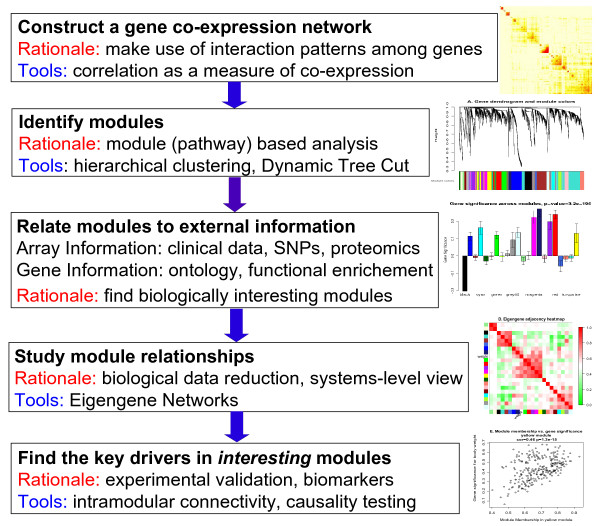
BACKGROUND: Correlation networks are increasingly being used in bioinformatics applications. For example, weighted gene co-expression network analysis is a systems biology method for describing the correlation patterns among genes across microarray samples. Weighted correlation network analysis (WGCNA) can be used for finding clusters (modules) of highly correlated genes, for summarizing such clusters using the module eigengene or an intramodular hub gene, for relating modules to one another and to external sample traits (using eigengene network methodology), and for calculating module membership measures. Correlation networks facilitate network based gene screening methods that can be used to identify candidate biomarkers or therapeutic targets. These methods have been successfully applied in various biological contexts, e.g. cancer, mouse genetics, yeast genetics, and analysis of brain imaging data. While parts of the correlation network methodology have been described in separate publications, there is a need to provide a user-friendly, comprehensive, and consistent software implementation and an accompanying tutorial. RESULTS: The WGCNA R software package is a comprehensive collection of R functions for performing various aspects of weighted correlation network analysis. The package includes functions for network construction, module detection, gene selection, calculations of topological properties, data simulation, visualization, and interfacing with external software. Along with the R package we also present R software tutorials. While the methods development was motivated by gene expression data, the underlying data mining approach can be applied to a variety of different settings. CONCLUSION: The WGCNA package provides R functions for weighted correlation network analysis, e.g. co-expression network analysis of gene expression data. The R package along with its source code and additional material are freely available at http://www.genetics.ucla.edu/labs/horvath/CoexpressionNetwork/Rpackages/WGCNA.
Overview
The claims and statistics of this paper haven’t been checked yet.
Free: it reads the open-access text and checks the first 5 claims that cite a source we can check. Create a free account to check every claim.
Integrity signals
Registry
Cites
Statistics
Figures
Verification
Claims the paper makes
The claims and statistics of this paper haven’t been checked yet.
Free: it reads the open-access text and checks the first 5 claims that cite a source we can check. Create a free account to check every claim.
Claims other papers make about this one
Each is checked against this paper’s own text: does it say what the citing paper says it does?
The source backs part of the claim, not all of it — or backs it for a different population, condition or comparison.
In the citing paper
“The most frequently used programs for differential clustering analysis, which have also been compared with others programs, are WGCNA [54], DICER [4] and DiffCoEx [100], all of which first identify modules co-expressed across the full set of study samples.”
From Gene co-expression analysis for functional classification and gene–disease predictions (2017) · cites this paper as [54]
Experimental — accuracy not yet measuredThe source backs part of the claim, not all of it — or backs it for a different population, condition or comparison.
In the citing paper
“Protein–protein interaction (PPI) networks and weighted gene co-expression network analysis (WGCNA) based on the RNA sequencing and microarray data have been revealed to establish potent organized biological strategies for mining the functional gene modules and detecting novel prognostic biomarkers [11,12].”
From Bioinformatics Analysis and Validation of Potential Markers Associated with Prediction and Prognosis of Gastric Cancer (2024) · cites this paper as [11]
Experimental — accuracy not yet measuredThe source backs part of the claim, not all of it — or backs it for a different population, condition or comparison.
In the citing paper
“Subsequently, methods such as Weighted Gene Co-expression Network Analysis (WGCNA) enhanced network granularity by identifying modules of highly co-expressed genes, offering biologically relevant insights into co-regulated pathways implicated in AD244,299.”
From Artificial intelligence-driven multi-omics approaches in Alzheimer's disease: Progress, challenges, and future directions (2025) · cites this paper as [299]
Experimental — accuracy not yet measuredThe source backs part of the claim, not all of it — or backs it for a different population, condition or comparison.
In the citing paper
“We identified four modules—ME5, ME7, ME12 and ME15—that were significantly associated with MLs containing foamy microglia (Fig. 3e).”
From Foamy microglia link oxylipins to disease progression in multiple sclerosis (2026) · cites this paper as [39]
Experimental — accuracy not yet measuredThe cited source says what the claim attributes to it.
In the citing paper
“A major family of methods in this category is based on co-expression analysis (reviewed in [32]), and has been broadly used on bulk gene expression data (e.g. GENIE3 [33] and WGCNA [34], see [27, 35] for benchmark comparisons).”
From Mapping gene regulatory networks from single-cell omics data (2018) · cites this paper as [34]
11 more claims about this paper
Create a free account to see every claim other papers make about this one.
Self-check
Percentages, sums and reported differences re-computed from the paper’s own numbers.
The self-check needs the paper’s full text.
Citations
Cites
Cytoscape: A software Environment for integrated models of biomolecular interaction networks
Shannon, P., Markiel, A., Ozier, O., Baliga, N. S., Wang, J. T., Ramage, D., Amin, N., Schwikowski, B., & Ideker, T. (2003) · Genome Research · doi:10.1101/gr.1239303 · Cited by 51,888 · cited 1×
“For example, our R functions exportNetworkToVisANT and exportNetworkToCyto-scape allow the user to export networks in a format suitable for VisANT [37] and Cytoscape [38], respectively.”
Gene Ontology: tool for the unification of biology
Ashburner, M., Ball, C. A., Blake, J. A., Botstein, D., Butler, H., Cherry, J. M., Davis, A. P., Dolinski, K., Dwight, S. S., Eppig, J. T., et al. (2000) · Nature Genetics · doi:10.1038/75556 · Cited by 43,206
Collective dynamics of ‘small-world’ networks
Watts, D. J., & Strogatz, S. H. (1998) · Nature · doi:10.1038/30918 · Cited by 43,060 · cited 2×
“where A (q) denotes the n (q) × n (q) adjacency matrix corresponding to the sub-network formed by the genes of module q. Another useful concept is the clustering coefficient of gene i, which is a measure of 'cliquishness' [ 34 ].”
BackgroundMethodFinding groups in data: an introduction to cluster analysis
(1991) · Choice Reviews Online · doi:10.5860/choice.28-4558 · Cited by 10,474
DAVID: Database for Annotation, Visualization, and Integrated Discovery
Dennis, G., Sherman, B. T., Hosack, D. A., Yang, J., Gao, W., Lane, H. C., & Lempicki, R. A. (2003) · Genome Biology · doi:10.1186/gb-2003-4-5-p3 · Cited by 9,327 · cited 2×
“We used the online software David [40] to determine whether the three body weight related modules were significantly enriched with regard to known gene ontologies.”
MethodFinding Groups in Data: An Introduction to Cluster Analysis
Kaufman, L., & Rousseeuw, P. J. (1990) · Wiley Series in Probability and Statistics · doi:10.1002/9780470316801 · Cited by 7,344
A General Framework for Weighted Gene Co-Expression Network Analysis
Zhang, B., & Horvath, S. (2005) · Statistical Applications in Genetics and Molecular Biology · doi:10.2202/1544-6115.1128 · Cited by 5,684 · cited 6×
“For weighted networks, 0 ≤ aij ≤ 1 implies that 0 ≤ ClusterCoefi ≤ 1 [5].”
InfluentialSelf-citationMissing Value Estimation Methods for DNA Microarrays
Troyanskaya, O., Cantor, M., Sherlock, G., Brown, P., Hastie, T., Tibshirani, R., Botstein, D., & Altman, R. B. (2001) · Bioinformatics · doi:10.1093/bioinformatics/17.6.520 · Cited by 4,230 · cited 1×
“Eigengene calculation incorporates imputation of missing values implemented in the package impute [31,32].”
MethodHierarchical Organization of Modularity in Metabolic Networks
Ravasz, E., Somera, A. L., Mongru, D. A., Oltvai, Z. N., & Barabási, A.-L. (2002) · Science · doi:10.1126/science.1073374 · Cited by 4,224 · cited 1×
“The mean clustering coefficient has been used to measure the extent of module structure present in a network [26,34].”
MethodBioinformatics and Computational Biology Solutions Using R and Bioconductor
(2005) · Statistics for Biology and Health · doi:10.1007/0-387-29362-0 · Cited by 3,289
Research works printed but not linked: 1
- (2006) FDT fields: Tools for Spatial Data Tech rep, National Center for Atmospheric Research, Boulder, CO 2007
Cited by
Items 401–500 of 1,268
Sajuthi, S. P., DeFord, P., Li, Y., Jackson, N. D., Montgomery, M. T., Everman, J. L., Rios, C. L., Pruesse, E., Nolin, J. D., Plender, E. G., et al. (2020) · Nature Communications · doi:10.1038/s41467-020-18781-2 · Cited by 186
Boroviak, T., Stirparo, G. G., Dietmann, S., Hernando-Herraez, I., Mohammed, H., Reik, W., Smith, A., Sasaki, E., Nichols, J., & Bertone, P. (2018) · Development · doi:10.1242/dev.167833 · Cited by 214
Spatial mapping reveals human adipocyte subpopulations with distinct sensitivities to insulin
Bäckdahl, J., Franzén, L., Massier, L., Li, Q., Jalkanen, J., Gao, H., Andersson, A., Bhalla, N., Thorell, A., Rydén, M., et al. (2021) · Cell Metabolism · doi:10.1016/j.cmet.2021.07.018 · Cited by 209
Hoskinson, C., Dai, D. L. Y., Del Bel, K. L., Becker, A. B., Moraes, T. J., Mandhane, P. J., Finlay, B. B., Simons, E., Kozyrskyj, A. L., Azad, M. B., et al. (2023) · Nature Communications · doi:10.1038/s41467-023-40336-4 · Cited by 199
Analysis of Transcriptome Complexity Through RNA Sequencing in Normal and Failing Murine Hearts
Lee, J.-H., Gao, C., Peng, G., Greer, C., Ren, S., Wang, Y., & Xiao, X. (2011) · Circulation Research · doi:10.1161/circresaha.111.249433 · Cited by 209
Early Alzheimer’s disease pathology in human cortex involves transient cell states
Gazestani, V., Kamath, T., Nadaf, N. M., Dougalis, A., Burris, S. J., Rooney, B., Junkkari, A., Vanderburg, C., Pelkonen, A., Gomez-Budia, M., et al. (2023) · Cell · doi:10.1016/j.cell.2023.08.005 · Cited by 209
Reprograming of gut microbiome energy metabolism by the FUT2 Crohn’s disease risk polymorphism
Tong, M., McHardy, I., Ruegger, P., Goudarzi, M., Kashyap, P. C., Haritunians, T., Li, X., Graeber, T. G., Schwager, E., Huttenhower, C., et al. (2014) · The ISME Journal · doi:10.1038/ismej.2014.64 · Cited by 207
Transcriptional profiles of bovine in vivo pre-implantation development
Jiang, Z., Sun, J., Dong, H., Luo, O., Zheng, X., Obergfell, C., Tang, Y., Bi, J., O’Neill, R., Ruan, Y., et al. (2014) · BMC Genomics · doi:10.1186/1471-2164-15-756 · Cited by 213
Silverman, E. K. (2020) · Annual Review of Physiology · doi:10.1146/annurev-physiol-021317-121224 · Cited by 211
From correlation to causation: analysis of metabolomics data using systems biology approaches
Rosato, A., Tenori, L., Cascante, M., De Atauri Carulla, P. R., Martins dos Santos, V. A. P., & Saccenti, E. (2018) · Metabolomics · doi:10.1007/s11306-018-1335-y · Cited by 213
Shared Molecular Neuropathology Across Major Psychiatric Disorders Parallels Polygenic Overlap
Gandal, M. J., Haney, J. R., Parikshak, N. N., Leppa, V., Ramaswami, G., Hartl, C., Schork, A. J., Appadurai, V., Buil, A., Werge, T. M., et al. (2019) · Focus · doi:10.1176/appi.focus.17103 · Cited by 195
Discovery of target genes and pathways at GWAS loci by pooled single-cell CRISPR screens
Morris, J. A., Caragine, C., Daniloski, Z., Domingo, J., Barry, T., Lu, L., Davis, K., Ziosi, M., Glinos, D. A., Hao, S., et al. (2023) · Science · doi:10.1126/science.adh7699 · Cited by 208
Single-cell transcriptomic analysis of allergen-specific T cells in allergy and asthma
Seumois, G., Ramírez-Suástegui, C., Schmiedel, B. J., Liang, S., Peters, B., Sette, A., & Vijayanand, P. (2020) · Science Immunology · doi:10.1126/sciimmunol.aba6087 · Cited by 212
Platelets contribute to disease severity in COVID‐19
Barrett, T. J., Bilaloglu, S., Cornwell, M., Burgess, H. M., Virginio, V. W., Drenkova, K., Ibrahim, H., Yuriditsky, E., Aphinyanaphongs, Y., Lifshitz, M., et al. (2021) · Journal of Thrombosis and Haemostasis · doi:10.1111/jth.15534 · Cited by 202
Zemek, R. M., De Jong, E., Chin, W. L., Schuster, I. S., Fear, V. S., Casey, T. H., Forbes, C., Dart, S. J., Leslie, C., Zaitouny, A., et al. (2019) · Science Translational Medicine · doi:10.1126/scitranslmed.aav7816 · Cited by 212
Modeling Rett Syndrome Using TALEN-Edited MECP2 Mutant Cynomolgus Monkeys
Chen, Y., Yu, J., Niu, Y., Qin, D., Liu, H., Li, G., Hu, Y., Wang, J., Lu, Y., Kang, Y., et al. (2017) · Cell · doi:10.1016/j.cell.2017.04.035 · Cited by 204
Balzer, M. S., Doke, T., Yang, Y.-W., Aldridge, D. L., Hu, H., Mai, H., Mukhi, D., Ma, Z., Shrestha, R., Palmer, M. B., et al. (2022) · Nature Communications · doi:10.1038/s41467-022-31772-9 · Cited by 205
Lee, S., Devanney, N. A., Golden, L. R., Smith, C. T., Schwartz, J. L., Walsh, A. E., Clarke, H. A., Goulding, D. S., Allenger, E. J., Morillo-Segovia, G., et al. (2023) · Cell Reports · doi:10.1016/j.celrep.2023.112196 · Cited by 203
Jeffery, I. B., Das, A., O’Herlihy, E., Coughlan, S., Cisek, K., Moore, M., Bradley, F., Carty, T., Pradhan, M., Dwibedi, C., et al. (2020) · Gastroenterology · doi:10.1053/j.gastro.2019.11.301 · Cited by 202
Zheng, P., Wu, J., Zhang, H., Perry, S. W., Yin, B., Tan, X., Chai, T., Liang, W., Huang, Y., Li, Y., et al. (2021) · Molecular Psychiatry · doi:10.1038/s41380-020-0744-2 · Cited by 205
A Quantitative Framework to Evaluate Modeling of Cortical Development by Neural Stem Cells
Stein, J. L., de la Torre-Ubieta, L., Tian, Y., Parikshak, N. N., Hernández, I. A., Marchetto, M. C., Baker, D. K., Lu, D., Hinman, C. R., Lowe, J. K., et al. (2014) · Neuron · doi:10.1016/j.neuron.2014.05.035 · Cited by 201
Lombardo, M. V., Moon, H. M., Su, J., Palmer, T. D., Courchesne, E., & Pramparo, T. (2018) · Molecular Psychiatry · doi:10.1038/mp.2017.15 · Cited by 201
Dynamic cluster-based over-demand prediction in bike sharing systems
Chen, L., Zhang, D., Wang, L., Yang, D., Ma, X., Li, S., Wu, Z., Pan, G., Nguyen, T.-M.-T., & Jakubowicz, J. (2016) · Proceedings of the 2016 ACM International Joint Conference on Pervasive and Ubiquitous Computing · doi:10.1145/2971648.2971652 · Cited by 196
A systematic survey of centrality measures for protein-protein interaction networks
Ashtiani, M., Salehzadeh-Yazdi, A., Razaghi-Moghadam, Z., Hennig, H., Wolkenhauer, O., Mirzaie, M., & Jafari, M. (2018) · BMC Systems Biology · doi:10.1186/s12918-018-0598-2 · Cited by 201
“Fundamental network concepts analysis To understand the network structure, we reviewed various network features using several R packages (30-32).”
MethodStirparo, G. G., Boroviak, T., Guo, G., Nichols, J., Smith, A., & Bertone, P. (2018) · Development · doi:10.1242/dev.158501 · Cited by 206
Lindström, N. O., De Sena Brandine, G., Tran, T., Ransick, A., Suh, G., Guo, J., Kim, A. D., Parvez, R. K., Ruffins, S. W., Rutledge, E. A., et al. (2018) · Developmental Cell · doi:10.1016/j.devcel.2018.05.010 · Cited by 212
Commensal microbiota modulate gene expression in the skin
Meisel, J. S., Sfyroera, G., Bartow-McKenney, C., Gimblet, C., Bugayev, J., Horwinski, J., Kim, B., Brestoff, J. R., Tyldsley, A. S., Zheng, Q., et al. (2018) · Microbiome · doi:10.1186/s40168-018-0404-9 · Cited by 201
Modularity: Genes, Development, and Evolution
Melo, D., Porto, A., Cheverud, J. M., & Marroig, G. (2016) · Annual Review of Ecology, Evolution, and Systematics · doi:10.1146/annurev-ecolsys-121415-032409 · Cited by 203
Integrated multi-omics approaches to improve classification of chronic kidney disease
Eddy, S., Mariani, L. H., & Kretzler, M. (2020) · Nature Reviews Nephrology · doi:10.1038/s41581-020-0286-5 · Cited by 198
Garrido-Martin, E. M., Mellows, T. W. P., Clarke, J., Ganesan, A.-P., Wood, O., Cazaly, A., Seumois, G., Chee, S. J., Alzetani, A., King, E. V., et al. (2020) · Journal for ImmunoTherapy of Cancer · doi:10.1136/jitc-2020-000778 · Cited by 196
Convergent genetic and expression data implicate immunity in Alzheimer's disease
International Genomics of Alzheimer's Disease Consortium (IGAP), Jones, L., Lambert, J., Wang, L., Choi, S., Harold, D., Vedernikov, A., Escott‐Price, V., Stone, T., Richards, A., et al. (2015) · Alzheimer's & Dementia · doi:10.1016/j.jalz.2014.05.1757 · Cited by 199
Kelley, K. W., Nakao-Inoue, H., Molofsky, A. V., & Oldham, M. C. (2018) · Nature Neuroscience · doi:10.1038/s41593-018-0216-z · Cited by 198
Autonomous biomedical research with an artificial intelligence agent
Huang, K., Zhang, S., Wang, H., Qu, Y., Lu, Y., Li, R., Roohani, Y., Qiu, L., Cao, S., Li, G. L., et al. (2026) · Science · doi:10.1126/science.adz4351 · Cited by 364
Clust: automatic extraction of optimal co-expressed gene clusters from gene expression data
Abu-Jamous, B., & Kelly, S. (2018) · Genome Biology · doi:10.1186/s13059-018-1536-8 · Cited by 210
“…characteristics in context, seven of the most commonly used co-expression clustering methods (Cross Clustering (CC) [12], k -means [6], self-organizing maps (SOMs) [8], Markov clustering (MCL) [16], hierarchical clustering (HC) [7], Click [10], and WGCNA [17]) were also applied to these datasets.”
MethodIntegrative Analysis Reveals a Molecular Stratification of Systemic Autoimmune Diseases
Barturen, G., Babaei, S., Català‐Moll, F., Martínez‐Bueno, M., Makowska, Z., Martorell‐Marugán, J., Carmona‐Sáez, P., Toro‐Domínguez, D., Carnero‐Montoro, E., Teruel, M., et al. (2021) · Arthritis & Rheumatology · doi:10.1002/art.41610 · Cited by 198
Targeting the Myofibroblastic Cancer-Associated Fibroblast Phenotype Through Inhibition of NOX4
Hanley, C. J., Mellone, M., Ford, K., Thirdborough, S. M., Mellows, T., Frampton, S. J., Smith, D. M., Harden, E., Szyndralewiez, C., Bullock, M., et al. (2018) · JNCI: Journal of the National Cancer Institute · doi:10.1093/jnci/djx121 · Cited by 195
Genome-wide, integrative analysis implicates microRNA dysregulation in autism spectrum disorder
Wu, Y. E., Parikshak, N. N., Belgard, T. G., & Geschwind, D. H. (2016) · Nature Neuroscience · doi:10.1038/nn.4373 · Cited by 195
The chromosome-scale reference genome of black pepper provides insight into piperine biosynthesis
Hu, L., Xu, Z., Wang, M., Fan, R., Yuan, D., Wu, B., Wu, H., Qin, X., Yan, L., Tan, L., et al. (2019) · Nature Communications · doi:10.1038/s41467-019-12607-6 · Cited by 197
GCNG: graph convolutional networks for inferring gene interaction from spatial transcriptomics data
Yuan, Y., & Bar-Joseph, Z. (2020) · Genome Biology · doi:10.1186/s13059-020-02214-w · Cited by 194
“While correlation-based methods can be used to identify gene co-expression interactions and networks [25, 26], these methods cannot be used to infer causality since their outcome is symmetric.”
MethodIntegrated Systems Biology Approach Identifies Novel Maternal and Placental Pathways of Preeclampsia
Than, N. G., Romero, R., Tarca, A. L., Kekesi, K. A., Xu, Y., Xu, Z., Juhasz, K., Bhatti, G., Leavitt, R. J., Gelencser, Z., et al. (2018) · Frontiers in Immunology · doi:10.3389/fimmu.2018.01661 · Cited by 195
Genetic mapping of etiologic brain cell types for obesity
Timshel, P. N., Thompson, J. J., & Pers, T. H. (2020) · eLife · doi:10.7554/elife.55851 · Cited by 186
Population-scale tissue transcriptomics maps long non-coding RNAs to complex disease
de Goede, O. M., Nachun, D. C., Ferraro, N. M., Gloudemans, M. J., Rao, A. S., Smail, C., Eulalio, T. Y., Aguet, F., Ng, B., Xu, J., et al. (2021) · Cell · doi:10.1016/j.cell.2021.03.050 · Cited by 193
Ritchie, S. C., Surendran, P., Karthikeyan, S., Lambert, S. A., Bolton, T., Pennells, L., Danesh, J., Di Angelantonio, E., Butterworth, A. S., & Inouye, M. (2023) · Scientific Data · doi:10.1038/s41597-023-01949-y · Cited by 193
Guintivano, J., Brown, T., Newcomer, A., Jones, M., Cox, O., Maher, B. S., Eaton, W. W., Payne, J. L., Wilcox, H. C., & Kaminsky, Z. A. (2014) · American Journal of Psychiatry · doi:10.1176/appi.ajp.2014.14010008 · Cited by 193
SARS-CoV-2 Infects Human Engineered Heart Tissues and Models COVID-19 Myocarditis
Bailey, A. L., Dmytrenko, O., Greenberg, L., Bredemeyer, A. L., Ma, P., Liu, J., Penna, V., Winkler, E. S., Sviben, S., Brooks, E., et al. (2021) · JACC: Basic to Translational Science · doi:10.1016/j.jacbts.2021.01.002 · Cited by 193
Hickey, R. J., Zhou, X., Settles, M. L., Erb, J., Malone, K., Hansmann, M. A., Shew, M. L., Van Der Pol, B., Fortenberry, J. D., & Forney, L. J. (2015) · mBio · doi:10.1128/mbio.00097-15 · Cited by 190
Specht, A. T., & Li, J. (2017) · Bioinformatics · doi:10.1093/bioinformatics/btw729 · Cited by 193
curatedOvarianData: clinically annotated data for the ovarian cancer transcriptome
Ganzfried, B. F., Riester, M., Haibe-Kains, B., Risch, T., Tyekucheva, S., Jazic, I., Wang, X. V., Ahmadifar, M., Birrer, M. J., Parmigiani, G., et al. (2013) · Database · doi:10.1093/database/bat013 · Cited by 200
Long Noncoding RNA MIR17HG Promotes Colorectal Cancer Progression via miR-17-5p
Xu, J., Meng, Q., Li, X., Yang, H., Xu, J., Gao, N., Sun, H., Wu, S., Familiari, G., Relucenti, M., et al. (2019) · Cancer Research · doi:10.1158/0008-5472.can-18-3880 · Cited by 196
Nutma, E., Fancy, N., Weinert, M., Tsartsalis, S., Marzin, M. C., Muirhead, R. C. J., Falk, I., Breur, M., de Bruin, J., Hollaus, D., et al. (2023) · Nature Communications · doi:10.1038/s41467-023-40937-z · Cited by 191
The cerebellum ages slowly according to the epigenetic clock
Horvath, S., Mah, V., Lu, A. T., Woo, J. S., Choi, O.-W., Jasinska, A. J., Riancho, J. A., Tung, S., Coles, N. S., Braun, J., et al. (2015) · Aging · doi:10.18632/aging.100742 · Cited by 191
Self-citationColoGuideEx: a robust gene classifier specific for stage II colorectal cancer prognosis
Ågesen, T. H., Sveen, A., Merok, M. A., Lind, G. E., Nesbakken, A., Skotheim, R. I., & Lothe, R. A. (2012) · Gut · doi:10.1136/gutjnl-2011-301179 · Cited by 192
Owens, N. D. L., Blitz, I. L., Lane, M. A., Patrushev, I., Overton, J. D., Gilchrist, M. J., Cho, K. W. Y., & Khokha, M. K. (2016) · Cell Reports · doi:10.1016/j.celrep.2015.12.050 · Cited by 191
The genetic basis of sex determination in grapes
Massonnet, M., Cochetel, N., Minio, A., Vondras, A. M., Lin, J., Muyle, A., Garcia, J. F., Zhou, Y., Delledonne, M., Riaz, S., et al. (2020) · Nature Communications · doi:10.1038/s41467-020-16700-z · Cited by 193
Tan, L., Ma, W., Wu, H., Zheng, Y., Xing, D., Chen, R., Li, X., Daley, N., Deisseroth, K., & Xie, X. S. (2021) · Cell · doi:10.1016/j.cell.2020.12.032 · Cited by 195
Hwang, Y., Kim, J., Shin, J.-Y., Kim, J.-I., Seo, J.-S., Webster, M. J., Lee, D., & Kim, S. (2013) · Translational Psychiatry · doi:10.1038/tp.2013.94 · Cited by 189
Network Medicine in the Age of Biomedical Big Data
Sonawane, A. R., Weiss, S. T., Glass, K., & Sharma, A. (2019) · Frontiers in Genetics · doi:10.3389/fgene.2019.00294 · Cited by 186
Immune disease risk variants regulate gene expression dynamics during CD4+ T cell activation
Soskic, B., Cano-Gamez, K., Smyth, D. J., Ambridge, K., Ke, Z., Matte, J. C., Bossini-Castillo, L., Kaplanis, J., Ramirez-Navarro, L., Lorenc, A., et al. (2022) · Nature Genetics · doi:10.1038/s41588-022-01066-3 · Cited by 186
Antenatal prediction of postpartum depression with blood DNA methylation biomarkers
Guintivano, J., Arad, M., Gould, T. D., Payne, J. L., & Kaminsky, Z. A. (2014) · Molecular Psychiatry · doi:10.1038/mp.2013.62 · Cited by 185
Comprehensive analysis of RNA-seq data reveals the complexity of the transcriptome in Brassica rapa
Tong, C., Wang, X., Yu, J., Wu, J., Li, W., Huang, J., Dong, C., Hua, W., & Liu, S. (2013) · BMC Genomics · doi:10.1186/1471-2164-14-689 · Cited by 190
Environmental drivers of a microbial genomic transition zone in the ocean’s interior
Mende, D. R., Bryant, J. A., Aylward, F. O., Eppley, J. M., Nielsen, T., Karl, D. M., & DeLong, E. F. (2017) · Nature Microbiology · doi:10.1038/s41564-017-0008-3 · Cited by 195
Rajbhandari, P., Thomas, B. J., Feng, A.-C., Hong, C., Wang, J., Vergnes, L., Sallam, T., Wang, B., Sandhu, J., Seldin, M. M., et al. (2018) · Cell · doi:10.1016/j.cell.2017.11.019 · Cited by 190
Chen, M., Guo, L., Ramakrishnan, M., Fei, Z., Vinod, K. K., Ding, Y., Jiao, C., Gao, Z., Zha, R., Wang, C., et al. (2022) · The Plant Cell · doi:10.1093/plcell/koac193 · Cited by 179
A genetic map of the mouse dorsal vagal complex and its role in obesity
Ludwig, M. Q., Cheng, W., Gordian, D., Lee, J., Paulsen, S. J., Hansen, S. N., Egerod, K. L., Barkholt, P., Rhodes, C. J., Secher, A., et al. (2021) · Nature Metabolism · doi:10.1038/s42255-021-00363-1 · Cited by 186
Comparing Statistical Methods for Constructing Large Scale Gene Networks
Allen, J. D., Xie, Y., Chen, M., Girard, L., & Xiao, G. (2012) · PLoS ONE · doi:10.1371/journal.pone.0029348 · Cited by 186
Modeling Host Genetic Regulation of Influenza Pathogenesis in the Collaborative Cross
Ferris, M. T., Aylor, D. L., Bottomly, D., Whitmore, A. C., Aicher, L. D., Bell, T. A., Bradel-Tretheway, B., Bryan, J. T., Buus, R. J., Gralinski, L. E., et al. (2013) · PLoS Pathogens · doi:10.1371/journal.ppat.1003196 · Cited by 193
Underwood, T. J., Hayden, A. L., Derouet, M., Garcia, E., Noble, F., White, M. J., Thirdborough, S., Mead, A., Clemons, N., Mellone, M., et al. (2015) · The Journal of Pathology · doi:10.1002/path.4467 · Cited by 186
Inferring Causal Gene Regulatory Networks from Coupled Single-Cell Expression Dynamics Using Scribe
Qiu, X., Rahimzamani, A., Wang, L., Ren, B., Mao, Q., Durham, T., McFaline-Figueroa, J. L., Saunders, L., Trapnell, C., & Kannan, S. (2020) · Cell Systems · doi:10.1016/j.cels.2020.02.003 · Cited by 185
Wehner, D., Cizelsky, W., Vasudevaro, M. D., Özhan, G., Haase, C., Kagermeier-Schenk, B., Röder, A., Dorsky, R. I., Moro, E., Argenton, F., et al. (2014) · Cell Reports · doi:10.1016/j.celrep.2013.12.036 · Cited by 183
microRNAs in the Same Clusters Evolve to Coordinately Regulate Functionally Related Genes
Wang, Y., Luo, J., Zhang, H., & Lu, J. (2016) · Molecular Biology and Evolution · doi:10.1093/molbev/msw089 · Cited by 186
Metabolomics and Multi-Omics Integration: A Survey of Computational Methods and Resources
Eicher, T., Kinnebrew, G., Patt, A., Spencer, K., Ying, K., Ma, Q., Machiraju, R., & Mathé, E. A. (2020) · Metabolites · doi:10.3390/metabo10050202 · Cited by 177
Gut microbiome variation modulates the effects of dietary fiber on host metabolism
Murga-Garrido, S. M., Hong, Q., Cross, T.-W. L., Hutchison, E. R., Han, J., Thomas, S. P., Vivas, E. I., Denu, J., Ceschin, D. G., Tang, Z.-Z., et al. (2021) · Microbiome · doi:10.1186/s40168-021-01061-6 · Cited by 185
Vijayakumar, B., Boustani, K., Ogger, P. P., Papadaki, A., Tonkin, J., Orton, C. M., Ghai, P., Suveizdyte, K., Hewitt, R. J., Desai, S. R., et al. (2022) · Immunity · doi:10.1016/j.immuni.2022.01.017 · Cited by 190
Multi-omic approaches for host-microbiome data integration
Chetty, A., & Blekhman, R. (2024) · Gut Microbes · doi:10.1080/19490976.2023.2297860 · Cited by 171
Transcriptomic Profiling of the Developing Cardiac Conduction System at Single-Cell Resolution
Goodyer, W. R., Beyersdorf, B. M., Paik, D. T., Tian, L., Li, G., Buikema, J. W., Chirikian, O., Choi, S., Venkatraman, S., Adams, E. L., et al. (2019) · Circulation Research · doi:10.1161/circresaha.118.314578 · Cited by 184
Link, V. M., Duttke, S. H., Chun, H. B., Holtman, I. R., Westin, E., Hoeksema, M. A., Abe, Y., Skola, D., Romanoski, C. E., Tao, J., et al. (2018) · Cell · doi:10.1016/j.cell.2018.04.018 · Cited by 182
Kotliarov, Y., Sparks, R., Martins, A. J., Mulè, M. P., Lu, Y., Goswami, M., Kardava, L., Banchereau, R., Pascual, V., Biancotto, A., et al. (2020) · Nature Medicine · doi:10.1038/s41591-020-0769-8 · Cited by 190
Fatty acid overproduction by gut commensal microbiota exacerbates obesity
Takeuchi, T., Kameyama, K., Miyauchi, E., Nakanishi, Y., Kanaya, T., Fujii, T., Kato, T., Sasaki, T., Tachibana, N., Negishi, H., et al. (2023) · Cell Metabolism · doi:10.1016/j.cmet.2022.12.013 · Cited by 178
Review on statistical methods for gene network reconstruction using expression data
Wang, Y. X. R., & Huang, H. (2014) · Journal of Theoretical Biology · doi:10.1016/j.jtbi.2014.03.040 · Cited by 182
Saris, C. G., Horvath, S., van Vught, P. W., van Es, M. A., Blauw, H. M., Fuller, T. F., Langfelder, P., DeYoung, J., Wokke, J. H., Veldink, J. H., et al. (2009) · BMC Genomics · doi:10.1186/1471-2164-10-405 · Cited by 181
Self-citationGeneNetwork: A Toolbox for Systems Genetics
Mulligan, M. K., Mozhui, K., Prins, P., & Williams, R. W. (2017) · Methods in Molecular Biology · doi:10.1007/978-1-4939-6427-7_4 · Cited by 184
Zhang, X., Feng, H., Li, Z., Li, D., Liu, S., Huang, H., & Li, M. (2018) · OncoTargets and Therapy · doi:10.2147/ott.s171791 · Cited by 183
A comprehensive survey of regulatory network inference methods using single cell RNA sequencing data
Nguyen, H., Tran, D., Tran, B., Pehlivan, B., & Nguyen, T. (2021) · Briefings in Bioinformatics · doi:10.1093/bib/bbaa190 · Cited by 177
Szebényi, K., Wenger, L. M. D., Sun, Y., Dunn, A. W. E., Limegrover, C. A., Gibbons, G. M., Conci, E., Paulsen, O., Mierau, S. B., Balmus, G., et al. (2021) · Nature Neuroscience · doi:10.1038/s41593-021-00923-4 · Cited by 177
Insights into TREM2 biology by network analysis of human brain gene expression data
Forabosco, P., Ramasamy, A., Trabzuni, D., Walker, R., Smith, C., Bras, J., Levine, A. P., Hardy, J., Pocock, J. M., Guerreiro, R., et al. (2013) · Neurobiology of Aging · doi:10.1016/j.neurobiolaging.2013.05.001 · Cited by 180
Gene networks specific for innate immunity define post-traumatic stress disorder
Breen, M. S., Maihofer, A. X., Glatt, S. J., Tylee, D. S., Chandler, S. D., Tsuang, M. T., Risbrough, V. B., Baker, D. G., O'Connor, D. T., Nievergelt, C. M., et al. (2015) · Molecular Psychiatry · doi:10.1038/mp.2015.9 · Cited by 180
DNA methylation in lung cells is associated with asthma endotypes and genetic risk
Nicodemus-Johnson, J., Myers, R. A., Sakabe, N. J., Sobreira, D. R., Hogarth, D. K., Naureckas, E. T., Sperling, A. I., Solway, J., White, S. R., Nobrega, M. A., et al. (2016) · JCI Insight · doi:10.1172/jci.insight.90151 · Cited by 180
Ig Superfamily Ligand and Receptor Pairs Expressed in Synaptic Partners in Drosophila
Tan, L., Zhang, K. X., Pecot, M. Y., Nagarkar-Jaiswal, S., Lee, P.-T., Takemura, S.-Y., McEwen, J. M., Nern, A., Xu, S., Tadros, W., et al. (2015) · Cell · doi:10.1016/j.cell.2015.11.021 · Cited by 190
Žuklys, S., Handel, A., Zhanybekova, S., Govani, F., Keller, M., Maio, S., Mayer, C. E., Teh, H. Y., Hafen, K., Gallone, G., et al. (2016) · Nature Immunology · doi:10.1038/ni.3537 · Cited by 179
Elevated protein synthesis in microglia causes autism-like synaptic and behavioral aberrations
Xu, Z.-X., Kim, G. H., Tan, J.-W., Riso, A. E., Sun, Y., Xu, E. Y., Liao, G.-Y., Xu, H., Lee, S.-H., Do, N.-Y., et al. (2020) · Nature Communications · doi:10.1038/s41467-020-15530-3 · Cited by 176
Sex-chromosome dosage effects on gene expression in humans
Raznahan, A., Parikshak, N. N., Chandran, V., Blumenthal, J. D., Clasen, L. S., Alexander-Bloch, A. F., Zinn, A. R., Wangsa, D., Wise, J., Murphy, D. G. M., et al. (2018) · Proceedings of the National Academy of Sciences · doi:10.1073/pnas.1802889115 · Cited by 179
Traxler, L., Herdy, J. R., Stefanoni, D., Eichhorner, S., Pelucchi, S., Szücs, A., Santagostino, A., Kim, Y., Agarwal, R. K., Schlachetzki, J. C. M., et al. (2022) · Cell Metabolism · doi:10.1016/j.cmet.2022.07.014 · Cited by 179
Estimating Sample-Specific Regulatory Networks
Kuijjer, M. L., Tung, M. G., Yuan, G., Quackenbush, J., & Glass, K. (2019) · iScience · doi:10.1016/j.isci.2019.03.021 · Cited by 182
Casero, D., Sandoval, S., Seet, C. S., Scholes, J., Zhu, Y., Ha, V. L., Luong, A., Parekh, C., & Crooks, G. M. (2015) · Nature Immunology · doi:10.1038/ni.3299 · Cited by 179
Application of Weighted Gene Co-expression Network Analysis for Data from Paired Design
Li, J., Zhou, D., Qiu, W., Shi, Y., Yang, J.-J., Chen, S., Wang, Q., & Pan, H. (2018) · Scientific Reports · doi:10.1038/s41598-017-18705-z · Cited by 177
Huang, Y., He, J., Xu, Y., Zheng, W., Wang, S., Chen, P., Zeng, B., Yang, S., Jiang, X., Liu, Z., et al. (2023) · Nature Genetics · doi:10.1038/s41588-023-01516-6 · Cited by 168
Hughes, C. D., Choi, M. L., Ryten, M., Hopkins, L., Drews, A., Botía, J. A., Iljina, M., Rodrigues, M., Gagliano, S. A., Gandhi, S., et al. (2019) · Acta Neuropathologica · doi:10.1007/s00401-018-1907-y · Cited by 177
Mine, A., Seyfferth, C., Kracher, B., Berens, M. L., Becker, D., & Tsuda, K. (2018) · The Plant Cell · doi:10.1105/tpc.17.00970 · Cited by 185
Circular HER2 RNA positive triple negative breast cancer is sensitive to Pertuzumab
Li, J., Ma, M., Yang, X., Zhang, M., Luo, J., Zhou, H., Huang, N., Xiao, F., Lai, B., Lv, W., et al. (2020) · Molecular Cancer · doi:10.1186/s12943-020-01259-6 · Cited by 176
APOE genotype regulates pathology and disease progression in synucleinopathy
Davis, A. A., Inman, C. E., Wargel, Z. M., Dube, U., Freeberg, B. M., Galluppi, A., Haines, J. N., Dhavale, D. D., Miller, R., Choudhury, F. A., et al. (2020) · Science Translational Medicine · doi:10.1126/scitranslmed.aay3069 · Cited by 177
Metadata
- Authors
- Langfelder, P., & Horvath, S.
- Affiliations
- University of California, Los Angeles (US)
- Corresponding author
- Horvath, Steve
- Venue
- BMC Bioinformatics
- Published
- 2008-12
- Volume
- 9
- Issue
- 1
- Pages
- 559-559
- ISSN
- 1471-2105 (ISSN-L)
- PMC
- PMC2631488
- OpenAlex
- W1966327575
- Cited by
- 27,252
- References
- 49
- Citations by year
- 2026: 3010 · 2025: 3785 · 2024: 4034 · 2023: 3455 · 2022: 3414 · 2021: 2988 · 2020: 2101 · 2019: 1423 · 2018: 869 · 2017: 721 · 2016: 514 · 2015: 335 · 2014: 228 · 2013: 160 · 2012: 103
- FWCI
- 13.70
- Type
- journal article
- Language
- en
- Open access
- gold
- doi.org
- Licence
- cc-by
- creativecommons.org/licenses/by/2.0 (tdm)
- Locations
- BMC Bioinformatics (publishedVersion, cc-by)
- PubMed Central (publishedVersion, cc-by)
- PubMed (publishedVersion)
- DOAJ (DOAJ: Directory of Open Access Journals) (submittedVersion)
- Funders
- National Cancer Institute (P50CA092131, P30CA016042)
- National Institute of Neurological Disorders and Stroke (R01NS050151, NS050151-01)
- Topics
- Life Sciences › Biochemistry, Genetics and Molecular Biology › Molecular Biology › Bioinformatics and Genomic Networks
- Life Sciences › Biochemistry, Genetics and Molecular Biology › Molecular Biology › Gene expression and cancer classification
- Life Sciences › Biochemistry, Genetics and Molecular Biology › Molecular Biology › Gene Regulatory Network Analysis
- Keywords
- weighted gene co-expression network analysis, gene co-expression network, module detection, module eigengenes, hub genes, module membership, gene expression data, R package, biomarker discovery, drug target identification, network topology
- MeSH terms
- Algorithms, Animals, Computer Graphics, Computing Methodologies, Humans, Pattern Recognition, Automated, Programming Languages, Software, Computational Biology, Oligonucleotide Array Sequence Analysis, Gene Expression Profiling, Databases, Genetic, Systems Biology, Mice
About these checks
Registry, retraction, Cites and statistics results are computed, not judged, with one exception: a printed reference that no index lists is read once by a model before it counts as a citation error. Claims are extracted by a model and kept only when their quote appears verbatim in the text; each cited source is then checked, with a model’s help, for whether it says what the claim relies on. Those verdicts can be wrong — read the claim’s quote and the cited source before relying on one.
Statistics and arithmetic are recomputed, not judged.
Confidence bands are shown only for fields calibrated on our annotated test set. None is calibrated yet, so no band is shown.
What counts as a claim ›How we measure confidence ›How we check this ›
Are you an author, or do you see a problem with this page? Request a review
Data sources
Bibliographic data: Semantic Scholar, OpenAlex, Crossref.
Contains information from the Semantic Scholar Academic Graph Datasets, made available under the ODC Attribution License (ODC-BY 1.0).
Semantic Scholar’s data is described in: Kinney, R., et al. (2023). The Semantic Scholar Open Data Platform. arXiv:2301.10140.
