

A tale of three next generation sequencing platforms: comparison of Ion torrent, pacific biosciences and illumina MiSeq sequencers
Open accessThe DOI matches its Crossref record; 32 of the 32 references it cites were found in a registry or an index.
Abstract
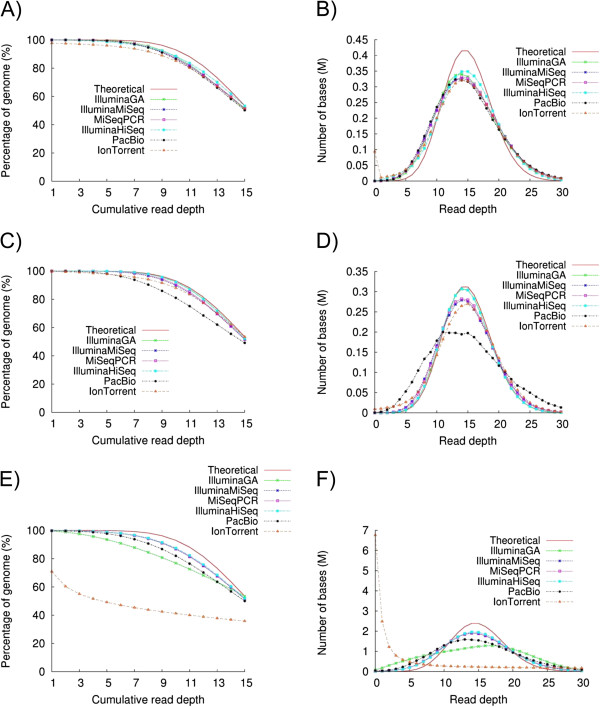
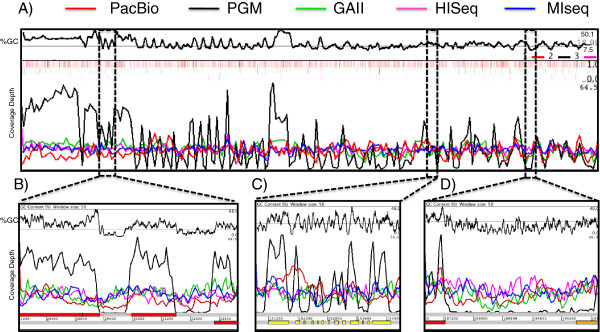
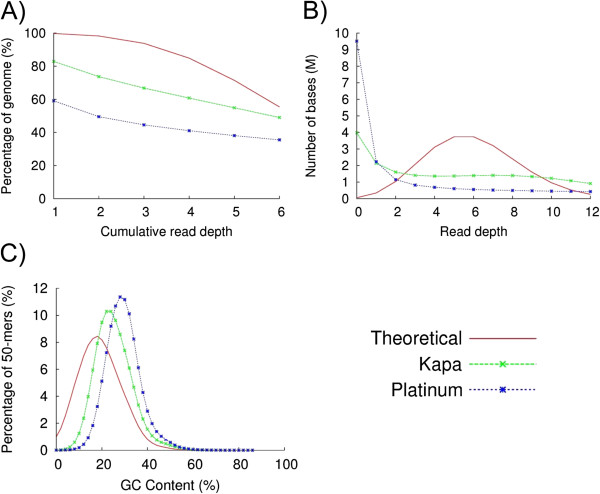
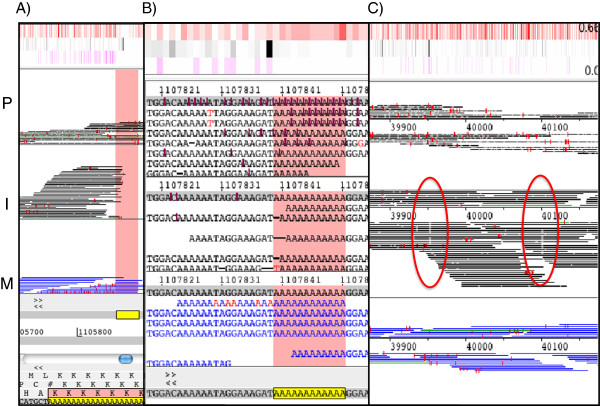
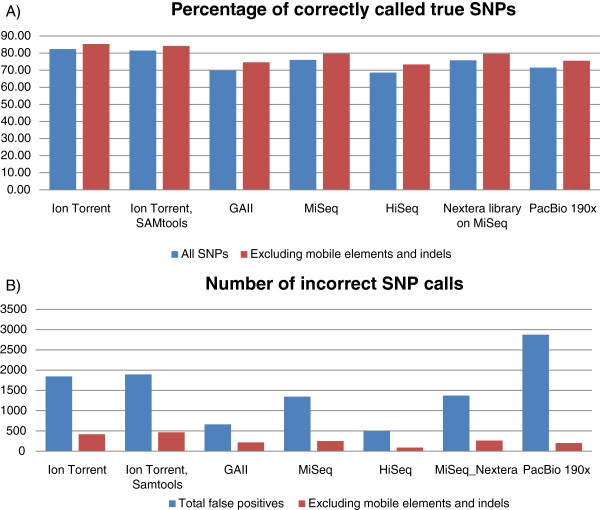
BACKGROUND: Next generation sequencing (NGS) technology has revolutionized genomic and genetic research. The pace of change in this area is rapid with three major new sequencing platforms having been released in 2011: Ion Torrent's PGM, Pacific Biosciences' RS and the Illumina MiSeq. Here we compare the results obtained with those platforms to the performance of the Illumina HiSeq, the current market leader. In order to compare these platforms, and get sufficient coverage depth to allow meaningful analysis, we have sequenced a set of 4 microbial genomes with mean GC content ranging from 19.3 to 67.7%. Together, these represent a comprehensive range of genome content. Here we report our analysis of that sequence data in terms of coverage distribution, bias, GC distribution, variant detection and accuracy. RESULTS: Sequence generated by Ion Torrent, MiSeq and Pacific Biosciences technologies displays near perfect coverage behaviour on GC-rich, neutral and moderately AT-rich genomes, but a profound bias was observed upon sequencing the extremely AT-rich genome of Plasmodium falciparum on the PGM, resulting in no coverage for approximately 30% of the genome. We analysed the ability to call variants from each platform and found that we could call slightly more variants from Ion Torrent data compared to MiSeq data, but at the expense of a higher false positive rate. Variant calling from Pacific Biosciences data was possible but higher coverage depth was required. Context specific errors were observed in both PGM and MiSeq data, but not in that from the Pacific Biosciences platform. CONCLUSIONS: All three fast turnaround sequencers evaluated here were able to generate usable sequence. However there are key differences between the quality of that data and the applications it will support.
Overview
The claims and statistics of this paper haven’t been checked yet.
Free: it reads the open-access text and checks the first 5 claims that cite a source we can check. Create a free account to check every claim.
Integrity signals
Registry
Cites
Statistics
Figures
Verification
Claims the paper makes
The claims and statistics of this paper haven’t been checked yet.
Free: it reads the open-access text and checks the first 5 claims that cite a source we can check. Create a free account to check every claim.
Claims other papers make about this one
Each is checked against this paper’s own text: does it say what the citing paper says it does?
The source backs part of the claim, not all of it — or backs it for a different population, condition or comparison.
In the citing paper
“The limit of detection in these experiments is based on the inherent error rate of the Illumina platform (up to 0.4%), which has previously been described for genome editing experiment analyzed by NGS71–73.”
From A high-fidelity Cas9 mutant delivered as a ribonucleoprotein complex enables efficient gene editing in human hematopoietic stem and progenitor cells (2018) · cites this paper as [72]
Experimental — accuracy not yet measuredThe check wasn’t confident either way, so it gives no verdict — never disputed.
In the citing paper
“RNA-seq is expected to produce some reads from highly expressed transcripts that begin at the same nucleotide and are thus designated “duplicate.””
From Multi-platform assessment of transcriptome profiling using RNA-seq in the ABRF next-generation sequencing study (2014) · cites this paper as [8]
Experimental — accuracy not yet measured
Self-check
Percentages, sums and reported differences re-computed from the paper’s own numbers.
The self-check needs the paper’s full text.
Citations
Cites
The Sequence Alignment/Map format and SAMtools
Li, H., Handsaker, B., Wysoker, A., Fennell, T., Ruan, J., Homer, N., Marth, G., Abecasis, G., Durbin, R., & 1000 Genome Project Data Processing Subgroup (2009) · Bioinformatics · doi:10.1093/bioinformatics/btp352 · Cited by 62,041
Fast and accurate short read alignment with Burrows-Wheeler transform
Li, H., & Durbin, R. (2009) · Bioinformatics · doi:10.1093/bioinformatics/btp324 · Cited by 58,607
RNA-Seq: a revolutionary tool for transcriptomics
Wang, Z., Gerstein, M., & Snyder, M. (2009) · Nature Reviews Genetics · doi:10.1038/nrg2484 · Cited by 13,174 · cited 1×
“Illumina sequencing has matured to the point where a great many applications [15-24] have been developed on the platform.”
BackgroundGenome sequence of the human malaria parasite Plasmodium falciparum
Gardner, M. J., Hall, N., Fung, E., White, O., Berriman, M., Hyman, R. W., Carlton, J. M., Pain, A., Nelson, K. E., Bowman, S., et al. (2002) · Nature · doi:10.1038/nature01097 · Cited by 4,407 · cited 1×
“4% [14], we use it as one of our test genomes, representing a significant challenge to most sequencing technologies.”
Method(1997) · Obesity Surgery · doi:10.1381/096089297765555359 · Cited by 3,916
Real-Time DNA Sequencing from Single Polymerase Molecules
Eid, J., Fehr, A., Gray, J., Luong, K., Lyle, J., Otto, G., Peluso, P., Rank, D., Baybayan, P., Bettman, B., et al. (2009) · Science · doi:10.1126/science.1162986 · Cited by 3,732
Accurate whole human genome sequencing using reversible terminator chemistry
Bentley, D. R., Balasubramanian, S., Swerdlow, H. P., Smith, G. P., Milton, J., Brown, C. G., Hall, K. P., Evers, D. J., Barnes, C. L., Bignell, H. R., et al. (2008) · Nature · doi:10.1038/nature07517 · Cited by 3,684
Self-citationGenome-Wide Mapping of in Vivo Protein-DNA Interactions
Johnson, D. S., Mortazavi, A., Myers, R. M., & Wold, B. (2007) · Science · doi:10.1126/science.1141319 · Cited by 2,927
An integrated semiconductor device enabling non-optical genome sequencing
Rothberg, J. M., Hinz, W., Rearick, T. M., Schultz, J., Mileski, W., Davey, M., Leamon, J. H., Johnson, K., Milgrew, M. J., Edwards, M., et al. (2011) · Nature · doi:10.1038/nature10242 · Cited by 2,172
Diep, B. A., Gill, S. R., Chang, R. F., Phan, T. H., Chen, J. H., Davidson, M. G., Lin, F., Lin, J., Carleton, H. A., Mongodin, E. F., et al. (2006) · The Lancet · doi:10.1016/s0140-6736(06)68231-7 · Cited by 1,633 · cited 9×
“MGEs were manually identified from the S. aureus USA300_FPR3757 genome annotation SNPs called from the resulting alignment provided a high-quality reference set for comparison with the SNPs identified by each sequencing platform.”
MethodInfluential
Cited by
Items 501–600 of 1,000
Yeo, Z. X., Wong, J. C. L., Rozen, S., & Lee, A. S. G. (2014) · BMC Genomics · doi:10.1186/1471-2164-15-516 · Cited by 51
“Nevertheless, several studies have compared currently available benchtop sequencers to determine their mutation detection accuracy [3-5].”
BackgroundDonkor, E. (2013) · Genes · doi:10.3390/genes4040556 · Cited by 42
“In recent times, the sequencing industry seems to be dominated by Illumina, who have introduced three next generation sequencing platform including GAIIx, Hiseq 2000 and Miseq [46].”
BackgroundComprehensive Protocols for CRISPR/Cas9‐based Gene Editing in Human Pluripotent Stem Cells
Santos, D. P., Kiskinis, E., Eggan, K. C., & Merkle, F. T. (2016) · Current Protocols in Stem Cell Biology · doi:10.1002/cpsc.15 · Cited by 46
“…SMRT sequencing (Hendel et al., 2014), deconvolution of Sanger sequencing reads (Brinkman et al., 2014; Hill et al., 2014), and barcoded deep sequencing (Bell et al., 2014; Merkle et al., 2015; Quail et al., 2012) to allow for the efficient screening and identification of correctly targeted clones.”
BackgroundMethodGenomic Prediction of Antimicrobial Resistance: Ready or Not, Here It Comes!
Ransom, E. M., Potter, R. F., Dantas, G. A., & Burnham, C. D. (2020) · Clinical Chemistry · doi:10.1093/clinchem/hvaa172 · Cited by 53
Menkis, A., Marčiulynas, A., Gedminas, A., Lynikienė, J., & Povilaitienė, A. (2015) · Microbial Ecology · doi:10.1007/s00248-015-0638-z · Cited by 45
“Different high-throughput sequencing platforms have their advantages and limitations [29].”
BackgroundGenome Mapping in Plant Comparative Genomics
Chaney, L., Sharp, A. R., Evans, C. R., & Udall, J. A. (2016) · Trends in Plant Science · doi:10.1016/j.tplants.2016.05.004 · Cited by 51
Antunes, J., Walichiewicz, P., Forouzmand, E., Barta, R., Didier, M., Han, Y., Perez, J. C., Snedecor, J., Zlatkov, C., Padmabandu, G., et al. (2024) · Forensic Science International Genetics · doi:10.1016/j.fsigen.2024.103055 · Cited by 50
Get your high-quality low-cost genome sequence
Faino, L., & Thomma, B. P. H. J. (2014) · Trends in Plant Science · doi:10.1016/j.tplants.2014.02.003 · Cited by 47
Chen, S., Ge, H., Wang, X., Pan, X., Yao, X., Li, X., Zhang, C., Chen, F., Jiang, F., Li, P., et al. (2013) · Genome Medicine · doi:10.1186/gm422 · Cited by 41
Genomic and Proteomic Studies on the Mode of Action of Oxaboroles against the African Trypanosome
Jones, D. C., Foth, B. J., Urbaniak, M. D., Patterson, S., Ong, H. B., Berriman, M., & Fairlamb, A. H. (2015) · PLoS neglected tropical diseases · doi:10.1371/journal.pntd.0004299 · Cited by 42
“6–2 μg of genomic DNA was used to produce standard Illumina libraries of 400–600 base pairs (bp) [34].”
MethodMisyura, M., Zhang, T., Sukhai, M. A., Thomas, M., Garg, S., Kamel‐Reid, S., & Stockley, T. L. (2016) · Journal of Molecular Diagnostics · doi:10.1016/j.jmoldx.2016.06.004 · Cited by 47
Modular probes for enriching and detecting complex nucleic acid sequences
Wang, J. S., Yan, Y. H., & Zhang, D. Y. (2017) · Nature Chemistry · doi:10.1038/nchem.2820 · Cited by 41
Plasmonic zero mode waveguide for highly confined and enhanced fluorescence emission
Ponzellini, P., Zambrana‐Puyalto, X., Maccaferri, N., Lanzanò, L. L., Angelis, F. D., & Garoli, D. (2018) · Nanoscale · doi:10.1039/c8nr04103b · Cited by 42
Sturk‐Andreaggi, K., Parson, W., Allen, M., & Marshall, C. K. (2019) · Forensic Science International Genetics · doi:10.1016/j.fsigen.2019.102205 · Cited by 46
Cosentino, R. O., Brink, B. G., & Siegel, T. N. (2021) · NAR Genomics and Bioinformatics · doi:10.1093/nargab/lqab082 · Cited by 44
“Genome assemblies based on long-read technologies are usually more contiguous than those based on short reads, but at the nucleotide level they are less accurate (40).”
BackgroundJudge, K., Hunt, M., Reuter, S., Tracey, A., Quail, M. A., Parkhill, J., & Peacock, S. J. (2016) · Microbial Genomics · doi:10.1099/mgen.0.000085 · Cited by 47
“(Quail et al., 2012) DNA libraries were sequenced using the HiSeq platform (Illumina Inc.”
MethodSelf-citationInnovative in Silico Approaches for Characterization of Genes and Proteins
Bhat, G. R., Sethi, I., Rah, B., Kumar, R., & Afroze, D. (2022) · Frontiers in Genetics · doi:10.3389/fgene.2022.865182 · Cited by 53
“Ion Torrent and Illumina are the two most well-known sequencing fi rms for second-generation sequencing systems (Kircher et al., 2011; Quail et al., 2012).”
BackgroundConserved chromatin and repetitive patterns reveal slow genome evolution in frogs
Bredeson, J. V., Mudd, A. B., Medina-Ruiz, S., Mitros, T., Smith, O. K., Miller, K. E., Lyons, J. B., Batra, S. S., Park, J., Berkoff, K. C., et al. (2024) · Nature Communications · doi:10.1038/s41467-023-43012-9 · Cited by 55
Forensic Microbiology: When, Where and How
Nodari, R., Arghittu, M., Bailo, P., Cattaneo, C., Creti, R., D’Aleo, F., Saegeman, V., Franceschetti, L., Novati, S., Fernández-Rodríguez, A., et al. (2024) · Microorganisms · doi:10.3390/microorganisms12050988 · Cited by 51
“However, when compared to Illumina sequencing, it is generally more expensive, has a lower throughput and can have a higher error rate [89].”
BackgroundPettengill, J., Luo, Y., Davis, S., Chen, Y., González‐Escalona, N., Ottesen, A., Rand, H. A., Allard, M. W., & Strain, E. A. (2014) · PeerJ · doi:10.7717/peerj.620 · Cited by 52
“For example, studies of “benchtop” NGS platforms have repeatedly found that the MiSeq has the lowest single-base error rate followed by Roche’s 454 GS Junior followed by the Ion Torrent PGM (Junemann et al., 2013; Loman et al., 2012; Quail et al., 2012); unlike the MiSeq, homopolymer-associated indel errors were an ar…”
MethodJia, J. M., Xu, Z., Xin, T., Shi, L., & Song, J. (2017) · Frontiers in Plant Science · doi:10.3389/fpls.2017.00926 · Cited by 47
“First, relative to the cost associated with the 454 pyrosequencing and Illumina MiSeq sequencing platforms, SMRT sequencing instruments are expensive (Quail et al., 2012).”
BackgroundPresence of Human Hepegivirus-1 in a Cohort of People Who Inject Drugs
Kandathil, A. J., Breitwieser, F. P., Sachithanandham, J., Robinson, M. L., Mehta, S. H., Timp, W., Salzberg, S. L., Thomas, D. L., & Balagopal, A. (2017) · Annals of Internal Medicine · doi:10.7326/m17-0085 · Cited by 42
Ghosh, M., Sharma, N., Singh, A. K., Gera, M., Pulicherla, K. K., & Jeong, D. K. (2018) · Critical Reviews in Biotechnology · doi:10.1080/07388551.2018.1451819 · Cited by 50
“genomic research at the next level [23].”
Cam, B. L., Sargent, D., Gouzy, J., Amselem, J., Bellanger, M., Bouchez, O., Brown, S., Caffier, V., de Gracia, M., Debuchy, R., et al. (2019) · G3 Genes Genomes Genetics · doi:10.1534/g3.119.400047 · Cited by 48
“Another PacBio sequencing was performed at the Cold Spring Harbour core genomics facility (CSHL, NY, USA); genomic DNA was sheared and purified, and a long-insert library was prepared following the protocol described in Quail et al. (2012).”
MethodInterrogating 1000 insect genomes for NUMTs: A risk assessment for estimates of species richness
Hebert, P. D. N., Bock, D. G., & Prosser, S. W. J. (2023) · PLoS ONE · doi:10.1371/journal.pone.0286620 · Cited by 49
“However, most studies target a shorter segment (typically < 500 bp; [48–50]) because species recovery is facilitated by high read depth [51,52] and this is achieved more cost-effectively by short-read platforms [42].”
Braun, P. R., Grass, G., Aceti, A., Serrecchia, L., Affuso, A., Marino, L. B., Grimaldi, S., Pagano, S., Hanczaruk, M. A., Georgi, E., et al. (2015) · PLoS ONE · doi:10.1371/journal.pone.0135346 · Cited by 40
“Unfortunately, no reliable information from SNR loci can be expected from whole genome sequencing data obtained by the PGM system and possibly other platforms since the Ion Torrent technology, which was used in this study, was reported to exhibit high error rates when sequencing homopolymeric stretches [58].”
BackgroundRawson, J. M. O., Landman, S. R., Reilly, C., & Mansky, L. M. (2015) · Retrovirology · doi:10.1186/s12977-015-0180-6 · Cited by 49
“Discussion Detection of rare mutations is often difficult with nextgeneration sequencing technologies due to high error rates, which for Illumina platforms typically range from ~10−2 m/bp for unfiltered data and ~10−3 to 10−4 m/bp for stringently filtered data [33–35, 46–49].”
BackgroundLlamas, B., Brotherton, P., Mitchell, K. J., Templeton, J. E. L., Thomson, V. A., Metcalf, J. L., Armstrong, K. N., Kasper, M., Richards, S. M., Camens, A. B., et al. (2014) · Molecular Biology and Evolution · doi:10.1093/molbev/msu338 · Cited by 43
“Impact of Sequence Data Processing on Phylogenetic Results The bulk of the sequencing data was generated using an Ion Torrent PGM, a platform known to generate homopolymerassociated indel errors (Loman et al. 2012; Quail et al. 2012; Bragg et al. 2013).”
BackgroundMethodReporting Tumor Molecular Heterogeneity in Histopathological Diagnosis
Mafficini, A., Amato, E., Fassan, M., Simbolo, M., Antonello, D., Vicentini, C., Scardoni, M., Bersani, S., Gottardi, M., Rusev, B. C., et al. (2014) · PLoS ONE · doi:10.1371/journal.pone.0104979 · Cited by 47
“Finally, next generation targeted sequencing on paraffin tissue is much less expensive than the sum of many single conventional analyses, while having equal or even higher sensitivity [35–37].”
BackgroundSequencing technologies and tools for short tandem repeat variation detection
Cao, M. D., Balasubramanian, S., & Bodén, M. (2014) · Briefings in Bioinformatics · doi:10.1093/bib/bbu001 · Cited by 58
“Following the general description of each sequencing technology below, we of sequencing technologies are referred to several in-depth reviews [20–23].”
MethodWhole-genome sequencing in bacteriology: state of the art
Dark, M. J. (2013) · Infection and Drug Resistance · doi:10.2147/idr.s35710 · Cited by 51
“8 In addition to the PGM, Life Technologies has also released the Proton system, which allows for larger chips with more sequence per run.”
The genomic landscape of the verrucomicrobial methanotroph Methylacidiphilum fumariolicum SolV
Anvar, S. Y., Frank, J., Pol, A., Schmitz, A., Kraaijeveld, K., den Dunnen, J. T., & den Camp, H. J. M. O. (2014) · BMC Genomics · doi:10.1186/1471-2164-15-914 · Cited by 45
“Despite recent advancements in chemistry and library preparation protocols of secondgeneration sequencing platforms, achieving a sufficient and uniform coverage on genomic regions with extreme GC content is challenging [31].”
BackgroundBioinformatics Approach in Plant Genomic Research
Ong, Q., Nguyen, P., Thảo, N. P., & Le, L. (2016) · Current Genomics · doi:10.2174/1389202917666160331202956 · Cited by 41
“of a sequence read, the unique error model that they applied and the operation cost [21-24].”
BackgroundResultJuras, A., Chyleński, M., Krenz‐Niedbała, M., Malmström, H., Ehler, E., Pospieszny, Ł., Łukasik, S., Bednarczyk, J., Piontek, J., Jakobsson, M., et al. (2016) · Forensic Science International Genetics · doi:10.1016/j.fsigen.2016.10.008 · Cited by 44
Bülbül, Ö., & Filoğlu, G. (2018) · Electrophoresis · doi:10.1002/elps.201800243 · Cited by 46
Potula, R., & Tang, Y. (2016) · doi:10.1002/9781119021872.ch16 · Cited by 40
Ali, A., Wu, Y., Li, W., Duan, Z., Zhang, R., Liu, J., Patil, P. J., Shah, H. A., & Li, X. (2024) · Process Biochemistry · doi:10.1016/j.procbio.2024.09.015 · Cited by 39
Nonoptical Massive Parallel DNA Sequencing ofBRCA1andBRCA2Genes in a Diagnostic Setting
Costa, J. L., Sousa, S., Justino, A., Kay, T. T., Fernandes, S., Cirnes, L., Schmitt, F. C., & Machado, J. C. (2013) · Human Mutation · doi:10.1002/humu.22272 · Cited by 39
“Recent publications compared the performance of these platforms and showed the existence of key differences between the quality of data and throughput capacity of the sequencers, although all provided usable sequence data [Loman et al., 2012; Quail et al., 2012].”
Next-Generation Sequencing to Help Monitor Patients Infected with HIV: Ready for Clinical Use?
Gibson, R. M., Schmotzer, C. L., & Quiñones‐Mateu, M. E. (2014) · Current Infectious Disease Reports · doi:10.1007/s11908-014-0401-5 · Cited by 39
Bayesian mixture analysis for metagenomic community profiling
Morfopoulou, S., & Plagnol, V. (2015) · Bioinformatics · doi:10.1093/bioinformatics/btv317 · Cited by 37
“Potential benefits of sequence driven methodologies include a more rapid turnaround time (9), combined with a largely unbiased”
BackgroundOverview of Sequence Data Formats
Zhang, H. (2016) · Methods in molecular biology · doi:10.1007/978-1-4939-3578-9_1 · Cited by 44
The applicability of DNA barcoding for dietary analysis of sika deer
Nakahara, F., Ando, H., Ito, H., Murakami, A., Morimoto, N., Yamasaki, M., Takayanagi, A., & Isagi, Y. (2015) · DNA Barcodes · doi:10.1515/dna-2015-0021 · Cited by 39
Keisam, S., Romi, W., Ahmed, G., & Jeyaram, K. (2016) · Scientific Reports · doi:10.1038/srep34155 · Cited by 40
Dumbrell, A. J., Ferguson, R., & Clark, D. R. (2016) · Springer protocols handbooks/Springer protocols · doi:10.1007/8623_2016_228 · Cited by 49
Maize (Zea mays L.) genome size indicated by 180-bp knob abundance is associated with flowering time
Jian, Y., Xu, C., Guo, Z., Wang, S., Xu, Y., & Zou, C. (2017) · Scientific Reports · doi:10.1038/s41598-017-06153-8 · Cited by 43
A Case Study into Microbial Genome Assembly Gap Sequences and Finishing Strategies
Utturkar, S. M., Klingeman, D. M., Hurt, R. A., & Brown, S. D. (2017) · Frontiers in Microbiology · doi:10.3389/fmicb.2017.01272 · Cited by 41
“…2015), Halomonas sp. KO116 (O’Dell et al., 2015) and Bacteroides cellulosolvens DSM 2933) (Dassa et al., 2015) using Illumina MiSeq (Illumina, San Diego, CA, USA) (Quail et al., 2012) and PacBio RS-II (Pacific Biosciences, Menlo Park, CA, USA) (Korlach et al., 2010) platforms have been reported.”
Taxonomic and functional patterns across soil microbial communities of global biomes
Noronha, M. F., Lacerda-Júnior, G. V., Gilbert, J. A., & de Oliveira, V. M. (2017) · The Science of The Total Environment · doi:10.1016/j.scitotenv.2017.07.159 · Cited by 44
“Although lower coverage is described for AT-rich genomes when using Ion Torrent (Quail et al., 2012), our results suggested that read length normalization reduces bias on sample comparison within the same biome group from different sequencing technologies (Supplementary Table 4).”
BackgroundSun, J. Y., Qian, S., Lu, J. N., Liu, Y., Lü, F., Bie, X., & Lu, Z. (2018) · Journal of Agricultural and Food Chemistry · doi:10.1021/acs.jafc.8b00418 · Cited by 38
Chen, J.-W., Lau, Y. Y., Krishnan, T., Chan, K., & Chang, C. (2018) · Frontiers in Microbiology · doi:10.3389/fmicb.2018.01104 · Cited by 43
“Since first introduced to the market in 2005, NGS is widely accepted, allowing decentralized laboratories to conduct their own internal genome sequencing projects at a lower cost (Quail et al., 2012; Liao et al., 2015).”
BackgroundBush, S. J., Freem, L. J., MacCallum, A. J., O’Dell, J., Wu, C., Afrasiabi, C., Psifidi, A., Stevens, M. P., Smith, J., SUMMERS, K. M., et al. (2018) · BMC Genomics · doi:10.1186/s12864-018-4972-7 · Cited by 51
High-quality nuclear genome for Sarcoptes scabiei—A critical resource for a neglected parasite
Korhonen, P. K., Gasser, R. B., Ma, G., Wang, T., Stroehlein, A. J., Young, N. D., Ang, C., Fernando, D. D., Lu, H. C., Taylor, S., et al. (2020) · PLoS neglected tropical diseases · doi:10.1371/journal.pntd.0008720 · Cited by 40
“Long-read sequencing of libraries constructed using the 20 kb Template Preparation employing BluePippin Size-Selection System was conducted using an established Pacific Biosciences (PacBio) protocol [60].”
MethodNext Generation Sequencing Technology in the Clinic and Its Challenges
Vestergaard, L. K., Oliveira, D. V. N. P., Høgdall, C. K., & Høgdall, E. V. S. (2021) · Cancers · doi:10.3390/cancers13081751 · Cited by 52
Irshad, A., Guo, H., Zhang, S., & Liu, L. (2020) · Agronomy · doi:10.3390/agronomy10030405 · Cited by 38
“New turns from old STaRs”: Enhancing the capabilities of forensic short tandem repeat analysis
Phillips, C., Gelabert-Besada, M., Fernandez‐Formoso, L., García‐Magariños, M., Santos, C., Fondevila, M., Ballard, D., Court, D. S., Carracedo, Á., & Lareu, M. V. (2014) · Electrophoresis · doi:10.1002/elps.201400095 · Cited by 44
Genotype-Frequency Estimation from High-Throughput Sequencing Data
Maruki, T., & Lynch, M. (2015) · Genetics · doi:10.1534/genetics.115.179077 · Cited by 47
“Despite the promise, high-throughput sequencing technologies have two disadvantages: high sequence error rates, which typically range from 0.001 to 0.01 with commonly used sequencing platforms (Glenn 2011; Quail et al. 2012); and genotypic uncertainties resulting from random chromosome sequencing.”
BackgroundMethodInfluentialPaparini, A., Gofton, A. W., Yang, R., White, N. E., Bunce, M., & Ryan, U. M. (2015) · Experimental Parasitology · doi:10.1016/j.exppara.2015.02.001 · Cited by 38
Quantification of co-transcriptional splicing from RNA-Seq data
Herzel, L., & Neugebauer, K. M. (2015) · Methods · doi:10.1016/j.ymeth.2015.04.024 · Cited by 42
Vergnaud, G., Girault, G., Thierry, S., Pourcel, C., Madani, N., & Blouin, Y. (2016) · PLoS ONE · doi:10.1371/journal.pone.0146216 · Cited by 44
“The Ion Torrent technology has been shown to have a higher error rate [39] and random sequencing errors will increase the length of terminal branches.”
BackgroundScreening for Exotic Forest Pathogens to Increase Survey Capacity Using Metagenomics
Tremblay, É. D., Duceppe, M., Bérubé, J. A., Kimoto, T., Lemieux, C., & Bilodeau, G. J. (2018) · Phytopathology · doi:10.1094/phyto-02-18-0028-r · Cited by 41
Improved Protocols for Illumina Sequencing
Bronner, I. F., Quail, M. A., Turner, D., & Swerdlow, H. (2013) · Current Protocols in Human Genetics · doi:10.1002/0471142905.hg1802s79 · Cited by 44
“For more accurate size selection, do gel size selection (Alternate Protocol 3) or preferably use Sage Science’s Pippin Prep (Fig.”
InfluentialSelf-citationHigh-throughput sequencing and food microbiology
Quijada, N. M., Hernández, M., & Rodríguez-Làzaro, D. (2019) · Advances in food and nutrition research · doi:10.1016/bs.afnr.2019.10.003 · Cited by 49
Marine, R. L., Magaña, L. C., Castro, C. J., Zhao, K., Montmayeur, A. M., Schmidt, A., Diez‐Valcarce, M., Ng, T. F. F., Vinjé, J., Burns, C. C., et al. (2019) · Journal of Virological Methods · doi:10.1016/j.jviromet.2020.113865 · Cited by 41
Vogel, M., Utpatel, C., Corbett, C. S., Kohl, T. A., Iskakova, A., Ahmedov, S., Antonenka, U., Dreyer, V., Ibrahimova, A., Kamarli, C., et al. (2021) · Scientific Reports · doi:10.1038/s41598-021-94297-z · Cited by 38
Insertions and Deletions (Indels)
Sehn, J. K. (2014) · Elsevier eBooks · doi:10.1016/b978-0-12-404748-8.00009-5 · Cited by 64
Toxicogenomics and Cancer Susceptibility: Advances with Next-Generation Sequencing
Ning, B., Su, Z., Mei, N., Hong, H., Deng, H., Shi, L. M., Fuscoe, J. C., & Tolleson, W. H. (2014) · Journal of Environmental Science and Health Part C · doi:10.1080/10590501.2014.907460 · Cited by 40
“In contrast to the HiSeq series of platforms, the MiSeq is a lower throughput but fast-turnaround instrument in which cluster generation, bridge PCR amplification, sequencing by synthesis with fluorescently labeled reversible-terminator nucleotides, and data analysis were integrated and streamlined without user interv…”
Nariai, N., Hirose, O., Kojima, K., & Nagasaki, M. (2013) · Bioinformatics · doi:10.1093/bioinformatics/btt381 · Cited by 37
Gene panels and primers for next generation sequencing studies on neurodegenerative disorders
Giau, V. V., An, S. S. A., Bagyinszky, E., & Kim, S. (2015) · Molecular & Cellular Toxicology · doi:10.1007/s13273-015-0011-9 · Cited by 40
A six-microRNA set as prognostic indicators for bile duct cancer.
Wang, M., Wen, T., He, L., Li, C., Zhu, W.-J., & Trishul, N. M. (2015) · PubMed Central · Cited by 37
Longitudinal Metagenomic Analysis of Hospital Air Identifies Clinically Relevant Microbes
King, P. A., Pham, L. K., Waltz, S., Sphar, D., Yamamoto, R. T., Conrad, D., Taplitz, R. A., Torriani, F. J., & Forsyth, A. (2016) · PLoS ONE · doi:10.1371/journal.pone.0160124 · Cited by 43
“The potential for more refined airborne strain recognition is expected to expand with more accessible and robust NGS platforms [52, 53], reduced sequencing costs [54] and more complete sequences of microbial genomes.”
BackgroundCecconi, M., Parodi, M. I., Formisano, F., Spirito, P., Autore, C., Musumeci, B., Favale, S., Forleo, C., Rapezzi, C., Biagini, E., et al. (2016) · International Journal of Molecular Medicine · doi:10.3892/ijmm.2016.2732 · Cited by 38
“It has been reported that regions with high a GC content are more difficult to amplify and, also, the PGM system has showed a poor coverage within AT-rich exonic segments of P. falciparum (31).”
Williams, D. W., & Gibson, G. C. (2016) · Forensic Science International Genetics · doi:10.1016/j.fsigen.2016.09.006 · Cited by 39
Comparing Viral Metagenomic Extraction Methods
Klenner, J., Kohl, C., Dąbrowski, P. W., & Nitsche, A. (2017) · Current Issues in Molecular Biology · doi:10.21775/cimb.024.059 · Cited by 48
“metagenomics) in the field of infectious diseases ranges from fundamental to applied research (Didelot et al., 2012; Lecuit and Eloit, 2014; Mardis, 2008; Quail et al., 2012; Renkema et al., 2014).”
BackgroundHuman Leukocyte Antigen Typing by Next-Generation Sequencing
Profaizer, T., & Kumánovics, A. (2018) · Clinics in Laboratory Medicine · doi:10.1016/j.cll.2018.07.006 · Cited by 41
Current strategies for detecting functional convergence across B-cell receptor repertoires
Raybould, M. I. J., Rees, A. R., & Deane, C. M. (2021) · mAbs · doi:10.1080/19420862.2021.1996732 · Cited by 43
Handy, M. Y., Sbardellati, D. L., Yu, M., Saleh, N. W., Ostwald, M. M., & Vannette, R. L. (2022) · Molecular Ecology · doi:10.1111/mec.16736 · Cited by 39
“However, we caution that our comparative approach does not account for realistic primer bias or sequencing bias (Quail et al., 2012; Tedersoo et al., 2018) and, as a result, may overestimate the similarity of these regions and their ecological inference in our simulated V4 data.”
BackgroundChen, Y., Frazzitta, A. E., Litvintseva, A. P., Fang, C., Mitchell, T. G., Springer, D. J., Ding, Y., Yuan, G., & Perfect, J. R. (2015) · Fungal Genetics and Biology · doi:10.1016/j.fgb.2015.01.005 · Cited by 40
“…sequencing platforms, such as Roche 454, Illumina HiSeq, or Ion Torrent, PacBio has the advantage providing reads of longer length, but the analysis of PacBio reads requires dealing with a relatively high error rate prior to consensus sequence determination (Koren et al., 2012; Quail et al., 2012).”
BackgroundIs Next Generation Sequencing the future of blood group testing?
Tilley, L. A., & Grimsley, S. (2014) · Transfusion and Apheresis Science · doi:10.1016/j.transci.2014.02.013 · Cited by 36
“The error rate of the PacBio system has been reported to be significantly higher than Ion Torrent and MiSeq systems [27].”
MethodDudley, D. M., Bailey, A. L., Mehta, S. H., Hughes, A. L., Kirk, G. D., Westergaard, R. P., & O’Connor, D. H. (2014) · Retrovirology · doi:10.1186/s12977-014-0122-8 · Cited by 36
“Lastly, the Illumina MiSeq platform is currently the least error-prone deep sequencing method [24,25].”
MethodChallenges of Identifying Clinically Actionable Genetic Variants for Precision Medicine
Carter, T. C., & He, M. M. (2016) · Journal of Healthcare Engineering · doi:10.1155/2016/3617572 · Cited by 36
“Compared with other technologies, the 454 and PacBio RS platforms have demonstrated the most unbiased read distribution in genomic regions with a highGC content [41, 42], an important factor affecting the probability of calling a variant in these regions.”
MethodResultCost analysis of whole genome sequencing in German clinical practice
Plöthner, M., Frank, M. R., & von der Schulenburg, J. M. G. (2016) · The European Journal of Health Economics · doi:10.1007/s10198-016-0815-0 · Cited by 36
“and can differ in terms of several technical specifications, such as sequencing cost per gigabyte (Gb), run time, reported accuracy, read length, observed raw error rate, sequence yield per run, insert size, instrument cost, and DNA requirements [8].”
BackgroundLefèvre, E., Cooper, E. M., Stapleton, H. M., & Gunsch, C. K. (2016) · PLoS ONE · doi:10.1371/journal.pone.0157622 · Cited by 36
“Because generation of sequencing errors is a well-documented drawback of next-generation sequencing platforms, especially for the Ion Torrent PGM[50 – 53], an additional filtering step removing OTUs with a minimum abundance threshold of 0.001% was applied (the justification for the selection of this threshold is prese…”
InfluentialConnor, T. R., Owen, S. V., Langridge, G. C., Connell, S., Nair, S., Reuter, S., Dallman, T. J., Corander, J., Tabing, K. C., Hello, S. L., et al. (2016) · mBio · doi:10.1128/mbio.00527-16 · Cited by 36
Self-citationEvaluation of the Qiagen 140-SNP forensic identification multiplex for massively parallel sequencing
de la Puente, M., Phillips, C., Santos, C., Fondevila, M., Carracedo, Á., & Lareu, M. V. (2017) · Forensic Science International Genetics · doi:10.1016/j.fsigen.2017.01.012 · Cited by 36
Bårnes, G. K., Brynildsrud, O. B., Børud, B., Workalemahu, B., Kristiansen, P. A., Beyene, D., Aseffa, A., & Caugant, D. A. (2017) · BMC Genomics · doi:10.1186/s12864-017-3806-3 · Cited by 36
“As Illumina sequencing is known to produce errors after long homopolymer tracts [51], only mononucleotide repeat sequences < 20 bases were included in the calculations.”
Dougherty, L. E., Singh, R. P., Brown, S. J., Dardick, C. D., & Xu, K. (2018) · Journal of Experimental Botany · doi:10.1093/jxb/erx490 · Cited by 41
“The development of next generation sequencing (NGS) technologies has revolutionized approaches in genetics and genomics (Mardis, 2008; Schuster, 2008; Quail et al., 2012).”
MethodNext Generation Sequencing: From Research Area to Clinical Practice.
Resta, C. D., & Ferrari, M. (2018) · PubMed Central · Cited by 35
The next frontier of the anaerobic digestion microbiome: From ecology to process control
Vrieze, J. D. (2020) · Environmental Science and Ecotechnology · doi:10.1016/j.ese.2020.100032 · Cited by 46
PacBio sequencing output increased through uniform and directional fivefold concatenation
Kanwar, N., Blanco, C., Chen, I. A., & Seelig, B. (2021) · Scientific Reports · doi:10.1038/s41598-021-96829-z · Cited by 55
Advances in Nematode Identification: A Journey from Fundamentals to Evolutionary Aspects
Bhat, K. A., Mir, R. A., Farooq, A., Manzoor, M., Hami, A., Allie, K. A., Wani, S. M., Khan, M. N., Sayyed, R. Z., Poczai, P., et al. (2022) · Diversity · doi:10.3390/d14070536 · Cited by 51
Tillich, U. M., Wolter, N., Franke, P., Dühring, U., & Frohme, M. (2014) · BMC Biotechnology · doi:10.1186/1472-6750-14-66 · Cited by 36
“Though it has been noted for the IonTorrent, that while the percentage of correctly called true SNPs is higher compared to Illumina’s MySeq, the false positive rate is also increased [24].”
ResultSingh, R. R., Luthra, R., Routbort, M. J., Patel, K. P., & Medeiros, L. J. (2016) · Expert Review of Precision Medicine and Drug Development · doi:10.1080/23808993.2015.1120401 · Cited by 42
Kinoshita, M., Higashihara, E., Kawano, H., Higashiyama, R., Koga, D., Fukui, T., Gondo, N., Oka, T., Kawahara, K., Rigó, K., et al. (2016) · PLoS ONE · doi:10.1371/journal.pone.0166288 · Cited by 37
Li, F., Neves, A. L. A., Ghoshal, B., & Guan, L. L. (2017) · Journal of Dairy Science · doi:10.3168/jds.2017-13356 · Cited by 41
Holland, M. M., Makova, K. D., & McElhoe, J. A. (2018) · Genes · doi:10.3390/genes9030124 · Cited by 37
“Our evaluation of error for each nucleotide indicates that the assumed rate of error varies across the mtgenome and supports previous studies [50].”
ResultKuo, A., Bushnell, B., & Grigoriev, I. V. (2014) · Advances in botanical research · doi:10.1016/b978-0-12-397940-7.00001-x · Cited by 52
Platt, M. Y., Fathi, A. T., Borger, D. R., Brunner, A. M., Hasserjian, R. P., Balaj, L., Lum, A. M., Yip, S. S. F., Dias-Santagata, D. C., Zheng, Z., et al. (2015) · Journal of Molecular Diagnostics · doi:10.1016/j.jmoldx.2015.06.004 · Cited by 37
“Importantly, we verified the mutations with ultra-deep sequencing with the use of an alternative NGS platform, an orthogonal method, to help rule out the possibility that the low-level mutations were a result of sequencing error.(35) Furthermore, dual IDH mutations were not detected in 1390 other tumor samples that co…”
MethodSequence and analysis of a whole genome from Kuwaiti population subgroup of Persian ancestry
Thareja, G., John, S. E., Hebbar, P., Behbehani, K., Thanaraj, T. A., & Alsmadi, O. A. (2015) · BMC Genomics · doi:10.1186/s12864-015-1233-x · Cited by 40
“Previous reports have shown that differences in read depths across regions of genome and homozygous SNP calls flatten when the read depth reaches a threshold of 8, but heterozygous calls increase with increase in read depth [57,58].”
BackgroundHosomichi, K., Mitsunaga, S., Nagasaki, H., & Inoue, I. (2014) · BMC Genomics · doi:10.1186/1471-2164-15-645 · Cited by 35
“8% with PCR free library preparation [9].”
In-depth analysis of interrelation between quality scores and real errors in illumina reads
Kwon, S., Park, S., Lee, B., & Yoon, S. (2013) · Annual International Conference of the IEEE Engineering in Medicine and Biology Society (EMBC) · doi:10.1109/embc.2013.6609580 · Cited by 42
“It can generate enormous reads per run and is highly cost effective compared to the other NGS methodologies although it is less accurate [2], [3].”
BackgroundMcBean, R. S., Hyland, C. A., & Flower, R. L. (2014) · Computational and Structural Biotechnology Journal · doi:10.1016/j.csbj.2014.09.009 · Cited by 35
“Multiple MPS platforms have become commercially available since the release of MPS in 2005 [42].”
Background
Metadata
- Authors
- Quail, M., Smith, M. E., Coupland, P., Otto, T. D., Harris, S. R., Connor, T. R., Bertoni, A., Swerdlow, H. P., & Gu, Y.
- Affiliations
- Wellcome Sanger Institute (GB)
- Corresponding author
- Quail, Michael
- ORCID
- Venue
- BMC Genomics
- Published
- 2012
- Volume
- 13
- Issue
- 1
- Pages
- 341
- ISSN
- 1471-2164 (ISSN-L)
- PMC
- PMC3431227
- OpenAlex
- W2124715997
- Semantic Scholar
- 11bc28c49fc164952f587bba71e55d25db0d1757
- Cited by
- 2,031
- References
- 32
- Citations by year
- 2026: 33 · 2025: 50 · 2024: 105 · 2023: 78 · 2022: 91 · 2021: 130 · 2020: 150 · 2019: 144 · 2018: 188 · 2017: 207 · 2016: 254 · 2015: 226 · 2014: 218 · 2013: 144 · 2012: 9
- FWCI
- 76.69
- Type
- journal article
- Language
- en
- Open access
- gold
- doi.org
- Licence
- cc-by
- Locations
- BMC Genomics (publishedVersion, cc-by)
- Europe PMC (PubMed Central) (publishedVersion, cc-by)
- PubMed Central (publishedVersion, cc-by)
- PubMed (publishedVersion)
- ORCA Online Research @Cardiff (Cardiff University) (acceptedVersion)
- ENLIGHTEN (Jurnal Bimbingan dan Konseling Islam) (acceptedVersion)
- DOAJ (DOAJ: Directory of Open Access Journals) (submittedVersion, cc-by-sa)
- Funders
- Wellcome Trust (grant number 098051, 098051)
- European Commission
- Topics
- Life Sciences › Biochemistry, Genetics and Molecular Biology › Molecular Biology › Genomics and Phylogenetic Studies
- Life Sciences › Biochemistry, Genetics and Molecular Biology › Genetics › Genomics and Rare Diseases
- Life Sciences › Biochemistry, Genetics and Molecular Biology › Molecular Biology › Genetics, Bioinformatics, and Biomedical Research
- Keywords
- Ion Torrent PGM, Illumina MiSeq, Illumina HiSeq, microbial genomes, AT-rich genome, Plasmodium falciparum, GC content, variant calling, false positive rate, sequencing error rate
- MeSH terms
- Base Composition, Base Sequence, Bordetella pertussis, Plasmodium falciparum, Staphylococcus aureus, Gene Library, Genome, Bacterial, Sequence Analysis, DNA, Genome, Protozoan, Polymorphism, Single Nucleotide, Databases, Genetic, Nucleotide Motifs
About these checks
Registry, retraction, Cites and statistics results are computed, not judged, with one exception: a printed reference that no index lists is read once by a model before it counts as a citation error. Claims are extracted by a model and kept only when their quote appears verbatim in the text; each cited source is then checked, with a model’s help, for whether it says what the claim relies on. Those verdicts can be wrong — read the claim’s quote and the cited source before relying on one.
Statistics and arithmetic are recomputed, not judged.
Confidence bands are shown only for fields calibrated on our annotated test set. None is calibrated yet, so no band is shown.
What counts as a claim ›How we measure confidence ›How we check this ›
Are you an author, or do you see a problem with this page? Request a review
Data sources
Bibliographic data: Semantic Scholar, OpenAlex, Crossref.
Contains information from the Semantic Scholar Academic Graph Datasets, made available under the ODC Attribution License (ODC-BY 1.0).
Semantic Scholar’s data is described in: Kinney, R., et al. (2023). The Semantic Scholar Open Data Platform. arXiv:2301.10140.
