

A tale of three next generation sequencing platforms: comparison of Ion torrent, pacific biosciences and illumina MiSeq sequencers
Open accessThe DOI matches its Crossref record; 32 of the 32 references it cites were found in a registry or an index.
Abstract
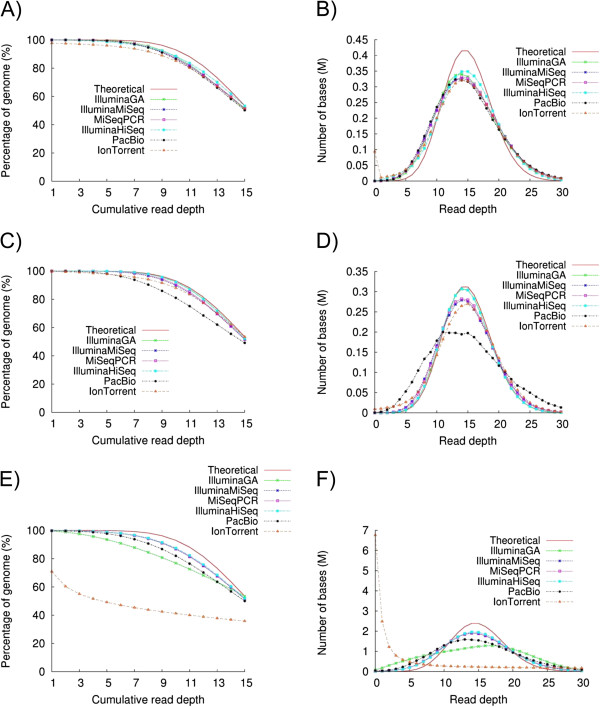
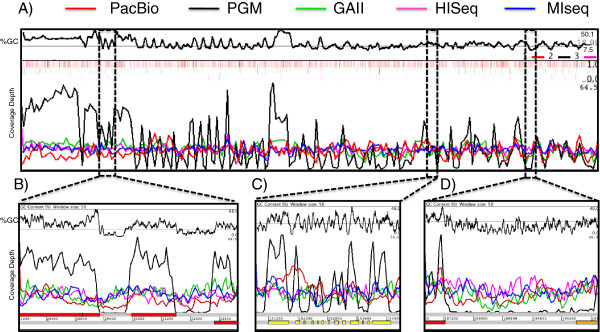
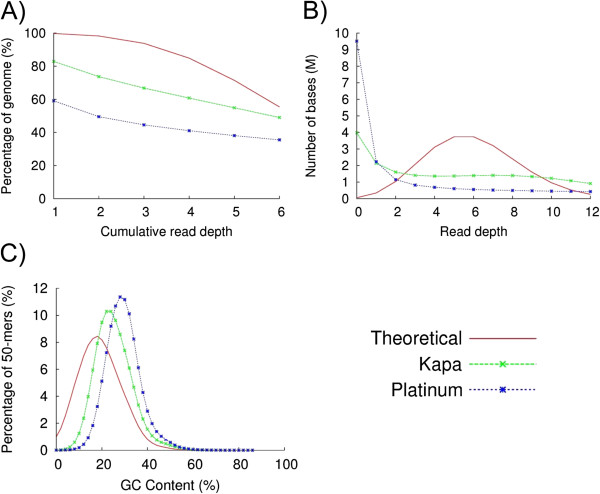
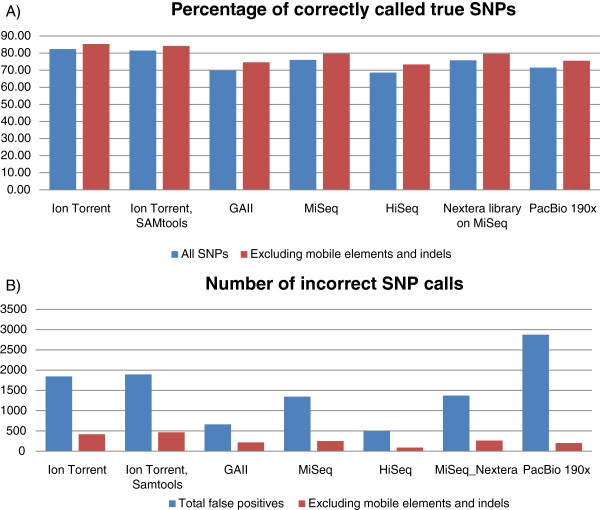
BACKGROUND: Next generation sequencing (NGS) technology has revolutionized genomic and genetic research. The pace of change in this area is rapid with three major new sequencing platforms having been released in 2011: Ion Torrent's PGM, Pacific Biosciences' RS and the Illumina MiSeq. Here we compare the results obtained with those platforms to the performance of the Illumina HiSeq, the current market leader. In order to compare these platforms, and get sufficient coverage depth to allow meaningful analysis, we have sequenced a set of 4 microbial genomes with mean GC content ranging from 19.3 to 67.7%. Together, these represent a comprehensive range of genome content. Here we report our analysis of that sequence data in terms of coverage distribution, bias, GC distribution, variant detection and accuracy. RESULTS: Sequence generated by Ion Torrent, MiSeq and Pacific Biosciences technologies displays near perfect coverage behaviour on GC-rich, neutral and moderately AT-rich genomes, but a profound bias was observed upon sequencing the extremely AT-rich genome of Plasmodium falciparum on the PGM, resulting in no coverage for approximately 30% of the genome. We analysed the ability to call variants from each platform and found that we could call slightly more variants from Ion Torrent data compared to MiSeq data, but at the expense of a higher false positive rate. Variant calling from Pacific Biosciences data was possible but higher coverage depth was required. Context specific errors were observed in both PGM and MiSeq data, but not in that from the Pacific Biosciences platform. CONCLUSIONS: All three fast turnaround sequencers evaluated here were able to generate usable sequence. However there are key differences between the quality of that data and the applications it will support.
Overview
The claims and statistics of this paper haven’t been checked yet.
Free: it reads the open-access text and checks the first 5 claims that cite a source we can check. Create a free account to check every claim.
Integrity signals
Registry
Cites
Statistics
Figures
Verification
Claims the paper makes
The claims and statistics of this paper haven’t been checked yet.
Free: it reads the open-access text and checks the first 5 claims that cite a source we can check. Create a free account to check every claim.
Claims other papers make about this one
Each is checked against this paper’s own text: does it say what the citing paper says it does?
The source backs part of the claim, not all of it — or backs it for a different population, condition or comparison.
In the citing paper
“The limit of detection in these experiments is based on the inherent error rate of the Illumina platform (up to 0.4%), which has previously been described for genome editing experiment analyzed by NGS71–73.”
From A high-fidelity Cas9 mutant delivered as a ribonucleoprotein complex enables efficient gene editing in human hematopoietic stem and progenitor cells (2018) · cites this paper as [72]
Experimental — accuracy not yet measuredThe check wasn’t confident either way, so it gives no verdict — never disputed.
In the citing paper
“RNA-seq is expected to produce some reads from highly expressed transcripts that begin at the same nucleotide and are thus designated “duplicate.””
From Multi-platform assessment of transcriptome profiling using RNA-seq in the ABRF next-generation sequencing study (2014) · cites this paper as [8]
Experimental — accuracy not yet measured
Self-check
Percentages, sums and reported differences re-computed from the paper’s own numbers.
The self-check needs the paper’s full text.
Citations
Cites
The Sequence Alignment/Map format and SAMtools
Li, H., Handsaker, B., Wysoker, A., Fennell, T., Ruan, J., Homer, N., Marth, G., Abecasis, G., Durbin, R., & 1000 Genome Project Data Processing Subgroup (2009) · Bioinformatics · doi:10.1093/bioinformatics/btp352 · Cited by 62,041
Fast and accurate short read alignment with Burrows-Wheeler transform
Li, H., & Durbin, R. (2009) · Bioinformatics · doi:10.1093/bioinformatics/btp324 · Cited by 58,607
RNA-Seq: a revolutionary tool for transcriptomics
Wang, Z., Gerstein, M., & Snyder, M. (2009) · Nature Reviews Genetics · doi:10.1038/nrg2484 · Cited by 13,174 · cited 1×
“Illumina sequencing has matured to the point where a great many applications [15-24] have been developed on the platform.”
BackgroundGenome sequence of the human malaria parasite Plasmodium falciparum
Gardner, M. J., Hall, N., Fung, E., White, O., Berriman, M., Hyman, R. W., Carlton, J. M., Pain, A., Nelson, K. E., Bowman, S., et al. (2002) · Nature · doi:10.1038/nature01097 · Cited by 4,407 · cited 1×
“4% [14], we use it as one of our test genomes, representing a significant challenge to most sequencing technologies.”
Method(1997) · Obesity Surgery · doi:10.1381/096089297765555359 · Cited by 3,916
Real-Time DNA Sequencing from Single Polymerase Molecules
Eid, J., Fehr, A., Gray, J., Luong, K., Lyle, J., Otto, G., Peluso, P., Rank, D., Baybayan, P., Bettman, B., et al. (2009) · Science · doi:10.1126/science.1162986 · Cited by 3,732
Accurate whole human genome sequencing using reversible terminator chemistry
Bentley, D. R., Balasubramanian, S., Swerdlow, H. P., Smith, G. P., Milton, J., Brown, C. G., Hall, K. P., Evers, D. J., Barnes, C. L., Bignell, H. R., et al. (2008) · Nature · doi:10.1038/nature07517 · Cited by 3,684
Self-citationGenome-Wide Mapping of in Vivo Protein-DNA Interactions
Johnson, D. S., Mortazavi, A., Myers, R. M., & Wold, B. (2007) · Science · doi:10.1126/science.1141319 · Cited by 2,927
An integrated semiconductor device enabling non-optical genome sequencing
Rothberg, J. M., Hinz, W., Rearick, T. M., Schultz, J., Mileski, W., Davey, M., Leamon, J. H., Johnson, K., Milgrew, M. J., Edwards, M., et al. (2011) · Nature · doi:10.1038/nature10242 · Cited by 2,172
Diep, B. A., Gill, S. R., Chang, R. F., Phan, T. H., Chen, J. H., Davidson, M. G., Lin, F., Lin, J., Carleton, H. A., Mongodin, E. F., et al. (2006) · The Lancet · doi:10.1016/s0140-6736(06)68231-7 · Cited by 1,633 · cited 9×
“MGEs were manually identified from the S. aureus USA300_FPR3757 genome annotation SNPs called from the resulting alignment provided a high-quality reference set for comparison with the SNPs identified by each sequencing platform.”
MethodInfluential
Cited by
Items 801–900 of 1,000
Zhang, A.-Y., Lai, C., Huang, F., Seto, W., Fung, J., Wong, D. K.-H., & Yuen, M. (2017) · Journal of Gastroenterology · doi:10.1007/s00535-017-1334-1 · Cited by 21
“Despite this, the overall error rate per read position in the rest of the pre-S region was low, which is consistent with previous reports [23, 24].”
ResultDunne, W. M., Pouseele, H., Monecke, S., Ehricht, R., & van Belkum, A. (2017) · Infection Genetics and Evolution · doi:10.1016/j.meegid.2017.09.019 · Cited by 23
Plasmonic Sensor Could Enable Label-Free DNA Sequencing
Çetin, A. E., Iyidogan, P., Hayashi, Y., Wallen, M. C., Vijayan, K., Tu, E. L., Nguyen, M., & Oliphant, A. (2018) · ACS Sensors · doi:10.1021/acssensors.7b00957 · Cited by 22
DNA Sequencing Historical Lichen Specimens
Kistenich, S., Halvorsen, R., Schrøder‐Nielsen, A., Thorbek, L., Timdal, E., & Bendiksby, M. (2019) · Frontiers in Ecology and Evolution · doi:10.3389/fevo.2019.00005 · Cited by 21
“Studies comparing different HTS platforms have reported that the Ion Torrent PGM often performs less well in recovering the whole target sequence than other platforms (Loman et al., 2012; Quail et al., 2012).”
BackgroundThe Anaplasma ovis genome reveals a high proportion of pseudogenes
Liu, Z., Peasley, A. M., Yang, J., Li, Y., Guan, G., Luo, J., Yin, H., & Brayton, K. A. (2019) · BMC Genomics · doi:10.1186/s12864-018-5374-6 · Cited by 22
Pasquali, F., do Valle, Í. F., Palma, F., Remondini, D., Manfreda, G., Castellani, G., Hendriksen, R. S., & Cesare, A. D. (2019) · Heliyon · doi:10.1016/j.heliyon.2019.e02745 · Cited by 25
MIPP-Seq: ultra-sensitive rapid detection and validation of low-frequency mosaic mutations
Doan, R. N., Miller, M. B., Kim, S. N., Rodin, R. E., Ganz, J., Bizzotto, S., Morillo, K. S., Huang, A. Y., Digumarthy, R., Zemmel, Z. M., et al. (2021) · BMC Medical Genomics · doi:10.1186/s12920-021-00893-3 · Cited by 21
“Beyond the PCR step, errors can occur during sequencing on both the Illumina and Ion Torrent platforms [20, 31].”
MethodBrewer, M. S., Cotoras, D. D., Croucher, P. J. P., & Gillespie, R. G. (2014) · Journal of Arachnology · doi:10.1636/m13-78.1 · Cited by 26
Indugu, N., Bittinger, K. L., Kumar, S., Vecchiarelli, B., & Pitta, D. (2016) · PeerJ · doi:10.7717/peerj.1599 · Cited by 26
New approaches for characterization of the genetic stability of vaccine cell lines
Ng, S. H. S., Gisonni-Lex, L., & Azizi, A. (2017) · Human Vaccines & Immunotherapeutics · doi:10.1080/21645515.2017.1295191 · Cited by 22
“The Illumina platform uses a reversible dye determination technique that is more prone to mis-incorporation of a nucleotide.(23) Therefore, for assessing genetic stability and to demonstrate consistency of the nucleotide sequence of the gene, the choice of sequencing system may ultimately depend on the genetic structu…”
MethodSuckling, L., McFarlane, C., Sawyer, C., Chambers, S. P., Kitney, R. I., McClymont, D. W., & Freemont, P. S. (2019) · Synthetic and Systems Biotechnology · doi:10.1016/j.synbio.2019.01.002 · Cited by 20
“Although the MiSeq instrument has a lower throughput than other Illumina instruments, such as the HiSeq 2000, it has a significantly faster turnaround time and with a lower instrument cost, is more accessible to smaller laboratories [12].”
MethodInfluentialHe, H., Stein, E. V., Konigshofer, Y., Forbes, T. D., Tomson, F. L., Garlick, R. K., Yamada, E., Godfrey, T. E., Abe, T., Tamura, K., et al. (2019) · Journal of Molecular Diagnostics · doi:10.1016/j.jmoldx.2019.03.006 · Cited by 22
“Sequence variants identified using NGS-based tests need to be present at sufficient concentrations to be measured as true mutations rather than background sequencing errors.(36) NGS is being evaluated as a test to detect low-abundance somatic mutations, but the rate of sequencing errors”
BackgroundComputational Detection of Plant RNA Editing Events
Edera, A., & Sanchez-Puerta, M. V. (2020) · Methods in molecular biology · doi:10.1007/978-1-0716-0787-9_2 · Cited by 20
RNA-seq Using Next Generation Sequencing
Corney, D. C. (2012) · Materials and Methods · doi:10.13070/mm.en.2.203 · Cited by 21
Yang, R., Liu, G., Chen, T., Zhang, W., Zhang, G., & Chang, S. (2018) · Standards in Genomic Sciences · doi:10.1186/s40793-018-0328-9 · Cited by 20
Cheng, M., Yan, X., He, J., Qiu, J., & Chen, Q. (2019) · Archives of Microbiology · doi:10.1007/s00203-019-01660-w · Cited by 20
Improving power for rare‐variant tests by integrating external controls
Lee, S., Kim, S., & Fuchsberger, C. (2017) · Genetic Epidemiology · doi:10.1002/gepi.22057 · Cited by 22
Nguyen, T. K., & Lim, J.-H. (2019) · Horticulture Environment and Biotechnology · doi:10.1007/s13580-019-00160-6 · Cited by 20
“The pace of change in this area is rapid and three major sequencing platforms were released in 2011: Ion Torrent’s Personal Genome Machine (PGM), Pacific Biosciences Real-time (single molecular real time sequencing— SMRT) Sequencer (RS), and the Illumina MiSeq (Quail et al. 2012).”
MethodMcElhoe, J. A., & Holland, M. M. (2020) · Mitochondrion · doi:10.1016/j.mito.2020.02.005 · Cited by 20
Pan, Y., Qiu, D., Chen, J., & Yue, Q. (2020) · Journal of Food Quality · doi:10.1155/2020/2907670 · Cited by 22
“Presently, read lengths for NGS were only up to 2× 300 bp [19].”
Genetics in myeloma: genetic technologies and their application to screening approaches in myeloma
Talley, P., Chantry, A., & Buckle, C. H. (2015) · British Medical Bulletin · doi:10.1093/bmb/ldu041 · Cited by 23
“There are pros and cons relating to each chemistry type, but modifications and updates are fast coming and many of these issues are being overcome with time.(61,62) NGS technology has superseded Sanger sequencing, which has been the primary sequencing method for ∼30 years.”
BackgroundThe battle for sequencing supremacy
Eisenstein, M. S. (2012) · Nature Biotechnology · doi:10.1038/nbt.2412 · Cited by 20
Zhang, Y.-T. Y., Chen, Q., Ji, J., Zhao, L., Zhang, L., Qiu, J., & He, J. (2018) · Current Microbiology · doi:10.1007/s00284-018-1486-0 · Cited by 19
Lee, N., Park, M.-J., Song, W., Jeon, K., & Jeong, S. (2020) · International Journal of Molecular Sciences · doi:10.3390/ijms21228807 · Cited by 21
Next-generation sequencing for the diagnosis of hepatitis B: current status and future prospects
García-García, S., Cortese, M. F., Rodríguez-Algarra, F., Tabernero, D., Rando‐Segura, A., Quer, J., Buti, M., & Rodríguez‐Frias, F. (2021) · Expert Review of Molecular Diagnostics · doi:10.1080/14737159.2021.1913055 · Cited by 23
Evaluating coverage bias in next-generation sequencing of Escherichia coli
Gunasekera, S., Abraham, S., Stegger, M., Pang, S., Wang, P., Sahibzada, S., & O’Dea, M. A. (2021) · PLoS ONE · doi:10.1371/journal.pone.0253440 · Cited by 21
“Uniform sequencing coverage of adequate depth can be paramount to the successful characterisation of a bacterial genome [9].”
BackgroundEvaluation of a high-throughput, cost-effective Illumina library preparation kit
Tvedte, E. S., Michalski, J. M., Cheng, S., Patkus, R. S., Tallon, L. J., Sadzewicz, L., Bruno, V. M., da Silva, J. C. F., Rasko, D. A., & Hotopp, J. C. D. (2021) · Scientific Reports · doi:10.1038/s41598-021-94911-0 · Cited by 22
Dong, Z., Wang, Y., Yin, D., Hang, X., Pu, L., Zhang, J., Geng, J., & Chang, L. (2022) · View · doi:10.1002/viw.20210011 · Cited by 21
Quantifying negative feedback regulation by micro-RNAs
Wang, S., & Raghavachari, S. (2011) · Physical Biology · doi:10.1088/1478-3975/8/5/055002 · Cited by 19
Sizing up the poly(A) tail: insights from deep sequencing
Zheng, D., & Tian, B. (2014) · Trends in Biochemical Sciences · doi:10.1016/j.tibs.2014.04.002 · Cited by 20
“However, the difficulty in sequencing homopolymers (strings of identical nucleotides) [5] has hampered precise measurement of poly(A) tail length by deep sequencing.”
BackgroundJustino, A., Dias, P., Pina, M. J., Sousa, S., Cirnes, L., Sousa, A. B., Machado, J. C., & Costa, J. L. (2014) · European Journal of Human Genetics · doi:10.1038/ejhg.2014.97 · Cited by 21
Meghnani, V., Mohammed, N., Giauque, C., Nahire, R., & David, T. (2016) · International Journal of Genomics · doi:10.1155/2016/2059041 · Cited by 19
“This implies that lesser number of variants have been detected by Miseq system as compared to the Ion Torrent system, which is in agreement with the previously published study [19].”
ResultAdvances in the application of high-throughput sequencing in invertebrate virology
van Aerle, R., & Santos, E. M. (2017) · Journal of Invertebrate Pathology · doi:10.1016/j.jip.2017.02.006 · Cited by 22
Mahomed, S., Naidoo, K., Dookie, N., & Padayatchi, N. (2017) · Tuberculosis · doi:10.1016/j.tube.2017.09.005 · Cited by 20
Listeria monocytogenes Adaptation and Growth at Low Temperatures
Saldivar, J. C., Davis, M. L., Johnson, M. G., & Ricke, S. C. (2017) · Elsevier eBooks · doi:10.1016/b978-0-12-811835-1.00013-0 · Cited by 31
Petroleum Degradation: Promising Biotechnological Tools for Bioremediation
Raju, M. N., & Scalvenzi, L. (2018) · InTech eBooks · doi:10.5772/intechopen.70109 · Cited by 19
Wang, H., Kuang, S., Lang, Q., & Yu, W. (2018) · Archaea · doi:10.1155/2018/9264259 · Cited by 22
“by-synthesis approach [30] enabled thorough identification of fungal community structures, including those that could not be cultured or detected in traditional approaches [31– 34].”
BackgroundVeeckman, E., Glabeke, S. V., Haegeman, A., Muylle, H., van Parijs, F. R. D., Byrne, S. L., Asp, T., Studer, B., Rohde, A., Roldán-Ruíz, I., et al. (2018) · DNA Research · doi:10.1093/dnares/dsy033 · Cited by 19
Choi, M., Genereux, D. P., Goodson, J. M., Al-Azzawi, H., Allain, S. Q., Simon, N., Palasek, S., Ware, C. B., Cavanaugh, C., Miller, D. G., et al. (2017) · PLoS Genetics · doi:10.1371/journal.pgen.1007060 · Cited by 19
“Some of these methods also reduce data corruption arising 430 through errors in bisulfite conversion and amplification, and can distinguish between methyl431 and hydroxy-methyl cytosine [43, 44].”
MethodIon torrent high throughput mitochondrial genome sequencing (HTMGS)
Harvey, N. R., Albury, C. L., Stuart, S., Benton, M. C., Eccles, D., Connell, J. R., Sutherland, H. G. E., Allcock, R. J. N., Lea, R. A., Haupt, L. M., et al. (2019) · PLoS ONE · doi:10.1371/journal.pone.0224847 · Cited by 19
“Although these have previously not offered the ease of scalability comparable to the Ion platforms, both platforms are currently on par with regard to scalability and ease of use [31].”
BackgroundHigh throughput barcoding method for genome-scale phasing
Redin, D., Frick, T., Aghelpasand, H., Theland, J., Käller, M., Borgström, E., Olsen, R.-A., & Ahmadian, A. (2019) · Scientific Reports · doi:10.1038/s41598-019-54446-x · Cited by 29
Garzón‐Orduña, I. J., Geib, S. M., Ledezma, L. A., Bremer, F. T., & Barr, N. B. (2020) · Annals of the Entomological Society of America · doi:10.1093/aesa/saz071 · Cited by 20
Taylor, W. S., Pearson, J. F., Miller, A. L., Schmeier, S., Frizelle, F., & Purcell, R. V. (2020) · PLoS ONE · doi:10.1371/journal.pone.0233170 · Cited by 20
Maize microbiome: current insights for the sustainable agriculture
Mehta, S., Singh, B. P., Patra, A., Tripathi, A., Easwaran, M., Choudhary, J. R., Choudhary, M., & Aggarwal, S. K. (2020) · Elsevier eBooks · doi:10.1016/b978-0-12-819715-8.00009-4 · Cited by 23
Long-read sequencing and de novo genome assembly of marine medaka (Oryzias melastigma)
Liang, P., Saqib, H. S. A., Ni, X., & Shen, Y. (2020) · BMC Genomics · doi:10.1186/s12864-020-07042-7 · Cited by 17
“Several commonly used second-generation genome sequencing approaches provide gigabases of data [49, 50].”
BackgroundEsquerra, E. V., Herndon, D. R., Alpírez-Mendoza, F., Mosqueda, J., & Palmer, G. H. (2014) · Infection and Immunity · doi:10.1128/iai.02537-14 · Cited by 19
“Thus, the higher percentage of perfect match sequences for the five alleles compared to previously published genomes (31) is reflected in the higher percentage using cloned omps, consistent with the designed sequence lengths being appropriate for strain differentiation by a multilocus approach.”
ResultWendt, F. R., Zeng, X., Churchill, J. D., King, J. L., & Budowle, B. (2016) · American Journal of Forensic Medicine & Pathology · doi:10.1097/paf.0000000000000228 · Cited by 19
Zelewska, M. A., Pulijala, M., Spencer-Smith, R., Mahmood, H.-T.-N. A., Norman, B. F., Churchward, C. P., Calder, A., & Snyder, L. A. S. (2016) · Microbial Genomics · doi:10.1099/mgen.0.000078 · Cited by 22
“Data statement: All supporting data, code and protocols have been provided within the article or through supplementary data files.”
BackgroundMethodLevitt, B. E., Obala, A. A., Langdon, S. D., Corcoran, D. L., O’Meara, W. P., & Taylor, S. M. (2017) · Scientific Reports · doi:10.1038/srep41108 · Cited by 22
“1) using BWA-MEM with parameters to favor the mapping of high quality reads with allowances for indels and mismatches, including a minimum seed length of 19, minimum quality score to output of 30, and mismatch penalties of 4 and indel penalties of 6 28 .”
New high copy tandem repeat in the content of the chicken W chromosome
Komissarov, A. S., Galkina, S., Koshel, E. I., Kulak, M., Dyomin, A. G., O’Brien, S. J., Gaginskaya, E. R., & Saifitdinova, A. F. (2017) · Chromosoma · doi:10.1007/s00412-017-0646-5 · Cited by 18
“They could be confused with the latter during sequencing or assembling due to the presence of (A)n or (G)n short homopolymer tracks (Treangen and Salzberg 2011; Quail et al. 2012).”
BackgroundComparison of somatic variant detection algorithms using Ion Torrent targeted deep sequencing data
Wang, Q., Kotoula, V., Hsu, P.-C., Papadopoulou, K., Ho, J. W. K., Fountzilas, G., & Giannoulatou, E. (2019) · BMC Medical Genomics · doi:10.1186/s12920-019-0636-y · Cited by 18
“It is PCR (primer) based for library construction and measures pH changes rather than optical signals, thus introducing biases and errors different from technologies that use probe-capture for library construction and fluorescence reads [12].”
BackgroundHelfer-Hungerbuehler, A. K., Shah, J., Meili, T., Boenzli, E., Li, P., & Hofmann‐Lehmann, R. (2021) · Viruses · doi:10.3390/v13081636 · Cited by 21
“4% [74] and improving constantly with newly developed NGS platforms.”
BackgroundAnalysis of SSR and SNP markers
Mishra, A., Singh, P. K., Bhandawat, A., Sharma, V. K., Sharma, V., Singh, P. P., Roy, J. K., & Sharma, H. (2021) · Elsevier eBooks · doi:10.1016/b978-0-323-89775-4.00017-1 · Cited by 27
Impact of Intrahost NS5 Nucleotide Variations on Dengue Virus Replication
Cheng, D., Huang, S.-W., Chin, W.-X., Hung, S.-J., Tsai, H., Chu, J. J. H., Chao, C.-H., & Wang, J. (2022) · Frontiers in Microbiology · doi:10.3389/fmicb.2022.894200 · Cited by 20
“More than 1 μg of DNA was sequenced using the Illumina Miseq platform (Quail et al., 2012) by Genomics BioSci & Tech.”
MethodInfluentialBudowle, B., Arnette, A. N., & Sajantila, A. (2023) · International Journal of Legal Medicine · doi:10.1007/s00414-023-03029-7 · Cited by 23
El estudio de la biodiversidad en la era de la secuenciación masiva
Escalante, A. E., Jardón‐Barbolla, L., Ramírez‐Barahona, S., & Eguiarte, L. E. (2015) · Revista Mexicana de Biodiversidad · doi:10.7550/rmb.43498 · Cited by 23
“Published genomes have used between 5X and 10X with Sanger (Adams et al., 2000; Venter et al., 2001; Venter et al., 2004), but new publications have begun to report 50X, 100X and higher coverage with NGS (Diguistini et al., 2009; Quail et al., 2012).”
BackgroundUrban, M., King, R., Hassani‐Pak, K., & Hammond-Kosack, K. E. (2015) · BMC Genomics · doi:10.1186/s12864-015-1412-9 · Cited by 18
Collaborative Mining and Interpretation of Large-Scale Data for Biomedical Research Insights
Tsiliki, G., Karacapilidis, N. I., Christodoulou, S., & Tzagarakis, M. M. (2014) · PLoS ONE · doi:10.1371/journal.pone.0108600 · Cited by 18
Moreira, A. P. B., Duytschaever, G., Tonon, L. A. C., Dias, G. M., Mesquita, M., Cnockaert, M. C., Francini-Filho, R. B., Vos, P. D., Thompson, C. C., & Thompson, F. L. (2014) · Current Microbiology · doi:10.1007/s00284-014-0600-1 · Cited by 18
“[21] with minor modifications, as follows.”
Incorporating microbiota data into epidemiologic models: examples from vaginal microbiota research
van de Wijgert, J. H. H. M., & Jespers, V. (2016) · Annals of Epidemiology · doi:10.1016/j.annepidem.2016.03.004 · Cited by 19
McBride, R., Smith, V. H., Carney, L. T., & Lane, T. (2016) · CRC Press eBooks · doi:10.1201/b19464-8 · Cited by 24
Detection of false positive mutations in BRCA gene by next generation sequencing
Suryavanshi, M., Kumar, D., Panigrahi, M. K., Chowdhary, M., & Mehta, A. (2016) · Familial Cancer · doi:10.1007/s10689-016-9955-8 · Cited by 21
“950_951 insA(Asn319fs) mutation is reported as pathogenic allele in NCBI dbSNP [24].”
BackgroundCastro, R., Navelsaker, S., Krasnov, A., Pasquier, L. D., & Boudinot, P. (2017) · Developmental & Comparative Immunology · doi:10.1016/j.dci.2017.02.018 · Cited by 17
The impact of RNA secondary structure on read start locations on the Illumina sequencing platform
Price, A., Garhyan, J., & Gibas, C. (2017) · PLoS ONE · doi:10.1371/journal.pone.0173023 · Cited by 22
Targeted Therapies in Non-small-Cell Lung Cancer
Hill, A., Gupta, R. V., Zhao, D., Vankina, R., Amanam, I. U., & Salgia, R. (2019) · Cancer treatment and research · doi:10.1007/978-3-030-16391-4_1 · Cited by 20
Chen, L., Wang, J., Tan, L., Lu, C., Fu, G., Fu, L., Zhang, X., Wang, Q., Ma, C., Cong, B., et al. (2020) · Forensic Science International Genetics · doi:10.1016/j.fsigen.2020.102306 · Cited by 19
Li, S.-J., Zhang, X., Lukeš, J., Li, B., Wang, J., Qu, L., Hide, G., Lai, D., & Lun, Z. (2020) · Nucleic Acids Research · doi:10.1093/nar/gkaa700 · Cited by 18
“The merged DNA library was subjected to PacBio sequencing (39) to yield continuous long reads (CLRs) generated by one pass on each singlemolecule real-time bell sequencer.”
MethodBorges, V., Pinheiro, M. M., Antelo-Varela, M., Sampaio, D. A., Vieira, L., Ferreira, R., Nunes, A., Almeida, F., Mota, L. J., Borrego, M. J., et al. (2015) · PLoS ONE · doi:10.1371/journal.pone.0133420 · Cited by 25
“This is supported by a high depth of coverage from 130x to 470x, and it is known that homopolymer-associated errors are highly reduced when using the Illumina technology [86, 87], which has been used, for instance, for resequencing the variable tracts of contingency loci in Campylobacter jejuni [88].”
Scott, B. M., Matochko, W. L., Gierczak, R. F., Bhakta, V., Derda, R., & Sheffield, W. P. (2014) · PLoS ONE · doi:10.1371/journal.pone.0084491 · Cited by 18
“Panel C: Analysis of the reads of the wrong length revealed insertions/deletions and homopolymer read errors which are common in Ion Torrent reads [60,61].”
BackgroundButler, K. S., Young, M. Y. L., Li, Z., Elespuru, R. K., & Wood, S. C. (2015) · Regulatory Toxicology and Pharmacology · doi:10.1016/j.yrtph.2015.09.011 · Cited by 18
“242 Homopolymers are an issue specific to 454 and Ion Torrent platforms, not present in Illumina technology (Bolotin et al. 243 2012) due to its removable fluorophore.”
BackgroundResultInfluentialNew strategy for virus discovery: viruses identified in human feces in the last decade
Xie, G., Yu, J., & Duan, Z. (2013) · Science China Life Sciences · doi:10.1007/s11427-013-4516-y · Cited by 22
Gómez, J., Reguero, J. R., Morı́s, C., Álvarez, V., & Coto, E. (2013) · Journal of Cardiovascular Translational Research · doi:10.1007/s12265-013-9516-6 · Cited by 17
Rapid genome resequencing of an atoxigenic strain of Aspergillus carbonarius
Cabañes, F. J., Sanseverino, W., Castellá, G., Bragulat, M. R., Cigliano, R. A., & Sánchez, A. (2015) · Scientific Reports · doi:10.1038/srep09086 · Cited by 17
Schlecht, U., Mok, J., Dallett, C., & Berka, J. (2017) · Scientific Reports · doi:10.1038/s41598-017-05503-w · Cited by 17
Casanova, A., Maroso, F., Blanco, A., Hermida, M., Ríos, N., García, G., Manuzzi, A., Zane, L., Veríssimo, A., García‐Marín, J., et al. (2021) · BMC Genomics · doi:10.1186/s12864-021-07465-w · Cited by 22
Next-Generation Sequencing in Medicinal Plants: Recent Progress, Opportunities, and Challenges
Singh, D., Mathur, S., Prasad, M., & Ranjan, R. (2024) · Journal of Plant Growth Regulation · doi:10.1007/s00344-024-11238-6 · Cited by 22
“While SOLiD has some advantages compared to other NGS platforms, it still has several disadvantages, including shorter read lengths and costly computational analysis (Quail et al. 2012; Liu et al. 2012; Sharma et al. 2022).”
Forensic use of human mitochondrial DNA: A review
Cavalcanti, P. D., Nogueira, T. L. S., de Carvalho, E. F., & Da, S. (2024) · Anais da Academia Brasileira de Ciências · doi:10.1590/0001-3765202420231179 · Cited by 25
Vibrio mexicanus sp. nov., isolated from a cultured oyster Crassostrea corteziensis
González‐Castillo, A., Enciso–Ibarra, J., Bolán–Mejía, M. D. C., Balboa, S., Lasa, A., Romalde, J. L., Cabanillas-Beltrán, H., & Gómez‐Gil, B. (2015) · Antonie van Leeuwenhoek · doi:10.1007/s10482-015-0488-1 · Cited by 17
Next generation sequencing in cardiomyopathy: towards personalized genomics and medicine
Biswas, A., Rao, V. R., Seth, S., & Maulik, S. (2014) · Molecular Biology Reports · doi:10.1007/s11033-014-3418-9 · Cited by 17
First report of Y-linked genes in the kissing bug Rhodnius prolixus
Koerich, L. B., Dupim, E. G., Faria, L. L., Dias, F. A., Dias, A. F. R. D. S., Trindade, G. S., Mesquita, R. D., & Carvalho, A. B. (2016) · BMC Genomics · doi:10.1186/s12864-016-2425-8 · Cited by 17
“Many genomes are now being sequenced using Illumina platform [31, 32].”
MethodCejalvo, J. M., Fidalgo, J. A. P., Ribas, G., Burgués, O., Mongort, C., Alonso, E., Ibarrola‐Villava, M., Bermejo, B., Martínez, M. T., Cervantes, A. M. R., et al. (2016) · Breast Cancer Research and Treatment · doi:10.1007/s10549-016-3980-z · Cited by 21
Core bacterial community of soy-daddawa: Insights from high-throughput DNA metabarcoding
Ezeokoli, O. T., Adeleke, R. A., & Bezuidenhout, C. C. (2018) · LWT · doi:10.1016/j.lwt.2018.06.039 · Cited by 21
Parras-Moltó, M., & López-Bueno, A. (2018) · Methods in molecular biology · doi:10.1007/978-1-4939-8682-8_11 · Cited by 18
Gillingham, M. A. F., Montero, B. K., Wihelm, K., Grudzus, K., Sommer, S., & Santos, P. S. C. (2020) · Molecular Ecology Resources · doi:10.1111/1755-0998.13290 · Cited by 20
“Removing singletons: A large proportion of sequences contain random errors inherent to the sequencing technology (Quail et al., 2012).”
BackgroundEXMA: A Genomics Accelerator for Exact-Matching
Jiang, L., & Zokaee, F. (2021) · IEEE International Symposium on High-Performance Computer Architecture (HPCA) · doi:10.1109/hpca51647.2021.00041 · Cited by 21
Zhuo, X., Zheng, T., Li, S., Zhang, Z., Zhang, M., Zhang, Y., Ahmad, S., Sun, L., Wang, J., Cheng, T., et al. (2021) · Horticulture Research · doi:10.1038/s41438-021-00573-4 · Cited by 20
Optimizing experimental design for genome sequencing and assembly with Oxford Nanopore Technologies
Sutton, J. M., Millwood, J. D., McCormack, A. C., & Fierst, J. L. (2021) · Gigabyte · doi:10.46471/gigabyte.27 · Cited by 14
“3 of base pairs and, theoretically, entire chromosomes can be sequenced in a single read [2, 3].”
BackgroundMetaGeniE: Characterizing Human Clinical Samples Using Deep Metagenomic Sequencing
Rawat, A., Engelthaler, D. M., Driebe, E. M., Keim, P., & Foster, J. T. (2014) · PLoS ONE · doi:10.1371/journal.pone.0110915 · Cited by 16
“average sequencing error for Illumina reads [37].”
Next-generation sequencing in clinical microbiology
Wain, J. R., & Mavrogiorgou, E. (2013) · Expert Review of Molecular Diagnostics · doi:10.1586/erm.13.8 · Cited by 17
High-throughput sequencing in veterinary infection biology and diagnostics
Belák, S., Lindsjö, O. K., Leijon, M., & Granberg, F. (2013) · Scientific and Technical Review (World Organisation for Animal Health) · doi:10.20506/rst.32.2.2206 · Cited by 22
Reverse Transcription Errors and RNA–DNA Differences at Short Tandem Repeats
Fungtammasan, A., Tomaszkiewicz, M., Campos-Sánchez, R., Eckert, K. A., DeGiorgio, M., & Makova, K. D. (2016) · Molecular Biology and Evolution · doi:10.1093/molbev/msw139 · Cited by 17
“On the other hand, batch effects are inevitable, and different library preparation procedures can greatly affect RT error rates (Quail et al. 2012).”
BackgroundLu, Y., Ishimaru, C. A., Glazebrook, J., & Samac, D. A. (2017) · Phytopathology · doi:10.1094/phyto-05-17-0171-r · Cited by 17
Lindblad, K. A., Pathmanathan, J. S., Moreira, S., Bracht, J. R., Sebra, R., Hutton, E. R., & Landweber, L. F. (2019) · BMC Genomics · doi:10.1186/s12864-019-6189-9 · Cited by 17
Ijoma, G. N., Heri, S. M., Matambo, T. S., & Tekere, M. (2021) · Journal of Fungi · doi:10.3390/jof7090700 · Cited by 20
Yacob, A. M., Muhamad, N. A., Chang, K. M., Hisham, H. A., Yusoff, Y. M., & Ibrahim, L. (2022) · BMC Cancer · doi:10.1186/s12885-022-09396-5 · Cited by 16
“There are several platforms available with unique specifications [26].”
BackgroundExploring epitranscriptomics for crop improvement and environmental stress tolerance
Yang, X., Patil, S., Joshi, S., Jamla, M., & Kumar, V. (2022) · Plant Physiology and Biochemistry · doi:10.1016/j.plaphy.2022.04.031 · Cited by 16
Mohapatra, B., Malhotra, H., Saha, B. K., Dhamale, T., & Phale, P. S. (2022) · Elsevier eBooks · doi:10.1016/b978-0-323-88504-1.00019-4 · Cited by 19
Joeres, M., Maksimov, P., Höper, D. W., Calvelage, S., Calero‐Bernal, R., Fernández‐Escobar, M., Koudela, B., Blaga, R., Vrhovec, M. G., Stollberg, K. C., et al. (2023) · European Journal of Clinical Microbiology & Infectious Diseases · doi:10.1007/s10096-023-04721-7 · Cited by 19
“It has to be considered that previous studies described lower quality scores for Ion Torrent bases compared to Illumina bases [34–36].”
TargetCall: eliminating the wasted computation in basecalling via pre-basecalling filtering
Cavlak, M. B., Singh, G., Alser, M., Fırtına, C., Lindegger, J., Sadrosadati, M., Ghiasi, N. M., Alkan, C., & Mutlu, O. (2024) · Frontiers in Genetics · doi:10.3389/fgene.2024.1429306 · Cited by 21
Nyaga, D. M., Tsai, P., Gebbie, C., Phua, H. H., Yap, P., Stabej, P. L. Q., Farrow, S. L., Rong, J., Toldi, G., Thorstensen, E. B., et al. (2024) · npj Genomic Medicine · doi:10.1038/s41525-024-00445-5 · Cited by 22
Metadata
- Authors
- Quail, M., Smith, M. E., Coupland, P., Otto, T. D., Harris, S. R., Connor, T. R., Bertoni, A., Swerdlow, H. P., & Gu, Y.
- Affiliations
- Wellcome Sanger Institute (GB)
- Corresponding author
- Quail, Michael
- ORCID
- Venue
- BMC Genomics
- Published
- 2012
- Volume
- 13
- Issue
- 1
- Pages
- 341
- ISSN
- 1471-2164 (ISSN-L)
- PMC
- PMC3431227
- OpenAlex
- W2124715997
- Semantic Scholar
- 11bc28c49fc164952f587bba71e55d25db0d1757
- Cited by
- 2,031
- References
- 32
- Citations by year
- 2026: 33 · 2025: 50 · 2024: 105 · 2023: 78 · 2022: 91 · 2021: 130 · 2020: 150 · 2019: 144 · 2018: 188 · 2017: 207 · 2016: 254 · 2015: 226 · 2014: 218 · 2013: 144 · 2012: 9
- FWCI
- 76.69
- Type
- journal article
- Language
- en
- Open access
- gold
- doi.org
- Licence
- cc-by
- Locations
- BMC Genomics (publishedVersion, cc-by)
- Europe PMC (PubMed Central) (publishedVersion, cc-by)
- PubMed Central (publishedVersion, cc-by)
- PubMed (publishedVersion)
- ORCA Online Research @Cardiff (Cardiff University) (acceptedVersion)
- ENLIGHTEN (Jurnal Bimbingan dan Konseling Islam) (acceptedVersion)
- DOAJ (DOAJ: Directory of Open Access Journals) (submittedVersion, cc-by-sa)
- Funders
- Wellcome Trust (grant number 098051, 098051)
- European Commission
- Topics
- Life Sciences › Biochemistry, Genetics and Molecular Biology › Molecular Biology › Genomics and Phylogenetic Studies
- Life Sciences › Biochemistry, Genetics and Molecular Biology › Genetics › Genomics and Rare Diseases
- Life Sciences › Biochemistry, Genetics and Molecular Biology › Molecular Biology › Genetics, Bioinformatics, and Biomedical Research
- Keywords
- Ion Torrent PGM, Illumina MiSeq, Illumina HiSeq, microbial genomes, AT-rich genome, Plasmodium falciparum, GC content, variant calling, false positive rate, sequencing error rate
- MeSH terms
- Base Composition, Base Sequence, Bordetella pertussis, Plasmodium falciparum, Staphylococcus aureus, Gene Library, Genome, Bacterial, Sequence Analysis, DNA, Genome, Protozoan, Polymorphism, Single Nucleotide, Databases, Genetic, Nucleotide Motifs
About these checks
Registry, retraction, Cites and statistics results are computed, not judged, with one exception: a printed reference that no index lists is read once by a model before it counts as a citation error. Claims are extracted by a model and kept only when their quote appears verbatim in the text; each cited source is then checked, with a model’s help, for whether it says what the claim relies on. Those verdicts can be wrong — read the claim’s quote and the cited source before relying on one.
Statistics and arithmetic are recomputed, not judged.
Confidence bands are shown only for fields calibrated on our annotated test set. None is calibrated yet, so no band is shown.
What counts as a claim ›How we measure confidence ›How we check this ›
Are you an author, or do you see a problem with this page? Request a review
Data sources
Bibliographic data: Semantic Scholar, OpenAlex, Crossref.
Contains information from the Semantic Scholar Academic Graph Datasets, made available under the ODC Attribution License (ODC-BY 1.0).
Semantic Scholar’s data is described in: Kinney, R., et al. (2023). The Semantic Scholar Open Data Platform. arXiv:2301.10140.
