

A tale of three next generation sequencing platforms: comparison of Ion torrent, pacific biosciences and illumina MiSeq sequencers
Open accessThe DOI matches its Crossref record; 32 of the 32 references it cites were found in a registry or an index.
Abstract
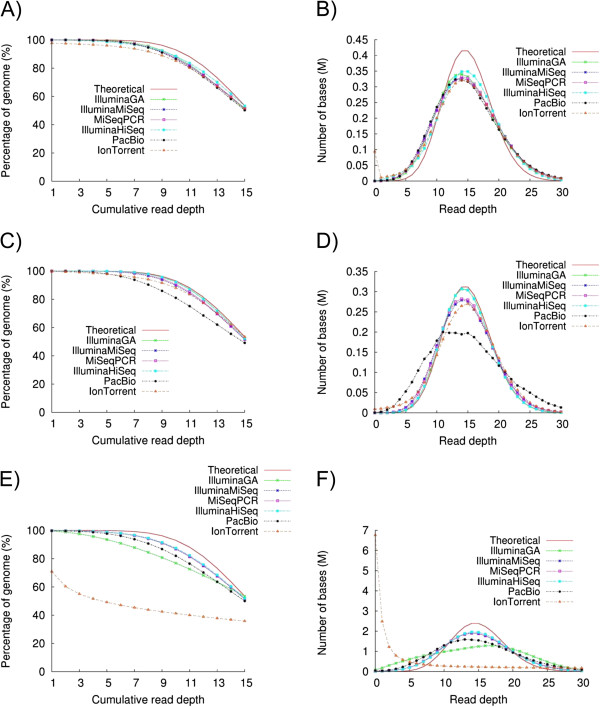
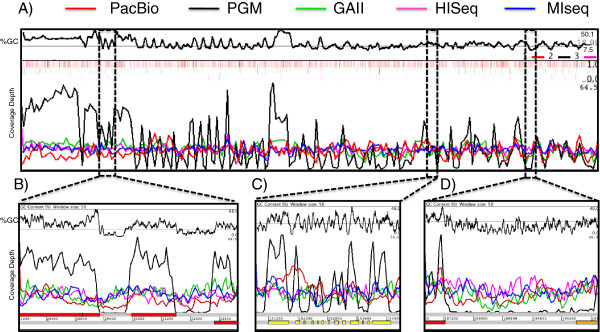
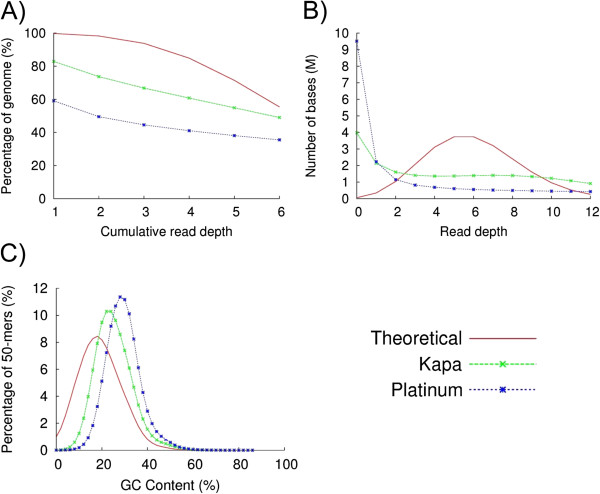
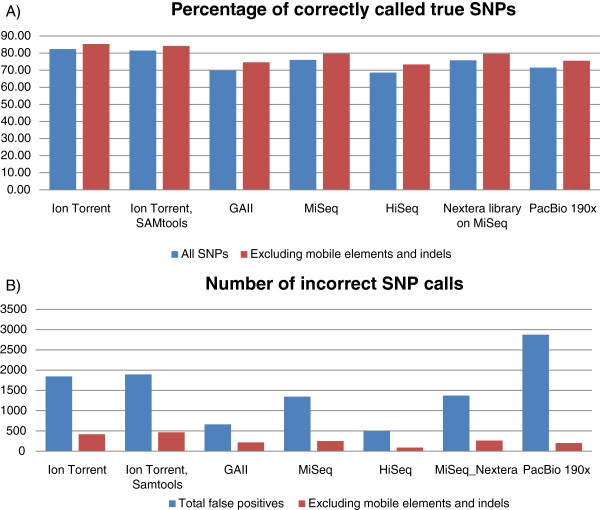
BACKGROUND: Next generation sequencing (NGS) technology has revolutionized genomic and genetic research. The pace of change in this area is rapid with three major new sequencing platforms having been released in 2011: Ion Torrent's PGM, Pacific Biosciences' RS and the Illumina MiSeq. Here we compare the results obtained with those platforms to the performance of the Illumina HiSeq, the current market leader. In order to compare these platforms, and get sufficient coverage depth to allow meaningful analysis, we have sequenced a set of 4 microbial genomes with mean GC content ranging from 19.3 to 67.7%. Together, these represent a comprehensive range of genome content. Here we report our analysis of that sequence data in terms of coverage distribution, bias, GC distribution, variant detection and accuracy. RESULTS: Sequence generated by Ion Torrent, MiSeq and Pacific Biosciences technologies displays near perfect coverage behaviour on GC-rich, neutral and moderately AT-rich genomes, but a profound bias was observed upon sequencing the extremely AT-rich genome of Plasmodium falciparum on the PGM, resulting in no coverage for approximately 30% of the genome. We analysed the ability to call variants from each platform and found that we could call slightly more variants from Ion Torrent data compared to MiSeq data, but at the expense of a higher false positive rate. Variant calling from Pacific Biosciences data was possible but higher coverage depth was required. Context specific errors were observed in both PGM and MiSeq data, but not in that from the Pacific Biosciences platform. CONCLUSIONS: All three fast turnaround sequencers evaluated here were able to generate usable sequence. However there are key differences between the quality of that data and the applications it will support.
Overview
The claims and statistics of this paper haven’t been checked yet.
Free: it reads the open-access text and checks the first 5 claims that cite a source we can check. Create a free account to check every claim.
Integrity signals
Registry
Cites
Statistics
Figures
Verification
Claims the paper makes
The claims and statistics of this paper haven’t been checked yet.
Free: it reads the open-access text and checks the first 5 claims that cite a source we can check. Create a free account to check every claim.
Claims other papers make about this one
Each is checked against this paper’s own text: does it say what the citing paper says it does?
The source backs part of the claim, not all of it — or backs it for a different population, condition or comparison.
In the citing paper
“The limit of detection in these experiments is based on the inherent error rate of the Illumina platform (up to 0.4%), which has previously been described for genome editing experiment analyzed by NGS71–73.”
From A high-fidelity Cas9 mutant delivered as a ribonucleoprotein complex enables efficient gene editing in human hematopoietic stem and progenitor cells (2018) · cites this paper as [72]
Experimental — accuracy not yet measuredThe check wasn’t confident either way, so it gives no verdict — never disputed.
In the citing paper
“RNA-seq is expected to produce some reads from highly expressed transcripts that begin at the same nucleotide and are thus designated “duplicate.””
From Multi-platform assessment of transcriptome profiling using RNA-seq in the ABRF next-generation sequencing study (2014) · cites this paper as [8]
Experimental — accuracy not yet measured
Self-check
Percentages, sums and reported differences re-computed from the paper’s own numbers.
The self-check needs the paper’s full text.
Citations
Cites
The Sequence Alignment/Map format and SAMtools
Li, H., Handsaker, B., Wysoker, A., Fennell, T., Ruan, J., Homer, N., Marth, G., Abecasis, G., Durbin, R., & 1000 Genome Project Data Processing Subgroup (2009) · Bioinformatics · doi:10.1093/bioinformatics/btp352 · Cited by 62,041
Fast and accurate short read alignment with Burrows-Wheeler transform
Li, H., & Durbin, R. (2009) · Bioinformatics · doi:10.1093/bioinformatics/btp324 · Cited by 58,607
RNA-Seq: a revolutionary tool for transcriptomics
Wang, Z., Gerstein, M., & Snyder, M. (2009) · Nature Reviews Genetics · doi:10.1038/nrg2484 · Cited by 13,174 · cited 1×
“Illumina sequencing has matured to the point where a great many applications [15-24] have been developed on the platform.”
BackgroundGenome sequence of the human malaria parasite Plasmodium falciparum
Gardner, M. J., Hall, N., Fung, E., White, O., Berriman, M., Hyman, R. W., Carlton, J. M., Pain, A., Nelson, K. E., Bowman, S., et al. (2002) · Nature · doi:10.1038/nature01097 · Cited by 4,407 · cited 1×
“4% [14], we use it as one of our test genomes, representing a significant challenge to most sequencing technologies.”
Method(1997) · Obesity Surgery · doi:10.1381/096089297765555359 · Cited by 3,916
Real-Time DNA Sequencing from Single Polymerase Molecules
Eid, J., Fehr, A., Gray, J., Luong, K., Lyle, J., Otto, G., Peluso, P., Rank, D., Baybayan, P., Bettman, B., et al. (2009) · Science · doi:10.1126/science.1162986 · Cited by 3,732
Accurate whole human genome sequencing using reversible terminator chemistry
Bentley, D. R., Balasubramanian, S., Swerdlow, H. P., Smith, G. P., Milton, J., Brown, C. G., Hall, K. P., Evers, D. J., Barnes, C. L., Bignell, H. R., et al. (2008) · Nature · doi:10.1038/nature07517 · Cited by 3,684
Self-citationGenome-Wide Mapping of in Vivo Protein-DNA Interactions
Johnson, D. S., Mortazavi, A., Myers, R. M., & Wold, B. (2007) · Science · doi:10.1126/science.1141319 · Cited by 2,927
An integrated semiconductor device enabling non-optical genome sequencing
Rothberg, J. M., Hinz, W., Rearick, T. M., Schultz, J., Mileski, W., Davey, M., Leamon, J. H., Johnson, K., Milgrew, M. J., Edwards, M., et al. (2011) · Nature · doi:10.1038/nature10242 · Cited by 2,172
Diep, B. A., Gill, S. R., Chang, R. F., Phan, T. H., Chen, J. H., Davidson, M. G., Lin, F., Lin, J., Carleton, H. A., Mongodin, E. F., et al. (2006) · The Lancet · doi:10.1016/s0140-6736(06)68231-7 · Cited by 1,633 · cited 9×
“MGEs were manually identified from the S. aureus USA300_FPR3757 genome annotation SNPs called from the resulting alignment provided a high-quality reference set for comparison with the SNPs identified by each sequencing platform.”
MethodInfluential
Cited by
Items 101–200 of 1,000
Application of Next Generation Sequencing in Laboratory Medicine
Zhong, Y., Xu, F., Wu, J., Schubert, J., & Li, M. M. (2021) · Annals of Laboratory Medicine · doi:10.3343/alm.2021.41.1.25 · Cited by 215
“nologies, could address some of these issues [55-59].”
BackgroundNextClip: an analysis and read preparation tool for Nextera Long Mate Pair libraries
Leggett, R. M., Clavijo, B. J., Clissold, L., Clark, M. D., & Caccamo, M. (2014) · Bioinformatics · doi:10.1093/bioinformatics/btt702 · Cited by 213
Viral deep sequencing needs an adaptive approach: IRMA, the iterative refinement meta-assembler
Shepard, S. S., Meno, S., Bahl, J., Wilson, M. M., Barnes, J., & Neuhaus, E. (2016) · BMC Genomics · doi:10.1186/s12864-016-3030-6 · Cited by 211
“Assembly error rates may vary from kit to kit, platform to platform [15], and run to run [16].”
BackgroundVasselon, V., Rimet, F., Tapolczai, K., & Bouchez, A. (2017) · Ecological Indicators · doi:10.1016/j.ecolind.2017.06.024 · Cited by 209
Tales of Detailed Poly(A) Tails
Nicholson, A. L., & Pasquinelli, A. E. (2019) · Trends in Cell Biology · doi:10.1016/j.tcb.2018.11.002 · Cited by 209
“However, poly(A) sequencing was still not possible with standard RNA-seq protocols primarily due to the difficulty of reading homopolymeric sequences [29].”
BackgroundNext-generation biology: Sequencing and data analysis approaches for non-model organisms
da Fonseca, R. R., Albrechtsen, A., Themudo, G. E., Ramos-Madrigal, J., Sibbesen, J. A., Maretty, L., Zepeda-Mendoza, M. L., Campos, P. F., Heller, R., & Pereira, R. J. (2016) · Marine Genomics · doi:10.1016/j.margen.2016.04.012 · Cited by 208
Next-generation sequencing: advances and applications in cancer diagnosis
Serratì, S., De Summa, S., Pilato, B., Petriella, D., Lacalamita, R., Tommasi, S., & Pinto, R. (2016) · OncoTargets and Therapy · doi:10.2147/ott.s99807 · Cited by 208
“9%, mostly in the detection of homopolymer stretches.(2,3) NGS approaches are different, and concern tumoral DNA and RNA analysis.”
Next Generation and Other Sequencing Technologies in Diagnostic Microbiology and Infectious Diseases
Hilt, E. E., & Ferrieri, P. (2022) · Genes · doi:10.3390/genes13091566 · Cited by 199
Drinking water microbiology — from measurement to management
Proctor, C. R., & Hammes, F. (2015) · Current Opinion in Biotechnology · doi:10.1016/j.copbio.2014.12.014 · Cited by 199
The present and future of de novo whole-genome assembly
Sohn, J.-I., & Nam, J.-W. (2016) · Briefings in Bioinformatics · doi:10.1093/bib/bbw096 · Cited by 196
Comprehensive gene panels provide advantages over clinical exome sequencing for Mendelian diseases
Saudi Mendeliome Group (2015) · Genome Biology · doi:10.1186/s13059-015-0693-2 · Cited by 194
“As expected for the semiconductor-based ion torrent sequencing, the bias against indels was not uniform but was largely sequence context-dependent, especially around homopolymer regions [17].”
A comparison of tools for the simulation of genomic next-generation sequencing data
Escalona, M., Rocha, S., & Posada, D. (2016) · Nature Reviews Genetics · doi:10.1038/nrg.2016.57 · Cited by 189
“For PacBio, the distribution of errors is considered to be constant along the chromosomes 22 , and programs like pbsim use a uniform distribution to assign the quality scores.”
MethodImpact of next generation sequencing techniques in food microbiology.
Mayo, B., Rachid, C., Alegria, A., Leite, A., Peixoto, R., & Delgado, S. (2014) · Current Genomics · doi:10.2174/1389202915666140616233211 · Cited by 188
Panek, M., Čipčić Paljetak, H., Barešić, A., Perić, M., Matijašić, M., Lojkić, I., Vranešić Bender, D., Krznarić, Ž., & Verbanac, D. (2018) · Scientific Reports · doi:10.1038/s41598-018-23296-4 · Cited by 186
Deng, X., den Bakker, H. C., & Hendriksen, R. S. (2016) · Annual Review of Food Science and Technology · doi:10.1146/annurev-food-041715-033259 · Cited by 186
DNA metabarcoding of insects and allies: an evaluation of primers and pipelines
Brandon-Mong, G.-J., Gan, H.-M., Sing, K.-W., Lee, P.-S., Lim, P.-E., & Wilson, J.-J. (2015) · Bulletin of Entomological Research · doi:10.1017/s0007485315000681 · Cited by 180
“There are a number of potential explanations for these sequence clusters including chimera formation, PCR or Illumina sequencing errors (Haas et al., 2011; Quail et al., 2012) and mitochondrial heteroplasmy (Shokralla et al.”
Luthra, R., Patel, K. P., Reddy, N. G., Haghshenas, V., Routbort, M. J., Harmon, M. A., Barkoh, B. A., Kanagal-Shamanna, R., Ravandi, F., Cortes, J. E., et al. (2014) · Haematologica · doi:10.3324/haematol.2013.093765 · Cited by 180
“MiSeq is a next-generation sequencer that is well-suited for various targeted sequencing applications and generates genomic sequence information with high accuracy.(21-27) In this study, we used MiSeq and a customized TruSeq Amplicon Cancer Panel (TSACP) to screen for mutations in 54 cancer-related genes in samples fr…”
MethodKing, J. L., LaRue, B. L., Novroski, N. M., Stoljarova, M., Seo, S. B., Zeng, X., Warshauer, D. H., Davis, C. P., Parson, W., Sajantila, A., et al. (2014) · Forensic Science International: Genetics · doi:10.1016/j.fsigen.2014.06.001 · Cited by 176
“With the advent of accessible benchtop sequencers [28,29], MPS can be considered a viable technology for application-oriented and research-driven laboratories.”
GC bias affects genomic and metagenomic reconstructions, underrepresenting GC-poor organisms
Browne, P. D., Nielsen, T. K., Kot, W., Aggerholm, A., Gilbert, M. T. P., Puetz, L., Rasmussen, M., Zervas, A., & Hansen, L. H. (2020) · GigaScience · doi:10.1093/gigascience/giaa008 · Cited by 178
“These biases are such that GC-rich and GC-poor sequences usually exhibit under-coverage relative to GC-optimal sequences [5, 6, 10, 11].”
Frey, K. G., Herrera-Galeano, J. E., Redden, C. L., Luu, T. V., Servetas, S. L., Mateczun, A. J., Mokashi, V. P., & Bishop-Lilly, K. A. (2014) · BMC Genomics · doi:10.1186/1471-2164-15-96 · Cited by 177
“A closer examination of the mapped reads seems to show a slight correlation with areas of low G/C-content, but follow on experiments would be required to conclusively elucidate the impact of G/Ccontent in this context.”
Mu, W., Lu, H.-M., Chen, J., Li, S., & Elliott, A. M. (2016) · The Journal of Molecular Diagnostics · doi:10.1016/j.jmoldx.2016.07.006 · Cited by 176
Computational methods for 16S metabarcoding studies using Nanopore sequencing data
Santos, A., van Aerle, R., Barrientos, L., & Martinez-Urtaza, J. (2020) · Computational and Structural Biotechnology Journal · doi:10.1016/j.csbj.2020.01.005 · Cited by 175
“In addition, the error rate falls in the same range as the first PacBio version (~13%) [25] and the output is still lower than Illumina.”
BackgroundMeta‐analysis of the human gut microbiome from urbanized and pre‐agricultural populations
Mancabelli, L., Milani, C., Lugli, G. A., Turroni, F., Ferrario, C., van Sinderen, D., & Ventura, M. (2017) · Environmental Microbiology · doi:10.1111/1462-2920.13692 · Cited by 173
“Literature searches allowed us to exclusively select shotgun metagenomic data generated by Illumina technology, i.e. the (currently) most preferred and reliable technology to perform shotgun metagenomics studies (Quail et al., 2012).”
BackgroundLightbody, G., Haberland, V., Browne, F., Taggart, L., Zheng, H., Parkes, E., & Blayney, J. K. (2019) · Briefings in Bioinformatics · doi:10.1093/bib/bby051 · Cited by 173
“As such, the output from data from different HTS workflows/platforms can vary [127].”
BackgroundCharacterization of PIK3CA and PIK3R1 somatic mutations in Chinese breast cancer patients
Chen, L., Yang, L., Yao, L., Kuang, X.-Y., Zuo, W.-J., Li, S., Qiao, F., Liu, Y.-R., Cao, Z.-G., Zhou, S.-L., et al. (2018) · Nature Communications · doi:10.1038/s41467-018-03867-9 · Cited by 169
Pompili, V., Dalla Costa, L., Piazza, S., Pindo, M., & Malnoy, M. (2020) · Plant Biotechnology Journal · doi:10.1111/pbi.13253 · Cited by 171
“…site was amplified with primers MdDIPM4(2) (0.4 lM; Table S1) and overhang Illumina adapters to generate the Illumina library amplicons and sequenced on an Illumina MiSeq (PE300) platform (MiSeq Control Software 2.0.5 and Real-Time Analysis Software 1.16.18) as reported by Quail et al. (2012).”
MethodInfluentialChurko, J. M., Mantalas, G. L., Snyder, M. P., & Wu, J. C. (2013) · Circulation Research · doi:10.1161/circresaha.113.300939 · Cited by 168
“com/) have dominated much of the sequencing industry (Figure 1).(19) Illumina’s bridge amplification method allows for generation of small clusters with an identical sequence to be analyzed.”
MethodXu, S., Lu, W., Liu, Y., Ming, Z., Liu, Y., Meng, R., & Wang, H. (2017) · Waste Management · doi:10.1016/j.wasman.2016.07.047 · Cited by 164
Yu, J., Sadakari, Y., Shindo, K., Suenaga, M., Brant, A., Almario, J. A. N., Borges, M., Barkley, T., Fesharakizadeh, S., Ford, M., et al. (2017) · Gut · doi:10.1136/gutjnl-2015-311166 · Cited by 164
“19 Somatic mutation concentrations in duodenal collections of pancreatic juice are generally quite low (usually 0.1 – 1”
BackgroundInfluentialHisada, T., Endoh, K., & Kuriki, K. (2015) · Archives of Microbiology · doi:10.1007/s00203-015-1125-0 · Cited by 163
“Keywords Human gut microbiota · Inter-individual variations · Intra-individual variations · Next-generation sequencing · Seasonal and daily stabilities”
BackgroundDNA-based label-free electrochemical biosensors: From principles to applications
Hai, X., Li, Y., Zhu, C., Song, W., Cao, J., & Bi, S. (2020) · TrAC Trends in Analytical Chemistry · doi:10.1016/j.trac.2020.116098 · Cited by 158
Microbial phylogenetic profiling with the Pacific Biosciences sequencing platform
Fichot, E. B., & Norman, R. S. (2013) · Microbiome · doi:10.1186/2049-2618-1-10 · Cited by 159
“Illumina and 454 have low error rates, but the errors are positional (they increase distally, with guanine-cytosine (GC) content, or with homopolymers) [8,9,15].”
BackgroundImproved Protocols for the Illumina Genome Analyzer Sequencing System
Quail, M. A., Swerdlow, H., & Turner, D. J. (2009) · Current Protocols in Human Genetics · doi:10.1002/0471142905.hg1802s62 · Cited by 154
Self-citationAn evaluation of the PacBio RS platform for sequencing and de novo assembly of a chloroplast genome
Ferrarini, M., Moretto, M., Ward, J. A., Šurbanovski, N., Stevanović, V., Giongo, L., Viola, R., Cavalieri, D., Velasco, R., Cestaro, A., et al. (2013) · BMC Genomics · doi:10.1186/1471-2164-14-670 · Cited by 180
“However, the additional read length of PacBio RS data comes at the cost of a higher cost per base than ‘second generation’ short read technologies [21], and higher single molecule error-rates necessitates the need for a greater depth of sequence coverage to be achieved to permit consensus accuracies of an acceptable l…”
BackgroundFlaherty, B. R., Barratt, J., Lane, M., Talundzic, E., & Bradbury, R. S. (2021) · Microbiome · doi:10.1186/s40168-020-00939-1 · Cited by 156
Accessing Genetic Information with Liquid Biopsies
Cai, X., Jankú, F., Zhan, Q., & Fan, J. (2015) · Trends in Genetics · doi:10.1016/j.tig.2015.06.001 · Cited by 170
amplisas : a web server for multilocus genotyping using next‐generation amplicon sequencing data
Sebastián, Á., Herdegen‐Radwan, M., Migalska, M., & Radwan, J. (2015) · Molecular Ecology Resources · doi:10.1111/1755-0998.12453 · Cited by 175
“Nowadays, next-generation sequencing (NGS) technologies are accessible and affordable approaches for many high-throughput sequencing studies (Glenn 2011; Liu et al. 2012; Loman et al. 2012; Quail et al. 2012).”
BackgroundCastelino, M., Eyre, S., Moat, J., Fox, G., Martin, P., Ho, P., Upton, M., & Barton, A. (2017) · BMC Microbiology · doi:10.1186/s12866-017-0927-4 · Cited by 154
“However, increasingly, microbiome studies are utilising newer NGS platforms, such as the Illumina MiSeq, which have been reported to be more cost effective and accurate, but have shorter read lengths [13, 16].”
InfluentialOikonomopoulos, S., Wang, Y. C., Djambazian, H., Badescu, D., & Ragoussis, J. (2016) · Scientific Reports · doi:10.1038/srep31602 · Cited by 153
Yin, X., Tan, K., Vajta, G., Jiang, H., Tan, Y., Zhang, C., Chen, F., Chen, S., Zhang, C., Pan, X., et al. (2013) · Biology of Reproduction · doi:10.1095/biolreprod.112.106211 · Cited by 152
Is metabarcoding suitable for estuarine plankton monitoring? A comparative study with microscopy
Abad, D., Albaina, A., Aguirre, M., Laza‐Martínez, A., Uriarte, I., Iriarte, A., Villate, F., & Estonba, A. (2016) · Marine Biology · doi:10.1007/s00227-016-2920-0 · Cited by 173
“Although the assignment increased to 66.4 % with the 97 % identity threshold, the 99 % (as in Albaina et al. 2016a) was considered to be optimal, given its taxonomic resolution and stringency for the 18S V9 region (below the 1 % machine error rate; Quail et al. 2012).”
BackgroundInfluentialMassive parallel sequencing in forensics: advantages, issues, technicalities, and prospects
Ballard, D., Winkler-Galicki, J., & Wesoły, J. (2020) · International Journal of Legal Medicine · doi:10.1007/s00414-020-02294-0 · Cited by 164
“are higher (≥ 1%) [8] and DNA library preparation protocols can be more time consuming and cumbersome in comparison with the MiSeq workflow, the lack of optical scanning and cycle-based sequencing significantly reduces the time of DNA sequencing [9].”
BackgroundFierst, J. L. (2015) · Frontiers in Genetics · doi:10.3389/fgene.2015.00220 · Cited by 178
“Sanger sequencing produces 400–900 bp sequencing reads with a per-base accuracy of 99.9% compared to 50–300 bp sequencing-by-synthesis reads (although long reads are possible) (Petterson et al., 2009; Quail et al., 2012).”
MethodInfluentialCancer Genomics and Inherited Risk
Stadler, Z. K., Schrader, K. A., Vijai, J., Robson, M. E., & Offit, K. (2014) · Journal of Clinical Oncology · doi:10.1200/jco.2013.49.7271 · Cited by 146
Next-Generation Sequence Assembly: Four Stages of Data Processing and Computational Challenges
El‐Metwally, S., Hamza, T., Zakaria, M., & Helmy, M. (2013) · PLoS Computational Biology · doi:10.1371/journal.pcbi.1003345 · Cited by 182
“…and HiSeq from Illumina; SOLiD and Ion Torrent from Life Technologies; RS system from Pacific Bioscience; and Heliscope from Helicos Biosciences) have common attributes such as parallel sequencing processes that increase the amount of data produced in a single run (high-throughput data) [5,36].”
BackgroundBrown, S. D., Nagaraju, S., Utturkar, S., De Tissera, S., Segovia, S., Mitchell, W., Land, M. L., Dassanayake, A., & Köpke, M. (2014) · Biotechnology for Biofuels · doi:10.1186/1754-6834-7-40 · Cited by 145
“Sequence data were also generated using a MiSeq instrument (Illumina, San Diego, CA, USA) [16] and a paired-end approach with an approximate insert library size of 500 bp and read lengths of 151 bp, as described previously [81] and according to the manufacturer’s instructions.”
BackgroundMethodInfluentialPaudel, Y., Madsen, O., Megens, H., Frantz, L., Bosse, M., Bastiaansen, J. W. M., Crooijmans, R. P. M. A., & Groenen, M. A. M. (2013) · BMC Genomics · doi:10.1186/1471-2164-14-449 · Cited by 198
“This issue is similar for any sequencing technology that relies on PCR amplification [55].”
Embracing heterogeneity: coalescing the Tree of Life and the future of phylogenomics
Bravo, G. A., Antonelli, A., Bacon, C. D., Bartoszek, K., Blom, M. P. K., Huynh, S., Jones, G., Knowles, L. L., Lamichhaney, S., Marcussen, T., et al. (2019) · PeerJ · doi:10.7717/peerj.6399 · Cited by 143
“Furthermore, as phylogenomic datasets increase in size, it is likely that the accumulation of errors due to the use of different sequencing chemistries and sequencing depths (Quail et al., 2012; Goodwin, McPherson & McCombie, 2016) will ultimately influence phylogenetic inference.”
Metataxonomic and Metagenomic Approaches vs. Culture-Based Techniques for Clinical Pathology
Hilton, S. K., Castro‐Nallar, E., Pérez‐Losada, M., Toma, I., McCaffrey, T. A., Hoffman, E. P., Siegel, M., Simon, G. L., Johnson, W. E., & Crandall, K. A. (2016) · Frontiers in Microbiology · doi:10.3389/fmicb.2016.00484 · Cited by 167
“However, metagenomic sequencing is also much more expensive than 16S sequencing, especially to achieve the coverage and depth needed for species identification (Quail et al., 2012).”
BackgroundMethodNext-Generation Sequencing in Clinical Molecular Diagnostics of Cancer: Advantages and Challenges
Luthra, R., Chen, H., Roy‐Chowdhuri, S., & Singh, R. R. (2015) · Cancers · doi:10.3390/cancers7040874 · Cited by 146
“Optical detection is also used in the sequencer from Pacific Biosciences, in which distinctly labeled nucleotides held by the DNA polymerase prior to incorporation are imaged during SBS to obtain the sequence of the template [26,27].”
MethodExisting and Emerging Technologies for Tumor Genomic Profiling
MacConaill, L. E. (2013) · Journal of Clinical Oncology · doi:10.1200/jco.2012.46.5948 · Cited by 154
[Retracted] A Comprehensive Review of Performance of Next‐Generation Sequencing Platforms
Pervez, M. T., Hasnain, M. J. U., Abbas, S. H., Moustafa, M. F., Aslam, N., & Shah, S. S. M. (2022) · BioMed Research International · doi:10.1155/2022/3457806 · Cited by 141
RetractedHatherell, H.-A., Colijn, C., Stagg, H. R., Jackson, C., Winter, J. R., & Abubakar, I. I. (2016) · BMC Medicine · doi:10.1186/s12916-016-0566-x · Cited by 146
“The appropriate value for a SNP threshold is context-specific and will be affected by study-specific factors such as strain diversity in the setting [31, 43] , the definition of a quality read, the extent of within-host diversity [15, 22, 25, 31, 38] and the number of amplification steps [1, [44] [45] [46] [47] (Addit…”
BackgroundTsongalis, G. J., Peterson, J. D., de Abreu, F. B., Tunkey, C. D., Gallagher, T. L., Strausbaugh, L. D., Wells, W. A., & Amos, C. I. (2014) · Clinical Chemistry and Laboratory Medicine · doi:10.1515/cclm-2013-0883 · Cited by 140
“Next generation sequencing (NGS) promises to bridge this gap by allowing for mutation detection in multiple exons from multiple genes in multiple patient samples, simultaneously [17, 18].”
BackgroundMethodGene Expression Detection Assay for Cancer Clinical Use
Narrandes, S., & Xu, W. W. (2018) · Journal of Cancer · doi:10.7150/jca.24744 · Cited by 154
Deep learning models for bacteria taxonomic classification of metagenomic data
Fiannaca, A., Paglia, L. L., Rosa, M. L., Bosco, G. L., Renda, G., Rizzo, R., Gaglio, S., & Urso, A. M. (2018) · BMC Bioinformatics · doi:10.1186/s12859-018-2182-6 · Cited by 156
“Both techniques have the advantage to have a good accuracy (greater than Q30), a read length up to 150 base pairs (bp) and to require to 50-1000 nanograms (ng) of DNA [18].”
BackgroundPerformance assessment of DNA sequencing platforms in the ABRF Next-Generation Sequencing Study
Foox, J., Tighe, S. W., Nicolet, C. M., Zook, J. M., Byrska-Bishop, M., Clarke, W. E., Khayat, M. M., Mahmoud, M., Laaguiby, P. K., Herbert, Z. T., et al. (2021) · Nature Biotechnology · doi:10.1038/s41587-021-01049-5 · Cited by 138
Jeon, Y. J., Zhou, Y., Li, Y., Guo, Q., Chen, J., Quan, S., Zhang, A., Zheng, H., Zhu, X., Lin, J., et al. (2014) · PLoS ONE · doi:10.1371/journal.pone.0110240 · Cited by 154
“[32] measured Ion Torrent PGM data against Illumina HiSeq2000 and MiSeq results, and found that the error rate of Ion Torrent PGM data was 1.”
MethodGenomics in the long-read sequencing era
van Dijk, E., Naquin, D., Gorrichon, K., Jaszczyszyn, Y., Ouazahrou, R., Thermes, C., & Hernandez, C. (2023) · Trends in Genetics · doi:10.1016/j.tig.2023.04.006 · Cited by 158
Next-generation sequencing technologies: breaking the sound barrier of human genetics
Bahassi, E. M., & Stambrook, P. J. (2014) · Mutagenesis · doi:10.1093/mutage/geu031 · Cited by 164
“In contrast, the MiSeq relies on the detection of fluorescence generated by the incorporation of fluorescently labelled nucleotides into the growing strand of DNA (21).”
BackgroundMethodPetrackova, A., Vasinek, M., Sedlarikova, L., Dyskova, T., Schneiderova, P., Novosad, T., Papajik, T., & Kriegova, E. (2019) · Frontiers in Oncology · doi:10.3389/fonc.2019.00851 · Cited by 131
Zhu, F., Chen, M., Ye, N., Qiao, W.-M., Gao, B., Law, W.-K., Tian, Y., Zhang, D., Zhang, D., Liu, T.-Y., et al. (2018) · Plant Methods · doi:10.1186/s13007-018-0337-0 · Cited by 162
Deep sequencing: Becoming a critical tool in clinical virology
Quiñones‐Mateu, M. E., Ávila, S., Reyes‐Terán, G., & Martínez, M. Á. (2014) · Journal of Clinical Virology · doi:10.1016/j.jcv.2014.06.013 · Cited by 158
Templeton, J. E. L., Brotherton, P., Llamas, B., Soubrier, J., Haak, W., Cooper, A., & Austin, J. J. (2013) · Investigative Genetics · doi:10.1186/2041-2223-4-26 · Cited by 156
“In addition, we could observe a high frequency of indels, a well-identified homopolymer sequencing error characteristic of PGM technology [47-50].”
Backgrounddo Valle, Í. F., Giampieri, E., Simonetti, G., Padella, A., Manfrini, M., Ferrari, A., Papayannidis, C., Zironi, I., Garonzi, M., Bernardi, S., et al. (2016) · BMC Bioinformatics · doi:10.1186/s12859-016-1190-7 · Cited by 145
“The GATK-LOD N is suitable for application together with other post-calling filtering features as: strand bias, nearby polymorphisms and technology specific sequencing errors removal [28 – 30].”
MethodZheng, Y., & Gong, X. (2019) · Microbiome · doi:10.1186/s40168-019-0770-y · Cited by 143
Eisfeldt, J., Vezzi, F., Olason, P. I., Nilsson, D., & Lindstrand, A. (2017) · F1000Research · doi:10.12688/f1000research.11168.1 · Cited by 144
Gomes, A. R., Bushell, E., Schwach, F., Girling, G., Anar, B., Quail, M. A., Herd, C., Pfander, C., Modrzynska, K., Rayner, J. C., et al. (2015) · Cell Host & Microbe · doi:10.1016/j.chom.2015.01.014 · Cited by 127
“Sequencing libraries were made essentially as described (Quail et al., 2012).”
MethodSelf-citationBias in Whole Genome Amplification: Causes and Considerations
Sabina, J., & Leamon, J. H. (2015) · Methods in molecular biology · doi:10.1007/978-1-4939-2990-0_2 · Cited by 143
Kim, J., An, J.-U., Kim, W., Lee, S., & Cho, S. (2017) · Gut Pathogens · doi:10.1186/s13099-017-0218-5 · Cited by 129
Wang, Y., Cai, W., Wang, W., Shu, N., Zhang, Z., Hou, Q., Shan, C., & Guo, Z. (2020) · Food Science & Nutrition · doi:10.1002/fsn3.2068 · Cited by 134
“…traditional microbial culture methods and fingerprint technology, the second-generation sequencing technology represented by Illumina MiSeq sequencing platform has the advantages of no culture, high-throughput, fast detection speed, and accurate results (Caporaso et al., 2012; Quail et al., 2012).”
Miceli, R. T., Chen, T.-Y., Nose, Y., Tichkule, S., Brown, B., Fullard, J. F., Saulsbury, M. D., Heyliger, S. O., Gnjatic, S., Kyprianou, N., et al. (2024) · Journal of Extracellular Vesicles · doi:10.1002/jev2.70005 · Cited by 146
Thomas, A. C., Jarman, S., Haman, K. H., Trites, A. W., & Deagle, B. E. (2013) · Molecular Ecology · doi:10.1111/mec.12523 · Cited by 150
New approaches to understanding the immune response to vaccination and infection
Furman, D., & Davis, M. M. (2015) · Vaccine · doi:10.1016/j.vaccine.2015.06.117 · Cited by 128
“Buenrostro JD, Giresi PG, Zaba LC, Chang HY, Greenleaf WJ. Transposition of native chromatin for fast and sensitive epigenomic profiling of open chromatin, DNA-binding proteins and nucleosome position.”
BackgroundInfluentialAuthentication of Herbal Supplements Using Next-Generation Sequencing
Ivanova, N. V., Kuzmina, M., Braukmann, T., Borisenko, A., & Zakharov, E. (2016) · PLoS ONE · doi:10.1371/journal.pone.0156426 · Cited by 130
Resta, C. D., Galbiati, S., Carrera, P., & Ferrari, M. (2018) · PubMed Central · Cited by 174
Adapterama II: universal amplicon sequencing on Illumina platforms (TaggiMatrix)
Glenn, T. C., Pierson, T. W., Bayona‐Vásquez, N. J., Kieran, T. J., Hoffberg, S. L., Thomas, J. C., Lefever, D. E., Finger, J. W., Gao, B., Bian, X., et al. (2019) · PeerJ · doi:10.7717/peerj.7786 · Cited by 132
Zhou, S., Jones, C. D., Mieczkowski, P. A., & Swanstrom, R. I. (2015) · Journal of Virology · doi:10.1128/jvi.00522-15 · Cited by 137
16S rRNA gene high-throughput sequencing data mining of microbial diversity and interactions
Ju, F., & Zhang, T. (2015) · Applied Microbiology and Biotechnology · doi:10.1007/s00253-015-6536-y · Cited by 144
“Reference: (Loman et al. 2012; Quail et al. 2012; Minoche et al. 2011; Ross et al. 2013) 4122 Appl Microbiol Biotechnol (2015) 99:4119–4129”
The skin microbiome: Associations between altered microbial communities and disease
Weyrich, L. S., Dixit, S., Farrer, A. G., Cooper, A. J., & Cooper, A. J. (2015) · Australasian Journal of Dermatology · doi:10.1111/ajd.12253 · Cited by 124
“While Roche 454 or Illumina MiSeqs can provide adequate sequencing coverage or depth for targeted amplicon sequencing, deeper coverage attainable through Illumina HiSeq or Pacific Biosciences technologies may be required for shotgun sequencing.(27,28) After sequencing, modelling the diversity of bacterial sequences at…”
BackgroundProtist diversity along a salinity gradient in a coastal lagoon
Balzano, S., Abs, E., & Leterme, S. C. (2015) · Aquatic Microbial Ecology · doi:10.3354/ame01740 · Cited by 137
“Although Ion Torrent technology is affected by higher error rates than other high-throughput sequencing platforms (Quail et al. 2012), it is still suitable for amplicon sequencing if each read used for further analyses is represented by at least 2 sequences (Bragg et al. 2013).”
BackgroundNext Generation Sequencing of Actinobacteria for the Discovery of Novel Natural Products
Gomez‐Escribano, J. P., Alt, S., & Bibb, M. J. (2016) · Marine Drugs · doi:10.3390/md14040078 · Cited by 145
“The high mol% G+C content of actinomycete genomes poses difficulties not just for the sequencing technology itself but also to the computing algorithms used for the assembly [22], although many of the errors and sequencing biases due to mol% G+C bias have been lessened by improvements in library preparation [23,24].”
BackgroundVariation in faecal microbiota in a group of horses managed at pasture over a 12-month period
Salem, S. E., Maddox, T. W., Berg, A., Antczak, P., Ketley, J. M., Williams, N. J., & Archer, D. (2018) · Scientific Reports · doi:10.1038/s41598-018-26930-3 · Cited by 144
Next generation sequencing approaches to evaluate water and wastewater quality
Garner, E., Davis, B. C., Milligan, E., Blair, M. F., Keenum, I. M., Maile-Moskowitz, A., Pan, J., Gnegy, M., Liguori, K., Gupta, S., et al. (2021) · Water Research · doi:10.1016/j.watres.2021.116907 · Cited by 142
Fecal Microbiota Analysis: An Overview of Sample Collection Methods and Sequencing Strategies
Thomas, V., Clark, J., & Doré, J. (2015) · Future Microbiology · doi:10.2217/fmb.15.87 · Cited by 123
Urbaniak, C., Sielaff, A. C., Frey, K. G., Allen, J., Singh, N. K., Jaing, C. J., Wheeler, K. A., & Venkateswaran, K. J. (2018) · Scientific Reports · doi:10.1038/s41598-017-18506-4 · Cited by 138
Busse, C. E., Czogiel, I., Braun, P., Arndt, P. F., & Wardemann, H. (2014) · European Journal of Immunology · doi:10.1002/eji.201343917 · Cited by 121
Codes for DNA Sequence Profiles
Kiah, H. M., Puleo, G. J., & Milenković, O. (2016) · IEEE Transactions on Information Theory · doi:10.1109/tit.2016.2555321 · Cited by 145
“Substrings of short length may be sequenced with an error-rate not exceeding 1%; long substrings exhibit much higher sequencing error-rates, often as high as 15% [13].”
BackgroundMcElhoe, J. A., Holland, M. M., Makova, K. D., Su, M. S., Paul, I. M., Baker, C. H., Faith, S. A., & Young, B. A. (2014) · Forensic Science International Genetics · doi:10.1016/j.fsigen.2014.05.007 · Cited by 140
“A decrease in quality towards the ends of reads, as well as the entire sequence for read 2 has been documented by others as a general phenomenon [21,22].”
BackgroundMethodCali, D. S., Kalsi, G. S., Bingöl, Z., Fırtına, C., Subramanian, L., Kim, J. S., Ausavarungnirun, R., Alser, M., Gómez-Luna, J., Boroumand, A., et al. (2020) · IEEE/ACM International Symposium on Microarchitecture (MICRO) · doi:10.1109/micro50266.2020.00081 · Cited by 194
Eduardoff, M., Santos, C., de la Puente, M., Gross, T. E., Fondevila, M., Strobl, C., Sobrino, B., Ballard, D., Schneider, P. M., Carracedo, Á., et al. (2015) · Forensic Science International Genetics · doi:10.1016/j.fsigen.2015.04.007 · Cited by 126
“The threshold for somatic SNP calling is close to the values cited in whole genome and enrichment variant detection studies [2,21– 25].”
BackgroundMethodResultAdvanced Methodologies in High-Throughput Sequencing of Immune Repertoires
Friedensohn, S., Khan, T. A., & Reddy, S. T. (2016) · Trends in biotechnology · doi:10.1016/j.tibtech.2016.09.010 · Cited by 132
A comparative evaluation of hybrid error correction methods for error-prone long reads
Fu, S., Wang, A., & Au, K. F. (2019) · Genome Biology · doi:10.1186/s13059-018-1605-z · Cited by 119
Mosher, J. J., Bernberg, E. L., Shevchenko, O., Kan, J., & Kaplan, L. A. (2013) · Journal of Microbiological Methods · doi:10.1016/j.mimet.2013.08.009 · Cited by 123
“These data coincide with previous reports of error rates for genome sequencing on the PacBio platform (13–15%) with a random distribution of the errors (Au et al., 2012; Quail et al., 2012; Zhang et al., 2012).”
ResultFinley, S. J., Benbow, M. E., & Javan, G. T. (2014) · International Journal of Legal Medicine · doi:10.1007/s00414-014-1059-0 · Cited by 146
“[68] and Liu et al.”
MethodCheng, L., Quek, C. Y. J., Sun, X., Bellingham, S. A., & Hill, A. F. (2013) · Frontiers in Genetics · doi:10.3389/fgene.2013.00150 · Cited by 115
“All benchtop sequencers are as competitive as their respective large-scale platforms as they are able to generate millions of reads in their output (Loman et al., 2012a; Quail et al., 2012).”
BackgroundMosaicism in Human Health and Disease
Thorpe, J., Osei‐Owusu, I., Avigdor, B. E., Tupler, R. G., & Pevsner, J. (2020) · Annual Review of Genetics · doi:10.1146/annurev-genet-041720-093403 · Cited by 133
“SMS is therefore presently ill-suited for calling mosaic indels and SNVs, low VAF somatic mutation, and sparse samples (100, 104).”
BackgroundIntra-Genomic Variation in the Ribosomal Repeats of Nematodes
Bik, H. M., Fournier, D., Sung, W., Bergeron, R. D., & Thomas, W. K. (2013) · PLoS ONE · doi:10.1371/journal.pone.0078230 · Cited by 136
“The average sequencing error rate of 454 technology is ~4% [40], while the error rate of Illumina platforms is even lower at ~1% [41]; thus our approach well exceeds the levels of known sequencing errors for high-throughput sequencing platforms.”
BackgroundAlbaina, A., Aguirre, M., Abad, D., Santos, M., & Estonba, A. (2016) · Ecology and Evolution · doi:10.1002/ece3.1986 · Cited by 140
“Ecology and Evolution published by John Wiley & Sons Ltd. 1811 and eight euphausiid species inhabiting North East Atlantic (NEA) waters (respectively, Laakmann et al. 2013 and GenBank popset 117414780; Table S2).”
BackgroundMethodInfluentialMetagenomics Using Next-Generation Sequencing
Bragg, L. M., & Tyson, G. W. (2014) · Methods in molecular biology · doi:10.1007/978-1-62703-712-9_15 · Cited by 139
Metadata
- Authors
- Quail, M., Smith, M. E., Coupland, P., Otto, T. D., Harris, S. R., Connor, T. R., Bertoni, A., Swerdlow, H. P., & Gu, Y.
- Affiliations
- Wellcome Sanger Institute (GB)
- Corresponding author
- Quail, Michael
- ORCID
- Venue
- BMC Genomics
- Published
- 2012
- Volume
- 13
- Issue
- 1
- Pages
- 341
- ISSN
- 1471-2164 (ISSN-L)
- PMC
- PMC3431227
- OpenAlex
- W2124715997
- Semantic Scholar
- 11bc28c49fc164952f587bba71e55d25db0d1757
- Cited by
- 2,031
- References
- 32
- Citations by year
- 2026: 33 · 2025: 50 · 2024: 105 · 2023: 78 · 2022: 91 · 2021: 130 · 2020: 150 · 2019: 144 · 2018: 188 · 2017: 207 · 2016: 254 · 2015: 226 · 2014: 218 · 2013: 144 · 2012: 9
- FWCI
- 76.69
- Type
- journal article
- Language
- en
- Open access
- gold
- doi.org
- Licence
- cc-by
- Locations
- BMC Genomics (publishedVersion, cc-by)
- Europe PMC (PubMed Central) (publishedVersion, cc-by)
- PubMed Central (publishedVersion, cc-by)
- PubMed (publishedVersion)
- ORCA Online Research @Cardiff (Cardiff University) (acceptedVersion)
- ENLIGHTEN (Jurnal Bimbingan dan Konseling Islam) (acceptedVersion)
- DOAJ (DOAJ: Directory of Open Access Journals) (submittedVersion, cc-by-sa)
- Funders
- Wellcome Trust (grant number 098051, 098051)
- European Commission
- Topics
- Life Sciences › Biochemistry, Genetics and Molecular Biology › Molecular Biology › Genomics and Phylogenetic Studies
- Life Sciences › Biochemistry, Genetics and Molecular Biology › Genetics › Genomics and Rare Diseases
- Life Sciences › Biochemistry, Genetics and Molecular Biology › Molecular Biology › Genetics, Bioinformatics, and Biomedical Research
- Keywords
- Ion Torrent PGM, Illumina MiSeq, Illumina HiSeq, microbial genomes, AT-rich genome, Plasmodium falciparum, GC content, variant calling, false positive rate, sequencing error rate
- MeSH terms
- Base Composition, Base Sequence, Bordetella pertussis, Plasmodium falciparum, Staphylococcus aureus, Gene Library, Genome, Bacterial, Sequence Analysis, DNA, Genome, Protozoan, Polymorphism, Single Nucleotide, Databases, Genetic, Nucleotide Motifs
About these checks
Registry, retraction, Cites and statistics results are computed, not judged, with one exception: a printed reference that no index lists is read once by a model before it counts as a citation error. Claims are extracted by a model and kept only when their quote appears verbatim in the text; each cited source is then checked, with a model’s help, for whether it says what the claim relies on. Those verdicts can be wrong — read the claim’s quote and the cited source before relying on one.
Statistics and arithmetic are recomputed, not judged.
Confidence bands are shown only for fields calibrated on our annotated test set. None is calibrated yet, so no band is shown.
What counts as a claim ›How we measure confidence ›How we check this ›
Are you an author, or do you see a problem with this page? Request a review
Data sources
Bibliographic data: Semantic Scholar, OpenAlex, Crossref.
Contains information from the Semantic Scholar Academic Graph Datasets, made available under the ODC Attribution License (ODC-BY 1.0).
Semantic Scholar’s data is described in: Kinney, R., et al. (2023). The Semantic Scholar Open Data Platform. arXiv:2301.10140.
