

A tale of three next generation sequencing platforms: comparison of Ion torrent, pacific biosciences and illumina MiSeq sequencers
Open accessThe DOI matches its Crossref record; 32 of the 32 references it cites were found in a registry or an index.
Abstract
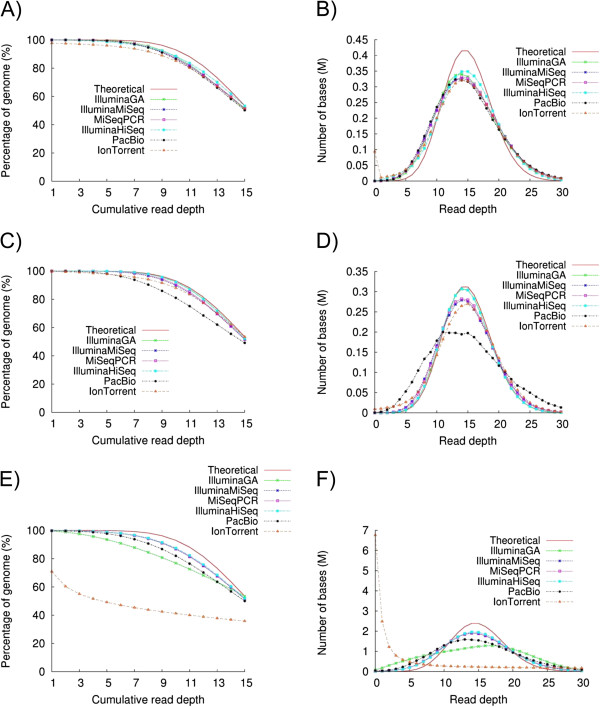
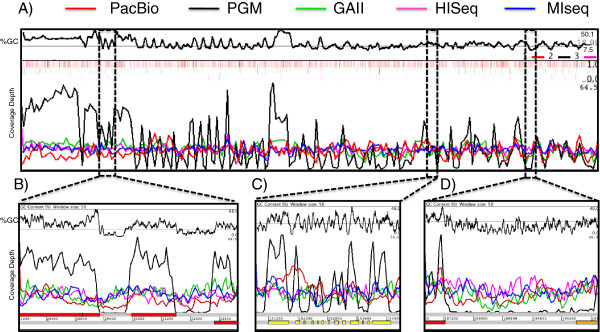
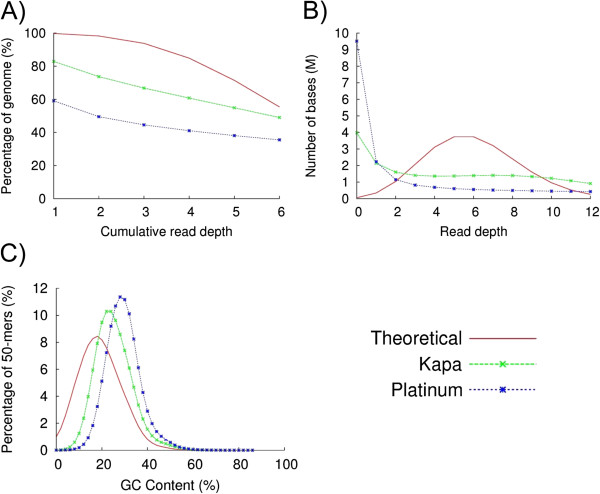
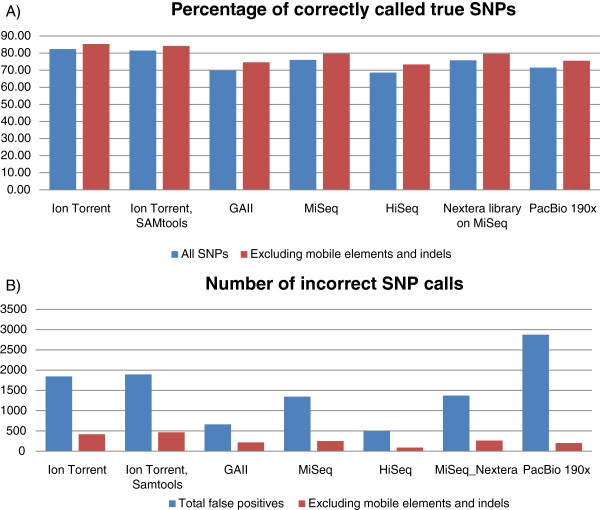
BACKGROUND: Next generation sequencing (NGS) technology has revolutionized genomic and genetic research. The pace of change in this area is rapid with three major new sequencing platforms having been released in 2011: Ion Torrent's PGM, Pacific Biosciences' RS and the Illumina MiSeq. Here we compare the results obtained with those platforms to the performance of the Illumina HiSeq, the current market leader. In order to compare these platforms, and get sufficient coverage depth to allow meaningful analysis, we have sequenced a set of 4 microbial genomes with mean GC content ranging from 19.3 to 67.7%. Together, these represent a comprehensive range of genome content. Here we report our analysis of that sequence data in terms of coverage distribution, bias, GC distribution, variant detection and accuracy. RESULTS: Sequence generated by Ion Torrent, MiSeq and Pacific Biosciences technologies displays near perfect coverage behaviour on GC-rich, neutral and moderately AT-rich genomes, but a profound bias was observed upon sequencing the extremely AT-rich genome of Plasmodium falciparum on the PGM, resulting in no coverage for approximately 30% of the genome. We analysed the ability to call variants from each platform and found that we could call slightly more variants from Ion Torrent data compared to MiSeq data, but at the expense of a higher false positive rate. Variant calling from Pacific Biosciences data was possible but higher coverage depth was required. Context specific errors were observed in both PGM and MiSeq data, but not in that from the Pacific Biosciences platform. CONCLUSIONS: All three fast turnaround sequencers evaluated here were able to generate usable sequence. However there are key differences between the quality of that data and the applications it will support.
Overview
The claims and statistics of this paper haven’t been checked yet.
Free: it reads the open-access text and checks the first 5 claims that cite a source we can check. Create a free account to check every claim.
Integrity signals
Registry
Cites
Statistics
Figures
Verification
Claims the paper makes
The claims and statistics of this paper haven’t been checked yet.
Free: it reads the open-access text and checks the first 5 claims that cite a source we can check. Create a free account to check every claim.
Claims other papers make about this one
Each is checked against this paper’s own text: does it say what the citing paper says it does?
The source backs part of the claim, not all of it — or backs it for a different population, condition or comparison.
In the citing paper
“The limit of detection in these experiments is based on the inherent error rate of the Illumina platform (up to 0.4%), which has previously been described for genome editing experiment analyzed by NGS71–73.”
From A high-fidelity Cas9 mutant delivered as a ribonucleoprotein complex enables efficient gene editing in human hematopoietic stem and progenitor cells (2018) · cites this paper as [72]
Experimental — accuracy not yet measuredThe check wasn’t confident either way, so it gives no verdict — never disputed.
In the citing paper
“RNA-seq is expected to produce some reads from highly expressed transcripts that begin at the same nucleotide and are thus designated “duplicate.””
From Multi-platform assessment of transcriptome profiling using RNA-seq in the ABRF next-generation sequencing study (2014) · cites this paper as [8]
Experimental — accuracy not yet measured
Self-check
Percentages, sums and reported differences re-computed from the paper’s own numbers.
The self-check needs the paper’s full text.
Citations
Cites
The Sequence Alignment/Map format and SAMtools
Li, H., Handsaker, B., Wysoker, A., Fennell, T., Ruan, J., Homer, N., Marth, G., Abecasis, G., Durbin, R., & 1000 Genome Project Data Processing Subgroup (2009) · Bioinformatics · doi:10.1093/bioinformatics/btp352 · Cited by 62,041
Fast and accurate short read alignment with Burrows-Wheeler transform
Li, H., & Durbin, R. (2009) · Bioinformatics · doi:10.1093/bioinformatics/btp324 · Cited by 58,607
RNA-Seq: a revolutionary tool for transcriptomics
Wang, Z., Gerstein, M., & Snyder, M. (2009) · Nature Reviews Genetics · doi:10.1038/nrg2484 · Cited by 13,174 · cited 1×
“Illumina sequencing has matured to the point where a great many applications [15-24] have been developed on the platform.”
BackgroundGenome sequence of the human malaria parasite Plasmodium falciparum
Gardner, M. J., Hall, N., Fung, E., White, O., Berriman, M., Hyman, R. W., Carlton, J. M., Pain, A., Nelson, K. E., Bowman, S., et al. (2002) · Nature · doi:10.1038/nature01097 · Cited by 4,407 · cited 1×
“4% [14], we use it as one of our test genomes, representing a significant challenge to most sequencing technologies.”
Method(1997) · Obesity Surgery · doi:10.1381/096089297765555359 · Cited by 3,916
Real-Time DNA Sequencing from Single Polymerase Molecules
Eid, J., Fehr, A., Gray, J., Luong, K., Lyle, J., Otto, G., Peluso, P., Rank, D., Baybayan, P., Bettman, B., et al. (2009) · Science · doi:10.1126/science.1162986 · Cited by 3,732
Accurate whole human genome sequencing using reversible terminator chemistry
Bentley, D. R., Balasubramanian, S., Swerdlow, H. P., Smith, G. P., Milton, J., Brown, C. G., Hall, K. P., Evers, D. J., Barnes, C. L., Bignell, H. R., et al. (2008) · Nature · doi:10.1038/nature07517 · Cited by 3,684
Self-citationGenome-Wide Mapping of in Vivo Protein-DNA Interactions
Johnson, D. S., Mortazavi, A., Myers, R. M., & Wold, B. (2007) · Science · doi:10.1126/science.1141319 · Cited by 2,927
An integrated semiconductor device enabling non-optical genome sequencing
Rothberg, J. M., Hinz, W., Rearick, T. M., Schultz, J., Mileski, W., Davey, M., Leamon, J. H., Johnson, K., Milgrew, M. J., Edwards, M., et al. (2011) · Nature · doi:10.1038/nature10242 · Cited by 2,172
Diep, B. A., Gill, S. R., Chang, R. F., Phan, T. H., Chen, J. H., Davidson, M. G., Lin, F., Lin, J., Carleton, H. A., Mongodin, E. F., et al. (2006) · The Lancet · doi:10.1016/s0140-6736(06)68231-7 · Cited by 1,633 · cited 9×
“MGEs were manually identified from the S. aureus USA300_FPR3757 genome annotation SNPs called from the resulting alignment provided a high-quality reference set for comparison with the SNPs identified by each sequencing platform.”
MethodInfluential
Cited by
Items 401–500 of 1,000
The importance of genome sequence quality to microbial comparative genomics
Smits, T. H. M. (2019) · BMC Genomics · doi:10.1186/s12864-019-6014-5 · Cited by 80
HBLAST: Parallelised sequence similarity – A Hadoop MapReducable basic local alignment search tool
O’Driscoll, A., Belogrudov, V., Carroll, J., Kropp, K. A., Walsh, P., Ghazal, P., & Sleator, R. D. (2015) · Journal of Biomedical Informatics · doi:10.1016/j.jbi.2015.01.008 · Cited by 56
Next-Generation Sequencing for Clinical Management of Multiple Myeloma: Ready for Prime Time?
Bolli, N., Genuardi, E., Ziccheddu, B., Martello, M., Oliva, S., & Terragna, C. (2020) · Frontiers in Oncology · doi:10.3389/fonc.2020.00189 · Cited by 63
Li, X., Buckton, A., Wilkinson, S. L., John, S., Walsh, R., Novotný, T., Valášková, I., Gupta, M., Gamé, L., Barton, P. J. R., et al. (2013) · PLoS ONE · doi:10.1371/journal.pone.0067744 · Cited by 55
“A further recent study by Quail et al [8] performed similar analyses using a number of different bacterial reference genomes representing a range of GC-contents, including the B.”
BackgroundInfluentialPourbavarsad, M. S., Jalalieh, B. J., Landes, N., & Jackson, W. A. (2021) · Journal of environmental chemical engineering · doi:10.1016/j.jece.2021.107001 · Cited by 55
Next-Generation Sequencing (NGS): Platforms and Applications
Mandlik, J., Patil, A., & Singh, S. (2024) · Journal of Pharmacy And Bioallied Sciences · doi:10.4103/jpbs.jpbs_838_23 · Cited by 77
“[21] Library amplification In the next step, the DNA libraries prepared are amplified clonally as a preparatory step for sequencing.”
Pollux: platform independent error correction of single and mixed genomes
Marinier, E., Brown, D. G., & McConkey, B. J. (2015) · BMC Bioinformatics · doi:10.1186/s12859-014-0435-6 · Cited by 55
“MiSeq errors are not uniformly distributed across the genome [5], but appear to be more frequent around homopolymer runs [4,6], GGC triplets [5], or towards the 3’ ends of reads [7].”
BackgroundInfluentialField, M. A., Cho, V., Andrews, T. D., & Goodnow, C. C. (2015) · PLoS ONE · doi:10.1371/journal.pone.0143199 · Cited by 60
Sasaki, Y., Tamura, M., Koyama, R., Nakagaki, T., Adachi, Y., & Tokino, T. (2016) · World Journal of Gastroenterology · doi:10.3748/wjg.v22.i7.2284 · Cited by 59
STRait Razor v2s: Advancing sequence-based STR allele reporting and beyond to other marker systems
King, J. L., Wendt, F. R., Sun, J., & Budowle, B. (2017) · Forensic Science International Genetics · doi:10.1016/j.fsigen.2017.03.013 · Cited by 58
Angers-Loustau, A., Petrillo, M., Bengtsson-Palme, J., Berendonk, T., Blais, B., Chan, K.-G., Coque, T. M., Hammer, P., Heß, S., Kagkli, D. M., et al. (2018) · F1000Research · doi:10.12688/f1000research.14509.1 · Cited by 55
Taheri, S., Abdullah, T. L., Jain, S. M., Sahebi, M., & Azizi, P. (2017) · Molecular Breeding · doi:10.1007/s11032-017-0643-7 · Cited by 64
Streams of data from drops of water: 21st century molecular microbial ecology
Clark, D. R., Ferguson, R., Harris, D. N., Nicholass, K. J. M., Prentice, H. J., Randall, K. C., Randell, L., Warren, S. L., & Dumbrell, A. J. (2018) · Wiley Interdisciplinary Reviews Water · doi:10.1002/wat2.1280 · Cited by 60
Distinguishing low frequency mutations from RT-PCR and sequence errors in viral deep sequencing data
Orton, R. J., Wright, C. F., Morelli, M. J., King, D. J., Paton, D. J., King, D. P., & Haydon, D. T. (2015) · BMC Genomics · doi:10.1186/s12864-015-1456-x · Cited by 59
“In terms of error rate, the Illumina platform is considered to be better than its rivals [23-25] and every sequenced base in every read is assigned a quality score that is a measure of the uncertainty of the base call using the Phred scale.”
MethodNext Generation Sequencing of Acute Myeloid Leukemia: Influencing Prognosis
Ilyas, A. M., Ahmad, S., Faheem, M., Naseer, M. I., Kumosani, T., Al-Qahtani, M. H., Gari, M. A., & Ahmed, F. (2015) · BMC Genomics · doi:10.1186/1471-2164-16-s1-s5 · Cited by 68
“Comprehensive reviews are available that discuss various technological aspects of NGS and its recent advancements [8-10].”
Ricke, S. C., Kim, S. A., Shi, Z., & Park, S. H. (2018) · Journal of Applied Microbiology · doi:10.1111/jam.13888 · Cited by 65
“…was driven by the development of multiple sequencing hardware advancements, which have led to bench top models more amenable for smaller research laboratories (Quail et al. 2012; Fichot and Norman 2013; Escobar-Zapeda et al. 2015; Ricke et al. 2015, 2017; Comeau et al. 2017; Roumpeka et al. 2017).”
BackgroundSimpson, L., Douglass, S. M., Lake, J. A., Pellegrini, M. A., & Li, F. (2015) · PLoS neglected tropical diseases · doi:10.1371/journal.pntd.0003841 · Cited by 54
“The DNA libraries were subjected to PacBio sequencing [47] to obtain full length minicircle sequences [49] and avoid the problem of the presence of the conserved region affecting assembly of shorter sequences.”
MethodAn in-depth evaluation of metagenomic classifiers for soil microbiomes
Edwin, N. R., Fitzpatrick, A., Brennan, F., Abram, F., & O’Sullivan, Ó. (2024) · Environmental Microbiome · doi:10.1186/s40793-024-00561-w · Cited by 59
“This approach has not only significantly expanded the tree of life by incorporating genomes from previously unculturable microbial lineages but is also poised to gain prominence due to the falling costs and heightened efficiency and speed of sequencing technologies [3, 4].”
BackgroundMethodInfluentialArbab, M., Srinivasan, S., Hashimoto, T., Geijsen, N., & Sherwood, R. I. (2015) · Stem Cell Reports · doi:10.1016/j.stemcr.2015.09.022 · Cited by 52
“5% of the frequency of the correct sequences, a rate that is indistinguishable from technical MiSeq sequencing error (Quail et al., 2012).”
BackgroundInfluentialBacterial genomes in epidemiology—present and future
Croucher, N. J., Harris, S. R., Grad, Y. H., & Hanage, W. P. (2013) · Philosophical Transactions of the Royal Society B Biological Sciences · doi:10.1098/rstb.2012.0202 · Cited by 55
“Nevertheless, there is much excitement around sequencing platforms such as PacBio that promise to be able to span such regions with single reads (although these typically have higher per nucleotide error rates; for further discussion see [12,13]).”
BackgroundSelf-citationComparative genome analysis of Wolbachia strain wAu
Sutton, E. R., Harris, S. R., Parkhill, J., & Sinkins, S. P. (2014) · BMC Genomics · doi:10.1186/1471-2164-15-928 · Cited by 52
“There were 88 indels relative to Illumina data; these were mostly single nucleotide insertions in the PacBio sequence, and were located in homopolymeric tracts, regions that are known to be prone to insertion errors in PacBio sequencing [28,29].”
MethodSelf-citationA MiSeq-HyDRA platform for enhanced HIV drug resistance genotyping and surveillance
Taylor, T., Lee, E. R., Nykoluk, M., Enns, E., Liang, B., Capina, R. E., Gauthier, M., Domselaar, G. V., Sandstrom, P. A., Brooks, J., et al. (2019) · Scientific Reports · doi:10.1038/s41598-019-45328-3 · Cited by 53
“These features enable all NGS platforms to sequence templates with higher throughput, improved sensitivity for minor variants and significantly lowered per sample cost in large batched sample runs making them preferred methods for HIVDR genotyping 18 .”
BackgroundMethodPhredEM: a phred-score-informed genotype-calling approach for next-generation sequencing studies
Liao, P., Satten, G. A., & Hu, Y. (2017) · Genetic Epidemiology · doi:10.1002/gepi.22048 · Cited by 73
“For instance, the Illumina MiSeq platform has an error rate of ∼ 0.8% [Quail et al., 2012] whereas the Roche 454 System has ∼ 0.1% [Liu et al., 2012].”
MethodInfluentialBruzek, A. K., Ravi, K., Muruganand, A., Wadden, J., Babila, C. M., Cantor, E., Tunkle, L., Wierzbicki, K., Stallard, S., Dickson, R. P., et al. (2020) · Clinical Cancer Research · doi:10.1158/1078-0432.ccr-20-2066 · Cited by 61
Analytical demands to use whole-genome sequencing in precision oncology
Meggendorfer, M., Jobanputra, V., Wrzeszczyński, K. O., Roepman, P., de Bruijn, E., Cuppen, E. P. J. G., Büttner, R., Caldas, C., Grimmond, S. M., Mullighan, C. G., et al. (2021) · Seminars in Cancer Biology · doi:10.1016/j.semcancer.2021.06.009 · Cited by 51
Liu, S., Li, Y., Lu, J., Su, X., Tang, M., Zhang, R., Zhou, L., Zhou, C., Yang, Q. Y., Ji, Y., et al. (2013) · Methods in Ecology and Evolution · doi:10.1111/2041-210x.12120 · Cited by 64
“In contrast, the Illumina HiSeq 2000 can produce up to 3 billion reads per run for a similar cost (Quail et al. 2012).”
MethodSeth-Smith, H. M. B., Bonfiglio, F., Cuénod, A., Reist, J., Egli, A., & Wüthrich, D. (2019) · Frontiers in Public Health · doi:10.3389/fpubh.2019.00241 · Cited by 52
“On the AT-rich Plasmodium falciparum genome, Nextera was again found to give highly biased results (20).”
BackgroundTIGAR2: sensitive and accurate estimation of transcript isoform expression with longer RNA-Seq reads
Nariai, N., Kojima, K., Mimori, T., Sato, Y., Kawai, Y., Yamaguchi-Kabata, Y., & Nagasaki, M. (2014) · BMC Genomics · doi:10.1186/1471-2164-15-s10-s5 · Cited by 51
“Moreover, there are few methods suitable for RNA-Seq data produced from new types of sequencers, such as the Ion Torrent PGM sequencer, which generate variable-length reads with relatively higher error rate of substitutions, deletions, and insertions [7,8].”
MethodNext-generation sequencing as an approach to dairy starter selection
Kelleher, P., Murphy, J., Mahony, J., & van Sinderen, D. (2015) · Dairy Science & Technology · doi:10.1007/s13594-015-0227-4 · Cited by 51
“Three commonly used methods for the determination of the degree of hydrolysis involve the application of trinitrobenzenesulphonic acid (TNBS) and ophthaldialdehyde (OPA), which both react with the amino groups released by the hydrolysis of peptides, and pH stat, a titration method where the protons released during pep…”
MethodResultInfluentialIwamoto, A., Tanahashi, T., Okada, R., Yoshida, Y., Kikuchi, K. M., Keida, Y., Murakami, Y., Yang, L., Yamamoto, K., Nishiumi, S., et al. (2014) · Gut Pathogens · doi:10.1186/1757-4749-6-27 · Cited by 56
“Illumina sequencing technique produces large amounts of short overlapping reads from the target genome [28].”
BackgroundRao, P. N., Uplekar, S., Kayal, S., Mallick, P. K., Bandyopadhyay, N., Kale, S., Singh, O. P., Mohanty, A., Mohanty, S., Wassmer, S. C., et al. (2016) · Journal of Clinical Microbiology · doi:10.1128/jcm.00235-16 · Cited by 53
Evaluation of the precision ID mtDNA whole genome panel on two massively parallel sequencing systems
Woerner, A. E., Ambers, A., Wendt, F. R., King, J. L., Moura-Neto, R. S., Silva, R., & Budowle, B. (2018) · Forensic Science International Genetics · doi:10.1016/j.fsigen.2018.07.015 · Cited by 57
Understanding next generation sequencing in oncology: A guide for oncologists
Moorcraft, S. Y., de Castro, D. G., & Walker, B. A. (2015) · Critical Reviews in Oncology/Hematology · doi:10.1016/j.critrevonc.2015.06.007 · Cited by 59
“A general overview of the advantages and disadvantages of each latform is provided in Table 2, and previous articles have comared the performance of the different technologies (Clark et al., 011; Ihle et al., 2014; Liu et al., 2012; Quail et al., 2012).”
BackgroundMcDonnell, J. E., Dallman, T. J., Atkin, S., Turbitt, D., Connor, T. R., Grant, K., Thomson, N. R., & Jenkins, C. (2013) · Epidemiology and Infection · doi:10.1017/s0950268813000137 · Cited by 50
Self-citationThe role of the poly(A) tract in the replication and virulence of tick-borne encephalitis virus
Asghar, N., Lee, Y.-P., Nilsson, E., Lindqvist, R., Melik, W., Kröger, A., Överby, A. K., & Johansson, M. (2016) · Scientific Reports · doi:10.1038/srep39265 · Cited by 49
Kamenova, S., Bartley, T., Bohan, D. A., Boutain, J. R., Colautti, R. I., Domaizon, I., Fontaine, C., Lemainque, A., Viol, I. L., Mollot, G., et al. (2017) · Advances in ecological research/Advances in Ecological Research · doi:10.1016/bs.aecr.2016.10.009 · Cited by 73
Krüppel-Like Factor 7 is a Marker of Aggressive Gastric Cancer and Poor Prognosis
Jiang, Z., Yu, T., Fan, Z., Yang, H., & Lin, X. (2017) · Cellular Physiology and Biochemistry · doi:10.1159/000481748 · Cited by 50
Wei, Z., & Zhang, S. (2018) · BMC Bioinformatics · doi:10.1186/s12859-018-2208-0 · Cited by 56
“The requirement that three or more full passes across insert sequences for CCS reads limits the insert size to 2.5 kb, but the CLR reads can rang up to ~ 40 kb by using a DNA polymerase anchored in a zero-mode waveguides [4, 8 – 10].”
BackgroundMethodInfluentialBest Practices for Illumina Library Preparation
Bronner, I. F., & Quail, M. A. (2019) · Current Protocols in Human Genetics · doi:10.1002/cphg.86 · Cited by 49
“PCR amplification during library preparation (Basic Protocol 4 and Alternate Protocol 3) allows lower amounts of starting material to be used but introduces bias (Quail et al., 2012).”
BackgroundMethodInfluentialSelf-citationComparison of long-read sequencing technologies in interrogating bacteria and fly genomes
Tvedte, E. S., Gasser, M. T., Sparklin, B. C., Michalski, J. M., Hjelmen, C. E., Johnston, J. S., Zhao, X., Bromley, R. E., Tallon, L. J., Sadzewicz, L., et al. (2021) · G3 Genes Genomes Genetics · doi:10.1093/g3journal/jkab083 · Cited by 57
Zhang, L., Chen, L., Sah, S., Latham, G. J., Patel, R., Song, Q., Koeppen, H., Tam, R., Schleifman, E., Mashhedi, H., et al. (2014) · The Oncologist · doi:10.1634/theoncologist.2013-0180 · Cited by 49
The complete methylome of Helicobacter pylori UM032
Lee, W. C., Anton, B. P., Wang, S., Baybayan, P. A., Singh, S., Ashby, M., Chua, E. G., Tay, C. Y., Thirriot, F., Loke, M. F., et al. (2015) · BMC Genomics · doi:10.1186/s12864-015-1585-2 · Cited by 54
“However, despite the long read length, error rates of single-molecule reads can be as high as 13% [39,40].”
Capturing needles in haystacks: a comparison of B-cell receptor sequencing methods
Bashford-Rogers, R. J. M., Palser, A. L., Idris, S. F., Carter, L., Epstein, M., Callard, R. E., Douek, D. C., Vassiliou, G. S., Follows, G., Hubank, M. J. F., et al. (2014) · BMC Immunology · doi:10.1186/s12865-014-0029-0 · Cited by 49
“6 Gb of sequence/run, 60 Mb/hour) [17] and lower overall error rate, particularly in homopolymeric regions [21].”
Gorriti, M. F., Dias, G. M., Chimetto, L. A., Silva, A. E. T., da Silva, B. S., Mesquita, M. M., Gregoracci, G. B., Farías, M. E., Thompson, C. C., & Thompson, F. L. (2014) · BMC Genomics · doi:10.1186/1471-2164-15-473 · Cited by 52
“Because of the relatively high genome sequencing coverage we do not expect this fact to be due to sequencing errors [79,80].”
Frequent KIT Mutations in Human Gastrointestinal Stromal Tumors
Xu, Z., Huo, X., Tang, C., Ye, H., Nandakumar, V., Lou, F., Zhang, D., Jiang, S., Sun, H., Dong, H., et al. (2014) · Scientific Reports · doi:10.1038/srep05907 · Cited by 50
Quail, M. A., Smith, M., Jackson, D., Leonard, S., Skelly, T., Swerdlow, H. P., Gu, Y., & Ellis, P. (2014) · BMC Genomics · doi:10.1186/1471-2164-15-110 · Cited by 49
“With the Illumina error rate less than 1% [29] this should occur at a frequency of less than 1 in 10 6 .”
BackgroundSelf-citationZhang, S., Bian, Y., Chen, A., Zheng, H., Gao, Y., Hou, Y., & Li, C. (2016) · Forensic Science International Genetics · doi:10.1016/j.fsigen.2016.12.003 · Cited by 50
Assessing the Gene Content of the Megagenome: Sugar Pine (Pinus lambertiana)
González‐Ibeas, D., Martínez‐García, P. J., Famula, R. A., Mix, A. D., Stevens, K., Loopstra, C. A., Langley, C. H., Neale, D. B., & Wegrzyn, J. (2016) · G3 Genes Genomes Genetics · doi:10.1534/g3.116.032805 · Cited by 58
“In some studies, PacBio has shown bias toward GC-rich sequences in genome sequencing (Quail et al. 2012).”
Intriguing Interaction of Bacteriophage-Host Association: An Understanding in the Era of Omics
Parmar, K. M., Gaikwad, S. L., Dhakephalkar, P. K., Kothari, R. K., & Singh, R. P. (2017) · Frontiers in Microbiology · doi:10.3389/fmicb.2017.00559 · Cited by 54
“Several sequencing platforms are available such as Ion Torrent, Illumina, PacBio which are preferred as per the requirement of their read length, coverage, paired reads, insert size, accuracy, error rates, sequencing yield, run time and sequencing cost (Quail et al., 2012).”
MethodJi, H., Enns, E., Brumme, C. J., Parkin, N. T., Howison, M., Lee, E. R., Capina, R. E., Marinier, E., Ávila‐Ríos, S., Sandstrom, P. A., et al. (2018) · Journal of the International AIDS Society · doi:10.1002/jia2.25193 · Cited by 50
“…but not yet proven to be necessary for routine clinical use and hence not dealt with in this consensus [13,35-38]; and (3) it was developed primarily based on processing of data from Illumina technology, which is currently the most widely used, but not the only platform for NGS HIVDR [39].”
BackgroundAmbrosino, L., Colantuono, C., Diretto, G., Fiore, A., & Chiusano, M. L. (2020) · Plants · doi:10.3390/plants9050591 · Cited by 59
Zaiko, A., Martínez, J. L., Ardura, A., Clusa, L., Borrell, Y. J., Samuilovienė, A., Roca, A., & García‐Vázquez, E. (2015) · Marine Environmental Research · doi:10.1016/j.marenvres.2015.07.002 · Cited by 58
“…AT-rich genomes found by Quail et al. (2012) with Ion Torrent was interpreted by the authors as an artifact introduced during amplification; avoidance of library amplification and/or emPCR, or use of more faithful enzymes during emPCR was recommended for eliminating the bias (Quail et al., 2012).”
BackgroundMethodInfluentialNext-generation sequencing methodologies to detect low-frequency mutations: “Catch me if you can”
Menon, V., & Brash, D. E. (2023) · Mutation Research - Reviews in Mutation Research · doi:10.1016/j.mrrev.2023.108471 · Cited by 48
Deng, N., Chang, E., Li, M.-H., Ji, J., Yao, X., Bartish, I. V., Liu, J., Ma, J., Chen, L., Jiang, Z., et al. (2016) · Frontiers in Plant Science · doi:10.3389/fpls.2016.00174 · Cited by 48
“The extra genetic information might be useful for the researchers who are interested in a detailed trancriptomic overview of Gnetum.”
BackgroundInfluentialPino, A., Giunta, G., Randazzo, C. L., Caruso, S., Caggia, C., & Cianci, A. (2017) · Microbial Ecology in Health and Disease · doi:10.1080/16512235.2017.1357417 · Cited by 48
“method with a faster turnaround than other nextgeneration sequencing techniques [43,44].”
MethodHow B-Cell Receptor Repertoire Sequencing Can Be Enriched with Structural Antibody Data
Kovaltsuk, A., Krawczyk, K., Galson, J. D., Kelly, D. F., Deane, C. M., & Trück, J. (2017) · Frontiers in Immunology · doi:10.3389/fimmu.2017.01753 · Cited by 48
“In recent years, Illumina sequencing platforms are usually preferred as they have increasing read length, higher read depth, lower error rates, and lower costs per base (57, 58).”
BackgroundVenomics-Accelerated Cone Snail Venom Peptide Discovery
Himaya, S. W. A., & Lewis, R. J. (2018) · International Journal of Molecular Sciences · doi:10.3390/ijms19030788 · Cited by 55
Gong, J., Pan, K., Fakih, M., Pal, S. K., & Salgia, R. (2018) · Oncotarget · doi:10.18632/oncotarget.24353 · Cited by 55
“The commercialization and availability of these next-generation sequencers including those from Roche, Life Technologies SOLiD, Illumina, Pacific Biosciences, and Ion Torrent have since established the foundation for which most commercial NGS platforms operate from in tumor molecular profiling [27, 29, 31, 32].”
MethodXu, Z., Green, B., Benoit, N., Schatz, M., Wheelan, S., & Cormack, B. (2020) · Molecular Microbiology · doi:10.1111/mmi.14488 · Cited by 48
“SMRT sequencing generates long reads without context bias (Chaisson, Wilson, & Eichler, 2015; Quail et al., 2012; Ross et al., 2013) that allows efficient and highly accurate de novo assembly, including assembly of the long tandem repeat regions.”
BackgroundBravo-Egaña, V., Sanders, H., & Chitnis, N. (2021) · Human Immunology · doi:10.1016/j.humimm.2021.01.010 · Cited by 52
Sie, D., Snijders, P. J. F., Meijer, G. A., Doeleman, M., van Moorsel, M. I. H., Essen, H. F. H. V., Eijk, P. P., Grünberg, K., van Grieken, N. C. T., Thunnissen, E., et al. (2014) · Cellular Oncology · doi:10.1007/s13402-014-0196-2 · Cited by 51
Bogdanova, V. S., Zaytseva, O. O., Mglinets, A. V., Shatskaya, N. V., Kоsterin, О. E., & Vasiliev, G. V. (2015) · PLoS ONE · doi:10.1371/journal.pone.0119835 · Cited by 49
“In case of doubtful length of homopolymer stretches, typical for the Ion Torrent technology [32], their length was adjusted to fit the reference genome.”
BackgroundExperimental metagenomics and ribosomal profiling of the human skin microbiome
Ferretti, P., Farina, S., Cristofolini, M., Girolomoni, G., Tett, A., & Segata, N. (2016) · Experimental Dermatology · doi:10.1111/exd.13210 · Cited by 54
Stasik, S., Schuster, C., Ortlepp, C., Platzbecker, U., Bornhäuser, M., Schetelig, J., Ehninger, G., Folprecht, G., & Thiede, C. (2018) · Biomolecular Detection and Quantification · doi:10.1016/j.bdq.2017.12.001 · Cited by 46
Quantification of massively parallel sequencing libraries – a comparative study of eight methods
Hussing, C., Kampmann, M., Mogensen, H. S., Børsting, C., & Morling, N. (2018) · Scientific Reports · doi:10.1038/s41598-018-19574-w · Cited by 56
Chang, J. J. M., Ip, Y. C. A., Bauman, A. G., & Huang, D. (2020) · Frontiers in Marine Science · doi:10.3389/fmars.2020.00448 · Cited by 51
Sequence data for Clostridium autoethanogenum using three generations of sequencing technologies
Utturkar, S. M., Klingeman, D. M., Bruno-Barcena, J. M., Chinn, M. S., Grunden, A. M., Köpke, M., & Brown, S. D. (2015) · Scientific Data · doi:10.1038/sdata.2015.14 · Cited by 46
Molecular Diagnosis of Tuberculosis and Drug Resistance
Lin, S.-Y. G., & Desmond, E. P. (2014) · Clinics in Laboratory Medicine · doi:10.1016/j.cll.2014.02.005 · Cited by 49
Transcriptional analysis of endocrine disruption using zebrafish and massively parallel sequencing
Baker, M. E., & Hardiman, G. (2014) · Journal of Molecular Endocrinology · doi:10.1530/jme-13-0219 · Cited by 54
Management of Incidental Findings in the Era of Next-generation Sequencing
Blackburn, H. L., Schroeder, B., Turner, C., Shriver, C. D., Ellsworth, D. L., & Ellsworth, R. E. (2015) · Current Genomics · doi:10.2174/1389202916666150317232930 · Cited by 51
“SMRT sequencing has been referred to as “thirdgeneration sequencing” because PCR amplification is not required and the zero-mode waveguide technology has the advantage of read lengths >20,000 bp, ability to detect chemical modification of bases such as methylation, and shorter preparation and sequencing run times; how…”
BackgroundMethodConsiderations For Optimizing Microbiome Analysis Using a Marker Gene
de la Cuesta‐Zuluaga, J., & Escobar, J. S. (2016) · Frontiers in Nutrition · doi:10.3389/fnut.2016.00026 · Cited by 59
High-Throughput Sequencing-Based Immune Repertoire Study during Infectious Disease
Hou, D., Chen, C., Seely, E. J., Chen, S., & Song, Y. (2016) · Frontiers in Immunology · doi:10.3389/fimmu.2016.00336 · Cited by 58
“Insertions and deletions of nucleotides, resulting from imperfect interpretation of homopolymeric stretches, are considerable for the Roche 454 platform (29), while substitution errors are predominant in Illumina platform (30, 31).”
BackgroundLindberg, M. R., Schmedes, S. E., Hewitt, F. C., Haas, J., Ternus, K. L., Kadavy, D. R., & Budowle, B. (2016) · PLoS ONE · doi:10.1371/journal.pone.0167600 · Cited by 51
Molecular techniques for the personalised management of patients with chronic myeloid leukaemia
Alikian, M., Gale, R. P., Apperley, J. F., & Foroni, L. (2017) · Biomolecular Detection and Quantification · doi:10.1016/j.bdq.2017.01.001 · Cited by 55
Review of sequencing platforms and their applications in phaeochromocytoma and paragangliomas
Pillai, S., Gopalan, V., & Lam, A. K.-Y. (2017) · Critical Reviews in Oncology/Hematology · doi:10.1016/j.critrevonc.2017.05.005 · Cited by 46
Perveen, N., Muzaffar, S. B., Vijayan, R., & Al-Deeb, M. A. (2020) · Scientific Reports · doi:10.1038/s41598-020-74116-7 · Cited by 46
Addanki, S., Meas, S., Sarli, V. N., Singh, B., & Lucci, A. (2022) · International Journal of Molecular Sciences · doi:10.3390/ijms23147843 · Cited by 53
“The NGS workflow principally includes DNA ligation, library construction, clonal amplification of the template, and massive parallel sequencing of the millions of DNA fragments derived from the samples [26].”
MethodClinical Utility and Benefits of Comprehensive Genomic Profiling in Cancer
Tjota, M. Y., Segal, J. P., & Wang, P. (2024) · The Journal of Applied Laboratory Medicine · doi:10.1093/jalm/jfad091 · Cited by 53
Next-Generation Sequencing Platforms
El‐Metwally, S., Ouda, O. M., & Helmy, M. (2014) · SpringerBriefs in systems biology · doi:10.1007/978-1-4939-0715-1_4 · Cited by 45
Recknagel, H., Jacobs, A., Herzyk, P., & Elmer, K. R. (2015) · Molecular Ecology Resources · doi:10.1111/1755-0998.12406 · Cited by 45
“At present, Illumina sequencing by synthesis and Ion Torrent semiconductor sequencers are the most suitable platforms for the high-throughput generation of DNA sequence (Loman et al. 2012; Quail et al. 2012).”
BackgroundMethodFinseth, F. R., & Harrison, R. G. (2014) · PLoS ONE · doi:10.1371/journal.pone.0108550 · Cited by 52
Holdsworth, W. L., LaPlant, K. E., Bell, D. C., Jahn, M., & Mazourek, M. R. (2016) · PLoS ONE · doi:10.1371/journal.pone.0167715 · Cited by 45
Role of Gut Microbiota in Combating Oxidative Stress
Dam, B., Misra, A., & Banerjee, S. (2019) · Springer eBooks · doi:10.1007/978-981-13-8763-0_4 · Cited by 49
Next-generation sequencing as a screening tool for foodborne pathogens in fresh produce
Lewis, E., Hudson, J. A., Cook, N., Barnes, J. D., & Haynes, E. (2020) · Journal of Microbiological Methods · doi:10.1016/j.mimet.2020.105840 · Cited by 52
Bailén, M., Bressa, C., Larrosa, M., & González-Soltero, R. (2019) · Journal of Microbiological Methods · doi:10.1016/j.mimet.2019.105811 · Cited by 49
Li, X., Chen, S., Xie, W., Vogel, I., Choy, K. W., Chen, F., Christensen, R., Zhang, C., Ge, H., Jiang, H., et al. (2014) · PLoS ONE · doi:10.1371/journal.pone.0085096 · Cited by 48
“Currently, it costs approximately $41 to generate 1 GB of sequence reads [32].”
BackgroundBenny, G. L., Smith, M. E., Kirk, P. M., Tretter, E. D., & White, M. M. (2016) · Fungal biology · doi:10.1007/978-3-319-29137-6_5 · Cited by 45
Self-citationStephens, C. M., Adams, S. M., Sekhon, M. S., Johnson, J. R., & Riley, L. W. (2017) · mSphere · doi:10.1128/msphere.00390-16 · Cited by 47
“-Lactams blaTEM-1, blaCTX-M14 21/44 (48) 9/33 (27) 3/9 4/22 (18) 3/15 (20) 1/4 17/22 (77) 6/18 (33) 2/5 Aminoglycosides aadA1, aadA2, aadA5, aac3, strA, strB 10/44 (23) 6/33 (18) 0 2/22 (9) 1/15 (7) 0 8/22 (36) 5/18 (28) 0”
BackgroundWan, T., Zhao, H., & Wang, W. (2017) · Biological Control · doi:10.1016/j.biocontrol.2017.05.014 · Cited by 46
Yoon, T.-H., Kang, H., Lee, S. R., Lee, J.-B., Baeck, G. W., Park, H., & Kim, H. (2017) · PeerJ · doi:10.7717/peerj.3977 · Cited by 44
“For the NGS analysis, we used the Illumina MiSeq platform, which is the most economical choice with a low sequencing error rate (Luo et al., 2012; Quail et al., 2012).”
MethodDiscovery Methodology of Novel Conotoxins from Conus Species
Fu, Y., Li, C., Dong, S., Wu, Y., Zhangsun, D., & Luo, S. (2018) · Marine Drugs · doi:10.3390/md16110417 · Cited by 49
“The resulting cDNA or the raw RNA sequences are sequencing using NGS platforms, such as 454 (Roche, Branford, CT, USA), Illumina (Illumina, San Diego, CA, USA), Ion Torrent Personal Genome Machine (Thermo Fisher, Waltham, MA, USA), Nanopore (Oxford, UK), ABI 3730 Series (Applied Biosystems, Foster City, CA, USA), and…”
MethodSketching and Sublinear Data Structures in Genomics
Marçais, G., Solomon, B., Patro, R., & Kingsford, C. (2019) · Annual Review of Biomedical Data Science · doi:10.1146/annurev-biodatasci-072018-021156 · Cited by 54
“The read length varies greatly from 1,000 to 100,000 bp, with an average read length around 30,000 bp for the most recent chemistry, but with a per base error rate of 10–15% (51, 52).”
BackgroundRitter, C. D., Dunthorn, M., Anslan, S., de Lima, V. X., Tedersoo, L., Nilsson, R. H., & Antonelli, A. (2020) · Ecology and Evolution · doi:10.1002/ece3.6477 · Cited by 47
“This is expected, since PacBio platforms have a small number of reads in total (Quail et al., 2012) F I G U R E 5 Venn diagrams showing the number of exclusive and shared OTUs for localities (a), habitats (b), and sample type (c) in the 18S dataset; for localities (d), habitats (e), and sample type…”
BackgroundKiefer, J. S. T., Batsukh, S., Bauer, E., Hirota, B., Weiß, B., Wierz, J. C., Fukatsu, T., Kaltenpoth, M., & Engl, T. (2021) · Communications Biology · doi:10.1038/s42003-021-02057-6 · Cited by 50
Yang, X., He, L., Yan, S., Chen, X., & Que, G. (2021) · BMC Oral Health · doi:10.1186/s12903-021-01683-0 · Cited by 44
“Although, the PacBio RS sequencer, released in 2011, had an average error rate of 13% [17, 19], higher than that of the NGS platforms, the subsequent development of the PacBio RSII and PacBio Sequel sequencers greatly improved the accuracy of these type of platforms [20].”
ResultKanaujia, R., Biswal, M., Angrup, A., & Ray, P. (2022) · European Journal of Clinical Microbiology & Infectious Diseases · doi:10.1007/s10096-022-04445-0 · Cited by 50
Using state machines to model the Ion Torrent sequencing process and to improve read error rates
Golan, D., & Medvedev, P. (2013) · Bioinformatics · doi:10.1093/bioinformatics/btt212 · Cited by 53
“In fact, a recent comparative study found that Ion Torrent’s PGM still suffers from high– false-positive rates in SNP calling, relative to Illumina data (Quail et al ., 2012).”
ResultModlin, S. J., Robinhold, C., Morrissey, C., Mitchell, S. N., Ramirez-Busby, S. M., Shmaya, T., & Valafar, F. (2021) · Microbial Genomics · doi:10.1099/mgen.0.000465 · Cited by 46
“notion that short homopolymers do not bias coverage [11, 15], suggesting instead that they systematically reduce coverage at lengths as short as 6 bp, and perhaps lower (Fig.”
BackgroundLiu, B., Conroy, J. M., Morrison, C. D., Odunsi, A., Qin, M., Wei, L., Trump, D. L., Johnson, C. S., Liu, S., & Wang, J. (2015) · Oncotarget · doi:10.18632/oncotarget.3491 · Cited by 51
“Several platforms of NGS have emerged, and some of them are commonly used [14, 15, 50-52].”
Karamitros, T., & Magiorkinis, G. (2015) · Nucleic Acids Research · doi:10.1093/nar/gkv773 · Cited by 43
“The maximum 2D read length was comparable to current PacBio chemistry output (13).”
Metadata
- Authors
- Quail, M., Smith, M. E., Coupland, P., Otto, T. D., Harris, S. R., Connor, T. R., Bertoni, A., Swerdlow, H. P., & Gu, Y.
- Affiliations
- Wellcome Sanger Institute (GB)
- Corresponding author
- Quail, Michael
- ORCID
- Venue
- BMC Genomics
- Published
- 2012
- Volume
- 13
- Issue
- 1
- Pages
- 341
- ISSN
- 1471-2164 (ISSN-L)
- PMC
- PMC3431227
- OpenAlex
- W2124715997
- Semantic Scholar
- 11bc28c49fc164952f587bba71e55d25db0d1757
- Cited by
- 2,031
- References
- 32
- Citations by year
- 2026: 33 · 2025: 50 · 2024: 105 · 2023: 78 · 2022: 91 · 2021: 130 · 2020: 150 · 2019: 144 · 2018: 188 · 2017: 207 · 2016: 254 · 2015: 226 · 2014: 218 · 2013: 144 · 2012: 9
- FWCI
- 76.69
- Type
- journal article
- Language
- en
- Open access
- gold
- doi.org
- Licence
- cc-by
- Locations
- BMC Genomics (publishedVersion, cc-by)
- Europe PMC (PubMed Central) (publishedVersion, cc-by)
- PubMed Central (publishedVersion, cc-by)
- PubMed (publishedVersion)
- ORCA Online Research @Cardiff (Cardiff University) (acceptedVersion)
- ENLIGHTEN (Jurnal Bimbingan dan Konseling Islam) (acceptedVersion)
- DOAJ (DOAJ: Directory of Open Access Journals) (submittedVersion, cc-by-sa)
- Funders
- Wellcome Trust (grant number 098051, 098051)
- European Commission
- Topics
- Life Sciences › Biochemistry, Genetics and Molecular Biology › Molecular Biology › Genomics and Phylogenetic Studies
- Life Sciences › Biochemistry, Genetics and Molecular Biology › Genetics › Genomics and Rare Diseases
- Life Sciences › Biochemistry, Genetics and Molecular Biology › Molecular Biology › Genetics, Bioinformatics, and Biomedical Research
- Keywords
- Ion Torrent PGM, Illumina MiSeq, Illumina HiSeq, microbial genomes, AT-rich genome, Plasmodium falciparum, GC content, variant calling, false positive rate, sequencing error rate
- MeSH terms
- Base Composition, Base Sequence, Bordetella pertussis, Plasmodium falciparum, Staphylococcus aureus, Gene Library, Genome, Bacterial, Sequence Analysis, DNA, Genome, Protozoan, Polymorphism, Single Nucleotide, Databases, Genetic, Nucleotide Motifs
About these checks
Registry, retraction, Cites and statistics results are computed, not judged, with one exception: a printed reference that no index lists is read once by a model before it counts as a citation error. Claims are extracted by a model and kept only when their quote appears verbatim in the text; each cited source is then checked, with a model’s help, for whether it says what the claim relies on. Those verdicts can be wrong — read the claim’s quote and the cited source before relying on one.
Statistics and arithmetic are recomputed, not judged.
Confidence bands are shown only for fields calibrated on our annotated test set. None is calibrated yet, so no band is shown.
What counts as a claim ›How we measure confidence ›How we check this ›
Are you an author, or do you see a problem with this page? Request a review
Data sources
Bibliographic data: Semantic Scholar, OpenAlex, Crossref.
Contains information from the Semantic Scholar Academic Graph Datasets, made available under the ODC Attribution License (ODC-BY 1.0).
Semantic Scholar’s data is described in: Kinney, R., et al. (2023). The Semantic Scholar Open Data Platform. arXiv:2301.10140.
