

A tale of three next generation sequencing platforms: comparison of Ion torrent, pacific biosciences and illumina MiSeq sequencers
Open accessThe DOI matches its Crossref record; 32 of the 32 references it cites were found in a registry or an index.
Abstract
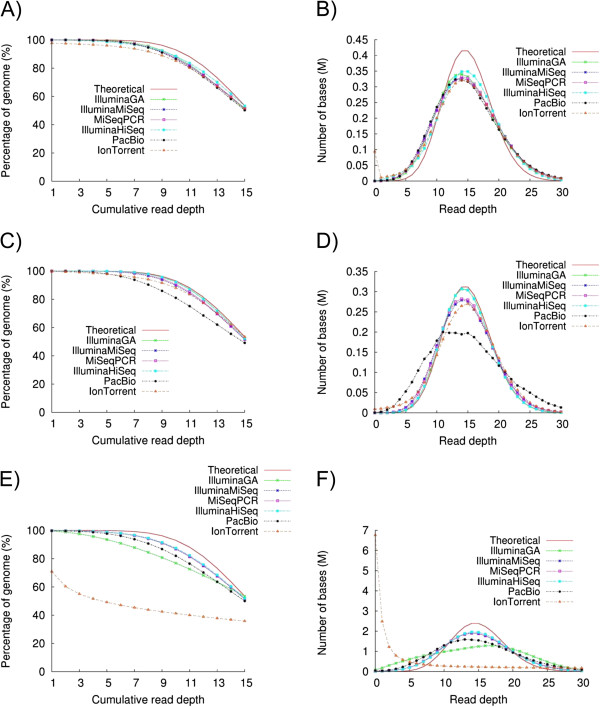
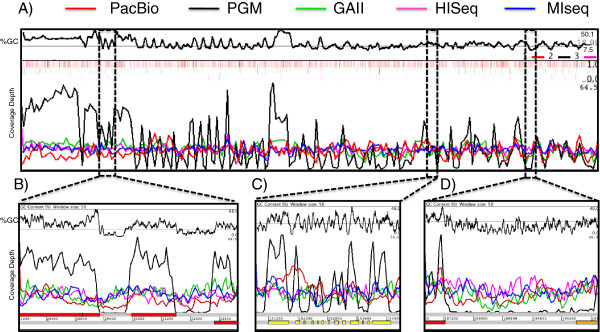
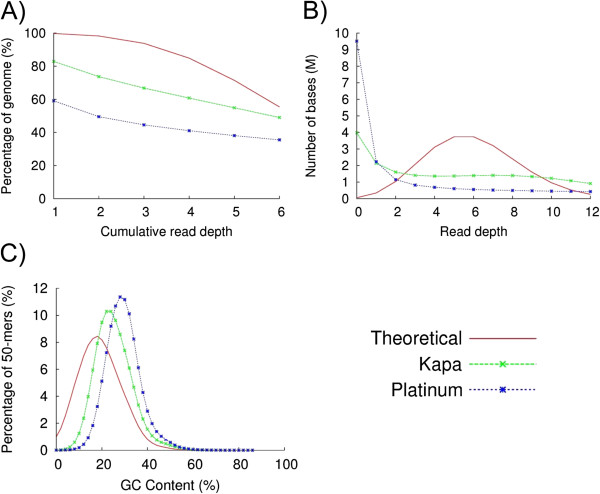
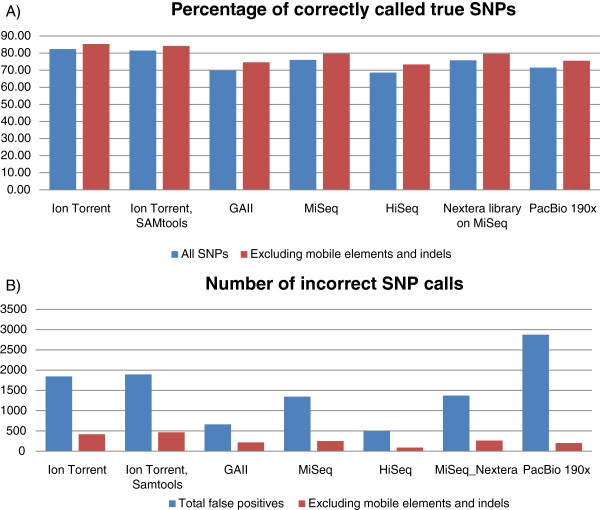
BACKGROUND: Next generation sequencing (NGS) technology has revolutionized genomic and genetic research. The pace of change in this area is rapid with three major new sequencing platforms having been released in 2011: Ion Torrent's PGM, Pacific Biosciences' RS and the Illumina MiSeq. Here we compare the results obtained with those platforms to the performance of the Illumina HiSeq, the current market leader. In order to compare these platforms, and get sufficient coverage depth to allow meaningful analysis, we have sequenced a set of 4 microbial genomes with mean GC content ranging from 19.3 to 67.7%. Together, these represent a comprehensive range of genome content. Here we report our analysis of that sequence data in terms of coverage distribution, bias, GC distribution, variant detection and accuracy. RESULTS: Sequence generated by Ion Torrent, MiSeq and Pacific Biosciences technologies displays near perfect coverage behaviour on GC-rich, neutral and moderately AT-rich genomes, but a profound bias was observed upon sequencing the extremely AT-rich genome of Plasmodium falciparum on the PGM, resulting in no coverage for approximately 30% of the genome. We analysed the ability to call variants from each platform and found that we could call slightly more variants from Ion Torrent data compared to MiSeq data, but at the expense of a higher false positive rate. Variant calling from Pacific Biosciences data was possible but higher coverage depth was required. Context specific errors were observed in both PGM and MiSeq data, but not in that from the Pacific Biosciences platform. CONCLUSIONS: All three fast turnaround sequencers evaluated here were able to generate usable sequence. However there are key differences between the quality of that data and the applications it will support.
Overview
The claims and statistics of this paper haven’t been checked yet.
Free: it reads the open-access text and checks the first 5 claims that cite a source we can check. Create a free account to check every claim.
Integrity signals
Registry
Cites
Statistics
Figures
Verification
Claims the paper makes
The claims and statistics of this paper haven’t been checked yet.
Free: it reads the open-access text and checks the first 5 claims that cite a source we can check. Create a free account to check every claim.
Claims other papers make about this one
Each is checked against this paper’s own text: does it say what the citing paper says it does?
The source backs part of the claim, not all of it — or backs it for a different population, condition or comparison.
In the citing paper
“The limit of detection in these experiments is based on the inherent error rate of the Illumina platform (up to 0.4%), which has previously been described for genome editing experiment analyzed by NGS71–73.”
From A high-fidelity Cas9 mutant delivered as a ribonucleoprotein complex enables efficient gene editing in human hematopoietic stem and progenitor cells (2018) · cites this paper as [72]
Experimental — accuracy not yet measuredThe check wasn’t confident either way, so it gives no verdict — never disputed.
In the citing paper
“RNA-seq is expected to produce some reads from highly expressed transcripts that begin at the same nucleotide and are thus designated “duplicate.””
From Multi-platform assessment of transcriptome profiling using RNA-seq in the ABRF next-generation sequencing study (2014) · cites this paper as [8]
Experimental — accuracy not yet measured
Self-check
Percentages, sums and reported differences re-computed from the paper’s own numbers.
The self-check needs the paper’s full text.
Citations
Cites
The Sequence Alignment/Map format and SAMtools
Li, H., Handsaker, B., Wysoker, A., Fennell, T., Ruan, J., Homer, N., Marth, G., Abecasis, G., Durbin, R., & 1000 Genome Project Data Processing Subgroup (2009) · Bioinformatics · doi:10.1093/bioinformatics/btp352 · Cited by 62,041
Fast and accurate short read alignment with Burrows-Wheeler transform
Li, H., & Durbin, R. (2009) · Bioinformatics · doi:10.1093/bioinformatics/btp324 · Cited by 58,607
RNA-Seq: a revolutionary tool for transcriptomics
Wang, Z., Gerstein, M., & Snyder, M. (2009) · Nature Reviews Genetics · doi:10.1038/nrg2484 · Cited by 13,174 · cited 1×
“Illumina sequencing has matured to the point where a great many applications [15-24] have been developed on the platform.”
BackgroundGenome sequence of the human malaria parasite Plasmodium falciparum
Gardner, M. J., Hall, N., Fung, E., White, O., Berriman, M., Hyman, R. W., Carlton, J. M., Pain, A., Nelson, K. E., Bowman, S., et al. (2002) · Nature · doi:10.1038/nature01097 · Cited by 4,407 · cited 1×
“4% [14], we use it as one of our test genomes, representing a significant challenge to most sequencing technologies.”
Method(1997) · Obesity Surgery · doi:10.1381/096089297765555359 · Cited by 3,916
Real-Time DNA Sequencing from Single Polymerase Molecules
Eid, J., Fehr, A., Gray, J., Luong, K., Lyle, J., Otto, G., Peluso, P., Rank, D., Baybayan, P., Bettman, B., et al. (2009) · Science · doi:10.1126/science.1162986 · Cited by 3,732
Accurate whole human genome sequencing using reversible terminator chemistry
Bentley, D. R., Balasubramanian, S., Swerdlow, H. P., Smith, G. P., Milton, J., Brown, C. G., Hall, K. P., Evers, D. J., Barnes, C. L., Bignell, H. R., et al. (2008) · Nature · doi:10.1038/nature07517 · Cited by 3,684
Self-citationGenome-Wide Mapping of in Vivo Protein-DNA Interactions
Johnson, D. S., Mortazavi, A., Myers, R. M., & Wold, B. (2007) · Science · doi:10.1126/science.1141319 · Cited by 2,927
An integrated semiconductor device enabling non-optical genome sequencing
Rothberg, J. M., Hinz, W., Rearick, T. M., Schultz, J., Mileski, W., Davey, M., Leamon, J. H., Johnson, K., Milgrew, M. J., Edwards, M., et al. (2011) · Nature · doi:10.1038/nature10242 · Cited by 2,172
Diep, B. A., Gill, S. R., Chang, R. F., Phan, T. H., Chen, J. H., Davidson, M. G., Lin, F., Lin, J., Carleton, H. A., Mongodin, E. F., et al. (2006) · The Lancet · doi:10.1016/s0140-6736(06)68231-7 · Cited by 1,633 · cited 9×
“MGEs were manually identified from the S. aureus USA300_FPR3757 genome annotation SNPs called from the resulting alignment provided a high-quality reference set for comparison with the SNPs identified by each sequencing platform.”
MethodInfluential
Cited by
Items 601–700 of 1,000
Making sense of genomes of parasitic worms: Tackling bioinformatic challenges
Korhonen, P. K., Young, N. D., & Gasser, R. B. (2016) · Biotechnology Advances · doi:10.1016/j.biotechadv.2016.03.001 · Cited by 39
Liu, X., Yang, C., Han, F., Fang, Z., Yang, L., Zhuang, M., Lv, H., Liu, Y., Li, Z., & Zhang, Y. (2016) · Molecular Breeding · doi:10.1007/s11032-016-0509-4 · Cited by 35
Li, Y., Hsiang, T., Yang, R., Hu, X., Wang, K., Wang, W.-J., Wang, X.-L., Jiao, L., & Yao, Y. (2016) · Journal of Microbiological Methods · doi:10.1016/j.mimet.2016.06.025 · Cited by 34
Forward Genetics by Sequencing EMS Variation-Induced Inbred Lines
Addo‐Quaye, C., Buescher, E., Best, N. B., Chaikam, V., Baxter, I. R., & Dilkes, B. P. (2017) · G3 Genes Genomes Genetics · doi:10.1534/g3.116.029660 · Cited by 35
Increasing the reach of forensic genetics with massively parallel sequencing
Budowle, B., Schmedes, S. E., & Wendt, F. R. (2017) · Forensic Science Medicine and Pathology · doi:10.1007/s12024-017-9882-5 · Cited by 42
K-Mer Counting Using Bloom Filters with an FPGA-Attached HMC
McVicar, N., Lin, C., & Hauck, S. (2017) · IEEE International Symposium on Field-Programmable Custom Computing Machines (FCCM) · doi:10.1109/fccm.2017.23 · Cited by 42
“Multiple reads of the same region help resolve these errors [12], but also greatly increase the problem size.”
BackgroundCooper, C., Keatley, S. K., Northover, A. S., Gofton, A. W., Brigg, F., Lymbery, A. J., Pallant, L., Clode, P. L., & Thompson, R. C. A. (2018) · International Journal for Parasitology Parasites and Wildlife · doi:10.1016/j.ijppaw.2018.01.005 · Cited by 44
“This diversity should be treated with caution as the MiSeq platform has a small error rate (Quail et al., 2012), and errors often occur during PCR.”
BackgroundGuerrero-Sánchez, V. M., Maldonado-Alconada, A. M., Amil‐Ruíz, F., Verardi, A., Jorrín-Novo, J. V., & Rey, M.-D. (2019) · PLoS ONE · doi:10.1371/journal.pone.0210356 · Cited by 40
Orzińska, A., Guz, K., Mikuła, M., Kulecka, M., Kluska, A., Bałabas, A., Pelc‐Kłopotowska, M., Ostrowski, J., & Brojer, E. (2018) · Blood transfusion · doi:10.2450/2017.0253-16 · Cited by 35
High conservation combined with high plasticity: genomics and evolution of Borrelia bavariensis
Becker, N. S., Rollins, R. E., Nosenko, K., Paulus, A., Martin, S., Krebs, S., Takano, A., Sato, K., Kovalev, S. Y., Kawabata, H., et al. (2020) · BMC Genomics · doi:10.1186/s12864-020-07054-3 · Cited by 37
“Although circular consensus sequencing (CCS) improved the accuracy of PacBio data, it has been established that long-read data is more prone to sequencing errors [30] .”
BackgroundMethodInfluentialSmolina, I., Kollias, S., Poortvliet, M., Nielsen, T. G., Lindeque, P. K., Castellani, C., Møller, E. F., Blanco‐Bercial, L., & Hoarau, G. G. (2014) · Molecular Ecology Resources · doi:10.1111/1755-0998.12241 · Cited by 37
“Indeed, sequencing costs on the Ion Torrent are <1000 USD for 1 Gb (Quail et al. 2012) with run time < 1/2 day.”
BackgroundMethodInfluentialThird-generation sequencing for genetic disease
Ling, X., Wang, C., Li, L., Pan, L., Huang, C., Zhang, C., Huang, Y., Qiu, Y., Lin, F., & Huang, Y. (2023) · Clinica Chimica Acta · doi:10.1016/j.cca.2023.117624 · Cited by 37
Extended RAS and BRAF Mutation Analysis Using Next-Generation Sequencing
Sakai, K., Tsurutani, J., Yamanaka, T., Yoneshige, A., Ito, A., Togashi, Y., Velasco, M. A. D., Terashima, M., Fujita, Y., Tomida, S., et al. (2015) · PLoS ONE · doi:10.1371/journal.pone.0121891 · Cited by 37
“It is unclear why such a high incidence of G>A substitution occurred at these positions, but the overall error rate at the other positions was consistent with the results of a previous report [20].”
ResultTantikachornkiat, M., Sakakibara, S. M., Neuner, M., & Durall, D. M. (2016) · International Journal of Food Microbiology · doi:10.1016/j.ijfoodmicro.2016.06.031 · Cited by 34
A Primer on Infectious Disease Bacterial Genomics
Lynch, T., Petkau, A., Knox, N., Graham, M., & Domselaar, G. V. (2016) · Clinical Microbiology Reviews · doi:10.1128/cmr.00001-16 · Cited by 53
Next-generation sequencing-based analysis of reverse transcriptase fidelity
Yasukawa, K., Iida, K., Okano, H., Hidese, R., Baba, M., Yanagihara, I., Kojima, K., Takita, T., & Fujiwara, S. (2017) · Biochemical and Biophysical Research Communications · doi:10.1016/j.bbrc.2017.07.169 · Cited by 40
Wang, H., Lei, T., Xia, W., Cameron, S. L., Liu, Y., Zhang, Z., Gowda, M. M. N., Barro, P. D., Navas‐Castillo, J., Omongo, C. A., et al. (2019) · Scientific Reports · doi:10.1038/s41598-019-42793-8 · Cited by 37
Rapid multi-locus sequence typing direct from uncorrected long reads using Krocus
Page, A. J., & Keane, J. A. (2018) · PeerJ · doi:10.7717/peerj.5233 · Cited by 33
Recent trends and advances in identification and functional characterization of plant miRNAs
Zhou, X., Khare, T. R., & Kumar, V. (2020) · Acta Physiologiae Plantarum · doi:10.1007/s11738-020-3013-8 · Cited by 36
“The comparison between next-generation strategies may also provide the insights regarding the cost-effectiveness and higher accuracy and efficiency of Illumina HiSeq compared to the rest next generation sequencing platforms (Liu et al. 2011; Quail et al. 2012).”
BackgroundGalal‐Khallaf, A., Osman, A. G. M., Carleos, C. E., García‐Vázquez, E., & Borrell, Y. J. (2015) · Fisheries Research · doi:10.1016/j.fishres.2015.09.009 · Cited by 38
A more complete picture of metal hyperaccumulation through next-generation sequencing technologies
Verbruggen, N., Hanikenne, M., & Clemens, S. (2013) · Frontiers in Plant Science · doi:10.3389/fpls.2013.00388 · Cited by 38
Technological advancements and their importance for nematode identification
Ahmed, M. I., Sapp, M., Prior, T., Karssen, G., & Back, M. A. (2016) · SOIL · doi:10.5194/soil-2-257-2016 · Cited by 38
“The PGM (Personal Genome Machine) of Ion Torrent was evaluated together with other platforms such as Illumina and Pacific Biosystem by Quail et al. (2012).”
BackgroundMethodInfluentialBidmos, F. A., & Bayliss, C. D. (2014) · Pathogens · doi:10.3390/pathogens3010164 · Cited by 33
“Comparisons of other recently developed platforms have also found variability in error rates and suggest that Illumina’s MiSeq may provide the greatest accuracy on repetitive tracts as compared to PacBio and Ion Torrent [46].”
ResultDirect transposition of native DNA for sensitive multimodal single-molecule sequencing
Nanda, A. S., Wu, K., Irkliyenko, I., Woo, B., Ostrowski, M. S., Clugston, A. S., Sayles, L. C., Xu, L., Satpathy, A. T., Nguyen, H. G., et al. (2024) · Nature Genetics · doi:10.1038/s41588-024-01748-0 · Cited by 40
“13 .”
Simon, M. M., Moresco, E. M. Y., Bull, K. R., Kumar, S., Mallon, A., Beutler, B., & Potter, P. K. (2015) · Mammalian Genome · doi:10.1007/s00335-015-9603-x · Cited by 38
“The comparison of these technologies is covered in other reviews (Quail et al. 2012; Mardis 2013).”
MethodWei, N., Bemmels, J. B., & Dick, C. W. (2014) · Molecular Ecology Resources · doi:10.1111/1755-0998.12245 · Cited by 33
“In practice, all NGS platforms produce sequencing errors but to varying degrees, such as 1.07% reported for 454 GS-FLX Titanium (Gilles et al. 2011), 1.71% for Ion Torrent PGM and 0.80% for Illumina MiSeq (Quail et al. 2012).”
BackgroundMethodInfluentialCzaplicki, L. M., & Gunsch, C. K. (2016) · Journal of Environmental Engineering · doi:10.1061/(asce)ee.1943-7870.0001141 · Cited by 33
“Illumina tends towards substituting erroneous bases while Ion Torrent tends towards inserting extra bases and deleting bases) (Glen 2011) b Error rate for RS chemistry, RS II data unavailable (Quail et al. 2012).”
BackgroundSulo, P., Szabóová, D., Bielik, P., Poláková, S., Šoltýs, K., Jatzová, K., & Szemes, T. (2017) · DNA Research · doi:10.1093/dnares/dsx026 · Cited by 40
Computational Methods for Mapping, Assembly and Quantification for Coding and Non-coding Transcripts
Babarinde, I. A., Li, Y., & Hutchins, A. P. (2019) · Computational and Structural Biotechnology Journal · doi:10.1016/j.csbj.2019.04.012 · Cited by 35
Lai, A., Soucy, A., Achkar, C. M. E., Barkovich, A. J., Cao, Y., DiStefano, M. T., Evenson, M. J., Guerrini, R., Knight, D., Lee, Y.-S., et al. (2022) · Genetics in Medicine · doi:10.1016/j.gim.2022.07.020 · Cited by 37
Wells, J. E., Kim, M., Bono, J. L., Kuehn, L. A., & Benson, A. K. (2014) · Journal of Animal Science · doi:10.2527/jas.2013-7282 · Cited by 38
Wendt, F. R., Warshauer, D. H., Zeng, X., Churchill, J. D., Novroski, N. M. M., Song, B., King, J. L., LaRue, B., & Budowle, B. (2016) · Forensic Science International Genetics · doi:10.1016/j.fsigen.2016.09.005 · Cited by 33
An overview of recent technological developments in bovine genomics
Hossein‐Zadeh, N. G. (2024) · Veterinary and Animal Science · doi:10.1016/j.vas.2024.100382 · Cited by 42
Srivastava, A., Akhter, Y., & Verma, D. (2024) · Archives of Microbiology · doi:10.1007/s00203-024-04177-z · Cited by 37
“The recent next-generation techniques utilize short reads (100–400 bp) of such biomarker genes to uncover the microbial composition of a niche followed by their sequencing at several platforms such as Illumina Hi/MiSeq, Nanopore, and Ion Torrent (Quail et al. 2012).”
Hirotsu, Y., Kanda, T., Matsumura, H., Moriyama, M., Yokosuka, O., & Omata, M. (2015) · Hepatology International · doi:10.1007/s12072-015-9624-2 · Cited by 32
Belardinilli, F., Capalbo, C., Buffone, A., Petroni, M., Colicchia, V., Ferraro, S., Zani, M., Nicolussi, A., D'inzeo, S., Coppa, A., et al. (2015) · Clinical Biochemistry · doi:10.1016/j.clinbiochem.2015.04.003 · Cited by 34
Assessing the utility of whole genome amplified DNA for next‐generation molecular ecology
Blair, C. N., Campbell, C. R., & Yoder, A. D. (2015) · Molecular Ecology Resources · doi:10.1111/1755-0998.12376 · Cited by 34
“Although next-generation DNA sequencing (NGS) has found a home in nearly all biological disciplines, these methods rely an initial library preparation step that requires a relatively large quantity of starting material for adequate construction (Quail et al. 2012).”
BackgroundScott, D. C., & Ely, B. (2014) · Current Microbiology · doi:10.1007/s00284-014-0721-6 · Cited by 32
“Many reviews have been published that assess and compare different strategies for the assembly of genomes and novel metrics have been designed to maximize the quality of the assemblies [16, 18, 19].”
Objective review ofde novostand‐alone error correction methods for NGS data
Alic, A. S., Ruzafa, D., Dopazo, J., & Blanquer, I. (2016) · Wiley Interdisciplinary Reviews Computational Molecular Science · doi:10.1002/wcms.1239 · Cited by 40
“Pacific Biosciences sequencing seems to obtain better sequencing results because of its lack of amplification before sequencing,(5) but bias still plagues this technology (slight but noticeable) when faced with genomes with GC-rich regions like Staphylococcus aureus.(60) The Pacific Biosciences RS, like the Illumina M…”
BackgroundRecent advances in sequence assembly: principles and applications
Chen, Q., Lan, C., Zhao, L., Wang, J., Chen, B., & Chen, Y. P. (2017) · Briefings in Functional Genomics · doi:10.1093/bfgp/elx006 · Cited by 40
Varongchayakul, N., Hersey, J. S., Squires, A. H., Meller, A., & Grinstaff, M. W. (2018) · Advanced Functional Materials · doi:10.1002/adfm.201804182 · Cited by 33
Acute changes in the colonic microbiota are associated with large intestinal forms of surgical colic
Salem, S. E., Maddox, T. W., Antczak, P., Ketley, J. M., Williams, N. J., & Archer, D. (2019) · BMC Veterinary Research · doi:10.1186/s12917-019-2205-1 · Cited by 58
An integrated biosensor platform for extraction and detection of nucleic acids
Sciuto, E. L., Petralia, S., Calabrese, G., & Conoci, S. (2020) · Biotechnology and Bioengineering · doi:10.1002/bit.27290 · Cited by 32
Comparative transcriptome analysis of male and female flowers in Spinacia oleracea L
Li, N., Meng, Z., Tao, M., Wang, Y., Zhang, Y., Li, S., Gao, W., & Deng, C. (2020) · BMC Genomics · doi:10.1186/s12864-020-07277-4 · Cited by 38
Evaluation of next generation sequencing for the analysis of Eimeria communities in wildlife
Vermeulen, E. T., Lott, M. J., Eldridge, M. D. B., & Power, M. L. (2016) · Journal of Microbiological Methods · doi:10.1016/j.mimet.2016.02.018 · Cited by 47
Deep mutational scanning of proteins in mammalian cells
Maes, S., Deploey, N., Peelman, F., & Eyckerman, S. (2023) · Cell Reports Methods · doi:10.1016/j.crmeth.2023.100641 · Cited by 43
“The intrinsically high error rate in SMRT sequencing 130 can be resolved by increasing the coverage through multiple passes along the sense and antisense strands of acircularizedtemplateincircularconsensussequencing(CCS).”
BackgroundOmics technology draws a comprehensive heavy metal resistance strategy in bacteria
Halema, A. A., EL-BELTAGI, H. S., Al‐Dossary, O., Alsubaie, B., Henawy, A. R., Adel Abdel-Sabour, R. E. Z. K., Almutairi, H. H., Mohamed, A. A., Elarabi, N. I., & Abdelhadi, A. A. (2024) · World Journal of Microbiology and Biotechnology · doi:10.1007/s11274-024-04005-y · Cited by 37
“In reality, Illumina sequencing technique was known as sequencing by synthesis (SBS), which is the most widely used method and produces 90% of the world’s sequence data (Quail et al. 2013).”
An emerging place for lung cancer genomics in 2013.
Daniels, M. G., Bowman, R., Yang, I. A., Govindan, R., & Fong, K. M. (2013) · Europe PMC (PubMed Central) · doi:10.3978/j.issn.2072-1439.2013.10.06 · Cited by 33
“Indeed, each sequencing platform has a unique profile of strengths and weaknesses (54).”
BackgroundNext generation sequencing and its application in deciphering head and neck cancer
Jessri, M., & Farah, C. S. (2014) · Oral Oncology · doi:10.1016/j.oraloncology.2013.12.017 · Cited by 34
“When compared, Ion TorrentTM had a higher error rate in comparison to Illumina MiseqTM while the rate of SNP calling was slightly higher for Ion TorrentTM data [41].”
ResultKoshimizu, E., Miyatake, S., Okamoto, N., Nakashima, M., Tsurusaki, Y., Miyake, N., Saitsu, H., & Matsumoto, N. (2013) · PLoS ONE · doi:10.1371/journal.pone.0074167 · Cited by 36
“With PGM, the variant located near the homopolymer could not be detected because of PGM’s high frequency of homopolymer sequencing errors [20,21].”
BackgroundCherukuri, Y., & Janga, S. C. (2016) · BMC Genomics · doi:10.1186/s12864-016-2895-8 · Cited by 37
“It is important to note that most of the assemblers were developed in view of short read sequencing data whose read lengths range from 5003000 bp [5] whereas the read length of Nanopore reads range from 5000–50,000 bp.”
Shin, S., Kim, Y., Oh, S. C., Yu, N., Lee, S., Choi, J. R., & Lee, K. (2017) · Oncotarget · doi:10.18632/oncotarget.16799 · Cited by 31
“com/oncotarget Several attempts have been made to compare the Illumina and Ion Torrent platforms, which adopt two different principles for library preparation and sequence generation [6, 12, 13].”
BackgroundComparison of error correction algorithms for Ion Torrent PGM data: application to hepatitis B virus
Song, L., Huang, W., Kang, J., Huang, Y., Ren, H., & Ding, K. (2017) · Scientific Reports · doi:10.1038/s41598-017-08139-y · Cited by 35
Beyond cells – The virome in the human holobiont
García-López, R., Pérez‐Brocal, V., & Moyá, A. (2019) · Microbial Cell · doi:10.15698/mic2019.09.689 · Cited by 34
“ducible benchmark for culture-independent explorations that has revolutionized life sciences [64, 100] While metagenomics grew in importance and costs were lowered by the advent of second-generation sequencing platforms, new meta-omics emerged for analysing different facets of the microbiota, paving the way for new mu…”
Brain Somatic Mutations in Epileptic Disorders.
Koh, H. Y., & Lee, J. H. (2018) · PubMed Central · doi:10.14348/molcells.2018.0247 · Cited by 35
“It should be noted that some sequencing platforms can produce sequencing errors up to 13% (Quail et al., 2012), which hamper to detect the true somatic mutations with low VAF.”
BackgroundLaurie, M. T., Bertout, J. A., Taylor, S. D., Burton, J. N., Shendure, J., & Bielas, J. H. (2013) · BioTechniques · doi:10.2144/000114063 · Cited by 31
Norling, M., Bishop, R. P., Pellé, R., Qi, W., Henson, S., Drábek, E. F., Tretina, K., Odongo, D., Mwaura, S., Njoroge, T., et al. (2015) · BMC Genomics · doi:10.1186/s12864-015-1910-9 · Cited by 30
“Despite the fact that these stocks were not cloned prior to cattle infection, no biallelic SNPs were detected in Serengeti-transformed, and only 18 of the 39,296 SNPs were scored as biallelic in Kiambu5, well within the error rate of Ion Torrent sequencing technology [11].”
BackgroundNagashima, T., Shimoda, Y., TANABE, T., Naruoka, A., Saito, J., Serizawa, M., Ohshima, K., Urakami, K., Ohnami, S., Ohnami, S., et al. (2016) · Biomedical Research · doi:10.2220/biomedres.37.359 · Cited by 33
Yao, Y., Nishimura, M., Murayama, K., Kuranobu, N., Tojo-Nishimura, S., Beppu, M., Ishige, T., Itoga, S., Tsuchida, S., Mori, M., et al. (2019) · Scientific Reports · doi:10.1038/s41598-019-53449-y · Cited by 31
Gwak, H., & Rho, M. (2020) · Frontiers in Microbiology · doi:10.3389/fmicb.2020.570825 · Cited by 30
“While attempts are being made to analyze the entire 16S rRNA sequence via long-read sequencing using PacBio (Quail et al., 2012) or Oxford Nanopore (Winand et al., 2019) technology, the high error rates and costs limit their practical utility.”
BackgroundWani, G. A., Khan, M. A., Dar, M. A., Shah, M. A., & Reshi, Z. A. (2021) · Bulletin of Environmental Contamination and Toxicology · doi:10.1007/s00128-021-03195-7 · Cited by 30
Soil metagenomics in grasslands and forests – A review and bibliometric analysis
Vieira, Â. F., Moura, M., & Silva, L. (2021) · Applied Soil Ecology · doi:10.1016/j.apsoil.2021.104047 · Cited by 36
Mthethwa, N. P., Amoah, I. D., Reddy, P., Bux, F., & Kumari, S. (2021) · Journal of Microbiological Methods · doi:10.1016/j.mimet.2021.106269 · Cited by 38
Yang, Y., Wang, T., Chen, J., Wu, L., Wu, X., Zhang, W., Luo, J. G., Xia, J., Meng, Z., & Liu, X. (2021) · Molecular Ecology Resources · doi:10.1111/1755-0998.13494 · Cited by 43
“With the development of third- generation sequencing technologies, sequencing reads are prolonged, providing a superior platform for the production of complete and accurate genomes (Quail et al., 2012).”
BackgroundFatani, S., Saito, Y., Alarawi, M. S., Gojobori, T., & Mineta, K. (2021) · BMC Microbiology · doi:10.1186/s12866-021-02316-w · Cited by 30
Application of third-generation sequencing in cancer research
Chen, Z., & He, X. (2021) · Medical Review · doi:10.1515/mr-2021-0013 · Cited by 39
Influence of Sex on the Microbiota of the Human Face
Robert, C., Cascella, F., Mellai, M., Barizzone, N., Mignone, F., Massa, N., Nobile, V., & Bona, E. (2022) · Microorganisms · doi:10.3390/microorganisms10122470 · Cited by 32
“DNA regions analyses are also permitted by cheaper alternatives such as pyrosequencing or 16S rDNA gene sequencing but allow to identify only the bacteria within a sample and does not differentiate between live and dead organisms [29,30].”
MethodLuo, Y., Yang, C., Wright, A. G., He, J., & Chen, D. (2015) · Applied Microbiology and Biotechnology · doi:10.1007/s00253-015-6917-2 · Cited by 32
“Next-generation sequencing (NGS) has revolutionized genomic and genetic research (Quail et al. 2012).”
BackgroundRole of molecular testing in the multidisciplinary diagnostic approach of ichthyosis
Diociaiuti, A., Hachem, M. E., Pisaneschi, E., Giancristoforo, S., Genovese, S., Sirleto, P., Boldrini, R., & Angioni, A. (2016) · Orphanet Journal of Rare Diseases · doi:10.1186/s13023-016-0384-4 · Cited by 30
“Next-Generation Sequencing (NGS) can massively sequence millions of DNA segments, promising low costs, increased workflow speed and enhanced sensitivity in mutation detection [4, 5].”
BackgroundStreamlined analysis of duplex sequencing data with Du Novo
Stoler, N., Arbeithuber, B., Guiblet, W. M., Makova, K. D., & Nekrutenko, A. (2016) · Genome biology · doi:10.1186/s13059-016-1039-4 · Cited by 33
“Because high-throughput sequencing technologies exhibit considerable amounts of noise [3], it becomes increasingly difficult to reliably call variants with frequencies below 1 % [4–9].”
BackgroundJönsson, V., Österlund, T., Nerman, O., & Kristiansson, E. (2016) · Journal of Computational Biology · doi:10.1089/cmb.2016.0180 · Cited by 31
“Next-generation DNA sequencing also has a high error rate, which can reach 1% of base calls (Quail et al., 2012).”
Promises and pitfalls of Illumina sequencing for HIV resistance genotyping
Brumme, C. J., & Poon, A. F. Y. (2016) · Virus Research · doi:10.1016/j.virusres.2016.12.008 · Cited by 28
Role of DNA methylation in the dietary restriction mediated cellular memory
Unnikrishnan, A., Jackson, J. A., Matyi, S. A., Hadad, N., Wronowski, B., Georgescu, C., Garrett, K. P., Wren, J. D., Freeman, W. M., & Richardson, A. G. (2017) · GeroScience · doi:10.1007/s11357-017-9976-8 · Cited by 29
Rapid preimplantation genetic screening using a handheld, nanopore-based DNA sequencer
Wei, S., Weiss, Z. R., Gaur, P., Forman, E. J., & Williams, Z. (2018) · Fertility and Sterility · doi:10.1016/j.fertnstert.2018.06.014 · Cited by 31
“First, low initial capital costs and a small physical footprint mean that nanopore technology could be accessible to individual fertility clinics and obviate the need to transport samples to large reference laboratories which adds additional cost, time and risk for loss or damage of specimens (16, 18, 22).”
BackgroundLarge Enriched Fragment Targeted Sequencing (LEFT-SEQ) Applied to Capture of Wolbachia Genomes
Lefoulon, E., Vaisman, N., Frydman, H. M., Sun, L., Voland, L., Foster, J. M., & Slatko, B. E. (2019) · Scientific Reports · doi:10.1038/s41598-019-42454-w · Cited by 29
Zokaee, F., Zhang, M., & Jiang, L. (2019) · International Conference on Parallel Architectures and Compilation Techniques (PACT) · doi:10.1109/pact.2019.00030 · Cited by 33
“Genomic data have two significant sources of errors: sequencing machine errors and true variations [37].”
BackgroundInfluentialCell wall protein variation, break‐induced replication, and subtelomere dynamics in Candida glabrata
Xu, Z., Green, B., Benoit, N., Sobel, J. D., Schatz, M. C., Wheelan, S., & Cormack, B. P. (2021) · Molecular Microbiology · doi:10.1111/mmi.14707 · Cited by 29
Tian, R., Basu, M. K., & Capriotti, E. (2014) · Bioinformatics · doi:10.1093/bioinformatics/btu466 · Cited by 29
Bai, C.-M. C., Morga, B., Rosani, U., Shi, J. R., Li, C., Xin, L., & Wang, C. (2018) · Virology · doi:10.1016/j.virol.2018.09.026 · Cited by 29
High-throughput annotation of full-length long noncoding RNAs with Capture Long-Read SequencingPreprint
Lagarde, J., Uszczyńska-Ratajczak, B., Carbonell, S., Pérez-Lluch, S., Abad, A., Davis, C., Gingeras, T., Frankish, A., Harrow, J., Guigó, R., et al. (2017) · bioRxiv (Cold Spring Harbor Laboratory) · doi:10.1101/105064 · Cited by 31
Performance Comparison between Rapid Sequencing Platforms for Ultra-Low Coverage Sequencing Strategy
Chen, S., Li, S., Xie, W., Li, X., Zhang, C., Jiang, H., Zheng, J. J., Pan, X., Zheng, H., Liu, J. S., et al. (2014) · PLoS ONE · doi:10.1371/journal.pone.0092192 · Cited by 33
“By upgrading the semiconductor device, the newly released Ion Proton can generate up to 10 Gbp of sequencing data (with average length of 100 bp) in 4 hours.”
BackgroundInfluentialPrevention, diagnosis and treatment of high‐throughput sequencing data pathologies
Zhou, X., & Rokas, A. (2014) · Molecular Ecology · doi:10.1111/mec.12680 · Cited by 38
“harbour various quality issues, such as platform-specific error profiles (Glenn 2011; Quail et al. 2012), uneven sequencing quality across sequence reads (Dohm et al.”
BackgroundChen, G., Zhang, Y., Wang, W., Ji, X., Meng, F., Xu, P., Yang, N., Ye, F., & Bo, X. (2017) · World Journal of Gastroenterology · doi:10.3748/wjg.v23.i25.4624 · Cited by 29
Purahong, W., Mapook, A., Wu, Y.-T., & Chen, C.-T. (2019) · Frontiers in Microbiology · doi:10.3389/fmicb.2019.00983 · Cited by 28
“…important for diverse ecosystem functions (as a source of energy and nutrients) and geomorphological processes, and harbors moderately diverse fungi from various taxonomic and functional groups (Hodge and Peterken, 1998; Rajala et al., 2010, 2012; Stokland et al., 2012; Purahong et al., 2018a,b).”
BackgroundTan, C. L., Liu, H., Ren, J., Ye, X., Feng, H., & Liu, Z. (2019) · BMC Plant Biology · doi:10.1186/s12870-019-2133-z · Cited by 36
Onywera, H., & Meiring, T. L. (2020) · Scientific African · doi:10.1016/j.sciaf.2020.e00278 · Cited by 35
Gézsi, A., Bolgár, B., Marx, P., Sárközy, P., Szalai, C., & Antal, P. (2015) · BMC Genomics · doi:10.1186/s12864-015-2050-y · Cited by 33
An Overview on Prenatal Screening for Chromosomal Aberrations
Hixson, L., Goel, S. S., Schuber, P. T., Faltas, V., Lee, J. K., Narayakkadan, A., Leung, H., & Osborne, J. (2015) · SLAS TECHNOLOGY · doi:10.1177/2211068214564595 · Cited by 28
Damiati, E., Borsani, G., & Giacopuzzi, E. (2016) · Human Genetics · doi:10.1007/s00439-016-1656-8 · Cited by 31
“One of the main factors influencing PCR amplification is the GC content of the amplified region and this parameter is also critical for NGS sequencing performance on both Illumina and Ion Torrent platforms (Liu et al. 2012; Quail et al. 2012; Ross et al. 2013).”
MethodResultPreparation of Microbial Community cDNA for Metatranscriptomic Analysis in Marine Plankton
Stewart, F. J. (2013) · Methods in enzymology on CD-ROM/Methods in enzymology · doi:10.1016/b978-0-12-407863-5.00010-1 · Cited by 29
Portable Multiplex Optical Assays
Coskun, A. F., Topkaya, S. N., Yetisen, A. K., & Çetin, A. E. (2018) · Advanced Optical Materials · doi:10.1002/adom.201801109 · Cited by 31
Bacteriophage functional genomics and its role in bacterial pathogen detection
Klumpp, J., Fouts, D. E., & Sozhamannan, S. (2013) · Briefings in Functional Genomics · doi:10.1093/bfgp/elt009 · Cited by 32
“Illumina data for error correction [37–39].”
Zhang, B., Penton, C. R., Xue, C., Wang, Q., Zheng, T., & Tiedje, J. M. (2015) · Applied and Environmental Microbiology · doi:10.1128/aem.00111-15 · Cited by 27
“78% (7, 12, 28), and within the recently reported error rate range for paired-end MiSeq amplicon data (e.”
BackgroundMethodTargeted amplification for enhanced detection of biothreat agents by next-generation sequencing
Gardner, S. N., Frey, K. G., Redden, C. L., Thissen, J. B., Allen, J., Allred, A. F., Dyer, M. D., Mokashi, V. P., & Slezak, T. (2015) · BMC Research Notes · doi:10.1186/s13104-015-1530-0 · Cited by 29
“Additionally, biases in read coverage result in areas of the genome with low, or no coverage, a trend that is prominent in AT-rich areas [13].”
BackgroundRAS testing in metastatic colorectal cancer: advances in Europe
van Krieken, J. H., Rouleau, É., Ligtenberg, M. J. L., Normanno, N., Patterson, S. D., & Jung, A. (2015) · Archiv für Pathologische Anatomie und Physiologie und für Klinische Medicin · doi:10.1007/s00428-015-1876-7 · Cited by 30
“9% [63, 65], mostly because of higher error rates in the detection of homopolymer stretches.”
BackgroundMethodNing, G., Cheng, X., Luo, P., Liang, F., Wang, Z., Yu, G., Li, X., Wang, D., & Bao, M. (2017) · Scientific Reports · doi:10.1038/srep43793 · Cited by 27
“Short-read second-generation sequencing (SGS) has become a powerful tool for the description of gene expression levels and individual splice junctions in those organisms with a reference genome 1–3 .”
Riman, S., Kiesler, K. M., Borsuk, L. A., & Vallone, P. M. (2017) · Forensic Science International Genetics · doi:10.1016/j.fsigen.2017.04.005 · Cited by 29
Comprehensive comparison of cloud-based NGS data analysis and alignment tools
Baker, Q. B., Hammad, M., Al-Rashdan, W., Jararweh, Y., AL-Smadi, M., & Al-Zinati, M. (2020) · Informatics in Medicine Unlocked · doi:10.1016/j.imu.2020.100296 · Cited by 30
“Many studies have evaluated and investigated NGS platforms in several applications [31], [32], [33], [34] [13].”
BackgroundPourbavarsad, M. S., Jalalieh, B. J., Harkins, C., Sevanthi, R., & Jackson, W. A. (2021) · Journal of environmental chemical engineering · doi:10.1016/j.jece.2021.106271 · Cited by 28
Grotta, S., D’Elia, G., Scavelli, R., Genovese, S., Surace, C., Sirleto, P., Cozza, R., Romanzo, A., Ioris, M. A. D., Valente, P., et al. (2015) · BMC Cancer · doi:10.1186/s12885-015-1854-0 · Cited by 27
“Next Generation Sequencing (NGS) can massively sequence millions of DNA segments, promising low costs, increased workflow speed and enhanced sensitivity in mutation detection [9–11].”
Background
Metadata
- Authors
- Quail, M., Smith, M. E., Coupland, P., Otto, T. D., Harris, S. R., Connor, T. R., Bertoni, A., Swerdlow, H. P., & Gu, Y.
- Affiliations
- Wellcome Sanger Institute (GB)
- Corresponding author
- Quail, Michael
- ORCID
- Venue
- BMC Genomics
- Published
- 2012
- Volume
- 13
- Issue
- 1
- Pages
- 341
- ISSN
- 1471-2164 (ISSN-L)
- PMC
- PMC3431227
- OpenAlex
- W2124715997
- Semantic Scholar
- 11bc28c49fc164952f587bba71e55d25db0d1757
- Cited by
- 2,031
- References
- 32
- Citations by year
- 2026: 33 · 2025: 50 · 2024: 105 · 2023: 78 · 2022: 91 · 2021: 130 · 2020: 150 · 2019: 144 · 2018: 188 · 2017: 207 · 2016: 254 · 2015: 226 · 2014: 218 · 2013: 144 · 2012: 9
- FWCI
- 76.69
- Type
- journal article
- Language
- en
- Open access
- gold
- doi.org
- Licence
- cc-by
- Locations
- BMC Genomics (publishedVersion, cc-by)
- Europe PMC (PubMed Central) (publishedVersion, cc-by)
- PubMed Central (publishedVersion, cc-by)
- PubMed (publishedVersion)
- ORCA Online Research @Cardiff (Cardiff University) (acceptedVersion)
- ENLIGHTEN (Jurnal Bimbingan dan Konseling Islam) (acceptedVersion)
- DOAJ (DOAJ: Directory of Open Access Journals) (submittedVersion, cc-by-sa)
- Funders
- Wellcome Trust (grant number 098051, 098051)
- European Commission
- Topics
- Life Sciences › Biochemistry, Genetics and Molecular Biology › Molecular Biology › Genomics and Phylogenetic Studies
- Life Sciences › Biochemistry, Genetics and Molecular Biology › Genetics › Genomics and Rare Diseases
- Life Sciences › Biochemistry, Genetics and Molecular Biology › Molecular Biology › Genetics, Bioinformatics, and Biomedical Research
- Keywords
- Ion Torrent PGM, Illumina MiSeq, Illumina HiSeq, microbial genomes, AT-rich genome, Plasmodium falciparum, GC content, variant calling, false positive rate, sequencing error rate
- MeSH terms
- Base Composition, Base Sequence, Bordetella pertussis, Plasmodium falciparum, Staphylococcus aureus, Gene Library, Genome, Bacterial, Sequence Analysis, DNA, Genome, Protozoan, Polymorphism, Single Nucleotide, Databases, Genetic, Nucleotide Motifs
About these checks
Registry, retraction, Cites and statistics results are computed, not judged, with one exception: a printed reference that no index lists is read once by a model before it counts as a citation error. Claims are extracted by a model and kept only when their quote appears verbatim in the text; each cited source is then checked, with a model’s help, for whether it says what the claim relies on. Those verdicts can be wrong — read the claim’s quote and the cited source before relying on one.
Statistics and arithmetic are recomputed, not judged.
Confidence bands are shown only for fields calibrated on our annotated test set. None is calibrated yet, so no band is shown.
What counts as a claim ›How we measure confidence ›How we check this ›
Are you an author, or do you see a problem with this page? Request a review
Data sources
Bibliographic data: Semantic Scholar, OpenAlex, Crossref.
Contains information from the Semantic Scholar Academic Graph Datasets, made available under the ODC Attribution License (ODC-BY 1.0).
Semantic Scholar’s data is described in: Kinney, R., et al. (2023). The Semantic Scholar Open Data Platform. arXiv:2301.10140.
