

A tale of three next generation sequencing platforms: comparison of Ion torrent, pacific biosciences and illumina MiSeq sequencers
Open accessThe DOI matches its Crossref record; 32 of the 32 references it cites were found in a registry or an index.
Abstract
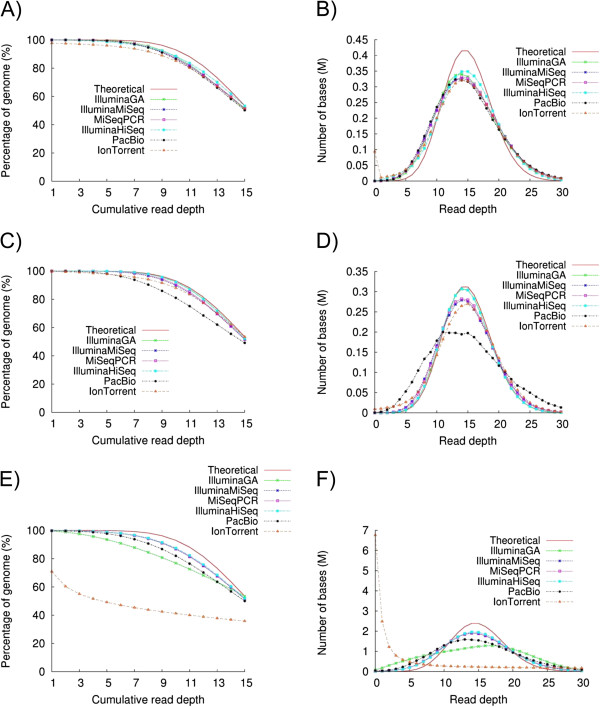
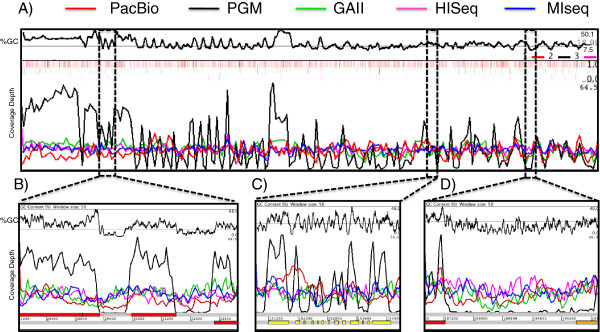
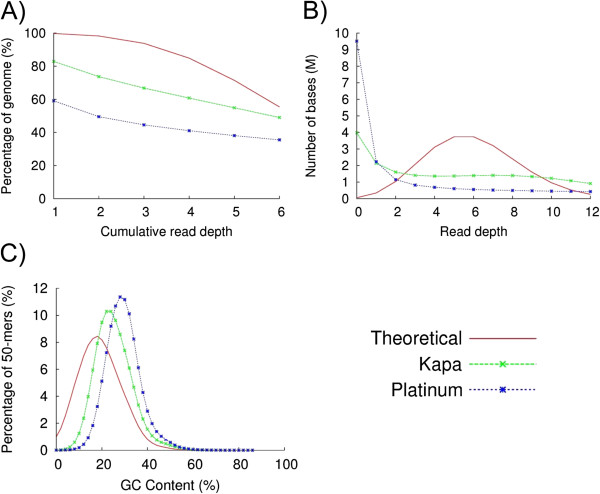
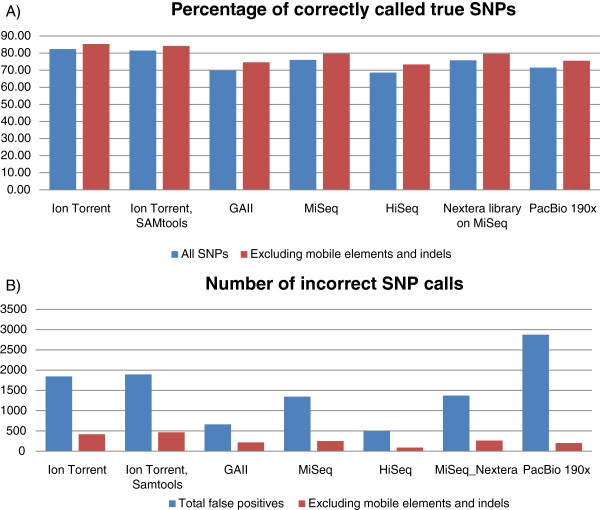
BACKGROUND: Next generation sequencing (NGS) technology has revolutionized genomic and genetic research. The pace of change in this area is rapid with three major new sequencing platforms having been released in 2011: Ion Torrent's PGM, Pacific Biosciences' RS and the Illumina MiSeq. Here we compare the results obtained with those platforms to the performance of the Illumina HiSeq, the current market leader. In order to compare these platforms, and get sufficient coverage depth to allow meaningful analysis, we have sequenced a set of 4 microbial genomes with mean GC content ranging from 19.3 to 67.7%. Together, these represent a comprehensive range of genome content. Here we report our analysis of that sequence data in terms of coverage distribution, bias, GC distribution, variant detection and accuracy. RESULTS: Sequence generated by Ion Torrent, MiSeq and Pacific Biosciences technologies displays near perfect coverage behaviour on GC-rich, neutral and moderately AT-rich genomes, but a profound bias was observed upon sequencing the extremely AT-rich genome of Plasmodium falciparum on the PGM, resulting in no coverage for approximately 30% of the genome. We analysed the ability to call variants from each platform and found that we could call slightly more variants from Ion Torrent data compared to MiSeq data, but at the expense of a higher false positive rate. Variant calling from Pacific Biosciences data was possible but higher coverage depth was required. Context specific errors were observed in both PGM and MiSeq data, but not in that from the Pacific Biosciences platform. CONCLUSIONS: All three fast turnaround sequencers evaluated here were able to generate usable sequence. However there are key differences between the quality of that data and the applications it will support.
Overview
The claims and statistics of this paper haven’t been checked yet.
Free: it reads the open-access text and checks the first 5 claims that cite a source we can check. Create a free account to check every claim.
Integrity signals
Registry
Cites
Statistics
Figures
Verification
Claims the paper makes
The claims and statistics of this paper haven’t been checked yet.
Free: it reads the open-access text and checks the first 5 claims that cite a source we can check. Create a free account to check every claim.
Claims other papers make about this one
Each is checked against this paper’s own text: does it say what the citing paper says it does?
The source backs part of the claim, not all of it — or backs it for a different population, condition or comparison.
In the citing paper
“The limit of detection in these experiments is based on the inherent error rate of the Illumina platform (up to 0.4%), which has previously been described for genome editing experiment analyzed by NGS71–73.”
From A high-fidelity Cas9 mutant delivered as a ribonucleoprotein complex enables efficient gene editing in human hematopoietic stem and progenitor cells (2018) · cites this paper as [72]
Experimental — accuracy not yet measuredThe check wasn’t confident either way, so it gives no verdict — never disputed.
In the citing paper
“RNA-seq is expected to produce some reads from highly expressed transcripts that begin at the same nucleotide and are thus designated “duplicate.””
From Multi-platform assessment of transcriptome profiling using RNA-seq in the ABRF next-generation sequencing study (2014) · cites this paper as [8]
Experimental — accuracy not yet measured
Self-check
Percentages, sums and reported differences re-computed from the paper’s own numbers.
The self-check needs the paper’s full text.
Citations
Cites
The Sequence Alignment/Map format and SAMtools
Li, H., Handsaker, B., Wysoker, A., Fennell, T., Ruan, J., Homer, N., Marth, G., Abecasis, G., Durbin, R., & 1000 Genome Project Data Processing Subgroup (2009) · Bioinformatics · doi:10.1093/bioinformatics/btp352 · Cited by 62,041
Fast and accurate short read alignment with Burrows-Wheeler transform
Li, H., & Durbin, R. (2009) · Bioinformatics · doi:10.1093/bioinformatics/btp324 · Cited by 58,607
RNA-Seq: a revolutionary tool for transcriptomics
Wang, Z., Gerstein, M., & Snyder, M. (2009) · Nature Reviews Genetics · doi:10.1038/nrg2484 · Cited by 13,174 · cited 1×
“Illumina sequencing has matured to the point where a great many applications [15-24] have been developed on the platform.”
BackgroundGenome sequence of the human malaria parasite Plasmodium falciparum
Gardner, M. J., Hall, N., Fung, E., White, O., Berriman, M., Hyman, R. W., Carlton, J. M., Pain, A., Nelson, K. E., Bowman, S., et al. (2002) · Nature · doi:10.1038/nature01097 · Cited by 4,407 · cited 1×
“4% [14], we use it as one of our test genomes, representing a significant challenge to most sequencing technologies.”
Method(1997) · Obesity Surgery · doi:10.1381/096089297765555359 · Cited by 3,916
Real-Time DNA Sequencing from Single Polymerase Molecules
Eid, J., Fehr, A., Gray, J., Luong, K., Lyle, J., Otto, G., Peluso, P., Rank, D., Baybayan, P., Bettman, B., et al. (2009) · Science · doi:10.1126/science.1162986 · Cited by 3,732
Accurate whole human genome sequencing using reversible terminator chemistry
Bentley, D. R., Balasubramanian, S., Swerdlow, H. P., Smith, G. P., Milton, J., Brown, C. G., Hall, K. P., Evers, D. J., Barnes, C. L., Bignell, H. R., et al. (2008) · Nature · doi:10.1038/nature07517 · Cited by 3,684
Self-citationGenome-Wide Mapping of in Vivo Protein-DNA Interactions
Johnson, D. S., Mortazavi, A., Myers, R. M., & Wold, B. (2007) · Science · doi:10.1126/science.1141319 · Cited by 2,927
An integrated semiconductor device enabling non-optical genome sequencing
Rothberg, J. M., Hinz, W., Rearick, T. M., Schultz, J., Mileski, W., Davey, M., Leamon, J. H., Johnson, K., Milgrew, M. J., Edwards, M., et al. (2011) · Nature · doi:10.1038/nature10242 · Cited by 2,172
Diep, B. A., Gill, S. R., Chang, R. F., Phan, T. H., Chen, J. H., Davidson, M. G., Lin, F., Lin, J., Carleton, H. A., Mongodin, E. F., et al. (2006) · The Lancet · doi:10.1016/s0140-6736(06)68231-7 · Cited by 1,633 · cited 9×
“MGEs were manually identified from the S. aureus USA300_FPR3757 genome annotation SNPs called from the resulting alignment provided a high-quality reference set for comparison with the SNPs identified by each sequencing platform.”
MethodInfluential
Cited by
Items 701–800 of 1,000
Microbial Ecology of Watery Kimchi
Kyung, K. H., Medina, E., Kim, S.-G., Lee, Y. J., Kim, K. H., Choi, J. J., Cho, J. H., Chung, C. H., Barrangou, R., & Breidt, F. (2015) · Journal of Food Science · doi:10.1111/1750-3841.12848 · Cited by 30
Comparative Genomics of Bacillus species and its Relevance in Industrial Microbiology
Sharma, A., & Satyanarayana, T. (2013) · Genomics Insights · doi:10.4137/gei.s12732 · Cited by 37
Pathogen Chip for Respiratory Tract Infections
Simões, E. A. F., Patel, C. B., Sung, W.-K. K., Lee, C. W. H., Loh, K. H., Lucero, M., Nohynek, H., Nai, G. Y. W., Thien, P. L., Koh, C. W., et al. (2013) · Journal of Clinical Microbiology · doi:10.1128/jcm.02317-12 · Cited by 27
“Conversely, NGS approaches can provide sequence information of known pathogens in a sample but require complex postprocessing analysis, such as sequence assembly and alignment for diagnostic conclusions (13, 14).”
MethodBrożyńska, M., Furtado, A., & Henry, R. J. (2014) · PLoS ONE · doi:10.1371/journal.pone.0110387 · Cited by 31
“For the R-rice genotype, no mismatches were observed indicating the two platforms to be comparable for SNP calls as has been reported for microbial genomes [25].”
BackgroundInfluentialA time stamp comparative analysis of frequent chromosomal abnormalities in Romanian patients
Suciu, N., & Plăiaşu, V. (2013) · The Journal of Maternal-Fetal & Neonatal Medicine · doi:10.3109/14767058.2013.794215 · Cited by 27
“Perhaps in the future the new sequencing technologies with almost zero errors will lead to an easier solution for finding new genetic disorders with imperceptible or delayed phenotypic presentations [34].”
BackgroundDavidsson, M., Díaz-Fernández, P., Schwich, O. D., Torroba, M., Wang, G., & Björklund, T. (2016) · Scientific Reports · doi:10.1038/srep37563 · Cited by 29
Microbiome Changes During Ripening
Cotter, P. D., & Beresford, T. P. J. (2017) · Elsevier eBooks · doi:10.1016/b978-0-12-417012-4.00015-6 · Cited by 35
Contribution of Next-Generation Sequencing to Aquatic and Fish Virology
Nkili-Meyong, A. A., Bigarré, L., Labouba, I., Vallaeys, T., Avarre, J., & Berthet, N. (2016) · Intervirology · doi:10.1159/000477808 · Cited by 34
Wang, Q., Wang, N., Wang, Y., Wang, Q., & Duan, B. (2017) · Plant and Soil · doi:10.1007/s11104-017-3449-9 · Cited by 27
“Then, we conducted a detailed examination on bacterial community structures in rhizosphere soils associated with different orders of fine roots using IlluminaMiSeq (Michael et al. 2012; Rutvisuttinunt et al. 2013; Williams et al. 2014; Yoon-seong et al. 2015).”
MethodGenomic Epidemiology of Tuberculosis
Comas, I. (2017) · Advances in experimental medicine and biology · doi:10.1007/978-3-319-64371-7_4 · Cited by 32
Rapid Multiplex Small DNA Sequencing on the MinION Nanopore Sequencing Platform
Wei, S., Weiss, Z. R., & Williams, Z. (2018) · G3 Genes Genomes Genetics · doi:10.1534/g3.118.200087 · Cited by 32
“Different from the 2nd generation NGS sequencing platforms, such as illumina MiSeq and Ion Proton, the 3rd generation NGS platforms, including nanopore sequencing, sequenced nucleotides at single-molecule level (Quail et al. 2012; Jain et al. 2016).”
A crash course in sequencing for a microbiologist
Kozińska, A., Seweryn, P., & Sitkiewicz, I. (2019) · Journal of Applied Genetics · doi:10.1007/s13353-019-00482-2 · Cited by 29
Zhang, H., Ntambo, M. S., Rott, P., Chen, G., Chen, L., Huang, M.-T., & Gao, S. (2020) · Microorganisms · doi:10.3390/microorganisms8020182 · Cited by 28
“Whole-genome sequencing was performed using the PacBio RSII platform [21] and Illumina Hiseq platform at Beijing Novogene Bioinformatics Technology Co.”
MethodBertolini, F., Scimone, C., Geraci, C., Schiavo, G., Utzeri, V. J., Chiofalo, V., & Fontanesi, L. (2015) · PLoS ONE · doi:10.1371/journal.pone.0131925 · Cited by 28
“The latter filtering step was not applied to Illumina data because this technology is less prone to errors in short homopolymeric stretches [52].”
MethodThe impact of next generation sequencing technologies on haematological research – A review
Black, J. S., Salto‐Tellez, M., Mills, K., & Catherwood, M. A. (2015) · Pathogenesis · doi:10.1016/j.pathog.2015.05.004 · Cited by 27
“For those wishing for a more in depth knowledge of the platforms, please see reviews [11,14,15,19,20].”
BackgroundSMRT Sequencing for Parallel Analysis of Multiple Targets and Accurate SNP Phasing
Guo, X., Lehner, K. R., O’Connell, K., Zhang, J., Davé, S. S., & Jinks-Robertson, S. (2015) · G3 Genes Genomes Genetics · doi:10.1534/g3.115.023317 · Cited by 29
Tao, Y., Rotem, A., Zhang, H., Cockrell, S. K., Koehler, S. A., Chang, C. B., Ung, W. L., Cantalupo, P. G., Ren, Y., Lin, J. S., et al. (2015) · ChemBioChem · doi:10.1002/cbic.201500384 · Cited by 29
Zhang, Y., Zhang, Y., Burke, J. M., Gleitsman, K. R., Friedrich, S. M., Liu, K. J., & Wang, T. (2016) · Advanced Materials · doi:10.1002/adma.201603738 · Cited by 26
Mobile Technologies for the Discovery, Analysis, and Engineering of the Global Microbiome
Ballard, Z. S., Brown, C., & Özcan, A. (2018) · ACS Nano · doi:10.1021/acsnano.7b08660 · Cited by 28
Dhorne‐Pollet, S., Barrey, É., & Pollet, N. (2020) · BMC Genomics · doi:10.1186/s12864-020-07183-9 · Cited by 35
“According to Quail 284 and colleagues, heterozygous variant calling with a 15x coverage using Ion Torrent or various 285 Illumina datasets was comparable to a coverage of 190x for PacBio datasets (40).”
MethodMethod for quick DNA barcode reference library construction
Liu, Y., Xu, C., Sun, Y., Chen, X., Dong, W., Yang, X., & Zhou, S. (2021) · Ecology and Evolution · doi:10.1002/ece3.7788 · Cited by 28
“…and it is one major concern whether these two platforms are suitable for conventional DNA barcodes or not (Lahens et al., 2017; Marine et al., 2020; Quail et al., 2012; Speranskaya et al., 2018) Although researchers have made some efforts on applying NGS platforms to conventional DNA barcoding…”
Cell-Free Tumor DNA (cf-tDNA) Liquid Biopsy: Current Methods and Use in Brain Tumor Immunotherapy
Wadden, J., Ravi, K., John, V., Babila, C. M., & Koschmann, C. J. (2022) · Frontiers in Immunology · doi:10.3389/fimmu.2022.882452 · Cited by 30
Cs, K., Cooper, D. N., Iacopetta, B. M., & Roukos, D. H. (2012) · Clinical Genetics · doi:10.1111/cge.12028 · Cited by 27
Noninvasive Prenatal Detection for Pathogenic CNVs: The Application in α-Thalassemia
Ge, H., Huang, X., Li, X., Chen, S., Zheng, J. J., Jiang, H., Zhang, C., Pan, X., Guo, J., Chen, F., et al. (2013) · PLoS ONE · doi:10.1371/journal.pone.0067464 · Cited by 26
Impact of Technical Sources of Variation on the Hand Microbiome Dynamics of Healthcare Workers
Rosenthal, M., Aiello, A. E., Chenoweth, C., Goldberg, D. E., Larson, E., Gloor, G. B., & Foxman, B. (2014) · PLoS ONE · doi:10.1371/journal.pone.0088999 · Cited by 26
“To our knowledge, despite the existence of several papers describing this new platform’s performance [23–26], only two other metagenomic studies of the human microbiome have been published to date using this platform [27–28].”
BackgroundDiagnostic Applications of Next Generation Sequencing in Immunogenetics and Molecular Oncology
Grumbt, B., Eck, S. H., Hinrichsen, T., & Hirv, K. (2013) · Transfusion Medicine and Hemotherapy · doi:10.1159/000351267 · Cited by 34
Shin, S.-Y., Lee, S., Kim, H., Cho, E., Kim, J., Park, S., Jung, C. W., & Kim, S. (2016) · Oncotarget · doi:10.18632/oncotarget.10240 · Cited by 29
“Custom target enrichment and amplicon library preparation was done using the Access Array System (Fluidigm, South San Francisco, CA, USA),[18] followed by massively parallel sequencing on the Miseq System (Illumina, San Diego, CA, USA) [44].”
MethodRedmond, A. K., Macqueen, D. J., & Dooley, H. (2018) · BMC Evolutionary Biology · doi:10.1186/s12862-018-1290-2 · Cited by 26
Learning a mixture of microbial networks using minorization–maximization
Tavakoli, S., & Yooseph, S. (2019) · Bioinformatics · doi:10.1093/bioinformatics/btz370 · Cited by 25
“Finally, to study the effect of data normalization, we applied the trimmed mean of M-values (TMM) normalization procedure [from the ‘edgeR’ package (Robinson and Oshlack, 2010)] to XS to generate the TMM normalized data matrix TS. Real data: We also applied our mixture modeling framework to a…”
MethodDynamics of the Bacterial Community Associated with Phaeodactylum tricornutum Cultures
Moejes, F. W., Popa, O., Succurro, A., Maguire, J., & Ebenhöh, O. (2017) · Processes · doi:10.3390/pr5040077 · Cited by 36
Advanced Techniques for Detection and Identification of Microbial Agents of Gastroenteritis
Dunbar, S. A., Zhang, H., & Tang, Y. (2013) · Clinics in Laboratory Medicine · doi:10.1016/j.cll.2013.03.003 · Cited by 28
Advances, practice, and clinical perspectives in high‐throughput sequencing
Park, S., Saito-Adachi, M., Komiyama, Y., & Nakai, K. (2016) · Oral Diseases · doi:10.1111/odi.12403 · Cited by 36
“Unlike Illumina sequencers, the SMRT sequencing used in PacBio and MinION is less sensitive to regional GC content (Quail et al, 2012).”
MethodBarrett, A. N., Xiong, L., Tan, T. Z., Advani, H. V., Hua, R., Asibal, C. L., Soong, R. C. T., Biswas, A., Nagarajan, N., & Choolani, M. A. (2017) · PLoS ONE · doi:10.1371/journal.pone.0186771 · Cited by 25
Advancing brain barriers RNA sequencing: guidelines from experimental design to publication
Francisco, D. M. F., Marchetti, L., Rodríguez‐Lorenzo, S., Frías-Anaya, E., de Figueiredo, R. M., BtRAIN Network, Heymans, M., Culot, M., Santa-Maria, A. R., Deli, M. A., et al. (2020) · Fluids and Barriers of the CNS · doi:10.1186/s12987-020-00207-2 · Cited by 31
Reducing noise and stutter in short tandem repeat loci with unique molecular identifiers
Woerner, A. E., Mandape, S. N., King, J. L., Muenzler, M., Crysup, B., & Budowle, B. (2020) · Forensic Science International Genetics · doi:10.1016/j.fsigen.2020.102459 · Cited by 29
Salonia, F., Ciacciulli, A., Pappalardo, H. D., Poles, L., Pindo, M., Larger, S., Caruso, P., Caruso, M., & Licciardello, C. (2022) · Frontiers in Plant Science · doi:10.3389/fpls.2022.975917 · Cited by 29
Ion Torrent sequencing as a tool for mutation discovery in the flax (Linum usitatissimum L.) genome
Galindo‐González, L., Pinzón-Latorre, D., Bergen, E. A., Jensen, D. C., & Deyholos, M. K. (2015) · Plant Methods · doi:10.1186/s13007-015-0062-x · Cited by 28
“The Ion Torrent is one of the first technologies that does need optical systems to detect nucleotide incorporation, and does not use modified nucleotides [25,48]; in addition it has a good combination of throughput, cost and time saving compared to other systems [23,36,44,49].”
BackgroundResultInfluentialMaruki, T., & Lynch, M. (2014) · Genetics · doi:10.1534/genetics.114.165514 · Cited by 29
Next generation sequencing and de novo transcriptomics to study gene evolution
Jayasena, A. S., Secco, D., Bernath-Levin, K., Berkowitz, O., Whelan, J., & Mylne, J. S. (2014) · Plant Methods · doi:10.1186/1746-4811-10-34 · Cited by 26
“De novo transcriptome assembly will continue to become less challenging as the length of NGS reads increases [12] and as software develops better algorithms for unsupported assemblies.”
BackgroundFadeev, E., Pascale, F. D., Vezzi, A., Hübner, S., Aharonovich, D., & Sher, D. (2016) · Frontiers in Microbiology · doi:10.3389/fmicb.2016.00248 · Cited by 26
SC83288 is a clinical development candidate for the treatment of severe malaria
Pegoraro, S., Duffey, M., Otto, T. D., Wang, Y., Rösemann, R., Baumgartner, R., Fehler, S. K., Lucantoni, L., Avery, V. M., Sabater, A. M., et al. (2017) · Nature Communications · doi:10.1038/ncomms14193 · Cited by 27
Self-citationMalmberg, E. D., Rehammar, A., Pereira, M. B., Abrahamsson, J., Samuelsson, T., Ståhlman, S., Asp, J., Tierens, A. M., Palmqvist, L., Kristiansson, E., et al. (2018) · Journal of Molecular Diagnostics · doi:10.1016/j.jmoldx.2018.08.004 · Cited by 26
Yuan, J., Tickner, J. C., Mullin, B. H., Zhao, J., Zeng, Z., Morahan, G., & Xu, J. (2019) · Frontiers in Genetics · doi:10.3389/fgene.2019.00288 · Cited by 27
“The fundamental basis of this approach is looking for the segregation of gene variants (also called alleles) in diseases following dominant or recessive inheritance patterns within a family (Ralston, 2010).”
BackgroundHarris, S. R., Török, M. E., Cartwright, E. J. P., Quail, M. A., Peacock, S. J., & Parkhill, J. (2013) · Nature Biotechnology · doi:10.1038/nbt.2616 · Cited by 25
Self-citationValidation of an NGS Approach for Diagnostic BRCA1/BRCA2 Mutation Testing
Dacheva, D. R., Dodova, R. I., Popov, I. E., Goranova, T., Mitkova, A. V., Mitev, V., & Kaneva, R. P. (2015) · Molecular Diagnosis & Therapy · doi:10.1007/s40291-015-0136-5 · Cited by 30
de Groot, G. A., Laros, I., & Geisen, S. (2016) · Methods in molecular biology · doi:10.1007/978-1-4939-3369-3_7 · Cited by 31
de Vrieze, E., de Bruijn, S. E., Reurink, J., Broekman, S., van de Riet, V., Aben, M., Kremer, H., & van Wijk, E. (2021) · International Journal of Molecular Sciences · doi:10.3390/ijms22179429 · Cited by 27
“The Ion Torrent platform has a slightly higher error rate than the frequently used Illumina sequencing platform [20], which we countered with a high sequencing depth for each target (>50,000 reads obtained from the genomic DNA of each pool of embryos).”
MethodUtilization of Genotyping-by-Sequencing (GBS) for Rice Pre-Breeding and Improvement: A Review
Reyes, V. P., Kitony, J., Nishiuchi, S., Makihara, D., & Doi, K. (2022) · Life · doi:10.3390/life12111752 · Cited by 24
Dorn, C., Grunert, M., & Sperling, S. (2013) · Briefings in Functional Genomics · doi:10.1093/bfgp/elt040 · Cited by 26
“need much less instrument space and offer less setup [55, 56].”
BackgroundNovo, M., Riesgo, A., Fernàndez-Guerra, A., & Giribet, G. (2013) · Molecular Biology and Evolution · doi:10.1093/molbev/mst074 · Cited by 24
“However, Illumina platforms Hi-seq and GaII have shown to have a low error rate (Quail et al. 2012), which justifies the use of CLC assemblies and suggests that V/O is probably collapsing splicing variants into single contigs.”
BackgroundCircular RNAs: a new class of biomarkers as a rising interest in laboratory medicine
Franz, A., Rabien, A., Stephan, C., Ralla, B., Fuchs, S., Jung, K., & Fendler, A. (2018) · Clinical Chemistry and Laboratory Medicine (CCLM) · doi:10.1515/cclm-2018-0231 · Cited by 25
“Nevertheless, although these techniques are able to produce longer reads, they also have higher error rates and lower quality scores [50].”
BackgroundNGS-based amplicon sequencing approach; towards a new era in GMO screening and detection
Arulandhu, A. J., van Dijk, J. P., Staats, M., Hagelaar, R., Voorhuijzen, M. M., Molenaar, B., van Hoof, R., Li, R., Yang, L., Shi, J., et al. (2018) · Food Control · doi:10.1016/j.foodcont.2018.06.014 · Cited by 24
Sutton, J. T., Helmkampf, M., Steiner, C., Bellinger, M. R., Korlach, J., Hall, R. J., Baybayan, P. A., Muehling, J., Gu, J., Kingan, S. B., et al. (2018) · Genes · doi:10.3390/genes9080393 · Cited by 26
QSdpR: Viral quasispecies reconstruction via correlation clustering
Barik, S., Das, S., & Vikalo, H. (2017) · Genomics · doi:10.1016/j.ygeno.2017.12.007 · Cited by 25
“Reads have an error rate of 1% (typical of Illumina’s platforms [16]).”
BackgroundJuang, J. J., Lu, T., Su, M., Lin, C., Yang, J.-H., Chu, H., Chen, C.-H., Hsiao, Y.-W., Lee, C., Chiang, L.-M., et al. (2020) · Journal of Advanced Research · doi:10.1016/j.jare.2020.12.003 · Cited by 24
Impact of tumor sequencing on the use of anticancer drugs
Thomas, F., Desmedt, C., Aftimos, P. G., & Awada, A. H. (2014) · Current Opinion in Oncology · doi:10.1097/cco.0000000000000078 · Cited by 25
“Several companies provide benchtop sequencers [8,9], whereas others sell integrated cancer genomic services for clinical use.”
BackgroundConfusion about the species richness of human gut microbiota
Avershina, E., & Rudi, K. (2015) · Beneficial Microbes · doi:10.3920/bm2015.0007 · Cited by 26
Lu, X., Wu, Q. J., Zhang, Y., & Xu, Y. (2015) · BMC Genomics · doi:10.1186/s12864-015-2263-0 · Cited by 23
A Comprehensive Analysis of Primer IDs to Study Heterogeneous HIV-1 Populations
Seifert, D., Giallonardo, F. D., Töpfer, A., Singer, J., Schmutz, S., Günthard, H. F., Beerenwinkel, N., & Metzner, K. J. (2015) · Journal of Molecular Biology · doi:10.1016/j.jmb.2015.12.012 · Cited by 24
Microbial Ecology in the Era of Next Generation Sequencing
De Mandal, S., & Panda, A. K. (2015) · Journal of Next Generation Sequencing & Applications · doi:10.4172/2469-9853.s1-001 · Cited by 23
Bogdanova, V. S., Mglinets, A. V., Shatskaya, N. V., Kоsterin, О. E., Solovyev, V. I., & Vasiliev, G. V. (2018) · Molecular Phylogenetics and Evolution · doi:10.1016/j.ympev.2018.09.002 · Cited by 23
Yu, Z., Ding, Y., Yin, J., Yu, D., Zhang, J., Zhang, M., Ding, M., Zhong, W., Qiu, J., & Li, J. (2018) · International Journal of Molecular Sciences · doi:10.3390/ijms19113636 · Cited by 21
“Lower quality sequencing data were filtered for accurate assembly [58].”
MethodUelze, L., Borowiak, M., Bönn, M., Brinks, E., Deneke, C., Hankeln, T., Kleta, S., Murr, L., Stingl, K., Szabo, K., et al. (2020) · Frontiers in Microbiology · doi:10.3389/fmicb.2020.573972 · Cited by 26
“It is well known that different sequencing technologies vary in their average error rates, with Ion Torrent data generally having higher error rates compared to Illumina (Quail et al., 2012; Fox et al., 2014; Salipante et al., 2014; Kwong et al., 2015; Escalona et al., 2016).”
BackgroundDiversity of Bacterial Secondary Metabolite Biosynthetic Gene Clusters in Three Vietnamese Sponges
Dat, T. T. H., Steinert, G., Cúc, N. T. K., Cường, P. V., Smidt, H., & Sipkema, D. (2022) · Marine Drugs · doi:10.3390/md21010029 · Cited by 25
Microbiology and Molecular Biology Tools for Biogas Process Analysis, Diagnosis and Control
Lebuhn, M., Weiß, S., Munk, B., & Guebitz, G. M. (2015) · Advances in biochemical engineering, biotechnology · doi:10.1007/978-3-319-21993-6_1 · Cited by 35
Microbiome in Human Health and Disease
Madupu, R., Szpakowski, S., & Nelson, K. E. (2013) · Science Progress · doi:10.3184/003685013x13683759820813 · Cited by 24
Gaete-Loyola, J., Lagos, C., Beltrán, M. F., Valenzuela, S., Emhart, V., & Férnandez, M. (2017) · Tree Genetics & Genomes · doi:10.1007/s11295-017-1121-4 · Cited by 23
Borrell, Y. J., Miralles, L., Mártinez-Marqués, A., Semeraro, A., Arias, A., Carleos, C. E., & García‐Vázquez, E. (2017) · Journal for Nature Conservation · doi:10.1016/j.jnc.2017.07.002 · Cited by 26
“There have been several platforms available for NGS such as the Ion Torrent PGM, the Roche/454 Life Sciences and the Illumina MiSeq systems (Quail et al., 2012; Pochon et al., 2013).”
MethodASXL1 c.1934dup;p.Gly646Trpfs*12—a true somatic alteration requiring a new approach
Yannakou, C. K., Jones, K. L., McBean, M., Thompson, E. R., Ryland, G. L., Doig, K., Markham, J. F., Westerman, D., & Blombery, P. A. (2017) · Blood Cancer Journal · doi:10.1038/s41408-017-0025-8 · Cited by 29
Next-generation sequencing and its application in diagnosis of retinitis pigmentosa
Salmaninejad, A., Motaei, J., Farjami, M., Alimardani, M., Esmaeilie, A., & Pasdar, A. (2019) · Ophthalmic Genetics · doi:10.1080/13816810.2019.1675178 · Cited by 28
“Sequencing platform: Illumina / 454 pyrosequencing / SOLiD / Ion Torren / PacBio / Oxford Nanopore • Solid-phase bridge amplification (Illumina) • Emulsion PCR (454/Roche, SOLiD, Ion Torrent ) D: Alignment and Data Analysis C: Sequencing B: Amplification A: Library preparation Figure 1.”
InfluentialRNA-seq Using Next Generation Sequencing
Corney, D. C. (2013) · Materials and Methods · doi:10.13070/mm.en.3.203 · Cited by 34
Clinical Versus Research Sequencing
Shevchenko, Y., & Bale, S. J. (2016) · Cold Spring Harbor Perspectives in Medicine · doi:10.1101/cshperspect.a025809 · Cited by 29
“Multiple NGS platforms are currently available (Glenn 2011; Mardis 2011; Loman et al. 2012; Quail et al. 2012; Ratan et al. 2013).”
MethodLyte, J. M., Seyoum, M. M., Ayala, D., Kers, J. G., Caputi, V., Johnson, T. J., Zhang, L., Rehberger, J. M., Zhang, G., Dridi, S., et al. (2025) · Poultry Science · doi:10.1016/j.psj.2025.105242 · Cited by 27
“…are attached to 50 nm-wide wells, polymerases carry out second strand DNA synthesis with fluorescently labeled nucleotide bases, energy then penetrates and excites the nucleotide-attached fluorophores, pulse fluorescence is detected in real time as each nucleotide is added (Quail et al., 2012).”
InfluentialRadoviča-Spalviņa, I., Latkovskis, G., Silamiķelis, I., Frīdmanis, D., Elbere, I., Ventiņš, K., Ozola, G., Ērglis, A., & Kloviņš, J. (2015) · BMC Medical Genetics · doi:10.1186/s12881-015-0230-x · Cited by 28
“After sequencing errors caused by PCR mistakes, variants called due to inadequate variant-calling algorithms near homopolymers, and strand-specific errors specific to the Ion Torrent platform [31] were removed, 114 different variants were detected in the total study group.”
MethodMuñoz‐Colmenero, M., Martínez, J. L., Roca, A., & García‐Vázquez, E. (2016) · Food Chemistry · doi:10.1016/j.foodchem.2016.07.121 · Cited by 22
Role of Next-Generation Sequencing (NGS) in Understanding the Microbial Diversity
Dubey, A., Malla, M. A., & Kumar, A. (2022) · Springer eBooks · doi:10.1007/978-981-16-6005-4_16 · Cited by 24
In vitro and in silico parameters for precise cgMLST typing of Listeria monocytogenes
Palma, F., Mangone, I., Janowicz, A., Moura, A., Chiaverini, A., Torresi, M., Garofolo, G., Criscuolo, A., Brisse, S., Pasquale, A. D., et al. (2022) · BMC Genomics · doi:10.1186/s12864-022-08437-4 · Cited by 23
Revisiting Rustrela Virus: New Cases of Encephalitis and a Solution to the Capsid Enigma
Pfaff, F., Breithaupt, A., Rubbenstroth, D., Nippert, S., Baumbach, C., Gerst, S., Langner, C., Wylezich, C., Ebinger, A., Höper, D. W., et al. (2022) · Microbiology Spectrum · doi:10.1128/spectrum.00103-22 · Cited by 25
Craven, K. E., Fischer, C. G., Jiang, L., Pallavajjala, A., Lin, M.-T., & Eshleman, J. R. (2022) · Journal of Molecular Diagnostics · doi:10.1016/j.jmoldx.2022.08.006 · Cited by 25
Stephens, K. M., Barta, R., Fleming, K., Perez, J. C., Wu, S., Snedecor, J., Holt, C. L., LaRue, B., & Budowle, B. (2023) · Forensic Science International Genetics · doi:10.1016/j.fsigen.2023.102851 · Cited by 25
CRISPR-powered quantitative keyword search engine in DNA data storage
Zhang, J., Hou, C., & Liu, C. (2024) · Nature Communications · doi:10.1038/s41467-024-46767-x · Cited by 26
A review of genomic data warehousing systems
Triplet, T., & Butler, G. (2013) · Briefings in Bioinformatics · doi:10.1093/bib/bbt031 · Cited by 24
“Whole-genome sequencing is becoming exponentially cheaper and faster [1, 2], and devices such as the MiSeq Personal Sequencer (Illumina), the 454GS Junior (Roche) or the Ion Proton (Life Technologies) are expected to sequence an entire human genome in a day for $1000 [3]; large-scale genomics…”
Grogan, K. E., McGinnis, G. J., Sauther, M. L., Cuozzo, F. P., & Drea, C. M. (2016) · BMC Genomics · doi:10.1186/s12864-016-2503-y · Cited by 24
“, artifacts) (reviewed in [33–35]) and quantity of data produced (for detailed methodology, see [1, 3–5, 36–44]).”
BackgroundMethodInfluentialNext-Generation Sequencing in Cancer Diagnostics
Corless, C. L. (2016) · Journal of Molecular Diagnostics · doi:10.1016/j.jmoldx.2016.08.002 · Cited by 22
Current Progresses of Single Cell DNA Sequencing in Breast Cancer Research
Liu, J., Adhav, R., & Xu, X. (2017) · International Journal of Biological Sciences · doi:10.7150/ijbs.19627 · Cited by 27
“These types of errors can be removed by normalizing with the quality score (Q>20) [114-117].”
BackgroundRekdal, S. L., Anmarkrud, J. A., Johnsen, A., & Lifjeld, J. T. (2018) · Ecology and Evolution · doi:10.1002/ece3.3757 · Cited by 25
“As specific sequencing platforms have typical error profiles (Duke et al., 2015; Loman et al., 2012; Quail et al., 2012)—for example, homopolymer errors are more prominent for Ion Torrent than Illumina—different platforms could render different genotypes (Sebastian et al., 2016).”
Kim, J., Guk, J.-H., Mun, S.-H., An, J.-U., Song, H., Kim, J., Ryu, S., Jeon, B., & Cho, S. (2019) · Microbiome · doi:10.1186/s40168-019-0680-z · Cited by 23
Kim, Y.-H., Song, Y., Kim, J.-K., Kim, T., Sim, H. W., Kim, H., Jang, H., Kim, Y., & Hong, K. (2019) · PLoS ONE · doi:10.1371/journal.pone.0222535 · Cited by 27
Exploring the Frontiers of Nanopore Sequencing in Food Safety and Food Microbiology
Sharma, A., Bansal, S., Moore, M. D., Luo, Y., Schneider, K. R., & Zhang, B. (2025) · Annual Review of Food Science and Technology · doi:10.1146/annurev-food-072023-034549 · Cited by 24
Duke, J. L., Lind, C., Mackiewicz, K., Ferriola, D., Papazoglou, A., Derbeneva, O. A., Wallace, D. C., & Monos, D. S. (2015) · International Journal of Immunogenetics · doi:10.1111/iji.12213 · Cited by 21
“…Ion Torrent Personal Genomic Machine (PGM) and Illumina’s MiSeq have become available and been tested for their capability to characterize the polymorphism of the HLA genes (Shiina et al., 2012; Wang et al., 2012; Cao et al., 2013; Hosomichi et al., 2013; Major et al., 2013; Lange et al., 2014).”
BackgroundMethodNext-Generation Mitogenomics: A Comparison of Approaches Applied to Caecilian Amphibian Phylogeny
Maddock, S. T., Briscoe, A. G., Wilkinson, M., Waeschenbach, A., Mauro, D. S., Day, J. J., Littlewood, D. T. J., Foster, P. G., Nussbaum, R. A., & Gower, D. J. (2016) · PLoS ONE · doi:10.1371/journal.pone.0156757 · Cited by 21
Fundamental Bounds for Sequence Reconstruction From Nanopore Sequencers
Magner, A., Duda, J., Wojciech Szpankowski, A., & Grama, A. Y. (2016) · IEEE Transactions on Molecular Biological and Multi-Scale Communications · doi:10.1109/tmbmc.2016.2630056 · Cited by 21
“The rate of extrusion must be slower than current measurement (sampling) for characterizing each base (or groups of small number of bases, up to four, in the nanopore at any point of time).”
BackgroundTick microbial communities within enriched extracts of Amblyomma maculatum
Varela‐Stokes, A. S., Park, S. H., Stokes, J. V., Gavron, N. A., Lee, S. I., Moraru, G. M., & Ricke, S. C. (2018) · Ticks and Tick-borne Diseases · doi:10.1016/j.ttbdis.2018.02.022 · Cited by 21
“Sequencing based on MiSeq technology has been used in a variety of applications and provides comparable coverage to other commercial sequencing systems (Metzker, 2010; Glenn, 2011; Quail et al. 2012).”
MethodStaadig, A., Hedman, J., & Tillmar, A. O. (2023) · Genes · doi:10.3390/genes14040818 · Cited by 24
“Another source of error originates from the sequencing process, where base substitutions can occur [8,9].”
BackgroundCulture-Independent Workflow for Nanopore MinION-Based Sequencing of Influenza A Virus
Miah, M., Hossain, M. E., Hasan, R., Alam, M. S., Puspo, J. A., Hasan, M. M., Islam, A., Chowdhury, S., & Rahman, M. Z. (2023) · Microbiology Spectrum · doi:10.1128/spectrum.04946-22 · Cited by 20
“Besides, these platforms require specialized instrumentation and reagents, funds, time, and extensive protocols (22, 23).”
BackgroundSpiralian genomics and the evolution of animal genome architecture
Liao, I. J.-Y., Lu, T.-M., Chen, M.-E., & Luo, Y. (2023) · Briefings in Functional Genomics · doi:10.1093/bfgp/elad029 · Cited by 24
Kumar, A., Solanki, M. K., Wang, Z., Solanki, A. C., Singh, V. K., & Divvela, P. K. (2023) · Microbiological Research · doi:10.1016/j.micres.2023.127549 · Cited by 29
NGS-eval: NGS Error analysis and novel sequence VAriant detection tooL
May, A., Abeln, S., Buijs, M. J., Heringa, J., Wim Crielaard, A., & Brandt, B. W. (2015) · Nucleic Acids Research · doi:10.1093/nar/gkv346 · Cited by 21
Data resources for the identification and interpretation of actionable mutations by clinicians
Prawira, A., Pugh, T. J., Stockley, T. L., & Siu, L. L. (2017) · Annals of Oncology · doi:10.1093/annonc/mdx023 · Cited by 25
“In general, DNA analysis by NGS can be broken down into the following parts: DNA isolation, optional target enrichment, library construction, sequence data generation, read alignment, variant calling, interpretation, and reporting [3].”
MethodHigh-throughput sequencing of African chikanda cake highlights conservation challenges in orchids
Veldman, S., Gravendeel, B., Otieno, J. N., Lammers, Y., Duijm, E. J., Nieman, A. M., Bytebier, B., Ngugi, G., Martos, F., van Andel, T., et al. (2017) · Biodiversity and Conservation · doi:10.1007/s10531-017-1343-7 · Cited by 21
“In bench-marking studies, it has been shown that Ion-Torrent PGM reads are prone to indels and specifically insertions (Bragg et al. 2013), but Quail et al. (2012) report that if sequence quality is curated accurately in downstream analyses, then read accuracy on IonTorrent PGM should be similar to…”
Background
Metadata
- Authors
- Quail, M., Smith, M. E., Coupland, P., Otto, T. D., Harris, S. R., Connor, T. R., Bertoni, A., Swerdlow, H. P., & Gu, Y.
- Affiliations
- Wellcome Sanger Institute (GB)
- Corresponding author
- Quail, Michael
- ORCID
- Venue
- BMC Genomics
- Published
- 2012
- Volume
- 13
- Issue
- 1
- Pages
- 341
- ISSN
- 1471-2164 (ISSN-L)
- PMC
- PMC3431227
- OpenAlex
- W2124715997
- Semantic Scholar
- 11bc28c49fc164952f587bba71e55d25db0d1757
- Cited by
- 2,031
- References
- 32
- Citations by year
- 2026: 33 · 2025: 50 · 2024: 105 · 2023: 78 · 2022: 91 · 2021: 130 · 2020: 150 · 2019: 144 · 2018: 188 · 2017: 207 · 2016: 254 · 2015: 226 · 2014: 218 · 2013: 144 · 2012: 9
- FWCI
- 76.69
- Type
- journal article
- Language
- en
- Open access
- gold
- doi.org
- Licence
- cc-by
- Locations
- BMC Genomics (publishedVersion, cc-by)
- Europe PMC (PubMed Central) (publishedVersion, cc-by)
- PubMed Central (publishedVersion, cc-by)
- PubMed (publishedVersion)
- ORCA Online Research @Cardiff (Cardiff University) (acceptedVersion)
- ENLIGHTEN (Jurnal Bimbingan dan Konseling Islam) (acceptedVersion)
- DOAJ (DOAJ: Directory of Open Access Journals) (submittedVersion, cc-by-sa)
- Funders
- Wellcome Trust (grant number 098051, 098051)
- European Commission
- Topics
- Life Sciences › Biochemistry, Genetics and Molecular Biology › Molecular Biology › Genomics and Phylogenetic Studies
- Life Sciences › Biochemistry, Genetics and Molecular Biology › Genetics › Genomics and Rare Diseases
- Life Sciences › Biochemistry, Genetics and Molecular Biology › Molecular Biology › Genetics, Bioinformatics, and Biomedical Research
- Keywords
- Ion Torrent PGM, Illumina MiSeq, Illumina HiSeq, microbial genomes, AT-rich genome, Plasmodium falciparum, GC content, variant calling, false positive rate, sequencing error rate
- MeSH terms
- Base Composition, Base Sequence, Bordetella pertussis, Plasmodium falciparum, Staphylococcus aureus, Gene Library, Genome, Bacterial, Sequence Analysis, DNA, Genome, Protozoan, Polymorphism, Single Nucleotide, Databases, Genetic, Nucleotide Motifs
About these checks
Registry, retraction, Cites and statistics results are computed, not judged, with one exception: a printed reference that no index lists is read once by a model before it counts as a citation error. Claims are extracted by a model and kept only when their quote appears verbatim in the text; each cited source is then checked, with a model’s help, for whether it says what the claim relies on. Those verdicts can be wrong — read the claim’s quote and the cited source before relying on one.
Statistics and arithmetic are recomputed, not judged.
Confidence bands are shown only for fields calibrated on our annotated test set. None is calibrated yet, so no band is shown.
What counts as a claim ›How we measure confidence ›How we check this ›
Are you an author, or do you see a problem with this page? Request a review
Data sources
Bibliographic data: Semantic Scholar, OpenAlex, Crossref.
Contains information from the Semantic Scholar Academic Graph Datasets, made available under the ODC Attribution License (ODC-BY 1.0).
Semantic Scholar’s data is described in: Kinney, R., et al. (2023). The Semantic Scholar Open Data Platform. arXiv:2301.10140.
