

A tale of three next generation sequencing platforms: comparison of Ion torrent, pacific biosciences and illumina MiSeq sequencers
Open accessThe DOI matches its Crossref record; 32 of the 32 references it cites were found in a registry or an index.
Abstract
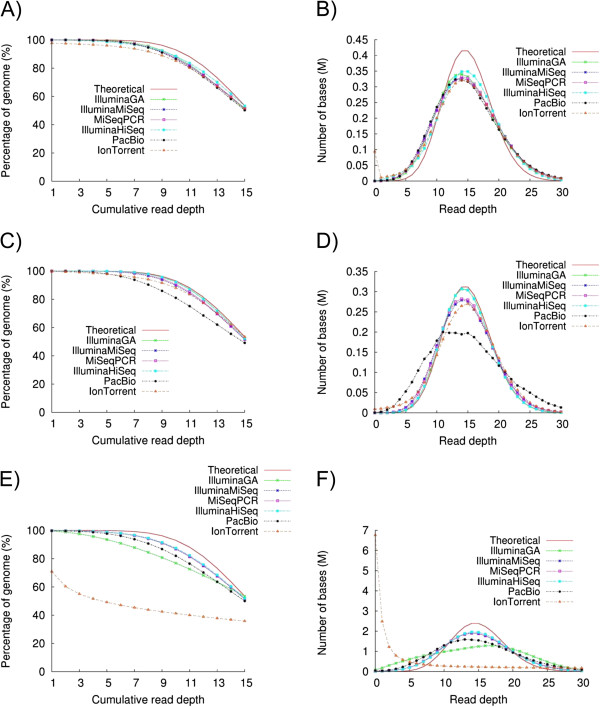
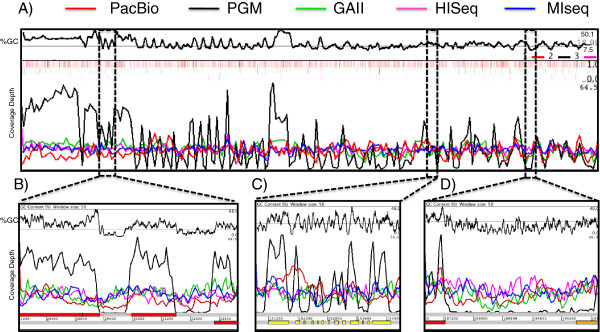
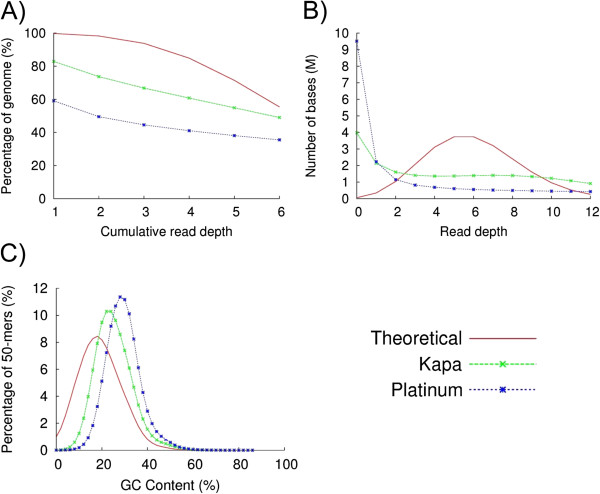
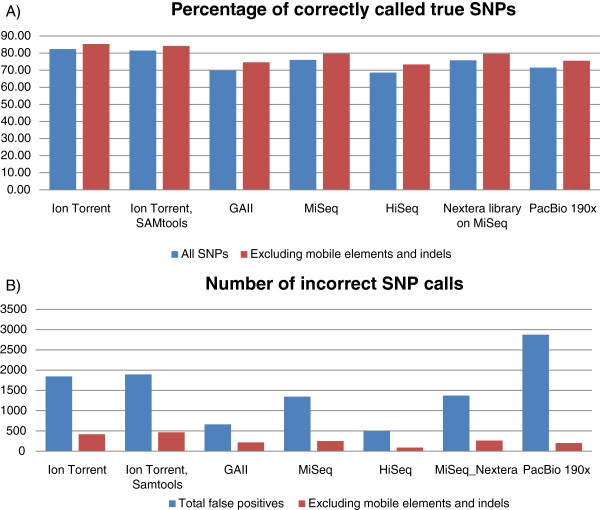
BACKGROUND: Next generation sequencing (NGS) technology has revolutionized genomic and genetic research. The pace of change in this area is rapid with three major new sequencing platforms having been released in 2011: Ion Torrent's PGM, Pacific Biosciences' RS and the Illumina MiSeq. Here we compare the results obtained with those platforms to the performance of the Illumina HiSeq, the current market leader. In order to compare these platforms, and get sufficient coverage depth to allow meaningful analysis, we have sequenced a set of 4 microbial genomes with mean GC content ranging from 19.3 to 67.7%. Together, these represent a comprehensive range of genome content. Here we report our analysis of that sequence data in terms of coverage distribution, bias, GC distribution, variant detection and accuracy. RESULTS: Sequence generated by Ion Torrent, MiSeq and Pacific Biosciences technologies displays near perfect coverage behaviour on GC-rich, neutral and moderately AT-rich genomes, but a profound bias was observed upon sequencing the extremely AT-rich genome of Plasmodium falciparum on the PGM, resulting in no coverage for approximately 30% of the genome. We analysed the ability to call variants from each platform and found that we could call slightly more variants from Ion Torrent data compared to MiSeq data, but at the expense of a higher false positive rate. Variant calling from Pacific Biosciences data was possible but higher coverage depth was required. Context specific errors were observed in both PGM and MiSeq data, but not in that from the Pacific Biosciences platform. CONCLUSIONS: All three fast turnaround sequencers evaluated here were able to generate usable sequence. However there are key differences between the quality of that data and the applications it will support.
Overview
The claims and statistics of this paper haven’t been checked yet.
Free: it reads the open-access text and checks the first 5 claims that cite a source we can check. Create a free account to check every claim.
Integrity signals
Registry
Cites
Statistics
Figures
Verification
Claims the paper makes
The claims and statistics of this paper haven’t been checked yet.
Free: it reads the open-access text and checks the first 5 claims that cite a source we can check. Create a free account to check every claim.
Claims other papers make about this one
Each is checked against this paper’s own text: does it say what the citing paper says it does?
The source backs part of the claim, not all of it — or backs it for a different population, condition or comparison.
In the citing paper
“The limit of detection in these experiments is based on the inherent error rate of the Illumina platform (up to 0.4%), which has previously been described for genome editing experiment analyzed by NGS71–73.”
From A high-fidelity Cas9 mutant delivered as a ribonucleoprotein complex enables efficient gene editing in human hematopoietic stem and progenitor cells (2018) · cites this paper as [72]
Experimental — accuracy not yet measuredThe check wasn’t confident either way, so it gives no verdict — never disputed.
In the citing paper
“RNA-seq is expected to produce some reads from highly expressed transcripts that begin at the same nucleotide and are thus designated “duplicate.””
From Multi-platform assessment of transcriptome profiling using RNA-seq in the ABRF next-generation sequencing study (2014) · cites this paper as [8]
Experimental — accuracy not yet measured
Self-check
Percentages, sums and reported differences re-computed from the paper’s own numbers.
The self-check needs the paper’s full text.
Citations
Cites
The Sequence Alignment/Map format and SAMtools
Li, H., Handsaker, B., Wysoker, A., Fennell, T., Ruan, J., Homer, N., Marth, G., Abecasis, G., Durbin, R., & 1000 Genome Project Data Processing Subgroup (2009) · Bioinformatics · doi:10.1093/bioinformatics/btp352 · Cited by 62,041
Fast and accurate short read alignment with Burrows-Wheeler transform
Li, H., & Durbin, R. (2009) · Bioinformatics · doi:10.1093/bioinformatics/btp324 · Cited by 58,607
RNA-Seq: a revolutionary tool for transcriptomics
Wang, Z., Gerstein, M., & Snyder, M. (2009) · Nature Reviews Genetics · doi:10.1038/nrg2484 · Cited by 13,174 · cited 1×
“Illumina sequencing has matured to the point where a great many applications [15-24] have been developed on the platform.”
BackgroundGenome sequence of the human malaria parasite Plasmodium falciparum
Gardner, M. J., Hall, N., Fung, E., White, O., Berriman, M., Hyman, R. W., Carlton, J. M., Pain, A., Nelson, K. E., Bowman, S., et al. (2002) · Nature · doi:10.1038/nature01097 · Cited by 4,407 · cited 1×
“4% [14], we use it as one of our test genomes, representing a significant challenge to most sequencing technologies.”
Method(1997) · Obesity Surgery · doi:10.1381/096089297765555359 · Cited by 3,916
Real-Time DNA Sequencing from Single Polymerase Molecules
Eid, J., Fehr, A., Gray, J., Luong, K., Lyle, J., Otto, G., Peluso, P., Rank, D., Baybayan, P., Bettman, B., et al. (2009) · Science · doi:10.1126/science.1162986 · Cited by 3,732
Accurate whole human genome sequencing using reversible terminator chemistry
Bentley, D. R., Balasubramanian, S., Swerdlow, H. P., Smith, G. P., Milton, J., Brown, C. G., Hall, K. P., Evers, D. J., Barnes, C. L., Bignell, H. R., et al. (2008) · Nature · doi:10.1038/nature07517 · Cited by 3,684
Self-citationGenome-Wide Mapping of in Vivo Protein-DNA Interactions
Johnson, D. S., Mortazavi, A., Myers, R. M., & Wold, B. (2007) · Science · doi:10.1126/science.1141319 · Cited by 2,927
An integrated semiconductor device enabling non-optical genome sequencing
Rothberg, J. M., Hinz, W., Rearick, T. M., Schultz, J., Mileski, W., Davey, M., Leamon, J. H., Johnson, K., Milgrew, M. J., Edwards, M., et al. (2011) · Nature · doi:10.1038/nature10242 · Cited by 2,172
Diep, B. A., Gill, S. R., Chang, R. F., Phan, T. H., Chen, J. H., Davidson, M. G., Lin, F., Lin, J., Carleton, H. A., Mongodin, E. F., et al. (2006) · The Lancet · doi:10.1016/s0140-6736(06)68231-7 · Cited by 1,633 · cited 9×
“MGEs were manually identified from the S. aureus USA300_FPR3757 genome annotation SNPs called from the resulting alignment provided a high-quality reference set for comparison with the SNPs identified by each sequencing platform.”
MethodInfluential
Cited by
Items 901–1,000 of 1,000
Vancampenhout, K., Caljon, B., Spits, C., Stouffs, K., Jonckheere, A. I., Meırleır, L. D., Lissens, W., Vanlander, A. V., Smet, J., Paepe, B. D., et al. (2014) · PLoS ONE · doi:10.1371/journal.pone.0112950 · Cited by 17
“These error rates in turn correspond to previously reported data for the MiSeq platform [9].”
BackgroundResultInfluentialSingle-cell transcriptomics for drug target discovery
Spaethling, J. M., & Eberwine, J. H. (2013) · Current Opinion in Pharmacology · doi:10.1016/j.coph.2013.04.011 · Cited by 15
Huang, S. (2014) · Chinese Science Bulletin · doi:10.1007/s11434-014-0641-7 · Cited by 16
“Currently, the leading sequencing methods, such as HiSeq (Illumina) and PGM (Ion Torrent), are categorized as the next-generation sequencing (NGS) methods and have reduced the human genome sequencing cost and time down to *$5,000 and a few days [18].”
MethodCarlton, J. M., Volkman, S. K., Uplekar, S., Hupalo, D. N., Alves, J. M. P., Cui, L., Donnelly, M. J., Roos, D. S., Harb, O. S., Acosta, M. M., et al. (2015) · American Journal of Tropical Medicine and Hygiene · doi:10.4269/ajtmh.15-0049 · Cited by 27
“being considered, they are closely matched in terms of utility and ease of workflow.(65) Therefore, the choice of platform”
BackgroundAdvantages of Array-Based Technologies for Pre-Emptive Pharmacogenomics Testing
Shahandeh, A., Johnstone, D. M., Atkins, J., Sontag, J., Heidari, M., Daneshi, N., Acquah, E., & Milward, E. A. (2016) · Microarrays · doi:10.3390/microarrays5020012 · Cited by 15
“This form of bias can in part be platform-dependent but can also occur across platforms and the error involved can be substantial—for example, a 2012 study by Quail and colleagues [42] of three platforms, Ion Torrent Personal Genome Machine, Pacific Biosciences PacBio RS, and Illumina MiSeq, found that output from seq…”
BackgroundMassively parallel sequencing of customised forensically informative SNP panels on the MiSeq
Mehta, B., Daniel, R., Phillips, C., Doyle, S. R., Elvidge, G. P., & McNevin, D. B. (2016) · Electrophoresis · doi:10.1002/elps.201600190 · Cited by 20
Ali, R., Blackburn, R. M., & Kozlakidis, Z. (2016) · HAYATI Journal of Biosciences · doi:10.1016/j.hjb.2016.12.007 · Cited by 22
The complete genome sequence of the cold adapted crude-oil degrader: Pedobacter steynii DX4
Chang, S., Zhang, G., Chen, X., Long, H., Wang, Y., Chen, T., & Liu, G. (2017) · Standards in Genomic Sciences · doi:10.1186/s40793-017-0249-z · Cited by 16
Sherwood, J. L., Brown, H. J., Rettino, A., Schreieck, A., Clark, G. R., Claes, B., Agrawal, B., Chaston, R., Kong, B. S. G., Choppa, P., et al. (2017) · ESMO Open · doi:10.1136/esmoopen-2017-000235 · Cited by 18
“However, there are important differences in sample handling and coverage of genes across the various NGS technologies along with increasing sequencing cost for the additional coverage (sequencing depth) necessary to detect low-level variants.(25) 26 There are challenges associated with mutation testing in fixed lung t…”
BackgroundNext-Generation Sequencing and Data Analysis
de Sá, P. H. C. G., Guimarães, L. C., das Graças, D. A., Veras, A. A. D. O., Barh, D., Azevedo, V., Silva, A., & Ramos, R. T. J. (2017) · Elsevier eBooks · doi:10.1016/b978-0-12-804659-3.00011-7 · Cited by 25
RNA-Seq as an Emerging Tool for Marine Dinoflagellate Transcriptome Analysis: Process and Challenges
Akbar, M. A., Ahmad, A., Usup, G., & Bunawan, H. (2018) · Processes · doi:10.3390/pr6010005 · Cited by 18
Metagenomics of Traditional Beverages
Villarreal-Morales, S. L., Montañez, J., Aguilar, C. N., & Rodríguez-Herrera, R. (2018) · Elsevier eBooks · doi:10.1016/b978-0-12-811443-8.00011-6 · Cited by 18
Hoang, N. V., Furtado, A., Thirugnanasambandam, P. P., Botha, F. C., & Henry, R. J. (2018) · Heliyon · doi:10.1016/j.heliyon.2018.e00583 · Cited by 16
“Despite the short read-length, RNA-Seq using Illumina sequencing technology has been utilized widely in transcriptome assembly thanks to the greater depth of coverage and a low error rate, compared to other sequencing platforms [68].”
MethodLaothanachareon, T., Tamayo‐Ramos, J. A., Nijsse, B., & Schaap, P. J. (2018) · Frontiers in Microbiology · doi:10.3389/fmicb.2018.02269 · Cited by 16
Cao, C., Lou, I., Huang, C., & Lee, M.-Y. (2014) · Desalination and Water Treatment · doi:10.1080/19443994.2014.979447 · Cited by 16
Wang, Z., Rashotte, A. M., Moss, A. G., & Dane, F. (2013) · Acta Physiologiae Plantarum · doi:10.1007/s11738-013-1440-5 · Cited by 17
“Quantitative trait analysis can be used for the identification of useful regions of genomes (Ashraf 2010), and nextgeneration high-throughput sequencing (Quail et al. 2012) offers whole plant transcriptome surveys (Wang et al.”
MethodQureshi, M. I., Sabir, J. S. M., Mutwakil, M., Mooti, A. A., Hanafy, E., Ashmaoui, H. E., Ramadan, H. A. I., Anwar, Y., Sadek, M. A., Abou-Alsoud, M., et al. (2014) · Cited by 16
High-throughput detection of clinically targetable alterations using next-generation sequencing
Vendrell, J. A., Grand, D., Rouquette, I., Costes, V., Icher, S., Sèlves, J., Larrieux, M., Barbe, A., Brousset, P., & Solassol, J. (2017) · Oncotarget · doi:10.18632/oncotarget.15875 · Cited by 16
“Indeed, the NGS approach is sensitive and cost-effective with a short turnaround time, and it uses a comparatively small quantity of DNA versus conventional PCR methods such as Sanger sequencing that remain the gold standard [15, 16].”
Davidson, I. M., Nikbakht, E., Haupt, L. M., Ashton, K. J., & Dunn, P. J. (2024) · Journal of Assisted Reproduction and Genetics · doi:10.1007/s10815-024-03292-6 · Cited by 17
Sun, K.-H., Wong, Y.-T., Cheung, K. M., Yuen, C. M., Chan, Y.-T., Lai, W.-Y. (., Chao, C. (., Fan, W.-S., Chow, Y.-K., Law, M. F., et al. (2022) · Diagnostics · doi:10.3390/diagnostics12020409 · Cited by 16
“Because it does not require scanning or measurement of light, an Ion Torrent sequencer such as Ion PGM has a short run time (2 h) and an acceptable read length (~200 bases) [25].”
BackgroundGumińska, N., Matylla-Kulińska, K., Krawczyk, P. S., Maj, M., Orzeł, W., Mackiewicz, Z., Brouze, A., Mroczek, S., & Dziembowski, A. (2025) · Nature Communications · doi:10.1038/s41467-025-57787-6 · Cited by 17
Application of Molecular Methods for Traceability of Foodborne Pathogens in Food Safety Systems
Ricke, S. C., Dawoud, T. M. S., & Kwon, Y. M. (2015) · Elsevier eBooks · doi:10.1016/b978-0-12-800245-2.00004-6 · Cited by 16
Brown, N. K., Kheradmand, T., Wang, J., & Marino, S. R. (2016) · Human Immunology · doi:10.1016/j.humimm.2016.01.001 · Cited by 15
Gao, L., Zhang, J., Hou, Y., Yao, Y. C., & Ji, Q. L. (2015) · The Journal of Horticultural Science and Biotechnology · doi:10.1080/14620316.2015.11668730 · Cited by 20
Technological advances in precision medicine and drug development
Maggi, E. C., Patterson, N. E., & Montagna, C. (2016) · Expert Review of Precision Medicine and Drug Development · doi:10.1080/23808993.2016.1176527 · Cited by 17
“time and upfront cost; the elimination of optics in Ion semiconductor sequencing has allowed for a faster runtime and lower upfront cost than Illumina, but Illumina ultimately offers a lower cost per base pair [133,134].”
BackgroundPopulation attenuation in zooplankton communities during transoceanic transfer in ballast water
Ghabooli, S., Zhan, A., Paolucci, E. M., Hernandez, M. R., Briski, E., Cristescu, M. E., & MacIsaac, H. J. (2016) · Ecology and Evolution · doi:10.1002/ece3.2349 · Cited by 16
Crea, F., Forman, M., Hulme, R. S., Old, R. W., Ryan, D., Mazey, R., & Risley, M. D. (2017) · Fetal Diagnosis and Therapy · doi:10.1159/000455025 · Cited by 15
Wu, Z., Gu, C., Tembrock, L. R., Zhang, D., & Ge, S. (2017) · PLoS ONE · doi:10.1371/journal.pone.0177553 · Cited by 16
Looi, Q. H., Amin, H., Ideris, A., Zakaria, M. Z. A. B., & Omar, A. R. (2017) · BMC Genomics · doi:10.1186/s12864-017-3861-9 · Cited by 18
“Although NanoString and NGSbased analysis are robust assays for transcriptomic studies, NGS–based, RNA-sequencing detects differentially expressed transcripts by counting the sequencing library fragments that map to the exons of each gene and divide the count for each gene by a scaling factor based on the length of th…”
MethodDe novo assembly and annotation of the Ganoderma australe genome
Agudelo-Valencia, D., Echeverry, P. T. U., & Peréz, J. F. B. (2019) · Genomics · doi:10.1016/j.ygeno.2019.06.008 · Cited by 15
Sequencing of animal viruses: quality data assurance for NGS bioinformatics
Zamperin, G., Lucas, P., Cano, I., Ryder, D., Abbadi, M., Stone, D. M., Cuenca, A., Vigouroux, E., Blanchard, Y., & Panzarin, V. M. (2019) · Virology Journal · doi:10.1186/s12985-019-1223-8 · Cited by 15
BMT: Bioinformatics mini toolbox for comprehensive DNA and protein analysis
Iqbal, M. N., Rasheed, M. A., Awais, M., Chammam, W., Kanwal, S., Khan, S., Saddick, S., & Tlili, I. (2020) · Genomics · doi:10.1016/j.ygeno.2020.08.010 · Cited by 15
Transcriptome analysis of banana (Musa balbisiana) basedon next-generation sequencing technology
BACKIYARANI, S., Uma, S., Saraswathi, M. S., SARAVANAKUMAR, A. S., & CHANDRASEKAR, A. (2015) · TURKISH JOURNAL OF AGRICULTURE AND FORESTRY · doi:10.3906/tar-1406-171 · Cited by 17
Harnessing Massively Parallel Sequencing in Personalized Head and Neck Oncology
Jessri, M., & Farah, C. S. (2014) · Journal of Dental Research · doi:10.1177/0022034514524783 · Cited by 15
“…and other technical differences, several statistical algorithms have been developed to normalize RNA-seq data and detect differential expression (Rapaport et al., 2013). clinicAl APPlicAtiOns Clinicians’ approaches to classifying diseases and their diagnoses are rapidly changing due to the…”
BackgroundLu, Z. H., Archibald, A. L., & Aït-Ali, T. (2014) · Virus Research · doi:10.1016/j.virusres.2014.10.004 · Cited by 21
“…five of the most widely used high-throughput sequencing platforms that are currently available. term of error rate, read length, yield, running cost and the intended applications, each of these NGS technologies has its own merits and weaknesses (Glenn, 2011; Quail et al., 2012; Ross et al., 2013).”
BackgroundEvaluating the efficacy of the new Ion PGM Hi-Q Sequencing Kit applied to bacterial genomes
Pereira, F. L., Soares, S. D. C., Dorella, F. A., Leal, C. A. G., & Figueiredo, H. C. P. (2016) · Genomics · doi:10.1016/j.ygeno.2016.03.004 · Cited by 15
“These results corroborate the evaluation performed for genetarget using amplicons [24] with Hi-Q and with the highest number of false-positives SNP called by ION in relation of MiSEQ [25].”
ResultBorm, S. V., Wang, J., Granberg, F., & Colling, A. (2016) · Scientific and Technical Review (World Organisation for Animal Health) · doi:10.20506/rst.35.1.2418 · Cited by 20
Computational strategies to address chromatin structure problems
Perišić, O., & Schlick, T. (2016) · Physical Biology · doi:10.1088/1478-3975/13/3/035006 · Cited by 16
Albert, J. R., Koike, T., Younesy, H., Thompson, I. R., Bogutz, A., Karimi, M. M., & Lorincz, M. C. (2018) · BMC Genomics · doi:10.1186/s12864-018-4835-2 · Cited by 17
“This approach allows allele-specific alignment of reads containing sequencing errors, which is critical for datasets with long (100+ bp) reads commonly sequenced on Illumina se-quencers, which have approximately 0.26 – 0.80% sequence error rates [44].”
BackgroundInfluentialMolecular and biochemical tricks of the research trade: ‐omics approaches in finfish aquaculture
Lokman, P., & Symonds, J. E. (2014) · New Zealand Journal of Marine and Freshwater Research · doi:10.1080/00288330.2014.928333 · Cited by 15
“In this investigation, the Ion Torrent (Quail et al. 2012), a different NGS platform, will be used (S. Bird, Waikato University, pers. comm. to J. Symonds, 19 December 2013).”
MethodUsing Genomic Approaches to Unlock the Potential of CWR for Crop Adaptation to Climate Change
Baute, G. J., Dempewolf, H., & Rieseberg, L. H. (2015) · Wiley eBooks · doi:10.1002/9781118854396.ch15 · Cited by 16
Modified Genomic Sequencing PCR Using the MiSeq Platform to Identify Retroviral Integration Sites
Rae, D. T., Collins, C. P., Hocum, J. D., Browning, D. L., & Trobridge, G. D. (2015) · Human Gene Therapy Methods · doi:10.1089/hgtb.2015.060 · Cited by 14
Soliman, T., Reimer, J. D., Yang, S., Villar‐Briones, A., Roy, M. C., & Jenke‐Kodama, H. (2017) · Frontiers in Microbiology · doi:10.3389/fmicb.2017.02451 · Cited by 15
“However, recently, next generation sequencing (NGS) has allowed acquisition of DNA sequences from various sediments with increasing accuracy (Quail et al., 2012), and studies on microbial diversity within marine sediments have accelerated (e.g., Acosta-Gonzalez and Marques, 2016; Fan and Xing,…”
BackgroundThird‐Generation Sequencing of Epigenetic DNA
Searle, B., Müller, M., Carell, T., & Kellett, A. (2023) · Angewandte Chemie · doi:10.1002/ange.202215704 · Cited by 14
Guo, F., Liu, Z., Long, G., Zhang, B., Dong, X., Liu, D.-H., & Yu, S. (2023) · Forensic Science International Genetics · doi:10.1016/j.fsigen.2023.102879 · Cited by 15
Ge, D., Cai, W., Guo, Z., Wang, B., Liu, M., Shan, C., & Wang, Y. (2024) · Heliyon · doi:10.1016/j.heliyon.2024.e31718 · Cited by 14
Shaik, S., Kumar, N., Lankapalli, A. K., Tiwari, S. K., Baddam, R., & Ahmed, N. (2016) · PLoS ONE · doi:10.1371/journal.pone.0155459 · Cited by 14
“Though there are a variety of platforms available, such as Illumina, 454, Ion Torrent etc., their utility mainly entails reading of bases from short DNA fragments to generate read data [4].”
Ruppitsch, W. (2016) · Die Bodenkultur Journal of Land Management Food and Environment · doi:10.1515/boku-2016-0017 · Cited by 18
“The advantages as well as disadvantages of diverse platforms (Metzker, 2010; Quail et al., 2012; Doi et al., 2014; Hinrichs et al., 2015; Hahn et al., 2016) have been reviewed.”
BackgroundWai, K. T., Barash, M., & Gunn, P. R. (2018) · Electrophoresis · doi:10.1002/elps.201700371 · Cited by 15
The cornerstone of integrating circulating tumor DNA into cancer management
Li, Z., Yi, L., Gao, P., Zhang, R., & Li, J. (2018) · Biochimica et Biophysica Acta (BBA) - Reviews on Cancer · doi:10.1016/j.bbcan.2018.11.002 · Cited by 14
Ely, B., Wilson, K. M., Ross, K., Ingram, D., Lewter, T., Herring, J., Duncan, D., Aikins, A., & Scott, D. C. (2018) · Current Microbiology · doi:10.1007/s00284-018-1606-x · Cited by 14
The Rapid Methylation of T-DNAs Upon Agrobacterium Inoculation in Plant Leaves
Philips, J. G., Dudley, K. J., Waterhouse, P. M., & Hellens, R. P. (2019) · Frontiers in Plant Science · doi:10.3389/fpls.2019.00312 · Cited by 15
“However, at earlier time points of 2 and 3 dpi a large proportion of reads were truncated (Supplementary Table S3), most likely due to the read terminating when it approached a homopolymer track (Quail et al., 2012).”
BackgroundSmith-Aguasca, R., Gupta, H., Uberegui, E., Máquina, M., Saúte, F., Paaijmans, K. P., Mayor, A. G., & Huijben, S. (2019) · Malaria Journal · doi:10.1186/s12936-019-2946-0 · Cited by 15
COVID-19 and post-mortem microbiological studies
Fernández-Rodríguez, A., Casas, I., Culebras, E., Morilla, E., Cohen, M. C., & Alberola, J. (2020) · Revista Española de Medicina Legal · doi:10.1016/j.remle.2020.05.007 · Cited by 16
Truelsen, D., Pereira, V., Phillips, C., Morling, N., & Børsting, C. (2020) · Forensic Science International Genetics · doi:10.1016/j.fsigen.2020.102411 · Cited by 14
Yamanaka, T., Kitabayashi, S., Jouraku, A., Kanamori, H., Kuwazaki, S., & Sudo, M. (2022) · Pest Management Science · doi:10.1002/ps.6776 · Cited by 14
El‐Adawy, H., Hotzel, H., García-Soto, S., Tomaso, H., Hafez, H. M., Schwarz, Š., Neubauer, H., & Linde, J. (2023) · Frontiers in Veterinary Science · doi:10.3389/fvets.2023.1092179 · Cited by 16
Kulski, J. K., Suzuki, S., Ozaki, Y., Mitsunaga, S., Inoko, H., & Shii, T. (2014) · InTech eBooks · doi:10.5772/57556 · Cited by 18
Ostrow, S. L., Simon, E., Prinz, E., Bick, T., Shentzer, T., Nagawkar, S. S., Sabo, E., Ben‐Izhak, O., Hershberg, R., & Hershkovitz, D. (2016) · Scientific Reports · doi:10.1038/srep21927 · Cited by 13
Xu, X., Yang, Y., Li, H., Chen, Z., Jiang, G., & Fei, K. (2016) · Scandinavian Journal of Clinical and Laboratory Investigation · doi:10.1080/00365513.2016.1183813 · Cited by 17
“5–2 GB is very suitable for clinical molecular diagnosis [27,28].”
BackgroundBayesian nonparametric discovery of isoforms and individual specific quantification
Aguiar, D., Cheng, L., Dumitrascu, B., Mordelet, F., Pai, A. A., & Engelhardt, B. E. (2018) · Nature Communications · doi:10.1038/s41467-018-03402-w · Cited by 14
Comparison between magnetic bead and qPCR library normalisation methods for forensic MPS genotyping
Mehta, B., Venables, S. J., & Roffey, P. (2017) · International Journal of Legal Medicine · doi:10.1007/s00414-017-1591-9 · Cited by 14
“However, research has suggested various other additional library normalisation techniques that can be used including NanoDrop® (Thermo Fisher Scientific) [12], Qubit® (Thermo Fisher Scientific) [13] and qPCR methods [14].”
BackgroundHaplotype Counting for Sensitive Chimerism Testing
Debeljak, M., Mocci, E., Morrison, M. C., Pallavajjalla, A., Beierl, K. F., Amiel, M., Noë, M., Wood, L. D., Lin, M., Gocke, C. D., et al. (2017) · Journal of Molecular Diagnostics · doi:10.1016/j.jmoldx.2017.01.005 · Cited by 14
“1% to 1%.(11) This precludes using NGS for ultrasensitive detection of individual SNPs.”
BackgroundS-Aligner: Ultrascalable Read Mapping on Sunway Taihu Light
Duan, X., Xu, K., Chan, Y., Hundt, C., Schmidt, B., Balaji, P., & Liu, W. (2017) · IEEE International Conference on Cluster Computing (CLUSTER) · doi:10.1109/cluster.2017.16 · Cited by 14
“Modern NGS instruments such as Illumina sequencers [25] enable the recording of billions of short DNA fragments per day.”
BackgroundAn update on bioinformatics resources for plant genomics research
Basantani, M. K., Gupta, D., Mehrotra, R., Mehrotra, S., Vaish, S., & Singh, A. (2017) · Current Plant Biology · doi:10.1016/j.cpb.2017.12.002 · Cited by 15
Use of Next Generation Sequencing to study two cowpox virus outbreaks
Antwerpen, M. H., Georgi, E., Nikolic, A., Zoeller, G., Wohlsein, P., Baumgärtner, W., Peyrefitte, C. N., Charrel, R. N., & Meyer, H. E. (2019) · PeerJ · doi:10.7717/peerj.6561 · Cited by 14
Primary HIV-1 Drug Resistant Minority Variants.
Chimukangara, B., Samuel, R., Naidoo, K., & de Oliveira, T. (2017) · PubMed · Cited by 14
Single nucleotide variants of succinate dehydrogenase A gene in renal cell carcinoma
Kamai, T., Higashi, S., Murakami, S., Arai, K., Namatame, T., Kijima, T., Abe, H., Jamiyan, T., Ishida, K., Shirataki, H., et al. (2021) · Cancer Science · doi:10.1111/cas.14977 · Cited by 15
Whole-Genome Sequencing ofAcer catalpifoliumReveals Evolutionary History of Endangered Species
Yu, T., Hu, Y., Zhang, Y., Zhao, R., Yan, X., Dayananda, B., Wang, J., Jiao, Y., Li, J., & Yi, X. (2021) · Genome Biology and Evolution · doi:10.1093/gbe/evab271 · Cited by 18
Cao, C., & Lou, I. (2015) · Desalination and Water Treatment · doi:10.1080/19443994.2015.1014857 · Cited by 14
The Human Gut Microbiome: The Ghost in the Machine
Feeney, A., & Sleator, R. D. (2012) · Future Microbiology · doi:10.2217/fmb.12.105 · Cited by 14
Forensic human identification using skin microbiome genetic signatures
Schmedes, S. E., Woerner, A. E., & Budowle, B. (2019) · Elsevier eBooks · doi:10.1016/b978-0-12-815379-6.00011-8 · Cited by 15
Intra-Species Genomic Variation in the Pine Pathogen Fusarium circinatum
Maphosa, M., Steenkamp, E. T., Kanzi, A. M., van Wyk, S., Vos, L. D., Santana, Q. C., Duong, T. A., & Wingfield, B. D. (2022) · Journal of Fungi · doi:10.3390/jof8070657 · Cited by 12
“Whole genomes in which chromosomes are sequenced from telomere to telomere can thus be assembled, thereby allowing a comprehensive analysis of genomic structural variation, as well as more fine-scale analyses, such as those involving single nucleotide polymorphisms (SNPs) [13].”
BackgroundApplication of third-generation sequencing to herbal genomics
Gao, L., Xu, W., Xin, T., & Song, J. (2023) · Frontiers in Plant Science · doi:10.3389/fpls.2023.1124536 · Cited by 22
“5 4-24 Illumina website(14) (Quail et al., 2012) Miseq 2×300 bp 15 4-55”
BackgroundSchalkwijk, H. H., Georgala, A., Gillemot, S., Temblador, A., Topalis, D., Wittnebel, S., Andreï, G., & Snoeck, R. (2023) · The Journal of Infectious Diseases · doi:10.1093/infdis/jiad184 · Cited by 14
Gallo, E. (2024) · Molecular Biotechnology · doi:10.1007/s12033-024-01064-2 · Cited by 18
“In this context, machine learning refers to a form of AI that can acquire knowledge from input data without Table 1 Highliting the critical steps involved in deep sequencing methodologies [21] Step Strategy Description 1”
da Silva, A. G., Barendse, W., Kijas, J., Barris, W., McWilliam, S. M., Bunch, R. J., McCullough, R., Harrison, B. E., Hoelzel, A. R., & England, P. R. (2014) · Molecular Ecology Resources · doi:10.1111/1755-0998.12343 · Cited by 13
“Such wide intervals, that do not take into account the expected depth of coverage of the dataset, will fail to exclude from the final putative SNP set many assembly errors due to low complexity regions, contamination from other organisms and organelle DNA, and finally multiple copy genes (Campbell et al. 2008; Bainbri…”
BackgroundResearch on Neonatal Microbiomes: What Neonatologists Need to Know
Sherman, M. P., Minnerly, J. C., Curtiss, W. J., Rangwala, S. H., & Kelley, S. T. (2013) · Neonatology · doi:10.1159/000354944 · Cited by 14
Buschmann, T., Zhang, R., Brash, D. E., & Bystrykh, L. V. (2014) · BMC Bioinformatics · doi:10.1186/1471-2105-15-264 · Cited by 14
“This means that the reverse complemented barcode at the end of the sequence may be missing as well [14,15].”
BackgroundImprove homology search sensitivity of PacBio data by correcting frameshifts
Du, N., & Sun, Y. (2016) · Bioinformatics · doi:10.1093/bioinformatics/btw458 · Cited by 14
Zhang, T., Saccone, N. L., Bierut, L. J., & Rice, J. P. (2017) · Brain and Behavior · doi:10.1002/brb3.651 · Cited by 13
“The recent development of “nextgeneration” sequencing technology has enabled researchers to investigate these variants which are not covered in GWAS at a relatively lower genotyping cost (Hall, 2007; Quail et al., 2012; Tucker, Marra, & Friedman, 2009).”
BackgroundPark, J., Yoo, H. M., Jang, W., Shin, S., Kim, M., Kim, Y., Lee, S., & Kim, J. G. (2017) · Medicine · doi:10.1097/md.0000000000007224 · Cited by 15
“NGS promises to bridge this gap by allowing for simultaneous mutation detection in multiple exons frommultiple genes in multiple patient samples.([21,22]) NGS platforms offer an increased breadth of testing at a lower cost and without compromising assay performance and turn-around times in the clinical setting.”
BackgroundReis-Cunha, J. L., & Bartholomeu, D. C. (2019) · Methods in molecular biology · doi:10.1007/978-1-4939-9148-8_1 · Cited by 18
COVID-19 y estudios microbiológicos post mortem
Fernández-Rodríguez, A., Casas, I., Culebras, E., Morilla, E., Cohen, M. C., & Alberola, J. (2020) · Revista Española de Medicina Legal · doi:10.1016/j.reml.2020.05.007 · Cited by 18
Davies, O. K., Dorey, J. B., Stevens, M. I., Gardner, M., Bradford, T. M., & Schwarz, M. P. (2022) · Current Research in Insect Science · doi:10.1016/j.cris.2022.100036 · Cited by 14
Kotoula, V., Lyberopoulou, A., Papadopoulou, K., Charalambous, E., Alexopoulou, Z., Gakou, C., Lakis, S., Tsolaki, E., Λιλάκος, Κ., & Fountzilas, G. (2015) · PLoS ONE · doi:10.1371/journal.pone.0128818 · Cited by 13
“Comparisons of Ion Torrent PGM platform with other next-generation sequencers have been described [5, 14, 15], whereas a comparison between PGM and Proton sequencers was recently performed for the non-invasive detection of fetal abnormalities [16].”
MethodPessôa, R., Watanabe, J. T., Calabria, P., Alencar, C. S., Loureiro, P. R. A. D. C., Lopes, M. E., Proetti, A. B., Félix, A. C., Sabino, É. C., Busch, M. P., et al. (2014) · Transfusion · doi:10.1111/trf.12936 · Cited by 13
Bovo, S., Bertolini, F., Schiavo, G., Mazzoni, G., Dall’Olio, S., & Fontanesi, L. (2015) · International Journal of Genomics · doi:10.1155/2015/950737 · Cited by 13
“This is a quite large number of SNPs, considering the limited throughput of the benchtop Ion Torrent technology (compared to Illumina platforms [33]) and the stringent criteria that we used to call SNPs.”
MethodSoong, C.-P., Breuer, G. A., Hannon, R. A., Kim, S. D., Salem, A. F., Wang, G., Yu, R., Carriero, N. J., Bjornson, R. D., Sundaram, R. K., et al. (2014) · DNA repair · doi:10.1016/j.dnarep.2014.12.002 · Cited by 14
Microbiology: lessons from a first attempt at Lake Ellsworth
Pearce, D. A., Magiopoulos, I., Mowlem, M. C., Tranter, M., Holt, G. S., Woodward, J., & Siegert, M. J. (2015) · Philosophical Transactions of the Royal Society A Mathematical Physical and Engineering Sciences · doi:10.1098/rsta.2014.0291 · Cited by 15
Fu, C., Liu, W., Liu, D.-L., Li, J., Zhu, M., Liao, Y., Liu, Z., Zeng, X., & Wang, F. (2016) · Genome · doi:10.1139/gen-2015-0101 · Cited by 13
“In addition, the coverage bias was observed with libraries prepared using both enzymatic and physical shearing, although use of Illumina sequencing technology with libraries prepared without amplification led to the least biased coverage (Quail et al. 2012).”
MethodMeredith, R. W., Gaynor, J. J., & Bologna, P. A. X. (2016) · Molecular Ecology · doi:10.1111/mec.13918 · Cited by 17
“…bias), differential DNA survival in the gut, the type of NGS platform (e.g. Illumina, Ion Torrent) and the bioinformatics pipeline used in the processing of reads (MartinLaurent et al. 2001; Deagle & Tollit 2007; Amend et al. 2010; Porazinska et al. 2010; Quail et al. 2012; Deagle et al. 2013).”
Epigenetic Changes During Food-Specific Immunotherapy
Bunning, B., DeKruyff, R. H., & Nadeau, K. C. (2016) · Current Allergy and Asthma Reports · doi:10.1007/s11882-016-0665-y · Cited by 14
Edalat, F. D., & Abdi, M. R. (2017) · International series in management science/operations research/International series in operations research & management science · doi:10.1007/978-3-319-64143-0_7 · Cited by 13
Parajuli, P., Adamski, M., & Verma, N. K. (2017) · BMC Genomics · doi:10.1186/s12864-017-4109-4 · Cited by 13
“However, the sequence from SMRT technology has higher error rates compared to Illumina platforms [19].”
BackgroundRew, V., Mook, P. A., Trienekens, S. C. M., Baker, K. S., Dallman, T. J., Jenkins, C., Crook, P., & Thomson, N. R. (2018) · Microbial Genomics · doi:10.1099/mgen.0.000170 · Cited by 13
“Tagged multiplexed genomic libraries and DNA sequencing was carried out using a HiSeq 2500 platform (Illumina), at PHE and the Sanger Institute as described previously [14, 15].”
MethodAuthentication of Hedyotis products by adaptor ligation-mediated PCR and metabarcoding
Yik, M. H.-Y., Lo, Y.-T., Lin, X., Sun, W., Chan, T., & Shaw, P. (2021) · Journal of Pharmaceutical and Biomedical Analysis · doi:10.1016/j.jpba.2021.113920 · Cited by 13
Sukser, V., Rokić, F., Barbarić, L., & Korolija, M. (2021) · International Journal of Legal Medicine · doi:10.1007/s00414-021-02508-z · Cited by 16
Estimation of the impact of three different bioinformatic pipelines on sheep nemabiome analysis
Baltrušis, P., Halvarsson, P., & Höglund, J. (2022) · Parasites & Vectors · doi:10.1186/s13071-022-05399-0 · Cited by 13
“In addition, initial studies comparing the two platforms have shown that in most cases both the costs of sequencing using this platform and the error rates were lower [31].”
ResultJongbloed, E. M., Jansen, M. P. H. M., de Weerd, V., Helmijr, J. A., Beaufort, C. M., Reinders, M. J. T., van Marion, R., van IJcken, W. F. J., Sonke, G. S., Konings, I. R., et al. (2023) · Scientific Reports · doi:10.1038/s41598-023-37409-1 · Cited by 6
Metadata
- Authors
- Quail, M., Smith, M. E., Coupland, P., Otto, T. D., Harris, S. R., Connor, T. R., Bertoni, A., Swerdlow, H. P., & Gu, Y.
- Affiliations
- Wellcome Sanger Institute (GB)
- Corresponding author
- Quail, Michael
- ORCID
- Venue
- BMC Genomics
- Published
- 2012
- Volume
- 13
- Issue
- 1
- Pages
- 341
- ISSN
- 1471-2164 (ISSN-L)
- PMC
- PMC3431227
- OpenAlex
- W2124715997
- Semantic Scholar
- 11bc28c49fc164952f587bba71e55d25db0d1757
- Cited by
- 2,031
- References
- 32
- Citations by year
- 2026: 33 · 2025: 50 · 2024: 105 · 2023: 78 · 2022: 91 · 2021: 130 · 2020: 150 · 2019: 144 · 2018: 188 · 2017: 207 · 2016: 254 · 2015: 226 · 2014: 218 · 2013: 144 · 2012: 9
- FWCI
- 76.69
- Type
- journal article
- Language
- en
- Open access
- gold
- doi.org
- Licence
- cc-by
- Locations
- BMC Genomics (publishedVersion, cc-by)
- Europe PMC (PubMed Central) (publishedVersion, cc-by)
- PubMed Central (publishedVersion, cc-by)
- PubMed (publishedVersion)
- ORCA Online Research @Cardiff (Cardiff University) (acceptedVersion)
- ENLIGHTEN (Jurnal Bimbingan dan Konseling Islam) (acceptedVersion)
- DOAJ (DOAJ: Directory of Open Access Journals) (submittedVersion, cc-by-sa)
- Funders
- Wellcome Trust (grant number 098051, 098051)
- European Commission
- Topics
- Life Sciences › Biochemistry, Genetics and Molecular Biology › Molecular Biology › Genomics and Phylogenetic Studies
- Life Sciences › Biochemistry, Genetics and Molecular Biology › Genetics › Genomics and Rare Diseases
- Life Sciences › Biochemistry, Genetics and Molecular Biology › Molecular Biology › Genetics, Bioinformatics, and Biomedical Research
- Keywords
- Ion Torrent PGM, Illumina MiSeq, Illumina HiSeq, microbial genomes, AT-rich genome, Plasmodium falciparum, GC content, variant calling, false positive rate, sequencing error rate
- MeSH terms
- Base Composition, Base Sequence, Bordetella pertussis, Plasmodium falciparum, Staphylococcus aureus, Gene Library, Genome, Bacterial, Sequence Analysis, DNA, Genome, Protozoan, Polymorphism, Single Nucleotide, Databases, Genetic, Nucleotide Motifs
About these checks
Registry, retraction, Cites and statistics results are computed, not judged, with one exception: a printed reference that no index lists is read once by a model before it counts as a citation error. Claims are extracted by a model and kept only when their quote appears verbatim in the text; each cited source is then checked, with a model’s help, for whether it says what the claim relies on. Those verdicts can be wrong — read the claim’s quote and the cited source before relying on one.
Statistics and arithmetic are recomputed, not judged.
Confidence bands are shown only for fields calibrated on our annotated test set. None is calibrated yet, so no band is shown.
What counts as a claim ›How we measure confidence ›How we check this ›
Are you an author, or do you see a problem with this page? Request a review
Data sources
Bibliographic data: Semantic Scholar, OpenAlex, Crossref.
Contains information from the Semantic Scholar Academic Graph Datasets, made available under the ODC Attribution License (ODC-BY 1.0).
Semantic Scholar’s data is described in: Kinney, R., et al. (2023). The Semantic Scholar Open Data Platform. arXiv:2301.10140.
