

Acceptability, effectiveness, and cost-effectiveness of internet-based exposure treatment for irritable bowel syndrome in a clinical sample: a randomized controlled trial
Open accessThe DOI matches its Crossref record; 69 of the 73 references it cites were found in a registry or an index, and 1 are not checked yet; 10 of the 64 sources its claims cite were checked for support.
Abstract
Background: Internet-based cognitive behavior therapy (ICBT) has shown promising effects in the treatment of irritable bowel syndrome (IBS). However, to date no study has used a design where participants have been sampled solely from a clinical population. We aimed to investigate the acceptability, effectiveness, and cost-effectiveness of ICBT for IBS using a consecutively recruited sample from a gastroenterological clinic.Methods: Sixty-one patients were randomized to 10 weeks of ICBT (n = 30) or a waiting list control (n = 31). The ICBT was guided by an online therapist and emphasized acceptance of symptoms through exposure and mindfulness training. Severity of IBS symptoms was measured with the Gastrointestinal symptom rating scale - IBS version (GSRS-IBS). Patients in both groups were assessed at pre- and post-treatment while only the ICBT group was assessed 12 months after treatment completion. Health economic data were also gathered at all assessment points and analyzed using bootstrap sampling.Results: Fifty of 61 patients (82%) completed the post-treatment assessment and 20 of 30 patients (67%) in the ICBT group were assessed at 12-month follow-up. The ICBT group demonstrated significantly (p < .001) larger improvements on the IBS-related outcome scales than the waiting list group. The between group effect size on GSRS-IBS was Cohen's d = 0.77 (95% CI: 0.19-1.34). Similar effects were noted on measures of quality of life and IBS-related fear and avoidance behaviors. Improvements in the ICBT group were maintained at 12-month follow-up. The ICBT condition was found to be more cost-effective than the waiting list, with an 87% chance of leading to reduced societal costs combined with clinical effectiveness. The cost-effectiveness was sustained over the 12-month period.Conclusions: ICBT proved to be a cost-effective treatment when delivered to a sample recruited from a gastroenterological clinic. However, many of the included patients dropped out of the study and the overall treatment effects were smaller than previous studies with referred and self-referred samples. ICBT may therefore be acceptable and effective for only a subset of clinical patients. Study dropout seemed to be associated with severe symptoms and large impairment. Objective and empirically validated criteria to select which patients to offer ICBT should be developed.Trial Registration: ClinicalTrials.gov: NCT00844961. © 2011 Ljótsson et al; licensee BioMed Central Ltd.
Verified 2026-11-22 · 1 reference not checked yet
Overview
CoChat Summary
## TL;DR
This randomized controlled trial tested 10 weeks of therapist-guided internet-based cognitive behavior therapy (ICBT) for irritable bowel syndrome in 61 patients recruited from a gastroenterological clinic. ICBT improved IBS symptoms, quality of life, and IBS-related fear/avoidance more than waiting list, and was judged cost-effective, but dropout was substantial and effects were smaller than in earlier self-referred samples.
## Key findings
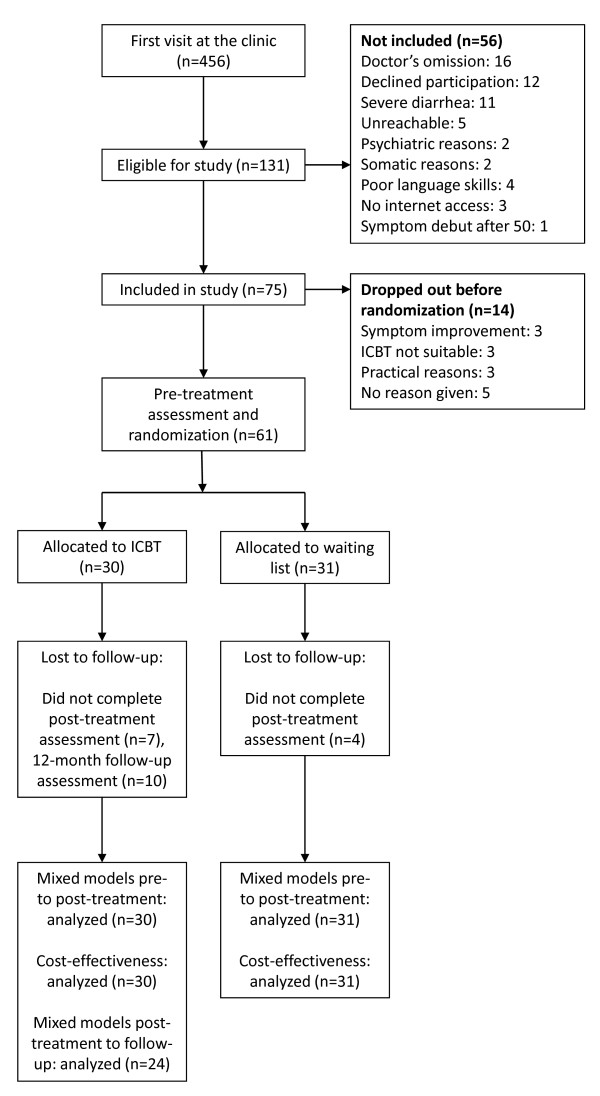
- 61 patients were randomized: 30 to ICBT and 31 to waiting list; 50/61 (82%) completed post-treatment assessment, and 20/30 (67%) in ICBT were assessed at 12 months.
- The ICBT group had significantly larger improvements than waiting list on IBS outcomes (p < .001); on the primary outcome, GSRS-IBS, the between-group effect size was Cohen’s d = 0.77 (95% CI: 0.19–1.34).
- Similar improvements were reported for quality of life and IBS-related fear/avoidance; at 12 months, improvements in the ICBT group were maintained, and IBS-QOL showed further improvement (B = 4.5, t20.1 = 2.2, p = .04).
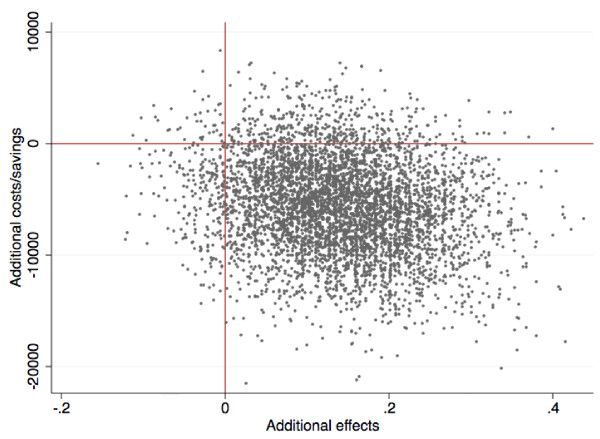
- ICBT was more cost-effective than waiting list, with an 87% chance of reducing societal costs combined with clinical effectiveness; the paper reports an ICER of -39,821, interpreted as a societal cost reduction of $39,821 per clinically significant improvement.
## Methods
- Design: Randomized controlled trial with 10 weeks of ICBT versus waiting list; outcomes were assessed pre- and post-treatment, and the ICBT group was followed for 12 months.
- Sample/data: 61 consecutively recruited IBS patients from a single gastroenterological clinic in Stockholm, Sweden; eligibility required Rome III IBS, age 18–65, Stockholm County residence, and other criteria listed in the paper.
- Analysis: Primary outcome (GSRS-IBS) and other continuous outcomes were analyzed with linear mixed effects models using FIML; cost-effectiveness used TIC-P data, ANCOVA, paired t-tests, and 5000 bootstrap replications.
## Limitations
- The paper states that using a waiting list control is an important limitation because it does not control for nonspecific factors such as expectancy and caregiver attention.
- The trial was not conducted in a fully clinical care context: participants underwent extensive pre-treatment assessment, which the authors say may have contributed to the high dropout rate.
- The authors note limits to generalizability because they excluded patients with severe diarrhea who were judged to need psychotropic medication, and because cost estimates used estimated salaries rather than actual salaries; they also estimated treatment cost only from therapist time, excluding platform/manual development and clinic overhead.
Model-written summary. Check it against the paper before relying on it.
Integrity signals
Registry
Cites
Statistics
Figures
Verification
Claims the paper makes
9 Valid · 2 Not valid · 30 Not checked · 85 Own results and interpretations
The cited sources support only part of this claim — read each source’s verdict below.
In the paper
“However, the generalizability of our studies and other studies investigating CBT for IBS with reduced therapist time [19-22] is limited by the fact that study participants have mostly been recruited by referral and self-referral.”
§ Acceptability, effectiveness, and cost-effectiveness of internet-based exposure treatment for irritable bowel syndrome in a clinical sample: a randomized controlled trial > Background
What the sources say
- Not checked — no full text of the sourcecites [19] Moss-Morris R McAlpine L Didsbury LP Spence MJ A randomized controlled trial of a cognitive behavioural therapy-based self-management intervention for irritable bowel syndrome in primary care Psychol Med 2010 40 1 85 94 10.1017/S0033291709990195 19531276 source
- Partly supportedcites [20] Jarrett ME Cain KC Burr RL Hertig VL Rosen SN Heitkemper MM Comprehensive self-management for irritable bowel syndrome: randomized trial of in-person vs. combined in-person and telephone sessions Am J Gastroenterol 2009 104 12 3004 3014 10.1038/ajg.2009.479 19690523 PMC2804069 sourceExperimental — accuracy not yet measured
The Methods (Recruitment and Eligibility; page unavailable) say volunteers were recruited through community advertisements and a mailing to gastroenterology patients, consistent with self-selection, though they do not establish that participants were mostly recruited by referral and self-referral. The Discussion also says the telephone intervention was not designed to reduce therapist time: sessions lasted approximately 60 minutes in both delivery modes. The paper therefore supports a concern about recruitment only in part, not the characterization of this study as using reduced therapist time. (LLM, conf=0.83)
- Not checked — no full text of the sourcecites [21] Hunt MG Moshier S Milonova M Brief cognitive-behavioral internet therapy for irritable bowel syndrome Behav Res Ther 2009 47 797 802 10.1016/j.brat.2009.05.002 19570525 source
- Not checked — no full text of the sourcecites [22] Lackner JM Jaccard J Krasner SS Katz LA Gudleski GD Holroyd K Self-administered cognitive behavior therapy for moderate to severe irritable bowel syndrome: clinical efficacy, tolerability, feasibility Clin Gastroenterol Hepatol 2008 6 8 899 906 10.1016/j.cgh.2008.03.004 18524691 PMC2630498 source
plainstates a cause- Asserted: passes — The authors put it forward as true.
- Checkable: passes — It can be checked against evidence.
- Load-bearing: unclear — It is unclear whether the paper’s conclusions depend on it.
- Based: passes — The paper gives a reason why it holds.
The cited sources support only part of this claim — read each source’s verdict below.
In the paper
“Several studies have confirmed the impact of symptom-related fear and avoidance behaviors on symptom severity and quality of life in IBS [24,27-30].”
§ Acceptability, effectiveness, and cost-effectiveness of internet-based exposure treatment for irritable bowel syndrome in a clinical sample: a randomized controlled trial > Methods > Treatment condition
What the sources say
- Not checked — no full text of the sourcecites [24] Labus JS Mayer EA Chang L Bolus R Naliboff BD The central role of gastrointestinal-specific anxiety in irritable bowel syndrome: further validation of the visceral sensitivity index Psychosom Med 2007 69 1 89 98 10.1097/PSY.0b013e31802e2f24 17244851 source
- Not checked — no full text of the sourcecites [27] Hazlett-Stevens H Craske MG Mayer EA Chang L Naliboff BD Prevalence of irritable bowel syndrome among university students: the roles of worry, neuroticism, anxiety sensitivity and visceral anxiety J Psychosom Res 2003 55 6 501 505 10.1016/S0022-3999(03)00019-9 14642979 source
- Partly supportedcites [28] Labus JS Bolus R Chang L Wiklund I Naesdal J Mayer EA Naliboff BD The Visceral Sensitivity Index: development and validation of a gastrointestinal symptom-specific anxiety scale Aliment Pharmacol Ther 2004 20 1 89 97 10.1111/j.1365-2036.2004.02007.x 15225175 sourceExperimental — accuracy not yet measured
The Validity section reports that the Visceral Sensitivity Index predicted current IBS symptom severity, and Table 2 includes items on symptom-related fear and food avoidance. But the study measured these together in one scale, so it does not establish their separate or causal impacts. The Introduction reports another analysis linking symptom worries to quality-of-life impairment; this paper does not directly test that outcome. (LLM, conf=0.88)
- Not checked — no full text of the sourcecites [29] Jerndal P Ringstrom G Agerforz P Karpefors M Akkermans LM Bayati A Simren M Gastrointestinal-specific anxiety: an important factor for severity of GI symptoms and quality of life in IBS Neurogastroenterol Motil 2010 22 6 646 e179 10.1111/j.1365-2982.2010.01493.x 20367800 source
- Not checked — no full text of the sourcecites [30] Reme SE Darnley S Kennedy T Chalder T The development of the irritable bowel syndrome-behavioral responses questionnaire J Psychosom Res 2010 69 3 319 325 10.1016/j.jpsychores.2010.01.025 20708455 source
boostedstates an association- Asserted: passes — The authors put it forward as true.
- Checkable: passes — It can be checked against evidence.
- Load-bearing: passes — The paper’s conclusions depend on it.
- Based: passes — The paper gives a reason why it holds.
Every source the paper cites for this claim was checked and supports it.
In the paper
“and that the treatment was associated with considerable long-term societal cost-savings [17]”
§ Acceptability, effectiveness, and cost-effectiveness of internet-based exposure treatment for irritable bowel syndrome in a clinical sample: a randomized controlled trial > Background
What the sources say
- Supportedcites [17] Andersson E Ljótsson B Smit F Paxling B Hedman E Lindefors N Andersson G Rück C Cost-effectiveness of internet-based cognitive behavior therapy for Irritable Bowel Syndrome: Results from a randomized controlled trial BMC Public Health 2011 11 1 215 10.1186/1471-2458-11-215 21473754 PMC3083356 source
The Abstract’s Results report societal cost reductions of $16,806 per successfully treated case, sustained at three-month and one-year follow-up. The Discussion also describes cost reductions at follow-up, while cautioning that extrapolated longer-term estimates are less reliable. (LLM, conf=0.90)
plainstates an association- Asserted: passes — The authors put it forward as true.
- Checkable: passes — It can be checked against evidence.
- Load-bearing: unclear — It is unclear whether the paper’s conclusions depend on it.
- Based: passes — The paper gives a reason why it holds.
- Supported
The cited sources support only part of this claim — read each source’s verdict below.
In the paper
“but one limitation is that CBT is rarely available in routine care of IBS [10]”
§ Acceptability, effectiveness, and cost-effectiveness of internet-based exposure treatment for irritable bowel syndrome in a clinical sample: a randomized controlled trial > Background
What the sources say
- Partly supportedcites [10] Hungin AP Self-help interventions in irritable bowel syndrome Gut 2006 55 5 603 604 10.1136/gut.2005.075606 16609132 PMC1856125 sourceExperimental — accuracy not yet measured
The article’s discussion (pp. 603–604) says non-pharmacological interventions for IBS have not become common practice and mentions a trial of CBT. It does not specifically establish that CBT is rarely available in routine care; uncommon use is not the same as limited availability. (LLM, conf=0.81)
plain- Asserted: passes — The authors put it forward as true.
- Checkable: passes — It can be checked against evidence.
- Load-bearing: passes — The paper’s conclusions depend on it.
- Based: passes — The paper gives a reason why it holds.
- Partly supported
The cited sources support only part of this claim — read each source’s verdict below.
In the paper
“an increasing number of controlled studies indicate that for common psychiatric disorders ICBT is as effective as face-to-face delivered treatment [11-13]”
§ Acceptability, effectiveness, and cost-effectiveness of internet-based exposure treatment for irritable bowel syndrome in a clinical sample: a randomized controlled trial > Background
What the sources say
- Not checked — no full text of the sourcecites [11] Andersson G Using the Internet to provide cognitive behaviour therapy Behav Res Ther 2009 47 3 175 180 10.1016/j.brat.2009.01.010 19230862 source
- Partly supportedcites [12] Bergström J Andersson G Ljótsson B Rück C Andréewitch S Karlsson A Carlbring P Andersson E Lindefors N Internet- versus group-administered cognitive behaviour therapy for panic disorder in a psychiatric setting: a randomised trial BMC Psychiatry 2010 10 1 54 10.1186/1471-244X-10-54 20598127 PMC2910662 sourceExperimental — accuracy not yet measured
The Discussion reports that Internet CBT appeared equally effective as in-person group CBT for referred patients with panic disorder in a psychiatric setting. It also cautions that low statistical power prevents confidently establishing equivalence. This trial does not establish the broader, unqualified claim for common psychiatric disorders generally; page numbers were not provided. (LLM, conf=0.88)
- Partly supportedcites [13] Hedman E Andersson G Ljótsson B Andersson E Rück C Mörtberg E Lindefors N Internet-Based Cognitive Behavior Therapy vs. Cognitive Behavioral Group Therapy for Social Anxiety Disorder: A Randomized Controlled Non-inferiority Trial PLoS ONE 2011 6 3 e18001 10.1371/journal.pone.0018001 21483704 PMC3070741 sourceExperimental — accuracy not yet measured
The Discussion concludes that ICBT may be at least as effective as face-to-face cognitive behavioral group therapy for social anxiety disorder in a psychiatric setting. This supports the comparison for that disorder, but this trial does not establish equivalence across common psychiatric disorders generally. The supplied passages do not give page numbers. (LLM, conf=0.88)
hedged- Asserted: passes — The authors put it forward as true.
- Checkable: passes — It can be checked against evidence.
- Load-bearing: passes — The paper’s conclusions depend on it.
- Based: passes — The paper gives a reason why it holds.
58 more claims
Create a free account to see all 126 claims and to verify the 3 references still open.
- Probably not a substantial claim. 36
- It may state two separate claims as one. 40
- Borderline: one of the tests for a substantial claim is unclear. 1
Citations
Cites
An Introduction to the Bootstrap
Efron, B., & Tibshirani, R. J. (1994) · doi:10.1201/9780429246593 · Cited by 40,500
An Introduction to the Bootstrap
Efron, B., & Tibshirani, R. J. (1993) · doi:10.1007/978-1-4899-4541-9 · Cited by 21,230
Statistical Analysis With Missing Data
Lahiff, M., Little, R. J. A., & Rubin, D. B. (1989) · Journal of the American Statistical Association · doi:10.2307/2289883 · Cited by 17,265
Methods for the Economic Evaluation of Health Care Programmes
Drummond, M. E., Sculpher, M. J., Torrance, G. W., O’Brien, B. J., & Stoddart, G. L. (2005) · doi:10.1093/oso/9780198529446.001.0001 · Cited by 13,648
Statistical Analysis with Missing Data
Little, R. J. A., & Rubin, D. B. (2002) · Wiley Series in Probability and Statistics · doi:10.1002/9781119013563 · Cited by 8,473
Longstreth, G. F., Thompson, W. G., Chey, W. D., Houghton, L. A., Mearin, F., & Spiller, R. C. (2006) · Gastroenterology · doi:10.1053/j.gastro.2005.11.061 · Cited by 4,856
Linear Mixed Models for Longitudinal Data
Verbeke, G. (1997) · Lecture Notes in Statistics · doi:10.1007/978-1-4612-2294-1_3 · Cited by 3,506
Linear Mixed Models for Longitudinal Data
Molenberghs, G., & Verbeke, G. (2000) · Springer Series in Statistics · doi:10.1007/978-1-4419-0300-6 · Cited by 2,646
Hayes, S. C. (2004) · Behavior Therapy · doi:10.1016/s0005-7894(04)80013-3 · Cited by 2,493 · cited 3×
“But in accordance with reasoning within ACT [31,34], exposure also serves to increase behavioral flexibility in the presence of IBS-related stimuli, while being aware of and accepting the feelings elicited by the stimuli.”
BackgroundBoutron, I., Moher, D., Altman, D. G., Schulz, K. F., Ravaud, P., & for the CONSORT Group* (2008) · Annals of Internal Medicine · doi:10.7326/0003-4819-148-4-200802190-00008 · Cited by 2,292 · cited 1×
“This study is reported in accordance with the CONSORT statement for non-pharmacological trials [23] and was approved by the regional ethics committee in Stockholm, Sweden.”
Method
Research works printed but not linked: 1
- Haakart-van Roijen L Manual Trimbos/iMTA questionnaire for costs associated with psychiatric illness 2002 Rotterdam: Institute for Medical Technology Assessment
Cited by
Hedman, E., Ljótsson, B., & Lindefors, N. (2012) · Expert Review of Pharmacoeconomics & Outcomes Research · doi:10.1586/erp.12.67 · Cited by 672
Self-citationInternet-Delivered Psychological Treatments
Andersson, G. (2016) · Annual Review of Clinical Psychology · doi:10.1146/annurev-clinpsy-021815-093006 · Cited by 595
Self-citationEveritt, H. A., Landau, S., O’Reilly, G., Sibelli, A., Hughes, S., Windgassen, S., Holland, R., Little, P., McCrone, P., Bishop, F., et al. (2019) · Gut · doi:10.1136/gutjnl-2018-317805 · Cited by 198
van Beugen, S., Ferwerda, M., Hoeve, D., Rovers, M. M., Spillekom-van Koulil, S., van Middendorp, H., & Evers, A. W. (2014) · Journal of Medical Internet Research · doi:10.2196/jmir.2777 · Cited by 189
“The literature search identified 4848 unique studies, 23 of which met the inclusion criteria (see Figure 1) [35-57].”
BackgroundCarlson, L. E. (2012) · ISRN Psychiatry · doi:10.5402/2012/651583 · Cited by 182
“The Swedish group continued by conducting an RCT of an online adapted version of their acceptance and mindfulness-based intervention with 61 patients, comparing it to waitlist, and assessing psychological, physical, and health economic outcomes [108].”
MethodPlacebo effects and their determinants in gastrointestinal disorders
Elsenbruch, S., & Enck, P. (2015) · Nature Reviews Gastroenterology & Hepatology · doi:10.1038/nrgastro.2015.117 · Cited by 173
Best practice update: Incorporating psychogastroenterology into management of digestive disorders
Keefer, L., Palsson, O. S., & Pandolfino, J. E. (2018) · Gastroenterology · doi:10.1053/j.gastro.2018.01.045 · Cited by 173
Effectiveness of Guided Internet-Based Cognitive Behavior Therapy in Regular Clinical Settings
Andersson, G., & Hedman, E. (2013) · Verhaltenstherapie · doi:10.1159/000354779 · Cited by 165
“The controlled trial [Ljótsson et al., 2011] (table 1) largely replicated the findings from a previous efficacy trial demonstrating large within group effect sizes [Ljótsson et al., 2010].”
Self-citationLjótsson, B., Hesser, H., Andersson, E., Lackner, J. M., El Alaoui, S., Falk, L., Aspvall, K., Fransson, J., Hammarlund, K., Löfström, A., et al. (2014) · Behaviour Research and Therapy · doi:10.1016/j.brat.2014.01.007 · Cited by 141
Self-citationLaird, K. T., Tanner-Smith, E. E., Russell, A. C., Hollon, S. D., & Walker, L. S. (2017) · Clinical Psychology Review · doi:10.1016/j.cpr.2016.11.001 · Cited by 141
Laird, K. T., Tanner-Smith, E. E., Russell, A. C., Hollon, S. D., & Walker, L. S. (2016) · Clinical Gastroenterology and Hepatology · doi:10.1016/j.cgh.2015.11.020 · Cited by 135
Cognitive-behavioral therapy for patients with irritable bowel syndrome: current insights
Kinsinger, S. (2017) · Psychology Research and Behavior Management · doi:10.2147/prbm.s120817 · Cited by 120
“This treatment modality has demonstrated positive results in RCTs. 38,39 For example, compared to a control condition (online discussion forum), participants in the ICBT group reported significant decreases in IBS symptoms (42% patients vs 12% of patients).”
Web-Based Mindfulness Interventions for People With Physical Health Conditions: Systematic Review
Toivonen, K. I., Zernicke, K., & Carlson, L. E. (2017) · Journal of Medical Internet Research · doi:10.2196/jmir.7487 · Cited by 106
“IBSisymptom severity, health economic data, quality of life, Online discussion forum (n=31) 5 steps, 10 weeks Asynchronous Web-based mindfulness and exposure CBTj, guided (n=30) 35 (74) IBSi, Sweden Ljótsson (2011) [39]”
BackgroundMethodInfluentialIcenhour, A., Langhorst, J., Benson, S., Schlamann, M., Hampel, S., Engler, H., Forsting, M., & Elsenbruch, S. (2015) · Neurogastroenterology & Motility · doi:10.1111/nmo.12489 · Cited by 110
Mikolasek, M., Berg, J., Witt, C. M., & Barth, J. (2018) · International Journal of Behavioral Medicine · doi:10.1007/s12529-017-9679-7 · Cited by 105
Psychotherapy for inflammatory bowel disease: a review and update
McCombie, A. M., Mulder, R. T., & Gearry, R. B. (2013) · Journal of Crohn s and Colitis · doi:10.1016/j.crohns.2013.02.004 · Cited by 105
Mechanisms of change in an exposure-based treatment for irritable bowel syndrome.
Ljótsson, B., Hesser, H., Andersson, E., Lindfors, P., Hursti, T., Rück, C., Lindefors, N., Andersson, G., & Hedman, E. (2013) · Journal of Consulting and Clinical Psychology · doi:10.1037/a0033439 · Cited by 94
Self-citationKattoor, J., Gizewski, E. R., Kotsis, V., Benson, S., Gramsch, C., Theysohn, N., Maderwald, S., Forsting, M., Schedlowski, M., & Elsenbruch, S. (2013) · PLoS ONE · doi:10.1371/journal.pone.0051149 · Cited by 92
Vugts, M. A. P., Joosen, M. C. W., van der Geer, J. E., Zedlitz, A. M. E. E., & Vrijhoef, H. J. M. (2018) · PLOS ONE · doi:10.1371/journal.pone.0196467 · Cited by 85
Tonkin-Crine, S., Bishop, F. L., Ellis, M., Moss-Morris, R., & Everitt, H. (2013) · Journal of Medical Internet Research · doi:10.2196/jmir.2672 · Cited by 83
“However, a subsequent study investigating Internet-based CBT for IBS in a clinical population where patients were consecutively sampled as opposed to self-referral, reported smaller treatment effects than previous studies [14].”
BackgroundCognitive–behavioral therapy for irritable bowel syndrome: A meta-analysis
Li, L., Xiong, L., Zhang, S., Yu, Q., & Chen, M. (2014) · Journal of Psychosomatic Research · doi:10.1016/j.jpsychores.2014.03.006 · Cited by 99
Layer, P., Andresen, V., Allescher, H., Bischoff, S. C., Claßen, M., Elsenbruch, S., Freitag, M., Frieling, T., Gebhard, M., Goebel-Stengel, M., et al. (2021) · Zeitschrift für Gastroenterologie · doi:10.1055/a-1591-4794 · Cited by 76
The gut microbiome in disorders of gut–brain interaction
Kraïmi, N., Ross, T., Pujo, J., & Palma, G. D. (2024) · Gut Microbes · doi:10.1080/19490976.2024.2360233 · Cited by 101
Helsel, B. C., Williams, J. E., Lawson, K. N., Liang, J., & Markowitz, J. E. (2018) · Digestive Diseases and Sciences · doi:10.1007/s10620-018-5054-z · Cited by 73
Internet-Delivered Acceptance and Values-Based Exposure Treatment for Fibromyalgia: A Pilot Study
Ljótsson, B., Atterlöf, E., Lagerlöf, M., Andersson, E., Jernelöv, S., Hedman, E., Kemani, M., & Wicksell, R. K. (2014) · Cognitive Behaviour Therapy · doi:10.1080/16506073.2013.846401 · Cited by 70
Self-citationGramsch, C., Kattoor, J., Icenhour, A., Forsting, M., Schedlowski, M., Gizewski, E. R., & Elsenbruch, S. (2014) · Neurobiology of Learning and Memory · doi:10.1016/j.nlm.2014.08.003 · Cited by 80
Behavioural medicine and gastrointestinal disorders: the promise of positive psychology
Keefer, L. (2018) · Nature Reviews Gastroenterology & Hepatology · doi:10.1038/s41575-018-0001-1 · Cited by 71
O’Connor, M., Munnelly, A., Whelan, R., & McHugh, L. (2018) · Behavior Therapy · doi:10.1016/j.beth.2017.07.007 · Cited by 62
Aucoin, M., Lalonde-Parsi, M.-J., & Cooley, K. (2014) · Evidence-based Complementary and Alternative Medicine · doi:10.1155/2014/140724 · Cited by 67
“Two studies [18, 19] used a linear mixed-effects model to observe the difference in rates of change between the MBT and control intervention over time amid significant interaction effects between group and time were seen (P < 001).”
BackgroundMethodLong-term effects of hypnotherapy in patients with refractory irritable bowel syndrome
Lindfors, P., Unge, P., Nyhlin, H., Ljótsson, B., Björnsson, E. S., Abrahamsson, H., & Simrén, M. (2012) · Scandinavian Journal of Gastroenterology · doi:10.3109/00365521.2012.658858 · Cited by 60
“Different psychological treatment techniques for IBS have been shown to relieve IBS symptoms, improve quality of life, and reduce health-care costs [11,12,22,30,31].”
BackgroundSelf-citationKemani, M. K., Olsson, G. L., Lekander, M., Hesser, H., Andersson, E., & Wicksell, R. K. (2015) · The Clinical Journal of Pain · doi:10.1097/ajp.0000000000000203 · Cited by 61
Self-citationBuhrman, M., Fredriksson, A., Edström, G., Shafiei, D., Tärnqvist, C., Ljótsson, B., Hursti, T., Gordh, T., & Andersson, G. (2013) · European Journal of Pain · doi:10.1002/j.1532-2149.2012.00244.x · Cited by 60
Self-citationGoodoory, V. C., Khasawneh, M., Thakur, E. R., Everitt, H., Gudleski, G. D., Lackner, J. M., Moss-Morris, R. E., Simrén, M., Vasant, D. H., Moayyedi, P., et al. (2024) · Gastroenterology · doi:10.1053/j.gastro.2024.05.010 · Cited by 76
Treatment of abdominal pain in irritable bowel syndrome
Vanuytsel, T., Tack, J. F., & Boeckxstaens, G. E. (2014) · Journal of Gastroenterology · doi:10.1007/s00535-014-0966-7 · Cited by 61
“[39, 40] reported the efficacy, cost-effectiveness, and superiority of an internetbased CBT course specifically designed for IBS patients in comparison to a conventional stress-management program.”
BackgroundHanlon, I., Hewitt, C., Bell, K., Phillips, A., & Mikocka‐Walus, A. (2018) · Alimentary Pharmacology & Therapeutics · doi:10.1111/apt.14840 · Cited by 50
“In addition, participants of two studies had access to a group online treatment discussion forum.(44,45) For one study(49) the patients in the intervention arm could choose the mode of delivery of CBT, face-to-face (n = 22) or online (n = 68).”
BackgroundIcenhour, A., Kattoor, J., Benson, S., Boekstegers, A., Schlamann, M., Merz, C. J., Forsting, M., & Elsenbruch, S. (2015) · Human Brain Mapping · doi:10.1002/hbm.22837 · Cited by 47
Lucak, S., Chang, L., Halpert, A., & Harris, L. A. (2017) · Therapeutic Advances in Gastroenterology · doi:10.1177/1756283x16663396 · Cited by 47
Economic Evaluations of Mindfulness-Based Interventions: a Systematic Review
Zhang, L., Lopes, S. S., Lavelle, T. A., Jones, K. O., Chen, L., Jindal, M., Zinzow, H. M., & Shi, L. (2022) · Mindfulness · doi:10.1007/s12671-022-01960-1 · Cited by 71
Meditation and Yoga for Irritable Bowel Syndrome: A Randomized Clinical Trial
D’Silva, A., Marshall, D. A., Vallance, J. K., Nasser, Y., Rajagopalan, V., Szostakiwskyj, J. H., & Raman, M. (2022) · The American Journal of Gastroenterology · doi:10.14309/ajg.0000000000002052 · Cited by 55
Altayar, O., Sharma, V., Prokop, L. J., Sood, A., & Murad, M. H. (2015) · Gastroenterology Research and Practice · doi:10.1155/2015/549308 · Cited by 46
Grodzinsky, E., Walter, S., Viktorsson, L., Carlsson, A.-K., Jones, M. P., & Faresjö, Å. (2015) · BMC Family Practice · doi:10.1186/s12875-015-0225-x · Cited by 49
“While internet-CBT can be offered to IBS patients in much larger scale than traditional face-to-face psychological treatments, the self-referred [55,56,61] and tertiary care [62] samples in these studies make it difficult to estimate the effect of the treatment for the typical IBS patient.”
BackgroundMcCombie, A., Gearry, R., Andrews, J., Mikocka-Walus, A., & Mulder, R. (2015) · Journal of Clinical Psychology in Medical Settings · doi:10.1007/s10880-015-9420-0 · Cited by 42
Wallin, E., Norlund, F., Olsson, E. M. G., Burell, G., Held, C., & Carlsson, T. (2018) · Journal of Medical Internet Research · doi:10.2196/jmir.9690 · Cited by 36
“It has also been suggested that participants recruited in routine care may have less favorable views of internet-based interventions [19] and that those recruited through a consecutive clinical procedure are less motivated to engage in internet-based interventions compared with patients recruited through self-referral…”
BackgroundCost-effectiveness of interventions for medically unexplained symptoms: A systematic review
Wortman, M. S. H., Lokkerbol, J., van der Wouden, J. C., Visser, B., van der Horst, H. E., & Hartman, T. O. (2018) · PLoS ONE · doi:10.1371/journal.pone.0205278 · Cited by 54
“26 Ljotsson et al, 2011 [63] Sweden TBEE IBS CEA Societal 1 year No”
BackgroundMethodInfluentialKnowles, S. R., & Mikocka-Walus, A. (2014) · Scandinavian Journal of Gastroenterology · doi:10.3109/00365521.2013.865259 · Cited by 42
“eHealth studies targeting GI symptoms and mental health A total of seven GI-focused studies (nine papers) were found to evaluate eHealth mental health interventions; six involved irritable bowel syndrome (IBS) cohorts [16–21], and one involved an inflammatory bowel disease (IBD) cohort (see Table IV) [22].”
BackgroundEveritt, H., Landau, S., Little, P., Bishop, F. L., O’Reilly, G., Sibelli, A., Holland, R., Hughes, S., Windgassen, S., McCrone, P., et al. (2019) · Health Technology Assessment · doi:10.3310/hta23170 · Cited by 40
Exposure-based cognitive behavior therapy for atopic dermatitis: an open trial
Hedman-Lagerlöf, E., Bergman, A., Lindefors, N., & Bradley, M. (2019) · Cognitive Behaviour Therapy · doi:10.1080/16506073.2018.1504320 · Cited by 39
“Our previous research on exposure therapy for IBS has shown that patients recruited from a clinical context typically have lower symptom severity and are less improved after treatment compared to self-referred samples (Ljotsson et al., 2011, 2014).”
MethodHenrich, J. F., Knittle, K. P., Gucht, V. D., Warren, S., Dombrowski, S. U., & Maes, S. (2014) · Journal of Psychosomatic Research · doi:10.1016/j.jpsychores.2014.12.009 · Cited by 44
“Interventions targeting this variable were among the most effective in our analyses [37,43,51,53], and it has recently been shown to strongly predict IBS symptoms among students [80] and mediate treatment outcomes [10,81].”
BackgroundCognitive-behavioral therapy for the management of irritable bowel syndrome
Tang, Q.-L. (2013) · World Journal of Gastroenterology · doi:10.3748/wjg.v19.i46.8605 · Cited by 37
Randomised controlled trial of brief intervention with biofeedback and hypnotherapy in patients
Dobbin, A., Dobbin, J., Ross, S., Graham, C., & Ford, M. (2013) · The Journal of the Royal College of Physicians of Edinburgh · doi:10.4997/jrcpe.2013.104 · Cited by 37
Lalouni, M., Ljótsson, B., Bonnert, M., Hedman-Lagerlöf, E., Högström, J., Serlachius, E., & Olén, O. (2017) · JMIR Mental Health · doi:10.2196/mental.7985 · Cited by 36
“These results add to the support for exposure-based Internet-CBT for adults and adolescents with IBS [17,19,59,60].”
Self-citationPajak, R., Lackner, J. M., & Kamboj, S. K. (2013) · Journal of Psychosomatic Research · doi:10.1016/j.jpsychores.2013.05.007 · Cited by 46
“Three studies (all originating from the same team) tested a more recent CBT approach, emphasising mindfulness and acceptance alongside exposure [13,53,68].”
BackgroundMethodInfluentialMendes-Santos, C., Andersson, G., Weiderpass, E., & Santana, R. (2020) · Frontiers in Public Health · doi:10.3389/fpubh.2020.553345 · Cited by 32
Self-citationBonnert, M., Ljótsson, B., Hedman, E., Andersson, J., Arnell, H., Benninga, M. A., Simrén, M., Thulin, H., Thulin, U., Vigerland, S., et al. (2014) · Internet Interventions · doi:10.1016/j.invent.2014.07.002 · Cited by 30
Self-citationAhl, A., Mikocka-Walus, A., Gordon, A., & Andrews, J. M. (2013) · Journal of Psychosomatic Research · doi:10.1016/j.jpsychores.2013.04.008 · Cited by 29
“Three of these studies reported improvements in IBS-specific QOL [16,18,20] whilst one (n = 75) reported”
BackgroundResultInfluentialAsare, F., Störsrud, S., & Simrén, M. (2012) · Current Gastroenterology Reports · doi:10.1007/s11894-012-0268-2 · Cited by 31
Biesiekierski, J. R., Manning, L. P., Murray, H. B., Vlaeyen, J. W. S., Ljótsson, B., & Oudenhove, L. V. (2022) · Alimentary Pharmacology & Therapeutics · doi:10.1111/apt.17111 · Cited by 36
Self-citationGuided self-help interventions for irritable bowel syndrome: a systematic review and meta-analysis
Liegl, G., Plessen, C. Y., Leitner, A., Boeckle, M., & Pieh, C. (2015) · European Journal of Gastroenterology & Hepatology · doi:10.1097/meg.0000000000000428 · Cited by 27
Psychopharmacological Treatment and Psychological Interventions in Irritable Bowel Syndrome
Sinagra, E., Romano, C., & Cottone, M. (2012) · Gastroenterology Research and Practice · doi:10.1155/2012/486067 · Cited by 34
Kim, H., Oh, Y., & Chang, S. J. (2022) · Journal of Medical Internet Research · doi:10.2196/35260 · Cited by 34
“However, these studies have limitations due to the small sample size and heterogeneity [8,14,15].”
BackgroundMethodInfluentialWiklund, T., Molander, P., Lindner, P., Andersson, G., Gerdle, B. U. C., & Dragioti, E. (2022) · Journal of Medical Internet Research · doi:10.2196/29258 · Cited by 29
“In addition, the implementation of internet-based cognitive behavioral therapy for insomnia (ICBT-i) has immense potential in terms of cost-effectiveness, as the time per patient is shorter than face-to-face CBT-i [25,26].”
Self-citationBoersma, K., Ljótsson, B., Edebol-Carlman, H., Schrooten, M., Linton, S. J., & Brummer, R. J. (2016) · Cognitive Behaviour Therapy · doi:10.1080/16506073.2016.1194455 · Cited by 26
“As an example, studies by Craske et al. (2011) and Ljótsson et al. (2011b) give indication that this may be the case.”
ResultSelf-citationSampaio, F., Bonnert, M., Olén, O., Hedman‐Lagerlöf, E., Lalouni, M., Lenhard, F., Ljótsson, B., Ssegonja, R., Serlachius, E., & Feldman, I. (2019) · BMJ Open · doi:10.1136/bmjopen-2018-023881 · Cited by 30
“This could explain the cost savings accruing in the studies by Andersson et al15 and Ljotsson et al.16”
ResultSelf-citationPrediction of symptomatic improvement after exposure-based treatment for irritable bowel syndrome
Ljótsson, B., Andersson, E., Lindfors, P., Lackner, J. M., Grönberg, K., Molin, K., Norén, J., Romberg, K., Andersson, E., Hursti, T., et al. (2013) · BMC Gastroenterology · doi:10.1186/1471-230x-13-160 · Cited by 25
“This study included a consecutively recruited sample of clinical patients with IBS and did not find that high pre-treatment levels of GSA and disability were related to larger improvement in IBS symptoms after an internet-delivered cognitive behavioral treatment (ICBT) based on exposure exercises [25].”
BackgroundSelf-citationJohnson, E., Corrick, S., Isley, S., Vandermeer, B., Dolgoy, N., Bates, J., Godfrey, E., Soltys, C., Muir, C., Vohra, S., et al. (2024) · PLOS Digital Health · doi:10.1371/journal.pdig.0000435 · Cited by 24
“[49, 51, 54, 55, 57–59, 61, 63–72, 74–80, 82–86, 90, 92, 94–96, 98–101, 103, 105], including homework/task/lesson completion (11, 20%)[55, 65– 68, 71, 72, 77, 82, 96, 103], user data as tracked by the platform (logins, video completion) (19, 34”
Dear, B. F., Fogliati, V. J., Fogliati, R., Gandy, M., McDonald, S., Talley, N. J., Holtmann, G., Titov, N., & Jones, M. (2018) · Journal of Psychosomatic Research · doi:10.1016/j.jpsychores.2018.02.015 · Cited by 28
Thakur, E. R., Khasawneh, M., Moayyedi, P., Black, C. J., & Ford, A. C. (2025) · The Lancet. Gastroenterology & hepatology · doi:10.1016/s2468-1253(25)00238-9 · Cited by 27
Thakur, E. R., Shapiro, J. M., Chan, J. L., Lumley, M. A., Cully, J. A., Bradford, A. M., & El‐Serag, H. B. (2018) · Digestive Diseases and Sciences · doi:10.1007/s10620-018-5095-3 · Cited by 19
Melisse, B., Blankers, M., van den Berg, E. M., de Jonge, M., Lommerse, N. M., van Furth, E. F., Dekker, J., & de Beurs, E. (2023) · International Journal of Eating Disorders · doi:10.1002/eat.24003 · Cited by 26
Rohde, J. A., Barker, J., & Noar, S. M. (2019) · Translational Behavioral Medicine · doi:10.1093/tbm/ibz166 · Cited by 19
Telemedicine in Pediatric Gastroenterology: An Overview of Utility
Stone, J. M., & Gibbons, T. E. (2017) · Telemedicine Journal and e-Health · doi:10.1089/tmj.2017.0234 · Cited by 16
Kawanishi, H., Sekiguchi, A., Funaba, M., Fujii, Y., Yoshiuchi, K., Kikuchi, H., Kawai, K., Maruo, K., Sugawara, N., Hatano, K., et al. (2019) · BioPsychoSocial Medicine · doi:10.1186/s13030-019-0155-2 · Cited by 19
Lackner, J. M. (2020) · Expert Review of Gastroenterology & Hepatology · doi:10.1080/17474124.2020.1780118 · Cited by 17
Internet Interventions in Clinical Psychology
Andersson, G., & Carlbring, P. (2021) · Elsevier eBooks · doi:10.1016/b978-0-12-818697-8.00211-9 · Cited by 19
Self-citationvan Mierlo, T., Fournier, R., & Fedorak, R. (2015) · JMIR mhealth and uhealth · doi:10.2196/mhealth.3987 · Cited by 14
“Several randomized controlled trials on IBS Web programs have shown effectiveness [38-40], however, IBS is a far less severe disorder that does not cause inflammation, ulcers, or other permanent damage to the bowel [41].”
Edebol, H., Ljótsson, B., Linton, S. J., Boersma, K., Schrooten, M. G. S., Repsilber, D., & Brummer, R. J. (2017) · Gastroenterology Research and Practice · doi:10.1155/2017/8915872 · Cited by 15
“The intervention was based on techniques and a manual developed and tested previously [18, 19].”
MethodResultSelf-citationEdebol, H., Schrooten, M. G. S., Ljótsson, B., Boersma, K., Linton, S. J., & Brummer, R. J. (2018) · Scandinavian Journal of Pain · doi:10.1515/sjpain-2017-0153 · Cited by 12
Self-citationUsing psychodynamic principles in guided internet-delivered therapy (IPDT)
Maroti, D., Hallberg, H., Lindqvist, K., & Mechler, J. (2022) · Psychoanalytic Psychotherapy · doi:10.1080/02668734.2022.2124441 · Cited by 10
“syndromes such as IBS (Ljótsson et al., 2011) and fibromyalgia (HedmanLagerlöf et al.”
BackgroundAbbott-Garner, P., Richardson, J., & Jones, R. B. (2019) · Journal of Medical Internet Research · doi:10.2196/11386 · Cited by 11
The Effectiveness of Internet-Based Mindfulness Interventions for Physical and Mental Illnesses
Krolikowski, A. (2013) · International Journal of Cyber Behavior Psychology and Learning · doi:10.4018/ijcbpl.2013100106 · Cited by 12
Wallén, H., Ljótsson, B., Svanborg, C., Rydh, S., Falk, L., & Lindfors, P. (2022) · Scandinavian Journal of Gastroenterology · doi:10.1080/00365521.2022.2047220 · Cited by 14
Self-citationHonig, G., Larkin, P. B., Heller, C. A., & Hurtado‐Lorenzo, A. (2021) · Inflammatory Bowel Diseases · doi:10.1093/ibd/izab230 · Cited by 11
“200 Either or both of these PDTs could potentially be adapted for use in IBD.”
Computer-Assisted Cognitive-Behavior Therapy in Medical Care Settings
Wright, J. H., McCray, L. W., Eells, T. D., Gopalraj, R. K., & Bishop, L. B. (2018) · Current Psychiatry Reports · doi:10.1007/s11920-018-0947-2 · Cited by 10
Orock, A. M., Yuan, T., & Meerveld, B. G. (2021) · Frontiers in Pain Research · doi:10.3389/fpain.2020.609292 · Cited by 15
“CBT sessions delivered online were also capable of ameliorating IBS symptoms, although the treatment effects were less than with patients who at least one in-person session (124).”
BackgroundCebolla, A., Navarrete, J., González-Moret, R., Cortés, X., Soria, J. M., Baños, R. M., & Lisón, J. F. (2021) · Mindfulness · doi:10.1007/s12671-021-01741-2 · Cited by 8
“Along these lines, the present study found a high uptake and adherence to the intervention, which is uncommon in psychological Web-based programs for medical conditions (e.g., Beatty et al., 2017; Ljótsson et al., 2011).”
ResultD’Silva, A., Marshall, D. A., Vallance, J. K., Nasser, Y., Rajagopalan, V., MacKean, G., & Raman, M. (2022) · BMJ Open · doi:10.1136/bmjopen-2021-059604 · Cited by 11
Nes, A. A. G., Brembo, E. A., van Dulmen, S., Kristjánsdóttir, Ó. B., Wicksell, R. K., & Eide, H. (2015) · The International Journal of Person Centered Medicine · doi:10.5750/ijpcm.v4i2.457 · Cited by 7
Bermpohl, F. M. G., & Martin, A. (2025) · Psychotherapy and Psychosomatics · doi:10.1159/000544825 · Cited by 14
D’Silva, A., Islam, Z., Marshall, D. A., Vallance, J. K., Nasser, Y., Rajagopalan, V., MacKean, G., & Raman, M. (2023) · Digestive Diseases and Sciences · doi:10.1007/s10620-023-08125-7 · Cited by 8
Drug, V. L., Chirila, I., Albusoda, A., Băncilă, I., Iordache, S., Nedelcu, L. D., Ciortescu, I., Bărboi, O., Vieru, D. S., & Dumitrascu, D. L. (2020) · The Turkish Journal of Gastroenterology · doi:10.5152/tjg.2019.18353 · Cited by 12
McCrone, P., Everitt, H., Landau, S., Little, P. S., Bishop, F. L., O’Reilly, G., Sibelli, A., Holland, R., Hughes, S. F., Windgassen, S., et al. (2021) · BMC Gastroenterology · doi:10.1186/s12876-021-01848-9 · Cited by 6
Kikuchi, S., Oe, Y., Sasaki, Y., Ishii, H., Ito, Y., Horikoshi, M., Sozu, T., Seno, H., & Furukawa, T. A. (2020) · BMC Gastroenterology · doi:10.1186/s12876-020-1157-z · Cited by 7
Wallén, H., Ljótsson, B., Lindfors, P., Forsell, E., Hesser, H., & Svanborg, C. (2024) · The American Journal of Gastroenterology · doi:10.14309/ajg.0000000000003059 · Cited by 7
Self-citationCorrick, S., Johnson, E., Isley, S., Vandermeer, B., Dolgoy, N. D., Bates, J., Godfrey, E., Soltys, C., Muir, C., Tegg, N. L., et al. (2024) · PLOS mental health. · doi:10.1371/journal.pmen.0000048 · Cited by 7
Wallén, H., Lindfors, P., Andersson, E., Hedman‐Lagerlöf, E., Hesser, H., Lindefors, N., Svanborg, C., & Ljótsson, B. (2021) · BMC Gastroenterology · doi:10.1186/s12876-021-01867-6 · Cited by 7
Self-citationIrritable Bowel Syndrome: from diagnostic criteria to targeted treatment
Weerts, Z. Z. R. M. (2021) · Research Publications (Maastricht University) · doi:10.26481/dis.20211015zw · Cited by 5
Khasawneh, M., Thakur, E. R., Goodoory, V. C., Moayyedi, P., Black, C. J., & Ford, A. C. (2026) · Gut · doi:10.1136/gutjnl-2026-339311 · Cited by 8
Hanlon, I., Hewitt, C., Evans, S., Taylor, J., Selinger, C., & Mikocka-Walus, A. (2022) · Journal of Health Psychology · doi:10.1177/1359105320945001 · Cited by 4
Exposure-based Interventions for Chronic Pain and Bodily Symptoms: A Special Interest Meeting Report
Schemer, L., Glogan, E., Sjouwerman, R., Ahm, R., Ashar, Y. K., Boddez, Y., Boersma, K., Cañeiro, J. P., Cima, R. F. F., den Hollander, M., et al. (2026) · Behaviour Research and Therapy · doi:10.1016/j.brat.2026.104998 · Cited by 3
“Furthermore, a subsequent SCED study testing the effectiveness of a 14-week treatment protocol replicated previous beneficial outcomes (Hecker et al., 2025).”
Self-citationRometsch, C., Martin, A., & Cosci, F. (2025) · Clinical Psychology & Psychotherapy · doi:10.1002/cpp.70075 · Cited by 8
“Only one study used iCBT (Ljótsson et al. 2011).”
Influential
Metadata
- Authors
- Ljótsson, B., Andersson, G., Andersson, E., Hedman, E., Lindfors, P., Andréewitch, S., Rück, C., & Lindefors, N.
- Affiliations
- Karolinska Institutet (SE)
- Linköping University (SE)
- Sabbatsberg Hospital (SE)
- Corresponding author
- Ljótsson, Brjánn
- ORCID
- Venue
- BMC Gastroenterology
- Published
- 2011-10-12
- Volume
- 11
- Issue
- 1
- Pages
- 110-110
- ISSN
- 1471-230X (ISSN-L)
- PMC
- PMC3206465
- OpenAlex
- W2123126598
- Semantic Scholar
- 1c26bdf00e4b947f0993850594a2dbcc7fd560b0
- Cited by
- 132
- References
- 73
- Citations by year
- 2026: 8 · 2025: 6 · 2024: 7 · 2023: 4 · 2022: 10 · 2021: 9 · 2020: 5 · 2019: 5 · 2018: 15 · 2017: 8 · 2016: 3 · 2015: 15 · 2014: 14 · 2013: 13 · 2012: 10
- FWCI
- 12.12
- Type
- journal article
- Language
- en
- Open access
- gold
- doi.org
- Licence
- cc-by
- creativecommons.org/licenses/by/2.0 (tdm)
- Locations
- BMC Gastroenterology (publishedVersion, cc-by)
- Europe PMC (PubMed Central) (publishedVersion, cc-by)
- PubMed Central (publishedVersion, cc-by)
- PubMed (publishedVersion)
- DiVA (Linkoping University) (submittedVersion, other-oa)
- DOAJ (DOAJ: Directory of Open Access Journals) (submittedVersion, cc-by-sa)
- Funders
- Kommunfullmäktige, Stockholms Stad
- Linköpings Universitet
- Stockholms Läns Landsting
- Topics
- Health Sciences › Medicine › Gastroenterology › Gastrointestinal motility and disorders
- Social Sciences › Psychology › Applied Psychology › Digital Mental Health Interventions
- Social Sciences › Psychology › Experimental and Cognitive Psychology › Anxiety, Depression, Psychometrics, Treatment, Cognitive Processes
- Keywords
- irritable bowel syndrome, internet-based cognitive behavioral therapy, exposure therapy, mindfulness training, cost-effectiveness, acceptability, treatment discontinuation, quality of life, fear and avoidance, long-term treatment outcomes, patient selection criteria, health economics
- MeSH terms
- Adult, Cost-Benefit Analysis, Female, Humans, Male, Patient Dropouts, Quality of Life, Severity of Illness Index, Cognitive Behavioral Therapy, Internet, Feedback, Psychological, Irritable Bowel Syndrome
About these checks
Registry, retraction, Cites and statistics results are computed, not judged, with one exception: a printed reference that no index lists is read once by a model before it counts as a citation error. Claims are extracted by a model and kept only when their quote appears verbatim in the text; each cited source is then checked, with a model’s help, for whether it says what the claim relies on. Those verdicts can be wrong — read the claim’s quote and the cited source before relying on one.
The claim verdicts this report counts are experimental: their accuracy is not yet measured.
A language model drew the claims from the paper on 2026-10-11, under version 3 of the claim definition (model deepseek-v4.1-flash, prompt extract-v3).
A second model labelled each claim on 2026-10-11 (model jev-1.13-20260917, definition revision gold-guideline-v0.2).
Cited sources are checked with a language model’s help (gpt-6-sol).
Statistics and arithmetic are recomputed, not judged.
Confidence bands are shown only for fields calibrated on our annotated test set. None is calibrated yet, so no band is shown.
What counts as a claim ›How we measure confidence ›How we check this ›
Are you an author, or do you see a problem with this page? Request a review
Data sources
Bibliographic data: Semantic Scholar, OpenAlex, Crossref.
Contains information from the Semantic Scholar Academic Graph Datasets, made available under the ODC Attribution License (ODC-BY 1.0).
Semantic Scholar’s data is described in: Kinney, R., et al. (2023). The Semantic Scholar Open Data Platform. arXiv:2301.10140.
