

Acceptability, effectiveness, and cost-effectiveness of internet-based exposure treatment for irritable bowel syndrome in a clinical sample: a randomized controlled trial
Open accessThe DOI matches its Crossref record; 69 of the 73 references it cites were found in a registry or an index, and 1 are not checked yet; 10 of the 64 sources its claims cite were checked for support.
Abstract
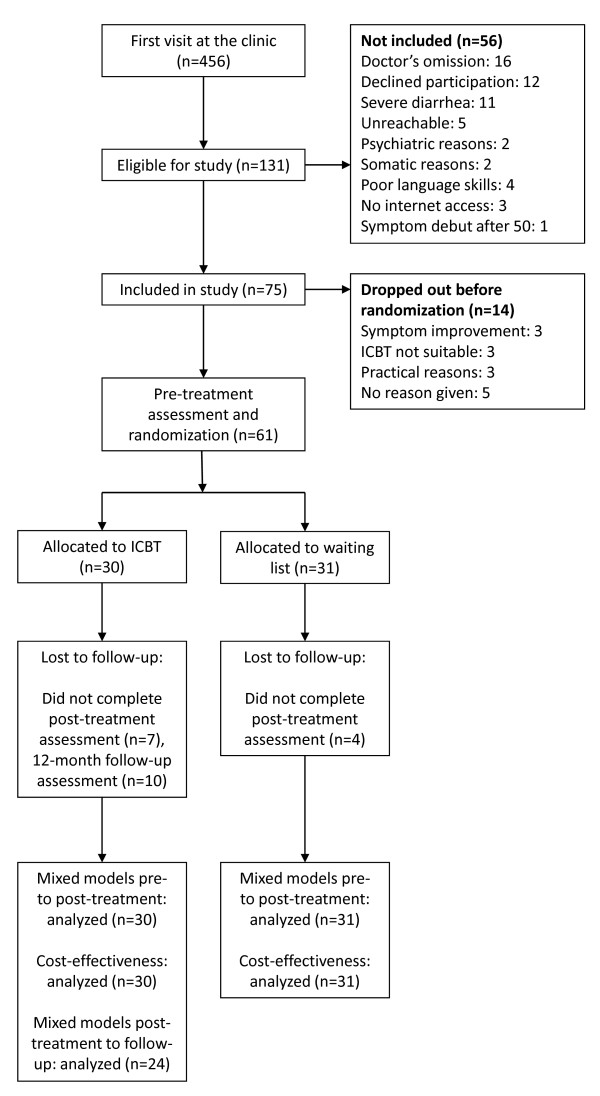
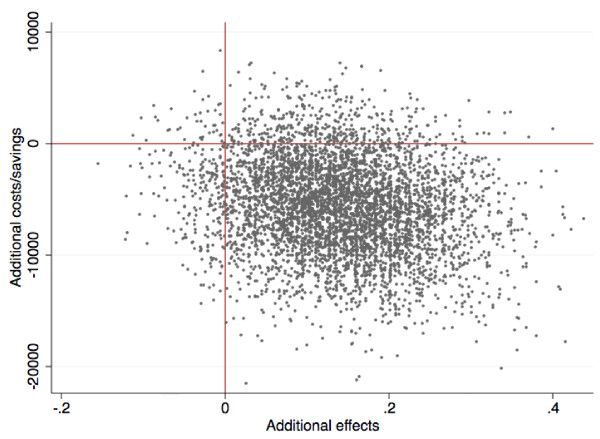
Background: Internet-based cognitive behavior therapy (ICBT) has shown promising effects in the treatment of irritable bowel syndrome (IBS). However, to date no study has used a design where participants have been sampled solely from a clinical population. We aimed to investigate the acceptability, effectiveness, and cost-effectiveness of ICBT for IBS using a consecutively recruited sample from a gastroenterological clinic.Methods: Sixty-one patients were randomized to 10 weeks of ICBT (n = 30) or a waiting list control (n = 31). The ICBT was guided by an online therapist and emphasized acceptance of symptoms through exposure and mindfulness training. Severity of IBS symptoms was measured with the Gastrointestinal symptom rating scale - IBS version (GSRS-IBS). Patients in both groups were assessed at pre- and post-treatment while only the ICBT group was assessed 12 months after treatment completion. Health economic data were also gathered at all assessment points and analyzed using bootstrap sampling.Results: Fifty of 61 patients (82%) completed the post-treatment assessment and 20 of 30 patients (67%) in the ICBT group were assessed at 12-month follow-up. The ICBT group demonstrated significantly (p < .001) larger improvements on the IBS-related outcome scales than the waiting list group. The between group effect size on GSRS-IBS was Cohen's d = 0.77 (95% CI: 0.19-1.34). Similar effects were noted on measures of quality of life and IBS-related fear and avoidance behaviors. Improvements in the ICBT group were maintained at 12-month follow-up. The ICBT condition was found to be more cost-effective than the waiting list, with an 87% chance of leading to reduced societal costs combined with clinical effectiveness. The cost-effectiveness was sustained over the 12-month period.Conclusions: ICBT proved to be a cost-effective treatment when delivered to a sample recruited from a gastroenterological clinic. However, many of the included patients dropped out of the study and the overall treatment effects were smaller than previous studies with referred and self-referred samples. ICBT may therefore be acceptable and effective for only a subset of clinical patients. Study dropout seemed to be associated with severe symptoms and large impairment. Objective and empirically validated criteria to select which patients to offer ICBT should be developed.Trial Registration: ClinicalTrials.gov: NCT00844961. © 2011 Ljótsson et al; licensee BioMed Central Ltd.
Verified 2026-11-22 · 1 reference not checked yet
Overview
CoChat Summary
## TL;DR
This randomized controlled trial tested 10 weeks of therapist-guided internet-based cognitive behavior therapy (ICBT) for irritable bowel syndrome in 61 patients recruited from a gastroenterological clinic. ICBT improved IBS symptoms, quality of life, and IBS-related fear/avoidance more than waiting list, and was judged cost-effective, but dropout was substantial and effects were smaller than in earlier self-referred samples.
## Key findings
- 61 patients were randomized: 30 to ICBT and 31 to waiting list; 50/61 (82%) completed post-treatment assessment, and 20/30 (67%) in ICBT were assessed at 12 months.
- The ICBT group had significantly larger improvements than waiting list on IBS outcomes (p < .001); on the primary outcome, GSRS-IBS, the between-group effect size was Cohen’s d = 0.77 (95% CI: 0.19–1.34).
- Similar improvements were reported for quality of life and IBS-related fear/avoidance; at 12 months, improvements in the ICBT group were maintained, and IBS-QOL showed further improvement (B = 4.5, t20.1 = 2.2, p = .04).
- ICBT was more cost-effective than waiting list, with an 87% chance of reducing societal costs combined with clinical effectiveness; the paper reports an ICER of -39,821, interpreted as a societal cost reduction of $39,821 per clinically significant improvement.
## Methods
- Design: Randomized controlled trial with 10 weeks of ICBT versus waiting list; outcomes were assessed pre- and post-treatment, and the ICBT group was followed for 12 months.
- Sample/data: 61 consecutively recruited IBS patients from a single gastroenterological clinic in Stockholm, Sweden; eligibility required Rome III IBS, age 18–65, Stockholm County residence, and other criteria listed in the paper.
- Analysis: Primary outcome (GSRS-IBS) and other continuous outcomes were analyzed with linear mixed effects models using FIML; cost-effectiveness used TIC-P data, ANCOVA, paired t-tests, and 5000 bootstrap replications.
## Limitations
- The paper states that using a waiting list control is an important limitation because it does not control for nonspecific factors such as expectancy and caregiver attention.
- The trial was not conducted in a fully clinical care context: participants underwent extensive pre-treatment assessment, which the authors say may have contributed to the high dropout rate.
- The authors note limits to generalizability because they excluded patients with severe diarrhea who were judged to need psychotropic medication, and because cost estimates used estimated salaries rather than actual salaries; they also estimated treatment cost only from therapist time, excluding platform/manual development and clinic overhead.
Model-written summary. Check it against the paper before relying on it.
Integrity signals
Registry
Cites
Statistics
Figures
Verification
Claims the paper makes
9 Valid · 2 Not valid · 30 Not checked · 85 Own results and interpretations
The cited sources support only part of this claim — read each source’s verdict below.
In the paper
“However, the generalizability of our studies and other studies investigating CBT for IBS with reduced therapist time [19-22] is limited by the fact that study participants have mostly been recruited by referral and self-referral.”
§ Acceptability, effectiveness, and cost-effectiveness of internet-based exposure treatment for irritable bowel syndrome in a clinical sample: a randomized controlled trial > Background
What the sources say
- Not checked — no full text of the sourcecites [19] Moss-Morris R McAlpine L Didsbury LP Spence MJ A randomized controlled trial of a cognitive behavioural therapy-based self-management intervention for irritable bowel syndrome in primary care Psychol Med 2010 40 1 85 94 10.1017/S0033291709990195 19531276 source
- Partly supportedcites [20] Jarrett ME Cain KC Burr RL Hertig VL Rosen SN Heitkemper MM Comprehensive self-management for irritable bowel syndrome: randomized trial of in-person vs. combined in-person and telephone sessions Am J Gastroenterol 2009 104 12 3004 3014 10.1038/ajg.2009.479 19690523 PMC2804069 sourceExperimental — accuracy not yet measured
The Methods (Recruitment and Eligibility; page unavailable) say volunteers were recruited through community advertisements and a mailing to gastroenterology patients, consistent with self-selection, though they do not establish that participants were mostly recruited by referral and self-referral. The Discussion also says the telephone intervention was not designed to reduce therapist time: sessions lasted approximately 60 minutes in both delivery modes. The paper therefore supports a concern about recruitment only in part, not the characterization of this study as using reduced therapist time. (LLM, conf=0.83)
- Not checked — no full text of the sourcecites [21] Hunt MG Moshier S Milonova M Brief cognitive-behavioral internet therapy for irritable bowel syndrome Behav Res Ther 2009 47 797 802 10.1016/j.brat.2009.05.002 19570525 source
- Not checked — no full text of the sourcecites [22] Lackner JM Jaccard J Krasner SS Katz LA Gudleski GD Holroyd K Self-administered cognitive behavior therapy for moderate to severe irritable bowel syndrome: clinical efficacy, tolerability, feasibility Clin Gastroenterol Hepatol 2008 6 8 899 906 10.1016/j.cgh.2008.03.004 18524691 PMC2630498 source
plainstates a cause- Asserted: passes — The authors put it forward as true.
- Checkable: passes — It can be checked against evidence.
- Load-bearing: unclear — It is unclear whether the paper’s conclusions depend on it.
- Based: passes — The paper gives a reason why it holds.
The cited sources support only part of this claim — read each source’s verdict below.
In the paper
“Several studies have confirmed the impact of symptom-related fear and avoidance behaviors on symptom severity and quality of life in IBS [24,27-30].”
§ Acceptability, effectiveness, and cost-effectiveness of internet-based exposure treatment for irritable bowel syndrome in a clinical sample: a randomized controlled trial > Methods > Treatment condition
What the sources say
- Not checked — no full text of the sourcecites [24] Labus JS Mayer EA Chang L Bolus R Naliboff BD The central role of gastrointestinal-specific anxiety in irritable bowel syndrome: further validation of the visceral sensitivity index Psychosom Med 2007 69 1 89 98 10.1097/PSY.0b013e31802e2f24 17244851 source
- Not checked — no full text of the sourcecites [27] Hazlett-Stevens H Craske MG Mayer EA Chang L Naliboff BD Prevalence of irritable bowel syndrome among university students: the roles of worry, neuroticism, anxiety sensitivity and visceral anxiety J Psychosom Res 2003 55 6 501 505 10.1016/S0022-3999(03)00019-9 14642979 source
- Partly supportedcites [28] Labus JS Bolus R Chang L Wiklund I Naesdal J Mayer EA Naliboff BD The Visceral Sensitivity Index: development and validation of a gastrointestinal symptom-specific anxiety scale Aliment Pharmacol Ther 2004 20 1 89 97 10.1111/j.1365-2036.2004.02007.x 15225175 sourceExperimental — accuracy not yet measured
The Validity section reports that the Visceral Sensitivity Index predicted current IBS symptom severity, and Table 2 includes items on symptom-related fear and food avoidance. But the study measured these together in one scale, so it does not establish their separate or causal impacts. The Introduction reports another analysis linking symptom worries to quality-of-life impairment; this paper does not directly test that outcome. (LLM, conf=0.88)
- Not checked — no full text of the sourcecites [29] Jerndal P Ringstrom G Agerforz P Karpefors M Akkermans LM Bayati A Simren M Gastrointestinal-specific anxiety: an important factor for severity of GI symptoms and quality of life in IBS Neurogastroenterol Motil 2010 22 6 646 e179 10.1111/j.1365-2982.2010.01493.x 20367800 source
- Not checked — no full text of the sourcecites [30] Reme SE Darnley S Kennedy T Chalder T The development of the irritable bowel syndrome-behavioral responses questionnaire J Psychosom Res 2010 69 3 319 325 10.1016/j.jpsychores.2010.01.025 20708455 source
boostedstates an association- Asserted: passes — The authors put it forward as true.
- Checkable: passes — It can be checked against evidence.
- Load-bearing: passes — The paper’s conclusions depend on it.
- Based: passes — The paper gives a reason why it holds.
Every source the paper cites for this claim was checked and supports it.
In the paper
“and that the treatment was associated with considerable long-term societal cost-savings [17]”
§ Acceptability, effectiveness, and cost-effectiveness of internet-based exposure treatment for irritable bowel syndrome in a clinical sample: a randomized controlled trial > Background
What the sources say
- Supportedcites [17] Andersson E Ljótsson B Smit F Paxling B Hedman E Lindefors N Andersson G Rück C Cost-effectiveness of internet-based cognitive behavior therapy for Irritable Bowel Syndrome: Results from a randomized controlled trial BMC Public Health 2011 11 1 215 10.1186/1471-2458-11-215 21473754 PMC3083356 source
The Abstract’s Results report societal cost reductions of $16,806 per successfully treated case, sustained at three-month and one-year follow-up. The Discussion also describes cost reductions at follow-up, while cautioning that extrapolated longer-term estimates are less reliable. (LLM, conf=0.90)
plainstates an association- Asserted: passes — The authors put it forward as true.
- Checkable: passes — It can be checked against evidence.
- Load-bearing: unclear — It is unclear whether the paper’s conclusions depend on it.
- Based: passes — The paper gives a reason why it holds.
- Supported
The cited sources support only part of this claim — read each source’s verdict below.
In the paper
“but one limitation is that CBT is rarely available in routine care of IBS [10]”
§ Acceptability, effectiveness, and cost-effectiveness of internet-based exposure treatment for irritable bowel syndrome in a clinical sample: a randomized controlled trial > Background
What the sources say
- Partly supportedcites [10] Hungin AP Self-help interventions in irritable bowel syndrome Gut 2006 55 5 603 604 10.1136/gut.2005.075606 16609132 PMC1856125 sourceExperimental — accuracy not yet measured
The article’s discussion (pp. 603–604) says non-pharmacological interventions for IBS have not become common practice and mentions a trial of CBT. It does not specifically establish that CBT is rarely available in routine care; uncommon use is not the same as limited availability. (LLM, conf=0.81)
plain- Asserted: passes — The authors put it forward as true.
- Checkable: passes — It can be checked against evidence.
- Load-bearing: passes — The paper’s conclusions depend on it.
- Based: passes — The paper gives a reason why it holds.
- Partly supported
The cited sources support only part of this claim — read each source’s verdict below.
In the paper
“an increasing number of controlled studies indicate that for common psychiatric disorders ICBT is as effective as face-to-face delivered treatment [11-13]”
§ Acceptability, effectiveness, and cost-effectiveness of internet-based exposure treatment for irritable bowel syndrome in a clinical sample: a randomized controlled trial > Background
What the sources say
- Not checked — no full text of the sourcecites [11] Andersson G Using the Internet to provide cognitive behaviour therapy Behav Res Ther 2009 47 3 175 180 10.1016/j.brat.2009.01.010 19230862 source
- Partly supportedcites [12] Bergström J Andersson G Ljótsson B Rück C Andréewitch S Karlsson A Carlbring P Andersson E Lindefors N Internet- versus group-administered cognitive behaviour therapy for panic disorder in a psychiatric setting: a randomised trial BMC Psychiatry 2010 10 1 54 10.1186/1471-244X-10-54 20598127 PMC2910662 sourceExperimental — accuracy not yet measured
The Discussion reports that Internet CBT appeared equally effective as in-person group CBT for referred patients with panic disorder in a psychiatric setting. It also cautions that low statistical power prevents confidently establishing equivalence. This trial does not establish the broader, unqualified claim for common psychiatric disorders generally; page numbers were not provided. (LLM, conf=0.88)
- Partly supportedcites [13] Hedman E Andersson G Ljótsson B Andersson E Rück C Mörtberg E Lindefors N Internet-Based Cognitive Behavior Therapy vs. Cognitive Behavioral Group Therapy for Social Anxiety Disorder: A Randomized Controlled Non-inferiority Trial PLoS ONE 2011 6 3 e18001 10.1371/journal.pone.0018001 21483704 PMC3070741 sourceExperimental — accuracy not yet measured
The Discussion concludes that ICBT may be at least as effective as face-to-face cognitive behavioral group therapy for social anxiety disorder in a psychiatric setting. This supports the comparison for that disorder, but this trial does not establish equivalence across common psychiatric disorders generally. The supplied passages do not give page numbers. (LLM, conf=0.88)
hedged- Asserted: passes — The authors put it forward as true.
- Checkable: passes — It can be checked against evidence.
- Load-bearing: passes — The paper’s conclusions depend on it.
- Based: passes — The paper gives a reason why it holds.
58 more claims
Create a free account to see all 126 claims and to verify the 3 references still open.
- Probably not a substantial claim. 36
- It may state two separate claims as one. 40
- Borderline: one of the tests for a substantial claim is unclear. 1
Citations
Cites
An Introduction to the Bootstrap
Efron, B., & Tibshirani, R. J. (1994) · doi:10.1201/9780429246593 · Cited by 40,500
An Introduction to the Bootstrap
Efron, B., & Tibshirani, R. J. (1993) · doi:10.1007/978-1-4899-4541-9 · Cited by 21,230
Statistical Analysis With Missing Data
Lahiff, M., Little, R. J. A., & Rubin, D. B. (1989) · Journal of the American Statistical Association · doi:10.2307/2289883 · Cited by 17,265
Methods for the Economic Evaluation of Health Care Programmes
Drummond, M. E., Sculpher, M. J., Torrance, G. W., O’Brien, B. J., & Stoddart, G. L. (2005) · doi:10.1093/oso/9780198529446.001.0001 · Cited by 13,648
Statistical Analysis with Missing Data
Little, R. J. A., & Rubin, D. B. (2002) · Wiley Series in Probability and Statistics · doi:10.1002/9781119013563 · Cited by 8,473
Longstreth, G. F., Thompson, W. G., Chey, W. D., Houghton, L. A., Mearin, F., & Spiller, R. C. (2006) · Gastroenterology · doi:10.1053/j.gastro.2005.11.061 · Cited by 4,856
Linear Mixed Models for Longitudinal Data
Verbeke, G. (1997) · Lecture Notes in Statistics · doi:10.1007/978-1-4612-2294-1_3 · Cited by 3,506
Linear Mixed Models for Longitudinal Data
Molenberghs, G., & Verbeke, G. (2000) · Springer Series in Statistics · doi:10.1007/978-1-4419-0300-6 · Cited by 2,646
Hayes, S. C. (2004) · Behavior Therapy · doi:10.1016/s0005-7894(04)80013-3 · Cited by 2,493 · cited 3×
“But in accordance with reasoning within ACT [31,34], exposure also serves to increase behavioral flexibility in the presence of IBS-related stimuli, while being aware of and accepting the feelings elicited by the stimuli.”
BackgroundBoutron, I., Moher, D., Altman, D. G., Schulz, K. F., Ravaud, P., & for the CONSORT Group* (2008) · Annals of Internal Medicine · doi:10.7326/0003-4819-148-4-200802190-00008 · Cited by 2,292 · cited 1×
“This study is reported in accordance with the CONSORT statement for non-pharmacological trials [23] and was approved by the regional ethics committee in Stockholm, Sweden.”
MethodDrossman, D. A., Li, Z., Andruzzi, E., Temple, R. D., Talley, N. J., Grant Thompson, W., Whitehead, W. E., Janssens, J., Funch-Jensen, P., Corazziari, E., et al. (1993) · Digestive Diseases and Sciences · doi:10.1007/bf01303162 · Cited by 2,198 · cited 1×
“Compared to normal controls, IBS-patients are about three times more likely to be absent from work [5] and they utilize health care resources at almost double the cost [6].”
BackgroundGueorguieva, R., & Krystal, J. H. (2004) · Archives of General Psychiatry · doi:10.1001/archpsyc.61.3.310 · Cited by 1,529 · cited 1×
“The superior qualities regarding missing data as well as increased power compared to the traditional repeated measures ANOVA make mixed models the preferred choice for longitudinal data analysis [50].”
MethodThe burden of selected digestive diseases in the United States
Sandler, R. S., Everhart, J. E., Donowitz, M., Adams, E., Cronin, K., Goodman, C., Gemmen, E., Shah, S., Avdic, A., & Rubin, R. (2002) · Gastroenterology · doi:10.1053/gast.2002.32978 · Cited by 1,512 · cited 1×
“Given the high prevalence of IBS, ranging between 5 and 11% [7], the societal costs of IBS are substantial [8].”
BackgroundAssessing Psychiatric Impairment in Primary Care with the Sheehan Disability Scale
Leon, A. C., Olfson, M., Portera, L., Farber, L., & Sheehan, D. V. (1997) · The International Journal of Psychiatry in Medicine · doi:10.2190/t8em-c8yh-373n-1uwd · Cited by 987 · cited 1×
“89 [48].”
Placebos without Deception: A Randomized Controlled Trial in Irritable Bowel Syndrome
Kaptchuk, T. J., Friedlander, E., Kelley, J. M., Sanchez, M. N., Kokkotou, E., Singer, J. P., Kowalczykowski, M., Miller, F. G., Kirsch, I., & Lembo, A. J. (2010) · PLoS ONE · doi:10.1371/journal.pone.0015591 · Cited by 900 · cited 1×
“Several trials of psychological treatments for IBS have failed to show differential effects on symptoms when using attention control conditions [32,62-64], and a recent study showed that IBS patients even respond to open-label placebo [65].”
BackgroundGuidelines on the irritable bowel syndrome: mechanisms and practical management
Spiller, R., Aziz, Q., Creed, F., Emmanuel, A., Houghton, L., Hungin, P., Jones, R., Kumar, D., Rubin, G., Trudgill, N., et al. (2007) · Gut · doi:10.1136/gut.2007.119446 · Cited by 818 · cited 3×
“Clinical guidelines recommend that IBS patients should be referred to psychological treatments if they show anxiety, activity disruption or poor coping strategies [7,57].”
BackgroundLinear mixed models for longitudinal data
(2000) · Springer Series in Statistics · doi:10.1007/b98969 · Cited by 818
Hayes, S. C., Villatte, M., Levin, M., & Hildebrandt, M. (2011) · Annual Review of Clinical Psychology · doi:10.1146/annurev-clinpsy-032210-104449 · Cited by 800 · cited 3×
“But in accordance with reasoning within ACT [31,34], exposure also serves to increase behavioral flexibility in the presence of IBS-related stimuli, while being aware of and accepting the feelings elicited by the stimuli.”
BackgroundPatrick, D. L., Drossman, D. A., Frederick, I. O., Dicesare, J., & Puder, K. L. (1998) · Digestive Diseases and Sciences · doi:10.1023/a:1018831127942 · Cited by 761 · cited 10×
“The VSI, IBS-QOL and Sheehan Disability Scales were used to test if low values predicted low improvement on the GSRS-IBS.”
MethodInfluentialMechanisms of change in dialectical behavior therapy: theoretical and empirical observations
Lynch, T. R., Chapman, A. L., Rosenthal, M. Z., Kuo, J. R., & Linehan, M. M. (2006) · Journal of Clinical Psychology · doi:10.1002/jclp.20243 · Cited by 628 · cited 2×
“Mindfulness training in this treatment does not serve to decrease stress but rather to practice acceptance of aversive inner experiences while engaging in flexible and more functional behavioral responses to these experiences, similarly to how it is used in ACT and DBT [37,38].”
BackgroundDrossman, D. A., Toner, B. B., Whitehead, W. E., Diamant, N. E., Dalton, C. B., Duncan, S., Emmott, S., Proffitt, V., Akman, D., Frusciante, K., et al. (2003) · Gastroenterology · doi:10.1016/s0016-5085(03)00669-3 · Cited by 614 · cited 1×
“Several trials of psychological treatments for IBS have failed to show differential effects on symptoms when using attention control conditions [32,62-64], and a recent study showed that IBS patients even respond to open-label placebo [65].”
BackgroundUsing the Internet to provide cognitive behaviour therapy
Andersson, G. (2009) · Behaviour Research and Therapy · doi:10.1016/j.brat.2009.01.010 · Cited by 560 · cited 1×
“The format allows for large patient volumes to be treated and an increasing number of controlled studies indicate that for common psychiatric disorders ICBT is as effective as face-to-face delivered treatment [11-13].”
BackgroundSelf-citation(2011) · SpringerReference · doi:10.1007/springerreference_44317 · Cited by 545
Evaluation of an internet support group for women with primary breast cancer
Winzelberg, A. J., Classen, C., Alpers, G. W., Roberts, H., Koopman, C., Adams, R. E., Ernst, H., Dev, P., & Taylor, C. B. (2003) · Cancer · doi:10.1002/cncr.11174 · Cited by 485
Labus, J. S., Bolus, R., Chang, L., Wiklund, I., Naesdal, J., Mayer, E. A., & Naliboff, B. D. (2004) · Alimentary Pharmacology & Therapeutics · doi:10.1111/j.1365-2036.2004.02007.x · Cited by 475 · cited 11×
“Several studies have confirmed the impact of symptom-related fear and avoidance behaviors on symptom severity and quality of life in IBS [24,27-30].”
BackgroundInfluentialMedical costs in community subjects with irritable bowel syndrome
Talley, N. J., Gabriel, S. E., Harmsen, W. S., Zinsmeister, A. R., & Evans, R. W. (1995) · Gastroenterology · doi:10.1016/0016-5085(95)90738-6 · Cited by 460 · cited 1×
“Compared to normal controls, IBS-patients are about three times more likely to be absent from work [5] and they utilize health care resources at almost double the cost [6].”
BackgroundMindfulness-based approaches: are they all the same?
Chiesa, A., & Malinowski, P. (2011) · Journal of Clinical Psychology · doi:10.1002/jclp.20776 · Cited by 454 · cited 2×
“Mindfulness training in this treatment does not serve to decrease stress but rather to practice acceptance of aversive inner experiences while engaging in flexible and more functional behavioral responses to these experiences, similarly to how it is used in ACT and DBT [37,38].”
BackgroundThe cost-effectiveness of psychotherapy and paroxetine for severe irritable bowel syndrome
Creed, F., Fernandes, L., Guthrie, E., Palmer, S., Ratcliffe, J., Read, N., Rigby, C., Thompson, D., & Tomenson, B. (2003) · Gastroenterology · doi:10.1053/gast.2003.50055 · Cited by 443 · cited 1×
“Several trials of psychological treatments for IBS have failed to show differential effects on symptoms when using attention control conditions [32,62-64], and a recent study showed that IBS patients even respond to open-label placebo [65].”
BackgroundInternet Versus Mailed Questionnaires: A Randomized Comparison
Ritter, P., Lorig, K., Laurent, D., & Matthews, K. (2004) · Journal of Medical Internet Research · doi:10.2196/jmir.6.3.e29 · Cited by 427 · cited 1×
“All measures were administered online, a method which has been shown to be reliable and as valid as traditional paper-and-pencil administration [40,41].”
MethodDimenäs, E., Glise, H., Hallerbäck, B., Hernqvist, H., Svedlund, J., & Wiklund, I. (1995) · Scandinavian Journal of Gastroenterology · doi:10.3109/00365529509101605 · Cited by 363
An irritable bowel syndrome-specific symptom questionnaire: development and validation
K., W. I., S., F., J., H. C., H., J. R., F., L. G., A., M. E., A., P. R., K., W. I., & J., N. (2003) · Scandinavian Journal of Gastroenterology · doi:10.1080/00365520310004209 · Cited by 324 · cited 1×
“The primary outcome measure of the study was the Gastrointestinal Symptom Rating Scale-IBS version (GSRS-IBS) [42].”
MethodThe Irritable Bowel Syndrome: Review and a Graduated Multicomponent Treatment Approach
Drossman, D. A., & Thompson, W. G. (1992) · Annals of Internal Medicine · doi:10.7326/0003-4819-116-12-1009 · Cited by 309 · cited 2×
“Clinical guidelines recommend that IBS patients should be referred to psychological treatments if they show anxiety, activity disruption or poor coping strategies [7,57].”
BackgroundEffects of stress and anxiety on the processing of threat stimuli
Mogg, K., Mathews, A., Bird, C., & Macgregor-Morris, R. (1990) · Journal of Personality and Social Psychology · doi:10.1037/0022-3514.59.6.1230 · Cited by 289 · cited 1×
“Since fear alters motility [25] and directs attention towards threat [26], the association between symptomrelated stimuli and fear constitutes a solid foundation for positive feedback loops between stress and IBS symptoms, as well as an increased awareness of symptoms.”
BackgroundHedman, E., Andersson, G., Ljótsson, B., Andersson, E., Rück, C., Mörtberg, E., & Lindefors, N. (2011) · PLoS ONE · doi:10.1371/journal.pone.0018001 · Cited by 285 · cited 1×
“The format allows for large patient volumes to be treated and an increasing number of controlled studies indicate that for common psychiatric disorders ICBT is as effective as face-to-face delivered treatment [11-13].”
BackgroundSelf-citationGaylord, S. A., Palsson, O. S., Garland, E. L., Faurot, K. R., Coble, R. S., Mann, D. J., Frey, W., Leniek, K., & Whitehead, W. E. (2011) · American Journal of Gastroenterology · doi:10.1038/ajg.2011.184 · Cited by 281 · cited 2×
“While patients in both studies experienced improvement in quality of life only one of the studies demonstrated effects on IBS symptoms [36].”
BackgroundResultLjótsson, B., Falk, L., Vesterlund, A. W., Hedman, E., Lindfors, P., Rück, C., Hursti, T., Andréewitch, S., Jansson, L., Lindefors, N., et al. (2010) · Behaviour Research and Therapy · doi:10.1016/j.brat.2010.03.003 · Cited by 270 · cited 9×
“In our study of group CBT for IBS [18], gastroenterologists at several clinics referred patients that they judged would benefit from treatment and in our previous studies of ICBT [14,15], patients were self-referred.”
BackgroundMethodInfluentialSelf-citationLabus, J. S., Mayer, E. A., Chang, L., Bolus, R., & Naliboff, B. D. (2007) · Psychosomatic Medicine · doi:10.1097/psy.0b013e31802e2f24 · Cited by 257 · cited 3×
“Several studies have confirmed the impact of symptom-related fear and avoidance behaviors on symptom severity and quality of life in IBS [24,27-30].”
BackgroundCraske, M. G., Wolitzky-Taylor, K. B., Labus, J., Wu, S., Frese, M., Mayer, E. A., & Naliboff, B. D. (2011) · Behaviour Research and Therapy · doi:10.1016/j.brat.2011.04.001 · Cited by 243
Mayer, E. A. (2008) · New England Journal of Medicine · doi:10.1056/nejmcp0801447 · Cited by 243 · cited 1×
“Cognitive behavior therapy (CBT) is considered the most well-studied psychological treatment for IBS [9], but one limitation is that CBT is rarely available in routine care of IBS [10].”
BackgroundFord, A. C., Forman, D., Bailey, A. G., Axon, A. T. R., & Moayyedi, P. (2008) · The American Journal of Gastroenterology · doi:10.1111/j.1572-0241.2007.01740.x · Cited by 233 · cited 1×
“For a majority of the affected, IBS is chronic and leads to impaired quality of life [2-4].”
BackgroundHedman, E., Ljótsson, B., Rück, C., Furmark, T., Carlbring, P., Lindefors, N., & Andersson, G. (2010) · Computers in Human Behavior · doi:10.1016/j.chb.2010.01.010 · Cited by 220 · cited 1×
“All measures were administered online, a method which has been shown to be reliable and as valid as traditional paper-and-pencil administration [40,41].”
MethodSelf-citationLjótsson, B., Hedman, E., Andersson, E., Hesser, H., Lindfors, P., Hursti, T., Rydh, S., Rück, C., Lindefors, N., & Andersson, G. (2011) · American Journal of Gastroenterology · doi:10.1038/ajg.2011.139 · Cited by 218 · cited 9×
“The average pre-treatment scores on GSRS-IBS and IBS-QOL were markedly higher in those studies than in this study, while participants showed larger improvement and treatment adherence [14,15].”
BackgroundMethodResultInfluentialSelf-citationHalder, S. L. S., Locke, G. R., Talley, N. J., Fett, S. L., Zinsmeister, A. R., & Melton, L. J. (2004) · Alimentary Pharmacology & Therapeutics · doi:10.1111/j.0269-2813.2004.01807.x · Cited by 211 · cited 1×
“For a majority of the affected, IBS is chronic and leads to impaired quality of life [2-4].”
BackgroundThe impact of functional gastrointestinal disorders on quality of life
Koloski, N. A., Talley, N. J., & Boyce, P. M. (2000) · The American Journal of Gastroenterology · doi:10.1111/j.1572-0241.2000.01735.x · Cited by 204 · cited 1×
“For a majority of the affected, IBS is chronic and leads to impaired quality of life [2-4].”
BackgroundBergström, J., Andersson, G., Ljótsson, B., Rück, C., Andréewitch, S., Karlsson, A., Carlbring, P., Andersson, E., & Lindefors, N. (2010) · BMC Psychiatry · doi:10.1186/1471-244x-10-54 · Cited by 202 · cited 1×
“The format allows for large patient volumes to be treated and an increasing number of controlled studies indicate that for common psychiatric disorders ICBT is as effective as face-to-face delivered treatment [11-13].”
BackgroundSelf-citationSalim, A., Mackinnon, A., Christensen, H., & Griffiths, K. (2008) · Psychiatry Research · doi:10.1016/j.psychres.2007.08.005 · Cited by 194 · cited 1×
“Under the assumption of data missing at random (MAR), FIML provides unbiased parameter estimates compared to traditional methods (such as last observation carried forward) even with a substantial proportion of missing data [51].”
Jerndal, P., Ringström, G., Agerforz, P., Karpefors, M., Akkermans, L. M., Bayati, A., & Simrén, M. (2010) · Neurogastroenterology & Motility · doi:10.1111/j.1365-2982.2010.01493.x · Cited by 192 · cited 1×
“Several studies have confirmed the impact of symptom-related fear and avoidance behaviors on symptom severity and quality of life in IBS [24,27-30].”
BackgroundMoss-Morris, R., McAlpine, L., Didsbury, L. P., & Spence, M. J. (2010) · Psychological Medicine · doi:10.1017/s0033291709990195 · Cited by 187
The impact of functional gastrointestinal disorders on quality of life
Koloski, N. (2000) · The American Journal of Gastroenterology · doi:10.1016/s0002-9270(99)00794-7 · Cited by 179
Lackner, J. M., Jaccard, J., Krasner, S. S., Katz, L. A., Gudleski, G. D., & Holroyd, K. (2008) · Clinical Gastroenterology and Hepatology · doi:10.1016/j.cgh.2008.03.004 · Cited by 176
Prevalence of irritable bowel syndrome among university students
Hazlett-Stevens, H., Craske, M. G., Mayer, E. A., Chang, L., & Naliboff, B. D. (2003) · Journal of Psychosomatic Research · doi:10.1016/s0022-3999(03)00019-9 · Cited by 170 · cited 1×
“Several studies have confirmed the impact of symptom-related fear and avoidance behaviors on symptom severity and quality of life in IBS [24,27-30].”
BackgroundBoyce, P. M., Talley, N. J., Balaam, B., Koloski, N. A., & Truman, G. (2003) · American Journal of Gastroenterology · doi:10.1111/j.1572-0241.2003.07716.x · Cited by 167 · cited 2×
“Several trials of psychological treatments for IBS have failed to show differential effects on symptoms when using attention control conditions [32,62-64], and a recent study showed that IBS patients even respond to open-label placebo [65].”
BackgroundTp, A., & Tulin, M. (1947) · PubMed · Cited by 163
Alterations in Colonic Function in Man Under Stress
Almy, T. P., Hinkle, L. E., Berle, B. B., & Kern, F. (1949) · Gastroenterology · doi:10.1016/s0016-5085(49)80126-0 · Cited by 153
(1996) · PubMed · Cited by 150
Brief cognitive-behavioral internet therapy for irritable bowel syndrome
Hunt, M. G., Moshier, S., & Milonova, M. (2009) · Behaviour Research and Therapy · doi:10.1016/j.brat.2009.05.002 · Cited by 139 · cited 2×
“However, the generalizability of our studies and other studies investigating CBT for IBS with reduced therapist time [19-22] is limited by the fact that study participants have mostly been recruited by referral and self-referral.”
BackgroundResultBowel Habit Subtypes and Temporal Patterns in Irritable Bowel Syndrome: Systematic Review
Guilera, M., Balboa, A., & Mearin, F. (2005) · The American Journal of Gastroenterology · doi:10.1111/j.1572-0241.2005.40674.x · Cited by 131 · cited 1×
“Since IBS symptoms are known to vary considerably over time [44], the mean score of four weekly assessments of GSRS-IBS was used to get reliable estimates of the participants’ symptom levels at each assessment point.”
MethodA controlled evaluation of group cognitive therapy in the treatment of irritable bowel syndrome
Blanchard, E. B., Lackner, J. M., Sanders, K., Krasner, S., Keefer, L., Payne, A., Gudleski, G. D., Katz, L., Rowell, D., Sykes, M., et al. (2007) · Behaviour Research and Therapy · doi:10.1016/j.brat.2006.07.003 · Cited by 121 · cited 1×
“Several trials of psychological treatments for IBS have failed to show differential effects on symptoms when using attention control conditions [32,62-64], and a recent study showed that IBS patients even respond to open-label placebo [65].”
BackgroundCost-effectiveness of preventing depression in primary care patients: Randomised trial
Smit, F., Willemse, G., Koopmanschap, M., Onrust, S., Cuijpers, P., & Beekman, A. (2006) · British Journal of Psychiatry · doi:10.1192/bjp.188.4.330 · Cited by 117
Ljótsson, B., Hedman, E., Lindfors, P., Hursti, T., Lindefors, N., Andersson, G., & Rück, C. (2011) · Behaviour Research and Therapy · doi:10.1016/j.brat.2010.10.006 · Cited by 113 · cited 1×
“A follow-up study also showed maintenance of improvements over a 15-18 months period [16] and that the treatment was associated with considerable longterm societal cost-savings [17].”
BackgroundSelf-citationJarrett, M. E., Cain, K. C., Burr, R. L., Hertig, V. L., Rosen, S. N., & Heitkemper, M. M. (2009) · American Journal of Gastroenterology · doi:10.1038/ajg.2009.479 · Cited by 89
Andersson, E., Ljótsson, B., Smit, F., Paxling, B., Hedman, E., Lindefors, N., Andersson, G., & Rück, C. (2011) · BMC Public Health · doi:10.1186/1471-2458-11-215 · Cited by 77 · cited 4×
“17 in accordance with our previous study [17] and originally estimated by Smit et al.”
BackgroundMethodResultInfluentialSelf-citationExposure and mindfulness based therapy for irritable bowel syndrome - An open pilot study
Ljótsson, B., Andréewitch, S., Hedman, E., Rück, C., Andersson, G., & Lindefors, N. (2010) · Journal of Behavior Therapy and Experimental Psychiatry · doi:10.1016/j.jbtep.2010.01.001 · Cited by 76
Self-citationThe development of the irritable bowel syndrome-behavioral responses questionnaire
Reme, S. E., Darnley, S., Kennedy, T., & Chalder, T. (2010) · Journal of Psychosomatic Research · doi:10.1016/j.jpsychores.2010.01.025 · Cited by 64 · cited 1×
“Several studies have confirmed the impact of symptom-related fear and avoidance behaviors on symptom severity and quality of life in IBS [24,27-30].”
BackgroundKearney, D. J., McDermott, K., Martinez, M., & Simpson, T. L. (2011) · Alimentary Pharmacology & Therapeutics · doi:10.1111/j.1365-2036.2011.04731.x · Cited by 63
Mediators of change in cognitive behaviour therapy and mebeverine for irritable bowel syndrome
Reme, S. E., Stahl, D., Kennedy, T., Jones, R., Darnley, S., & Chalder, T. (2011) · Psychological Medicine · doi:10.1017/s0033291711000328 · Cited by 41 · cited 1×
“Indeed, a recent study showed that improvement after CBT for IBS was mediated through change in avoidance behaviors and negative thoughts about symptoms [58] and that less adaptive IBS behaviors predicted good outcome [59].”
BackgroundThe Anxiety Disease and How to Overcome It
Goodwin, D. W. (1984) · American Journal of Psychiatry · doi:10.1176/ajp.141.8.1006 · Cited by 38
Jones, M. P., Bratten, J., & Keefer, L. (2007) · The American Journal of Gastroenterology · doi:10.1111/j.1572-0241.2007.01444.x · Cited by 37 · cited 1×
“This is in accordance with research demonstrating that IBS patients recruited through the internet are more impaired than clinical patients [60].”
ResultReme, S. E., Kennedy, T., Jones, R., Darnley, S., & Chalder, T. (2010) · Journal of Psychosomatic Research · doi:10.1016/j.jpsychores.2010.01.003 · Cited by 31 · cited 1×
“Indeed, a recent study showed that improvement after CBT for IBS was mediated through change in avoidance behaviors and negative thoughts about symptoms [58] and that less adaptive IBS behaviors predicted good outcome [59].”
BackgroundSelf-help interventions in irritable bowel syndrome
Hungin, A. P. S. (2006) · Gut · doi:10.1136/gut.2005.075606 · Cited by 10 · cited 1×
“Cognitive behavior therapy (CBT) is considered the most well-studied psychological treatment for IBS [9], but one limitation is that CBT is rarely available in routine care of IBS [10].”
Background
Research works printed but not linked: 1
- Haakart-van Roijen L Manual Trimbos/iMTA questionnaire for costs associated with psychiatric illness 2002 Rotterdam: Institute for Medical Technology Assessment
Cited by
Hedman, E., Ljótsson, B., & Lindefors, N. (2012) · Expert Review of Pharmacoeconomics & Outcomes Research · doi:10.1586/erp.12.67 · Cited by 672
Self-citationInternet-Delivered Psychological Treatments
Andersson, G. (2016) · Annual Review of Clinical Psychology · doi:10.1146/annurev-clinpsy-021815-093006 · Cited by 595
Self-citationEveritt, H. A., Landau, S., O’Reilly, G., Sibelli, A., Hughes, S., Windgassen, S., Holland, R., Little, P., McCrone, P., Bishop, F., et al. (2019) · Gut · doi:10.1136/gutjnl-2018-317805 · Cited by 198
van Beugen, S., Ferwerda, M., Hoeve, D., Rovers, M. M., Spillekom-van Koulil, S., van Middendorp, H., & Evers, A. W. (2014) · Journal of Medical Internet Research · doi:10.2196/jmir.2777 · Cited by 189
“The literature search identified 4848 unique studies, 23 of which met the inclusion criteria (see Figure 1) [35-57].”
BackgroundCarlson, L. E. (2012) · ISRN Psychiatry · doi:10.5402/2012/651583 · Cited by 182
“The Swedish group continued by conducting an RCT of an online adapted version of their acceptance and mindfulness-based intervention with 61 patients, comparing it to waitlist, and assessing psychological, physical, and health economic outcomes [108].”
Method
Metadata
- Authors
- Ljótsson, B., Andersson, G., Andersson, E., Hedman, E., Lindfors, P., Andréewitch, S., Rück, C., & Lindefors, N.
- Affiliations
- Karolinska Institutet (SE)
- Linköping University (SE)
- Sabbatsberg Hospital (SE)
- Corresponding author
- Ljótsson, Brjánn
- ORCID
- Venue
- BMC Gastroenterology
- Published
- 2011-10-12
- Volume
- 11
- Issue
- 1
- Pages
- 110-110
- ISSN
- 1471-230X (ISSN-L)
- PMC
- PMC3206465
- OpenAlex
- W2123126598
- Semantic Scholar
- 1c26bdf00e4b947f0993850594a2dbcc7fd560b0
- Cited by
- 132
- References
- 73
- Citations by year
- 2026: 8 · 2025: 6 · 2024: 7 · 2023: 4 · 2022: 10 · 2021: 9 · 2020: 5 · 2019: 5 · 2018: 15 · 2017: 8 · 2016: 3 · 2015: 15 · 2014: 14 · 2013: 13 · 2012: 10
- FWCI
- 12.12
- Type
- journal article
- Language
- en
- Open access
- gold
- doi.org
- Licence
- cc-by
- creativecommons.org/licenses/by/2.0 (tdm)
- Locations
- BMC Gastroenterology (publishedVersion, cc-by)
- Europe PMC (PubMed Central) (publishedVersion, cc-by)
- PubMed Central (publishedVersion, cc-by)
- PubMed (publishedVersion)
- DiVA (Linkoping University) (submittedVersion, other-oa)
- DOAJ (DOAJ: Directory of Open Access Journals) (submittedVersion, cc-by-sa)
- Funders
- Kommunfullmäktige, Stockholms Stad
- Linköpings Universitet
- Stockholms Läns Landsting
- Topics
- Health Sciences › Medicine › Gastroenterology › Gastrointestinal motility and disorders
- Social Sciences › Psychology › Applied Psychology › Digital Mental Health Interventions
- Social Sciences › Psychology › Experimental and Cognitive Psychology › Anxiety, Depression, Psychometrics, Treatment, Cognitive Processes
- Keywords
- irritable bowel syndrome, internet-based cognitive behavioral therapy, exposure therapy, mindfulness training, cost-effectiveness, acceptability, treatment discontinuation, quality of life, fear and avoidance, long-term treatment outcomes, patient selection criteria, health economics
- MeSH terms
- Adult, Cost-Benefit Analysis, Female, Humans, Male, Patient Dropouts, Quality of Life, Severity of Illness Index, Cognitive Behavioral Therapy, Internet, Feedback, Psychological, Irritable Bowel Syndrome
About these checks
Registry, retraction, Cites and statistics results are computed, not judged, with one exception: a printed reference that no index lists is read once by a model before it counts as a citation error. Claims are extracted by a model and kept only when their quote appears verbatim in the text; each cited source is then checked, with a model’s help, for whether it says what the claim relies on. Those verdicts can be wrong — read the claim’s quote and the cited source before relying on one.
The claim verdicts this report counts are experimental: their accuracy is not yet measured.
A language model drew the claims from the paper on 2026-10-11, under version 3 of the claim definition (model deepseek-v4.1-flash, prompt extract-v3).
A second model labelled each claim on 2026-10-11 (model jev-1.13-20260917, definition revision gold-guideline-v0.2).
Cited sources are checked with a language model’s help (gpt-6-sol).
Statistics and arithmetic are recomputed, not judged.
Confidence bands are shown only for fields calibrated on our annotated test set. None is calibrated yet, so no band is shown.
What counts as a claim ›How we measure confidence ›How we check this ›
Are you an author, or do you see a problem with this page? Request a review
Data sources
Bibliographic data: Semantic Scholar, OpenAlex, Crossref.
Contains information from the Semantic Scholar Academic Graph Datasets, made available under the ODC Attribution License (ODC-BY 1.0).
Semantic Scholar’s data is described in: Kinney, R., et al. (2023). The Semantic Scholar Open Data Platform. arXiv:2301.10140.
