

Mobile phone use and stress, sleep disturbances, and symptoms of depression among young adults – A prospective cohort study
Open accessThe DOI matches its Crossref record; 65 of the 66 references it cites were found in a registry or an index.
Abstract
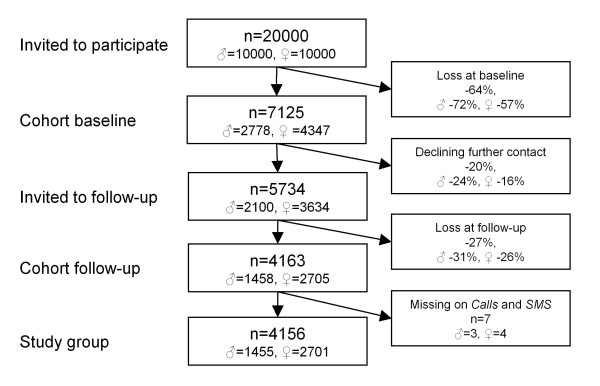
BACKGROUND: Because of the quick development and widespread use of mobile phones, and their vast effect on communication and interactions, it is important to study possible negative health effects of mobile phone exposure. The overall aim of this study was to investigate whether there are associations between psychosocial aspects of mobile phone use and mental health symptoms in a prospective cohort of young adults. METHODS: The study group consisted of young adults 20-24 years old (n = 4156), who responded to a questionnaire at baseline and 1-year follow-up. Mobile phone exposure variables included frequency of use, but also more qualitative variables: demands on availability, perceived stressfulness of accessibility, being awakened at night by the mobile phone, and personal overuse of the mobile phone. Mental health outcomes included current stress, sleep disorders, and symptoms of depression. Prevalence ratios (PRs) were calculated for cross-sectional and prospective associations between exposure variables and mental health outcomes for men and women separately. RESULTS: There were cross-sectional associations between high compared to low mobile phone use and stress, sleep disturbances, and symptoms of depression for the men and women. When excluding respondents reporting mental health symptoms at baseline, high mobile phone use was associated with sleep disturbances and symptoms of depression for the men and symptoms of depression for the women at 1-year follow-up. All qualitative variables had cross-sectional associations with mental health outcomes. In prospective analysis, overuse was associated with stress and sleep disturbances for women, and high accessibility stress was associated with stress, sleep disturbances, and symptoms of depression for both men and women. CONCLUSIONS: High frequency of mobile phone use at baseline was a risk factor for mental health outcomes at 1-year follow-up among the young adults. The risk for reporting mental health symptoms at follow-up was greatest among those who had perceived accessibility via mobile phones to be stressful. Public health prevention strategies focusing on attitudes could include information and advice, helping young adults to set limits for their own and others' accessibility.
Overview
The claims and statistics of this paper haven’t been checked yet.
Free: it reads the open-access text and checks the first 5 claims that cite a source we can check. Create a free account to check every claim.
Integrity signals
Registry
Cites
Statistics
Figures
Verification
Claims the paper makes
The claims and statistics of this paper haven’t been checked yet.
Free: it reads the open-access text and checks the first 5 claims that cite a source we can check. Create a free account to check every claim.
Claims other papers make about this one
Each is checked against this paper’s own text: does it say what the citing paper says it does?
The source backs part of the claim, not all of it — or backs it for a different population, condition or comparison.
In the citing paper
“Several studies indicate that high levels of social media use or screen time may reduce users' amount and quality of sleep.16,17”
From Social Media Use and Its Link to Physical Health Indicators (2022) · cites this paper as [17]
Experimental — accuracy not yet measuredThe source backs part of the claim, not all of it — or backs it for a different population, condition or comparison.
In the citing paper
“The first was focused on the non-smart mobile phone and was mainly due to two factors: the amount of phone bills that the use led to and the high use of text messages.”
From Problematic Use of the Internet and Smartphones in University Students: 2006–2017 (2018) · cites this paper as [6]
Experimental — accuracy not yet measuredThe source backs part of the claim, not all of it — or backs it for a different population, condition or comparison.
In the citing paper
“Previous studies showed the relationships between long phone usage duration and high stress [45] and long and frequent phone usage and severe depressive symptoms [8].”
From Identifying Objective Physiological Markers and Modifiable Behaviors for Self-Reported Stress and Mental Health Status Using Wearable Sensors and Mobile Phones: Observational Study (2018) · cites this paper as [45]
Experimental — accuracy not yet measuredThe source backs part of the claim, not all of it — or backs it for a different population, condition or comparison.
In the citing paper
“late night phone and exercise activities could relate to self-reported stress and mental health [45].”
From Identifying Objective Physiological Markers and Modifiable Behaviors for Self-Reported Stress and Mental Health Status Using Wearable Sensors and Mobile Phones: Observational Study (2018) · cites this paper as [45]
Experimental — accuracy not yet measuredThe cited source says what the claim attributes to it.
In the citing paper
“A questionnaire-based study also showed a relationship between high mobile phone usage, stress, and symptoms of depression [45].”
4 more claims about this paper
Create a free account to see every claim other papers make about this one.
Self-check
Percentages, sums and reported differences re-computed from the paper’s own numbers.
The self-check needs the paper’s full text.
Citations
Cites
Internet Addiction: The Emergence of a New Clinical Disorder
YOUNG, K. S. (1998) · CyberPsychology & Behavior · doi:10.1089/cpb.1998.1.237 · Cited by 5,513 · cited 1×
“Internet addiction has been proposed as a specific psychiatric illness [14]; however, this form of problematic Internet use could also be considered to share elements with impulse control disorders and be related to the specific activities done on the Internet (such as gambling) rather than the Internet per se [15,16].”
Mental health of young people: A global public-health challenge
Patel, V., Flisher, A. J., Hetrick, S., & McGorry, P. (2007) · The Lancet · doi:10.1016/s0140-6736(07)60368-7 · Cited by 3,126 · cited 1×
“Mental health problems have been increasing among young people in Sweden and around the world [1,2].”
Utility of a new procedure for diagnosing mental disorders in primary care. The PRIME-MD 1000 study
Spitzer, R. L. (1994) · JAMA · doi:10.1001/jama.272.22.1749 · Cited by 2,635
Mental health problems and help-seeking behavior among college students
Hunt, J., & Eisenberg, D. (2010) · Journal of Adolescent Health · doi:10.1016/j.jadohealth.2009.08.008 · Cited by 1,949 · cited 1×
“Cultural and social changes in terms of increased materialism and individualism have been discussed in relation to this [3,4], including the possibility of a decreasing stigma about mental illness, improved screening for mental illness, and increased help-seeking behaviors [5].”
Psychosocial work environment and mental health—a meta-analytic review
Stansfeld, S., & Candy, B. (2006) · Scandinavian Journal of Work, Environment & Health · doi:10.5271/sjweh.1050 · Cited by 1,875 · cited 1×
“Social support is a well-known factor that both promotes health and buffers negative effects of psychosocial strain [36,37].”
Utility of a New Procedure for Diagnosing Mental Disorders in Primary Care: The PRIME-MD 1000 Study
Spitzer, R. L. (1994) · JAMA · doi:10.1001/jama.1994.03520220043029 · Cited by 1,873 · cited 3×
“Following the suggested PRIME-MD procedure [29,30], a predictive power of 33% [30] would imply that about 20% of the study group was clinically depressed.”
InfluentialSleep disturbance and psychiatric disorders: A longitudinal epidemiological study of young Adults
Breslau, N., Roth, T., Rosenthal, L., & Andreski, P. (1996) · Biological Psychiatry · doi:10.1016/0006-3223(95)00188-3 · Cited by 1,831 · cited 1×
“For example, in one study of young adults [34], sleep disorders was a predictor of major depression onset with an odds ratio of nearly 4.”
Case-finding instruments for depression: Two questions are as good as many
Whooley, M. A., Avins, A. L., Miranda, J., & Browner, W. S. (1997) · Journal of General Internal Medicine · doi:10.1046/j.1525-1497.1997.00076.x · Cited by 1,826
Psychological Predictors of Problem Mobile Phone Use
Bianchi, A., & Phillips, J. G. (2005) · CyberPsychology & Behavior · doi:10.1089/cpb.2005.8.39 · Cited by 1,514 · cited 1×
“Intensive mobile phone use has been associated with dependency on the mobile phone [14,15], and problematic mobile phone use has been a focus in the literature concerning psychological aspects of mobile phone use, where criteria for substance addiction diagnoses or behavioral addictions [16,17] have been used to defin…”
Pathological Video Game Use Among Youths: A Two-Year Longitudinal Study
Gentile, D. A., Choo, H., Liau, A., Sim, T., Li, D., Fung, D., & Khoo, A. (2011) · Pediatrics · doi:10.1542/peds.2010-1353 · Cited by 1,314 · cited 1×
“In a longitudinal study among youths, pathological gaming predicted higher levels of depression, anxiety, social phobia, and poor school performance [22].”
Research works printed but not linked: 3
- StatisticsSweden: Health and medical care 1980-2005. LE Living conditions. Stockholm. 2006, Sweden, [In Swedish, with parts in English]
- Ekman A, Ahlstrand C, Andrén M, Boström M, Dellve L, Eriksson J, Gustafsson E, Hagberg J, Lindegård A, Thomée S, et al: Ung Vuxen - Basenkät (Young adults - baseline questionnaire) [In Swedish]. Rapport från Arbets- och miljömedicin [Occupational and Environmental Report] No 118. 2008, Occupational and Environmental medicine, Gothenburg University, Gothenburg, Sweden
- Karasek R, Theorell T: Healthy work. 1990, New York: Basic Books
Cited by
Items 901–1,000 of 1,002
Üniversite Öğrencilerinin Akıllı Telefon Bağımlılıkları ve Baş Ağrısı İle İlişkisi
Şen, M. A., Menteş, N., & Kurt, M. E. (2022) · Mecmua · doi:10.32579/mecmua.1168802 · Cited by 2
EXCESSIVE USE OF MOBILE PHONES AND ITS PSYCHOLOGICAL IMPACT ON NURSING STUDENTS
Chandio, K., MEMON, P., Channar, H. B., NOHRI, M., Bhacho, A. H., & DEAN, R. (2023) · Biological and Clinical Sciences Research Journal · doi:10.54112/bcsrj.v2023i1.417 · Cited by 3
Lei, G., Xiaorui, L., & Liu, T. (2023) · Current Psychology · doi:10.1007/s12144-023-05447-7 · Cited by 2
“Individuals with PMPU had been shown to experience impaired cognitive and executive functions, maladaptive physical symptoms and mental health issues (Zhou et al., 2015; Thomee et al., 2011).”
Navigating Brand Loyalty: The Dynamic Interplay of Engagement, Attachment, and Usage Patterns
Tanveer, Z., Ikram, A., & Samreen, F. (2026) · Academic Journal of Social Sciences (AJSS ) · doi:10.54692/ajss.2023.07021983 · Cited by 3
“…were adopted to measure BIMG from Sasmita and Suki (2015); 10 items scale was adopted to measure CBE (Hollebeek et al., 2014); BA was measured by 4 items (Whan et al., 2010); 5 items of BBL adopted from (Johnson et al., 2006), UFREQ and Usage Duration was also adapted from (Thomée et al., 2011).”
MethodHindistan Batı Bengal’de Kolkata Tıp Okulu öğrencileri arasında cep telefonu kullanma alışkanlıkları
Paul, B., Roy, S., Saha, I., Misra, R., Chattopadhyay, S., & Basu, M. (2014) · Türkiye Halk Sağlığı Dergisi · doi:10.20518/thsd.66613 · Cited by 2
Young Adults’ Cellphone Dependence, Stress, Depression and Self-Esteem
Hakoyama, M. (2019) · Advances in Social Science and Culture · doi:10.22158/assc.v1n2p125 · Cited by 2
An Experimental Study of Effects of Media Implication on Self-Report Symptoms Related With MP Use
Gao, P., Zheng, F., He, M., Li, M., Deng, P., Zhou, Z., Yu, Z., & Zhang, L. (2020) · Frontiers in Public Health · doi:10.3389/fpubh.2020.00175 · Cited by 2
“Several previous studies have shown that people with longduration MP use reported more physical symptoms (13–15) or depression (16, 25), but there was no significant difference of MP use between the two groups in the present study.”
BackgroundPrevalence of Stress Among Software Professionals in Hyderabad, Telangana State, India
Vaskari, R. G., & Sugumaran, V. B. (2020) · Central African Journal of Public Health · doi:10.11648/j.cajph.20200604.14 · Cited by 3
“The question on use of gadgets in late night may be also a reason behind getting stress because of reduced sleeping hours and using gadgets at that time [11].”
BackgroundDetecting Depression from Human Conversations
Yuki, J. Q., Sakib, M. M. Q., Zamal, Z., Efel, S. H., & Khan, M. A. (2020) · International Conference on Computer and Communications Management (ICCCM) · doi:10.1145/3411174.3411187 · Cited by 3
“, into human life is making the situation even worse [1-4].”
BackgroundThe Social Construction of Technology
Hall, J. A. (2020) · Cambridge University Press eBooks · doi:10.1017/9781108629935.003 · Cited by 5
Ma, Q.-S. (2021) · International Journal of Frontiers in Sociology · doi:10.25236/ijfs.2021.031509 · Cited by 3
CORRELATION BETWEEN SMARTPHONE SCREEN TIME AND REACTION TIME IN YOUNG ADULTS OF AGE 18-25 YEARS
Gada, S. A., & Dhasal, N. (2021) · International Journal of Engineering Applied Sciences and Technology · doi:10.33564/ijeast.2021.v06i04.032 · Cited by 3
Positive Technology for Helping People Cope with Stress
Villani, D., Cipresso, P., Gaggioli, A., & Riva, G. (2020) · IGI Global eBooks · doi:10.4018/978-1-7998-3432-8.ch038 · Cited by 3
Smartphone Addiction Factors Effecting University Student Performance
Omama Farooq, S. A. M. S., Shah, S. A., & Hafeez, S. (2022) · NUML International Journal of Business & Management · doi:10.52015/nijbm.v16i2.65 · Cited by 5
Javed, A., Fatima, U., & Jadoon, I. J. (2022) · Journal of Women Medical and Dental College · doi:10.56600/jwmdc.v1i3.42 · Cited by 2
Uzun, A. E., & Deniz, M. E. (2023) · Uluslararası Sosyal ve Eğitim Bilimleri Dergisi · doi:10.20860/ijoses.1226592 · Cited by 4
Examining Adolescents’ Technology Addiction Levels Before and After COVID-19 Pandemic
ŞEKER, R., Kartal, T., Taşdemir, A., & KIZILTEPE, İ. S. (2023) · Journal of Education in Science Environment and Health · doi:10.55549/jeseh.1381263 · Cited by 6
Büyüyen Korku: Mobil Telefon Yoksunluğu Korkusu (Nomofobi) Üzerine Bir Çalışma
YOLCU, P., & ÇİFTÇİ, H. (2023) · İnsan ve Toplum Bilimleri Araştırmaları Dergisi · doi:10.15869/itobiad.1298141 · Cited by 3
Sharma, K. K., Somasundaram, J., & Sachdeva, A. (2024) · JMIR Research Protocols · doi:10.2196/53756 · Cited by 2
Na, J., Lee, S., Sung, H., & Jhone, J. (2024) · Child & Family Social Work · doi:10.1111/cfs.13246 · Cited by 2
Smartphone Addiction and Symptoms of Brain Fog among Emerging Adults
Ijaz, A., & Imran, H. (2024) · Qlantic Journal of Social Sciences and Humanities · doi:10.55737/qjssh.v-iv(cp).24260 · Cited by 2
Ha, J., Kim, J. N., Hidalgo, J. E., Noble, N. C., & Price, M. (2024) · Journal of Technology in Behavioral Science · doi:10.1007/s41347-024-00468-w · Cited by 3
Factors Affecting Reversal of Plant-Based Meat Consumption : An Empirical Analysis
Gadkari, K., & Dhote, T. (2025) · Indian Journal of Marketing · doi:10.17010/ijom/2025/v55/i3/174834 · Cited by 2
Zhang, W., Sun, Y., Zhu, S., Liu, N., Song, H., Tang, K., Shen, X., Tao, Y., & Zhang, X. (2025) · Psychology Health & Medicine · doi:10.1080/13548506.2025.2550977 · Cited by 2
“…that 24.8%-27.8% of college students exhibit symptoms of MPA, which has been associated with anxiety, depression, and cognitive dysfunction (Thomée et al., 2011) Empirical research has consistently shown a association between problematic smartphone use and heightened levels of anxiety and…”
InfluentialChoi, M., & Kim, J. S. (2016) · Journal of the Korean Society of School Health · doi:10.15434/kssh.2016.29.3.149 · Cited by 2
“집중력 저하를 야기하고 불안 및 정신증과도 관련이 있는 것으 로 보고되었다[7-9].”
Icts overuse in the European educational space. Interpreting the Icts overdose on learning outcomes
Giancola, O., & Salmieri, L. (2020) · SOCIOLOGIA E RICERCA SOCIALE · doi:10.3280/sr2020-121006 · Cited by 8
Hänisch, T. (2021) · Springer eBooks · doi:10.1007/978-3-658-34335-4_5 · Cited by 2
The Effect of Sms Notifications on Time Preferences
Israel, A., Rosenboim, M., & Shavit, T. (2021) · Journal of Behavioral and Experimental Economics · doi:10.1016/j.socec.2021.101818 · Cited by 2
GÖKBULUT, B. (2022) · Kastamonu Eğitim Dergisi · doi:10.24106/kefdergi.796530 · Cited by 5
The Role of WeChat in Building Relationships amongst International Students
Chen, K., Brown, C., & MacCallum, K. (2022) · ASCILITE Publications · doi:10.14742/apubs.2022.139 · Cited by 2
“Though some studies have found that there can be a detrimental effects to wellbeing when using social media (Alavi et al., 2011; Thomée et al., 2011; Zaremohzzabieh et al., 2015), social media could be exceptionally ASCILITE 2022 The University of Sydney e22139-2 2014).”
BackgroundNight Time Gadget Use and Quality of Sleep among Health Science Students in Bangalore, India
Thomas, P. L., Gurung, R., & Mahalakshmi, M. (2022) · Rwanda medical journal · doi:10.4314/rmj.v79i4.2 · Cited by 6
Psychosocial Predictors of Smartphone Addiction Among Nigerian Undergraduates
Ogunsemi, J. O., & Babatunde, S. I. (2023) · African Journal of Social Sciences and Humanities Research · doi:10.52589/ajsshr-qihdjx8r · Cited by 3
Response of the autonomic nervous system to emotional email on a smartphone
Mizuno‐Matsumoto, Y., Asakawa, T., Muramatsu, A., Okajima, K., & Taya, M. (2014) · World Automation Congress (WAC) · doi:10.1109/wac.2014.6935661 · Cited by 2
Green Communication- A Stipulation to Reduce Electromagnetic Hypersensitivity from Cellular Phone
Kumar, N., Khan, R. A., & Khan, M. (2012) · Procedia Technology · doi:10.1016/j.protcy.2012.05.110 · Cited by 2
Harmful Effect of Commonly Used Electronic Devices on Adolescence and its Safeguard at Shebin El-Kom
Nagwa, A. (2013) · IOSR Journal of Nursing and health Science · doi:10.9790/1959-0213246 · Cited by 2
Stop Your Text Messages from Killing You (or Your Friends, or Total Strangers)
Brown, J. N. A. (2016) · Human-computer interaction series · doi:10.1007/978-3-319-24421-1_18 · Cited by 2
Environmental Hazards and Health Risks Associated with the Use of Mobile Phones
Velmurugan, M. S. (2016) · Journal of Green Engineering · doi:10.13052/jge1904-4720.524 · Cited by 2
“Thomée et al. (2011) found that increase in the frequency of mobile phone usage was associated with sleep disturbances and symptoms of depression for men and women at 1-year follow-up.”
BackgroundAre smartphones and tablets influencing the quality of sleep? An Italian answer
Bert, F., Gualano, M. R., Giacomelli, S., Martorana, M. C., & Siliquini, R. (2022) · Epidemiology Biostatistics and Public Health · doi:10.2427/12808 · Cited by 2
Antecedents and Outcomes of Smartphone Usage Among Indian Millennial Travellers
Gore, S., Balasubramanian, S., & Paris, C. M. (2018) · Springer eBooks · doi:10.1007/978-3-030-05940-8_33 · Cited by 3
The Relationship between Smartphone Addiction, Sleep Quality and Stress among University Students
(2020) · Personalia Pelajar · doi:10.17576/personalia.2301.2020.06 · Cited by 3
“Because sleep is a significant biological mechanism related to mood regulation (Thomée, et al., 2011), students whose sleep is disrupted because of technology use may be more likely to experience markers of depression such as loss of energy, concentration problems, and daytime sleepiness (Adams &…”
Emission of Ionizing Radiation from Active and End-of-Life Mobile Phones and Batteries
Dutta, D., Ghosal, S., Goel, S., & Sengupta, D. (2021) · Journal of Hazardous Toxic and Radioactive Waste · doi:10.1061/(asce)hz.2153-5515.0000630 · Cited by 2
Factors Associated with High-to-Severe Stress among University Students in Northern Thailand
(2020) · Journal of the Medical Association of Thailand · doi:10.35755/jmedassocthai.2020.06.10877 · Cited by 7
Gayathri, A. (2020) · Indian Journal of Public Health Research & Development · doi:10.37506/ijphrd.v11i5.9283 · Cited by 3
The Relationship between Smartphone Addiction and Psychological Well-Being in Early Adulthood
Raymond, A., & Kartasasmita, S. (2022) · Advances in Social Science, Education and Humanities Research/Advances in social science, education and humanities research · doi:10.2991/assehr.k.220404.246 · Cited by 3
Depression, smartphone addiction and association factors among preclinical medical students
Wattanaudomchai, A. (2024) · Chulalongkorn Medical Journal · doi:10.56808/2673-060x.5444 · Cited by 3
(2021) · Jurnal Nasional Kesehatan Lingkungan Global. · doi:10.7454/jnklg.v2i3.1004 · Cited by 3
Ali, L. (2013) · Gothenburg University Publications Electronic Archive (Gothenburg University) · Cited by 3
Tools for School: Student Fluency and Perception of Cell Phones Used for Learning.
Humble-Thaden, M. B. (2012) · ProQuest Demo Repository · Cited by 2
Smartphone Dependency and Consciousness: Observing Flow in the Everyday Life
Srinivas, P., & Faiola, A. J. (2014) · Purdue University Indianapolis (Indiana University) · Cited by 2
David, L. (2016) · Cited by 3
Lupushor, S., & Fradera, A. (2017) · Wiley eBooks · doi:10.1002/9781119256151.ch21 · Cited by 3
New Design guidelines for Mobile Learning Application: Transactional Distance Perspective
Limtrairut, P. (2018) · Open Access Victoria University of Wellington | Te Herenga Waka (Figshare) · doi:10.26686/wgtn.17069162 · Cited by 2
Protocols for Sleep Initiation and Maintenance Problems in Paediatric Populations
Gavriloff, D., Bacaro, V., Schlarb, A. A., & Baglioni, C. (2022) · Wiley eBooks · doi:10.1002/9781119891192.ch7 · Cited by 2
ERGÖNÜL, E., Keskіn, T., Ergan, M., Başkurt, F., & Başkurt, Z. (2024) · Research Square · doi:10.21203/rs.3.rs-5341122/v1 · Cited by 2
The Features of the Stress-Reaction to Repetitive Nanosecond Microwave Pulses
Knyazeva, I. R., Медведев, М. А., Кутенков, О. П., Vasilev, A. V., Gorokhovsky, A. A., & Rostov, V. V. (2018) · International Symposium on High-Current Electronics (ISHCE) · doi:10.1109/ishce.2018.8521190 · Cited by 1
Do Mobile Phones Cause More Harm than Good?
Mani, R. (2019) · Open Journal of Social Sciences · doi:10.4236/jss.2019.78014 · Cited by 3
“This evolving research area is, therefore, indicative that high frequencies of mobile phone use could be a potential risk factor for developing sleep disturbance, stress and symptoms of depression in both the men and women [10].”
Backgroundoverview on health illness caused by usage of smart electronic gadgets among the student’s community
Umadevi, S., & Yuvaraj, P. (2022) · International Journal of Health Sciences · doi:10.53730/ijhs.v6ns2.7499 · Cited by 1
Bilkay, S., & ÇİÇEK, B. (2022) · Journal of Business Research - Turk · doi:10.20491/isarder.2022.1495 · Cited by 5
Decisional style, sleepiness, and online responsiveness
Phillips, J. G., Chow, Y.-W., & Ogeil, R. P. (2023) · Ergonomics · doi:10.1080/00140139.2023.2288808 · Cited by 1
The Impact of Mobile Phone Use on Students' Mental Health
Lui, T. (2024) · Lecture Notes in Education Psychology and Public Media · doi:10.54254/2753-7048/34/20231851 · Cited by 1
Piyumika, G. D. T., Basnayaka, K. V. N., Hewage, H. A., Rajakaruna, R. A. R. M. S. M. S. B., Thilakarathna, T., & Perera, J. (2023) · International Conference on Advancements in Computing (ICAC) · doi:10.1109/icac60630.2023.10417295 · Cited by 1
Adebiyi, I. A. A., Awofala, A. O. A., & Malik, N. A. (2024) · Acta Didactica Napocensia · doi:10.24193/adn.17.1.10 · Cited by 5
“Anxiety responses as fear, uneasiness, breathing trouble, stomach cramps, and others affect nomophobes' daily focus (Dixit et al., 2010; Thomée et al., 2011).”
BackgroundResultAnalyzing Smartphone Separation vs. Restriction on Users’ Well-Being During a Pandemic
Muench, C., & Carolus, A. (2024) · Lecture notes in networks and systems · doi:10.1007/978-3-031-73122-8_17 · Cited by 1
Li, G., Liu, Q., & Cheng, Z.-J. (2025) · Current Psychology · doi:10.1007/s12144-025-07485-9 · Cited by 1
“On the other hand, we recommend that educational institutions implement targeted mental health education programs to instruct students on how to manage their screen time and how to recognize and cope with the stress and anxiety arising from excessive smartphone use (Thomée et al., 2011).”
The Association of Anxiety, Depression and Self-Esteem with Students’ Nomophobic Behaviour
Pitikoe-Chiloane, M. G., & Dondolo, H. B. (2024) · Journal of Educational Studies · doi:10.59915/jes.2024.23.4.9 · Cited by 1
Zhang, Y., Xie, R., Ding, W., Jiang, M., & Sun, Z. (2025) · Children and Youth Services Review · doi:10.1016/j.childyouth.2025.108319 · Cited by 1
Gideon, P., & Bayray, A. (2025) · BMC Psychology · doi:10.1186/s40359-025-02787-w · Cited by 4
“BMI, the risk of anxiety in students without having a good friend in university, doubt regarding the future, problems with other students, and any lecture(s) have been identified [23, 38, 74].”
Schneebeli, L., Braune‐Krickau, K., Joliat, A., & von Wyl, A. (2025) · Frontiers in Psychology · doi:10.3389/fpsyg.2025.1517222 · Cited by 2
Üniversite Öğrencilerinde Sosyotelizm (Phubbing) ile Sosyal Kaygı İlişkisinin Değerlendirilmesi
Nalbantoğlu, İ., Turan, S., Koçak, B., & Kocaman, B. (2025) · Batı anadolu eğitim bilimleri dergisi · doi:10.51460/baebd.1586296 · Cited by 1
Smartphone Addiction and Sleep Disturbances Among Medical Students: A Cross-Sectional Study
Bh, G., Sravan, J. S., Shah, S., & Saiyad, S. S. (2025) · Cureus · doi:10.7759/cureus.91985 · Cited by 3
Digital Addiction and its Effect on Social Interaction among Physiotherapy College Students
Kulkarni, S., & Agarwal, R. R. (2025) · International Journal of Advanced Research in Science Communication and Technology · doi:10.48175/ijarsct-30012 · Cited by 1
Sambou, M. L., Wang, Y., Xu, F., Yakubu, S., Liang, S., & Dai, J. (2025) · Sleep And Breathing · doi:10.1007/s11325-025-03488-9 · Cited by 2
“Importantly, this study addresses critical gaps in the existing literature by investigating both traditionally recognized risk factors and less-explored, yet increasingly relevant, exposures, such as screen time and sleep disturbances that reflect contemporary lifestyle patterns [ 21].”
Alsawalqa, R. O., & Zawahreh, H. A. R. A. (2025) · Frontiers in Psychiatry · doi:10.3389/fpsyt.2025.1695691 · Cited by 4
Annisa, S. S., Sadijah, N. A., & Pratomo, Y. (2025) · Jurnal Psikologi dan Konseling West Science · doi:10.58812/jpkws.v3i04.2571 · Cited by 1
“Batasan durasi ≥ 4 jam per hari mengacu pada temuan Thomée et al. (2011) dan Gezgin et al. (2018) yang mengkategorikan penggunaan pada rentang waktu tersebut sebagai tingkat tinggi, serta mengaitkannya dengan peningkatan risiko kecanduan, gangguan tidur, dan kecemasan akibat ketergantungan…”
Taşkaldiran, E. S., Varlıhan, G. N., & Asgari, S. N. (2026) · The European Research Journal · doi:10.18621/eurj.1840748 · Cited by 1
Błachnio, A., Przepiórka, A., Cudo, A., Kot, P., & Gorbaniuk, J. (2026) · Innovation The European Journal of Social Science Research · doi:10.1080/13511610.2026.2618079 · Cited by 1
Adoecimento digital em universitários
Júnior, J. E. G. L., Saraiva, A. A. D. F., de Souza, D. E. L., Furtado, L. A., & Ferreira, T. S. (2026) · Revista Interdisciplinar de Cuidados e Inovação em Saúde (RICIS) · doi:10.71136/ricis.v2i1.1045 · Cited by 1
Sarıkahya, S. D., Özbay, S. Ç., Özbay, Ö., & Akçam, A. (2026) · Yuksekogretim Dergisi · doi:10.53478/yuksekogretim.1553727 · Cited by 3
Luo, F., Du, Y., Sun, Q., Peng, N., & Li, Y. (2026) · BMC Psychology · doi:10.1186/s40359-026-04248-4 · Cited by 1
“Additionally, Mobile phone dependency has been associated with adverse outcomes including depression, anxiety, poor sleep quality, diminished meaning in life, decreased academic performance, and compromised social functioning [8–11].”
A descriptive study to assess the prevalence of nomophobia among medical students in Northern India
Agrawal, R., & Singh, P. (2026) · Journal of Integrative Medicine and Research · doi:10.4103/jimr.jimr_72_25 · Cited by 1
Network analysis of smartphone addiction and sleep disorder symptoms in Chinese college students
Li, X., & Mao, L. (2026) · PLoS ONE · doi:10.1371/journal.pone.0349016 · Cited by 1
“Second, long-term use of mobile devices may induce physical discomfort such as muscle pain and headaches, thereby increasing the risk of sleep disorders [24,25].”
Exploring personal digital media environments: a configural approach to digital stress
Zhang, C. X., Rice, R. E., & Fang, C. (2026) · Frontiers in Psychology · doi:10.3389/fpsyg.2026.1867928 · Cited by 1
Exploring the Impact of Digital Behaviours on Mental Health: Tools and Intervention for Gen Z
Kumar, K., & Pathak, V. N. (2026) · Annals of Neurosciences · doi:10.1177/09727531261472987 · Cited by 1
“46,47 The observed reductions in depression, anxiety and stress further substantiate the idea that decreased screen time alleviates cognitive overload and emotional strain, thereby enhancing overall psychological well-being.”
Mobile phone related-symptoms among primary care attendees in Al-Khobar city, Eastern Saudi Arabia
Alghamdi, Y., & Taha, A. (2013) · International Journal of Medical Science and Public Health · doi:10.5455/ijmsph.2013.270920131 · Cited by 1
“This result was similar to many other studies.[2,3,8-13] Al-Khlaiwi et al reported that”
ResultMobile addiction e prevenzione attraverso il gruppo dei pari
Lavanco, G., Messina, C., & Varveri, L. (2014) · PSICOLOGIA DI COMUNITA · doi:10.3280/psc2014-001005 · Cited by 1
Effect of an Educational Program on Healthy Use of Mobile Phone among Faculty of Nursing Students
Mahmoud, S. K. M. (2017) · IOSR Journal of Nursing and health Science · doi:10.9790/1959-060105114127 · Cited by 1
“Studies have shown that people who sleep with a mobile phone near the bed have sleep problems, leading to impaired academic achievement and memory (Thomee et al., 2011).”
BackgroundSymptomatic health issues of using mobile phones for extended periods: study with young adults
Kalekhan, F. M., Palatty, R. L., Tonse, R., Periera, R., Rao, S., & Baliga, M. S. (2017) · International journal of applied research · Cited by 1
Fonoholizm wśród młodzieży szkolnej jako nowa forma zachowań ryzykownych
Sarzała, D. M. (2018) · Kultura i Wychowanie · doi:10.25312/2083-2923.12/2017_131-146 · Cited by 1
Digitale Mediensüchte: Aktuelles Störungswissen zu Internet- und Smartphonesucht
Eichenberg, C. (2021) · Zeitschrift für Psychodrama und Soziometrie · doi:10.1007/s11620-021-00596-y · Cited by 4
“Ebenso scheint eine zunehmende Nutzung von Smartphones mit Schlafstörungen (Lemola et al. 2015) und Problemen mit zwischenmenschlichen Beziehungen (Thomée et al. 2011) einherzugehen.”
BackgroundSheikh, M. N. (2021) · Journal of the Dow University of Health Sciences · doi:10.36570/jduhs.2021.2.1138 · Cited by 2
An Unusual Cause of Internal Carotid Artery Dissection: Mobile Phone Misuse.
Erdal, Y., Gunes, T., Peran, H., & Akıl, E. (2021) · Annals of Vascular Surgery · doi:10.1016/j.avsg.2021.06.050 · Cited by 1
Factors Affecting Psychosocial Problems on the College Students Who Experience Smartphone Addiction
Wiwik, W., Widiharti, & Firman, F. (2021) · Proceedings of the 1st UMGESHIC International Seminar on Health, Social Science and Humanities (UMGESHIC-ISHSSH 2020) · doi:10.2991/assehr.k.211020.067 · Cited by 1
Hall, J. A. (2020) · Cambridge University Press eBooks · doi:10.1017/9781108629935.010 · Cited by 2
Mode Comparison and Coexistence
Hall, J. A. (2020) · Cambridge University Press eBooks · doi:10.1017/9781108629935.006 · Cited by 1
GÖKBULUT, B., & Kılıç, F. (2022) · Elektronik Sosyal Bilimler Dergisi · doi:10.17755/esosder.1073448 · Cited by 1
Hall, J. A. (2020) · Cambridge University Press eBooks · doi:10.1017/9781108629935.009 · Cited by 1
Fernández, I. B., Pérez, V. E. G., Arellano, P. R., & Aguaded-Gómez, I. (2018) · Aula Abierta · doi:10.17811/aula_abierta.47.3.2018.299-306 · Cited by 1
SOCIAL MEDIA IN THE FUTURE: UNDER THE SIGN OF UNICORN�
Jarecka, U., & Fortuna, P. (2022) · Studia Humanistyczne/Studia Humanistyczne AGH · doi:10.7494/human.2022.21.2.61 · Cited by 1
Dawadi, S., Chaudhary, T. K., & Rijhal, M. (2022) · Janaki Medical College Journal of Medical Science · doi:10.3126/jmcjms.v10i2.47871 · Cited by 1
“than 20% among those who used hand-free [9].”
BackgroundAssociation Between Stress and Social Support Among Young Adult Pacific Islander Smokers
Kwan, P. P., Pike, J. R., Co, D. E., Esmundo, S., Vaivao, D. E. S., May, V. T., Pang, J. K., Sabado-Liwag, M., Tan, N., Tanjasiri, S. P., et al. (2023) · Hawai‘i Journal of Health & Social Welfare · doi:10.62547/qeew8267 · Cited by 2
Metadata
- Authors
- Thomée, S., Härenstam, A., & Hagberg, M.
- Affiliations
- University of Gothenburg (SE)
- Corresponding author
- Thomée, Sara
- Venue
- BMC Public Health
- Published
- 2011-01-31
- Volume
- 11
- Issue
- 1
- Pages
- 66-66
- ISSN
- 1471-2458 (ISSN-L)
- PMC
- PMC3042390
- OpenAlex
- W2117971251
- Cited by
- 1,269
- References
- 66
- Citations by year
- 2026: 54 · 2025: 76 · 2024: 103 · 2023: 111 · 2022: 133 · 2021: 126 · 2020: 151 · 2019: 105 · 2018: 119 · 2017: 79 · 2016: 79 · 2015: 49 · 2014: 34 · 2013: 34 · 2012: 13
- FWCI
- 88.28
- Type
- journal article
- Language
- en
- Open access
- gold
- doi.org
- Licence
- cc-by
- creativecommons.org/licenses/by/2.0 (tdm)
- Locations
- BMC Public Health (publishedVersion, cc-by)
- PubMed Central (publishedVersion, cc-by)
- PubMed (publishedVersion)
- Gothenburg University Publications Electronic Archive (Gothenburg University) (acceptedVersion)
- DOAJ (DOAJ: Directory of Open Access Journals) (submittedVersion)
- Funders
- Forskningsrådet för Arbetsliv och Socialvetenskap
- Topics
- Social Sciences › Sociology and Political Science › Impact of Technology on Adolescents
- Social Sciences › Psychology › Social Psychology › Technostress in Professional Settings
- Social Sciences › Education › Child Development and Digital Technology
- Keywords
- mobile phone use, mental health, stress, sleep disorders, depressive symptoms, young adults, mobile phone overuse, sex differences, mobile phone exposure
- MeSH terms
- Cross-Sectional Studies, Depression, Female, Humans, Male, Prospective Studies, Surveys and Questionnaires, Risk Factors, Sleep Wake Disorders, Stress, Psychological, Sweden, Cohort Studies, Cell Phone, Young Adult
About these checks
Registry, retraction, Cites and statistics results are computed, not judged, with one exception: a printed reference that no index lists is read once by a model before it counts as a citation error. Claims are extracted by a model and kept only when their quote appears verbatim in the text; each cited source is then checked, with a model’s help, for whether it says what the claim relies on. Those verdicts can be wrong — read the claim’s quote and the cited source before relying on one.
Statistics and arithmetic are recomputed, not judged.
Confidence bands are shown only for fields calibrated on our annotated test set. None is calibrated yet, so no band is shown.
What counts as a claim ›How we measure confidence ›How we check this ›
Are you an author, or do you see a problem with this page? Request a review
Data sources
Bibliographic data: Semantic Scholar, OpenAlex, Crossref.
Contains information from the Semantic Scholar Academic Graph Datasets, made available under the ODC Attribution License (ODC-BY 1.0).
Semantic Scholar’s data is described in: Kinney, R., et al. (2023). The Semantic Scholar Open Data Platform. arXiv:2301.10140.
