

Mobile phone use and stress, sleep disturbances, and symptoms of depression among young adults – A prospective cohort study
Open accessThe DOI matches its Crossref record; 65 of the 66 references it cites were found in a registry or an index.
Abstract
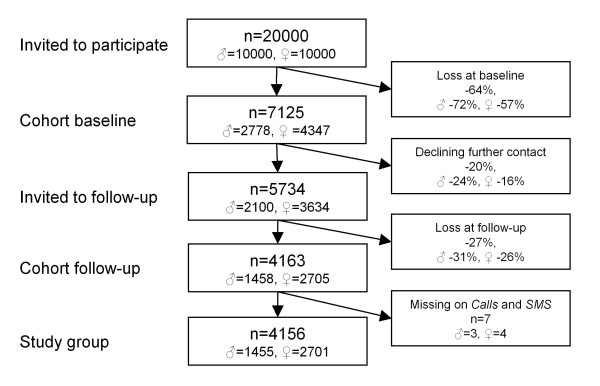
BACKGROUND: Because of the quick development and widespread use of mobile phones, and their vast effect on communication and interactions, it is important to study possible negative health effects of mobile phone exposure. The overall aim of this study was to investigate whether there are associations between psychosocial aspects of mobile phone use and mental health symptoms in a prospective cohort of young adults. METHODS: The study group consisted of young adults 20-24 years old (n = 4156), who responded to a questionnaire at baseline and 1-year follow-up. Mobile phone exposure variables included frequency of use, but also more qualitative variables: demands on availability, perceived stressfulness of accessibility, being awakened at night by the mobile phone, and personal overuse of the mobile phone. Mental health outcomes included current stress, sleep disorders, and symptoms of depression. Prevalence ratios (PRs) were calculated for cross-sectional and prospective associations between exposure variables and mental health outcomes for men and women separately. RESULTS: There were cross-sectional associations between high compared to low mobile phone use and stress, sleep disturbances, and symptoms of depression for the men and women. When excluding respondents reporting mental health symptoms at baseline, high mobile phone use was associated with sleep disturbances and symptoms of depression for the men and symptoms of depression for the women at 1-year follow-up. All qualitative variables had cross-sectional associations with mental health outcomes. In prospective analysis, overuse was associated with stress and sleep disturbances for women, and high accessibility stress was associated with stress, sleep disturbances, and symptoms of depression for both men and women. CONCLUSIONS: High frequency of mobile phone use at baseline was a risk factor for mental health outcomes at 1-year follow-up among the young adults. The risk for reporting mental health symptoms at follow-up was greatest among those who had perceived accessibility via mobile phones to be stressful. Public health prevention strategies focusing on attitudes could include information and advice, helping young adults to set limits for their own and others' accessibility.
Overview
The claims and statistics of this paper haven’t been checked yet.
Free: it reads the open-access text and checks the first 5 claims that cite a source we can check. Create a free account to check every claim.
Integrity signals
Registry
Cites
Statistics
Figures
Verification
Claims the paper makes
The claims and statistics of this paper haven’t been checked yet.
Free: it reads the open-access text and checks the first 5 claims that cite a source we can check. Create a free account to check every claim.
Claims other papers make about this one
Each is checked against this paper’s own text: does it say what the citing paper says it does?
The source backs part of the claim, not all of it — or backs it for a different population, condition or comparison.
In the citing paper
“Several studies indicate that high levels of social media use or screen time may reduce users' amount and quality of sleep.16,17”
From Social Media Use and Its Link to Physical Health Indicators (2022) · cites this paper as [17]
Experimental — accuracy not yet measuredThe source backs part of the claim, not all of it — or backs it for a different population, condition or comparison.
In the citing paper
“The first was focused on the non-smart mobile phone and was mainly due to two factors: the amount of phone bills that the use led to and the high use of text messages.”
From Problematic Use of the Internet and Smartphones in University Students: 2006–2017 (2018) · cites this paper as [6]
Experimental — accuracy not yet measuredThe source backs part of the claim, not all of it — or backs it for a different population, condition or comparison.
In the citing paper
“Previous studies showed the relationships between long phone usage duration and high stress [45] and long and frequent phone usage and severe depressive symptoms [8].”
From Identifying Objective Physiological Markers and Modifiable Behaviors for Self-Reported Stress and Mental Health Status Using Wearable Sensors and Mobile Phones: Observational Study (2018) · cites this paper as [45]
Experimental — accuracy not yet measuredThe source backs part of the claim, not all of it — or backs it for a different population, condition or comparison.
In the citing paper
“late night phone and exercise activities could relate to self-reported stress and mental health [45].”
From Identifying Objective Physiological Markers and Modifiable Behaviors for Self-Reported Stress and Mental Health Status Using Wearable Sensors and Mobile Phones: Observational Study (2018) · cites this paper as [45]
Experimental — accuracy not yet measuredThe cited source says what the claim attributes to it.
In the citing paper
“A questionnaire-based study also showed a relationship between high mobile phone usage, stress, and symptoms of depression [45].”
4 more claims about this paper
Create a free account to see every claim other papers make about this one.
Self-check
Percentages, sums and reported differences re-computed from the paper’s own numbers.
The self-check needs the paper’s full text.
Citations
Cites
Internet Addiction: The Emergence of a New Clinical Disorder
YOUNG, K. S. (1998) · CyberPsychology & Behavior · doi:10.1089/cpb.1998.1.237 · Cited by 5,513 · cited 1×
“Internet addiction has been proposed as a specific psychiatric illness [14]; however, this form of problematic Internet use could also be considered to share elements with impulse control disorders and be related to the specific activities done on the Internet (such as gambling) rather than the Internet per se [15,16].”
Mental health of young people: A global public-health challenge
Patel, V., Flisher, A. J., Hetrick, S., & McGorry, P. (2007) · The Lancet · doi:10.1016/s0140-6736(07)60368-7 · Cited by 3,126 · cited 1×
“Mental health problems have been increasing among young people in Sweden and around the world [1,2].”
Utility of a new procedure for diagnosing mental disorders in primary care. The PRIME-MD 1000 study
Spitzer, R. L. (1994) · JAMA · doi:10.1001/jama.272.22.1749 · Cited by 2,635
Mental health problems and help-seeking behavior among college students
Hunt, J., & Eisenberg, D. (2010) · Journal of Adolescent Health · doi:10.1016/j.jadohealth.2009.08.008 · Cited by 1,949 · cited 1×
“Cultural and social changes in terms of increased materialism and individualism have been discussed in relation to this [3,4], including the possibility of a decreasing stigma about mental illness, improved screening for mental illness, and increased help-seeking behaviors [5].”
Psychosocial work environment and mental health—a meta-analytic review
Stansfeld, S., & Candy, B. (2006) · Scandinavian Journal of Work, Environment & Health · doi:10.5271/sjweh.1050 · Cited by 1,875 · cited 1×
“Social support is a well-known factor that both promotes health and buffers negative effects of psychosocial strain [36,37].”
Utility of a New Procedure for Diagnosing Mental Disorders in Primary Care: The PRIME-MD 1000 Study
Spitzer, R. L. (1994) · JAMA · doi:10.1001/jama.1994.03520220043029 · Cited by 1,873 · cited 3×
“Following the suggested PRIME-MD procedure [29,30], a predictive power of 33% [30] would imply that about 20% of the study group was clinically depressed.”
InfluentialSleep disturbance and psychiatric disorders: A longitudinal epidemiological study of young Adults
Breslau, N., Roth, T., Rosenthal, L., & Andreski, P. (1996) · Biological Psychiatry · doi:10.1016/0006-3223(95)00188-3 · Cited by 1,831 · cited 1×
“For example, in one study of young adults [34], sleep disorders was a predictor of major depression onset with an odds ratio of nearly 4.”
Case-finding instruments for depression: Two questions are as good as many
Whooley, M. A., Avins, A. L., Miranda, J., & Browner, W. S. (1997) · Journal of General Internal Medicine · doi:10.1046/j.1525-1497.1997.00076.x · Cited by 1,826
Psychological Predictors of Problem Mobile Phone Use
Bianchi, A., & Phillips, J. G. (2005) · CyberPsychology & Behavior · doi:10.1089/cpb.2005.8.39 · Cited by 1,514 · cited 1×
“Intensive mobile phone use has been associated with dependency on the mobile phone [14,15], and problematic mobile phone use has been a focus in the literature concerning psychological aspects of mobile phone use, where criteria for substance addiction diagnoses or behavioral addictions [16,17] have been used to defin…”
Pathological Video Game Use Among Youths: A Two-Year Longitudinal Study
Gentile, D. A., Choo, H., Liau, A., Sim, T., Li, D., Fung, D., & Khoo, A. (2011) · Pediatrics · doi:10.1542/peds.2010-1353 · Cited by 1,314 · cited 1×
“In a longitudinal study among youths, pathological gaming predicted higher levels of depression, anxiety, social phobia, and poor school performance [22].”
Research works printed but not linked: 3
- StatisticsSweden: Health and medical care 1980-2005. LE Living conditions. Stockholm. 2006, Sweden, [In Swedish, with parts in English]
- Ekman A, Ahlstrand C, Andrén M, Boström M, Dellve L, Eriksson J, Gustafsson E, Hagberg J, Lindegård A, Thomée S, et al: Ung Vuxen - Basenkät (Young adults - baseline questionnaire) [In Swedish]. Rapport från Arbets- och miljömedicin [Occupational and Environmental Report] No 118. 2008, Occupational and Environmental medicine, Gothenburg University, Gothenburg, Sweden
- Karasek R, Theorell T: Healthy work. 1990, New York: Basic Books
Cited by
Items 701–800 of 1,002
AKILLI TELEFON BAĞIMLILIĞI İLE ALGILANAN STRES VE YAŞAM DOYUMU ARASINDAKİ İLİŞKİNİN İNCELENMESİ
Göldağ, B. (2019) · Turkish Studies - Information Technologies and Applied Sciences · doi:10.29228/turkishstudies.22753 · Cited by 10
PARENTAL ATTACHMENT, SMARTPHONE ADDICTION AND STRESS AMONG UNDERGRADUATE STUDENTS
Tan, P. S., & Arshat, Z. (2019) · International Journal of Education Psychology and Counseling · doi:10.35631/ijepc.4320015 · Cited by 10
“This finding was in line with previous researches that indicated smartphone use was associated with increased stress (Thomée et al., 2011; Yun, et al., 2012).”
ResultKartal, Y. A. (2019) · Celal Bayar Üniversitesi Sağlık Bilimleri Enstitüsü Dergisi · doi:10.34087/cbusbed.600130 · Cited by 4
Lee, B., Choi, M., & Choi, M. (2020) · Applied Research in Quality of Life · doi:10.1007/s11482-019-09808-y · Cited by 8
“…significantly associated with mental health problems, such as attention, depression/ anxiety, self-identity, aggressive behaviors, and physical symptoms (Ko 2012; Jun 2014; Ha et al. 2015; Heo 2013; Thomée et al. 2011), and the present study presents empirical evidence to support such assertions.”
ResultIntegrating Mindfulness into a Routine Schedule: The Role of Mobile-Health Mindfulness Applications
van Emmerik, A., Keijzer, R., & Schoenmakers, T. M. (2020) · Springer eBooks · doi:10.1007/978-3-030-30892-6_15 · Cited by 8
Chen, L. (2015) · IGI Global eBooks · doi:10.4018/978-1-4666-8239-9.ch060 · Cited by 9
Yeom, J. W., Kim, H., Pack, S. P., Lee, H., Cheong, T., & Cho, C. (2025) · JMIR Mental Health · doi:10.2196/67478 · Cited by 8
Nadar, M. S., Fekih‐Romdhane, F., Helmy, M. S., Hattab, S., Alhaj, O. A., Al-Rasheed, M. M., Trabelsi, K., Jahrami, H., & Saad, H. B. (2023) · Occupational Therapy In Health Care · doi:10.1080/07380577.2023.2243629 · Cited by 8
“…that can contribute to musculoskeletal problems, such as spending prolonged periods sitting in one position or using their phone in bed (Mustafaoglu et al., 2021; Thomée et al., 2011), which may further exacerbate the impact of nomophobia on musculoskeletal problems and daily life activities.”
Exploring the association between dietary patterns and the types of dietary supplements used
Huang, L., Shah, M. W., Wang, Y., Nam, Y., & Sun, G. (2024) · Journal of Functional Foods · doi:10.1016/j.jff.2024.106030 · Cited by 11
Arora, P., Singh, A. B., Ahuja, V., & Kumar, R. (2025) · Indian Journal of Marketing · doi:10.17010/ijom/2025/v55/i3/174831 · Cited by 9
박은혁, & 이응택 (2015) · Studies on Korean Youth · doi:10.14816/sky.2015.26.1.171 · Cited by 7
Roggeveen, S., van Os, J., Bemelmans, K., van Poll, M., & Lousberg, R. L. (2018) · JMIR Formative Research · doi:10.2196/formative.8499 · Cited by 8
“Guided by previous work, it was hypothesized that a general increase of phone use would be associated with higher scores on NA, lower levels of PA, and lower levels of concentration [21,36].”
BackgroundMethodResultInfluentialEstimation of TETRA radio use in the Airwave Health Monitoring Study of the British police forces
Vergnaud, A., Aresu, M., Kongsgård, H. W., McRobie, D., Singh, D., Spear, J., Heard, A., Gao, H., Carpenter, J. R., & Elliott, P. (2018) · Environmental Research · doi:10.1016/j.envres.2018.07.015 · Cited by 7
“…studies investigating the association between RF-EMF emitting devices and health outcomes relied on self-reported use (Lonn et al., 2004; Thomee et al., 2011; Zheng et al., 2015), with few exceptions (Auvinen et al., 2002; Aydin et al., 2011; Dreyer et al., 1999; Frei et al., 2012;…”
BackgroundA Social Systems Approach to Self‐assessed Health and Its Determinants in the Digital Era
Vătămănescu, E., Alexandru, V., Dincă, V. M., & Nistoreanu, B. G. (2018) · Systems Research and Behavioral Science · doi:10.1002/sres.2545 · Cited by 8
Information Technologies in Educational Sphere: Challenges and Risks
Николаевна, Г. Е. (2018) · International Conference on Arts, Design and Contemporary Education (ICADCE) · doi:10.2991/icadce-18.2018.123 · Cited by 7
“In particular, the specific impact on human personality is considered within the framework of the problem defined as “simultaneous actualization of “parallel” identities” [11].”
BackgroundImpact of Excessive Screen-Based Media Use on Early Childhood Development: A Short Review
Pınar, Y., Ünal, F., & Pınar, N. K. (2018) · Yaşam Becerileri Psikoloji Dergisi · doi:10.31461/ybpd.476289 · Cited by 12
Connolly, T., Atherton, G., Cross, L., Piovesan, A., & Kaye, L. K. (2021) · Computers in Human Behavior · doi:10.1016/j.chb.2021.106965 · Cited by 11
Das, T., Das, P., Kundu, P. K., & Roy, T. B. (2022) · Clinical Epidemiology and Global Health · doi:10.1016/j.cegh.2022.100962 · Cited by 11
Lee, D. S., Jiang, T., Crocker, J., & Way, B. M. (2023) · Journal of Medical Internet Research · doi:10.2196/46309 · Cited by 9
“For example, scholars have argued that hyperconnectivity—the permanent availability of and connectivity to other people and various media contents on social media—can heighten stress [14,25,26].”
BackgroundStrube, T. B., In‐Albon, T., & Weeß, H.-G. (2016) · Somnologie - Schlafforschung und Schlafmedizin · doi:10.1007/s11818-016-0044-x · Cited by 13
Smartphone Paradoxes in Working Mothers’ Pursuit of Work-Life Balance
Sowon, K., Sikhwari, O., Nyemba-Mudenda, M., & Chigona, W. (2019) · Communications in computer and information science · doi:10.1007/978-3-030-11235-6_7 · Cited by 15
Kiss, F., & Schmidt, A. (2019) · International Conference on Pervasive Computing Technologies for Healthcare · doi:10.1145/3329189.3329232 · Cited by 7
“linked the usage of mobile phones with stress and sleep problems in a study with over 4000 young adults in 2011 [19], and in 2014, Yin et al.”
BackgroundRobostress, a New Approach to Understanding Robot Usage, Technology, and Stress
Vänni, K. J., Salin, S. E., Cabibihan, J., & Kanda, T. (2019) · Lecture notes in computer science · doi:10.1007/978-3-030-35888-4_48 · Cited by 7
The Stress, Self-Efficacy, And Self-Control of University Students Impact on Smartphone Addiction
Ju, H.-J., Jun, H.-S., & Park, M.-K. (2019) · Journal of Digital Convergence · doi:10.14400/jdc.2019.17.11.395 · Cited by 12
“최근 스마트폰 보급률이 증가하면서 스마트폰 중독에 대한 연구가 활발한데 대학생을 대상으로 진행된 선행연 구들 중에는 스마트폰 중독과 관련이 되는 변수인 자기 조절, 자기효능, 자기통제력 불안, 스트레스, 사이버 로 핑, 학업능력[19-23], 스마트폰 사용의 목적, 형태, 상황 [24], 모바일폰과 스트레스, 수면장애, 우울증에 대한 코 호트 연구[25], 인터넷 및 휴대폰 중독도구[26]등이 있지 만 이들 선행연구 대부분이 스마트폰 중독에 영향을 미 치는 변인들의 영향력에 관한 것이고 스마트폰 사용시간 의 차이에 따라 이들 변인과 스마트폰 중독사이의 관련 성을 다…”
An analysis of smartphone addiction among MBBS students
Krishnan, B., Bhalerao, M., Mokal, S., & Latti, R. (2020) · Indian Journal of Clinical Anatomy and Physiology · doi:10.18231/j.ijcap.2020.001 · Cited by 5
Fook, C. Y., Narasuman, S., Aziz, N. B. A., Mustafa, S. M. S., & Han, C. T. (2021) · Malaysian Journal of Learning and Instruction · doi:10.32890/mjli2021.18.2.10 · Cited by 10
“It might lead to mental and physical disorders (Thomee et al., 2011) and could also affect their academic behaviour.”
BackgroundASSOCIATION BETWEEN CELL PHONE USAGE AND MUSCULOSKELETAL DISORDERS IN SCHOOL GOING CHILDREN
Mandhwani, S., Zia, S., Shaikh, E. S., Duarte, D. G. G., & Tanveer, E. (2021) · Journal of Musculoskeletal Research · doi:10.1142/s0218957722500038 · Cited by 7
Reconciling technology and nature : the use of mobile technology in outdoor recreation
Lindell, S. K. (2014) · Western CEDAR (Western Washington University) · doi:10.25710/0j2q-mt75 · Cited by 13
Stanovsek, S. (2019) · Scholars' Bank (University of Oregon) · Cited by 10
Anosike, C., Ogbu, M.-E. A., Ugochukwu, E. J., Osefo, R. C., & Nwaji, J. C. (2024) · The Journal of Mental Health Training Education and Practice · doi:10.1108/jmhtep-12-2023-0106 · Cited by 7
Fortagne, M. A., Stichnoth, K., & Lis, B. (2024) · management revue · doi:10.5771/0935-9915-2024-3-300 · Cited by 8
Tian, Z., Lu, J., Li, Y., Zhang, N., Liu, Y., Wu, Y., & Wang, L. (2025) · BMC Psychiatry · doi:10.1186/s12888-025-06961-7 · Cited by 10
“…investigating the impact of the time spent using smartphones before bed on anxiety, existing research has shown that staying up late and sleep deprivation caused by the blue light emitted by smart-phones increase the risk of stress, depression, and other psychopathological conditions [18–19].”
Biswas, A., Adán, A., & Sahu, S. (2025) · Sleep Medicine · doi:10.1016/j.sleep.2025.106663 · Cited by 7
Gunasekar, A., Udayakumar, R., Murugesan, R. K., Thilakavathi, N., Revathy, J., & Srirangaramasamy, J. (2025) · Cureus · doi:10.7759/cureus.90637 · Cited by 11
“In medical education, smartphones serve a dual purpose (both as an academic resource and a potential source of distraction), with emerging concerns regarding addictive usage patterns among students already vulnerable to high academic stress and mental health challenges [3,4].”
Guo, Z., Qiu, R., Yang, T., Gong, Y., Li, Y., & Zhu, X. (2025) · Addictive Behaviors · doi:10.1016/j.addbeh.2025.108498 · Cited by 8
The association between anxiety, activity performance and nomophobia in students
Göktaş, A., & ÜSTÜNDAĞ, A. (2025) · Scientific Reports · doi:10.1038/s41598-025-17419-x · Cited by 7
“…between problematic smartphone use and anxiety 28,31 and suggest that excessive smartphone use can lead to consequences such as changes in gene regulation, headaches, auditory and visual disturbances, fatigue, memory loss, difficulty concentrating, and weakening of brain tissue 30,33,34 .”
Bai, C., Chen, X., Liu, H., & Yu, K. (2022) · Cyberpsychology Behavior and Social Networking · doi:10.1089/cyber.2022.0069 · Cited by 6
Buda, T. S., Khwaja, M. K., Garriga, R., & Matic, A. (2023) · PLoS ONE · doi:10.1371/journal.pone.0284104 · Cited by 8
Halfmann, A., Wolfers, L. N., & Meeus, A. (2024) · Mobile Media & Communication · doi:10.1177/20501579241252098 · Cited by 7
“So far, researchers have usually linked media-related goal con fl icts and the availability norm to the experience of stress (e.g., Gilbert et al., 2023; Hall, 2017; Steele et al., 2020; Thomée et al., 2011).”
Rufino, J. V., Rodrigues, R., Mesas, A. E., & Guidoni, C. M. (2024) · Cadernos de Saúde Pública · doi:10.1590/0102-311xpt097423 · Cited by 13
“Indivíduos que permanecem mais tempo conectados tendem a apresentar distúrbios do sono 7,17,50 .”
BackgroundSafaria, T., Rahayu, Y. P., & Rahaju, S. (2024) · Qualitative Research Journal · doi:10.1108/qrj-06-2023-0092 · Cited by 10
HUBUNGAN KONTROL DIRI DENGAN PERILAKU PHUBBING PADA SISWA SMAN 2 KOTA BUKITTINGGI
Safitri, N., & Rinaldi, R. (2023) · Jurnal RAP (Riset Aktual Psikologi Universitas Negeri Padang) · doi:10.24036/rapun.v13i2.109967 · Cited by 6
The association of parental phubbing behavior with digital game use in preschool children
Gavcar, E. G., Büber, A., & Şenol, H. (2024) · Bulletin of the Menninger Clinic · doi:10.1521/bumc.2024.88.4.336 · Cited by 6
Fatima, S., & Chakraborty, M. (2024) · Economic Modelling · doi:10.1016/j.econmod.2024.106988 · Cited by 9
Neural and computational mechanisms of loss aversion in smartphone addiction
Wang, J., Liu, C., Li, X., Gao, Y., Jin, W., Wang, P., Chen, X., & Wang, Q. (2025) · Cerebral Cortex · doi:10.1093/cercor/bhaf150 · Cited by 7
Understanding the Psychology of Smartphone Usage: the Adult Pacifier Hypothesis
Melumad, S., & Pham, M. T. (2017) · ACR North American Advances · Cited by 9
Universidad Veracruzana, I. D. M. F. V., Hernández, I. J. O., Rodríguez, E. D., Universidad Veracruzana, I. D. M. F. V., Alarcón, M. E. B., Universidad Veracruzana, F. D. P. V., Domínguez, J. E. V., Universidad Veracruzana, F. D. P. V., Rodríguez, P. B. D., & Universidad Veracruzana, I. D. M. F. V. (2019) · Horizonte Médico (Lima) · doi:10.24265/horizmed.2019.v19n3.03 · Cited by 24
Park, I. Y., Barman‐Adhikari, A., Hsu, H.-T., Narendorf, S. C., Maria, D. S., Shelton, J., Ferguson, K. M., Bender, K., & Petering, R. (2021) · Journal of Technology in Human Services · doi:10.1080/15228835.2021.1931636 · Cited by 6
Othman, M. K., & Amin, M. Y. B. M. (2022) · International Journal of Public Health Science (IJPHS) · doi:10.11591/ijphs.v11i1.21240 · Cited by 8
Texting behind the Wheel and Beyond
Schroeder, B. L., & Sims, V. K. (2014) · Proceedings of the Human Factors and Ergonomics Society Annual Meeting · doi:10.1177/1541931214581287 · Cited by 6
“Regarding texting while about to fall asleep, or waking up in the middle of the night to respond to texts, some have suggested that texting or responding to texts in these situations adversely affects one’s sleep quality (Thomée et al., 2011).”
BackgroundJun, S.-M. (2015) · Journal of Digital Convergence · doi:10.14400/jdc.2015.13.10.471 · Cited by 7
“다음으로 휴대전화 의존적 사용의 결과로서 사용된 우울은 대부분의 선행연구에서 병리적 개념의 우울증 (depression)이 아닌 행동 진단적 개념의 우울(depressive symptoms)로 정의된다[4, 14, 15, 29, 30].”
Use of Cell Phones in Education at King Saud University in the Kingdom of Saudi Arabia
Alsadoon, H. (2012) · OhioLink ETD Center (Ohio Library and Information Network) · Cited by 9
Moscardo, G. M., & Hughes, K. (2016) · Journal of Leisure Research · doi:10.18666/jlr-2016-v48-i5-7085 · Cited by 8
Toward Harmonizing Self-reported and Logged Social Data for Understanding Human Behavior
Singh, V. K., & Jain, A. (2017) · CHI Conference on Human Factors in Computing Systems · doi:10.1145/3025453.3025856 · Cited by 6
“For example, [31] studies the interconnections between phone use, stress, and depression.”
BackgroundThe Effect of Long - Term Computer Use on Health- Related Physiological Perspectives
Habibzadeh, N. (2018) · International Physiology Journal · doi:10.14302/issn.2578-8590.ipj-18-2471 · Cited by 8
Mandal, S. (2019) · Springer eBooks · doi:10.1007/978-981-13-9996-1_16 · Cited by 6
Herrero, D. C., Rojo-Ramos, J., González, M. D. L. Á. G., Vicente, M. M., & Prieto, J. P. (2020) · Revista Tecnología Ciencia y Educación · doi:10.51302/tce.2020.483 · Cited by 14
Ahlbom, A., Feychting, M., Hamnerius, Y., & Hillert, L. (2012) · Chalmers Research (Chalmers University of Technology) · Cited by 6
The relationship between cognitive abilities, well-being and use of new technologies in older people
van der Wardt, V., Bandelow, S., & Hogervorst, E. (2010) · European Conference on Cognitive Ergonomics · doi:10.1145/1962300.1962372 · Cited by 12
The relationships between ICT use and life quality among children with social phobia
Chiao, C., & Chiu, C. (2016) · IEEE International Conference on Teaching, Assessment, and Learning for Engineering · doi:10.1109/tale.2016.7851765 · Cited by 6
“Although only low correlations were found, these results were consistent with earlier works [6, 32].”
BackgroundResultWilaiwan, W., & Siriwong, W. (2019) · Journal of Health Research · doi:10.1108/jhr-04-2018-0003 · Cited by 7
YÜCEL, E. E., & Ünsalver, B. Ö. (2020) · The European Research Journal · doi:10.18621/eurj.538377 · Cited by 7
“A 1-year-long prospective study that was conducted with 4156 young adults revealed that excessive smartphone use resulted in higher stress loads, depressive symptoms and sleep disorders in comparison to the initial statuses [20].”
BackgroundRanjbaran, M., Soleimani, B., Mohammadi, M., Ghorbani, N., Khodadost, M., Mansori, K., & Samani, R. O. (2019) · International Journal of Preventive Medicine · doi:10.4103/ijpvm.ijpvm_311_17 · Cited by 8
“study in Sweden in young adults aged between 20 and 24 years showed that there are associations between high mobile phone use and stress and sleep disturbances.[1] Anxious people to reduce stress and pressure in life might be inclined to even more addictive behaviors and they use phone calling and text messaging or ot…”
Abid, U., Khan, T. J., Sheikh, A., Saleem, S., Kayani, H. A., & Habib, M. A. (2020) · International Journal of Community Medicine and Public Health · doi:10.18203/2394-6040.ijcmph20203909 · Cited by 7
“An association between excessive use of smartphone with depression symptoms and sleep disorder were found between both genders, aged between 20-24 years in Sweden.(9) Every community is unique in terms of its norms, practices, behaviours, and traditions.”
BackgroundInfluentialSabiote, C. R., Rodríguez, J. Á., Ferrándiz, D. Á., & Ortega, F. Z. (2020) · International Journal of Environmental Research and Public Health · doi:10.3390/ijerph17218252 · Cited by 22
“This can result in negative effects with regards to stress levels and sleep [14], disturbance, economic problems and cognitive or antisocial disorders [15].”
BackgroundShafique, M. A., Fahim, M., Akhtar, M., Anwar, M. A., & Jamshed, A. (2018) · Journal of Bahria University Medical and Dental College · doi:10.51985/jbumdc2018074 · Cited by 6
Child tracking and hidden activities observation system through mobile app
Alam, M. J., Chowdhury, T., Hossain, S., Chowdhury, S., & Das, T. (2021) · Indonesian Journal of Electrical Engineering and Computer Science · doi:10.11591/ijeecs.v22.i3.pp1659-1666 · Cited by 6
Electronic Devices: Content Use and Health Effects in Saudi Female Nursing Students
Kiweri, I. A. E., & Ghamdi, N. A. A. (2015) · International journal of nursing · Cited by 6
Veiga, M. G., Felizi, R. T., Fernandes, C. E., & de Oliveira, E. (2022) · Revista Brasileira Ginecologia e Obstetrícia · doi:10.1055/s-0042-1744289 · Cited by 6
Spitzer, M. (2016) · Nervenheilkunde · doi:10.1055/s-0037-1616360 · Cited by 6
“…al. 2008 Munezawa et al. 2011 Murdock 2013 Oshima et al. 2012 Phillips et al. 2006 Rosen et al. 2013 Sánchez-Martínez, Otero 2009 Takao et al. 2009 Thomée et al. 2011 White et al. 2011 Williams et al. 2015 Yen et al. 2009 Zheng et al. 2014 Land/ untersuchte Gruppe Norwegen/ Studenten Spanien/…”
Smartphone use, sleep, and mental health in Korean adolescents
Kim, Y.-J., & Oh, H. Y. (2026) · Journal of Affective Disorders · doi:10.1016/j.jad.2026.121153 · Cited by 6
Mishima, K., KUROKAWA, M., Onishi, A., YOSHITAKE, K., HONJO, M., Hashimoto, M., & Yoshida, T. (2016) · The Japanese Journal of Educational Psychology · doi:10.5926/jjep.64.518 · Cited by 5
Guo, S., Wenhui, Z., Yu, L., Jie, L., Tian, D., Zhao, T., Zhao, B., & Zhang, B. (2024) · Frontiers in Psychiatry · doi:10.3389/fpsyt.2024.1343132 · Cited by 9
Alavinikoo, S., Elhai, J. D., Hutcheson, E. F., & Montag, C. (2025) · Psychiatry Research · doi:10.1016/j.psychres.2025.116769 · Cited by 5
Chakrabarty, A., Tagiya, M., Pal, S., & Cuong, N. H. H. (2019) · Springer eBooks · doi:10.1007/978-981-13-8461-5_64 · Cited by 5
Towards understanding smartphone usage and sleep with a crowdsensing approach
Sharmila, P., Schroderus, V., Lagerspetz, E., & Peltonen, E. (2020) · ACM International Joint Conference on Pervasive and Ubiquitous Computing (UbiComp) · doi:10.1145/3410530.3414442 · Cited by 6
“Several physical and psychological studies link smartphone usage, physical exercise, body temperature change, depression, lack of sleep, and general sleepiness during a day together [4, 8, 11, 13, 16, 18] with strong focus on smartphone addiction [2].”
BackgroundAktan, A. K., & Kutlay, Ö. (2021) · Acibadem Universitesi Saglik Bilimleri Dergisi · doi:10.31067/acusaglik.852109 · Cited by 6
The Relationship Between Nomophobia and Social Well-Being in Nurses: A Descriptive Study
DEMİREL, B. R., & SARIKOÇ, G. (2022) · Turkiye Klinikleri Journal of Nursing Sciences · doi:10.5336/nurses.2022-89121 · Cited by 5
Mun, I. B., & Lee, S. (2023) · The Social Science Journal · doi:10.1080/03623319.2023.2165229 · Cited by 7
“…on smartphones may result in various negative outcomes; for example, studies have found that the excessive use of smartphones among children and adolescents is associated with poor academic performance, social isolation, and poor sleep quality (Kumar, 2014; Liu et al., 2017; Thomée et al., 2011).”
How to assess responsible digital citizenship? Economics students in the digital world
Görög, V., & Udvari, B. (2023) · Society and Economy · doi:10.1556/204.2022.00028 · Cited by 6
Problematic Smartphone Use and Its Impact on the Psychology of Adolescents in Malaysia
Hashim, H., Tohid, H., Jamil, T. R., Jaafar, N. R. N., & Shah, S. A. (2023) · Pertanika journal of social science & humanities · doi:10.47836/pjssh.31.2.03 · Cited by 6
Kertechian, K. S., & Ismail, H. N. (2023) · Psychological Reports · doi:10.1177/00332941231183338 · Cited by 7
“It is well known that constant smartphone usage impacts sleeping habits, fosters stress and anxiety, and dampens academic performance and physical activity (Thom´ee et al., 2011; Yang et al., 2019).”
Smartphone Use Among Resident Physicians: Prevalence and Risk Factors in Clinical Practice
Costa, C., Teodoro, M., Coco, M., Verduci, F., Giambò, F., Italia, S., Alibrandi, A., & Fenga, C. (2023) · SAGE Open · doi:10.1177/21582440231194463 · Cited by 7
“A moderate degree of nomophobia is correlated with the risk of interference with life, work, and social relationships since several studies associated nomophobia with internalizing symptoms such as anxiety, sadness or loneliness (Ozdemir et al., 2018; Samaha & Hawi, 2016; Thome´e et al., 2011).”
BackgroundEffect of digital screen usage on the visual-vestibular system interaction
Toker, Ö. G., Elibol, N. T., Erentürk, Ö., Erdem, S., Behmen, M. B., & Bal, N. (2023) · The Egyptian Journal of Otolaryngology · doi:10.1186/s43163-023-00506-z · Cited by 6
“According to the literature, excessive screen exposure has adverse effects such as physical and mental health problems, stress, sleep disturbance, and poor academic performance in infants, children, and adolescents [5, 6].”
BackgroundTraini, E., Smith, R. B., Vermeulen, R. C. H., Kromhout, H., Schüz, J., Feychting, M., Auvinen, A. P., Poulsen, A. H., Deltour, I., Muller, D. C., et al. (2024) · Environmental Research · doi:10.1016/j.envres.2024.118290 · Cited by 5
Ying, Z.-Q., Li, D., Liang, G., Yin, Z.-J., Li, Y.-Z., Ma, R., Yu, Q., Zheng, Y.-J., Wang, P., & Pan, C. (2024) · American Journal of Health Promotion · doi:10.1177/08901171241258375 · Cited by 5
Wang, K., Feng, Y., Qin, X., & Hu, Y. (2025) · Frontiers in Public Health · doi:10.3389/fpubh.2025.1470319 · Cited by 5
Masud, A. A., Shanto, R. H., Ferdous, A., Medha, C. M. J., Lata, R. S., & Islam, M. F. (2025) · International Journal of Community Well-Being · doi:10.1007/s42413-025-00241-8 · Cited by 6
Impact on Negative Mood and Craving of a Classroom Policy Prohibiting Mobile Technology Use
Katz, E. C., Earnest, D. R., & Lewis, C. (2018) · Journal of Technology in Behavioral Science · doi:10.1007/s41347-017-0042-2 · Cited by 6
“Conversely, negative consequences of heavy MT use included increased stress, sleep disturbances (Sansone and Sansone 2013; Thomee et al. 2011), and poor quality of life (Lepp et al. 2014).”
BackgroundMobile Phone Addiction in Youngsters: Concept and Measurement
Li, M.-L., & Ren, Y.-J. (2018) · Springer proceedings in business and economics · doi:10.1007/978-3-319-72745-5_53 · Cited by 6
Smartphone Overuse from Iranian University Students' Perspective: A Qualitative Study.
Amiri, M., & Dowran, B. (2020) · PubMed Central · doi:10.22122/ahj.v12i3.271 · Cited by 11
Reliability and construct validity testing of a questionnaire to assess nomophobia (QANP)
Ferri‐García, R., Olivencia-Carrión, M. A., Rueda, M. D. M., Jiménez-Torres, M. G., & López-Torrecillas, F. (2019) · Escritos de Psicología / Psychological Writings · doi:10.24310/espsiescpsi.v12i2.9982 · Cited by 10
Zohiery, A. K. E., Miedany, Y. M. E., Elserry, T., Shazly, O. E., & Galal, S. (2020) · The Egyptian Rheumatologist · doi:10.1016/j.ejr.2020.10.001 · Cited by 6
The Mediating Effect of Smartphone Addiction on Students' Academic Performance
Bharata, W., & Widyaningrum, P. W. (2021) · Jurnal Manajemen · doi:10.32832/jm-uika.v12i3.4860 · Cited by 7
Zhao, L., & Hounnaklang, N. (2021) · International Conference on Intelligent Medicine and Health (ICIMH) · doi:10.1145/3484377.3487040 · Cited by 7
Üniversite Öğrencilerinin Nomofobi Düzeyleri ile Akademik Erteleme Davranışları Arasındaki İlişki
AKSOĞAN, M., & Atıcı, B. (2022) · Erzincan Üniversitesi Eğitim Fakültesi Dergisi · doi:10.17556/erziefd.937544 · Cited by 8
Sahu, M., Gandhi, S., Sharma, M. K., & Mehrotra, S. (2023) · Journal of Education and Health Promotion · doi:10.4103/jehp.jehp_1271_22 · Cited by 5
“There is a plethora of literature of quantitative studies on stress among nursing students[6,13,14] as well as an association of the excessive use of technology with psychological distress.[12,15,16] Although a few qualitative studies documented the stress among this population,[34,17,18] published studies capturing n…”
BackgroundFernández, I. B., Pérez, V. E. G., Arellano, P. R., & Aguaded-Gómez, I. (2018) · Aula Abierta · doi:10.17811/rifie.47.3.2018.299-306 · Cited by 5
Combined Use of Alcohol and the Internet: Associated Features
Berdin, A. N., & Saules, K. K. (2019) · Substance Use & Misuse · doi:10.1080/10826084.2019.1630440 · Cited by 5
“Moreover, previous research (Choi et al., 2009; Hinkley et al., 2014; Thom ee et al., 2011) has shown that excessive Internet use can adversely impact emotional dysregulation (e.g., mood problems) and physical health (e.g., including musculoskeletal pain and lethargy).”
BackgroundMahrooqi, A. M. A., Agbari, T. A. A., & Shidhani, A. S. A. (2020) · International Journal of Research in Medical Sciences · doi:10.18203/2320-6012.ijrms20201937 · Cited by 5
Metadata
- Authors
- Thomée, S., Härenstam, A., & Hagberg, M.
- Affiliations
- University of Gothenburg (SE)
- Corresponding author
- Thomée, Sara
- Venue
- BMC Public Health
- Published
- 2011-01-31
- Volume
- 11
- Issue
- 1
- Pages
- 66-66
- ISSN
- 1471-2458 (ISSN-L)
- PMC
- PMC3042390
- OpenAlex
- W2117971251
- Cited by
- 1,269
- References
- 66
- Citations by year
- 2026: 54 · 2025: 76 · 2024: 103 · 2023: 111 · 2022: 133 · 2021: 126 · 2020: 151 · 2019: 105 · 2018: 119 · 2017: 79 · 2016: 79 · 2015: 49 · 2014: 34 · 2013: 34 · 2012: 13
- FWCI
- 88.28
- Type
- journal article
- Language
- en
- Open access
- gold
- doi.org
- Licence
- cc-by
- creativecommons.org/licenses/by/2.0 (tdm)
- Locations
- BMC Public Health (publishedVersion, cc-by)
- PubMed Central (publishedVersion, cc-by)
- PubMed (publishedVersion)
- Gothenburg University Publications Electronic Archive (Gothenburg University) (acceptedVersion)
- DOAJ (DOAJ: Directory of Open Access Journals) (submittedVersion)
- Funders
- Forskningsrådet för Arbetsliv och Socialvetenskap
- Topics
- Social Sciences › Sociology and Political Science › Impact of Technology on Adolescents
- Social Sciences › Psychology › Social Psychology › Technostress in Professional Settings
- Social Sciences › Education › Child Development and Digital Technology
- Keywords
- mobile phone use, mental health, stress, sleep disorders, depressive symptoms, young adults, mobile phone overuse, sex differences, mobile phone exposure
- MeSH terms
- Cross-Sectional Studies, Depression, Female, Humans, Male, Prospective Studies, Surveys and Questionnaires, Risk Factors, Sleep Wake Disorders, Stress, Psychological, Sweden, Cohort Studies, Cell Phone, Young Adult
About these checks
Registry, retraction, Cites and statistics results are computed, not judged, with one exception: a printed reference that no index lists is read once by a model before it counts as a citation error. Claims are extracted by a model and kept only when their quote appears verbatim in the text; each cited source is then checked, with a model’s help, for whether it says what the claim relies on. Those verdicts can be wrong — read the claim’s quote and the cited source before relying on one.
Statistics and arithmetic are recomputed, not judged.
Confidence bands are shown only for fields calibrated on our annotated test set. None is calibrated yet, so no band is shown.
What counts as a claim ›How we measure confidence ›How we check this ›
Are you an author, or do you see a problem with this page? Request a review
Data sources
Bibliographic data: Semantic Scholar, OpenAlex, Crossref.
Contains information from the Semantic Scholar Academic Graph Datasets, made available under the ODC Attribution License (ODC-BY 1.0).
Semantic Scholar’s data is described in: Kinney, R., et al. (2023). The Semantic Scholar Open Data Platform. arXiv:2301.10140.
