

Mobile phone use and stress, sleep disturbances, and symptoms of depression among young adults – A prospective cohort study
Open accessThe DOI matches its Crossref record; 65 of the 66 references it cites were found in a registry or an index.
Abstract
BACKGROUND: Because of the quick development and widespread use of mobile phones, and their vast effect on communication and interactions, it is important to study possible negative health effects of mobile phone exposure. The overall aim of this study was to investigate whether there are associations between psychosocial aspects of mobile phone use and mental health symptoms in a prospective cohort of young adults. METHODS: The study group consisted of young adults 20-24 years old (n = 4156), who responded to a questionnaire at baseline and 1-year follow-up. Mobile phone exposure variables included frequency of use, but also more qualitative variables: demands on availability, perceived stressfulness of accessibility, being awakened at night by the mobile phone, and personal overuse of the mobile phone. Mental health outcomes included current stress, sleep disorders, and symptoms of depression. Prevalence ratios (PRs) were calculated for cross-sectional and prospective associations between exposure variables and mental health outcomes for men and women separately. RESULTS: There were cross-sectional associations between high compared to low mobile phone use and stress, sleep disturbances, and symptoms of depression for the men and women. When excluding respondents reporting mental health symptoms at baseline, high mobile phone use was associated with sleep disturbances and symptoms of depression for the men and symptoms of depression for the women at 1-year follow-up. All qualitative variables had cross-sectional associations with mental health outcomes. In prospective analysis, overuse was associated with stress and sleep disturbances for women, and high accessibility stress was associated with stress, sleep disturbances, and symptoms of depression for both men and women. CONCLUSIONS: High frequency of mobile phone use at baseline was a risk factor for mental health outcomes at 1-year follow-up among the young adults. The risk for reporting mental health symptoms at follow-up was greatest among those who had perceived accessibility via mobile phones to be stressful. Public health prevention strategies focusing on attitudes could include information and advice, helping young adults to set limits for their own and others' accessibility.
Overview
The claims and statistics of this paper haven’t been checked yet.
Free: it reads the open-access text and checks the first 5 claims that cite a source we can check. Create a free account to check every claim.
Integrity signals
Registry
Cites
Statistics
Figures
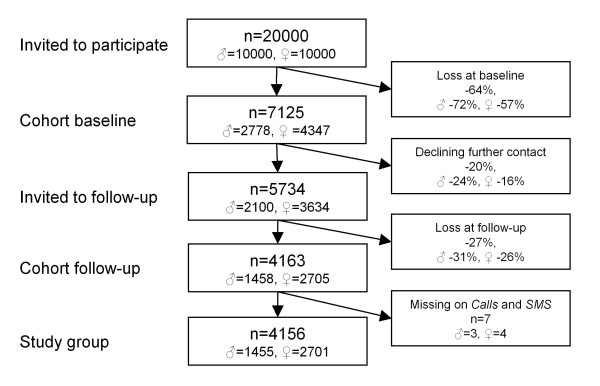
Verification
Claims the paper makes
The claims and statistics of this paper haven’t been checked yet.
Free: it reads the open-access text and checks the first 5 claims that cite a source we can check. Create a free account to check every claim.
Claims other papers make about this one
Each is checked against this paper’s own text: does it say what the citing paper says it does?
The source backs part of the claim, not all of it — or backs it for a different population, condition or comparison.
In the citing paper
“Several studies indicate that high levels of social media use or screen time may reduce users' amount and quality of sleep.16,17”
From Social Media Use and Its Link to Physical Health Indicators (2022) · cites this paper as [17]
Experimental — accuracy not yet measuredThe source backs part of the claim, not all of it — or backs it for a different population, condition or comparison.
In the citing paper
“The first was focused on the non-smart mobile phone and was mainly due to two factors: the amount of phone bills that the use led to and the high use of text messages.”
From Problematic Use of the Internet and Smartphones in University Students: 2006–2017 (2018) · cites this paper as [6]
Experimental — accuracy not yet measuredThe source backs part of the claim, not all of it — or backs it for a different population, condition or comparison.
In the citing paper
“Previous studies showed the relationships between long phone usage duration and high stress [45] and long and frequent phone usage and severe depressive symptoms [8].”
From Identifying Objective Physiological Markers and Modifiable Behaviors for Self-Reported Stress and Mental Health Status Using Wearable Sensors and Mobile Phones: Observational Study (2018) · cites this paper as [45]
Experimental — accuracy not yet measuredThe source backs part of the claim, not all of it — or backs it for a different population, condition or comparison.
In the citing paper
“late night phone and exercise activities could relate to self-reported stress and mental health [45].”
From Identifying Objective Physiological Markers and Modifiable Behaviors for Self-Reported Stress and Mental Health Status Using Wearable Sensors and Mobile Phones: Observational Study (2018) · cites this paper as [45]
Experimental — accuracy not yet measuredThe cited source says what the claim attributes to it.
In the citing paper
“A questionnaire-based study also showed a relationship between high mobile phone usage, stress, and symptoms of depression [45].”
4 more claims about this paper
Create a free account to see every claim other papers make about this one.
Self-check
Percentages, sums and reported differences re-computed from the paper’s own numbers.
The self-check needs the paper’s full text.
Citations
Cites
Internet Addiction: The Emergence of a New Clinical Disorder
YOUNG, K. S. (1998) · CyberPsychology & Behavior · doi:10.1089/cpb.1998.1.237 · Cited by 5,513 · cited 1×
“Internet addiction has been proposed as a specific psychiatric illness [14]; however, this form of problematic Internet use could also be considered to share elements with impulse control disorders and be related to the specific activities done on the Internet (such as gambling) rather than the Internet per se [15,16].”
Mental health of young people: A global public-health challenge
Patel, V., Flisher, A. J., Hetrick, S., & McGorry, P. (2007) · The Lancet · doi:10.1016/s0140-6736(07)60368-7 · Cited by 3,126 · cited 1×
“Mental health problems have been increasing among young people in Sweden and around the world [1,2].”
Utility of a new procedure for diagnosing mental disorders in primary care. The PRIME-MD 1000 study
Spitzer, R. L. (1994) · JAMA · doi:10.1001/jama.272.22.1749 · Cited by 2,635
Mental health problems and help-seeking behavior among college students
Hunt, J., & Eisenberg, D. (2010) · Journal of Adolescent Health · doi:10.1016/j.jadohealth.2009.08.008 · Cited by 1,949 · cited 1×
“Cultural and social changes in terms of increased materialism and individualism have been discussed in relation to this [3,4], including the possibility of a decreasing stigma about mental illness, improved screening for mental illness, and increased help-seeking behaviors [5].”
Psychosocial work environment and mental health—a meta-analytic review
Stansfeld, S., & Candy, B. (2006) · Scandinavian Journal of Work, Environment & Health · doi:10.5271/sjweh.1050 · Cited by 1,875 · cited 1×
“Social support is a well-known factor that both promotes health and buffers negative effects of psychosocial strain [36,37].”
Utility of a New Procedure for Diagnosing Mental Disorders in Primary Care: The PRIME-MD 1000 Study
Spitzer, R. L. (1994) · JAMA · doi:10.1001/jama.1994.03520220043029 · Cited by 1,873 · cited 3×
“Following the suggested PRIME-MD procedure [29,30], a predictive power of 33% [30] would imply that about 20% of the study group was clinically depressed.”
InfluentialSleep disturbance and psychiatric disorders: A longitudinal epidemiological study of young Adults
Breslau, N., Roth, T., Rosenthal, L., & Andreski, P. (1996) · Biological Psychiatry · doi:10.1016/0006-3223(95)00188-3 · Cited by 1,831 · cited 1×
“For example, in one study of young adults [34], sleep disorders was a predictor of major depression onset with an odds ratio of nearly 4.”
Case-finding instruments for depression: Two questions are as good as many
Whooley, M. A., Avins, A. L., Miranda, J., & Browner, W. S. (1997) · Journal of General Internal Medicine · doi:10.1046/j.1525-1497.1997.00076.x · Cited by 1,826
Psychological Predictors of Problem Mobile Phone Use
Bianchi, A., & Phillips, J. G. (2005) · CyberPsychology & Behavior · doi:10.1089/cpb.2005.8.39 · Cited by 1,514 · cited 1×
“Intensive mobile phone use has been associated with dependency on the mobile phone [14,15], and problematic mobile phone use has been a focus in the literature concerning psychological aspects of mobile phone use, where criteria for substance addiction diagnoses or behavioral addictions [16,17] have been used to defin…”
Pathological Video Game Use Among Youths: A Two-Year Longitudinal Study
Gentile, D. A., Choo, H., Liau, A., Sim, T., Li, D., Fung, D., & Khoo, A. (2011) · Pediatrics · doi:10.1542/peds.2010-1353 · Cited by 1,314 · cited 1×
“In a longitudinal study among youths, pathological gaming predicted higher levels of depression, anxiety, social phobia, and poor school performance [22].”
Research works printed but not linked: 3
- StatisticsSweden: Health and medical care 1980-2005. LE Living conditions. Stockholm. 2006, Sweden, [In Swedish, with parts in English]
- Ekman A, Ahlstrand C, Andrén M, Boström M, Dellve L, Eriksson J, Gustafsson E, Hagberg J, Lindegård A, Thomée S, et al: Ung Vuxen - Basenkät (Young adults - baseline questionnaire) [In Swedish]. Rapport från Arbets- och miljömedicin [Occupational and Environmental Report] No 118. 2008, Occupational and Environmental medicine, Gothenburg University, Gothenburg, Sweden
- Karasek R, Theorell T: Healthy work. 1990, New York: Basic Books
Cited by
Items 801–900 of 1,002
Impacts of Social Media Connection Demands: A Study of Irish College Students
Lee, H., Connolly, R., Li, K., Hales, K. D., & LaRose, R. (2013) · AIS Electronic Library (AISeL) · Cited by 5
College Student Sleep Quality Following Sleep Classes
Sexton–Radek, K. (2020) · Health · doi:10.4236/health.2020.1210102 · Cited by 5
Preventing stress through smartphone usage
Grauers, J., & Wall, E. (2012) · Gothenburg University Publications Electronic Archive (Gothenburg University) · Cited by 5
Liao, W. (2019) · Otago University Research Archive (University of Otago) · Cited by 21
Radiofrequency Electromagnetic Fields
Foster, K. R., & Tell, R. A. (2021) · Wiley eBooks · doi:10.1002/0471435139.hyg101.pub2 · Cited by 5
An Observational Study to Assess Smartphone Usage in Patients of Anxiety and Depression
Nair, A. S., Halder, A., Shahani, R., Avula, N., Harshe, D. G., & Harshe, G. (2024) · Annals of Indian Psychiatry · doi:10.4103/aip.aip_220_23 · Cited by 4
Su, Z., Liu, R., Zhou, K., Wei, X., Wang, N., Lin, Z., Xie, Y., Wang, J., Wang, F., Zhang, S., et al. (2024) · Heliyon · doi:10.1016/j.heliyon.2024.e33485 · Cited by 5
Estimating Young Children’s Exposure to Food and Beverage Marketing on Mobile Devices
Kenney, E. L., Mozaffarian, R. S., Norris, J., Fleming‐Milici, F., & Bleich, S. N. (2024) · Current Developments in Nutrition · doi:10.1016/j.cdnut.2024.104505 · Cited by 5
He, Q., Hu, X., Chen, Y., Li, Y., Zhao, Y., Zhou, Y., & Liu, L. (2024) · Psychology Research and Behavior Management · doi:10.2147/prbm.s489357 · Cited by 4
“4,5 Therefore, it is urgent to explore the pathogenesis and influencing factors of MPD.”
Al-Khadher, M. A., Bakhiet, S. F. A., Albursan, I. S., Qudah, M. F. A., AL-Qadri, A. H., Abunagma, I., Alasali, H. H., & Shuying, S. (2025) · Acta Psychologica · doi:10.1016/j.actpsy.2025.105448 · Cited by 4
Wang, Q., Wang, J., Li, X., Liu, C., Wang, P., & Jin, W. (2025) · Computers in Human Behavior · doi:10.1016/j.chb.2025.108848 · Cited by 8
Prevalence and Associated Factors of Poor Sleep Quality Among adults in Qatar
Ansi, M. A., Al-Dahshan, A., Alyafei, A., Chehab, M. A. H., Abdeen, S., Khudadad, H., Adil, N., Aabdien, M., & Bougmiza, M. I. (2026) · Nature and Science of Sleep · doi:10.2147/nss.s559592 · Cited by 5
“Data were entered and cleaned by the principal investigator using SPSS version 28.”
Acaray, A. (2026) · BMC Psychology · doi:10.1186/s40359-026-04164-7 · Cited by 6
“High availability stress is found to be associated with stress, sleep disorders and depressive symptoms in both men and women [58], as well as anxiety and depression [9].”
Donaldson, S. I., Strong, D. R., & Zhu, S. (2021) · Computers in Human Behavior Reports · doi:10.1016/j.chbr.2021.100091 · Cited by 8
Hatha Yoga: efeito da prática nos níveis de ansiedade e depressão em estudantes universitários
Rodrigues, J., Lunardi, M., Bertoli, J., Biduski, G. M., & Freitas, C. D. L. R. (2021) · Extensio Revista Eletrônica de Extensão · doi:10.5007/1807-0221.2021.e72676 · Cited by 10
Psychometric Properties of Smartphone Addiction Inventory (SPAI) in Russian Context
Bayanova, A. R., Chistyakov, A. A., Timofeeva, M. O., Nasonkin, V. V., Shulga, T. I., & Vasyukov, V. (2022) · Contemporary Educational Technology · doi:10.30935/cedtech/11478 · Cited by 5
“…benefits, researchers have explored various negative repercussions, including mental health difficulties (Bauer et al., 2020; Elhai et al., 2017; Thomée et al., 2011), decreased physical fitness (Lepp et al., 2014; Stanislaus et al., 2020), and decreased academic performance (Cha & Seo, 2018;…”
BackgroundReal, T. G., & Losada-Puente, L. (2022) · Revista Electrónica Educare · doi:10.15359/ree.26-2.22 · Cited by 9
Yılmaz, F. G. K., Yılmaz, R., & Sulak, S. (2023) · Technology Knowledge and Learning · doi:10.1007/s10758-023-09676-4 · Cited by 7
“Excessive use of smartphone applications is associated with sleep disorders, stress, anxiety, withdrawal, deterioration in well-being, decreased academic performance, and decreased physical activity (Thomée et al., 2011; Thomée, 2018).”
Disruptive charms of wearable technologies: Navigating digital distractions and work performance
Poondy Rajan, Y., Aiswarya, B., & Jenifer Arokia Selvi, A. (2023) · Journal of Information Technology Teaching Cases · doi:10.1177/20438869231203341 · Cited by 6
“These could provide necessary aid to employees encountering similar dif fi culties, helping them manage their technology use more effectively and improve their productivity and focus (Thomee et al., 2011).”
Influence of leisure experiences on smartphone addiction and emotional distress
Kil, N., Kim, J., Lee, C., Park, J., Kim, J., & Kim, J. (2024) · World Leisure Journal · doi:10.1080/16078055.2024.2320654 · Cited by 5
“Previous studies have demonstrated that smartphone addiction is associated with negative mental states, resulting in diminished quality of life perceptions (Cho & Lee, 2015; Thomée et al., 2011).”
Do comparative judgements affect the perceived relevance of mobile phone road safety campaigns?
Stefanidis, K. B., Truelove, V., Robinson, K., Mills, L., Nicolls, M., Delhomme, P., & Freeman, J. (2024) · Traffic Injury Prevention · doi:10.1080/15389588.2023.2301415 · Cited by 4
“More specifically, it can increase the risk of a crash by up to 400 per cent (WHO 2022) and produce a range of additional negative health and social issues (e.g., Seo et al. 2016; Thomée et al. 2011).”
BackgroundJain, P., Chaturvedi, K., Bagul, K. R., & Mudgal, V. (2025) · Journal of Family Medicine and Primary Care · doi:10.4103/jfmpc.jfmpc_1546_24 · Cited by 5
“[15,16] Apart from the influence of smartphone screens on melatonin production, bedtime procrastination is another factor that may lead to the deterioration of sleep quality among individuals.”
Spitzer, M. (2015) · Psychologische Rundschau · doi:10.1026/0033-3042/a000251 · Cited by 6
“Eine große prospektive Studie an 4.163 Menschen im Alter von 20‐ 24 Jahren konnte nachweisen, dass die Computernutzung zu Schlafstörungen und Depression führt (Thomée et al. 2011).”
BackgroundInfluentialUnsafe Texting and Socially Problematic Texting: Need for Cognition as an Underlying Predictor
Bailey, S. K. T., Schroeder, B. L., & Sims, V. K. (2015) · Proceedings of the Human Factors and Ergonomics Society Annual Meeting · doi:10.1177/1541931215591279 · Cited by 4
Smartphone und Depression: Ursache oder Therapie?
Spitzer, M. (2018) · Nervenheilkunde · doi:10.1055/s-0038-1631165 · Cited by 5
The Role of Information Technology in the Cultural Space of Higher Education: Myth and Reality
Gnatik, E. N. (2018) · Observatory of Culture · doi:10.25281/2072-3156-2018-15-4-490-501 · Cited by 4
Mawi, N., Hamzah, H. B., & Perveen, A. (2020) · International Journal of Academic Research in Business and Social Sciences · doi:10.6007/ijarbss/v10-i9/7824 · Cited by 4
Psychological Predictors of Mobile Phone Use and Addiction among Youths
Munusamy, K. A. P., Ghazali, A. H. A., Zawawi, J. W. M., & Razi, S. A. B. H. M. (2021) · International Journal of Academic Research in Business and Social Sciences · doi:10.6007/ijarbss/v11-i15/10633 · Cited by 5
Aslan, T. K., & Aslan, K. S. Ü. (2022) · Journal of Basic and Clinical Health Sciences · doi:10.30621/jbachs.924292 · Cited by 5
Erzincanli, Y., Taş, H. G., Akbulut, G., ÇUBUKCU, B. B., Ulaş, S., & Bayrakçeken, E. (2023) · İnönü Üniversitesi Sağlık Hizmetleri Meslek Yüksek Okulu Dergisi · doi:10.33715/inonusaglik.1221538 · Cited by 5
Xin, Z., Li, S., Jia, Y., & Yuan, H. (2023) · Frontiers in Psychiatry · doi:10.3389/fpsyt.2023.1201923 · Cited by 4
“Cell phone addiction may make them experience withdrawal symptoms, anxiety, and irritability when they are separated from their phones (45, 46).”
BackgroundRahman, A., Mirbahari, S. N., Ahmadi, R., Gohari, A., & Eshghjoo, S. (2022) · Journal of Biological Studies · doi:10.62400/jbs.v5i1.6379 · Cited by 4
Factors affecting LIS Israeli students’ mobile phone use: an exploratory study
Aharony, N. (2017) · The Electronic Library · doi:10.1108/el-06-2016-0131 · Cited by 7
Internet Gaming Disorder Co-morbidity Linked to Depression and Other Affective Problems
Archer, T. (2018) · Clinical Depression · doi:10.4172/2572-0791.1000e107 · Cited by 4
Ripa’i, M., Safri, S., & Dewi, Y. I. (2019) · Jurnal Ners Indonesia · doi:10.31258/jni.9.2.117-128 · Cited by 12
Oh, Y. J., & Kim, H. D. (2020) · Journal of the Korean Society of School Health · doi:10.15434/kssh.2020.33.1.48 · Cited by 4
Prevalence of Smartphone Addiction among University Students in Saudi Arabia: A Multicenter Study
Family Medicine Specialist, M. O. H., AlBoali, R., Alkhateeb, A. A., Family Medicine Specialist, M. O. H., Alharbi, W., Family Medicine Consultant, M. O. H., Saleh, O., & Family Medicine Specialist1 / Family Medicine Consultant2, M. O. H. (2020) · ANNALS of JINNAH SINDH MEDICAL UNIVERSITY · doi:10.46663/ajsmu.v6i1.10-15 · Cited by 5
Nodehi, M. F., Boroomandfar, S., & Mousavi, S. (2020) · International journal of pediatrics · doi:10.22038/ijp.2020.49458.3956 · Cited by 5
“, misuse of cell phones is linked to anxiousness, sleeplessness, depressed mood, psychological distress, and an unhealthy lifestyle (12).”
BackgroundMaglieri, V., Riccobono, M. G., Giunchi, D., & Palagi, E. (2021) · Journal of Ethology · doi:10.1007/s10164-021-00701-6 · Cited by 7
Current Issues in Conceptualisation, Measurement, and Research of Problematic Use of the Internet
Razum, J., Tkalić, R. G., Brkljačić, T., Sučić, I., & Wertag, A. (2021) · Drustvena istrazivanja · doi:10.5559/di.30.4.05 · Cited by 4
Pierron, X., Williams, I. D., & Shaw, P. J. (2022) · Detritus · doi:10.31025/2611-4135/2022.15159 · Cited by 4
SleepQual and B.Health: Smartwatch and Smartphone based Behavioral Datasets of Youth
Arora, A., Chakraborty, P., & Bhatia, M. P. S. (2022) · International Conference on Cloud Computing, Data Science & Engineering (Confluence) · doi:10.1109/confluence52989.2022.9734122 · Cited by 5
Güler, S., Cengız, R., & Günay, E. (2023) · Journal of Educational Technology and Online Learning · doi:10.31681/jetol.1268467 · Cited by 4
The Impact of Smartphone Use on the Psychosocial Wellness of College Students
Faiola, A. J., Vatani, H., & Srinivas, P. (2018) · Communications in computer and information science · doi:10.1007/978-3-030-02846-6_21 · Cited by 5
Adaptation and validation of the smartphone addiction: a Rasch perspective
Taufik, T., Fadli, R. P., Ardi, Z., Afdal, A., Refnadi, R., Putra, A., Ifdil, I., Churnia, E., Zola, N., Suranata, K., et al. (2018) · Journal of Physics Conference Series · doi:10.1088/1742-6596/1114/1/012096 · Cited by 4
Telework : Experiences of technostress in telework environments.
Ericsson, S. (2016) · DiVA at Umeå University (Umeå University) · Cited by 5
Homo smartphonus: Psychological Aspects of Smartphone Use—A Literature Review
Sorokowski, P., & Sobczak, M. (2025) · Multimodal Technologies and Interaction · doi:10.3390/mti9080083 · Cited by 4
Belal, M., Luong, N., Aledavood, T., & Kulshrestha, J. (2026) · Journal of Medical Internet Research · doi:10.2196/78775 · Cited by 9
“Nighttime use has also been associated with reduced sleep duration [48,94] and poorer sleep quality [95,96], both of which are shown to impact mental health negatively [97-99].”
Huang, D.-I., Chou, T.-H., Huang, C., Chang, Y., Huang, C., Griffiths, M. D., & Potenza, M. N. (2025) · Journal of Behavioral Addictions · doi:10.1556/2006.2025.00092 · Cited by 3
“…& Çelik, 2014; Geng, Gu, Wang, & Zhang, 2021; Soni et al., 2017; Thomee, Hare-nstam, & Hagberg, 2011; Wang et al., 2019), loneliness (Gan, Zhang, Zhang, Wu, & Shao, 2022; Wang et al., 2019) and poor sleep quality (Alahdal, Alsaedi, Garrni, & Alharbi, 2023; Soni et al., 2017; Thomee et al., 2011).”
The Development and Implementation of the Right to Disconnect in Different Jurisdictions
Gryn, D. V., Kotova, L. V., Величко, Л. Ю., Sereda, O. H., & Tkachenko, V. S. (2025) · Białostockie Studia Prawnicze · doi:10.15290/bsp.2025.30.04.09 · Cited by 3
“Regularly disconnecting from work tasks contributes to the improvement of employees’ mental health; not having to constantly respond to work calls and emails during free time allows employees to rest more effectively, which has a positive impact on their mental health (Thomée et al., 2011).”
A review of neurophysiological relationships between sleep disorders and depression
Huang, Y. (2026) · Brain Behavior & Immunity - Health · doi:10.1016/j.bbih.2026.101171 · Cited by 4
Jin, C. J., Long, W., Wang, L., Liu, Z., & Sun, L. (2026) · Scientific Reports · doi:10.1038/s41598-026-36764-z · Cited by 5
“Longitudinal tracking data show that the anxiety level of high mobile phone addiction groups increased by 42% compared with the baseline in the middle and late semester, which significantly reduced their learning motivation 30 .”
Feng, J., Ni, H., Hou, Z., Zhao, L. X., & Lei, X. (2026) · Frontiers in Behavioral Neuroscience · doi:10.3389/fnbeh.2026.1714774 · Cited by 4
Extending realities: creativity, artistry and technology
Wilson, C., & Brown, M. (2013) · University of Derby Online Research Archive. (University of Derby) · Cited by 6
Shettigar, M. M., & Karinagannanavar, A. (2016) · International Journal of Community Medicine and Public Health · doi:10.18203/2394-6040.ijcmph20163066 · Cited by 3
Mansoor, J., Muneer, S., & Kanwal, L. (2020) · National Journal of Health Sciences · doi:10.21089/njhs.51.0013 · Cited by 6
Smartphone addiction and sleep quality among students
Nikolić, A., & Grujičić, S. Š. (2023) · Medicinski podmladak · doi:10.5937/mp74-42621 · Cited by 7
“Thomée and collaborators (40) study included 4156 young adults of 20 - 24 years who responded to a questionnaire at baseline and 1-year follow-up.”
BackgroundIslam, M. R., Ahmed, O., Naher, L., & Islam, M. N. (2025) · Addictive Behaviors Reports · doi:10.1016/j.abrep.2025.100599 · Cited by 5
“…for PSU ’ s influence on subjective well-being could be that continuous exposure to blue light limits melatonin production, causing irregular circadian rhythm, sleep problems, and psychological strain, possibly resulting in lowered subjective well-being (Cui et al., 2021; Thom ´ ee et al., 2011).”
Satriya, A. B., & Setijadi, E. (2013) · doi:10.1109/iciteed.2013.6676250 · Cited by 3
“The use of mobile phone also can make a sleeping disorder [3], and there are still some researches which show the dangers of mobile phone use.”
BackgroundMcCann, D. (2015) · Child Care Health and Development · doi:10.1111/cch.12275 · Cited by 6
Kneidinger-Müller, B. (2017) · Advances in information quality and management · doi:10.4018/978-1-5225-2061-0.ch005 · Cited by 6
Lee, J. M. (2016) · The Korean Journal of Community Living Science · doi:10.7856/kjcls.2016.27.3.371 · Cited by 4
“스마트 폰 과다 사용으로 인해 손목터널증후군, 거북목증후군 등 신체적 문제, 과도한 요금으로 인한 경제적 문제나 불안, 우울, 금단, 강박증상 등과 같은 정신 병리적 문 제와 함께 특히 청소년 연령대의 스마트폰 중독이 증 가해 그로 인해 일상생활 부적응과 대인회피 및 학업 부진 등의 문제가 대두되고 있다(Thomée et al. 2011; Jang et al. 2013; National Information Society Agency 2016).”
Decreasing the Screen Time on Social Media using Time Limitations
Taiwade, H. V., Yerwarkar, A., Sewatkar, G., Mandape, M., Patle, M., & Koli, S. (2022) · International Journal of Advanced Research in Science Communication and Technology · doi:10.48175/ijarsct-4802 · Cited by 3
Gupta, V., Gupta, A. K., Valjiyani, S., Uppal, S., Gautam, S., & Vishwas, G. (2023) · doi:10.37871/jbres1788 · Cited by 5
Alshehry, A. A., Sulaiman, W. S. W., Khairudin, R., & Abdullah, N.-A. (2023) · F1000Research · doi:10.12688/f1000research.141431.1 · Cited by 3
Li, H. (2024) · International Journal of Mental Health and Addiction · doi:10.1007/s11469-024-01280-6 · Cited by 3
“Such a finding is interesting, given that previous studies have reported more frequent mobile phone use among females (Thomée et al., 2011; Wacks & Weinstein, 2021).”
Determinants of Smartphone Addiction and its Influence on Students’ Academic Performance
Bugti, S. M., Bugti, F., & Sarhandi, P. S. A. (2023) · PJDOL · doi:10.30971/pjdol.v9i2.1894 · Cited by 4
“…1998) declared that the hobby to play video games is the key motive for young ones to use smartphones that leads to excessive play and in result they indulge in overuse of smartphone and it may cause different health disorders and problems like sleeping, stress and anxiety (Thomée et al., 2011).”
BackgroundErgenlerde akıllı telefon bağımlılığının yordayıcısı olarak benlik saygısı ve yaşam doyumu
Uzun, A. E., Hamurcu, H., & Gülgün, U. Z. U. N. (2024) · Nevşehir Hacı Bektaş Veli Üniversitesi SBE Dergisi · doi:10.30783/nevsosbilen.1421182 · Cited by 3
Zimmermann, L. V., & Somasundaram, J. (2024) · Palgrave studies in marketing, organizations and society · doi:10.1007/978-3-031-60199-6_5 · Cited by 3
Unwilling the Smartphone Addiction, Fear of Missing Out and Mental Health Issues in Youth
Manzoor, R., & Akhtar, S. (2024) · Journal of Asian Development Studies · doi:10.62345/jads.2024.13.3.4 · Cited by 3
Martynenko, E. V., Sultanbayeva, G. S., Matvienko, V. V., Базанова, А. Е., Владимирович, М. Е., Muratova, N. F., & Martynenko, S. (2024) · Online Journal of Communication and Media Technologies · doi:10.30935/ojcmt/15695 · Cited by 4
Lafuente, C., Chabrol, H., & Laconi, S. (2018) · Annales Médico-psychologiques revue psychiatrique · doi:10.1016/j.amp.2017.10.020 · Cited by 4
Smart phone use and sleep disturbances, depression and anxiety in adolescents
Kulkarni, V. P., Kumar, L. S., & Naidu, L. V. R. (2019) · Public Health Review International Journal of Public Health Research · doi:10.17511/ijphr.2019.i2.03 · Cited by 6
Jeyashree, K., Sathiavadivu, J. S., & Abdulkader, R. S. (2020) · International Journal of Adolescent Medicine and Health · doi:10.1515/ijamh-2018-0296 · Cited by 4
The Effect of Internet Addiction on the Sleep Pattern and Quality of Life Among Medical Students
Usmani, S. B., Bhatti, K. P., Jindal, P., Bharti, A., & Bharti, P. (2021) · International Journal of Current Research and Review · doi:10.31782/ijcrr.2021.13326 · Cited by 3
Bibliometric analysis on workplace cyberbullying: study protocol
Kim, Y. J., Qian, L., & Aslam, M. S. (2021) · F1000Research · doi:10.12688/f1000research.51495.1 · Cited by 3
Psychological Factors Related to Problematic Internet and Smartphone Use
Aka, B. T., Kalecik, S., & Doğruyol, B. (2020) · Nesne Psikoloji Dergisi · doi:10.7816/nesne-08-16-01 · Cited by 5
“In one of these studies, Thomee et al. (2011) stated a positive association between cell phone overuse, depression and sleep problems.”
BackgroundEFFECTS OF NOMOPHOBIA AND MOBILE PHONE USE WITH EYE STRAIN IN UNIVERSITY STUDENTS
Saputra, F. F., & Inayah, Z. (2021) · PREPOTIF Jurnal Kesehatan Masyarakat · doi:10.31004/prepotif.v5i2.2581 · Cited by 6
Nordin, N. M., & Martin, P. (2022) · Malaysian Journal of Society and Space · doi:10.17576/geo-2022-1803-07 · Cited by 3
“In fact, a number of studies have reported that uncontrollable use of the smartphone has been linked to addictive behaviors (Chóliz, 2010), stress (Thomée et al., 2011), anxiety, and depression (Yang et al., 2019).”
BackgroundFebrina, N. M. S., Suarningsih, N. K. A., & Nurhesti, P. O. Y. (2022) · Journal of A Sustainable Global South · doi:10.24843/jsgs.2022.v06.i02.p05 · Cited by 3
“While psychologically, smartphone addiction can lead to stress, anxiety, depression, sleep disorder, poor quality of sleep [17,18,19,20].”
BackgroundPrimi, C., Garuglieri, S., Gori, C., Sanson, F., Giambi, D., Fogliazza, M., & Donati, M. A. (2023) · Behaviour and Information Technology · doi:10.1080/0144929x.2023.2212816 · Cited by 3
“…mental and physical health issues such as inducing headache (Korpinen and Pääkkönen 2009), concentration di ffi culties, symptoms of depression (Thomée, Härenstam, and Hagberg 2011), sleep disturbances, anxiety (Demirci, Akgönül, and Akpinar 2015) or dissatisfaction with life (Lepp, Barkley,…”
BackgroundIndian Psychology and Modern Psychology
Pant, N. (2023) · Springer eBooks · doi:10.1007/978-981-99-2703-6_6 · Cited by 4
Are Adolescents Addicted to Smartphones? A Perspective Using the Rational Addiction Model
Park, G., & Lim, J. (2018) · International Journal of Cyber Behavior Psychology and Learning · doi:10.4018/ijcbpl.2018010101 · Cited by 3
The Smartphone Uses and Dependency Toward Emotional Intelligence on Generation Z
Setyanto, A., & Franksiska, R. (2021) · Jurnal Penelitian dan Pengembangan Sains dan Humaniora · doi:10.23887/jppsh.v5i1.34616 · Cited by 4
Tella, A. (2020) · International Journal of Information and Communication Technology Education · doi:10.4018/ijicte.2021040103 · Cited by 4
Yasmin, F., & Hossain, M. A. (2021) · Journal of Social Humanity and Education · doi:10.35912/jshe.v2i1.832 · Cited by 4
International Students’ Smartphone Usage During the First COVID-19 Lockdown
Magnat, É., & Guichon, N. (2023) · Frontiers · doi:10.36366/frontiers.v35i1.620 · Cited by 2
“In the same vein, a study conducted in Sweden demonstrated that abuse of smartphones could lead to sleep disturbances and signs of depression (Thomée et al., 2011).”
BackgroundRasool, A., & Farooq, S. (2023) · Journal of human dynamics · doi:10.55627/jhd.001.01.0699 · Cited by 2
Hada, R., Zainab, S., Shukla, U., Marwaha, N., & Bansal, C. (2024) · INDIAN JOURNAL OF AYURVEDA & INTEGRATIVE MEDICINE KLEU · doi:10.4103/ijaim.ijaim_3_24 · Cited by 3
Beyond the Pixels : Psychographic Profiling of Virtual Influencers’ Followers in Social Media
Thakur, A., Singla, K., Singla, K., Mohammed Irshad, T., Kaur, S. J., & Kaur, P. (2025) · Indian Journal of Marketing · doi:10.17010/ijom/2025/v55/i3/174833 · Cited by 2
Clicks and Cravings: The Psychology of Smartphone and Social Media Addiction
Sowmya, D. S., Anokha, V., & Nithya, L. (2025) · Advances in human and social aspects of technology book series · doi:10.4018/979-8-3693-8804-4.ch008 · Cited by 2
Nkwo, M. S., Sakpere, A. B., Gilbert, S. B., Alhasani, M., & Orji, R. (2025) · ACM Journal on Computing and Sustainable Societies · doi:10.1145/3759258 · Cited by 2
“Moreover, other studies suggest there could be some relationships in which obsessive smartphone use can lead to psychopathology, which in turn stimulates smartphone use [Thomee et al. 2011 ; van den Eijnden et al. 2008 ; Yen et al. 2012 ].”
Wang, X., Zhang, L., Wu, M., Yuan, X., Ma, L., & Wang, W. (2025) · Journal of Medical Internet Research · doi:10.2196/70819 · Cited by 2
“…postwake use is considered a behavioral withdrawal symptom stemming from nocturnal overuse [34-36], and this pattern may impair emotional regulation; exacerbate daily stress and psychological burden [37]; and correlate with morning fatigue, productivity loss, and psychological distress [38-40].”
Hosseinkhani, Z., Kakemam, E., Hadji, M., & Mohammadi, N. (2025) · BMC Public Health · doi:10.1186/s12889-025-25227-1 · Cited by 2
“While prior research has often focused on youth [46, 47], our study confirms that this association extends to medical employees across adult age groups.”
Bai, B., Meng, S., & Zhou, J. (2025) · Humanities and Social Sciences Communications · doi:10.1057/s41599-025-06312-7 · Cited by 3
“Adolescents who are overly reliant on smartphones show a signi fi cant correlation with anxiety, depression (Elhai et al., 2017; Hou et al., 2021; Jun, 2016; Yang et al., 2019), and sleep problems like dif fi culty falling asleep and poor sleep quality (Li et al., 2020; Thomée et al., 2011).”
Sacred verses screen: Can religiosity buffer digital distress and delay discounting?
Asante, E. F., Adu, B. Y., & Woode, I. (2025) · Science Mundi · doi:10.51867/scimundi.5.2.35 · Cited by 2
“Thomée et al. (2011) found that 25% showed technology-related stress at clinically significant levels, with heavy digital strain tied to restless nights, depressed mood, and slipping grades.”
A review of multimodal depression detection methods using smartphone usage and audio-visual clues
Prasad, T. R., & Kumar, P. (2026) · Iran Journal of Computer Science · doi:10.1007/s42044-025-00359-0 · Cited by 2
“Statistical analysis indicated a close association between sleep disturbances and depression [69].”
Floris, M., & Gentili, C. (2026) · PLOS mental health. · doi:10.1371/journal.pmen.0000524 · Cited by 2
“…with negative outcomes, including exposure to inappropriate content, cyberbullying, distraction from school or work, social withdrawal, as well as physical health (e.g., headaches and neck pain) [2] and mental health concerns (e.g., depression, anxiety, substance use, psychological distress) [3–6].”
Arousal States, Symptoms, Behaviour, Sleep and Body Temperature
Brown, R. F., & Thorsteinsson, E. (2019) · Springer eBooks · doi:10.1007/978-3-030-32545-9_7 · Cited by 2
Cankurtaran, D., Yığman, Z. A., Yığman, F., & Çelik, G. (2021) · Medical Science and Discovery · doi:10.36472/msd.v8i4.527 · Cited by 2
“Reportedly; using a smartphone can cause sleep disorders, stress, anxiety, decreased academic success, and decreased physical activity in previous studies (5).”
Background
Metadata
- Authors
- Thomée, S., Härenstam, A., & Hagberg, M.
- Affiliations
- University of Gothenburg (SE)
- Corresponding author
- Thomée, Sara
- Venue
- BMC Public Health
- Published
- 2011-01-31
- Volume
- 11
- Issue
- 1
- Pages
- 66-66
- ISSN
- 1471-2458 (ISSN-L)
- PMC
- PMC3042390
- OpenAlex
- W2117971251
- Cited by
- 1,269
- References
- 66
- Citations by year
- 2026: 54 · 2025: 76 · 2024: 103 · 2023: 111 · 2022: 133 · 2021: 126 · 2020: 151 · 2019: 105 · 2018: 119 · 2017: 79 · 2016: 79 · 2015: 49 · 2014: 34 · 2013: 34 · 2012: 13
- FWCI
- 88.28
- Type
- journal article
- Language
- en
- Open access
- gold
- doi.org
- Licence
- cc-by
- creativecommons.org/licenses/by/2.0 (tdm)
- Locations
- BMC Public Health (publishedVersion, cc-by)
- PubMed Central (publishedVersion, cc-by)
- PubMed (publishedVersion)
- Gothenburg University Publications Electronic Archive (Gothenburg University) (acceptedVersion)
- DOAJ (DOAJ: Directory of Open Access Journals) (submittedVersion)
- Funders
- Forskningsrådet för Arbetsliv och Socialvetenskap
- Topics
- Social Sciences › Sociology and Political Science › Impact of Technology on Adolescents
- Social Sciences › Psychology › Social Psychology › Technostress in Professional Settings
- Social Sciences › Education › Child Development and Digital Technology
- Keywords
- mobile phone use, mental health, stress, sleep disorders, depressive symptoms, young adults, mobile phone overuse, sex differences, mobile phone exposure
- MeSH terms
- Cross-Sectional Studies, Depression, Female, Humans, Male, Prospective Studies, Surveys and Questionnaires, Risk Factors, Sleep Wake Disorders, Stress, Psychological, Sweden, Cohort Studies, Cell Phone, Young Adult
About these checks
Registry, retraction, Cites and statistics results are computed, not judged, with one exception: a printed reference that no index lists is read once by a model before it counts as a citation error. Claims are extracted by a model and kept only when their quote appears verbatim in the text; each cited source is then checked, with a model’s help, for whether it says what the claim relies on. Those verdicts can be wrong — read the claim’s quote and the cited source before relying on one.
Statistics and arithmetic are recomputed, not judged.
Confidence bands are shown only for fields calibrated on our annotated test set. None is calibrated yet, so no band is shown.
What counts as a claim ›How we measure confidence ›How we check this ›
Are you an author, or do you see a problem with this page? Request a review
Data sources
Bibliographic data: Semantic Scholar, OpenAlex, Crossref.
Contains information from the Semantic Scholar Academic Graph Datasets, made available under the ODC Attribution License (ODC-BY 1.0).
Semantic Scholar’s data is described in: Kinney, R., et al. (2023). The Semantic Scholar Open Data Platform. arXiv:2301.10140.
