

Mobile phone use and stress, sleep disturbances, and symptoms of depression among young adults – A prospective cohort study
Open accessThe DOI matches its Crossref record; 65 of the 66 references it cites were found in a registry or an index.
Abstract
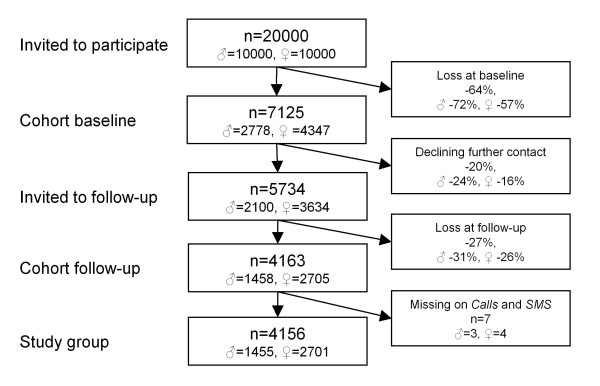
BACKGROUND: Because of the quick development and widespread use of mobile phones, and their vast effect on communication and interactions, it is important to study possible negative health effects of mobile phone exposure. The overall aim of this study was to investigate whether there are associations between psychosocial aspects of mobile phone use and mental health symptoms in a prospective cohort of young adults. METHODS: The study group consisted of young adults 20-24 years old (n = 4156), who responded to a questionnaire at baseline and 1-year follow-up. Mobile phone exposure variables included frequency of use, but also more qualitative variables: demands on availability, perceived stressfulness of accessibility, being awakened at night by the mobile phone, and personal overuse of the mobile phone. Mental health outcomes included current stress, sleep disorders, and symptoms of depression. Prevalence ratios (PRs) were calculated for cross-sectional and prospective associations between exposure variables and mental health outcomes for men and women separately. RESULTS: There were cross-sectional associations between high compared to low mobile phone use and stress, sleep disturbances, and symptoms of depression for the men and women. When excluding respondents reporting mental health symptoms at baseline, high mobile phone use was associated with sleep disturbances and symptoms of depression for the men and symptoms of depression for the women at 1-year follow-up. All qualitative variables had cross-sectional associations with mental health outcomes. In prospective analysis, overuse was associated with stress and sleep disturbances for women, and high accessibility stress was associated with stress, sleep disturbances, and symptoms of depression for both men and women. CONCLUSIONS: High frequency of mobile phone use at baseline was a risk factor for mental health outcomes at 1-year follow-up among the young adults. The risk for reporting mental health symptoms at follow-up was greatest among those who had perceived accessibility via mobile phones to be stressful. Public health prevention strategies focusing on attitudes could include information and advice, helping young adults to set limits for their own and others' accessibility.
Overview
The claims and statistics of this paper haven’t been checked yet.
Free: it reads the open-access text and checks the first 5 claims that cite a source we can check. Create a free account to check every claim.
Integrity signals
Registry
Cites
Statistics
Figures
Verification
Claims the paper makes
The claims and statistics of this paper haven’t been checked yet.
Free: it reads the open-access text and checks the first 5 claims that cite a source we can check. Create a free account to check every claim.
Claims other papers make about this one
Each is checked against this paper’s own text: does it say what the citing paper says it does?
The source backs part of the claim, not all of it — or backs it for a different population, condition or comparison.
In the citing paper
“Several studies indicate that high levels of social media use or screen time may reduce users' amount and quality of sleep.16,17”
From Social Media Use and Its Link to Physical Health Indicators (2022) · cites this paper as [17]
Experimental — accuracy not yet measuredThe source backs part of the claim, not all of it — or backs it for a different population, condition or comparison.
In the citing paper
“The first was focused on the non-smart mobile phone and was mainly due to two factors: the amount of phone bills that the use led to and the high use of text messages.”
From Problematic Use of the Internet and Smartphones in University Students: 2006–2017 (2018) · cites this paper as [6]
Experimental — accuracy not yet measuredThe source backs part of the claim, not all of it — or backs it for a different population, condition or comparison.
In the citing paper
“Previous studies showed the relationships between long phone usage duration and high stress [45] and long and frequent phone usage and severe depressive symptoms [8].”
From Identifying Objective Physiological Markers and Modifiable Behaviors for Self-Reported Stress and Mental Health Status Using Wearable Sensors and Mobile Phones: Observational Study (2018) · cites this paper as [45]
Experimental — accuracy not yet measuredThe source backs part of the claim, not all of it — or backs it for a different population, condition or comparison.
In the citing paper
“late night phone and exercise activities could relate to self-reported stress and mental health [45].”
From Identifying Objective Physiological Markers and Modifiable Behaviors for Self-Reported Stress and Mental Health Status Using Wearable Sensors and Mobile Phones: Observational Study (2018) · cites this paper as [45]
Experimental — accuracy not yet measuredThe cited source says what the claim attributes to it.
In the citing paper
“A questionnaire-based study also showed a relationship between high mobile phone usage, stress, and symptoms of depression [45].”
4 more claims about this paper
Create a free account to see every claim other papers make about this one.
Self-check
Percentages, sums and reported differences re-computed from the paper’s own numbers.
The self-check needs the paper’s full text.
Citations
Cites
Internet Addiction: The Emergence of a New Clinical Disorder
YOUNG, K. S. (1998) · CyberPsychology & Behavior · doi:10.1089/cpb.1998.1.237 · Cited by 5,513 · cited 1×
“Internet addiction has been proposed as a specific psychiatric illness [14]; however, this form of problematic Internet use could also be considered to share elements with impulse control disorders and be related to the specific activities done on the Internet (such as gambling) rather than the Internet per se [15,16].”
Mental health of young people: A global public-health challenge
Patel, V., Flisher, A. J., Hetrick, S., & McGorry, P. (2007) · The Lancet · doi:10.1016/s0140-6736(07)60368-7 · Cited by 3,126 · cited 1×
“Mental health problems have been increasing among young people in Sweden and around the world [1,2].”
Utility of a new procedure for diagnosing mental disorders in primary care. The PRIME-MD 1000 study
Spitzer, R. L. (1994) · JAMA · doi:10.1001/jama.272.22.1749 · Cited by 2,635
Mental health problems and help-seeking behavior among college students
Hunt, J., & Eisenberg, D. (2010) · Journal of Adolescent Health · doi:10.1016/j.jadohealth.2009.08.008 · Cited by 1,949 · cited 1×
“Cultural and social changes in terms of increased materialism and individualism have been discussed in relation to this [3,4], including the possibility of a decreasing stigma about mental illness, improved screening for mental illness, and increased help-seeking behaviors [5].”
Psychosocial work environment and mental health—a meta-analytic review
Stansfeld, S., & Candy, B. (2006) · Scandinavian Journal of Work, Environment & Health · doi:10.5271/sjweh.1050 · Cited by 1,875 · cited 1×
“Social support is a well-known factor that both promotes health and buffers negative effects of psychosocial strain [36,37].”
Utility of a New Procedure for Diagnosing Mental Disorders in Primary Care: The PRIME-MD 1000 Study
Spitzer, R. L. (1994) · JAMA · doi:10.1001/jama.1994.03520220043029 · Cited by 1,873 · cited 3×
“Following the suggested PRIME-MD procedure [29,30], a predictive power of 33% [30] would imply that about 20% of the study group was clinically depressed.”
InfluentialSleep disturbance and psychiatric disorders: A longitudinal epidemiological study of young Adults
Breslau, N., Roth, T., Rosenthal, L., & Andreski, P. (1996) · Biological Psychiatry · doi:10.1016/0006-3223(95)00188-3 · Cited by 1,831 · cited 1×
“For example, in one study of young adults [34], sleep disorders was a predictor of major depression onset with an odds ratio of nearly 4.”
Case-finding instruments for depression: Two questions are as good as many
Whooley, M. A., Avins, A. L., Miranda, J., & Browner, W. S. (1997) · Journal of General Internal Medicine · doi:10.1046/j.1525-1497.1997.00076.x · Cited by 1,826
Psychological Predictors of Problem Mobile Phone Use
Bianchi, A., & Phillips, J. G. (2005) · CyberPsychology & Behavior · doi:10.1089/cpb.2005.8.39 · Cited by 1,514 · cited 1×
“Intensive mobile phone use has been associated with dependency on the mobile phone [14,15], and problematic mobile phone use has been a focus in the literature concerning psychological aspects of mobile phone use, where criteria for substance addiction diagnoses or behavioral addictions [16,17] have been used to defin…”
Pathological Video Game Use Among Youths: A Two-Year Longitudinal Study
Gentile, D. A., Choo, H., Liau, A., Sim, T., Li, D., Fung, D., & Khoo, A. (2011) · Pediatrics · doi:10.1542/peds.2010-1353 · Cited by 1,314 · cited 1×
“In a longitudinal study among youths, pathological gaming predicted higher levels of depression, anxiety, social phobia, and poor school performance [22].”
Research works printed but not linked: 3
- StatisticsSweden: Health and medical care 1980-2005. LE Living conditions. Stockholm. 2006, Sweden, [In Swedish, with parts in English]
- Ekman A, Ahlstrand C, Andrén M, Boström M, Dellve L, Eriksson J, Gustafsson E, Hagberg J, Lindegård A, Thomée S, et al: Ung Vuxen - Basenkät (Young adults - baseline questionnaire) [In Swedish]. Rapport från Arbets- och miljömedicin [Occupational and Environmental Report] No 118. 2008, Occupational and Environmental medicine, Gothenburg University, Gothenburg, Sweden
- Karasek R, Theorell T: Healthy work. 1990, New York: Basic Books
Cited by
Items 101–200 of 1,002
Problematic smartphone use: an empirically validated model
Pivetta, E., Harkin, L., Billieux, J., Kanjo, E., & Kuss, D. J. (2019) · Computers in Human Behavior · doi:10.1016/j.chb.2019.06.013 · Cited by 149
“, obesity, impaired vision, musculoskeletal problems), as well as psychosocial problems, such as sleep disturbances, risky sexual behaviours and aggressive behaviours (Thomée et al., 2011; WHO, 2015).”
BackgroundResultProblematic smartphone use, nature connectedness, and anxiety
Richardson, M., Hussain, Z., & Griffiths, M. D. (2018) · Journal of Behavioral Addictions · doi:10.1556/2006.7.2018.10 · Cited by 148
Effects of Phubbing: Relationships With Psychodemographic Variables
Ergün, N., Göksu, İ., & Sakız, H. (2019) · Psychological Reports · doi:10.1177/0033294119889581 · Cited by 186
Pall, M. L. (2016) · Journal of Chemical Neuroanatomy · doi:10.1016/j.jchemneu.2015.08.001 · Cited by 141
“[11_TD$DIFF](2000), Dwyer and Leeper (1978), Eger and Jahn ( [12_TD$DIFF] 010), Lerner ( [13_TD$DIFF] 980), Navarro et al. (2003), Oberfeld et al. (2004), Salama and Abou El Naga (2004), Santini et al. (2003) and Thomée et al. (2011).”
Problematic Use of Mobile Phones in Australia…Is It Getting Worse?
Oviedo-Trespalacios, Ó., Nandavar, S., Newton, J. D. A., Demant, D., & Phillips, J. G. (2019) · Frontiers in Psychiatry · doi:10.3389/fpsyt.2019.00105 · Cited by 181
The Digital Addiction Scale for Children: Development and Validation
Hawi, N. S., Samaha, M., & Griffiths, M. D. (2019) · Cyberpsychology, Behavior, and Social Networking · doi:10.1089/cyber.2019.0132 · Cited by 142
Digital Phenotyping: Data-Driven Psychiatry to Redefine Mental Health
Oudin, A., Maatoug, R., Bourla, A., Ferreri, F., Bonnot, O., Millet, B., Schoeller, F., Mouchabac, S., & Adrien, V. (2023) · Journal of Medical Internet Research · doi:10.2196/44502 · Cited by 170
“…[49-51], major depression [52-57], mood disorders [46,58,59], posttraumatic stress disorder [60,61], generalized anxiety disorder [62], suicidal thoughts [63,64], sleep disorders [65], addiction [66], stress [53,67], postpartum [68,69], autism [70], and child and adolescent psychiatry [71,72].”
Prevalence of smart phone addiction, sleep quality and associated behaviour problems in adolescents
Soni, R., Upadhyay, R., & Jain, M. (2017) · International Journal of Research in Medical Sciences · doi:10.18203/2320-6012.ijrms20170142 · Cited by 137
“Moreover, another study reported that prolonged use can cause physical discomfort and headaches, which can negatively affect sleep.(14)”
BackgroundHalfmann, A., & Rieger, D. (2019) · Journal of Computer-Mediated Communication · doi:10.1093/jcmc/zmz008 · Cited by 130
What do people do before going to bed? A study of bedtime procrastination using time use surveys
Chung, S. J., An, H., & Suh, S. (2020) · Sleep · doi:10.1093/sleep/zsz267 · Cited by 135
van der Schuur, W. A., Baumgartner, S. E., & Sumter, S. R. (2019) · Health Communication · doi:10.1080/10410236.2017.1422101 · Cited by 129
“As girls more frequently perceived their SM use as being stressful than boys (e.g., Beyens et al., 2016; Thomée et al., 2011), more girls may have surpassed the threshold for SM stress to interfere with sleep than boys.”
BackgroundMedia use and depression: exposure, household rules, and symptoms among young adolescents in the USA
Bickham, D. S., Hswen, Y., & Rich, M. (2015) · International Journal of Public Health · doi:10.1007/s00038-014-0647-6 · Cited by 134
“Similarly, the mobile phone results correspond with evidence that heavy mobile phone users are more likely to suffer from depression (Augner and Hacker 2012; Sanchez-Martinez and Otero 2009; Thomée et al. 2011; Yen et al. 2009).”
BackgroundInfluentialZhang, G., Yang, X., Tu, X., Ding, N., & Lau, J. T. F. (2020) · Journal of Affective Disorders · doi:10.1016/j.jad.2019.09.047 · Cited by 133
Liu, S., Wing, Y. K., Hao, Y., Li, W., Zhang, J., & Zhang, B. (2019) · Sleep · doi:10.1093/sleep/zsy213 · Cited by 128
Assessment of the accuracy of a new tool for the screening of smartphone addiction
Khoury, J. M., de Freitas, A. A. C., Roque, M. A. V., Albuquerque, M. R., das Neves, M. D. C. L., & Garcia, F. D. (2017) · PLOS ONE · doi:10.1371/journal.pone.0176924 · Cited by 90
David, M. E., Roberts, J. A., & Christenson, B. (2018) · International Journal of Human–Computer Interaction · doi:10.1080/10447318.2017.1349250 · Cited by 123
“…Gentile, Coyne, & Bricolo, 2013; Hall & Baym, 2011; Harwood, Dooley, Scott, & Joiner, 2014; Khan, 2008; Kruger & Djerf, 2016; Lepp et al., 2014; Massimini & Peterson, 2009; McDaniel, 2015; Quan-Haase & Collins, 2008; Roberts & David, 2016; Smetanuik, 2014; Thomee et al., 2011; Yen et al., 2009).”
Arrivillaga, C., Rey, L., & Extremera, N. (2020) · Computers in Human Behavior · doi:10.1016/j.chb.2020.106375 · Cited by 117
Elhai, J. D., & Contractor, A. A. (2018) · Computers in Human Behavior · doi:10.1016/j.chb.2018.01.010 · Cited by 121
Dubad, M., Winsper, C., Meyer, C., Livanou, M., & Marwaha, S. (2018) · Psychological Medicine · doi:10.1017/s0033291717001659 · Cited by 117
“For example, their use could lead to an over-reliance on technology in young populations, which could exacerbate mental health problems (Thomée et al. 2011).”
Adicción o abuso del teléfono móvil: revisión de la literatura
Pedrero Pérez, E. J., Rodríguez Monje, M. T., & Ruiz Sánchez De León, J. M. (2012) · Adicciones · doi:10.20882/adicciones.107 · Cited by 119
The association of sleep and late-night cell phone use among adolescents
Amra, B., Shahsavari, A., Shayan-Moghadam, R., Mirheli, O., Moradi-Khaniabadi, B., Bazukar, M., Yadollahi-Farsani, A., & Kelishadi, R. (2017) · Jornal de Pediatria · doi:10.1016/j.jped.2016.12.004 · Cited by 80
Gezgin, D. M., Cakir, O., & Yildirim, S. (2018) · International Journal of Research in Education and Science · doi:10.21890/ijres.383153 · Cited by 110
Problematic mobile phone use of Swiss adolescents: is it linked with mental health or behaviour?
Roser, K., Schoeni, A., Foerster, M., & Röösli, M. (2015) · International Journal of Public Health · doi:10.1007/s00038-015-0751-2 · Cited by 133
“2012) and to amount of mobile phone use which is expected to partly reflect problematic use (Ikeda and Nakamura 2014; Thomée et al. 2011).”
Bhat, S., Pinto-Zipp, G., Upadhyay, H., & Polos, P. G. (2018) · Sleep Health · doi:10.1016/j.sleh.2017.12.004 · Cited by 114
“”(5) Similarly, there appears to be a clear association between increased ESM use and anxiety,(6) as well as depression, and frequency of texting and duration of ESM use both during the day and at bedtimehave been shown to be predictive of sleep disturbances.(8,10,11) Given its addictive nature, it is not surprising t…”
BackgroundBeranuy, M., Machimbarrena, J. M., Vega-Osés, M. A., Carbonell, X., Griffiths, M. D., Pontes, H. M., & González-Cabrera, J. (2020) · International Journal of Environmental Research and Public Health · doi:10.3390/ijerph17051562 · Cited by 109
Squires, L. R., Hollett, K. B., Hesson, J., & Harris, N. (2020) · International Journal of Mental Health and Addiction · doi:10.1007/s11469-020-00224-0 · Cited by 133
“…support (Herrero et al. 2019), family conflict (Mahapatra 2019), sleep disturbance and poor sleep quality (Demirci et al. 2015; Lemola et al. 2015; Thomée et al. 2011), low grade point average and less effective learning styles among university students (Lepp et al. 2015; Rozgonjuk et al. 2018;…”
BackgroundHow smartphone usage correlates with social anxiety and loneliness
Gao, Y., Li, A., Zhu, T., Liu, X., & Liu, X. (2016) · PeerJ · doi:10.7717/peerj.2197 · Cited by 112
Revisiting the relationship between smartphone use and academic performance: A large-scale study
Lin, Y., Yong, L., Fan, W., Tuunainen, V. K., & Deng, S. (2021) · Computers in Human Behavior · doi:10.1016/j.chb.2021.106835 · Cited by 143
Lee (2015) · doi:10.1177/0021934714557034 · Cited by 111
Karsay, K., Schmuck, D., Matthes, J., & Stevic, A. (2019) · Cyberpsychology, Behavior, and Social Networking · doi:10.1089/cyber.2019.0255 · Cited by 110
Akdeniz, G., Kavakcı, M., Gozugok, M., Yalcinkaya, S., Küçükay, A., & Şahutoğulları, B. (2020) · Frontiers in Psychiatry · doi:10.3389/fpsyt.2020.00695 · Cited by 130
Mobile gaming and problematic smartphone use: A comparative study between Belgium and Finland
Lopez-Fernandez, O., Männikkö, N., Kääriäinen, M., Griffiths, M. D., & Kuss, D. J. (2018) · Journal of Behavioral Addictions · doi:10.1556/2006.6.2017.080 · Cited by 109
Digital media and stress: the cost of caring 2.0
Hampton, K. N., Lu, W., & Shin, I. (2016) · Information Communication & Society · doi:10.1080/1369118x.2016.1186714 · Cited by 121
Ibrahim, N. K., Baharoon, B., Banjar, W. F., Jar, A. A., Ashor, R. M., Aman, A. A., & Al-Ahmadi, J. (2018) · PubMed Central · Cited by 112
Tangmunkongvorakul, A., Musumari, P. M., Thongpibul, K., Srithanaviboonchai, K., Techasrivichien, T., Suguimoto, S. P., Ono-Kihara, M., & Kihara, M. (2019) · PLOS ONE · doi:10.1371/journal.pone.0210294 · Cited by 105
Wang, P., Wang, X., Nie, J., Zeng, P., Liu, K., Wang, J., Guo, J., & Lei, L. (2019) · Personality and Individual Differences · doi:10.1016/j.paid.2019.04.013 · Cited by 102
Hong, W., Liu, R.-D., Oei, T.-P., Zhen, R., Jiang, S., & Sheng, X. (2019) · Computers in Human Behavior · doi:10.1016/j.chb.2018.12.020 · Cited by 107
Gezgin, D. M. (2018) · Cypriot Journal of Educational Sciences · doi:10.18844/cjes.v13i2.2938 · Cited by 107
عکاشه, ز. ب., Zamani, B. E., Abedini, Y., Akbari, H., & Hedayati, N. (2014) · PubMed Central · Cited by 105
Defining Social Listening: Recognizing an Emerging Dimension of Listening
Stewart, M. C. H., & Arnold, C. L. (2017) · International Journal of Listening · doi:10.1080/10904018.2017.1330656 · Cited by 162
Sfendla, A., Laita, M., Nejjar, B., Souirti, Z., Ahami, A. O. T., & Senhaji, M. (2018) · Cyberpsychology Behavior and Social Networking · doi:10.1089/cyber.2017.0411 · Cited by 109
Mitchell, L., & Hussain, Z. (2018) · Behavioral Sciences · doi:10.3390/bs8080074 · Cited by 102
“These negative consequences include symptoms of depression and anxiety [7,8], detrimental effects on attention [9], financial problems [10], sleep disturbances [11], dangerous use [12], and problematic social and academic behaviours [9,13].”
Background“I miss my mobile phone!”: Self-expansion via mobile phone and responses to phone loss
Hoffner, C. A., Lee, S., & Park, S. J. (2016) · New Media & Society · doi:10.1177/1461444815592665 · Cited by 96
“However, use of mobile phones, especially heavy use, also has been linked to mental health problems such as stress, anxiety, and sleep disturbance (Jenaro et al., 2007; Thomée et al., 2011).”
BackgroundHao, Z., Jin, L., Li, Y., Akram, H. R., Saeed, M. F., Ma, J., Ma, H., & Huang, J. (2019) · Computers in Human Behavior · doi:10.1016/j.chb.2019.03.001 · Cited by 114
Hadar, A., Hadas, I., Lazarovits, A., Alyagon, U., Eliraz, D., & Zangen, A. (2017) · PLOS ONE · doi:10.1371/journal.pone.0180094 · Cited by 100
Wang, P., Lei, L., Wang, X., Nie, J., Chu, X., & Jin, S. (2018) · Personality and Individual Differences · doi:10.1016/j.paid.2018.04.009 · Cited by 98
Prolonged mobile phone use is associated with depressive symptoms in Chinese adolescents
Liu, J., Liu, C. X., Wu, T., Liu, B.-P., Jia, C.-X., & Liu, X. (2019) · Journal of Affective Disorders · doi:10.1016/j.jad.2019.08.017 · Cited by 98
Buctot, D. B., Kim, N., & Kim, S. H. (2020) · Social Sciences & Humanities Open · doi:10.1016/j.ssaho.2020.100035 · Cited by 81
Temperament and characteristics related to nomophobia
Olivencia-Carrión, M. A., Ferri-García, R., Rueda, M. D. M., Jiménez-Torres, M. G., & López-Torrecillas, F. (2018) · Psychiatry Research · doi:10.1016/j.psychres.2018.04.056 · Cited by 95
Kim, J.-H. (2017) · Computers in Human Behavior · doi:10.1016/j.chb.2017.11.025 · Cited by 117
Smartphone addiction risk and daytime sleepiness in Korean adolescents
Chung, J. E., Choi, S. A., Kim, K. T., Yee, J., Kim, J. H., Seong, J. W., Seong, J. M., Kim, J. Y., Lee, K. E., & Gwak, H. S. (2018) · Journal of Paediatrics and Child Health · doi:10.1111/jpc.13901 · Cited by 93
Gürbüz, İ. B., & Özkan, G. (2020) · Community Mental Health Journal · doi:10.1007/s10597-019-00541-2 · Cited by 120
Lee, J. E., Jang, S.-I., Ju, Y. J., Kim, W., Lee, H. J., & Park, E.-C. (2017) · Journal of Korean Medical Science · doi:10.3346/jkms.2017.32.7.1166 · Cited by 88
“Some researchers found that mobile phone overuse or use in the dark is associated with poor sleep (17,18).”
BackgroundCell phone addiction and psychological and physiological health in adolescents
Shoukat, S. (2019) · EXCLI journal · doi:10.17179/excli2018-2006 · Cited by 149
Texting while stressed: Implications for students’ burnout, sleep, and well-being.
Murdock, K. K. (2013) · Psychology of Popular Media Culture · doi:10.1037/ppm0000012 · Cited by 115
“…and young adults, the use of cell phones has been positively associated with a variety of types of sleep difficulty, such as trouble falling or staying asleep, shorter sleep duration, and daytime sleepiness (Punamäki, Wallenius, Nygard, Saarni, & Rimpela, 2007; Thomée et al., 2007, 2011).”
BackgroundResultA network analysis of problematic smartphone use symptoms in a student sample
Huang, S., Lai, X., Xue, Y., Zhang, C., & Wang, Y. (2021) · Journal of Behavioral Addictions · doi:10.1556/2006.2020.00098 · Cited by 106
Wan Ismail, W. S., Sim, S. T., Tan, K., Bahar, N., Ibrahim, N., Mahadevan, R., Nik Jaafar, N. R., Baharudin, A., & Abdul Aziz, M. (2020) · Perspectives in Psychiatric Care · doi:10.1111/ppc.12517 · Cited by 84
Chen, C.-Y. (2020) · Information, Communication & Society · doi:10.1080/1369118x.2018.1518469 · Cited by 87
Problematic smartphone use among Lebanese adults aged 18–65 years using MPPUS-10
Nahas, M., Hlais, S., Saberian, C., & Antoun, J. (2018) · Computers in Human Behavior · doi:10.1016/j.chb.2018.06.009 · Cited by 91
The Experience of Mobile Entrapment in Daily Life
Hall, J. (2017) · Journal of Media Psychology · doi:10.1027/1864-1105/a000228 · Cited by 86
“Yet, past research consistently demonstrates that when media connectivity is perceived to be uncontrollable or overwhelming, it negatively predicts well-being (Misra & Stokols, 2012 ; LaRose et al., 2014 ; Reinecke et al., 2017 ; Thomee et al., 2011 ).”
BackgroundResultInfluentialA Weakly Supervised Learning Framework for Detecting Social Anxiety and Depression
Salekin, A., Eberle, J. W., Glenn, J. J., Teachman, B. A., & Stankovic, J. A. (2018) · Proceedings of the ACM on Interactive Mobile Wearable and Ubiquitous Technologies · doi:10.1145/3214284 · Cited by 114
“Some recent studies on social anxiety and depression monitoring systems [6, 9, 91] have used smartphone sensors, text information, call information, and GPS data to understand how depression or social anxiety levels are associated with an individual’s mobility and communication patterns.”
BackgroundLee, S., Kim, M., Mendoza, J. S., & McDonough, I. M. (2018) · Heliyon · doi:10.1016/j.heliyon.2018.e00895 · Cited by 88
Chóliz, M., Pinto, L., Phansalkar, S. S., Corr, E., Mujjahid, A., Flores, C., & Barrientos, P. E. (2016) · Frontiers in Psychology · doi:10.3389/fpsyg.2016.00650 · Cited by 90
“From the outset, many researchers have been concerned with the potential problems that these technologies may cause, especially in younger people (Thomée et al., 2011).”
BackgroundAddressing sleep disturbances: an opportunity to prevent cardiometabolic disease?
Grandner, M. A. (2014) · International Review of Psychiatry · doi:10.3109/09540261.2014.911148 · Cited by 88
“…of a changing technological landscape (Brunborg et al., 2011; Crowder et al., 2012; Garmy et al., 2012; Lowden et al., 2011; Munezawa et al., 2011; Thomee et al., 2011, 2012) suggest that individual-level factors need to be viewed in the context of these social-level and societal-level factors.”
BackgroundAntecedents of phubbing: from technological and psychological perspectives
Chatterjee, S. (2020) · Journal of Systems and Information Technology · doi:10.1108/jsit-05-2019-0089 · Cited by 102
Health effects of supplemental work from home in the European Union
Arlinghaus, A., & Nachreiner, F. (2014) · Chronobiology International · doi:10.3109/07420528.2014.957297 · Cited by 119
“Additionally, a large-scale study of young adults linked intensive cell phone use to sleep disorders and symptoms of depression (Thomée et al., 2011).”
BackgroundShi, M., Zhai, X., Li, S., Shi, Y., & Xiang, F. (2021) · International Journal of Environmental Research and Public Health · doi:10.3390/ijerph18105325 · Cited by 102
“Contemporary college students tend to study in a paperless and electronic manner [40] and as a result, their screen time and rates of mobile phone addition are also increasing [19].”
BackgroundUse of mobile apps and technologies in child and adolescent mental health: a systematic review
Punukollu, M., & Marques, M. (2019) · Evidence Based Mental Health · doi:10.1136/ebmental-2019-300093 · Cited by 89
Park, C. S. (2019) · Computers in Human Behavior · doi:10.1016/j.chb.2018.12.022 · Cited by 85
Çağan, Ö., Ünsal, A., & Çelik, N. (2014) · Procedia - Social and Behavioral Sciences · doi:10.1016/j.sbspro.2013.12.793 · Cited by 85
Maurya, C., Muhammad, T., Maurya, P., & Dhillon, P. (2022) · BMC Public Health · doi:10.1186/s12889-022-14076-x · Cited by 116
“Screen time is negatively associated with markers of health in adolescents and young adults in developed countries [9, 29, 30], but very little is known about such relationships in these populations in low- and middle-income countries.”
BackgroundVišnjić, A., Veličković, V., Sokolović, D., Stanković, M., Mijatović, K., Stojanović, M., Milošević, Z., & Radulović, O. (2018) · International Journal of Environmental Research and Public Health · doi:10.3390/ijerph15040697 · Cited by 81
“in this study as well due to the use of self-reporting scales [24].”
MethodOverload and exhaustion: Classifying SNS discontinuance intentions
Nawaz, M. A., Shah, Z., Nawaz, A., Asmi, F., Hassan, Z., & Raza, J. (2018) · Cogent Psychology · doi:10.1080/23311908.2018.1515584 · Cited by 81
“This gratification can be accompanied by a weakened sense of volitional control and encourage continuous activity leading to excessive use (Thomée, Härenstam, & Hagberg, 2011).”
BackgroundPanova, T., Carbonell, X., Chamarro, A., & Puerta-Cortés, D. X. (2020) · Behaviour & Information Technology · doi:10.1080/0144929x.2019.1633405 · Cited by 83
“…et al. 2012; Grellhesl and Punyanunt-Carter 2012, Panova and Lleras 2016), a decrease in mindful living (Thomée et al. 2010), sleep disturbances (Thomée, Härenstam, and Hagberg 2011; Murdock 2013; Demirci, Akgönül, and Akpinar 2015), anxiety (Pierce 2009; Thomée et al. 2010; Murdock 2013;…”
BackgroundFu, X., Liu, J., Liu, R., Ding, Y., Hong, W., & Jiang, S. (2020) · Computers in Human Behavior · doi:10.1016/j.chb.2020.106280 · Cited by 96
The Effortless Assessment of Risk States (EARS) Tool: An Interpersonal Approach to Mobile Sensing
Lind, M. N., Byrne, M. L., Wicks, G., Smidt, A. M., & Allen, N. B. (2018) · JMIR Mental Health · doi:10.2196/10334 · Cited by 84
“For example, Thomée and colleagues found that high phone use predicted higher depressive symptoms, but not sleep disturbance, in women 1 year later [19].”
BackgroundRod, N. H., Dissing, A. S., Clark, A., Gerds, T. A., & Lund, R. (2018) · PLOS ONE · doi:10.1371/journal.pone.0204811 · Cited by 83
“Earlier findings from a Swedish study on young adults published in 2011 showed that 13% of men and 17% of women reported to be awakened at least a few times per month by their mobile phone [5].”
BackgroundResultvan Endert, T. S. (2021) · PLoS ONE · doi:10.1371/journal.pone.0253058 · Cited by 122
“Evidence of negative implications of excessive digital device use, such as stress [5], sleep disturbance [6] or poor academic performance [7], has accumulated in recent years.”
BackgroundProblematic smartphone usage, prevalence and patterns among university students: A systematic review
Candussi, C. J., Kabir, R., & Sivasubramanian, M. (2023) · Journal of Affective Disorders Reports · doi:10.1016/j.jadr.2023.100643 · Cited by 113
Wang, P.-W., Liu, T.-L., Ko, C.-H., Lin, H.-C., Huang, M.-F., Yeh, Y.-C., & Yen, C.-F. (2014) · Comprehensive Psychiatry · doi:10.1016/j.comppsych.2013.09.006 · Cited by 82
Smartphone Addiction and Its Relationship with Indices of Social-Emotional Distress and Personality
Volungis, A. M., Kalpidou, M., Popores, C., & Joyce, M. A. (2019) · International Journal of Mental Health and Addiction · doi:10.1007/s11469-019-00119-9 · Cited by 93
“In a population of 20–24-year-old Swedish adults, Thomee et al. (2011) found high mobile phone use associated with stress, sleep disturbances, and symptoms of depression.”
BackgroundAcademic stress and smartphone dependence among Chinese adolescents: A moderated mediation model
Wang, J., Rost, D. H., Qiao, R.-J., & Monk, R. L. (2020) · Children and Youth Services Review · doi:10.1016/j.childyouth.2020.105029 · Cited by 107
Head, M. M., & Ziolkowski, N. I. (2012) · Computers in Human Behavior · doi:10.1016/j.chb.2012.07.003 · Cited by 100
Buctot, D. B., Kim, N., & Kim, S. H. (2020) · doi:10.2139/ssrn.3571366 · Cited by 81
Updating the determinants of health model in the Information Age
Rice, L., & Sara, R. (2018) · Health Promotion International · doi:10.1093/heapro/day064 · Cited by 99
The relationship between academic stress and adolescents’ problematic smartphone usage
Xu, T.-T., Wang, H.-Z., Fonseca, W., Zimmerman, M. A., Rost, D. H., Gaskin, J., & Wang, J.-L. (2019) · Addiction Research & Theory · doi:10.1080/16066359.2018.1488967 · Cited by 76
“Despite research suggesting that general CONTACT Jin-Liang Wang wangjinliang09@gmail.com Center for Mental Health Education, School of Psychology, Southwest University, No. 2 Tiansheng Road, Beibei District, Chongqing City, Chongqing, 400715, China 2018 Informa UK Limited, trading as Taylor & Francis Group screen or s…”
BackgroundResultInfluentialRingxiety and the Mobile Phone Usage Pattern among the Students of a Medical College in South India
Subba, S. H. (2013) · JOURNAL OF CLINICAL AND DIAGNOSTIC RESEARCH · doi:10.7860/jcdr/2013/4652.2729 · Cited by 80
“It was also found to be a risk factor for the development of the mental health outcomes in a study with one year follow up, which was done among young adults in Sweden [12].”
BackgroundResultInfluentialA Study on Some of the Common Health Effects of Cell-Phones amongst College Students
Acharya, J. P. (2013) · Journal of Community Medicine & Health Education · doi:10.4172/2161-0711.1000214 · Cited by 80
“[11] in Gothenberg, Sweden found out that high mobile phone use was associated with sleep disturbances and symptoms of depression.”
BackgroundCerutti, R., Presaghi, F., Spensieri, V., Valastro, C., & Guidetti, V. (2016) · Headache: The Journal of Head and Face Pain · doi:10.1111/head.12840 · Cited by 79
“These results are consistent with other studies that have identified that excessive use of technology has an impact on the quality and quantity of sleep.(6,7,22,23)”
ResultBaliatsas, C., KAMP, I. V., Bolte, J. F. B., Schipper, M., Yzermans, J. C., & Lebret, E. (2012) · Environment International · doi:10.1016/j.envint.2011.12.002 · Cited by 90
College students' cell phone use and attachment to parents and peers
Lepp, A., Li, J., & Barkley, J. E. (2016) · Computers in Human Behavior · doi:10.1016/j.chb.2016.07.021 · Cited by 77
Afifi, T. D., Zamanzadeh, N., Harrison, K., & Acevedo Callejas, M. (2018) · Computers in Human Behavior · doi:10.1016/j.chb.2017.12.010 · Cited by 75
Annoni, A. M., Petrocchi, S., Camerini, A.-L., & Marciano, L. (2021) · International Journal of Environmental Research and Public Health · doi:10.3390/ijerph18052452 · Cited by 75
“Previous studies demonstrated that the easy access to smartphone-mediated communication substitutes more anxious face-toface social contacts [51,52] because it augments the sense of anonymity and diminishes appearance concerns [53], thus strengthening the relationship between social anxiety and the preference for medi…”
BackgroundMehmood, A., Bu, T., Zhao, E., Zelenina, V., Alexander, N., Wang, W., Siddiqi, S. M., Qiu, X., Yang, X., Qiao, Z., et al. (2021) · Frontiers in Psychology · doi:10.3389/fpsyg.2021.758610 · Cited by 83
Female College Students’ Media Use and Academic Outcomes: Results From a Longitudinal Cohort Study
Walsh, J. L., Fielder, R. L., Carey, K. B., & Carey, M. P. (2013) · Emerging Adulthood · doi:10.1177/2167696813479780 · Cited by 74
Alshobaili, F. A., & Alyousefi, N. A. (2019) · Journal of Family Medicine and Primary Care · doi:10.4103/jfmpc.jfmpc_269_19 · Cited by 99
“among young adults whose mobile phone usage was high.[8]”
Depression screening using mobile phone usage metadata: a machine learning approach
Razavi, R., Gharipour, A., & Gharipour, M. (2020) · Journal of the American Medical Informatics Association · doi:10.1093/jamia/ocz221 · Cited by 74
“13,15,16,18,19 Understanding the predictive power of mobile usage attributes is required to assess the feasibility, reliability, and accuracy of using these attributes for depression screening.”
BackgroundAlkhateeb, A. A., Alboali, R., Alharbi, W., & Saleh, O. (2020) · Journal of Family Medicine and Primary Care · doi:10.4103/jfmpc.jfmpc_1224_19 · Cited by 88
“[31] A study conducted in Sweden[32] in which authors found higher proportion of female participants (34”
BackgroundInfluentialZhao, Z., Zhao, S., Wang, Q., Zhang, Y., & Chen, C. (2022) · International Journal of Environmental Research and Public Health · doi:10.3390/ijerph192315679 · Cited by 82
Zeeni, N., Doumit, R., Abi Kharma, J., & Sanchez‐Ruiz, M. (2018) · Worldviews on Evidence-Based Nursing · doi:10.1111/wvn.12298 · Cited by 72
Metadata
- Authors
- Thomée, S., Härenstam, A., & Hagberg, M.
- Affiliations
- University of Gothenburg (SE)
- Corresponding author
- Thomée, Sara
- Venue
- BMC Public Health
- Published
- 2011-01-31
- Volume
- 11
- Issue
- 1
- Pages
- 66-66
- ISSN
- 1471-2458 (ISSN-L)
- PMC
- PMC3042390
- OpenAlex
- W2117971251
- Cited by
- 1,269
- References
- 66
- Citations by year
- 2026: 54 · 2025: 76 · 2024: 103 · 2023: 111 · 2022: 133 · 2021: 126 · 2020: 151 · 2019: 105 · 2018: 119 · 2017: 79 · 2016: 79 · 2015: 49 · 2014: 34 · 2013: 34 · 2012: 13
- FWCI
- 88.28
- Type
- journal article
- Language
- en
- Open access
- gold
- doi.org
- Licence
- cc-by
- creativecommons.org/licenses/by/2.0 (tdm)
- Locations
- BMC Public Health (publishedVersion, cc-by)
- PubMed Central (publishedVersion, cc-by)
- PubMed (publishedVersion)
- Gothenburg University Publications Electronic Archive (Gothenburg University) (acceptedVersion)
- DOAJ (DOAJ: Directory of Open Access Journals) (submittedVersion)
- Funders
- Forskningsrådet för Arbetsliv och Socialvetenskap
- Topics
- Social Sciences › Sociology and Political Science › Impact of Technology on Adolescents
- Social Sciences › Psychology › Social Psychology › Technostress in Professional Settings
- Social Sciences › Education › Child Development and Digital Technology
- Keywords
- mobile phone use, mental health, stress, sleep disorders, depressive symptoms, young adults, mobile phone overuse, sex differences, mobile phone exposure
- MeSH terms
- Cross-Sectional Studies, Depression, Female, Humans, Male, Prospective Studies, Surveys and Questionnaires, Risk Factors, Sleep Wake Disorders, Stress, Psychological, Sweden, Cohort Studies, Cell Phone, Young Adult
About these checks
Registry, retraction, Cites and statistics results are computed, not judged, with one exception: a printed reference that no index lists is read once by a model before it counts as a citation error. Claims are extracted by a model and kept only when their quote appears verbatim in the text; each cited source is then checked, with a model’s help, for whether it says what the claim relies on. Those verdicts can be wrong — read the claim’s quote and the cited source before relying on one.
Statistics and arithmetic are recomputed, not judged.
Confidence bands are shown only for fields calibrated on our annotated test set. None is calibrated yet, so no band is shown.
What counts as a claim ›How we measure confidence ›How we check this ›
Are you an author, or do you see a problem with this page? Request a review
Data sources
Bibliographic data: Semantic Scholar, OpenAlex, Crossref.
Contains information from the Semantic Scholar Academic Graph Datasets, made available under the ODC Attribution License (ODC-BY 1.0).
Semantic Scholar’s data is described in: Kinney, R., et al. (2023). The Semantic Scholar Open Data Platform. arXiv:2301.10140.
