

The DOI matches its Crossref record; 74 of the 75 references it cites were found in a registry or an index; none of the 106 sources its claims cite is checked for support yet.
Is volunteering a public health intervention? A systematic review and meta-analysis of the health and survival of volunteers
Open accessAbstract
Background: Volunteering has been advocated by the United Nations, and American and European governments as a way to engage people in their local communities and improve social capital, with the potential for public health benefits such as improving wellbeing and decreasing health inequalities. Furthermore, the US Corporation for National and Community Service Strategic Plan for 2011–2015 focused on increasing the impact of national service on community needs, supporting volunteers’ wellbeing, and prioritising recruitment and engagement of underrepresented populations. The aims of this review were to examine the effect of formal volunteering on volunteers’ physical and mental health and survival, and to explore the influence of volunteering type and intensity on health outcomes. Methods: Experimental and cohort studies comparing the physical and mental health outcomes and mortality of a volunteering group to a non-volunteering group were identified from twelve electronic databases (Cochrane Library, Medline, Embase, PsychINFO, CINAHL, ERIC, HMIC, SSCI, ASSIA, Social Care Online, Social Policy and Practice) and citation tracking in January 2013. No language, country or date restrictions were applied. Data synthesis was based on vote counting and random effects meta-analysis of mortality risk ratios. Results: Forty papers were selected: five randomised controlled trials (RCTs, seven papers); four non-RCTs; and 17 cohort studies (29 papers). Cohort studies showed volunteering had favourable effects on depression, life satisfaction, wellbeing but not on physical health. These findings were not confirmed by experimental studies. Meta-analysis of five cohort studies found volunteers to be at lower risk of mortality (risk ratio: 0.78; 95% CI: 0.66, 0.90). There was insufficient evidence to demonstrate a consistent influence of volunteering type or intensity on outcomes. Conclusion: Observational evidence suggested that volunteering may benefit mental health and survival although the causal mechanisms remain unclear. Consequently, there was limited robustly designed research to guide the development of volunteering as a public health promotion intervention. Future studies should explicitly map intervention design to clear health outcomes as well as use pragmatic RCT methodology to test effects.
Overview
AI snapshot
Written from the paper’s full text.
TL;DR
This systematic review and meta-analysis found observational evidence that formal volunteering may improve mental health and reduce mortality, but experimental evidence did not confirm consistent health benefits. The authors conclude there is limited robust evidence to guide volunteering as a public health intervention.
Key findings
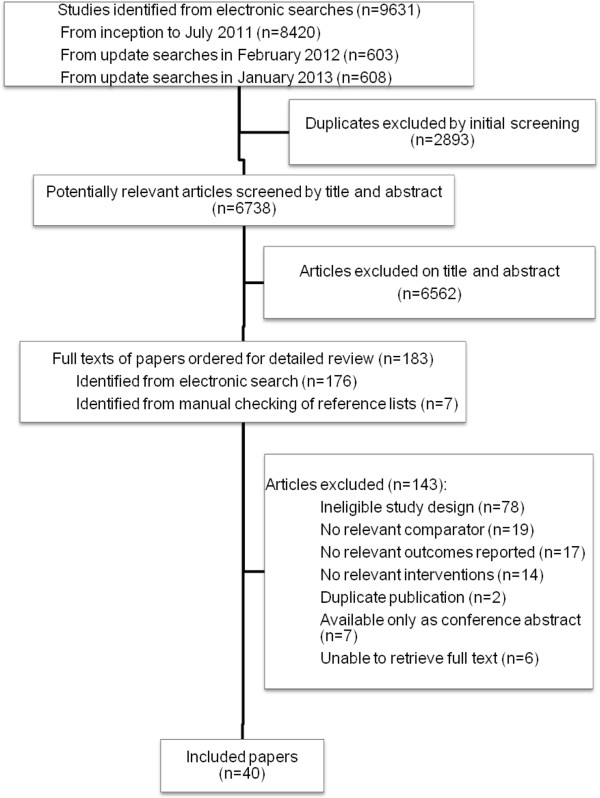
- Forty papers were included: 5 RCTs (7 papers), 4 non-RCTs, and 17 cohort studies (29 papers). Cohort studies showed favourable effects on depression, life satisfaction, and wellbeing, but not on physical health; these findings were not confirmed by experimental studies.
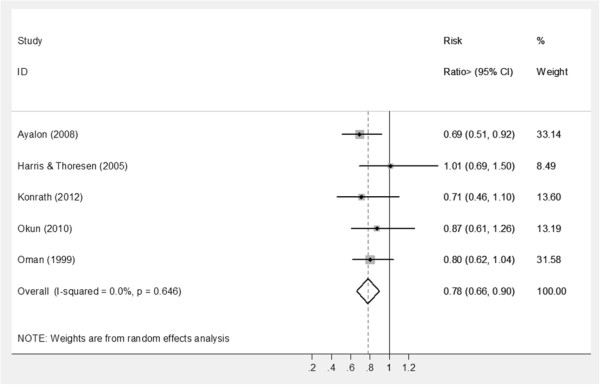
- Meta-analysis of five cohort studies found volunteers had a lower risk of mortality (risk ratio: 0.78; 95% CI: 0.66, 0.90; I² test: p = 0.65), corresponding to a 22% reduction (CI: 10% to 34%).
- Vote counting found no consistent significant health benefits in experimental studies; only single trials reported significant associations with increased physical activity, strength, walking speed, empowerment, wellbeing, and decreased stress.
- There was insufficient evidence to demonstrate a consistent influence of volunteering type or intensity on outcomes.
Methods
- Systematic review and meta-analysis following a pre-defined protocol and PRISMA; searches in January 2013 across twelve electronic databases plus citation tracking, with no language, country, or date restrictions.
- Included experimental and cohort studies comparing physical and/or mental health outcomes and mortality in volunteers versus non-volunteers, adults aged 16 years and above; formal volunteering had to be regular and long-term, defined as a minimum of one hour a month on at least two occasions.
- Data synthesis used vote counting for most outcomes and random-effects meta-analysis of mortality risk ratios; quality was appraised with the Cochrane risk of bias tool for RCTs and the Newcastle-Ottawa Scale for cohort/non-RCT studies.
Limitations
- The paper states that meta-analysis was possible only for survival data; other physical and mental health outcomes were restricted to vote counting due to heterogeneous interventions and study methods.
- The paper states that generalisability is limited because most studies were based in the USA, involved community-dwelling people aged 50 years or over, and many non-USA studies reported cross-sectional data that were excluded.
- The paper states that causal mechanisms remain unclear, selection effects and reverse causality cannot be conclusively ruled out, many cohort studies failed to fully describe volunteering status or measurement, and trial evidence was limited by small, likely underpowered samples and attrition.
Model-written summary. Check it against the paper before relying on it.
Integrity signals
Registry
Cites
Statistics
Figures
Verification
Claims the paper makes
38 Not checked yet · 16 Own result · 15 Own method · 14 Own interpretation · 4 No basis given
None of the sources cited for this claim have been checked yet.
In the paper
“As three RCT papers reported different outcomes collected at the same follow-up from the Experience Corps trial [30,35,58]; a total of five independent RCTs [33,37,54,62] were identified.”
§ Is volunteering a public health intervention? A systematic review and meta-analysis of the health and survival of volunteers > Results > Study characteristics
What the sources say
- Not checked yetcites [33] Cohen A: Welfare clients’ volunteering as a means of empowerment. Nonprofit Volunt Sec Q. 2009, 38: 522-534. 10.1177/0899764008320196. source
- Not checked yetcites [37] George DR, Singer ME: Intergenerational volunteering and quality of life for persons with mild to moderate dementia: results from a 5-month intervention study in the United States. Am J Geriatr Psychiatry. 2011, 19: 392-396. 10.1097/JGP.0b013e3181f17f20. source
- Not checked yetcites [54] Rook KS, Sorkin DH: Fostering social ties through a volunteer role: Implications for older-adults’ psychological health. Int J Aging Hum Dev. 2003, 57: 313-337. 10.2190/NBBN-EU3H-4Q1N-UXHR. source
- Not checked yetcites [62] Yuen HK, Huang P, Burik JK, Smith TG: Impact of participation in volunteer activities for residents living in long-term-care facilities. Am J Occup Ther. 2008, 62: 71-76. 10.5014/ajot.62.1.71. source
plainn = 4- Asserted: passes — The authors put it forward as true.
- Checkable: passes — It can be checked against evidence.
- Load-bearing: passes — The paper’s conclusions depend on it.
- Based: passes — The paper gives a reason why it holds.
A result the paper reports from its own data — it cites no other source for it, so there is none to check. The quote shows it is in the paper.
In the paper
“There was insufficient evidence to demonstrate a consistent influence of volunteering type or intensity on outcomes.”
§ Is volunteering a public health intervention? A systematic review and meta-analysis of the health and survival of volunteers > Abstract > Results
plain- Asserted: passes — The authors put it forward as true.
- Checkable: passes — It can be checked against evidence.
- Load-bearing: passes — The paper’s conclusions depend on it.
- Based: passes — The paper gives a reason why it holds.
A result the paper reports from its own data — it cites no other source for it, so there is none to check. The quote shows it is in the paper.
In the paper
“Cohort studies showed volunteering had favourable effects on depression, life satisfaction, wellbeing but not on physical health.”
§ Is volunteering a public health intervention? A systematic review and meta-analysis of the health and survival of volunteers > Abstract > Results
plaindirect- Asserted: passes — The authors put it forward as true.
- Checkable: passes — It can be checked against evidence.
- Load-bearing: passes — The paper’s conclusions depend on it.
- Based: passes — The paper gives a reason why it holds.
A result the paper reports from its own data — it cites no other source for it, so there is none to check. The quote shows it is in the paper.
In the paper
“Cohort studies showed volunteering had favourable effects on depression, life satisfaction, wellbeing but not on physical health.”
§ Is volunteering a public health intervention? A systematic review and meta-analysis of the health and survival of volunteers > Abstract > Results
plain- Asserted: passes — The authors put it forward as true.
- Checkable: passes — It can be checked against evidence.
- Load-bearing: passes — The paper’s conclusions depend on it.
- Based: passes — The paper gives a reason why it holds.
A result the paper reports from its own data — it cites no other source for it, so there is none to check. The quote shows it is in the paper.
In the paper
“Cohort studies showed volunteering had favourable effects on depression, life satisfaction, wellbeing but not on physical health.”
§ Is volunteering a public health intervention? A systematic review and meta-analysis of the health and survival of volunteers > Abstract > Results
plaindirect- Asserted: passes — The authors put it forward as true.
- Checkable: passes — It can be checked against evidence.
- Load-bearing: passes — The paper’s conclusions depend on it.
- Based: passes — The paper gives a reason why it holds.
None of the sources cited for this claim have been checked yet.
In the paper
“Three studies reported no association with volunteering [9,44,49].”
§ Is volunteering a public health intervention? A systematic review and meta-analysis of the health and survival of volunteers > Results > Impact of volunteering on health outcomes and survival
What the sources say
- Not checked yetcites [9] Konrath S, Fuhrel-Forbis A, Lou A, Brown S: Motives for volunteering are associated with mortality risk in older adults. Health Psychol. 2012, 31: 87-96. source
- Not checked yetcites [44] Menec VH: The relation between everyday activities and successful aging: a 6 year longitudinal study. J Gerontol B Psychol Sci Soc Sci. 2003, 58B: S74-S82. source
- Not checked yetcites [49] Okun MA, August KJ, Rook KS, Newsom JT: Does volunteering moderate the relation between functional limitations and mortality?. Soc Sci Med. 2010, 71: 1662-1668. 10.1016/j.socscimed.2010.07.034. source
plain- Asserted: passes — The authors put it forward as true.
- Checkable: passes — It can be checked against evidence.
- Load-bearing: unclear — It is unclear whether the paper’s conclusions depend on it.
- Based: passes — The paper gives a reason why it holds.
None of the sources cited for this claim have been checked yet.
In the paper
“Four [28,43,60,63] of the five cohorts [28,43,44,60,63] that assessed life satisfaction reported benefit (3–25 year follow-ups).”
§ Is volunteering a public health intervention? A systematic review and meta-analysis of the health and survival of volunteers > Results > Impact of volunteering on health outcomes and survival
What the sources say
- Not checked yetcites [28] Bowman N, Brandenberger J, Lapsley D, Hill P, Quaranto J: Serving in college, flourishing in adulthood: does community engagement during the college years predict adult well-being?. Appl Psychol Health Wellbeing. 2010, 2: 14-34. 10.1111/j.1758-0854.2009.01020.x. source
- Not checked yetcites [43] Meier S, Stutzer A: Is volunteering rewarding in itself?. Economica. 2008, 75: 39-59. source
- Not checked yetcites [60] Van Willigen M: Differential benefits of volunteering across the life course. J Gerontol B Psychol Sci Soc Sci. 2000, 55: S308-S318. 10.1093/geronb/55.5.S308. source
- Not checked yetcites [63] Nazroo J, Matthews K: The impact of volunteering on well-being in later life. A report to WRVS. 2012, Cardiff, UK: WRVS
- Not checked yetcites [44] Menec VH: The relation between everyday activities and successful aging: a 6 year longitudinal study. J Gerontol B Psychol Sci Soc Sci. 2003, 58B: S74-S82. source
plaincorrelational- Asserted: passes — The authors put it forward as true.
- Checkable: passes — It can be checked against evidence.
- Load-bearing: unclear — It is unclear whether the paper’s conclusions depend on it.
- Based: passes — The paper gives a reason why it holds.
None of the sources cited for this claim have been checked yet.
In the paper
“The remainder found statistically significant associations between at least one measure of volunteering status or intensity (e.g. frequency, hours spent, number of organisations supported) and mortality [26,38,47,50]. Interpretation was difficult, however, as studies reported statistically significant, but contradictory associations.”
§ Is volunteering a public health intervention? A systematic review and meta-analysis of the health and survival of volunteers > Results > Impact of volunteering on health outcomes and survival
What the sources say
- Not checked yetcites [26] Ayalon L: Volunteering as a predictor of all-cause mortality: what aspects of volunteering really matter?. Int Psychogeriatr. 2008, 20: 1000-1013.
- Not checked yetcites [38] Harris AHS, Thoresen CE: Volunteering is associated with delayed mortality in older people: analysis of the longitudinal study of aging. J Health Psychol. 2005, 10: 739-752. 10.1177/1359105305057310. source
- Not checked yetcites [47] Musick MA, Herzog A, House JS: Volunteering and mortality among older adults: findings from a national sample. J Gerontol B Psychol Sci Soc Sci. 1999, 54B: S173-S180. 10.1093/geronb/54B.3.S173. source
- Not checked yetcites [50] Oman D, Thoresen CE, McMahon K: Volunteerism and mortality among the community-dwelling elderly. J Health Psychol. 1999, 4: 301-316. source
plaincorrelational- Asserted: passes — The authors put it forward as true.
- Checkable: passes — It can be checked against evidence.
- Load-bearing: unclear — It is unclear whether the paper’s conclusions depend on it.
- Based: passes — The paper gives a reason why it holds.
A result the paper reports from its own data — it cites no other source for it, so there is none to check. The quote shows it is in the paper.
In the paper
“Four out of five RCTs were at moderate or high risk of bias due to the random sequence generation not being described, high attrition rates, and small sample sizes available for analysis”
§ Is volunteering a public health intervention? A systematic review and meta-analysis of the health and survival of volunteers > Results > Methodological quality
plain- Asserted: passes — The authors put it forward as true.
- Checkable: passes — It can be checked against evidence.
- Load-bearing: unclear — It is unclear whether the paper’s conclusions depend on it.
- Based: passes — The paper gives a reason why it holds.
A result the paper reports from its own data — it cites no other source for it, so there is none to check. The quote shows it is in the paper.
In the paper
“Cohort studies showed volunteering had favourable effects on depression, life satisfaction, wellbeing but not on physical health.”
§ Is volunteering a public health intervention? A systematic review and meta-analysis of the health and survival of volunteers > Abstract > Results
plaincorrelational- Asserted: passes — The authors put it forward as true.
- Checkable: passes — It can be checked against evidence.
- Load-bearing: passes — The paper’s conclusions depend on it.
- Based: passes — The paper gives a reason why it holds.
- Probably not a substantial claim. 30
- It may state two separate claims as one. 28
None of the sources cited for this claim have been checked yet.
In the paper
“Eleven papers reported RCTs (n = 7) [30,33,35,37,54,58,62] and non-RCTs (n = 4) [27,29,34,57].”
§ Is volunteering a public health intervention? A systematic review and meta-analysis of the health and survival of volunteers > Results > Study characteristics
What the sources say
- Not checked yetcites [27] Belgrave M: The effect of a music therapy intergenerational program on children and older adults’ intergenerational interactions, cross-age attitudes, and older adults’ psychosocial well-being. J Music Ther. 2011, 48: 486-508. source
- Not checked yetcites [29] Carlson MC, Erickson KI, Kramer AF, Voss MW, Bolea N, Mielke M, McGill S, Rebok GW, Seeman T, Fried LP: Evidence for neurocognitive plasticity in at-risk older adults: the experience corps program. J Gerontol A Biol Sci Med Sci. 2009, 64: 1275-1282. source
- Not checked yetcites [34] Dabelko-Schoeny H, Anderson KA, Spinks K: Civic engagement for older adults with functional limitations: piloting an intervention for adult day health participants. Gerontologist. 2010, 50: 694-701. 10.1093/geront/gnq019. source
- Not checked yetcites [57] Tan EJ, Rebok GW, Yu QL, Frangakis CE, Carlson MC, Wang T, Ricks M, Tanner EK, McGill S, Fried LP: The long-term relationship between high-intensity volunteering and physical activity in older African American women. J Gerontol B Psychol Sci Soc Sci. 2009, 64: 304-311. source
plainn = 4- Asserted: passes — The authors put it forward as true.
- Checkable: passes — It can be checked against evidence.
- Load-bearing: fails — The paper’s conclusions may not depend on it.
- Based: passes — The paper gives a reason why it holds.
Probably not a substantial claim. The paper’s conclusions may not depend on it.
In the paper
“Forty papers were selected: five randomised controlled trials (RCTs, seven papers); four non-RCTs; and 17 cohort studies (29 papers).”
- Also stated in: § Results · plain
“Forty papers were included in the review [9,25-63].”
§ Is volunteering a public health intervention? A systematic review and meta-analysis of the health and survival of volunteers > Abstract > Results
What the sources say
- Not checked yetcites [9,25-63]
plain- Asserted: passes — The authors put it forward as true.
- Checkable: passes — It can be checked against evidence.
- Load-bearing: fails — The paper’s conclusions may not depend on it.
- Based: passes — The paper gives a reason why it holds.
Probably not a substantial claim. The paper’s conclusions may not depend on it.
- Also stated in: § Results · plain
A result the paper reports from its own data — it cites no other source for it, so there is none to check. The quote shows it is in the paper.
In the paper
“Twenty-nine papers reported longitudinal analysis of cohort studies; 13 papers reported unique cohorts.”
§ Is volunteering a public health intervention? A systematic review and meta-analysis of the health and survival of volunteers > Results > Study characteristics
plain- Asserted: passes — The authors put it forward as true.
- Checkable: passes — It can be checked against evidence.
- Load-bearing: fails — The paper’s conclusions may not depend on it.
- Based: passes — The paper gives a reason why it holds.
Probably not a substantial claim. The paper’s conclusions may not depend on it. It may state two separate claims as one.
None of the sources cited for this claim have been checked yet.
In the paper
“Volunteering status was significantly associated with improved wellbeing in three cohorts [25,28,31,51,52] (10–29 year follow-ups) but findings regarding volunteering intensity were inconsistent.”
§ Is volunteering a public health intervention? A systematic review and meta-analysis of the health and survival of volunteers > Results > Impact of volunteering on health outcomes and survival
What the sources say
- Not checked yetcites [25] Son J, Wilson J: Volunteer work and hedonic, eudemonic, and social well-being. Sociological Forum. 2012, 27: 658-681. 10.1111/j.1573-7861.2012.01340.x. source
- Not checked yetcites [28] Bowman N, Brandenberger J, Lapsley D, Hill P, Quaranto J: Serving in college, flourishing in adulthood: does community engagement during the college years predict adult well-being?. Appl Psychol Health Wellbeing. 2010, 2: 14-34. 10.1111/j.1758-0854.2009.01020.x. source
- Not checked yetcites [31] Choi NG, Kim J: The effect of time volunteering and charitable donations in later life on psychological wellbeing. Ageing Soc. 2011, 31: 590-610. 10.1017/S0144686X10001224. source
- Not checked yetcites [51] Piliavin JA: Feeling good by doing good: health consequences of social service. Processes of community change and social action. 2005, Mahwah, New Jersey, USA: Lawrence Erlbaum Associates Publishers, 29-50.
- Not checked yetcites [52] Piliavin JA, Siegl E: Health benefits of volunteering in the Wisconsin longitudinal study. J Health Soc Behav. 2007, 48: 450-464. 10.1177/002214650704800408. source
plaincorrelational- Asserted: passes — The authors put it forward as true.
- Checkable: passes — It can be checked against evidence.
- Load-bearing: passes — The paper’s conclusions depend on it.
- Based: passes — The paper gives a reason why it holds.
It may state two separate claims as one.
None of the sources cited for this claim have been checked yet.
In the paper
“Irrespective of how it was measured, volunteering was associated with reduced levels of depression in four cohorts [32,40-42,46,48,51,63], with two cohorts reporting no benefits [36,53].”
§ Is volunteering a public health intervention? A systematic review and meta-analysis of the health and survival of volunteers > Results > Impact of volunteering on health outcomes and survival
What the sources say
- Not checked yetcites [32] Choi NG, Bohman TM: Predicting the changes in depressive symptomatology in later life: how much do changes in health status, marital and caregiving status, work and volunteering, and health-related behaviors contribute?. J Aging Health. 2007, 19: 152-177. 10.1177/0898264306297602. source
- Not checked yetcites [40] Kim J, Pai M: Volunteering and trajectories of depression. J Aging Health. 2010, 22: 84-105. 10.1177/0898264309351310. source
- Not checked yetcites [41] Li Y, Ferraro KF: Volunteering and depression in later life: social benefit or selection processes?. J Health Soc Behav. 2005, 46: 68-84. 10.1177/002214650504600106. source
- Not checked yetcites [42] Li Y, Ferraro KF: Volunteering in middle and later life: is health a benefit, barrier or both?. Soc Forces. 2006, 85: 497-519. 10.1353/sof.2006.0132. source
- Not checked yetcites [46] Morrow-Howell N, Hinterlong J, Rozario PA, Tang F: Effects of volunteering on the well-being of older adults. J Gerontol B Psychol Sci Soc Sci. 2003, 58: S137-S145. 10.1093/geronb/58.3.S137. source
- Not checked yetcites [48] Musick MA, Wilson J: Volunteering and depression: the role of psychological and social resources in different age groups. Soc Sci Med. 2003, 56: 259-269. 10.1016/S0277-9536(02)00025-4. source
- Not checked yetcites [51] Piliavin JA: Feeling good by doing good: health consequences of social service. Processes of community change and social action. 2005, Mahwah, New Jersey, USA: Lawrence Erlbaum Associates Publishers, 29-50.
- Not checked yetcites [63] Nazroo J, Matthews K: The impact of volunteering on well-being in later life. A report to WRVS. 2012, Cardiff, UK: WRVS
- Not checked yetcites [36] Fujiwara T, Kawachi I: A prospective study of individual-level social capital and major depression in the United States. J Epidemiol Community Health. 2008, 62: 627-633. 10.1136/jech.2007.064261. source
- Not checked yetcites [53] Pillemer K, Fuller-Rowell TE, Reid MC, Wells NM: Environmental volunteering and health outcomes over a 20-year period. Gerontologist. 2010, 50: 594-602. 10.1093/geront/gnq007. source
plaincorrelational- Asserted: passes — The authors put it forward as true.
- Checkable: passes — It can be checked against evidence.
- Load-bearing: passes — The paper’s conclusions depend on it.
- Based: passes — The paper gives a reason why it holds.
It may state two separate claims as one.
None of the sources cited for this claim have been checked yet.
In the paper
“Improved quality of life was associated with volunteering status in two cohorts [56,61,63] (2–5 year follow-ups) but only if the activity was reciprocal, i.e. the volunteer felt their actions to be appreciated [56,63].”
§ Is volunteering a public health intervention? A systematic review and meta-analysis of the health and survival of volunteers > Results > Impact of volunteering on health outcomes and survival
What the sources say
- Not checked yetcites [56] Siegrist J, Wahrendorf M: Participation in socially productive activities and quality of life in early old age: findings from SHARE. J Eur Soc Pol. 2009, 19: 317-326. 10.1177/1350506809341513. source
- Not checked yetcites [61] Wahrendorf M, Siegrist J: Are changes in productive activities of older people associated with changes in their well-being? Results of a longitudinal European study. Eur J Ageing. 2010, 7: 59-68. 10.1007/s10433-010-0154-4. source
- Not checked yetcites [63] Nazroo J, Matthews K: The impact of volunteering on well-being in later life. A report to WRVS. 2012, Cardiff, UK: WRVS
plaincorrelational- Asserted: passes — The authors put it forward as true.
- Checkable: passes — It can be checked against evidence.
- Load-bearing: unclear — It is unclear whether the paper’s conclusions depend on it.
- Based: passes — The paper gives a reason why it holds.
It may state two separate claims as one.
A result the paper reports from its own data — it cites no other source for it, so there is none to check. The quote shows it is in the paper.
In the paper
“In contrast, most papers reporting cohort studies (see Additional file 4: Table S4) were large and well designed (25/29 low risk, 4/29 moderate risk).”
§ Is volunteering a public health intervention? A systematic review and meta-analysis of the health and survival of volunteers > Results > Methodological quality
plain- Asserted: passes — The authors put it forward as true.
- Checkable: passes — It can be checked against evidence.
- Load-bearing: unclear — It is unclear whether the paper’s conclusions depend on it.
- Based: passes — The paper gives a reason why it holds.
It may state two separate claims as one.
A result the paper reports from its own data — it cites no other source for it, so there is none to check. The quote shows it is in the paper.
In the paper
“Quality appraisal of non-RCTs (see Additional file 4: Table S4) found three non-RCTs were at moderate risk of bias, and one non-RCT at low risk.”
§ Is volunteering a public health intervention? A systematic review and meta-analysis of the health and survival of volunteers > Results > Methodological quality
plain- Asserted: passes — The authors put it forward as true.
- Checkable: passes — It can be checked against evidence.
- Load-bearing: unclear — It is unclear whether the paper’s conclusions depend on it.
- Based: passes — The paper gives a reason why it holds.
It may state two separate claims as one.
None of the sources cited for this claim have been checked yet.
In the paper
“Volunteering was associated with improved self-efficacy for activities of daily living (one year follow-up) [55] but not with ‘happiness’ (25 year follow-up) [44].”
§ Is volunteering a public health intervention? A systematic review and meta-analysis of the health and survival of volunteers > Results > Impact of volunteering on health outcomes and survival
What the sources say
- Not checked yetcites [55] Shimanuki H, Honda H, Ito T, Kasai T, Takato J, Sakamoto Y, Inuzuka G, Ito Y, Arayama N, Ueki S, Haga H: Relationships between volunteerism and social-physical health and QOL with community-dwelling elderly participating in a long-term care prevention programme. [Japanese]. Nippon Koshu Eisei Zasshi. 2007, 54: 749-759.
- Not checked yetcites [44] Menec VH: The relation between everyday activities and successful aging: a 6 year longitudinal study. J Gerontol B Psychol Sci Soc Sci. 2003, 58B: S74-S82. source
plaincorrelational- Asserted: passes — The authors put it forward as true.
- Checkable: passes — It can be checked against evidence.
- Load-bearing: unclear — It is unclear whether the paper’s conclusions depend on it.
- Based: passes — The paper gives a reason why it holds.
It may state two separate claims as one.
None of the sources cited for this claim have been checked yet.
In the paper
“Heterogeneous findings were observed in the five trials [30,35,37,54,58,62] investigating the health effects of intergenerational volunteering among older adults, with benefits reported for some elements of physical activity and cognitive function.”
§ Is volunteering a public health intervention? A systematic review and meta-analysis of the health and survival of volunteers > Discussion > Interpreting study findings
What the sources say
- Not checked yetcites [30] Carlson MC, Saczynski JS, Rebok GW, Seeman T, Glass TA, McGill S, Tielsch J, Frick KD, Hill J, Fried LP: Exploring the effects of an “everyday” activity program on executive function and memory in older adults: experience corps. Gerontologist. 2008, 48: 793-801. 10.1093/geront/48.6.793. source
- Not checked yetcites [35] Fried LP, Carlson MC, Freedman M, Frick KD, Glass TA, Hill J, McGill S, Rebok GW, Seeman T, Tielsch J, Wasik BA, Zeger S: A social model for health promotion for an aging population: initial evidence on the experience corps model. J Urban Health Bull N Y Acad Med. 2004, 81: 64-78. source
- Not checked yetcites [37] George DR, Singer ME: Intergenerational volunteering and quality of life for persons with mild to moderate dementia: results from a 5-month intervention study in the United States. Am J Geriatr Psychiatry. 2011, 19: 392-396. 10.1097/JGP.0b013e3181f17f20. source
- Not checked yetcites [54] Rook KS, Sorkin DH: Fostering social ties through a volunteer role: Implications for older-adults’ psychological health. Int J Aging Hum Dev. 2003, 57: 313-337. 10.2190/NBBN-EU3H-4Q1N-UXHR. source
- Not checked yetcites [58] Tan EJ, Xue QL, Li T, Carlson MC, Fried LP: Volunteering: a physical activity intervention for older adults - the experience corps program in Baltimore. J Urban Health. 2006, 83: 954-969. 10.1007/s11524-006-9060-7. source
- Not checked yetcites [62] Yuen HK, Huang P, Burik JK, Smith TG: Impact of participation in volunteer activities for residents living in long-term-care facilities. Am J Occup Ther. 2008, 62: 71-76. 10.5014/ajot.62.1.71. source
plaincorrelational- Asserted: passes — The authors put it forward as true.
- Checkable: passes — It can be checked against evidence.
- Load-bearing: unclear — It is unclear whether the paper’s conclusions depend on it.
- Based: passes — The paper gives a reason why it holds.
It may state two separate claims as one.
A result the paper reports from its own data — it cites no other source for it, so there is none to check. The quote shows it is in the paper.
In the paper
“While such adjustments strongly mediated survival, a significant effect remained.”
§ Is volunteering a public health intervention? A systematic review and meta-analysis of the health and survival of volunteers > Discussion > Interpreting study findings
boostedcorrelational- Asserted: passes — The authors put it forward as true.
- Checkable: passes — It can be checked against evidence.
- Load-bearing: passes — The paper’s conclusions depend on it.
- Based: passes — The paper gives a reason why it holds.
It may state two separate claims as one.
A result the paper reports from its own data — it cites no other source for it, so there is none to check. The quote shows it is in the paper.
In the paper
“No significant effects were observed for depression, self-rated health or self-esteem.”
§ Is volunteering a public health intervention? A systematic review and meta-analysis of the health and survival of volunteers > Discussion > Interpreting study findings
plain- Asserted: passes — The authors put it forward as true.
- Checkable: passes — It can be checked against evidence.
- Load-bearing: unclear — It is unclear whether the paper’s conclusions depend on it.
- Based: passes — The paper gives a reason why it holds.
It may state two separate claims as one.
The paper states this without a source or data behind it here, so there is nothing to check it against. The quote shows it is in the paper.
In the paper
“For mental health, volunteering had a favourable effect on depression, life satisfaction and wellbeing.”
§ Is volunteering a public health intervention? A systematic review and meta-analysis of the health and survival of volunteers > Discussion > Interpreting study findings
plaindirect- Asserted: passes — The authors put it forward as true.
- Checkable: passes — It can be checked against evidence.
- Load-bearing: passes — The paper’s conclusions depend on it.
- Based: passes — The paper gives a reason why it holds.
It may state two separate claims as one.
A result the paper reports from its own data — it cites no other source for it, so there is none to check. The quote shows it is in the paper.
In the paper
“Vote counting failed to identify any consistent beneficial effects of volunteering on either physical functional ability or self-rated health.”
§ Is volunteering a public health intervention? A systematic review and meta-analysis of the health and survival of volunteers > Discussion > Interpreting study findings
plain- Asserted: passes — The authors put it forward as true.
- Checkable: passes — It can be checked against evidence.
- Load-bearing: passes — The paper’s conclusions depend on it.
- Based: passes — The paper gives a reason why it holds.
It may state two separate claims as one.
None of the sources cited for this claim have been checked yet.
In the paper
“The small number of observational studies that stratified analysis by age found that older people may be more likely to experience reduced functional dependency and fewer depressive symptoms through volunteering compared with their younger counterparts [40,42,48], although one study found no such benefit [45].”
§ Is volunteering a public health intervention? A systematic review and meta-analysis of the health and survival of volunteers > Discussion > Interpreting study findings
What the sources say
- Not checked yetcites [40] Kim J, Pai M: Volunteering and trajectories of depression. J Aging Health. 2010, 22: 84-105. 10.1177/0898264309351310. source
- Not checked yetcites [42] Li Y, Ferraro KF: Volunteering in middle and later life: is health a benefit, barrier or both?. Soc Forces. 2006, 85: 497-519. 10.1353/sof.2006.0132. source
- Not checked yetcites [48] Musick MA, Wilson J: Volunteering and depression: the role of psychological and social resources in different age groups. Soc Sci Med. 2003, 56: 259-269. 10.1016/S0277-9536(02)00025-4. source
- Not checked yetcites [45] Moen P, Dempstermcclain D, Williams RM: Successful aging - a life-course perspective on women’s multiple roles and health. Am J Sociol. 1992, 97: 1612-1638. 10.1086/229941. source
hedgedconditional- Asserted: passes — The authors put it forward as true.
- Checkable: passes — It can be checked against evidence.
- Load-bearing: unclear — It is unclear whether the paper’s conclusions depend on it.
- Based: passes — The paper gives a reason why it holds.
It may state two separate claims as one.
None of the sources cited for this claim have been checked yet.
In the paper
“Reassuringly, the estimates of the prevalence of volunteering from observational studies is consistent with other sources [3,5], which found the prevalence of volunteering is generally higher in the USA compared with European cohorts, and that older people may be less likely to volunteer than their younger counterparts [64].”
§ Is volunteering a public health intervention? A systematic review and meta-analysis of the health and survival of volunteers > Discussion > Interpreting study findings
What the sources say
- Not checked yetcites [3] Bureau of Labor Statistics - US Department of Labor: Volunteering in the United States - 2011. 2012, USA: Department of Labor
- Not checked yetcites [5] Mathou C: Volunteering in the European Union - final report. Educational, Audiovisual & Culture Executive Agency - Directorate General Education and Culture. 2010, London, UK: GHK
plain- Asserted: passes — The authors put it forward as true.
- Checkable: passes — It can be checked against evidence.
- Load-bearing: fails — The paper’s conclusions may not depend on it.
- Based: passes — The paper gives a reason why it holds.
Probably not a substantial claim. The paper’s conclusions may not depend on it.
The paper states this without a source or data behind it here, so there is nothing to check it against. The quote shows it is in the paper.
In the paper
“For example, it is unclear what type or dose of volunteering activity is associated with the greatest health improvement, for which outcomes and for whom.”
§ Is volunteering a public health intervention? A systematic review and meta-analysis of the health and survival of volunteers > Discussion > Implications for health inequalities, practice and research
plaincorrelational- Asserted: passes — The authors put it forward as true.
- Checkable: passes — It can be checked against evidence.
- Load-bearing: passes — The paper’s conclusions depend on it.
- Based: passes — The paper gives a reason why it holds.
Probably not a substantial claim.
What the paper did — it cites no source for this, so there is none to check. The quote shows it is in the paper.
In the paper
“No language, country or date restrictions were applied.”
- Also stated in: § Search strategy · plain
“Studies were identified without language, country or date restrictions, by searching electronic databases and scanning reference lists.”
§ Is volunteering a public health intervention? A systematic review and meta-analysis of the health and survival of volunteers > Abstract > Methods
plain- Asserted: passes — The authors put it forward as true.
- Checkable: passes — It can be checked against evidence.
- Load-bearing: fails — The paper’s conclusions may not depend on it.
- Based: passes — The paper gives a reason why it holds.
Probably not a substantial claim. The paper’s conclusions may not depend on it.
- Also stated in: § Search strategy · plain
A conclusion the paper draws from its own results — it cites no other source for it, so there is none to check. The quote shows it is in the paper.
In the paper
“Observational evidence suggested that volunteering may benefit mental health and survival although the causal mechanisms remain unclear.”
§ Is volunteering a public health intervention? A systematic review and meta-analysis of the health and survival of volunteers > Abstract > Conclusion
hedgedconditional- Asserted: passes — The authors put it forward as true.
- Checkable: passes — It can be checked against evidence.
- Load-bearing: passes — The paper’s conclusions depend on it.
- Based: passes — The paper gives a reason why it holds.
It may state two separate claims as one.
What the paper did — it cites no source for this, so there is none to check. The quote shows it is in the paper.
In the paper
“To avoid double counting, where multiple papers from the same population cohort reported the same outcome, only one vote per cohort was counted.”
§ Is volunteering a public health intervention? A systematic review and meta-analysis of the health and survival of volunteers > Methods > Evidence synthesis
plain- Asserted: passes — The authors put it forward as true.
- Checkable: passes — It can be checked against evidence.
- Load-bearing: passes — The paper’s conclusions depend on it.
- Based: passes — The paper gives a reason why it holds.
Probably not a substantial claim.
In the paper
“The Cochrane risk of bias tool [19] was used to assess the quality of RCTs. Non-representative samples and high loss to follow-up rates were considered major threats to the external validity of community-based studies. Thus, two domains, random sequence generation and incomplete outcome data, were prioritised out of a possible seven domains.”
§ Is volunteering a public health intervention? A systematic review and meta-analysis of the health and survival of volunteers > Methods > Screening, data extraction and quality appraisal
What the sources say
- Not checked yetcites [19] The Cochrane Collaboration: The Cochrane handbook for systematic reviews of interventions (version 5.1.0). Edited by: Higgins JPT, Green S. 2011, http://www.cochrane-handbook.org/,
plain- Asserted: passes — The authors put it forward as true.
- Checkable: passes — It can be checked against evidence.
- Load-bearing: fails — The paper’s conclusions may not depend on it.
- Based: passes — The paper gives a reason why it holds.
Probably not a substantial claim. The paper’s conclusions may not depend on it. It may state two separate claims as one.
What the paper did — it cites no source for this, so there is none to check. The quote shows it is in the paper.
In the paper
“One reviewer (CJ) screened all titles and abstracts for eligibility. Uncertainties were checked by a second reviewer (AD) with discrepancies resolved by discussion (CJ, AD and SR). The full text of potentially relevant articles was screened independently by two reviewers (CJ and SR or KJ); discrepancies were resolved by discussion with a third reviewer (SR or KJ).”
§ Is volunteering a public health intervention? A systematic review and meta-analysis of the health and survival of volunteers > Methods > Screening, data extraction and quality appraisal
plain- Asserted: passes — The authors put it forward as true.
- Checkable: passes — It can be checked against evidence.
- Load-bearing: fails — The paper’s conclusions may not depend on it.
- Based: passes — The paper gives a reason why it holds.
Probably not a substantial claim. The paper’s conclusions may not depend on it. It may state two separate claims as one.
None of the sources cited for this claim have been checked yet.
In the paper
“This review followed a pre-defined protocol (http://clahrc-peninsula.nihr.ac.uk/includes/site/files/files/EST%20Docs/PenCLAHRC%20volunteering%20protocol%20(21_02_12).pdf), in accordance with the general principles published by the NHS Centre for Reviews and Dissemination [17] and PRISMA (Preferred Reporting Items for Systematic reviews and Meta-Analyses) [18].”
§ Is volunteering a public health intervention? A systematic review and meta-analysis of the health and survival of volunteers > Methods
What the sources say
- Not checked yetcites [17] Centre for Reviews and Dissemination: Systematic reviews. CRD’s guidance for undertaking reviews in health care. 2009, UK: Centre for Reviews and Dissemination, Univeristy of York
- Not checked yetcites [18] Moher D, Liberati A, Tetzlaff J, Altman DG: Preferred reporting items for systematic reviews and meta-analyses: the PRISMA statement. Br Med J. 2009, 339: 332-336. source
plain- Asserted: passes — The authors put it forward as true.
- Checkable: passes — It can be checked against evidence.
- Load-bearing: fails — The paper’s conclusions may not depend on it.
- Based: passes — The paper gives a reason why it holds.
Probably not a substantial claim. The paper’s conclusions may not depend on it.
What the paper did — it cites no source for this, so there is none to check. The quote shows it is in the paper.
In the paper
“Data were extracted by one reviewer (CJ) and independently checked by a second (KJ or SR) using a standardised, piloted data extraction form.”
§ Is volunteering a public health intervention? A systematic review and meta-analysis of the health and survival of volunteers > Methods > Screening, data extraction and quality appraisal
plain- Asserted: passes — The authors put it forward as true.
- Checkable: passes — It can be checked against evidence.
- Load-bearing: fails — The paper’s conclusions may not depend on it.
- Based: passes — The paper gives a reason why it holds.
Probably not a substantial claim. The paper’s conclusions may not depend on it.
None of the sources cited for this claim have been checked yet.
In the paper
“Given the statistical and methodological heterogeneity of studies, meta-analyses of health outcomes were not possible. Consistent with other published reviews [21,22], a more qualitative ‘vote counting’ [23] approach was undertaken.”
§ Is volunteering a public health intervention? A systematic review and meta-analysis of the health and survival of volunteers > Methods > Evidence synthesis
What the sources say
- Not checked yetcites [21] Flodgren G, Eccles MP, Shepperd S, Scott A, Parmelli E, Beyer FR: An overview of reviews evaluating the effectiveness of financial incentives in changing healthcare professional behaviours and patient outcomes. Cochrane Database Syst Rev. 2011, 7: CD009255
- Not checked yetcites [22] Dickens AP, Richards SH, Greaves CJ, Campbell JL: Interventions targeting social isolation in older people: a systematic review. BMC Publ Health. 2011, 11: 647-10.1186/1471-2458-11-647. source
- Not checked yetcites [23] Bushman BJ: Vote-counting procedures in meta-analysis. The Handbook of Research Synthesis. Edited by: Cooper H, Hedges LV. 1984, New York, USA: Russell Sage, 193-213.
plain- Asserted: passes — The authors put it forward as true.
- Checkable: passes — It can be checked against evidence.
- Load-bearing: passes — The paper’s conclusions depend on it.
- Based: passes — The paper gives a reason why it holds.
It may state two separate claims as one.
What the paper did — it cites no source for this, so there is none to check. The quote shows it is in the paper.
In the paper
“The methodological quality of each paper was appraised to generate a risk of bias score. These numerical scores were used to aid interpretation only and not as a quality filter when synthesising results.”
§ Is volunteering a public health intervention? A systematic review and meta-analysis of the health and survival of volunteers > Methods > Screening, data extraction and quality appraisal
plain- Asserted: passes — The authors put it forward as true.
- Checkable: passes — It can be checked against evidence.
- Load-bearing: fails — The paper’s conclusions may not depend on it.
- Based: passes — The paper gives a reason why it holds.
Probably not a substantial claim. The paper’s conclusions may not depend on it. It may state two separate claims as one.
What the paper did — it cites no source for this, so there is none to check. The quote shows it is in the paper.
In the paper
“Experimental and cohort studies comparing the physical and mental health outcomes and mortality of a volunteering group to a non-volunteering group were identified from twelve electronic databases (Cochrane Library, Medline, Embase, PsychINFO, CINAHL, ERIC, HMIC, SSCI, ASSIA, Social Care Online, Social Policy and Practice) and citation tracking in January 2013.”
§ Is volunteering a public health intervention? A systematic review and meta-analysis of the health and survival of volunteers > Abstract > Methods
plain- Asserted: passes — The authors put it forward as true.
- Checkable: passes — It can be checked against evidence.
- Load-bearing: fails — The paper’s conclusions may not depend on it.
- Based: passes — The paper gives a reason why it holds.
Probably not a substantial claim. The paper’s conclusions may not depend on it.
In the paper
“The Newcastle-Ottawa Scale (NOS) for cohort studies [20] was used to assess the quality of non-RCTs and cohort studies.”
§ Is volunteering a public health intervention? A systematic review and meta-analysis of the health and survival of volunteers > Methods > Screening, data extraction and quality appraisal
What the sources say
- Not checked yetcites [20] Wells GA, Shea B, O’Connell D, Peterson J, Welch V, Losos M, Tugwell P: The Newcastle-Ottawa Scale (NOS) for assessing the quality of nonrandomised studies in meta-analyses. 2012, http://www.ohri.ca/programs/clinical_epidemiology/oxford.asp,
plain- Asserted: passes — The authors put it forward as true.
- Checkable: passes — It can be checked against evidence.
- Load-bearing: passes — The paper’s conclusions depend on it.
- Based: passes — The paper gives a reason why it holds.
Probably not a substantial claim.
What the paper did — it cites no source for this, so there is none to check. The quote shows it is in the paper.
In the paper
“Although interpreting evidence of effectiveness from longitudinal analysis of cohort studies may be problematic, they were included due to the limited evidence from experimental studies.”
§ Is volunteering a public health intervention? A systematic review and meta-analysis of the health and survival of volunteers > Methods > Search strategy
hedged- Asserted: passes — The authors put it forward as true.
- Checkable: passes — It can be checked against evidence.
- Load-bearing: passes — The paper’s conclusions depend on it.
- Based: passes — The paper gives a reason why it holds.
Probably not a substantial claim. It may state two separate claims as one.
What the paper did — it cites no source for this, so there is none to check. The quote shows it is in the paper.
In the paper
“Health outcomes which included mortality, and physical or mental health measures could be self-reported or extracted from routine records; no quality filtering was applied although the validity of each measure was noted.”
§ Is volunteering a public health intervention? A systematic review and meta-analysis of the health and survival of volunteers > Methods > Screening, data extraction and quality appraisal
hedged- Asserted: passes — The authors put it forward as true.
- Checkable: passes — It can be checked against evidence.
- Load-bearing: fails — The paper’s conclusions may not depend on it.
- Based: passes — The paper gives a reason why it holds.
Probably not a substantial claim. The paper’s conclusions may not depend on it. It may state two separate claims as one.
None of the sources cited for this claim have been checked yet.
In the paper
“Reassuringly, the estimates of the prevalence of volunteering from observational studies is consistent with other sources [3,5], which found the prevalence of volunteering is generally higher in the USA compared with European cohorts, and that older people may be less likely to volunteer than their younger counterparts [64].”
§ Is volunteering a public health intervention? A systematic review and meta-analysis of the health and survival of volunteers > Discussion > Interpreting study findings
What the sources say
- Not checked yetcites [3] Bureau of Labor Statistics - US Department of Labor: Volunteering in the United States - 2011. 2012, USA: Department of Labor
- Not checked yetcites [5] Mathou C: Volunteering in the European Union - final report. Educational, Audiovisual & Culture Executive Agency - Directorate General Education and Culture. 2010, London, UK: GHK
plaincorrelational- Asserted: passes — The authors put it forward as true.
- Checkable: passes — It can be checked against evidence.
- Load-bearing: fails — The paper’s conclusions may not depend on it.
- Based: passes — The paper gives a reason why it holds.
Probably not a substantial claim. The paper’s conclusions may not depend on it.
In the paper
“Although people tend to volunteer for altruistic reasons [9], if reciprocity is not experienced, then the positive impact of volunteering on quality of life is negated [56,63].”
§ Is volunteering a public health intervention? A systematic review and meta-analysis of the health and survival of volunteers > Discussion > Interpreting study findings
What the sources say
- Not checked yetcites [9] Konrath S, Fuhrel-Forbis A, Lou A, Brown S: Motives for volunteering are associated with mortality risk in older adults. Health Psychol. 2012, 31: 87-96. source
plain- Asserted: passes — The authors put it forward as true.
- Checkable: passes — It can be checked against evidence.
- Load-bearing: fails — The paper’s conclusions may not depend on it.
- Based: passes — The paper gives a reason why it holds.
Probably not a substantial claim. The paper’s conclusions may not depend on it.
In the paper
“Reassuringly, the estimates of the prevalence of volunteering from observational studies is consistent with other sources [3,5], which found the prevalence of volunteering is generally higher in the USA compared with European cohorts, and that older people may be less likely to volunteer than their younger counterparts [64].”
§ Is volunteering a public health intervention? A systematic review and meta-analysis of the health and survival of volunteers > Discussion > Interpreting study findings
What the sources say
- Not checked yetcites [64] Department for Communities and Local Government: Citizenship survey: 2009–10 (April 2009 - March 2010), England. 2010, London, UK: UK Government
hedgedcorrelational- Asserted: passes — The authors put it forward as true.
- Checkable: passes — It can be checked against evidence.
- Load-bearing: fails — The paper’s conclusions may not depend on it.
- Based: passes — The paper gives a reason why it holds.
Probably not a substantial claim. The paper’s conclusions may not depend on it.
In the paper
“The importance of reciprocity was highlighted in the cross sectional analysis of the English Longitudinal Study of Ageing (ELSA); retired people who engaged in either paid work or volunteering experienced greater levels of wellbeing compared to those retirees who engaged in caring [8].”
§ Is volunteering a public health intervention? A systematic review and meta-analysis of the health and survival of volunteers > Discussion > Interpreting study findings
What the sources say
- Not checked yetcites [8] McMunn A, Nazroo J, Wahrendorf M, Breeze E, Zaninotto P: Participation in socially-productive activities, reciprocity and wellbeing in later life: baseline results in England. Ageing Soc. 2009, 29: 765-782. 10.1017/S0144686X08008350. source
plaincorrelational- Asserted: passes — The authors put it forward as true.
- Checkable: passes — It can be checked against evidence.
- Load-bearing: fails — The paper’s conclusions may not depend on it.
- Based: passes — The paper gives a reason why it holds.
Probably not a substantial claim. The paper’s conclusions may not depend on it.
None of the sources cited for this claim have been checked yet.
In the paper
“The State of the World’s Volunteerism Report 2011 [14], the Policy Agenda for Volunteering in Europe (PAVE) [13], the CNCS Strategic Plan 2011–2015 [7] and the UK government policy [15] advocate the uptake of volunteering as a method of improving civic engagement, with the added potential of improving participants’ health and wellbeing [16].”
§ Is volunteering a public health intervention? A systematic review and meta-analysis of the health and survival of volunteers > Discussion > Implications for health inequalities, practice and research
What the sources say
- Not checked yetcites [14] United Nations Volunteers: State of the world’s volunteerism report 2011. Universal values for global well-being. 2011, Bonn, Germany: United Nations Volunteers source
- Not checked yetcites [13] European Year of Voluteering: Policy Agenda for Volunteering in Europe (PAVE). 2011, Brussels, Belgium: EYV 2011 Alliance Secretariat
- Not checked yetcites [7] Corporation for National and Community Service: The Corporation for National and Community Service Strategic Plan 2011–2015. 2011, http://www.nationalservice.gov/sites/default/files/documents/11_0203_cncs_strategic_plan.pdf,
hedgedconditional- Asserted: passes — The authors put it forward as true.
- Checkable: passes — It can be checked against evidence.
- Load-bearing: fails — The paper’s conclusions may not depend on it.
- Based: passes — The paper gives a reason why it holds.
Probably not a substantial claim. The paper’s conclusions may not depend on it. It may state two separate claims as one.
A conclusion the paper draws from its own results — it cites no other source for it, so there is none to check. The quote shows it is in the paper.
In the paper
“Taken together, this review suggests that bio-social and cultural factors may influence both a willingness to engage in volunteering, as well as the benefits that might accrue.”
§ Is volunteering a public health intervention? A systematic review and meta-analysis of the health and survival of volunteers > Discussion > Interpreting study findings
hedgedconditional- Asserted: passes — The authors put it forward as true.
- Checkable: passes — It can be checked against evidence.
- Load-bearing: fails — The paper’s conclusions may not depend on it.
- Based: passes — The paper gives a reason why it holds.
Probably not a substantial claim. The paper’s conclusions may not depend on it. It may state two separate claims as one.
In the paper
“A hierarchy of evidence approach [17] was applied; only experimental (randomised and non-randomised controlled trials) and cohort studies were included.”
§ Is volunteering a public health intervention? A systematic review and meta-analysis of the health and survival of volunteers > Methods > Search strategy
What the sources say
- Not checked yetcites [17] Centre for Reviews and Dissemination: Systematic reviews. CRD’s guidance for undertaking reviews in health care. 2009, UK: Centre for Reviews and Dissemination, Univeristy of York
plain- Asserted: passes — The authors put it forward as true.
- Checkable: passes — It can be checked against evidence.
- Load-bearing: passes — The paper’s conclusions depend on it.
- Based: passes — The paper gives a reason why it holds.
Probably not a substantial claim. It may state two separate claims as one.
In the paper
“Since people reporting stronger social relationships have a reduced risk of mortality [68], the social aspects of volunteering may contribute to the observed survival differences.”
§ Is volunteering a public health intervention? A systematic review and meta-analysis of the health and survival of volunteers > Discussion > Interpreting study findings
What the sources say
- Not checked yetcites [68] Holt-Lunstad J, Smith TB, Layton JB: Social relationships and mortality risk: a meta-analytic review. PLoS Med. 2010, 7: 10.1371/journal.pmed.1000316.
plaindirect- Asserted: passes — The authors put it forward as true.
- Checkable: passes — It can be checked against evidence.
- Load-bearing: passes — The paper’s conclusions depend on it.
- Based: passes — The paper gives a reason why it holds.
Probably not a substantial claim.
None of the sources cited for this claim have been checked yet.
In the paper
“Two recent systematic reviews reported narrative evidence of the potential health benefits from volunteering, but findings were restricted to older adults and evidence from only one trial [11,12].”
§ Is volunteering a public health intervention? A systematic review and meta-analysis of the health and survival of volunteers > Background
What the sources say
- Not checked yetcites [11] von Bonsdorff MB, Rantanen T: Benefits of formal voluntary work among older people. A review. Aging Clin Exp Res. 2011, 23: 162-169. source
- Not checked yetcites [12] Cattan M, Hogg E, Hardill I: Improving quality of life in ageing populations: what can volunteering do?. Maturitas. 2011, 70: 328-332. 10.1016/j.maturitas.2011.08.010. source
hedgedcorrelational- Asserted: passes — The authors put it forward as true.
- Checkable: passes — It can be checked against evidence.
- Load-bearing: passes — The paper’s conclusions depend on it.
- Based: passes — The paper gives a reason why it holds.
It may state two separate claims as one.
In the paper
“Alongside more traditional health promotion goals, such as reducing physical inactivity and excess weight in adults, the new Public Health Framework for England (2013–16) [69] includes self-reported wellbeing and improving health-related quality of life for older people as indicators.”
§ Is volunteering a public health intervention? A systematic review and meta-analysis of the health and survival of volunteers > Discussion > Implications for health inequalities, practice and research
What the sources say
- Not checked yetcites [69] Department of Health: Improving outcomes and supporting transparency. Part 1: a public health outcomes framework for England, 2013–2016. 2012, London, UK: Department of Health
plain- Asserted: passes — The authors put it forward as true.
- Checkable: passes — It can be checked against evidence.
- Load-bearing: fails — The paper’s conclusions may not depend on it.
- Based: passes — The paper gives a reason why it holds.
Probably not a substantial claim. The paper’s conclusions may not depend on it. It may state two separate claims as one.
A conclusion the paper draws from its own results — it cites no other source for it, so there is none to check. The quote shows it is in the paper.
In the paper
“The relevance of the current findings on a nation where health inequalities and volunteering are less prevalent may be questionable.”
§ Is volunteering a public health intervention? A systematic review and meta-analysis of the health and survival of volunteers > Discussion > Interpreting study findings
hedged- Asserted: passes — The authors put it forward as true.
- Checkable: fails — It may be too vague to check against evidence.
- Load-bearing: fails — The paper’s conclusions may not depend on it.
- Based: passes — The paper gives a reason why it holds.
Probably not a substantial claim. It may be too vague to check against evidence. The paper’s conclusions may not depend on it.
In the paper
“While meta-analysis of survival data was undertaken, analysis of the remaining physical and mental health outcomes was restricted to vote counting [23] due to heterogeneous trial interventions and study methods of both trial and observational studies.”
§ Is volunteering a public health intervention? A systematic review and meta-analysis of the health and survival of volunteers > Discussion > Interpreting study findings
What the sources say
- Not checked yetcites [23] Bushman BJ: Vote-counting procedures in meta-analysis. The Handbook of Research Synthesis. Edited by: Cooper H, Hedges LV. 1984, New York, USA: Russell Sage, 193-213.
plain- Asserted: passes — The authors put it forward as true.
- Checkable: passes — It can be checked against evidence.
- Load-bearing: passes — The paper’s conclusions depend on it.
- Based: passes — The paper gives a reason why it holds.
Probably not a substantial claim. It may state two separate claims as one.
A conclusion the paper draws from its own results — it cites no other source for it, so there is none to check. The quote shows it is in the paper.
In the paper
“Many uncertainties remain that preclude clear recommendations for practice.”
§ Is volunteering a public health intervention? A systematic review and meta-analysis of the health and survival of volunteers > Discussion > Implications for health inequalities, practice and research
plain- Asserted: passes — The authors put it forward as true.
- Checkable: passes — It can be checked against evidence.
- Load-bearing: passes — The paper’s conclusions depend on it.
- Based: passes — The paper gives a reason why it holds.
Probably not a substantial claim.
In the paper
“The emerging science of evaluating the impact of complex health behavioural change is giving new insights into intervention mapping and development [70].”
§ Is volunteering a public health intervention? A systematic review and meta-analysis of the health and survival of volunteers > Conclusions
What the sources say
- Not checked yetcites [70] Bartholomew LK, Parcel GS, Kok G, Gottlieb NH, Fernandez ME: Planning health promotion programs: an intervention mapping approach. 2011, San Francisco: Jossey-Bass, 3
plain- Asserted: passes — The authors put it forward as true.
- Checkable: fails — It may be too vague to check against evidence.
- Load-bearing: fails — The paper’s conclusions may not depend on it.
- Based: passes — The paper gives a reason why it holds.
Probably not a substantial claim. It may be too vague to check against evidence. The paper’s conclusions may not depend on it.
What the paper did — it cites no source for this, so there is none to check. The quote shows it is in the paper.
In the paper
“However, ‘volunteering’ (as assessed in cohort studies) is rarely described and heterogeneous in nature suggesting that future evaluations must seek to better describe the intervention ‘tested’.”
§ Is volunteering a public health intervention? A systematic review and meta-analysis of the health and survival of volunteers > Conclusions
plain- Asserted: passes — The authors put it forward as true.
- Checkable: passes — It can be checked against evidence.
- Load-bearing: passes — The paper’s conclusions depend on it.
- Based: passes — The paper gives a reason why it holds.
It may state two separate claims as one.
A conclusion the paper draws from its own results — it cites no other source for it, so there is none to check. The quote shows it is in the paper.
In the paper
“While the underlying causal mechanisms cannot be explained due to the potential for reverse causation and selection bias, synthesis of observational data suggests that people who choose to volunteer are at a lower risk of mortality, and may experience some benefits in terms of physical and mental health.”
§ Is volunteering a public health intervention? A systematic review and meta-analysis of the health and survival of volunteers > Discussion > Implications for health inequalities, practice and research
hedgedconditional- Asserted: passes — The authors put it forward as true.
- Checkable: passes — It can be checked against evidence.
- Load-bearing: passes — The paper’s conclusions depend on it.
- Based: passes — The paper gives a reason why it holds.
It may state two separate claims as one.
A conclusion the paper draws from its own results — it cites no other source for it, so there is none to check. The quote shows it is in the paper.
In the paper
“By adopting this approach, it may be more feasible over the long-term, to robustly design and adequately power, pragmatic RCTs.”
§ Is volunteering a public health intervention? A systematic review and meta-analysis of the health and survival of volunteers > Conclusions
hedgedconditional- Asserted: passes — The authors put it forward as true.
- Checkable: fails — It may be too vague to check against evidence.
- Load-bearing: fails — The paper’s conclusions may not depend on it.
- Based: passes — The paper gives a reason why it holds.
Probably not a substantial claim. It may be too vague to check against evidence. The paper’s conclusions may not depend on it.
The paper relies on this without support.
The adjusted estimates from the included cohort studies adequately control for important potential socio-demographic and health-related confounders.
“After adjusting for important potential socio-demographic and health-related confounders, volunteers had a significantly lower risk of mortality (risk ratio: 0.78; 95% CI: 0.66, 0.90; I2 test: p = 0.65) compared to non-volunteers”
Claims other papers make about this one
Each is checked against this paper’s own text: does it say what the citing paper says it does?
The source backs part of the claim, not all of it — or backs it for a different population, condition or comparison.
In the citing paper
“The cost of volunteering (D2) cannot be reduced to time investment alone; it emerges through the interaction of emotional demands, intensity, subjective meaning, and available coping resources, and it issues in a psychological consequence (D7) that organizational support and perceived recognition appear to buffer (21, 23, 33).”
From Volunteerism as a multidimensional form of human prosocial engagement (2026) · cites this paper as [23]
Experimental — accuracy not yet measuredThe source backs part of the claim, not all of it — or backs it for a different population, condition or comparison.
In the citing paper
“A growing body of research indicates that volunteering is associated with beneficial mental, social, and physical health outcomes, including higher wellbeing, lower distress, greater social connectedness, better functional health, and, in some longitudinal studies, lower mortality risk (21–24).”
From Volunteerism as a multidimensional form of human prosocial engagement (2026) · cites this paper as [23]
Experimental — accuracy not yet measuredThe cited source says what the claim attributes to it.
In the citing paper
“Evidence for a precise optimal level remains inconsistent, and this inconsistency is itself a finding the framework must accommodate rather than resolve by assertion (23).”
From Volunteerism as a multidimensional form of human prosocial engagement (2026) · cites this paper as [23]
In the citing paper
“However, much of this research has been correlationalshowing, for example, that people who spend more money on others are happier (Aknin, Barrington-Leigh, et al., 2013), or people who volunteer to help others are healthier (Jenkinson et al., 2013).”
From Happy to help? A systematic review and meta-analysis of the effects of performing acts of kindness on the well-being of the actor (2018) · cites this paper as Jenkinson et al., 2013
In the citing paper
“It was shown that less calories [469], good sleep [470], less stress [471], good relationships [472], no smoke and low alcohol drinking are environmental factors capable of delaying aging, while genetic factors play a role for in 25% to 30% of life expectancy [473].”
From The Role of Antioxidants in the Interplay between Oxidative Stress and Senescence (2022) · cites this paper as [472]
Self-check
Percentages, sums and reported differences re-computed from the paper’s own numbers.
Each contradiction between two passages listed here was confirmed by an independent check.
Rated minor: it would not touch a result — a value no result rests on, a p-value that stays on the same side of the significance level, or a conflict that is clerical, resolved elsewhere in the paper, or outside its own findings.
In the paper
§ Is volunteering a public health intervention? A systematic review and meta-analysis of the health and survival of volunteers > Discussion > Interpreting study findings
“Heterogeneous findings were observed in the five trials [30,35,37,54,58,62] investigating the health effects of intergenerational volunteering among older adults”
§ Is volunteering a public health intervention? A systematic review and meta-analysis of the health and survival of volunteers > Results > Study participants and interventions
“Four RCTs [30,35,37,54,58,62] and one non-RCT [27] investigated intergenerational volunteering interventions”
Rated minor: it would not touch a result — a value no result rests on, a p-value that stays on the same side of the significance level, or a conflict that is clerical, resolved elsewhere in the paper, or outside its own findings.
In the paper
§ Is volunteering a public health intervention? A systematic review and meta-analysis of the health and survival of volunteers > Results > Impact of volunteering on health outcomes and survival
“Only one RCT [29] found volunteering significantly improved cognitive function.”
§ Is volunteering a public health intervention? A systematic review and meta-analysis of the health and survival of volunteers > Results > Study characteristics
“Of the non-RCTs [27,29,34,57], one paper was drawn from a small sample (n = 18) of Experience Corps trial participants [29]”
Citations
Cites
Preferred Reporting Items for Systematic Reviews and Meta-Analyses: the PRISMA statement
Moher, D., Liberati, A., Tetzlaff, J., Altman, D. G., & for the PRISMA Group (2009) · BMJ · doi:10.1136/bmj.b2535 · Cited by 83,823
Preferred reporting items for systematic reviews and meta-analyses: the PRISMA Statement.
(2009) · PubMed Central · Cited by 44,859
Meta-analysis in clinical trials
DerSimonian, R., & Laird, N. (1986) · Controlled Clinical Trials · doi:10.1016/0197-2456(86)90046-2 · Cited by 39,552 · cited 1×
“Data were pooled using the STATA (version 12) ‘metan’ command, specifying a random effect meta-analysis model using the DerSimonian Laird method [24].”
MethodPreferred Reporting Items for Systematic Reviews and Meta-Analyses: The PRISMA Statement
Moher, D., Liberati, A., Tetzlaff, J., & Altman, D. G. (2009) · Journal of Clinical Epidemiology · doi:10.1016/j.jclinepi.2009.06.005 · Cited by 19,575
(2014) · Medical Entomology and Zoology · Cited by 17,633
Social Relationships and Mortality Risk: A Meta-analytic Review
Holt-Lunstad, J., Smith, T. B., & Layton, J. B. (2010) · PLoS Medicine · doi:10.1371/journal.pmed.1000316 · Cited by 7,272 · cited 1×
“Since people reporting stronger social relationships have a reduced risk of mortality [68], the social aspects of volunteering may contribute to the observed survival differences.”
BackgroundCochrane Handbook for Systematic Reviews of Interventions Version 5.0.1. The Cochrane Collaboration
Higgins, J., Green, S. R., & Higgins, J. (2008) · Cited by 5,544
The Handbook of Research Synthesis.
Howel, D., Cooper, H., & Hedges, L. V. (1995) · Biometrics · doi:10.2307/2533295 · Cited by 3,657
Systematic reviews: CRD's guidance for undertaking reviews in health care
Tacconelli, E. (2010) · The Lancet Infectious Diseases · doi:10.1016/s1473-3099(10)70065-7 · Cited by 3,270
Planning health promotion programs an intervention mapping approach
Bartholomew, L. K., Parcel, G. S., Kok, G., & Gottlieb, N. (2006) · Cited by 2,038
Research works printed but not linked: 5
- United Nations Volunteers Programme: Preparatory Committee for the Special Session of the General Assembly on the implementation of the outcome of the world summit for social development and further initiatives. Volunteering and social development. A/AC.253/16/Add.7. 2000, United Nations
- Mathou C: Volunteering in the European Union - final report. Educational, Audiovisual & Culture Executive Agency - Directorate General Education and Culture. 2010, London, UK: GHK
- European Year of Voluteering: Policy Agenda for Volunteering in Europe (PAVE). 2011, Brussels, Belgium: EYV 2011 Alliance Secretariat
- Department for Communities and Local Government: Citizenship survey: 2009–10 (April 2009 - March 2010), England. 2010, London, UK: UK Government
- Department of Health: Improving outcomes and supporting transparency. Part 1: a public health outcomes framework for England, 2013–2016. 2012, London, UK: Department of Health
Cited by
Sorted by citations
Items 101–200 of 728
Caregiving, volunteering, and loneliness in middle-aged and older adults: a systematic review
Akhter‐Khan, S. C., Hofmann, V. X. C., Warncke, M., Tamimi, N., Mayston, R., & Prina, M. A. (2022) · Aging & Mental Health · doi:10.1080/13607863.2022.2144130 · Cited by 59
Kastner, M., Sayal, R., Oliver, D., Straus, S. E., & Dolovich, L. R. (2017) · BMC Health Services Research · doi:10.1186/s12913-017-2468-9 · Cited by 48
Njau, B. J., Lisasi, E., Damian, D. J., Mushi, D. L., Boulle, A., & Mathews, C. (2020) · BMC Public Health · doi:10.1186/s12889-020-08651-3 · Cited by 49
Ginis, K. A. M., Heisz, J. J., Spence, J. C., Clark, I. B., Antflick, J. E., Ardern, C. I., Costas-Bradstreet, C., Duggan, M., Hicks, A. L., Latimer‐Cheung, A. E., et al. (2017) · BMC Public Health · doi:10.1186/s12889-017-4090-5 · Cited by 56
Sexual Myths and Sexual Health Knowledge Levels of Turkish University Students
Evcılı, F., & Gölbaşı, Z. (2017) · Sexuality & Culture · doi:10.1007/s12119-017-9436-8 · Cited by 48
Do differences in religious affiliation explain high levels of excess mortality in the UK?
Ralston, K., Walsh, D., Feng, Z., Dibben, C. J. L., McCartney, G., & O’Reilly, D. (2017) · Journal of Epidemiology & Community Health · doi:10.1136/jech-2016-208176 · Cited by 47
Dodd, S., Hill, M., Ockenden, N., Algorta, G. P., Payne, S. A., Preston, N. J., & Walshe, C. (2018) · Supportive Care in Cancer · doi:10.1007/s00520-018-4169-2 · Cited by 50
“Studies tend to explore issues such as the volunteer experience [14–16], the nature of their role [17], their interaction with professional staff [18], the ethics of working as a volunteer [19] and the impact on their own health [20].”
BackgroundLeisure engagement in older age is related to objective and subjective experiences of aging
Bone, J. K., Bu, F., Sonke, J. K., & Fancourt, D. E. (2024) · Nature Communications · doi:10.1038/s41467-024-45877-w · Cited by 49
“Additionally, volunteering (another form of community engagement), has been linked to a range of health outcomes 45 , although a systematic review also found stronger evidence for the bene fi ts of volunteering on mental than physical health 46 .”
BackgroundBaxter, L., Burton, A., & Fancourt, D. E. (2022) · BMC Psychology · doi:10.1186/s40359-022-00775-y · Cited by 52
“Access to, and use of green space such as parks and gardens has been found to support mental health and improve symptoms [12, 13], whilst volunteering can reduce depression and improve life satisfaction [14].”
BackgroundVolunteering in the United Kingdom During the COVID-19 Pandemic: Who Started and Who Quit?
Dederichs, K. (2022) · Nonprofit and Voluntary Sector Quarterly · doi:10.1177/08997640221122814 · Cited by 45
“Formal volunteering, that is, activities under the roof of organizations in which time is given freely to benefit others (Wilson, 2000), has been linked to numerous benefits on the individual level including better health (Jenkinson et al., 2013), higher life satisfaction (Binder, 2015), and economic returns (Qvist &…”
BackgroundRouxel, P. L., Tsakos, G., Demakakos, P., Zaninotto, P., Chandola, T., & Watt, R. G. (2015) · PLoS ONE · doi:10.1371/journal.pone.0125557 · Cited by 45
“A review of the evidence from experimental and cohort studies on volunteering and health concluded that there was a strong association between volunteering and decreased mortality from cohort studies, although associations with better mental wellbeing from observational studies were not confirmed by experimental studi…”
BackgroundHealth‐promoting factors in the freshman year of medical school: a longitudinal study
Kötter, T., Tautphäus, Y., Obst, K. U., Voltmer, E., & Scherer, M. (2016) · Medical Education · doi:10.1111/medu.12987 · Cited by 46
Volunteering and health in later life
Burr, J. A., Mutchler, J. E., & Han, S. H. (2021) · Elsevier eBooks · doi:10.1016/b978-0-12-815970-5.00019-x · Cited by 46
Chen, J., Wang, C., & Tang, Y. (2022) · Frontiers in Psychology · doi:10.3389/fpsyg.2022.883150 · Cited by 44
“(2) The topic of volunteer motivation belongs to social science, and previous studies also chose SSCI as the database (Jenkinson et al., 2013).”
BackgroundSinclair, R., Millar, L., Allender, S. E., Snowdon, W., Waqa, G., Jacka, F. N., Moodie, M., Petersen, S., & Swinburn, B. A. (2016) · PLoS ONE · doi:10.1371/journal.pone.0161709 · Cited by 46
Matthieu, M. M., Lawrence, K. A., & Robertson‐Blackmore, E. (2016) · Psychiatry Research · doi:10.1016/j.psychres.2016.12.028 · Cited by 48
“Volunteering has produced positive outcomes in civilians’ mortality rates, mental health, and social outcomes (Jenkinson et al., 2013).”
Obesity-induced taste dysfunction, and its implications for dietary intake
Harnischfeger, F., & Dando, R. (2021) · International Journal of Obesity · doi:10.1038/s41366-021-00855-w · Cited by 44
Fancourt, D. E., Bhui, K. S., Chatterjee, H. J., Crawford, P., Crossick, G., DeNora, T., & South, J. (2020) · BJPsych Open · doi:10.1192/bjo.2020.133 · Cited by 43
Why do households invest in sanitation in rural Benin: Health, wealth, or prestige?
Gross, E., & Günther, I. (2014) · Water Resources Research · doi:10.1002/2014wr015899 · Cited by 47
Shilling, V. M., Bailey, S. E. R., Logan, S., & Morris, C. (2014) · Child Care Health and Development · doi:10.1111/cch.12223 · Cited by 54
“For parents who support others, the satisfaction gained from helping other people (Lo 2010; Sullivan-Bolyai & Lee 2011) and the desire to give something back (Solomon et al. 2001; Jenkinson et al. 2013) has been highlighted and is consistent with research in other populations on the benefits derived from offering supp…”
ResultProsocial Interventions and Health Outcomes
Byrne, M., Tan, R. K. J., Wu, D., Marley, G., Hlatshwako, T. G., Tao, Y., Bissram, J., Nachman, S., Tang, W., Ramaswamy, R., et al. (2023) · JAMA Network Open · doi:10.1001/jamanetworkopen.2023.46789 · Cited by 43
The missing link to patient engagement in Italy
Palumbo, R., Annarumma, C., Adinolfi, P., & Musella, M. (2016) · Journal of Health Organization and Management · doi:10.1108/jhom-01-2016-0011 · Cited by 40
Burr, J. A., Han, S. H., Lee, H. J., Tavares, J. L., & Mutchler, J. E. (2017) · The Journals of Gerontology Series B · doi:10.1093/geronb/gbx082 · Cited by 43
Non-Enzymatic Antioxidants against Alzheimer’s Disease: Prevention, Diagnosis and Therapy
Varesi, A., Campagnoli, L. I. M., Carrara, A., Pola, I., Floris, E., Ricevuti, G., Chirumbolo, S., & Pascale, A. (2023) · Antioxidants · doi:10.3390/antiox12010180 · Cited by 51
Mahon, C., Howard, E., O’Reilly, A., Dooley, B. A., & Fitzgerald, A. (2022) · Preventive Medicine · doi:10.1016/j.ypmed.2022.107332 · Cited by 44
Pettigrew, S., Jongenelis, M. I., Jackson, B., Warburton, J., & Newton, R. U. (2019) · Aging Clinical and Experimental Research · doi:10.1007/s40520-019-01241-3 · Cited by 40
Aaby, A., Beauchamp, A., O’Hara, J., & Maindal, H. T. (2019) · European Journal of Public Health · doi:10.1093/eurpub/ckz134 · Cited by 40
Jongenelis, M. I., Jackson, B., Newton, R. U., & Pettigrew, S. (2021) · Aging & Mental Health · doi:10.1080/13607863.2021.1884845 · Cited by 52
“…2016; Carr, Kail, Matz-Costa, & Shavit, 2018; Cho, Post, & Kim, 2018; Greenfield & Marks, 2004; Han & Hong, 2013; Heo, Chun, Kim, Ryu, & Lee, 2017; Jenkinson et al., 2013; Lum & Lightfoot, 2005; Parkinson, Warburton, Sibbritt, & Byles, 2010; Pettigrew & Roberts, 2008; Pilkington, Windsor, &…”
BackgroundDegroote, S., Zinszer, K., & Ridde, V. (2018) · Infectious Diseases of Poverty · doi:10.1186/s40249-018-0477-5 · Cited by 43
Bethune, R., Absher, N., Obiagwu, M., Qarmout, T., Steeves, M., Yaghoubi, M., Tikoo, R., Szafron, M., Dell, C., & Farag, M. (2019) · Public Health · doi:10.1016/j.puhe.2018.03.007 · Cited by 39
The impact of theatre on social competencies: a meta-analytic evaluation
Lewandowska, K., & Węziak‐Białowolska, D. (2022) · Arts & Health · doi:10.1080/17533015.2022.2130947 · Cited by 53
Karafillakis, E., Francis, M. R., Paterson, P., & Larson, H. J. (2021) · Vaccine · doi:10.1016/j.vaccine.2021.05.096 · Cited by 39
Civic Engagement and Well-Being: Examining a Mediational Model Across Gender
Fenn, N., Robbins, M. L., Harlow, L., & Pearson-Merkowitz, S. (2021) · American Journal of Health Promotion · doi:10.1177/08901171211001242 · Cited by 39
“Prior studies have positioned civic engagement as a health behavior, and some have even gone so far as to “prescribe” volunteerism – one type of engagement – to attain health benefits.(27,28) However, relationships between civic engagement and well-being must first be clarified within the young adult population before…”
BackgroundHan, A., Brown, D., & Richardson, A. (2018) · Activities Adaptation & Aging · doi:10.1080/01924788.2018.1500055 · Cited by 38
“Such benefits include lower risks of depression, mortality, hypertension, and functional limitations (Choi, Stewart, & Dewey, 2013; Hong & Morrow-Howell, 2010; Jenkinson et al., 2013; Okun, Yeung, & Brown, 2013; Sneed & Cohen, 2013), improvements in health and quality of life (McDonald, Chown, Tabb, Schaeffer, & Howar…”
BackgroundObservations on the Prevalence, Characteristics, and Effects of Self-Treatment
Zhao, Y., & Ma, S. (2016) · Frontiers in Public Health · doi:10.3389/fpubh.2016.00069 · Cited by 38
Han, S., Brewis, A., & Wutich, A. (2016) · BMC Public Health · doi:10.1186/s12889-016-3363-8 · Cited by 38
A novel biomarker in patients with knee osteoarthritis: adropin
Gündoğdu, G., & Gündoğdu, K. (2018) · Clinical Rheumatology · doi:10.1007/s10067-018-4052-z · Cited by 38
Angel, C. M., Smith, B. P., Pinter, J. M., Young, B. B., Armstrong, N. J., Quinn, J. P., Brostek, D. F., Goodrich, D. E., Hoerster, K. D., & Erwin, M. S. (2018) · Translational Behavioral Medicine · doi:10.1093/tbm/iby050 · Cited by 47
Adulterants and altruism: A qualitative investigation of “drug checkers” in North America
Palamar, J. J., Acosta, P., Sutherland, R., Shedlin, M. G., & Barratt, M. J. (2019) · International Journal of Drug Policy · doi:10.1016/j.drugpo.2019.09.017 · Cited by 38
“The composition of drugs sold as MDMA/Ecstasy/Molly in particular varies substantially over time and across countries (Brunt et al., 2017) – currently, adulterated ecstasy remains a concern in North America and Australia (primarily among nightclub and dance festival attendees; Australian Criminal Intelligence Commissi…”
BackgroundInfluentialCarneiro, J. A., Gomes, C. A. D., Durães, W., de Jesus, D. R., Chaves, K. L. L., Lima, C. D. A., da Costa, F. M., & Caldeira, A. P. (2020) · Ciência & Saúde Coletiva · doi:10.1590/1413-81232020253.16402018 · Cited by 38
Volunteering, polygenic risk for Alzheimer's disease, and cognitive functioning among older adults
Han, S. H., Roberts, J. S., Mutchler, J. E., & Burr, J. A. (2020) · Social Science & Medicine · doi:10.1016/j.socscimed.2020.112970 · Cited by 38
Childhood Health and Prenatal Exposure to Seasonal Food Scarcity in Ethiopia
Miller, R. (2017) · World Development · doi:10.1016/j.worlddev.2017.05.017 · Cited by 37
Retirement security: It’s not just about the money.
James, J. B., Matz-Costa, C. J., & Smyer, M. A. (2016) · American Psychologist · doi:10.1037/a0040220 · Cited by 42
“At the individual level, a large body of evidence documents the health effects of both social and productive engagement in later life (for reviews, see Anderson et al., 2014; Heaven et al., 2013; Jenkinson et al., 2013).”
BackgroundDionigi, A., Casu, G., & Gremigni, P. (2020) · International Journal of Environmental Research and Public Health · doi:10.3390/ijerph17166001 · Cited by 37
Morawski, L., Okulicz‐Kozaryn, A., & Strzelecka, M. (2020) · VOLUNTAS International Journal of Voluntary and Nonprofit Organizations · doi:10.1007/s11266-020-00267-w · Cited by 43
Wicker, P. V., & Thormann, T. F. (2021) · Sport Management Review · doi:10.1080/14413523.2021.1991688 · Cited by 37
Biphobia and Anxiety Among Bisexuals in Ontario, Canada
MacLeod, M. A., Bauer, G. R., Robinson, M., MacKay, J. M., & Ross, L. E. (2015) · Journal of Gay & Lesbian Mental Health · doi:10.1080/19359705.2014.1003121 · Cited by 44
“A meta-analysis suggested that volunteering may be beneficial for mental health (Jenkinson et al., 2013); however, evidence is not adequate to show a consistent effect nor are the mechanisms by which volunteerism promotes health clear.”
BackgroundAu-Yong, C. P., Chua, S. J. L., Ali, A. S., & Tucker, M. (2019) · Engineering Construction & Architectural Management · doi:10.1108/ecam-07-2018-0265 · Cited by 36
Wholeness and Holiness: The Spiritual Dimension of Eudaimonics
Pargäment, K. I., Wong, S., & Exline, J. J. (2016) · International handbooks of quality-of-life · doi:10.1007/978-3-319-42445-3_25 · Cited by 37
Developmental disabilities across the world: A scientometric review from 1936 to 2020
Carollo, A., Bonassi, A., Lim, M., Gabrieli, G., Setoh, P., Dimitriou, D., Aryadoust, V., & Esposito, G. (2021) · Research in Developmental Disabilities · doi:10.1016/j.ridd.2021.104031 · Cited by 35
Alcohol marketing in televised international football: frequency analysis
Adams, J. M., Coleman, J., & White, M. J. (2014) · BMC Public Health · doi:10.1186/1471-2458-14-473 · Cited by 34
Dobrota, M., Martić, M., Bulajić, M., & Jeremić, V. (2015) · Telecommunications Policy · doi:10.1016/j.telpol.2015.03.003 · Cited by 34
Volunteering, income and health
Detollenaere, J., Willems, S. J. T., & Baert, S. (2017) · PLoS ONE · doi:10.1371/journal.pone.0173139 · Cited by 37
Vijayalakshmi, P., Thimmaiah, R., Gandhi, S., & Math, S. B. (2018) · Community Mental Health Journal · doi:10.1007/s10597-018-0333-x · Cited by 34
Walshe, C., Roberts, D., Calman, L. A., Appleton, L., Croft, R., Skevington, S. M., Lloyd‐Williams, M., Grande, G., & Algorta, G. P. (2020) · BMC Palliative Care · doi:10.1186/s12904-020-00631-z · Cited by 34
de Wit, A., Qu, H., & Bekkers, R. (2022) · European Journal of Ageing · doi:10.1007/s10433-022-00691-5 · Cited by 34
“It has received much attention in public debates on healthy ageing (Jenkinson et al. 2013).”
BackgroundResultInfluentialMarshall, S., Agarwal, E., Young, A., & Isenring, E. (2017) · Maturitas · doi:10.1016/j.maturitas.2017.01.004 · Cited by 32
Saunders, R., Seaman, K. L., Graham, R., & Christiansen, A. (2019) · Journal of Clinical Nursing · doi:10.1111/jocn.15041 · Cited by 34
“…lists of seven relevant, published system‐ atic reviews (Baczynska et al., 2016; Edwards, Carrier, & Hopkinson, 2017; Ellis, Mant, Langhorne, Dennis, & Winner, 2010; Green, Martin, Roberts, & Sayer, 2011; Horey, Street, O’Connor, Peters, & Lee, 2015; Jenkinson et al., 2013; Tassone et al., 2015).”
O’Reilly, D., Rosato, M., Ferry, F. R., Moriarty, J., & Leavey, G. (2017) · Age and Ageing · doi:10.1093/ageing/afx017 · Cited by 33
Fryburg, D. A. (2021) · American Journal of Lifestyle Medicine · doi:10.1177/1559827620988268 · Cited by 37
“Taken together, meta-analyses have shown that volunteering is associated with a decrease in mortality of approximately 20%.(53) Similarly, longitudinal studies of caregivers of the elderly (a subtype of volunteer) have significantly lower mortality than non-caregivers,(54) a result that may be influenced by level of p…”
BackgroundBoeck, C., Krause, S., Karabatsiakis, A., Schury, K., Gündel, H., Waller, C., & Kolassa, I. (2017) · Development and Psychopathology · doi:10.1017/s0954579417001055 · Cited by 35
Ronaldson, A., de la Torre, J. A., Bendayan, R., Yadegarfar, M. E., Rhead, R. D., Douiri, A., Armstrong, D., Hatch, S. L., Hotopf, M. H., & Dregan, A. (2022) · Aging & Mental Health · doi:10.1080/13607863.2021.2017847 · Cited by 32
Craike, M. J., Young, J. A., Symons, C. M., Pain, M. D., Harvey, J. T., Eime, R., & Payne, W. R. (2016) · BMC Public Health · doi:10.1186/s12889-016-3815-1 · Cited by 32
Wilson, A., McNaughton, D. A., Meyer, S. B., & Ward, P. (2017) · Archives of Public Health · doi:10.1186/s13690-017-0222-8 · Cited by 42
Wu, Y., & Li, C. (2018) · Applied Research in Quality of Life · doi:10.1007/s11482-018-9642-z · Cited by 44
A state-of-the-art review of the socio-ecological correlates of volunteerism among older adults
Lu, P., Xu, C., & Shelley, M. (2020) · Ageing and Society · doi:10.1017/s0144686x20000082 · Cited by 31
“However, the causal mechanism of volunteerism affecting older adults’ health remains inconclusive (Jenkinson et al., 2013).”
BackgroundYeung, D. Y.-L., Jiang, D., Warner, L. M., Choi, N. G., Ho, R., Kwok, J. Y. Y., & Chou, K. (2025) · The Lancet Healthy Longevity · doi:10.1016/j.lanhl.2024.100664 · Cited by 33
Validity of body adiposity index in predicting body fat in Brazilians adults
Segheto, W., Coelho, F. A., da Silva, D. C. G., Hallal, P. C., Marins, J. C. B., Ribeiro, A. Q., Pessoa, M. C., Morais, S. H. O., & Longo, G. Z. (2016) · American Journal of Human Biology · doi:10.1002/ajhb.22901 · Cited by 31
Impact of Urban Neighborhood Disadvantage on Late Stage Breast Cancer Diagnosis in Virginia
DeGuzman, P. B., Cohn, W. F., CAMACHO, F. T., Edwards, B. L., Sturz, V. N., & Schroen, A. T. (2017) · Journal of Urban Health · doi:10.1007/s11524-017-0142-5 · Cited by 32
Davis, A. N., Carlo, G., Streit, C., Schwartz, S. J., Unger, J. B., Baezconde-Garbanati, L. A., & Szapocznik, J. (2017) · Journal of Youth and Adolescence · doi:10.1007/s10964-017-0792-3 · Cited by 33
Tinnitus and its associations with general health, mental health and hearing loss
Stegeman, I., Eikelboom, R. H., Smit, A. L., Baguley, D., Bucks, R. S., Stokroos, R. J., Bennett, R. J., Tegg‐Quinn, S., Hunter, M. L., & Atlas, M. D. (2021) · Progress in brain research · doi:10.1016/bs.pbr.2021.01.023 · Cited by 31
What mental health professionals and organisations should do to address climate change
Monsell, A., Krzanowski, J., Page, L., Cuthbert, S., & Harvey, G. (2021) · BJPsych Bulletin · doi:10.1192/bjb.2021.17 · Cited by 33
The Distributed University for Sustainable Higher Education
Heller, R. F. (2021) · Springer briefs in education · doi:10.1007/978-981-16-6506-6 · Cited by 31
“There is a scientific literature about volunteering, including a trend towards episodic volunteering rather than a constant commitment (Hyde et al. 2014; Southby et al. 2019) and there is evidence that volunteering may benefit mental health and survival (Jenkinson et al. 2013).”
Long-Term Engagement in Formal Volunteering and Well-Being: An Exploratory Indian Study
Elias, J. K., Sudhir, P. M., & Mehrotra, S. (2016) · Behavioral Sciences · doi:10.3390/bs6040020 · Cited by 30
“Development of volunteering as a public health intervention has been discussed [15] as a potential measure to promote mental health and survival.”
BackgroundNaveed, S., Waqas, A., Shah, Z., Ahmad, W., Wasim, M., Rasheed, J., & Afzaal, T. (2020) · Frontiers in Psychiatry · doi:10.3389/fpsyt.2019.00976 · Cited by 30
Baxter, L., & Fancourt, D. E. (2020) · PLoS ONE · doi:10.1371/journal.pone.0235334 · Cited by 30
Gaber, J., Oliver, D., Valaitis, R. K., Cleghorn, L., Lamarche, L., Avilla, E., Parascandalo, F., Price, D. J., & Dolovich, L. R. (2020) · BMC Family Practice · doi:10.1186/s12875-020-01165-2 · Cited by 31
“Some of these benefits may have to do with the general benefits of volunteering on volunteers [29], yet our findings also show that working intergenerationally can have Gaber et al.”
BackgroundVolunteering and health: The role of social network change
Webster, N. J., Ajrouch, K. J., & Antonucci, T. C. (2021) · Social Science & Medicine · doi:10.1016/j.socscimed.2021.114274 · Cited by 29
Warner, L. M., Yeung, D. Y.-L., Jiang, D., Choi, N. G., Ho, R., Kwok, J. Y. Y., & Chou, K. (2023) · American Journal of Geriatric Psychiatry · doi:10.1016/j.jagp.2023.12.022 · Cited by 28
Study on the gravity center evolution of air pollution in Yangtze River Delta of China
Li, H., Song, Y. H., & Zhang, M. (2017) · Natural Hazards · doi:10.1007/s11069-017-3110-1 · Cited by 28
Suárez, M. L., Olmos-Gómez, M. D. C., Castán-García, M., & SÁNCHEZ, R. P. (2021) · Healthcare · doi:10.3390/healthcare9030359 · Cited by 38
Are volunteering and caregiving associated with suicide risk? A Census-based longitudinal study
Rosato, M., Tseliou, F., Wright, D. M., Maguire, A., & O’Reilly, D. (2019) · BMC Psychiatry · doi:10.1186/s12888-019-2255-8 · Cited by 27
The Social Practices of Food Bank Volunteer Work
Lee, R. P., Coulson, C., & Hackett, K. L. (2021) · Social Policy and Society · doi:10.1017/s1474746421000555 · Cited by 26
“It has been suggested that volunteering could function as an effective intervention for those suffering role and spouse loss in older age (Jenkinson et al., 2013; Jang et al., 2018) and could improve functional and cognitive abilities (Okun et al.”
BackgroundResearch in Social Gerontology: Social Exclusion of Aging Adults
Wethington, E., Pillemer, K. A., & Principi, A. (2016) · Springer eBooks · doi:10.1007/978-3-319-33033-4_9 · Cited by 25
Santini, Z. I., Meilstrup, C., Hinrichsen, C., Nielsen, L., Koyanagi, A., Krokstad, S., Keyes, C. L. M., & Koushede, V. (2018) · Social Currents · doi:10.1177/2329496518815868 · Cited by 32
Tesfaye, T. S., Zeleke, T. M., Alemu, W., Argaw, D., & Bedane, T. K. (2020) · PLoS ONE · doi:10.1371/journal.pone.0236671 · Cited by 26
A framework of social determinants of health for delirium tailored to older adults
Arias, F., Alegria, M. M., Kind, A., Jones, R. N., Travison, T. G., Marcantonio, E. R., Schmitt, E. M., Fong, T. G., & Inouye, S. K. (2021) · Journal of the American Geriatrics Society · doi:10.1111/jgs.17465 · Cited by 25
“This domain captures the participation of older adults in social and community systems, such as volunteering and participation in group activities.(50) Studies have shown that participation in occupational and leisure activities promotes functional independence, greater life satisfaction, and longevity.”
BackgroundSelf-growth, wellbeing and volunteering - Implications for social prescribing: A qualitative study
Turk, A., Tierney, S., Wong, G., Todd, J., Chatterjee, H. J., & Mahtani, K. R. (2022) · SSM - Qualitative Research in Health · doi:10.1016/j.ssmqr.2022.100061 · Cited by 26
“…– may bring about a number of bene fi ts to health and wellbeing including improved self-rated health, life satisfaction, social interaction, health behaviors and coping ability (Casiday et al., 2008), mental health (Jenkinson et al., 2013) and subjective wellbeing (Stuart et al., 2020).”
Meeting the Needs of the Growing Very Old Population: Policy Implications for a Global Challenge
Pin, S., & Spini, D. (2016) · Journal of Aging & Social Policy · doi:10.1080/08959420.2016.1181972 · Cited by 30
“Finally, volunteering has been identified as a key dimension of healthy aging, as it is significantly and positively associated with lower levels of impairment and lower risk of functional dependency (e.g., Jenkinson et al., 2013).”
BackgroundAdjei, D. N., Stronks, K., Adu, D., Snijder, M. B., Modesti, P. A., Peters, R. J. G., Vogt, L., & Agyemang, C. O. (2017) · PLoS ONE · doi:10.1371/journal.pone.0186460 · Cited by 26
Schwab‐Reese, L. M., Hovdestad, W., Tonmyr, L., & Fluke, J. (2018) · Child Abuse & Neglect · doi:10.1016/j.chiabu.2018.01.014 · Cited by 26
Shahbaz, P., Haq, S. U., Khalid, U., & Boz, İ. (2021) · British Food Journal · doi:10.1108/bfj-05-2021-0464 · Cited by 25
Carer Characteristics and Health, Wellbeing and Employment Outcomes of Older Australian Baby Boomers
O’Loughlin, K., Loh, V., & Kendig, H. L. (2017) · Journal of Cross-Cultural Gerontology · doi:10.1007/s10823-017-9321-9 · Cited by 25
Dowling, N. A., Shandley, K. A., Oldenhof, E., Youssef, G. J., Thomas, S. A., Frydenberg, E., & Jackson, A. C. (2016) · Addictive Behaviors · doi:10.1016/j.addbeh.2016.03.002 · Cited by 25
Moral identity in relation to emotional well-being: a meta-analysis
Goering, M., Espinoza, C. N., Mercier, A., Eason, E. K., Johnson, C. W., & Richter, C. G. (2024) · Frontiers in Psychology · doi:10.3389/fpsyg.2024.1346732 · Cited by 37
Osae, S. P., Chastain, D. B., & Young, H. N. (2021) · JACCP JOURNAL OF THE AMERICAN COLLEGE OF CLINICAL PHARMACY · doi:10.1002/jac5.1565 · Cited by 25
“improve positive emotional health by reducing anxiety and depressive symptoms.(48) Berkman and Syme reported that the risk of death among individuals with the fewest social ties was more than double the risk for adults with the most social ties.”
BackgroundZock, E., Kerkhoff, H., Kleyweg, R. P., van Bavel-Ta, T. B. V., Scott, S., Kruyt, N. D., Nederkoorn, P. J., & van de Beek, D. (2016) · BMC Neurology · doi:10.1186/s12883-016-0749-2 · Cited by 24
Volunteering and charitable giving in Canada
Turcotte, M. (2015) · Cited by 24
Fletcher, E. A., Lamb, K. E., McNaughton, S. A., Garnett, S. P., Dunstan, D. W., Baur, L. A., & Salmon, J. (2017) · BMC Public Health · doi:10.1186/s12889-017-4771-0 · Cited by 25
Arsenijevic, J., & Groot, W. N. J. (2018) · BMC Public Health · doi:10.1186/s12889-018-6004-6 · Cited by 32
Metadata
- Authors
- Jenkinson, C. E., Dickens, A. P., Jones, K., Thompson-Coon, J., Taylor, R. S., Rogers, M., Bambra, C. L., Lang, I., & Richards, S. H.
- Affiliations
- University of Exeter (GB)
- University of Birmingham (GB)
- Durham University (GB)
- Corresponding author
- Richards, Suzanne H
- ORCID
- Venue
- BMC Public Health
- Published
- 2013-08-23
- Volume
- 13
- Issue
- 1
- Pages
- 773-773
- ISSN
- 1471-2458 (ISSN-L)
- PMC
- PMC3766013
- OpenAlex
- W2039460587
- Semantic Scholar
- 0b7ad1238f57b6d75f54dc36fd159f5234362831
- Cited by
- 730
- References
- 75
- Citations by year
- 2026: 49 · 2025: 48 · 2024: 44 · 2023: 51 · 2022: 53 · 2021: 104 · 2020: 86 · 2019: 66 · 2018: 55 · 2017: 59 · 2016: 48 · 2015: 42 · 2014: 23 · 2013: 1
- FWCI
- 19.81
- Type
- journal article
- Language
- en
- Open access
- gold
- doi.org
- Licence
- Locations
- BMC Public Health (publishedVersion, cc-by)
- Europe PMC (PubMed Central) (publishedVersion, cc-by)
- PubMed Central (publishedVersion, cc-by)
- PubMed (publishedVersion)
- White Rose Research Online (University of Leeds, The University of Sheffield, University of York) (acceptedVersion)
- Open Research Online - ORO (The Open University) (acceptedVersion)
- ENLIGHTEN (Jurnal Bimbingan dan Konseling Islam) (acceptedVersion)
- University of Birmingham Research Portal (University of Birmingham) (submittedVersion)
- Funders
- National Institute for Health and Care Research
- Topics
- Social Sciences › Sociology and Political Science › Nonprofit Sector and Volunteering
- Social Sciences › Business, Management and Accounting › Tourism, Leisure and Hospitality Management › Tourism, Volunteerism, and Development
- Social Sciences › Psychology › Social Psychology › Psychological Well-being and Life Satisfaction
- Keywords
- volunteering, public health interventions, volunteer health, mortality, mental health, depression, life satisfaction, well-being, physical health, social capital, health disparities
- MeSH terms
- Humans, Mental Health, Public Health, Volunteers, Randomized Controlled Trials as Topic, Social Capital
About these checks
Registry, retraction, Cites and statistics results are computed, not judged, with one exception: a printed reference that no index lists is read once by a model before it counts as a citation error. Claims are extracted by a model and kept only when their quote appears verbatim in the text; each cited source is then checked, with a model’s help, for whether it says what the claim relies on. Those verdicts can be wrong — read the claim’s quote and the cited source before relying on one.
A language model drew the claims from the paper on 2026-10-06, under version 3 of the claim definition (model deepseek-v4.1-flash, prompt extract-v3).
A second model labelled each claim on 2026-10-06 (model jev-1.13-20260917, definition revision gold-guideline-v0.2).
Statistics and arithmetic are recomputed, not judged.
Confidence bands are shown only for fields calibrated on our annotated test set. None is calibrated yet, so no band is shown.
What counts as a claim ›How we measure confidence ›How we check this ›
Are you an author, or do you see a problem with this page? Request a review
