

Rethinking the patient: using Burden of Treatment Theory to understand the changing dynamics of illness
Open accessThe DOI matches its Crossref record; 77 of the 77 references it cites were found in a registry or an index.
Abstract
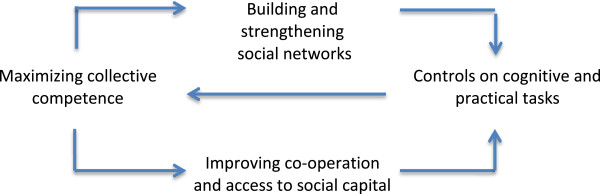
BACKGROUND: In this article we outline Burden of Treatment Theory, a new model of the relationship between sick people, their social networks, and healthcare services. Health services face the challenge of growing populations with long-term and life-limiting conditions, they have responded to this by delegating to sick people and their networks routine work aimed at managing symptoms, and at retarding - and sometimes preventing - disease progression. This is the new proactive work of patient-hood for which patients are increasingly accountable: founded on ideas about self-care, self-empowerment, and self-actualization, and on new technologies and treatment modalities which can be shifted from the clinic into the community. These place new demands on sick people, which they may experience as burdens of treatment. DISCUSSION: As the burdens accumulate some patients are overwhelmed, and the consequences are likely to be poor healthcare outcomes for individual patients, increasing strain on caregivers, and rising demand and costs of healthcare services. In the face of these challenges we need to better understand the resources that patients draw upon as they respond to the demands of both burdens of illness and burdens of treatment, and the ways that resources interact with healthcare utilization. SUMMARY: Burden of Treatment Theory is oriented to understanding how capacity for action interacts with the work that stems from healthcare. Burden of Treatment Theory is a structural model that focuses on the work that patients and their networks do. It thus helps us understand variations in healthcare utilization and adherence in different healthcare settings and clinical contexts.
Overview
The claims and statistics of this paper haven’t been checked yet.
Free: it reads the open-access text and checks the first 5 claims that cite a source we can check. Create a free account to check every claim.
Integrity signals
Registry
Cites
Statistics
Figures
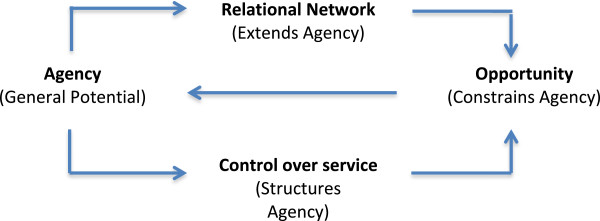
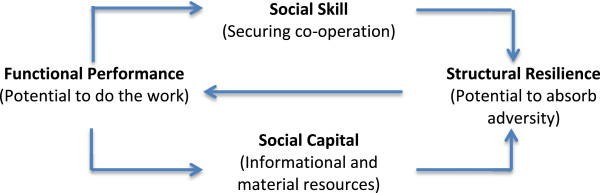
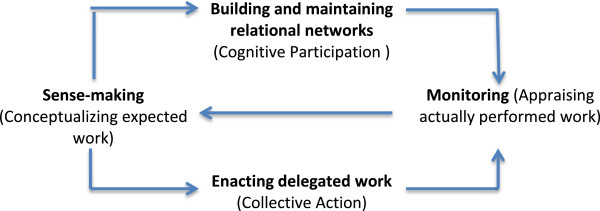
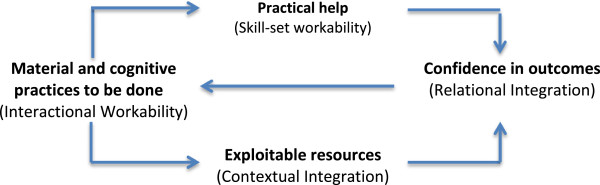
Verification
Claims the paper makes
The claims and statistics of this paper haven’t been checked yet.
Free: it reads the open-access text and checks the first 5 claims that cite a source we can check. Create a free account to check every claim.
Claims other papers make about this one
Each is checked against this paper’s own text: does it say what the citing paper says it does?
The cited source says what the claim attributes to it.
In the citing paper
“Burden of treatment also includes the effort needed from the patient to access services (31, 93), which technologies (especially e-consultations) could potentially alleviate.”
From Planning and Evaluating Remote Consultation Services: A New Conceptual Framework Incorporating Complexity and Practical Ethics (2021) · cites this paper as [93]
The cited source says what the claim attributes to it.
In the citing paper
“NPT both can be, and is, applied to those groups.”
From Using Normalization Process Theory in feasibility studies and process evaluations of complex healthcare interventions: a systematic review (2018) · cites this paper as [215]
The cited source says what the claim attributes to it.
In the citing paper
“But as May et al have pointed out in their burden of treatment theory, shifting the work of care from clinic to community places new demands on the sick (and hence raises ethical questions) [75].”
In the citing paper
“A related concept is what May et al. (93) have called burden of treatment—the additional burden placed on the patient when they are asked to “self-manage” —with the sickest and most vulnerable carrying the greatest burden.”
From Planning and Evaluating Remote Consultation Services: A New Conceptual Framework Incorporating Complexity and Practical Ethics (2021) · cites this paper as [93]
In the citing paper
“Work by Kennedy et al. [57] and Gallagher et al. [58], for example, applies NPT to situations in the home and outside of formal healthcare organisations, where ‘contexts’ are not so much organisational as organising and are distributed across informal social networks [59, 60].”
From Implementation, context and complexity (2016) · cites this paper as [59]
Self-check
Percentages, sums and reported differences re-computed from the paper’s own numbers.
The self-check needs the paper’s full text.
Citations
Cites
Granovetter, M. S. (1973) · American Journal of Sociology · doi:10.1086/225469 · Cited by 40,491 · cited 2×
“Following Granovetter [48], this is about the extent to which they can add useful relationships – characterized by weak ties between members – to the core of strong ties through which expectations or obligations of actual material and effective exchange are played out.”
BackgroundSocial Capital: Its Origins and Applications in Modern Sociology
Portes, A. (1998) · Annual Review of Sociology · doi:10.1146/annurev.soc.24.1.1 · Cited by 12,037 · cited 1×
“While functional performance and social skill describe the capacity of a patient and relational network to mobilize themselves and others to utilize healthcare services, access to social capital [47] is also crucial.”
Background(1951) · Cited by 8,693
Barnett, K., Mercer, S. W., Norbury, M., Watt, G., Wyke, S., & Guthrie, B. (2012) · The Lancet · doi:10.1016/s0140-6736(12)60240-2 · Cited by 6,972 · cited 1×
“Unsupported individuals who are isolated from meaningful social networks are not uncommon, especially amongst older people where relational networks are unstable and may diminish towards the end of life [5] but most patients have some kind of mutually supportive social relationships.”
BackgroundOrganizing and the process of sensemaking
Weick, K. E., Sutcliffe, K. M., & Obstfeld, D. (2005) · Organization Science · doi:10.1287/orsc.1050.0133 · Cited by 6,943
Chronic illness as biographical disruption
Bury, M. (1982) · Sociology of Health & Illness · doi:10.1111/1467-9566.ep11339939 · Cited by 3,960 · cited 1×
“By this we mean the extent to which members of the patient’s extended network can capture, possess, and mobilize psychological and social resources to absorb and compensate for – and even thrive – in the face of biographical disruptions [51], adverse path0physiological events and social processes.”
BackgroundImplementing, Embedding, and Integrating Practices: An Outline of Normalization Process Theory
May, C., & Finch, T. (2009) · Sociology · doi:10.1177/0038038509103208 · Cited by 2,115
Self-citationSocial Skill and the Theory of Fields
Fligstein, N. (2001) · Sociological Theory · doi:10.1111/0735-2751.00132 · Cited by 1,624
Development of a theory of implementation and integration: Normalization Process Theory
May, C. R., Mair, F., Finch, T., MacFarlane, A., Dowrick, C., Treweek, S., Rapley, T., Ballini, L., Ong, B. N., Rogers, A., et al. (2009) · Implementation Science · doi:10.1186/1748-5908-4-29 · Cited by 1,409
Self-citationBiocapital: The Constitution of Postgenomic Life
Sunder Rajan, K. (2006) · Duke University Press eBooks · doi:10.1215/9780822388005 · Cited by 1,067
Cited by
Items 601–700 of 737
Venuleo, C., & Marinaci, T. (2025) · Research Square · doi:10.21203/rs.3.rs-6986045/v1
Dabrh, A. M. A., Borghol, A. H., Alkhatib, B., Paul, S., Li, Z., Lehman, W. M., Mao, M. A., Hickson, L. J., & Chebib, F. T. (2025) · Kidney360 · doi:10.34067/kid.0000000950
Biopsihosocijalne odrednice post-COVID sindroma
Filozofski fakultet Sveučilišta u Zagrebu, Z., Korajlija, A. L., Jokić‐Begić, N., Filozofski fakultet Sveučilišta u Zagrebu, Z., Jurin, T., Filozofski fakultet Sveučilišta u Zagrebu, Z., Šoštarić, M., & Filozofski fakultet Sveučilišta u Zagrebu, Z. (2025) · Socijalna psihijatrija · doi:10.24869/spsih.2025.99
Burnett, D., & Austin, R. C. (2025) · European Journal of Cardiovascular Nursing · doi:10.1093/eurjcn/zvaf180
Edgar, B., Jones, C., Martin, L., Stevenson, K. S., Thomson, P. C., Mark, P. B., & Kingsmore, D. B. (2025) · BMC Nephrology · doi:10.1186/s12882-025-04594-2
Tan, Q. Y., Ibrahim, K., Roberts, H. C., Amar, K. A., & Fraser, S. D. (2025) · PLoS ONE · doi:10.1371/journal.pone.0338620
Walton, H., Simpson, A., Ramsay, A. I. G., Hunter, A., Jones, J., Ng, P. L., Leeson-Beevers, K., Bloom, L. C., Kai, J., Kokocinska, M., et al. (2022) · Figshare · doi:10.6084/m9.figshare.19178977
Lorenz, E. C., Petterson, T. M., Zaniletti, I., Lackore, K. A., Johnson, B. K., Mai, M., Nair, S. S., Bentall, A., Yost, K. J., & Eton, D. T. (2022) · Figshare · doi:10.6084/m9.figshare.20887490
Self-citationSmith, S. M., Wallace, E., Clyne, B., Boland, F., & Fortin, M. (2021) · Figshare · doi:10.6084/m9.figshare.16835099
Goulding, R., Birtwell, K., Hann, M., Peters, S., van Marwijk, H., & Bower, P. (2024) · Figshare · doi:10.6084/m9.figshare.26661299
Lin, K., Yao, M., Ji, X., Li, R., Andrew, L., Oosthuizen, J., Sim, M., & Chen, Y. (2024) · Figshare · doi:10.6084/m9.figshare.26731966
Healey, E. L., Lewis, M., Nadia Corp, Shivji, N. A., Windt, D., Babatunde, O. O., Simkins, J., Bartlam, B., Rowlands, G., & Protheroe, J. (2024) · Figshare · doi:10.6084/m9.figshare.26596238
Walton, H., Simpson, A., Ramsay, A. I. G., Hunter, A., Jones, J., Ng, P. L., Leeson-Beevers, K., Bloom, L. C., Kai, J., Kokocinska, M., et al. (2022) · Figshare · doi:10.6084/m9.figshare.19178983
Truppa, C., Ansbro, É., Willis, R., Zmeter, C., Khatib, A. E., Roberts, B., Perone, S. A., & Perel, P. (2024) · Figshare · doi:10.6084/m9.figshare.26605570
Walton, H., Simpson, A., Ramsay, A. I. G., Hudson, E., Hunter, A., Jones, J., Ng, P. L., Leeson-Beevers, K., Bloom, L. C., Kai, J., et al. (2022) · Figshare · doi:10.6084/m9.figshare.19625418
Hardman, R., Begg, S. J., & Spelten, E. R. (2021) · Figshare · doi:10.6084/m9.figshare.14190384
Healey, E. L., Lewis, M., Nadia Corp, Shivji, N. A., Windt, D., Babatunde, O. O., Simkins, J., Bartlam, B., Rowlands, G., & Protheroe, J. (2024) · Figshare · doi:10.6084/m9.figshare.26596241
Walton, H., Simpson, A., Ramsay, A. I. G., Hunter, A., Jones, J., Ng, P. L., Leeson-Beevers, K., Bloom, L. C., Kai, J., Kokocinska, M., et al. (2022) · Figshare · doi:10.6084/m9.figshare.19178980
Eton, D. T., Linzer, M., Boehm, D. H., Vanderboom, C. E., Rogers, E. A., Frost, M. H., Wambua, M., Vang, M., Poplau, S., Lee, M. K., et al. (2020) · Figshare · doi:10.6084/m9.figshare.13161351
Self-citationGoulding, R., Birtwell, K., Hann, M., Peters, S., van Marwijk, H., & Bower, P. (2024) · Figshare · doi:10.6084/m9.figshare.24946435
Healey, E. L., Lewis, M., Nadia Corp, Shivji, N. A., Windt, D., Babatunde, O. O., Simkins, J., Bartlam, B., Rowlands, G., & Protheroe, J. (2024) · Figshare · doi:10.6084/m9.figshare.26596247
Smith, S. M., Wallace, E., Clyne, B., Boland, F., & Fortin, M. (2021) · Figshare · doi:10.6084/m9.figshare.16835096
Healey, E. L., Lewis, M., Nadia Corp, Shivji, N. A., Windt, D., Babatunde, O. O., Simkins, J., Bartlam, B., Rowlands, G., & Protheroe, J. (2024) · Figshare · doi:10.6084/m9.figshare.26596235
Walton, H., Simpson, A., Ramsay, A. I. G., Hunter, A., Jones, J., Ng, P. L., Leeson-Beevers, K., Bloom, L. C., Kai, J., Kokocinska, M., et al. (2022) · Figshare · doi:10.6084/m9.figshare.19178971
Walton, H., Simpson, A., Ramsay, A. I. G., Hunter, A., Jones, J., Ng, P. L., Leeson-Beevers, K., Bloom, L. C., Kai, J., Kokocinska, M., et al. (2022) · Figshare · doi:10.6084/m9.figshare.19178974
Osborn, T. G., Li, S., Saunders, R., & Fonagy, P. (2024) · Figshare · doi:10.6084/m9.figshare.26555417
Healey, E. L., Lewis, M., Nadia Corp, Shivji, N. A., Windt, D., Babatunde, O. O., Simkins, J., Bartlam, B., Rowlands, G., & Protheroe, J. (2024) · Figshare · doi:10.6084/m9.figshare.26596244
Goulding, R., Birtwell, K., Hann, M., Peters, S., van Marwijk, H., & Bower, P. (2024) · Figshare · doi:10.6084/m9.figshare.24946747
Huddlestone, L., Turner, J., Eborall, H., Hudson, N., Davies, M., & Martin, G. P. (2020) · Figshare · doi:10.6084/m9.figshare.11992260
Smith, S. M., Wallace, E., Clyne, B., Boland, F., & Fortin, M. (2021) · Figshare · doi:10.6084/m9.figshare.16835093
Schick‐Makaroff, K., Wozniak, L., Short, H., Davison, S. N., Klarenbach, S. W., Buzinski, R., Walsh, M., & Johnson, J. A. (2021) · Figshare · doi:10.6084/m9.figshare.16900893
Walton, H., Simpson, A., Ramsay, A. I. G., Hudson, E., Hunter, A., Jones, J., Ng, P. L., Leeson‐Beevers, K., Bloom, L. C., Kai, J., et al. (2022) · Figshare · doi:10.6084/m9.figshare.19625415
Willems, J., Bablok, I., Farin-Glattacker, E., & Langer, T. (2023) · Figshare · doi:10.6084/m9.figshare.23290504
Moore, A., Wylde, V., Bruce, J., Howells, N., Bertram, W., Eccleston, C., & Gooberman-Hill, R. (2022) · Figshare · doi:10.6084/m9.figshare.19766297
Walton, H., Simpson, A., Ramsay, A. I. G., Hudson, E., Hunter, A., Jones, J., Ng, P. L., Leeson-Beevers, K., Bloom, L. C., Kai, J., et al. (2022) · Figshare · doi:10.6084/m9.figshare.19625412
Wilson, E., Caswell, G., Latif, A., Anderson, C., Faull, C., & Pollock, K. (2020) · Figshare · doi:10.6084/m9.figshare.12284804
Valaitis, R. K., Cleghorn, L., Ploeg, J., Risdon, C., Mangin, D. A., Dolovich, L., Agarwal, G., Oliver, D., Gaber, J., & Chung, H. (2020) · Figshare · doi:10.6084/m9.figshare.12186312
Hardman, R., Begg, S. J., & Spelten, E. R. (2021) · Figshare · doi:10.6084/m9.figshare.14190390
Eton, D. T., Linzer, M., Boehm, D. H., Vanderboom, C. E., Rogers, E. A., Frost, M. H., Wambua, M., Vang, M., Poplau, S., Lee, M. K., et al. (2020) · Figshare · doi:10.6084/m9.figshare.13161348
Self-citationSmith, S. M., Wallace, E., Clyne, B., Boland, F., & Fortin, M. (2021) · Figshare · doi:10.6084/m9.figshare.16835102
Eton, D. T., Linzer, M., Boehm, D. H., Vanderboom, C. E., Rogers, E. A., Frost, M. H., Wambua, M., Vang, M., Poplau, S., Lee, M. K., et al. (2020) · Figshare · doi:10.6084/m9.figshare.13161354
Self-citationHealey, E. L., Lewis, M., Nadia Corp, Shivji, N. A., Windt, D., Babatunde, O. O., Simkins, J., Bartlam, B., Rowlands, G., & Protheroe, J. (2024) · Figshare · doi:10.6084/m9.figshare.26596232
Hardman, R., Begg, S. J., & Spelten, E. R. (2021) · Figshare · doi:10.6084/m9.figshare.14190387
Walton, H., Simpson, A., Ramsay, A. I. G., Hunter, A., Jones, J., Ng, P. L., Leeson-Beevers, K., Bloom, L. C., Kai, J., Kokocinska, M., et al. (2022) · Figshare · doi:10.6084/m9.figshare.19178965
Healey, E. L., Lewis, M., Nadia Corp, Shivji, N. A., Windt, D., Babatunde, O. O., Simkins, J., Bartlam, B., Rowlands, G., & Protheroe, J. (2024) · Figshare · doi:10.6084/m9.figshare.26596229
Healey, E. L., Lewis, M., Nadia Corp, Shivji, N. A., van der Windt, D. A., Babatunde, O. O., Simkins, J., Bartlam, B., Rowlands, G., & Protheroe, J. (2024) · Figshare · doi:10.6084/m9.figshare.26596226
Goff, M., Burch, P., Hammond, J., Checkland, K., & Jacobs, S. (2026) · Social Science & Medicine · doi:10.1016/j.socscimed.2026.118986 · Cited by 2
Wu, I. H. C., Harris, S. R., Price, R. M., & Bista, S. (2026) · Cancer Medicine · doi:10.1002/cam4.71580 · Cited by 1
Wang, C., Li, X. Q., Chen, J. B., Li, X. Q., Hou, W., & Dong, N. (2026) · Frontiers in Psychiatry · doi:10.3389/fpsyt.2026.1760312
Goulding, R., Duncan, P., Kovalenko, A. G., Gamlin, C., Chilcott, S., Fraser, S. D. S., Valderas, J. M., & Johnson, R. (2026) · Journal of Multimorbidity and Comorbidity · doi:10.1177/26335565261417393
Hounsell, L., Millard, E., Medlicott, E., Fry, E. K., Fernandes, J., & Carr, C. (2026) · BMJ Open · doi:10.1136/bmjopen-2025-103035
“…delivery of community-based therapy groups exclusively for people with MLTCs, particularly arts therapies such as dance-movement, would be valuable to investigate the mental and physical health benefits of, which participants in this study explained they hoped would produce dual benefits for them.”
Hu, R., Jagannath, S., Mougenot, C., & Porat, T. (2026) · doi:10.2196/preprints.97367
Prescribed Cardiac Wearables in Routine Care: a qualitative study of Patient ExperiencesPreprint
Zeng, A., O’Hagan, E. T., Trivedi, R., Ford, B., Perry, T., Turnbull, S., Sheahen, B., Mulley, J., Sedhom, M., Choy, C. K., et al. (2026) · medRxiv · doi:10.64898/2026.04.09.26350550
Shrestha, S., Khanal, P., & Soto‐Pérez‐de‐Celis, E. (2026) · Nature Reviews Clinical Oncology · doi:10.1038/s41571-026-01151-0
“As noted in previous conceptual analyses, a lower time burden could reflect inadequate or incomplete care, or barriers to access, rather than efficient gold-standard care 1,5 .”
Schmartz, S., & Drummond, D. (2026) · The Journal of Allergy and Clinical Immunology In Practice · doi:10.1016/j.jaip.2026.03.001
Understanding the Burden of Illness: Steps Towards an Ontology of Patient Experience
Smart, P. R., Fair, N., & Boniface, M. (2026) · Applied Ontology · doi:10.1177/15705838261438032
“…as they attempted to live with life-limiting conditions (e.g., Downes, 1942), the focus of more recent research has been directed towards the challenges associated with evolving treatment regimens, aging populations, and structural changes in the provision of healthcare (May et al., 2014).”
Kusumaningrum, N. S. D., Handayani, F., Cahyani, Z. R., Nilamsari, N. S., Utami, E. B., Puspitasari, M. A., & Lusiana, K. (2026) · Nurse Media Journal of Nursing · doi:10.14710/nmjn.v16i1.69749
“These perceptions are consistent with the Burden of Treatment Theory, which suggests that managing chronic illness imposes demands not only on individuals but also on their family members, influencing both emotional health and relational interactions (May et al., 2014).”
Macgregor, C., Blane, D., Shanmugam, S., & Seenan, C. (2026) · Pain and Rehabilitation · doi:10.59210/b6py9v95
Caregiver experiences of healthcare-related administrative burden: a scoping review
Thompson, T., Krueger, D., Delaney, S., Connelly, B., Ghazal, L. V., Slater, V. E., Rodriguez, B., & Thom, B. (2026) · Health Affairs Scholar · doi:10.1093/haschl/qxag131
“21,56 Although we found no studies testing interventions to reduce administrative burden for caregivers, 2 studies had clear implications for intervention.”
InfluentialGerald, K., Musiimenta, A., Natumanya, D., Richard, K., Wasswa, W., & Tumuhimbise, W. (2026) · Cureus · doi:10.7759/cureus.109888
Explaining Continuity in Contemporary Primary Care: The CAP Continuity Theory
Couchman, E. M., Ejegi‐Memeh, S., Freeman, G. K., Mitchell, S., & Gardiner, C. (2026) · Health & Social Care in the Community · doi:10.1155/hsc/3336280 · Cited by 1
Zhang, P. (2026) · Journal of Youth and Adolescence · doi:10.1007/s10964-026-02370-5
“First, Treatment Burden Theory (May et al., 2014) provides a structural model in which treatment outcomes deteriorate when workload exceeds patients’ capacity, a prediction mapping directly onto juvenile diversion where the “workload” is the number of distinct services and “capacity” is bounded by developmental maturi…”
InfluentialEdge, N. A. C., Harman, J. L., Schmit, E. S., Kraleti, S. S., Robertson, H. A., Eubanks, R., Johnson, D. L., Hamilton, A., & Denduluri, A. (2026) · Clinical Practice in Pediatric Psychology · doi:10.1177/21694826261460221
Duncan, L., Dixon, D. L., Allan, J., & Adam, R. (2026) · European Journal of Cancer Care · doi:10.48130/ejcc-0026-0001 · Cited by 1
Forced agency: The price of being an engaged patient managing chronic illness
Koren, N., Guzmen-Carmeli, S., & Rier, D. A. (2026) · SSM - Qualitative Research in Health · doi:10.1016/j.ssmqr.2026.100799
Fleischer, A. (2026) · Lymphatics · doi:10.3390/lymphatics4020032
“…work that patients and their support networks undertake to manage healthcare demands and how this workload interacts with capacity (e.g., functional ability, cognitive resources, social support, financial resources) to shape outcomes such as adherence, healthcare utilization, and well-being [20].”
Kim, Y. W., Choi, H., Shin, G., Kim, H., Lee, M. J., & Park, I. (2026) · BMC Nephrology · doi:10.1186/s12882-026-05089-4
“Furthermore, while frameworks such as the social determinants of health often treat the environment as a static background, they fail to capture how patients actively reconstruct their domestic spaces through continuous spatial labor [13].”
Gerald, K., Musiimenta, A., Wasswa, W., Kimera, R., & Tumuhimbise, W. (2026) · Cureus · doi:10.7759/cureus.111640
“This finding is consistent with evidence showing that social support is important in helping patients manage treatment burden and chronic illness self-care [4].”
Kangas, T., Plessier, A., Ramier, C., Elkrief, L., Hernández–Gea, V., Rautou, P., Vanthomme, K., Vandenheede, H., & Dumas, A. (2026) · Clinics and Research in Hepatology and Gastroenterology · doi:10.1016/j.clinre.2026.102876
Beyond Served and Secured: Client Work and Reconceptualisation of Professionalism
Andreassen, T. A. (2026) · Professions and Professionalism · doi:10.7577/pp.6230
“…control deterioration and manage everyday life, and the following self-care, self-monitoring and self-management of treat-ment, prevention and control, which is described in much literature on patient work (Grue, 2016; Huyard et al., 2019; May et al., 2014; Oudshoorn, 2008; Pickard & Rogers, 2012).”
van Oorschot, H. F. C., van Ravenswaaij, R. V., Bel, E. W., Ahaus, K., del Barco, E., van Hoorn, E. S., Porte, P. J., Franx, A., Posthumus, A. G., Depmann, M., et al. (2026) · doi:10.2196/preprints.105825
Eger, B.-L., Biller, L., Rose, D., Bontrup, F., Dinter, B., & Kollwitz, C. (2026) · HMD Praxis der Wirtschaftsinformatik · doi:10.1365/s40702-026-01301-z · Cited by 1
Thue, F. (2026) · Professions and Professionalism · doi:10.7577/pp.6754
Diviani, N. (2026) · Springer eBooks · doi:10.1007/978-3-032-11375-7_441
Sinervä, M., Annunen, J., Wang, F., Yrttiaho, T., Korhonen, O., Vieira, P., Komulainen‐Ebrahim, J., Behutiye, W., Uusimaa, J., & Isomursu, M. (2026) · doi:10.2196/preprints.106773
Multimorbidity after renal transplantation: incidence and implications for patients
Strain, S., & Crowley, L. (2026) · Current Opinion in Nephrology & Hypertension · doi:10.1097/mnh.0000000000001213
Bales, G., Schönfelder, B., Kressig, R. W., & Mayer, H. (2026) · BMJ Open · doi:10.1136/bmjopen-2025-112165
“However, the development of a more robust theoretical framework, such as a middle-range theory, would require a theory-driven sampling strategy, which was beyond the scope of this study.”
Lin, Q., Fu, M., Chen, P., Zhao, J., Liu, Y., Niu, Y., Jiang, M., & Wu, J. (2026) · BMC Health Services Research · doi:10.1186/s12913-026-15158-x
“To fill this explanatory gap, we further introduced the Burden of Treatment Theory (BOTT) proposed by May and colleagues in 2014 into our integrated analytical framework [14].”
Alageel, S. M., Alhamdan, H., Bedaiwi, A., Alaqil, H., & Alageel, S. (2026) · BMC Geriatrics · doi:10.1186/s12877-026-07862-4
“Limited access to professional support was reported to increase workload by adding travel, time, coordination, and administrative demands [11].”
InfluentialRethinking Symptom Fluctuation in Multimorbidity: A Dynamic Systems Framework From Primary Care
Matsuoka, F. (2026) · Journal of Evaluation in Clinical Practice · doi:10.1111/jep.70541
Chen, H.-L., Zou, S., & Zheng, L.-L. (2026) · Frontiers in Public Health · doi:10.3389/fpubh.2026.1896061
“Burden of treatment refers to the work that healthcare demands place on patients and the consequences of that work for daily functioning (38).”
Bak, C. K., Junge, T., Vardinghus‐Nielsen, H., Klakk, H., Pihl, G. T., & Bøggild, H. (2026) · Health Promotion International · doi:10.1093/heapro/daag109
“2013, May et al .”
Maharaj, J. N., Woodburn, J., McLaren‐Kennedy, A., Kola, M. A., Winson, D. M. G., Nevin, M., & Clanchy, K. (2026) · Diabetes/Metabolism Research and Reviews · doi:10.1002/dmrr.70206
Affordable Health Advice: Rethinking Credibility in Digital Health Communication
Atef, N. (2026) · Journal of Health Communication · doi:10.1080/10810730.2026.2713706
Kierkegaard, P., Su, B., & Mummery, D. (2026) · SSM - Qualitative Research in Health · doi:10.1016/j.ssmqr.2026.100841
Wilkinson, K., Stevens, M., Norman, S., Newlove‐Delgado, T., Garrood, A., McDonald, A., Foxwell, S., Walker, A., & Bjornstad, G. J. (2026) · Research Square · doi:10.21203/rs.3.rs-10512753/v1
Li, J., Ren, Z.-Q., Wang, X.-S., Jiang, W.-J., Ding, L., Li, C., Huang, P.-Y., Wang, L.-C., & Chen, L. (2026) · Patient Preference and Adherence · doi:10.2147/ppa.s621882
Liu, J., Yang, T., Xu, R., Wan, J., & Zhu, X. (2026) · Population Health Management · doi:10.1177/19427891261468437
“25,26 In population health research, effort is a more decisive dimension than activation or participation because it quanti fi es the behavioral costs that determine long-term self-management sustainability.”
Yao, L., Deng, Z., Luo, F., & He, L. (2026) · Frontiers in Public Health · doi:10.3389/fpubh.2026.1900806
“Burden of Treatment Theory likewise helps explain why motivation did not erase the work of choosing a department, arranging transport, taking leave, paying for repeated services, and coordinating family support (45).”
Gunne, E., Franciosi, A. N., McCarthy, C., Keane, M. P., Doran, P., & Holden, S. (2026) · JMIR Human Factors · doi:10.2196/91533
Xiao, X., Jamaludin, S. S. S., & Cheng, Y. (2026) · Frontiers in Sociology · doi:10.3389/fsoc.2026.1908107
“This interpretation is consistent with the Burden of Treatment Theory, which emphasizes that patients’ capacity to manage care is shaped by the practical work imposed by illness and treatment (May et al., 2014).”
Zhang, C., Jin, C., Mu, J., Liu, S., Wei, X., Dong, K., & Wang, J. (2026) · Research Square · doi:10.21203/rs.3.rs-10039166/v1
Surveillance burden in pulmonary nodule management
Cheng, H., Zhang, Z., Ye, Y., & Lu, F. (2026) · Frontiers in Medicine · doi:10.3389/fmed.2026.1971481
Soni, A., Chua, M., Rozen, W. M., & Ellis, L. (2026) · Healthcare · doi:10.3390/healthcare14182992
“This is consistent with BoTT, in which patients and families absorb increasing health-care work as care extends beyond the clinic [8], and with the CuCoM, which explains why this becomes burdensome when demands exceed a patient’s available capacity [9].”
Phillips, S. A. (2026) · Healthcare · doi:10.3390/healthcare14213564
Kőrösi, G., Rafael, B., & Kósa, I. (2026) · Online Journal of Public Health Informatics · doi:10.2196/92710
The Patient Experience of "iwasaru" and the Co-construction of Illness Narrative
Miyachi, J. (2026) · An Official Journal of the Japan Primary Care Association · doi:10.14442/generalist.49.136
Whose time is a body allowed? Virtual reality, aging, and temporal justice
Ramalho, A. L. G. (2026) · Frontiers in Public Health · doi:10.3389/fpubh.2026.1948941
“Such distributed work is already recognized in treatment-bur-den and implementation frameworks (13, 16).”
InfluentialAhmadinia, H. (2026) · International Journal of Migration Health and Social Care · doi:10.1108/ijmhsc-04-2026-0073
Metadata
- Authors
- May, C. R., Eton, D. T., Boehmer, K., Gallacher, K., Hunt, K., MacDonald, S., Mair, F. S., May, C. M., Montori, V. M., Richardson, A., Rogers, A. E., & Shippee, N.
- Affiliations
- University of Southampton (GB)
- Mayo Clinic (US)
- University of Glasgow (GB)
- University Hospital Southampton NHS Foundation Trust (GB)
- National Institute for Health and Care Research (GB)
- University of Minnesota (US)
- Corresponding author
- May, Carl R
- May, Christine M
- ORCID
- Venue
- BMC Health Services Research
- Published
- 2014-06-26
- Volume
- 14
- Issue
- 1
- Pages
- 281-281
- ISSN
- 1472-6963 (ISSN-L)
- PMC
- PMC4080515
- OpenAlex
- W2167877406
- Cited by
- 720
- References
- 77
- Citations by year
- 2026: 82 · 2025: 65 · 2024: 96 · 2023: 67 · 2022: 79 · 2021: 69 · 2020: 64 · 2019: 53 · 2018: 45 · 2017: 30 · 2016: 39 · 2015: 27 · 2014: 2
- FWCI
- 24.55
- Type
- journal article
- Language
- en
- Open access
- gold
- doi.org
- Licence
- Locations
- BMC Health Services Research (publishedVersion, cc-by)
- Europe PMC (PubMed Central) (publishedVersion, cc-by)
- PubMed Central (publishedVersion, cc-by)
- PubMed (publishedVersion)
- ENLIGHTEN (Jurnal Bimbingan dan Konseling Islam) (acceptedVersion)
- ePrints Soton (University of Southampton) (acceptedVersion)
- LSHTM Research Online (London School of Hygiene and Tropical Medicine) (acceptedVersion)
- Funders
- Macmillan Cancer Support
- Scottish Government
- National Institute for Health and Care Research
- Topics
- Health Sciences › Medicine › Epidemiology › Chronic Disease Management Strategies
- Health Sciences › Health Professions › General Health Professions › Mental Health and Patient Involvement
- Health Sciences › Nursing › Research and Theory › Nursing care and research
- Keywords
- patient burden, patienthood, illness experience, chronic disease, life-limiting illness, self-care, self-empowerment, social networks, health care utilization, medication adherence, caregiver burden, community-based care, action capacity
- MeSH terms
- Health Services, Humans, Models, Theoretical, Self Care, Social Support, Cost of Illness, Disease Progression
About these checks
Registry, retraction, Cites and statistics results are computed, not judged, with one exception: a printed reference that no index lists is read once by a model before it counts as a citation error. Claims are extracted by a model and kept only when their quote appears verbatim in the text; each cited source is then checked, with a model’s help, for whether it says what the claim relies on. Those verdicts can be wrong — read the claim’s quote and the cited source before relying on one.
Statistics and arithmetic are recomputed, not judged.
Confidence bands are shown only for fields calibrated on our annotated test set. None is calibrated yet, so no band is shown.
What counts as a claim ›How we measure confidence ›How we check this ›
Are you an author, or do you see a problem with this page? Request a review
Data sources
Bibliographic data: Semantic Scholar, OpenAlex, Crossref.
Contains information from the Semantic Scholar Academic Graph Datasets, made available under the ODC Attribution License (ODC-BY 1.0).
Semantic Scholar’s data is described in: Kinney, R., et al. (2023). The Semantic Scholar Open Data Platform. arXiv:2301.10140.
