

A systematic review of the psychological and social benefits of participation in sport for children and adolescents: informing development of a conceptual model of health through sport
Open accessThe DOI matches its Crossref record; 69 of the 69 references it cites were found in a registry or an index.
Abstract
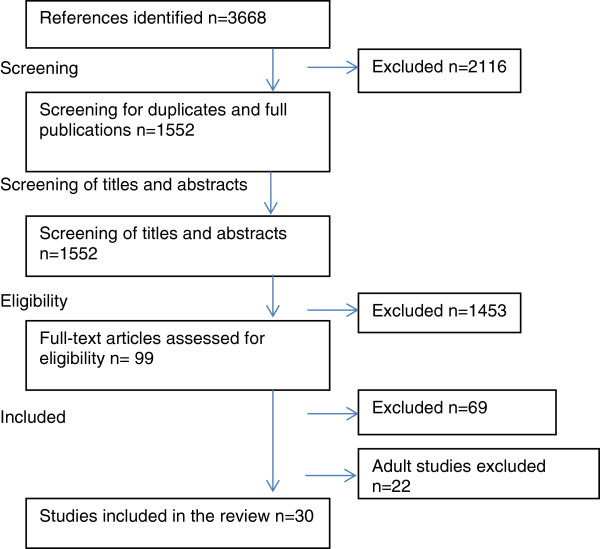
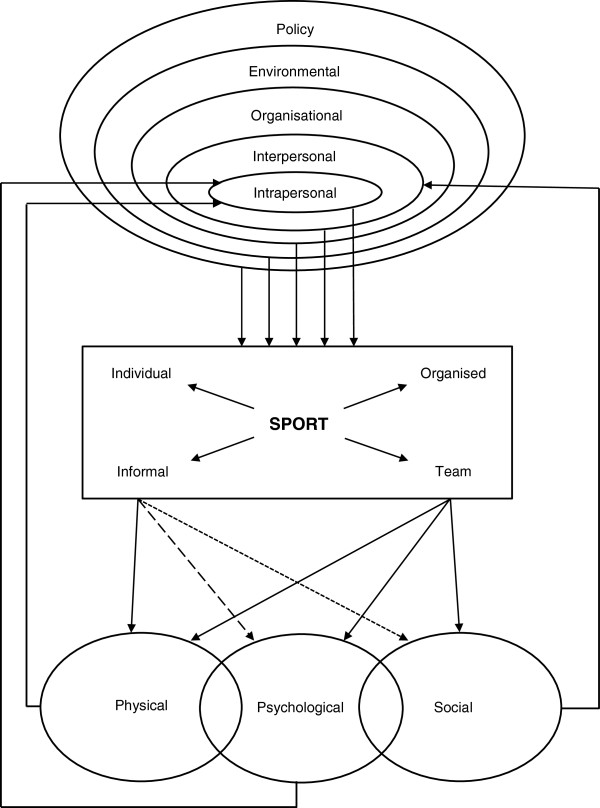
BACKGROUND: There are specific guidelines regarding the level of physical activity (PA) required to provide health benefits. However, the research underpinning these PA guidelines does not address the element of social health. Furthermore, there is insufficient evidence about the levels or types of PA associated specifically with psychological health. This paper first presents the results of a systematic review of the psychological and social health benefits of participation in sport by children and adolescents. Secondly, the information arising from the systematic review has been used to develop a conceptual model. METHODS: A systematic review of 14 electronic databases was conducted in June 2012, and studies published since 1990 were considered for inclusion. Studies that addressed mental and/or social health benefits from participation in sport were included. RESULTS: A total of 3668 publications were initially identified, of which 30 met the selection criteria. There were many different psychological and social health benefits reported, with the most commonly being improved self-esteem, social interaction followed by fewer depressive symptoms. Sport may be associated with improved psychosocial health above and beyond improvements attributable to participation in PA. Specifically, team sport seems to be associated with improved health outcomes compared to individual activities, due to the social nature of the participation. A conceptual model, Health through Sport, is proposed. The model depicts the relationship between psychological, psychosocial and social health domains, and their positive associations with sport participation, as reported in the literature. However, it is acknowledged that the capacity to determine the existence and direction of causal links between participation and health is limited by the fact that the majority of studies identified (n=21) were cross-sectional. CONCLUSION: It is recommended that community sport participation is advocated as a form of leisure time PA for children and adolescents, in an effort to not only improve physical health in relation to such matters as the obesity crisis, but also to enhance psychological and social health outcomes. It is also recommended that the causal link between participation in sport and psychosocial health be further investigated and the conceptual model of Health through Sport tested.
Overview
The claims and statistics of this paper haven’t been checked yet.
Free: it reads the open-access text and checks the first 5 claims that cite a source we can check. Create a free account to check every claim.
Integrity signals
Registry
Cites
Statistics
Figures
Verification
Claims the paper makes
The claims and statistics of this paper haven’t been checked yet.
Free: it reads the open-access text and checks the first 5 claims that cite a source we can check. Create a free account to check every claim.
Claims other papers make about this one
Each is checked against this paper’s own text: does it say what the citing paper says it does?
The source backs part of the claim, not all of it — or backs it for a different population, condition or comparison.
In the citing paper
“All six systematic reviews reported on organized sport activities and two also reported on organized non-sport activities (Cairns et al., 2014, Eime et al., 2013).”
From Impact of organized activities on mental health in children and adolescents: An umbrella review (2022) · cites this paper as Eime et al., 2013
Experimental — accuracy not yet measuredThe source backs part of the claim, not all of it — or backs it for a different population, condition or comparison.
In the citing paper
“Components of exercise interventions may represent important moderators of treatment effects.”
From Exercise for the treatment of anxiety in children and adolescents (2022) · cites this paper as Eime 2013
Experimental — accuracy not yet measuredThe source backs part of the claim, not all of it — or backs it for a different population, condition or comparison.
In the citing paper
“Indeed, intervention setting is another potential moderating factor, with group-based activities reported to confer a range of social benefits compared to individual activities (Eime 2013).”
From Exercise for the treatment of anxiety in children and adolescents (2022) · cites this paper as Eime 2013
Experimental — accuracy not yet measuredThe source backs part of the claim, not all of it — or backs it for a different population, condition or comparison.
In the citing paper
“We found evidence that children and adolescents who participated more frequently, who participated with higher intensity or who participated with longer duration (e.g. started at an early age or participated for a long period), had better mental health compared to their peers (Eime et al., 2013, Evans et al., 2017, Panza et al., 2020).”
From Impact of organized activities on mental health in children and adolescents: An umbrella review (2022) · cites this paper as Eime et al., 2013
Experimental — accuracy not yet measuredThe cited source says what the claim attributes to it.
In the citing paper
“Similarly, sports participation can be instrumental in the physical, social and emotional development of children and adolescents [30].”
2 more claims about this paper
Create a free account to see every claim other papers make about this one.
Self-check
Percentages, sums and reported differences re-computed from the paper’s own numbers.
The self-check needs the paper’s full text.
Citations
Cites
Kytle, J., & Bandura, A. (1978) · Contemporary Sociology · doi:10.2307/2065952 · Cited by 25,422
von Elm, E., Altman, D. G., Egger, M., Pocock, S. J., Gøtzsche, P. C., Vandenbroucke, J. P., & Initiative, F. T. S. (2007) · PLoS Medicine · doi:10.1371/journal.pmed.0040296 · Cited by 23,020
CONSORT 2010 Statement: updated guidelines for reporting parallel group randomised trials
the CONSORT Group, Schulz, K. F., Altman, D. G., & Moher, D. (2010) · BMC Medicine · doi:10.1186/1741-7015-8-18 · Cited by 13,371
Health Behavior and Health Education: Theory, Research, and Practice
(1992) · Annals of Internal Medicine · doi:10.7326/0003-4819-116-4-350_1 · Cited by 13,207
(1985) · Europe PMC (PubMed Central) · Cited by 9,143
Moher, D., Hopewell, S., Schulz, K. F., Montori, V., Gotzsche, P. C., Devereaux, P. J., Elbourne, D., Egger, M., & Altman, D. G. (2010) · BMJ · doi:10.1136/bmj.c869 · Cited by 8,883
An ecological perspective on health promotion programs
McLeroy, K. R., Bibeau, D., Steckler, A., & Glanz, K. (1988) · Health Education Quarterly · doi:10.1177/109019818801500401 · Cited by 8,502 · cited 2×
“The ‘determinants’ element is based on the well-established social ecological model [19,65] and is represented as concentric rings spreading out from the individual’s intrapersonal characteristics to widening spheres of influence.”
BackgroundDowns, S. H., & Black, N. (1998) · Journal of Epidemiology and Community Health · doi:10.1136/jech.52.6.377 · Cited by 8,252 · cited 1×
“Study quality was objectively appraised using the Downs and Black checklist [32].”
MethodJanssen, I., & LeBlanc, A. G. (2010) · International Journal of Behavioral Nutrition and Physical Activity · doi:10.1186/1479-5868-7-40 · Cited by 4,829
Measuring Health: A Guide to Rating Scales and Questionnaires
McDowell, I., & Newell, C. (1987) · Cited by 4,207
Cited by
Items 101–200 of 1,005
Kelso, A., Linder, S., Reimers, A. K., Klug, S. J., Alesi, M., Scifo, L., Borrego, C. C., Monteiro, D., & Demetriou, Y. (2020) · Psychology of sport and exercise · doi:10.1016/j.psychsport.2020.101770 · Cited by 140
“Regular exercise and physical activity (PA) have been shown to benefit physical, mental, and social health as well as academic performance (Singh et al., 2012; Penedo and Dahn, 2005; Eime et al., 2013; Janssen and Leblanc, 2010).”
BackgroundPrevalence and Impact of Chronic Ankle Instability in Adolescent Athletes
Donovan, L., Hetzel, S., Laufenberg, C. R., & McGuine, T. A. (2020) · Orthopaedic Journal of Sports Medicine · doi:10.1177/2325967119900962 · Cited by 114
“These findings were not restricted to only physical components of HRQoL but also included psychosocial improvements.7 As part of our inclusion criteria, all participants within our study participated in some form of organized sports; therefore, they may have been subjected to the benefits of sport participation on HRQ…”
BackgroundContreras-Osorio, F., Campos-Jara, C., Martínez-Salazar, C., Chirosa-Ríos, L., & Martínez-García, D. (2021) · Brain Sciences · doi:10.3390/brainsci11060755 · Cited by 86
Geidne, S., Kokko, S. P., Lane, A., Ooms, L., Vuillemin, A., Seghers, J., Koski, P., Kudláček, M., Johnson, S., & Hoye, A. V. (2019) · Health Education & Behavior · doi:10.1177/1090198119831749 · Cited by 108
Behan, S., Belton, S., Peers, C., O'Connor, N. E., & Issartel, J. (2019) · Journal of Sports Sciences · doi:10.1080/02640414.2019.1651144 · Cited by 107
Édouard, P., Reurink, G., Mackey, A. L., Lieber, R. L., Pizzari, T., Järvinen, T. A. H., Gronwald, T., & Hollander, K. (2023) · Nature Reviews Disease Primers · doi:10.1038/s41572-023-00469-8 · Cited by 110
“…of life in uninjured and injured adolescent athletes (including muscle injuries), the Short Traumatic muscle injury can also negatively affect mental health by causing uncertainty, apprehension, depression or anxiety 189,254 , which can affect the return to active life if not adequately managed.”
BackgroundTeuber, M., Leyhr, D., & Sudeck, G. (2024) · BMC Public Health · doi:10.1186/s12889-024-18082-z · Cited by 179
Social inequalities in young children’s sports participation and outdoor play
Wijtzes, A. I., Jansen, W., Bouthoorn, S. H., Pot, N., Hofman, A., Jaddoe, V. W. V., & Raat, H. (2014) · International Journal of Behavioral Nutrition and Physical Activity · doi:10.1186/s12966-014-0155-3 · Cited by 84
“specific physical activity behaviors such as sports participation (team sports in particular) and unstructured play (outdoor play in particular) are assumed to bring about additional health benefits including increased social integration, teamwork and social skills, emotional control, confidence, discipline, empathy,…”
BackgroundSports participation and psychosocial health: a longitudinal observational study in children
Moeijes, J., van Busschbach, J. T., Bosscher, R. J., & Twisk, J. W. R. (2018) · BMC Public Health · doi:10.1186/s12889-018-5624-1 · Cited by 83
“An explanation of these longitudinal associations might be that engaging in sports activities enhances a child’s sports abilities [11, 41, 42] and consequently stimulates his or her sports self-concept [15, 42, 43].”
BackgroundHenriksson, H., Henriksson, P., Tynelius, P., & Ortega, F. B. (2018) · British Journal of Sports Medicine · doi:10.1136/bjsports-2017-098723 · Cited by 96
Longitudinal Trends in Sport Participation and Retention of Women and Girls
Eime, R., Harvey, J. T., Charity, M. J., & Westerbeek, H. M. (2020) · Frontiers in Sports and Active Living · doi:10.3389/fspor.2020.00039 · Cited by 96
Self-citationProspective Associations between Sport Participation and Indices of Mental Health across Adolescence
Graupensperger, S. A., Sutcliffe, J., & Vella, S. A. (2021) · Journal of Youth and Adolescence · doi:10.1007/s10964-021-01416-0 · Cited by 107
Palomäki, S. H., Hirvensalo, M. H., Smith, K. J., Raitakari, O. T., Männistö, S., Hutri‐Kähönen, N., & Tammelin, T. (2018) · Scandinavian Journal of Medicine and Science in Sports · doi:10.1111/sms.13205 · Cited by 119
A Longitudinal Study of Sport Participation and Perceived Social Competence in Youth
Bedard, C., Hanna, S., & Cairney, J. (2019) · Journal of Adolescent Health · doi:10.1016/j.jadohealth.2019.09.017 · Cited by 116
Eime, R., Harvey, J. T., Charity, M. J., Casey, M. M., van Uffelen, J. G. Z., & Payne, W. R. (2015) · BMC Public Health · doi:10.1186/s12889-015-2156-9 · Cited by 101
“This is despite evidence of additional health benefits of participation in organised sport above and beyond physical health, whereby club sport participation by adults has been shown to have greater health benefits at low to moderate exposures than activities such as walking or working out at a gymnasium [6, 18].”
Self-citationA Scoping Review of the Theory and Practice of Positive Youth Development
Waid, J., & Uhrich, M. (2019) · The British Journal of Social Work · doi:10.1093/bjsw/bcy130 · Cited by 105
Mental Health and Organized Youth Sport
Vella, S. A. (2019) · Kinesiology Review · doi:10.1123/kr.2019-0025 · Cited by 108
Li, Z., Li, J., Kong, J., Li, Z., Wang, R., & Jiang, F. (2024) · Frontiers in Psychology · doi:10.3389/fpsyg.2024.1433698 · Cited by 144
Associations between family structure and young people’s physical activity and screen time behaviors
Langøy, A., Smith, O. R. F., Wold, B., Samdal, O., & Haug, E. (2019) · BMC Public Health · doi:10.1186/s12889-019-6740-2 · Cited by 111
“Background Physical activity is associated with physiological [1, 2], psychological and social [3] health benefits for children and youth.”
BackgroundCooper, S. B., Dring, K. J., Morris, J. G., Sunderland, C. D., Bandelow, S., & Nevill, M. E. (2018) · BMC Public Health · doi:10.1186/s12889-018-5514-6 · Cited by 98
“Adolescence is also the age at which physical activity levels typically see the sharpest decline, which is of concern given not only the cognitive benefits that exist, but also the more well-documented beneficial effects on physical health, psychosocial health and the social benefits gained [17].”
BackgroundImpact of COVID-19 Restrictions on Western Australian Children’s Physical Activity and Screen Time
Nathan, A., George, P., Ng, M., Wenden, E. J., Bai, P., Phiri, Z., & Christian, H. E. (2021) · International Journal of Environmental Research and Public Health · doi:10.3390/ijerph18052583 · Cited by 86
“Organised PA, such as team sports, is a critical way for children to develop socially [33] as well as develop their fundamental movement skills [34,35].”
BackgroundKanamori, S., Takamiya, T., & Inoue, S. (2015) · The Journal of Physical Fitness and Sports Medicine · doi:10.7600/jpfsm.4.315 · Cited by 87
Help seeking in men: When masculinity and self-compassion collide.
Wasylkiw, L., & Clairo, J. (2018) · Psychology of Men & Masculinity · doi:10.1037/men0000086 · Cited by 106
Playing games can improve physical performance in children with autism
Hassani, F., Shahrbanian, S., Shahidi, S. H., & Sheikh, M. (2020) · International Journal of Developmental Disabilities · doi:10.1080/20473869.2020.1752995 · Cited by 86
“Structured leisure-time activities have a positive effect on mental and physical health in children and adolescents (Badura et al. 2015, Eime et al. 2013).”
BackgroundMental Health Among Elite Youth Athletes: A Narrative Overview to Advance Research and Practice
Walton, C. C., Purcell, R., Henderson, J. L., Kim, J., Kerr, G., Frost, J., Gwyther, K., Pilkington, V., Rice, S., & Tamminen, K. A. (2024) · Sports Health: A Multidisciplinary Approach · doi:10.1177/19417381231219230 · Cited by 74
“7,32,69 Sports participation contributes to broader psychosocial development, by strengthening skills such as communication, responsibility, and emotional regulation.”
BackgroundPhysical Activity Interventions in Schools for Improving Lifestyle in European Countries
Mura, G., Rocha, N. B. F., Helmich, I., Budde, H., Machado, S., Wegner, M., Nardi, A. E., Arias-Carrión, O., Vellante, M., Baum, A., et al. (2015) · Clinical Practice & Epidemiology in Mental Health · doi:10.2174/1745017901511010077 · Cited by 74
“Furthermore, sport participation has been associated to psychological and social health benefits for youths, like increase self-esteem, low depression and anxiety, and even suicide behavior protection [2].”
BackgroundSport drop-out during adolescence: is it real, or an artefact of sampling behaviour?
Eime, R., Harvey, J. T., & Charity, M. J. (2019) · International Journal of Sport Policy and Politics · doi:10.1080/19406940.2019.1630468 · Cited by 108
“Therefore, strategies are needed to keep children and adolescents engaged in sport for health benefits, not only physical but also psychological and social health (Eime et al. 2013a).”
BackgroundSelf-citationSáez, I., Solabarrieta, J., & Florido, I. R. (2021) · Sustainability · doi:10.3390/su13063183 · Cited by 129
“For example, when compared to non-athletes, student athletes report better mental health, self-esteem, clarity of self-concept, emotional regulation, psychological endurance, and well-being [17].”
BackgroundBorland, R. L., Cameron, L. A., Tonge, B. J., & Gray, K. M. (2021) · Journal of Applied Research in Intellectual Disabilities · doi:10.1111/jar.12961 · Cited by 100
May, T., Chan, E. S., Lindor, E., McGinley, J. L., Skouteris, H., Austin, D., McGillivray, J., & Rinehart, N. (2019) · Disability and Rehabilitation · doi:10.1080/09638288.2019.1615139 · Cited by 103
Martínez-Andrés, M., Gutiérrez, R. B., Rodríguez‐Martin, B., Pardo‐Guijarro, M. J., Garrido‐Miguel, M., & Martínez‐Vizcaíno, V. (2020) · International Journal of Environmental Research and Public Health · doi:10.3390/ijerph17093033 · Cited by 103
“Physical activity during childhood and adolescence has been associated with physical, psychological and social benefits [1,2].”
BackgroundLet’s get physical: Stories of entrepreneurial activity from sports coaches/instructors
Jones, P. K., Jones, A., Williams-Burnett, N. J., & Ratten, V. (2017) · The International Journal of Entrepreneurship and Innovation · doi:10.1177/1465750317741878 · Cited by 82
“There are both psychological and social benefits to sport due to its role as a democratic and global activity (Eime et al., 2013).”
BackgroundMoeijes, J., van Busschbach, J. T., Bosscher, R. J., & Twisk, J. W. R. (2019) · Quality of Life Research · doi:10.1007/s11136-019-02219-4 · Cited by 92
Diemer, W. M., Winters, M., Tol, J. L., Pas, H. I., & Moen, M. H. (2020) · Journal of Orthopaedic and Sports Physical Therapy · doi:10.2519/jospt.2021.9305 · Cited by 97
Curran, T., Hill, A. P., Ntoumanis, N., Hall, H., & Jowett, G. E. (2016) · Journal of Sport and Exercise Psychology · doi:10.1123/jsep.2015-0016 · Cited by 93
Marlier, M., Dyck, D. V., Cardon, G., Bourdeaudhuij, I. D., Babiak, K. M., & Willem, A. (2015) · PLoS ONE · doi:10.1371/journal.pone.0140196 · Cited by 101
“to investigate how sport, physical, social and psychological outcomes are associated [6].”
BackgroundInfluentialSuper, S., Hermens, N., Verkooijen, K. T., & Koelen, M. A. (2018) · BMC Public Health · doi:10.1186/s12889-018-5955-y · Cited by 107
Mental distress among young adults – gender differences in the role of social support
Johansen, R., Espetvedt, M., Lyshol, H., Clench‐Aas, J., & Myklestad, I. (2021) · BMC Public Health · doi:10.1186/s12889-021-12109-5 · Cited by 102
Physical activity mediates the relationship between outdoor time and mental health
Bélanger, M. F., Gallant, F., Doré, I., O’Loughlin, J. L., Sylvestre, M., Nader, P. A., Larouche, R., Gunnell, K. E., & Sabiston, C. M. (2019) · Preventive Medicine Reports · doi:10.1016/j.pmedr.2019.101006 · Cited by 101
“In addition to physiological (van der Zwan et al., 2015) and social (Eime et al., 2013; Jewett et al., 2014) mechanisms, there is support for the “distraction hypothesis” which posits that physical activity represents a diversion from the sources and symptoms of negative mental health (Bahrke and…”
BackgroundHalliday, A. J., Kern, M. L., & Turnbull, D. A. (2019) · Mental health and physical activity · doi:10.1016/j.mhpa.2019.02.003 · Cited by 95
Miller, A. A., Christensen, E., Eather, N., Gray, S., Sproule, J., Keay, J. K., & Lubans, D. R. (2015) · European Physical Education Review · doi:10.1177/1356336x15594548 · Cited by 94
“Teachers are encouraged to keep classes highly physically active due to the physical (Janssen and LeBlanc, 2010), psychological (Eime et al., 2013), and academic (Singh et al.”
BackgroundRustler, V., Hagerty, M., Daeggelmann, J., Marjerrison, S., Bloch, W., & Baumann, F. T. (2017) · Pediatric Blood & Cancer · doi:10.1002/pbc.26567 · Cited by 77
Entrepreneurship and Innovation in Soccer: Web of Science Bibliometric Analysis
Escamilla-Fajardo, P., Pomar, J. M. N., Ratten, V., & Hervás, J. C. (2020) · Sustainability · doi:10.3390/su12114499 · Cited by 101
“This is why it is considered a vital element in modern and developed societies [69], however, due to globalisation and the mediatisation of information in today’s society, the influence of sport, and in particular football, has reached every corner of the planet.”
BackgroundDoré, I., O’Loughlin, J. L., Schnitzer, M. E., Datta, G. D., & Fournier, L. (2018) · Mental health and physical activity · doi:10.1016/j.mhpa.2018.04.001 · Cited by 88
Impact of organized activities on mental health in children and adolescents: An umbrella review
Boelens, M., Smit, M. S., Raat, H., Bramer, W. M., & Jansen, W. (2022) · Preventive Medicine Reports · doi:10.1016/j.pmedr.2021.101687 · Cited by 65
Hurley, D., Allen, M. S., Swann, C., Okely, A. D., & Vella, S. A. (2018) · Journal of Child and Family Studies · doi:10.1007/s10826-018-1071-y · Cited by 78
Smedegaard, S., Christiansen, L. B., Lund-Cramer, P., Bredahl, T. V. G., & Skovgaard, T. (2016) · BMC Public Health · doi:10.1186/s12889-016-3794-2 · Cited by 109
Sport participation in high school and anxiety symptoms in young adulthood
Ashdown‐Franks, G., Sabiston, C. M., Solomon‐Krakus, S., & O’Loughlin, J. L. (2016) · Mental health and physical activity · doi:10.1016/j.mhpa.2016.12.001 · Cited by 85
“A review by Eime et al. (2013) summarized that sport participation in childhood and adolescence significantly decreased general symptoms of anxiety (Eime et al., 2013; Ferron, Narring, Cauderay, & Michaud, 1999; Findlay & Coplan, 2008) but only one study with children found sport participation…”
BackgroundChildren’s sports participation and self-regulation: Bi-directional longitudinal associations
Howard, S. J., Vella, S. A., & Cliff, D. P. (2017) · Early Childhood Research Quarterly · doi:10.1016/j.ecresq.2017.09.006 · Cited by 86
“Given the established health and development benefits of children’s participation in youth sports (Eime et al., 2013; Fraser-Thomas et al., 2005), these findings suggest that targeted intervention approaches are needed to engage and support those with low self-regulation in high quality youth…”
Li, S., & Zizzi, S. J. (2018) · Journal of International Students · doi:10.32674/jis.v8i1.171 · Cited by 74
Rodelli, M., De Bourdeaudhuij, I., Dumon, E., Portzky, G., & DeSmet, A. (2018) · Preventive Medicine · doi:10.1016/j.ypmed.2018.05.002 · Cited by 64
“This may cause different results between studies, since club or team sport participation is assumed as more important than PA for mental health thanks to positive peer involvement [70].”
BackgroundParental Involvement in Sport: Psychometric Development and Empirical Test of a Theoretical Model
Teques, P., Serpa, S., Rosado, A. F. B., Silva, C., & Calmeiro, L. (2016) · Current Psychology · doi:10.1007/s12144-016-9507-2 · Cited by 80
“The psychosocial benefits of participation in sports for children and adolescents are numerous, including improvements in selfconfidence, emotional control, life satisfaction, psychological resilience, teamwork, cooperation, social intelligence, or social well-being (Eime et al. 2013).”
BackgroundVani, M. F., Pila, E., deJonge, M. L., Solomon‐Krakus, S., & Sabiston, C. M. (2020) · Qualitative Research in Sport Exercise and Health · doi:10.1080/2159676x.2020.1771409 · Cited by 78
“It is well documented that adolescent sport participation contributes to favourable physical, psychological, and social health outcomes (Eime et al. 2013).”
BackgroundMotor performance in children and adolescents with cancer at the end of acute treatment phase
Götte, M., Kesting, S., Winter, C., Rosenbaum, D., & Boos, J. (2014) · European Journal of Pediatrics · doi:10.1007/s00431-014-2460-x · Cited by 78
“While medical side effects and quality of life have been explored in various studies [23, 42, 43], only few studies postulated consequences on motor performance although it has been described as essential for a healthy development of children and adolescents and plays an important role for participation in social life…”
Miller, A. A., Christensen, E., Eather, N., Sproule, J., Annis-Brown, L., & Lubans, D. R. (2015) · Preventive Medicine · doi:10.1016/j.ypmed.2015.02.002 · Cited by 73
“…xx Introduction Children who participate in adequate amounts of moderate-to-vigorous physical activity (MVPA) are more likely to enjoy better physical health (Janssen and LeBlanc, 2010), better psychological health (Eime et al., 2013), and report greater physical self-concept (Babic et al., 2014).”
BackgroundPromoting Healthy Lifestyle and Well-Being in Adolescents through Outdoor Physical Activity
Frömel, K., Kudláček, M., Groffik, D., Svozil, Z., Šimůnek, A., & Garbaciak, W. (2017) · International Journal of Environmental Research and Public Health · doi:10.3390/ijerph14050533 · Cited by 77
“[56] pinpointed the importance of organized PA in their Conceptual Model of Health through Sport.”
BackgroundJugl, I., Bender, D., & Lösel, F. A. (2021) · Journal of Quantitative Criminology · doi:10.1007/s10940-021-09536-3 · Cited by 97
Social climate profiles in adolescent sports: Associations with enjoyment and intention to continue
Gardner, L. A., Magee, C., & Vella, S. A. (2016) · Journal of Adolescence · doi:10.1016/j.adolescence.2016.08.003 · Cited by 86
“…including reduced rates of overweight and 22 obesity, improved social skills, resilience, greater self-esteem, improved emotional 23 regulation, fewer mental health problems, and less problem behaviors (Eime et al., 2013; 24 Hebert, Møller, Andersen, & Wedderkopp, 2015; Janssen & Leblanc, 2010).”
BackgroundInfluentialDeterminants of eating patterns and nutrient intake among adolescent athletes: a systematic review
Noll, M., de Mendonça, C. R., de Souza Rosa, L. P., & Silveira, E. A. (2017) · Nutrition Journal · doi:10.1186/s12937-017-0267-0 · Cited by 60
“Advantages include substantial evidence of psychological and social benefits [5, 6], academic benefits [2], and health benefits [7].”
BackgroundYouth sport participation and physical activity in rural communities
Kellstedt, D. K., Schenkelberg, M. A., Essay, A. M., Seggern, M. J. V., Rosenkranz, R. R., Welk, G. J., High, R., & Dzewaltowski, D. A. (2021) · Archives of Public Health · doi:10.1186/s13690-021-00570-y · Cited by 97
“A 2013 systematic review found considerable evidence for improved psychological and social health from youth sport participation over other forms of leisure-time PA [23].”
BackgroundAddressing mental health through sport: a review of sporting organizations' websites
Liddle, S. K., Deane, F. P., & Vella, S. A. (2017) · Early Intervention in Psychiatry · doi:10.1111/eip.12337 · Cited by 59
“More positive mental health and well-being has been reported among sport participants when compared with non-sport participants.(16) Participation in sport throughout adolescence is also a predictor of lower depressive symptoms, lower perceived stress and higher self-ratedmental health in young adulthood.”
BackgroundDoull, M., Watson, R. J., Smith, A., Homma, Y., & Saewyc, E. (2016) · Journal of sport and health science/Journal of Sport and Health Science · doi:10.1016/j.jshs.2016.10.006 · Cited by 81
Holt, A.-D., Smedegaard, S., Pawlowski, C. S., Skovgaard, T., & Christiansen, L. B. (2018) · European Physical Education Review · doi:10.1177/1356336x18758353 · Cited by 80
“In the past decade, research has focused increasingly on understanding the connection between children’s PA and their mental health (Biddle and Asare, 2011; Eime et al., 2013; Lubans et al., 2016).”
BackgroundElliott, S., Bevan, N., & Litchfield, C. (2019) · Qualitative Research in Sport Exercise and Health · doi:10.1080/2159676x.2019.1602560 · Cited by 64
“This is concerning given that ongoing sport participation can provide youth with a host of social and psychological healthrelated benefits (for review, see Eime et al. 2013).”
BackgroundHow to re-engage older adults in community sport? Reasons for drop-out and re-engagement
Jenkin, C. R., Eime, R., van Uffelen, J. G. Z., & Westerbeek, H. M. (2021) · Leisure Studies · doi:10.1080/02614367.2021.1888310 · Cited by 74
“This model has been used to understand sport participation across different life stages, including studies on potential benefits and barriers to sport participation for adolescence (Eime et al., 2013; Fowlie et al., 2020); and older adults (Jenkin et al., 2018a).”
MethodSelf-citationFamily Structure as a Correlate of Organized Sport Participation among Youth
McMillan, R., McIsaac, M., & Janssen, I. (2016) · PLOS ONE · doi:10.1371/journal.pone.0147403 · Cited by 58
Validation of a Finite Element Modeling Process for Auxetic Structures under Impact
Shepherd, T., Winwood, K. L., Venkatraman, P. D., Alderson, A., & Allen, T. (2020) · physica status solidi (b) · doi:10.1002/pssb.201900197 · Cited by 58
Hong, J.-T., Chen, S., Tang, Y., Cao, Z., Zhuang, J., Zhu, Z., Chen, P., & Liu, Y. (2020) · BMC Public Health · doi:10.1186/s12889-020-09254-8 · Cited by 72
Murray, R. M., Sabiston, C. M., Doré, I., Bélanger, M. F., & O’Loughlin, J. L. (2021) · Scandinavian Journal of Medicine and Science in Sports · doi:10.1111/sms.13957 · Cited by 78
Lemes, I. R., Pinto, R. Z., Lage, V. N., Roch, B. A. B., Verhagen, E., Bolling, C., Aquino, C. F., Fonseca, S. T., & Souza, T. R. (2021) · British Journal of Sports Medicine · doi:10.1136/bjsports-2020-103683 · Cited by 55
Vella, S. A., Schranz, N. K., Davern, M. T., Hardy, L. L., Hills, A. P., Morgan, P. J., Plotnikoff, R. C., & Tomkinson, G. R. (2015) · Journal of science and medicine in sport · doi:10.1016/j.jsams.2015.04.011 · Cited by 76
Conchar, L., Bantjes, J. R., Swartz, L. M., & Derman, W. E. (2014) · Journal of Health Psychology · doi:10.1177/1359105314523305 · Cited by 69
“The benefits of participation in sport and exercise are well established (Amusa and Toriola, 2008; Cote and Fraser-Thomas, 2007; Eime et al., 2013).”
BackgroundFaric, N., Yorke, E., Varnes, L., Newby, K., Potts, H. W., Smith, L., Hon, A., Steptoe, A., & Fisher, A. (2019) · JMIR Serious Games · doi:10.2196/11960 · Cited by 57
“There are psychological and social benefits of increased PA participation in adolescence [6].”
BackgroundThe reciprocal effects of physical activity and happiness in adolescents
van Woudenberg, T. J., Bevelander, K. E., Burk, W. J., & Buijzen, M. (2020) · International Journal of Behavioral Nutrition and Physical Activity · doi:10.1186/s12966-020-01058-8 · Cited by 69
“Second, the aforementioned studies were not designed to test the directionality of the association between physical activity and happiness as they used cross-sectional designs or lacked repeated measures of either physical activity or happiness [9, 27, 28].”
BackgroundClark, C., & Kosciw, J. G. (2021) · Psychology in the Schools · doi:10.1002/pits.22500 · Cited by 75
Koulanova, A., Sabiston, C. M., Pila, E., Brunet, J., Sylvester, B. D., Sandmeyer-Graves, A., & Maginn, D. (2021) · Psychology of sport and exercise · doi:10.1016/j.psychsport.2021.102017 · Cited by 70
Influence of a Physical Exercise Program in the Anxiety and Depression in Children with Obesity
Romero-Pérez, E. M., Gonzalez-Bernal, J. J., Cámara, R. S., González‐Santos, J., Tánori-Tapia, J. M., Rodríguez-Fernández, P., Barrios, M. J., Márquez, S., & Fernández, J. A. D. P. (2020) · International Journal of Environmental Research and Public Health · doi:10.3390/ijerph17134655 · Cited by 66
The Value of Sport: Wellbeing Benefits of Sport Participation during Adolescence
Wilson, O. W. A., Whatman, C., Walters, S., Keung, S., Enari, D., Rogers, A., Millar, S.-K., Ferkins, L., Hinckson, E., Hapeta, J., et al. (2022) · International Journal of Environmental Research and Public Health · doi:10.3390/ijerph19148579 · Cited by 55
“Similarly, sport participation may have benefits that are unique when compared to other forms of recreational physical activity [33].”
BackgroundResultRocliffe, P., Adamakis, M., O’Keeffe, B. T., Walsh, L., Bannon, A., García‐González, L., Chambers, F. C., Stylianou, M., Sherwin, I., McNamara, P., et al. (2023) · Adolescent Research Review · doi:10.1007/s40894-023-00220-0 · Cited by 102
“The Downs and Black checklist has been validated as a tool for assessing experimental and non-experimental quantitative study designs in the physical activity and health field (Eime et al., 2013; Nugent et al., 2021).”
Health-related outcomes of youth sport participation: a systematic review and meta-analysis
Bengtsson, D., Svensson, J., Wiman, V., Stenling, A., Lundkvist, E., & Ivarsson, A. (2025) · International Journal of Behavioral Nutrition and Physical Activity · doi:10.1186/s12966-025-01792-x · Cited by 118
“Systematic reviews and meta-analyses indicate that these mental health-related benefits are more pronounced in team sports than individual sports [4, 9, 59] and this advantage appears to extend into adulthood regardless of competitive level [60].”
InfluentialHurley, D., Swann, C., Allen, M. S., Okely, A. D., & Vella, S. A. (2017) · Qualitative Research in Sport Exercise and Health · doi:10.1080/2159676x.2016.1275751 · Cited by 66
Doré, I., Sabiston, C. M., Sylvestre, M., Brunet, J., O’Loughlin, J. L., Nader, P. A., Gallant, F., & Bélanger, M. F. (2019) · Journal of Adolescent Health · doi:10.1016/j.jadohealth.2018.11.024 · Cited by 74
Drenowatz, C. J., Greier, K., Ruedl, G., & Kopp, M. (2019) · International Journal of Environmental Research and Public Health · doi:10.3390/ijerph16183392 · Cited by 75
“Specifically, sports participation has been associated with higher emotional control, self-esteem, confidence and competence, as well as better social skills and fewer depressive symptoms [63].”
BackgroundLema-Gómez, L., Arango-Paternina, C. M., Eusse-López, C., Petro, J. L., Petro-Petro, J., López-Sánchez, M., Watts-Fernández, W., & Perea-Velásquez, F. (2021) · BMC Public Health · doi:10.1186/s12889-021-12403-2 · Cited by 70
Appelqvist‐Schmidlechner, K., Vaara, J. P., HÄKKINEN, A. H., Vasankari, T. J., Mäkinen, J., Mäntysaari, M., & Kyröläinen, H. (2017) · American Journal of Health Promotion · doi:10.1177/0890117117746336 · Cited by 75
Torstveit, M. K., Johansen, B. T., Haugland, S. H., & Stea, T. H. (2018) · Scandinavian Journal of Medicine & Science in Sports · doi:10.1111/sms.13250 · Cited by 54
“Low sleep duration, weekends 771 (14) 800 (17) <0.”
Body-related embarrassment: The overlooked self-conscious emotion
Vani, M. F., Pila, E., Willson, E., & Sabiston, C. M. (2019) · Body Image · doi:10.1016/j.bodyim.2019.10.007 · Cited by 69
Mental Health in Youth Athletes
Walton, C. C., Rice, S., Hutter, V., Currie, A., Reardon, C. L., & Purcell, R. (2021) · Advances in Psychiatry and Behavioral Health · doi:10.1016/j.ypsc.2021.05.011 · Cited by 75
“Biological benefits include the neurophysiological effects of physical activity; psychological effects include the development of competence, confidence and improved self-esteem, while social benefits include increased social integration, cohesion and shared goals.(4,5) Though rates of organized sports participation v…”
BackgroundEffect of Physical-Sports Leisure Activities on Young People’s Psychological Wellbeing
Bravo, A. E. R., Oliva, Á. D. J., & Castilla, F. J. G. (2020) · Frontiers in Psychology · doi:10.3389/fpsyg.2020.543951 · Cited by 91
“Various studies have reported the benefits of these activities during adolescence for the development of self-concept, improved social skills and self-esteem (Bowker, 2006; Zimmermann-Sloutskis et al., 2010; Eime et al., 2013; Gotova, 2015).”
BackgroundRittsteiger, L., Hinz, T., Oriwol, D., Wäsche, H., Hövener, C., & Wöll, A. (2021) · BMC Public Health · doi:10.1186/s12889-021-11284-9 · Cited by 75
“Furthermore, the personal and social development of children and adolescents also benefits from PA [12, 13].”
BackgroundMartínez-Andrés, M., Gutiérrez, R. B., Rodríguez‐Martin, B., Pardo‐Guijarro, M. J., & Martínez‐Vizcaíno, V. (2017) · International Journal of Qualitative Studies on Health and Well-Being · doi:10.1080/17482631.2017.1379338 · Cited by 73
Korcz, A., & Monyeki, M. A. (2018) · International Journal of Environmental Research and Public Health · doi:10.3390/ijerph15122793 · Cited by 76
“However, community sport participation during leisure time promotes PA for children and adolescents; hence findings associating it with improved physical health, and positive psychological and social health outcomes [19].”
BackgroundMathisen, F. K. S., Kokko, S. P., Tynjälä, J., Torsheim, T., & Wold, B. (2019) · Scandinavian Journal of Medicine and Science in Sports · doi:10.1111/sms.13431 · Cited by 68
McGuine, T. A., Biese, K. M., Hetzel, S., Petrovska, L., Kliethermes, S., Reardon, C. L., Bell, D. R., Brooks, A., & Watson, A. M. (2021) · Journal of Athletic Training · doi:10.4085/1062-6050-0739.20 · Cited by 58
McGuine, T. A., Biese, K. M., Hetzel, S., Schwarz, A., Kliethermes, S., Reardon, C. L., Bell, D. R., Brooks, M. A., & Watson, A. M. (2021) · Journal of Athletic Training · doi:10.4085/1062-6050-0121.21 · Cited by 54
Stragier, J., Abeele, M. V., & Marez, L. D. (2018) · Behaviour and Information Technology · doi:10.1080/0144929x.2018.1484516 · Cited by 60
“The positive effects of exercising on psychosocial health are well documented, such as improved self-esteem and more social interaction (Dilorenzo et al. 1999; Eime et al. 2013).”
BackgroundObjectively measured versus self-reported physical activity in children and adolescents with cancer
Götte, M., Seidel, C. C., Kesting, S. V., Rosenbaum, D., & Boos, J. (2017) · PLOS ONE · doi:10.1371/journal.pone.0172216 · Cited by 51
Are we there yet? (Illusions of) Inclusion in sport for LGBT+ communities in Australia
Storr, R., Jeanes, R., Rossi, T., & lisahunter, L. H. (2021) · International Review for the Sociology of Sport · doi:10.1177/10126902211014037 · Cited by 60
“The health and social benefits gained from participating in inclusive, welcoming movement contexts are well established, with sports participation having physical, mental and social benefits (Eime et al., 2013).”
BackgroundSabiston, C. M., Doré, I., Lucibello, K. M., Pila, E., Brunet, J., Thibault, V., & Bélanger, M. F. (2022) · Social Science & Medicine · doi:10.1016/j.socscimed.2022.115543 · Cited by 65
The Relationship between Regular Sports Participation and Vigilance in Male and Female Adolescents
Ballester, R., Huertas, F., Yuste, F. J., Llorens, F., & Sanabria, D. (2015) · PLoS ONE · doi:10.1371/journal.pone.0123898 · Cited by 59
“Recently, an extensive literature review has investigated the psychological and social benefits of regular participation in sports in children and adolescents [3].”
Background
Metadata
- Authors
- Eime, R. M., Young, J. A., Harvey, J. T., Charity, M. J., & Payne, W. R.
- Affiliations
- Victoria University (AU)
- Federation University (AU)
- Corresponding author
- Eime, Rochelle M
- Venue
- International Journal of Behavioral Nutrition and Physical Activity
- Published
- 2013
- Volume
- 10
- Issue
- 1
- Pages
- 98
- ISSN
- 1479-5868 (ISSN-L)
- PMC
- PMC3751802
- OpenAlex
- W2150292700
- Semantic Scholar
- 7f8fcfa7ffe59c88cef9c12ca5965f488c4b7011
- Cited by
- 2,366
- References
- 69
- Citations by year
- 2026: 266 · 2025: 309 · 2024: 262 · 2023: 267 · 2022: 238 · 2021: 235 · 2020: 203 · 2019: 153 · 2018: 142 · 2017: 103 · 2016: 86 · 2015: 59 · 2014: 38 · 2013: 3
- FWCI
- 6.70
- Type
- journal article
- Language
- en
- Open access
- gold
- doi.org
- Licence
- cc-by
- Locations
- International Journal of Behavioral Nutrition and Physical Activity (publishedVersion, cc-by)
- Europe PMC (PubMed Central) (publishedVersion, cc-by)
- PubMed Central (publishedVersion, cc-by)
- PubMed (publishedVersion)
- Victoria University Research Repository (Victoria University) (submittedVersion, cc-by)
- FedUni ResearchOnline (Federation University Australia) (submittedVersion)
- Figshare (submittedVersion, cc-by)
- Topics
- Health Sciences › Medicine › Public Health, Environmental and Occupational Health › Physical Activity and Health
- Social Sciences › Psychology › Developmental and Educational Psychology › Youth Development and Social Support
- Social Sciences › Life-span and Life-course Studies › Recreational Sport and Physical Activity
- Keywords
- sports participation, children, adolescents, mental health, social health, self-esteem, depressive symptoms, social interaction, team sports, individual sports, psychosocial health, conceptual model, physical activity guidelines, community sports, leisure-time physical activity
- MeSH terms
- Adolescent, Child, Depression, Health, Humans, Interpersonal Relations, Personal Satisfaction, Self Concept, Sports, Health Behavior, Exercise
About these checks
Registry, retraction, Cites and statistics results are computed, not judged, with one exception: a printed reference that no index lists is read once by a model before it counts as a citation error. Claims are extracted by a model and kept only when their quote appears verbatim in the text; each cited source is then checked, with a model’s help, for whether it says what the claim relies on. Those verdicts can be wrong — read the claim’s quote and the cited source before relying on one.
Statistics and arithmetic are recomputed, not judged.
Confidence bands are shown only for fields calibrated on our annotated test set. None is calibrated yet, so no band is shown.
What counts as a claim ›How we measure confidence ›How we check this ›
Are you an author, or do you see a problem with this page? Request a review
Data sources
Bibliographic data: Semantic Scholar, OpenAlex, Crossref.
Contains information from the Semantic Scholar Academic Graph Datasets, made available under the ODC Attribution License (ODC-BY 1.0).
Semantic Scholar’s data is described in: Kinney, R., et al. (2023). The Semantic Scholar Open Data Platform. arXiv:2301.10140.
