

A systematic review of the psychological and social benefits of participation in sport for children and adolescents: informing development of a conceptual model of health through sport
Open accessThe DOI matches its Crossref record; 69 of the 69 references it cites were found in a registry or an index.
Abstract
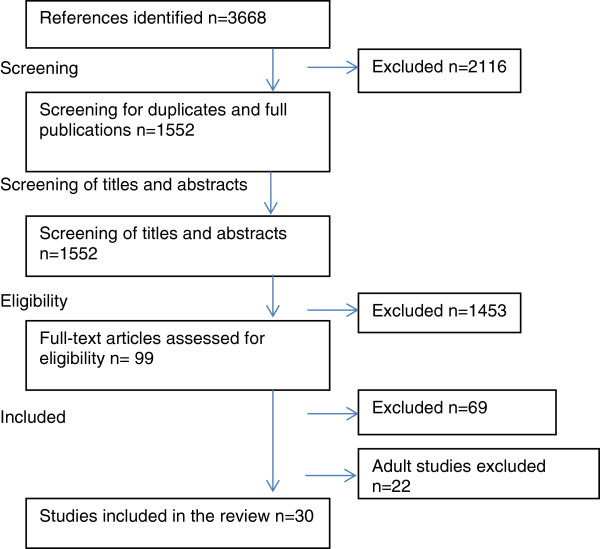
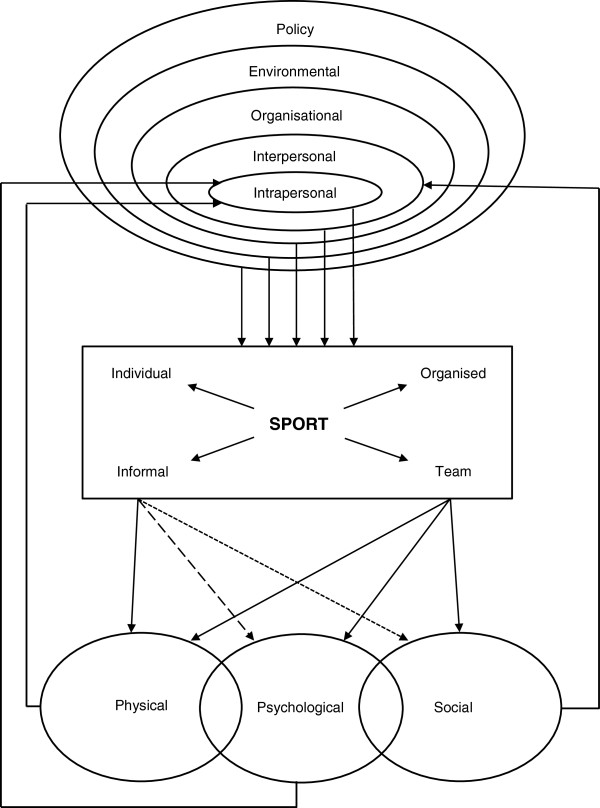
BACKGROUND: There are specific guidelines regarding the level of physical activity (PA) required to provide health benefits. However, the research underpinning these PA guidelines does not address the element of social health. Furthermore, there is insufficient evidence about the levels or types of PA associated specifically with psychological health. This paper first presents the results of a systematic review of the psychological and social health benefits of participation in sport by children and adolescents. Secondly, the information arising from the systematic review has been used to develop a conceptual model. METHODS: A systematic review of 14 electronic databases was conducted in June 2012, and studies published since 1990 were considered for inclusion. Studies that addressed mental and/or social health benefits from participation in sport were included. RESULTS: A total of 3668 publications were initially identified, of which 30 met the selection criteria. There were many different psychological and social health benefits reported, with the most commonly being improved self-esteem, social interaction followed by fewer depressive symptoms. Sport may be associated with improved psychosocial health above and beyond improvements attributable to participation in PA. Specifically, team sport seems to be associated with improved health outcomes compared to individual activities, due to the social nature of the participation. A conceptual model, Health through Sport, is proposed. The model depicts the relationship between psychological, psychosocial and social health domains, and their positive associations with sport participation, as reported in the literature. However, it is acknowledged that the capacity to determine the existence and direction of causal links between participation and health is limited by the fact that the majority of studies identified (n=21) were cross-sectional. CONCLUSION: It is recommended that community sport participation is advocated as a form of leisure time PA for children and adolescents, in an effort to not only improve physical health in relation to such matters as the obesity crisis, but also to enhance psychological and social health outcomes. It is also recommended that the causal link between participation in sport and psychosocial health be further investigated and the conceptual model of Health through Sport tested.
Overview
The claims and statistics of this paper haven’t been checked yet.
Free: it reads the open-access text and checks the first 5 claims that cite a source we can check. Create a free account to check every claim.
Integrity signals
Registry
Cites
Statistics
Figures
Verification
Claims the paper makes
The claims and statistics of this paper haven’t been checked yet.
Free: it reads the open-access text and checks the first 5 claims that cite a source we can check. Create a free account to check every claim.
Claims other papers make about this one
Each is checked against this paper’s own text: does it say what the citing paper says it does?
The source backs part of the claim, not all of it — or backs it for a different population, condition or comparison.
In the citing paper
“All six systematic reviews reported on organized sport activities and two also reported on organized non-sport activities (Cairns et al., 2014, Eime et al., 2013).”
From Impact of organized activities on mental health in children and adolescents: An umbrella review (2022) · cites this paper as Eime et al., 2013
Experimental — accuracy not yet measuredThe source backs part of the claim, not all of it — or backs it for a different population, condition or comparison.
In the citing paper
“Components of exercise interventions may represent important moderators of treatment effects.”
From Exercise for the treatment of anxiety in children and adolescents (2022) · cites this paper as Eime 2013
Experimental — accuracy not yet measuredThe source backs part of the claim, not all of it — or backs it for a different population, condition or comparison.
In the citing paper
“Indeed, intervention setting is another potential moderating factor, with group-based activities reported to confer a range of social benefits compared to individual activities (Eime 2013).”
From Exercise for the treatment of anxiety in children and adolescents (2022) · cites this paper as Eime 2013
Experimental — accuracy not yet measuredThe source backs part of the claim, not all of it — or backs it for a different population, condition or comparison.
In the citing paper
“We found evidence that children and adolescents who participated more frequently, who participated with higher intensity or who participated with longer duration (e.g. started at an early age or participated for a long period), had better mental health compared to their peers (Eime et al., 2013, Evans et al., 2017, Panza et al., 2020).”
From Impact of organized activities on mental health in children and adolescents: An umbrella review (2022) · cites this paper as Eime et al., 2013
Experimental — accuracy not yet measuredThe cited source says what the claim attributes to it.
In the citing paper
“Similarly, sports participation can be instrumental in the physical, social and emotional development of children and adolescents [30].”
2 more claims about this paper
Create a free account to see every claim other papers make about this one.
Self-check
Percentages, sums and reported differences re-computed from the paper’s own numbers.
The self-check needs the paper’s full text.
Citations
Cites
Kytle, J., & Bandura, A. (1978) · Contemporary Sociology · doi:10.2307/2065952 · Cited by 25,422
von Elm, E., Altman, D. G., Egger, M., Pocock, S. J., Gøtzsche, P. C., Vandenbroucke, J. P., & Initiative, F. T. S. (2007) · PLoS Medicine · doi:10.1371/journal.pmed.0040296 · Cited by 23,020
CONSORT 2010 Statement: updated guidelines for reporting parallel group randomised trials
the CONSORT Group, Schulz, K. F., Altman, D. G., & Moher, D. (2010) · BMC Medicine · doi:10.1186/1741-7015-8-18 · Cited by 13,371
Health Behavior and Health Education: Theory, Research, and Practice
(1992) · Annals of Internal Medicine · doi:10.7326/0003-4819-116-4-350_1 · Cited by 13,207
(1985) · Europe PMC (PubMed Central) · Cited by 9,143
Moher, D., Hopewell, S., Schulz, K. F., Montori, V., Gotzsche, P. C., Devereaux, P. J., Elbourne, D., Egger, M., & Altman, D. G. (2010) · BMJ · doi:10.1136/bmj.c869 · Cited by 8,883
An ecological perspective on health promotion programs
McLeroy, K. R., Bibeau, D., Steckler, A., & Glanz, K. (1988) · Health Education Quarterly · doi:10.1177/109019818801500401 · Cited by 8,502 · cited 2×
“The ‘determinants’ element is based on the well-established social ecological model [19,65] and is represented as concentric rings spreading out from the individual’s intrapersonal characteristics to widening spheres of influence.”
BackgroundDowns, S. H., & Black, N. (1998) · Journal of Epidemiology and Community Health · doi:10.1136/jech.52.6.377 · Cited by 8,252 · cited 1×
“Study quality was objectively appraised using the Downs and Black checklist [32].”
MethodJanssen, I., & LeBlanc, A. G. (2010) · International Journal of Behavioral Nutrition and Physical Activity · doi:10.1186/1479-5868-7-40 · Cited by 4,829
Measuring Health: A Guide to Rating Scales and Questionnaires
McDowell, I., & Newell, C. (1987) · Cited by 4,207
Cited by
Items 301–400 of 1,005
Time-use and environmental determinants of dropout from organized youth football and tennis
Deelen, I., Ettema, D., & Kamphuis, C. B. M. (2018) · BMC Public Health · doi:10.1186/s12889-018-5919-2 · Cited by 45
“Particularly, participation in organized sports has been found to be associated with greater psychological and social benefits in children and adolescents compared to individual, unorganized types of sports [1].”
BackgroundDo the benefits of participation in sport and exercise outweigh the negatives? An academic review
Mills, K. A. G., Dudley, D. A., & Collins, N. J. (2019) · Best Practice & Research Clinical Rheumatology · doi:10.1016/j.berh.2019.01.015 · Cited by 55
Kudláček, M., Frömel, K., & Groffik, D. (2019) · Journal of Exercise Science & Fitness · doi:10.1016/j.jesf.2019.10.001 · Cited by 48
Cho, H., Oh, G., & Chiu, W. (2021) · Journal of Marketing Management · doi:10.1080/0267257x.2021.2001028 · Cited by 40
“positive emotions as well as psychological well-being because they facilitate socialisation (Eime et al., 2013).”
BackgroundOn behalf of the HAYS study group, Lankhorst, K., van der Ende‐Kastelijn, K., de Groot, J. F., Zwinkels, M., Verschuren, O. W., BACKX, F. J. G., Visser‐Meily, A., & Takken, T. (2015) · SpringerPlus · doi:10.1186/s40064-015-1589-z · Cited by 42
Young, J. A., Symons, C. M., Pain, M. D., Harvey, J. T., Eime, R., Craike, M. J., & Payne, W. R. (2015) · European Physical Education Review · doi:10.1177/1356336x15579574 · Cited by 46
“These benefits extend beyond physical health to include a range of mental and social benefits for children and adolescents (Eime et al., 2013b; World Health Organization, 2010).”
BackgroundSelf-citationGraupensperger, S. A., Jensen, C. J., & Evans, M. B. (2018) · Sport Exercise and Performance Psychology · doi:10.1037/spy0000121 · Cited by 33
Larsen, M. N., Nielsen, C. M., Madsen, M. F., Manniche, V., Hansen, L., Bangsbo, J., Krustrup, P., & Hansen, P. R. (2018) · Scandinavian Journal of Medicine and Science in Sports · doi:10.1111/sms.13253 · Cited by 42
Vitali, F., Robazza, C., Bortoli, L., Bertinato, L., Schena, F. F., & Lanza, M. (2019) · PeerJ · doi:10.7717/peerj.6436 · Cited by 46
“A recent systematic review on children and adolescents (Eime et al., 2013) provided support to the psychological and social benefits of participation in sport, with the most commonly being improved self-esteem and social interactions, and reduced depressive symptoms.”
BackgroundTranscendent motivations and virtue development in adolescent marathon runners
Schnitker, S. A., Gilbertson, M. K., Houltberg, B. J., Hardy, S. A., & Fernandez, N. A. (2019) · Journal of Personality · doi:10.1111/jopy.12481 · Cited by 41
Bean, C. N., McFadden, T., Fortier, M., & Forneris, T. (2019) · International Journal of Sport and Exercise Psychology · doi:10.1080/1612197x.2019.1655774 · Cited by 46
“Sport has been shown to offer youth many psychosocial benefits that contribute to mental wellbeing (Eime et al., 2013), yet research shows that this may not always be the case, particularly within competitive sport.”
BackgroundBranson, V., Palmer, E., Dry, M. J., & Turnbull, D. A. (2019) · Stress and Health · doi:10.1002/smi.2896 · Cited by 44
Madsen, M. F., Elbe, A., Madsen, E. E., Ermιdis, G., Ryom, K., Wikman, J. M., Lind, R. R., Larsen, M. N., & Krustrup, P. (2020) · Scandinavian Journal of Medicine and Science in Sports · doi:10.1111/sms.13704 · Cited by 37
“A review by Eime et al (2013) investigated psychological benefits of sports in young people and found that those participating in team sports had improved psychological health outcomes.15 The finding is supported by Vella et al, who investigated the relationship between health-related quality of…”
BackgroundLohbeck, A., von Keitz, P., Hohmann, A., & Daseking, M. (2021) · Frontiers in Psychology · doi:10.3389/fpsyg.2021.669936 · Cited by 45
“Physical activity has profound positive effects on health and well-being of young children (Eime et al., 2013; Richter et al., 2016; Brown et al., 2017; Rodriguez-Ayllon et al., 2019).”
BackgroundAnderson‐Butcher, D., & Bates, S. M. (2021) · Child and Adolescent Social Work Journal · doi:10.1007/s10560-021-00777-6 · Cited by 41
“Indeed, evidence suggests youth sport participation predicts a host of positive youth outcomes, especially for youth from socially vulnerable circumstances (Anderson-Butcher, 2019; Eime et al., 2013; Spruit et al., 2016; Whitley et al., 2019).”
BackgroundMoslemi, E., Dehghan, P., & Khani, M. (2022) · Contemporary Clinical Trials Communications · doi:10.1016/j.conctc.2022.100951 · Cited by 44
“Regular physical activity and exercise are known as effective strategies for preventing and treating various metabolic disorders and chronic diseases, including cardiovascular disease, type 2 diabetes, cancer, metabolic syndrome, depression, and stress [1].”
BackgroundSpringer, S., & Khamis, S. (2017) · Multiple Sclerosis and Related Disorders · doi:10.1016/j.msard.2017.01.010 · Cited by 41
“As the interpretation of the power item might be confusing, a simpler power item was used (presence or absence of reference to a power analysis), and scored as 0, 1 or NA (not applicable) as was done in previous reviews using this scale (Eime et al., 2013; Pendleton et al., 2000).”
MethodPark, H., Brown, C. D., & Pearson, A. L. (2024) · Health & Place · doi:10.1016/j.healthplace.2024.103185 · Cited by 39
McFadden, T., Bean, C. N., Fortier, M., & Post, C. (2016) · Cogent Psychology · doi:10.1080/23311908.2016.1157975 · Cited by 46
“…structured sport environments can promote youth well-being and ease symptoms of psychological ill-being (Danish, Forneris, Hodge, & Heke, 2004; Eime et al., 2013; Gould & Carson, 2008; Ommundsen, Løndal, & Loland, 2014), an increasing number of studies and reviews have also documented…”
BackgroundTahiraj, E., Ćubela, M., Ostojić, L., Rođek, J., Zenić, N., Sekulić, D., & Lešnik, B. (2016) · International Journal of Environmental Research and Public Health · doi:10.3390/ijerph13050502 · Cited by 39
“In addition to the known health-related benefits of sports, such as improved cardiovascular endurance, muscular fitness, and the prevention of obesity, sports are frequently considered to be a mechanism of encouraging pro-social behavior [26].”
BackgroundSuetani, S., Mamun, A. A., Williams, G. M., Najman, J. M., McGrath, J. J., & Scott, J. G. (2017) · Journal of Psychiatric Research · doi:10.1016/j.jpsychires.2017.06.013 · Cited by 40
“…in adolescence such as physical health (Ekelund et M AN US CR IP T AC CE PT ED 14 al., 2012; Janssen and Leblanc, 2010) and social connectedness (Eime et al., 2013), public health programs aimed at increasing adolescent PAE remain important in achieving subsequent general wellbeing in young…”
BackgroundDevelopment of an observational measure assessing program quality processes in youth sport
Bean, C. N., Kramers, S., Camiré, M., Fraser-Thomas, J. L., & Forneris, T. (2018) · Cogent Social Sciences · doi:10.1080/23311886.2018.1467304 · Cited by 55
Thomson, A., Bridges, S., Corrins, B., Pham, J., White, C., & Buchanan, A. (2020) · Journal of Intellectual & Developmental Disability · doi:10.3109/13668250.2020.1717070 · Cited by 32
Deliberate Soccer Practice Modulates Attentional Functioning in Children
Moratal, C., Lupiáñez, J., Ballester, R., & Huertas, F. (2020) · Frontiers in Psychology · doi:10.3389/fpsyg.2020.00761 · Cited by 42
Wilson, O. W. A., Ikeda, E., Hinckson, E. A., Mandic, S., Richards, J. A., Duncan, S., Kira, G., Maddison, R., Meredith-Jones, K. A., Chisholm, L., et al. (2022) · Journal of Exercise Science & Fitness · doi:10.1016/j.jesf.2022.10.009 · Cited by 43
Medrano, M., Maíz, E., Maldonado‐Martín, S., Arenaza, L., Rodríguez‐Vigil, B., Ortega, F. B., Ruiz, J. R., Larrarte, E., López, I. D., Sarasua-Miranda, A., et al. (2015) · Contemporary Clinical Trials · doi:10.1016/j.cct.2015.09.017 · Cited by 38
“Moreover, family-based lifestyle interventions can improve psychological well-being in overweight and obese children [19,34].”
BackgroundKesting, S., Götte, M., Seidel, C. C., Rosenbaum, D., & Boos, J. (2015) · Pediatric Blood & Cancer · doi:10.1002/pbc.25852 · Cited by 35
Comparison of head impact exposure in practice drills among multiple youth football teams
Kelley, M. E., Espeland, M. A., Flood, W. C., Powers, A. K., Whitlow, C. T., Maldjian, J. A., Stitzel, J. D., & Urban, J. E. (2019) · Journal of Neurosurgery Pediatrics · doi:10.3171/2018.9.peds18314 · Cited by 40
Supporting Our Lifelong Engagement: Mothers and Teens Exercising (SOLE MATES); a feasibility trial
Corr, M., McMullen, J. M., Morgan, P. J., Barnes, A. T., & Murtagh, E. (2019) · Women & Health · doi:10.1080/03630242.2019.1688446 · Cited by 31
“Regular participation in physical activity (PA) provides numerous physical and psychological health benefits (Dumith et al. 2011; Eime et al. 2013; Hills, Dengel, and Lubans 2015), including improved cardiovascular health and mental wellbeing (Dumith et al. 2011; Eime et al. 2013; McMahon et al.…”
BackgroundInfluentialYu, H., Li, Y., Tian, J., Austin, L., & Tao, Y. (2022) · International Journal of Environmental Research and Public Health · doi:10.3390/ijerph191912152 · Cited by 43
“Physical activity (PA), an essential factor in sports, has consistently been associated with high psycho-social health in adolescents [1].”
BackgroundSports and Immunity, from the recreational to the elite athlete
Baskerville, R., Castell, L. M., & Bermon, S. (2024) · Infectious Diseases Now · doi:10.1016/j.idnow.2024.104893 · Cited by 50
Field, S. C., & Temple, V. A. (2017) · Sports · doi:10.3390/sports5020043 · Cited by 51
“, team sports) can learn emotional control, conflict resolution, and skills for developing relationships with coaches, friends, and teammates [5].”
BackgroundOrr, K., Tamminen, K. A., Sweet, S. N., Tomasone, J. R., & Arbour‐Nicitopoulos, K. P. (2017) · Adapted Physical Activity Quarterly · doi:10.1123/apaq.2017-0028 · Cited by 39
Ristolainen, L., Toivo, K., Parkkari, J. P., Kokko, S. P., Alanko, L., Heinonen, O. J., Korpelainen, R., Savonen, K. P., Selänne, H., Vasankari, T. J., et al. (2019) · BMC Musculoskeletal Disorders · doi:10.1186/s12891-019-2417-3 · Cited by 52
“Background Physical activity in adolescence provides multidimensional health benefits [1, 2].”
BackgroundHurley, D., Swann, C., Allen, M. S., & Vella, S. A. (2019) · Psychology of sport and exercise · doi:10.1016/j.psychsport.2019.101635 · Cited by 44
Wilson, B., & Barnett, L. M. (2020) · Children and Youth Services Review · doi:10.1016/j.childyouth.2020.104765 · Cited by 51
Holbrook, H. M., Voller, F., Castellini, G., Silvestri, C., Ricca, V., Cassioli, E., Ivanova, M. Y., & Hudziak, J. J. (2020) · Journal of Affective Disorders · doi:10.1016/j.jad.2020.03.142 · Cited by 43
Neill, R. D., Lloyd, K., Best, P., & Tully, M. A. (2020) · Mental health and physical activity · doi:10.1016/j.mhpa.2020.100359 · Cited by 38
The Psychological Burden of Retirement from Sport
Esopenko, C., Coury, J. R., Pieroth, E. M., Noble, J. M., Trofa, D. P., & Bottiglieri, T. S. (2020) · Current Sports Medicine Reports · doi:10.1249/jsr.0000000000000761 · Cited by 56
Lobel, A., Engels, R. C. M. E., Stone, L. L., & Granic, I. (2019) · Psychology of Popular Media Culture · doi:10.1037/ppm0000159 · Cited by 45
Position statement: Research and reconciliation with Indigenous peoples in rural health journals
Lock, M., McMillan, F., Bennett, B., Martire, J. L., Warne, D. K., Kidd, J., Williams, N. G., Worley, P., Hutten‐Czapski, P., & Roberts, R. J. (2022) · Australian Journal of Rural Health · doi:10.1111/ajr.12834 · Cited by 35
Serchen, J., Hilden, D. R., Beachy, M. W., Hilden, D. R., Beachy, M. W., Carney, J. K., Foster, H., Hoeg, A., Hollon, M. F., Jumper, C., et al. (2024) · Annals of Internal Medicine · doi:10.7326/m24-0636 · Cited by 37
Wei, D., Xue, J., & Sun, B. (2025) · Frontiers in Psychology · doi:10.3389/fpsyg.2025.1636707 · Cited by 51
Breistøl, S., Clench‐Aas, J., Roy, B. V., & Raanaas, R. K. (2017) · Scandinavian Journal of Child and Adolescent Psychiatry and Psychology · doi:10.21307/sjcapp-2017-003 · Cited by 48
Moeijes, J., van Busschbach, J. T., Lockhart, K. L., Bosscher, R. J., & Twisk, J. W. R. (2018) · European Journal of Sport Science · doi:10.1080/17461391.2018.1510988 · Cited by 40
“It provided no insight into the causal relationships between sports participation and psychosocial health, which is a common limitation in research in this area (Coalter, 2015; Eime et al., 2013).”
BackgroundYouth sport participation and parental mental health
Sutcliffe, J., Kelly, P. J., & Vella, S. A. (2020) · Psychology of sport and exercise · doi:10.1016/j.psychsport.2020.101832 · Cited by 33
Devenish, B. D., Sivaratnam, C. S., Lindor, E., Papadopoulos, N. V., Wilson, R. B., McGillivray, J., & Rinehart, N. (2020) · Frontiers in Psychology · doi:10.3389/fpsyg.2020.583483 · Cited by 42
Kirklewski, S. J., Watson, R. J., & Lauckner, C. (2020) · Journal of sport and health science/Journal of Sport and Health Science · doi:10.1016/j.jshs.2020.11.013 · Cited by 40
Competition's Role in Developing Psychological Strength and Outstanding Performance
Worrell, F. C., Knotek, S. E., Plucker, J. A., Portenga, S., Simonton, D. K., Olszewski‐Kubilius, P., Schultz, S. R., & Subotnik, R. F. (2016) · Review of General Psychology · doi:10.1037/gpr0000079 · Cited by 40
Pelletier, L. G., Rocchi, M., Guertin, C., Hébert, C., & Sarrazin, P. G. (2017) · International Journal of Sport and Exercise Psychology · doi:10.1080/1612197x.2017.1339729 · Cited by 51
Wade, L., Eime, R., Pankowiak, A., Vella, S. A., Robinson, K. J., Kennedy, S. G., Parkes, R., & Eather, N. (2026) · Systematic Reviews · doi:10.1186/s13643-026-03104-1 · Cited by 57
Self-citationYıldızer, G., Bılgın, E., Korur, E. N., Novak, D., & Demirhan, G. (2017) · Journal of sport and health science/Journal of Sport and Health Science · doi:10.1016/j.jshs.2017.10.008 · Cited by 33
“Physical activity participation (PAP) is one of the determining factors for optimal growth and development of children and adolescents.(1,2) There is also evidence to suggest that physical inactivity during early periods of life may track into adulthood and affect quality of life.”
BackgroundPhysical activity patterns across time-segmented youth sport flag football practice
Schlechter, C. R., Guagliano, J. M., Rosenkranz, R. R., Milliken, G. A., & Dzewaltowski, D. A. (2018) · BMC Public Health · doi:10.1186/s12889-018-5108-3 · Cited by 30
“Participation in youth sport has been shown to provide a myriad of psychological, social, and physical benefits for children, including increased health-related quality of life [6], social integration [7], and confidence [7].”
BackgroundAdami, P. E., Squeo, M. R., Quattrini, F. M., Paolo, F. M. D., Pisicchio, C., Giacinto, B. D., Lemme, E., Maestrini, V., & Pelliccia, A. (2018) · British Journal of Sports Medicine · doi:10.1136/bjsports-2018-099651 · Cited by 32
Results from South Korea's 2018 Report Card on physical activity for children and youth
Oh, J.-W., Lee, E., Lim, J., Lee, S.-H., Jin, Y.-S., Song, B. K., Oh, B., Lee, C. G., Lee, D. H., Lee, H. J., et al. (2018) · Journal of Exercise Science & Fitness · doi:10.1016/j.jesf.2018.10.006 · Cited by 32
Vigorous physical activity in relation to family affluence: time trends in Europe and North America
Sigmundová, D., Sigmund, E., Tesler, R., Ng, K., Hamřík, Z., Mathisen, F. K. S., Inchley, J., & Bucksch, J. (2019) · International Journal of Public Health · doi:10.1007/s00038-019-01271-8 · Cited by 34
Sports-based mental health promotion in Australia: Formative evaluation
Vella, S. A., Swann, C., Boydell, K., Eckermann, S. D., Fogarty, A. S., Hurley, D., Liddle, S. K., Lonsdale, C., Sanders, T., Schweickle, M. J., et al. (2019) · Psychology of sport and exercise · doi:10.1016/j.psychsport.2019.101560 · Cited by 34
Chen, S. L., Maldonado, D. R., Go, C. C., Kyin, C., Lall, A. C., & Domb, B. G. (2019) · The American Journal of Sports Medicine · doi:10.1177/0363546519875131 · Cited by 29
“A systematic review on the psychosocial benefits of sports participation found that adolescents who engaged in sports exhibited increased confidence, emotional regulation, self-knowledge, and cooperation with peers.(17,52) The literature suggests that these health benefits are even greater in athletes who participate…”
BackgroundThe Relationship Between Baseball Participation and Health: A Systematic Scoping Review
Bullock, G. S., Uhan, J., Harriss, E., Arden, N., & Filbay, S. R. (2020) · Journal of Orthopaedic and Sports Physical Therapy · doi:10.2519/jospt.2020.9281 · Cited by 29
The association between adolescent football participation and early adulthood depression
Deshpande, S. K., Hasegawa, R. B., Weiss, J., & Small, D. S. (2020) · PLoS ONE · doi:10.1371/journal.pone.0229978 · Cited by 37
“Our findings also accord with the broader literature on the benefits of adolescent physical activity [60]: regular physical activity during adolescence may decrease the risk of diabetes [61] and obesity [62], improve psychological and social health [26], and may even protect against later-life neurodegeneration [63].”
BackgroundResultAbbott, S., Hogan, C. M., Castiglioni, M. T., Yamauchi, G., Mitchell, L. J. G., Salter, J., Romann, M., & Cobley, S. P. (2020) · Journal of science and medicine in sport · doi:10.1016/j.jsams.2020.10.003 · Cited by 55
Exploring adolescent girls’ experiences of body talk in non‐aesthetic sport
Lucibello, K. M., Koulanova, A., Pila, E., Brunet, J., & Sabiston, C. M. (2021) · Journal of Adolescence · doi:10.1016/j.adolescence.2021.04.003 · Cited by 41
Johnsen, M. B., Guddal, M. H., Småstuen, M. C., Moksnes, H., Engebretsen, L., Storheim, K., & Zwart, J. (2016) · The American Journal of Sports Medicine · doi:10.1177/0363546516643807 · Cited by 34
“It is well documented that regular physical activity improves physical, psychological, and social health in children and adolescents.(11,19) However, there is a concern that participating in sports exposes youth to a higher risk of musculoskeletal injuries, which may negatively affect their long-term health.”
BackgroundClinical Outcome Reporting in Youth ACL Literature Is Widely Variable
Brusalis, C. M., Lakomkin, N., Suryavanshi, J. R., Cruz, A. I., Green, D. W., Jones, K. J., & Fabricant, P. D. (2017) · Orthopaedic Journal of Sports Medicine · doi:10.1177/2325967117724431 · Cited by 30
“Krych et al(27) 2010 AJSM 4 99 16 (13-18) Ellis et al(14) 2012 Arthroscopy 3 79 16 (14-18) Hui et al(22) 2012 AJSM 4 16 12 (8-14) Redler et al(41) 2012 Arthroscopy 4 18 14 (±0.”
Consistent participation in organized physical activity predicts emotional adjustment in children
Brière, F. N., Imbeault, A., Goldfield, G. S., & Pagani, L. S. (2019) · Pediatric Research · doi:10.1038/s41390-019-0417-5 · Cited by 37
Friends in Sports: Social Networks in Leisure, School and Social Media
Dalen, H., & Seippel, Ø. N. (2021) · International Journal of Environmental Research and Public Health · doi:10.3390/ijerph18126197 · Cited by 46
“Research shows that social relations matter for how sports are experienced (fun and enjoyment) [8], feelings of belonging and integration [9–11], social capital [12–15], health and lifestyle [16,17] and the levels of participation in and dropping out from sports [4,18–20].”
BackgroundProcess evaluations of health-promotion interventions in sports settings: a systematic review
Lim, A. S. X., Schweickle, M. J., Liddelow, C., Liddle, S. K., & Vella, S. A. (2023) · Health Promotion International · doi:10.1093/heapro/daad114 · Cited by 34
Bengtsson, D., Stenling, A., Nygren, J., Ntoumanis, N., & Ivarsson, A. (2023) · Psychology of sport and exercise · doi:10.1016/j.psychsport.2023.102558 · Cited by 58
Bjereld, Y., Daneback, K., Gunnarsdóttir, H., & Petzold, M. (2014) · Child Psychiatry & Human Development · doi:10.1007/s10578-014-0468-0 · Cited by 39
“Specifically team sport has been associated with improved health outcomes compared to individual activities [31].”
BackgroundInfluentialJúnior, J. C. D. F., Reis, R. S., & Hallal, P. C. (2014) · Cadernos de Saúde Pública · doi:10.1590/0102-311x00010813 · Cited by 34
Elsborg, P., Nielsen, G., Klinker, C. D., Melby, P. S., Christensen, J. H., & Bentsen, P. (2019) · BMC Public Health · doi:10.1186/s12889-019-7428-3 · Cited by 32
“individual activities, due to the social nature of the participation” [26].”
BackgroundThe Effect of Sport on Life Skills in High School Students
Düz, S., & Aslan, T. V. (2020) · Asian Journal of Education and Training · doi:10.20448/journal.522.2020.62.161.168 · Cited by 57
Gallego-Méndez, J., Pérez‐Gómez, J., Calzada-Rodríguez, J. I., Denche-Zamorano, Á. M., Mendoza-Muñoz, M., Carlos‐Vivas, J., García-Gordillo, M. Á., & Adsuar, J. C. (2020) · International Journal of Environmental Research and Public Health · doi:10.3390/ijerph17082804 · Cited by 40
Youth sport and COVID-19: a potential generation lost
Drummond, M., Elliott, S., Drummond, C., & Prichard, I. J. (2020) · Emerald Open Research · doi:10.35241/emeraldopenres.13661.1 · Cited by 37
Diekfuss, J. A., Bonnette, S., Hogg, J. A., Riehm, C. D., Grooms, D. R., Singh, H., Anand, M., Slutsky‐Ganesh, A. B., Wilkerson, G. B., & Myer, G. D. (2020) · Journal of Science in Sport and Exercise · doi:10.1007/s42978-020-00083-0 · Cited by 35
Hughes, L. D., Dowshen, N., Kidd, K. M., Operario, D., Renjilian, C. B., & Gamarel, K. E. (2022) · LGBT Health · doi:10.1089/lgbt.2021.0392 · Cited by 33
Kwon, S., Lee, J. J., & Carnethon, M. R. (2015) · BMC Public Health · doi:10.1186/s12889-015-2043-4 · Cited by 30
“Background Habitual moderate- to vigorous-intensity physical activity (MVPA) during childhood provides numerous physical, psycho-social, and cognitive health benefits [1–3].”
BackgroundGroupness and Leadership Perceptions in Relation to Social Identity in Youth Sport
Martin, L. J., Balderson, D., Hawkins, M., WILSON, K. S., & Bruner, M. W. (2016) · Journal of Applied Sport Psychology · doi:10.1080/10413200.2016.1238414 · Cited by 33
Wang, M., Chow, A., & Amemiya, J. L. (2017) · Journal of Youth and Adolescence · doi:10.1007/s10964-017-0649-9 · Cited by 43
“Involvement in sport activities has been found to positively influence psychological well-being (Eime et al. 2013).”
BackgroundResultInfluentialSport Participation Across the Lifespan: Australian Trends and Policy Implications
Eime, R., & Harvey, J. T. (2017) · Palgrave Macmillan UK eBooks · doi:10.1057/978-1-137-48562-5_2 · Cited by 41
Self-citationCairney, J., Clark, H. J., KWAN, M. Y. W., Bruner, M. W., & Tamminen, K. A. (2018) · BMC Public Health · doi:10.1186/s12889-018-5325-9 · Cited by 42
“Perceived competence is one of the most common psychological factors that has been examined in relation to sport participation among youth [8, 9].”
BackgroundWong, J. E., Parikh, P., Poh, B. K., Deurenberg, P., & on behalf of the SEANUTS Malaysia Study Group (2016) · Asia Pacific Journal of Public Health · doi:10.1177/1010539516650726 · Cited by 36
Bang, H., Chang, M., & Kim, S. (2024) · Children and Youth Services Review · doi:10.1016/j.childyouth.2024.107517 · Cited by 36
May, T., Rinehart, N., Barnett, L. M., Hinkley, T., McGillivray, J., Skouteris, H., Stephens, D., & Goldfinch, D. (2017) · Journal of Motor Learning and Development · doi:10.1123/jmld.2016-0055 · Cited by 29
Zwinkels, M., Verschuren, O. W., Balemans, A. C. J., Lankhorst, K., Velde, S. J. T., van Gaalen, L., de Groot, J. F., Visser‐Meily, A., & Takken, T. (2018) · Frontiers in Pediatrics · doi:10.3389/fped.2018.00075 · Cited by 41
Jakšić, D., Mandic, S., Maksimović, N., Milošević, Z., Roklicer, R., Vuković, J., Poček, S., Lakičević, N., Bianco, A., Cassar, S., et al. (2020) · International Journal of Environmental Research and Public Health · doi:10.3390/ijerph17186609 · Cited by 42
“Despite numerous health benefits of PA during early childhood [2,3], PA levels in preschool children remain relatively low [6].”
BackgroundPapadopoulos, N. V., Whelan, M., Skouteris, H., Williams, K. J., McGinley, J. L., Shih, S. T. F., Emonson, C., Moss, S. A., Sivaratnam, C. S., Whitehouse, A., et al. (2020) · Frontiers in Psychology · doi:10.3389/fpsyg.2020.568723 · Cited by 36
Reflections on the Field of Mental Health in Sport: Critical Issues and Ways of Moving Forward
Vella, S. A., Swann, C., & Tamminen, K. A. (2020) · Journal of Applied Sport Psychology · doi:10.1080/10413200.2020.1854898 · Cited by 33
Flourishing in Resonance: Joint Resilience Building Through Music and Motion
Nijs, L., & Nicolaou, G. (2021) · Frontiers in Psychology · doi:10.3389/fpsyg.2021.666702 · Cited by 41
Carney, R., & Firth, J. (2021) · JCPP Advances · doi:10.1002/jcv2.12031 · Cited by 30
on behalf of the Sport-2-Stay-Fit study group, Zwinkels, M., Verschuren, O. W., Lankhorst, K., van der Ende‐Kastelijn, K., de Groot, J. F., BACKX, F. J. G., Visser‐Meily, A., & Takken, T. (2015) · BMC Sports Science Medicine and Rehabilitation · doi:10.1186/s13102-015-0016-7 · Cited by 40
“In children who are typical developing several studies proved a positive correlation between sports participation and self-perception [81].”
BackgroundSu, T. T., Sim, P. Y., Nahar, A. M., Majid, H. A., Murray, L., Cantwell, M. M., Al-Sadat, N., & Jalaludin, M. Y. (2014) · Preventive Medicine · doi:10.1016/j.ypmed.2014.07.001 · Cited by 31
“In countries such as Australia (Eime et al., 2013), New Zealand (Stoner et al.”
BackgroundHealth in overweight children: 2-year follow-up of Finnmark Activity School—a randomised trial
Kokkvoll, A. S., Grimsgaard, S., Steinsbekk, S., Flægstad, T., & Njølstad, I. (2014) · Archives of Disease in Childhood · doi:10.1136/archdischild-2014-307107 · Cited by 32
Social support, network, and relationships among coaches in different sports: a systematic review
Ferreira, J. G., Rodrigues, F., Sobreiro, P., Silva, M., Santos, F., Carvalho, G., Hernández-Mendo, A., & Rodrigues, J. (2024) · Frontiers in Psychology · doi:10.3389/fpsyg.2024.1301978 · Cited by 49
Smith, B. J., Thomas, M., & Batras, D. (2015) · Health Promotion International · doi:10.1093/heapro/dav042 · Cited by 34
Jozefiak, T., Kayed, N. S., Ranøyen, I., Greger, H. K., Wallander, J. L., & Wichstrøm, L. (2017) · Quality of Life Research · doi:10.1007/s11136-017-1603-8 · Cited by 35
“Concerning physical appearance, a systematic review concluded that there were many different psychological and social health benefits from children and adolescents participating in sports, including improved self-esteem and social interaction and fewer depressive symptoms [62].”
Relevance of parental cultural capital for adolescents’ physical exercise and sport activity
Vollmer, J., Lohmann, J., & Gieß-Stüber, P. (2019) · European Journal for Sport and Society · doi:10.1080/16138171.2019.1693146 · Cited by 30
Implementation of a modified sport programme to increase participation: Key stakeholder perspectives
Buszard, T., Oppici, L., Westerbeek, H. M., & Farrow, D. (2020) · Journal of Sports Sciences · doi:10.1080/02640414.2020.1737370 · Cited by 31
“Sport participation and physical activity are linked to positive health outcomes, including reduction of obesity (Cairney & Veldhuizen, 2017; Hills et al., 2011), and social and psychological benefits (Eime et al., 2013; Marlier et al., 2015).”
BackgroundØstergaard, C. S., Pedersen, N. S. A., Thomasen, A., Mechlenburg, I., & Nordbye‐Nielsen, K. (2020) · Acta Paediatrica · doi:10.1111/apa.15341 · Cited by 30
Ferguson, L. J., Adam, M. E. K., Gunnell, K. E., Kowalski, K. C., Mack, D. E., Mosewich, A. D., & Murphy, N. (2021) · Journal of Happiness Studies · doi:10.1007/s10902-021-00483-1 · Cited by 35
“…the benefits of competing in sport include increased competence, self-knowledge and self-esteem, positive * Leah J. Ferguson leah.ferguson@usask.ca Extended author information available on the last page of the article 1 3 relationships, and emotional well-being (e.g., Eime et al., 2013a, b).”
Background
Metadata
- Authors
- Eime, R. M., Young, J. A., Harvey, J. T., Charity, M. J., & Payne, W. R.
- Affiliations
- Victoria University (AU)
- Federation University (AU)
- Corresponding author
- Eime, Rochelle M
- Venue
- International Journal of Behavioral Nutrition and Physical Activity
- Published
- 2013
- Volume
- 10
- Issue
- 1
- Pages
- 98
- ISSN
- 1479-5868 (ISSN-L)
- PMC
- PMC3751802
- OpenAlex
- W2150292700
- Semantic Scholar
- 7f8fcfa7ffe59c88cef9c12ca5965f488c4b7011
- Cited by
- 2,366
- References
- 69
- Citations by year
- 2026: 266 · 2025: 309 · 2024: 262 · 2023: 267 · 2022: 238 · 2021: 235 · 2020: 203 · 2019: 153 · 2018: 142 · 2017: 103 · 2016: 86 · 2015: 59 · 2014: 38 · 2013: 3
- FWCI
- 6.70
- Type
- journal article
- Language
- en
- Open access
- gold
- doi.org
- Licence
- cc-by
- Locations
- International Journal of Behavioral Nutrition and Physical Activity (publishedVersion, cc-by)
- Europe PMC (PubMed Central) (publishedVersion, cc-by)
- PubMed Central (publishedVersion, cc-by)
- PubMed (publishedVersion)
- Victoria University Research Repository (Victoria University) (submittedVersion, cc-by)
- FedUni ResearchOnline (Federation University Australia) (submittedVersion)
- Figshare (submittedVersion, cc-by)
- Topics
- Health Sciences › Medicine › Public Health, Environmental and Occupational Health › Physical Activity and Health
- Social Sciences › Psychology › Developmental and Educational Psychology › Youth Development and Social Support
- Social Sciences › Life-span and Life-course Studies › Recreational Sport and Physical Activity
- Keywords
- sports participation, children, adolescents, mental health, social health, self-esteem, depressive symptoms, social interaction, team sports, individual sports, psychosocial health, conceptual model, physical activity guidelines, community sports, leisure-time physical activity
- MeSH terms
- Adolescent, Child, Depression, Health, Humans, Interpersonal Relations, Personal Satisfaction, Self Concept, Sports, Health Behavior, Exercise
About these checks
Registry, retraction, Cites and statistics results are computed, not judged, with one exception: a printed reference that no index lists is read once by a model before it counts as a citation error. Claims are extracted by a model and kept only when their quote appears verbatim in the text; each cited source is then checked, with a model’s help, for whether it says what the claim relies on. Those verdicts can be wrong — read the claim’s quote and the cited source before relying on one.
Statistics and arithmetic are recomputed, not judged.
Confidence bands are shown only for fields calibrated on our annotated test set. None is calibrated yet, so no band is shown.
What counts as a claim ›How we measure confidence ›How we check this ›
Are you an author, or do you see a problem with this page? Request a review
Data sources
Bibliographic data: Semantic Scholar, OpenAlex, Crossref.
Contains information from the Semantic Scholar Academic Graph Datasets, made available under the ODC Attribution License (ODC-BY 1.0).
Semantic Scholar’s data is described in: Kinney, R., et al. (2023). The Semantic Scholar Open Data Platform. arXiv:2301.10140.
