

A systematic review of the psychological and social benefits of participation in sport for children and adolescents: informing development of a conceptual model of health through sport
Open accessThe DOI matches its Crossref record; 69 of the 69 references it cites were found in a registry or an index.
Abstract
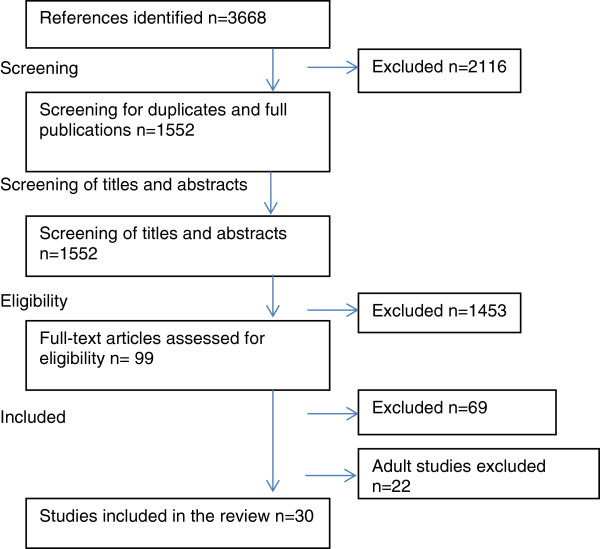
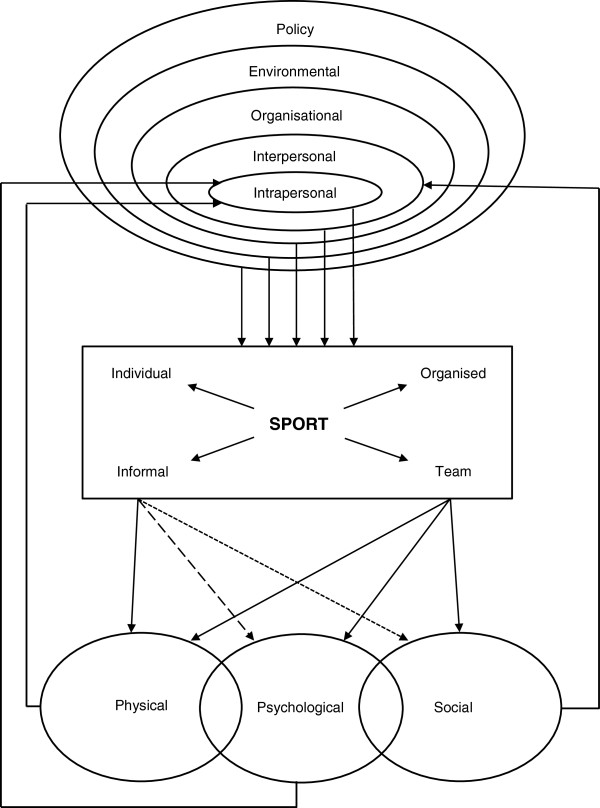
BACKGROUND: There are specific guidelines regarding the level of physical activity (PA) required to provide health benefits. However, the research underpinning these PA guidelines does not address the element of social health. Furthermore, there is insufficient evidence about the levels or types of PA associated specifically with psychological health. This paper first presents the results of a systematic review of the psychological and social health benefits of participation in sport by children and adolescents. Secondly, the information arising from the systematic review has been used to develop a conceptual model. METHODS: A systematic review of 14 electronic databases was conducted in June 2012, and studies published since 1990 were considered for inclusion. Studies that addressed mental and/or social health benefits from participation in sport were included. RESULTS: A total of 3668 publications were initially identified, of which 30 met the selection criteria. There were many different psychological and social health benefits reported, with the most commonly being improved self-esteem, social interaction followed by fewer depressive symptoms. Sport may be associated with improved psychosocial health above and beyond improvements attributable to participation in PA. Specifically, team sport seems to be associated with improved health outcomes compared to individual activities, due to the social nature of the participation. A conceptual model, Health through Sport, is proposed. The model depicts the relationship between psychological, psychosocial and social health domains, and their positive associations with sport participation, as reported in the literature. However, it is acknowledged that the capacity to determine the existence and direction of causal links between participation and health is limited by the fact that the majority of studies identified (n=21) were cross-sectional. CONCLUSION: It is recommended that community sport participation is advocated as a form of leisure time PA for children and adolescents, in an effort to not only improve physical health in relation to such matters as the obesity crisis, but also to enhance psychological and social health outcomes. It is also recommended that the causal link between participation in sport and psychosocial health be further investigated and the conceptual model of Health through Sport tested.
Overview
The claims and statistics of this paper haven’t been checked yet.
Free: it reads the open-access text and checks the first 5 claims that cite a source we can check. Create a free account to check every claim.
Integrity signals
Registry
Cites
Statistics
Figures
Verification
Claims the paper makes
The claims and statistics of this paper haven’t been checked yet.
Free: it reads the open-access text and checks the first 5 claims that cite a source we can check. Create a free account to check every claim.
Claims other papers make about this one
Each is checked against this paper’s own text: does it say what the citing paper says it does?
The source backs part of the claim, not all of it — or backs it for a different population, condition or comparison.
In the citing paper
“All six systematic reviews reported on organized sport activities and two also reported on organized non-sport activities (Cairns et al., 2014, Eime et al., 2013).”
From Impact of organized activities on mental health in children and adolescents: An umbrella review (2022) · cites this paper as Eime et al., 2013
Experimental — accuracy not yet measuredThe source backs part of the claim, not all of it — or backs it for a different population, condition or comparison.
In the citing paper
“Components of exercise interventions may represent important moderators of treatment effects.”
From Exercise for the treatment of anxiety in children and adolescents (2022) · cites this paper as Eime 2013
Experimental — accuracy not yet measuredThe source backs part of the claim, not all of it — or backs it for a different population, condition or comparison.
In the citing paper
“Indeed, intervention setting is another potential moderating factor, with group-based activities reported to confer a range of social benefits compared to individual activities (Eime 2013).”
From Exercise for the treatment of anxiety in children and adolescents (2022) · cites this paper as Eime 2013
Experimental — accuracy not yet measuredThe source backs part of the claim, not all of it — or backs it for a different population, condition or comparison.
In the citing paper
“We found evidence that children and adolescents who participated more frequently, who participated with higher intensity or who participated with longer duration (e.g. started at an early age or participated for a long period), had better mental health compared to their peers (Eime et al., 2013, Evans et al., 2017, Panza et al., 2020).”
From Impact of organized activities on mental health in children and adolescents: An umbrella review (2022) · cites this paper as Eime et al., 2013
Experimental — accuracy not yet measuredThe cited source says what the claim attributes to it.
In the citing paper
“Similarly, sports participation can be instrumental in the physical, social and emotional development of children and adolescents [30].”
2 more claims about this paper
Create a free account to see every claim other papers make about this one.
Self-check
Percentages, sums and reported differences re-computed from the paper’s own numbers.
The self-check needs the paper’s full text.
Citations
Cites
Kytle, J., & Bandura, A. (1978) · Contemporary Sociology · doi:10.2307/2065952 · Cited by 25,422
von Elm, E., Altman, D. G., Egger, M., Pocock, S. J., Gøtzsche, P. C., Vandenbroucke, J. P., & Initiative, F. T. S. (2007) · PLoS Medicine · doi:10.1371/journal.pmed.0040296 · Cited by 23,020
CONSORT 2010 Statement: updated guidelines for reporting parallel group randomised trials
the CONSORT Group, Schulz, K. F., Altman, D. G., & Moher, D. (2010) · BMC Medicine · doi:10.1186/1741-7015-8-18 · Cited by 13,371
Health Behavior and Health Education: Theory, Research, and Practice
(1992) · Annals of Internal Medicine · doi:10.7326/0003-4819-116-4-350_1 · Cited by 13,207
(1985) · Europe PMC (PubMed Central) · Cited by 9,143
Moher, D., Hopewell, S., Schulz, K. F., Montori, V., Gotzsche, P. C., Devereaux, P. J., Elbourne, D., Egger, M., & Altman, D. G. (2010) · BMJ · doi:10.1136/bmj.c869 · Cited by 8,883
An ecological perspective on health promotion programs
McLeroy, K. R., Bibeau, D., Steckler, A., & Glanz, K. (1988) · Health Education Quarterly · doi:10.1177/109019818801500401 · Cited by 8,502 · cited 2×
“The ‘determinants’ element is based on the well-established social ecological model [19,65] and is represented as concentric rings spreading out from the individual’s intrapersonal characteristics to widening spheres of influence.”
BackgroundDowns, S. H., & Black, N. (1998) · Journal of Epidemiology and Community Health · doi:10.1136/jech.52.6.377 · Cited by 8,252 · cited 1×
“Study quality was objectively appraised using the Downs and Black checklist [32].”
MethodJanssen, I., & LeBlanc, A. G. (2010) · International Journal of Behavioral Nutrition and Physical Activity · doi:10.1186/1479-5868-7-40 · Cited by 4,829
Measuring Health: A Guide to Rating Scales and Questionnaires
McDowell, I., & Newell, C. (1987) · Cited by 4,207
Cited by
Items 201–300 of 1,005
Silva, A. G., Sá‐Couto, P., Queirós, A., Neto, M., & Rocha, N. P. (2017) · BMC Musculoskeletal Disorders · doi:10.1186/s12891-017-1557-6 · Cited by 58
Extracurricular activity profiles and wellbeing in middle childhood: A population-level study
Oberle, E., Ji, X. R., Magee, C., Guhn, M., Schonert-Reichl, K. A., & Gadermann, A. (2019) · PLoS ONE · doi:10.1371/journal.pone.0218488 · Cited by 76
Popović, D., Bjelobrk, M., Tesic, M. B., Seman, S., Jayasinghe, S. U., Hills, A. P., Babu, A. S., Jakovljević, D. G., Stoner, L. R., Ozemek, C., et al. (2022) · Progress in Cardiovascular Diseases · doi:10.1016/j.pcad.2022.01.008 · Cited by 59
Brunet, J., Gunnell, K. E., Teixeira, P., Sabiston, C. M., & Bélanger, M. (2016) · Journal of Sport and Exercise Psychology · doi:10.1123/jsep.2016-0256 · Cited by 50
Vella, S. A., Benson, A. J., Sutcliffe, J., McLaren, C. D., Swann, C., Schweickle, M. J., Miller, A. A., & Bruner, M. W. (2020) · Journal of Applied Sport Psychology · doi:10.1080/10413200.2019.1705432 · Cited by 63
“This is a general limitation of the field (Eime et al., 2013), and solution-focussed experimental work (Robinson & Sirard, 2005) is needed whereby solutions to maximizing the mental health benefits of organized sports participation can be sought in ways that are transferable to policy and practice…”
BackgroundHowells, K., Sivaratnam, C. S., Lindor, E., Hyde, C. E., McGillivray, J., Whitehouse, A., & Rinehart, N. (2020) · Journal of Autism and Developmental Disorders · doi:10.1007/s10803-020-04423-5 · Cited by 56
“2016) and provide more general health benefits as children are placed in a social environment with peers and adults (Eime et al. 2013).”
BackgroundBasterfield, L., Gardner, L., Reilly, J. K., Pearce, M. S., Parkinson, K. N., Adamson, A. J., Reilly, J. J., & Vella, S. A. (2016) · BMJ Open Sport & Exercise Medicine · doi:10.1136/bmjsem-2015-000079 · Cited by 49
“fits that are over and above those attributable to physical activity.(5) 6 However, as 20–30% of children in the UK, the USA and Australia do not participate in sport, and participation rates decline dramatically as children age, it is essential to investigate the barriers preventing participation in youth sport.”
Møllerløkken, N. E., Lorås, H. W., & Pedersen, A. V. (2017) · Frontiers in Psychology · doi:10.3389/fpsyg.2017.00109 · Cited by 85
“In addition, participation in sports has beneficial effects upon a variety of motor, mental, and social factors (Donaldson and Ronan, 2006; Janssen and LeBlanc, 2010; Eime et al., 2013).”
BackgroundConsensus Statement on Sports-Related Concussions in Youth Sports Using a Modified Delphi Approach
Rivara, F. P., Tennyson, R. L., Mills, B. M., Browd, S. R., Emery, C. A., Gioia, G., Giza, C. C., Herring, S. A., Janz, K. F., LaBella, C. R., et al. (2019) · Archives of Pediatrics and Adolescent Medicine · doi:10.1001/jamapediatrics.2019.4006 · Cited by 56
Disparities and inequities in youth sports.
Kuhn, A. W., Grusky, A. Z., Cash, C. R., Churchwell, A. L., & Diamond, A. B. (2021) · Current Sports Medicine Reports · doi:10.1249/jsr.0000000000000881 · Cited by 48
Demetriou, Y., Reimers, A. K., Alesi, M., Scifo, L., Borrego, C. C., Monteiro, D., & Kelso, A. (2019) · Systematic Reviews · doi:10.1186/s13643-019-1029-1 · Cited by 78
The Prevalence of Urinary Incontinence among Adolescent Female Athletes: A Systematic Review
Rebullido, T. R., Gómez‐Tomás, C., Faigenbaum, A. D., & Chulvi‐Medrano, I. (2021) · Journal of Functional Morphology and Kinesiology · doi:10.3390/jfmk6010012 · Cited by 68
Bjørnarå, H. B., Westergren, T., Sejersted, E., Torstveit, M. K., Hansen, B. H., Berntsen, S., & Bere, E. T. (2021) · Preventive Medicine Reports · doi:10.1016/j.pmedr.2021.101425 · Cited by 70
“…a moderate-tohigh level of evidence (Kim et al., 2017), two reviews revealed moderate levels of evidence (Batista et al., 2019; Panza et al., 2020), and five low-to-moderate levels of evidence (Eime et al., 2013b; Evans et al., 2017; Harlow et al., 2018; Lee et al., 2018; Tan et al., 2014).”
BackgroundInfluentialMelby, P. S., Elsborg, P., Bentsen, P., & Nielsen, G. (2023) · Frontiers in Public Health · doi:10.3389/fpubh.2022.1054482 · Cited by 69
Ford, J. A., Pomykacz, C. R., Veliz, P. T., McCabe, S. E., & Boyd, C. J. (2017) · American Journal on Addictions · doi:10.1111/ajad.12657 · Cited by 58
Kleszczewska, D. W., Dzielska, A., Salonna, F., & Mazur, J. (2018) · Community Mental Health Journal · doi:10.1007/s10597-018-0309-x · Cited by 57
The Mental Side of the Injured Athlete
Daley, M., Griffith, K. L., Milewski, M. D., & Christino, M. A. (2021) · Journal of the American Academy of Orthopaedic Surgeons · doi:10.5435/jaaos-d-20-00974 · Cited by 61
Sutherland, R., Campbell, E. M., Nathan, N., Wolfenden, L., Lubans, D. R., Morgan, P. J., Gillham, K. E., Oldmeadow, C. J., Searles, A., Reeves, P., et al. (2019) · BMC Public Health · doi:10.1186/s12889-019-6965-0 · Cited by 51
Newman, T. J., Magier, E., Kimiecik, C., & Burns, M. (2021) · Journal of the Society for Social Work and Research · doi:10.1086/714421 · Cited by 67
“However, participation in youth sport can also promote aggressive and violent behavior (Eime et al., 2013; McHugh et al., 2019).”
BackgroundMethodInfluentialFarmer, O., Belton, S., & O’Brien, W. (2017) · Sports · doi:10.3390/sports5040074 · Cited by 63
“Regular participation in physical activity (PA) and sport is positively associated with an array of physical, psychological, and social health benefits [1].”
BackgroundFitness and executive function as mediators between physical activity and academic achievement
Visier‐Alfonso, M. E., Álvarez‐Bueno, C., Sánchez‐López, M., Cavero‐Redondo, I., Martínez‐Hortelano, J. A., Nieto, M., & Martínez‐Vizcaíno, V. (2021) · Journal of Sports Sciences · doi:10.1080/02640414.2021.1886665 · Cited by 63
“Indirect effect 1 represents the path from PA to AA via CRF (a(1) b (Janssen & Leblanc, 2010)); indirect effect 2 represents the path from the treatment to outcome via executive function (a(2) b (Eime et al., 2013)); and indirect effect 3 represents the path from PA to AA via CRF and executive function (a(1) d(12) b (…”
BackgroundMethodInfluentialYouth sports clubs’ potential as health-promoting setting: Profiles, motives and barriers
Meganck, J., Scheerder, J., Thibaut, E., & Seghers, J. (2014) · Health Education Journal · doi:10.1177/0017896914549486 · Cited by 65
“This is further supported by Eime et al. (2013) who found that these benefits are stronger for sports participation as compared to other leisure-time physical activity (e.g. exercise, active commuting and so on), hypothesising that the positive involvement with peers and adults in sports clubs may…”
BackgroundReciprocal Longitudinal Associations Between Adolescents’ Media Consumption and Psychological Health
Poulain, T., Vogel, M., Ludwig, J., Grafe, N., Körner, A., & Kiess, W. (2019) · Academic Pediatrics · doi:10.1016/j.acap.2018.08.009 · Cited by 45
Physical activity interventions for the mental health of children: A systematic review
Hale, G. E., Colquhoun, L., Lancastle, D., Lewis, N., & Tyson, P. J. (2022) · Child Care Health and Development · doi:10.1111/cch.13048 · Cited by 63
Hynes, J., & Block, M. E. (2022) · Review Journal of Autism and Developmental Disorders · doi:10.1007/s40489-022-00319-5 · Cited by 54
“This might be explained by the work of Eime et al. (2013), who studied the social health outcomes of sports participation.”
BackgroundRamires, V. V., dos Santos, P. C., Filho, V. C. B., Bandeira, A. D. S., Tenório, M. C. M., de Camargo, É. M., Ravagnani, F. C. D. P., Sandreschi, P. F., de Oliveira, V. J. M., Hallal, P. C., et al. (2023) · Journal of Physical Activity and Health · doi:10.1123/jpah.2022-0395 · Cited by 93
Mishra, N., Habal, B. G. M., Garcia, P. S., & Garcia, M. B. (2024) · International Conference on Education and Multimedia Technology (ICEMT) · doi:10.1145/3678726.3678740 · Cited by 59
“In a conventional setting, PE serves not only as a platform for promoting physical fitness and wellness but also as a critical educational sphere where athletes learn about the mechanics of their bodies, the importance of proper technique, and strategies for injury prevention [9, 10].”
Saville, P. D., & Bray, S. R. (2015) · Journal of Applied Sport Psychology · doi:10.1080/10413200.2015.1052890 · Cited by 54
Eime, R., Casey, M. M., Harvey, J. T., Charity, M. J., Young, J. A., & Payne, W. R. (2015) · BMC Public Health · doi:10.1186/s12889-015-2012-y · Cited by 51
Self-citationBoyes, R., O'Sullivan, D. E., Linden, B., McIsaac, M. A., & Pickett, W. (2017) · SSM - Population Health · doi:10.1016/j.ssmph.2017.08.006 · Cited by 56
“…Yeung, 2015); improved resilience (Hall, 2011; Johnson, 2015); decreased likelihood of mental health-related issues such as depression and anxiety (Eime et al., 2013; Jewett et al., 2014); increased self-confidence, self-esteem, and emotional health (Samarasinghe et al., 2017); and improved…”
BackgroundTrajectories and predictors of risk for mental health problems throughout childhood
Vella, S. A., Gardner, L. A., Swann, C., & Allen, M. S. (2018) · Child and Adolescent Mental Health · doi:10.1111/camh.12279 · Cited by 47
Vasilopoulos, F., & Ellefson, M. R. (2021) · PLoS ONE · doi:10.1371/journal.pone.0250984 · Cited by 71
“PA is important for physiological and psychosocial health outcomes for children [27, 28].”
BackgroundContinued Participation in Youth Sports: The Role of Achievement Motivation
Gardner, L. A., Vella, S. A., & Magee, C. (2016) · Journal of Applied Sport Psychology · doi:10.1080/10413200.2016.1173744 · Cited by 67
Psychological Connection to Pickleball: Assessing Motives and Participation in Older Adults
Casper, J. M., & Jeon, J.-H. (2018) · Journal of Aging and Physical Activity · doi:10.1123/japa.2017-0381 · Cited by 48
Robinson, D. B., Robinson, I. M., Currie, V., & Hall, N. (2019) · Social Sciences · doi:10.3390/socsci8060163 · Cited by 56
“That is, Canada was the first country to adopt multiculturalism as an official policy, its newcomer population is both diverse and growing (Tremblay et al. 2006), and the many benefits associated with sport and recreation are routinely recognized (Eime et al. 2013; Holt et al. 2011).”
BackgroundTen Research Priorities Related to Youth Sport, Physical Activity, and Health
Howie, E. K., Guagliano, J. M., Milton, K. E., Vella, S. A., Gomersall, S. R., Kolbe-Alexander, T. L., Richards, J. A., & Pate, R. R. (2020) · Journal of Physical Activity and Health · doi:10.1123/jpah.2020-0151 · Cited by 64
Chong, K. H., Parrish, A., Cliff, D. P., Dumuid, D., & Okely, A. D. (2021) · International Journal of Environmental Research and Public Health · doi:10.3390/ijerph18115995 · Cited by 50
“, team sports or community-based activities) may also play an important role in fostering prosocial development [58,59], which could not be determined from the accelerometer-based time-use data.”
BackgroundTrajectories and Predictors of Health-Related Quality of Life during Childhood
Vella, S. A., Magee, C., & Cliff, D. P. (2015) · The Journal of Pediatrics · doi:10.1016/j.jpeds.2015.04.079 · Cited by 45
Regular Physical Activity and Educational Outcomes in Youth: A Longitudinal Study
Owen, K., Parker, P. D., Astell‐Burt, T., & Lonsdale, C. (2017) · Journal of Adolescent Health · doi:10.1016/j.jadohealth.2017.09.014 · Cited by 60
“Team sports have many additional benefits, including improving communication, decision-making skills, teamwork, self-esteem, and a sense of community [35].”
The societal impact of electronic sport: a scoping review
Riatti, P., & Thiel, A. (2021) · German Journal of Exercise and Sport Research · doi:10.1007/s12662-021-00784-w · Cited by 59
Anchuri, K., Davoren, A. K., Shanahan, A., Torres, M., & Wilcox, H. C. (2019) · Journal of American College Health · doi:10.1080/07448481.2019.1616743 · Cited by 53
Buchan, M. C., Romano, I., Butler, A. E., Laxer, R. E., Patte, K. A., & Leatherdale, S. T. (2021) · International Journal of Behavioral Nutrition and Physical Activity · doi:10.1186/s12966-021-01201-z · Cited by 50
The Spectrum of Hazing and Peer Sexual Abuse in Sports: A Current Perspective
Jeckell, A. S., Copenhaver, E. A., & Diamond, A. B. (2018) · Sports Health A Multidisciplinary Approach · doi:10.1177/1941738118797322 · Cited by 44
“559 perspective.(13,14,28) Team sports in particular are noted to improve an individual’s sense of interconnectedness, feelings of being part of a group, and self-esteem as well as to decrease anxiety.”
BackgroundLawler, M., Heary, C., & Nixon, E. (2020) · Journal of Youth and Adolescence · doi:10.1007/s10964-019-01187-9 · Cited by 51
Reece, L. J., McInerney, C., Blazek, K. D., Foley, B. C., Schmutz, L., Bellew, W., & Bauman, A. E. (2020) · BMC Public Health · doi:10.1186/s12889-019-8049-6 · Cited by 56
“Background Regular participation in physical activity has positive physical, emotional, social and mental health benefits [1] in children and adolescents [2].”
BackgroundTimonen, J., Niemelä, M., Hakko, H. H., Alakokkare, A., & Räsänen, S. (2021) · Journal of Youth and Adolescence · doi:10.1007/s10964-021-01462-8 · Cited by 56
Pierannunzio, D., Spinelli, A., Berchialla, P., Borraccino, A., Charrier, L., Dalmasso, P., Lazzeri, G., Vieno, A., Ciardullo, S., & Nardone, P. (2022) · International Journal of Environmental Research and Public Health · doi:10.3390/ijerph19084799 · Cited by 52
“Furthermore, physical activity during adolescence may provide social benefits, enhancing cohesion among peers and improving their relationships [24].”
BackgroundResultAre coaches’ health promotion activities beneficial for sport participants? A multilevel analysis
Hoye, A. V., Heuzé, J.-P., den Broucke, S. V., & Sarrazin, P. G. (2016) · Journal of science and medicine in sport · doi:10.1016/j.jsams.2016.03.002 · Cited by 58
Eime, R., Harvey, J. T., Charity, M. J., & Nelson, R. (2018) · BMC Public Health · doi:10.1186/s12889-018-5608-1 · Cited by 54
“For example, participation in sport, can be associated with improved social and mental health above and beyond improvements attributed to individual types of PA, because of the social nature of team and club-based participation [6, 7, 9].”
BackgroundSelf-citationSmith, J. J., Beauchamp, M. R., Faulkner, G., Morgan, P. J., Kennedy, S. G., & Lubans, D. R. (2018) · Mental health and physical activity · doi:10.1016/j.mhpa.2018.08.002 · Cited by 53
Foley, B. C., Owen, K., Bauman, A. E., Bellew, W., & Reece, L. J. (2021) · BMC Public Health · doi:10.1186/s12889-020-10060-5 · Cited by 49
“Regular participation in structured physical activity outside of school has immediate and long-term benefits for children’s development, educational attainment, physical, psychological and social health [2, 4, 51].”
BackgroundSecrecy Surrounding the Physical Abuse of Child Athletes in Australia
McPherson, L., Long, M., Nicholson, M., Cameron, N., Atkins, P., & Morris, M. E. (2016) · Australian Social Work · doi:10.1080/0312407x.2016.1142589 · Cited by 51
Jenkin, C. R., Eime, R., Westerbeek, H. M., O’Sullivan, G. A., & van Uffelen, J. G. Z. (2016) · International Journal of Sport Policy and Politics · doi:10.1080/19406940.2016.1220410 · Cited by 56
Self-citationScantlebury, S., Till, K., Sawczuk, T., Phibbs, P. J., & Jones, B. L. (2017) · The Journal of Strength and Conditioning Research · doi:10.1519/jsc.0000000000002099 · Cited by 57
“Withdrawal from sport sacrifices the potential benefits of sporting participation including improvements in physical fitness, reduced metabolic disease risk, and developments of self-esteem (5).”
Harlow, M., Wolman, L., & Fraser-Thomas, J. L. (2018) · International Review of Sport and Exercise Psychology · doi:10.1080/1750984x.2018.1550796 · Cited by 46
“Additionally, other systematic reviews (e.g. Eime et al., 2013) exist which summarize the developmental outcomes of sport participation among school-age children and adolescents.”
BackgroundExploring Self-Compassion and Versions of Masculinity in Men Athletes
Reis, N. A., Kowalski, K. C., Mosewich, A. D., & Ferguson, L. J. (2019) · Journal of Sport and Exercise Psychology · doi:10.1123/jsep.2019-0061 · Cited by 41
Erikstad, M. K., Johansen, B. T., Johnsen, M., Haugen, T., & Côté, J. (2021) · The Sport Psychologist · doi:10.1123/tsp.2020-0107 · Cited by 57
“Sport participation is generally considered a beneficial arena for obtaining various adaptive outcomes, such as good physical and mental health (see Eime et al., 2013 for a review), positive youth development (Holt, 2016), and high levels of performance (Haugaasen & Jordet, 2012; Rees et al., 2016).”
BackgroundMental health interventions in non-elite sport: a systematic review and meta-analysis
Sutcliffe, J., Graupensperger, S. A., Schweickle, M. J., Rice, S., Swann, C., & Vella, S. A. (2021) · International Review of Sport and Exercise Psychology · doi:10.1080/1750984x.2021.2001839 · Cited by 47
Zika, M. A., & Becker, L. (2021) · Frontiers in Human Neuroscience · doi:10.3389/fnhum.2021.653108 · Cited by 39
Associations of Health Club Membership with Physical Activity and Cardiovascular Health
Schroeder, E. C., Welk, G. J., Franke, W. D., & Lee, D.-C. (2017) · PLoS ONE · doi:10.1371/journal.pone.0170471 · Cited by 55
Paniccia, M., Wilson, K. E., Hunt, A. W., Keightley, M., Zabjek, K., Taha, T., Gagnon, I. J., & Reed, N. P. (2017) · Sports Health A Multidisciplinary Approach · doi:10.1177/1941738117741651 · Cited by 47
“For example, youth athletes, compared with nonathletes, show better psychosocial functioning, emotional well-being, self-efficacy, and psychological resilience.(9) It may be plausible that sports participation lowers the amount of daily reported physical symptoms, and thus, does not have a strong influence on postural…”
BackgroundKlos, L., Feil, K., Eberhardt, T., & Jekauc, D. (2020) · Sports · doi:10.3390/sports8020026 · Cited by 62
“Additionally, physical activity is able to strengthen psychological and social resources such as self-esteem, higher confidence and social skills [6].”
BackgroundResults from the Philippines' 2022 report card on physical activity for children and adolescents
Cagas, J. Y., Mallari, M. F. T., Torre, B. A., Kang, M.-G. D. P., Palad, Y. Y., Guisihan, R. M., Aurellado, M. I., Pituk, C. S., Realin, J. G. P., Sabado, M. L. C., et al. (2022) · Journal of Exercise Science & Fitness · doi:10.1016/j.jesf.2022.10.001 · Cited by 79
Dyremyhr, Å. E., Díaz, E., & Meland, E. (2014) · Journal of Environmental and Public Health · doi:10.1155/2014/851932 · Cited by 49
“A systematic review revealed that physical activity improved self-esteem and that especially team sport was associatedwith improved health outcomes [28].”
BackgroundSport participation, screen time, and personality trait development during childhood
Allen, M. S., Vella, S. A., & Laborde, S. (2015) · British Journal of Developmental Psychology · doi:10.1111/bjdp.12102 · Cited by 44
Exercise interventions for mental disorders in young people: a scoping review
Pascoe, M. C., Bailey, A. P., Craike, M. J., Carter, T., Patten, R. K., Stepto, N. K., & Parker, A. G. (2020) · BMJ Open Sport & Exercise Medicine · doi:10.1136/bmjsem-2019-000678 · Cited by 47
“69 Therefore, when designing and implementing exercise-based interventions for young people with anxiety symptoms, it may be beneficial to consider activities that are group based and delivered outdoors; however, this requires further empirical examination to confirm these benefits.”
Hansen, J., Hanewinkel, R., & Galimov, A. (2022) · European Journal of Pediatrics · doi:10.1007/s00431-022-04401-2 · Cited by 47
“Evidence suggests that PA is inversely associated with depressive symptoms [55, 56] and may also be beneficial for curbing depression [57]; thus, PAtargeted interventions may be promising.”
BackgroundHigh-Intensity Intermittent Exercise: Effect on Young People’s Cardiometabolic Health and Cognition
Cooper, S. B., Dring, K. J., & Nevill, M. E. (2016) · Current Sports Medicine Reports · doi:10.1249/jsr.0000000000000273 · Cited by 45
“However, the beneficial effects of physical activity go beyond physical health and extend to psychosocial benefits (25), beneficial effects on mental health (6), and enhanced cognitive function and academic achievement (28).”
BackgroundBentsen, P., Mygind, L., Elsborg, P., Nielsen, G., & Mygind, E. (2021) · Scandinavian Journal of Public Health · doi:10.1177/1403494821993715 · Cited by 57
“there is some support for a positive relationship between PA and motor skill development and psychosocial health in terms of quality of life, wellbeing and reduced psychological distress [4].”
BackgroundConceptualizing and measuring positive youth development in sport: a scoping review
Bruner, M. W., McLaren, C. D., Sutcliffe, J., Gardner, L. A., & Vella, S. A. (2022) · International Review of Sport and Exercise Psychology · doi:10.1080/1750984x.2022.2070861 · Cited by 47
“The inclusion of mental health signals a more holistic approach to health, because mental is separate from physical health (Eime et al., 2013).”
Pazmiño, E. J. A., Párraga, A. P. B., Cobos, C. A. S., López, L. G. S., Anangono, E. J. F., Ortega, S. L. M., & Velez, K. L. M. (2024) · Ciencia Latina Revista Científica Multidisciplinar · doi:10.37811/cl_rcm.v8i4.12549 · Cited by 71
Tester, G., Ackland, T. R., & Houghton, L. A. (2014) · Advances in Physical Education · doi:10.4236/ape.2014.43017 · Cited by 55
Promoting equity in the mental wellbeing of children and young people: a scoping review
Welsh, J., Strazdins, L., Ford, L., Friel, S., O'Rourke, K., Carbone, S., & Carlon, L. (2015) · Health Promotion International · doi:10.1093/heapro/dav053 · Cited by 37
Decline in physical activity during adolescence is not associated with changes in mental health
van Dijk, M. L., Savelberg, H. H. C. M., Verboon, P., Kirschner, P. A., & de Groot, R. H. M. (2016) · BMC Public Health · doi:10.1186/s12889-016-2983-3 · Cited by 47
“Participation in sports and exercise groups might also provide social interaction and promote social support [54], resulting in improved mental health [55].”
BackgroundDallolio, L., Ceciliani, A., Sanna, T., Garulli, A., & Leoni, E. (2016) · Journal of Physical Activity and Health · doi:10.1123/jpah.2015-0694 · Cited by 47
Allen, C., Telford, R. M., Telford, R. D., & OLIVE, L. S. (2019) · Psychology of sport and exercise · doi:10.1016/j.psychsport.2019.101572 · Cited by 50
Flow in youth sport, physical activity, and physical education: A systematic review
Jackman, P. C., Dargue-Fox, E. J., Johnston, J., & Hawkins, R. M. (2020) · Psychology of sport and exercise · doi:10.1016/j.psychsport.2020.101852 · Cited by 62
Exploring parent and coach relationships in youth sport: A qualitative study
O’Donnell, K., Elliott, S., & Drummond, M. (2022) · Qualitative Research in Sport Exercise and Health · doi:10.1080/2159676x.2022.2048060 · Cited by 51
“Indeed, some studies have adopted Burr’s (2003) explication of social constructionism to understand how sociocultural influences such as family, peers, history and culture impact the meaning of parental involvement in youth sport (see Elliott and Drummond 2013, 2015, 2017a, 2017c).”
BackgroundLifelong consequences of brain injuries during development: From risk to resilience
Weil, Z. M., & Karelina, K. (2019) · Frontiers in Neuroendocrinology · doi:10.1016/j.yfrne.2019.100793 · Cited by 44
“Thus, growth hormone axis deficiency may indirectly interfere with successful recovery by reducing participation in physical activities and team sports both of which promote recovery and can increase the social isolation that is common to children reintegrating after an injury [24; 69; 70; 71].”
BackgroundThe health and educational impact of removing financial constraints for school sport
Sulz, L., Gleddie, D., Kinsella, C., & Humbert, M. L. (2022) · European Physical Education Review · doi:10.1177/1356336x221104909 · Cited by 51
Hahn, S. L., Borton, K. A., & Sonneville, K. R. (2018) · BMC Public Health · doi:10.1186/s12889-018-5394-9 · Cited by 48
“psychological and social outcomes [39, 40].”
Casey, M. M., Fowlie, J., Charity, M., Harvey, J. T., & Eime, R. (2019) · International Journal of Sport Policy and Politics · doi:10.1080/19406940.2019.1618892 · Cited by 43
Self-citationPomar, J. M. N., Escamilla-Fajardo, P., & Prado‐Gascó, V. (2020) · International Entrepreneurship and Management Journal · doi:10.1007/s11365-020-00660-3 · Cited by 45
Papadopoulos, N. V., Mantilla, A., Bussey, K., Emonson, C., OLIVE, L. S., McGillivray, J., Pesce, C., Lewis, S., & Rinehart, N. (2022) · Journal of School Health · doi:10.1111/josh.13196 · Cited by 60
“Eligibility Criteria Studies were included if they met the following criteria: (1) included primary or elementary school-aged children (ie, foundation to grade 6), (2) evaluated PA breaks that were implemented regularly (ie, daily or weekly) in a mainstream classroom during general classroom instructional time, (3) in…”
MethodMiller, K., Morley, C., Fraser, B. J., Gall, S., & Cleland, V. J. (2024) · BMC Public Health · doi:10.1186/s12889-024-19050-3 · Cited by 56
“Due to the additional social benefits of team sports participation, such activities may provide more psychological benefits [49].”
BackgroundLeague Bilong Laif: rugby, education and sport-for-development partnerships in Papua New Guinea
Sherry, E., & Schulenkorf, N. (2016) · Sport Education and Society · doi:10.1080/13573322.2015.1112780 · Cited by 38
Ryan, S., Fraser-Thomas, J. L., & Weiss, J. A. (2017) · Journal of Applied Research in Intellectual Disabilities · doi:10.1111/jar.12414 · Cited by 49
Holt, N. L., Pankow, K., Tamminen, K. A., Strachan, L., MacDonald, D. J., Fraser-Thomas, J. L., Côté, J., & Camiré, M. (2018) · Psychology of sport and exercise · doi:10.1016/j.psychsport.2018.01.002 · Cited by 49
“…to participants obtaining benefits, and evidence from a systematic review showed that team sport participation was associated with improved mental health outcomes compared to individual activities, which the authors attributed to the social nature of team sport participation (Eime et al., 2013).”
BackgroundPowell, C. C. P., Jensen, J. L., & Johnson, S. A. (2018) · Journal of Sport Rehabilitation · doi:10.1123/jsr.2017-0061 · Cited by 39
“Inclusion criteria were (1) functional performance measure(s) used as objective criteria for return-to-sport/play after lower-extremity injury in youth (not measures used to determine kinematics or physical performance, or used as an intervention or outcome measure), (2) English language, and (3) published in a peer-r…”
BackgroundMethodInfluentialPositive youth development and gender differences in high performance sport
O’Connor, D., Gardner, L. A., Larkin, P., Pope, A., & Williams, A. M. (2019) · Journal of Sports Sciences · doi:10.1080/02640414.2019.1698001 · Cited by 60
Leis, R., Jurado‐Castro, J. M., Llorente‐Cantarero, F. J., Anguita‐Ruiz, A., Rupérez, A. I., Bedoya-Carpente, J. J., Vázquez‐Cobela, R., Aguilera, C. M., Bueno, G., & Gil‐Campos, M. (2020) · Nutrients · doi:10.3390/nu12051288 · Cited by 47
“However, an active lifestyle must be combined with adherence to a healthy diet [51,52].”
BackgroundBudzynski‐Seymour, E., Conway, R. E., Wade, M., Lucas, A., Jones, M. A., Mann, S., & Steele, J. (2020) · Journal of Physical Activity and Health · doi:10.1123/jpah.2019-0431 · Cited by 46
Ma, C., Zhou, L., Xu, W., Ma, S., & Wang, Y. (2020) · PLoS ONE · doi:10.1371/journal.pone.0239429 · Cited by 50
Komaini, A., Hidayat, H., Ganefri, G., Alnedral, A., Kiram, Y., Gusril, G., & Mario, D. T. (2021) · International Journal of Interactive Mobile Technologies (iJIM) · doi:10.3991/ijim.v15i17.25321 · Cited by 44
Leisure Time Use and Adolescent Mental Well-Being: Insights from the COVID-19 Czech Spring Lockdown
Cosma, A. P., Pavelka, J., & Baďura, P. (2021) · International Journal of Environmental Research and Public Health · doi:10.3390/ijerph182312812 · Cited by 43
“Previous research suggested that it is necessary to focus on the quality and content of leisure time, which can provide a way for young people to connect positively with their peers and communities, and to promote constructive meaning-making in their lives [21,22].”
BackgroundWatson, A. M., Haraldsdóttir, K., Biese, K. M., Schwarz, A., Hetzel, S., Reardon, C. L., Brooks, M. A., Bell, D. R., & McGuine, T. A. (2022) · British Journal of Sports Medicine · doi:10.1136/bjsports-2022-105812 · Cited by 40
“4 33–35 While we are not aware of prior research evaluating depression in a nationwide sample of adolescent athletes prior to COVID-19, the prevalence of moderate to severe depression in a large cohort of adolescent athletes from a single state was less than 10%.”
BackgroundUnhealthy product sponsorship of Australian national and state sports organisations
Macniven, R., Kelly, B., & King, L. A. (2015) · Health Promotion Journal of Australia · doi:10.1071/he14010 · Cited by 35
“Children’s participation in organised sport makes a substantial contribution to their overall physical activity levels.(1,2) Sixty percent of Australian children participate in organised sport.”
BackgroundSocial capital and physical activity among Croatian high school students
Novak, D., Doubova, S. V., & Kawachi, I. I. (2016) · Public Health · doi:10.1016/j.puhe.2016.02.002 · Cited by 46
A systematic review of the wellbeing benefits of being active through leisure and fitness centres
Heckel, L. D., Eime, R., Karg, A., McDonald, H., Yeomans, C., & O’Boyle, I. (2023) · Leisure Studies · doi:10.1080/02614367.2023.2243654 · Cited by 47
“Previous research has high-lighted the social culture often associated with team sports (R. M. Eime et al., 2013b, b) as well as a greater emphasis on maintaining existing rather than establishing new networks in the gym setting (Bakken Ulseth, 2008), which may explain the outcomes reported in…”
BackgroundResultInfluentialSelf-citationSuper, S., Hermens, N., Verkooijen, K. T., & Koelen, M. A. (2014) · BMC Public Health · doi:10.1186/1471-2458-14-703 · Cited by 47
“Scientific studies indeed show a positive relationship between sport participation and many beneficial outcomes, such as social inclusion [6], pro-social behaviour [1], academic achievement [7,8], and social and emotional well-being [2].”
Background
Metadata
- Authors
- Eime, R. M., Young, J. A., Harvey, J. T., Charity, M. J., & Payne, W. R.
- Affiliations
- Victoria University (AU)
- Federation University (AU)
- Corresponding author
- Eime, Rochelle M
- Venue
- International Journal of Behavioral Nutrition and Physical Activity
- Published
- 2013
- Volume
- 10
- Issue
- 1
- Pages
- 98
- ISSN
- 1479-5868 (ISSN-L)
- PMC
- PMC3751802
- OpenAlex
- W2150292700
- Semantic Scholar
- 7f8fcfa7ffe59c88cef9c12ca5965f488c4b7011
- Cited by
- 2,366
- References
- 69
- Citations by year
- 2026: 266 · 2025: 309 · 2024: 262 · 2023: 267 · 2022: 238 · 2021: 235 · 2020: 203 · 2019: 153 · 2018: 142 · 2017: 103 · 2016: 86 · 2015: 59 · 2014: 38 · 2013: 3
- FWCI
- 6.70
- Type
- journal article
- Language
- en
- Open access
- gold
- doi.org
- Licence
- cc-by
- Locations
- International Journal of Behavioral Nutrition and Physical Activity (publishedVersion, cc-by)
- Europe PMC (PubMed Central) (publishedVersion, cc-by)
- PubMed Central (publishedVersion, cc-by)
- PubMed (publishedVersion)
- Victoria University Research Repository (Victoria University) (submittedVersion, cc-by)
- FedUni ResearchOnline (Federation University Australia) (submittedVersion)
- Figshare (submittedVersion, cc-by)
- Topics
- Health Sciences › Medicine › Public Health, Environmental and Occupational Health › Physical Activity and Health
- Social Sciences › Psychology › Developmental and Educational Psychology › Youth Development and Social Support
- Social Sciences › Life-span and Life-course Studies › Recreational Sport and Physical Activity
- Keywords
- sports participation, children, adolescents, mental health, social health, self-esteem, depressive symptoms, social interaction, team sports, individual sports, psychosocial health, conceptual model, physical activity guidelines, community sports, leisure-time physical activity
- MeSH terms
- Adolescent, Child, Depression, Health, Humans, Interpersonal Relations, Personal Satisfaction, Self Concept, Sports, Health Behavior, Exercise
About these checks
Registry, retraction, Cites and statistics results are computed, not judged, with one exception: a printed reference that no index lists is read once by a model before it counts as a citation error. Claims are extracted by a model and kept only when their quote appears verbatim in the text; each cited source is then checked, with a model’s help, for whether it says what the claim relies on. Those verdicts can be wrong — read the claim’s quote and the cited source before relying on one.
Statistics and arithmetic are recomputed, not judged.
Confidence bands are shown only for fields calibrated on our annotated test set. None is calibrated yet, so no band is shown.
What counts as a claim ›How we measure confidence ›How we check this ›
Are you an author, or do you see a problem with this page? Request a review
Data sources
Bibliographic data: Semantic Scholar, OpenAlex, Crossref.
Contains information from the Semantic Scholar Academic Graph Datasets, made available under the ODC Attribution License (ODC-BY 1.0).
Semantic Scholar’s data is described in: Kinney, R., et al. (2023). The Semantic Scholar Open Data Platform. arXiv:2301.10140.
