

A systematic review of the psychological and social benefits of participation in sport for children and adolescents: informing development of a conceptual model of health through sport
Open accessThe DOI matches its Crossref record; 69 of the 69 references it cites were found in a registry or an index.
Abstract
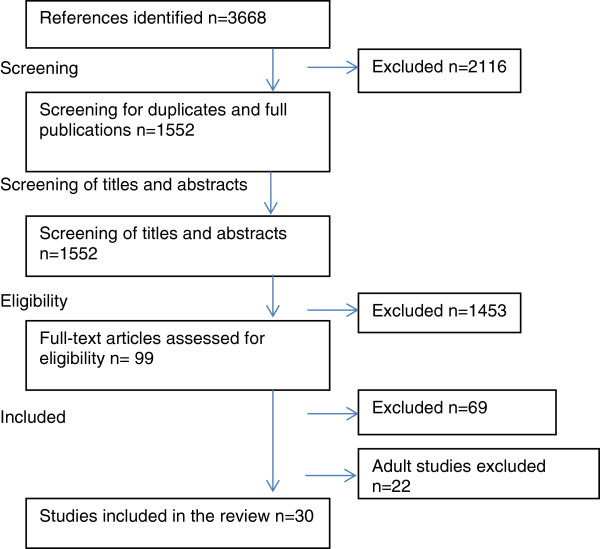
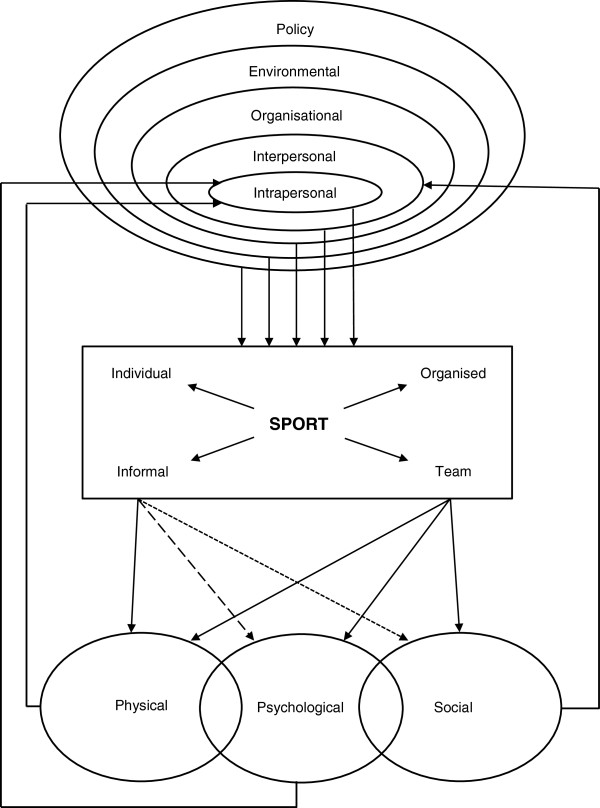
BACKGROUND: There are specific guidelines regarding the level of physical activity (PA) required to provide health benefits. However, the research underpinning these PA guidelines does not address the element of social health. Furthermore, there is insufficient evidence about the levels or types of PA associated specifically with psychological health. This paper first presents the results of a systematic review of the psychological and social health benefits of participation in sport by children and adolescents. Secondly, the information arising from the systematic review has been used to develop a conceptual model. METHODS: A systematic review of 14 electronic databases was conducted in June 2012, and studies published since 1990 were considered for inclusion. Studies that addressed mental and/or social health benefits from participation in sport were included. RESULTS: A total of 3668 publications were initially identified, of which 30 met the selection criteria. There were many different psychological and social health benefits reported, with the most commonly being improved self-esteem, social interaction followed by fewer depressive symptoms. Sport may be associated with improved psychosocial health above and beyond improvements attributable to participation in PA. Specifically, team sport seems to be associated with improved health outcomes compared to individual activities, due to the social nature of the participation. A conceptual model, Health through Sport, is proposed. The model depicts the relationship between psychological, psychosocial and social health domains, and their positive associations with sport participation, as reported in the literature. However, it is acknowledged that the capacity to determine the existence and direction of causal links between participation and health is limited by the fact that the majority of studies identified (n=21) were cross-sectional. CONCLUSION: It is recommended that community sport participation is advocated as a form of leisure time PA for children and adolescents, in an effort to not only improve physical health in relation to such matters as the obesity crisis, but also to enhance psychological and social health outcomes. It is also recommended that the causal link between participation in sport and psychosocial health be further investigated and the conceptual model of Health through Sport tested.
Overview
The claims and statistics of this paper haven’t been checked yet.
Free: it reads the open-access text and checks the first 5 claims that cite a source we can check. Create a free account to check every claim.
Integrity signals
Registry
Cites
Statistics
Figures
Verification
Claims the paper makes
The claims and statistics of this paper haven’t been checked yet.
Free: it reads the open-access text and checks the first 5 claims that cite a source we can check. Create a free account to check every claim.
Claims other papers make about this one
Each is checked against this paper’s own text: does it say what the citing paper says it does?
The source backs part of the claim, not all of it — or backs it for a different population, condition or comparison.
In the citing paper
“All six systematic reviews reported on organized sport activities and two also reported on organized non-sport activities (Cairns et al., 2014, Eime et al., 2013).”
From Impact of organized activities on mental health in children and adolescents: An umbrella review (2022) · cites this paper as Eime et al., 2013
Experimental — accuracy not yet measuredThe source backs part of the claim, not all of it — or backs it for a different population, condition or comparison.
In the citing paper
“Components of exercise interventions may represent important moderators of treatment effects.”
From Exercise for the treatment of anxiety in children and adolescents (2022) · cites this paper as Eime 2013
Experimental — accuracy not yet measuredThe source backs part of the claim, not all of it — or backs it for a different population, condition or comparison.
In the citing paper
“Indeed, intervention setting is another potential moderating factor, with group-based activities reported to confer a range of social benefits compared to individual activities (Eime 2013).”
From Exercise for the treatment of anxiety in children and adolescents (2022) · cites this paper as Eime 2013
Experimental — accuracy not yet measuredThe source backs part of the claim, not all of it — or backs it for a different population, condition or comparison.
In the citing paper
“We found evidence that children and adolescents who participated more frequently, who participated with higher intensity or who participated with longer duration (e.g. started at an early age or participated for a long period), had better mental health compared to their peers (Eime et al., 2013, Evans et al., 2017, Panza et al., 2020).”
From Impact of organized activities on mental health in children and adolescents: An umbrella review (2022) · cites this paper as Eime et al., 2013
Experimental — accuracy not yet measuredThe cited source says what the claim attributes to it.
In the citing paper
“Similarly, sports participation can be instrumental in the physical, social and emotional development of children and adolescents [30].”
2 more claims about this paper
Create a free account to see every claim other papers make about this one.
Self-check
Percentages, sums and reported differences re-computed from the paper’s own numbers.
The self-check needs the paper’s full text.
Citations
Cites
Kytle, J., & Bandura, A. (1978) · Contemporary Sociology · doi:10.2307/2065952 · Cited by 25,422
von Elm, E., Altman, D. G., Egger, M., Pocock, S. J., Gøtzsche, P. C., Vandenbroucke, J. P., & Initiative, F. T. S. (2007) · PLoS Medicine · doi:10.1371/journal.pmed.0040296 · Cited by 23,020
CONSORT 2010 Statement: updated guidelines for reporting parallel group randomised trials
the CONSORT Group, Schulz, K. F., Altman, D. G., & Moher, D. (2010) · BMC Medicine · doi:10.1186/1741-7015-8-18 · Cited by 13,371
Health Behavior and Health Education: Theory, Research, and Practice
(1992) · Annals of Internal Medicine · doi:10.7326/0003-4819-116-4-350_1 · Cited by 13,207
(1985) · Europe PMC (PubMed Central) · Cited by 9,143
Moher, D., Hopewell, S., Schulz, K. F., Montori, V., Gotzsche, P. C., Devereaux, P. J., Elbourne, D., Egger, M., & Altman, D. G. (2010) · BMJ · doi:10.1136/bmj.c869 · Cited by 8,883
An ecological perspective on health promotion programs
McLeroy, K. R., Bibeau, D., Steckler, A., & Glanz, K. (1988) · Health Education Quarterly · doi:10.1177/109019818801500401 · Cited by 8,502 · cited 2×
“The ‘determinants’ element is based on the well-established social ecological model [19,65] and is represented as concentric rings spreading out from the individual’s intrapersonal characteristics to widening spheres of influence.”
BackgroundDowns, S. H., & Black, N. (1998) · Journal of Epidemiology and Community Health · doi:10.1136/jech.52.6.377 · Cited by 8,252 · cited 1×
“Study quality was objectively appraised using the Downs and Black checklist [32].”
MethodJanssen, I., & LeBlanc, A. G. (2010) · International Journal of Behavioral Nutrition and Physical Activity · doi:10.1186/1479-5868-7-40 · Cited by 4,829
Measuring Health: A Guide to Rating Scales and Questionnaires
McDowell, I., & Newell, C. (1987) · Cited by 4,207
Cited by
Eime, R. M., Young, J. A., Harvey, J. T., Charity, M. J., & Payne, W. R. (2013) · International Journal of Behavioral Nutrition and Physical Activity · doi:10.1186/1479-5868-10-135 · Cited by 632
“In a previous study, a Health through Sport model was developed for children and adolescents [11].”
BackgroundMethodInfluentialSelf-citationHulteen, R. M., Smith, J. J., Morgan, P. J., Barnett, L. M., Hallal, P. C., Colyvas, K., & Lubans, D. R. (2017) · Preventive Medicine · doi:10.1016/j.ypmed.2016.11.027 · Cited by 609
Malm, C., Jakobsson, J., & Isaksson, A. (2019) · Sports · doi:10.3390/sports7050127 · Cited by 610
“[1], where the conclusion was that sporting children have better self-esteem, less depression, and better overall psychosocial health.”
BackgroundHulteen, R. M., Morgan, P. J., Barnett, L. M., Stodden, D. F., & Lubans, D. R. (2018) · Sports Medicine · doi:10.1007/s40279-018-0892-6 · Cited by 499
Physical Activity and Cognitive Functioning of Children: A Systematic Review
Bidzan-Bluma, I., & Lipowska, M. (2018) · International Journal of Environmental Research and Public Health · doi:10.3390/ijerph15040800 · Cited by 489
“Figure 1 [22] presents the relation between policy, environment, organizational, interpersonal, and intrapersonal factors that affect the undertaking of various types of sports activities, and the physical, psychological, and social benefits brought about by doing sport.”
BackgroundNational Strength and Conditioning Association Position Statement on Long-Term Athletic Development
Lloyd, R. S., Cronin, J. B., Faigenbaum, A. D., Haff, G. G., Howard, R., Kraemer, W. J., Micheli, L. J., Myer, G. D., & Oliver, J. L. (2016) · Journal of Strength and Conditioning Research · doi:10.1519/jsc.0000000000001387 · Cited by 485
“Participation in sports has been acknowledged as a viable means to promote well-being in youth (59,63,240); however, the International Olympic Committee stated that while youth should engage in sports, the process should be both pleasurable and fulfilling to sustain participation and success at all levels (21,177).”
BackgroundMcKee, A. C., Daneshvar, D. H., Alvarez, V. E., & Stein, T. D. (2014) · Acta Neuropathologica · doi:10.1007/s00401-013-1230-6 · Cited by 422
“The psychological benefits of sports participation Sports participation is associated with improved psycho-social health as well as increased physical health, and participation in team sports is associated with improved health outcomes compared to individual sports [55].”
BackgroundDale, L. P., Vanderloo, L., Moore, S., & Faulkner, G. (2019) · Mental Health and Physical Activity · doi:10.1016/j.mhpa.2018.12.001 · Cited by 366
Cairns, K. E., Yap, M. B. H., Pilkington, P. D., & Jorm, A. F. (2014) · Journal of Affective Disorders · doi:10.1016/j.jad.2014.08.006 · Cited by 363
“The research in this area comprises predominantly crosssectional studies, and those longitudinal studies that have been conducted have not always been of high quality (Eime et al., 2013).”
BackgroundResultSporting Mind: The Interplay of Physical Activity and Psychological Health
Martín-Rodríguez, A., Gostian-Ropotin, L. A., Beltrán-Velasco, A. I., Belando-Pedreño, N., Simón, J. A., López-Mora, C., Navarro-Jiménez, E., Tornero-Aguilera, J. F., & Clemente-Suárez, V. J. (2024) · Sports · doi:10.3390/sports12010037 · Cited by 340
Pluhar, E., McCracken, C. M., Griffith, K. L., Christino, M. A., Sugimoto, D., & Meehan, W. P., III (2019) · Europe PMC (PubMed Central) · Cited by 546
Belcher, B. R., Zink, J., Azad, A., Campbell, C. E., Chakravartti, S. P., & Herting, M. M. (2021) · Biological Psychiatry: Cognitive Neuroscience and Neuroimaging · doi:10.1016/j.bpsc.2020.08.005 · Cited by 281
Crossley, K. M., Patterson, B. E., Culvenor, A. G., Bruder, A. M., Mosler, A. B., & Mentiplay, B. F. (2020) · British Journal of Sports Medicine · doi:10.1136/bjsports-2019-101587 · Cited by 260
Biomechanical Risk Factors Associated with Running-Related Injuries: A Systematic Review
Ceyssens, L., Vanelderen, R., Barton, C., Malliaras, P., & Dingenen, B. (2019) · Sports Medicine · doi:10.1007/s40279-019-01110-z · Cited by 261
Organized Sports for Children, Preadolescents, and Adolescents
Logan, K., Cuff, S., COUNCIL ON SPORTS MEDICINE AND FITNESS, LaBella, C. R., Brooks, M. A., Canty, G., Diamond, A. B., Hennrikus, W., Moffatt, K., Nemeth, B. A., et al. (2019) · Pediatrics · doi:10.1542/peds.2019-0997 · Cited by 261
Jackson, S. B., Stevenson, K. T., Larson, L. R., Peterson, M. N., & Seekamp, E. (2021) · International Journal of Environmental Research and Public Health · doi:10.3390/ijerph18052506 · Cited by 251
“Prior to COVID-19, outdoor play activities also provided adolescents with opportunities for social interaction [56,102].”
BackgroundJenkin, C. R., Eime, R. M., Westerbeek, H., O’Sullivan, G., & van Uffelen, J. G. Z. (2017) · BMC Public Health · doi:10.1186/s12889-017-4970-8 · Cited by 234
“In sport, there have been a number of systematic reviews examining the concept of sport being beneficial for health for younger age groups, [26 – 28] but not specifically for older adults, who may have different health outcomes.”
Self-citationSchool Sport Participation During Adolescence and Mental Health in Early Adulthood
Jewett, R., Sabiston, C. M., Brunet, J., O'Loughlin, E. K., Scarapicchia, T., & O'Loughlin, J. (2014) · Journal of Adolescent Health · doi:10.1016/j.jadohealth.2014.04.018 · Cited by 236
Barriers to voluntary participation in sport for children: a systematic review
Somerset, S., & Hoare, D. J. (2018) · BMC Pediatrics · doi:10.1186/s12887-018-1014-1 · Cited by 231
“In broad ‘physical activity’ terms, barriers such as ‘preferences and priorities’, ‘family life’ and ‘parental support’ can influence levels of sports participation [23].”
BackgroundMcGuine, T. A., Biese, K. M., Petrovska, L., Hetzel, S. J., Reardon, C., Kliethermes, S., Bell, D. R., Brooks, A., & Watson, A. M. (2021) · Journal of Athletic Training · doi:10.4085/1062-6050-0478.20 · Cited by 226
“Journal of Athletic Training 0 D ow nloaded from http://m eridian.allenpress.com /jat/article-pdf/doi/10.4085/1062-6050-0478.20/2677870/10.4085_1062-6050-0478.20.pdf by guest on 10 D ecem ber 2020 On lin e F irs t In addition, team sports may incorporate more social connections that were lost during the COVID-19 restr…”
BackgroundInfluentialJordans, M. J. D., Pigott, H., & Tol, W. A. (2016) · Current Psychiatry Reports · doi:10.1007/s11920-015-0648-z · Cited by 216
The Implicit/Explicit Continuum of Life Skills Development and Transfer
Bean, C., Kramers, S., Forneris, T., & Camiré, M. (2018) · Quest · doi:10.1080/00336297.2018.1451348 · Cited by 206
Moreland, J. J., Coxe, K. A., & Yang, J. (2018) · Journal of Sport and Health Science · doi:10.1016/j.jshs.2017.04.009 · Cited by 206
“Those affecting the athletes’ health decision-making are considered stakeholders and include the athletes’ social groups and the cultural environment around the athlete.(12,13) In the case of the collegiate student athlete, the sociocultural views on mental health held by teammates, friends, family members, athletic t…”
BackgroundPromoting Mental Health and Wellness in Youth Through Physical Activity, Nutrition, and Sleep
Hosker, D. K., Elkins, R. M., & Potter, M. P. (2019) · Child and Adolescent Psychiatric Clinics of North America · doi:10.1016/j.chc.2018.11.010 · Cited by 204
Panza, M. J., Graupensperger, S., Agans, J. P., Doré, I., Vella, S. A., & Evans, M. B. (2020) · Journal of Sport and Exercise Psychology · doi:10.1123/jsep.2019-0235 · Cited by 202
“Researchers tend to align theoretically with expectations that sport delivers opportunities for physical activity and social interactions that, independently, are protective factors (e.g., Eime et al., 2013; Fraser-Thomas et al., 2005; Paluska & Schwenk, 2000).”
BackgroundMethodResultInfluentialDudley, D., Cairney, J., Wainwright, N., Kriellaars, D., & Mitchell, D. (2017) · Quest · doi:10.1080/00336297.2016.1268967 · Cited by 191
Masini, A., Marini, S., Gori, D., Leoni, E., Rochira, A., & Dallolio, L. (2020) · Journal of Science and Medicine in Sport · doi:10.1016/j.jsams.2019.10.008 · Cited by 193
Hermens, N., Super, S., Verkooijen, K. T., & Koelen, M. A. (2017) · Research Quarterly for Exercise and Sport · doi:10.1080/02701367.2017.1355527 · Cited by 187
“…versus the explicit approach to the transfer of life skills to other settings (Turnnidge et al., 2014), informal versus organized sports activities (Eime et al., 2013), and collaborative efforts of policymakers, sports organizations, coaches, and parents versus sports programs run by a single…”
BackgroundEime, R. M., Charity, M. J., Harvey, J. T., & Payne, W. R. (2015) · BMC Public Health · doi:10.1186/s12889-015-1796-0 · Cited by 185
“Team sport participation, in addition to producing physical health benefits can enhance psychological and social health [28].”
BackgroundSelf-citationPrieto-González, P., Martínez-Castillo, J. L., Fernández-Galván, L. M., Casado, A., Soporki, S., & Sánchez-Infante, J. (2021) · International Journal of Environmental Research and Public Health · doi:10.3390/ijerph18094857 · Cited by 173
“These include improved health conditions, self-esteem, social interactions, and decreased risk of depression [1].”
BackgroundLubans, D. R., Lonsdale, C., Cohen, K., Eather, N., Beauchamp, M. R., Morgan, P. J., Sylvester, B. D., & Smith, J. J. (2017) · International Journal of Behavioral Nutrition and Physical Activity · doi:10.1186/s12966-017-0479-x · Cited by 180
“Similarly, sports participation can be instrumental in the physical, social and emotional development of children and adolescents [30].”
BackgroundDeprez, D. N., Fransen, J., Lenoir, M., Philippaerts, R. M., & Vaeyens, R. (2015) · Journal of Strength and Conditioning Research · doi:10.1519/jsc.0000000000000806 · Cited by 178
“JS (n) 106 (13) 99§ (9) 110 (12) 103 (13) 116 (12) 103 (10) 118 (12) 109z (13) n 63 19 62 11 59 11 45 13 MS (n) 69 (9) 65z (7) 71 (10) 66 (8) 75 (9) 69§ (6) 74 (9) 71 (8) n 65 20 63 12 64 12 47 13 BB (n) 62 (9) 60 (7) 62 (8) 58 (7) 65 (6) 59 (9) 66 (6) 60§ (9) n 65 20 66 13 67 12 47 13 DrFoot (s) 11.”
Guddal, M. H., Stensland, S. Ø., Småstuen, M. C., Johnsen, M. B., Zwart, J.-A., & Storheim, K. (2019) · BMJ Open · doi:10.1136/bmjopen-2018-028555 · Cited by 173
“A systematic review of the psychological and social benefits of sport participation argued that team sports seem to be associated with more beneficial outcomes compared with individual sports due to the social aspect of being part of a team.(9) In a recent study of a large representative sample of European adolescents…”
BackgroundResultLampert, R., Chung, E. H., Ackerman, M. J., Arroyo, A. R., Darden, D., Deo, R., Dolan, J., Etheridge, S. P., Gray, B. R., Harmon, K. G., et al. (2024) · Heart Rhythm · doi:10.1016/j.hrthm.2024.05.018 · Cited by 167
Faigenbaum, A. D., Lloyd, R. S., MacDonald, J., & Myer, G. D. (2016) · British Journal of Sports Medicine · doi:10.1136/bjsports-2015-094621 · Cited by 159
Pedersen, M. T., Vorup, J., Nistrup, A., Wikman, J. M., Alstrøm, J. M., Melcher, P. S., Pfister, G. U., & Bangsbo, J. (2017) · Scandinavian Journal of Medicine & Science in Sports · doi:10.1111/sms.12823 · Cited by 159
Bruner, M. W., McLaren, C. D., Sutcliffe, J. T., Gardner, L. A., Lubans, D. R., Smith, J. J., & Vella, S. A. (2023) · International Review of Sport and Exercise Psychology · doi:10.1080/1750984x.2021.1875496 · Cited by 158
“Eime et al. (2013) conducted a systematic review of the literature examining psychological and social health bene fi ts of participation in sport by children and adolescents (30 published articles).”
BackgroundMethodResultInfluentialKwon, S., Janz, K. F., Letuchy, E. M., Burns, T. L., & Levy, S. M. (2015) · JAMA Pediatrics · doi:10.1001/jamapediatrics.2015.0327 · Cited by 153
Hebert, J. J., Møller, N. C., Andersen, L. B., & Wedderkopp, N. (2015) · PLOS ONE · doi:10.1371/journal.pone.0134621 · Cited by 151
Oberle, E., Ji, X. R., Kerai, S., Guhn, M., Schonert-Reichl, K. A., & Gadermann, A. M. (2020) · Preventive Medicine · doi:10.1016/j.ypmed.2020.106291 · Cited by 149
Age profiles of sport participants
Eime, R., Harvey, J. T., Charity, M. J., Casey, M. M., Westerbeek, H. M., & Payne, W. R. (2016) · BMC Sports Science Medicine and Rehabilitation · doi:10.1186/s13102-016-0031-3 · Cited by 201
“Recent systematic reviews found that there are many psychological and social health benefits specifically associated with participation in sport for children, adolescents and adults [3, 4].”
Self-citationBidirectional Associations between Sport Involvement and Mental Health in Adolescence
VELLA, S. A., SWANN, C., ALLEN, M. S., SCHWEICKLE, M. J., & MAGEE, C. A. (2017) · Medicine & Science in Sports & Exercise · doi:10.1249/mss.0000000000001142 · Cited by 149
Vella, S. A., Cliff, D. P., Magee, C. A., & Okely, A. D. (2014) · The Journal of Pediatrics · doi:10.1016/j.jpeds.2014.01.071 · Cited by 149
“Evidence suggests that sports participation could have benefits to HRQOL above and beyond those associated with physical activity (12, 13).”
BackgroundInfluentialEasterlin, M. C., Chung, P. J., Leng, M., & Dudovitz, R. (2019) · Archives of Pediatrics and Adolescent Medicine · doi:10.1001/jamapediatrics.2019.1212 · Cited by 177
Sabiston, C. M., Jewett, R., Ashdown-Franks, G., Belanger, M., Brunet, J., O’Loughlin, E., & O’Loughlin, J. (2016) · Journal of Sport and Exercise Psychology · doi:10.1123/jsep.2015-0175 · Cited by 143
“The number of years in individual sport participation may not be as protective against depression as number of years of team sport experiences due to lack of social connections and cohesion that may limit improvements in self-concept, self-esteem, and foster feelings of social isolation (Barber, Eccles, & Stone, 2001;…”
BackgroundResultBissett, J. E., Kroshus, E., & Hebard, S. (2020) · BMJ Open Sport & Exercise Medicine · doi:10.1136/bmjsem-2019-000676 · Cited by 147
Socio-ecological predictors of participation and dropout in organised sports during childhood
Vella, S. A., Cliff, D. P., & Okely, A. D. (2014) · International Journal of Behavioral Nutrition and Physical Activity · doi:10.1186/1479-5868-11-62 · Cited by 144
“This is consistent with the greater health benefits associated with team sports over individual sports [2].”
InfluentialMorgan, P. J., Young, M. D., Barnes, A. T., Eather, N., Pollock, E. R., & Lubans, D. R. (2018) · Annals of Behavioral Medicine · doi:10.1093/abm/kay015 · Cited by 156
Bean, C., Fortier, M., Post, C., & Chima, K. (2014) · International Journal of Environmental Research and Public Health · doi:10.3390/ijerph111010226 · Cited by 142
“self-esteem and social interaction [15,118].”
BackgroundVella, S. A., Cliff, D. P., Magee, C. A., & Okely, A. D. (2015) · Journal of Science and Medicine in Sport · doi:10.1016/j.jsams.2014.05.006 · Cited by 139
Relationships Between the Coach-Created Motivational Climate and Athlete Engagement in Youth Sport
Curran, T., Hill, A. P., Hall, H., & Jowett, G. E. (2015) · Journal of Sport and Exercise Psychology · doi:10.1123/jsep.2014-0203 · Cited by 199
Oberle, E., Ji, X. R., Guhn, M., Schonert-Reichl, K. A., & Gadermann, A. (2019) · Journal of Youth and Adolescence · doi:10.1007/s10964-019-01110-2 · Cited by 179
“benefits of sports participation for children and adolescents, participation in team sports was associated with mental health benefits, lower levels of social isolation, and higher levels of social-emotional wellbeing (Eime et al. 2013).”
BackgroundPsychological safety in sport: a systematic review and concept analysis
Vella, S. A., Mayland, E. C., Schweickle, M. J., Sutcliffe, J., McEwan, D., & Swann, C. (2022) · International Review of Sport and Exercise Psychology · doi:10.1080/1750984x.2022.2028306 · Cited by 187
“The socioecological approach has already been used to conceptualise the antecedents of psychosocial outcomes of youth sport participation (Eime et al., 2013a, 2013b).”
MethodKapsal, N. J., Dicke, T., Morin, A. J. S., Vasconcellos, D., Maïano, C., Lee, J. J., & Lonsdale, C. (2019) · Journal of Physical Activity and Health · doi:10.1123/jpah.2018-0675 · Cited by 170
Maniar, N., Carmichael, D. S., Hickey, J. T., Timmins, R. G., Jose, A. T. S., Dickson, J., & Opar, D. A. (2022) · British Journal of Sports Medicine · doi:10.1136/bjsports-2021-104936 · Cited by 181
Hoffmann, M. D., Barnes, J. D., Tremblay, M. S., & Guerrero, M. D. (2022) · PLOS ONE · doi:10.1371/journal.pone.0268583 · Cited by 129
“Although research findings suggest individual activities may not offer mental and psychosocial health benefits to the same extent as team sports [3,11,14,22,23], to our knowledge little to no research has reported that sport played independently may in fact be problematic for mental health relative to non-sport partic…”
BackgroundInfluentialEducational Research and Innovation
OECD, & Centre for Educational Research and Innovation (2009) · Educational research and innovation · doi:10.1787/20769679 · Cited by 131
Owen, K., Nau, T., Reece, L. J., Bellew, W., Rose, C. L., Bauman, A. E., Halim, N. K., & Smith, B. J. (2022) · International Journal of Behavioral Nutrition and Physical Activity · doi:10.1186/s12966-022-01263-7 · Cited by 177
“For young people, sport participation can be beneficial for holistic development, physical and emotional health and building valuable social connections [55].”
BackgroundPopulation levels of sport participation: implications for sport policy
Eime, R. M., Harvey, J. T., Charity, M. J., & Payne, W. R. (2016) · BMC Public Health · doi:10.1186/s12889-016-3463-5 · Cited by 124
“Nevertheless, notwithstanding these risks, on balance the contribution of sport participation to public health is generally evidenced in the research literature [4, 5] and consequently the measurement of sport participation and knowledge about trends in participation is important for a * Correspondence: Rochelle.”
Self-citationRodrigues, D., Padez, C. M. P., & Machado‐Rodrigues, A. M. (2017) · Journal of Child Health Care · doi:10.1177/1367493517741686 · Cited by 152
“The physical, psychological, and social health benefits of regular participation in organized sports have been well-documented for children (Antonogeorgos et al., 2011; Eime et al., 2013; Hebert et al., 2015; Hoffman et al., 2005).”
BackgroundIntegrating public health and sport management: Sport participation trends 2001–2010
Eime, R., Sawyer, N. A., Harvey, J. T., Casey, M. M., Westerbeek, H. M., & Payne, W. R. (2014) · Sport Management Review · doi:10.1016/j.smr.2014.05.004 · Cited by 153
Self-citationIOC consensus statement: interpersonal violence and safeguarding in sport
Tuakli‐Wosornu, Y. A., Burrows, K., Fasting, K., Hartill, M., Hodge, K. P., Kaufman, K. L., Kavanagh, E. J., Kirby, S., MacLeod, J. G., Mountjoy, M. L., et al. (2024) · British Journal of Sports Medicine · doi:10.1136/bjsports-2024-108766 · Cited by 166
Golubić, R., May, A. M., Borch, K. B., Overvad, K., Charles, M.-A. A., Díaz, M. J. T., Amiano, P., Palli, D., Valanou, E., Vigl, M., et al. (2014) · PLoS ONE · doi:10.1371/journal.pone.0092829 · Cited by 139
Laborde, S., García, F. G., & Mosley, E. (2016) · Psychology of sport and exercise · doi:10.1016/j.psychsport.2016.05.009 · Cited by 292
“…to the dispositional traits considered in this study, regarding perseverance (Guillen & Laborde, 2014), resilience (Guillen & Laborde, 2014), self-esteem (Bjelica & Jovanovi!c, 2014; Eime et al., 2013; Kipp, 2016), and self-efficacy (Eime et al., 2013; Inoue et al., 2015; Laborde et al., 2015).”
Associations between physical activity intensity and well-being in adolescents
Costigan, S. A., Lubans, D. R., Lonsdale, C., Sanders, T., & Cruz, B. D. P. (2019) · Preventive Medicine · doi:10.1016/j.ypmed.2019.05.009 · Cited by 144
McCoy, S. M., & Morgan, K. (2019) · Autism · doi:10.1177/1362361319861579 · Cited by 136
Eime, R., Harvey, J. T., Charity, M. J., Casey, M. M., Westerbeek, H. M., & Payne, W. R. (2017) · Australian and New Zealand Journal of Public Health · doi:10.1111/1753-6405.12647 · Cited by 142
Self-citationBack, J., Johnson, U., Svedberg, P., McCall, A., & Ivarsson, A. (2022) · Psychology of sport and exercise · doi:10.1016/j.psychsport.2022.102205 · Cited by 185
The Current Youth Sport Landscape: Identifying Critical Research Issues
Gould, D. R. (2019) · Kinesiology Review · doi:10.1123/kr.2019-0034 · Cited by 145
Psychological and social outcomes of sport participation for older adults: a systematic review
Kim, A. C. H., Park, S. H., Kim, S., & Fontes-Comber, A. (2020) · Ageing and Society · doi:10.1017/s0144686x19000175 · Cited by 106
“…life satisfaction, social life (e.g. comraderies, unique social networking, social belonging, a sense of community) and personal psychological status (e.g. Ageing & Society 1541 personal empowerment, self-confidence, self-worth, self-esteem, self-efficacy, pride) (Eime et al., 2013a, 2013b).”
BackgroundResultInfluentialDoré, I., Sylvester, B. D., Sabiston, C. M., Sylvestre, M., O’Loughlin, J. L., Brunet, J., & Bélanger, M. F. (2020) · International Journal of Behavioral Nutrition and Physical Activity · doi:10.1186/s12966-020-0911-5 · Cited by 159
Block, K., & Gibbs, L. F. (2017) · Social Inclusion · doi:10.17645/si.v5i2.903 · Cited by 106
Sport Participation and Happiness Among Older Adults: A Mediating Role of Social Capital
Kim, A., Ryu, J., Lee, C., Kim, K., & Heo, J. (2020) · Journal of Happiness Studies · doi:10.1007/s10902-020-00288-8 · Cited by 104
Elliott, S., Drummond, M., Prichard, I. J., Eime, R., Drummond, C., & Mason, R. J. (2021) · BMC Public Health · doi:10.1186/s12889-021-10505-5 · Cited by 123
Self-citationWesterbeek, H. M., & Eime, R. (2021) · Frontiers in Sports and Active Living · doi:10.3389/fspor.2021.608593 · Cited by 153
“This includes improved social interaction and self-esteem, fewer depressive symptoms (Eime et al., 2013b), better prosocial behavior, and less internalizing problems (Moeijes et al.”
BackgroundSelf-citationPromoting Physical Activity Through Youth Sports Programs: It’s Social
Howie, E. K., Daniels, B. T., & Guagliano, J. M. (2018) · American Journal of Lifestyle Medicine · doi:10.1177/1559827618754842 · Cited by 136
“However, both the physical and psychological benefits of sport are highly dependent on the quality of the specific sporting experience.(8,10) Interestingly, some of the benefits may not be solely due to increased physical activity or energy expenditure, and there is some evidence that sport participation 754842 AJLXXX…”
BackgroundChanges in sport and physical activity participation for adolescent females: a longitudinal study
Eime, R., Harvey, J. T., Sawyer, N. A., Craike, M. J., Symons, C. M., & Payne, W. R. (2016) · BMC Public Health · doi:10.1186/s12889-016-3203-x · Cited by 138
“Although non-organised PA has health benefits it is important to recognise that participation in organised PA such as sport has unique benefits for adolescents that might not be achieved through non-organised types of PA [25].”
Self-citationThe impacts of discriminatory experiences on lesbian, gay and bisexual people in sport
Symons, C. M., O’Sullivan, G. A., & Polman, R. C. J. (2016) · Annals of Leisure Research · doi:10.1080/11745398.2016.1251327 · Cited by 137
“…Waldo, and Rothblum 2001; Paffenbarger et al. 1986; Physical Activity Guidelines Advisory Committee 2008) social and mental health benefits (Eime et al. 2013) of regular physical activity, of which sport is a vital component, these negative emotional and engagement impacts of minority…”
BackgroundYouth Sport as a Vehicle for Social Development
Anderson‐Butcher, D. (2019) · Kinesiology Review · doi:10.1123/kr.2019-0029 · Cited by 125
Incidence of Sports-Related Traumatic Brain Injury of All Severities: A Systematic Review
Theadom, A., Mahon, S., Hume, P. A., Starkey, N. J., Barker-Collo, S. L., Jones, K., Majdán, M., & Feigin, V. L. (2020) · Neuroepidemiology · doi:10.1159/000505424 · Cited by 117
Running on a high: parkrun and personal well-being
Grunseit, A. C., Richards, J. A., & Merom, D. (2017) · BMC Public Health · doi:10.1186/s12889-017-4620-1 · Cited by 111
“Review level evidence of observational studies has previously indicated that adolescents participating in sport score higher on psychological and social domains of well-being [16].”
BackgroundŠukys, S., Česnaitienė, V. J., & Ossowski, Z. M. (2017) · BioMed Research International · doi:10.1155/2017/8516843 · Cited by 140
“Recreational activity is also often associated with various positive health indicators [35], while competitive sports may be associated with a variety of mental and physical health problems (e.”
BackgroundZuckerman, S. L., Tang, A. R., Richard, K. E., Grisham, C. J., Kuhn, A. W., Bonfield, C. M., & Yengo-Kahn, A. M. (2021) · The Physician and Sportsmedicine · doi:10.1080/00913847.2020.1850152 · Cited by 98
“Some of these proposed psychological and social benefits include improved self-esteem, fewer depressive symptoms, increased social interaction, reduced loneliness, and increased social support [4,5].”
BackgroundInfluentialSports Participation and Juvenile Delinquency: A Meta-Analytic Review
Spruit, A., van Vugt, E., van der Put, C., van der Stouwe, T., & Stams, G.-J. (2016) · Journal of Youth and Adolescence · doi:10.1007/s10964-015-0389-7 · Cited by 98
“Generally, sports participation is perceived as a positive leisure activity that is associated with positive (psychosocial) health outcomes in adolescents (Eime et al. 2013; Janssen and LeBlanc 2010).”
Quality of Life and Life Satisfaction in Former Athletes: A Systematic Review and Meta-Analysis
Filbay, S. R., Pandya, T., Thomas, B., McKay, C. D., Adams, J., & Arden, N. (2019) · Sports Medicine · doi:10.1007/s40279-019-01163-0 · Cited by 127
“The psychosocial and HRQoL benefits associated with sport participation are greater than those associated with physical activity participation alone [31, 39].”
BackgroundLefebvre, J. S., Evans, M. B., Turnnidge, J., Gainforth, H. L., & Côté, J. (2016) · International Journal of Sports Science & Coaching · doi:10.1177/1747954116676116 · Cited by 112
“assertiveness, confidence, teamwork, and connectedness).(2) Among the social influences that promote personal development through sport, coaches have a profound effect because they are often responsible for shaping the sport environment.”
BackgroundControlled Evaluation of an Optimization Approach to Mental Health and Sport Performance
Donohue, B., Gavrilova, Y., Galante, M., Gavrilova, E., Loughran, T., Scott, J., Chow, G., Plant, C. P., & Allen, D. N. (2018) · Journal of Clinical Sport Psychology · doi:10.1123/jcsp.2017-0054 · Cited by 93
Pankowiak, A., Woessner, M. N., Parent, S., Vertommen, T., Eime, R., Spaaij, R., Harvey, J. T., & Parker, A. G. (2022) · Journal of Interpersonal Violence · doi:10.1177/08862605221114155 · Cited by 111
“While research demonstrates the mental, physical, and social benefits of sport participation for children (Eime et al., 2013), for these benefits to be actualized, the sport environment must be emotionally and physically safe.”
BackgroundSelf-citationEvans, M. B., Allan, V., Erickson, K., Martin, L. J., Budziszewski, R., & Côté, J. (2017) · British Journal of Sports Medicine · doi:10.1136/bjsports-2016-096725 · Cited by 92
Better together: How group-based physical activity protects against depression
Stevens, M. R., Lieschke, J., Cruwys, T., Cárdenas, D., Platow, M. J., & Reynolds, K. J. (2021) · Social Science & Medicine · doi:10.1016/j.socscimed.2021.114337 · Cited by 118
Prospective associations between sport participation and psychological adjustment in adolescents
Brière, F. N., Yale-Soulière, G., Gonzalez-Sicilia, D., Harbec, M.-J., Morizot, J., Janosz, M., & Pagani, L. S. (2018) · Journal of Epidemiology and Community Health · doi:10.1136/jech-2017-209656 · Cited by 93
Three strikes and you’re out: culture, facilities, and participation among LGBTQ youth in sports
Kulick, A., Wernick, L. J., Espinoza‐Kulick, M. A. V., Newman, T. J., & Dessel, A. B. (2018) · Sport Education and Society · doi:10.1080/13573322.2018.1532406 · Cited by 110
Verburgh, L., Scherder, E., Lange, P. A. M. V., & Oosterlaan, J. (2016) · PLoS ONE · doi:10.1371/journal.pone.0165741 · Cited by 111
Investigating Youth Sports Coaches' Perceptions of Their Role in Adolescent Mental Health
Ferguson, H., Swann, C., Liddle, S. K., & Vella, S. A. (2018) · Journal of Applied Sport Psychology · doi:10.1080/10413200.2018.1466839 · Cited by 110
Women athletes’ self-compassion, self-criticism, and perceived sport performance.
Killham, M. E., Mosewich, A. D., Mack, D. E., Gunnell, K. E., & Ferguson, L. J. (2018) · Sport Exercise and Performance Psychology · doi:10.1037/spy0000127 · Cited by 89
University sport retirement and athlete mental health: a narrative analysis
Jewett, R., Kerr, G. A., & Tamminen, K. A. (2018) · Qualitative Research in Sport Exercise and Health · doi:10.1080/2159676x.2018.1506497 · Cited by 123
“…outcomes such as enhanced self-esteem, CONTACT Rachel Jewett r.jewett@utoronto.ca 1103-35 Balmuto Street, Toronto, ON M4Y 0A3, Canada © 2018 Informa UK Limited, trading as Taylor & Francis Group reduced stress, and protection against depression later in life (Eime et al. 2013; Jewett et al. 2014).”
BackgroundKleppang, A. L., Hartz, I., Thurston, M., & Hagquist, C. (2018) · BMC Public Health · doi:10.1186/s12889-018-6257-0 · Cited by 88
Janaudis‐Ferreira, T., Mathur, S., Deliva, R. D., Howes, N., Patterson, C. F., Räkel, A., So, S., Wickerson, L. M., White, M., Avitzur, Y., et al. (2019) · Transplantation · doi:10.1097/tp.0000000000002806 · Cited by 100
“opportunities for social and physical development, as well as important health benefits.(78,79) Despite their complex medical needs, children posttransplant may benefit from regular participation in age-appropriate exercise, which may have a positive impact on their physical fitness and HRQL.”
BackgroundZheng, Y., Ye, W., Korivi, M., Liu, Y., & Hong, F. (2022) · International Journal of Environmental Research and Public Health · doi:10.3390/ijerph19148318 · Cited by 135
“Regular participation in physical activity (PA) has potential benefits for children to improve obesity [1,2], bone health [3], psychological health [4] and cognitive function [5,6].”
BackgroundSport and Social Entrepreneurship: A Review of a Concept in Progress
Bjärsholm, D. (2017) · Journal of Sport Management · doi:10.1123/jsm.2017-0007 · Cited by 107
Metadata
- Authors
- Eime, R. M., Young, J. A., Harvey, J. T., Charity, M. J., & Payne, W. R.
- Affiliations
- Victoria University (AU)
- Federation University (AU)
- Corresponding author
- Eime, Rochelle M
- Venue
- International Journal of Behavioral Nutrition and Physical Activity
- Published
- 2013
- Volume
- 10
- Issue
- 1
- Pages
- 98
- ISSN
- 1479-5868 (ISSN-L)
- PMC
- PMC3751802
- OpenAlex
- W2150292700
- Semantic Scholar
- 7f8fcfa7ffe59c88cef9c12ca5965f488c4b7011
- Cited by
- 2,366
- References
- 69
- Citations by year
- 2026: 266 · 2025: 309 · 2024: 262 · 2023: 267 · 2022: 238 · 2021: 235 · 2020: 203 · 2019: 153 · 2018: 142 · 2017: 103 · 2016: 86 · 2015: 59 · 2014: 38 · 2013: 3
- FWCI
- 6.70
- Type
- journal article
- Language
- en
- Open access
- gold
- doi.org
- Licence
- cc-by
- Locations
- International Journal of Behavioral Nutrition and Physical Activity (publishedVersion, cc-by)
- Europe PMC (PubMed Central) (publishedVersion, cc-by)
- PubMed Central (publishedVersion, cc-by)
- PubMed (publishedVersion)
- Victoria University Research Repository (Victoria University) (submittedVersion, cc-by)
- FedUni ResearchOnline (Federation University Australia) (submittedVersion)
- Figshare (submittedVersion, cc-by)
- Topics
- Health Sciences › Medicine › Public Health, Environmental and Occupational Health › Physical Activity and Health
- Social Sciences › Psychology › Developmental and Educational Psychology › Youth Development and Social Support
- Social Sciences › Life-span and Life-course Studies › Recreational Sport and Physical Activity
- Keywords
- sports participation, children, adolescents, mental health, social health, self-esteem, depressive symptoms, social interaction, team sports, individual sports, psychosocial health, conceptual model, physical activity guidelines, community sports, leisure-time physical activity
- MeSH terms
- Adolescent, Child, Depression, Health, Humans, Interpersonal Relations, Personal Satisfaction, Self Concept, Sports, Health Behavior, Exercise
About these checks
Registry, retraction, Cites and statistics results are computed, not judged, with one exception: a printed reference that no index lists is read once by a model before it counts as a citation error. Claims are extracted by a model and kept only when their quote appears verbatim in the text; each cited source is then checked, with a model’s help, for whether it says what the claim relies on. Those verdicts can be wrong — read the claim’s quote and the cited source before relying on one.
Statistics and arithmetic are recomputed, not judged.
Confidence bands are shown only for fields calibrated on our annotated test set. None is calibrated yet, so no band is shown.
What counts as a claim ›How we measure confidence ›How we check this ›
Are you an author, or do you see a problem with this page? Request a review
Data sources
Bibliographic data: Semantic Scholar, OpenAlex, Crossref.
Contains information from the Semantic Scholar Academic Graph Datasets, made available under the ODC Attribution License (ODC-BY 1.0).
Semantic Scholar’s data is described in: Kinney, R., et al. (2023). The Semantic Scholar Open Data Platform. arXiv:2301.10140.
