

A systematic review of the psychological and social benefits of participation in sport for children and adolescents: informing development of a conceptual model of health through sport
Open accessThe DOI matches its Crossref record; 69 of the 69 references it cites were found in a registry or an index.
Abstract
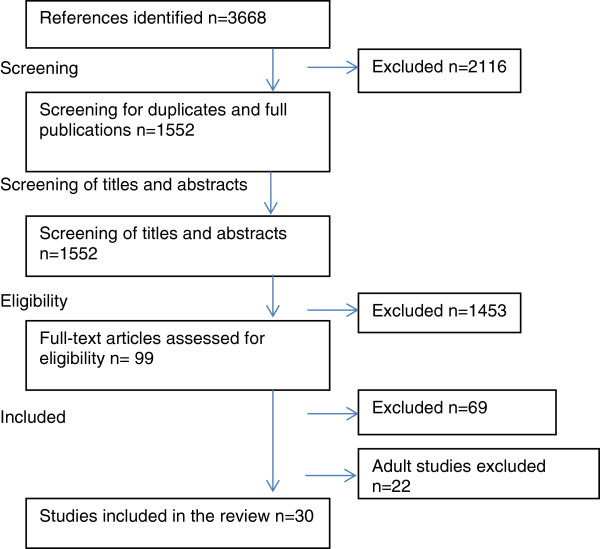
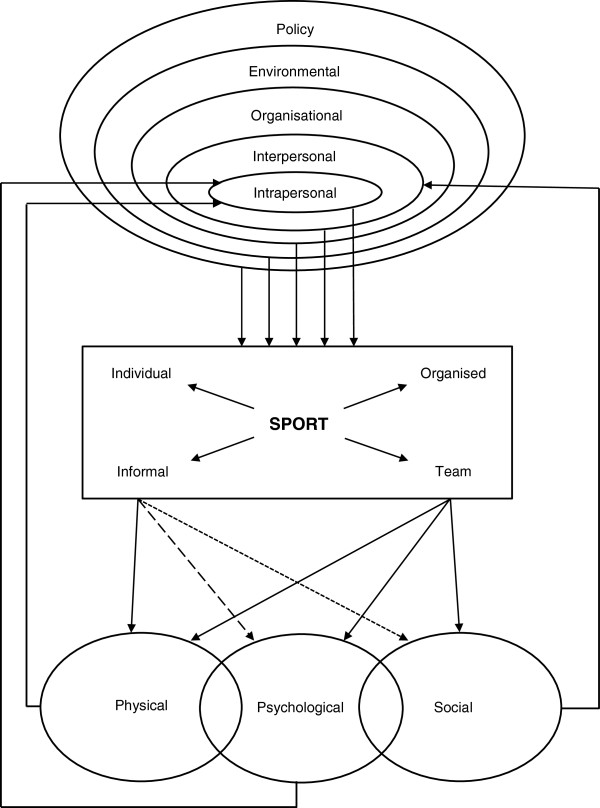
BACKGROUND: There are specific guidelines regarding the level of physical activity (PA) required to provide health benefits. However, the research underpinning these PA guidelines does not address the element of social health. Furthermore, there is insufficient evidence about the levels or types of PA associated specifically with psychological health. This paper first presents the results of a systematic review of the psychological and social health benefits of participation in sport by children and adolescents. Secondly, the information arising from the systematic review has been used to develop a conceptual model. METHODS: A systematic review of 14 electronic databases was conducted in June 2012, and studies published since 1990 were considered for inclusion. Studies that addressed mental and/or social health benefits from participation in sport were included. RESULTS: A total of 3668 publications were initially identified, of which 30 met the selection criteria. There were many different psychological and social health benefits reported, with the most commonly being improved self-esteem, social interaction followed by fewer depressive symptoms. Sport may be associated with improved psychosocial health above and beyond improvements attributable to participation in PA. Specifically, team sport seems to be associated with improved health outcomes compared to individual activities, due to the social nature of the participation. A conceptual model, Health through Sport, is proposed. The model depicts the relationship between psychological, psychosocial and social health domains, and their positive associations with sport participation, as reported in the literature. However, it is acknowledged that the capacity to determine the existence and direction of causal links between participation and health is limited by the fact that the majority of studies identified (n=21) were cross-sectional. CONCLUSION: It is recommended that community sport participation is advocated as a form of leisure time PA for children and adolescents, in an effort to not only improve physical health in relation to such matters as the obesity crisis, but also to enhance psychological and social health outcomes. It is also recommended that the causal link between participation in sport and psychosocial health be further investigated and the conceptual model of Health through Sport tested.
Overview
The claims and statistics of this paper haven’t been checked yet.
Free: it reads the open-access text and checks the first 5 claims that cite a source we can check. Create a free account to check every claim.
Integrity signals
Registry
Cites
Statistics
Figures
Verification
Claims the paper makes
The claims and statistics of this paper haven’t been checked yet.
Free: it reads the open-access text and checks the first 5 claims that cite a source we can check. Create a free account to check every claim.
Claims other papers make about this one
Each is checked against this paper’s own text: does it say what the citing paper says it does?
The source backs part of the claim, not all of it — or backs it for a different population, condition or comparison.
In the citing paper
“All six systematic reviews reported on organized sport activities and two also reported on organized non-sport activities (Cairns et al., 2014, Eime et al., 2013).”
From Impact of organized activities on mental health in children and adolescents: An umbrella review (2022) · cites this paper as Eime et al., 2013
Experimental — accuracy not yet measuredThe source backs part of the claim, not all of it — or backs it for a different population, condition or comparison.
In the citing paper
“Components of exercise interventions may represent important moderators of treatment effects.”
From Exercise for the treatment of anxiety in children and adolescents (2022) · cites this paper as Eime 2013
Experimental — accuracy not yet measuredThe source backs part of the claim, not all of it — or backs it for a different population, condition or comparison.
In the citing paper
“Indeed, intervention setting is another potential moderating factor, with group-based activities reported to confer a range of social benefits compared to individual activities (Eime 2013).”
From Exercise for the treatment of anxiety in children and adolescents (2022) · cites this paper as Eime 2013
Experimental — accuracy not yet measuredThe source backs part of the claim, not all of it — or backs it for a different population, condition or comparison.
In the citing paper
“We found evidence that children and adolescents who participated more frequently, who participated with higher intensity or who participated with longer duration (e.g. started at an early age or participated for a long period), had better mental health compared to their peers (Eime et al., 2013, Evans et al., 2017, Panza et al., 2020).”
From Impact of organized activities on mental health in children and adolescents: An umbrella review (2022) · cites this paper as Eime et al., 2013
Experimental — accuracy not yet measuredThe cited source says what the claim attributes to it.
In the citing paper
“Similarly, sports participation can be instrumental in the physical, social and emotional development of children and adolescents [30].”
2 more claims about this paper
Create a free account to see every claim other papers make about this one.
Self-check
Percentages, sums and reported differences re-computed from the paper’s own numbers.
The self-check needs the paper’s full text.
Citations
Cites
Kytle, J., & Bandura, A. (1978) · Contemporary Sociology · doi:10.2307/2065952 · Cited by 25,422
von Elm, E., Altman, D. G., Egger, M., Pocock, S. J., Gøtzsche, P. C., Vandenbroucke, J. P., & Initiative, F. T. S. (2007) · PLoS Medicine · doi:10.1371/journal.pmed.0040296 · Cited by 23,020
CONSORT 2010 Statement: updated guidelines for reporting parallel group randomised trials
the CONSORT Group, Schulz, K. F., Altman, D. G., & Moher, D. (2010) · BMC Medicine · doi:10.1186/1741-7015-8-18 · Cited by 13,371
Health Behavior and Health Education: Theory, Research, and Practice
(1992) · Annals of Internal Medicine · doi:10.7326/0003-4819-116-4-350_1 · Cited by 13,207
(1985) · Europe PMC (PubMed Central) · Cited by 9,143
Moher, D., Hopewell, S., Schulz, K. F., Montori, V., Gotzsche, P. C., Devereaux, P. J., Elbourne, D., Egger, M., & Altman, D. G. (2010) · BMJ · doi:10.1136/bmj.c869 · Cited by 8,883
An ecological perspective on health promotion programs
McLeroy, K. R., Bibeau, D., Steckler, A., & Glanz, K. (1988) · Health Education Quarterly · doi:10.1177/109019818801500401 · Cited by 8,502 · cited 2×
“The ‘determinants’ element is based on the well-established social ecological model [19,65] and is represented as concentric rings spreading out from the individual’s intrapersonal characteristics to widening spheres of influence.”
BackgroundDowns, S. H., & Black, N. (1998) · Journal of Epidemiology and Community Health · doi:10.1136/jech.52.6.377 · Cited by 8,252 · cited 1×
“Study quality was objectively appraised using the Downs and Black checklist [32].”
MethodJanssen, I., & LeBlanc, A. G. (2010) · International Journal of Behavioral Nutrition and Physical Activity · doi:10.1186/1479-5868-7-40 · Cited by 4,829
Measuring Health: A Guide to Rating Scales and Questionnaires
McDowell, I., & Newell, C. (1987) · Cited by 4,207
Cited by
Items 601–700 of 1,005
Hayashi, C., Toyoda, H., Ogata, S., Okano, T., & Mashino, S. (2021) · Environmental Health and Preventive Medicine · doi:10.1186/s12199-021-01028-x · Cited by 16
Ocampo, D. B., Reyes, A. L. J., Vásquez, M. H. T., Sosa, H. I. R., & González-González, A. (2022) · Cuadernos de Psicología del Deporte · doi:10.6018/cpd.429581 · Cited by 46
Physical activity motives have a direct effect on mental health
Doré, I., Thibault, V., Sylvestre, M., Sabiston, C. M., O’Loughlin, J. L., Nader, P. A., Romain, A. J., Brunet, J., & Bélanger, M. F. (2022) · Scandinavian Journal of Medicine and Science in Sports · doi:10.1111/sms.14174 · Cited by 25
McGuine, T. A., Biese, K. M., Hetzel, S., Schwarz, A., Reardon, C. L., Bell, D. R., Brooks, A., Dickman, J., & Watson, A. M. (2022) · Journal of Athletic Training · doi:10.4085/1062-6050-0679.21 · Cited by 18
Trends in sports participation in adolescents: Data from a large-scale sample in the US adolescents
Deng, Y. H., & Fan, A. (2022) · Frontiers in Public Health · doi:10.3389/fpubh.2022.960098 · Cited by 24
Zhou, W., Zhang, L., Wang, T., Li, Q., & Jian, W. (2022) · Frontiers in Public Health · doi:10.3389/fpubh.2022.958189 · Cited by 19
Jones, G., Longbon, K., & Williams, S. (2022) · BMC Public Health · doi:10.1186/s12889-022-14647-y · Cited by 20
Online gaming with a purpose: exploring positive personal development achieved through esports play
Guo, Z., Cahalane, M., & Carbonie, A. (2022) · Behaviour and Information Technology · doi:10.1080/0144929x.2022.2154266 · Cited by 21
“Through social and environmental interactions, particularly structured team activities (e.g. team game play), young people can develop their social, emotional, behavioural, and cognitive qualities, thus promoting positive development (Eime 2013; Johnston, Harwood, and Minniti 2013; Larson 2000).”
BackgroundSports Participation by Athletes With Cardiovascular Disease
Martinez, M. W., Ackerman, M. J., Annas, G. J., Baggish, A. L., Day, S. M., Harmon, K. G., Kim, J. H., Levine, B. D., Putukian, M., & Lampert, R. J. (2024) · Journal of the American College of Cardiology · doi:10.1016/j.jacc.2023.12.021 · Cited by 21
Hermassi, S., Konukman, F., Al-Marri, S. S., Hayes, L. D., Bartels, T., & Schwesig, R. (2024) · PLoS ONE · doi:10.1371/journal.pone.0298301 · Cited by 23
“Benefits include superior mental health, overall health, improved self-confidence amongst others [2–6].”
BackgroundInfluentialBalcerowska, J. M., & Brailovskaia, J. (2024) · Computers in Human Behavior · doi:10.1016/j.chb.2024.108240 · Cited by 21
The motivations to play organised club-based sport in Australia
Eime, R., Harvey, J. T., Charity, M. J., Pankowiak, A., Westerbeek, H. M., & Mesagno, C. (2024) · Leisure Studies · doi:10.1080/02614367.2024.2347282 · Cited by 20
“In line with the Self-Determination Theory, previous research has demonstrated that autonomy and choice to play sport is associated with the motivations of fun and enjoyment (Collins & Barcelona, 2018; R. Eime et al., 2013b; Foley et al., 2021; Visek et al., 2015).”
InfluentialSelf-citation(Re)defining youth sport participation
Kay, J., Elliott, S., & Côté, J. (2024) · International Journal of Sport Policy and Politics · doi:10.1080/19406940.2024.2377543 · Cited by 20
“The fleeting nature of this participation is unlikely to promote the aforementioned long-term developmental and health benefits that are associated with sustained, longer-term engagement (for review, see Eime et al .”
Räikkönen, T., & Hedman, J. (2024) · International Journal of Sport Policy and Politics · doi:10.1080/19406940.2024.2396836 · Cited by 29
“This comprehensive approach fills a significant gap in the current literature, which has primarily focussed on isolated elements, necessitating an integrated approach to explore the synergistic nature of community and sport (Misener and Mason 2006, Schulenkorf 2012, Eime et al .”
Golpe Ferreiro, S., Isorna Folgar, M., Gómez Salgado, P., & Rial Boubeta, A. (2017) · Retos · doi:10.47197/retos.v0i31.44248 · Cited by 16
Can sports mitigate the effects of depression and aggression on peer rejection?
Perron-Gélinas, A., Brendgen, M. R., & Vitaro, F. (2017) · Journal of Applied Developmental Psychology · doi:10.1016/j.appdev.2017.03.006 · Cited by 23
Rigoni, P. A. G., Belém, I. C., & Vieira, L. F. (2017) · journal of physical education · doi:10.4025/jphyseduc.v28i1.2854 · Cited by 31
Adults Engaged in Sports in Early Life Have Higher Bone Mass Than Their Inactive Peers
Mantovani, A. M., Lima, M. C. S., Gobbo, L. A., Ronque, Ê. R. V., Romanzini, M., Turi-Lynch, B. C., Codogno, J. S., & Fernandes, R. A. (2018) · Journal of Physical Activity and Health · doi:10.1123/jpah.2017-0366 · Cited by 18
Tremolada, M., Taverna, L., Bonichini, S., Pillon, M., & Biffi, A. (2019) · Children · doi:10.3390/children6080092 · Cited by 18
“Motor performance has been recognized as a key element for children’s healthy development, especially towards their future social life, and even more so in kindergarten children [19].”
BackgroundLee, H. S., Lee, S. H., Kim, J. W., Lee, Y. S., Lee, B. C., Oh, H. J., & Kim, J.-H. (2020) · The Scientific World JOURNAL · doi:10.1155/2020/3029591 · Cited by 19
“It is known frommany studies that appropriate and effective levels of exercise bring about improvement in physical activity [1] and cognitive and mental functions [2] and have social benefits [3].”
BackgroundArumí-Prat, I., Cirera-Viñolas, E., Martori, J. C., Wasley, D., & Puig-Ribera, A. M. (2020) · European Journal of Pediatrics · doi:10.1007/s00431-020-03655-y · Cited by 16
Keiser, T., Gaser, D., Peters, C., Oberhoffer, R., Kesting, S., & von Luettichau, I. (2020) · Frontiers in Pediatrics · doi:10.3389/fped.2020.00463 · Cited by 16
On the Playing Field to Improve: A Goal for Autism
Vetri, L., & Roccella, M. (2020) · Medicina · doi:10.3390/medicina56110585 · Cited by 24
“Only team sport strongly contributes to psychological and social outcomes, while the individual forms contribute less to psychological outcomes and very little to social outcomes [57].”
BackgroundMoney-Taylor, E., Dobbin, N., Gregg, R., Matthews, J. J., & Esen, Ö. (2021) · Sport Sciences for Health · doi:10.1007/s11332-021-00775-2 · Cited by 25
Zenić, N., Ban, D., Jurišić, S., Ćubela, M., Rođek, J., Ostojić, L., Jeličić, M., Bianco, A., & Sekulić, D. (2017) · International Journal of Environmental Research and Public Health · doi:10.3390/ijerph14040446 · Cited by 17
“development of pro-social behaviors and self-discipline [31].”
Tykes and ‘Timbits’: A Critical Examination of Organized Sport Programs for Preschoolers
Fraser-Thomas, J. L., & Safai, P. (2017) · Palgrave Macmillan UK eBooks · doi:10.1057/978-1-137-48562-5_5 · Cited by 19
Coaches’ and players’ perceptions of health promotion activities in sport clubs
Hoye, A. V., Heuzé, J.-P., Meganck, J., Seghers, J., & Sarrazin, P. G. (2017) · Health Education Journal · doi:10.1177/0017896917739445 · Cited by 27
“An extensive body of literature highlights the important role that coaches play with respect to sports club participants’ affective, cognitive and behavioural behaviours (Mageau and Vallerand, 2003), leading in some cases to improved social, mental and physical health (Eime et al., 2013), but in other circumstances to…”
BackgroundUsing the Learning Climate Questionnaire to Assess Basic Psychological Needs Support in Youth Sport
Bean, C. N., Rocchi, M., & Forneris, T. (2019) · Journal of Applied Sport Psychology · doi:10.1080/10413200.2019.1571537 · Cited by 24
Wheelchair Physical Activities and Sports for Children and Adolescents: A Scoping Review
Bragg, E., & Pritchard-Wiart, L. (2019) · Physical & Occupational Therapy in Pediatrics · doi:10.1080/01942638.2019.1609151 · Cited by 16
“Positive youth development through team sports, in particular, appears to be associated with improved psychosocial outcomes due to the social nature of participation (Bailey, 2006; Eime et al., 2013; Holt, 2016).”
BackgroundGallant, K. A., Litwiller, F., Alexander, R., White, C., Hamilton-Hinch, B., & Lauckner, H. M. (2019) · Leisure/Loisir · doi:10.1080/14927713.2019.1697347 · Cited by 16
Utilizing Psychedelics to Enhance Well-Being: A Systematic Review
Thomson, S., & Thomacos, N. (2025) · Journal of Psychoactive Drugs · doi:10.1080/02791072.2025.2484380 · Cited by 16
Influence of Organized vs Non Organized Physical Activity on School Adaptation Behavior
Moșoi, A. A., Beckmann, J., Mirifar, A., Martinent, G., & Balint, L. (2020) · Frontiers in Psychology · doi:10.3389/fpsyg.2020.550952 · Cited by 20
“These results are once again consistent with the risks for adolescents who do not practice physical activity found in previous studies (Burnett-Zeigler et al., 2012; Eime et al., 2013).”
BackgroundResultImpact of the MooN Physical Education Program on the Socio-Emotional Competencies of Preadolescents
Luna, P., Cejudo, J., Piqueras, J. A., Rodrigo-Ruiz, D., Bajo, M., & Pérez-González, J. C. (2021) · International Journal of Environmental Research and Public Health · doi:10.3390/ijerph18157896 · Cited by 32
“[27] point out that participatory sports games, developed as a team, are related to better psychosocial health.”
BackgroundMorano, M., Robazza, C., Ruiz, M. C., & Bortoli, L. (2022) · Frontiers in Psychology · doi:10.3389/fpsyg.2022.855179 · Cited by 23
Arundell, L., Gould, L., Ridgers, N. D., Ayala, A. M. C., Downing, K. L., Salmon, J., Timperio, A. F., & Veitch, J. (2022) · BMC Public Health · doi:10.1186/s12889-022-14007-w · Cited by 36
Yman, J., Helgadóttir, B., Kjellenberg, K., & Nyberg, G. (2022) · Acta Paediatrica · doi:10.1111/apa.16556 · Cited by 29
“15 However, to the authors' knowledge, research is lacking in this field.”
BackgroundDeveloping and evaluating a peer-based mental health literacy intervention with adolescent athletes
Panza, M., Redman, G., Vierimaa, M., Vella, S. A., Bopp, M., & Evans, M. B. (2022) · PLoS ONE · doi:10.1371/journal.pone.0274761 · Cited by 15
“Considering the results of longitudinal studies regarding sport participation, youth who participate in sport report fewer mental health problems along with increased markers of positive youth development, when compared to youth who do not participate in sport [6].”
BackgroundAssociation between sports participation and overall health in children and adolescents
Song, Y., & Shi, C. (2022) · Complementary Therapies in Clinical Practice · doi:10.1016/j.ctcp.2022.101718 · Cited by 21
Factors Associated with Anxiety, Depression, and Stress Levels in High School Students
Muñoz, R. G., Campos, Á. F., Zakuda, A. V., Torres, I. R., Fuentes, M. C., Bădicu, G., Herrera-Valenzuela, T., & Valdés-Badilla, P. A. (2023) · European Journal of Investigation in Health Psychology and Education · doi:10.3390/ejihpe13090129 · Cited by 30
“Concerning academic performance in mathematics, it is important to highlight that when a student achieves high grades, it is due to a combination of various factors [8,17,22,26,31,32].”
InfluentialGill, V. S., Sullivan, G. R., Stearns, H., Tummala, S. V., Haglin, J. M., Economopoulos, K. J., Marks, L. A., & Chauhan, M. (2024) · Sports Medicine · doi:10.1007/s40279-024-01998-2 · Cited by 26
“A recent review found that participation in sport improves psychological health outcomes [11], yet other reviews have shown that athletes are just as likely or even more likely than the general population to experience mental illness symptoms [12, 13].”
Gender Differences in the Implicit and Explicit Perceptions of Sport
Sunderji, S., Murray, R. M., & Sabiston, C. M. (2024) · Sex Roles · doi:10.1007/s11199-024-01499-6 · Cited by 21
“Further, exercise and sport participation are crucial for developing and maintaining healthy lifestyle behaviours in adolescence that extend into adulthood (Bélanger et al., 2015; Eime et al., 2013; Kim et al., 2020; Mandic et al., 2012).”
NFL Play 60: Managing the intersection of professional sport and obesity
Sparvero, E. S., & Warner, S. M. (2019) · Sport Management Review · doi:10.1016/j.smr.2018.06.005 · Cited by 16
Bicycling participation in people with a lower limb amputation: a scoping review
Poonsiri, J., Dekker, R., Dijkstra, P. U., Hijmans, J. M., & Geertzen, J. H. B. (2018) · BMC Musculoskeletal Disorders · doi:10.1186/s12891-018-2313-2 · Cited by 19
Laudańska–Krzemińska, I., Krzysztoszek, J., Naczk, M., & Gajewska, E. (2020) · International Journal of Environmental Research and Public Health · doi:10.3390/ijerph17165791 · Cited by 21
“The systematic review of the psychological and social benefits of participation in sport for children and adolescents shows higher self-esteem, better social skills, higher confidence and higher competence amongst sport participants than non-sport participants (many studies did not distinguish between sport and other…”
BackgroundSports participation volume and psychosocial outcomes among healthy high school athletes
Gagliardi, A. G., Walker, G. A., Dahab, K. S., Seehusen, C. N., Provance, A. J., Albright, J. C., & Howell, D. R. (2020) · Journal of Clinical and Translational Research · doi:10.18053/jctres.06.202002.003 · Cited by 24
“org sport has been consistently associated with numerous mental health benefits among children and teens, including increased self-esteem, social connectedness, psychological resilience, and decreased depression [10-25].”
BackgroundResultJúnior, J. R. A. D. N., Freire, G. L. M., de Moraes, J. F. V. N., Fortes, L. D. S., de Oliveira, D. V., & Cronin, L. (2021) · International Journal of Sport and Exercise Psychology · doi:10.1080/1612197x.2021.1907764 · Cited by 29
“For example, a systematic review of 30 studies by Eime et al. (2013) highlighted that youth sports participation is associated with a variety of psychosocial benefits.”
BackgroundAminpour, F., & Bishop, K. (2021) · Journal of Environmental Psychology · doi:10.1016/j.jenvp.2021.101599 · Cited by 16
“Physical activity can enhance children’s self-esteem (Eime et al., 2013) and the volume of cortical and subcortical brain structures, associated with better academic performance (Esteban-Cornejo et al., 2017).”
Woods, C. B., Crowley, E., Powell, C., O’Brien, W., MURPHY, M. H., Belton, S., Saunders, J. A., Connolly, S., Farmer, O., & Ng, K. (2021) · Preventive Medicine Reports · doi:10.1016/j.pmedr.2021.101472 · Cited by 19
“In summary, targeting females and adolescents from low SES backgrounds and giving consideration to contextual factors, particularly school type is vital to addressing current and future inactivity (Eime et al., 2013; Liu et al., 2012; Gavin et al., 2014; Harrington et al., 2016; Craike et al., 2018.”
BackgroundRen, T., Yan, J. H., & Sun, Q. (2021) · Frontiers in Public Health · doi:10.3389/fpubh.2021.730555 · Cited by 24
Basketball training frequency is associated with executive functions in boys aged 6 to 8 years
Xu, Y., Zhang, W., Zhang, K., Feng, M., Duan, T., Chen, Y., Wei, X., Luo, Y., & Ni, G. (2022) · Frontiers in Human Neuroscience · doi:10.3389/fnhum.2022.917385 · Cited by 22
“Participation in sports offers multiple fitness advantages for children and adolescents, such as cognitive (Bidzan-Bluma and Lipowska, 2018), psychological (Eime et al., 2013), and musculoskeletal development (Krahenbühl et al.”
BackgroundIncidence and prevalence of weight lifting injuries: An update
Muaidi, Q. I., & Alabbad, M. (2016) · Saudi Journal of Sports Medicine · doi:10.4103/1319-6308.173476 · Cited by 24
Correlates of physical activity among Australian Indigenous and non‐Indigenous adolescents
Macniven, R., Hearn, S., Grunseit, A. C., Richards, J. A., Nutbeam, D., & Bauman, A. E. (2016) · Australian and New Zealand Journal of Public Health · doi:10.1111/1753-6405.12609 · Cited by 20
Mollee, J. S., & Klein, M. C. A. (2016) · International Conference on Ubiquitous Computing and Communications (IUCC) · doi:10.1109/iucc-css.2016.023 · Cited by 17
“Vice versa, engaging in sufficient levels of physical activity has been associated with effects on both physical and mental health [3] [4] [5].”
BackgroundCoenders, F., van Mensvoort, C., Kraaykamp, G., & Breedveld, K. (2017) · European Journal for Sport and Society · doi:10.1080/16138171.2017.1284388 · Cited by 20
“Sport-participation, on the contrary, is often mentioned to be stress relieving; next to physical benefits, it may boost a person’s mental wellbeing (Eime et al., 2013; Ransford & Palisi, 1996).”
BackgroundInfluentialAlberga, A. S., Fortier, M., Bean, C. N., & Freedhoff, Y. (2019) · Applied Physiology, Nutrition, and Metabolism · doi:10.1139/apnm-2018-0479 · Cited by 19
Relationship between coaches’ health promotion activities, sports experience and health among adults
Hoye, A. V., Johnson, S., Geidne, S., & Vuillemin, A. (2020) · Health Education Journal · doi:10.1177/0017896920919777 · Cited by 20
“…has principally focused on identifying the benefits of sports participation and/or physical activity, showing that sports clubs can contribute to physical activity (Van Hoye et al., 2013) and also to sports participants’ social, mental and physical health (Eime et al., 2013; Oja et al., 2015).”
BackgroundInfluentialColombo-Dougovito, A. M., & Lee, J. (2020) · Adapted Physical Activity Quarterly · doi:10.1123/apaq.2019-0080 · Cited by 20
Xu, Y., Qi, K., Meng, S., Dong, X., Wang, S., Chen, D., & Chen, A. (2025) · BMC Pediatrics · doi:10.1186/s12887-025-05883-3 · Cited by 21
Jakobsson, B. T., & Lundvall, S. (2021) · International Journal of Environmental Research and Public Health · doi:10.3390/ijerph18136852 · Cited by 25
“Club sport can accordingly reach large groups of people and increase the physical, psychological and mental health of their participants through sport and physical activity practice [28–31].”
BackgroundKite, R. J., Noon, M. R., Morris, R. O., Mundy, P. D., & Clarke, N. D. (2021) · Journal of Science in Sport and Exercise · doi:10.1007/s42978-021-00127-z · Cited by 19
Perceptions of Sexual Abuse in Sport: A Qualitative Study in the Portuguese Sports Community
Alexandre, J., Castro, C., Gama, M., & Antunes, P. (2022) · Frontiers in Sports and Active Living · doi:10.3389/fspor.2022.838480 · Cited by 14
Irvine, D. S., Lee, E., Janssen, I., & Leatherdale, S. T. (2022) · Dialogues in Health · doi:10.1016/j.dialog.2022.100029 · Cited by 19
Voss, R. V., Kuhns, L. M., Phillips, G., Wang, X., Wolf, S. F., Garofalo, R., Reisner, S. L., & Beach, L. B. (2022) · Journal of Adolescent Health · doi:10.1016/j.jadohealth.2022.08.020 · Cited by 19
Review of Media Representation of Sport Concussion and Implications for Youth Sports
Jeckell, A. S., Fontana, R. S., & Gonzalez, R. (2023) · Clinics in Sports Medicine · doi:10.1016/j.csm.2023.06.012 · Cited by 17
Won, D., Bang, H., Davis, L., & Park, S. (2023) · Asia Pacific Journal of Education · doi:10.1080/02188791.2023.2243650 · Cited by 20
“In line with Eime et al. (2013), their depression or depressive symptoms would have been mitigated by the social nature of the (team) sport participation during their leisure time.”
Pavlović, S. L., Pelemiš, V. M., Marković, J., Dimitrijević, M., Badrić, M., Halaši, S., Nikolić, I. A., & Čokorilo, N. (2023) · Sports · doi:10.3390/sports11090173 · Cited by 34
McGinley, J. J., Stapleton, E. J., Gale, E. B., Worrall, H. M., Podvin, C. C., Ellis, H. B., Wilson, P. L., & Ulman, S. M. (2024) · Frontiers in Psychology · doi:10.3389/fpsyg.2023.1303887 · Cited by 24
Qian, J., Zhang, X., Wang, K., & Liang, J. (2025) · Learning and Individual Differences · doi:10.1016/j.lindif.2025.102695 · Cited by 19
Sports participation and drug use among young people in Mauritius
Rambaree, K., Mousavi, F., & Ahmadi, F. (2017) · International Journal of Adolescence and Youth · doi:10.1080/02673843.2017.1325756 · Cited by 15
Farmer, O., Duffy, D., Cahill, K. M., Lester, D., Belton, S., & O’Brien, W. (2018) · Women in Sport and Physical Activity Journal · doi:10.1123/wspaj.2017-0046 · Cited by 17
Ingrassia, M., Mazza, F., Totaro, P., & Benedetto, L. (2020) · Journal of Functional Morphology and Kinesiology · doi:10.3390/jfmk5010012 · Cited by 21
Eather, N., Miller, A. A., Jones, B., & Morgan, P. J. (2020) · International Journal of Sports Science & Coaching · doi:10.1177/1747954120976966 · Cited by 16
“level netball teams selected according to age and ability level - providing equal opportunities for young players in both treatment groups to play a team sport with a group of peers with similar interests and skills.(6) Fun and enjoyment is commonly reported as the primary motive for children participating in sport (a…”
BackgroundO’Brien, W., Coppinger, T. C., Hogan, I., Belton, S., MURPHY, M. H., Powell, C., & Woods, C. B. (2021) · Journal of Physical Activity and Health · doi:10.1123/jpah.2020-0386 · Cited by 17
Brown, T., Khawaja, I., Powell, A., Greetham, P., Gough, L. A., & Kelly, A. L. (2021) · Managing Sport and Leisure · doi:10.1080/23750472.2021.1949382 · Cited by 14
“Furthermore, multi-sport participation from a young age has also been linked to a longer career in sport, such that providing di ff erent sporting experiences maximises both physiological and healthy psychological development (Eime et al., 2013; Russell & Limle, 2013).”
BackgroundAppelqvist‐Schmidlechner, K., Heikkinen, R., Vasankari, T. J., Virtanen, T., Pihlainen, K., Honkanen, T., Kyröläinen, H., & Vaara, J. P. (2023) · Archives of Public Health · doi:10.1186/s13690-023-01040-3 · Cited by 25
“Besides benefits on self-esteem, PA is known to have various social benefits [10, 11, 24], for example, on social relations, social belonging and prosocial behaviour [13, 25–30].”
BackgroundMaking well-being an experiential possibility: the role of sport
Mayoh, J., & Jones, I. (2014) · Qualitative Research in Sport Exercise and Health · doi:10.1080/2159676x.2014.893901 · Cited by 20
“Within the literature as a whole, many studies are cross-sectional and tend to identify correlational, rather than causal relationships (Eime et al. 2013), focusing on single measures of well-being, with two associated limitations.”
BackgroundMethodYouth Development: An Approach for Physical Activity Behavioral Science
Dzewaltowski, D. A., & Rosenkranz, R. R. (2014) · Kinesiology Review · doi:10.1123/kr.2014-0042 · Cited by 16
Hoye, A. V., Heuzé, J.-P., Larsen, T. B., & Sarrazin, P. G. (2016) · Health Education Research · doi:10.1093/her/cyw015 · Cited by 20
Pharr, J. R., & Lough, N. (2016) · Journal of sport and health science/Journal of Sport and Health Science · doi:10.1016/j.jshs.2016.07.005 · Cited by 18
“The majority of previous research has not attempted to parse out the health benefits of sport from other forms of leisure-time PA, nor has it focused on women.(19) Research has been conducted to understand the difference in motivational factors for participation in sport compared with conditioning exercise in adults.”
BackgroundOnline news media reporting of football-related fatalities in Australia: A matter of life and death
Fortington, L. V., Bekker, S., & Finch, C. F. (2017) · Journal of science and medicine in sport · doi:10.1016/j.jsams.2017.06.015 · Cited by 15
Sport for All Ages? Weighing the Evidence
Dionigi, R. A., & Gard, M. (2017) · Palgrave Macmillan UK eBooks · doi:10.1057/978-1-137-48562-5_1 · Cited by 14
Lau, E. Y., Riazi, N. A., Qian, W., Leatherdale, S. T., & Faulkner, G. (2019) · Canadian Journal of Public Health · doi:10.17269/s41997-019-00221-4 · Cited by 26
“Previous studies suggest investing funds toward increasing access to sports facilities (Eime et al. 2013a) and increasing the affordability of sports programs (e.g., subsidizing) (Tucker Center for Research on Girls and Women in Sport 2018) may be effective strategies for increasing sports…”
BackgrounddeJonge, M. L., Mackowiak, R., Pila, E., Crocker, P. R. E., & Sabiston, C. M. (2019) · Journal of Sports Sciences · doi:10.1080/02640414.2019.1641381 · Cited by 27
“Given the known benefits of sport in facilitating social, psychological and physical well-being (Eime et al., 2013; Findlay & Bowker, 2009; Slutzky & Simpkins, 2009) and the underrepresentation of females within sport (Bengoechea et al., 2010; Marques et al., 2016), understanding factors that…”
BackgroundMeehan, A. J., Maughan, B., & Barker, E. D. (2019) · Journal of Psychopathology and Behavioral Assessment · doi:10.1007/s10862-019-09756-9 · Cited by 15
Méndez-Aguado, C., Cangas, A. J., Aguilar-Parra, J. M., & Lirola, M. J. (2023) · Healthcare · doi:10.3390/healthcare11091215 · Cited by 13
Solmaz, S. (2025) · SAGE Open · doi:10.1177/21582440251323673 · Cited by 18
“Studies conducted in various periods have shown that adolescents who engage in regular sports have better physical and mental health compared to their peers who do not engage in sports or are less active (Biddle & Asare, 2011; Eime et al., 2013; Goldfield et al., 2011).”
Cui, Z., Li, Z., Wang, T., Li, K., Zheng, H., & Yang, C. (2025) · Frontiers in Psychology · doi:10.3389/fpsyg.2025.1621100 · Cited by 19
Owen, K., Clare, P. J., Eime, R., Ding, D., Nguyen, B., Luo, M., Nau, T., Reece, L. J., & Bauman, A. E. (2025) · BMC Public Health · doi:10.1186/s12889-025-24011-5 · Cited by 18
“There is also evidence that sport, especially team sport is associated with improved psychosocial health compared to individual activities, due to the social nature of participation [5].”
Self-citationZhu, Y., Li, X., & Du, Z. (2025) · Frontiers in Psychology · doi:10.3389/fpsyg.2025.1626831 · Cited by 15
The Effects of Park-Based Interventions on Health-Related Outcomes Among Youth: A Systematic Review
Wallace, D. D., Han, B., Cohen, D. A., & Derose, K. P. (2022) · American Journal of Health Promotion · doi:10.1177/08901171221077812 · Cited by 17
Engberg, E., Hietajärvi, L., Maksniemi, E., Lahti, J. M. T., Lonka, K., Salmela‐Aro, K., & Viljakainen, H. T. (2022) · Mental health and physical activity · doi:10.1016/j.mhpa.2022.100448 · Cited by 20
Adebusoye, B., Chattopadhyay, K., Ekezie, W. C., Phalkey, R. K., & Leonardi‐Bee, J. (2022) · JBI Evidence Synthesis · doi:10.11124/jbies-21-00295 · Cited by 13
Associations of Self-Control with Physical Activity, Physical Fitness, and Adiposity in Adolescents
Boat, R., Williams, R. A., Dring, K. J., Morris, J. G., Sunderland, C. D., Nevill, M. E., & Cooper, S. B. (2022) · Behavioral Medicine · doi:10.1080/08964289.2022.2114416 · Cited by 16
Leslie-Walker, A., Mulvenna, C., & Bramble, O. (2022) · Curriculum Studies in Health and Physical Education · doi:10.1080/25742981.2022.2073458 · Cited by 16
Adebusoye, B., Leonardi‐Bee, J., Phalkey, R. K., & Chattopadhyay, K. (2022) · Health Science Reports · doi:10.1002/hsr2.997 · Cited by 15
“Physical activity also assists in their social development by providing opportunities for self‐expression, improving self‐confidence, social interactions, and integration.(4)”
BackgroundMeyer, S., Lang, C., Ludyga, S., Grob, A., & Gerber, M. (2023) · International Journal of Environmental Research and Public Health · doi:10.3390/ijerph20054441 · Cited by 17
“Several reviews have shown that higher levels of life satisfaction (or happiness) are associated with higher levels in various physical activity outcomes, such as higher exercise levels or more active lifestyles [17,19].”
BackgroundBurnout and dropout associated with talent development in youth sports
Soares, A. L. A., & Carvalho, H. M. (2023) · Frontiers in Sports and Active Living · doi:10.3389/fspor.2023.1190453 · Cited by 25
Brindley, C., Hamřík, Z., Kleszczewska, D. W., Dzielska, A., Mazur, J., Haug, E., Kopčáková, J., Marques, A., Altenburg, T. M., Demetriou, Y., et al. (2023) · Frontiers in Public Health · doi:10.3389/fpubh.2023.1190045 · Cited by 21
“Studies show a positive association between physical activity (PA) and physical, social, psychological, and emotional health in all age groups (1, 2).”
BackgroundTan, S. Y. X., Padmapriya, N., Bernard, J. Y., Toh, J. Y., Wee, H. L., Tan, K. H., Yap, F. K. P., Lee, Y. S., Chong, Y. S., Godfrey, K. M., et al. (2023) · The Lancet Regional Health - Western Pacific · doi:10.1016/j.lanwpc.2023.100918 · Cited by 23
Benefits of Meeting the Healthy People 2030 Youth Sports Participation Target
Martinez, M. F., Weatherwax, C., Piercy, K. L., Whitley, M. A., Bartsch, S. M., Heneghan, J. L., Fox, M., Bowers, M. T., Chin, K. L., Velmurugan, K., et al. (2024) · American Journal of Preventive Medicine · doi:10.1016/j.amepre.2023.12.018 · Cited by 17
Metadata
- Authors
- Eime, R. M., Young, J. A., Harvey, J. T., Charity, M. J., & Payne, W. R.
- Affiliations
- Victoria University (AU)
- Federation University (AU)
- Corresponding author
- Eime, Rochelle M
- Venue
- International Journal of Behavioral Nutrition and Physical Activity
- Published
- 2013
- Volume
- 10
- Issue
- 1
- Pages
- 98
- ISSN
- 1479-5868 (ISSN-L)
- PMC
- PMC3751802
- OpenAlex
- W2150292700
- Semantic Scholar
- 7f8fcfa7ffe59c88cef9c12ca5965f488c4b7011
- Cited by
- 2,366
- References
- 69
- Citations by year
- 2026: 266 · 2025: 309 · 2024: 262 · 2023: 267 · 2022: 238 · 2021: 235 · 2020: 203 · 2019: 153 · 2018: 142 · 2017: 103 · 2016: 86 · 2015: 59 · 2014: 38 · 2013: 3
- FWCI
- 6.70
- Type
- journal article
- Language
- en
- Open access
- gold
- doi.org
- Licence
- cc-by
- Locations
- International Journal of Behavioral Nutrition and Physical Activity (publishedVersion, cc-by)
- Europe PMC (PubMed Central) (publishedVersion, cc-by)
- PubMed Central (publishedVersion, cc-by)
- PubMed (publishedVersion)
- Victoria University Research Repository (Victoria University) (submittedVersion, cc-by)
- FedUni ResearchOnline (Federation University Australia) (submittedVersion)
- Figshare (submittedVersion, cc-by)
- Topics
- Health Sciences › Medicine › Public Health, Environmental and Occupational Health › Physical Activity and Health
- Social Sciences › Psychology › Developmental and Educational Psychology › Youth Development and Social Support
- Social Sciences › Life-span and Life-course Studies › Recreational Sport and Physical Activity
- Keywords
- sports participation, children, adolescents, mental health, social health, self-esteem, depressive symptoms, social interaction, team sports, individual sports, psychosocial health, conceptual model, physical activity guidelines, community sports, leisure-time physical activity
- MeSH terms
- Adolescent, Child, Depression, Health, Humans, Interpersonal Relations, Personal Satisfaction, Self Concept, Sports, Health Behavior, Exercise
About these checks
Registry, retraction, Cites and statistics results are computed, not judged, with one exception: a printed reference that no index lists is read once by a model before it counts as a citation error. Claims are extracted by a model and kept only when their quote appears verbatim in the text; each cited source is then checked, with a model’s help, for whether it says what the claim relies on. Those verdicts can be wrong — read the claim’s quote and the cited source before relying on one.
Statistics and arithmetic are recomputed, not judged.
Confidence bands are shown only for fields calibrated on our annotated test set. None is calibrated yet, so no band is shown.
What counts as a claim ›How we measure confidence ›How we check this ›
Are you an author, or do you see a problem with this page? Request a review
Data sources
Bibliographic data: Semantic Scholar, OpenAlex, Crossref.
Contains information from the Semantic Scholar Academic Graph Datasets, made available under the ODC Attribution License (ODC-BY 1.0).
Semantic Scholar’s data is described in: Kinney, R., et al. (2023). The Semantic Scholar Open Data Platform. arXiv:2301.10140.
