

A systematic review of the psychological and social benefits of participation in sport for children and adolescents: informing development of a conceptual model of health through sport
Open accessThe DOI matches its Crossref record; 69 of the 69 references it cites were found in a registry or an index.
Abstract
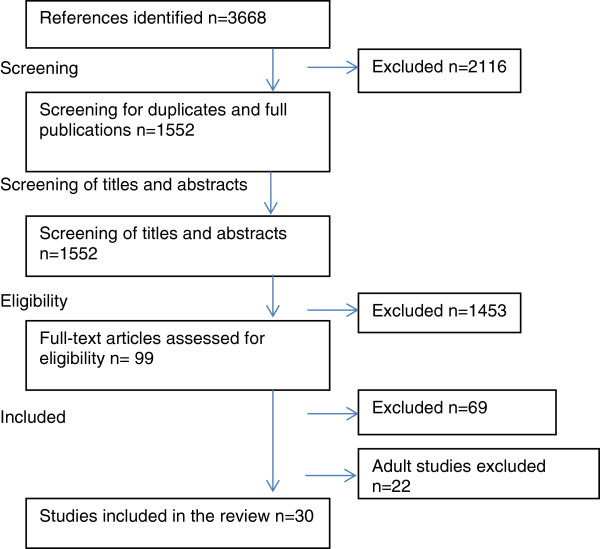
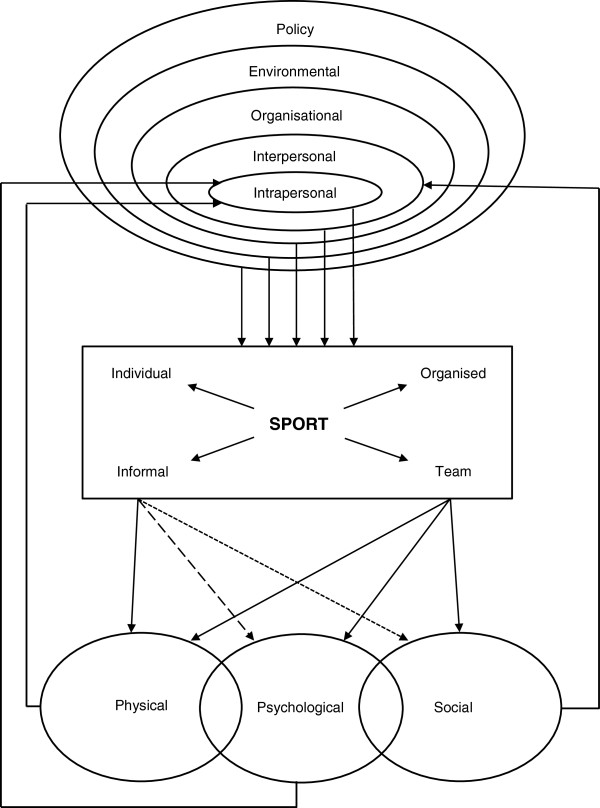
BACKGROUND: There are specific guidelines regarding the level of physical activity (PA) required to provide health benefits. However, the research underpinning these PA guidelines does not address the element of social health. Furthermore, there is insufficient evidence about the levels or types of PA associated specifically with psychological health. This paper first presents the results of a systematic review of the psychological and social health benefits of participation in sport by children and adolescents. Secondly, the information arising from the systematic review has been used to develop a conceptual model. METHODS: A systematic review of 14 electronic databases was conducted in June 2012, and studies published since 1990 were considered for inclusion. Studies that addressed mental and/or social health benefits from participation in sport were included. RESULTS: A total of 3668 publications were initially identified, of which 30 met the selection criteria. There were many different psychological and social health benefits reported, with the most commonly being improved self-esteem, social interaction followed by fewer depressive symptoms. Sport may be associated with improved psychosocial health above and beyond improvements attributable to participation in PA. Specifically, team sport seems to be associated with improved health outcomes compared to individual activities, due to the social nature of the participation. A conceptual model, Health through Sport, is proposed. The model depicts the relationship between psychological, psychosocial and social health domains, and their positive associations with sport participation, as reported in the literature. However, it is acknowledged that the capacity to determine the existence and direction of causal links between participation and health is limited by the fact that the majority of studies identified (n=21) were cross-sectional. CONCLUSION: It is recommended that community sport participation is advocated as a form of leisure time PA for children and adolescents, in an effort to not only improve physical health in relation to such matters as the obesity crisis, but also to enhance psychological and social health outcomes. It is also recommended that the causal link between participation in sport and psychosocial health be further investigated and the conceptual model of Health through Sport tested.
Overview
The claims and statistics of this paper haven’t been checked yet.
Free: it reads the open-access text and checks the first 5 claims that cite a source we can check. Create a free account to check every claim.
Integrity signals
Registry
Cites
Statistics
Figures
Verification
Claims the paper makes
The claims and statistics of this paper haven’t been checked yet.
Free: it reads the open-access text and checks the first 5 claims that cite a source we can check. Create a free account to check every claim.
Claims other papers make about this one
Each is checked against this paper’s own text: does it say what the citing paper says it does?
The source backs part of the claim, not all of it — or backs it for a different population, condition or comparison.
In the citing paper
“All six systematic reviews reported on organized sport activities and two also reported on organized non-sport activities (Cairns et al., 2014, Eime et al., 2013).”
From Impact of organized activities on mental health in children and adolescents: An umbrella review (2022) · cites this paper as Eime et al., 2013
Experimental — accuracy not yet measuredThe source backs part of the claim, not all of it — or backs it for a different population, condition or comparison.
In the citing paper
“Components of exercise interventions may represent important moderators of treatment effects.”
From Exercise for the treatment of anxiety in children and adolescents (2022) · cites this paper as Eime 2013
Experimental — accuracy not yet measuredThe source backs part of the claim, not all of it — or backs it for a different population, condition or comparison.
In the citing paper
“Indeed, intervention setting is another potential moderating factor, with group-based activities reported to confer a range of social benefits compared to individual activities (Eime 2013).”
From Exercise for the treatment of anxiety in children and adolescents (2022) · cites this paper as Eime 2013
Experimental — accuracy not yet measuredThe source backs part of the claim, not all of it — or backs it for a different population, condition or comparison.
In the citing paper
“We found evidence that children and adolescents who participated more frequently, who participated with higher intensity or who participated with longer duration (e.g. started at an early age or participated for a long period), had better mental health compared to their peers (Eime et al., 2013, Evans et al., 2017, Panza et al., 2020).”
From Impact of organized activities on mental health in children and adolescents: An umbrella review (2022) · cites this paper as Eime et al., 2013
Experimental — accuracy not yet measuredThe cited source says what the claim attributes to it.
In the citing paper
“Similarly, sports participation can be instrumental in the physical, social and emotional development of children and adolescents [30].”
2 more claims about this paper
Create a free account to see every claim other papers make about this one.
Self-check
Percentages, sums and reported differences re-computed from the paper’s own numbers.
The self-check needs the paper’s full text.
Citations
Cites
Kytle, J., & Bandura, A. (1978) · Contemporary Sociology · doi:10.2307/2065952 · Cited by 25,422
von Elm, E., Altman, D. G., Egger, M., Pocock, S. J., Gøtzsche, P. C., Vandenbroucke, J. P., & Initiative, F. T. S. (2007) · PLoS Medicine · doi:10.1371/journal.pmed.0040296 · Cited by 23,020
CONSORT 2010 Statement: updated guidelines for reporting parallel group randomised trials
the CONSORT Group, Schulz, K. F., Altman, D. G., & Moher, D. (2010) · BMC Medicine · doi:10.1186/1741-7015-8-18 · Cited by 13,371
Health Behavior and Health Education: Theory, Research, and Practice
(1992) · Annals of Internal Medicine · doi:10.7326/0003-4819-116-4-350_1 · Cited by 13,207
(1985) · Europe PMC (PubMed Central) · Cited by 9,143
Moher, D., Hopewell, S., Schulz, K. F., Montori, V., Gotzsche, P. C., Devereaux, P. J., Elbourne, D., Egger, M., & Altman, D. G. (2010) · BMJ · doi:10.1136/bmj.c869 · Cited by 8,883
An ecological perspective on health promotion programs
McLeroy, K. R., Bibeau, D., Steckler, A., & Glanz, K. (1988) · Health Education Quarterly · doi:10.1177/109019818801500401 · Cited by 8,502 · cited 2×
“The ‘determinants’ element is based on the well-established social ecological model [19,65] and is represented as concentric rings spreading out from the individual’s intrapersonal characteristics to widening spheres of influence.”
BackgroundDowns, S. H., & Black, N. (1998) · Journal of Epidemiology and Community Health · doi:10.1136/jech.52.6.377 · Cited by 8,252 · cited 1×
“Study quality was objectively appraised using the Downs and Black checklist [32].”
MethodJanssen, I., & LeBlanc, A. G. (2010) · International Journal of Behavioral Nutrition and Physical Activity · doi:10.1186/1479-5868-7-40 · Cited by 4,829
Measuring Health: A Guide to Rating Scales and Questionnaires
McDowell, I., & Newell, C. (1987) · Cited by 4,207
Cited by
Items 701–800 of 1,005
Clément, J.-F., Gallant, F., Hudon, C., Montiel, C., Riglea, T., Berbiche, D., Doré, I., Sylvestre, M., O’Loughlin, J. L., & Bélanger, M. F. (2024) · Mental health and physical activity · doi:10.1016/j.mhpa.2024.100612 · Cited by 18
Бабенко, О., Mosewich, A. D., & Sloychuk, J. R. (2020) · Perspectives on Medical Education · doi:10.1007/s40037-020-00560-w · Cited by 13
“and embrace failures as opportunities for further development [15], attributes that they subsequently can draw upon in college or university [12].”
BackgroundGuddal, M. H., Stensland, S. Ø., Småstuen, M. C., Johnsen, M. B., Heuch, I., Zwart, J., & Storheim, K. (2020) · International Journal of Environmental Research and Public Health · doi:10.3390/ijerph17124603 · Cited by 19
“Additionally, an increase in PA may lead to higher levels of socialization through inclusion in community activities, thereby creating opportunities for development of social skills and social competence, which in turn may provide benefits for musculoskeletal health and mental health [45,46].”
BackgroundEvidence-based recommendations to assist adults with depression to become lifelong movers
Fortier, M., McFadden, T., & Faulkner, G. (2020) · Health Promotion and Chronic Disease Prevention in Canada · doi:10.24095/hpcdp.40.10.01 · Cited by 17
Adolescents’ time allocation and skill production
Jürges, H., & Khanam, R. (2021) · Economics of Education Review · doi:10.1016/j.econedurev.2021.102178 · Cited by 19
Yperen, N. W. V., Jonker, L., & Verbeek, J. (2022) · Frontiers in Sports and Active Living · doi:10.3389/fspor.2021.752884 · Cited by 20
“Participation in sports such as football, and physical activity in general, have been associated with a series of physical, psychological, social, and health benefits among youth, particularly adolescents (e.g., Janssen and LeBlanc, 2010; Eime et al., 2013; Gísladóttir et al., 2013; Rodriguez-Ayllon et al., 2019; Weis…”
BackgroundRahim, N. A., Abidin, M. Z. A. Z., Shalan, N. A. A. M., Karim, Z. B., Aziz, N. U. A., & Avin, F. A. (2022) · Annals of Applied Sport Science · doi:10.52547/aassjournal.1047 · Cited by 15
Cassiolas, G., Paolo, S. D., Marchiori, G., Grassi, A., Villa, F. D., Bragonzoni, L., Visani, A., Giavaresi, G., Fini, M., Zaffagnini, S., et al. (2023) · Bioengineering · doi:10.3390/bioengineering10020179 · Cited by 17
Health promoting sports federations: theoretical foundations and guidelines
Hoye, A. V., Geidne, S., Vuillemin, A., Dowd, K., Glibo, I., Heck, S., Ibsen, B., Johnson, S., Kingsland, M., Kokko, S. P., et al. (2023) · Frontiers in Public Health · doi:10.3389/fpubh.2023.1147899 · Cited by 15
Barrera, D. J., Gaga-a, B., & Pabayos, J. (2016) · Asian Journal of Criminology · doi:10.1007/s11417-016-9230-9 · Cited by 18
“Such factors have been known to contribute to adolescent resiliency in the midst of negative life experiences (Biddle and Asare 2011; Eime et al. 2013; Fergus and Zimmerman 2005).”
BackgroundFernández-Prieto, I., Vélez, O. C., & Giné‐Garriga, M. (2017) · Journal of Adolescent Research · doi:10.1177/0743558417712612 · Cited by 16
The Role of Implicit Beliefs and Achievement Goals as Protective Factors in Youth Sport
Gardner, L. A., Vella, S. A., & Magee, C. (2017) · Journal of Applied Sport Psychology · doi:10.1080/10413200.2017.1334160 · Cited by 15
“Moreover, there is experimental evidence that changes in coach behaviors can affect athlete outcomes such as self-esteem, enjoyment, and dropout (Eime et al., 2013; Langan, Blake, & Lonsdale, 2013).”
BackgroundLee, E., & Carson, V. (2017) · Child Care Health and Development · doi:10.1111/cch.12491 · Cited by 15
“The individual at the centre” – a grounded theory explaining how sport clubs retain young adults
Lindgren, E., Annerstedt, C., & Dohsten, J. (2017) · International Journal of Qualitative Studies on Health and Well-Being · doi:10.1080/17482631.2017.1361782 · Cited by 23
Zaben, M., Manivannan, S., Petralia, C. C. T., Bhatti, I., Patel, C., & Leach, P. A. (2020) · Child s Nervous System · doi:10.1007/s00381-020-04536-3 · Cited by 13
Serious sports-related injury in England and Wales from 2012-2017: a study protocol
Davies, M. A. M., Lawrence, T., Edwards, A., Lecky, F. E., McKay, C. D., Stokes, K., & Williams, S. (2020) · Injury Epidemiology · doi:10.1186/s40621-020-00243-4 · Cited by 18
“(Eime et al., 2013; The Department of Health, 2011; Warburton et al., 2006) However, participation also involves an inherent risk of injury.”
BackgroundHand injuries in sports – a retrospective analysis of 364 cases
Stögner, V. A., Kaltenborn, A., Laser, H., & Vogt, P. M. (2020) · BMC Musculoskeletal Disorders · doi:10.1186/s12891-020-03807-z · Cited by 15
Parise, M., Pagani, A. F., Cremascoli, V., & Iafrate, R. (2015) · Revista iberoamericana de psicología del ejercicio y el deporte · Cited by 14
Liu, Y., Huang, W., Zhang, W. W., & Hu, C. (2026) · Behavioral Sciences · doi:10.3390/bs16061040 · Cited by 14
“…group-based PA, such as physical education classes, sports clubs, and team sports, may provide more opportunities for interpersonal contact, belongingness, and social connectedness, which are closely related to richer social experiences and support resources (Eime et al., 2013; Hu et al., 2026b).”
Sick, K., Sabiston, C. M., Maharaj, A., & Pila, E. (2022) · Psychology of sport and exercise · doi:10.1016/j.psychsport.2022.102215 · Cited by 16
McGinley, J. J., Stapleton, E. J., Worrall, H. M., Ellis, H. B., Wilson, P. L., & Ulman, S. M. (2022) · Frontiers in Psychology · doi:10.3389/fpsyg.2022.906300 · Cited by 17
What Keeps Kids Coming Back? Retention in a Sport-Based Positive Youth Development Program
Anderson‐Butcher, D., Amorose, A. J., Sobecki, C., Scheadler, T. R., Atkinson, O., & Gutzwiller, E. (2022) · Frontiers in Sports and Active Living · doi:10.3389/fspor.2022.816539 · Cited by 14
“Youth from low-income communities often lack access to resources and opportunities to engage in physical activity and sport, thereby limiting growth in physical literacy, physical and mental health, and other positive developmental outcomes (Eime et al., 2013; Bantham et al., 2021; Kuhn et al., 2021).”
BackgroundNoonan, R. J. (2022) · International Journal of Environmental Research and Public Health · doi:10.3390/ijerph192315579 · Cited by 16
Sport Specialization and Sport Motivation in Middle School–Aged Athletes
Biese, K. M., Winans, M., Rudek, G., Cadmus‐Bertram, L., Andreae, S. J., Brooks, M. A., Kliethermes, S., McGuine, T. A., & Bell, D. R. (2023) · Journal of Athletic Training · doi:10.4085/1062-6050-0690.22 · Cited by 15
Manzano-Sánchez, D. (2023) · Frontiers in Psychology · doi:10.3389/fpsyg.2023.1277532 · Cited by 23
Zhang, Y., Deng, S., Chen, S., Yao, Z., Hou, Y., Huang, Q., & Liu, Z. (2024) · Buildings · doi:10.3390/buildings14092763 · Cited by 13
Owen, K., Manera, K., Clare, P. J., Lim, M. H., Smith, B. J., Phongsavan, P., Lubans, D. R., Qualter, P., Eime, R., & Ding, D. (2024) · Journal of Physical Activity and Health · doi:10.1123/jpah.2024-0319 · Cited by 13
“Studies have shown that sport participation can have both positive (eg, improved self-esteem, better social skills, and fewer depressive symptoms) 14 and negative outcomes (eg, injuries, stress, anxiety, and social pressures).”
InfluentialSelf-citationBermejo‐Cantarero, A., Velázquez‐Ruiz, L., Romero, C., González, R. E., Zafra, M. D. O., Rodríguez‐Almagro, J., & Sánchez‐López, M. (2025) · Nursing Open · doi:10.1002/nop2.70205 · Cited by 25
Zhu, X., Niu, H., Zhu, Q., & Chen, W. (2025) · Frontiers in Psychology · doi:10.3389/fpsyg.2025.1545440 · Cited by 17
Liu, Y., Lu, Y., Wang, H., Tian, E., Su, X., Su, S., Zhou, W., & Gao, Y. (2025) · BMC Pediatrics · doi:10.1186/s12887-025-05803-5 · Cited by 19
“They can gain a sense of achievement from sports, boost their self - confidence, and better integrate into groups through exercise, obtaining a sense of belonging and identity and enhancing their psychological security [11, 12].”
Westergren, T., Ommundsen, Y., Carlsen, K. C. L., Carlsen, K., Mowinckel, P., Fegran, L., & Berntsen, S. (2014) · Journal of Asthma · doi:10.3109/02770903.2014.955190 · Cited by 12
“PA is also associated with improved self-esteem, social interaction and fewer depression symptoms [3].”
BackgroundLarson, N., Fulkerson, J. A., Berge, J. M., Eisenberg, M. E., & Neumark‐Sztainer, D. (2020) · Journal of the Academy of Nutrition and Dietetics · doi:10.1016/j.jand.2019.11.008 · Cited by 14
Goodson, A., Franklin, C. A., & Bouffard, L. A. (2020) · Journal of Sexual Aggression · doi:10.1080/13552600.2020.1733111 · Cited by 17
Mirandola, D., Franchi, G., Maruelli, A., Vinci, M., Muraca, M. G., Miccinesi, G., Manetti, M., & Marini, M. (2020) · International Journal of Environmental Research and Public Health · doi:10.3390/ijerph17124406 · Cited by 18
“In particular, there is evidence that participation in team sports rather than individual activities may be associated with better health outcomes, due to the social nature of the participation [7,8].”
BackgroundEnskär, K., Isma, G. E., & Rämgård, M. (2020) · Child Care Health and Development · doi:10.1111/cch.12809 · Cited by 18
Rose, L. T., & Soundy, A. (2020) · Behavioral Sciences · doi:10.3390/bs10110171 · Cited by 24
Mercê, C., Branco, M., Catela, D. P. R., Lopes, F., Rodrigues, L. P., & Cordovil, R. (2021) · Children · doi:10.3390/children8060487 · Cited by 13
“The World Health Organization [2] recognizes that young children should have opportunities to participate in a range of developmentally appropriate play-based physical activities, which will help them to develop motor competence [3], social and emotional skills [4], and health [5].”
BackgroundHadj-Moussa, F., Zahid, H. B., Wright, F. V., Kelland, K., & Andrysek, J. (2021) · Disability and Rehabilitation · doi:10.1080/09638288.2021.1986748 · Cited by 12
Eime, R., Harvey, J. T., Charity, M., Elliott, S., Drummond, M., Pankowiak, A., & Westerbeek, H. M. (2022) · BMC Public Health · doi:10.1186/s12889-022-13195-9 · Cited by 14
Self-citationDeChants, J. P., Green, A. E., Price, M. N., & Davis, C. K. (2022) · Transgender Health · doi:10.1089/trgh.2022.0066 · Cited by 15
Yim, H., Kim, A. C. H., Du, J., & James, J. D. (2023) · Frontiers in Psychiatry · doi:10.3389/fpsyt.2023.1104325 · Cited by 19
Stornæs, A. V., Sundgot-Borgen, J., Pettersen, G., Rosenvinge, J. H., & Nordin-Bates, S. M. (2023) · The Sport Psychologist · doi:10.1123/tsp.2022-0133 · Cited by 12
“Although participation in youth sports, music, and dance is associated with bene fi cial outcomes such as well-being and enjoyment (Eime et al., 2013; McCrary et al., 2021), it can also generate mental and physical strains as a result of competitive environments, high training volumes, and demanding…”
BackgroundSports Participation and Transgender Youths
Sin, A., Rizzone, K. H., & Gonzales, G. (2023) · Archives of Pediatrics and Adolescent Medicine · doi:10.1001/jamapediatrics.2023.3266 · Cited by 12
Bean, C. N., Solstad, B. E., Ivarsson, A., & Forneris, T. (2018) · International Journal of Sport and Exercise Psychology · doi:10.1080/1612197x.2018.1462234 · Cited by 18
Crossley, S. G. M., McNarry, M. A., Rosenberg, M., Knowles, Z. R., Eslambolchilar, P., & Mackintosh, K. A. (2018) · Journal of Medical Internet Research · doi:10.2196/11253 · Cited by 14
“Regular physical activity is considered an essential part of youths’ (children and adolescents) overall physiological health and psychosocial development [1-4], providing immediate and future health benefits [5-7].”
Macgregor, A. P., Borghese, M. M., & Janssen, I. (2019) · Applied Physiology, Nutrition, and Metabolism · doi:10.1139/apnm-2018-0323 · Cited by 14
“A large body of literature has studied the health benefits of specific types of physical activity (Rasberry et al. 2011; Eime et al. 2013; Saunders et al. 2013; Janssen 2014; Larouche et al. 2014; Brussoni et al. 2015).”
BackgroundHolmes, G., Clacy, A., & Salmon, P. M. (2019) · Ergonomics · doi:10.1080/00140139.2019.1654134 · Cited by 12
“Additionally, physical activity in the form of team sport participation has been shown to enhance psychosocial functioning, selfesteem and self-efficacy, and perceived inclusion (Babiss and Gangwisch 2009; Boone and Brausch 2016; Eime et al. 2013; McKee et al. 2014).”
BackgroundAppelqvist‐Schmidlechner, K., Kyröläinen, H., HÄKKINEN, A. H., Vasankari, T. J., Mäntysaari, M., Honkanen, T., & Vaara, J. P. (2021) · Frontiers in Sports and Active Living · doi:10.3389/fspor.2021.642993 · Cited by 19
Geidne, S., & Quennerstedt, M. (2021) · International Journal of Environmental Research and Public Health · doi:10.3390/ijerph18147704 · Cited by 22
“Friends are also important, and the sports club is a place where you can meet new friends, as well as spend time with old ones, friends you consider to be almost like family [5,19,24,25,27].”
BackgroundThe role of sport in coping and resilience amongst resettled South Sudanese youth in Australia
Pittaway, T., & Dantas, J. A. R. (2021) · Health Promotion International · doi:10.1093/heapro/daab100 · Cited by 20
Is prosocial behaviour a missing link between green space quality and child health-related outcomes?
Putra, I. G. N. E., Astell‐Burt, T., Cliff, D. P., Vella, S. A., & Feng, X. (2022) · Social Psychiatry and Psychiatric Epidemiology · doi:10.1007/s00127-021-02186-7 · Cited by 17
“[29] suggests potential bi-directional associations between psychosocial health and sport participation.”
BackgroundJohnson, S., Vuillemin, A., Epstein, J., Geidne, S., Donaldson, A., Tézier, B., Kokko, S., & Hoye, A. V. (2022) · Health Promotion International · doi:10.1093/heapro/daab213 · Cited by 19
Platschek, A.-M., Kehe, L., Abeln, V., Berthold, F., Simon, T., & Strüder, H. K. (2017) · Clinical journal of oncology nursing · doi:10.1188/17.cjon.e280-e286 · Cited by 18
Youth sports injury prevention: keep calm and play on
LaBella, C. R., & Myer, G. D. (2016) · British Journal of Sports Medicine · doi:10.1136/bjsports-2016-096648 · Cited by 12
Characteristics of Schools with Youth Sports Concussion‐Related Educational Policies and Practices
DePadilla, L. M., Miller, G. F., & Jones, S. E. (2020) · Journal of School Health · doi:10.1111/josh.12900 · Cited by 17
Latina, D., Jaf, D., Alberti, R., & Tilton‐Weaver, L. C. (2022) · Psychology of sport and exercise · doi:10.1016/j.psychsport.2022.102133 · Cited by 17
Implementation evaluation of an Irish secondary-level whole school programme: a qualitative inquiry
McHale, F., Ng, K., Scanlon, D., Cooper, J., Grady, C. L., Norton, C., O'Shea, D. B., & Woods, C. B. (2022) · Health Promotion International · doi:10.1093/heapro/daac131 · Cited by 17
Richard, V., Cairney, J., & Woods, C. T. (2023) · Frontiers in Psychology · doi:10.3389/fpsyg.2023.1089264 · Cited by 17
Ahn, Y., Lee, H., Lee, S., Joa, K., Lim, C. Y., Ahn, Y. J., Suh, H. J., Park, S., & Hong, K. (2023) · Phytotherapy Research · doi:10.1002/ptr.7801 · Cited by 12
“…efficient activity to maintain health, exposure to reduced physical activity, fatigue, and lethargy due to the development of material civilization, accumulation of wealth, and unhealthy lifestyle behaviors is common (Baker et al., 2014; Eime et al., 2013; Malm et al., 2019; McPhee et al., 2016).”
BackgroundKhan, A., Werner‐Seidler, A., Hidajat, T. J., Feng, J., Huang, Y., & Rosenbaum, S. (2023) · Journal of Adolescent Health · doi:10.1016/j.jadohealth.2023.07.011 · Cited by 15
Active Lifestyle and Mobility of Adults with Vision Impairment: A Multiphase Mixed-Methods Study
Barasche-Berdah, D., Paltiel, O., & Raz, R. (2023) · International Journal of Environmental Research and Public Health · doi:10.3390/ijerph20196839 · Cited by 12
“In addition, PA positively influences well-being and psychological health [15,16].”
BackgroundNCAA coaches’ perceptions of the inclusion of transgender athletes: a qualitative analysis
Arnold, M., Chambers, K., & Petrie, T. A. (2023) · Sport Education and Society · doi:10.1080/13573322.2023.2283078 · Cited by 12
“Other bene fi ts include, but are not limited to, greater con fi dence, emotion regulation, less depression, and more life satisfaction and self-esteem (e.g. Eime et al., 2013).”
Making leisure time meaningful for adolescents: an interview study from Sweden
Bälter, K. A., Johansson, J., Karvonen, S., & Eriksson, C. (2023) · International Journal of Qualitative Studies on Health and Well-Being · doi:10.1080/17482631.2023.2286664 · Cited by 22
“These positive effects may also impact school performance (Badura et al., 2021; Bean et al., 2019; Eime et al., 2013; Murphy et al., 2022).”
BackgroundPromoting physical activity and youth development in schools: the case for near-peer coaches
Pierre, C. S., Mitchell, J., Guan, W., & Sacheck, J. M. (2024) · Frontiers in Public Health · doi:10.3389/fpubh.2024.1345282 · Cited by 11
Beyond the scoreboard: school-based sport experiences and high school student-athlete well-being
Bates, S. M., Mack, S., & Nothnagle, E. A. (2024) · Sport Education and Society · doi:10.1080/13573322.2024.2338402 · Cited by 18
“Researchers have theorized that student-athlete experiences in sport influence their stress levels, overall well-being, and risks for burnout (Eime et al., 2013; Larson et al., 2020; Panza et al., 2020).”
Dalgas, B. W., Ntoumanis, N., Elmose-Østerlund, K., & Bredahl, T. V. G. (2024) · Frontiers in Psychology · doi:10.3389/fpsyg.2024.1413963 · Cited by 17
Chan, G., Banire, B., Anukem, S., Imran, M., Meena, S., Nwagu, C., Oyebode, O., Alslaity, A., Arya, A., & Orji, R. (2024) · International Journal of Human-Computer Interaction · doi:10.1080/10447318.2024.2371686 · Cited by 18
“Research shows that participation in regular exercise is associated with better cardiovascular health (Nystoriak & Bhatnagar, 2018), improvements in sleep and mood (Glavin et al., 2022), as well as social benefits like making new friends, developing teamwork, and social skills (Eime et al., 2013).”
Predictors of Anterior Cruciate Ligament Tears in Adolescents and Young Adults
Etzel, C. M., Meghani, O., Owens, B. D., Kocher, M. S., & Field, A. E. (2024) · Orthopaedic Journal of Sports Medicine · doi:10.1177/23259671241272699 · Cited by 19
“There is ample evidence that playing soccer, basketball, and football increases the likelihood of ACL injury 14,18,19,26,43 ; thus, emphasis on injury prevention strategies is needed to help young athletes minimize their risk while playing these sports.”
BackgroundLoneliness in sport: A systematic mixed studies review
Jackman, P. C., Hawkins, R. M., Bird, M. D., Williamson, O., Vella, S. A., & Lazuras, L. (2024) · International Review of Sport and Exercise Psychology · doi:10.1080/1750984x.2024.2405507 · Cited by 16
“…have been used previously in loneliness research with older adults (Meehan et al., 2023) and in myriad sport-based, health research programmes (e.g. Eime et al., 2013; Kokko, 2014), could be used to guide the organisation and visual mapping of risk and protective factors for loneliness in sport.”
Parent–child interaction frequency: associations with age, sibling presence, and child health
Twork, K., Ludwig, J., Kieß, W., & Poulain, T. (2024) · Pediatric Research · doi:10.1038/s41390-024-03727-x · Cited by 16
“While previous studies in this fi eld often focused only on a few activities or domains of interactions, 8,11,12,14,18 we assessed a wide range of potential parent-child interactions including different types of joint play but also time spent on speaking about problems.”
Palma, D. D., Ogbondah, L., & Tafuri, M. G. (2025) · RIVISTA DI STUDI SULLA SOSTENIBILITA · doi:10.3280/riss2025oa19679 · Cited by 14
Friedrich, B., & Mason, O. J. (2018) · Psychology · doi:10.4236/psych.2018.93023 · Cited by 15
“Similar to Eime’s approach (Eime et al., 2013), quantitative data pertaining to well-being could be used to develop measures tailored for physical activity.”
MethodKhan, A., Khan, S. R., & Burton, N. W. (2021) · Pediatric Obesity · doi:10.1111/ijpo.12836 · Cited by 16
Suzuki-Yamanaka, M., Hosokawa, Y., Ayusawa, M., Hirose, N., & Kaneoka, K. (2021) · PLoS ONE · doi:10.1371/journal.pone.0256383 · Cited by 10
“Sports participation provides a wide variety of benefits to student athletes, such as physical and psychological well-being [1, 2], and improved academic performance [3].”
BackgroundJung, Y., Burson, S. L., Julien, C., Bray, D., & Castelli, D. M. (2021) · Frontiers in Psychology · doi:10.3389/fpsyg.2021.648625 · Cited by 14
The Impact of Frame Running on Quality of Life in Young Athletes With Mobility Limitations
van Schie, P. E. M., van Eck, M., Bonouvrié, L. A., Bos, A. M. M. E., & Buizer, A. I. (2022) · Frontiers in Sports and Active Living · doi:10.3389/fspor.2022.839285 · Cited by 16
“Sports participation has numerous health benefits for typically developing children, for physical as well as psychosocial well-being (Tomporowski et al., 2011; Eime et al., 2013).”
BackgroundPhysical Activity, Sports Participation, and Psychosocial Health in Adolescents With Hearing Loss
DeLuca, Z. W., & Rupp, K. (2022) · Journal of Adolescent Health · doi:10.1016/j.jadohealth.2022.05.011 · Cited by 21
Description of sport participation profiles and transitions across profiles during adolescence
Gallant, F., Murray, R. M., Sabiston, C. M., & Bélanger, M. F. (2022) · Journal of Sports Sciences · doi:10.1080/02640414.2022.2115223 · Cited by 12
“…represents up to 60% of general physical activity levels during adolescence(Katzmarzyk & Malina, 1998; Machado-Rodrigues et al., 2012) and is associated with multiple physical(Hebert et al., 2016; Logan et al., 2019), and psychosocial(Eime et al., 2013; Moeijes et al., 2018, 2019) health benefits.”
BackgroundMulti-domain assessment of sports-related and military concussion recovery: A scoping review
DuPlessis, D., Lam, E., Xie, L., Reed, N. P., Wright, F. V., Biddiss, E. A., & Scratch, S. E. (2022) · Physical Therapy in Sport · doi:10.1016/j.ptsp.2022.11.010 · Cited by 12
Fitch, N., Ma’ayah, F., Harms, C. A., & Guilfoyle, A. M. (2016) · The Australian Journal of Indigenous Education · doi:10.1017/jie.2016.23 · Cited by 14
“Previous research has also found benefits of participation in youth sport for positive identity in the domains of selfefficacy (Camiré et al., 2009), self-esteem (Broh, 2002; Marsh & Kleitman, 2003) and emotional self-regulation (Eime et al., 2013).”
MethodThe effect of deprivation on the developmental activities of adolescent rugby union players in Wales
Winn, C. O. N., Ford, P. R., McNarry, M. A., Lewis, J., & Stratton, G. (2016) · Journal of Sports Sciences · doi:10.1080/02640414.2016.1271136 · Cited by 20
Cycling Through Cancer: Exploring Childhood Cancer Survivors’ Experiences of Well- and Ill-Being
Burke, S. M., Brunet, J., Wurz, A. J., Butler, C., & Utley, A. (2017) · Adapted Physical Activity Quarterly · doi:10.1123/apaq.2016-0011 · Cited by 12
Aspectos motivacionais de praticantes de judô do sexo masculino
de Oliveira, A. J., Rangel, A. G., Henrique, J., do Vale, W. D. S., Nunes, W. J., & Ruffoni, R. (2018) · Revista Brasileira de Ciências do Esporte · doi:10.1016/j.rbce.2018.01.014 · Cited by 33
“Atividades esportivas possibilitam interação social (Eime et al., 2013).”
Oda-Montecinos, C., Saldaña, C., Beyle, C., Andrés, A., Moya-Vergara, R., & Véliz‐García, Ó. (2018) · Revista Mexicana de Trastornos Alimentarios/Mexican Journal of Eating Disorders · doi:10.22201/fesi.20071523e.2018.1.479 · Cited by 22
Foley, B. C., Vassallo, A. J., & Reece, L. J. (2019) · BMC Sports Science Medicine and Rehabilitation · doi:10.1186/s13102-019-0123-y · Cited by 12
Lundy, G., Allan, V., Cowburn, I. H. J., & Côté, J. (2019) · Journal of Athlete Development and Experience · doi:10.25035/jade.01.02.04 · Cited by 20
On consumers’ use, brand preference and equity of sports nutrition products
Wesana, J., Schouteten, J. J., Acker, E. V., Gellynck, X., & Steur, H. D. (2019) · British Food Journal · doi:10.1108/bfj-08-2019-0589 · Cited by 18
Peraita‐Costa, I., González, A. L., Marí-Bauset, S., Marí-Sanchis, A., Marí-Sanchis, S., & Morales‐Suárez‐Varela, M. (2020) · International Journal of Environmental Research and Public Health · doi:10.3390/ijerph17030929 · Cited by 14
A salutogenic perspective on sport-for-development research
Super, S., Verkooijen, K. T., & Koelen, M. A. (2020) · Social Science & Medicine · doi:10.1016/j.socscimed.2020.113376 · Cited by 14
“, 2012) and the studies are mostly cross-sectional (Eime et al., 2013).”
BackgroundBhuiyan, N., Linden‐Carmichael, A. N., Lanza, S. T., Schmitz, K. H., & Mama, S. K. (2020) · Journal of Behavioral Medicine · doi:10.1007/s10865-020-00187-6 · Cited by 13
Pedretti, A., Mello, J. B., Gaya, A. R., Pedretti, A., & Gaya, A. C. A. (2020) · Revista Brasileira de Atividade Física & Saúde · doi:10.12820/rbafs.25e0131 · Cited by 13
Co-curricular activities and subjective well-being among university students
Hossan, M. R., Khan, M. H. A., & Hasan, M. T. (2021) · SN Social Sciences · doi:10.1007/s43545-021-00214-6 · Cited by 19
Cowley, E. S., Foweather, L., Watson, P. M., Belton, S., Thompson, A., Thijssen, D. H. J., & Wagenmakers, A. J. M. (2022) · International Journal of Environmental Research and Public Health · doi:10.3390/ijerph19020966 · Cited by 10
“Regular physical activity (PA) is associated with numerous physical [1], psychological [2], cognitive [3], and social [4] benefits for adolescents.”
BackgroundWilson, O. W. A., Whatman, C. S., Walters, S., Keung, S., Enari, D., Chiet, A., Millar, S., Ferkins, L., Hinckson, E. A., Hapeta, J., et al. (2022) · International Journal of Environmental Research and Public Health · doi:10.3390/ijerph19148597 · Cited by 14
“Although there is substantial evidence concerning the impact of physical activity participation on wellbeing in both children and youth [7,11] and adults [42], a reciprocal relationship is probable.”
BackgroundPay to Play? State Laws Related to High School Sports Participation Fees
Eyler, A. A., Piekarz‐Porter, E., & SERRANO, N. H. (2018) · Journal of Public Health Management and Practice · doi:10.1097/phh.0000000000000813 · Cited by 11
“0000000000000813 extracurricular activity with numerous benefits that include increased physical activity and fitness, mental health benefits, positive youth development, and reduced risk behavior.(1,2) While there is no argument about the role of academics in public education, states vary in their interpretation of e…”
Examining interconnectivity of entrepreneurship, innovation and sports policy framework
Pounder, P. A. (2019) · Journal of Entrepreneurship and Public Policy · doi:10.1108/jepp-08-2019-111 · Cited by 18
Kheswa, J. G., & Lobi, T. (2017) · The Anthropologist · doi:10.1080/09720073.2017.1379141 · Cited by 10
“…is widely assumed that adolescents who e develop mastery or expertise in sporting skills stand a good chance to lead demonstrate feelings of autonomy and efficiency in many aspects of their lives (Eime et al. 2013) and these are associated with the promotion of psychological well-being (Ryff 1989).”
BackgroundMücke, M., Ludyga, S., Andrä, C., Gerber, M., & Herrmann, C. (2021) · Journal of Sports Sciences · doi:10.1080/02640414.2021.1907902 · Cited by 13
“Furthermore, results of other studies also showed that coherence might be higher in children playing team sport comparing to individual sport (Eime et al., 2013; Elbe et al., 2017), which might contribute to a better manifestation of object movement compared to selfmovement skills.”
ResultCapturing coaches' identity leadership within youth sport
Herbison, J. D., Sutcliffe, J., Martin, L. J., McLaren, C. D., Slatcher, R. B., Benson, A. J., Boardley, I. D., Côté, J., & Bruner, M. W. (2022) · Psychology of sport and exercise · doi:10.1016/j.psychsport.2022.102208 · Cited by 11
Gender stereotypes and their correlates: the moderating role of voluntary sports club membership
Wicker, P. V., & Cunningham, G. B. (2023) · Frontiers in Psychology · doi:10.3389/fpsyg.2023.1236439 · Cited by 13
“Second, sport and exercise participation have many benefits, including those focusing on physical health, psychological wellbeing, and social health (Ruby et al., 2011; Eime et al., 2013; Nystoriak and Bhatnagar, 2018).”
Metadata
- Authors
- Eime, R. M., Young, J. A., Harvey, J. T., Charity, M. J., & Payne, W. R.
- Affiliations
- Victoria University (AU)
- Federation University (AU)
- Corresponding author
- Eime, Rochelle M
- Venue
- International Journal of Behavioral Nutrition and Physical Activity
- Published
- 2013
- Volume
- 10
- Issue
- 1
- Pages
- 98
- ISSN
- 1479-5868 (ISSN-L)
- PMC
- PMC3751802
- OpenAlex
- W2150292700
- Semantic Scholar
- 7f8fcfa7ffe59c88cef9c12ca5965f488c4b7011
- Cited by
- 2,366
- References
- 69
- Citations by year
- 2026: 266 · 2025: 309 · 2024: 262 · 2023: 267 · 2022: 238 · 2021: 235 · 2020: 203 · 2019: 153 · 2018: 142 · 2017: 103 · 2016: 86 · 2015: 59 · 2014: 38 · 2013: 3
- FWCI
- 6.70
- Type
- journal article
- Language
- en
- Open access
- gold
- doi.org
- Licence
- cc-by
- Locations
- International Journal of Behavioral Nutrition and Physical Activity (publishedVersion, cc-by)
- Europe PMC (PubMed Central) (publishedVersion, cc-by)
- PubMed Central (publishedVersion, cc-by)
- PubMed (publishedVersion)
- Victoria University Research Repository (Victoria University) (submittedVersion, cc-by)
- FedUni ResearchOnline (Federation University Australia) (submittedVersion)
- Figshare (submittedVersion, cc-by)
- Topics
- Health Sciences › Medicine › Public Health, Environmental and Occupational Health › Physical Activity and Health
- Social Sciences › Psychology › Developmental and Educational Psychology › Youth Development and Social Support
- Social Sciences › Life-span and Life-course Studies › Recreational Sport and Physical Activity
- Keywords
- sports participation, children, adolescents, mental health, social health, self-esteem, depressive symptoms, social interaction, team sports, individual sports, psychosocial health, conceptual model, physical activity guidelines, community sports, leisure-time physical activity
- MeSH terms
- Adolescent, Child, Depression, Health, Humans, Interpersonal Relations, Personal Satisfaction, Self Concept, Sports, Health Behavior, Exercise
About these checks
Registry, retraction, Cites and statistics results are computed, not judged, with one exception: a printed reference that no index lists is read once by a model before it counts as a citation error. Claims are extracted by a model and kept only when their quote appears verbatim in the text; each cited source is then checked, with a model’s help, for whether it says what the claim relies on. Those verdicts can be wrong — read the claim’s quote and the cited source before relying on one.
Statistics and arithmetic are recomputed, not judged.
Confidence bands are shown only for fields calibrated on our annotated test set. None is calibrated yet, so no band is shown.
What counts as a claim ›How we measure confidence ›How we check this ›
Are you an author, or do you see a problem with this page? Request a review
Data sources
Bibliographic data: Semantic Scholar, OpenAlex, Crossref.
Contains information from the Semantic Scholar Academic Graph Datasets, made available under the ODC Attribution License (ODC-BY 1.0).
Semantic Scholar’s data is described in: Kinney, R., et al. (2023). The Semantic Scholar Open Data Platform. arXiv:2301.10140.
