

A systematic review of the psychological and social benefits of participation in sport for children and adolescents: informing development of a conceptual model of health through sport
Open accessThe DOI matches its Crossref record; 69 of the 69 references it cites were found in a registry or an index.
Abstract
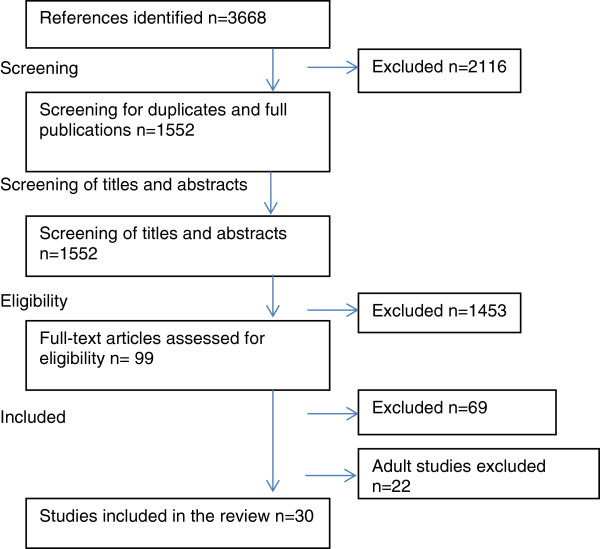
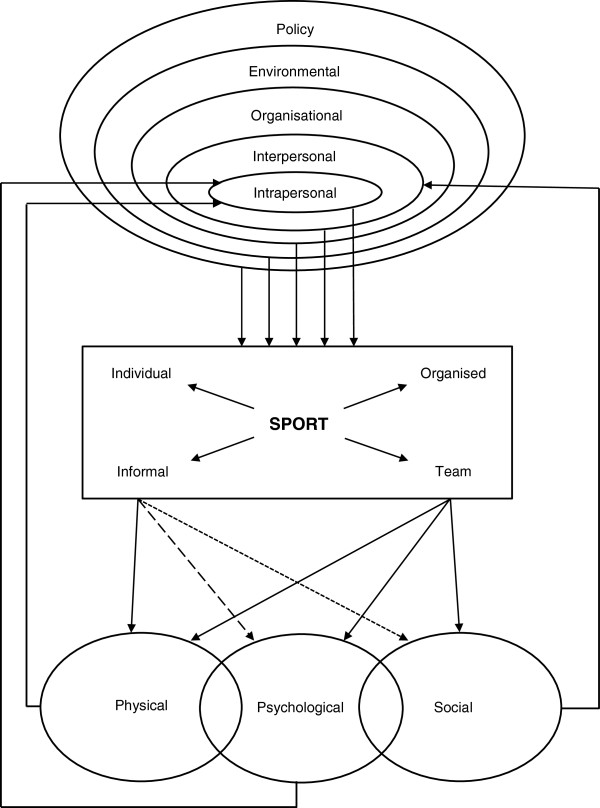
BACKGROUND: There are specific guidelines regarding the level of physical activity (PA) required to provide health benefits. However, the research underpinning these PA guidelines does not address the element of social health. Furthermore, there is insufficient evidence about the levels or types of PA associated specifically with psychological health. This paper first presents the results of a systematic review of the psychological and social health benefits of participation in sport by children and adolescents. Secondly, the information arising from the systematic review has been used to develop a conceptual model. METHODS: A systematic review of 14 electronic databases was conducted in June 2012, and studies published since 1990 were considered for inclusion. Studies that addressed mental and/or social health benefits from participation in sport were included. RESULTS: A total of 3668 publications were initially identified, of which 30 met the selection criteria. There were many different psychological and social health benefits reported, with the most commonly being improved self-esteem, social interaction followed by fewer depressive symptoms. Sport may be associated with improved psychosocial health above and beyond improvements attributable to participation in PA. Specifically, team sport seems to be associated with improved health outcomes compared to individual activities, due to the social nature of the participation. A conceptual model, Health through Sport, is proposed. The model depicts the relationship between psychological, psychosocial and social health domains, and their positive associations with sport participation, as reported in the literature. However, it is acknowledged that the capacity to determine the existence and direction of causal links between participation and health is limited by the fact that the majority of studies identified (n=21) were cross-sectional. CONCLUSION: It is recommended that community sport participation is advocated as a form of leisure time PA for children and adolescents, in an effort to not only improve physical health in relation to such matters as the obesity crisis, but also to enhance psychological and social health outcomes. It is also recommended that the causal link between participation in sport and psychosocial health be further investigated and the conceptual model of Health through Sport tested.
Overview
The claims and statistics of this paper haven’t been checked yet.
Free: it reads the open-access text and checks the first 5 claims that cite a source we can check. Create a free account to check every claim.
Integrity signals
Registry
Cites
Statistics
Figures
Verification
Claims the paper makes
The claims and statistics of this paper haven’t been checked yet.
Free: it reads the open-access text and checks the first 5 claims that cite a source we can check. Create a free account to check every claim.
Claims other papers make about this one
Each is checked against this paper’s own text: does it say what the citing paper says it does?
The source backs part of the claim, not all of it — or backs it for a different population, condition or comparison.
In the citing paper
“All six systematic reviews reported on organized sport activities and two also reported on organized non-sport activities (Cairns et al., 2014, Eime et al., 2013).”
From Impact of organized activities on mental health in children and adolescents: An umbrella review (2022) · cites this paper as Eime et al., 2013
Experimental — accuracy not yet measuredThe source backs part of the claim, not all of it — or backs it for a different population, condition or comparison.
In the citing paper
“Components of exercise interventions may represent important moderators of treatment effects.”
From Exercise for the treatment of anxiety in children and adolescents (2022) · cites this paper as Eime 2013
Experimental — accuracy not yet measuredThe source backs part of the claim, not all of it — or backs it for a different population, condition or comparison.
In the citing paper
“Indeed, intervention setting is another potential moderating factor, with group-based activities reported to confer a range of social benefits compared to individual activities (Eime 2013).”
From Exercise for the treatment of anxiety in children and adolescents (2022) · cites this paper as Eime 2013
Experimental — accuracy not yet measuredThe source backs part of the claim, not all of it — or backs it for a different population, condition or comparison.
In the citing paper
“We found evidence that children and adolescents who participated more frequently, who participated with higher intensity or who participated with longer duration (e.g. started at an early age or participated for a long period), had better mental health compared to their peers (Eime et al., 2013, Evans et al., 2017, Panza et al., 2020).”
From Impact of organized activities on mental health in children and adolescents: An umbrella review (2022) · cites this paper as Eime et al., 2013
Experimental — accuracy not yet measuredThe cited source says what the claim attributes to it.
In the citing paper
“Similarly, sports participation can be instrumental in the physical, social and emotional development of children and adolescents [30].”
2 more claims about this paper
Create a free account to see every claim other papers make about this one.
Self-check
Percentages, sums and reported differences re-computed from the paper’s own numbers.
The self-check needs the paper’s full text.
Citations
Cites
Kytle, J., & Bandura, A. (1978) · Contemporary Sociology · doi:10.2307/2065952 · Cited by 25,422
von Elm, E., Altman, D. G., Egger, M., Pocock, S. J., Gøtzsche, P. C., Vandenbroucke, J. P., & Initiative, F. T. S. (2007) · PLoS Medicine · doi:10.1371/journal.pmed.0040296 · Cited by 23,020
CONSORT 2010 Statement: updated guidelines for reporting parallel group randomised trials
the CONSORT Group, Schulz, K. F., Altman, D. G., & Moher, D. (2010) · BMC Medicine · doi:10.1186/1741-7015-8-18 · Cited by 13,371
Health Behavior and Health Education: Theory, Research, and Practice
(1992) · Annals of Internal Medicine · doi:10.7326/0003-4819-116-4-350_1 · Cited by 13,207
(1985) · Europe PMC (PubMed Central) · Cited by 9,143
Moher, D., Hopewell, S., Schulz, K. F., Montori, V., Gotzsche, P. C., Devereaux, P. J., Elbourne, D., Egger, M., & Altman, D. G. (2010) · BMJ · doi:10.1136/bmj.c869 · Cited by 8,883
An ecological perspective on health promotion programs
McLeroy, K. R., Bibeau, D., Steckler, A., & Glanz, K. (1988) · Health Education Quarterly · doi:10.1177/109019818801500401 · Cited by 8,502 · cited 2×
“The ‘determinants’ element is based on the well-established social ecological model [19,65] and is represented as concentric rings spreading out from the individual’s intrapersonal characteristics to widening spheres of influence.”
BackgroundDowns, S. H., & Black, N. (1998) · Journal of Epidemiology and Community Health · doi:10.1136/jech.52.6.377 · Cited by 8,252 · cited 1×
“Study quality was objectively appraised using the Downs and Black checklist [32].”
MethodJanssen, I., & LeBlanc, A. G. (2010) · International Journal of Behavioral Nutrition and Physical Activity · doi:10.1186/1479-5868-7-40 · Cited by 4,829
Measuring Health: A Guide to Rating Scales and Questionnaires
McDowell, I., & Newell, C. (1987) · Cited by 4,207
Cited by
Items 801–900 of 1,005
Elliott, S., Petersen, J. M., Drummond, M., Prichard, I. J., Drummond, C., Crossman, S., & Bramley, O. (2023) · Journal of Applied Sport Psychology · doi:10.1080/10413200.2023.2274460 · Cited by 10
“Regular youth sport participation is associated with many psychosocial benefits including reduced anxiety and depressive symptoms, and enhanced emotional well-being, self-esteem, and social functioning (Eime et al., 2013).”
BackgroundMasini, A., Longo, G., Ricci, M., Scheier, L. M., Sansavini, A., Ceciliani, A., & Dallolio, L. (2024) · Children · doi:10.3390/children11020155 · Cited by 17
“There are also social [6] and physical health benefits, the former including higher self-esteem and more social interactions (i.e., through sports participation) while the latter includes reduced occurrence of cardiovascular and metabolic disease [7].”
BackgroundAyyıldız, E., Aras, D., Yağın, F. H., Gülü, M., Yapıcı, H., & Alwhaibi, R. M. (2024) · BMC Sports Science Medicine and Rehabilitation · doi:10.1186/s13102-024-00846-0 · Cited by 20
“It has been reported that participation in sports has positive contributions not only to the physical dimension but also to the psychological and social dimensions of health not only in adults but also in children and youth [50].”
BackgroundAnkle Injury Prevention Programs for Youth Sports: A Systematic Review and Meta-analysis
Berkey, R., Sunesara, A., Allen, L., Pontiff, R., DeVries, A., & Fisher, S. R. (2024) · Sports Health A Multidisciplinary Approach · doi:10.1177/19417381241231588 · Cited by 19
Sports participation in childhood and adolescence and physical activity intensity in adulthood
Batista, M. B., de Freitas, M. C. M., Romanzini, C. L. P., Barbosa, C. C. L., Shigaki, G. B., Fernandes, R. A., Romanzini, M., & Ronque, Ê. R. V. (2024) · PLoS ONE · doi:10.1371/journal.pone.0299604 · Cited by 22
Leta, K., Lauwerier, E., Willems, S. J. T., Demeester, B., Sabbe, S., & Verloigne, M. (2024) · Children and Youth Services Review · doi:10.1016/j.childyouth.2024.107781 · Cited by 11
Peer attachment in adolescence: What are the individual and relational associated factors?
Therriault, D., Lemelin, J., Toupin, J., & Déry, M. (2024) · Social Development · doi:10.1111/sode.12762 · Cited by 21
Sortwell, A., Ramírez‐Campillo, R., Murphy, A. J., Newton, M. J., Hine, G., & Piggott, B. (2024) · Journal of Functional Morphology and Kinesiology · doi:10.3390/jfmk9040272 · Cited by 21
“It seems possible that successful engagement in physical activities contributes to social status and peer acceptance, which consequently influences self-efficacy in the athletic domain [75].”
Children’s outdoor time and multisport participation predict motor competence three years later
Luukkainen, N., Laukkanen, A., Niemistö, D., & Sääkslahti, A. (2025) · Journal of Sports Sciences · doi:10.1080/02640414.2025.2460892 · Cited by 24
“…with physical (Donnelly et al., 2016; Lubans et al., 2010; Robinson et al., 2015), psychological (Biddle & Asare, 2011; Donnelly et al., 2016; Eime et al., 2013; Lubans et al., 2010; Robinson et al., 2015; Rodriguez-Ayllon et al., 2019) and social (Eime et al., 2013; Lubans et al., 2010;…”
Kay, J., Elliott, S., Crossman, S., Drummond, M., & Petersen, J. M. (2025) · Sport in Society · doi:10.1080/17430437.2025.2460486 · Cited by 12
“First, organized sport participation holds additional and unique benefits, such as the development of leadership, teamwork and problem-solving skills which, whilst present in some forms of informal sport, are more prominent in organized sport (Eime et al. 2013; Gould and Voelker 2012).”
Elipe-Lorenzo, P., Alonso, M. Á. V., Fernández, P. D., Ruibal-Lista, B., & López-García, S. (2025) · Sports · doi:10.3390/sports13070208 · Cited by 11
“This, in turn, promotes positive attitudinal changes toward disabilities in society [12].”
Yücekaya, M. A., Uğraş, S., Sağın, A. E., Çetin, A., Iconomescu, T. M., & Talaghir, L.-G. (2025) · Frontiers in Public Health · doi:10.3389/fpubh.2025.1617124 · Cited by 18
de Souza-Lima, J., Ferrari, G., Sepulveda, R. A. Y., Giakoni-Ramírez, F., Muñoz-Strale, C., Alarcón-Aguilar, J., Parra-Saldías, M., Bastías, D. M. D., Godoy-Cumillaf, A. E. R., Merellano-Navarro, E., et al. (2025) · Children · doi:10.3390/children12081083 · Cited by 14
Kim, J., Ferguson, M. D., Hickerson, B. D., & Mowen, A. J. (2019) · Journal of Park and Recreation Administration · doi:10.18666/jpra-2019-8794 · Cited by 14
Parent influence on concussion reporting in first-year collegiate athletes
Fuller, N. J., Kroshus, E., Hall, E. E., & Ketcham, C. J. (2020) · Journal of American College Health · doi:10.1080/07448481.2020.1809430 · Cited by 11
Influence of the COVID-19 Pandemic on Mood and Training in Australian Community Tennis Players
Turner, M., Beranek, P., Rogers, S., Nosaka, K., Girard, O., & Cruickshank, T. M. (2021) · Frontiers in Sports and Active Living · doi:10.3389/fspor.2021.589617 · Cited by 11
“The aforementioned restrictions are expected to have a severe impact on the physical, psychological, and social health of athletes (Eime et al., 2013).”
BackgroundGerber, M., Lang, C., Beckmann, J., Degen, J., du Randt, R., Gall, S., Long, K. Z., Müller, I., Nienaber, M., Steinmann, P., et al. (2021) · Journal of Physical Activity and Health · doi:10.1123/jpah.2020-0839 · Cited by 14
Koepp, A. E., & Gershoff, E. T. (2021) · Developmental Science · doi:10.1111/desc.13147 · Cited by 16
Emotion profiles among adolescent female athletes: Associations with flourishing
Gilchrist, J. D., Lucibello, K. M., Pila, E., Crocker, P. R. E., & Sabiston, C. M. (2021) · Body Image · doi:10.1016/j.bodyim.2021.08.003 · Cited by 14
Smith, K. L., Bélanger, M. F., Chittle, L., Dixon, J. C., Horton, S., & Weir, P. L. (2022) · Sports · doi:10.3390/sports10070097 · Cited by 17
“, enhanced resilience, character development, social skills [10,11]), the health benefits of physical activity (e.”
BackgroundFleming, D. J. M., Dorsch, T. E., Serang, S., Hardiman, A. L., Blazo, J., Farrey, T., Lerner, J. B., & Solomon, J. (2022) · Psychology of sport and exercise · doi:10.1016/j.psychsport.2022.102348 · Cited by 15
“, 2019) and well-designed youth sport contexts have the potential to foster positive physical and psychosocial health and well-being (Côté & Vierimaa, 2014; Eime et al., 2013; Fraser-Thomas et al., 2005).”
BackgroundNagata, K., Tsunoda, K., Fujii, Y., Jindo, T., & Okura, T. (2022) · Archives of gerontology and geriatrics (Print) · doi:10.1016/j.archger.2022.104908 · Cited by 12
Effects of repetitive head trauma on symptomatology of subsequent sport-related concussion
Quinones, A., Young, T., Schüpper, A. J., Ali, M. A., Hrabarchuk, E. I., Lamb, C. D., Genadry, L., Kalagara, R., Asfaw, Z. K., Gometz, A., et al. (2023) · Journal of Neurosurgery Pediatrics · doi:10.3171/2023.2.peds237 · Cited by 11
Owen, K., Foley, B. C., Smith, B. J., Manera, K., Corbett, L., Lim, M. H., Phongsavan, P., Qualter, P., Ding, D., & Clare, P. J. (2023) · Journal of Physical Activity and Health · doi:10.1123/jpah.2023-0506 · Cited by 25
Munguía‐Izquierdo, D., Mayolas-Pi, C., Lozano, C. P., París-García, F., Bueno‐Antequera, J., Oviedo‐Caro, M. Á., & Legaz‐Arrese, A. (2017) · Journal of Physical Activity and Health · doi:10.1123/jpah.2017-0010 · Cited by 17
Su, J., Wu, Z., & Su, Y. (2018) · Child Indicators Research · doi:10.1007/s12187-017-9523-2 · Cited by 13
Social motivation and health in college club swimming
Anderson, A. R., & Ramos, W. D. (2018) · Journal of American College Health · doi:10.1080/07448481.2018.1453515 · Cited by 15
Bruce, L. J., Pizzirani, B., Cox), R. G. (., Quarmby, T., O’Donnell, R., Strickland, D. L., & Skouteris, H. (2019) · Children and Youth Services Review · doi:10.1016/j.childyouth.2019.05.034 · Cited by 14
Vella, S. A., Gardner, L. A., Kemp, B. J., Schweickle, M. J., & Cliff, D. P. (2019) · Journal of science and medicine in sport · doi:10.1016/j.jsams.2019.07.011 · Cited by 12
Sports participation patterns throughout high school and their antecedents
Desroches, G., Poulin, F., & Denault, A. (2019) · Applied Developmental Science · doi:10.1080/10888691.2019.1687297 · Cited by 10
Ooms, L., van Kruijsbergen, M., Collard, D. C. M., Leemrijse, C. J., & Veenhof, C. (2019) · BMC Sports Science Medicine and Rehabilitation · doi:10.1186/s13102-019-0137-5 · Cited by 14
“Participation in regular physical activity has positive effects on physical, mental and social health, both for children and adults [1-4].”
BackgroundExtended grounded theory: a methodology to combine multiple disciplines
Milani, M. K., & Hashemi, M. R. (2020) · Information Systems and e-Business Management · doi:10.1007/s10257-020-00464-6 · Cited by 15
Bullying in youth sports environments
Kim, S., & Craig, W. (2020) · Elsevier eBooks · doi:10.1016/b978-0-12-816336-8.00015-9 · Cited by 17
Parents’ moral intentions towards antisocial parent behaviour: An identity approach in youth sport
Sutcliffe, J., McLaren, C. D., Benson, A. J., Martin, L. J., Arnocky, S. A., Shields, C. A., Law, B., Dorsch, T. E., & Bruner, M. W. (2020) · Psychology of sport and exercise · doi:10.1016/j.psychsport.2020.101699 · Cited by 12
Competitive Anxiety in Young Basketball Players from the Real Madrid Foundation
Vila, G. O., Rodríguez, J. R., Fuentes‐Guerra, F. J. G., Martín, J. F., Sánchez, A. C. J., González, L. J. D., & Robles, M. T. A. (2020) · Sustainability · doi:10.3390/su12093596 · Cited by 15
“It has been demonstrated that sport brings benefits at the physical, emotional, social [1], and psychological levels.”
BackgroundBasile, K. C., Espelage, D. L., Ingram, K. M., Simon, T. R., & Berrier, F. L. (2020) · Journal of Interpersonal Violence · doi:10.1177/0886260520922357 · Cited by 13
“Adolescent sports participation has numerous positive impacts as described in the literature (Clark et al., 2015; Eime et al., 2013); but along with the benefits, there may be some risks associated with certain kinds of sports involvement.”
BackgroundLise Öğrencilerinde Sosyal Görünüş Kaygısı ve Fiziksel Aktiviteye Katılım Motivasyonu İlişkisi
KILIÇ, S. K. (2020) · International Journal of Active Learning · doi:10.48067/ijal.827568 · Cited by 22
Allen, M. S., Robson, D. A., Vella, S. A., & Laborde, S. (2021) · Journal of Sports Sciences · doi:10.1080/02640414.2021.1930672 · Cited by 10
“In other words, sport participation incorporates multiple psychosocial components (e.g., fair play, teamwork, communication, helping behaviour) known to be important in life skill development (Bruner et al., 2021; Eime et al., 2013; Hermens et al., 2017).”
BackgroundProchnow, T. M., Patterson, M. S., Meyer, A. R., & Meyer, M. R. U. (2021) · Research Quarterly for Exercise and Sport · doi:10.1080/02701367.2020.1864261 · Cited by 10
“In a review on the psychosocial benefits of sport, Eime et al. (2013) reported connection benefits of improved self-esteem, as well as social interaction followed by fewer depressive symptoms following social interaction.”
BackgroundResultInfluentialSport for a Livelihood and Well-being: From Leisure Activity to Occupational Devotion
Hallmann, K., Bogner, L., Sander, K., & Reuß, K. (2021) · International Journal of the Sociology of Leisure · doi:10.1007/s41978-021-00091-6 · Cited by 14
Bullock, G. S., Nicholson, K. F., Waterman, B. R., Niesen, E., Salamh, P. A., Thigpen, C. A., Shanley, E., Devaney, L. L., Collins, G. S., Arden, N., et al. (2021) · Orthopaedic Journal of Sports Medicine · doi:10.1177/23259671211056645 · Cited by 12
“Sports participation can improve social and community relations(18,38,49) and increase physical activity,(6,18) which can assist in improving psychological health and flourishing.(6,18,38)”
BackgroundMusculoskeletal health considerations for the transgender athlete
Birnbaum, A., Karamitopoulos, M. S., & Carter, C. W. (2022) · The Physician and Sportsmedicine · doi:10.1080/00913847.2022.2057787 · Cited by 13
White‐Gosselin, C., Poulin, F., & Denault, A. (2022) · Social Development · doi:10.1111/sode.12640 · Cited by 16
Rakha, A. H., Albahadel, D. M., & saleh, H. A. I. (2022) · PLoS ONE · doi:10.1371/journal.pone.0275109 · Cited by 11
Global brands in sports: identifying low-risk business opportunities
Noury, A. A., & García-del-Barrio, P. (2019) · Journal of Entrepreneurship and Public Policy · doi:10.1108/jepp-03-2019-103 · Cited by 13
Gates, M., Hanning, R. M., Gates, A., Stephen, J., Fehst, A., & Tsuji, L. J. S. (2015) · Journal of Community Health · doi:10.1007/s10900-015-0063-8 · Cited by 16
Estévez, M., Muros, J. J., Torres, B., de la Fuente, F. P., Ortega, F. Z., & Cepero, M. (2015) · PubMed · doi:10.3305/nh.2015.31.4.8285 · Cited by 13
Prática de futebol recreativo entre adultos residentes nas capitais brasileiras, 2011-2015*
de Lima, D. F., Piovani, V. G. S., & Lima, L. A. (2018) · Epidemiologia e Serviços de Saúde · doi:10.5123/s1679-49742018000200013 · Cited by 10
Sexual Violence at University: Are Varsity Athletes More at Risk?
Parent, S., Daigneault, I., Radziszewski, S., & Bergeron, M. (2022) · Frontiers in Psychology · doi:10.3389/fpsyg.2022.861676 · Cited by 9
de Oliveira, L. M. F. T., da Silva, A. O., Farah, B. Q., Leão, I. C. S., de Souza, F. T. C., Santiago, F. L., Machado, L., & Diniz, P. R. B. (2023) · Salud Mental · doi:10.17711/sm.0185-3325.2023.022 · Cited by 22
“…design of the present study, our result drives us to think that socialization related to practice seems to have a more significant impact on mental health (Andersen, Ottesen, & Thing, 2019; Eime et al., 2013) and not physiological changes, changes usually associated with the time of practice.”
Andersson, M. J., Kenttä, G., Moesch, K., Borg, E., Claesdotter‐Knutsson, E., & Håkansson, A. (2023) · Journal of Sports Sciences · doi:10.1080/02640414.2023.2241783 · Cited by 11
“Sports participation provides excellent opportunities for high school students’ physical and psychosocial development (Eime et al., 2013; Felfe et al., 2016; Guddal et al., 2019; Jewett et al., 2014).”
BackgroundLiddelow, C., Schweickle, M. J., Sutcliffe, J., Swann, C., Keegan, R. J., Rice, S., Okely, A. D., & Vella, S. A. (2023) · Psychology of sport and exercise · doi:10.1016/j.psychsport.2023.102553 · Cited by 14
Rocliffe, P., Tapia‐Serrano, M. Á., García‐González, L., Adamakis, M., Walsh, L., Bannon, A., Mulhall, E., Sherwin, I., O’Keeffe, B. T., McNamara, P., et al. (2024) · Adolescent Research Review · doi:10.1007/s40894-023-00231-x · Cited by 36
Lundqvist, C., Kolbeinsson, Ö., Asratian, A., & Wade, T. D. (2024) · BMJ Open Sport & Exercise Medicine · doi:10.1136/bmjsem-2024-001975 · Cited by 19
“24 Participation in youth sports can offer significant health benefits, 25 but research has revealed inconclusive results on whether sports participation acts as a protective or risk factor for body image disturbances.”
BackgroundEquinet, L. R., Enthoven, C. A., Jansen, P. W., & Rodríguez‐Ayllón, M. (2024) · Journal of science and medicine in sport · doi:10.1016/j.jsams.2024.09.008 · Cited by 16
Health-Related Field-Based Fitness Tests: Normative Values for Italian Primary School Children
Galvani, C., Togni, F., Puci, M. V., Vandoni, M., Correale, L., Codella, R., Orizio, C., Montomoli, C., Torre, A. L., D’Angelo, F., et al. (2024) · Journal of Functional Morphology and Kinesiology · doi:10.3390/jfmk9040190 · Cited by 17
“In fact, it is important, from a holistic point of view, that participation in sport activities and motor development have significant benefits not only on individual health but also on psychological and social health, as is now reported in the literature [47].”
BackgroundModeling Health and Economic Outcomes of Eliminating Sex Disparities in Youth Physical Activity
Tamura, K., Martinez, M. F., Deng, Y., Heneghan, J. L., Weatherwax, C., Velmurugan, K., Chin, K. L., Rogers, B., Moniruzzaman, M., Whitley, M. A., et al. (2024) · JAMA Network Open · doi:10.1001/jamanetworkopen.2024.46775 · Cited by 9
Kaja, S. M., Gower, A. L., Parchem, B., Adler, S. J., McGuire, J. K., Rider, G. N., & Eisenberg, M. E. (2025) · Research Quarterly for Exercise and Sport · doi:10.1080/02701367.2025.2465702 · Cited by 10
“Physical activity may be done alone and without the same social and environmental enrichments as sports (Doré et al., 2018; Eather et al., 2023; Eime et al., 2013).”
Huang, H., Sha, X., Chen, Z., Ma, N., & Shui, Y. (2025) · BMC Public Health · doi:10.1186/s12889-025-23239-5 · Cited by 14
“These benefits are inclusive of reducing social anxiety and enhancing self-esteem [77].”
Emotion Regulation: Foundational Abilities for Optimal Youth Development
McCann, C. F., & Silvers, J. A. (2025) · Advancing responsible adolescent development · doi:10.1007/978-3-031-85110-0_18 · Cited by 10
The role of social support in overcoming leisure constraints in recreational sport participation
Ntovoli, A., Stavropoulou, G., Καραγιώργος, Θ., Lianopoulos, Y., Anagnostou, G., Papacosta, E., & Alexandris, K. (2025) · Frontiers in Sports and Active Living · doi:10.3389/fspor.2025.1646511 · Cited by 11
The costs of participation in and delivery of community sport in Australia—a narrative review
Westerbeek, H., Eime, R., & Owen, K. (2025) · Frontiers in Sports and Active Living · doi:10.3389/fspor.2025.1641527 · Cited by 9
Self-citationOoms, L., van Stam, W., Sevdalis, V., Overbye, M., Algurén, B., Heck, S., & Hoye, A. V. (2025) · BMC Public Health · doi:10.1186/s12889-025-25916-x · Cited by 16
“Building on this model, Eime et al. (2013) proposed the ‘Health through Sport’ model, which emphasizes that individual physical, mental, and social health outcomes emerge from interactions between the sports participant and the broader sports environment [21].”
InfluentialBeadleston, L., O’Donnell, A. T., McMahon, J., McMahon, G., Kinsella, E. L., Kearns, M. L., Jay, S., & Muldoon, O. T. (2019) · Social Psychology of Education · doi:10.1007/s11218-019-09483-9 · Cited by 11
“, music, drama) gain benefits beyond improvements attributable to participation in individual sports and physical activity, due to the social nature of the participation (Eime et al. 2013).”
BackgroundExploring sport stakeholders’ interpretations of the term dropout from youth sport
Battaglia, A., & Kerr, G. A. (2020) · Journal of Applied Sport Psychology · doi:10.1080/10413200.2019.1707727 · Cited by 16
Participation in Collision Sports and Cognitive Aging Among Swedish Twins
Weiss, J., Rabinowitz, A. R., Deshpande, S. K., Hasegawa, R. B., & Small, D. S. (2021) · American Journal of Epidemiology · doi:10.1093/aje/kwab177 · Cited by 11
Dunn, R. C., Kim, J., Poucher, Z. A., Ellard, C., & Tamminen, K. A. (2021) · Journal of Adolescent Research · doi:10.1177/07435584211045131 · Cited by 14
“In particular, female adolescents’ sport participation is associated with several benefits such as higher self-esteem and perceived physical competence, positive body image, and greater psychological well-being (e.g., Eime et al., 2013).”
BackgroundCoach’s Perception of Parent’s Attitudes in School-Age Sports
Villafaina, S., Merellano-Navarro, E., & García-Ceberino, J. M. (2021) · International Journal of Environmental Research and Public Health · doi:10.3390/ijerph182010701 · Cited by 13
“In this regard, physical activity benefits can improve social [2], mental [3], and physical health [4], decreasing the risk of chronic diseases [5] such as obesity [6,7].”
BackgroundCampus sport experience as catalyst for college student adjustment and well-being
Lee, H., Cho, H., & Kim, M. (2021) · Asia Pacific Journal of Education · doi:10.1080/02188791.2021.2013160 · Cited by 10
“As the well-being of sport participants and spectators has been documented separately in different lines of research (e.g., Eime et al., 2013; Wann, 2006), we lack a theoretical understanding of the socio-psychological effects where a campus environment provides access to both participant and…”
BackgroundResultInfluentialMarković, L., Trbojević, J., Horvatin-Fučkar, M., Pekas, D., & Trajković, N. (2022) · Healthcare · doi:10.3390/healthcare10040660 · Cited by 17
Laar, R. A., Perveen, S., & Ashraf, M. A. (2022) · Frontiers in Psychology · doi:10.3389/fpsyg.2022.857189 · Cited by 20
Rinta‐Antila, K., Koski, P., Heinonen, O. J., Korpelainen, R., Parkkari, J. P., Savonen, K. P., Toivo, K., Uusitalo, A. L. T., Valtonen, M., Vasankari, T. J., et al. (2022) · International Journal of Health Promotion and Education · doi:10.1080/14635240.2022.2116943 · Cited by 16
“Moreover, it has many physical (Telford et al. 2016), psychological, and social (Eime et al. 2013) benefits despite some disadvantages, including possible injuries (Mattila et al. 2009) and binge drinking (Wichstrøm and Wichstrøm 2008).”
BackgroundDuPlessis, D., Lam, E., Hotzé, F., Khan, A., Al-Hakeem, H., McFarland, S., Hickling, A., Hutchison, M. G., Wright, F. V., Reed, N. P., et al. (2022) · Frontiers in Rehabilitation Sciences · doi:10.3389/fresc.2022.1051579 · Cited by 8
Lange, K. W., Nakamura, Y., & Reißmann, A. (2023) · Sports Medicine and Health Science · doi:10.1016/j.smhs.2023.01.005 · Cited by 22
Büssing, A., Zini, A., & Vered, Y. (2023) · Religions · doi:10.3390/rel14020276 · Cited by 10
How Can Sport-Based Interventions Improve Health among Women and Girls? A Scoping Review
Pedersen, M., & King, A. C. (2023) · International Journal of Environmental Research and Public Health · doi:10.3390/ijerph20064818 · Cited by 15
Leta, K., Lauwerier, E., Willems, S. J. T., Vermeersch, S., Demeester, B., & Verloigne, M. (2023) · Health Promotion International · doi:10.1093/heapro/daad047 · Cited by 11
Steiger, R., Graiff, L., Peters, M., & Schnitzer, M. (2023) · Frontiers in Sustainable Tourism · doi:10.3389/frsut.2023.1136163 · Cited by 10
Schaffert, J., Datoc, A. E., Sanders, G. D., Didehbani, N., LoBue, C., & Cullum, C. M. (2024) · International Review of Psychiatry · doi:10.1080/09540261.2024.2352572 · Cited by 11
“…sports is known to be associated with a myriad of health benefits, including physical activity, psychological well-being, and social connectedness (Eime et al., 2013; Malm et al., 2019; Mandolesi et al., 2018), all of which have been shown to be important predictors for brain health across the…”
Positive and Negative Themes Found in Sport-Related Films
Wakefield, H. M., Olympia, R. P., King, T. S., Wakefield, B. H., & Weber, C. J. (2016) · Clinical Pediatrics · doi:10.1177/0009922816675115 · Cited by 11
“A growing number of studies examine the effects of sports participation, both positive and negative, on the development of children.(3-5) Identified benefits of participation include positive interactions with coaches, growth as a result of being challenged physically and mentally, supportive interactions with family…”
BackgroundAnalysis of Sports and Social Skill Relation in a Non-Sportive Group
Zekioğlu, A., Tatar, A., & Özdemir, H. (2018) · Journal of Education and Training Studies · doi:10.11114/jets.v6i8.3233 · Cited by 13
Vella, S. A., Gardner, L. A., Kemp, B. J., & Swann, C. (2018) · Preventive Medicine Reports · doi:10.1016/j.pmedr.2018.07.006 · Cited by 9
“…participation in organised sports and adiposity (Nelson et al., 2011) there is a significant body of literature to demonstrate associations between sports participation and social functioning (Eime et al., 2013b), and associations between social functioning and adiposity (Tsiros et al., 2009).”
BackgroundInfluentialBills, K. L. (2020) · Journal of Human Behavior in the Social Environment · doi:10.1080/10911359.2020.1718052 · Cited by 12
“Participating in school extracurricular activities may generate several benefits for adolescent and teenage students such as better academic performance, increased psychological health, and increased friendships (Eime et al., 2013; Feldman & Matjasko, 2005).”
BackgroundLlewellyn, M., Cousins, A. L., & Tyson, P. J. (2020) · Journal of Mental Health · doi:10.1080/09638237.2020.1793119 · Cited by 14
“…individuals with a sense of purpose and optimism (Carless & Douglas, 2008; Mason & Holt, 2012; Soundy et al., 2014) and daily structure (Curran et al., 2016) and promoting positive feelings of self-esteem (Eime et al., 2013; Faulkner & Sparkes, 1999; Linwall & Fox, 2014; Valois et al., 2008).”
BackgroundResultHwang, A., Chang, C., Granlund, M., Imms, C., Chen, C., & Kang, L.-J. (2020) · International Journal of Environmental Research and Public Health · doi:10.3390/ijerph17228551 · Cited by 9
“Experiences and competencies gained through participation may facilitate children’s confidence and mastery in performing the activities and is thus associated with positive emotional well-being [27].”
BackgroundSubstance Use and Sports- or Physical Activity-Related Concussions Among High School Students
DePadilla, L. M., Miller, G. F., Jones, S. E., & Breiding, M. J. (2020) · The Journal of School Nursing · doi:10.1177/1059840520977319 · Cited by 10
“Adolescents who participate in sports (Eime et al., 2013) and are physically active (Janssen & LeBlanc, 2010) have been shown to accrue numerous psychological, social, and health benefits including reduced substance use.”
Reading Between the Lines: Gender Stereotypes in Children’s Sport-Based Books
Coletti, J. T., Allan, V., & Martin, L. J. (2021) · Women in Sport and Physical Activity Journal · doi:10.1123/wspaj.2020-0036 · Cited by 14
Holmes, H. H., Monaghan, P. G., Strunk, K. K., Paquette, M. R., & Roper, J. A. (2021) · Frontiers in Sports and Active Living · doi:10.3389/fspor.2021.637516 · Cited by 13
Alseminy, M. A. M. M., Chandrasekaran, B., & Bairapareddy, K. C. (2022) · Healthcare · doi:10.3390/healthcare10040625 · Cited by 15
“Physical activity is well-known for its social influence with improved social interactions and improved intercommunity transition and communication [38,39].”
BackgroundGanakas, E., & Peden, A. E. (2022) · Health Promotion Journal of Australia · doi:10.1002/hpja.650 · Cited by 11
Durkalec‐Michalski, K., Główka, N., Nowaczyk, P. M., Laszczak, A., Gogojewicz, A., & Suliburska, J. (2022) · Nutrients · doi:10.3390/nu15010006 · Cited by 10
Souilla, L., Avesani, M., Boisson, A., Requirand, A., Matecki, S., Vincenti, M., Werner, O., Villeon, G. D. L., Pommier, V., Pasquié, J., et al. (2023) · Frontiers in Cardiovascular Medicine · doi:10.3389/fcvm.2022.1081106 · Cited by 14
Williams, J. H., Howlett, N., Shorter, G. W., Zakrzewski-Fruer, J. K., & Chater, A. (2023) · BMC Public Health · doi:10.1186/s12889-022-14542-6 · Cited by 9
Working Memory in Overweight Boys during Physical Education Classes
Hawani, A., Chikha, A. B., Zoghlami, W., Souissi, M. A., Trabelsi, O., Mrayeh, M., & Muscella, A. (2023) · Children · doi:10.3390/children10050805 · Cited by 12
“During adolescence, physical activity levels tend to experience the most significant decrease [1].”
BackgroundNg, K., Rintala, P., Hutzler, Y. S., Kokko, S. P., & Tynjälä, J. (2017) · Sports · doi:10.3390/sports5040081 · Cited by 14
“The physiological benefits from regular participation in physical activity have been well-documented [3], and so have the psychosocial aspects of health, to a lesser extent [4].”
BackgroundO EFEITO DA IDADE RELATIVA NO VOLEIBOL BRASILEIRO DE ELITE
Parma, J. O., & Penna, E. M. (2018) · journal of physical education · doi:10.4025/jphyseduc.v29i1.2942 · Cited by 19
Howie, E. K., Ng, L., Beales, D. J., McVeigh, J. A., & Straker, L. M. (2018) · Journal of science and medicine in sport · doi:10.1016/j.jsams.2018.11.006 · Cited by 10
Foster, C. E., Hamilton, A., & Richards, J. A. (2016) · Bristol Research (University of Bristol) · Cited by 33
Heikura, E. E., Aunola, K., Tolvanen, A. J., Ryba, T. V., & Selänne, H. (2023) · Journal of Applied Sport Psychology · doi:10.1080/10413200.2022.2158250 · Cited by 18
“Team sports also offer a better social atmosphere that is (ideally) characterized by a sense of community and relationships with more peers, which create feelings of comfort and acceptance that can minimize insecurities and emotional problems (Boone & Leadbeater, 2006; Eime et al., 2013).”
BackgroundTubić, T., Modrić, T., Sekulić, D., Bianco, A., Radjo, I., & Drid, P. (2023) · Frontiers in Psychiatry · doi:10.3389/fpsyt.2022.1063714 · Cited by 15
Metadata
- Authors
- Eime, R. M., Young, J. A., Harvey, J. T., Charity, M. J., & Payne, W. R.
- Affiliations
- Victoria University (AU)
- Federation University (AU)
- Corresponding author
- Eime, Rochelle M
- Venue
- International Journal of Behavioral Nutrition and Physical Activity
- Published
- 2013
- Volume
- 10
- Issue
- 1
- Pages
- 98
- ISSN
- 1479-5868 (ISSN-L)
- PMC
- PMC3751802
- OpenAlex
- W2150292700
- Semantic Scholar
- 7f8fcfa7ffe59c88cef9c12ca5965f488c4b7011
- Cited by
- 2,366
- References
- 69
- Citations by year
- 2026: 266 · 2025: 309 · 2024: 262 · 2023: 267 · 2022: 238 · 2021: 235 · 2020: 203 · 2019: 153 · 2018: 142 · 2017: 103 · 2016: 86 · 2015: 59 · 2014: 38 · 2013: 3
- FWCI
- 6.70
- Type
- journal article
- Language
- en
- Open access
- gold
- doi.org
- Licence
- cc-by
- Locations
- International Journal of Behavioral Nutrition and Physical Activity (publishedVersion, cc-by)
- Europe PMC (PubMed Central) (publishedVersion, cc-by)
- PubMed Central (publishedVersion, cc-by)
- PubMed (publishedVersion)
- Victoria University Research Repository (Victoria University) (submittedVersion, cc-by)
- FedUni ResearchOnline (Federation University Australia) (submittedVersion)
- Figshare (submittedVersion, cc-by)
- Topics
- Health Sciences › Medicine › Public Health, Environmental and Occupational Health › Physical Activity and Health
- Social Sciences › Psychology › Developmental and Educational Psychology › Youth Development and Social Support
- Social Sciences › Life-span and Life-course Studies › Recreational Sport and Physical Activity
- Keywords
- sports participation, children, adolescents, mental health, social health, self-esteem, depressive symptoms, social interaction, team sports, individual sports, psychosocial health, conceptual model, physical activity guidelines, community sports, leisure-time physical activity
- MeSH terms
- Adolescent, Child, Depression, Health, Humans, Interpersonal Relations, Personal Satisfaction, Self Concept, Sports, Health Behavior, Exercise
About these checks
Registry, retraction, Cites and statistics results are computed, not judged, with one exception: a printed reference that no index lists is read once by a model before it counts as a citation error. Claims are extracted by a model and kept only when their quote appears verbatim in the text; each cited source is then checked, with a model’s help, for whether it says what the claim relies on. Those verdicts can be wrong — read the claim’s quote and the cited source before relying on one.
Statistics and arithmetic are recomputed, not judged.
Confidence bands are shown only for fields calibrated on our annotated test set. None is calibrated yet, so no band is shown.
What counts as a claim ›How we measure confidence ›How we check this ›
Are you an author, or do you see a problem with this page? Request a review
Data sources
Bibliographic data: Semantic Scholar, OpenAlex, Crossref.
Contains information from the Semantic Scholar Academic Graph Datasets, made available under the ODC Attribution License (ODC-BY 1.0).
Semantic Scholar’s data is described in: Kinney, R., et al. (2023). The Semantic Scholar Open Data Platform. arXiv:2301.10140.
